



3, Nov 2025
Great Place To Work India Study Reveals 54 percent Workforce Uses AI; 49 percent Millennials Fear Job Loss
54 percent of India’s Workforce Now Using AI, Yet 49 percent of Millennials Fear Job Replacement: Great Place To Work® India Study
Mumbai, 3rd November, 2025: Great Place To Work® India, the global authority on workplace culture, has unveiled its latest ‘Voice of India’ study, revealing how Artificial Intelligence (AI) is reshaping the country’s workforce. The findings highlight both growing confidence and lingering concerns as India embraces an AI-driven future.
According to the study, 54% of employees say their organizations are currently at a pilot or intermediate stage of AI implementation signaling steady progress toward a tech-enabled and efficient work environment. The IT sector leads in adoption, followed closely by Financial Services and Insurance, with organizations increasingly focusing on educating employees about responsible and productive AI use.
However, the report also sheds light on workforce anxiety. Four in ten employees fear AI could replace their roles within the next three to five years, with 49% of Millennials expressing this concern most strongly. Among those worried about AI’s impact, 40% are considering leaving their current jobs a challenge that HR and leadership teams must urgently address.
The study notes that AI-related insecurity is highest in organizations at early adoption stages (57%) and lowest in advanced adopters (8%), emphasizing that structured implementation, transparent communication, and leadership support can transform fear into optimism.
Encouragingly, half of the respondents report that their companies are actively helping them learn AI tools through training, experimentation, and responsible-use guidelines. Moreover, 61% of employees in advanced AI organizations feel supported by their leaders in using AI effectively — reinforcing the role of leadership in shaping employee confidence.
“As organizations advance in AI implementation, leaders are designing high impact strategies that enhance human capabilities,” said Balbir Singh, CEO, Great Place To Work® India. “Our ‘Voice of India’ study shows that Certified™ workplaces report 27% stronger leadership support and readiness for AI adoption. To stay ahead, leaders must identify real AI use cases, involve employees, and invest in reskilling programs.”
The report concludes that Certified™ workplaces stand out for their inclusive and responsible approach to AI, ensuring that technology benefits all employees, regardless of role or seniority.
Ultimately, the study underscores that technology’s success depends on workplace culture — trust, empathy, and transparency are key to ensuring AI empowers, rather than replaces, the human workforce as India moves toward an AI-driven economy.
- 0
- By Neel Achary

3, Nov 2025
Saudi Arabia Launches Second Edition of ‘Global Harmony’ with Spotlight on India Week
New Delhi, 3rd November, 2025: The Ministry of Media, Kingdom of Saudi Arabia, launched the second edition of the ‘Global Harmony’ initiative on November 2, with ‘India Week’ as its inaugural celebration under the Riyadh Season.
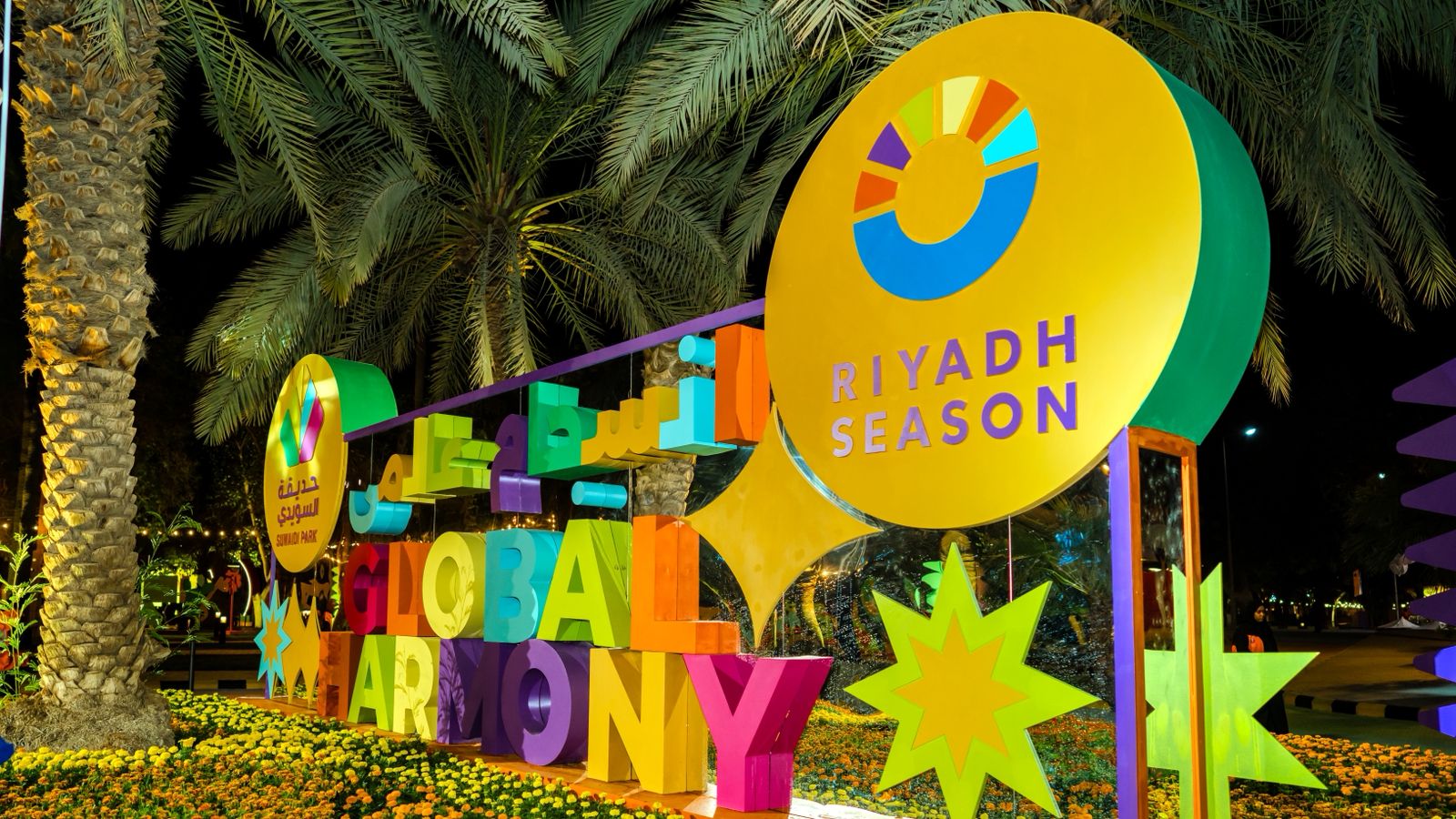
Part of the Quality-of-Life Program supporting Saudi Vision 2030, the initiative seeks to celebrate the diversity of residents living in the Kingdom spotlighting their contributions, cultural heritage, and successful integration into Saudi society.
The Global Harmony initiative underscores the Kingdom’s commitment to promoting inclusivity, coexistence, and cross-cultural understanding. It highlights the lives of residents in Saudi Arabia across all aspects professional, social, and recreational and celebrates their role in enriching the nation’s cultural and economic landscape.
As part of this year’s edition, the Ministry of Media, in collaboration with the General Entertainment Authority (GEA), will host a series of cultural and entertainment events within the Riyadh Season. The festivities will begin with ‘India Week’, honoring the Indian community’s longstanding contribution to the Kingdom and showcasing India’s vibrant cultural identity through music, dance, cuisine, art, and traditional crafts. Prominent Indian media representatives, artists, and cultural personalities will participate, highlighting the shared cultural bridge between the two nations.
Appreciating the efforts by the Ministry of Media and the General Entertainment Authority for organizing the Indian cultural festival at the Suwaidi Park in Riyadh under the Global Harmony Initiative, Dr. Suhel Ajaz Khan, Indian Ambassador to the Kingdom of Saudi Arabia, said “Building on the success of the last edition in 2024, this year’s preparations promise to be an even bigger celebration of Indian music, dance, cuisines and handicraft, with the participation of well-known Indian artists and performers. I once again complement the Ministry of Media and the General Entertainment Authority for their significant contribution in promoting cross-cultural understanding under the Global Harmony Initiative. It’s an excellent effort to build cultural bridges, promote stronger people-to-people ties and reaffirm the close historical bonds between India and Saudi Arabia.”
The wider Global Harmony Initiative will celebrate 14 diverse cultures represented by residents in the Kingdom, including those from India, the Philippines, Indonesia, Egypt, Yemen, Jordan, Uganda, and Ethiopia among others. The events will feature concerts, traveling performances, family-friendly cultural activities, traditional foods, and handicraft showcases, welcoming citizens and residents of all nationalities.
3, Nov 2025
Dr. Bhupesh Bagga Elected OMIG President at LVPEI’s Bug Busters 5 and AMR Awareness Run
Leadership and learning at LVPEI: Dr Bhupesh Bagga elected OMIG President amid Bug Busters 5 and AMR Awareness Run
Hyderabad, 3rd November, 2025: Dr Bhupesh Bagga, Consultant Ophthalmologist – Cornea & Anterior Segment at L V Prasad Eye Institute was elected as president of the Ocular Microbiology and Immunology Group, (eyeomig.org/Facebook) an international non-profit organization of physicians and scientists who focus on the study of “bugs and drugs” in the eye.

The group was established in 1990 and is based in Pittsburgh, USA. The group’s core mission is to present new information on ocular infections, the immune system’s response to them, and related treatments. Participation in their annual meeting where they discuss topics like infectious agents, immunity, inflammation, and new data and statistical analysis is much sought after by scientists and clinicians worldwide.
Dr Bhupesh spearheaded the Bug Busters 5 Conference organized by LVPEI between Oct 31 – Nov 2, 2025. The conference saw in-person and virtual participation of both national and international speakers. Around 120 delegates from across India participated in the three-day conference. Papers and sessions were presented on various aspects of ocular immunology, microbiology, and pharmacology.
Corneal infections pose significant challenges to eye health, and finding effective solutions requires a multidisciplinary approach. Bug Busters was conceived by LVPEI to explore the latest advancements in corneal infection research and enable multidisciplinary collaboration among ophthalmologists, microbiologists, immunologists, and other professionals working in the domain. It brings together leading experts, researchers, and clinicians from around the world to exchange knowledge, present groundbreaking findings, and discuss cutting-edge strategies in the field of corneal infections.
Bug Busters 5 enabled engaging discussions, interactive sessions, and thought-provoking presentations that delved into the complex nature of corneal infections and explored innovative approaches to diagnosis, treatment, and prevention.
As part of Bug Busters 5, a ‘Race Against Resistance AMR Awareness 4K Challenge’ was organized today, starting at L V Prasad Eye Institute, Kallam Anji Reddy Campus, Banjara Hills. The run was organized as a precursor to the World Antimicrobial Awareness Week (WAAW), a global campaign held annually from November 18–24 to raise awareness about Anti-Microbial Resistance (AMR) and promote best practices to combat it.
On this occasion Dr Shivaranjani Santosh, Paediatrician, Magna Centres for Obesity, Diabetes, and Endocrinology, Hyderabad; said, Antimicrobial Resistance (AMR) arises from the excessive and indiscriminate use of antibiotics. When antibiotics are misused, they lose their effectiveness, failing to work when they are truly needed to fight bacterial infections. Tragically, many lives are being lost because medicines that once saved lives no longer work. We must act responsibly. Avoid buying antibiotics over the counter or using them for every minor illness, many ailments are caused by viruses or other non-bacterial factors where antibiotics offer no benefit. Antibiotics should be used only when bacterial infection is confirmed, strongly suspected, or in high-risk cases where timely intervention is critical. The government must strictly regulate over-the-counter antibiotic sales. Patients should stop self-medicating. Doctors must prescribe antibiotics judiciously, and RMPs should refrain from administering high-dose antibiotics or steroids unnecessarily, such practices can endanger lives.
Dr Prashant Garg, Executive Chair, L V Prasad Eye Institute (LVPEI); said, Indiscriminate use of antibiotics poses a serious threat to our community. I urge everyone not to buy medicines over the counter, and never to use antibiotics without a doctor’s prescription. Always ensure that you complete the full course prescribed, stopping midway only fuels resistance. When we use antibiotics responsibly, not just for humans, but also in poultry and animal husbandry, we can collectively overcome this growing menace and safeguard health for generations to come.
Dr Ponnari Gottipati, Associate Director Research, LVPEI & Co-Founder, Super Heroes against Superbugs; said, Antimicrobial resistance is fast emerging as a grave concern for humanity. The very antibiotics that empower us to treat critical ailments, from cancer therapies and organ transplants to cesarean deliveries, are losing their power. These wonder drugs help us fight infections that arise during such treatments, but their overuse and misuse are rendering them ineffective. Today, antibiotics are being consumed excessively, often without need or proper guidance. This alarming trend means that even minor infections, which were once easily curable, could soon become life-threatening. The lack of awareness around this issue is a serious challenge. This run is our collective step towards creating awareness. We aim to educate everyone on the responsible use of antibiotics, understanding when they are necessary, when they are not, and why they should never be taken without a doctor’s prescription. Buying antibiotics over the counter, sharing them between patients, or stopping the course midway, all these practices fuel resistance. Completing the full course as prescribed by a medical professional is vital to ensure antibiotics remain effective for everyone. Together, we can fight this invisible enemy. Through this awareness run, let’s pledge to use antibiotics wisely and safeguard their power for future generations.
Organized in collaboration with Superheroes Against Superbugs initiative, the run included a fun element where runners solved puzzles related to antimicrobial resistance. About 200 enthusiastic clinicians, scientists and the public participated in the run to create awareness on the harmful effects of the misuse and overuse of antibiotics.
Anti-Microbial Resistance (AMR) is one of the fastest-growing health threats of our time and most people don’t even know they could be contributing to it! Antimicrobial resistance (AMR) has been prioritized by the World Health Organization (WHO) as one of the top 10 global public health threats facing humanity.
The latest AMR report by the World Health Organization (WHO) quotes experts describe findings, “as deeply concerning and predict 70% increase in related deaths by 2050.” It also states, “more than 40% of antibiotics losing potency against common blood, gut, urinary tract and sexually transmitted infections between 2018 and 2023.”
India ranks among the top countries globally for age-standardized mortality due to AMR. In 2019, India had approximately 297,000 deaths directly attributable to AMR and over 1,042,500 deaths associated with AMR as a contributing factor. About 66-67% of reported AMR cases were from the productive age group of 15 to 64 years. The high rates of infectious diseases make antibiotic use—and misuse especially important to create awareness about.
3, Nov 2025
RayEthnic: India’s Ethnic Wear Expands to 15 Stores by Unveiling Its New Experience Store
Mumbai, India | Nov 3, 2025: RayEthnic, the purpose-driven ethnic wear label known for blending India’s rich textile heritage with contemporary design, has expanded its footprint to 15 stores nationwide with the launch of its new experience store on Sindhu Bhavan Road, Ahmedabad. The milestone marks a significant chapter in the brand’s journey of empowering artisans, reviving traditional crafts, and redefining modern ethnic fashion.

Founded in the early 2000s by Mrs. Patel, a former pharmaceutical professional turned fashion entrepreneur, RayEthnic started as an initiative to provide meaningful employment to women displaced by economic downturns in Gujarat’s diamond industry. What began as a mission to support skilled women artisans has evolved into a national movement in handcrafted ethnic wear, combining tradition, sustainability, and contemporary aesthetics.
“Fashion for me was never about trends,” says Mrs. Patel. “It was about creating dignified work, preserving craft, and telling stories of resilience through every thread. Today, seeing our artisans thrive and our stores reach across India is deeply rewarding.”
A Hub for Heritage and Modern Design
The new experience store is designed to immerse visitors in the story of India’s handloom traditions, offering a curated collection of ethnic wear that celebrates craft, culture, and conscious design. Visitors can explore exclusive handcrafted pieces created in collaboration with master artisans such as:
Mohammad Ismail Khatri – Bagh printing
Mukkanteswarudu (Eswarudu) – Kalamkari
Subrata Das – Jamdani weaving
These collaborations are long-term partnerships, not vendor relationships, ensuring the preservation of heritage crafts while reimagining them for contemporary wardrobes.
Empowering Women, Sustaining Craft
Today, RayEthnic directly supports over 1,000 women artisans,providing sustainable livelihoods and championing slow fashion practices. With minimal, meaningful, and deeply Indian designs, the brand is redefining luxury as authenticity, craftsmanship, and conscious consumption.
“Every piece we create is more than clothing- it’s a narrative of heritage, identity, and hope,” adds Mrs. Patel.
1, Nov 2025
BUSINESSNEXT recognized among top global firms in Customer Service Solutions Landscape report
New Delhi, India, 1st November, 2025: Indian deep tech firm, BUSINESSNEXT, has been recognized among top global platforms in “The Customer Service Solutions Landscape, Q3 2025” report by Forrester.
The report provides an overview of 34 global vendors to give customer service business and IT leaders insights into the value they can expect from customer service solution vendors, learn how vendors differ, and investigate options based on size and market focus.
The report highlights a rapid shift in banking and insurance towards AI-first operations. According to Forrester’s survey, 71% of customer service leaders in the private sector cite customer experience improvement as their top business priority over the next 12 months, with nearly 73% planning to adopt AI-powered customer service solutions within the year. As the report details, agentic and generative AI are now moving from experimental pilots to large-scale, cost-optimizing platforms, reshaping how BFSI leaders meet fast-changing expectations and regulatory requirements.
In the report, BUSINESSNEXT self-reported the extended use cases of Agent performance management, AI- agent assist, customer self-service as the top three use cases for which clients select them. Its offerings deliver seamless voice and digital support, automate ticketing and workflows, and empower agents with actionable insights and recommended actions.
“AI is enabling Indian banks and insurers to scale up customer experience while reducing complexity and cost,” said Rahul Sheth, Head of Marketing at BUSINESSNEXT.
The report explains how customer service solutions are helping organizations move toward autonomous operations. They automate routine requests, improve self-service, and use AI to analyze data, personalize support, and reduce costs. These solutions also provide useful dashboards for better agent performance and use flexible system designs that are ready for future AI advancements.
“We believe our inclusion in Forrester’s industry landscape as a customer service solutions provider notes our commitment to building autonomous, resilient, and highly personalized digital journeys. BUSINESSNEXT leverages advanced AI, cloud-native deployments, and domain expertise to help our clients realize true autonomous banking—where self-driving processes, integrated AI agents, and predictive analytics are the norm”, added, Sheth.
1, Nov 2025
Canon India Adopts 10th Village, Sathanuru, Under ‘Adopt a Village’ Initiative
Canon India marks milestone with the adoption of its 10th village, Sathanuru, Karnataka, under the ‘Adopt a Village’ initiative
Karnataka, 1st November, 2025: Strengthening its commitment towards sustainable growth across regions of India, Canon India announced the adoption of Sathanuru Village in Karnataka, marking the 10th village to join Canon’s ‘Adopt a Village’ flagship initiative. Marking this milestone, Canon aims to set forth its efforts towards continuous and inclusive growth in southern region, bringing education infrastructure, women empowerment, environmental awareness, and a vision to solidify the communities. The inaugural celebrations were led by Mr. C. Sukumaran, Senior Director, Product and Communication, Canon India, in the presence of Mr. Mattigowda Block Education Officer.
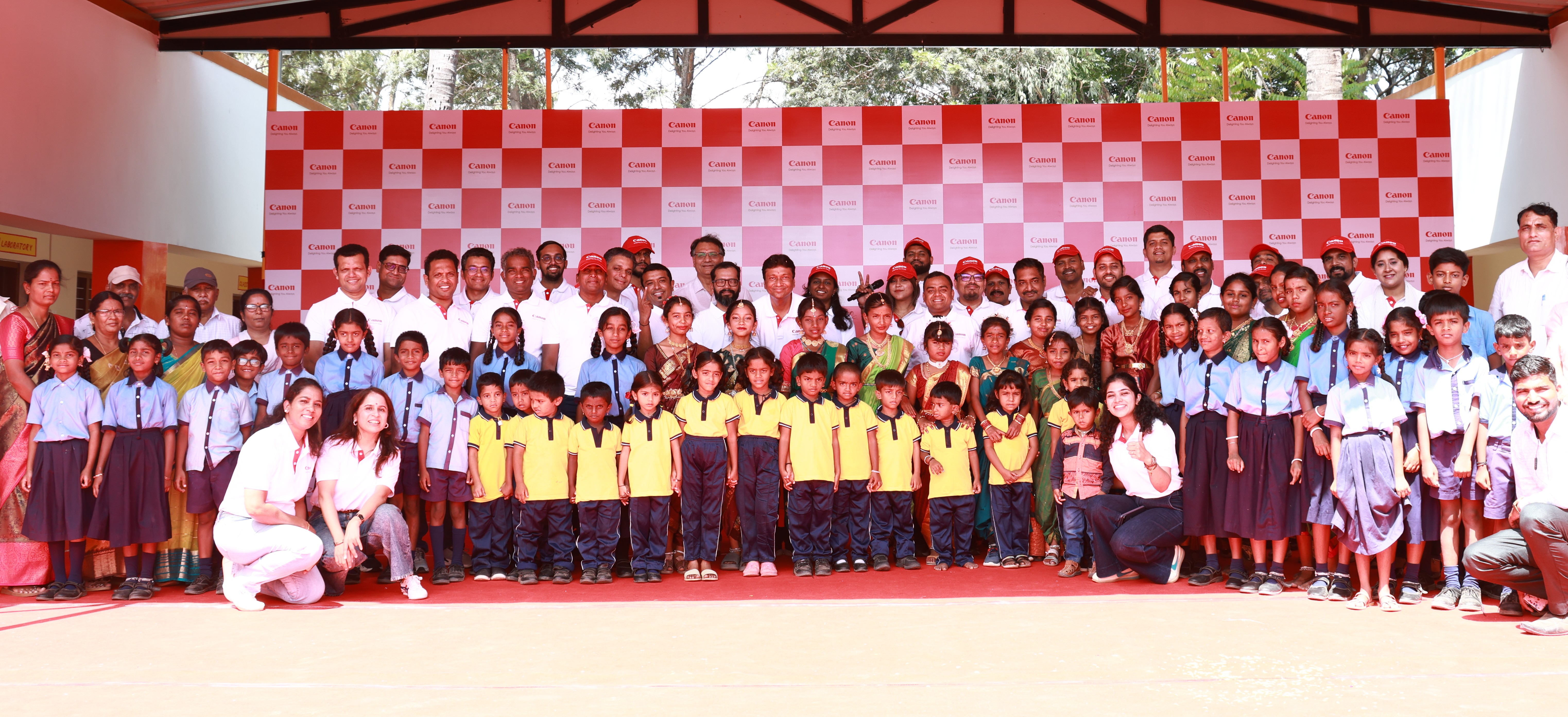
The new village adoption marks the next strategic expansion of the initiative in Southern India, where Canon has been driving holistic transformation in villages like Maharaja Katte and Annadodi near Bengaluru. Under the adoption of Sathanuru Village, Canon will focus on its key pillars of community development including Education, Eye Care, Environment, and Empowerment bringing together a fostered, self-reliant and sustainable community ecosystem. Further, underscoring Canon India’s ongoing mission to uplift the underserved communities and contribute meaningfully to inclusive growth.
As part of the ‘Adopt a Village’ initiative launched in 2012, Canon India has been undertaking the overall development of villages across India for a certain period. Through its efforts, Canon has touched more than 300,000 lives across the country, with active involvement of over 11,500+ volunteers from Canon. This year, the initiative has successfully completed the five-year transformation journey of Parivali Village in Maharashtra and celebrated the three-year milestone of its association with Nandrampur Bass in Haryana. Both the villages stand as strong examples of Canon’s sustained interventions, which has collectively nurtured self-reliant and sustainable communities.
Speaking on the announcement Mr. C. Sukumaran, Senior Director, Product & Communications, said “At Canon, we believe real development begins when communities are empowered to shape their own futures. For over 14 years, our ‘Adopt a Village’ initiative has created pathways to education, livelihood, and sustainable progress across rural India. Today, as we mark the landmark 10th village adoption with Sathanuru in Karnataka, we are proud to extend this journey of transformation. In Southern India, villages like Maharaja Katte and Annadodi, near Bengaluru, stand as living examples that access to quality education and sustainable development can inspire self-reliance. With Sathanuru, we reaffirm our commitment to driving long-term community empowerment and nurturing change that will impact generations to come.”
1, Nov 2025
2-Day Hyderabad Entrepreneurship Summit 2025 Kicks Off at Hitex

Hyderabad, November 1, 2025: The Hyderabad Entrepreneurship Summit (HES 2025) — a landmark two-day celebration of innovation, leadership, and collaboration — began this evening at Hitex Exhibition Centre, organised by the TiE Hyderabad Chapter in partnership with the Government of Telangana.
It was inaugurated collectively by HEEC-Hyderabad Entrepreneurial Ecosystem Collective Partners, a unique initiative of TiE Hyderabad Chapter.
Held under the theme “Transforming Tomorrow, together”, HES 2025 is designed to showcase Hyderabad’s evolution as one of India’s most dynamic entrepreneurial ecosystems — connecting local innovation with global opportunities.
The summit has brought together over 1,500 entrepreneurs, investors, corporates, policymakers, and ecosystem enablers, featuring inspiring keynotes & fireside chats, sector-focused industry Sessions, masterclasses by industry experts, startup pitches & expo showcases, special recognitions & awards celebrating entrepreneurial excellence across sectors.
Speaking on the occasion, Rajesh Pagadala, President, TiE Hyderabad, said the summit builds on TiE’s national mission “1x10x100” — to create 1 million entrepreneurs, 10 million jobs, and $100 billion in value over the next decade.
“This perfectly aligns with Telangana’s vision of becoming a global innovation powerhouse by 2047. TiE Hyderabad has mentored thousands of founders over the last 26 years — now it’s time to give back by shaping the next generation of entrepreneurs,” he said.
A highlight of the opening ceremony was the launch of the Hyderabad Entrepreneurial Ecosystem Collective (HEEC) — a strategic TiE Hyderabad initiative designed to foster collaboration, inclusivity, and shared growth among startups, investors, academia, industry bodies, and incubators.
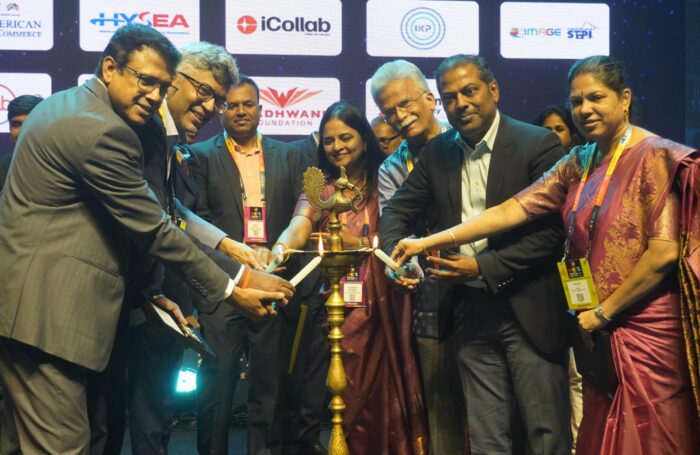
The MoU was signed by leaders of TiE Hyderabad, HYSEA, FTCCI, COWE, ALEAP, Biome, Hyderabad Angels, Mahindra University, iCollab, Bala Vikasa CSRB, IACC, IIKP, T-Hub, RICH, TG10X, Wadhwani Foundation, and Founders First. Initially led by TiE Hyderabad, the collective will operate on a rotational leadership model among partner institutions to ensure continuity and inclusivity.
Rajesh Pagadala and Murali Kakarla, President and Vice President of TiE fecilitated the MoU with all the ecosystem partners.
Mr Nikhil Chakravarthi, Director (Industries), Government of Telangana, announced a strategic MoU between TiE Hyderabad and the Department of Industries & Commerce. Through this partnership, TiE and the State will jointly scale 500 high-potential SMEs across Telangana by 2029, under the “500 to 5X Growth Mission.”
The mission will identify SMEs in the ₹25–₹50 crore bracket and help them achieve 5X growth through mentorship, market access, and capital linkage — potentially generating 3–5 lakh new jobs.
The MoU also provides for the establishment of a Telangana SME Acceleration Cell, SME Capital Access Clinic, and five regional mentoring hubs.
Mr Nikhil added that Telangana is deregulating certain Acts, such as the Factories Act and Labour Act, to further ease business operations and create flexible zones to boost industry competitiveness.
He also highlighted that Telangana is actively implementing the District Reform Action Plan (DRAP) under the national Ease of Doing Business (EoDB) initiative.
Delivering the keynote, Murali Bukkapatnam, TiE Global Chair of Trustees, said, “Hyderabad is no longer just the city of pearls and biryani — it’s a fountainhead of disruptive energy and a launchpad for visionary leaders.”
He announced the upcoming TiE Global Impact Report and TiE Impact Dashboard, aiming to strengthen the 68-chapter global network and grow membership and revenues by 20%.
Ambassador Syed Akbaruddin, Dean of Kautilya School of Public Policy, addressed the topic “Entrepreneurs & Global Uncertainty”, urging founders to build resilience amid geopolitical volatility and global interdependence.
The TiE Hyderabad Outstanding Entrepreneurship Awards 2025, chaired by Mr Kali Prasad (Chairman, EThames Business School) and evaluated by a jury led by Mr G.V. Prasad (Co-Chairman & MD, Dr. Reddy’s Laboratories), recognised visionary founders, investors, and ecosystem builders.
Another highlight was the launch of TiE50 Telangana, powered by Qualcomm, celebrating high-growth startups from the region.
Day 1 concluded with “Rhythms & Connections” — an evening of live music and networking for TiE Charter Members, CXOs, and investors.
Day 2 will feature 100+ speakers and 25+ sessions covering DeepTech, HealthTech, Defence & Aerospace, Artificial Intelligence, Family Offices, Innovation & Incubation, and TiE Women & TiE University Pitch Tracks. The concurrent Entrepreneurship Expo showcases 80+ startups and ecosystem partners from across India.
1, Nov 2025
Toyota Kirloskar Motor Sends 100 Skilled Youth for Global Training to Japan
Mumbai, 1st November, 2025: Toyota Kirloskar Motor (TKM) today announced that 100 members will travel to Japan to participate in the Global Skill-Up Training (GST) program at Toyota Motor Corporation. The initiative reflects TKM’s deep commitment to nurturing globally competitive talent and aligns with the Government of India’s Skill India Mission and the Technical Intern Training Program (TITP) a collaborative framework between the Governments of India and Japan for international skill development and talent exchange.
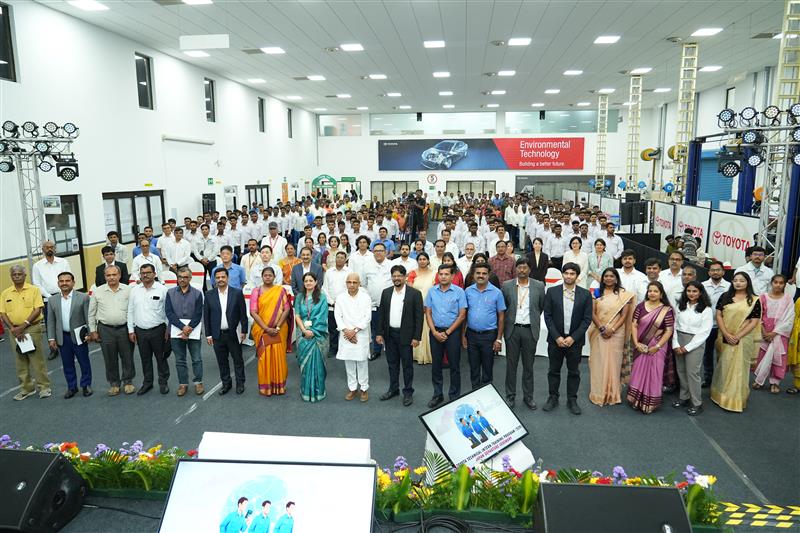
The Global Skill-Up Training Program at Toyota Motor Corporation, Japan, spans 11 months, combining classroom sessions with intensive on-the-job training. It emphasizes Toyota’s core principles while nurturing teamwork, adaptability, and cross-cultural understanding. Trainees are also oriented towards Japanese language, culture, and civic responsibility to prepare for global integration.
The event was graced by the presence of Hon’ble Minister Dr. Sharanaprakash Rudrappa Patil, Minister for Skill Development, Government of Karnataka and Ms. Sonal Mishra, Additional Secretary, Ministry of Skill Development & Entrepreneurship (MSDE), Government of India along-with Toyota Kirloskar India Team.
Speaking on the initiative, Mr. G. Shankara, Executive Vice President, Finance and Administration, Toyota Kirloskar Motor said, “We at Toyota Kirloskar Motor are deeply committed to nurturing globally competitive talent from India. The Global Skill Up Training Program is more than just a learning opportunity; it is a journey to experience excellence, discipline, innovation, and respect on a global stage. Through this initiative, we aim to empower our youth with world class technical expertise and the values that define Toyota’s culture, while contributing to the Government of India’s Skill India vision. Together, we aspire to make India a global hub for people, solutions, and automobiles, and together we will make that vision a reality.”
Appreciating TKM’s training program, Dr. Sharanaprakash Rudrappa Patil, Hon’ble Minister for Skill Development, Government of Karnataka, “We are proud to see our youth getting access to this global opportunity with Toyota. This program aligns strongly with our vision to position Karnataka as a hub for advanced skills while empowering rural talent to access world-class career opportunities.”
Ms. Sonal Mishra, Additional Secretary, Ministry of Skill Development & Entrepreneurship (MSDE), Government of India, “The collaboration between MSDE and Toyota under the TITP framework represents India’s growing role as a trusted global source of highly skilled professionals. This international apprenticeship opportunity will accelerate India’s contribution to global value chains and enable our youth to build future-ready careers.”
As an National Skill Development Corporation (NSDC)-approved Sending Organization, Toyota Kirloskar Motor has facilitated the overseas training of over 1000 youth in countries including Japan, Jordan, Qatar, and Slovakia, reinforcing its commitment to advancing global mobility and cross-cultural learning. The TITP framework provides Indian youth with an opportunity to acquire international technical experience, contribute to Japan’s workforce, and return as globally skilled professionals ready to support India’s industrial growth.
Guided by the vision “Grow India and Grow with India” and the mission “Producing Happiness for All,” TKM believes that industrial progress and social progress must advance together. Since its establishment in 1997, the company has focused on developing people and creating shared value for the community through holistic learning and skilling initiatives.
Toyota’s Skilling Initiatives
Under the Toyota India Center of Excellence, TKM has built an integrated framework for human resource development that operates at three levels. At the elementary level, it instils discipline, responsibility, and good citizenship among school students through value-based education. At the technician level, it develops world-class technicians through the renowned Toyota Technical Training Institute (TTTI) model, combining classroom and on-the-job learning. At the advanced level, it focuses on leadership and new-age skill development, preparing Auto-IT technicians and engineers in partnership with universities to meet emerging industry demands.
Through this multi-tier skilling initiatives, over 1,40,000 youth across India, many from Karnataka, have been trained and empowered. TKM also supports over 100 Industrial Training Institutes (ITIs) across Karnataka through faculty development, infrastructure support, and culture-building. In collaboration with Samagra Shikshana Karnataka, TKM is further enhancing vocational education for 800 students across seven districts, fostering employability and social progress.
Through initiatives such as Toyota Technical Training Institute (TTTI), Toyota Kaushalya, and leadership programs under the Toyota India Center of Excellence, TKM continues to champion the “Rural to Global” transformation — building human capability that drives both national development and international collaboration.
1, Nov 2025
Underweight and Unbalanced: Gut Microbial Diversity in Underweight Japanese Women
Researchers link BMI and differences in gut microbiota in young, underweight Japanese women
November 1, 2025: Low body weight in young women has been associated with various health concerns. Rising trends in the proportion of underweight women between the ages of 20 and 39 have been seen in Japan, raising concerns. In a first-of-its-kind study, Dr. Katsumi Iizuka and Dr. Hiroaki Masuyama from Japan have found that underweight Japanese women had a lower gut microbiota diversity and more inflammation-linked microbes. These findings suggest gut health is critical in weight control.
Low body weight in young women has been linked to a range of health concerns, including disrupted menstrual cycles, infertility, weakened immune function, and a long-term decline in bone density. Japan has seen a rising trend in the proportion of underweight women between the ages of 20 and 39, with little to no change over the past two decades. The persistence of this trend raises concerns over the long-term health implications, especially as lean body weight has been correlated with changing dietary habits, diseases like anorexia nervosa, and even imbalances in gut microbiota. While previous research has reported lower alpha gut microbiota diversity in the underweight and overweight categories compared to those with normal weight, the differences in gut microbiota diversity in young, underweight Japanese women remain unclear.
To explore this further, a team of researchers from Japan, led by Dr. Katsumi Iizuka, a Professor at the Department of Clinical Nutrition, Fujita Health University, Japan, and Dr. Hiroaki Masuyama, Symbiosis Solutions Inc., set out to investigate the link between body type, dietary patterns and gut microbiota diversity in young, underweight Japanese women. They focused on understanding whether the gut microbiota diversity differed significantly between women who were underweight and those with normal body mass index (BMI). Their research was published in Volume 17, Issue 20 of the journal Nutrients on October 17, 2025. Prof. Iizuka says, “The differences in the diversity of the gut microbiota of young Japanese women by body weight have not been investigated. If differences in the gut microbiota between thin young women and women of normal weight become clear, I believe that improving eating habits could lead to improvements in the gut microbiota and consequently, body weight.”
The study observed and compared 40 underweight women with 40 age-matched women, between 20 and 39. The underweight group included women who were referred to the Nutrition Clinic at Fujita Health University with a BMI less than 17.5 at their first consultation, while the control group was composed of women with normal BMI (18.5 ≤ BMI < 25) and were selected from a database by Symbiosis Solutions Co., Ltd. (Tokyo, Japan). Stool samples were collected using standardized kits, while food frequency questionnaires were used to assess dietary patterns.
Interestingly, the researchers found no significant differences in dietary patterns between the two groups. However, an analysis of the gut microbiota showed that underweight women had a significantly lower microbiota diversity and an increased presence of species, such as Bacteroides, Bifidobacterium, and Erysipelatoclostridium, which are linked to inflammation. On the other hand, the normal-weight group had a healthier abundance of bacteria like Prevotella and Dorea. Prof. Iizuka mentions, “Among Japanese women aged 20–39, those in the underweight group showed a greater decrease in gut microbiota diversity compared to the normal-weight group, rather than differences in dietary patterns.” He adds, “Underweight women demonstrated reduced gut microbiota diversity and enrichment of taxa associated with inflammatory tendencies.”
These findings suggest that gut health is as important as caloric intake when it comes to addressing low body weight. Prof. Iizuka explains, “Not only the amount of energy or the ratio of protein, fat, carbohydrate, but actively consuming dietary fiber and fermented foods may lead to weight improvement in underweight individuals by causing changes in the gut microbiota.”
When asked about the long-term implications of the study, he said, “By combining the dietary survey data with gut microbiota analysis, it may become possible to evaluate not only the nutrients and energy contained in food, but also the quality of digestion and metabolism within the intestines after eating.”
With gut health gaining global attention, the findings of this study offer new insights into how the gut microbiota could aid in more personalized nutritional care for underweight Japanese women.
31, Oct 2025
Nayara Energy unveils ‘The Gir Inheritance’
Mumbai, 31th October, 2025: Nayara Energy, an integrated downstream company of international scale, has unveiled The Gir Inheritance, a coffee table book that celebrates the rich heritage and enduring conservation legacy of Gir. Published by Sanctuary, the book was presented to select recipients as a measure of support for the majestic lions of Gir.
The book is a tribute to nature’s resilience and the relentless efforts to protect it for generations to come. Moreover, it offers an immersive experience, artfully blending compelling narratives and evocative imagery to chronicle the legacy of Gir’s unique biodiversity and the efforts to safeguard it. By showcasing the vital role of conservation in sustaining both biodiversity and local livelihoods, the book highlights how protecting wildlife also safeguards ecosystems that nurture communities, inspiring innovative approaches and collective investment in a sustainable future.
“At Nayara Energy, we are committed to protecting and preserving India’s natural heritage. We are proud to have brought this important work to life. The Gir Inheritance is a tribute to the ongoing dedication of all those who have tirelessly worked to protect Gir and its ecosystems ensuring that future generations inherit this invaluable living legacy. Nayara Energy is honoured to play a part in this vital mission, reaffirming our pledge to environmental stewardship and sustainable development” said Teymur Abasguliyev, Chief Executive Officer, Nayara Energy.
Speaking on the release of the coffee table book, Bittu Sahgal, Editor, Sanctuary Asia said “The Gir Inheritance Coffee Table Book captures the rich heritage of Gir, home to the last sanctuary of the endangered Asiatic lion. The ‘Pride of Gujarat owes its resurgence to the tireless efforts of scientists, local communities, and conservationists. It is heartening to see Nayara Energy supporting these critical conservation efforts, ensuring that this vital legacy continues for generations to come.”
This initiative highlights Nayara Energy’s unwavering commitment to environmental sustainability and community engagement. It underlines the importance of preserving our natural heritage and the vital role we all share in sustaining the environment for future generations. Through this initiative, the Company seeks to raise awareness and inspire continued support for conservation efforts.


