



2, Mar 2026
Honda Cars India Registers Total Sales of 7,212 units in February 2026
New Delhi, Mar 02: Honda Cars India Ltd. (HCIL), a leading manufacturer of premium cars in India, announced that it recorded total sales of 7,212 units with domestic sales of 5,629 units and exports of 1,583 units in February 2026.
Sharing his thoughts on the sales performance, Mr. Kunal Behl, Vice President, Marketing & Sales, Honda Cars India Ltd. said, “We maintained our sales momentum through February, driven by strong popularity of Honda Amaze as a practical sedan with outclass safety. Honda City and Elevate also recorded steady volumes with exciting promotions during the month. As we approach the final month of the fiscal, we remain optimistic about market performance.”
The company had registered 5,616 units in domestic sales and 4,707 units in exports during February 2025.
- 0
- By Neel Achary

2, Mar 2026
Oil prices could hit USD 100/bbl as Strait of Hormuz traffic halts
LONDON/HOUSTON/SINGAPORE, Mar 2: Higher oil and gas prices are certain as the closure of the Strait of Hormuz threatens to disrupt 15% of global oil supply and 20% of global LNG supply, with oil prices potentially exceeding $100/bbl if tanker flows are not quickly restored, according to Wood Mackenzie. Following US and Israeli attacks on Iranian government, military and nuclear facilities, Iran warned shipping away from the waterway and insurers withdrew coverage, effectively halting tanker traffic.
The disruption creates a dual supply shock: not only are current exports through the Strait halted, but OPEC+ additional volumes and ultimately most of OPEC’s spare capacity—typically a key lever for balancing the global oil market—are inaccessible while the waterway remains closed.
“The key question is when do vessels re-establish export flows,” said Alan Gelder, SVP of Refining, Chemicals and Oil Markets at Wood Mackenzie. “No doubt, tanker rates and insurance will increase dramatically, but these costs would only be a small part of the oil price impact associated with a curtailment of oil flows if they last for more than a few days.”
Given the uncertainty around events, it is plausible that it takes a few weeks for export flows to re-establish themselves in the most optimistic scenario (in which the Iranian regime elects to co-operate with the US), Gelder added.
“During that time, oil prices are heavily risked to the upside,” Gelder said. “The most recent comparison is during the early days of the Russia/Ukraine conflict, when the fear of loss of Russian supplies drove the oil price to over US$125/bbl.”
In the current scenario, oil prices over US$100/bbl are possible if transit flows are not re-established quickly, according to Gelder.
OPEC+ production response
The group of eight OPEC+ countries responsible for voluntary production cuts – Saudi Arabia, Russia, Iraq, UAE, Kuwait, Kazakhstan, Algeria and Oman – agreed on 1 March to resume unwinding the April 2023 1.65 million b/d cut. They will increase production by 206,000 b/d in April and meet again on 5 April to assess next steps.
“The OPEC+ decision does not come as a surprise, due to the uncertainty surrounding the US-Iran tensions, and that the market for non-sanctioned crudes is tight,” said Gelder. “There is, however, a risk that the OPEC+ decision is moot if flows do not resume through the Strait of Hormuz.”
While there are potential alternative supply routes available to Middle East producers—including Saudi Arabia’s East-West pipeline to the Red Sea and additional Iraqi volumes via the Mediterranean—no alternatives can fully compensate for the loss of exports that transit the Strait of Hormuz. Strategic stock releases by IEA member countries could provide some relief, but IEA members account for less than half of global oil demand.
Gas market implications
A halt in LNG flows through the Strait of Hormuz would be equally disruptive for global gas and LNG markets, according to Wood Mackenzie. Around 81 Mt (110 bcm) of LNG transited the Strait in 2025—primarily from Qatar—accounting for nearly 20% of global LNG supply.
“Disruptions to LNG flows would reignite competition between Asia and Europe for available cargoes, particularly at a time when European storage levels are below seasonal norms and around 10% lower than at the same point last year, following a severe cold spell in January,” said Massimo Di Odoardo, Vice President, Gas and LNG Research at Wood Mackenzie. “With approximately 1.5 Mt (2.2 bcm) of LNG exports at risk for each week that flows through the Strait of Hormuz are halted, both Asian and European markets would need to draw more heavily on existing storage and would increase the need for restocking over the summer. This would tighten market conditions well beyond the eventual resumption of trade through the Strait.”
Precautionary closures of the Leviathan and Karish gas fields in Israel—which supplied more than 10 bcm to Egypt last year—could add further pressure, as Egypt would likely increase LNG imports to offset lost volumes. Potential disruptions to gas exports from Iran to Turkey, which accounted for more than 7 bcm in 2025, could compound the supply strain.
A halt in LNG flows through the Strait of Hormuz would be comparable in scale to the curtailment of Russian gas supplies to Europe, which sent prices soaring to nearly US$100/mmbtu at their peak and averaging US$40/mmbtu in 2022, according to Di Odoardo.
“This time, however, the reaction is unlikely to be as extreme,” added Di Odoardo. “Unlike the prolonged disruption of Russian pipeline flows, a blockage in the Strait could be viewed as temporary, tempering the upside. Still, Monday will see a dramatic price jump at market opening, and any signal that disruptions could drag on would add further fuel to the rally.”
Looking forward
“The nearest historical analogue in our view is the Middle East oil embargo of the 1970s, which increased oil prices by 300 percent to around US$12/bbl in 1974,” said Gelder. “That is only US$90/bbl in 2026 terms. Eclipsing this in today’s market concerned about significant losses of supply seems very achievable.
“The global economy is now far less oil intensive than 50 years ago. The shock at the time of the oil embargo was the pace and scale of the price increase. Oil prices would need to reach well over US$200/bbl to exert a similar level of shock to today’s global economy.”
1, Mar 2026
Philips Evnia Unleashes 200Hz Speed Demon Gaming Monitor: Built for Middle Eastern Gamers
Cairo, Mar 1 – MMD Singapore the manufacturer of Philips displays, announced the regional launch of its latest competitive gaming monitor, the 24M2N3200FQ and 27M2N3200FQ, designed to deliver championship-level performance and immersive visuals to the passionate gaming community across the Middle East. This 24 and 27 inch Fast IPS monitor combines blistering 200Hz speed with cutting-edge image clarity technologies, offering gamers the critical edge needed for victory.
The Middle East’s gaming scene is renowned for its intensity and competitive spirit. The Philips Evnia gaming monitor meets this demand head-on with its ultra-fast 200Hz refresh rate and a near-instant 0.3ms (Smart MBR) response time, effectively eliminating motion blur and ghosting. This ensures every panning shot in an FPS and every high-speed turn in a racing game is rendered with stunning sharpness, giving players a seamless and lag-free advantage.
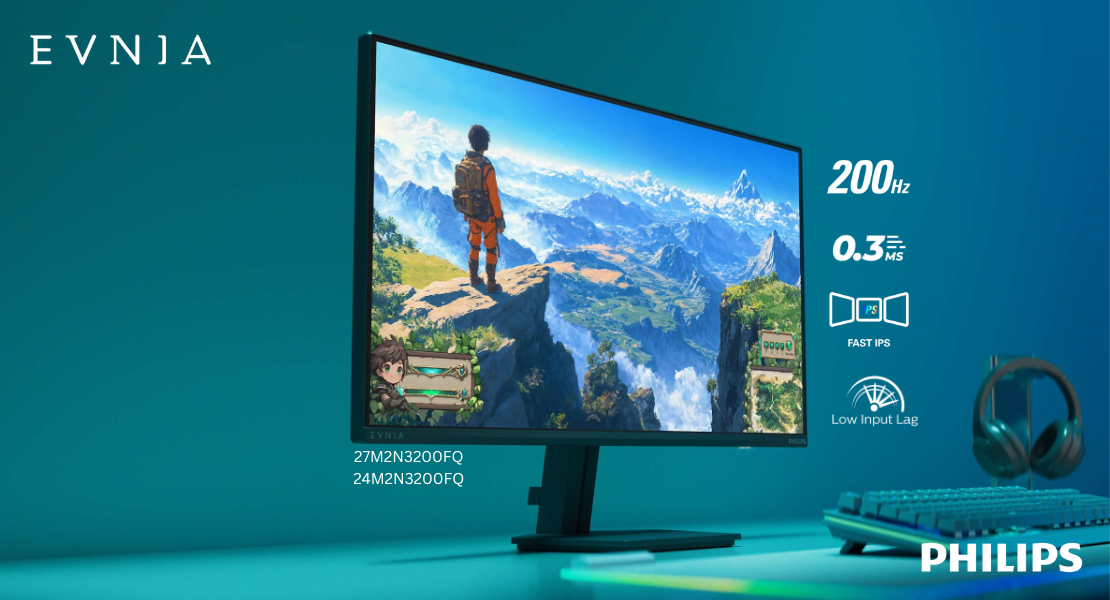
“Gamers in our region deserve equipment that matches their skill and ambition”, said Carol Anne Dias, Sales Director, Middle East & Africa for Philips Monitors. “The 24M2N3200FQ and 27M2N3200FQ are engineered for those decisive moments where a split-second can mean the difference between victory and defeat. We’re bringing hyper-responsive performance and rich, immersive visuals to a broader audience of dedicated gamers”.
Beyond raw speed, the monitor features Stark ShadowBoost, a proprietary technology that illuminates dark scenes in games without overexposing bright areas, ensuring enemies lurking in shadows are clearly visible. The Smart Crosshair feature dynamically changes color based on the background for maximum visibility, enhancing targeting accuracy.
For a truly captivating visual experience, the monitor supports HDR10 content, delivering a wider range of colours, superior contrast, and more lifelike images. Gamers can further personalize their experience through the Evnia Precision Center software, which offers intuitive controls to fine-tune settings for different game genres or create custom profiles.
Designed with players well-being in mind, the monitor incorporates LowBlue Mode and Flicker-Free
The monitors are now available for purchase in the UAE with Naam Electronics. The monitors come with 3 years warranty.
1, Mar 2026
App aids Substance Use Recovery in Vulnerable Populations
By Mark Reynolds
Although drug overdose deaths declined in the U.S. last year, the rate of substance use disorder is rising, and the problem remains undertreated: Fewer than one in five people with substance use disorder report that they’ve received any treatment for it. An especially vulnerable group are those who use substances and do not have stable housing, who research shows are both far more likely to experience overdose and much less likely to receive treatment for their condition compared to those who have secure housing.
A new study has shown that a mobile app developed by researchers at Washington University School of Medicine in St. Louis is effective at helping this at-risk population take steps toward recovery. Among people who misused opioids or other substances and lacked stable housing, those who used the app reported significant reductions in their opioid and non-opioid substance use after a month compared to those who did not engage with the app. App users also improved their health literacy and showed improvements in key mental health measures associated with successful treatment compared to their baseline measurements.
The study was published Feb. 1 in Drug and Alcohol Dependence. Vidya Eswaran, MD, an assistant professor in the WashU Medicine Department of Emergency Medicine and lead author on the study, knows firsthand from her work in the Barnes-Jewish Hospital emergency department that patients struggling with housing insecurity have distinct needs, including inconsistent access to care and greater mental health burdens, that can make substance-use treatment harder to sustain than for patients in stable living situations.
“There is a lot of overlap with people who are experiencing housing insecurity and have substance use disorders, so it is important to make sure that the interventions that we provide are addressing the needs of this specific subpopulation,” said Eswaran. “Some people might think that these groups would not have a mobile phone or the digital literacy to use an app like this, but the results show people were not only using it, but also getting benefit from it.”
App inspired by online addiction-support communities
The uMAT-R (pronounced “you matter”) app was developed and launched in 2018 by a team led by Patricia Cavazos-Rehg, PhD, a professor in the WashU Medicine Department of Psychiatry and senior author of the new study. It was designed to provide free, easy-to-access support for people with any substance use disorder, including misuse of opioids, stimulants and hallucinogens, with the goal of reducing overall overdose deaths. It works on iOS and Android smartphones.
uMAT-R provides information on treatment options and social support resources within the user’s community, as well as user-specific tools such as a sobriety tracker. It also provides educational content on managing withdrawal, maintaining sobriety and improving mental health. Participants can communicate through a chat function with trained coaches (called “e-coaches”) who are available Monday through Friday and offer advice and encouragement.
The app is not yet publicly available; participants are generally enrolled while receiving care for substance use disorder at a treatment center or other health care facility in Missouri, including Barnes-Jewish Hospital, where patients are screened and enrolled through the WashU Medicine Department of Emergency Medicine’s Emergency Care Research Core staff. Other participants have requested enrollment through the research team after learning of the app through word of mouth. Cavazos-Rehg, who is also on the faculty of the WashU School of Public Health, noted that such peer-to-peer information sharing is characteristic of the online substance use disorder communities that provided the initial inspiration for the app.
“I observed how folks use social media venues to support each other, even during times when they were feeling most alone or stigmatized,” said Cavazos-Rehg. “They would ask questions on social media about clinical care and seek out resources for mental health help. This inspired me to develop a tool for people who are going through mental health problems or are in recovery support.”
Cavazos said that a long-term funding commitment from the Missouri Department of Mental Health brought the project to life. “They recognized that a lot of life happens outside of traditional in-person mental health and substance use treatment settings, and that mobile apps can be affordable, accessible tools that can improve the health and wellbeing of people, especially during critical times when other types of help may not be readily available,” she said.
The new study included data from a subset of uMAT-R users who were enrolled in the app between 2020 and 2024. Of 972 initial enrollees, more than 70% self-identified as having insecure housing — which could include living in shelters or on the street, living in a treatment facility or hospital, or staying in someone else’s home. Of those individuals, 378 completed a follow-up survey after a month of using the app, forming the study’s sample.
Participants completed an intake survey to assess substance use patterns, cravings and baseline level of health literacy — defined as the ability to find appropriate health information and resources in order to make health care decisions. The survey also included two measures of mental health, both correlated with depression: perceiving themselves to be a burden to those around them, and having a sense of not belonging. One month later, participants completed a new survey to identify any changes in these measures, and this information was correlated with patterns of app usage.
The researchers found that participants who used uMAT-R were about 50% less likely to have used non-opioid illicit drugs after a month compared to those who didn’t log on. And participants who messaged with the e-coach were about 50% less likely to report opioid use than those who did not use the function. Higher levels of app use were associated with greater reductions in illicit drug use overall. uMAT-R use was also associated with reduced substance cravings and lower perceived burdensomeness, and using the chat function was associated with improving health literacy and reducing feelings of social alienation and isolation, when compared to the baseline intake survey.
“These results speak to the promise of what mobile health and digital health technologies can bring to the treatment of hard-to-reach populations,” said Eswaran, who is planning a similar study for recently incarcerated people with substance use disorders. Going forward, “there’s potential to think creatively about how we adapt and refine tools like this even more to support vulnerable populations.”
Eswaran V, Dong F, Li X, Szlyk HS, Dell NA, Kasson E, Williams J, Cavazos-Rehg PA. Leveraging a digital health intervention to improve recovery outcomes among people with substance misuse experiencing housing insecurity. Drug and Alcohol Dependence. Feb. 1, 2026. DOI: 10.1016/j.drugalcdep.2026.113022
The uMAT-R app is funded in part by the Missouri Department of Health & Senior Services. Funding for this study was provided by the Substance Abuse and Mental Health Services Administration grant 1H79TIO80271, the National Institute on Drug Abuse grants R34DA050453 and R44DA055161 and the National Institute of Nursing Research grant T90NR021683. The content is solely the responsibility of the authors and does not necessarily represent the official views of the NIH.
1, Mar 2026
Vodia Announces the New Vodia Partner Portal and Partner Program
BOSTON – Mar 1: Vodia Networks, Inc., a provider of unified cloud communications solutions to enterprises, contact centers, and service providers, today announced the new Vodia Partner Portal and Partner Program. Vodia partners now have the exact tools they need to provide their customers with Vodia’s industry-standard phone system, in the cloud or on-prem, faster, more efficiently, and more profitably.
The new Vodia Partner Portal and the Partner program help Vodia partners be truly competitive. Vodia partners need to get licenses quickly, access attractive pricing, reduce the burden on sales teams, and focus on CX and higher margins, and the portal and the program have been designed to address these day-to-day needs. Vodia partners can now purchase, manage, and track PBX licenses with just a few clicks.
Partner certification is the first milestone in the Vodia Partner Program. Once certified, partners can move through different levels to gain more benefits. Partner levels and points structure apply to licenses purchased directly through the portal.
The new Vodia Partner Portal and Partner Program
· The partner program is structured around a transparent points system. Completion of the Vodia Partner Certification provides the points required to reach Silver level, after which partners accumulate points and progress to higher membership tiers.
Pre-qualified sales leads are accessible within the portal. Vodia partners receive contact information for potential customers who have already expressed interest in a VoIP solution.
Vodia partners have access to professionally crafted marketing collateral, sales presentations, and argumentation frameworks for immediate deployment in local markets.
· Partners can now access Vodia Professional Services, implementation support, and other technical assistance via the Portal.
These capabilities are available now, with others to be introduced as the portal and program evolve:
· Purchase experience: direct access to Vodia Professional Services, including training, implementation support, integration support, AI integration, call-flow optimization, and add-ons.
· Knowledge transfer: certifications and regular webinars to help partners build their expertise and enhance their competitive advantage.
· Ordering efficiency: integration of the portal with partner ordering systems.
· Faster PBX customization: call-flow and industry-specific templates to accelerate deployments and tailor the Vodia PBX to customer needs.
To celebrate the launch of the Vodia Partner Portal, every registered partner will receive an exclusive welcome package upon first login. To thank current Vodia partners for their loyalty, Vodia will give each partner complimentary premium support for the first 90 days after login, plus a starter kit with demo licenses and ready-to-use sales materials.
28, Feb 2026
Goa Tourism to present its evolving tourism landscape at ITB Berlin
Goa; Feb 28: As the global travel and tourism industry gears up for the prestigious ITB Berlin, the Department of Tourism, Government of Goa, is set to mark its presence at the international platform from 3rd to 5th March 2026 at Berlin ExpoCenter City, Germany.
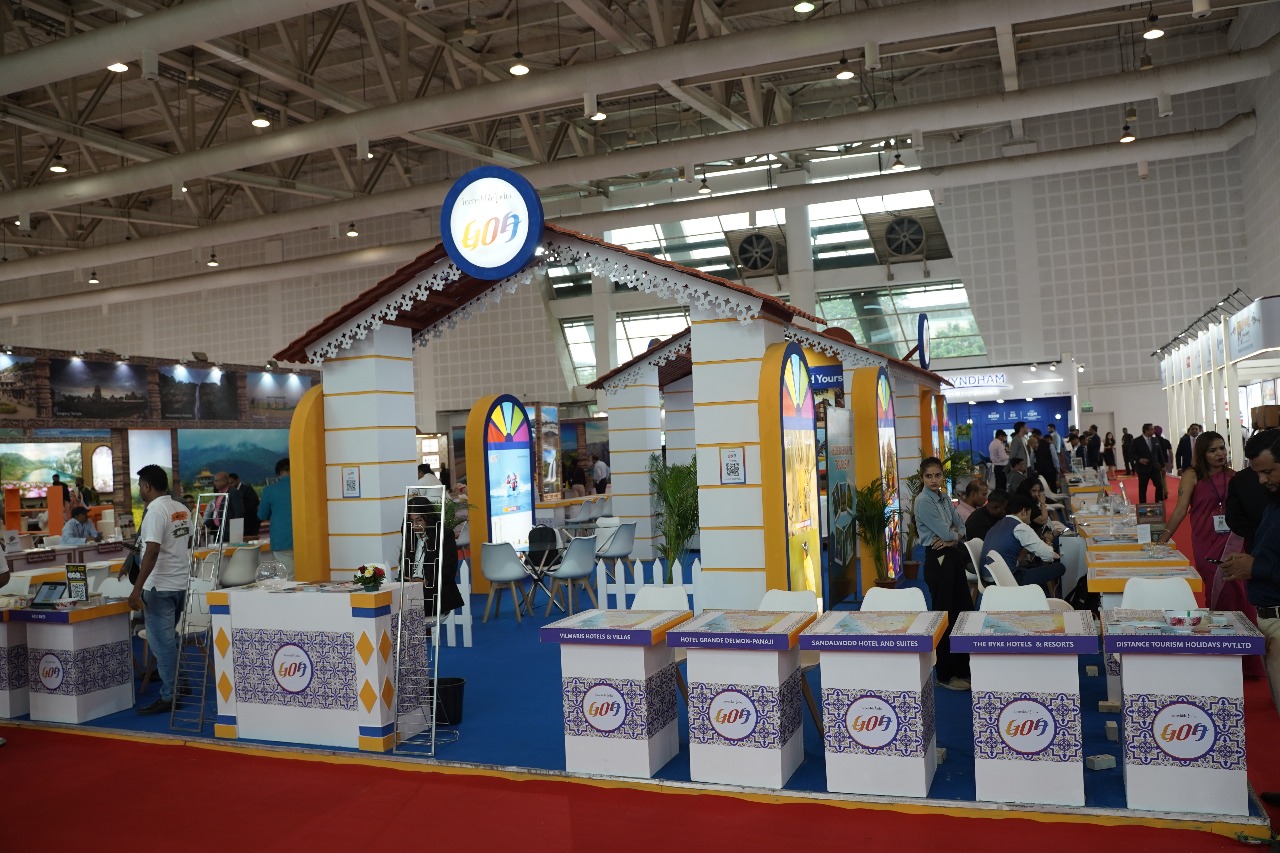
At Stall No. 225, Goa Tourism will host structured engagements and business meetings with international tour operators, travel buyers, and industry leaders. Recognised as one of the world’s leading travel trade exhibitions, ITB Berlin brings together tourism boards, airlines, hospitality brands, travel companies, technology providers, under one roof. Goa’s continued participation at this prominent platform reflects its sustained focus on strengthening international partnerships, expanding outreach in key markets, and positioning Goa as a dynamic, year-round destination.
During the three-day event, the Goa delegation will undertake focused B2B meetings with tour operators, travel buyers, airline representatives, and media stakeholders to explore collaborative opportunities and enhance trade engagement. The participation will also enable Goa Tourism to assess emerging travel trends and align its offerings with evolving global preferences. At Stall No. 225, Goa Tourism will showcase a wide spectrum of tourism experiences that highlight the State’s depth and diversity.
These include heritage and cultural tourism, spiritual circuits, wellness and yoga retreats, hinterland exploration, adventure tourism, river cruises, culinary experiences, and immersive monsoon programmes. The emphasis will be on curated experiences that encourage meaningful travel and longer stays. Alongside its varied offerings, Goa Tourism will also present its broader vision for responsible and sustainable development through its regenerative tourism framework, demonstrating how tourism growth is being aligned with community participation, heritage preservation, and environmental stewardship.
Hon’ble Tourism Minister Shri Rohan A. Khaunte stated “Our participation at ITB Berlin 2026 reflects Goa’s sustained and strategic engagement with the global tourism industry. As one of India’s leading tourism destinations, it is important that we actively strengthen our presence in key international markets. This platform enables us to present the depth and diversity of Goa’s tourism offerings while engaging directly with global tour operators, travel buyers, and industry leaders. We are focused on building long-term partnerships that enhance destination visibility, attract quality tourism, and contribute meaningfully to the State’s economic growth.”
The Director of Tourism Shri Kedar Naik added that the focus will be on attracting quality tourism and building long-term collaborations with global stakeholders. Goa’s participation reflects a strategic approach to expanding its international footprint while reinforcing its identity as a destination offering authenticity, diversity, and responsible travel experiences. Through its presence at ITB Berlin, Goa Tourism continues to strengthen its global positioning and reaffirm its commitment to meaningful international engagement.
28, Feb 2026
Decentralization and rising non‑metro demand are reshaping India’s retail sector
Multi‑party data and hyperlocal playbooks as key market differentiators, reveals a report by ClarityX and Mastercard, co-powered by MapmyIndia data
New Delhi, India, Feb 28: Decentralization of demand and rapid premiumization are accelerating India’s retail transformation, according to a new report published by ClarityX, an AI-driven data analytics and consulting firm supported by MapmyIndia founders and Mastercard. The report, “Winning in India’s Retail Sector–Harnessing Next‑Gen Analytics to Drive Transformative Growth”, leverages MapmyIndia data and examines demand and supply trends from 2023–2025 and highlights how multi-party data and hyperlocal decision-making are becoming essential in an increasingly diverse retail landscape.
“The ClarityX Mastercard India Retail report highlights how the 2Hs (Highways and Highstreets) are emerging as the new demand engines and the 3Fs (Fuel, Food and Fashion) are driving tier 3- 5 towns to grow twice as fast as their metro peers. The seeping of retail demand and its premiumization at lower demographics are strong markers of democratisation of purchasing power and inclusive economic growth. The evolution of AI-enabled retail intelligence is bringing together multi-party datasets that identify high‑potential geographies, shifting consumer demand and enabling precision-led expansion strategies,”said Rakhi Prasad, Co-founder, ClarityX and Non-executive Director, CE Info Systems Ltd (MapmyIndia Mappls)
“India offers extraordinary growth potential for retailers, but real success lies in understanding how consumer behaviour is evolving. Aggregated and anonymized payments data can tell us who customers are, how they shop and what they value. When this is combined with traffic patterns, POI (point of interest) intelligence and search analytics, it creates a powerful, holistic view of the market. The retailers who turn this intelligence into decisive action will be the ones who lead,” said Rajesh Chopra, Senior Vice President & Head, Advisors, South Asia at Mastercard.
Non-metro India powering the next phase of growth
Tier 3–5 cities are growing almost twice as fast as metros, driven by higher disposable incomes, rising aspirations and a lower starting consumption base. Categories from dining to apparel are seeing clear trading‑up behaviour, but the meaning of ‘premium’ varies sharply by geography—making hyperlocal product assortments increasingly important as mass‑premium offerings lose relevance.
With Tier 1–2 markets approaching saturation, highway and high‑street retail corridors (2H) are emerging as new demand engines. Fuel and food consumption along these routes indicate rising footfall, first‑time brand adoption and the formation of new retail hubs. Future growth will depend on category mix, micro-marketing and the ability to understand consumers at a highly granular level.
Brands that can tailor their product, pricing, promotion and distribution strategies to local nuances will lead India’s next retail chapter.
Key findings from the ClarityX–Mastercard Retail Report
- Offline consumer spends grew 20% between 2023–25, while retail outlets expanded 25% in the same period.
- Electronics, durables and jewellery are still in early growth phases, while footwear has reached maturity across Tier 1–5; F&B and apparel are now nearing maturity.
- Grocery spending rose 74% nationally, but growth was uneven—32% in Tier 1–2 vs 104% in Tier 3–5 cities.
- Premiumization varies by income, exposure and city tier—making it a relative, not universal concept.
- Spending above Rs 25,000 saw the highest growth across categories, indicating unprecedented up‑trading.
- Among organized retail categories, F&B grew the fastest at 89% over three years.
|
|
|
28, Feb 2026
Rohde & Schwarz and Viasat to collaborate on NB-NTN IoT test plan for connectivity via satellite
Feb 28: Viasat and Rohde & Schwarz have joined forces to boost testing for Narrowband Non-terrestrial Networks (NB-NTN) IoT devices connecting via satellite. By thoroughly validating devices and confirming interoperability with Viasat’s network, the collaboration aims to help ensure uninterrupted connectivity for a wide range of satellite-based Internet of Things (IoT) applications. Visitors to MWC Barcelona 2026 can experience the test plan in action.

The test plan with Viasat runs on the CMX500 one-box tester for NTN testing.
Viasat, a global leader in satellite communications, and Rohde & Schwarz, a leading provider of test and measurement solutions, are working together to strengthen and expand testing for Non Terrestrial Network (NTN) capabilities, specifically for NB-IoT devices. The collaboration aims to ensure that chipsets, modules and devices interoperate seamlessly with Viasat’s satellite network and comply with 3GPP Release 17 standards.
Deploying advanced testing methodologies upholds the highest standards of quality, performance and reliability for Viasat’s connectivity services: delivering ubiquitous IoT applications in areas without terrestrial network coverage.
The certification test plan with Viasat entails protocol, performance and RF test scenarios. It is based on the CMX500 one-box signaling tester from Rohde & Schwarz, a versatile solution designed for testing various NTN technologies, including New Radio (NR-NTN) and NB-NTN. In a single instrument, the CMX500 covers R&D through certification and carrier acceptance tests, guaranteeing reliable and repeatable results. It empowers engineers to accelerate development, ensure quality and confidently deploy reliable NTN services, safeguarding that the whole ecosystem can achieve the highest levels of performance.
Rohde & Schwarz will showcase first test results covering protocol, performance and RF test scenarios of the test plan at the Rohde & Schwarz booth 5A80 in hall 5 from March 2 to 5, 2026 at MWC Barcelona 2026. Visit Viasat in hall 6, booth 6A20.
28, Feb 2026
Severe Morning Headaches: Causes, Warning Signs, and What Your Body Is Trying to Tell You
By:- Dr. B K Madhusudhan, Lead Consultant, Neurology, Aster RV Hospital, Bangalore
Waking up with a severe headache can be distressing and may interfere with daily functioning. While an occasional morning headache can occur due to simple reasons like poor sleep or dehydration, repeated or intense headaches on waking often indicate an underlying issue that needs attention. From a medical point of view, morning headaches are usually linked to what happens to the body during sleep, including changes in oxygen levels, blood pressure, muscle tension and brain chemistry.
During sleep, breathing patterns, posture and hormone levels fluctuate. If sleep quality is poor, pain-regulating mechanisms in the brain are affected, making headaches more likely in the early hours of the morning. Morning headaches should not be dismissed, especially when they occur frequently or are unusually severe.
Common medical and lifestyle causes
One of the most significant medical causes of morning headaches is sleep apnea. In this condition, breathing repeatedly stops and starts during sleep, reducing oxygen supply to the brain. This often results in a dull, pressure-type headache on waking along with symptoms such as loud snoring, dry mouth, and daytime fatigue. Insomnia and fragmented sleep can also trigger headaches by increasing stress hormones and muscle tension.
Teeth grinding during sleep places strain on the jaw and temple muscles, leading to tight, band-like headaches in the morning. Poor sleeping posture or incorrect pillow support can strain the neck and upper back muscles, causing headaches that start at the back of the head and radiate forward. Dehydration is another common cause, as fluid loss overnight can reduce blood volume and trigger head pain. Skipping meals or low blood sugar levels, especially in people with diabetes or those who fast, can also cause early-morning headaches.
Migraines often worsen in the early morning due to changes in sleep cycles and brain chemicals. These headaches may be accompanied by nausea, light sensitivity, or visual disturbances. Certain medications, including frequent painkiller use, caffeine, or sleeping pills, can lead to rebound or withdrawal headaches that are felt soon after waking. Persistent morning headaches may also be linked to uncontrolled high blood pressure, especially when associated with throbbing pain at the back of the head.
Solutions, warning signs, and when to seek help
Addressing morning headaches starts with improving sleep quality. Maintaining regular sleep and wake times, using a supportive pillow, avoiding screens before bedtime and ensuring adequate hydration can significantly reduce symptoms. Managing stress, eating balanced meals and limiting caffeine and alcohol intake at night are also important preventive steps. If teeth grinding is suspected, dental evaluation and night guards may help. Treating underlying conditions such as sleep apnea or hypertension can dramatically improve morning headaches.
However, some morning headaches act as warning signs. Headaches that progressively worsen, are associated with vomiting, confusion, vision changes, limb weakness or wake a person from sleep require urgent medical evaluation. These symptoms may suggest increased pressure inside the skull, infections or neurological conditions that need prompt diagnosis.
In summary, waking up with a severe headache is not always harmless. While many causes are lifestyle-related and manageable, frequent or intense morning headaches can be a symptom of an underlying medical condition. Early recognition and appropriate care are essential to prevent complications and improve overall quality of life.
28, Feb 2026
YBE Nails Lashes Brows Opens in Chennai, Bringing International Nail, Lash and Brow Techniques to India’s Urban Youth Market
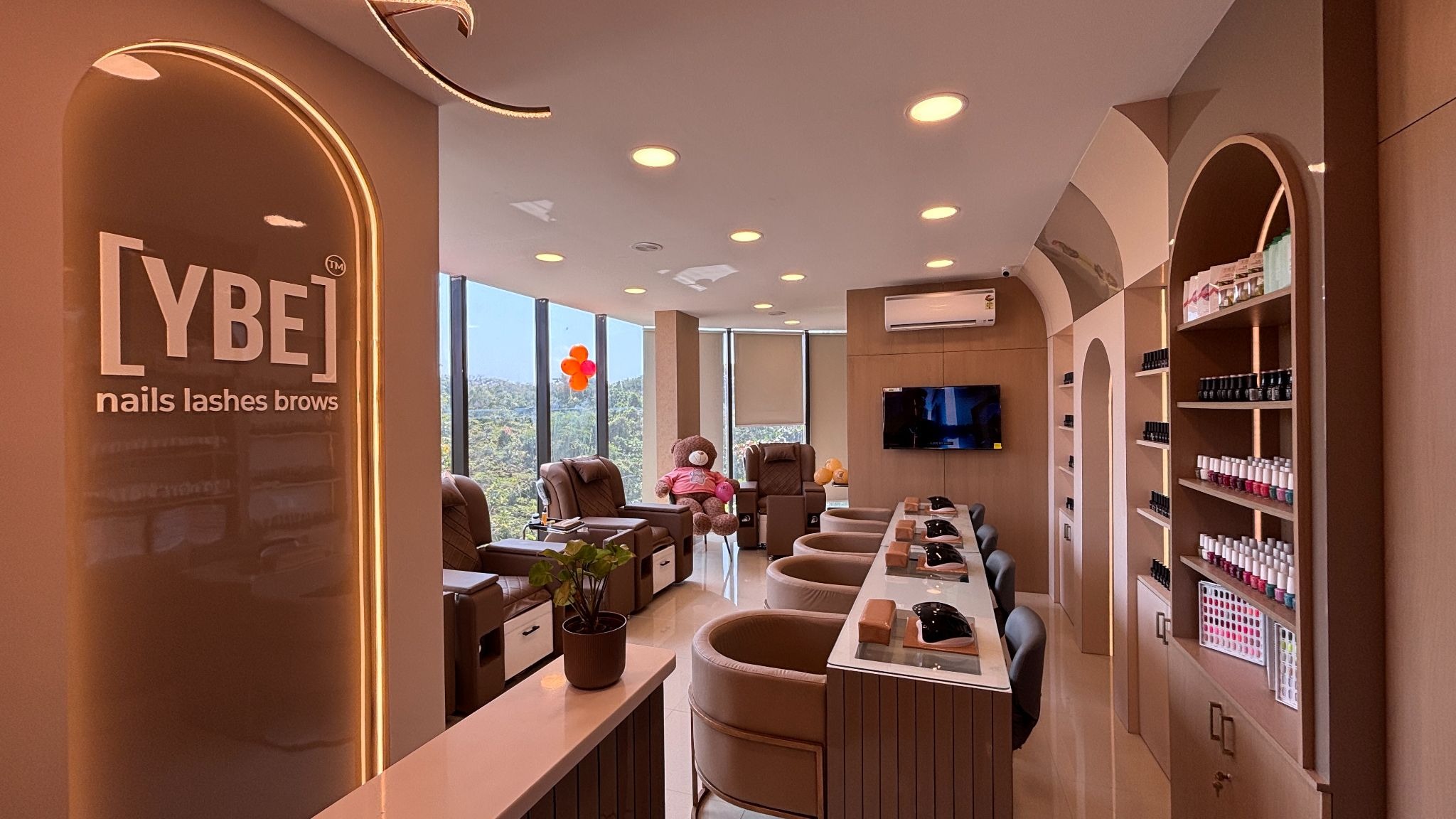
Feb 28: YBE Nails Lashes Brows, a specialised salon concept focused exclusively on nail, lash and brow services, is launched by Tip and Toe Salon, pioneers in the nails, lash and brow salon industry, with its first outlet in Chennai. The brand enters the market as a positioned alternative to both premium salons and unorganised budget setups – offering professionally delivered services at accessible price points, within a compact, design-forward format built for the urban youth demographic.
The Chennai outlet spans approximately 400 sq. ft. and is configured with four nail stations, three pedicure loungers, a dedicated lash and brow zone, and a digital-first booking and payment infrastructure supporting UPI and card transactions. The space has been designed to reflect the brand’s aesthetic identity – minimal, modern interiors with a beige-chrome palette – while maintaining operational efficiency. Critically, every service on the menu is designed to be completed within 60 minutes, a deliberate operational commitment that sets YBE apart from conventional salons and directly addresses the time constraints of its core clientele: working professionals and college students who expect quality without the wait.
YBE‘s service offering spans three categories. The nails menu includes gel polish applications – among them Cat Eye and Nail Art formats – Gel X systems, manicures, and pedicures. Lash services cover Classic, Hybrid, and Volume extensions, as well as lash lifting. The brow bar offers lamination, tinting, and shaping. A number of these treatments, including Gel X application, advanced nail art techniques, lash lifting, and brow lamination, are not widely available in a standalone salon format in Chennai, positioning YBE as an early entrant in the city’s organised beauty bar segment. All techniques are drawn from international markets and delivered by a team trained by professionals from TIP&TOE, with senior technicians overseeing quality and consistency at the outlet.
The brand’s pricing model is designed to bridge the gap between premium and budget offerings. Gel polish and mani-pedi services are priced at accessible rates for the target demographic, lash services are competitively positioned against premium salons, and introductory offers are available at launch.
Chennai was identified as the first location on the basis of its rapidly growing urban youth population – college students, young working professionals, and content creators – and the relative absence of organised, specialised beauty bar formats in the city. YBE is structured as a scalable, franchise-ready model, with expansion planned across metro and Tier 1 cities including Mumbai, Pune, Bangalore, Hyderabad, and Ahmedabad, and subsequent rollout into Tier 2 markets.
“YBE has been built to address a clear gap in the Indian beauty market – a focused, process-driven format that delivers international-standard services at a price point accessible to the Gen Z and young professional consumer. Chennai is the right starting point, and we are committed to building a consistent, quality-led experience as we scale.” – says Manisha Surave, South Zonal Operation Head, Grey Trendy Professional Pvt Ltd.
YBE Nails Lashes Brows now welcomes appointments at its Chennai outlet.
Address of Salon: 2nd floor, 46, Besant Ave Rd, URUR, ADYAR, CHENNAI, TN-600020


