


24, Jun 2026
Markets Trade in a Narrow Range as IT Stocks Lead Early Gains
Mumbai, June 24: Indian equity markets traded within a narrow range on Wednesday morning as investors assessed improving macroeconomic conditions and sector-specific opportunities. Lower crude oil prices and a stable rupee helped support sentiment, although caution persisted due to concerns over below-normal monsoon rainfall.
The benchmark Sensex and Nifty posted modest gains in early trade, extending the subdued movement seen in the previous session. Market activity remained selective, with investors favouring sectors expected to benefit from current economic trends.
Information technology stocks led the gains, emerging as the strongest performers among major sectors. Healthcare and pharmaceutical shares also attracted buying interest, reflecting investor preference for relatively defensive sectors. Banking stocks traded in positive territory, lending additional support to the broader market.
Meanwhile, metal and automobile stocks faced mild selling pressure as traders booked profits and reassessed near-term growth prospects.
The decline in global crude oil prices has provided relief for India by reducing inflationary pressures and easing concerns over import costs. A more stable currency and reduced foreign investor outflows have further strengthened market confidence.
Despite these positives, market participants continue to monitor the progress of the monsoon season. Lower-than-expected rainfall could affect rural demand and consumer spending, particularly in sectors closely linked to agricultural incomes.
Analysts expect markets to remain driven by sector-specific developments and economic indicators in the near term, with investors maintaining a balanced approach amid mixed signals from domestic and global markets.
- 0
- By Neel Achary

24, Jun 2026
Encalm Eats Debuts with its First In-House Brand Concept, IndiSip Café at Delhi Airport
June 24: Encalm, a leader in redefining the airport hospitality experience in India, has announced the launch of Encalm Eats – a dedicated food and beverage vertical focused on creating distinctive culinary brands and hospitality-led dining experiences. Built on the same philosophy of creating delightful experiences that defines Encalm, the venture combines thoughtful concept creation, culinary craftsmanship, and operational excellence to deliver memorable food experiences.
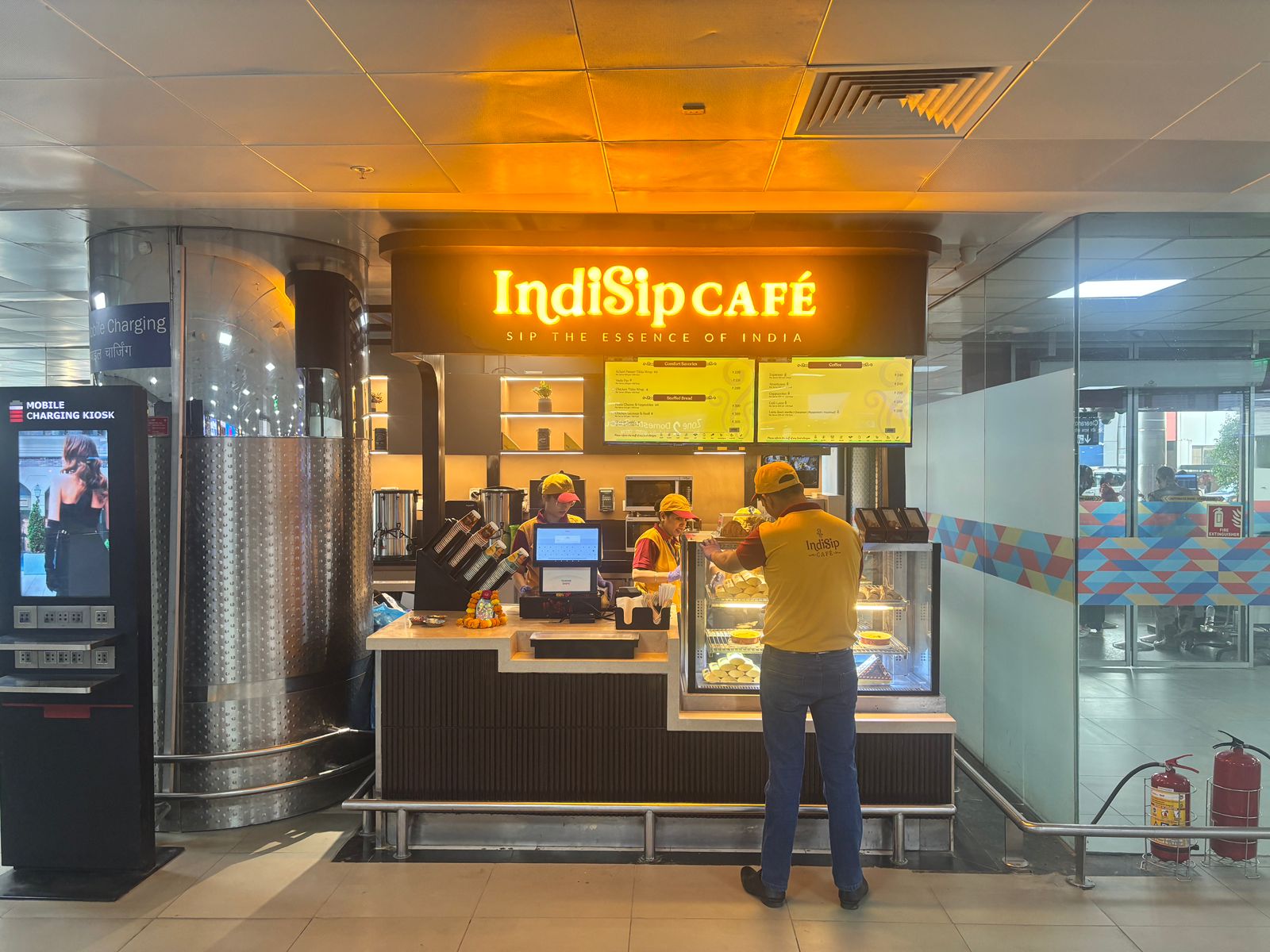
Conceived as a natural extension of Encalm’s ecosystem, Encalm Eats will focus on developing original food and beverage concepts while also managing a portfolio of partner brands, bringing together authentic flavours, contemporary formats, and consistent execution to deliver culinary experiences tailored to evolving consumer preferences.
Marking the venture’s first milestone, IndiSip is now operational at Delhi Airport. Inspired by the brand’s promise of bringing India to travellers, one sip at a time, the café celebrates the country’s rich beverage traditions alongside familiar comfort foods. From signature chai in flavours like Ginger Cardamom, Kesar, Gulab and Kashmiri Kahwa to iced lattes, handcrafted espressos and indulgent shakes, every offering is thoughtfully crafted to celebrate India’s rich beverage heritage while bringing familiar flavours into the modern travel journey. The food menu complements this with regional favourites such as the fan-favourite Masala Samosa, Khopara Patties, Irani Bun Maska and Achari Paneer Tikka/Chicken Tikka Wraps, alongside café classics like croissants, muffins and cookies.
“Encalm Eats marks the next chapter in Encalm’s journey to build a comprehensive hospitality ecosystem that resonates with today’s consumers. Food and beverage has always been one of hospitality’s most powerful expressions, and with Encalm Eats we are bringing together our understanding of consumer needs, culinary craftsmanship, and thoughtfully designed experiences to build distinctive food brands. IndiSip is the first step in that journey, reflecting our belief that every meal, beverage, and interaction should enrich the overall guest experience.” said Vikas Sharma, Group Chief Executive Officer, Encalm.
Deepak Bhatia, Business Head, Encalm Eats, said
“With Encalm Eats, we are building a portfolio of food and beverage concepts rooted in authentic flavours, strong consumer insight, and consistent quality. IndiSip is the first step, a café that brings together India’s rich beverage culture and familiar café favourites in a contemporary format. As we grow, every concept we create will be designed with the same focus on quality, consistency, and memorable guest experiences.”
The launch of IndiSip marks the beginning of Encalm Eats’ broader ambition to build a portfolio of innovative food and beverage offerings across diverse formats and destinations. Building on Encalm’s established presence across the hospitality ecosystem, the venture will continue to develop concepts that are rooted in authentic flavours, shaped by consumer insight, and delivered with the consistency, quality, and creativity that define the Encalm experience. As it expands, Encalm Eats will continue to respond to the evolving preferences of today’s consumers through distinctive culinary brands and thoughtfully crafted dining experiences.
24, Jun 2026
WINS Acquires Control of 5 Newbuilt DP Crew Transfer Vessels Through Acquisition of Controlling Stake in Fast Offshore Supply Pte Ltd
JAKARTA, June 24 - WINS acquires control through taking full ownership of Fast Offshore Supply Pte Ltd, expanding into the building and operation of Fast Aluminium Crew Transfer Vessels (CTV) with 5 units of new CTVs to be delivered in 2027 and a shipbuilding contract of 5 additional units for 2028 delivery.
PT Wintermar Offshore Marine Tbk (WINS) has acquired the remaining 52.5% shareholding of associated company Fast Offshore Supply Pte Ltd (“FOS”) in Singapore, and 49% of PT Fast Offshore Indonesia (“FOI”), in which WINS previously had a 51% stake, thereby gaining full control of FOS and its subsidiary FOI.
FOS has a significant presence in Brunei, having supplied offshore vessels there for 10 years. In 2025, FOS won an international tender to supply 5 units of next generation aluminum Crew Transfer Vessels (CTV) to a major oil company in Brunei, with delivery in 2027. These 5 units will be owned by FOS and chartered for an initial 5-year period with options to extend. Subsequently, FOS was awarded a shipbuilding contract by the same client to build and sell an additional 5 units of CTVs by 2028. These 55m CTVs are innovatively designed to meet stringent requirements, particularly for availability and operability throughout the year. Equipped with a motion-compensated gangway for safe personnel transfer to offshore platforms, DP systems, and triple bow thrusters, they will be powered by 4 units of CAT engines delivering 9,000 BHP and 4 units of Hamilton HT810 waterjets for propulsion. These high tier vessels provide critical station-keeping capability for safe personnel and cargo transportation services.
FOS is a specialized shipbuilder, having designed and built aluminum vessels in their shipyard in Singapore since 2008. FOS currently owns 7 units of Fast Multi-purpose Aluminum Vessels (FMPV), which were built in FOS’s shipyard in Singapore. With the acquisition, Wintermar’s high tier fleet will increase from 12 to 22 units including the 5 new build CTVs, while the DP fleet owned will increase to 25 units.
With strong oil prices, the OSV industry globally has demand growth while supply of new vessels has been limited. The lack of significant new building in the past years has also brought the average age of Wintermar’s fleet up to 16 years. This acquisition brings a fleet of newly built DP vessels with long term contracts, thus lowering the average age of the fleet to 14 years and providing earnings visibility, as well as introducing a new earnings stream from shipbuilding.
The Company is acquiring 52.5% of FOS from Seacoral Maritime Pte Ltd, an affiliated company of WINS, at a valuation of US$26 million, and 49% of FOI from FOS at US$7 million. The acquisition prices are in line with the independent valuation report, and this transaction has obtained a fairness opinion issued by an Independent Appraiser, KJPP Tri, Santi dan Rekan, dated 17 June 2026, in compliance with OJK regulation POJK 42/2020 regarding Affiliated Party Transactions and Potential Conflict of Interest Transactions, which states that the affiliated party transaction by WINS is fair. The transaction value represents a price-to-book ratio of 1.01% (FOS) and 0.96% (FOI) and is earnings accretive, as WINS will be able to fully consolidate the earnings arising from the 5-year charter and the shipbuilding contract. WINS will finance the acquisition through internal cash flow and a loan of US$20 million. Following the acquisition, FOI will be converted to a fully domestic Indonesian company compliant with Indonesian cabotage regulations and will focus on supplying Indonesian-flagged aluminum vessels in anticipation of stronger Indonesian demand.
With the acquisitions, FOS and FOI will become wholly owned subsidiaries of WINS, allowing WINS to fully capture the financial upside of the imminent charter and shipbuilding contracts without minority leakage. WINS has further strengthened its position as a leading OSV owner and operator of DP vessels in Asia and acquired a new fleet of DP vessels with long term contracts. This acquisition has expanded the scope of business and improves earnings visibility for the WINS group.
24, Jun 2026
AD Ports Group Increases Ownership in Global Feeder Shipping to 81% by Acquiring an Additional 30% Stake
Abu Dhabi, UAE – 24 June 2026: AD Ports Group (ADPORTS:ADX), a leading global enabler of integrated trade, industry and logistics solutions, today announced that it has acquired an additional 30% equity stake valued at AED 1.1 billion (USD 300 million) in one of its most strategic assets, Global Feeder Shipping (GFS), raising its holding to 81%.
In February 2024, AD Ports Group acquired a 51% stake in Dubai-based GFS, the world’s fourth-largest container feeder shipping line by capacity, with a call option to increase its ownership by December 2026. The Group has now exercised this call option at the same total Enterprise Value of AED 3.67 billion (USD 1 billion) set in 2024. The acquisition will be funded through a mix of debt and asset monetisation transactions.
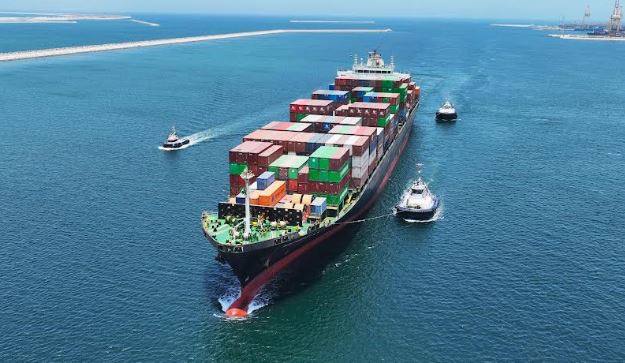
AD Ports Group’s container feeder shipping business, which involves the transport of goods using small and medium-sized vessels between major transit hubs and smaller ports, has grown rapidly since its initial launch in 2020. GFS is among the Group’s most strategically significant assets. Through a sustained period of maritime disruption, GFS has maintained and expanded trade connectivity where other operators withdrew, ensuring the uninterrupted flow of cargo for customers across the GCC region, whilst serving the Indian Subcontinent, Red Sea, Far East, Mediterranean, and Africa regions — reinforcing AD Ports Group’s role as a reliable enabler of trade through volatility. In doing so, it has extended the Group’s geographic reach, broadened its customer base, and connected its terminals to a wider set of economies, with increased depth across the Red Sea and the Arabian Gulf.
The increase in ownership to 81% reinforces AD Ports Group’s cash flow generation and provides greater strategic and operational control over this core asset, enabling deeper integration with the Group’s ports, economic cities and logistics operations. This will further strengthen the end-to-end trade and logistics solutions AD Ports Group offers to customers worldwide.
Captain Mohamed Juma Al Shamisi, Managing Director & Group CEO of AD Ports Group, said: “Through the acquisition of an additional 30% stake in Global Feeder Shipping, AD Ports Group is reaffirming its commitment to investing in one of the most important and high-performing assets within our integrated business portfolio. GFS has expanded our reach into new markets and brought us closer to our customers, connecting our ports to more economies across the Red Sea and the Gulf at a time when reliable trade connectivity matters most. Our increased ownership in GFS allows us to deepen its integration within the Group’s portfolio and enables further growth across our shipping business. We will now be in a stronger position to accelerate our journey to enable trade for our stakeholders, in line with the vision of our wise leadership.”
Amir Maghami, CEO of Global Feeder Shipping, said: “Today marks an important step for GFS as we become more closely integrated into AD Ports Group, reinforcing the strength of our partnership. While the shipping industry continues to adapt to volatile market conditions, AD Ports Group’s support has enabled us to steadily expand our services and grow our fleet. Staying flexible and keeping customers at the centre of what we do has always been our priority, and I am excited to build on this momentum as we broaden our network and deliver even greater value in the months and years ahead.”
In 2025, GFS transported 2.8 million TEUs (Twenty-Foot Equivalent Units) and made more than 700 voyages covering 89 ports in 54 countries. Since the acquisition of its initial 51% stake in February 2024, GFS generated total cumulative EBITDA of over AED 1.8 billion (USD 500 million).
Alongside SAFEEN Feeders and Transmar, GFS forms the core of the Group’s container feeder shipping business, providing essential services for the movement of goods in and out of the UAE. In 2025, overall container feeder shipping revenue rose 17% year-on-year from 2024. The business also expanded the Group’s global footprint, playing an integral role in its trade ecosystem spanning Ports, Economic Cities & Free Zones, Maritime & Shipping, Logistics, and Digital services business clusters.
In 2025, the total revenue of the Maritime & Shipping Cluster grew 33% to AED 10.7 billion while the Cluster EBITDA rose 25% year-on-year to AED 2.5 billion. Overall, the Maritime & Shipping Cluster generated 51% of AD Ports Group’s revenue, and 45% of the Group’s EBITDA.
24, Jun 2026
Bitget Rewards Cross-Market Trading With New VIP Miracle Badge Program

Global, June 24: Bitget, the world’s largest Universal Exchange (UEX), has launched the VIP Miracle Badge Program, a new initiative designed to recognize active traders across crypto, stocks, and CFD markets while expanding access to premium services and exclusive rewards. The program introduces a series of achievement badges tied to trading activity across multiple asset classes and forms part of Bitget‘s broader effort to build a comprehensive VIP ecosystem for multi-asset traders.
As trading increasingly moves beyond a single asset class, users are building strategies across crypto, equities, commodities, foreign exchange products, and derivatives. The VIP Miracle Badge Program was created to recognize that evolution, rewarding traders who actively participate across the broader Universal Exchange ecosystem rather than within a single market segment.
“Most traders today rarely stay within one market,” said Gracy Chen, CEO of Bitget. “As users diversify their portfolios and move across markets, expectations around service, execution, and access continue to evolve. The VIP Miracle Badge Program builds on our VIP offering by recognizing trading achievements while giving users access to services and experiences designed for a multi-asset environment.”
The VIP Miracle Badge Program introduces four achievement categories based on trading participation and performance across different markets. The UEX Trading Master badge recognizes users active across multiple asset classes. The Futures Trading Master badge is designed for derivatives traders, while the Stock Trading Master and CFD Trading Master badges recognize participation across tokenized equities, commodities, foreign exchange products, and global indices.
The launch follows a series of initiatives aimed at expanding access to Bitget‘s VIP services. Recent programs include the VIP Fast Track Program, which allows eligible traders to access VIP benefits more efficiently, and the VIP Airdrop Season, which provides exclusive opportunities across products and asset categories. Together, these initiatives support Bitget‘s Universal Exchange strategy by creating a more connected experience for users participating across crypto and traditional financial markets.
As Bitget continues to expand access to tokenized stocks, commodities, foreign exchange products, and digital assets through a single platform, the VIP Miracle Badge Program adds a new layer of recognition and rewards for traders operating across global markets. The initiative reflects the growing role of multi-asset participation within the Universal Exchange ecosystem and the increasing demand for services built around the needs of active traders.
23, Jun 2026
AD Ports Group Launches AI-Powered Intelligence Headquarters IHQ, Marking 20 Years of Digital Innovation
Abu Dhabi, UAE – 23 June 2026: AD Ports Group (ADX: ADPORTS), a leading global enabler of trade, industry and logistics solutions, today announced the launch of its AI-driven business intelligence headquarters IHQ, a Group-wide platform employing thousands of digital workers embedding AI across 20 global workstreams
The launch of the platform is aligned with the UAE’s National Strategy for Artificial Intelligence to position the nation as a global AI leader by 2031, and underscores two decades of continuous investment by AD Ports Group in digital innovation.
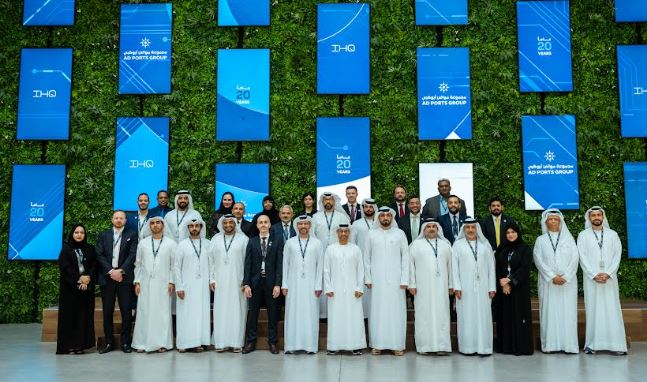
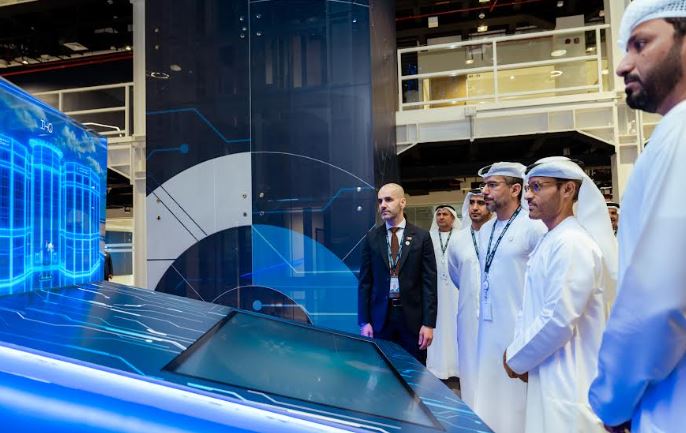
Launched in the presence of H.E. Dr Mohamed Al Kuwaiti, Head of Cybersecurity Council for the UAE Government, at the Group’s Digital District- Zayed Port, the new platform will accelerate the Group’s digital transformation by systematically leveraging the efficiencies of AI through an approach that emphasises security, transparency, and the responsible use of artificial intelligence.
For AD Ports Group’s customers and partners, the launch of IHQ will progressively improve the speed, efficiency, and customer-centric nature of the Group’s service offerings across its portfolio of Ports, Economic Cities & Free Zones, Maritime & Shipping, Logistics, and Digital Clusters.
Captain Mohamed Juma Al Shamisi, Managing Director & Group CEO, AD Ports Group, said: “Over 20 years, AD Ports Group has grown from an Abu Dhabi-focused ports operator into a global trade enabler offering a full range of ports, transport, logistics and industrial solutions. Investment in a solid digital foundation has made this possible. With IHQ, we are building on this foundation to create an enterprise that continuously assists our ability to think, learn and evolve as a global business. Under the wise guidance of our leadership in the UAE, IHQ will leverage AI as a force multiplier for our people, in support of the 2031 National Strategy for AI.”
Mohamed Jamal-Eddine, Group Chief Digital & Information Officer, AD Ports Group, said: “At AD Ports Group, we will continue to invest ahead of the curve in the latest technologies to strengthen the UAE’s position as the world’s most intelligent trade hub. IHQ will make AI operational at enterprise scale. Every workstream selected for AI-powered transformation sits at a critical juncture, where artificial intelligence can measurably improve speed, accuracy and decision quality.”
IHQ will focus on integrating AI capabilities deep into the enterprise workstreams of the Group, improving efficiency, decision making, and customer service, through a perpetual improvement process that speeds the profitable expansion of the business.
At the time of the launch, IHQ features a number of transformed workflow demonstrations across workstreams, including port and berth optimisation, vessel arrival orchestration, software development and talent acquisition.
Over the coming months, IHQ will enable systematic augmentation of AI across AD Ports Group’s 20 workstreams, multiplying the Group’s operational capacity.
AD Ports Group is a recognised leader in AI implementation. In 2025, the Group was awarded a global Guinness World Record for deploying the most AI agents in a single logistics facility. During the same year, the Group published a blueprint, “Building Human-AI Teams: AD Ports Group’s Blueprint for Tomorrow’s Workforce” that outlined how AI-powered agents are transforming its operations.
23, Jun 2026
DSP Mutual Fund asks investors hard questions on small caps
23, Jun 2026
Sustained 7-8 pc Growth Key to Achieving Viksit Bharat by 2047: EAC-PM Chairman
New Delhi, June 23: India will need to sustain an annual economic growth rate of 7-8 per cent over the coming decades to achieve its vision of becoming a developed nation by 2047, according to S. Mahendra Dev, Chairman of the Economic Advisory Council to the Prime Minister (EAC-PM).
Speaking on India’s long-term development roadmap, the EAC-PM Chairman emphasized that consistent economic expansion, backed by reforms and investments, will be crucial for transforming the country into a developed economy by the centenary year of its independence.
He highlighted that strong growth alone would not be sufficient and must be accompanied by improvements in productivity, employment generation, infrastructure development, education, healthcare, and technological innovation. Continued expansion in manufacturing, services, and digital sectors will also play a critical role in driving economic progress.
According to the Chairman, India is well-positioned to capitalize on its demographic advantage, growing consumer market, and expanding global economic footprint. However, maintaining a high growth trajectory will require coordinated efforts from policymakers, businesses, and institutions.
He further noted that investment in human capital, innovation, and competitiveness will be essential to ensuring inclusive and sustainable development. Strengthening economic resilience and accelerating structural reforms will also help India navigate global uncertainties while pursuing its long-term aspirations.
The remarks come amid ongoing discussions on the Viksit Bharat@2047 vision, which seeks to transform India into a developed, prosperous, and globally competitive nation over the next two decades.
The statement underscores the importance of sustained economic momentum as India charts its path towards becoming one of the world’s leading economies by 2047.
23, Jun 2026
VIRGIO Bets on Made-On-Demand Fashion to Build the World’s Largest Demand-Led Fashion Brand
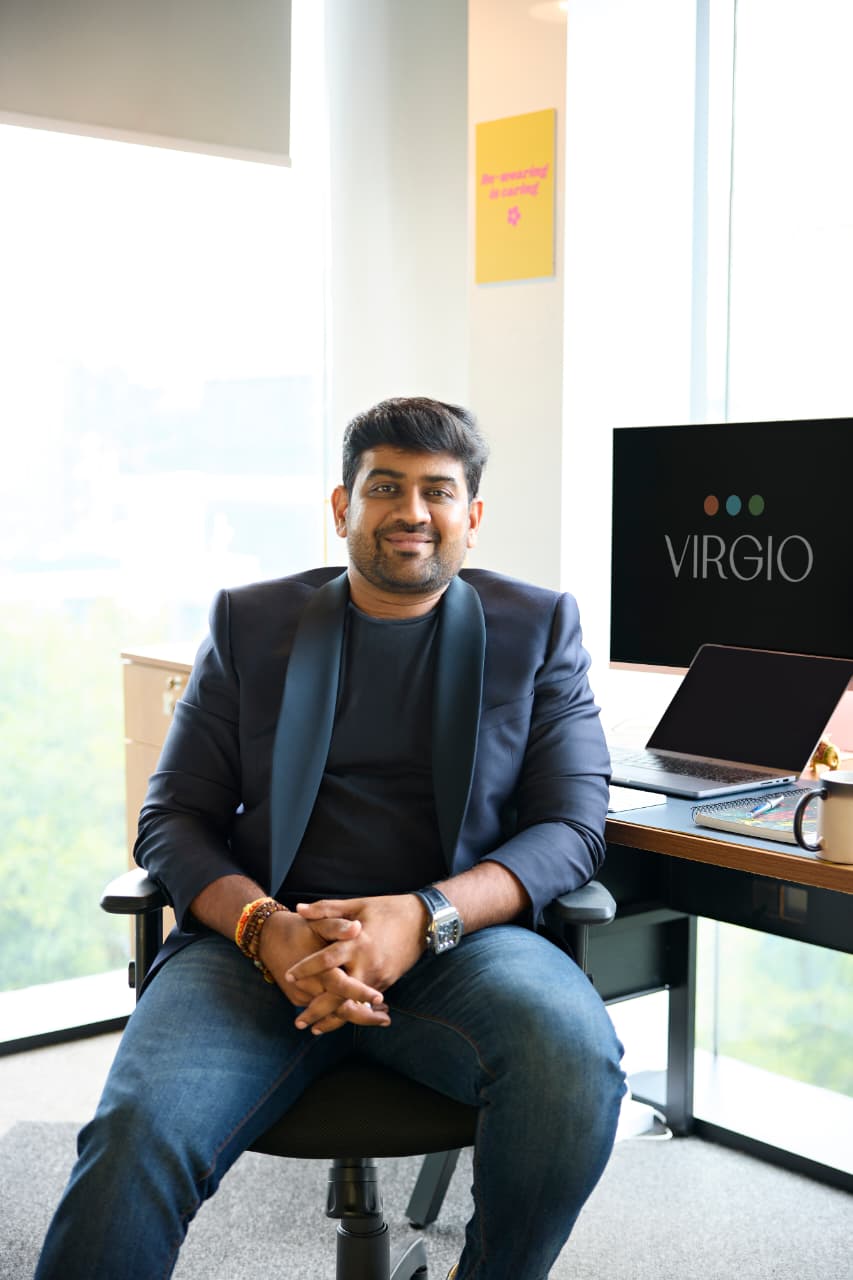
Bengaluru, India, June 23: As the global fashion industry continues to grapple with overproduction, excess inventory, and increasing demand uncertainty, fashion-tech brand VIRGIO is championing a fundamentally different approach to building fashion – one that starts with consumer demand rather than inventory forecasts.
Amar Nagaram, Co-Founder & CEO, VIRGIO, is building what it aims to become the world’s largest on–demand fashion brand by 2030 through an AI-led operating model that enables fashion to be designed, produced, and scaled based on real-time consumer demand signals.
For decades, the fashion industry has relied on forecasting consumer preferences months in advance and committing significant capital to inventory before understanding actual demand. This approach has often resulted in excess stock, markdowns, and inefficiencies across the value chain. VIRGIO‘s Made–On–Demand (MOD) model seeks to address these challenges by continuously testing new styles in small quantities, analysing consumer response in real time, and scaling production only after demand has been validated.
VIRGIO believes that the fashion industry’s biggest challenge is not manufacturing, but forecasting. In a world where consumer preferences evolve rapidly and trends emerge daily across social platforms, predicting demand months in advance has become increasingly difficult. The company believes the future of fashion will belong to brands that can learn from consumer demand in real time rather than relying solely on long-range forecasts.
At the core of the model is VIRGIO‘s proprietary technology ecosystem, which identifies emerging fashion trends, tracks evolving consumer preferences, and enables rapid decision-making across design, merchandising, and manufacturing. By integrating technology with supply chain operations, the company can move styles from concept to consumer significantly faster than traditional fashion cycles while reducing inventory risk.
The company’s AI-led technology stack continuously analyses emerging fashion trends, consumer behaviour, and demand signals across digital channels. These insights help identify opportunities early, enabling teams across design, merchandising, and manufacturing to respond faster and make more informed decisions. By combining artificial intelligence with human creativity, VIRGIO aims to create a more responsive fashion ecosystem built around consumer demand.
Unlike conventional fashion businesses that prioritise inventory accumulation, VIRGIO‘s demand–led approach is designed to maximise agility, responsiveness, and assortment. Every product launch generates consumer insights that help inform future production decisions, creating a continuous feedback loop between demand and supply.
For consumers, this translates into access to a constantly evolving assortment of fresh styles launched throughout the year rather than waiting for traditional seasonal collections. The model enables VIRGIO to respond to emerging trends faster, offer greater variety, and continuously refine its assortment based on what customers are actively choosing.
The model is further supported by an integrated manufacturing ecosystem that allows the brand to align production capacity with real-time demand patterns. By bringing technology, sourcing, and manufacturing into a unified operating framework, VIRGIO is working to build a more efficient and adaptive fashion supply chain.
By producing only after demand has been validated, the model also helps reduce excess inventory, minimise markdown dependency, and lower the risk of unsold stock. As the fashion industry faces growing scrutiny around waste and overproduction, VIRGIO sees demand–led manufacturing as a more efficient approach to building fashion businesses while creating long-term value across the supply chain.
Amar Nagaram, Co-Founder & CEO, VIRGIO, said: “Fashion has traditionally been built around predicting what consumers might want months in advance. We believe the future belongs to brands that can learn directly from consumers and respond in real time. At VIRGIO, made–on–demand is the foundation of how we operate. Every style generates learning, every demand signal informs production, and every decision helps build a more intelligent fashion ecosystem. Our ambition is to build the world’s largest on–demand fashion brand by 2030 by fundamentally changing how fashion is designed, manufactured, and scaled.”
“The future of fashion won’t be defined by who can produce the most inventory. It will be defined by who can understand consumers the fastest and build products they genuinely want.”
As consumer preferences evolve faster than ever and trend cycles continue to compress, VIRGIO believes the next era of fashion will be defined not by producing more inventory, but by producing smarter inventory. Through its AI-led technology stack, integrated manufacturing ecosystem, and demand-first philosophy, the company is working towards redefining how fashion is built for the modern consumer while creating a more responsive and efficient industry model.
23, Jun 2026
Global Tech Weakness Weighs on Nasdaq, S&P 500 Futures and Nifty IT
June 23: Global markets witnessed weakness in the technology sector, with Nasdaq and S&P 500 futures trading lower, while India’s Nifty IT index also declined amid broad-based selling pressure.
The downturn was driven by profit-booking in major technology stocks after recent gains, along with concerns over elevated valuations in the sector. Investors also turned cautious ahead of key global economic data and expectations around interest rate movements.
The decline in global tech shares weighed on Indian IT stocks, which are closely linked to demand trends in key overseas markets such as the United States and Europe.
Market analysts said the sell-off reflects a combination of valuation concerns, global macroeconomic uncertainty, and cautious investor positioning in technology-heavy equities.
Despite short-term volatility, experts noted that the long-term outlook for the technology sector remains supported by structural growth drivers such as artificial intelligence, cloud computing, and digital transformation.
Overall, the weakness highlights a cautious global risk sentiment impacting major technology indices across markets.


