


8, Jun 2026
RAKEZ convenes industry leaders to simplify ESG adoption and strengthen sustainable business practices
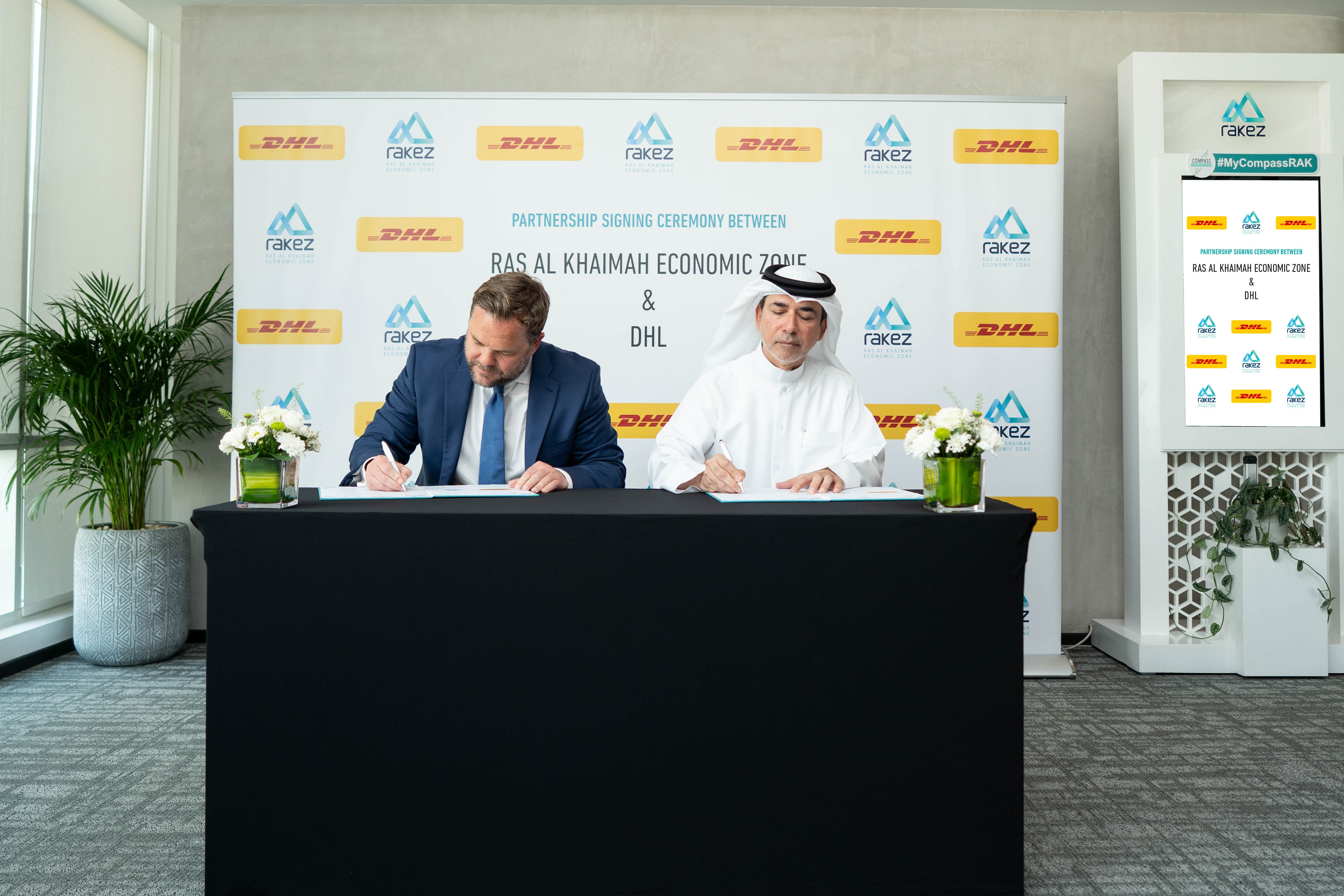
Ras Al Khaimah, 8 June: Ras Al Khaimah Economic Zone (RAKEZ) brought together business leaders, sustainability experts, and industry stakeholders for a knowledge-sharing event titled ‘ESG Simplified – What’s Mandatory, What’s Smart, and What Comes Next’, aimed at helping companies better understand evolving environmental, social, and governance (ESG) requirements and identify practical pathways towards more sustainable operations.
The event featured presentations from RAKEZ, Ras Al Khaimah Municipality’s Energy Efficiency and Renewables Office (Reem), DHL Express UAE, and Olive Gaea, offering practical insights into the evolving ESG landscape and the opportunities available to businesses as sustainability considerations become increasingly integrated into regulatory frameworks, supply chains, and investment decisions.
RAKEZ Chief Strategy Officer Puneet Jain presented on the role of ESG in shaping resilient and future-ready businesses. He highlighted RAKEZ’s commitment to creating an ESG-driven business environment through sustainable infrastructure, environmental efficiency initiatives, transparent governance practices, and community-focused development. Jain also explained how evolving regulations, investor expectations, and global market requirements are making ESG an increasingly important consideration for businesses.
Senior Energy Engineer at Ras Al Khaimah Municipality, Dia AlShamsi, presented on ‘Industrial Efficiency to Support Sustainable Economic Growth in Ras Al Khaimah’, outlining the emirate’s sustainability agenda under the RAK Integrated Sustainability Strategy 2050. AlShamsi highlighted industrial decarbonisation initiatives, mandatory energy audits for large industrial facilities, and support programmes designed to help businesses improve energy efficiency and adopt renewable energy solutions.
Olive Gaea Co‑founder and Chief Marketing Officer Jessica Scopacasa presented ‘Why ESG Is Gaining Momentum in the UAE”, focusing on ESG as a strategic business capability. Scopacasa demonstrated how AI-native sustainability platforms are enabling organisations to move beyond reporting and compliance, leveraging real-time data and intelligence to drive better decisions, strengthen resilience, optimise supply chains, manage emissions, and accelerate progress toward net-zero goals.
Director of Commercial Programs at DHL Express UAE, Ben Mclean, delivered a presentation titled ‘Sustainable Logistics: Practical Considerations for Companies’, offering insights into the role of sustainable logistics in helping organisations reduce supply chain emissions and advance their sustainability goals. The presentation also outlined DHL’s broader sustainability strategy, including investments in Sustainable Aviation Fuel (SAF), low-emission transport solutions, and the GoGreen services that support customers in reducing their Scope 3 emissions.
A key highlight of the event was the formalisation of two strategic partnerships aimed at expanding sustainability and business support services across the RAKEZ ecosystem.
Represented by its Chief Government & Corporate Relations Officer Yaser Abdulla Al Ahmed, RAKEZ signed a Memorandum of Understanding (MoU) with DHL Express UAE, one of the world’s leading international express logistics providers operating across more than 220 countries and territories. The agreement establishes a framework for collaboration to provide RAKEZ clients with enhanced access to international logistics solutions, customs clearance support, sustainable shipping options through DHL’s GoGreen programme, digital shipment management tools, and dedicated SME support. At the core of the collaboration is DHL’s GoTrade programme, a global initiative aimed at supporting SMEs through capacity building and knowledge transfer. The programme will provide structured training for export-ready businesses, equipping them with the tools and insights required to navigate cross-border trade and expand internationally.
The second MoU was signed with Olive Gaea, a climate-tech and sustainability solutions provider. Through the partnership, the two organisations will collaborate to promote practical ESG adoption across the RAKEZ business community by providing access to digital sustainability management solutions, AI-powered ESG reporting and emissions management tools, and capacity-building initiatives that support businesses on their sustainability journeys.
RAKEZ Group CEO Ramy Jallad said: “Sustainability is increasingly becoming an important consideration for businesses of all sizes, not only from a compliance perspective but as a driver of resilience, efficiency, and long-term competitiveness. Through initiatives like this, we aim to equip our business community with practical knowledge, trusted expertise, and access to solutions that help them navigate evolving ESG requirements with confidence.” He added: “Our partnerships with organisations such as DHL and Olive Gaea further strengthen the support available to our clients as they pursue growth while embracing more sustainable business practices.”
The event forms part of RAKEZ’s ongoing efforts to create opportunities for knowledge exchange, foster meaningful partnerships, and help businesses build future-ready operations in an evolving global economy.
- 0
- By Neel Achary

8, Jun 2026
Studds Accessories Ltd. Launches the Trooper Legacy Shield Helmet in India

June 08th: STUDDS Accessories Ltd., one of the world’s leading two-wheeler helmet manufacturers, has launched the STUDDS Trooper Legacy Shield Helmet, the latest addition to its DC Super-Heroes inspired range developed with Warner Bros. Discovery Global Consumer Products (WBDGCP). The Legacy Shield brings a new graphic identity to the Trooper, one of STUDDS‘ most widely adopted modular helmets in the Indian market, combining a bold Superman-inspired design with the flip-up versatility and safety specifications the model is known for.
Building on its ongoing collaboration with Warner Bros. Discovery Global Consumer Products (WBDGCP), the Trooper Legacy Shield introduces a bold, typographic design expression to the Trooper model. The helmet features the iconic Superman “S” shield in a large-format graphic, complemented by the “SUPERMAN” wordmark on the crown and the “GREATEST DEFENDER” inscription on the chin bar, creating a cohesive, statement-making design that stands out on every ride.
A New Graphic Identity: The Legacy Shield Design
The Legacy Shield‘s decal is built around a three-zone graphic hierarchy: the large-format Superman “S” shield on the upper rear of the shell, the “SUPERMAN” wordmark across the crown, and the “GREATEST DEFENDER” inscription on the chin bar. The composition reads as a unified visual story across the helmet rather than separate elements placed on a surface.
All five variants sit on a dark base, letting the iconography carry the visual weight without the shell becoming busy. The Black & White, Black & Grey and Black & Red variants progress from restrained to high-contrast in character. The two Metallic Foil options, in Teal and Red, use foil in the graphic zones rather than paint, producing a shinier, more intense light reflection that is unique to the foil material. “
Commenting on the launch of the STUDDS Trooper Superman Legacy Shield Helmet, Mr. Sidhartha Bhushan Khurana – Managing Director, STUDDS Accessories Ltd., said, “The Trooper Legacy Shield marks a new chapter in interpreting the Superman identity on a helmet. The “Greatest Defender” identity aligns naturally with what a helmet represents, reflecting its core purpose of protection on every ride. The Trooper has built a strong following in the modular segment in India and this design brings a graphic language to it that riders can genuinely connect with. We expect it to resonate strongly with riders who want their safety gear to make a statement.”
Full-Face Flip-Up Design for Everyday Versatility
The Trooper Legacy Shield features a full-face flip-up design that combines everyday convenience with full protection. Riders can lift the chin bar during short stops for ease of interaction, while it locks securely in place during rides, offering the safety and coverage of a closed-face helmet. This makes it well-suited for both city commuting and longer rides.
High-Impact Protection and Certified Safety
Constructed with a high-impact ABS (Acrylonitrile Butadiene Styrene) outer shell and regulated density EPS liner, the Trooper Legacy Shield is engineered to absorb and distribute impact energy effectively. Certified by BIS (Bureau of Indian Standards) under ISI standards and by the Department of Transportation, USA (DOT), the helmet reflects STUDDS‘ consistent commitment to delivering trusted protection for riders.
Hypoallergenic Replaceable Liner for Long-Ride Comfort
A hypoallergenic, replaceable inner liner helps reduce skin irritation during long rides while maintaining hygiene and comfort. It ensures a fresh fit across seasons and changing riding conditions.
Removable and Replaceable Lower Trim
The modular lower trim is removable and replaceable, simplifying maintenance and helping preserve the helmet‘s finish over time.
Quick Release Visor Mechanics
The quick-release visor system enables riders to remove or refit the scratch-resistant visor without tools, making maintenance simple and ensuring clear visibility across riding conditions.
UV Resistant Paint Finish
A UV-resistant paint finish protects the Legacy Shield‘s graphics and Metallic Foil colour treatments from prolonged sun exposure, ensuring the decal design retains its visual depth over the helmet‘s lifetime.
Quick Release Chin Strap and Stainless-Steel Buckle
A quick-release chin strap enables fast, hassle-free fastening and removal, while a stainless-steel rust-proof buckle ensures reliable, weather-resistant fastening for every ride.
Price and Availability
The STUDDS Trooper Legacy Shield helmet is available in Medium, Large, and Extra-Large sizes across five colour variants, It is available through offline retail outlets, STUDDS exclusive stores, and the brand’s official website.: https://shop.studds.com/.
8, Jun 2026
Ineazy Names Team Pumpkin as Digital Marketing Agency Partner
June 08: Bengaluru-based interior solutions brand Ineazy has partnered with integrated digital marketing agency Team Pumpkin to strengthen its digital outreach and expand consumer engagement across online platforms.
The collaboration comes at a time when brands in the home interiors segment are increasingly focusing on digital-first customer journeys and performance-led marketing to drive visibility and business growth.
As part of the mandate, Team Pumpkin will oversee Ineazy’s social media marketing, paid marketing, and website marketing initiatives. The partnership is aimed at enhancing the brand’s online presence while creating stronger engagement with new-age homeowners and design-conscious consumers.
Founded in 2025, Ineazy offers customised residential and commercial interior solutions with a focus on design accessibility, functionality, and seamless project execution. The company has been steadily expanding its presence in the interior design space by offering end-to-end solutions tailored to modern lifestyle needs.
Speaking on the association, Pravin Y V, Co-Founder of Ineazy, said, “Digital platforms today play a critical role in influencing consumer decisions, especially in the interiors and home improvement category. Through this partnership, we aim to build a stronger connection with our audience and create meaningful digital experiences.”
Team Pumpkin is a leading integrated digital marketing agency with expertise across social media, performance marketing, influencer marketing, content, and digital strategy. The agency has worked with leading brands across lifestyle, retail, FMCG, hospitality, and technology sectors, delivering campaigns focused on visibility, engagement, and measurable business outcomes.
Commenting on the partnership, Swathi Nathani, Co-Founder, Team Pumpkin, said, “We are excited to collaborate with Ineazy and look forward to driving impactful digital campaigns that strengthen the brand’s visibility and growth in a highly competitive market.”
8, Jun 2026
Innisfree and Toy Story: A Limited-Edition Collection That Turns Beauty into an Adventure

June 08: Innisfree, a leading Korean skincare and beauty brand, proudly unveils its much-awaited Disney Toy Story Collection in India. Inspired by the excitement surrounding the upcoming release of Toy Story 5, this limited–edition collection brings together Innisfree’s skincare expertise with the playful charm of Disney and Pixar’s iconic characters, adding a sense of fun, nostalgia, and joy to everyday self-care rituals.
This collection features specially curated Innisfree bestsellers, now reimagined with vibrant Toy Story-inspired packaging and collectable accessories featuring fan-favourite characters like Woody, Jessie, Aliens, Bo Peep, and Slinky Dog. Designed for skincare lovers, Disney fans, and collectors alike, the collection blends effective skincare with a playful storytelling experience.
The Innisfree Toy Story Collection includes skincare and beauty must-haves such as the Innisfree Vita C Serum 30ml Toy Story Set, featuring a full-size serum, an additional 30ml bottle, and an exclusive Jessie-inspired pouch; the Vitamin C Tone Up Sunscreen Set, which includes 50ml and 25ml sizes along with a random Toy Story keyring; the Daily UV Dewy Barrier Sun Serum SPF50+ PA++++ Set, offering hydrating sun protection in 50ml and 25ml sizes with a random Toy Story keyring; the Green Tea Seed Hyaluronic Toy Story Serum Set, complete with 80ml and 50ml bottles and a collectible Alien hand mirror; and the Green Tea Seed Hyaluronic Barrier Boosting Hydration Cream Set, paired with a 30ml travel-size cream for long-lasting hydration. The collection also features the No-Sebum Mineral Powders in Alien, Slinky Dog, and Bo Peep packaging, Innisfree’s cult-favourite oil-control powder, and the Dewy Tint Lip Balms, available in multiple shades to deliver a glossy wash of colour.
this limited–edition collection combines the playful spirit of Toy Story with Innisfree’s trusted skincare expertise, making self-care feel more joyful, collectable, and fun.
Availability:
The Innisfree Toy Story Collection will be available on Innisfree India, and across leading beauty platforms including Tira and Nykaa.
8, Jun 2026
Awshad Unveils Calmagummies Gold Amid Rising Demand for Lifestyle-Led Cannabis Wellness in India

June 08th: Awshad, the pioneering medical cannabis wellness startup, has launched its latest premium offering, Calmagummies Gold, at a time when India’s wellness market is witnessing a sharp rise in demand for convenient, lifestyle-oriented nutraceutical products. Positioned around stress relief, relaxation and sleep recovery, the CBD+THC infused gummies are aimed at urban consumers in the age group of 25+ navigating high-stress lifestyles, irregular sleep cycles and growing interest in plant-based wellness solutions.
The launch comes amid rising conversations around burnout, sleep deprivation and mental wellness among India’s working professionals, especially in metro cities where consumers are increasingly spending on preventive and experience-led wellness categories instead of traditional supplements. According to a recent Grand View Research report, India’s gummy market is projected to grow at a CAGR of 17.4 per cent between 2024 and 2030, while CBD and cannabinoid-infused gummies are expected to witness even faster adoption among younger consumers seeking relaxation and mental wellness support. India’s nutraceutical market, currently estimated at nearly USD 39 billion, is also projected to more than double over the next decade, signalling a strong shift towards functional wellness products and alternative recovery formats.
Building on the strong consumer response to its existing Calmagummies range, Awshad has introduced Calmagummies Gold to cater to the increasing demand for accessible wellness formats.
Awshad Calmagummies Gold combines CBD and THC extracts with citrus botanicals and antioxidant ingredients including orange rind, lemon rind and goji berries in a chewable gummy format designed to support mood elevation, deep relaxation and restorative sleep. The formulation has been developed to offer a smoother, more controlled and approachable wellness experience for both regular users and cannabis-curious consumers. Each pack contains 10 gummies and has been positioned as a premium wellness indulgence category rather than a conventional supplement product.
“Over the last few years, we have seen a visible shift in how consumers approach wellness. People today are looking for solutions that fit naturally into their lifestyle while also addressing concerns like stress, burnout and sleep issues. In 2026, we have witnessed a notable increase in demand for sleep and relaxation related wellness products, particularly in lifestyle-friendly formats such as gummies that are easy to incorporate into daily routines.
With Calmagummies Gold, we wanted to create a product that moves beyond functionality and offers a more refined, calming and approachable experience for our modern consumers. We have also worked on making the product more palatable” said Richa Jaggi, Co-founder and CMO at Awshad.
Mr. Shivam Singhee, CEO at Awshad, said, “The cannabis wellness category in India is steadily moving beyond early adoption and entering a phase of greater consumer acceptance. We are seeing growing interest from consumers who are actively seeking science-backed, plant-based solutions that support everyday concerns such as stress management, sleep recovery and overall well-being. As awareness around medical cannabis continues to improve, consumers are becoming more informed about the role cannabinoids can play within a broader wellness routine”.
The growing consumer trust in the category is also reflected in Awshad’s customer behaviour, with repeat customers accounting for 44 per cent of the brand’s overall customer base, highlighting sustained interest in cannabis-based wellness solutions
The launch highlights the growing shift towards convenient and experience-led wellness formats among urban consumers in India. With increasing conversations around stress management, sleep wellness and preventive self-care, gummies are steadily emerging as a preferred category within the broader nutraceutical and alternative wellness market.
8, Jun 2026
Minister Dilip Ghosh, Jain Acharya Lokesh, and Swami Govinddev Giri Address National Seminar on Peace, Harmony, and Development
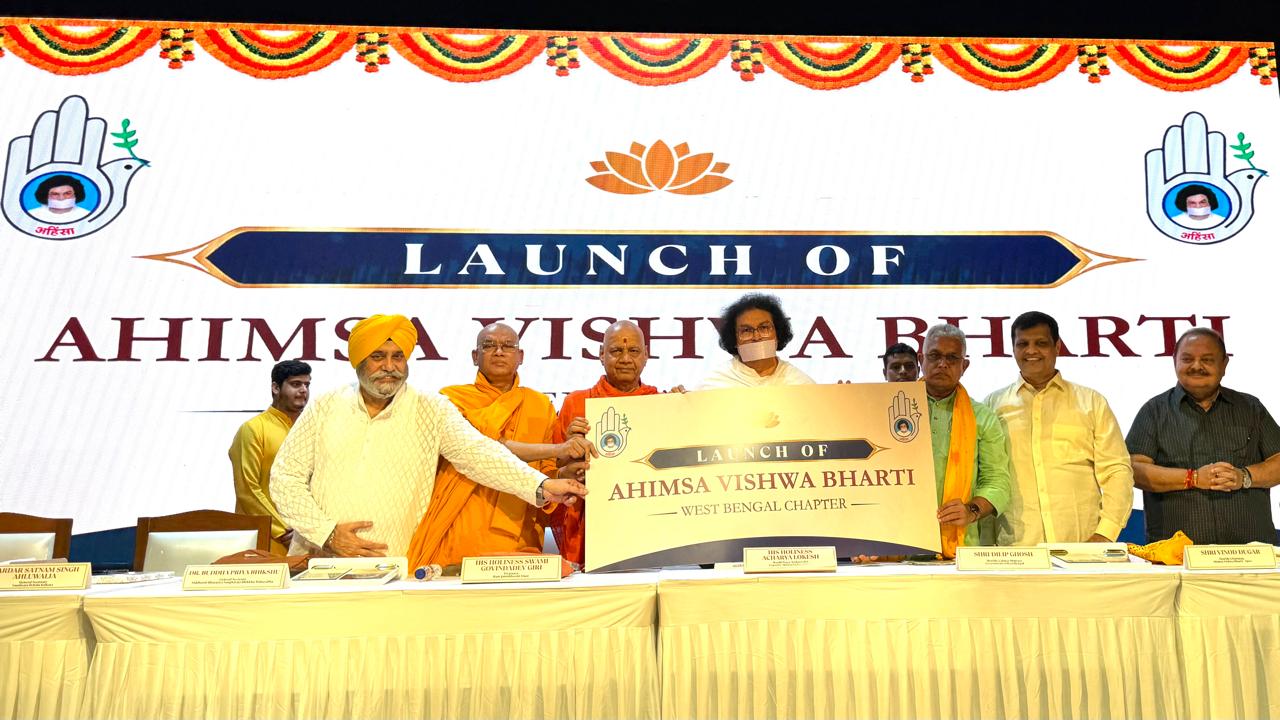
Kolkata / New Delhi, June 08: West Bengal Minister Dilip Ghosh, Acharya Lokesh, founder of Ahimsa Vishwa Bharti, and Swami Govinddev Giri, Treasurer of the Shri Ram Janmabhoomi Trust, addressed the national seminar titled “Peace, Harmony, and Development.” The event was held at the Rabindranath Tagore Auditorium in Kolkata, where the West Bengal branch of Ahimsa Vishwa Bharti was formally inaugurated by Minister Ghosh. The gathering was also addressed by Sardar Satnam Singh Ahluwalia of Gurdwara Behala, Kolkata, and Dr. Buddha Priya Bhikshu of the Bharatiya Sangharaj Bhikshu Mahasabha.
Senior Minister Dilip Ghosh said that under the guidance of the internationally renowned Jain Acharya Lokesh, the newly inaugurated West Bengal branch of Ahimsa Vishwa Bharti will actively work to promote non-violence, peace, harmony, social unity, and holistic development throughout the state. He expressed confidence that the initiative would foster greater awareness, cooperation, and progress in West Bengal. Minister Ghosh’s wife, Rinku Majumdar Ghosh, was also present at the event.
Acharya Lokesh, known as a global messenger of peace, said that peace, harmony, and development are three fundamental pillars that are deeply interconnected and essential for the progress of any nation, society, and human life. At a time when the world is grappling with war and violence, there is a greater need than ever for peace, harmony, and inclusive development. A peaceful environment enables individuals to realize and develop their full potential.
Vinod Dugar, Chairman of Ahimsa Vishwa Bharti, said that Acharya Lokesh has been continuously and selflessly dedicated to preserving India’s identity, unity, cultural heritage, social harmony, development, and upliftment. He noted that the organization is committed to building national character, promoting human values, and establishing peace, harmony, and non-violence globally. The opening of its branch in West Bengal, he said, will give new momentum to peace, harmony, and development in the state. He also pledged full support for the humanitarian initiatives of Ahimsa Vishwa Bharti.
Swami Govinddev Giri remarked that Sanatan Dharma is not merely a religious tradition but a way of life that guides humanity toward peace, love, compassion, and harmony. In today’s world, which faces numerous conflicts and divisions, there is a pressing need for spiritual leaders like Acharya Lokesh and organizations such as Ahimsa Vishwa Bharti.
Sardar Satnam Singh Ahluwalia said that Indian culture is not just an ideal but a way of life that teaches people to be sensitive, tolerant, and cooperative toward others.
Dr. Buddha Priya Bhikshu stated that under the guidance of Acharya Lokesh, the organization will play a significant role in connecting various sections of society in West Bengal through its promotion of human values, service, and public welfare activities.
Senior Vice President Ramesh Tiwari expressed gratitude to all the distinguished guests. The program began with the National Anthem and the National Song. The event was conducted by Rohit Surana. Key contributors to the success of the program included Sanjay Khemka, Basant Sethia, Sarthi Gupta, Manoj Jain, Subrata Ganguly, and others.
8, Jun 2026
Wellcome Extends Nostalgia Shopping Concept with Reimagined Stores in Kennedy Town and Mong Kok Celebrating Hong Kong Ding-Ding and Dai Pai Dong Heritage
Capture local culture at the in-store tram stop and Goldfish Street photo spots,
take home Wah Yuen and Koon Wah nostalgic snacks and Stir-fried Beef Ho Fun Flavoured Popcorn, and pick up Hong Kong-themed magnets and keychains

8 June 2026, Hong Kong: Wellcome has been part of Hong Kong neighbourhoods since 1945 – and with its Everyday Value (係堅價) campaign locking in low prices on 500 daily essentials, it is taking that same community spirit in a new direction, bringing its nostalgia-themed retail concept to two more stores. The Victoria Road store in Kennedy Town gets the ding–ding treatment – Hong Kong’s beloved tram – with tram tracks on the floor, vintage green and yellow throughout, and a 1990s tram stop installation inside. Over in Mong Kok, the Sim City store goes full dai pai dong, with corrugated tin, neon signs and milk tea kettles to match.
Both follow the success of Wellcome’s first nostalgia–concept store at Prosperous Garden in Yau Ma Tei, which opened earlier this year. All three are built around the same idea: old Hong Kong, brought back to life – through immersive displays, plenty of photo-taking opportunities, exclusive souvenirs and brand collaborations that locals and visitors can enjoy together.
Wellcome Time Machine – First Stop: Victoria Road, Kennedy Town
The Victoria Road store’s tram theme taps into something most Hong Kong people carry with them. The ding–ding has always been more than just a way to get around – it is woven into the fabric of daily life, the way Wellcome itself has been for generations.
Holding a parent’s hand on the ride home after a supermarket run. Piling onto a packed tram with school friends, still finishing an ice cream. Small moments, but the kind that stay with you. The store brings all of that back. The tram-inspired vintage green and pastel yellow hues run throughout, with photo-worthy installations and nostalgic details at every turn. Tram tracks printed along the aisle floors invite shoppers to follow the route – trolley in hand – through the streets of old Hong Kong.
The nostalgia does not stop at the store doors. From 8 June to 11 July 2026, a specially themed Wellcome tram will travel along Hong Kong Island, inviting everyone to embark on a retro journey through the city. Decked out in vintage colours and classic Wellcome motifs, the tram becomes a moving time capsule – a chance for locals and visitors alike to step aboard, relive collective memories, and experience the spirit of old Hong Kong.

Wellcome Time Machine – Second Stop: Sim City, Mong Kok
The Sim City store sits at the heart of one of Hong Kong’s most vibrant districts – and it feels like it. The store replicates the street-dining energy of open-air dai pai dong food stalls indoors, with a nod to that uniquely Hong Kong institution, the cha chaan teng – the milk-tea café where East meets West on every menu.
Spread across two floors, the store greets customers with vintage red and yellow Wellcome signage at the entrance, while the staircase walls are lined with photographs of Nathan Road after dark in the ’80s and ’90s – neon lights, roast meat shops, cha chaan tengs and all.
Photo spots and nostalgic installations add to the immersive experience, transporting shoppers back to the bustling nightlife and golden-era charm of old Kowloon. But the centrepiece is the Wellcome Dai Pai Dong – instantly familiar to anyone who remembers the food stalls that once lined the district’s back streets. Kerosene stoves, oil lamps and Hong Kong-style milk-tea kettles recreate the atmosphere with real attention to detail. There’s also a retro ping-pong spring-pull machine, once a staple of local arcades – play for free with any purchase.
Wellcome’s Nostalgia Concept Store Locations:
|
Prosperous Garden Branch Address: G/F, Unit 1-11, Block 5, Prosperous Garden, 3 Public Square Street, Yau Ma Tei, Kowloon, Hong Kong Opening Hours: 8:00 a.m. to 10:00 p.m. |
Victoria Road Branch Address: Shop 3-7, Block 2, Centenary Mansion, 1 Victoria Road, Kennedy Town, Hong Kong Opening Hours: 8:00 a.m. to 10:00 p.m. |
Sim City Branch Address: G/F, Chung Kiu Commercial Building, Sim City, 47-51 San Tung Street, Mong Kok, Kowloon, Hong Kong Opening Hours: 8:30 a.m. to 11:00 p.m. |
8, Jun 2026
MENA Fintech Association Expands SHIFT Payments Working Group with New Industry-Led Subcommittees
Dubai, UAE – 8th June 2026 – The MENA Fintech Association (MFTA), under its SHIFT: Payments Working Group, has announced the launch of a new series of specialized subcommittees aimed at fostering deeper industry collaboration, advancing innovation, and supporting the development of policy and market frameworks across the rapidly evolving payments landscape.
The initiative marks the next phase of SHIFT’s evolution as a leading industry forum, bringing together global payment leaders, financial institutions, fintech innovators, and ecosystem stakeholders to address the opportunities and challenges shaping the future of payments.
The first three subcommittees to be launched will focus on:
● B2B & Commercial Payments
● Gateways & Merchant Acceptance
● Stablecoin Payments
Additional subcommittees covering other critical areas of the payments ecosystem will be announced in the coming weeks.
To lead these inaugural workstreams, MFTA has appointed three distinguished industry leaders with extensive global experience across payments, financial services, and digital assets.
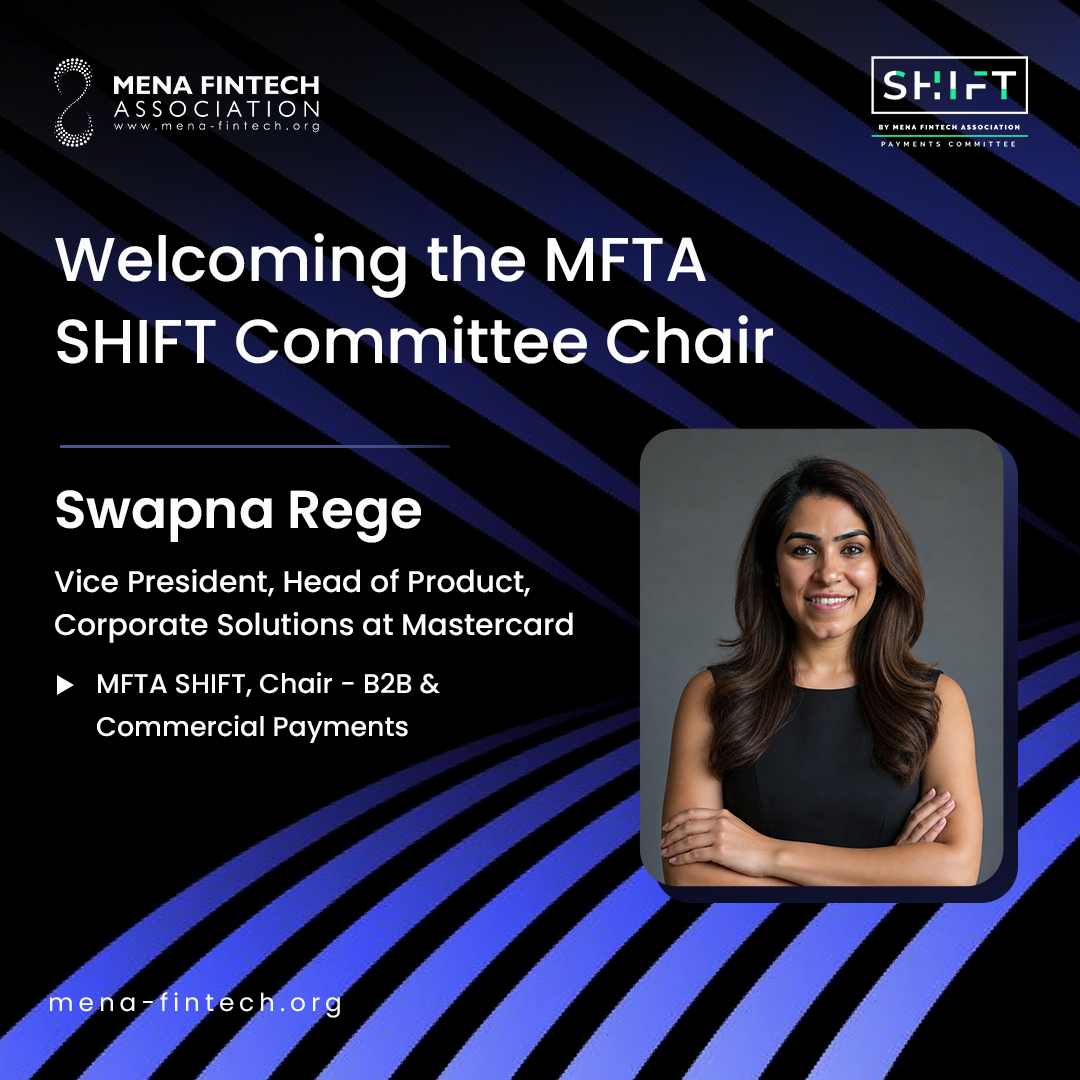
Swapna Rege, VP, Commercial Product Head EEMEA at Mastercard, has been appointed Chair of the B2B & Commercial Payments Subcommittee, where discussions will focus on the modernization of commercial payment infrastructure, embedded finance opportunities, cross-border payment efficiencies, and the digitization of enterprise payment flows.
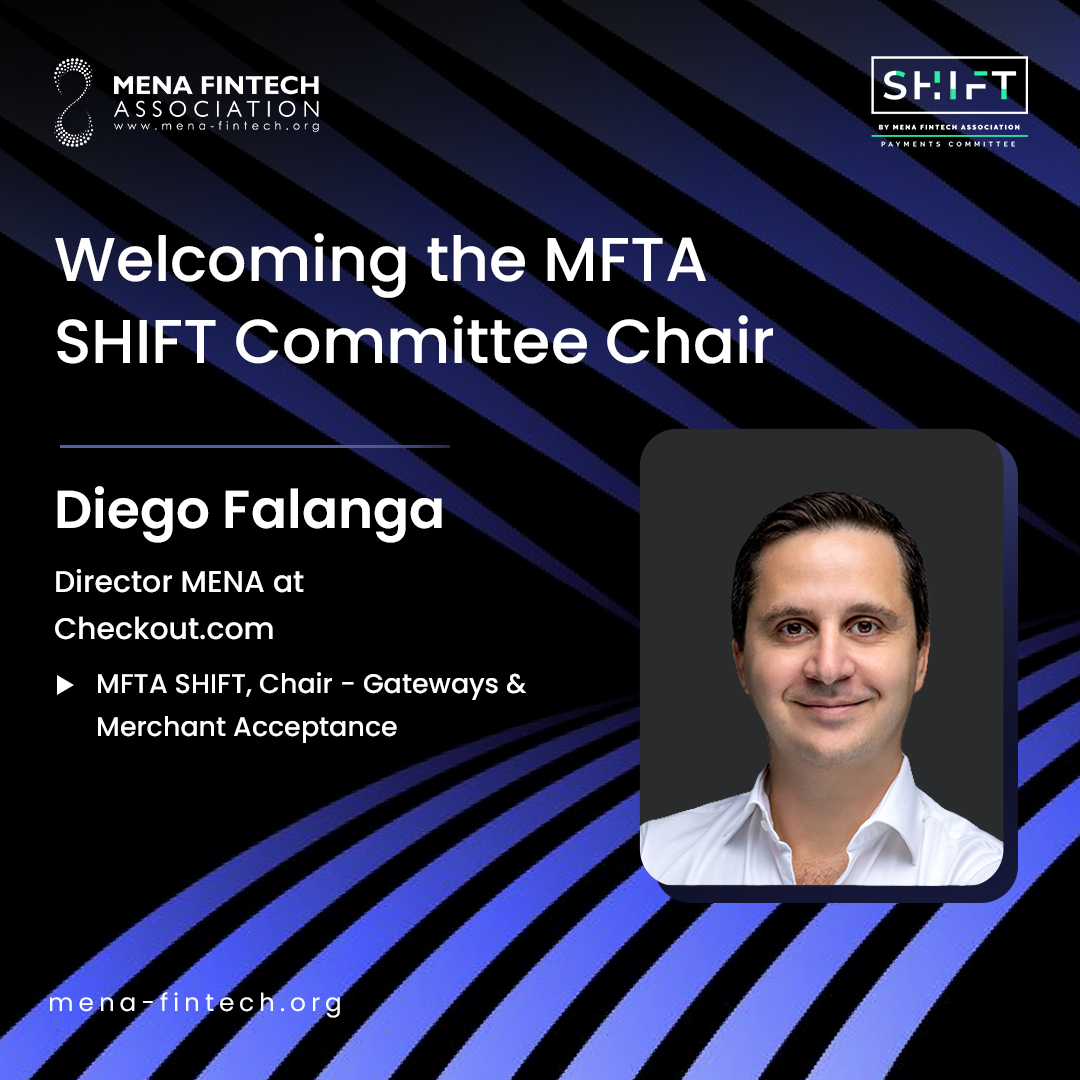
Diego Falanga, Director, MENA at Checkout.com, will serve as Chair of the Gateways & Merchant Acceptance Subcommittee, leading industry engagement around merchant acquiring, payment acceptance, orchestration, checkout innovation, and the infrastructure powering digital commerce across the region.
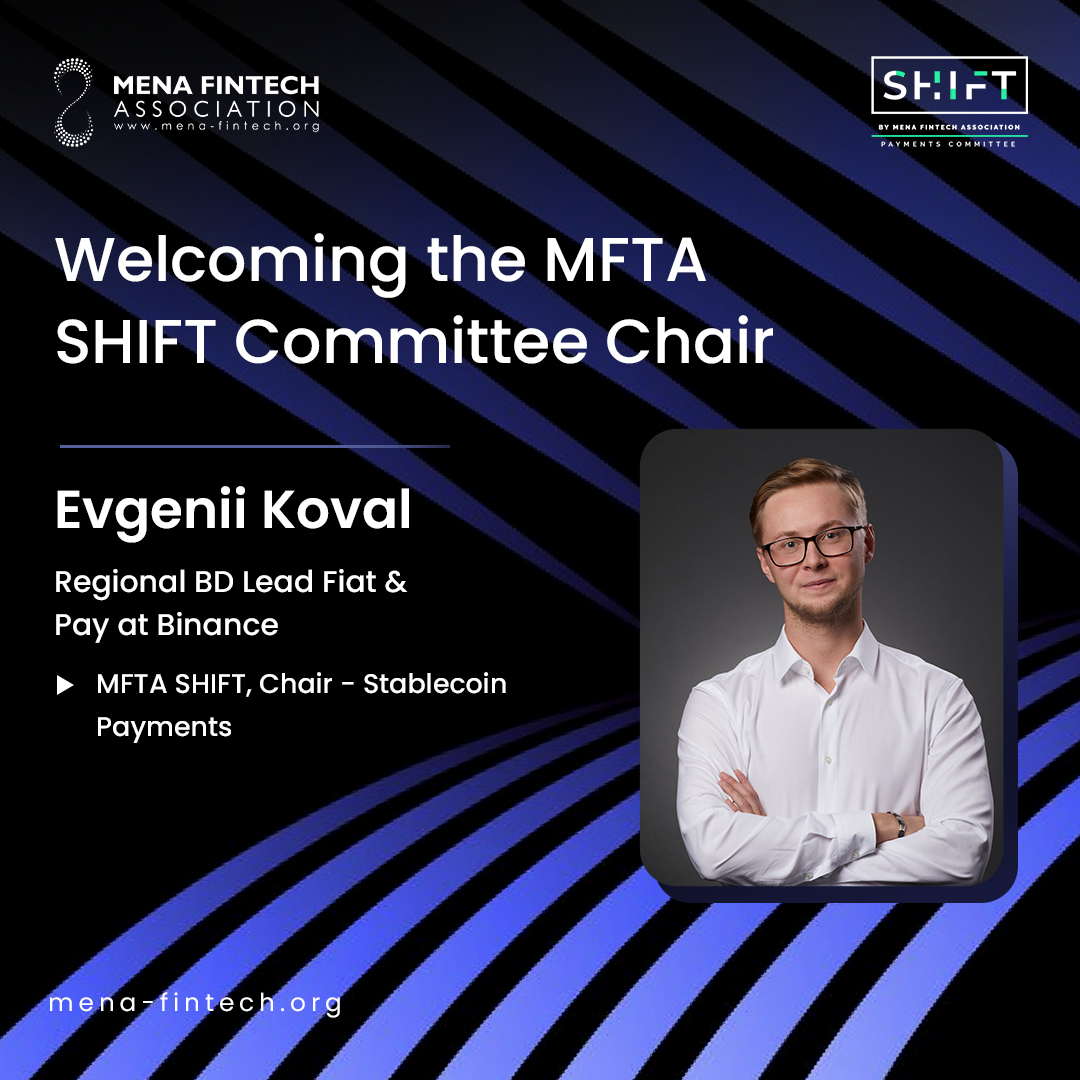
Evgeny Koval, Head of Fiat CIS/CEE/MENA at Binance, has been appointed Chair of the Stablecoin Payments Subcommittee, reflecting the growing significance of digital asset-enabled payment rails and the increasing convergence of traditional finance and blockchain-based settlement infrastructure.
The broader SHIFT: Payments Working Group will continue to be led by Akshay Chopra and Clyde Rosanowski, whose leadership has helped establish the group as a trusted platform for industry dialogue, knowledge sharing, and collaborative problem-solving across the payments ecosystem.
“The payments ecosystem is undergoing a fundamental transformation, driven by new technologies, evolving business models, and changing customer expectations. As the industry continues to mature, structured collaboration between market participants becomes increasingly important.
The launch of these specialized SHIFT subcommittees reflects MFTA’s commitment to convening the right expertise around the most important developments shaping the future of payments. By bringing together leading practitioners from across the ecosystem, we aim to foster meaningful dialogue, advance industry best practices, and contribute to the continued growth and competitiveness of the MENA fintech landscape.”
– Nameer Khan, Chairman, MENA FinTech Association
Swapna Rege stated: “For years, the big payments story in MENA has been consumers; tap to pay, digital wallets, instant transfers. But the next big story is businesses. How a company pays its suppliers, settles invoices, moves money across borders. That’s still slow, manual, and expensive for too many businesses in this region. The good news is we have everything we need to change that: great infrastructure, supportive regulators, and some of the best talent anywhere in the world. I’m excited to be part of the group working to make that happen”
Diego Falanga, on his appointment as the chair of Gateways & Merchant Acceptance Subcommittee stated,”I am incredibly excited to take on this role and, with the SHIFT working group, truly empower performance through payments in the MENA region. My main goal is to drive innovation and streamline merchant acceptance across the board”
Evgeny Koval, Head of Fiat CIS/CEE/MENA at Binance added “Stablecoin payments are becoming core infrastructure faster than any other global initiative right now, and MENA, already a leader in many areas of fintech, is positioned to lead here too. My goal as Chair is to make this Sub-Committee the room where the best experts shape that agenda, convening crypto exchanges, issuers, banks, infrastructure providers, and regulators around real use cases and turning them into concrete deals and regulatory progress”
The launch reflects MFTA’s continued commitment to convening industry leaders to drive meaningful conversations around the technologies, business models, and regulatory developments shaping the future of financial services across the Middle East, Africa, and beyond.
7, Jun 2026
India–Oman FTA: A New Trade Corridor for India’s Livestock and Marine Export Industry
As India accelerates its push to diversify export markets and strengthen economic ties across the Gulf, the proposed India–Oman Free Trade Agreement (FTA) is emerging as a potentially transformative development for the country’s livestock, marine, poultry, and agri-food sectors. Beyond tariff reductions, the agreement could reshape regional supply chains, enhance India’s competitiveness in food exports, and position Oman as a strategic gateway to the broader Gulf market.
At a time when global food security concerns and shifting trade dynamics are driving nations to secure reliable sourcing partnerships, the India–Oman trade pact arrives at a critical juncture. For Indian exporters, it represents more than market access—it signals an opportunity to establish a stronger presence in one of the world’s most import-dependent food regions.
Unlocking Untapped Market Potential
Oman has steadily increased its reliance on imported food products to meet domestic demand. Limited agricultural capacity, water constraints, and population growth have created sustained opportunities for international suppliers, particularly in seafood, poultry, eggs, and processed foods.
Yet India’s participation in several of these categories remains below its potential.
For example, Oman imported marine products worth approximately US$35.3 million in 2025, while Indian exports accounted for only about US$10 million. Given India’s status as one of the world’s leading seafood exporters, the gap highlights a significant opportunity for market expansion.
The proposed FTA is expected to address one of the key barriers to growth: market access. By enabling duty-free trade across a substantial portion of product categories, Indian exporters could gain a pricing advantage and improve their ability to compete against suppliers from Southeast Asia and other international markets.
A Competitive Edge for India’s Seafood Industry
Among all sectors, marine exports are expected to be among the largest beneficiaries of the agreement.
India’s seafood industry has undergone remarkable modernization over the past decade, supported by investments in aquaculture, cold-chain logistics, processing infrastructure, and international quality standards. Products such as shrimp, frozen fish, and value-added seafood already enjoy strong demand across global markets.
Duty-free access to Oman would further enhance competitiveness by reducing landed costs and improving profit margins. More importantly, it would allow Indian exporters to strengthen relationships with Omani distributors, retailers, and hospitality operators who are increasingly seeking reliable long-term suppliers.
With Gulf consumers demonstrating growing demand for high-quality protein products, Indian seafood producers are well positioned to capture a larger share of regional imports.
Poultry and Egg Producers Eye Growth
The agreement could also provide meaningful opportunities for India’s poultry sector.
As food consumption patterns evolve across the Gulf, demand for affordable and reliable protein sources continues to rise. India’s poultry industry benefits from scale, competitive production costs, and a rapidly expanding processing ecosystem. Enhanced market access could encourage greater exports of frozen poultry, processed meat products, and specialty food ingredients.
Egg producers may also benefit. India ranks among the world’s largest egg-producing nations, and demand for both fresh and processed egg products continues to grow across the Gulf’s food service, hospitality, and manufacturing industries.
For producers facing intense domestic competition, access to a stable and growing export market could provide an important avenue for revenue diversification.
Beyond Commodities: The Rise of Value-Added Exports
Perhaps the most significant long-term opportunity lies in processed agricultural products.
Historically, much of India’s agricultural export success has been driven by raw commodities. However, global trade trends increasingly favor value-added food products that deliver higher margins and stronger brand recognition.
The India–Oman FTA could accelerate exports of processed foods, spice blends, ready-to-eat meals, packaged snacks, frozen products, and specialty agricultural goods tailored to Gulf consumer preferences.
For Indian food manufacturers, the agreement presents an opportunity to move further up the value chain, shifting from commodity exports toward branded consumer products.
Such a transition could generate wider economic benefits, including increased investment in food processing infrastructure, packaging innovation, and export-oriented manufacturing.
Why Oman Matters Beyond Its Domestic Market
While Oman itself offers attractive commercial prospects, its strategic significance extends beyond national borders.
Located at the crossroads of major international shipping routes, Oman has increasingly positioned itself as a logistics and distribution hub connecting Asia, Africa, and the Middle East. Its ports and free zones provide access to neighboring Gulf Cooperation Council (GCC) markets, many of which collectively import billions of dollars worth of food products annually.
For Indian exporters, establishing a stronger foothold in Oman could create opportunities to expand into the wider Gulf region, including the United Arab Emirates, Saudi Arabia, Qatar, Bahrain, and Kuwait.
In this sense, the FTA should be viewed not merely as a bilateral trade agreement, but as a platform for broader regional market penetration.
Economic Ripple Effects Across India
The potential benefits of the agreement extend well beyond export companies.
Higher demand for seafood, poultry, eggs, and processed agricultural products could generate positive spillover effects throughout India’s rural economy. Farmers, fishermen, processors, logistics providers, and exporters all stand to gain from increased trade volumes.
Coastal communities involved in aquaculture and fisheries could particularly benefit from stronger international demand. Likewise, growth in food processing exports may stimulate investment, create employment opportunities, and encourage further modernization of agricultural supply chains.
At a time when India is actively pursuing export-led growth strategies, the agreement aligns closely with national objectives to increase value-added exports and strengthen rural incomes.
Challenges Remain
Despite the optimism surrounding the trade pact, businesses must remain mindful of execution risks.
Success will depend on maintaining international quality standards, ensuring regulatory compliance, meeting halal certification requirements, and investing in efficient cold-chain infrastructure. Competition from established global suppliers will remain intense, particularly in seafood and processed food categories.
Furthermore, exporters seeking long-term success in the Gulf must move beyond price competitiveness and focus on brand building, reliability, and customer relationships.
The companies that combine market access with strong operational capabilities are likely to capture the greatest share of future growth.
The Road Ahead
The proposed India–Oman FTA represents a strategic opportunity at a time when global trade patterns are evolving and food security is becoming an increasingly important economic priority.
For India’s livestock, marine, poultry, and agri-food sectors, the agreement could unlock new revenue streams, expand market access, and strengthen the country’s position within one of the world’s most dynamic import markets.
If effectively implemented, the partnership may not only boost bilateral trade but also establish Oman as a launchpad for India’s next phase of export expansion across the Gulf region.
For business leaders, investors, and exporters, the message is clear: the India–Oman trade corridor is becoming one of the most promising growth stories in regional commerce.
6, Jun 2026
SberIndia creates Russian Business Centre in Delhi
An office centre is being built in Delhi that will become a hub for Russian business in India
The opening of the Russian Business Centre in Delhi was announced by Anatoly Popov, Deputy Chairman of the Executive Board of Sberbank, at the St. Petersburg International Economic Forum. Sber has been operating in India for over 15 years; the bank already has offices in New Delhi and Mumbai, as well as its own IT hub in Bangalore. SberIndia operates as a full-fledged local bank, providing a comprehensive range of services for corporate clients and developing infrastructure for cooperation between Russian and Indian companies.
Anatoly Popov, Deputy Chairman of the Executive Board of Sberbank:
“The development of relations between Russia and India, particularly in industrial cooperation, financial interaction, logistics, and technological partnership, is increasing the need for Russian companies to have a physical presence in India. The Russian Business Centre is not just an office building, but a key location for the Russian business community in India. Its residents will include both companies already operating in India and those just preparing to enter this market.”
The National Capital Territory of Delhi remains one of the key commercial real estate markets in India. The Centre is being built in one of Delhi’s most convenient business clusters in terms of infrastructure and logistics. Against the backdrop of an acute shortage of modern Class A office complexes in central Delhi, interest from tenants is very high.
In the first quarter of 2026, the total volume of office space lease transactions in India’s eight largest cities reached a record 2.8 million sq. m, of which 400,000 sq. m were in the National Capital Territory of Delhi — a 95% increase compared to the first quarter of 2025, according to a report by consultants. Investment interest today is focused on residential complexes, office space, warehouses, logistics centres, and data centres.
The project will become a flagship platform showcasing advanced technologies, digital services, and innovative solutions from the Sber ecosystem. Sber will offer residents of the new business centre a range of financial instruments for operating in India and business support services, including legal, tax, and audit support, as well as credit products.
The St. Petersburg International Economic Forum (SPIEF) is a unique event in the world of economics and business. SPIEF has been held since 1997, and since 2006 has been held under the patronage and with the participation of the President of Russia. Over the years, the Forum has become a leading global platform for business representatives to communicate and discuss key economic issues facing Russia, emerging markets, and the world as a whole. The XXIX St. Petersburg International Economic Forum is taking place from June 3 to 6, 2026. In its 185th anniversary year, Sber is the GigaPartner of SPIEF.


