


2, Jun 2026
From Bhadohi Carpets to Global Carts: Uttar Pradesh Emerges as India’s Next Big E-commerce Export Engine

Commenting on the growing opportunity, Shri Dinesh Goyal, National President, Indian Industries Association, said: “Uttar Pradesh today has the scale, manufacturing strength, artisan ecosystem, infrastructure growth, and policy support required to emerge as a leading national hub for e–commerce exports. Digital commerce is helping democratise exports by connecting small businesses and local manufacturers directly with global consumers.”
Appreciating the efforts of the Government of Uttar Pradesh, he further stated: “The proactive policies of the Government of Uttar Pradesh, industry-friendly governance, improved infrastructure, investor-focused reforms, and a safe business environment have significantly strengthened industrial confidence and positioned Uttar Pradesh among the most preferred destinations for industries, manufacturing, and exports.”
Highlighting the broader export opportunity, Shri Goyal added: “The Uttar Pradesh Export Promotion Policy 2025–2030, combined with ODOP, logistics improvements, and digital enablement initiatives, can unlock transformational export opportunities for thousands of MSMEs, startups, women entrepreneurs, and artisans across the state.”
- 0
- By Neel Achary

1, Jun 2026
How Meghalaya Rewrote Its Health Story in Eight Years: A Glance at What the NFHS-6 Numbers Reveal About a State That Decided Not to Wait
The Mountains Are Moving
How Meghalaya Rewrote Its Health Story in Eight Years
A glance at what the NFHS-6 numbers reveal about a state that decided not to wait.
There is a particular kind of progress that does not announce itself loudly. It does not arrive as a ribbon-cutting or a single triumphant statistic. It accumulates quietly, one institutional birth at a time, one fully immunised child at a time, one young woman who finishes school instead of marrying at seventeen, until one day a national survey holds up a mirror and the change is undeniable. That is the story the sixth National Family Health Survey (NFHS-6, 2023-24) talks about Meghalaya. And it is a story worth telling honestly, because the honest version is more impressive than the inflated one.
Consider where the state began. For decades Meghalaya carried the twin burdens common to India’s hilly, sparsely connected frontier states: a high maternal mortality rate, fertility well above the national average, and child nutrition indicators that consistently trailed the rest of the country. The terrain itself was an adversary, villages folded into valleys that a single monsoon could cut off, health centres a half-day’s walk from the families who needed them. Against that backdrop, the NFHS-6 results are not just good news. They are evidence of a deliberate, sustained turning of the wheel.
The numbers that matter
Start with fertility, the indicator that has long defined Meghalaya’s demographic challenge. The Total Fertility Rate fell from 2.9 children per woman in 2019-21 (NFHS 5) to 2.2 in 2023-24 (NFHS 6), a 24.1 per cent decline that is the steepest fertility reduction of any state in India. Teenage pregnancy dropped by more than a third, from 7.2 to 4.6 births per thousand adolescent girls. Child marriage rate reduced by 18.3%. These are not abstract demographic curves; they are thousands of girls whose futures widened.
The gains in maternal and newborn care are just as striking. Data from NFHS 5 and NFHS 6 clearly demonstrates the change. Institutional births rose from 58.1 to 65.6 per cent, and crucially, more of those deliveries are happening in public facilities, the share climbing from 49.1 to 55.7 per cent, a sign that families increasingly trust the government system rather than being forced toward costly private care. Deliveries attended by a skilled health worker climbed to 70.9 per cent. On the pace of improvement in both institutional delivery and skilled attendance, Meghalaya ranks among the top two or three states in the country. Full immunisation of young children leapt from 64 to 75.3 per cent, again, one of India’s fastest gains. The proportion of expectant mothers taking iron-folic-acid supplements for the recommended hundred days rose by nearly half.
And then there is the figure that should give every reader pause: spousal violence against ever-married women fell from 15 per cent to 5.9 per cent, a 60 per cent reduction in eight years. A society does not move a number like that by accident.
None of this means the work is finished. Meghalaya’s child stunting that has seen a 20.9% improvement between the period 2019-21 to 2023-24, still stands at 36.8 per cent, its unmet need for family planning, the worrying dip in children receiving an adequate diet, and very high tobacco use among men all remain stubborn challenges. Thus, the honest reading of NFHS-6 is that Meghalaya is one of India’s fastest-improving states even though its absolute levels still sit in the lower band nationally. It is a story of rapid catch-up, not yet of arrival, and that is precisely why the trajectory matters more than any single rank.
Why the curve bent
Progress at this scale is rarely the product of a single scheme. What distinguishes Meghalaya’s approach is that the state government chose to treat health not as a department’s problem but as a whole-of-government project, and, just as importantly, as a partnership with the communities themselves.
The foundation was laid with the Meghalaya Health Systems Strengthening Project, a multi-year effort to rebuild the bones of the public health system: better-equipped facilities, stronger referral chains, and a relentless focus on data. Out of it grew the MOTHER programme – Measurable Outcomes in Transforming the Health sector through a holistic approach with a focus on women’s Empowerment, which used a mobile application to register and track at-risk pregnancies in real time, so that a mother in a remote village became visible to the system rather than invisible to it. Layered on top was the Rescue Mission, an explicitly multisectoral effort that pulled the Departments of Health, Social Welfare, and Community & Rural Development into the same room to attack the social causes of poor maternal outcomes, not just the clinical ones.
Some of the most effective innovations came from the ground up. SHG-run transit homes, modest community-managed lodgings near health facilities, solved one of the most intractable problems of mountain geography: how does a pregnant woman from a road-less village reach a hospital before labour, not during it? By giving her somewhere to stay in the days before delivery, these homes converted intention into safe, institutional childbirth. The same self-help-group networks, federated through the State Rural Livelihoods Mission, became the carriers of nutrition awareness, agri-nutrition gardens, and behaviour change, a model credited with a sharp fall in severe acute malnutrition cases in the areas it reached.
On the demand side, the Megha Health Insurance Scheme, now in its fifth phase and offering cashless cover of up to ₹5.3 lakh per family, integrated with the national Ayushman Bharat–PM-JAY, removed the financial terror that once kept families away from hospitals altogether. The newer CM Care+ scheme extends a safety net for the catastrophic, high-cost treatments that fall beyond even that ceiling. When a family knows that a complicated delivery or a sick newborn will not bankrupt them, the decision to seek institutional care becomes far easier.
Most recently, the government has trained its sights on the one battle it has not yet won: child nutrition. The Mission 1000 Days programme, built around the now-well-established science that the window from conception to a child’s second birthday largely determines lifelong health, channels nutritional support, mother-and-child kits, frontline-worker training, and community interventions into that critical period. Its companion “003” agenda, zero maternal deaths, zero unimmunised children, and healthy growth for every child in the first 1,000 days, has drawn praise from UNICEF for its community-partnership design. It is the logical next chapter: having moved the needle on access to care, Meghalaya is now going after outcomes.
A model worth watching
What ties these efforts together is a philosophy the state’s leadership has articulated plainly that lasting development comes from long-term human-development systems rather than isolated welfare announcements. It is an unfashionably patient idea in an age of quick wins, and the NFHS-6 data suggest it works. Build the institutions, trust the community workers, use the technology to make the invisible visible, remove the financial barriers, and then hold the course across electoral cycles.
Meghalaya has not solved every problem; no honest account would claim otherwise, and the stunting and family-planning gaps are real summons to keep going. But it has demonstrated something that more prosperous states often struggle to achieve; that a frontier region with difficult terrain and tight resources can post some of the country’s fastest improvements in the indicators that decide whether mothers survive childbirth and whether children grow up healthy. Eight years ago, that would have read as aspiration. NFHS-6 has turned it into evidence.
The mountains, it turns out, can be moved. Meghalaya is showing how, one mother, one child, one village at a time.
Data source: National Family Health Survey (NFHS-5: 2019-21 and NFHS-6: 2023-24), International Institute for Population Sciences, Mumbai. Programme details drawn from Government of Meghalaya health and rural-development initiatives as reported in 2025–2026.
1, Jun 2026
Launch of Flixora – democratising movie streaming and distribution
Flixora, the new platform designed to democratise movie streaming and distribution launches on Monday 1st June 2026.
Flixora is designed to help filmmakers, studios and content owners distribute and monetise their movies globally and instantly. Creators do not need to have millions of followers before seeing an income, as they do on other platforms. Small filmmakers can get payment and recognition for their work, instead of the industry being monopolised by big studios and those with a name already.
The platform will enable creators to upload, manage, market and sell their content directly to audiences, without relying on traditional gatekeepers or complex distribution networks.
Flixora focuses on simplifying movie distribution for independent filmmakers and emerging creators who often struggle with limited access to global streaming platforms, high distribution costs, low visibility and restricted monetisation opportunities. By providing a direct-to-audience streaming infrastructure, Flixora allows creators to retain control over their content, pricing, audience reach and revenue generation.
The platform also helps filmmakers, production companies and distributors looking for a more accessible and scalable way to reach international viewers.
At the same time, it offers audiences access to a broader and more diverse catalogue of films, including independent cinema, regional productions, and underrepresented stories that may not appear on mainstream streaming services.
How it works for the creators
For movie makers, the process is remarkably straightforward. For a nominal fee of $100* per month you can start adding your movies to Flixora. The fee covers as many films as you want to upload.
All movies are reviewed by the team and, upon approval, are uploaded for end users to stream. The review process ensures quality standards are maintained. If a filmmaker fails to get approval for their movies the $100 is refunded.
The quality of the films streaming on Flixora is paramount, meaning that creators can rest assured they are not getting drowned out by substandard content that also deters viewers. Movies must be original and can only be submitted by the creator.
There is scope for a wide variety of content, as long as the films are over 30 minutes long. Fiction can include any genre and any format, and factual films can include documentary style or practical tips-based material. Music is expected to be a significant section of content. The chief limitation is no pornographic content or anything illegal.
Producers are also offered the choice of countries where they wish viewers to have access to their movie streams, and the site will even provide projected earnings. Those earnings all go directly to the filmmaker, with no cut taken by Flixora, up to a limit of $1 million.
How it works for the viewer
Flixora offers unique design and user experience. Users can search by genre or subject and the search facility includes voice command. You can even search by release date. Just ask “show me all the movies launched on 1st June”, for example, and a list will appear.
Because there is a minimum length of 30 minutes and all films are reviewed by Flixora to ensure they are high quality, there is not an overwhelm of choice or substandard content that you have to plough through to get to what you enjoy watching.
For viewers the price point is, once again, a winning feature. In the free model, you can pay as you watch with a single movie costing just $1 per session. Alternatively, you can select a premium user status for just $5a month, with unlimited access.
Uniquely, premium users can invite friends to watch movies with them wherever they are, and they can watch together in real time, with friends paying just $1 each. The premium user can stop and start the movie in real time and fellow watchers will stop and start with them. So, they can all go and top up their drinks and grab popcorn at the same time, or stop to discuss what they are watching.
The aim for both producers and viewers is to democratise movie making and viewing, making it accessible to anyone and everyone.
From 1st June there will be approximately 30 movies, all of them originals, available to stream and Flixora’s projections show that those numbers will grow fast.
Martins Osuofia, Founder of Flixora said: “Flixora isn’t trying to replicate the traditional streaming model and compete on that level. We’re creating a brand new structure for global film distribution, one built around accessibility, creator ownership and direct audience reach.”
Andrew Stevens, writer and producer of ‘The incredible true story of 100 dates in Dallas’ said: “Flixora’s model reduces barriers to entry in the entertainment industry by giving creators such as myself the tools needed to distribute content professionally through a digital-first platform. I am very excited at the prospective opportunities to connect directly with global audiences and to earn directly from day one.”
1, Jun 2026
Renault records ninth consecutive month of wholesale growth
Mumbai, June 1: Renault India, a wholly owned subsidiary of Renault Group, recorded its ninth consecutive month of wholesale growth in May 2026, extending a strong growth streak that began in September 2025.

Between September 2025 and May 2026, Renault India achieved cumulative wholesales of 38,225 units, reflecting a robust 46% growth compared to the same period last year.
In May 2026, Renault was one of only two passenger vehicle manufacturers in India to record positive retail sales growth, according to VAAHAN data. The company also reported a 64% year-on-year increase in wholesales during the month, underscoring the strength of customer demand and Renault’s growing presence in the Indian market.
The sustained growth momentum reflects Renault India’s continued focus on delivering products that resonate with Indian customers while strengthening its position in one of the world’s most competitive automotive markets.
1, Jun 2026
Mercom Capital Group Smart Grid Companies Attract Dollar 1.1 Billion in Corporate Funding in Q1 2026
June 01: Mercom Capital Group, LLC, an integrated communications, research, and media firm focused exclusively on clean energy markets, released its report on funding and mergers and acquisitions (M&A) activity for the global Smart Grid sector for the first quarter of 2026.
Corporate funding for Smart Grid companies, including venture capital (VC) funding, debt, and public market financing, totaled $1.1 billion across 16 deals in Q1 2026, representing a 115% increase year-over-year (YoY) compared to the $530 million raised in 21 deals in Q1 2025.
CHART: Smart Grid Corporate Funding Q1 2025-Q1 2026
“Rising power demand, grid reliability concerns, and increasing distributed energy deployment continue to drive investment in Smart Grid technologies,” said Raj Prabhu, CEO at Mercom Capital Group. “Funding activity in Q1 2026 reflected continued investor interest in Advanced Metering Infrastructure, Grid Optimization, and Smart Grid Communications technologies.”
VC funding for Smart Grid companies increased 8% YoY, with $373 million raised in 14 deals in Q1 2026 compared to $346 million in 18 deals in Q1 2025.
Smart Grid Communications companies accounted for the largest share of VC funding in Q1 2026, followed by Smart Charging and Advanced Meter Infrastructure.
The top Smart Grid VC funding deals in Q1 2026 included SPAN, which raised $163 million, plus an additional $75 million financing from Eaton; metiundo, which raised $48 million; Mitra EV, which raised $27 million; and Statiq, which raised $18 million.
CHART: Smart Grid Top 5 VC Funded Deals in Q1 2026
Announced debt and public market financing for the Smart Grid sector totaled $767 million across two deals in Q1 2026, up 317% compared to $184 million across three deals in Q1 2025.
Smart Grid corporate M&A activity included five transactions in Q1 2026. Smart Charging companies accounted for the highest number of acquisitions during the quarter.
1, Jun 2026
SunCharge Motors Secures Seed Funding from JITO Incubation & Innovation Foundation to Accelerate Infrastructure-Driven EV Innovation
June 1 : India’s electric mobility sector is entering a phase where infrastructure limitations are becoming one of the biggest barriers to scalable adoption. While much of the market continues to focus on vehicle design, charging speed, and pricing, SunCharge Motors is building from a different perspective, energy dependency itself.
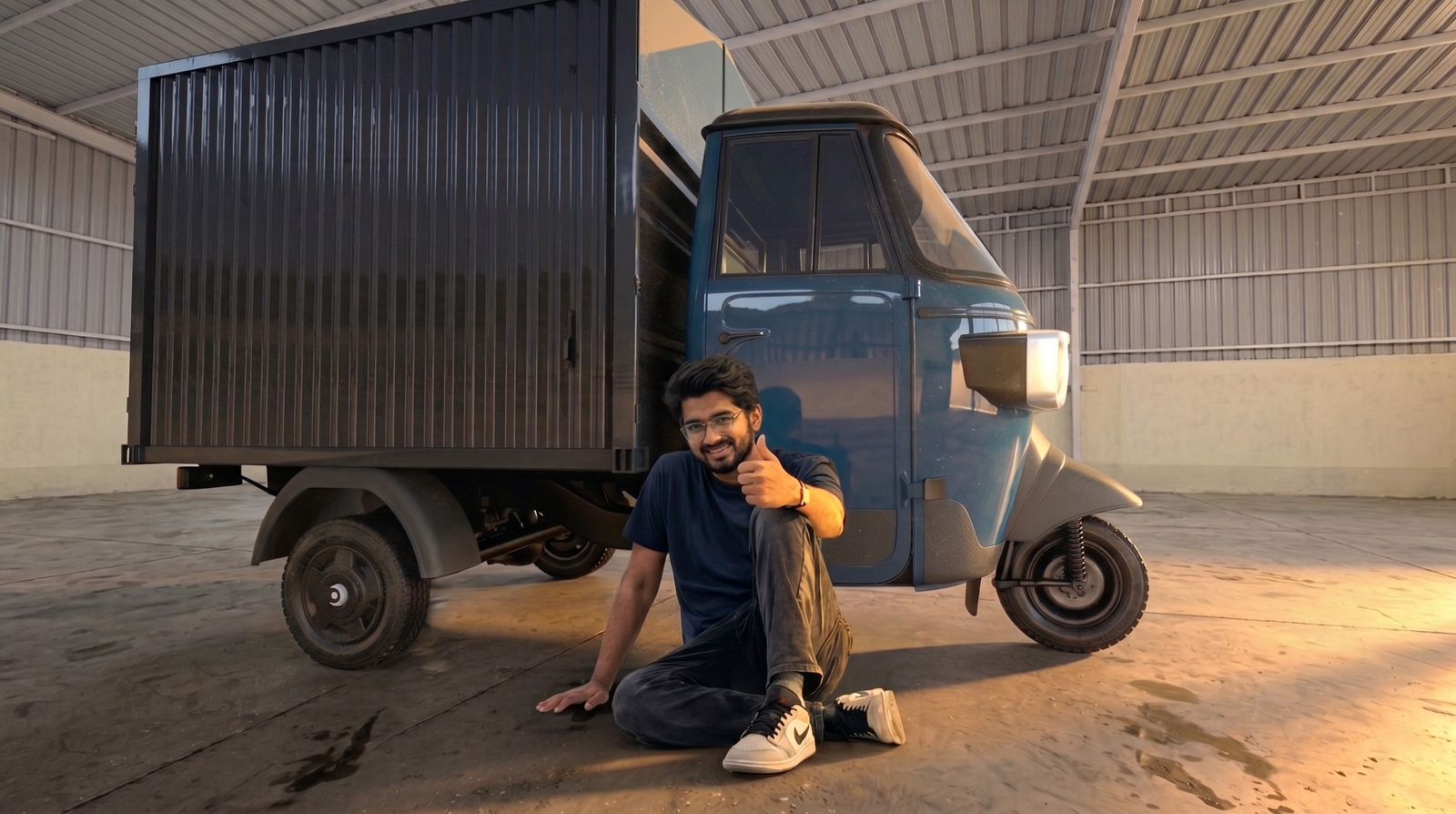
The company has announced the successful closure of its seed funding round led by JITO Incubation & Innovation Foundation alongside participation from a group of strategic angel investors. While the company has not publicly disclosed the size of the round, the funding will support technology development, infrastructure research, and the expansion of SunCharge Motors’ solar-assisted mobility systems.
Founded by Sanskar Modi, the company is focused on developing solar-integrated electric mobility systems aimed at reducing dependency on external charging infrastructure. Its approach combines smart battery management systems, real-time energy control technologies, and integrated solar energy support to create mobility solutions designed specifically for India’s infrastructure realities.
The announcement comes at a time when India’s EV ecosystem continues to face challenges around charging accessibility, inconsistent power infrastructure, fleet downtime, and rural mobility scalability. Rather than treating these as secondary industry issues, SunCharge Motors has built its core vision around solving them directly.
“We believe India’s EV future cannot depend only on expanding charging infrastructure. The real opportunity lies in building smarter energy-integrated mobility systems that can adapt to India’s infrastructure realities. At SunCharge Motors, our focus is on creating solutions that improve energy accessibility, reduce charging dependency, and make electric mobility more practical and scalable for the long term”, said Sanskar Modi, Founder of SunCharge Motors.
Unlike many EV companies entering the market through consumer-first positioning, SunCharge Motors is approaching mobility as an energy infrastructure problem. The company’s long-term objective is to create systems that improve vehicle uptime, reduce charging dependency, and support more sustainable and decentralized mobility operations across urban and underserved regions alike.
With India accelerating its transition toward electric mobility, SunCharge Motors believes the next phase of EV innovation will not be defined only by vehicles, but by how intelligently energy itself is integrated into transportation systems.
1, Jun 2026
India’s leave paradox: Are Indian workers too busy to switch off
India is among the higher leave-entitlement markets in APAC. However, analysis of Deel platform data shows Indian workers use a smaller share of their annual leave than peers in Singapore, Hong Kong, South Korea, Malaysia, and Japan.
While leave is available, Indian workers appear more cautious in how they use it — with lower rates of full leave utilisation and a stronger tendency to spread shorter breaks across the year.
The analysis of over 4,500 full-time workers on Deel APAC contracts found:
- Despite being among the higher leave-entitlement markets in APAC, Indian workers used a relatively smaller share of their leave entitlement in 2025 than workers in Singapore, Hong Kong, South Korea, Malaysia, or Japan.
- The median leave taken by Indian workers in 2025 was 12 days.
- Only 17.2% of Indian workers used 100% of their leave, compared with 57.2% in Singapore, 53.3% in South Korea, 50.8% in Malaysia, 42.9% in Hong Kong, and 35.9% in Japan. Just 29.9% of Indian workers used at least 80% of their leave entitlement, the lowest rate across major APAC markets analysed.
- India recorded the highest share of short-duration leaves. Among multi-day vacation leave requests (2 days or longer), 48.4% were exactly 2-day breaks.
The data points to a distinct leave pattern in India, where workers are more likely to take shorter breaks rather than extended holidays. This may reflect a more measured approach to time off, with employees spreading leave across the year instead of using it in longer stretches.
Rakesh Gaur, Head of Sales for India at Deel, said, “India’s leave data suggests employees are not stepping away from work less often; they are more selective about how they use time off. That cautious approach may reflect workload pressures, cultural habits, or a tendency to save leave for important periods like festivals or family events. The bigger question for employers is whether underused leave reflects productivity, or signals burnout, pressure, and workplace cultures where employees don’t feel comfortable fully switching off.”
Flexible leave policies also showed stronger time-off usage in India. Employees on flexible leave arrangements took more time off than those on fixed leave policies, suggesting that policy structure may influence behaviour as much as workplace culture.
1, Jun 2026
PMI Industry Roundtable highlights Construction Talent Gap in South Asia to Nearly Double by 2035
June, 1: Project Management Institute the authority in project management, convened a high-level construction and infrastructure roundtable bringing together more than 25 senior executives from leading organisations. The roundtable brought together leaders from across infrastructure, construction, energy, renewables, transportation, technology, manufacturing, and advisory sectors, representing both public and private enterprises. Held under the theme ‘Closing the delivery capability gap in Indian infrastructure: From national ambition to predictable on-ground execution’, the roundtable explored how India’s infrastructure ecosystem can strengthen execution capability, build future-ready project talent, and improve delivery outcomes as project complexity and investment scale continue to rise.
Speaking about the growing importance of project management in infrastructure delivery, Amit Goyal, Managing Director, PMI South Asia, said,
“India’s infrastructure growth story will increasingly be defined by how effectively projects are executed on the ground. As infrastructure projects become larger, more interconnected, and time-sensitive, organisations will need skilled professionals who can manage complexity, align multiple stakeholders, and optimise resources to deliver consistent, precise outcomes. Building future-ready project talent and strengthening delivery capability will be critical to the ‘Viksit Bharat’ vision, ensuring that infrastructure investments translate into long-term economic and social impact.”
The Construction Project Management Talent Gap Report by PMI, 2026, indicates that demand for construction project professionals across South Asia is expected to accelerate significantly by 2035, driven by sustained infrastructure and industrial investment across the region. Under high-growth scenarios, South Asia’s construction talent gap could increase from 291,000 professionals today to 558,000 by 2035, with India alone projected to require nearly 395,000 construction project professionals by then.
During the session, Yash Singh, Partner, Business Consulting, KPMG India, highlighted,
“India’s infrastructure and construction sector is entering a high-growth phase, making substantial investment in skilled project talent critical for delivering projects efficiently and sustainably. We are delighted to partner with PMI in such knowledge initiatives and advancing the dialogue around strengthening project and execution excellence.”
The discussion highlighted the operational and financial consequences of weak project execution across the industry. A 2020 global PMI survey also found that industry estimates indicate that 72% of projects exceed budgets, 73% face delays, and 70% experience scope creep. At the same time, nearly USD 127 million is lost for every USD 1 billion invested due to inefficiencies in project performance. Average project overruns affect profitability, stakeholder confidence, and long-term competitiveness.
As part of PMI South Asia’s broader Construction Roundtable series, this roundtable aimed to create a collaborative platform for industry leaders to identify capability gaps, exchange best practices, and explore diverse interventions that can strengthen infrastructure delivery outcomes across the region. The series builds on the first Construction Roundtable held during PMSAC24 in September 2024, which convened C-suite leaders and representatives from leading organisations across the infrastructure ecosystem.
1, Jun 2026
Abu Dhabi Maritime Academy and Bahrain Polytechnic Sign MoU
Abu Dhabi Maritime Academy and Bahrain Polytechnic Sign MoU to Enhance Academic and Applied Collaboration in Maritime Transport and Emerging Technologies

Abu Dhabi, UAE – 1st June 2026: Abu Dhabi Maritime Academy (ADMA), the region’s leading academic institution for maritime training, and an integral part of AD Ports Group (ADX: ADPORTS), has signed a Memorandum of Understanding (MoU) with Bahrain Polytechnic to strengthen cooperation in the areas of education, training, and applied research, and at building high-impact partnerships that contribute to the development of national and regional talent in the maritime, engineering, and technology sectors.
The MoU was signed by Dr. Yasser Al Wahedi, President of Abu Dhabi Maritime Academy; and Professor Ciarán Ó Catháin, CEO of Bahrain Polytechnic, in the presence of senior officials from both entities.
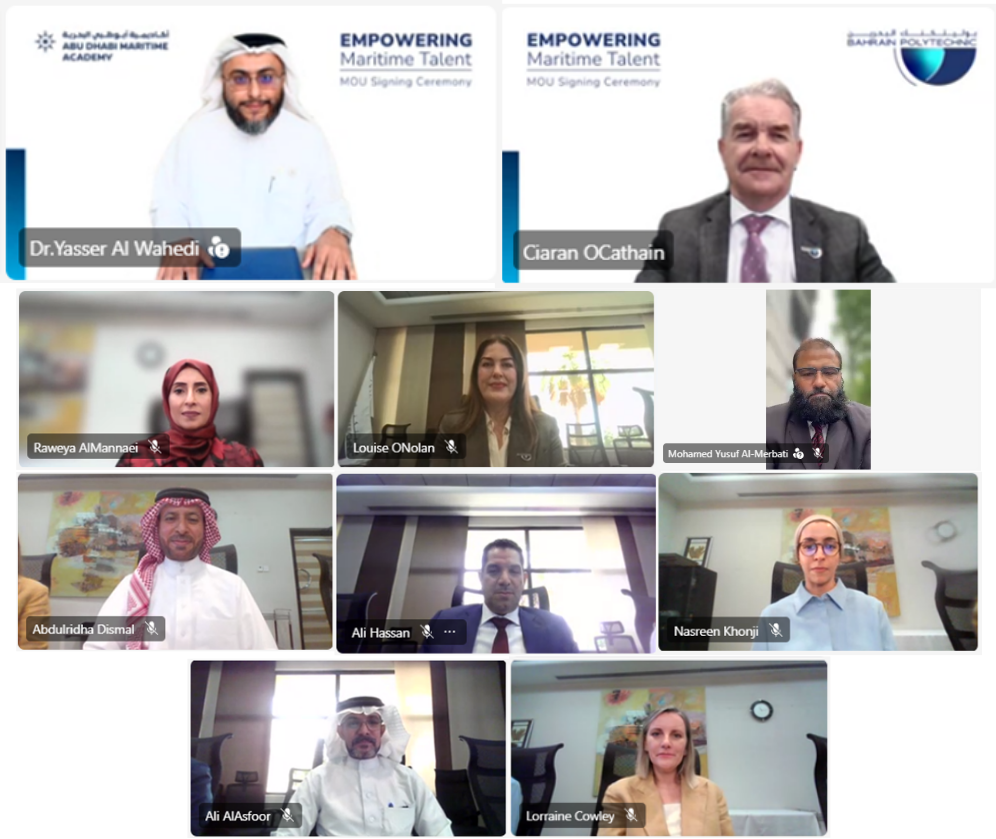
The MoU establishes a framework for collaboration to explore joint opportunities across several areas, including the development and delivery of training programmes and courses of mutual interest, train-the-trainer initiatives, and the organisation of lectures, workshops, events, and conferences. It also includes providing internship and work-placement opportunities (Cadetship) for Bahrain Polytechnic students and graduates.
In addition, the MoU promotes collaboration in applied research projects that contribute to the development of technologies that support the maritime sector, marine engineering, maritime security, and logistics. In addition, the partnership will facilitate the exchange of knowledge and expertise in technical and engineering fields, and the development of advanced training programmes in emerging technologies and applied research, thereby fostering innovation and strengthening the alignment between academic outcomes and the needs of the industrial and maritime sectors.
Dr. Yasser Al Wahedi, President of Abu Dhabi Maritime Academy, said: “This partnership reflects Abu Dhabi Maritime Academy’s commitment to advancing applied education and fostering innovation through regional collaboration. By aligning academic excellence with industry needs, we are enabling the next generation of maritime and technology pioneers.”
Professor Ciarán Ó Catháin, CEO of Bahrain Polytechnic, stated that this partnership represents a strategic step aligned with Bahrain Polytechnic’s Strategic Plan 2026–2029, which focuses on enhancing applied education, expanding regional and international partnerships, and improving student readiness for the labour market through the integration of academic learning with practical experience. He added that the MoU supports the Polytechnic’s direction towards innovation, future skills development, and strengthening its position as a leading applied higher education institution in the region.
The MoU reflects the shared commitment of Abu Dhabi Maritime Academy and Bahrain Polytechnic to expanding regional and international partnerships, enhancing the quality of applied education, and providing students with innovative learning and training opportunities that strengthen their professional readiness and align with the evolving needs of future industries.
1, Jun 2026
Mahindra Auto clocks 58,021 SUVs and 99,636 total vehicle sales, a robust 20 Percent YoY growth in May 2026
New Delhi, June 01: Mahindra & Mahindra Ltd. one of India’s automotive manufacturers, today announced its auto sales performance for May 2026, reporting total sales of 99,636 vehicles, a 20% year-on-year growth, including exports.

Strong Performance Across Segments
In the Utility Vehicles (UV) segment, the company sold 58,021 units in the domestic market, marking an 11% growth, while total UV sales, including exports, stood at 59,573 units.
The Commercial Vehicles (CV) segment also delivered strong growth, with domestic sales of 24,079 units, reflecting a 19% increase year-on-year.
Segment-Wise Sales Highlights (Domestic – May 2026)
Passenger Vehicles
- Utility Vehicles: 58,021 units (↑11%)
- Cars + Vans: 0 units
- Total Passenger Vehicles: 58,021 units (↑11%)
Commercial Vehicles & 3-Wheelers
- LCV < 2T: 3,490 units (↑35%)
- LCV 2T–3.5T: 20,589 units (↑16%)
- 3-Wheelers (including electric): 12,536 units (↑89%)
Exports Performance
Mahindra & Mahindra exported 5,000 units in May 2026, representing a 37% growth compared to the same period last year.
Management Commentary
Commenting on the performance, Nalinikanth Gollagunta, CEO – Automotive Division, M&M Ltd., said:
“In May, we achieved SUV sales of 58,021 units, a growth of 11% and total vehicle sales stood at 99,636, a 20% YoY growth. The sustained demand across our portfolio continues, constrained by supply chain challenges due to manpower shortages at select suppliers.”


