


1, Oct 2026
RBI October MPC: Rate Outlook And Implications For Real Estate And Infrastructure
By Dr. Amit Goenka, Chairman & MD, Nisus Finance.
“With inflation pressures becoming broader and global interest rates moving higher, the upcoming RBI MPC meeting will be closely watched for how the central bank balances inflation concerns with the need to support growth. A 25 bps increase in the repo rate to 5.50% would be a measured response to the recent rise in inflation. Retail inflation has climbed to 4.82% in August and the rupee has also been under pressure from rising crude prices and global outflows of capital. At the same time, the domestic economy continues to prove resilient with GDP growing 7.8% in the first quarter of FY27.
For real estate and infrastructure, the immediate impact of a moderate rate increase should remain manageable, particularly for projects backed by strong demand and prudent leverage. However, if borrowing costs remain elevated for a longer period, they could have a bearing on project viability, returns and new investment decisions. The RBI’s guidance on the path ahead will therefore be equally important. If inflationary pressures persist, there could be room for another calibrated policy action later in the year. A measured approach that keeps inflation under control while ensuring that credit continues to flow towards productive sectors will be important for sustaining investment and economic activity.”
- 0
- By Neel Achary

1, Oct 2026
Solidus Labs Selected by BTSE to Power Trade Surveillance Across Its Global Digital Asset Ecosystem
New York, Oct 1—Solidus Labs, the category-definer for multidimensional market integrity, today announced that it has been selected by BTSE, a leading global digital asset exchange, to power its comprehensive trade surveillance program. Solidus Labs’ HALO Trade Surveillance module will enable BTSE to detect market abuse and manipulation across its digital asset and tokenized real-world asset (RWA) markets.
The engagement equips BTSE’s compliance team with behavioral and risk-based detection across a broad range of manipulation typologies. As BTSE continues to expand its product offering across spot digital assets and tokenized RWAs, the partnership reflects the exchange’s commitment to embedding institutional-grade oversight into its trading infrastructure. Beyond its own trading platform, BTSE also provides white-label exchange infrastructure to clients around the world, enabling them to build and operate digital asset exchange offerings using BTSE’s technology. Together, these capabilities form part of BTSE’s broader global digital asset ecosystem.
Alongside core surveillance, BTSE’s compliance team will use HALO’s Model Testing capabilities to fine-tune algorithm parameters, simulate scenarios, and reduce false positives — allowing the team to customize detection to BTSE’s specific trading patterns and business needs while maintaining regulatory readiness. The team will also leverage Market Inspection, which extends visibility beyond BTSE’s own trading activity to give analysts broader context on market-wide behavior for more informed investigations.
“Since we’ve expanded our services to serve users in many different regions and countries, it’s become increasingly difficult to monitor each and every transaction for potential market abuse and manipulation”, said Jeff Mei, COO at BTSE. “Deploying smart solutions from Solidus Labs will enable us to do so more efficiently, so that we can maintain a better playing field for our traders.”
Optimized for the velocity and complexity of modern digital asset markets, HALO correlates trade data with behavioral signals to surface suspicious patterns such as spoofing, wash trading, and ramping across thousands of symbols in real time.
“BTSE has built a reputation for operating at the leading edge of digital asset trading, which requires surveillance technology built for the same speed and complexity,” said Diana Xu, Head of APAC at Solidus Labs. “We’re proud to support BTSE as they expand into new asset classes, including tokenized RWAs, with market integrity built in from day one.”
The partnership reflects a broader trend of digital asset exchanges adopting next-generation surveillance technology to meet stricter regulatory expectations and increasingly complex market dynamics across both crypto-native and tokenized traditional assets.
1, Oct 2026
38.7 percent of Urban Indians Show Blood-Sugar Dysfunction, Reveals Loop Health’s Workforce Health Index 2026
01 October 2026: Loop Health, India’s leading group health insurance and health benefits provider, today announced the launch of the Workforce Health Index (WHI) 2026, its largest national assessment of urban workforce health to date. Among employees across India’s urban workforce, health risks are emerging well before middle age. The warning lights are already blinking in blood sugar, sleep, stress, nutrition, and liver health, often before people realise anything is wrong.
Now in its second edition, WHI 2026 is Loop Health’s largest read yet on India’s workforce health, drawing on a dataset 4x larger than its 2025 debut. The report is built on 816,000+ lab values across 11,400+ health reports and 9,000+ survey responses from urban working Indians, with a biomarker sample more than 4x the size of WHI 2025’s 214,142 biomarker rows and 3,437 survey responses. This year’s edition also adds hospital-claims data for the first time, covering 74,000+ hospital claims.
The picture didn’t shift overnight: the larger 2026 sample shows several core health risks have stayed stubbornly high, while a few lifestyle indicators have moved in the wrong direction. Glucose dysfunction stood at 31.3% among employees tested in 2026. Nutritional deficiencies remain widespread, with 81.4% of Vitamin D reports below the sufficiency threshold and 73.9% of employee reports recording low Vitamin B12 levels.
Commenting on the findings, Ryan Singh, Co-Founder and COO, Loop Health, said, “The most important finding from WHI 2026 is how early these health risks are showing up. One in three professionals in their 30s already shows blood-sugar dysfunction, and that is only one part of the picture. We are also seeing high stress, widespread Vitamin D and B12 deficiencies, and a clear gap between the health risks people have and the care they actually seek. Most of these signals are visible well before someone feels unwell. That is where prevention has to start with knowing what is happening, getting the right medical guidance and acting before a health problem becomes a much bigger one.”
India’s Blood-Sugar Warning Decade May Now Be the 30s
The findings show that blood sugar markers are being observed during prime working years. According to the report, among employees alone, 31.3% showed blood sugar dysfunction on HbA1c, based on 4,482 HbA1c reports. The share increased with age, from 16.7% among those tested in their 20s to 33% among those in their 30s and 52.9% among those in their 40s.
The findings also show a difference between measured markers and self-reported diagnoses. Across the full tested group of employees and dependents, 38.7% flagged blood sugar dysfunction, while only 5.8% of respondents said they had ever been diagnosed with diabetes. Among people in their 30s, 10.3% of men and 4.3% of women fell into the diabetic-range category.
The Sunshine Vitamin Is Still Missing In Urban India
Micronutrient levels emerged as an important health indicator in urban India. 81.4% of Vitamin D reports had insufficient levels, including 60.1% who were deficient or severely deficient, while 73.9% recorded low Vitamin B12 levels.
The preventive picture also showed a change in Vitamin D supplementation. Vitamin D supplementation stood at 20.4% in WHI 2026, compared with 26.2% in WHI 2025, while 81.4% of employees tested remained below the Vitamin D sufficiency threshold.
34.6% Of Women Tested Had Haemoglobin Below 12 g/dL
Anaemia emerged as another significant health finding. 34.6% of 4,375 female reports had haemoglobin below 12 g/dL, while 8.9% of 5,210 male reports were below 13 g/dL. Among employees, 14.5% were identified with anaemia. The biomarker sample includes both employees and covered dependents, so the broader biomarker figures should not be described as employee-only prevalence.
Among women, the share was 30.6% in the 20–29 age group, 36.4% in the 30–39 age group, and 37.5% in the 40–49 age group. Metro-level findings also showed variation: in Mumbai, 52.3% of female reports were below the report threshold, compared with 23.2% in Bengaluru.
30.7% Of Respondents Reported Sleeping Less Than Six Hours Per Night
Sleep and stress findings emerged as important aspects of workforce health. 30.7% of respondents reported sleeping less than six hours per night, while 40.4% reported high stress in the past week. Among women, 47.4% reported high stress and 36.3% reported sleeping less than six hours per night.
The findings also showed changes compared with WHI 2025. The share of professionals getting less than six hours of sleep stood at 30.7%, compared with 27.3% in WHI 2025, while high stress stood at 40.4%, compared with 33.9%. The share of professionals who do not exercise regularly stood at 30.9%, compared with 28.0% in WHI 2025.
Heart Health Risks Are Building Earlier Than Expected
The report also examined key cardiovascular health indicators among urban professionals. 62.6% of the 8,054 LDL reports recorded levels at or above 100 mg/dL, while 47.3% of employees recorded HDL levels below 40 mg/dL. Among the employee reports, the HDL finding was based on 4,824 reports.
The findings also showed variation across major urban centres. Hyderabad recorded the highest share of low HDL at 50.6%, followed by Pune at 47.8%, Mumbai at 46.3%, Bengaluru at 41.8% and Delhi NCR at 39.1%. The findings provide a city-level view of lipid health indicators across India’s major urban centres.
The report also found that 23.7% of employees tested showed liver dysfunction, while Delhi-NCR recorded the highest metro-level figure at 34.4%.
19.8% turn to AI Tools like ChatGPT for Health Information
The report also captures changing patterns in how urban professionals access health information. 19.8% of respondents reported using AI tools such as ChatGPT for health-related information, while 19.7% cited Google and 54.0% said they referred to doctors or healthcare professionals. Respondents could select multiple sources.
The findings reflect the growing presence of digital tools alongside traditional healthcare sources in everyday health information-seeking.
Metro-Level Biomarker Mapping
WHI 2026 also maps health indicators across Mumbai, Delhi-NCR, Bengaluru, Hyderabad and Pune, showing meaningful differences between major urban workforces.
● Mumbai recorded the highest blood-sugar dysfunction among the five major metros at 46.8%. Nearly half of the HbA1c reports in the Mumbai sample fell at or above 5.7%. Mumbai also recorded the highest female haemoglobin-below-threshold rate among the five metros, at 52.3%.
● Delhi-NCR showed the highest liver-health signal, with 34.4% of tested reports showing elevated liver enzymes.
● Bengaluru recorded the lowest glucose dysfunction at 30.7%, but had the highest Vitamin D insufficiency rate at 83.9%.
● Hyderabad recorded the highest prevalence of low HDL at 50.6%, a lipid marker used in cardiovascular risk assessment.
● Pune recorded the lowest share of professionals reporting fewer than six hours of sleep among the five metros, at 26.2%, compared with 30.7% across the overall survey sample.
Workforce Healthcare Patterns Revealed Through Hospital Claims
For the first time, WHI 2026 analyses 74,000+ hospital claims, offering a broader view of healthcare needs and costs across India’s workforce. The hospital claims dataset provides another view of healthcare utilisation across covered populations. Parents and parents-in-law accounted for 36.9% of incurred healthcare costs, compared with 32.2% for employees.
The claims data also recorded 11.7% of claims relating to infection and fever, while musculoskeletal injuries and fractures accounted for 10.7% of incurred costs. Cardiac-related claims represented 3.3% of hospital claims, with an average claim value of ₹1.10 lakh. Maternity accounted for 10.6% of claims, with C-sections comprising 73.4% of maternity claims.
Preventive Care Remains Underused
The report also highlights a significant prevention gap. Only 24.3% of respondents underwent a full-body health screening during the past year, while 42.3% selected “None of these” when asked about preventive health actions such as routine check-ups, health camps, doctor consultations, or fitness assessments. Among respondents with a reported diagnosis, 36.1% had undergone full-body testing, compared with 22.9% among those without a diagnosis, indicating that preventive testing was more common among those who already had a known health condition.
Screening also varied significantly by income. Full-body testing ranged from 15.6% among respondents earning under ₹3 lakh a year to 54.3% among those earning above ₹40 lakh, representing a 3.5x difference. This suggests that the use of preventive health benefits varies considerably across income groups, even when access to employer-funded healthcare benefits is available.
Loop Health’s WHI 2026 brings together biomarker, lifestyle and healthcare-claims data across Mumbai, Delhi-NCR, Bengaluru, Hyderabad and Pune to examine how health indicators vary across India’s major metros. The report analyses laboratory reports, survey responses and hospital claims separately, with findings spanning both covered employees and their dependents across the respective datasets. The findings are intended to help employers, healthcare providers, and individuals identify emerging health risks and support earlier intervention and preventive care.
1, Oct 2026
Corium Italia Unveils Its Festive Collection 2026, Bringing the Art of Modern Italian Living to Indian Homes

Festivals are a celebration of togetherness, and the living room remains at the heart of these moments. It is where conversations extend late into the evening, where families gather, guests are welcomed and everyday memories become part of a home’s story.
Corium’s Festive Collection 2026 is designed for precisely these moments. Its contemporary Italian silhouettes, refined finishes and versatile configurations offer an opportunity to renovate the home with furniture that feels distinctive, elegant and deeply personal.
From sculptural sectionals that shape the way a family uses its living space to statement sofas that elevate an interior and recliners designed for moments of relaxation, the collection brings together pieces that add character, versatility and understated sophistication to the contemporary home.
“Festivals are a time when we naturally look at our homes with a fresh perspective. It is an opportunity to revamp our spaces and make them more reflective of our personal style. With the Corium Italia Festive Collection 2026, we wanted to bring together the design language of Italy with the versatility and everyday ease that matter to Indian homes. Each piece has been created to fit naturally into contemporary lifestyles while bringing a distinctive character to the space,” said Manoj Nair, Country Head (Brands), India, Middle East and Africa, HTL Group of Companies.
The collection features six distinctive expressions of modern Italian living. Each brings its own design language to the home, offering homeowners the freedom to create interiors that are personal, unmistakably modern and timeless.
A sculptural Italian sectional that adapts to your space, AREA can be configured as a straight-line, L-shaped or U-shaped sofa, bringing flexibility to contemporary living. Refined leather cladding and a complementary leather base add depth and refinement to its form, making it a distinctive centrepiece for the living space.
MATTEO brings timeless elegance to contemporary living with its classic tufted and pleated backrest and seating. Its gently curved, sleek armrests add a refined touch, while stylish metal legs lend the silhouette a modern finish.
MODULO is designed to evolve with the way you live. Its low-profile silhouette, softly rounded edges and refined pleating create a distinctive contemporary look, while its modular elements can be rearranged to create different settings. Contrasting colours add further character to the design.
RIVIERA brings an unmistakable sense of Italian elegance to contemporary living through its generously sculpted silhouette, softly enveloping form and gathered upholstery. Its generous proportions and expressive detailing create a distinctive presence in the living room.
AVANTI brings together sophisticated aesthetics and intelligent functionality through adjustable back and armrests that allow seating positions to be personalised. Its innovative moving-back mechanism transforms the sofa into a generous, comfortable sleeping surface, making it an elegant sofa by day and a cosy single-bed option by night.
DELHI and LARETE bring thoughtful engineering into contemporary interiors through their space-conscious zero-wall reclining mechanisms. DELHI features an adjustable headrest, plush reclining seats and sleek metal detailing on the sides. LARETE combines a telescopic headrest and integrated fold-in footrest with beautifully quilted seat detailing and refined metal side accents, maintaining a sleek silhouette when the footrest is not in use.
Rooted in the rich design heritage of Florence, Italy, Corium Italia marries the beauty of traditional craftsmanship with an evolved creative expression. At Corium Italia, furniture is more than an object of utility. It is an expression of individuality, a reflection of personal taste and an appreciation for the beauty of everyday living.
With the Festive Collection 2026, Corium Italia brings comfort, versatility and a refined aesthetic to the home, offering a thoughtful way to elevate interiors this festive season.
1, Oct 2026
The Hotel Seiryu Kyoto Kiyomizu Earns Third Consecutive One MICHELIN Key 2026

KYOTO, Japan, Oct 01 — The Hotel Seiryu Kyoto Kiyomizu has been awarded One MICHELIN Key in the MICHELIN Guide Hotel Selection 2026, marking its third consecutive year receiving this distinction.
Located adjacent to the UNESCO World Heritage Site Kiyomizu-dera Temple, the hotel has thoughtfully preserved a historic 1930s elementary school building, transforming it into a contemporary luxury hotel while honoring its architectural heritage. This recognition reflects the hotel’s harmonious blend of Kyoto’s traditional aesthetics and modern sophistication.

As a member of The Leading Hotels of the World (LHW), The Hotel Seiryu Kyoto Kiyomizu is committed to delivering hospitality of the highest international standard. This dedication, together with the hotel’s ability to immerse guests in the history, culture, and beauty of Kyoto’s Higashiyama district, contributed to its recognition with One MICHELIN Key for the third consecutive year.

The Hotel Seiryu Kyoto Kiyomizu will continue to enhance its services and guest experiences, combining world-class hospitality with the rich cultural heritage of Kyoto to create memorable stays for travelers from across the globe.
▼About A MICHELIN Key
A MICHELIN Key is an honorary distinction awarded by the MICHELIN Guide to recognize the world’s most outstanding hotels, functioning as the hotel equivalent of the traditional MICHELIN Star for restaurants.

▼Key Highlights Recognized by the MICHELIN Guide (The Hotel Seiryu Kyoto Kiyomizu)
・ Thoughtful preservation and adaptive reuse of a historic 1930s elementary school building
・ A harmonious blend of contemporary minimalism and traditional Kyoto aesthetics
・ An immersive location in the heart of Kyoto’s cultural heritage
・ Spacious and refined guestrooms
・ Exceptional views over Kyoto
・ A distinctive rooftop bar experience
1, Oct 2026
Teledyne FLIR’s Industry-First UL 2684 Listing Gives APAC Fire Engineers a New Benchmark
The listing brings independent validation to Teledyne FLIR thermal image fire detection as Asia-Pacific expands battery storage, data centres, EV charging, and automated industrial infrastructure.

The listing means Axx-Series cameras can be incorporated into fire detection systems designed in accordance with NFPA 72, the National Fire Alarm and Signaling Code, which in its 2025 edition created a dedicated category for thermal image fire detection (Sec. 17.12) and requires thermal image fire detection systems to be listed for the purpose of fire detection. For Asia-Pacific, where many codes and approval routes reference NFPA and UL benchmarks, that pairing matters.
Across the region, rapid investment in battery energy storage, data centres, electric vehicle charging, rooftop solar, and automated manufacturing is creating more energy-dense environments in which developing fire risks may begin as abnormal heat. Most APAC markets do not yet have a dedicated product standard for assessing thermal image fire detection.
The listing helps close that evidence gap. It gives fire engineers, consultants, insurers, and asset owners an independently evaluated benchmark when considering Teledyne FLIR thermal image fire detection within performance-based designs, equivalency assessments, and other locally governed approval pathways, such as Performance Solutions under Australia’s National Construction Code or Singapore Civil Defence Force (SCDF) submissions in Singapore.
The listing does not replace national codes or local approvals. It strengthens the case made to them: independent evaluation against a published standard rather than the manufacturer’s own test data.
Conventional detection responds to the products of combustion: smoke, flame, or heat reaching a detector. By then a fire process is already underway, and in a data hall, a warehouse, or a covered charging structure, high airflow dilutes and carries those products away before they reach a ceiling-mounted device, delaying the alarm further.
A thermal image fire detector works earlier in that sequence: it measures the temperature of the asset itself, before there is smoke to travel. Measurement areas are drawn over the live image, and each is tracked for minimum, average, and maximum temperature. An alarm can be triggered by an absolute limit, by one area drifting away from another, or by rate of rise. That last matters most in practice: a machine that has always run warm is not a fire condition, but the same machine climbing steadily through a shift is an early warning.
In a battery energy storage system, that means a cell or module moving out of its normal thermal profile. In an EV charging hub, a connector, cable, or vehicle battery heating under load. On a rooftop solar array, a DC connector, a combiner box, or an inverter. On a production line, a motor, a bearing, or a hydraulic run. In a data centre, a busbar joint or a power distribution unit.
Finding a thermal anomaly early means it can be investigated and isolated while it is still a maintenance task: a single rack or container dealt with, rather than a hall evacuated or a container written off along with the ones beside it. On high-value assets, and on critical infrastructure where downtime carries a public cost, that difference is the business case.
Detection stays thermal, while an integrated visible camera provides verification, so an alarm arrives with an image of the scene at the moment it triggered. An operator can check it before anyone stops a line. Analysis runs on the camera, so an alarm does not wait on a server or a network link. When alarm conditions are met, the cameras initiate fire alarm events through compatible fire alarm control systems, and they integrate over the protocols the plant already runs. Coverage is line-of-sight, which makes this a tool for defined high-value assets, specified alongside conventional detection rather than as a replacement for general area coverage.
“Fire engineers across Asia-Pacific have been asked to evaluate this technology without a product standard to point to,” said Matthew Hasty, Global Vertical Director for Science, Automation, and Early Fire Detection at Teledyne FLIR. “The UL 2684 listing changes that. Performance-based submissions across the region now have independent, standard-based evidence behind them, and that is what owners, insurers, and consultants have been asking us for.”
The battery plants, charging hubs, data centres, and rooftop arrays being commissioned this year need that evidence now, and it is available today.
1, Oct 2026
CM Prem Singh Tamang Attends 157th Gandhi Jayanti Celebrations at District
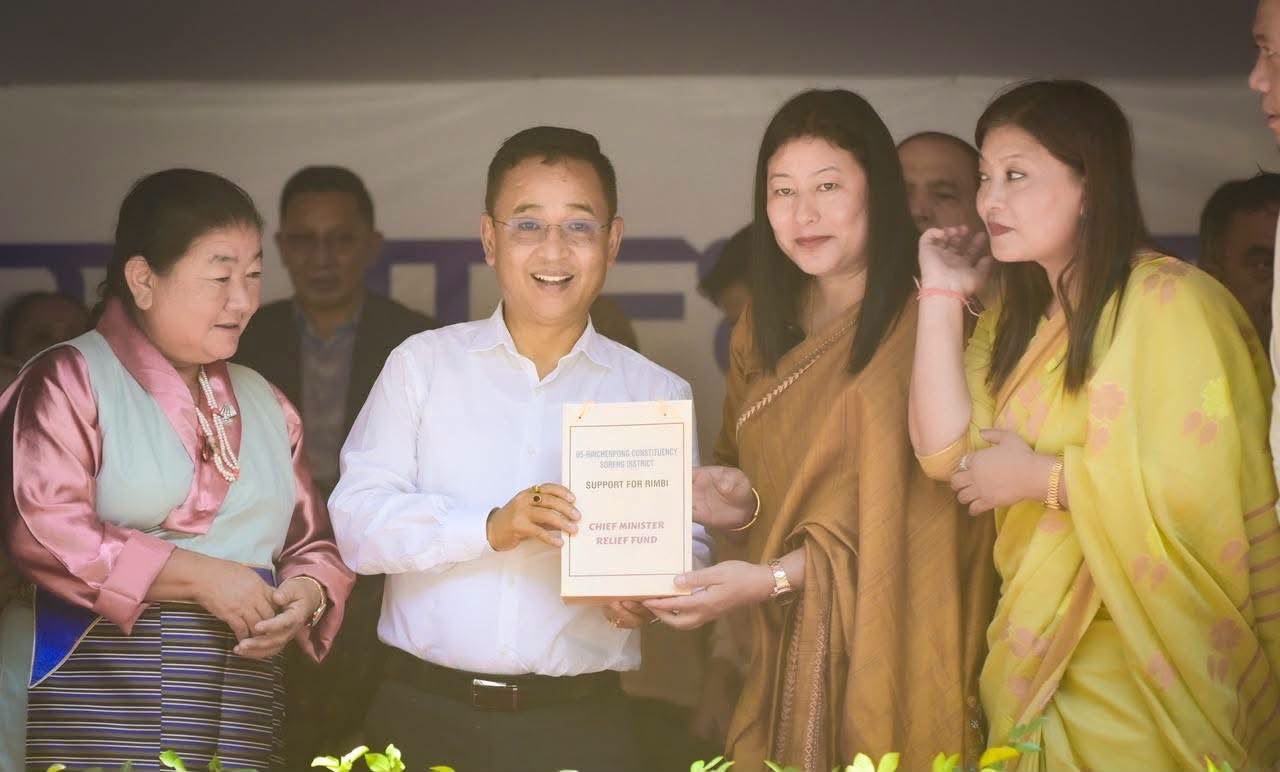
New Delhi, October 01: Chief Minister Mr Prem Singh Tamang attended the pre-157th Gandhi Jayanti celebration organised by Gyanodaya Sansthan at the Reshi Government Secondary School playground yesterday.
Addressing the gathering, the Chief Minister recalled his earlier association with the constituency and the support extended to him by the people over the years. He said he would resume his initiative of visiting different constituencies and interacting directly with the people, stating that such interactions would help the Government better understand local concerns and aspirations.
The Chief Minister highlighted various welfare initiatives of the State Government, including the Aama Yojana, under which financial assistance is being provided to mothers across the State. He informed that the scheme currently covers beneficiaries across 32 constituencies and would be further expanded in the coming years.
He also highlighted the Sikkim Garib Awas Yojana (SGAY) and stressed the importance of proper verification and identification of beneficiaries to ensure that government schemes reach those who are genuinely eligible and in need.
Speaking on the progress of the constituency, the Chief Minister highlighted the increasing number of students pursuing MBBS from the area who have received financial assistance from the Government. He noted that several successful students are alumni of government schools, describing their achievements as an indication of the continued improvement of government education.
The Chief Minister further highlighted the Government’s efforts to create employment opportunities through the regular roll-out of vacancies. He also spoke of the growing entrepreneurial spirit among local residents, citing the example of a mathematics teacher who has taken up trout fish farming with the support of the Government’s sabbatical leave provision.
On agriculture and livelihoods, the Chief Minister emphasised the importance of strengthening farming and allied activities as a means of promoting sustainable livelihoods and economic growth in rural areas.
Highlighting infrastructure and connectivity, the Chief Minister informed that funds had already been allocated for several road development works in the district and directed the concerned officials to expedite the works following the monsoon. He assured that pending road works would be taken up comprehensively.
He also informed that the Forest Office would be shifted to the former BAC office at Soreng, while the existing site would be utilised for the construction of a Parking Plaza in view of increasing traffic and parking requirements. A designated parking facility would also be developed at Rinchenpong.
The Chief Minister assured the people that their demands relating to infrastructure and essential facilities would be addressed in a phased manner. He also announced that financial support would be extended annually to content creators producing reels and digital content aimed at disseminating information about Government schemes, programmes and initiatives.
Referring to the development of the constituency, the Chief Minister highlighted the Government’s continued focus on education, infrastructure, employment and livelihood opportunities, and called upon the people to work collectively towards the progress of the area and the State.
Concluding his address, the Chief Minister extended his warm greetings and best wishes to the people on the occasion of the 157th Gandhi Jayanti and called upon everyone to uphold the ideals of Mahatma Gandhi and contribute collectively towards the development and progress of Sikkim.
The programme also featured a felicitation of the Chief Minister, a welcome dance, a flute band display, an inter-school debate competition and a football semi-final.
1, Oct 2026
UPI Maintains Strong Momentum as September Transactions Reach INR 29.37 Lakh Crore
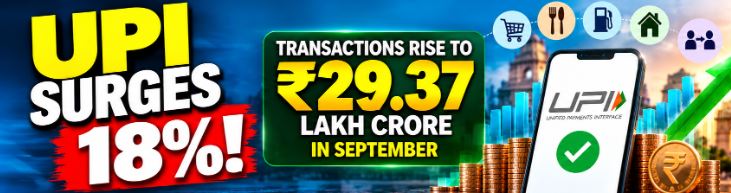
New Delhi: India’s digital payments landscape continued to demonstrate strong momentum in September, with transactions through the Unified Payments Interface (UPI) reaching ₹29.37 lakh crore, reflecting an 18% increase in transaction value compared with the same period a year earlier.
The latest figures reinforce UPI’s growing importance in India’s payments ecosystem, where instant digital transactions have increasingly become part of everyday economic activity. From neighbourhood retailers and restaurants to e-commerce platforms, utility payments and person-to-person transfers, UPI has emerged as a widely used payment mechanism.
September saw UPI process transactions worth nearly ₹30 lakh crore, highlighting the enormous scale of India’s real-time payments infrastructure.
The growth in value has been accompanied by a substantial increase in transaction volumes. The expanding number of daily transactions indicates that consumers are increasingly using digital payments for routine purchases rather than limiting them to occasional or high-value transactions.
The widespread availability of QR-code payments has played an important role in this transition. Even small businesses and local merchants can now accept digital payments without requiring conventional card-payment infrastructure.
One of the defining features of India’s UPI expansion has been the increasing frequency of relatively small transactions.
Consumers can use UPI for purchases ranging from groceries and food to transportation, mobile recharges and household bills. This has helped transform digital payments from a largely urban banking service into an everyday transaction tool used across a much broader section of the economy.
For merchants, QR-based payments have also reduced some of the barriers traditionally associated with accepting electronic payments. A smartphone and a UPI-enabled account can provide a simple route to receiving payments digitally.
The September performance comes as India’s broader digital economy continues to evolve. UPI has become an important layer connecting consumers, banks, financial technology companies and merchants.
Its real-time settlement capability and interoperability have helped create a payments environment in which consumers can make direct bank-to-bank transactions using a variety of participating applications.
The system has also contributed to the formalisation of transactions by creating digital records of payments that can support businesses in areas such as accounting, reconciliation and cash-flow management.
UPI’s expansion is no longer confined to India’s major metropolitan centres. QR-based payment acceptance has spread across smaller cities and towns, while smartphone penetration and access to digital banking have helped bring more consumers into the digital payments ecosystem.
For small merchants, particularly those operating with limited infrastructure, digital payments can provide an additional alternative to cash while enabling quicker transaction confirmation and easier payment reconciliation.
The growing use of UPI therefore reflects not only changing consumer behaviour but also the increasing digitisation of India’s commercial infrastructure.
The continued increase in UPI activity is likely to shift attention from adoption alone towards the sustainability and economics of the digital payments ecosystem.
As transaction volumes grow, banks, payment service providers, fintech companies and merchants will need to manage issues including payment infrastructure capacity, cybersecurity, fraud prevention, customer protection and the economics of merchant payments.
At the same time, innovations around credit-linked payments, cross-border transactions and new digital financial products could broaden the range of services built around India’s instant-payment infrastructure.
The September performance provides another indication of how deeply digital payments have become embedded in India’s economic activity. A monthly transaction value of ₹29.37 lakh crore represents more than a technology milestone; it reflects millions of individual payment decisions made by consumers and businesses every day.
As UPI adoption continues to spread across sectors and geographies, India’s digital payments ecosystem is increasingly becoming an essential part of the country’s modern economic infrastructure.
The September numbers therefore point to a broader trend: digital payments are moving from being an alternative to cash towards becoming one of the principal channels through which everyday commerce takes place in India.
1, Oct 2026
RBI October MPC: Industry Leaders Weigh Rate Outlook And Borrowing Impact
Puja Abhishek Singh, CEO, Manipal Fintech:
With inflation remaining an important consideration, the upcoming MPC meeting will be closely watched, with the possibility of a 25 bps rate increase also being discussed. For home loan customers, it can serve as the beginning of stable rate scenarios after the substantial rate reductions seen over the past year. Borrowers on repo-linked loans may see a slight impact on EMIs or loan tenure, while those with older MCLR-linked loans can compare their current rates with available offers and consider switching if it could help them save on their overall borrowing cost. For FD savers, a higher-rate environment could offer an opportunity to earn better returns on deposits, although the impact may vary from bank to bank. Going forward, the RBI’s approach to inflation will be key to the interest-rate outlook.
Rohit Arora, CEO & Co-founder, Biz2Credit and Biz2X
If RBI does move on rates in October, it won’t be a surprise, it will be a response to a genuinely different inflation setup than a year ago: an oil-price shock, a weaker rupee, and a Fed that’s already hiked once. For borrowers, the immediate effect is on loan pricing at the margin, not a sudden credit freeze. What matters more for MSMEs and retail borrowers is whether this is a one-and-done move or the start of a cycle as a single 25-bps hike is manageable, but two hikes back-to-back into December would start showing up in EMIs and working-capital costs in a way businesses need to plan for now, not after the fact.
1, Oct 2026
Shoolini Among World’s 500 for Third Consecutive Year
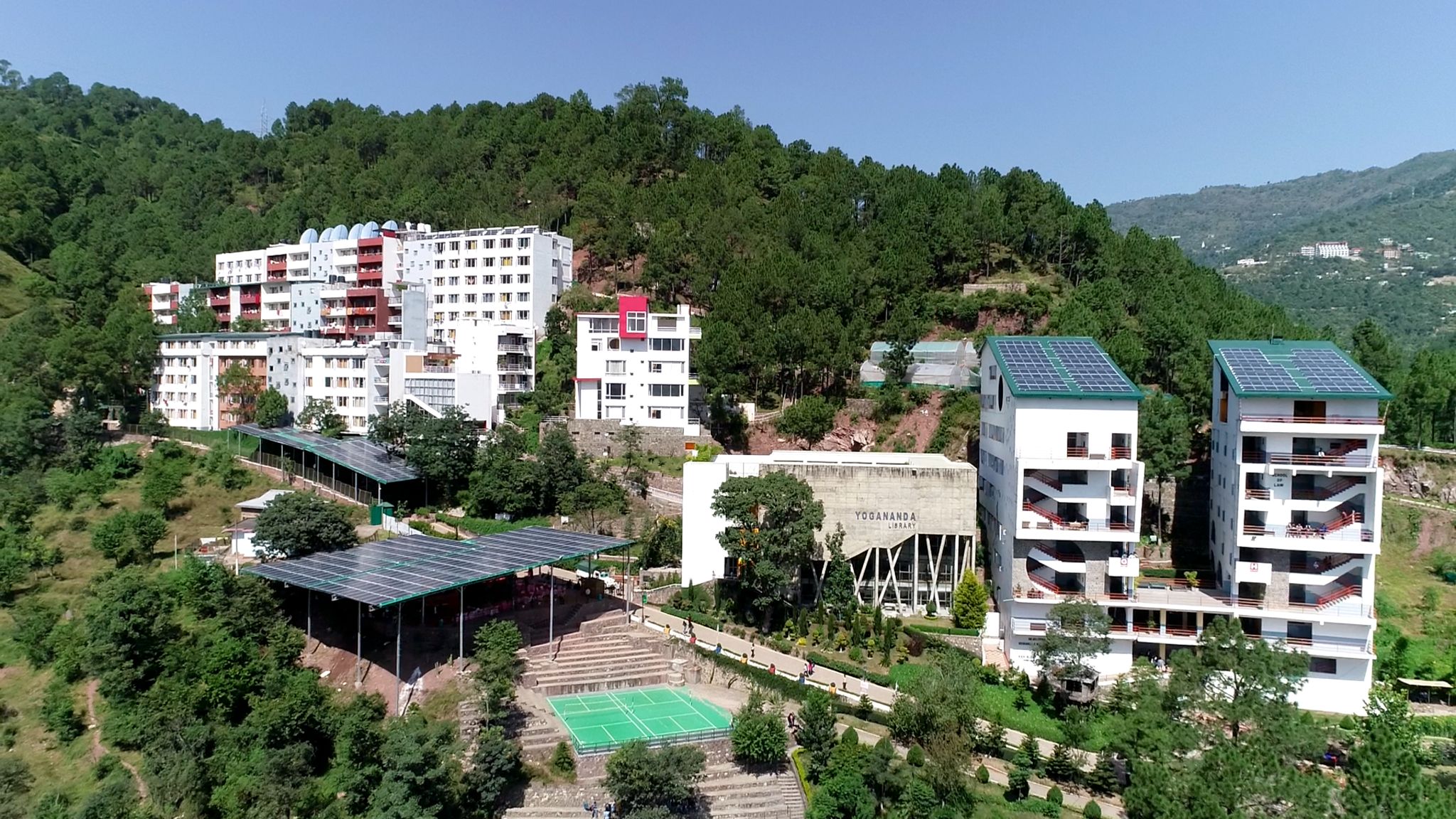
Oct 01: Shoolini University retained its place among the world’s Top 500 universities for the third consecutive year in the Times Higher Education (THE) World University Rankings 2027, released today. It ranked No. 3 in India and was placed in the 451–500 global band.
The Indian Institute of Science (IISc), Bengaluru, ranked 254th, while Saveetha Institute of Medical and Technical Sciences was placed in the 326–350 band. These were the only two Indian institutions ranked ahead of Shoolini.
Founder Chancellor Prof PK Khosla outlined the university’s next goal. ‘When we founded Shoolini, we wanted to show that a university in the Himalayan region could compete with the best in the world. Our faculty, researchers and students have given us the confidence to aim higher. Our goal is to be among the world’s Top 200 universities within the next three years.’
Shoolini ranked 184th globally for Research Quality and third in India for International Outlook. Its overall score was in the 47.4–48.7 range. The university has now been among the world’s Top 500 four times in five years.
Pro Chancellor Prof Vishal Anand said, “Getting into the Top 500 once is an achievement. Staying there three years in a row is difficult, because it takes consistent work every year. This result reflects the efforts of everyone who continues to support Shoolini’s progress.”
The 2027 rankings included 2,297 institutions worldwide, with 143 from India. Over 1,000 institutions from Asia were part of the list.
Vice Chancellor Prof Atul Khosla added, “Being recognised among the world’s leading universities is a proud moment for Shoolini. We will continue to invest in research, strengthen our international partnerships and focus on teaching that helps students think, question and create.”
THE World University Rankings are widely recognised as a global benchmark for higher education. They assess research-intensive universities across teaching, research, knowledge transfer and international outlook, allowing institutions to compare their performance with universities around the world.


