


25, Aug 2026
PanIIT Summit in Vijayawada to Explore New Frontiers in DeepTech and Innovation
Vijayawada, August 25, 2026: PanIIT Alumni India, the umbrella organisation representing more than five lakh alumni of all 23 Indian Institutes of Technology (IITs), on Tuesday announced the PanIIT Andhra Pradesh Summit 2026, a major leadership, innovation and technology forum to be held on October 3, 2026, at Novotel Vijayawada Varun.
The Summit, themed “Catalysing Innovation for Swarnandhra Vision 2047,” will be inaugurated by Mr. Nara Chandrababu Naidu, Chief Minister of Andhra Pradesh.
The one-day Summit is expected to bring together more than 500 delegates, including around 100 founders and startup leaders, 50 CEOs, 50 investors and venture capitalists, policymakers, technology experts, academicians and industry leaders from across India and abroad.
The Summit will provide a platform for government, industry, academia, entrepreneurs, investors and the global IIT alumni community to explore opportunities for accelerating innovation, attracting investment and promoting technology-led growth in Andhra Pradesh.
The Summit will focus on key technology and growth sectors, including: DeepTech, Artificial Intelligence & Machine Learning, MedTech, Pharma & Healthcare, Oil & Gas and Green Energy, Semiconductors & Data Centres, Quantum Computing and Defence & Aerospace
Addressing a press conference, Shri Prabhat Kumar, IRS, Chairman, PanIIT Alumni India and Principal ADG, NACIN, CBIC, said the Summit would seek to leverage the collective strength of the IIT alumni community to contribute to Andhra Pradesh’s development.
“The PanIIT Andhra Pradesh Summit 2026 is an opportunity to bring together the collective strength of government, industry, academia, entrepreneurs and the global IIT alumni community. Andhra Pradesh has a vast and influential diaspora spread across the world, particularly in the United States. IIT alumni would like to play a catalytic role in the development of Andhra Pradesh.”
He said PanIIT would like to position Amaravati as a leading DeepTech capital of India and explore long-term initiatives that can create a strong innovation ecosystem in the State.
“At the behest of Chief Minister Mr. Nara Chandrababu Naidu, we would like to make the PanIIT Andhra Pradesh Summit an annual affair. As part of our long-term vision, we are exploring the establishment of a PanIIT Centre of Excellence in Amaravati, for which we are seeking land from the Government of Andhra Pradesh. This would be the first Centre of Excellence of its kind to be established by PanIIT Alumni India in India. If the discussions progress as planned, we may even sign an MoU with the Government of Andhra Pradesh during the Summit on October 3,” he said.
He added that Andhra Pradesh was a progressive State with immense potential in emerging areas such as Artificial Intelligence, DeepTech, quantum technology, advanced manufacturing and innovation.
“Through collaboration and shared expertise, we hope to support technology-led solutions and contribute to Andhra Pradesh’s vision of Swarnandhra and its journey towards becoming a leading technology and innovation hub,” he said.
Shri Amitabh Ranjan, Vice Chairman, PanIIT Alumni India and Registrar, Indian Institute of Public Administration (IIPA), said innovation and research would be critical to India’s future economic growth.
“India currently invests around 0.65% of its GDP in research and development, compared with substantially higher levels in countries such as China, the United States and Israel. This highlights the need for greater investment in innovation, research and technology,” he said.
“The theme ‘Catalysing Innovation for Swarnandhra Vision 2047’ is therefore particularly relevant. Innovation will be one of the fundamental drivers of our future growth,” he added.
He said Andhra Pradesh had several strategic advantages that could support its emergence as a major economic and technology hub.
The recently approved 1,107-km Kharagpur–Amaravati Greenfield Corridor, including a 457-km stretch through Andhra Pradesh, is expected to strengthen connectivity and support economic development in the State.
He also highlighted Andhra Pradesh’s long coastline and mineral resources, including monazite, ilmenite, rutile and zircon, which have potential significance for advanced materials, clean-energy and strategic industries.
Shri Sudhakar Gande, Chair, PanIIT Andhra Pradesh Summit 2026, said Andhra Pradesh had a strong foundation of talent, entrepreneurship and ambition.
“By embracing emerging technologies such as AI, DeepTech and semiconductors, while fostering innovation and investment, Andhra Pradesh has a significant opportunity to create new engines of growth and position itself as a leading technology hub.”
Prof. Dr. Ramanaidu Randhi, Convenor, PanIIT Andhra Pradesh Summit 2026, said stronger collaboration between academia, industry, government and entrepreneurs was essential for building a sustainable innovation ecosystem.
“Academic excellence and research are fundamental to building a strong innovation ecosystem. Their true impact lies in translating knowledge into technologies, products and practical solutions that address real-world challenges. Greater emphasis on applied research can transform academic discoveries into market-ready products and services, creating social and economic value,” he said.
“Stronger collaboration among academia, industry, government and entrepreneurs can bring together research, talent, technology and innovation to solve practical problems, drive sustainable growth, create employment and contribute to national development,” he added.
PanIIT Alumni India
PanIIT Alumni India (PIAI) is the umbrella organisation representing alumni of all 23 Indian Institutes of Technology (IITs). Established in 2006 as a not-for-profit society, PanIIT brings together IIT alumni, academia, industry, entrepreneurs, investors, innovators and policymakers to foster collaboration, innovation and nation-building.
Through national and global summits, policy dialogues, technology and innovation initiatives, and social-impact programmes, PanIIT seeks to leverage the collective expertise and global networks of the IIT alumni community to contribute to India’s development and global leadership.
The IIT alumni community includes prominent global leaders such as Sundar Pichai, CEO of Alphabet and Google; Arvind Krishna, Chairman and CEO of IBM; N. R. Narayana Murthy, Founder of Infosys; Vinod Khosla, Co-founder of Sun Microsystems; and Raghuram Rajan, former Governor of the Reserve Bank of India, reflecting the global impact of the IIT ecosystem.
- 0
- By Neel Achary

25, Aug 2026
Jitin Prasada’s Morocco Visit to Give Fresh Push to Trade and Investment Ties
New Delhi, Aug 25: Minister of State for Commerce and Industry Jitin Prasada’s two-day visit to Morocco is expected to strengthen India-Morocco economic relations and open new opportunities for trade, investment and business cooperation.
Prasada has reached Morocco to co-chair the 7th Session of the India-Morocco Joint Commission with Omar Hejira, Secretary of State to Morocco’s Minister of Industry and Trade.
The Joint Commission meeting will provide both countries an opportunity to review ongoing economic and commercial cooperation and identify new areas for mutually beneficial engagement.
According to the Commerce and Industry Ministry, discussions will cover several key sectors, including trade and market access, fertiliser production and supply, investment, industrial cooperation, agriculture, food safety, pharmaceuticals, healthcare, digital transformation, transport, logistics, education and skill development.
A major focus of the talks will be on diversifying bilateral trade and expanding market access, with both sides expected to explore measures that can create greater opportunities for businesses and investors.
India and Morocco are also expected to sign a Memorandum of Understanding on food safety cooperation. The proposed agreement will promote the exchange of information on the safety and quality of imported food products and encourage cooperation between food-testing laboratories.
The MoU will also support the sharing of technical expertise, analytical methods and information in areas of mutual interest, helping strengthen cooperation on food safety standards.
Prasada’s visit is expected to provide fresh momentum to India-Morocco commercial engagement by strengthening institutional cooperation and creating opportunities for greater business-to-business interaction.
The Joint Commission is likely to play an important role in identifying new avenues for trade, investment and industrial partnerships, further strengthening the economic relationship between the two countries.
25, Aug 2026
FAI to deliberate on strengthening India’s fertiliser security amid global supply disruptions
Mumbai, 25th August 2026: The Fertiliser Association of India (FAI) is organising a three-day program on Fertiliser Security Amid Global Disruptions from 24-26 August in Udaipur, Rajasthan bringing together senior industry executives and sector experts to deliberate on the emerging challenges to India’s fertiliser security and the roadmap for building a more resilient fertiliser ecosystem. The program will focus on global market volatility, domestic production, policy challenges, geopolitical disruptions, green ammonia and urea, circular economy approaches and alternative fertilisers.
Addressing the inaugural session, Dr. Suresh Kumar Chaudhari, Director General, FAI, said that recent geopolitical developments have highlighted the vulnerability of global fertiliser supply chains and reinforced the need for greater self-reliance and preparedness. He emphasised that fertiliser security is closely linked with agriculture and food security, and that disruptions in fertiliser availability can have wider implications for the agricultural sector. “When the fertiliser sector is secured and safe, the agriculture sector feels secured and safe,” he said.
Dr. Chaudhari noted that the Indian fertiliser industry has demonstrated resilience despite repeated global disruptions, but cautioned that such resilience cannot depend indefinitely on contingency measures. Greater domestic production, diversification of sources, alternative raw materials and feedstocks, and exploration of non-conventional resources will be critical to strengthening India’s long-term fertiliser security. He also highlighted the importance of reducing dependence on a single source or geography as geopolitical conflicts increasingly affect energy, logistics and raw material availability.
He further underlined the growing importance of energy security for the future of Indian agriculture and fertiliser production, noting that the sector will need to explore green energy, green hydrogen, green ammonia and greater integration of renewable energy into fertiliser manufacturing. Dr. Chaudhari stated that companies who were able to integrate new energy resources and technologies effectively could gain a competitive advantage.
The FAI Director General also stressed the need for greater technology adoption across the fertiliser sector, including robotics, artificial intelligence and other new-age technologies, to improve manufacturing efficiency and productivity. While India has made significant progress in energy efficiency, continued investment in new-generation technologies will be important to improve operational efficiency and competitiveness.
Dr. Chaudhari also highlighted the role of integrated nutrient management and alternative fertilisers in building a more sustainable agricultural system. He noted that nano fertilisers, natural and organic farming and other alternative approaches can complement conventional fertilisers, while helping improve soil health, nutrient-use efficiency and long-term sustainability.
He emphasised that achieving greater resilience will require coordinated efforts by the Government, fertiliser industry and farming community, supported by an enabling policy environment. FAI, as the interface between industry and government, will continue to facilitate knowledge-sharing, identify emerging challenges and provide policy inputs to strengthen the sector.
25, Aug 2026
Sokka Tableware by Sravanya Pittie Brings Artisanal Luxury to Mumbai with the Launch of Their First Flagship Store in Worli
Mumbai, Aug 25: Sokka Tableware, the contemporary design house by Sravanya Pittie, has opened its first flagship store in Mumbai at Ready Money Terrace, Ground Floor, Worli Naka. Encompassing tableware, serveware, barware, linens, accessories and gifting, the store marks a significant milestone in the brand’s journey to build a distinctive identity within contemporary Indian design.

Founded on the vision of creating the complete experience of a beautifully set table, Sokka Tableware looks beyond conventional tableware, bringing together design, functionality, craftsmanship and storytelling. The brand takes its name from the Swedish word Söka, meaning “to seek,” reflecting its enduring curiosity and pursuit of new ideas, materials, and forms.
With years of immersion in the luxury lifestyle and interiors realm, Sravanya Pittie brings a depth of expertise that positions Sokka Tableware as the natural evolution of a long-standing practice rather than a debut venture. Her refined eye for contemporary entertaining honed through the creation of high-end, design-led pieces for discerning hosts has consistently balanced heritage craftsmanship with a sleek, modern sensibility, serving an audience of design-conscious individuals aged 25 to 45 who seek beauty in both everyday rituals and seasonal celebrations. Sravanya Pittie has also designed bespoke tableware and lifestyle pieces for prestigious destinations across India that reflect the brand’s ability to translate its design language across distinctive spaces.
The Worli flagship offers an expansive selection of tableware, serveware, barware, linens, accessories and gifting, designed for everyday dining as well as intimate gatherings, celebrations and festive occasions. The brand works across a considered range of materials, including vegan porcelain, vegan leather, glass, metal, linen and wood, complemented by details such as 24-karat gold, lead-free colours and authentic, FDA-certified, lead-free Kansa, making the brand fully vegan with conscious material choices and craftsmanship at its core.A defining feature of the store is itsilluminated placemat installation, which transforms an everyday table essential into a striking visual centrepiece, a fitting expression of the brand’s belief that everyday objects can be beautiful and worthy of attention.
The newly launched gifting edit features mithai boxes, date jars, Arabic cups and espresso cups, among a wider selection of pieces designed to bring character to celebrations and everyday rituals, drawing on travel, lived experience and India’s rich artisanal traditions.Alongside its ready-to-shop collections, Sokka Tableware offers a bespoke service for private clients, hospitality brands, corporations and celebrations, translating an idea or occasion into a fully customised design.
Sravanya Pittie, Founder, Sokka Tableware, says:
“The new store is an extension of our design philosophy; a space where tableware, craftsmanship and storytelling come together. I wanted it to feel warm, inviting and inspiring, allowing customers to experience our collections beyond the products themselves. Our relationship with Indian artisanship is central to this journey, and the store allows us to show how traditional craft can sit beautifully within a contemporary setting.”
The Worli flagship adds to the brand’s growing international presence across Saudi Arabia, Dubai, Abu Dhabi and London. Positioned on a prominent main road near Sokka’s design atelier, the store brings customers closer to the creative process while establishing a dedicated Mumbai destination for the brand.
25, Aug 2026
The Lakmē Edit: Icons, Innovations & Everything In Between

Aug 25: For decades, The House of Lakmē has been at the forefront of India’s beauty landscape, evolving alongside the Indian woman and her ever-changing relationship with makeup. From everyday essentials to trend-led innovations, Lakmē’s diverse portfolio brings together beauty, performance and accessibility across every makeup ritual. With products designed to complement every mood, moment and expression, Lakmē continues to make beauty more intuitive, exciting and relevant to the modern Indian consumer.
The Lakmē 9to5 Forever Matte Lip Crayon reimagines the classic lip colour in a playful, easy-to-use crayon format. Available across a versatile range of shades, its Vitamin C-infused, moisture-rich crème base delivers intense pigment in a single stroke while keeping lips hydrated for up to 8 hours – making it effortless to line, fill, mix and match. And then there are the icons that have stood the test of time.
25, Aug 2026
Hansa Research Festive Insights 2026: Indian Consumers Gear Up for a Bigger, Earlier and More Conscious Festive Season
India, Aug 25: Hansa Research, India’s largest consumer insights provider, has released its Festive Season 2026 analysis, capturing evolving consumer sentiment, spending patterns, shopping journeys and brand preferences across India. The findings point to stronger spending intent, earlier shopping journeys, digital-led discovery and increasingly conscious consumption, offering brands a closer look at the changing festive consumer.
Festive Spending Set to Rise
For 95% of respondents, the festive season is an important period for shopping, with 95% planning to spend more than usual. While 45% plan to spend 25–50% more, another 22% expect to spend over 50% extra, while just 2% say they will not increase their festive spending.
The festive sentiment is equally strong, with 82% expressing excitement about the upcoming season. Diwali remains the most widely celebrated festival at 85%, followed by Dussehra/Navratri 73%, Raksha Bandhan 65% and Ganesh Chaturthi 60%.
Fashion Leads as Festive Baskets Broaden
Apparel and fashion lead festive shopping at 69%, followed by home décor/furniture at 51% and electronics & gadgets at 50%. Sweets and snacks account for 43%, while jewellery stands at 35%, pointing to a festive basket that extends beyond traditional categories into lifestyle and considered purchases.
Online Becomes Integral to Festive Shopping
38% of consumers plan to shop through online platforms, while another 25% will combine online and offline channels. Together, 63% are incorporating online into their festive shopping journey, while local markets account for 18% and physical retail stores for 12%.
The Festive Shopper Is Starting Earlier
Festive shopping is increasingly moving ahead of the traditional last-minute rush. 50% begin shopping two to four weeks before the festival, while 11% start one to two months in advance. Overall, 61% begin at least a week before the festival, with only 2% shopping at the last minute.
Discounts Lead, But Social Influence Matters
Discounts and deals remain the strongest purchase influence at 60%, followed by family traditions at 53% and social media/influencer recommendations at 48%. Brand trust and legacy influence 35%, while advertisements influence 32%.
However, there is a clear festive brand recall gap: while 95% prefer buying from brands running festive-specific ads or offers, only 39% recall a brand that stood out in last year’s campaigns.
Sustainability Goes Mainstream
85% of respondents consciously make eco-friendly choices during festive shopping. Among these, 68% avoid plastic decorations, 59% choose eco-friendly packaging, 58% prefer gifting experiences over products and 48% shop from local, handmade or small businesses.
The findings indicate that conscious consumption is extending beyond products and packaging to how consumers celebrate and where they choose to spend.
What Consumers Want From Festive Campaigns
Product discounts and bundles lead festive campaign preferences at 43%, followed by cultural storytelling and emotional advertising at 35%. Community or cause-driven campaigns account for 15%, while 8% prefer exclusive limited-edition offerings.
For brands, the findings highlight the need to balance value with emotional and cultural relevance to create stronger consumer engagement during the festive season.
Commenting on the findings, Praveen Nijhara, CEO at Hansa Research, said,
“The 2026 festive season reflects a consumer who is optimistic about spending, but increasingly intentional about where, how and why they spend. What stands out is the shift from a concentrated festive buying period to a longer, more digitally influenced and considered consumer journey. Earlier shopping, digital discovery and conscious choices are reshaping how consumers engage with brands. For marketers, the challenge is no longer simply to capture festive attention, but to remain relevant throughout this journey. The gap between the high preference for festive advertising and relatively low brand recall also highlights that visibility alone does not guarantee impact—brands need to create distinctive experiences that combine value, emotion and cultural relevance.”
Hansa Research Festive Insights 2026 highlights a consumer who is optimistic about spending but increasingly intentional in how they discover, evaluate and purchase. For brands, understanding these behavioural shifts will be critical to turning festive visibility into meaningful consumer engagement.
25, Aug 2026
From India to the World: D4 Commerce Rallies Over 100 Founders to Crack the Code on International E-commerce
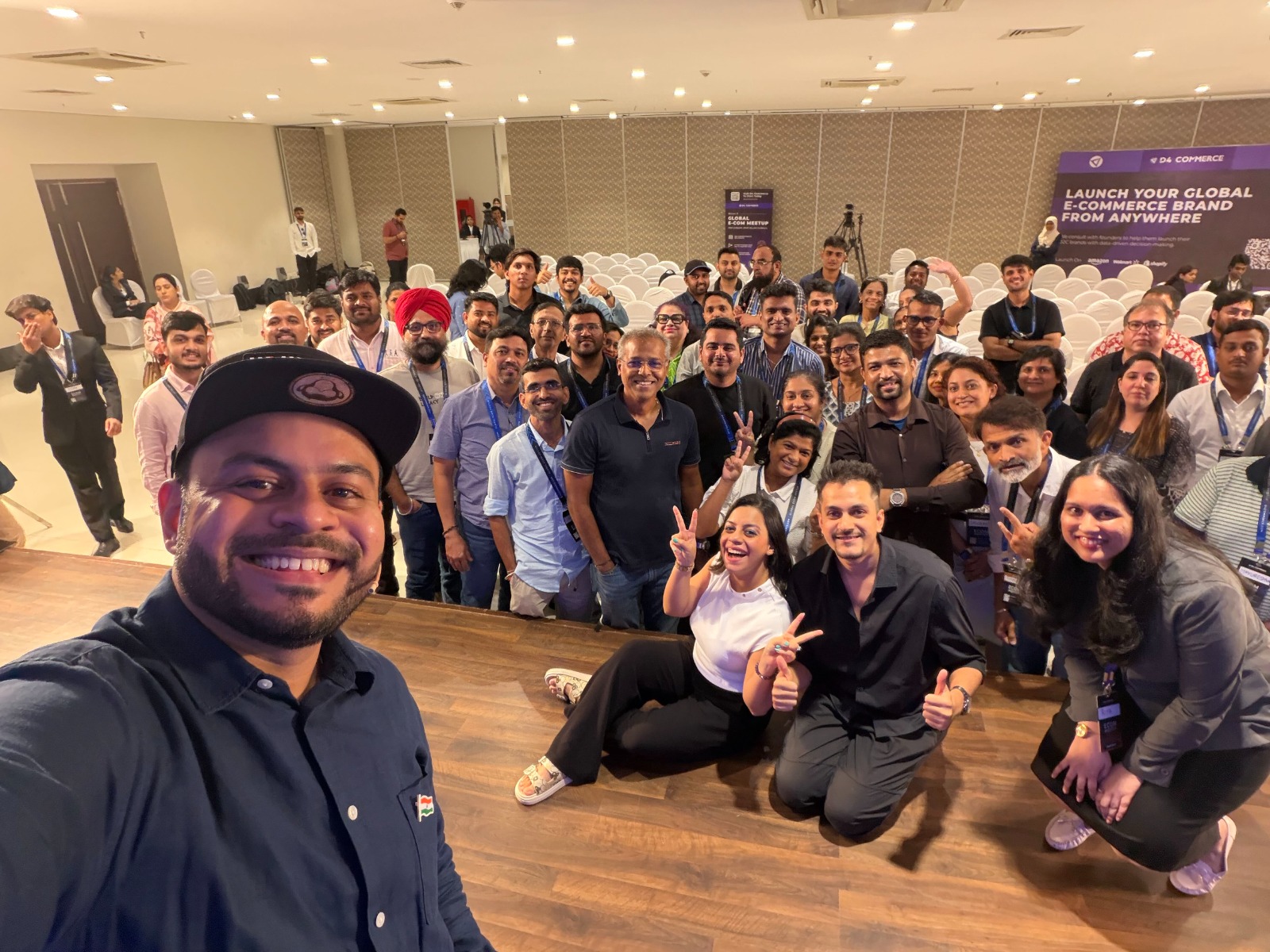
Mumbai, Aug 25: D4 Commerce (D4C), a Mumbai-based global e-commerce accelerator dedicated to helping Indian founders build and scale their brands on the world stage, hosted the fifth edition of their Global Ecom Meetup in Mumbai recently. The day-long gathering drew over 100 entrepreneurs, business owners and experienced business professionals as well as aspiring sellers for a series of sessions led by Rishiraj Kalra, Founder & CEO of D4 Commerce, alongside Riya Arage, Co-Founder Atlasia Global, Parshwa Mehta, Inside Sales Representative at Doola, Chiranjivi Kothekar, Co-Founder Bloody Marketers, Tanvi Sharma, Senior Associate Marketing at ShipGlobal, Manan Tibra, Founder Tibra International and Shreyansha Singh, Lead Designer at D4 Commerce. The conversations traversed the full arc of building global D2C brands for international markets; from US business incorporation, taxation and compliance to international logistics, Meta and Google advertising, customer acquisition, branding and sustainable growth.
As a growing cohort of Indian entrepreneurs sets its sights beyond the domestic market, D4 Commerce is quietly building the ecosystem to get them there by helping founders carry Indian-owned brands and intellectual property (IP) directly to consumers across key global markets, including the US, Canada, the UK, Germany, wider Europe, the UAE, KSA and Australia. This shift is unfolding alongside a broader change in how Indians are thinking about income and work, with Randstad’s Workmonitor 2026 finding that 58% of Indian employees are running a second job alongside their primary employment.
Founded by Rishiraj Kalra, who brings more than 12 years of global e-commerce experience to the venture, D4C helps founders build private-label businesses, guiding founders through every stage of the journey: product research, sourcing, business setup, compliance, branding, market activation and scale. What began as a consulting practice has quickly evolved into a full-stack accelerator, one that pairs strategic counsel with hands-on execution and, increasingly, selective co-founding and equity participation in the businesses it helps build. Working off a proprietary 21-point framework, the company has trained more than 12,000 aspiring entrepreneurs, helped launch upward of 14 brands in the past 14 months alone, and driven over $10 million in revenue across the businesses it has built.
Rishiraj Kalra’s own founder journey underpins the model. After studying Computer Science at BITS Pilani Dubai, he returned to India and continued building on an e-commerce journey that had begun while he was still a student. It was then that he first explored selling directly to US consumers through Amazon. His early experience with Amazon Global Selling gave him first-hand exposure to the possibilities of building for international markets. He built his first private-label brand, a magnetic-blocks toy business, from a liquid investment of roughly ₹2.7 lakh in 2017, scaling it to several crores in revenue within 20 months. This was proof of concept for the private-label playbook D4C now teaches. That grounding in outcomes, rather than theory, has shaped a portfolio of brands built through the D4C ecosystem, including Solvio, a premium home and bath label; TruSatva, positioned as the US’s first Ayurvedic sleep supplement; and Jilee Joy, a modern kids’ oral-care brand, each selected and built against a proprietary, data-led framework the company uses to size market opportunity and de-risk capital before it is deployed.
“The opportunity for Indian founders to build global brands has never been greater, but entering a market like the US is far more complex than simply putting a product online,” said Rishiraj Kalra, Founder & CEO, D4 Commerce. “Product selection, unit economics, compliance, logistics, positioning, strategy and customer acquisition all have to come together. Through D4 Commerce, our focus is on helping founders make sharper decisions and de-risk that journey. The Global Ecom Meetup by D4 Commerce is created to bring that learning into one room through real businesses, seasoned practitioners and the kind of conversations that show entrepreneurs what building a global business actually demands.”
Conceived as a case-study and conversation-led meetup rather than a conventional seminar, the event featured day-long sessions helmed by Kalra, along with discussions and an extensive Q&A that gave participants direct access to the expert speakers. The event was supported by Atlasia Global, a cross-border financial services firm that helps founders incorporate, stay tax-compliant and manage their books across the US and Australia, and ShipGlobal.in, a cross-border shipping and logistics platform built for Indian exporters and Amazon sellers, recently recognised by Amazon India Global Selling for Export Service Provider Excellence. Together, their presence rounded out the spectrum of capabilities founders need to incorporate, comply and ship across international markets.
Launched earlier this year, the Global Ecom Meetup series by D4 Commerce has become an offline platform where entrepreneurs, business owners and experienced professionals engage directly with real e-commerce case studies, practitioners and businesses operating in global markets. Across its editions, the format has stayed true to its founding premise: practical insight over theory, and direct access over passive learning.
Beyond its consulting and accelerator work, D4 Commerce runs Basecamp, its e-commerce foundation programme, which has crossed 8,000 registrations since launching in April 2025. Through Kalra’s creator platform, INDIAMAAN, D4C also reaches a community of more than 200,000 people across YouTube and Instagram with educational content centred on building and operating e-commerce businesses for global markets. The company has also introduced Co-Found with D4C, an equity co-founding model through which it takes a stake in select ventures and operates as their back-end execution partner with an early ambition to build an equity portfolio of roughly 50 brands over the next two years.
As more Indian founders set their ambitions beyond the domestic market, D4 Commerce is working to build the strategy, operating capabilities and ecosystem that transition demands. Through its consulting, education, execution and emerging co-founding model, the company is steadily enabling a new generation of Indian entrepreneurs to build globally competitive businesses and, in the process, strengthening the footprint of Indian-founded brands on the world stage.
25, Aug 2026
Sumsub Powers Investor Verification for Caliber’s PURE Pickleball & Padel Tokenized Real Estate Offering
Sumsub brings reusable, on-chain identity to Caliber’s PURE Pickleball & Padel offering, supporting compliant investor participation in tokenized real estate

Scottsdale, Arizona – Aug 25–Sumsub, the first AI-powered trust infrastructure for compliance at scale, today announced that its identity verification and compliance technology is powering investor onboarding for PURE Pickleball & Padel, the first real estate investment on Caliber’s (Nasdaq: CWD) platform to be tokenized. Sumsub joins Chainlink as one of the technology partners powering the initiative.
As of today, investors in PURE Pickleball & Padel can choose to receive a tokenized digital ownership certificate (the “Token”) or continue using a printed certificate. Before a Token is issued, Sumsub conducts know-your-customer (KYC), sanctions screening, and anti-money-laundering checks. It then publishes a programmable, on-chain accredited investor credential (CCID) within Chainlink’s Automated Compliance Engine (ACE), enabling transfer controls built around each investor’s verified profile. The same credential is reusable across future tokenized offerings, so an investor verifies once rather than repeating the process for every deal.
The integration marks another step in Sumsub’s broader push to extend reusable, on-chain identity beyond crypto-native assets and into regulated real-world asset (RWA) markets. It builds on Sumsub ID, part of Sumsub’s Reusable Digital Identity suite, which lets a user verify once and reuse that verified profile across multiple use cases.
“We are pleased to bring Sumsub’s identity verification services as part of together with other top-tier partners for this tokenization effort, including Chainlink with its Automated Compliance Engine (ACE),” said Chris Loeffler, Chief Executive Officer of Caliber.”Tokenizing PURE Pickleball & Padel gives us a practical first use case where we can connect the technology to a real asset, a real investor experience and a real operating business. We are not changing what investors own. We are applying better technology to make private real estate ownership more transparent, more efficient and ultimately more functional.”
Sumsub has already turned the verified Sumsub ID profile into a portable, on-chain credential through integrations with the Solana Attestation Service and Linea’s Verax Attestation Service. The PURE Pickleball & Padel offering extends the same model into tokenized private real estate, providing one of the first practical examples of reusable identity connecting a regulated real-world asset with infrastructure originally built for DeFi.
“Tokenization of regulated assets works only if the people holding the tokens are who they say they are, and that verification needs to travel with them,” said Ilya Brovin, Chief Growth Officer at Sumsub. “We’ve already seen reusable, on-chain identity change how people move across crypto and Web3 platforms. That’s what makes this more than a digital certificate. We are powering an investor identity that can travel with someone across other tokenized RWA opportunities, not just this one.”
The offering comes as U.S. lawmakers continue to work toward the Digital Asset Market Clarity Act (the CLARITY Act), which would establish clearer federal direction for digital asset markets. Sumsub’s platform is built to operate across evolving regulatory frameworks in more than 220 countries and territories, supporting the kind of institutional, compliance-first tokenization Caliber and its partners are building toward.
25, Aug 2026
MIT INDIA’s IRS 2026 Advances Startups, Student Innovators and Industry-Academia Collaboration Towards National Opportunities
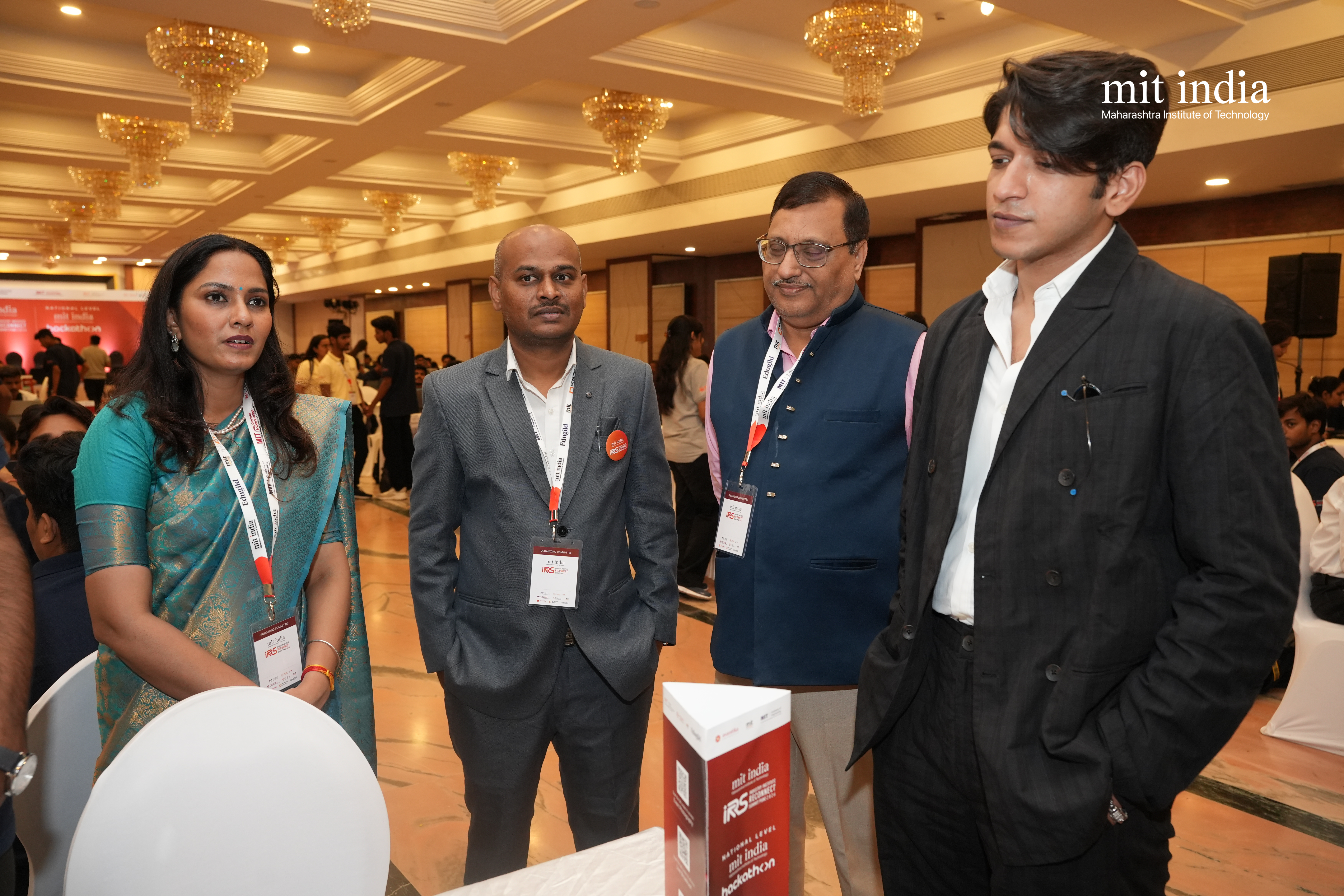
Pune, Aug 25: MIT INDIA’s Industry Institute Reconnect Summit (IRS 2026) concluded in Pune with a focus on turning industry–academia engagement into tangible opportunities for startups, student innovators and future talent. The two-day summit brought together industry leaders, investors, academic institutions, entrepreneurs and students, with Capital Nexus and the MIT India National Hackathon emerging as key platforms for taking promising ventures and ideas to the next stage.
Through Capital Nexus, 25–30 startups advanced to the Grand Finale of the Industry Institute Engagement Summit (IES) 2026 in New Delhi, following participation by 100+ startups across sectors including SaaS, FinTech, HealthTech, EdTech, D2C, AgriTech, DeepTech, AI/ML, CleanTech, Manufacturing and EV & Mobility. The platform created structured opportunities for investor matchmaking, pitch refinement, business validation and long-term mentorship, with the top three startups eligible for funding opportunities ranging from ₹5 lakh to ₹50 lakh through Edugild.
The MIT India National Hackathon advanced 30 teams to the Grand Finale in New Delhi, following participation by 100+ student teams from Engineering, Science, Management and Design institutions across India. With a ₹25 lakh prize pool, the Hackathon enabled students to work on industry-relevant challenges across Government, Social Impact, Defence, Healthcare, Technical and Industry sectors, applying their academic learning to real-world problems. Teams were evaluated by industry professionals across the qualifier and finale stages.
The Hackathon also created additional opportunities for participating finalists, with AWS certification vouchers worth ₹10,000 each and cloud credits worth ₹20,000 each for teams participating in the Grand Finale.
IRS 2026 also provided a platform for conversations around employability, future skills, innovation, entrepreneurship, industry–academia collaboration and the changing requirements of the workplace. Through panel discussions, networking engagements, sponsor and alumni interactions and leadership conversations, the summit brought together perspectives from across the education, business, investment and innovation ecosystems.
Mr. Digvijay S. Karad, Group Director, MIT India, said, “The whole point of bringing these communities together is that a good idea shouldn’t necessarily end when the competition does. If something genuinely interesting comes out of this room, we want to help create a path for it to go further. That, for me, would be far more exciting than simply handing out a trophy at the end of the two days. I hope you take a few risks, try new ideas that sound slightly ridiculous, question the problem statement, build something you’re not entirely sure you know how to build yet, and most importantly, talk to the people around you.”
Mr. Sudish Panicker, Managing Director, BNY India, said, “Academia for a long time has been viewed as the home of ideas, the home of research, the home of deep inquiry. Industry, on the other hand, is seen as the engine of execution, scale, and real-world application. But today, and for times in the future, that separation will not serve any of us well. This conversation really needs to be about how do you bring the two together, and how do you bring the two together in a way that can drive the future of our organisations, it can drive the future of our country, and it can drive the future of the world. The partnership between industry and academia is not just about transformation. It is about preparing the people for the future.”
Dr. Suresh Gosavi, Vice Chancellor, Savitribai Phule Pune University, said, “I think the education system in the entire country is changing. From that perspective, an institute like MIT is really leading. Other institutes in Pune are also leading, but I think MIT India has set up a certain benchmark in the education system. I congratulate the MIT India for initiating this activity, where young brains come here, they sit here, they look at the idea, they develop the idea, and they come up with the final product which is needed by society, which is needed by industry, which is needed for the development of the country.”
Prof. (Dr.) Sanjay Govind Dhande, Chancellor, Avantika University, Ujjain, Indore, MIT University of Shillong, Meghalaya, said, “Platforms such as these Industry Institute Reconnect Summit are essential in bringing together education, industry, technology and entrepreneurship on a common stage. Universities must not remain confined to classrooms and laboratories alone. They must become places where knowledge meets real-world challenges and where ideas are tested against the demands of practice. My hope is simple. This brings together a dialogue which converts collaboration into innovation, and innovation into national impact. So I would say collaboration, innovation and national impact are the three steps that we should follow.”
The outcomes of IRS 2026 now extend towards the Grand Finale of the MIT India National Hackathon and Capital Nexus at the Industry Institute Engagement Summit (IES) 2026 in New Delhi in October 2026. The selected startups and student teams from the Pune edition will progress to the next stage, gaining a larger national platform to engage with investors, industry leaders, experts and potential partners.
The Pune edition reinforced MIT INDIA’s larger ‘Reconnect’ vision of creating stronger pathways between education, industry, entrepreneurship, investment and emerging talent. By combining industry dialogue with platforms for innovation, investor engagement and talent development, IRS 2026 seeks to move industry–academia collaboration from conversation towards sustained opportunities and measurable outcomes.


