


19, May 2026
University of Birmingham Dubai invites applications for BSc in Biomedical Science
The University of Birmingham Dubai is now inviting applications from Indian students for its BSc in Biomedical Science, a course that helps students embark on their journey in biomedical science by exploring the intricacies of the human body and the mechanisms underpinning disease.
The programme provides a strong foundation in biomedical science while preparing students to contribute meaningfully to the field. Alongside core scientific knowledge, students develop transferable research skills – such as data analysis and interpretation – and engage with the ethical and social dimensions of modern medical science. Teaching takes place in facilities designed to encourage collaboration and interdisciplinary learning.
Students study at the forefront of biomedical science and gain first-hand insight into how research drives clinical advancement. Delivered through a blend of online and in-person teaching by subject experts, the programme offers the same high-quality curriculum as the University’s UK campus. This unique approach provides access to state-of-the-art laboratory facilities in both Dubai and the UK.
Graduates earn the same University of Birmingham degree as UK-based students, develop strong research and transferable skills, and benefit from a continually updated curriculum that reflects the latest developments in biomedical science. Students may study in Dubai for the first two years and, if they choose, complete their final year in the UK. Throughout the programme they are guided by academic experts engaged in cutting-edge research.
Programme delivery:
Assessment is delivered through a range of formats to support students as they adapt to new modes of learning. At the beginning of each module, students receive clear information on assessment methods and timelines, and feedback is provided within four weeks to support ongoing development. Assessment varies by module and may include coursework such as essays, group and individual presentations, laboratory-based work and formal examinations.
Course dates: September 2026
Entry Requirements:
- Indian applicants should have an overall average of 85% – 90% in Class XII, with minimum 85% in two science subjects, one of which must be Biology or Chemistry, and the second from Biology, Chemistry, Mathematics, or Physics.
- For other state boards, applicants should have an overall average of 95% in Class XII, with minimum 90% in two science subjects, one of which must be Biology or Chemistry, and the second from Biology, Chemistry, Mathematics, or Physics.
English Language Requirements: Students will need standard XII English at 70% or 75% depending on the state board, or IELTS 6.5 overall.
Tuition: The annual tuition fee for 2026 entry is AED 156,718(INR 41,13,847 appx.) per year of study and can be paid in instalments.
Scholarship: Scholarship options at the University of Birmingham Dubai are designed to benefit all students, and the financial rewards can be carried forward through the entire programme across the foundation, undergraduate and postgraduate levels. For scholarships, please visit: https://www.birmingham.ac.uk/dubai/study/fees/scholarships
Application process: Applications for September 2026 are open. To apply for the programme, students need to submit their applications and supporting documents online.
- 0
- By Neel Achary

18, May 2026
SVIS Hosts ‘Lab of the Future’ Experiential Learning Program Featuring AI, IoT, and AR/VR Technologies
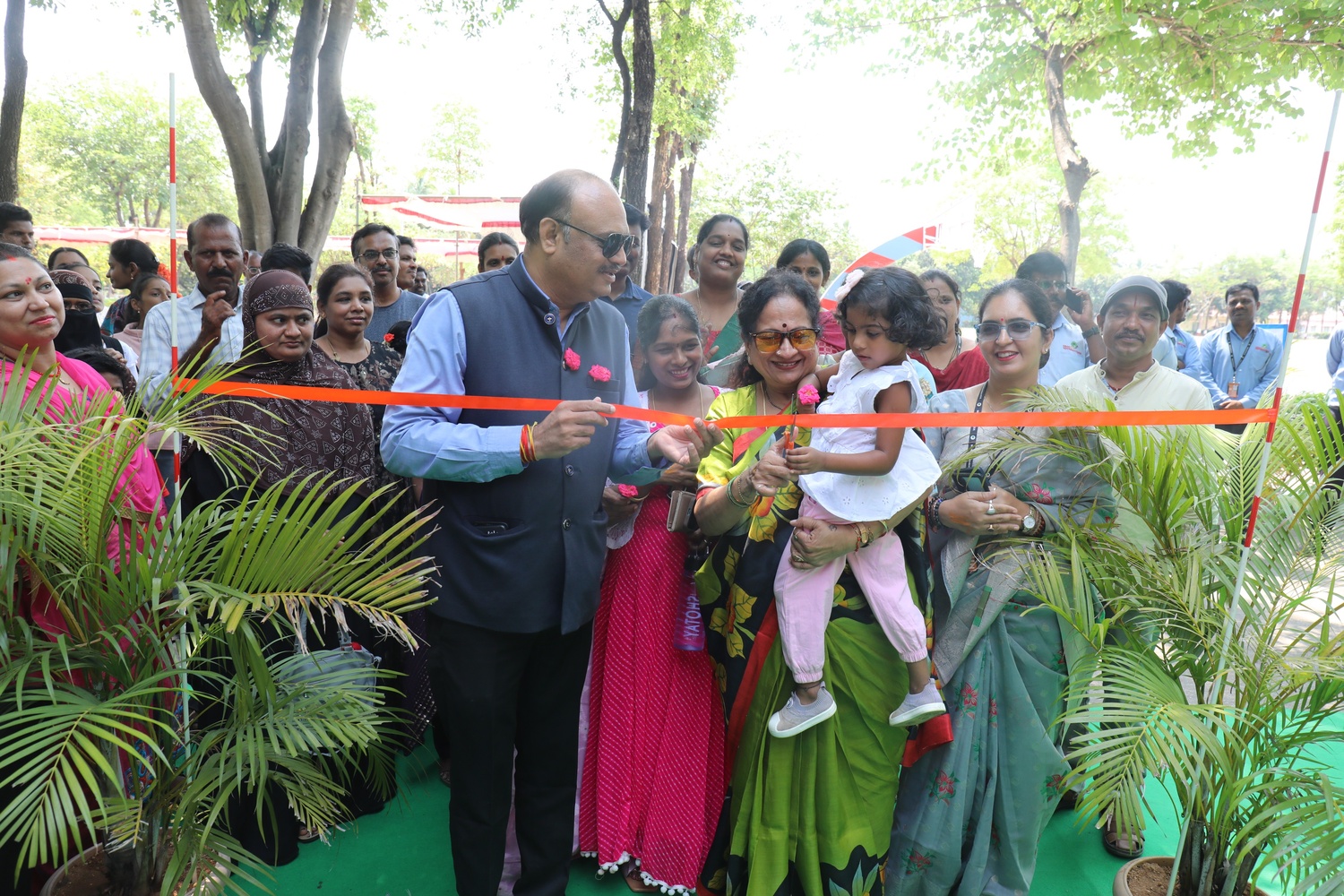
Tirupati, May 18: Sree Vidyanikethan International School (SVIS) successfully hosted its flagship experiential learning program, ‘Lab of the Future’, a week-long, on-campus initiative designed to provide students with hands-on exposure to emerging technologies and innovation-led learning.
The program transformed the campus into an interactive learning environment, featuring dedicated stations and guided workshops across Artificial Intelligence (AI), Robotics, Internet of Things (IoT), and Augmented and Virtual Reality (AR/VR). Students participated in live demonstrations, prototype building, and application-based learning modules, gaining practical insights into real-world technology use cases.
In addition to technology-focused sessions, students engaged in experiential activities such as rocket launches, drone assembly, aircraft exploration, and hands-on scientific experiments. These activities were aimed at strengthening problem-solving skills, encouraging analytical thinking, and fostering curiosity through practical engagement.
Aligned with the National Education Policy (NEP) 2020, the initiative emphasized experiential, multidisciplinary learning, while creating early exposure to emerging fields in science, technology, and innovation.
Speaking on the initiative, Vinay Maheshwari, ED and Trustee, Sree Vidyanikethan Educational Trust, said, “Lab of the Future was conceptualized to create an environment where students can engage with technology beyond the classroom and gain firsthand experience of how these innovations work in the real world. The enthusiastic participation we witnessed reflects the growing interest among students in future-focused learning.”
16, May 2026
XLRI Jamshedpur announces the Second Batch of Public Policy & Sustainable Leadership (PPSL)
Jamshedpur, India: Building on the successful launch of its pioneering executive education initiative in public policy and leadership, XLRI – Xavier School of Management has commenced admissions for the second batch of its flagship Public Policy & Sustainable Leadership (PPSL) programme.
Launched in collaboration with the Department of Personnel & Training (DoPT), Government of India, PPSL, the one-year hybrid executive programme, has emerged as a distinctive interdisciplinary platform bringing together policymakers, administrators, academicians, development professionals, sustainability practitioners, professionals from private sector under one academic ecosystem. One of the unique elements of the programme is the eclectic class mix comprising of both government sponsored candidates and self-sponsored candidates.
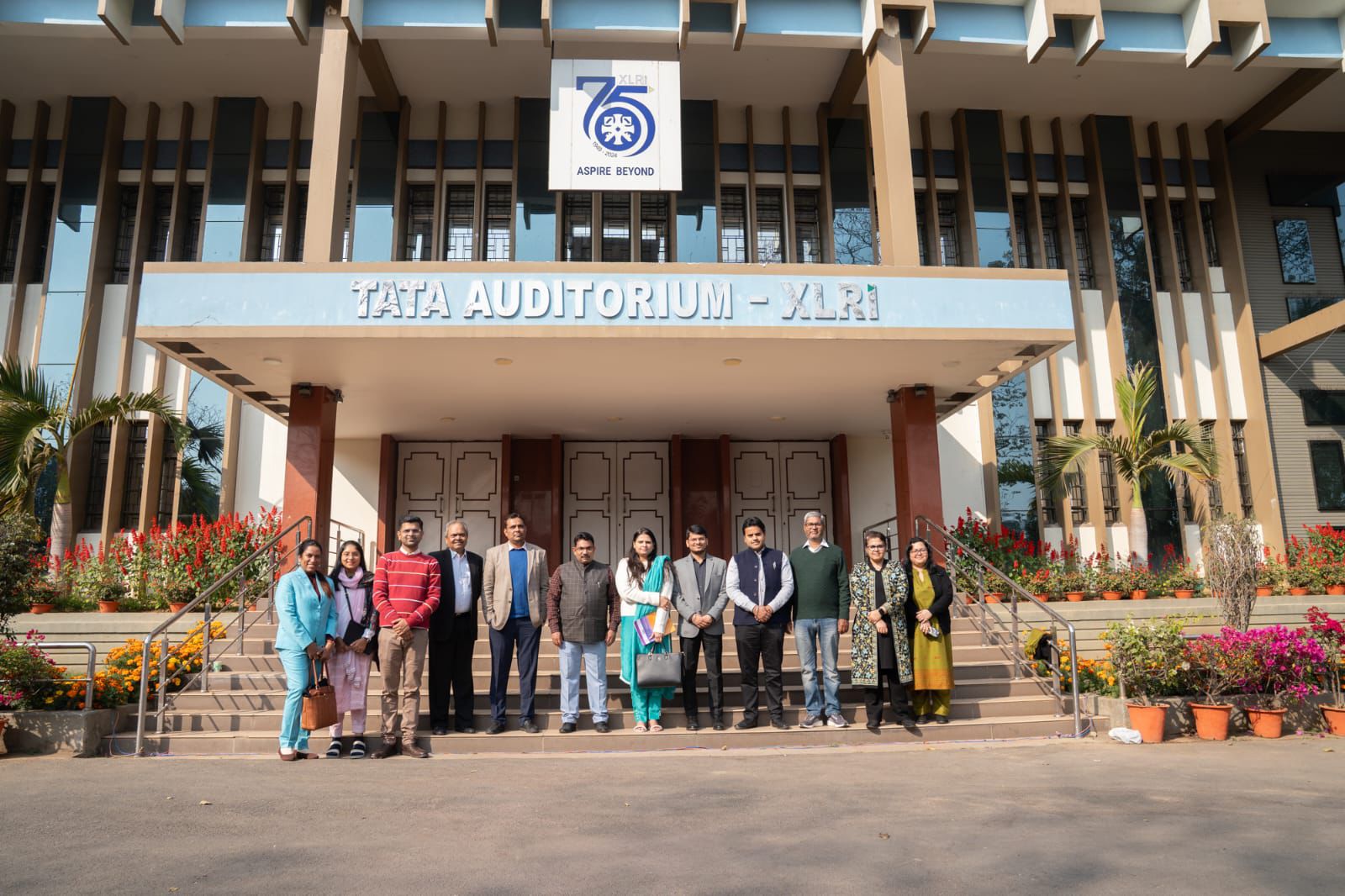
The inaugural cohort includes officers from the Government of India (IAS, IPS, IFoS and State Civil Service officers) and various state governments, senior professionals from UN Women, PSI India, Council on Energy, Environment & Water (CEEW), PCI India, IBM Research Labs, and academicians from public administration institutes.
The 180 hours programme has been carefully designed to accommodate working professionals through a hybrid delivery format combining two short immersive campus residencies with interactive online sessions held on Sundays. It offers a multidisciplinary curriculum covering public policy, public finance, public management, public systems, governance, sustainability, leadership, stakeholder engagement, business strategies & non-market strategies and emerging developmental challenges.
Speaking about the programme’s relevance and impact, Prof. Kalyan Bhaskar, Associate Professor, XLRI and Programme Director of PPSL, stated:
“The PPSL programme reflects XLRI’s larger vision of creating responsible leadership at the intersection of public policy, governance, civil society and public value creation. The diversity of the participants enriches classroom discussions, peer learning and enables meaningful dialogue between administration, academia, development sector and industry.”
With increasing complexities in public policy, governance, sustainability transitions and public administration, the programme aims to create a new generation of leaders capable of designing inclusive, ethical and evidence-driven solutions for society.
The second batch is expected to further strengthen the programme’s relevance by fostering collaborative learning among officers, practitioners and professionals working across public systems and developmental institutions.
The last date for application is 18th August 2026. The program commences on 18th September 2026 with the inaugural campus component at XLRI Jamshedpur.
More details about the programme, eligibility and admissions are available at the XLRI website. Link: https://application-portal.xlri.ac.in/ppsl
14, May 2026
Young Innovators Showcase AI-Driven Engineering Solutions during TECHNOVATE-2026 at Amity
Amity School of Engineering & Technology (ASET), Amity University Uttar Pradesh, Noida campus is organizing its prestigious annual student-oriented Engineering Projects and Posters Exhibition, “TECHNOVATE-2026,” from May 14–15, 2026.
TECHNOVATE-2026 serves as a vibrant platform for students to showcase innovative research, creative engineering solutions, and industry-relevant projects through projects and poster presentations. This year, the exhibition features more than 500 projects spanning cutting-edge domains such as Cloud Computing & Cyber Security, Artificial Intelligence, Machine Learning, Internet of Things (IoT), Drone Technology, Healthcare & Agricultural Automation, VLSI, Embedded Systems, Signal Processing, Communication Engineering, Industrial & Production Engineering, Energy Systems, Thermal Engineering, Automotive Technology, Electric Vehicles, Power Systems, Sustainable Construction Materials, Waste Management, Smart Health Monitoring, and Software Applications for Buildings and Structures.
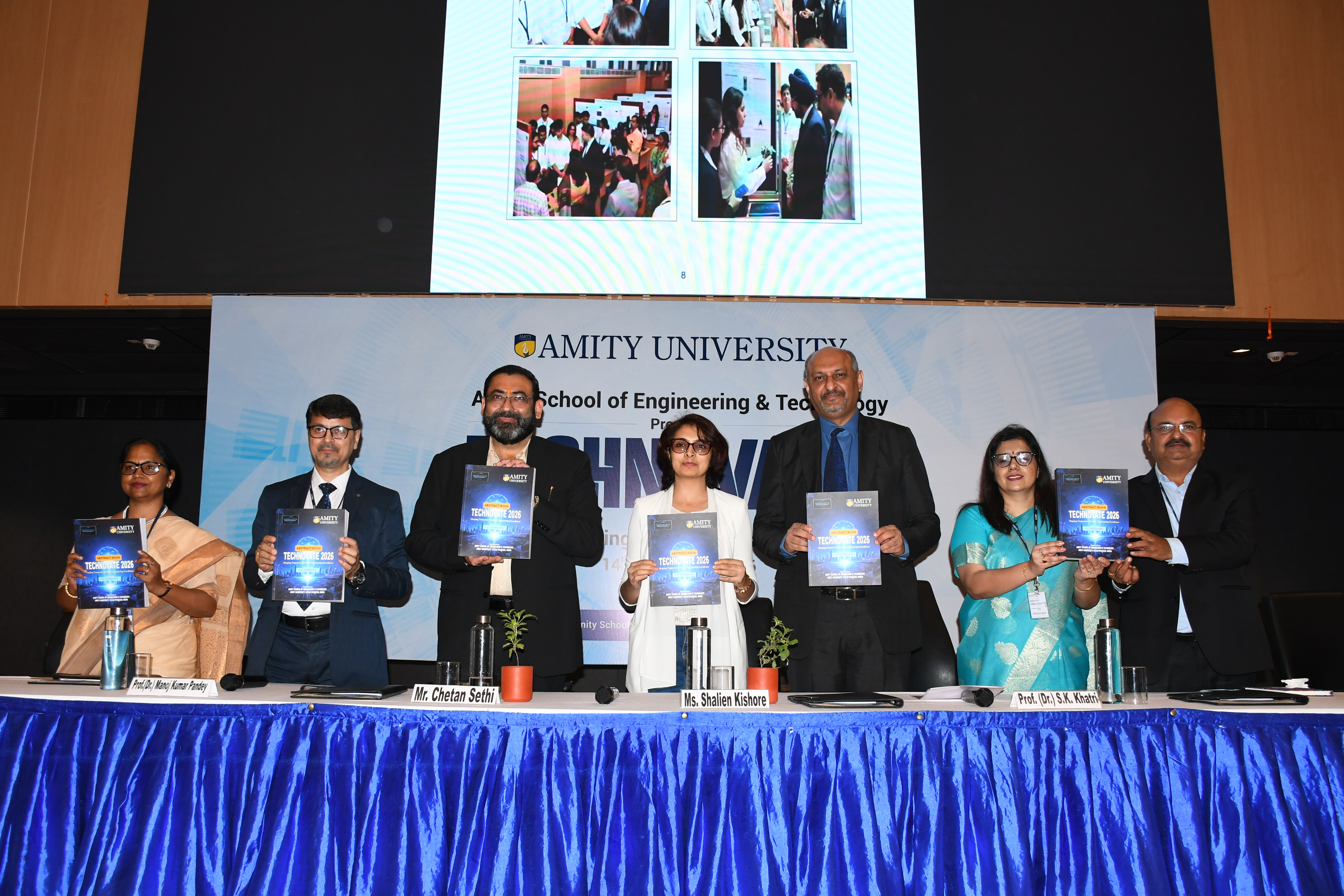
The exhibition has also witnessed enthusiastic participation from over 300 school students of Classes VIII to XII representing leading schools including Amity International School, Cambridge School, Pacific World School, Step by Step School, and Sarvottam International School.
Among the key attractions at the exhibition are innovative student projects such as “Trimorph: A Transformable Multi-Terrain Robot,” capable of functioning both as a drone and a robot; “Autonomous Trash Picker”; “Agro Sense AI: An Intelligent Decision Support System for Sustainable Agriculture”; “AI-IoT Based Real-Time Stress Detection and Alert System Using Wearable Sensors”; “A Real-Time AI Assistant for the Visually Impaired”; and “Ayudha: AI-Powered Women Legal Assistant System,” among many other impactful innovations.
Addressing the students during the Inaugural Session, Mr. Chetan Sethi, Senior Leader Telecom and AI, Delivery Head at Tech Mahindra, said, “The use of AI across industries has transformed the way innovation happens. Today, with just a laptop and internet connection, students can create remarkable innovations. In this era of AI, interdisciplinary learning is the key to future success.” He urged the students to continue to learn, unlearn, and relearn to remain relevant in an ever-evolving industries. He also advised them to use communication skills along with technical expertise and foster ethical use of AI.
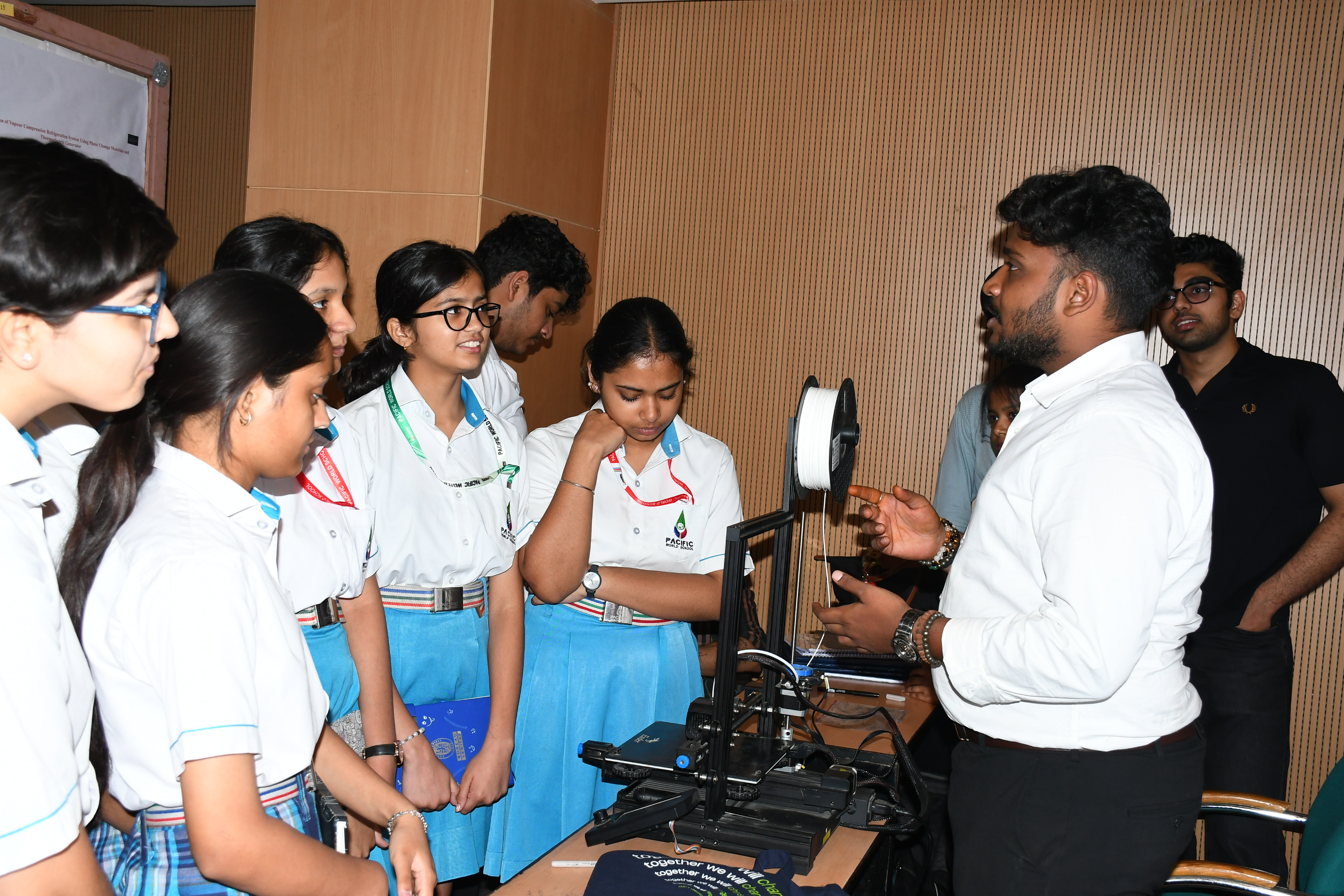
Sharing her insights, Ms. Shalien Kishore, Associate Director – Design and Head of Product Design at SBS, stated, “AI has accelerated the pace of transformation globally. Design thinking is an intersection of technology, psychology, and business and every innovation must aim to solve real-world problems and create meaningful impact. Students today have the opportunity to lead the AI-driven future through continuous learning and innovation and they must use it to address the real-world challenges.”
Dr. Sunil K. Khattri, Additional Pro Vice Chancellor, Amity University Uttar Pradesh said, “TECHNOVATE-2026 is an excellent platform that encourages students to transform innovative ideas into impactful technological solutions. The exhibition reflects the spirit of creativity, research, and interdisciplinary learning among the young engineers. Such initiatives not only nurture technical excellence but also inspire students to develop solutions aligned with the evolving needs of industry and society.”
Welcoming the guests, Dr. Manoj Kumar Pandey, Director, Amity School of Engineering & Technology, remarked, “TECHNOVATE-2026 is a celebration of the innovative mindset, creativity, and technical excellence of our students. The exhibition reflects the hard work and dedication of students across all four years of engineering education, presenting solutions to complex challenges through working prototypes, research models, and industry-relevant innovations. The platform also enables students to connect with industry mentors and support systems to transform their ideas into market-ready products.”
The student projects will be evaluated by the esteemed jury members and wards will be presented to the winners during the Valedictory Ceremony, thereby strengthening Amity’s commitment towards fostering innovation, research excellence, entrepreneurship, and industry-academia collaboration.
11, May 2026
Singapore’s Award-Winning Preschool Red SchoolHouse Enters India; Targets 150+ Schools Expansion
Bengaluru, May 11: Singapore-origin preschool brand Red SchoolHouse (RSH) has officially entered the Indian market with the launch of its first centre in Bengaluru. The brand has partnered with Franchise India as its master franchise partner to drive its expansion across the country. As part of its India growth strategy, Red SchoolHouse is targeting the launch of 150+ schools across India over the next 2–5 years through a franchise-led expansion model.
Founded in 2004, Red SchoolHouse is a multi-award-winning preschool brand from Singapore, known for its globally inspired early childhood education approach and proprietary SPICE™ curriculum focused on Social, Physical, Intellectual, Creative, and Emotional development.

India marks a key strategic market for the brand as demand continues to grow for premium and internationally aligned preschool education among urban families.
“India is an extremely important market for us, given the strong demand for quality early childhood education and globally aligned learning models. Through our partnership with Franchise India, we look forward to building a strong and scalable presence across the country over the coming years,” said Rachel Goh, CEO & Founder, Red SchoolHouse.
The Bengaluru launch marks the beginning of the brand’s larger India expansion plans, with the company actively exploring partnerships and franchise opportunities across major metro and high-growth cities.
“India’s preschool and early learning segment continues to see significant growth, particularly among parents seeking international education standards and holistic learning environments. Red SchoolHouse brings a globally established education model with strong long-term expansion potential for the Indian market,” said Gaurav Marya, Chairperson, Franchise India.
With its India entry, Red SchoolHouse aims to build a premium preschool network focused on globally inspired learning and scalable education-led growth across the country.
9, May 2026
Tally Education Crosses 1 Million Learners, Strengthening Employer Trust in Job-Ready Talent
May 09, Bengaluru: As India’s skilling ecosystem increasingly focuses on employability and job readiness, Tally Education, the education arm of Tally Solutions, has crossed 1 million learners. This milestone marks a significant step in building a job-ready workforce in accounting and finance across India, backed by certifications that employers trust and hire from.
India’s skilling outcomes have long been constrained not just by access to learning, which is abundant and getting more so in the AI era, but by employer trust in credentials. Tally Education’s certification operates as an employer-trusted signal at the point of hiring. This is particularly relevant in MSMEs formalising under GST and digital compliance, a segment where most of India’s incremental jobs will be created over the next decade.
This milestone also reflects the scale at which learners are engaging with Tally’s structured, outcome-driven skilling that translates into real employment opportunities. Though it represents only a part of Tally’s wider impact, with generations of professionals having built careers and businesses by learning and working on Tally over the years, long before formal certification pathways were introduced in 2016 through Tally Education.
In response to the growing demand for job-ready talent in accounting and finance, the organisation has since expanded access to learning through a strong network of academic and skilling partners, anchored in certification that employers across sectors trust at the point of hiring, ensuring learners not only acquire skills but also demonstrate real-world job readiness.
Today, it reports an average placement rate of approximately 75% across its certified learners, and crucially, the strongest concentration of that reach is in Tier II and Tier III markets, where formal employment opportunities are limited. Many of these learners are entering the workforce as first-generation professionals, accessing employment opportunities across sectors such as BFSI, retail, and MSMEs.
This is supported by a robust ecosystem of over 3,600 partners, including colleges, training institutes, government skilling missions, and CSR/NGO programmes, across more than 500 towns and cities. Through this network, it continues to enable access to both learning and employment opportunities at scale.
Speaking on the milestone, Tejas Goenka, Managing Director, Tally Solutions, said: “For years, people have learned Tally in many different ways, but the real challenge was giving employers confidence in those skills. Our focus has been on building that trust through certification, so businesses can hire with confidence and learners can enter the workforce better prepared. This milestone reflects how that shift is playing out at scale.”
Bhuwaneshwari B, Executive Vice President, Tally Education, added: “Learners today are looking for clear outcomes, whether it is a job, career progression, or entrepreneurial opportunity. Our approach has been to support this journey end-to-end, combining accessible learning with credible certification that employers trust.”
Looking ahead, Tally Education plans to deepen its investment in the same model, expanding employer-aligned certification depth, growing its partner network into more towns and government skilling programmes, and strengthening the connection between learner outcomes and the formal accounting and finance workforce that India’s MSME economy is building. As the country’s economy continues to formalise, Tally Education’s continued focus on employer-trusted credentialing positions it as a foundational contributor to India’s evolving skilling architecture.

7, May 2026
PMEGP Creates 36.33 Lakh Opportunities, Drives Women and Rural Entrepreneurship Growth: Govt Report
New Delhi, May 7 (BNP): The Prime Minister’s Employment Generation Programme (PMEGP) has generated around 36.33 lakh employment opportunities across the country, reinforcing its role as a key driver of grassroots entrepreneurship and livelihood creation, according to an official statement.
Implemented through the Khadi and Village Industries Commission under the Ministry of Micro, Small and Medium Enterprises, the scheme supports the setting up of micro-enterprises in the non-farm sector by providing credit-linked subsidies to aspiring entrepreneurs.
During the 15th Finance Commission cycle (2021–22 to 2025–26), the scheme utilised its entire approved allocation of ₹13,554.42 crore and facilitated the establishment of over 4.03 lakh micro-enterprises, slightly surpassing its target.
Officials said this performance reflects both strong demand for entrepreneurship support and effective implementation on the ground.
A major highlight of the programme is its focus on inclusion and social equity. Women account for nearly 40% of total beneficiaries, while around 45% of subsidy support has gone to women-led enterprises, encouraging greater participation in business creation.
In addition, about 54% of beneficiaries belong to SC, ST, and OBC communities, underscoring the scheme’s wide social outreach. Nearly 80% of the supported enterprises are located in rural areas, helping boost local employment and promote balanced regional development.
Overall, officials said PMEGP continues to play a crucial role in expanding self-employment opportunities, strengthening small businesses, and supporting India’s broader goal of entrepreneurship-led and inclusive economic growth.

7, May 2026
Government School Enrollment Falls to 49.24 pc in 2024–25, Private Sector Expands
New Delhi, May 7 (BNP): School enrollment in government institutions has declined to 49.24% in the 2024–25 academic year, while the private education sector continues to expand rapidly, according to concerns highlighted by NITI Aayog.

The findings point to a steady shift in student preference toward private schools, reflecting changing perceptions around quality of education, infrastructure, and learning outcomes. The trend indicates that private institutions are gaining a larger share of new enrollments compared to government schools.
According to the assessment, the decline in government school enrollment raises important concerns for the public education system, particularly in terms of equity and access. Since government schools play a crucial role in providing affordable education, especially in rural and lower-income segments, a continued drop in enrollment could widen educational disparities.
The report notes that the rapid growth of private schooling is reshaping India’s education landscape, with increased household spending on education and rising demand for alternative learning environments.
It further suggests that improving infrastructure, teacher availability, and learning outcomes in government schools will be critical to reversing the trend and restoring confidence in public education.
Overall, the data highlights a structural shift in India’s schooling system, where the balance between public and private education is gradually evolving, raising policy-level concerns about long-term accessibility and inclusiveness in the education sector.
6, May 2026
Chandigarh University chefs win big with 13 medals at national culinary meet
May 6 (BNP): Students from Chandigarh University delivered a standout performance at Culinary Art India 2026, bringing home a total of 13 medals and earning recognition on a national stage.
Competing against participants from leading institutes across the country, the student chefs impressed judges with their strong technical skills, creativity, and attention to detail. They took part in a variety of categories, ranging from live cooking challenges to display-based events, where presentation and innovation played a key role.
The team’s success reflects rigorous training, consistent practice, and exposure to real-world culinary standards. Faculty mentorship and hands-on learning also played an important role in helping students refine their techniques and perform under competitive conditions.
This achievement not only highlights the talent of the students but also strengthens the university’s position in culinary education, showcasing its focus on developing industry-ready professionals with both skill and creativity.
6, May 2026
Centre Seeks Early PM SHRI Scheme Rollout in West Bengal and Tamil Nadu
May 6 (BNP): The Ministry of Education is expected to write to the Chief Secretaries of West Bengal and Tamil Nadu, urging them to sign a Memorandum of Understanding (MoU) at the earliest for implementing the PM SHRI (Pradhan Mantri Schools for Rising India) scheme in state-run schools.
The scheme aims to upgrade selected schools into model institutions aligned with the National Education Policy (NEP) 2020, focusing on improved infrastructure, modern teaching practices, and overall quality enhancement in education.
Officials said the Centre is hopeful of faster progress in adopting the scheme and plans to send formal communications soon. The initiative is part of broader efforts to strengthen school education and improve learning outcomes across states through NEP-based reforms.


