


25, Jun 2026
FPSB Releases New Practice Guidance Note on the Use of AI in Financial Planning
DENVER, COLO – 24 June 2026 – Financial Planning Standards Board Ltd. (FPSB), the nonprofit, standards-setting body for the global financial planning profession and owner of the international CERTIFIED FINANCIAL PLANNER certification program, is pleased to announce the release of its new Practice Guidance Note: Use of Artificial Intelligence in Financial Planning, designed to help financial planning professionals use artificial intelligence (AI) responsibly while meeting their ethical and professional obligations.

As AI adoption accelerates across the financial planning profession, the guidance provides practical direction on how financial planners can use AI to support efficiency, insight and client service while reinforcing the importance of professional judgment, human oversight, transparency and confidentiality.
The guidance note comes as FPSB’s 2025 global research on the Impact of AI on Financial Planning found that two in three financial planners report their firms are using AI or planning to do so in the next 12 months. The research, based on responses from more than 6,200 financial planners across 24 territories, also found that 78% believe AI will help them better serve clients, while 60% say it will enhance the quality of financial advice.
“AI is reshaping the practice of financial planning, but trust, professional judgment and accountability remain essential,” said FPSB CEO Dante De Gori, CFP. “This new practice guidance note is designed to help financial planners embrace the benefits of AI while reinforcing that they remain responsible for the advice and recommendations they provide to clients.”
The guidance note was developed to help financial planning practitioners better understand their professional and ethical obligations, as set out in FPSB’s Global Financial Planning Standards, when using AI across the financial planning process, including in client communication, data gathering, and research. It also highlights key areas requiring special care, such as privacy, cybersecurity, and the accuracy and reliability of outputs. FPSB’s guidance stresses that AI should support — not replace — professional expertise and critical thinking.
“As technology evolves, FPSB’s global standards continue to guide the level of practice expected of financial planning professionals,” said FPSB Chief Professionalism Officer Paul Grimes, CFP. “This guidance note helps financial planners understand how their professional and ethical obligations evolve as AI becomes part of professional practice.”
According to FPSB’s research on AI, financial planners are already using AI in practical ways, including client communications (41%), client data collection (33%) and client risk profiling (30%), as well as operational functions such as marketing (35%) and client onboarding (34%). At the same time, planners identified data privacy and cybersecurity (47%) and the accuracy and reliability of AI outputs (42%) among their top concerns.
The development of the practice guidance note was led by FPSB’s Professional Standards Committee in consultation with FPSB’s network of organizations, representing more than 236,000 CFP professionals across the world.
“AI can enhance how financial planners serve clients, but it must be used with care, transparency and professional oversight,” said FPSB Professional Standards Committee Chairperson Darren McShane. “FPSB’s new guidance note helps financial planners understand how to use AI responsibly while keeping professional judgment and client interests at the center.”
- 0
- By Neel Achary

25, Jun 2026
TN School Education Dept Launches Digital QR-Based Petition Platform
Chennai, June 25: The Tamil Nadu School Education Department has introduced a QR code-based e-petition system aimed at simplifying and speeding up the process of addressing public grievances, marking a significant step towards digital governance in the education sector.
The initiative was launched by the School Education Minister as part of the state’s broader push to enhance transparency, accessibility, and efficiency in public service delivery. The system allows citizens, parents, and stakeholders to register complaints and submit petitions by scanning a QR code, enabling direct digital access to the grievance redressal platform.
Officials stated that the new mechanism is designed to reduce procedural delays, eliminate paperwork, and ensure faster resolution of issues related to school infrastructure, administration, and student welfare. Each grievance submitted through the system will be digitally tracked, allowing users to monitor the status of their petition in real time.
The department noted that the initiative is expected to improve accountability and strengthen communication between the public and education authorities. By leveraging simple digital tools like QR codes, the system aims to make grievance registration more accessible, even in semi-urban and rural areas.
Education officials highlighted that the move aligns with Tamil Nadu’s ongoing efforts to integrate technology into governance and improve service delivery across departments. The QR-based system is also expected to reduce dependency on physical visits to offices, making the process more user-friendly and efficient.
Experts believe such digital interventions can significantly enhance responsiveness in the education system while encouraging greater public participation in governance. The initiative is part of a larger trend of adopting e-governance solutions to modernise administrative processes and improve citizen experience.
With the launch of the QR code-based e-petition system, the School Education Department aims to set a precedent for other departments to adopt similar technology-driven grievance redressal mechanisms in the future.
24, Jun 2026
AI may replace certain jobs. AI will not replace capable human beings– V.V. Laxmi Narayana
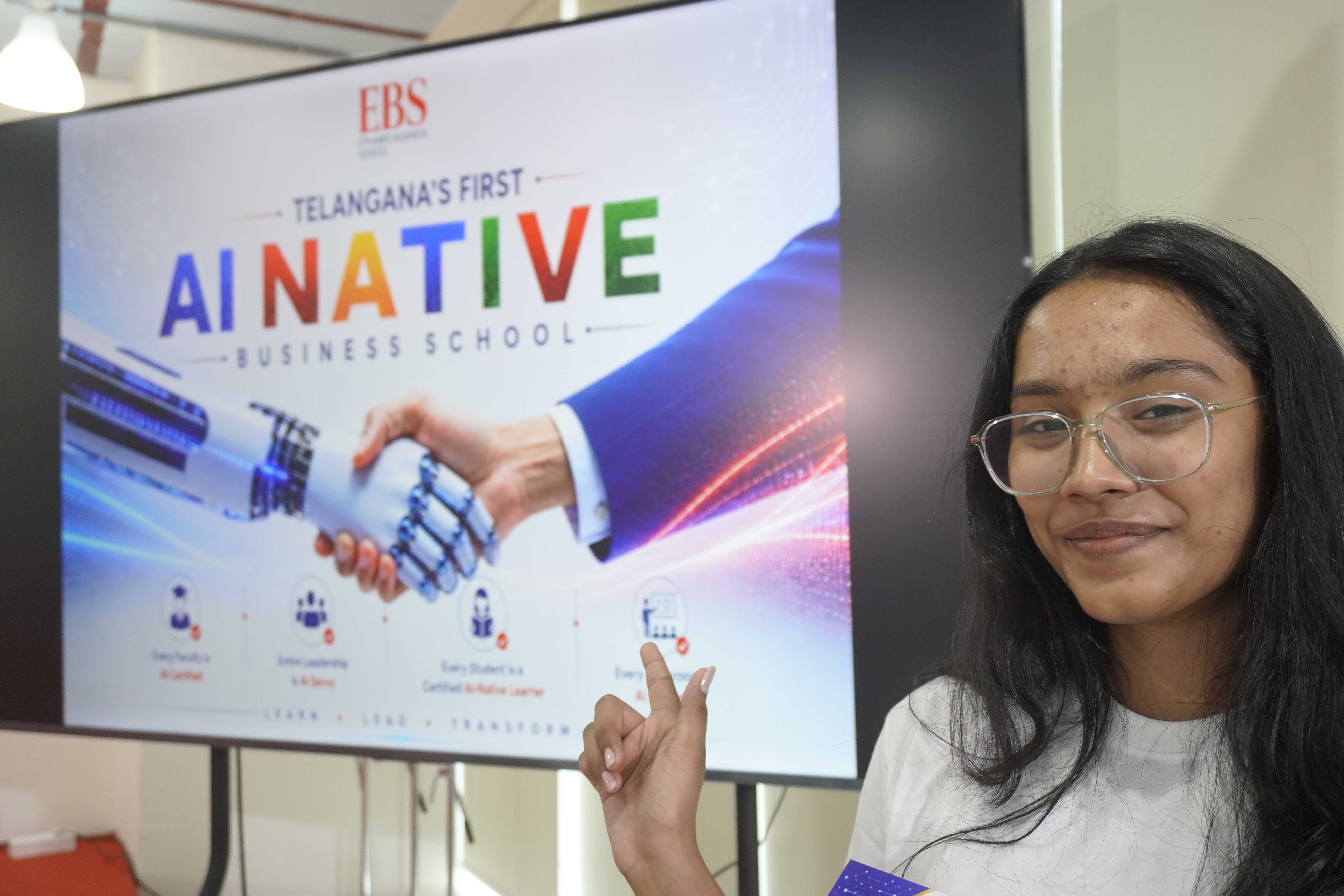
EThames Business School Transforms into Telangana’s First AI-Native Business School
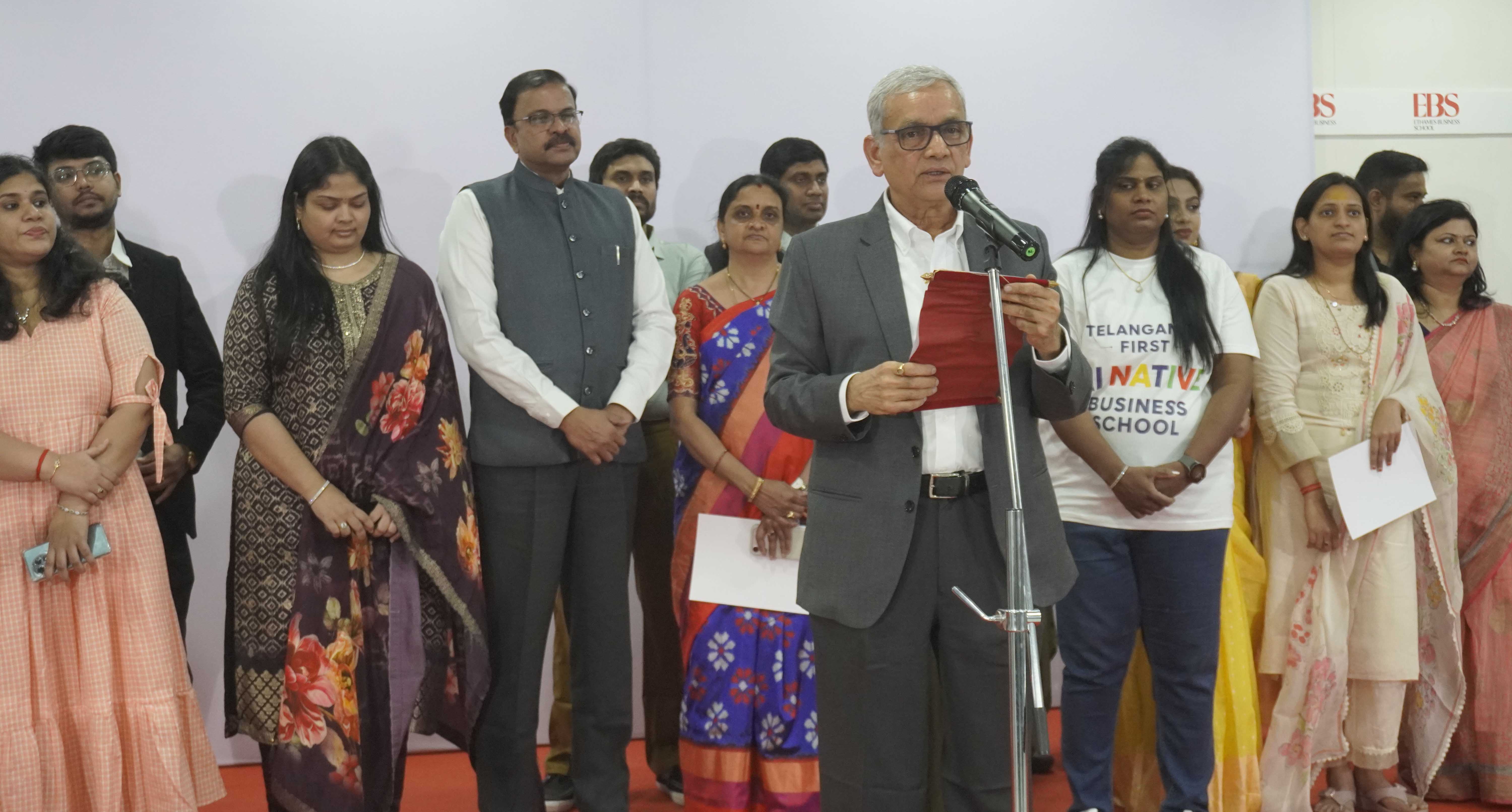
Hyderabad, June 24, 2026: EThames Business School (EBS), one of Hyderabad’s leading institutions for business education, today announced its transformation into Telangana’s first AI-Native Business School at a special event held at its campus.
The transformation marks a significant shift in management education, with Artificial Intelligence being integrated into every aspect of teaching, learning, research, innovation, industry engagement, and student development.
To mark the occasion, students and faculty presented a unique skit titled “AI Tools Speak, Humans Decide.” Characters representing leading AI platforms—ChatGPT, Gemini, Claude, Perplexity, Copilot, and Grok—competed to persuade students to choose/use them. As the students became increasingly confused by the competing claims, professors stepped in to deliver the central message: use AI responsibly, think critically, question intelligently, and never allow Artificial Intelligence to replace Human Intelligence.
Students, faculty members, and institutional leaders also took separate pledges to use AI responsibly, ethically, and professionally. Certificates were presented to faculty and students who completed the institution’s AI-Native transformation programme. A commemorative AI-Native cake was also cut to celebrate the milestone.
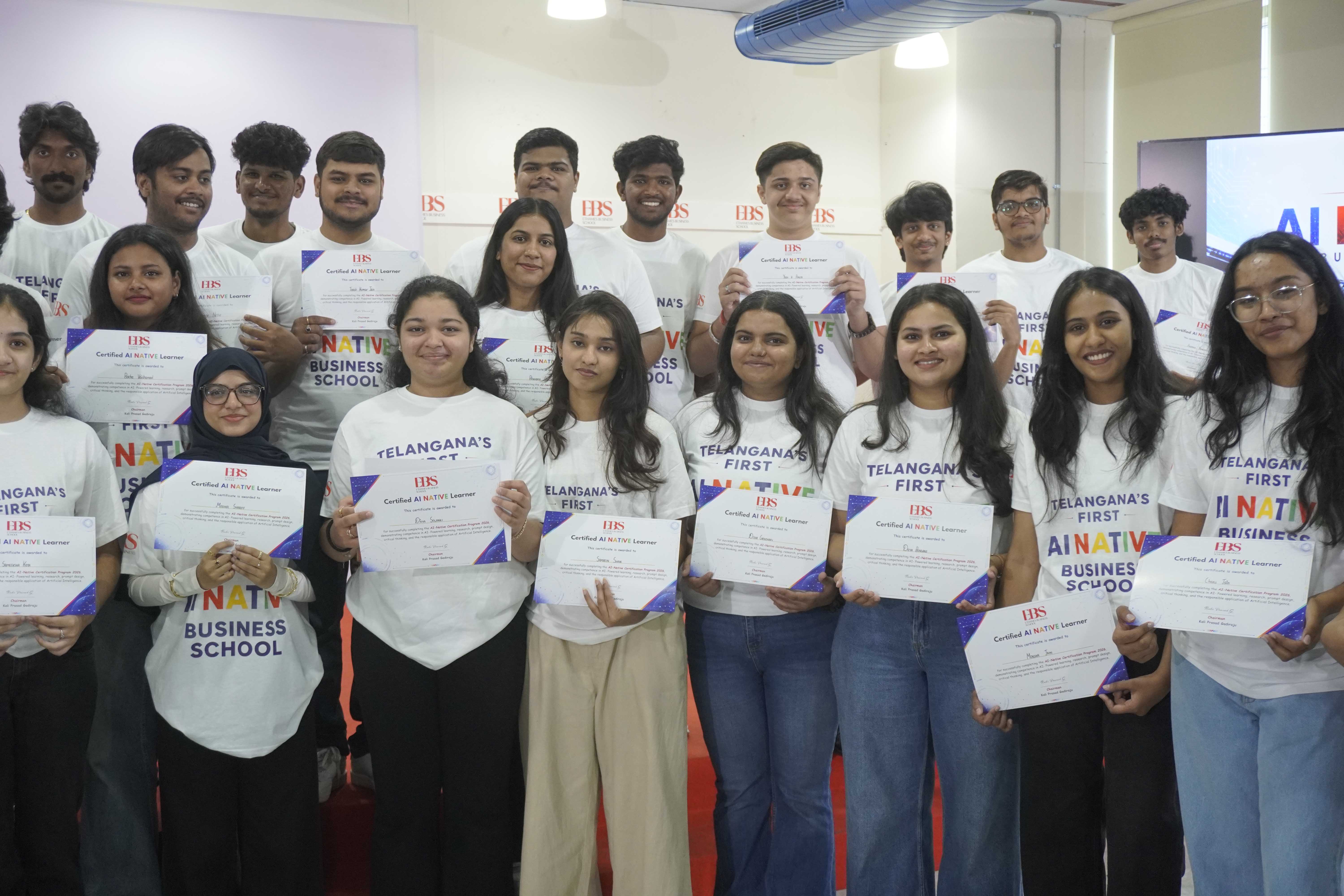
Addressing an audience of more than 200 students, faculty members, industry leaders, and ecosystem partners such as V.V. Laxmi Narayana, IPS (Retd), Chief Transformation Officer, EThames Business School; Dr. Raghavendra Hunasgi, Venture Investor / CEO String Metaverse; Murali Bukkapatnam, Former Chairman, Global Board of Trustees, TiE; Bipin Chandra Pendyala, President, HYSEA; Ajit Rangnekar, former Dean ISB and others, Kali Prasad Gadiraju, Chairman, EThames Business School, said that the institution’s AI transformation journey began over a year ago.
“This is not merely the launch of a new initiative. It is our response to one of the most significant transformations in human history. For more than two centuries, educational institutions have prepared students for the world of work. Today, the world of work is changing faster than our educational institutions. If the world has changed so dramatically, how can education remain the same?” he asked.
He said that just as computer literacy became essential in the 1990s, AI literacy and AI capability have become essential today.
“Nobody asks students to perform complex calculations without a calculator. Calculators make us faster, more accurate, and more productive. Similarly, AI can help students learn faster, understand deeper, research better, and create more effectively. At EThames, we believe AI should not replace thinking—it should amplify thinking. AI should not replace learning—it should accelerate learning. That is why we have reimagined our classrooms, our faculty, and our learning environment to become AI-Native,” he said.
Speaking on the occasion, V.V. Laxmi Narayana, IPS (Retd.), Chief Transformation Officer, EThames Business School, described AI as the next great chapter in humanity’s technological evolution.
“The Wheel transformed transportation. The Printing Press transformed knowledge. Electricity transformed industry and everyday life. The Computer transformed productivity. The Internet transformed communication. Smartphones transformed access. And now Artificial Intelligence is transforming everything,” he said.
Unlike earlier inventions that transformed specific aspects of life, AI is influencing every field simultaneously—from education, healthcare, business, and manufacturing to finance, media, governance, research, and creativity, he observed.
Addressing concerns about job losses due to AI, he said such fears have accompanied every major technological revolution.
“When railways arrived, people feared the end of traditional travel. When computers were introduced, many predicted widespread unemployment. When ATMs emerged, people said bank branches would disappear. None of those predictions came true. Technology changes jobs; it does not eliminate human potential. AI may replace certain jobs. AI will not replace capable human beings. The future belongs to those who are lifelong learners,” he said.
Dr. Sandeep Kumar Shukla, Director, IIIT Hyderabad, who joined virtually as Guest of Honour, lauded EThames Business School’s pioneering initiative. “AI is no longer a technology of the future. It is a reality of the present. Educational institutions must equip students not only to use AI tools but also to think critically, innovate responsibly, and work effectively alongside AI,” he said.
EThames can be a good laboratory for AI innovation—a place where the rigid boundaries of traditional pedagogy dissolve to make way for a fluid, intelligent ecosystem, said Dr. Raghavendra Hunasgi, Venture Investor / CEO String Metaverse
Murali Bukkapatnam, Former Chairman, Global Board of Trustees, TiE, said: “A school is not its machines. A company is not its algorithms. A future is not artificial. It is—and always will be—its people. By building Telangana’s first AI-Native Business School, EThames is also building a more human future.”
Bipin Chandra Pendyala, President, HYSEA, highlighted the distinction between AI students and AI-Native students. “AI students learn Artificial Intelligence as a subject. AI-Native students learn, think, collaborate, and innovate with AI as an integral part of their academic and professional journey. The future belongs to AI-Native talent,” he said.
Dr. Mani Pavitra said India has the potential to become the world’s largest creator economy.
“Having helped professionals create more than 100,000 reels, I have learned that the future belongs to those who create more than they consume. If our youth combine AI with character, execution, and innovation, they will not merely compete globally—they will build solutions for all eight billion people on Earth,” he said.
The event was attended by students, faculty members, industry leaders, entrepreneurs, and members of the broader innovation ecosystem.
23, Jun 2026
Noida International University’s International Yoga Day 2026 celebration held at its Greater Noida campus.
Greater Noida, June 23: Reinforcing its commitment to holistic education and well-being, Noida International University (NIU) successfully celebrated International Yoga Day 2026 on 21 June with the theme “The Day of Yoga with Breathe, Balance, and Become.” The large-scale event, organized by the Department of Sports, brought together more than 300 participants from across the Delhi-NCR region, including members of NSS, NCC, NIIMS, Noida International University, and students from various Delhi-NCR schools.
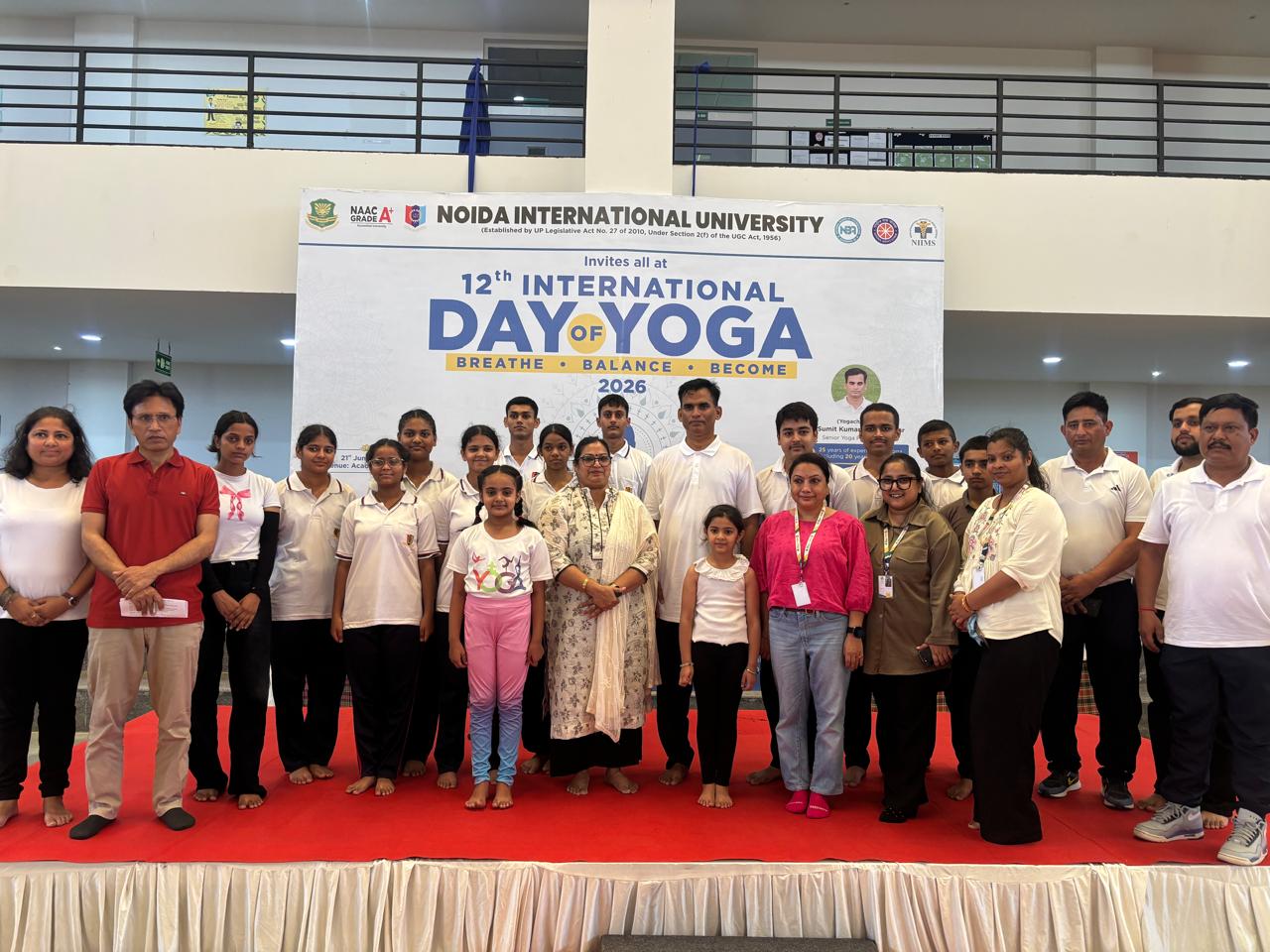
The yoga session was led by Yogacharya Mr. Sumit Kumar Chincholikar, Senior Yoga Therapist, who graced the occasion as the Chief Guest. Mr. Sumit Kumar Chincholikar, a renowned Senior Yoga Therapist with over 25 years of experience. A qualified Chartered Accountant and currently serving as Assistant General Manager at Tata Consultancy Services (TCS), he has previously worked with leading organizations including Indigo Airlines, Genpact, Accenture, and Barclays. Through an engaging and insightful session, he emphasized the importance of yoga in enhancing mental well-being, managing stress, and promoting healthy ageing.
Over 250 participants joined the session, including NCC cadets from Aster Public School, Delhi Public World School (DPWS), Ryan International School, and Sparsh Global School, along with NIU NSS volunteers and NIIMS MBBS students. This year’s celebration centered on the theme “Yoga for Healthy Ageing,” highlighting the importance of yoga in promoting physical vitality, mental wellness, emotional balance, and healthy living across all age groups.
The event was organized under the visionary guidance and support of Chairman Dr. Devesh Kumar Singh, Chancellor Dr. Vikram Singh, and Vice Chancellor Prof. (Dr.) Uma Bhardwaj, whose continued encouragement has strengthened the university’s commitment to fostering wellness, discipline, and a healthy lifestyle among students and the larger community.
During the inaugural session, Lt. Pratima Pandey, Director of Sports & Dean of Student Welfare, formally welcomed the Chief Guest and honored Yogacharya Mr. Sumit Kumar Chincholikar with a token of appreciation in recognition of his valuable contribution to promoting the science and practice of yoga.
The celebration witnessed enthusiastic participation from faculty members, students, and academic leaders. Among those present were the Deans and senior representatives from the School of Engineering & Technology, School of Journalism & Mass Communication, School of Liberal Arts, and other schools of Noida International University, who joined participants in embracing the spirit of wellness and mindfulness.
Speaking on the occasion, Lt. Pratima Pandey, Director of Sports & Dean of Student Welfare, said:
“International Yoga Day is more than a celebration—it is a reminder that good health begins with mindful living. Through initiatives like these, Noida International University aims to inspire students and society to adopt yoga as a lifelong practice for physical fitness, mental resilience, and emotional well-being. We are delighted to witness such overwhelming participation from across the Delhi-NCR region.”
Addressing the gathering, Yogacharya Mr. Sumit Kumar Chincholikar, Senior Yoga Therapist, said:
“Yoga is not merely an exercise; it is a way of life that empowers individuals to achieve harmony between the body, mind, and soul. The theme ‘Yoga for Healthy Ageing’ encourages people of every generation to embrace yoga as a sustainable path toward longevity, vitality, and inner peace. It is heartening to see young minds and educators coming together to celebrate this timeless tradition.”
The event concluded with a collective pledge to integrate yoga into daily life and promote its transformative benefits within families, educational institutions, and communities. Through such initiatives, Noida International University continues to nurture a culture of holistic development, wellness, and social responsibility while contributing to the national movement of building a healthier and more mindful society.
23, Jun 2026
Assam Announces Supplementary Exams for Higher Secondary Students
Guwahati, June 23: The Government of Assam has announced the introduction of supplementary examinations for Higher Secondary students, aiming to provide an additional opportunity for those who could not clear one or more subjects in the regular examination cycle.
The initiative is designed to ensure that students are given a fair chance to improve their academic performance without having to lose an entire academic year. Officials said the move is part of broader efforts to make the education system more flexible, supportive, and student-centric.
Under the new arrangement, eligible students will be able to reappear in specific subjects through the supplementary examination system. This is expected to reduce academic stress and help students continue their studies without long interruptions.
The Assam education department is expected to release detailed guidelines shortly, including eligibility criteria, application procedures, exam fees, and the schedule for the supplementary examinations. Schools and students have been advised to follow official notifications for accurate updates.
Education officials highlighted that the decision aligns with the state’s focus on improving learning outcomes and reducing dropout rates at the Higher Secondary level. By offering an additional examination window, the government aims to strengthen academic continuity and ensure that students are not held back due to limited assessment opportunities.
The move is also expected to encourage better performance in future examinations, as students will have an additional chance to clear subjects and progress in their academic careers.
Overall, the initiative reflects Assam’s commitment to building a more inclusive and supportive education system that prioritizes student success and long-term educational development.
23, Jun 2026
Listening for Quantum Oscillations in the Kondo Insulator YbB12
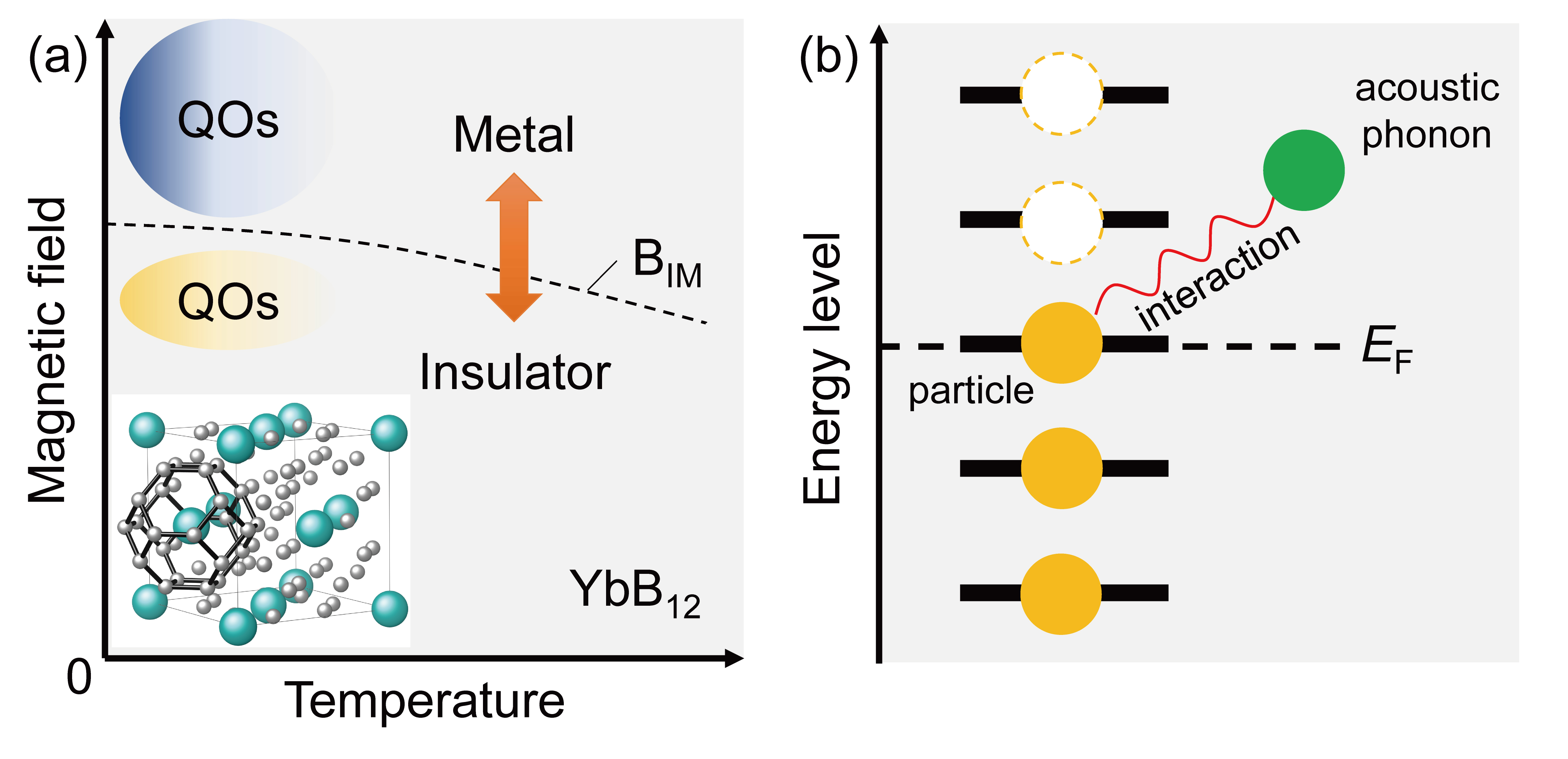
Ultrasonic measurements reveal magnetic quantum oscillations only after YbB12 transitions into a metallic state
Magnetic quantum oscillations have been unexpectedly observed in insulators, where freely moving charge carriers are not expected to exist. A joint study by researchers from Tokyo University of Science, The University of Tokyo, and Kobe University investigated this puzzling behavior in the Kondo insulator YbB12 using ultrasound. While no oscillations were detected in the insulating state, clear signals emerged after the material became metallic, offering new insight into unusual quantum behavior in next-generation materials.

Tokyo, June 23: The organization and movement of electrons within a material determine whether it conducts electricity, behaves magnetically, or even becomes superconducting. Since this electronic behavior cannot be observed directly, scientists study it by observing how materials respond to external forces such as magnetic fields. One important method involves magnetic quantum oscillations (MQOs), tiny repeating changes in physical properties that occur when electrons reorganize into specific energy states under a magnetic field.
MQOs are usually observed in metals and semimetals, where electrons can move freely through the material. However, unexpectedly, they have also been found in insulators, which do not host freely moving charged quasiparticles or a Fermi surface, leaving open the question of what causes these oscillations.
Now, a research team led by Dr. Ryosuke Kurihara of the Department of Physics and Astronomy at Tokyo University of Science (TUS), Japan, in collaboration with Dr. Atsuhiko Miyata of the Institute for Solid State Physics, The University of Tokyo,Japan, Dr. Shusaku Imajo of the Department of Advanced Materials Science, The University of Tokyoand Dr. Ruo Hibino of the Department of Physics at Kobe University, Japan, has observed quantum oscillations in the field-induced metallic phase of ytterbium dodecaboride (YbB12) using ultrasonic measurements, while notably finding no such oscillations in its insulating state. Their findings, published in the journal Physical Review B on June 16, 2026, provide new insight into the puzzling behavior of this topological Kondo insulator.The paper was also selected as an Editors’ Suggestion, a distinction awarded by the journal to highlight particularly significant and noteworthy research.
“Since it is known that the quantum oscillations of YbB12 are sample-dependent, we wanted to verify whether quantum oscillations are truly invisible with ultrasound by using a sample in which quantum oscillations have already been confirmed, and the data have been compiled into a paper. In our previous ultrasonic studies of YbB12, no quantum oscillations were detected.Furthermore, if quantum oscillations are not visible with ultrasound, there must be some underlying physics that explains why they are not visible, and we wanted to verify that as well,” says Dr. Kurihara.
YbB12 is a Kondo insulator, a material in which strong interactions between electrons open an energy gap at low temperatures, causing it to behave as an insulator despite exhibiting unusual metallic-like electronic properties. However, previous magnetoresistance measurements, which track how a material’s electrical resistance changes in a magnetic field, detected quantum oscillations while the material was still insulating. This contradicted the conventional understanding that MQOs require freely moving charged particles.
To better understand this behavior, the researchers performed bulk-sensitive ultrasonic experiments on a high-quality crystal of YbB12 that had already shown quantum oscillations in earlier magnetoresistance studies. They exposed the material to magnetic fields of up to 65 T while cooling it to temperatures as low as 485 mK, close to absolute zero.
The researchers used ultrasonic measurements to track how the material’s elastic properties responded to magnetic fields, focusing on two elastic constants known as C11 and C44. In the insulating state below the field-induced insulator-to-metal transition near 45 T, the team found no clear evidence of magnetoacoustic QOs (MAQOs). Instead, they observed unusual features in the longitudinal elastic constant C11, including subtle dip-like and kink-like changes around 10 and 30 T, as well as another anomaly near 39 T. However, once YbB12 transitioned into a metallic state above approximately 45 T, clear quantum oscillations appeared in both acoustic modes, suggesting that sound waves interacted more strongly with quasiparticles in the metallic phase.
The researchers suggest that the absence of MAQOs in the insulating state may result from weak coupling between the proposed fermionic quasiparticles and acoustic phonons, the vibrations that carry sound through the material. In addition, the large cyclotron mass of these quasiparticles may suppress the oscillatory signal, making it difficult to detect using ultrasound.
By clarifying when and how these oscillations appear, the study may help researchers better understand unusual quantum states in materials and advance the search for next-generation quantum materials.
“Our findings provide further information on the puzzling behavior of the insulating state of YbB12,”saysDr. Kurihara.
23, Jun 2026
CUET-UG 2026 Scorecards Now Available
New Delhi, June 23: The National Testing Agency (NTA) has announced the results of the Common University Entrance Test (CUET-UG) 2026, bringing relief to lakhs of students seeking admission to undergraduate programmes across India.
Candidates who appeared for the examination can now access their scorecards through the official CUET portal by logging in with their credentials.
According to NTA, over 15.68 lakh candidates had registered for the exam, while around 11.64 lakh students appeared. The examination recorded nearly 67.56 lakh test attempts, reflecting wide participation across subjects and regions. Candidates were allowed to choose up to five subjects, resulting in a large number of subject combinations.
The gender-wise participation included approximately 5.78 lakh male candidates, 5.85 lakh female candidates, and two transgender candidates.
In a social media update, the NTA said that the results are now available and advised students to download their scorecards from the official website.
The agency has also urged candidates to carefully verify all details on their scorecards, including personal information and subject-wise scores. Any discrepancies should be reported to the authorities for correction.
Earlier, NTA released the final answer key after reviewing objections to the provisional version. Seven questions were found to have technical issues and were removed from the final evaluation.
The CUET-UG 2026 examination was conducted between May 11 and May 31, with a few papers held on June 6 and June 7. The final answer key was issued before the declaration of results, completing the evaluation process.
Officials noted that the results mark an important step for students transitioning into undergraduate admissions across central and participating universities.
23, Jun 2026
Gujarat Takes Classrooms to Children in Salt-Pan Areas
Ahmedabad, June 23: In a significant step towards expanding access to education, the Gujarat government has converted 28 retired state transport buses into mobile classrooms for children living in the state’s salt-producing regions.
The initiative, titled “School on Wheels,” is aimed at addressing the educational challenges faced by children of salt-pan workers, many of whom live in remote areas with limited access to schools. Frequent migration and long distances often disrupt the learning process for these children.
The refurbished buses have been equipped to function as classrooms and will travel to salt-producing belts, bringing education directly to underserved communities. The programme seeks to ensure that children can continue their studies without interruption, regardless of their location.
Officials said the initiative is part of broader efforts to promote inclusive and equitable education, particularly for vulnerable communities. By taking classrooms to students rather than requiring students to travel long distances, the programme aims to improve attendance, learning continuity, and educational outcomes.
The “School on Wheels” project has been widely viewed as an innovative approach to bridging educational gaps and ensuring that no child is left behind due to geographical or socio-economic barriers.
With the launch of the mobile classrooms, Gujarat is reinforcing its commitment to making quality education accessible to children in even the most remote corners of the state.
22, Jun 2026
Odisha Publishes First UG Merit List for 2026–27 Admissions
Bhubaneswar, June 22: The Higher Education Department of Odisha has published the first merit list for undergraduate admissions for the 2026–27 academic session, with over 1.78 lakh students selected for admission across various colleges in the state.
The announcement marks the beginning of the UG admission process for the new academic year, enabling shortlisted candidates to proceed with the next stages of counselling, document verification, and seat allocation as per the admission schedule.
According to officials, the merit list has been prepared based on academic performance and eligibility criteria set by the department to ensure a transparent and merit-based selection process. The admission system is designed to streamline enrollment across higher education institutions in the state.
Students included in the list will now be required to complete the necessary admission formalities within the stipulated timeline. Authorities have advised candidates to carefully follow official instructions to confirm their seats.
The department stated that subsequent merit lists will be released in phases to accommodate remaining seats and ensure maximum participation in the admission process.
Officials have also encouraged students to regularly check the official admission portal for updates regarding counselling schedules and further rounds of selection.
The initiative aims to facilitate a smooth, transparent, and efficient admission process for undergraduate education across Odisha.
22, Jun 2026
IIT Roorkee, IvyCap Ventures and NuQuant Launch INR 1,000 Crore Super Endowment Initiative to Boost India’s DeepTech Ecosystem
Roorkee, June 22 :The Indian Institute of Technology Roorkee , in collaboration with IvyCap Ventures & NuQuant, has announced the launch of a Super Endowment Fund with a target corpus of approximately INR 1,000 crore. As part of the Bharat Innovates initiative, Super Endowment Fund has been envisioned as a perpetual and self-sustaining source of capital to strengthen India’s innovation ecosystem by creating long-term and sustainable support for deep-tech startups. The Fund aims to support research excellence, innovation, entrepreneurship, and technology translation across IIT Network.
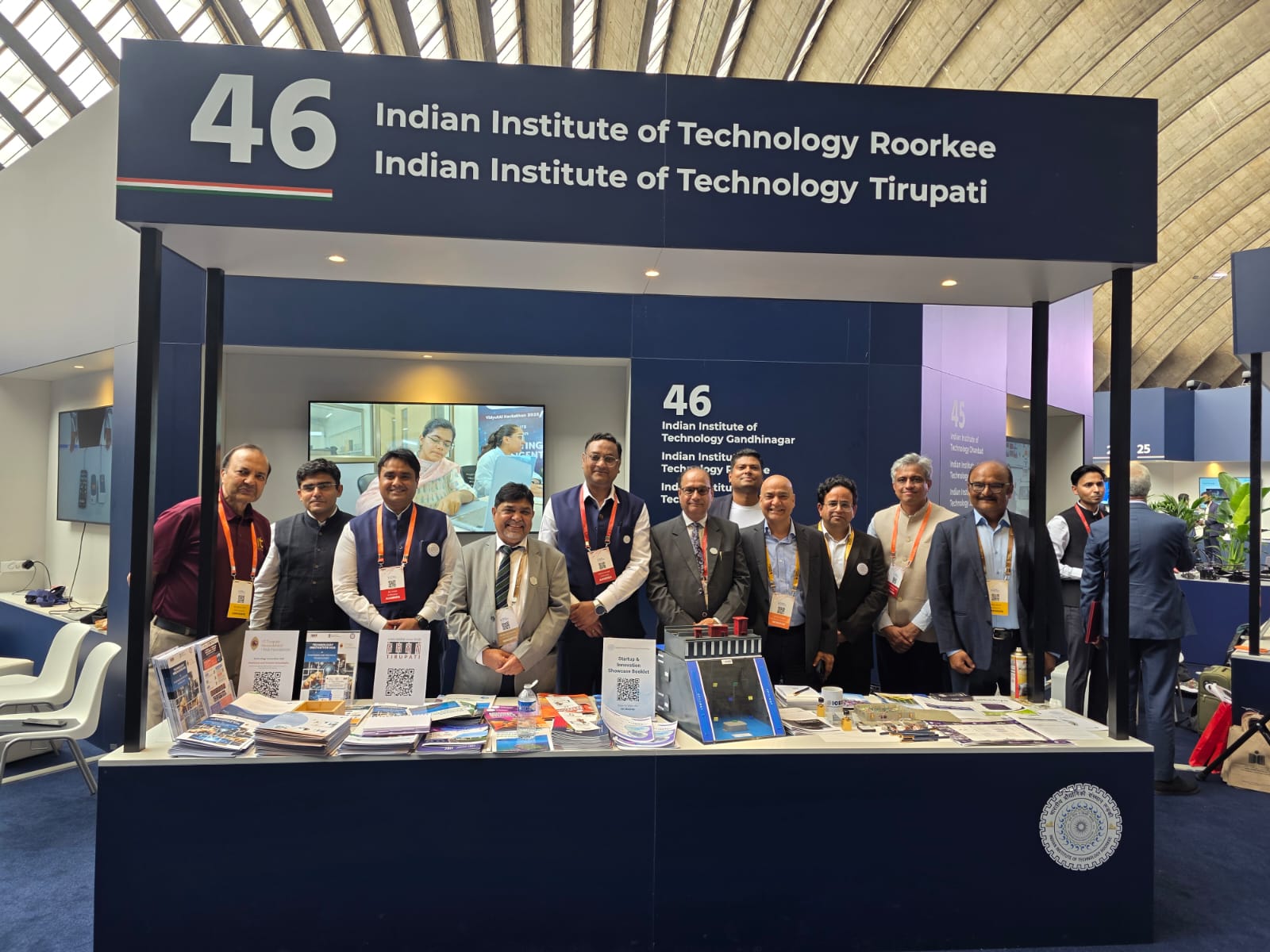
During Bharat Innovates 2026, an initiative of the Government of India, implemented by the Ministry of Education, at Nice, France, India is extending an invitation to leading global universities, research organizations, innovators, investors, philanthropists, and industry leaders to collaborate in the domains of Climate Technologies, Energy Systems, Semiconductors, Advanced Manufacturing, Critical Minerals, Healthcare, and other strategic DeepTech sectors, and to participate in the Fund and its associated innovation activities. The initiative aims to create a globally connected innovation platform that accelerates research translation, fosters cross-border partnerships, and enables the development of technologies with global impact.
Building upon IIT Roorkee’s distinguished 175-year legacy of academic excellence and innovation, the initiative seeks to create a transformative platform that mobilizes alumni, philanthropic, corporate, and institutional contributions towards advancing India’s knowledge economy. The Fund is expected to catalyze high-impact research and innovation in strategic sectors including artificial intelligence, semiconductors, critical minerals, quantum computing, clean energy, climate resilience, healthcare, advanced manufacturing, circular economy and agritech.
The proposed endowment model aims to strengthen linkages between academia, industry, investors, and alumni networks, enabling sustained support for breakthrough technologies, startup creation, intellectual property generation, and societal impact. Through this initiative, IIT Roorkee aspires to contribute significantly to India’s vision of becoming a global leader in innovation, deep-tech entrepreneurship, and innovation-driven economic growth.
The endowment will be managed by IvyCap Ventures, pioneer of India’s endowment ecosystem known for pioneering institution-linked investment and endowment models in India. Through this endowment model, IvyCap is enabling India’s premier institutions to generate world-class intellectual property from their own campuses – advancing India’s journey to becoming the IP capital of the world.
“The Super Endowment is the most exciting chapter yet in a journey we began with India’s first endowment fund at IIT Delhi,” said Vikram Gupta, Founder & Managing Partner, IvyCap Ventures. “What drives me is a simple conviction – that the wealth created by our institutions’ alumni must flow back to power the next generation of researchers and entrepreneurs. This fund makes that cycle of giving perpetual, and I believe it will redefine how India funds innovation.”
“This is more than a fund – it is a compounding engine for Indian innovation,” said Prof. K.K. Pant, Director, IIT Roorkee.“Every rupee will work in perpetuity to turn ideas born on this campus into entrepreneurs and IP that the world builds upon. By bringing together the collective strength of alumni, industry, philanthropic organizations, and global partners, we aim to create enduring impact and empower future generations of researchers, innovators, and entrepreneurs.”
Commenting on this, Kislay Kanth, Founder, NuQuant, said,
“India has the potential to emerge as a global leader in DeepTech innovation. Through this collaboration, we aim to strengthen the connection between research, entrepreneurship, and global capital, enabling breakthrough technologies to scale and create meaningful impact. The Super Endowment Fund represents a powerful model for fostering long-term innovation and international collaboration.”
IIT Roorkee and IvyCap Ventures invite alumni, corporate leaders, philanthropists, institutional investors, global universities, and strategic partners to join this initiative and contribute towards building a sustainable, globally connected, and innovation-driven future for India.


