


7, May 2026
Mandaviya Launches Nationwide Free Annual Health Check-Up
New Delhi, May 7 (BNP): Union Labour and Employment Minister Mansukh Mandaviya on Thursday launched a nationwide initiative offering free annual health check-ups for workers aged 40 years and above.
Speaking at ESIC Medical College & Hospital in Delhi, the Minister said the initiative is aimed at strengthening preventive healthcare for workers and improving early detection of health issues through regular medical screening.
He added that the rollout of the four Labour Codes reflects the government’s commitment to enhancing dignity, welfare, and social security for workers across the country under the vision of Prime Minister Narendra Modi.
Describing the occasion as a tribute to “Shram Shakti,” Mandaviya said the government is focused on expanding social security coverage and ensuring better healthcare access for the workforce.
Officials said the initiative is expected to improve occupational health outcomes and promote a more structured approach to worker welfare through timely and preventive medical care.

- 0
- By Neel Achary

7, May 2026
Government Launches JANANI Platform to Digitally Transform Maternal and Child Healthcare
New Delhi, May 7 (BNP): The Government has launched JANANI (Journey of Antenatal, Natal and Neonatal Integrated Care), a QR-enabled digital health platform designed to improve monitoring and delivery of maternal and child healthcare services across the country.
The platform is an upgraded version of the existing Reproductive and Child Health (RCH) system and creates a continuous digital health record covering the full cycle of care—from pregnancy and delivery to postnatal and newborn services, as well as family planning.
Key features of JANANI
The system enables QR-enabled digital Mother and Child Health (MCH) cards, allowing easy access and portability of health records. It also supports real-time tracking of beneficiaries, automated alerts for high-risk pregnancies, and digital dashboards for health officials to monitor service delivery and identify gaps.
JANANI integrates with national health platforms such as U-WIN and POSHAN, ensuring seamless data sharing across programmes and improving coordination between healthcare services. It also allows registration through multiple identifiers, including ABHA, Aadhaar, and mobile numbers, helping reduce duplication and improve accuracy.
The platform further supports self-registration via web and mobile access, along with reminders for antenatal visits, immunisation schedules, and critical health milestones.
Progress so far
According to official data, JANANI has recorded over 1.34 crore beneficiary registrations, including more than 30 lakh pregnant women. It has also generated over 30 lakh MCH cards and completed more than 1 lakh biometric verifications.
Importance and benefits
Officials said the platform is expected to significantly strengthen maternal and child healthcare delivery by ensuring timely monitoring and early intervention in high-risk cases. It is also designed to improve continuity of care, particularly for migratory populations, by maintaining portable digital records accessible across the country.
By combining real-time tracking, automated alerts, and integrated health data systems, JANANI is expected to enhance efficiency in service delivery, reduce missed health check-ups, and support better health outcomes for mothers and children.
The government said the initiative reflects a broader push toward digital health transformation and more inclusive, technology-driven public healthcare services in India.
6, May 2026
ESIC Launches Free Health Check-Up Drive for Workers Under New Labour Framework
New Delhi, May 6 (BNP): A free health check-up initiative for workers has been launched under the Employees’ State Insurance Corporation (Employees’ State Insurance Corporation), marking early implementation efforts linked to the new labour framework reforms.

The initiative aims to improve preventive healthcare access for insured workers by offering routine medical screening and early detection services. It is part of a broader effort to strengthen workplace welfare and enhance social security coverage for the workforce.
Officials stated that the programme will help identify health risks at an early stage, reduce long-term medical complications, and improve overall productivity by ensuring timely medical attention for workers.
The drive also reflects the government’s focus on expanding worker welfare benefits under evolving labour reforms, with an emphasis on accessible and preventive healthcare.
Authorities noted that the initiative is expected to benefit a large section of the organised workforce and reinforce India’s commitment to improving occupational health standards.
6, May 2026
Swasth Bharat Portal Launched to Strengthen India’s Integrated Digital Health System
New Delhi, May 6 (BNP): Union Health Minister Jagat Prakash Nadda has launched the Swasth Bharat Portal, a unified digital platform designed to integrate fragmented health programme systems and advance India’s digital health transformation.

The portal was unveiled during the 10th National Summit on Innovation and Inclusivity, marking a significant step toward building a more connected, efficient, and scalable public health infrastructure.
Developed by the Ministry of Health and Family Welfare, the platform serves as a single-window system that connects multiple national health programme applications through API-based integration. It aims to eliminate data silos, reduce duplication, and improve the overall efficiency of health service delivery.
The system enables frontline health workers such as ASHAs, ANMs, Community Health Officers, and Medical Officers to access multiple programmes through one interface, reducing the need for multiple logins and repetitive data entry. It also includes data visualization tools to support real-time monitoring and informed decision-making at the local level.
Aligned with the Ayushman Bharat Digital Mission, the portal facilitates secure exchange of health records and is expected to integrate with national registries, including healthcare professionals and health facility databases, to improve interoperability across the ecosystem.
According to the Ministry, the platform is expected to reduce infrastructure load by 20–30% and cut data entry and duplication efforts by 20–40%, leading to improved efficiency and faster decision-making across health programmes.
Officials stated that the Swasth Bharat Portal represents a major step toward data-driven governance in the health sector, streamlining processes, improving coordination, and strengthening India’s digital public health infrastructure.
5, May 2026
India Expands Rare Disease Care Network to Strengthen Diagnosis and Treatment Access
New Delhi, May 5 (BNP): The Government of India has further strengthened its framework for rare disease management under the National Policy for Rare Diseases, 2021, building on the National Health Policy, 2017.
The policy is being implemented through 15 Centres of Excellence across the country, including two in the North-East, to improve access to specialised diagnosis and treatment services.
Officials said the focus is on early detection, improved clinical care, and stronger health system support to ensure timely treatment for patients with rare diseases. The government is also encouraging research and innovation in the field through leading medical institutions.
Steps have also been taken to reduce treatment costs by exempting life-saving medicines from basic customs duty.
Health authorities said the initiative reflects India’s continued efforts to build a more integrated and responsive healthcare system for rare disease patients.
5, May 2026
SimonMed Scales AI Across Routine Imaging to Deliver Preventive Insights Nationwide
SCOTTSDALE, AZ – May 5th, 2026 – SimonMed, a national outpatient imaging provider and leader in radiology innovation and longevity health technology, today announced the expansion of its AI-enabled imaging platform, embedding advanced, FDA-cleared technologies directly into routine diagnostic exams across its nationwide network.
The expansion reflects a broader shift in healthcare from imaging as a one-time diagnostic test to a continuous source of preventive insight, enabling earlier detection and personalized risk assessments.
The new offerings—Calcium Score+, CT Bone Density, and MR Lumbar Spine+—apply AI to standard imaging exams, providing additional clinical insights from scans patients are already undergoing, without requiring extra scan time or radiation exposure.
Patients who opt into these services receive results through SimonMed’s Digital Health Platform, an interactive, mobile-first experience designed to make complex findings easier to understand and act on. Reports include clear summaries, visual explanations, guided next steps, and one-click access to a patient navigator who can support follow-up care and coordination.
“AI is accelerating a fundamental shift in healthcare, from reacting to disease to managing health over time,” said Dr. John Simon, CEO and Founder of SimonMed. “By embedding AI directly into routine imaging, we’re able to extract more meaningful insights from exams patients are already having and make those insights easier for patients to understand and act on.”
Calcium Score+ and CT Bone Density provide additional insight into heart and bone health—two leading drivers of long-term risk—from CT scans patients are already receiving. Both cardiovascular disease and bone loss often develop silently, progressing without symptoms until advanced stages. By unlocking additional insights from existing imaging, SimonMed enables earlier identification of risk and supports more proactive care.
Calcium Score+ enhances traditional coronary calcium scoring with AI-enabled analysis and a more guided reporting experience, helping quantify calcified plaque in the coronary arteries which is an established marker of cardiovascular risk from existing CT images.
CT Bone Density uses AI to assess bone mineral density opportunistically from CT scans that include the spine, enabling evaluation of bone health without the need for a dedicated DEXA exam. This approach can help identify osteopenia and osteoporosis in patients who may not otherwise be screened.
Both services can be added, individually or together, to non-contrast CT chest exams, including lung cancer screening. CT Bone Density may also be applied to abdomen and pelvis CT exams, expanding opportunities to assess fracture risk across a broader patient population.
MR Lumbar Spine+ applies FDA-cleared AI to standard lumbar MRI exams, transforming complex imaging into quantitative measurements, severity grading, and annotated visualizations. The result is more standardized, objective insights to support both clinical interpretation and patient understanding, without additional scan time or workflow disruption.
“Imaging has always been one of the most powerful tools in medicine, but for too long its value has been locked inside reports that patients struggle to act on,” said Dr. Sean Raj, Chief Medical Officer and Chief Innovation Officer at SimonMed. “What we’ve built is one of the most comprehensive AI platforms in outpatient imaging – bringing FDA-cleared technologies directly into routine care, at scale, across the country. We’re not just adding AI, we’re fundamentally redefining how imaging drives earlier detection, personalized risk insight, and proactive health.”
SimonMed’s AI platform is designed to integrate seamlessly into routine workflows, enabling advanced diagnostics to be delivered in community-based settings, not just academic centers. By scaling AI across its national footprint, SimonMed is expanding access to more advanced, data-driven insights for millions of patients each year.
These new offerings are part of SimonMed’s broader strategy to build an integrated, AI-driven imaging ecosystem, where advanced analytics, patient engagement, and preventive screening come together to support earlier detection and more continuous care.
The expansion also complements SimonMed Longevity, the company’s preventive imaging division, which combines whole-body MRI with multi-modality screening to help patients establish a baseline, track changes over time, and identify risk earlier—when intervention can have the greatest impact.
5, May 2026
New Study Finds Low-Dose Eye Drops Successful in Managing Adult Myopia for 24 Hours UH Researchers Say One Drop of Atropine is All it Takes for Beneficial Effects
HOUSTON, May 5 – Groundbreaking research from the University of Houston shows that a single low-dose atropine eye drop can produce daylong effects in managing myopia, or nearsightedness, which affects roughly one-third of U.S. adults.
Professor of Optometry Lisa Ostrin and postdoctoral researcher Barsha Lal are reporting that even one drop in the eye of low-dose atropine (0.01%–0.1%) produces clear changes in pupil size and focusing ability that persist for at least 24 hours. Importantly, they also found that the drop shows no short-term structural effects on the eye, with only temporary changes in blood flow inside the retina.
Ostrin’s latest research is published in the journal Eye and Vision. It adds to a growing body of vision research from David Berntsen, Golden-Golden Professor of Optometry at the University of Houston, who is co-leading a national $25 million NIH-funded clinical trial to delay the development of myopia in children by using the atropine drops.
Low concentration atropine is widely prescribed to slow myopia progression in children, yet its short-term retinal and choroidal effects remain incompletely understood. Ostrin’s new study evaluated short-term effects of a range of low atropine concentrations on the length of the eye, the blood vessels in the retina and the thickness of the retina and choroid, which sits just behind the retina. These are important measurements because longer eye length is associated with myopia and as it gets longer, the retina and choroid are stretched.
“These findings indicate that a single instillation of atropine does not alter axial length or retinal or choroidal thickness over 24 hours but may transiently affect superficial retinal perfusion in a time-dependent manner,” said Ostrin.
In the double-masked, randomized study, twenty healthy adults received a single instillation of either a placebo or atropine in the right eye during five separate sessions. Researchers then checked the eye structure, thickness, and length in the central retina both one-hour and 24-hours later.
“Characterizing these short-term effects is important for a better understanding of the physiological responses to atropine in clinical and research settings,” said Ostrin who previously published research results of a study investigating the short-term effects of a range of low-dose atropine concentrations on the pupils of young adults. In that study, she found similar results with a single drop of atropine inducing significant changes in the pupils.
Together, the studies indicate that atropine induces early functional and vascular effects in the eye, in the absence of structural change.
“By linking objective ocular responses with subjective visual experience, this work advances our understanding of how atropine works and supports more precise, evidence-based, and individualized approaches to myopia management,” said Ostrin.
3, May 2026
Celebrating National Fitness Day with Major Milestones for Fitness Pioneer Elaine LaLanne
2, May 2026
Green Cards, Safer Generations: A Grassroots Fight Against Sickle Cell in Maharashtra
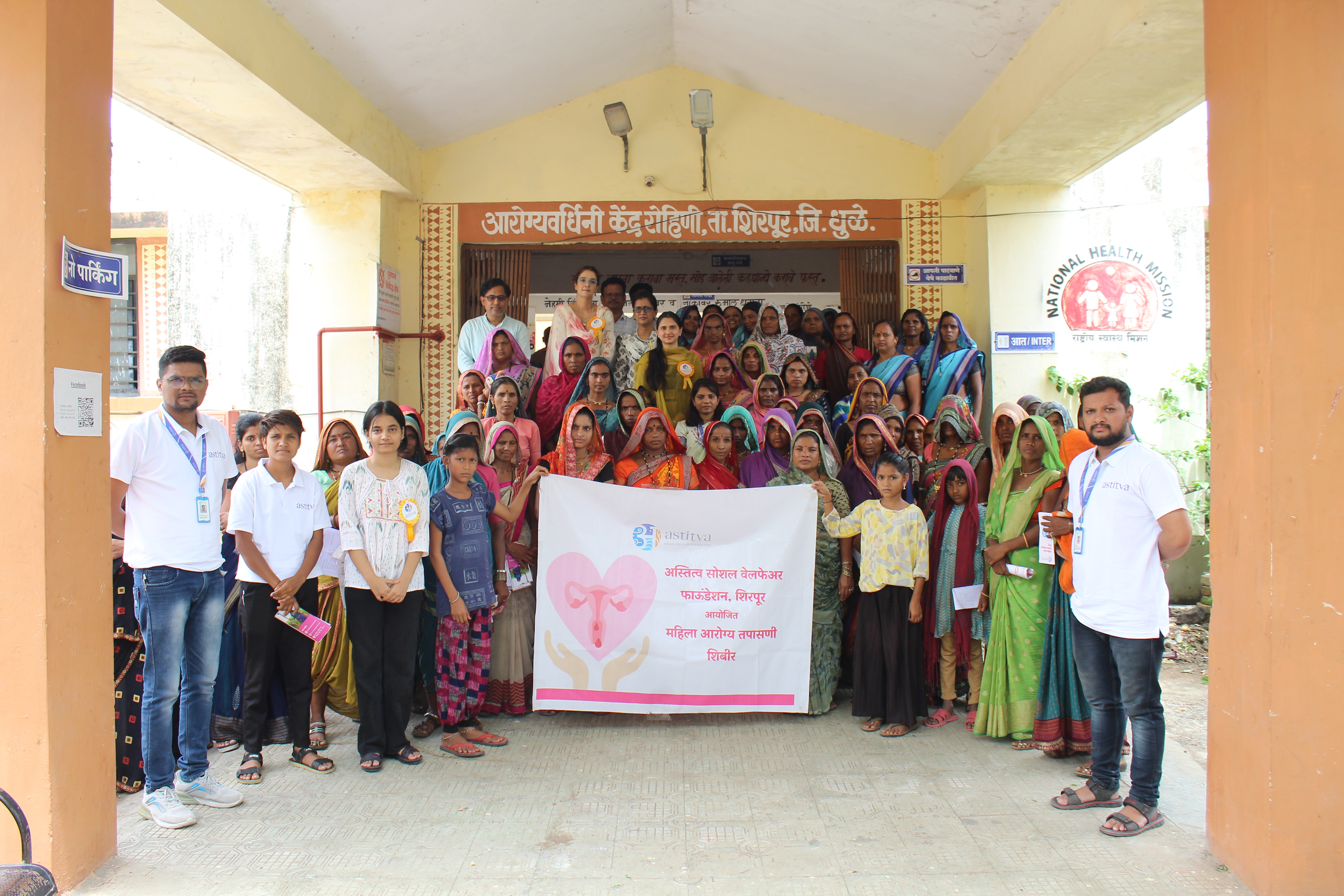
Maharashtra, India May 02: As Maharashtra celebrates its foundation day, a small village near Shirpur is offering a powerful narrative of progress—where tradition is evolving with science, and communities are taking charge of their future through informed choices.
In a quiet yet transformative shift, age-old matrimonial traditions here are being redefined, not by horoscopes or kundlis, but by health cards.
In this unique community-led practice, red and green cards indicating sickle cell status have become a decisive factor in marriage compatibility. The system is simple yet powerful: individuals carrying two green cards are not matched, while red and green card pairings are considered acceptable. This approach is designed to significantly reduce the risk of children being born with sickle cell disease, a serious genetic blood disorder prevalent among tribal populations in Maharashtra.
What makes this model particularly compelling is its grassroots origin. Driven by sustained awareness campaigns and screening initiatives, the practice has organically evolved into a social norm, where informed health choices are influencing deeply personal and cultural decisions like marriage.
Recent screening efforts in the region have highlighted the urgency of such interventions. Across multiple camps conducted in nearby areas, over 400 individuals were screened, with more than 200 identified as carriers and 180 diagnosed with the disease. These numbers underscore the scale of the challenge and the importance of preventive approaches rooted in community participation.
Beyond detection, these initiatives have also focused on counselling, access to medication, and continuous support for affected individuals. The integration of health awareness into social practices marks a significant shift, transforming communities from passive recipients of healthcare to active participants in disease prevention.
Emphasising the need for collective action to tackle sickle cell disease, Dweta Patel, Director, Astitva Social Welfare Foundation, a key force behind the initiative, said, “This initiative is not the effort of one individual but a collective movement shaped by the community, healthcare workers, and volunteers working tirelessly on the ground. What we are witnessing today is the power of awareness translating into action, where people are making informed decisions not just for themselves but for future generations. The red and green card system is a reflection of trust, education, and shared responsibility. Our aim has always been to support those in need, ensure early detection, and build a healthier society. When communities come together like this, real and lasting change becomes possible.”
This evolving matrimonial system stands at the intersection of public health, culture, and social reform. It demonstrates how awareness, when combined with collective action, can lead to meaningful behavioural change without disrupting the social fabric.
As this model continues to grow, it carries a larger vision of communities empowered with knowledge, making choices that can prevent suffering before it begins. By embedding awareness into everyday decisions, this initiative points toward a future where diseases like sickle cell no longer define lives, and where generations are born healthier, freer, and with greater hope.
30, Apr 2026
India Deploys Health Cube in Jamaica Under CARICOM Partnership
New Delhi, Apr 30 (BNP): India has deployed its “Aarogya Maitri” health cube in Jamaica as part of its efforts to deepen healthcare cooperation with CARICOM member countries and enhance emergency medical preparedness in the region.
The mobile medical unit is designed to provide rapid and effective critical care support during natural disasters, public health emergencies, and other crisis situations where immediate healthcare infrastructure may be limited. Equipped to function in challenging environments, the system aims to improve response time and strengthen on-ground medical assistance.
Officials said the initiative reflects India’s growing focus on humanitarian assistance and disaster relief cooperation with partner countries, particularly in regions vulnerable to emergencies. The deployment is also expected to support capacity-building in emergency healthcare systems and improve coordination during crisis response efforts.
The move further highlights India’s continued engagement with Caribbean nations, reinforcing its commitment to global health security and international collaboration in disaster management and medical support.


