



13, Jun 2023
A 30-Year-Old Woman Overcomes Severe Muscular Weakness Due to LGMD with Specialized Therapy
A 30-Year-Old Woman Overcomes Severe Muscular Weakness Due to LGMD with Specialized Therapy Limb-Girdle Muscular Dystrophy (LGMD) are Rare Condition
Mumbai: A team headed by Dr Pradeep Mahajan, Regenerative Medicine Researcher & Founder of StemRx Bioscience Solutions – India gave a second lease of life to a 30-year-old woman patient diagnosed with severe muscle weakness owing to Limb-Girdle Muscular Dystrophy (LGMD) are Rare Conditions. The patient is doing well and resumed her daily routine with ease.
Deepika Joshi from Mumbai and a housewife by profession sought medical help when she began experiencing severe muscular weakness, which progressively worsened over a period of five years. Specific weakness in her lower limbs and girdle muscles made even simple movements difficult for her. Determined to find a solution, she turned to Dr. Mahajan, a renowned specialist at StemRx.
Dr Pradeep Mahajan, Regenerative Medicine Researcher & Founder of StemRx Bioscience Solutions – India said, “Upon evaluation, it was revealed that Joshi’s creatine phosphokinase (CPK) levels were alarmingly high, exceeding 14,000 units. Girdle muscle weakness was particularly pronounced, and Joshi exhibited a negative straight leg raise (SLR) test and flaccid hip muscle tone. Despite these challenges, her sensations remained intact, and a positive Gower’s sign indicated the presence of muscle weakness.”
Under the expert care of Dr. Mahajan and the StemRx team, Joshi embarked on a comprehensive treatment plan tailored specifically to her needs. “The therapy targeted the weakened muscles, focusing on and around them to increase muscle mass and improve muscle fiber life. This targeted approach not only enhanced Joshi’s muscle power but also played a crucial role in slowing down the progression of her condition,” highlighted Dr. Mahajan.
Dr. Mahajan added, “As weeks passed, Joshi’s dedication and the effectiveness of the treatment became evident. Her girdle muscles significantly improved, enabling her to perform daily activities with greater ease. Simple tasks like getting up and sitting became less arduous, and her ability to walk improved dramatically. Ankle movements, previously hindered by weakness, were now much better. Most importantly, her tendency to fall was greatly reduced, providing her with newfound confidence and independence. In addition to the visible improvements, Joshi experienced a boost in muscle mass and a reduction in flaccidity. These positive changes not only improved her physical capabilities but also had a profound impact on her overall well-being and quality of life.”
“I thank Dr. Mahajan for his limitless efforts to help me get rid of muscle weakness and stand on my feet again. I can move freely now. It is because of Dr. Mahajan’s innovative treatment approach that I could defy the odds and reclaim control over my life,” said the patient, Deepika Joshi.
As more individuals with Limb-Girdle Muscular Dystrophy (LGMD) and similar conditions become aware of StemRx’s groundbreaking therapy, hope is reignited and a future free from the clutches of muscular weakness becomes a tangible possibility. Deepika Joshi’s remarkable recovery is an inspiration to all those facing similar challenges, proving that with the right treatment and unwavering determination, a brighter future awaits.
- 0
- By Neel Achary

12, Jun 2023
Insights into Redox-Independent Cellular Stress Response
Researchers identify the regulatory pathway that governs a type of redox-independent stress response involving NRF2
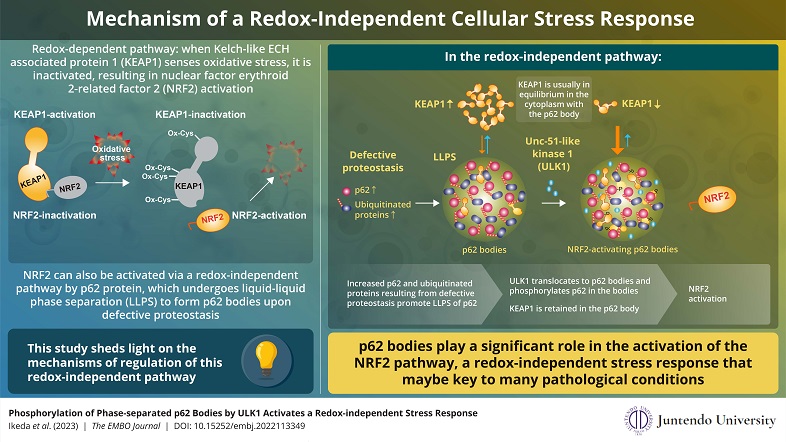
Nuclear factor erythroid 2-related factor 2 (NRF2) is a master transcription factor with a role in regulating oxidative stress response. It can be activated via redox-dependent and independent pathways. Regulatory mechanisms of the redox-dependent pathway are known; however, the same cannot be said for the redox-independent pathway. Now, researchers from Juntendo University have unraveled the roles of phase-separated liquid droplets, p62 bodies, in redox-independent NRF2 activation and the significance of phosphorylation in this process.
Cellular stress, or oxidative stress, occurs when there is a buildup of reactive oxygen species (ROS), which interferes with cellular mechanisms and can even cause damage to proteins, lipids, and DNA. Owing to their destructive nature, all cells have robust mechanisms in place to remove ROS and reduce oxidative stress. One such mechanism is the nuclear factor erythroid 2-related factor 2 (NRF2)-mediated stress response, where NRF2 is a master transcription factor that aids in reducing oxidative stress.
Much is known about the redox-dependent activation of NRF2 and its subsequent role in stress response. In this pathway, Kelch-like ECH-associated protein 1 (KEAP1) senses oxidative stress in the cell through oxidation of its specific cysteine residues. This oxidation causes conformational changes in KEAP1, which, in turn, loses the ability to suppress NRF2. As a result, NRF2 is stabilized and induces a series of genes encoding anti-oxidative proteins that reduce and remove oxidative stress caused by ROS.
NRF2 can also be activated in a redox-independent manner. This activation involves p62 protein, which undergoes liquid-liquid phase separation to form p62 bodies when it binds to ubiquitinated proteins upon defective proteostasis. However, the precise mechanism of NRF2 regulation through p62 bodies had hitherto remained largely unknown.
Now, researchers in Japan have found how p62 bodies control redox-independent NRF2 activation. They conducted a study that was conceived by Professor Masaaki Komatsu and Associate Professor Yoshinobu Ichimura from Juntendo University School of Medicine and Dr. Nobuo N. Noda from Hokkaido University. “We have reported in a previous study that phosphorylation of p62 inhibits the binding of KEAP1 to NRF2 competitively, thereby disabling the NRF2-repressive function of KEAP1. However, the regulatory mechanism and the physiological functions in vivo remain largely unclear. This is important as the accumulation of phosphorylated p62 has been found to cause many intractable diseases,” explains Prof. Komatsu when asked about the team’s motivation for pursuing the research. Their findings are all set to be published in The EMBO Journal.
Using advanced techniques like high-speed atomic force microscopy, fluorescence recovery after photobleaching, and fluorescence loss in photobleaching, the team conducted experiments that included those performed outside a living organism (in vitro) and those using cells and mice (in vivo) to thoroughly profile protein-protein interactions, cellular localization of specific components, and the effects of LLPS-induced p62 phosphorylation, during redox-independent NRF2 activation.
Summarizing the main findings of their study, Dr. Ichimura explains, “We found that ULK1, a protein kinase, translocates to p62 bodies and then phosphorylates p62 within the bodies. The resulting phosphorylated p62 bodies retain KEAP1 within them, which drives the activation of NRF2.”
KEAP1 usually cycles in and out of p62 bodies; however, phosphorylated p62 tightly binds to KEAP1, which causes KEAP1 to be retained and sequestered within the p62 body. This leads to activation of even more NRF2. The p62 bodies are degraded by autophagy, and this may contribute to shutdown of this pathway. The current study extends the scope of the antioxidative stress response and provides new insights into the role of phase separation in the process.
The importance of this redox-independent NRF2 activation was tested using phosphomimetic p62 knock-in mouse models where hyperactivation of NRF2 by extensive phosphorylation resulted in hyperkeratosis—a growth defect causing the outer layer of the stomach and esophageal lining to thicken, which in turn caused stunted growth due to malnutrition.
Prof. Komatsu is confident that his team has laid the foundation for future work to probe deeper into the mechanism and regulation of redox-independent stress responses. He concludes, “Whether redox-dependent or independent, NRF2 activation is an important biological defense system. Understanding its regulatory mechanisms is crucial as its persistent activation leads to inordinate defense responses, like excessive keratinization. Our study is the first scientific validation of the physiological significance for redox-independent NRF2 activation. In the case of redox-independent stress responses, activation of NRF2 is very likely regulated by phosphorylation, dephosphorylation, and autophagic degradation of p62 bodies. p62 bodies have been found to accumulate in affected cells in patients with liver disorders, neurodegenerative diseases, and cancers. Thus, research such as ours will be useful in elucidating the pathogenesis of and developing improved therapies for FA-, NRF2-, and autophagy-related diseases.”
12, Jun 2023
Vaginal Prolapse: Symptoms, treatments and precautions
By Dr. Poornima Kinila, Consultant – Obstetrics & Gynecology and Infertility, Aster RV Hospital
The vagina is one of several organs located in the pelvic region. Muscles and other tissue hold these organs in place. These muscles work together to form a structure known as the pelvic floor. This support structure can begin to deteriorate over time. This can happen for a variety of causes, but the end effect is organ sagging. A prolapse occurs when your organs sag or droop from their natural position. When the top of the vagina weakens and collapses into your vaginal canal, this is known as vaginal prolapse. Prolapses can be minor or severe. An incomplete prolapse is a minor prolapse. When your organ has displaced significantly, you will experience a larger prolapse (full prolapse). Your organs may protrude from your vaginal entrance if you have a full prolapse. This is a really severe prolapse. Painful symptoms might result from vaginal prolapse. Surgery may not be necessary for mild to moderate vaginal prolapse. However, more severe cases may need surgical repair.
Your pelvis is made up of your uterus, vagina, rectum, bladder, and urethra. These organs are supported by your pelvic floor muscles, which resemble an upside-down umbrella. The umbrella supports your pelvic organs; however, it might collapse over time or due to other circumstances like vaginal delivery. There are various varieties of prolapse, each with a different name based on where the organ has slipped. The following are some examples of pelvic organ prolapse.
Vaginal prolapse is a rather frequent condition. During their lifespan, more than one-third of women or people assigned female at birth (AFAB) may experience some form of pelvic region prolapse. You’re more prone to have vaginal prolapse later in life, especially if you’ve had numerous vaginal births.
Symptoms
- Fullness, heaviness, or pain in the pelvic region. This sensation frequently worsens throughout the day or after standing, lifting, or coughing.
- Back ache in the lower back.
- Bulging in your uterus.
- You have the sensation that something is slipping out of your vagina.
- Pee dripping (urinary incontinence).
- Infections of the bladder occur on a regular basis.
- Pooping is difficult.
- Sexual intercourse problems.
- Tampon inserting issues.
Causes
A set of muscles and other tissue hold your vagina in place within your pelvis, forming a sort of support framework. This structure holds your pelvic organs in place. This structure may deteriorate with time. When this happens, your vagina may slip down and out of place, resulting in a prolapse. Among the most common causes of vaginal prolapse are:
- Childbirth: Vaginal delivery is more likely to result in prolapse than a C-section. If you’ve had several vaginal deliveries, had a lengthy labor, or delivered a large baby, your chance of prolapse may be increased (more than 9 pounds)
- Ageing: As you get older, your chances of prolapse increase.
- Excessive physical exercise or heavy lifting: Activity-related strain can also weaken your pelvic muscles and cause your organs to sag out of position.
- Factors of genetic or hereditary origin: Your pelvic support system may be naturally weaker.
- Prolapse can also be caused by activities or situations that put extra pressure on your abdominal area like:
- Failure to maintain a healthy body weight.
- Heavy lifting.
- Struggling to defecate.
- Having a persistent cough (common in people with asthma or respiratory problems
Treatment
Treatment for vaginal prolapse varies based on the severity of the prolapse. In certain circumstances, your healthcare physician may simply want to monitor it over time to ensure that it does not worsen.
Vaginal prolapses can be treated non- surgically or surgically. A few factors will be considered by the Obstetrics & Gynecology Hospital while developing a treatment plan, such as:
- Overall health, as well as any major medical issues.
- Age
- The seriousness of the prolapse.
- If you desire to have children later on.
- If you ever want to have penetrative sex.
11, Jun 2023
Non-surgical, Next-generation Cryoablation Technology- a Boon for Cancer Patients
Bangalore June 11, 2023: Cancer patients in India can now heave a sigh of relief, thanks to the availability of cryoablation technology in the country. Cryoablation is a minimally invasive image-guided (ultrasound or CT scan) treatment, that uses extreme cold to freeze and accurately destroy diseased tissue within the tumour zone. This technology is the brainchild of an Israeli company, IceCure Medical. Its flagship product, ProSense freezes tumours quickly and with minimal pain. It uses liquid nitrogen (LN2) for maximum freezing, safety, and efficacy. Novo Med Incorporation Pvt Ltd is the authorized distributor of IceCure Medical in India.

During cryoablation, a thin, needle-like probe called a cryoprobe is inserted into the target area. The cryoprobe uses liquid nitrogen as a coolant, rapidly cooling the surrounding tissue. As the tissue freezes, ice crystals form, causing cellular damage and destruction. Extreme cold temperatures essentially freeze and kill abnormal cells.
Cryoablation has several advantages over other treatment methods. It is considered a minimally invasive procedure, meaning it requires only a small incision or needle puncture, resulting in fewer traumas to the body and faster recovery times compared to open surgery. It can be performed under local anaesthesia, eliminating the need for general anaesthesia in many cases. Additionally, cryoablation is relatively precise, allowing for targeted treatment of the abnormal tissue while preserving surrounding healthy tissue. A hospital stay is not required in most cases.
The specific application of cryoablation depends on the condition being treated. It is commonly used in the treatment of benign and malignant tumours of various kinds including breast cancer, kidney cancer, liver cancer, lung cancer, bone, soft tissue, and other types of tumours.
Dr Indu sekhar Subbanna, Interventional Radiologist and Senior Consultant, HCG Hospital, Bengaluru, observed, “Cryoablation is extremely useful in pain management and very easy to handle and operate. I recently did a patient for kidney cancer and we got very good results. I am very optimistic about the future of this therapy.”
Dr Rohit Madhurkar, Lead Consultant and Interventional Radiologist, Apollo Hospitals, Bengaluru, opined, “We all are aware, minimally invasive treatment is the most opted method of healing various disease conditions in this modern healthcare system, with its obvious advantages of focused, least invasive treatment, quick recovery and many more. As Interventional Radiologists, we are able to enter the body to the desired target location, just with a needle (Pinhole surgery) & kill the tumour cells, under detailed real-time image guidance without damaging vital structures around. Cryoablation is one powerful tool, wherein we are able to freeze the tumour cell to death with accuracy under detailed visibility of the ablation zone. Cryoablation has shown immense outcomes in renal tumours & fibroadenoma of the breast with wider utility in treating various smaller tumours in the liver, lung & bone. Now that, it’s available in India, our patients can have the benefit of Cryoablation
Dr M C Uthappa, Head- of Interventional Radiology, Manipal Hospitals, Bengaluru, averred, “Having seen a few live procedures of cryoablation during my last visit to China, I can confidently say that cryoablation will become the future of cancer therapy for large number of solid cancers in the human body.”
The cryoablation therapy was also recently introduced at the Kovai Medical Center in Coimbatore. JayMehta, Director- Sales, Novo Med In corporation Pvt Ltd, stated, “We are indeed very happy to facilitate the availability of this futuristic and revolutionary technology in India. The Indian populace should take maximum advantage of the same and freeze cancer in its tracks.”
10, Jun 2023
Teestar® Bioactive Gummies by Avesthagen Limited

For Sugar and Calorie Management – Pre-Diabetic & Diabetic Healthcare
Teestar® Bioactive Gummies – a product for sugar and calorie management by Avesta Good Earth Foods, a part of Avesthagen Limited. It has shown a reduction in blood glucose levels of up to 10MG/DL postprandial. This all-natural ingredient manages blood sugar spikes post-meal and further helps in managing a better insulin response.
Teestar® is developed from an Indian medicinal plant commonly used as a part of the food matrix. It has been used in traditional medicine as a potent sugar and calorie modulator and also to manage healthy body mass. It is recommended to have two gummies before breakfast and dinner daily for best results. The Teestar® forms a colloidal-type suspension in the stomach and the intestine upon hydration, and the mucilage thus formed slows down the gastrointestinal transit of food as well as its digestion. Thus, yielding less calories from digested food for a long time and, in turn, giving the feeling of satiety.
Teestar® is manufactured at a state-of-the-art production and R&D facility by an eco-friendly and safe process of extraction using only ethanol and water, not needing any harsh chemicals or evaporation of the extract. The product maintains a very stringent quality consistency using Avesthagen’s proprietary fingerprinting technique, MetaGrid.
In conclusion, Teestar® is a very safe and potent calorie modulator and can be used to manage healthy body mass.
Teestar® is available in Litchi and Tamarind flovours for Rs. 750/- at www.avestagoodearthfoods.com www.amazon.in and www.1mg.com
Avesthagen Limited is an international, integrated, diversified life sciences company based on a systems-biology approach. The company is at the forefront of the convergence of food, pharma, and population genetics for developing new products and novel therapies. Avesthagen aims to commercialize its developed products and technologies geared towards Nutrigenomics, Agriculture, and Precision Medicine with its proprietary Predictive, Preventive and Personalized (“PPP”) healthcare platform.
6, Jun 2023
Myths and Facts about Aligners & Braces

With the inputs of Dr. Amit Sachdeva, Chief Product Officer, LoveMySmile
Maintaining a healthy and confident smile is essential, as it speaks a lot about our personality. However, not everything turns out the way we plan them to be and that is why certain things including facial aesthetics require external attention. Many individuals seek respite through orthodontic treatments like aligners and braces to wear the perfect mood all day long, and it is truly a savior on that front. However, due to various misconceptions, many people feel apprehensive about using these orthodontic treatments. Let’s debunk some common myths and shed light on the facts to alleviate any concerns you may have! Here we go:
Myth 1: Braces or aligners are excruciatingly painful.
Fact: It’s natural to worry about discomfort, but rest assured, modern orthodontic appliances have come a long way. While you might experience some initial soreness or pressure, it is generally manageable and temporary. Your orthodontist will guide you on how to cope with any discomfort, and as you adjust to wearing aligners or braces, the discomfort diminishes.
Myth 2: Only teenagers can benefit from braces or aligners.
Fact: This myth couldn’t be further from the truth! Orthodontic treatments are suitable for people of all ages, including adults. It’s never too late to achieve a straight and healthy smile. In fact, adult orthodontic treatment has become increasingly popular, thanks to advancements in technology and the availability of discreet options.
Myth 3: Braces and aligners take years to show results.
Fact: While the duration of treatment varies depending on individual cases, significant progress can be observed within a few months. With regular check-ups and adhering to your orthodontist’s instructions, you’ll be amazed at how quickly your smile transforms. Aligners, in particular, often yield faster results compared to traditional braces.
Myth 4: Aligners are noticeable and impact speech.
Fact: Unlike traditional braces, aligners are nearly invisible and won’t draw unwanted attention. Crafted from clear and discreet materials, they seamlessly blend with your teeth. As for speech, any temporary changes are minor, and most people adapt quickly. Aligners provide a comfortable and convenient option for those seeking a discreet orthodontic treatment.
Myth 5: Aligners are expensive and not covered by insurance.
Fact: While orthodontic treatments can be an investment, the cost varies depending on factors such as case complexity and treatment duration. Many dental insurance plans provide coverage for orthodontics, including aligners and braces. It’s advisable to consult with your orthodontist and insurance provider to understand the financial aspects and potential coverage.
In conclusion, it’s crucial to distinguish between myths and facts when considering aligners and braces. By embracing the use of aligners to fix dental issues — one can improve upon their face dynamics and the aesthetics that constitute a perfect smile.
6, Jun 2023
Robotic surgery aids kidney cancer patients
By Dr. Vikas Agarwal, Aakash Healthcare
Kidney cancer is one of the 10 most commonly diagnosed cancers. The risk of kidney cancer in men is 2x as compared to women. Old age, smoking, obesity, high blood pressure, long-term dialysis, and a family history of kidney cancer all can increase the risk for kidney cancer.
Some possible signs and symptoms of kidney cancer are blood in urine, low back pain, early fatigue, loss of appetite, weight loss, and unexplained fever.
Like every cancer, kidney cancer is also of many types and is detected early or in advanced stages. Nowadays ultrasound is a common investigation by which we can detect kidney cancer in an early stage. It helps in the differentiation of solid from fluid-filled cyst mass. Usually, kidney cancers are solid. To further confirm cancer or plan treatment, we advise a contrast CT scan which more clearly tells about kidney cancer types or helps in planning surgery.
There is a limited role of PET Scan or kidney biopsy in kidney cancer. If we discuss treatment, surgery is the mainstay of treatment. There is no role of radiotherapy in most kidney cancers.
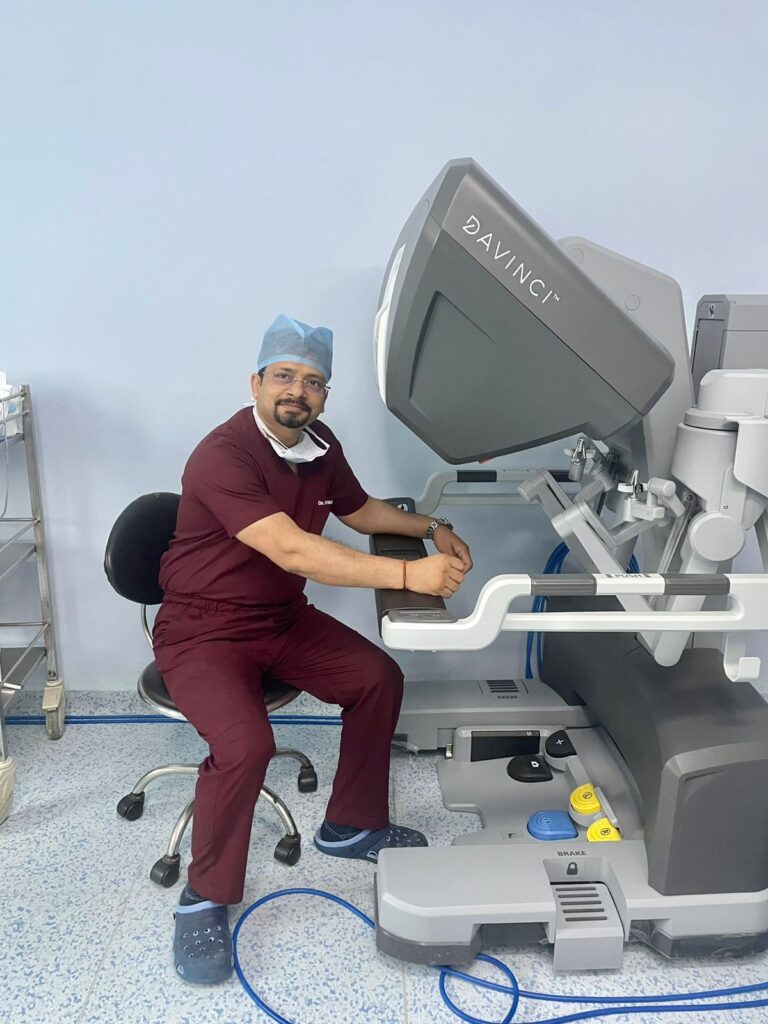
It is important to note, in small kidney cancer < 4cm, we can save the kidney by removing only the tumor, called Partial Nephrectomy. This surgery can be done more precisely with Robotic technology. Robotic Partial Nephrectomy is recommended for complex, hilar tumors, and solitary kidney cancers. If the tumor is large, we can remove the whole kidney and the patient can survive with another kidney, living a normal life.
The benefits of Robotic surgery are less blood loss, less pain, early discharge from the hospital, and early return to normal activities. Kidney cancers are curable in early stages and life expectancy after successful surgery is good.
On this world kidney day, I wish you a healthy kidney and a healthy life.
2, Jun 2023
Nestlé Health Science collaborates with IAPEN to strengthen awareness on Gut Health Management

As part of its commitment to enable people to live healthier lives, Nestlé Health Science collaborated with the GI Core Committee at Indian Association for Parenteral and Enteral Nutrition on World Digestive Health Day. Nestlé Health Science, a part of Nestlé India has roped in strategic partners, clinical research, and advanced education association to drive awareness on gut health management. The collaboration is aimed at providing education on possible solutions to gut issues and positively impact the confidence and lifestyle of those who suffer from it.
Through the collaboration, Nestlé Health Science reached out to more than 800 Healthcare Practitioners (HCPs) across 26 chapters of IAPEN. The Healthcare Practitioners were briefed on the role of Prebiotics & Immunonutrients in gut health along with probiotic supplementation, and Partially Hydrolyzed Guar Gum (PHGG) as a novel gut health solution. The educational session was led by Dr Biju Pottakkat, Associate Dean Research and Head, Surgical Gastroenterology, JIPMER and Dr Amit Goel, Professor & Head of Hepatology, SGPGIMS, Lucknow followed by Dr Jalil Benyacoub, Global Medical Affairs Lead, Nestlé Health Science, Chairman, ILSI Europe, PhD, University of Lausanne.
Dr Sreemathy Venkatraman, Clinical Dietitian & National Executive Committee member IAPEN India commented “Many patients are in need for a gut health solution that is not only effective but is also gentle on the body. Today’s engagement was to educate our colleagues how a combination of prebiotic and immunonutrients can help improve the gut health of any individual. We are happy to see reputed organizations in this space are trying to address a strong need gap.”
Mansi Khanna, Head, Nestlé Health Science commented, “We are proud to collaborate with a reputed body like IAPEN to drive awareness around a category that people are usually hesitant to talk about. At Nestlé Health Science India we strive to empower individuals with the power of nutrition to help them live healthier lives, including advanced innovative solutions. We recently launched Resource Fiber Choice, a unique gut health solution to address a key consumer need gap. It contains PHGG (Partially Hydrolyzed Guar Gum) which is a prebiotic dietary fiber that is proven to help relive constipation and improve gut health. It is also rich in immune nutrients, easy to consume and can be mixed in water or any beverage and food.”
Nestlé Health Science is a global leader in the space of nutritional science. It focuses on advancing the therapeutic role of nutrition to change the course of health management for consumers, patients, doctors, nurses, and its partners in healthcare. The key products include- RESOURCE High Protein, OPTIFAST and RESOURCE Diabetic, PEPTAMEN, RESOURCE Dialysis and Thicken Up Clear. Nestlé Health Science also has a dedicated team of clinical experts who engage with healthcare practitioners across India for awareness and education.
1, Jun 2023
Healthy Summer Snacks for Kids: 6 Fun and Nutritious Options

The much-anticipated summer vacations have begun and it is time for more outdoor play. The temperature during summer rises with each passing day and one common concern among parents is whether their children are getting enough fluids in their bodies to bear the heat. It is necessary to keep kids healthy and hydrated — but it’s not always easy! Dr. Ganesh Kadhe, Director, Medical and Scientific Affairs, Abbott’s Nutrition business shares 6 nutritious and hydrating foods that you can feed your kid this summer:
- Cut up Fruits: Watery fruits like watermelon, oranges, and apricot can boost your kid’s hydration. Apart from being rich in water, these fruits are also good sources of vitamin C, vitamin A, and potassium which have several health benefits[i], [ii], [iii], [iv], [v]. These fruits can be served in smaller pieces or even sliced into shapes like triangles, stars, and rounds.
- Popsicles: Kids love popsicles. If getting your child to drink liquids is becoming a challenge, you can make a popsicle out of fresh fruit juices or even their favourite fruit milkshakes in a small glass. These are also excellent choices for children who may be craving something cold. These popsicles can provide both fluid and key nutrients from fruits that can help them rehydrate.
- Fruit Lassi: If your child shies away from drinking the required amount of water, try serving a yoghurt and milk based lassi to them. This can be given to them in their favourite cup and throw in a silly straw in their favourite colour to get them excited about drinking the lassi. For example, you can make a papaya and pineapple lassi which make the drink more appealing to your child’s taste buds. Additionally, pineapple is not only high in water content[vi] but also a significant source of vitamin C making it an excellent summer fruit option. Papaya on the other hand, is high in vitamin A and C [vii].
- Vegetable Salad: A bowl of mixed vegetable salad is a great source of protein and fiber. Salad consisting of watery yellow and green vegetables like cucumber, watermelon, olives, and cherry tomatoes can be a perfect summer savoury.
- Tea Party: Offer your child warm kid-friendly teas, such as peppermint or chamomile. Having a teddy bear or doll tea party might encourage some children to drink up and hydrate. Natural compounds in peppermint may have beneficial effects on energy as well for your kid’s playtime[viii] whereas chamomile tea has anti-inflammatory qualities and is high in nutrients such as calcium, magnesium, and folate[ix].
- Spa water: Spa water is for kids, too! Add sliced strawberries, cucumbers, or lemons to your child’s glass of water to give it a flavour and colour boost. They have hydrating properties and will also appeal to children. Berries can also add a sweet flavour to water and can be added for that bright colour pop.
If your child is a fussy eater, it may be difficult to ensure they are getting the right nutrition through their food during the summers. Serving these fun and colourful food options will make it easier for you to incorporate nutritious foods in their diet. Consider trying a combination of these options to help your child maintain a consistent intake of fluids and nutritious food throughout the day this season.
29, May 2023
Dr Shashi Tharoor launches Kamal Shah’s new book Silver Lining

Hyderabad, 29th May 2023: Dr Shashi Tharoor. Indian politician and Member of Parliament (MP) launched a new book titled “Silver Lining – Overcoming Adversity to Build NephroPlus, India’s Largest Dialysis Provider” written by NephroPlus co-founder and author Kamal Shah. The event was also graced by the presence of renowned singer Usha Uthup. The book details the journey of Kamal Shah and how his spirit of resilience and perseverance has led to tremendous achievements and triumph.
The book, published by one of India’s leading publishers Penguin Random House, reveals how the young Mr Shah overcame huge health setbacks and has today built one of India’s leading health institutions. A first-of-its-kind story in India, the book is a testimony of how the 21-year-old Kamal Shah was struck by kidney failure which threatened to end his life, but he fought back to not only survive but thrive despite the punishing setbacks he had time and again.
Kamal Shah Co-founder, NephroPlus, narrates his story as he witnessed people facing diverse challenges today. “I simply want to let them know that they’re not alone, and no matter how rough the road may seem, they can’t stop pushing. I encountered a lot of challenges after kidney disease struck, but they made me stronger. I took the pain and adversity and turned them into lessons. I’m glad I have been able to bring about solutions in the healthcare sector and I hope my book inspires people around the world,”
Silver Lining is written in a narrative voice as Mr Shah takes the reader through his journey of strength and stoic bravery, overcoming each challenge that life threw at him. The first part of the book captures this gruesome journey of Kamal Shah told in a cheerful voice. The language is both emotional and uplifting and is sure to encourage and inspire everyone going through similar health challenges or setbacks in life.
The second part of the book details Kamal’s entrepreneurial journey and how he has used his personal experience to transform NephroPlus into India’s largest chain of dialysis centres that is passionate about the treatment of patients and ensures they lead a good life. This informed the introduction of protocolised dialysis care at NephroPlus to ensure they live quality lives through events like the world’s first Dialysis Olympiad for patients.
The chief guest and endorser of the book, Dr Shashi Tharoor, an Indian politician and a Member of Parliament (MP), in his words said, “Kamal Shah, a dialysis patient himself, refused to let his disease defeat him, instead, he used it as a source of inspiration; how could he prevent others from suffering as he had? It was this focused mission that gave rise to NephroPlus, a story Shah tells deftly here. His journey is a truly inspiring one, and I’m glad he has decided to put it on record forever, even for generations yet unborn.”
Apart from Dr Shashi Tharoor, the book is also endorsed by playback singer Usha Uthup, R Gopalakrishnan – author, business commentator and former executive director at Tata Sons, and film producer Madhu Mantena. The book can be found in all leading bookstores and online e-commerce platforms, including Amazon.
NephroPlus, the company he co-founded along with Mr Vikram Vuppala, is a patient-centric dialysis company which has revolutionized kidney care and treatment in India and beyond. The brand is today India’s largest dialysis services company, with centres spread across the country and beyond.


