


8, Sep 2026
Lecxe Consulting Debuts to Help Indian Businesses Turn AI into Business Outcomes
GURUGRAM, India, Sept. 8, 2026 /PRNewswire/ — Lecxe Consulting is an AI consulting and implementation company helping Indian businesses build custom AI powered business systems. Since inception, Lecxe has helped clients reduce costs up to 80% every month through AI-powered business systems, while simplifying the way organisations operate.

As businesses increasingly look to adopt AI to improve productivity and decision-making, many continue to struggle with old and fragmented systems, disconnected workflows and technology that doesn’t fit the way they actually operate. Lecxe was founded to solve this challenge.
Unlike traditional consulting firms that stop at strategy or software providers that sell standardised solutions, Lecxe stays with its clients beyond implementation – helping them design, deploy and continuously evolve AI systems that deliver measurable results.
Businesses have no shortage of AI tools today. What they often lack is a clear roadmap to make AI work within their existing operations. Lecxe enters the market at a time when organisations are looking for experienced teams that can turn AI into real business value.
“AI is no longer a future investment, it’s becoming a business necessity. The question is no longer whether businesses should adopt AI, but how they can make it deliver real value. That’s the thought behind Lecxe. Inspired by the reverse of ‘Excel’, our name reflects the shift from manual spreadsheets to AI-powered business systems built for the way businesses operate today” — Shreshth Mehra, CTO, Lecxe
Guided by its philosophy of “Spend less, Run lean, Grow Fast.”, Lecxe believes AI should create measurable business value. Every solution is designed to reduce costs, improve efficiency, boost productivity and support revenue growth.
Every engagement at Lecxe begins with understanding the business before recommending the technology. The team then designs AI-powered business systems that fit existing workflows, making adoption simpler, faster and more effective.
“Technology is what we build. Consulting is what we do. Service is who we are. We often say we’re a hospitality company disguised as an AI company. The technology matters, but what clients value most is having a team thatlistens, responds quickly and genuinely cares about helping them grow.” — Sachin Mehra, COO, Lecxe
About Lecxe Consulting
Lecxe Consulting is an AI consulting and implementation company that helps businesses simplify operations through AI-powered business systems. Built around lasting client relationships, Lecxe designs, implements and continuously evolves solutions that grow with the businesses they serve.
Media Contact:
Sachin Mehra, Mob: +91 99142 15010
Email: Sachin@lecxe.in
 View original content to download multimedia:https://www.prnewswire.com/in/news-releases/lecxe-consulting-debuts-to-help-indian-businesses-turn-ai-into-business-outcomes-302872085.html

- 0
- By Sai Krishna

8, Sep 2026
Raghav Productivity Enhancers Ltd and TRL Krosaki announce strategic JV to set up a 350,000 MTPA silica ramming mass plant in Odisha
- ₹100 crore initial investment to strengthen RPEL’s manufacturing footprint in East India and support its long-term 1 Mn MTPA capacity ambition
JAIPUR, India, Sept. 8, 2026 /PRNewswire/ — Raghav Productivity Enhancers Ltd. (RPEL), world’s largest manufacturer of silica ramming mass, today announced a strategic joint venture with TRL Krosaki Refractories Ltd. (TRL Krosaki) to establish a 350,000 metric tonnes per annum (MTPA) silica ramming mass manufacturing facility in Odisha, with an initial investment of approximately ₹100 crore.
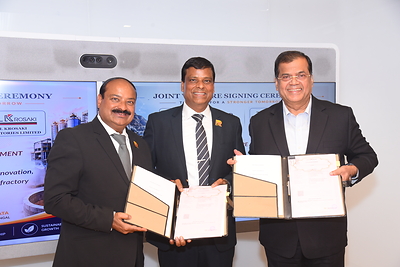
The partnership marks a significant step in RPEL’s strategy to build a multi-location manufacturing platform, strengthen its presence in East India and create a more efficient supply network closer to key consumption centers.
The JV brings together RPEL’s patented manufacturing technology, established market presence and R&D capabilities with TRL Krosaki’s regional strength, quartzite resources in Odisha and global refractory expertise, backed by Krosaki Harima Corporation, Japan, and Nippon Steel Corporation, Japan. With RPEL’s existing group capacity of 534,000 MTPA and presence across 26 states in India and 40+ countries, the partnership provides a strong foundation for expanding its manufacturing and market footprint.
Commenting on the partnership, Mr. Sanjay Kabra, Chairman, Raghav Productivity Enhancers Ltd., said, “This strategic partnership marks an important milestone in RPEL’s growth journey and our transition towards a multi-location manufacturing platform. By combining our differentiated technology and market capabilities with TRLK’s raw material resources, regional presence and global industry expertise, we are creating a strong platform for sustainable growth. This partnership also takes us closer to our ambition of reaching 1 Mn MTPA capacity and approximately 30% domestic market share, while reinforcing our focus on quality and cost leadership.”
A key strategic advantage of the JV will be long-term, exclusive access to quartzite from TRL Krosaki’s mines, ensuring raw material security and consistent product quality. RPEL will receive a royalty for usage of its patented manufacturing technology. The strategic location will also bring the company closer to key consumption centers in East India, enabling shorter delivery timelines, greater supply-chain efficiency and lower landed costs for customers.
Speaking on the occasion, Mr. Prasant Kumar Naik, Managing Director, TRL Krosaki Refractories Limited, said, “This joint venture marks an important strategic milestone for TRL Krosaki, enabling us to unlock greater value from our mineral resources and create new avenues for growth. Our partnership with RPEL brings together complementary strengths in technology, manufacturing and raw-material access, strengthening our position in the silica ramming mass market. The project will also support industrial development in Jharsuguda and the surrounding region by creating employment, supporting local enterprises and contributing to long-term economic growth.”
The Odisha facility will strengthen RPEL’s manufacturing and supply-chain capabilities while creating a platform for deeper penetration into East India. More importantly, the JV establishes a strategic building block for RPEL’s broader ambition to scale its manufacturing footprint to 1 Mn MTPA and strengthen its leadership in the silica ramming mass industry.
About Raghav Productivity Enhancers Ltd
Raghav Productivity Enhancers Ltd. (RPEL) is the world’s largest manufacturer of silica ramming mass and a globally recognized brand in the industry. With a group manufacturing capacity of 534,000 MTPA, the company serves customers across 26 states in India and 40+ countries globally. RPEL has pioneered fully automated silica ramming mass manufacturing using proprietary and patented technology and has established capabilities in product innovation and R&D. RPEL is listed on BSE: 539837 and NSE: RPEL.
Learn more at www.rammingmass.com
About TRL Krosaki Refractories Ltd
TRL Krosaki Refractories Ltd. (TRLK) is a leading Indian refractory manufacturer, producing all kinds of refractory products. Originally started as a subsidiary of Tata Steel Ltd. In 1958, TRLK today is a subsidiary of Krosaki Harima Corporation (KHC), Japan, and a step-down subsidiary of Nippon Steel Corporation. TRLK operates one of the largest quartzite mines in India. KHC is a global leader in refractory manufacturing technology, managing a global network of 20+ manufacturing units across Asia, Europe and North America. Nippon Steel Corporation is the 3rd largest steel producer globally.
Learn more at www.trlkrosaki.com
 View original content to download multimedia:https://www.prnewswire.com/in/news-releases/raghav-productivity-enhancers-ltd-and-trl-krosaki-announce-strategic-jv-to-set-up-a-350-000-mtpa-silica-ramming-mass-plant-in-odisha-302872093.html

8, Sep 2026
JOHNNIE WALKER DROPS LIMITED EDITION SABRINA CARPENTER BLACK LABEL BOTTLE DESIGN
Latest chapter in Johnnie Walker x Sabrina Carpenter collaboration celebrates bold creativity through collectible new bottle inspired by the confident, unapologetic vibe of Sabrina’s album, Man’s Best Friend
LONDON, Sept. 8, 2026 /PRNewswire/ — Johnnie Walker, the world’s No. 1 Scotch whisky[1], unveils a new limited edition Johnnie Walker Black Label bottle design created as part of the brand’s ongoing collaboration with GRAMMY® Award-winning global superstar Sabrina Carpenter.

Featuring details inspired by her new album, Man’s Best Friend, from a bespoke Sabrina blue colourway to playful dog paw motifs, the design blends the timeless character of Johnnie Walker Black Label with Sabrina’s signature style. The bottle marks the latest chapter in Johnnie Walker and Sabrina Carpenter’s multi-year partnership, which brings together two cultural icons connected by a shared belief in progress.
Sabrina Carpenter said: “I adore creating little surprises for my fans, and this felt like such a cool way to bring the world of Man’s Best Friend to life. I love telling stories beyond music, so getting to put my own spin on something as iconic as the Johnnie Walker Black Label bottle was such a fun challenge. I can’t wait for everyone to see all the little details.”
The partnership, announced last August, burst into life with a global campaign celebrating the launch of Man’s Best Friend later that year. Debuting alongside the final leg of Sabrina’s Short n’ Sweet Tour, the campaign introduced fans of legal drinking age to Sabrina’s signature Johnnie Walker serve, the Go Go Highball.
The collectible bottle extends the story of the collaboration, giving fans another way to celebrate while reinforcing the Johnnie Walker connection to music as a platform for creativity, culture and progress.
The limited-edition Johnnie Walker Black Label Sabrina Carpenter bottle will be available in both 70cl and 75cl formats (40% ABV), with a recommended retail price in line with Johnnie Walker Black Label. It is available in Great Britain now before rolling out across additional markets including Mexico, India, selected markets across Europe and Asia Pacific.
For more content, please see here.
For more information contact: johnniewalker@smarts.agency
¹ IWSR 2024.
ABOUT JOHNNIE WALKER:
Johnnie Walker is the world’s number one Scotch Whisky brand* (IWSR 2024), enjoyed by people in over 160 countries. Since the time of its founder, John Walker, those who craft its whiskies have pursued flavor and quality above all else.
Today’s range of award-winning whiskies includes Johnnie Walker Red Label, Black Label, Gold Label Reserve, and Blue Label. Together, Johnnie Walker whiskies sell over 22 million cases annually (IWSR, 2024). It is the number one best-selling Scotch Whisky (IWSR, 2024) and number one trending Scotch whisky brand (Drinks International, 2025).
*According to IWSR Global Database 2025 volume for 2024
ABOUT DIAGEO:
Diageo is a global leader in beverage alcohol with an outstanding collection of brands across spirits and beer categories. These brands include Johnnie Walker, Crown Royal, J&B and Buchanan’s whiskies, Smirnoff and Ketel One vodkas, Captain Morgan, Baileys, Don Julio, Tanqueray and Guinness. Diageo is a global company, and our products are sold in nearly 180 countries around the world. The company is listed on both the London Stock Exchange (DGE) and the New York Stock Exchange (DEO). For more information about Diageo, our people, our brands, and performance, visit us at www.diageo.com. Visit Diageo’s global responsible drinking resource, www.DRINKiQ.com for information, initiatives, and ways to share best practice.
Celebrating life, every day, everywhere.
ABOUT SABRINA CARPENTER:
Two-time GRAMMY® award winning global superstar, Sabrina Carpenter, has enchanted an audience of millions as a singer, songwriter, actress, and style icon. With her music, she has delivered one anthem after another on stage and in the studio, earning multiple gold and multi- platinum certifications, and performing to sold-out crowds worldwide. On-screen, she has generated mega-fandom through starring roles on television and film. She is signed to Island Records, where she debuted her acclaimed Gold-certified fifth studio album, “emails i can’t send”, which appeared on many “Best Of 2022” lists, including Rolling Stone and Billboard. The album features her hit single “Feather,” which went #1 at Top 40 Radio, earning Sabrina her first #1.
Her sold-out “emails i can’t send” tour took her to North America, Europe, Asia and Brazil, and she recently served as direct support for Taylor Swift in Latin America, Australia, and Singapore on the Eras Tour. In April, Sabrina made her Coachella debut and was one of the most talked-about artists of the festival. Ahead of her Coachella debut, she released her single “Espresso,” which quickly climbed the charts. Upon release, Pitchfork declared “Espresso” as “in pole position to be this year’s song of the summer,” and The New York Times heralded the single as the song ready to “propel her to the next level”. Since its release, “Espresso” has gone on to reach #1 on the UK & Australian singles charts, Top 5 in the US, and #1 on Spotify globally, where it reached over 200M streams within its first month.
Her second single, “Please Please Please,” was released in June and shot straight up to the top of the charts. The single hit #1 on Spotify’s Global and US charts, #1 on Apple Music, and debuted at #2 on the Billboard Hot 100 before claiming the #1 spot a week later and went #1 at US Pop Radio. Sabrina made her Saturday Night Live debut in May on the season finale, where she performed “Espresso” and “Feather/Nonsense.”
In August, she released her highly anticipated sixth studio album, Short n’ Sweet. The album was instantly met with an outpouring of critical acclaim from the likes of the New York Times, Rolling Stone, Pitchfork, Variety, and many more. The album debuted at #1 on the Billboard 200, making it the 3rd biggest first week debut in the US in 2024, and became only the second album that year to spend its first three weeks atop the list. “Short n’ Sweet” also topped the charts around the world, reaching #1 in the UK, Canada, Australia, Spain, and France. The album earned Sabrina an impressive six GRAMMY® nominations as a first-time nominee. “Short n’ Sweet” took home the GRAMMY® Award for Best Pop Vocal Album and Sabrina also won the “Best Pop Solo Performance” GRAMMY® Award for the album’s lead single “Espresso.” She made her debut at the 67th GRAMMY® Awards with a captivating performance of “Espresso/Please Please Please.” Last Fall, Sabrina wrapped the 33 date North American leg of her monumental sold-out Short n’ Sweet Tour and recently wrapped the sold-out European leg. Later this year, Sabrina will return for a second North America leg that includes six shows at Crypto.com Arena in Los Angeles and five shows at Madison Square Garden in New York.
[1] Source: IWSR 2024.

 View original content to download multimedia:https://www.prnewswire.co.uk/news-releases/johnnie-walker-drops-limited-edition-sabrina-carpenter-black-label-bottle-design-302872028.html

8, Sep 2026
Konica Minolta Highlights Advanced High-Chroma Printing Solutions at Photo Video Asia 2026
Sep 08: Konica Minolta Business Solutions India showcased its High Chroma Printing technology at Photo Video Asia 2026, held on 30th Aug–1st Sep 2026, highlighting how its wide color gamut closer to sRGB is enabling professional photographers, Photo Album Printing Businesses and creative professionals to bring greater vibrancy, accuracy and visual impact to their prints with closer to life prints.
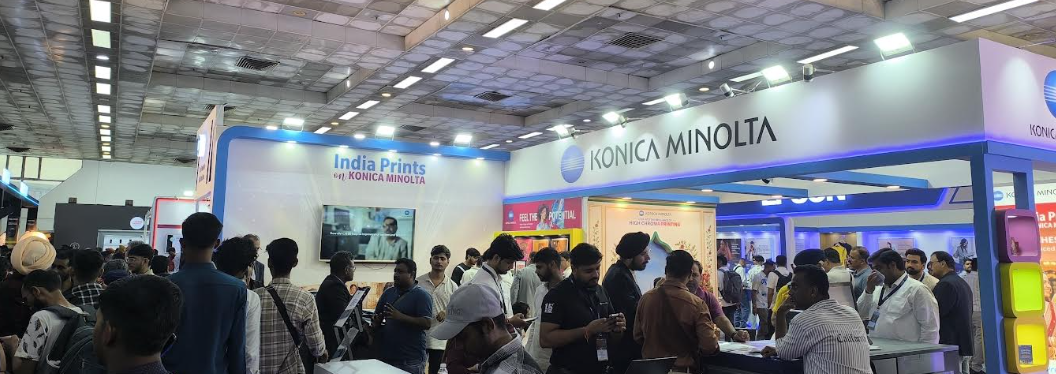
At the event, Konica Minolta showcased the AccurioPress C84hc and AccurioPress C7100 ENHANCED, demonstrating the possibilities of advanced digital colour technology alongside high-performance production printing. The exhibit highlighted how these solutions can help businesses enhance print quality, expand creative applications and respond to the evolving demands of the photography and visual communication industry.
Speaking about the showcase, Mr. Katsuhisa Asari, Managing Director, Konica Minolta Business Solutions India Pvt. Ltd., said,
“Photography is fundamentally about capturing and bringing moments to life with the richness and emotion with which they were experienced. As expectations for print quality continue to evolve, high–chroma technology can play an important role in bridging the gap between what is captured digitally and what is brought to life in print. Through our participation at Photo Video Asia, we demonstrated how Konica Minolta’s colour technologies can help photography and creative professionals achieve more vibrant, expressive and impactful prints, while opening new possibilities for their businesses.”
Photographs capture moments that we want to remember and cherish for years. While most memories today are stored digitally, a printed photograph gives those moments a physical form that can be kept, shared and revisited anytime. Printing helps turn a digital image into something tangible and lasting.
Konica Minolta is helping bring these memories to life through its High Chroma technology solutions enabling vibrant colours, rich details and high-quality photo prints, encouraging people to move beyond screens and preserve their special moments in print.
The AccurioPress C84hc/C74hc is designed to overcome the limitations of conventional CMYK printing through High Chroma Toner technology, offering a wider colour gamut for brighter and more vivid colour output. The technology particularly enhances bright blue, greens, pinks and purples, while supporting smoother skin tones with reduced graininess. This makes the system well suited for professional photography, photobooks, photo albums, posters and other image-intensive applications.
Alongside the high–chroma solutions, the AccurioPress C7100 ENHANCED showcased Konica Minolta’s advanced production print capabilities, helping businesses streamline workflows, maximise production performance and expand their application portfolio. Designed to process jobs faster and support high-quality print applications, the system enables print providers to serve more customers, enhance operational efficiency and explore new revenue opportunities, supporting sustainable business growth.
Adding to the experience, was an engaging photobooth dedicated to High Chroma, inviting visitors to capture and share their moments on social media giving them a lasting experience The initiative aimed to create an interactive brand experience while inspiring visitors to discover the enhanced vibrancy of High Chroma and the value of bringing digital memories to life through high-quality prints.
Konica Minolta’s participation at Photo Video Asia 2026 reinforced its focus on advancing digital colour technology and enabling the photography and creative industries to explore new possibilities in print. By combining high–chroma colour technology, production efficiency and application versatility, (Konica Minolta) is helping businesses transform digital images into more vibrant, impactful and commercially valuable physical experiences.
8, Sep 2026
LX Pantos Successfully Completes Complex Defense Logistics Project for Advanced Weapons
SEOUL, South Korea, Sept. 8, 2026 /PRNewswire/ — LX Pantos (President & CEO: Lee Yong-ho) announced on September 8 that it had completed a cross-border defense logistics project for advanced weapons.
The project transported air-to-air missiles (AAMs) from France to Korea for the Republic of Korea Marine Corps’ Marine Attack Helicopter (MAH) program, led by the Defense Acquisition Program Administration (DAPA). LX Pantos carried out the project for Korea Aerospace Industries (KAI).
|
*An air-to-air missile (AAM) is a guided missile launched from an aircraft in flight to engage an airborne target. |
The AAMs for the MAH were shipped by European defense contractor M and transported from Châteauroux Airport in France to Incheon International Airport aboard a charter flight arranged by LX Pantos. They were then delivered by road to a Republic of Korea Marine Corps unit in Pohang.
LX Pantos deployed a dedicated charter aircraft, with the missiles carried as the sole cargo to ensure safety and security. The shipment was classified as Class 1 explosives, Division 1.2, Compatibility Group E, and the missiles were subject to the highest levels of security control.
Air transportation of dangerous goods such as defense materials is a highly specialized operation that must comply with both the International Air Transport Association (IATA) Dangerous Goods Regulations and relevant national aviation safety requirements.
During the operation, LX Pantos secured overflight clearances from 14 countries across Europe, the Middle East and Asia and coordinated multimodal transport through its global network, including European subsidiaries.
LX Pantos has been expanding its defense logistics business since receiving an “Excellent” rating in a 2024 security assessment by Korea’s Defense Counterintelligence Command.
It has also attained Assessment Level 3 (AL3), the highest level under Trusted Information Security Assessment Exchange (TISAX), demonstrating its ability to meet stringent global information security requirements.
An LX Pantos official said the project demonstrated the company’s advanced safety, security and logistics expertise, adding that LX Pantos will continue to support global defense customers and strengthen its role in the defense logistics market.
- About LX Pantos
Established in 1977, LX Pantos is a leading global logistics provider headquartered in Korea. It delivers comprehensive logistics solutions across sea, air, rail, and contract logistics through a worldwide network spanning more than 40 countries.
Learn more about LX Pantos online and follow it on LinkedIn.

 View original content to download multimedia:https://www.prnewswire.co.uk/news-releases/lx-pantos-successfully-completes-complex-defense-logistics-project-for-advanced-weapons-302869773.html

8, Sep 2026
Autoliv Advances Vehicle Safety Through Virtual Testing
STOCKHOLM, Sept. 8, 2026 /PRNewswire/ — Autoliv, Inc. (NYSE: ALV) (SSE: ALIVsdb), the worldwide leader in automotive safety systems, is advancing the development of virtual testing through its Human Body Model (HBM) Safety Suite. The platform is designed to support the development of safer vehicles, with Toyota as the first customer onboarded to evaluate its capabilities.
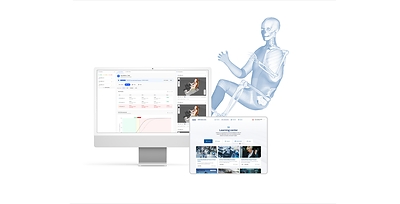
Virtual testing can be used for analyzing complex crash conditions that are difficult to replicate physically. It is becoming an important complement to physical crash testing in the automotive industry, driven by shorter vehicle development cycles, evolving safety requirements, and the need for earlier insights during vehicle development.
As regulations and consumer rating programs move toward greater use of virtual methods, Autoliv supports the automotive industry to meet evolving requirements, accelerate innovation, and advance protection for a more diverse range of occupants.
Autoliv Human Body Model Safety Suite
Autoliv’s HBM Safety Suite is an integrated virtual safety platform that combines an advanced Human Body Model for crash simulation with dedicated software tools for analysis, visualization, and decision-making. The Human Body Model is a detailed digital representation of human anatomy, that can provide insights into occupant response and potential injury mechanisms that are not available from physical dummies alone.
“Virtual testing is becoming an increasingly important part of how the automotive industry advances vehicle safety. Autoliv’s HBM Safety Suite provides detailed insights into how the human body may respond in a crash, helping engineers evaluate and optimize safety performance earlier in the development process. By combining advanced Human Body Models with dedicated analysis and visualization tools, we can support the development of safer vehicles and contribute to our vision of Saving More Lives,” said Fabien Dumont, Chief Technology Officer at Autoliv.
By transforming complex simulation data into clear, actionable insights, Autoliv’s HBM Safety Suite helps to evaluate safety performance in virtual environments and optimize safety solutions for a diverse range of occupants. Used alongside physical crash testing, the platform provides additional insights into occupant response and injury mechanisms to support the development of safer vehicles, while also helping reduce lead times and enabling to improve cost efficiency.
Toyota has recently started using Autoliv’s HBM Safety Suite to evaluate its capabilities as part of its virtual safety development activities. Autoliv plans to make the platform available more broadly across the industry in 2026, supporting automakers as virtual testing becomes a more important complement to physical crash testing.
For more information about HBM Safety Suite, please visit HBM Safety Suite | Autoliv.
Images and video: Media Gallery and YouTube.
Inquiries: Autoliv.com
 View original content to download multimedia:https://www.prnewswire.co.uk/news-releases/autoliv-advances-vehicle-safety-through-virtual-testing-302871395.html

8, Sep 2026
charcha 2026: India’s largest collaborative convening returns to Delhi for its 7th edition
- To be held on 15-16th September 2026 at the India Habitat Centre, New Delhi, charcha is curated by the*spark forum to convene samaaj, sarkar and bazaar on shared problems and coordinated action toward inclusive, resilient development.
- 40 co-hosts across government, markets and civil society, including Atal Innovation Mission – NITI Aayog, Meta, DBS Foundation, PRADAN, Mahindra RISE, SEWA Bharat, Meesho, American India Foundation, the Gates Foundation, Lend A Hand India, J-PAL, Pratham, Eternal, Central Square Foundation, YuWaah (UNICEF) among others and 200+ speakers over two days.
- Eight fronts of collective action, new participatory formats and the Bharat AI Experiential Centre, co-created with Jan AI.
NEW DELHI, Sept. 8, 2026 /PRNewswire/ — charcha returns for its seventh edition on September 15-16, 2026, at the India Habitat Centre. Curated by the*spark forum, charcha is India’s largest collaborative convening on livelihoods. It brings samaaj, sarkar and bazaar to the same table to work on problems none of them can solve alone.
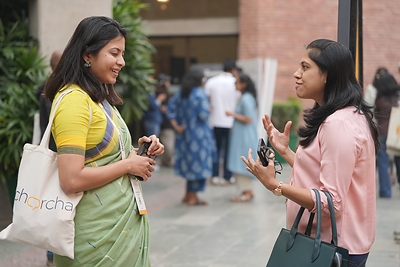
Over two days, charcha 2026 will feature 200+ speakers and 40 co-hosts across 50+ hours of programming. Programming runs along eight fronts: Philanthropy & CSR, Tech4good, Inclusive Livelihoods, Policy & Governance, Entrepreneurship & Informal Livelihoods, Rural & Agri Livelihoods, Education and Skilling, and Climate & Green Jobs.
Jerold Pereira, Managing Director, the*spark forum says:
“India’s hardest problems don’t sit inside samaaj, sarkar or bazaar. They sit in the gaps between them. These gaps do not close because one side works harder. They close only when the people who can actually act on a problem are in the same room, at the same time and are willing to do something collaboratively and differently. This room does not build itself. Someone has to convene it, and keep convening it, until convening to find collaborative solutions stops being an ‘event’ and becomes a habit.”
The 40 co-hosts span the width of the sector, with this edition drawing a deeper and more varied participation from the social sector than any before it. From government and public institutions: Atal Innovation Mission – NITI Aayog and eGov Foundation. From markets: Meta, Meesho, Eternal, Mahindra Rise and WhatsApp. From philanthropy: the Gates Foundation, DBS Foundation, Atlassian Foundation, AIF, Central Square Foundation and The Bridgespan Group. And from across civil society, research and implementation: BAIF, ek kutumb, EkStep, Generation India, GAME, IDEA, Jan AI, J-PAL, Janaagraha, Kaabil, KhushiBaby, Lend A Hand India, Magic Bus, MITTI Café, NuSocia, PCI India, Pradan, Pratham, RestoringVision, Samagra, Sattva, SEWA Bharat, Sol’s ARC and YuWaah, The/Nudge, the^delta and the*spark.
Shri Rohit Kansal IAS, Secretary, Ministry of Rural Development – Government of India, adds:
“charcha 2026 comes at a moment when technology, markets and society are being reshaped at unprecedented speed. Its strength lies in bringing policy, practice and business onto one platform. It is through such dialogue that ideas and policy can translate into partnerships, and partnerships into outcomes at scale.”
Speakers span all three sectors. From government and policy, charcha 2026 will see Hon’ble Tejasvi Surya, Member of Parliament, Lok Sabha; Hon’ble Thamizhachi Thangapandian, Member of Parliament, Lok Sabha; Hon’ble S. Niranjan Reddy, Member of Parliament, Rajya Sabha; Hon’ble K.T. Rama Rao, Member of the Telangana Legislative Assembly; Rohit Kansal, IAS, Secretary, Ministry of Rural Development – Govt of India, Dr. R Balasubramaniam, Member, NITI Aayog – Govt of India, and Sri Ritvik Ranjanam Pandey, IAS, Principal Secretary, Department of Health & Family Welfare, Government of Karnataka to name a few. From markets and business: Vidit Aatrey (Co-founder & CEO, Meesho), Anjalli Ravi Kumar (Chief Sustainability Officer, Eternal), Prabhakar L (Exec VP and Head – Social Investments at ITC Limited), Mohit Bhatnagar (MD, Peak XV) and Divya Khemani (Strategic Programs & Partnerships Lead, Meta). And from civil society, philanthropy and research: Padma Shri Renana Jhabvala (SEWA), Mekin Maheshwari (Founder & CEO, Udhyam Learning Foundation), Manu Chopra (Co-Founder & CEO, Karya), Shobhini Mukerji (Executive Director, J-PAL), Jayant Rastogi (Global CEO, Magic Bus India Foundation), Alina Alam (Founder & CEO, MITTI Café), Gaurav Goel (Founder & CEO, Samagra), Srikanth Viswanathan (CEO, Janaagraha), Azeez Gupta (Co-Founder, Rocket Learning), Madan Padaki (Managing Trustee, Jan AI) and Rathish Balakrishnan (Co-Founder & Partner, Sattva Consulting) – among more than 200 voices across the two days.
Renana Jhabvala, Chairperson, SEWA Bharat, states:
“I have spent fifty years watching what changes a poor woman’s life, and brings her onto an upward track. As a worker, as a woman, she is at the base of the socio-economic pyramid, and so to bring her up the pyramid, to flatten and make it more equal requires change of the ecosystem around her. This requires a joint effort of civil society, government and the private sector understanding the need for change, the levers of change and co-operating together towards change. That is where charcha leads.”
charcha is also its texture. The Bharat AI Experiential Centre, co-created with Jan AI, lets participants walk through one rural household’s day – a crop advisory at dawn, a symptom check in the evening – each running on intelligence infrastructure built for Bharat from the start, rather than retrofitted onto it. Laid out as thematic huts covering health, market linkages and financial access, education, employability and entrepreneurship, agri and rural livelihoods, and a village square, the Centre brings together Wadhwani AI, Piramal Foundation, ITC MAARS, Meesho, Leap 300, Noora Health, Rocket Learning, Karya, Haqdarshak | DBS Foundation, EkStep Foundation, Jan AI and the Department of Rural Development, Ministry of Rural Development, across 15+ solution exhibitions and six AI-specific sessions. Networking across the two days is curated by MASH, alongside performances, screenings and sidebar gatherings.
Vidit Aatrey, Chairman, Managing Director and Chief Executive Officer, Meesho, notes:
“Technology can be a powerful equaliser when it removes the barriers that prevent people from participating in the digital economy. The next phase of India’s growth will depend on making technology simpler, more accessible and more relevant to people, regardless of geography, language or scale. At Meesho, we have seen how expanding access can enable entrepreneurs and small businesses across India to reach customers, grow their businesses and build sustainable livelihoods. Building on this progress requires businesses, government and civil society to work together to create an ecosystem that enables broader participation. Platforms like Charcha 2026 play an important role in bringing these perspectives together and translating shared ideas into collective action.”
Since 2020, charcha has convened 15,000+ attendees and 1,000+ speakers across six editions. The 2026 edition widens that table to 40 co-hosts and eight fronts, at a moment when India’s demographic dividend peaks in 2040 and the decisions taken between now and then are the ones that compound through 2047.
ThePrint is the official media partner for charcha 2026. Teamwork Arts is the line producer. For more information and registration, visit charcha26. thespark.org.in
About the*spark forum
the*spark forum is India’s leading platform for dialogue and collaboration on livelihoods, curating cross-sector convenings that build alignment infrastructure across government, markets, and civil society, toward a poverty-free India.
 View original content to download multimedia:https://www.prnewswire.com/in/news-releases/charcha-2026-indias-largest-collaborative-convening-returns-to-delhi-for-its-7th-edition-302871315.html

8, Sep 2026
Xinhua Silk Road: City marathon in NE China’s Shenyang draws running-lovers from home and abroad
BEIJING, Sept. 8, 2026 /PRNewswire/ — The Shengjing Bank Shenyang Marathon 2026 kicked off on Sunday morning, attracting around 22,000 running enthusiasts from home and abroad to the increasingly international event in Shenyang, capital of Liaoning Province in northeast China.

The full marathon drew 10,000 runners and the half marathon 12,000, all starting from the Shenyang Olympic Sports Center early on September 6.
In the men’s full marathon, a Kenyan runner won the top honor, while the women’s race was won by an Ethiopian runner. In the half marathon races, both men’s and women’s titles were won by Chinese runners, Zhang Xiaorui and Zhao Na.
While offering a platform for speed competition, the city marathon of Shenyang also deployed 30 first-aid-certified runners to accompany elderly runners, visually impaired participants and wheelchair athletes.
Via such heartwarming accompaniment, Shenyang’s city marathon well demonstrated how a sports event can highlight the spirit of equality, courage and mutual care.
This year’s Shenyang marathon featured northeastern Chinese dialect-style slogans along the racing routes milestones, such as “Laotie never gives up”, to encourage runners to persevere.
These slogans full of local language characteristics not only presented the typical characters of northeastern Chinese such as straightforwardness, optimism, resilience and hard work, but also echoed the energetic trackside local cheering teams.
Staging heavy industry-themed dances, Yangge folk dances and other performances along the routes, the “Laotie cheering teams” meaning buddies-like cheering teams created an immersive experience of citywide cheering.
Among the multiple sites with cheering teams, a 100-meter-long “cheering corridor” on a local bridge over the Hun River impressed runners with large crowds of local citizens also basking in Shenyang’s enthusiasm.
As every participant of the event was given a local “cultural tourism passport”, they could opt for city walks to visit a dozen popular attractions in Shenyang.
Free to visit the Shenyang Imperial Palace, Zhang Xueliang’s Former Residence Museum, and Shenyang Financial Museum from September 5 to 11, the runners from China and abroad may find the “Laotie-level” tourism services there more than hospitable.
Original link: https://en.imsilkroad.com/p/352088.html
 View original content to download multimedia:https://www.prnewswire.co.uk/news-releases/xinhua-silk-road-city-marathon-in-ne-chinas-shenyang-draws-running-lovers-from-home-and-abroad-302871900.html

8, Sep 2026
PT Prodia Diacro Laboratories Receives Frost & Sullivan’s 2026 Southeast Asian Contract Research Organization Customer Value Leadership Recognition for Customer-Centric Clinical Research Excellence
Prodia the CRO is recognized for its reliable, integrated clinical research ecosystem, customer-centric delivery model, and commitment to quality, innovation, and long-term sponsor value across Southeast Asia.
SAN ANTONIO, Sept. 8, 2026 /PRNewswire/ — Frost & Sullivan is pleased to announce that PT Prodia Diacro Laboratories (Prodia the CRO) has received the 2026 Southeast Asian Customer Value Leadership Recognition in the contract research organization (CRO) industry for its outstanding achievements in customer-centric service delivery, integrated clinical research capabilities, and operational excellence. The recognition highlights Prodia the CRO’s ability to deliver measurable customer value while strengthening Indonesia’s position in Southeast Asia’s evolving clinical research landscape.
Frost & Sullivan evaluates companies through a rigorous benchmarking process across two core dimensions: strategy effectiveness and strategy execution. Prodia the CRO excelled in both, demonstrating its ability to align its capabilities with evolving sponsor requirements while executing clinical research programs with quality, consistency, and efficiency.
“Prodia the CRO has distinguished itself by combining deep local regulatory expertise with an integrated clinical research ecosystem and internationally aligned quality practices. Its ability to bring together clinical trial management, laboratory support, site management, regulatory consulting, consumer product clinical assessment and emerging pharmacovigilance capabilities enables sponsors to simplify study execution while maintaining strong standards of quality and compliance,” said Unmesh Lal, Vice President at Frost & Sullivan.
Guided by a long-term strategy focused on integrated service delivery, capability expansion, strategic partnerships, and ecosystem development, Prodia the CRO has evolved into a one-stop clinical research partner for pharmaceutical, biotechnology, medical device, nutrition, cosmetics, personal care, and other industries. Its heritage in the Prodia Group, combined with decades of laboratory expertise, provides a strong foundation for supporting increasingly complex clinical development programs in Indonesia and across Southeast Asia.
Innovation remains central to Prodia the CRO’s approach. The company brings together regulatory consulting, clinical trial management, site management organization services, central laboratory support, consumer product clinical assessment, and pharmacovigilance capabilities. The integrated model reduces vendor fragmentation, streamlines communication, and enables sponsors to access coordinated support across the clinical research life cycle.
“At Prodia, we see innovation as a commitment to continuously improving how clinical research and relates services are delivered. As the industry landscape becomes increasingly complex and regulatory requirements continue to evolve, we continuously expand our capabilities to provide reliable, compliant, and integrated solutions. Our latest Pharmacovigilance services reflect this commitment, supporting our partners in strengthening safety management and meeting evolving regulatory requirements which further positioning Prodia as a trusted and reliable partner for the pharmaceutical and healthcare industries,” said Erizal Sugiono, Director at PT Prodia Diacro Laboratories.
Prodia the CRO’s commitment to customer experience strengthens its position in the market. By providing a single point of coordination, proactive feasibility support, structured project reviews, transparent communication, and continuous improvement mechanisms, the company helps sponsors improve study execution while reducing operational complexity. Its collaboration with Prodia Laboratory, the only CAP-accredited laboratory with widest network across in Indonesia, enhances end-to-end laboratory support, from sample management, study-specific testing, and laboratory support with consistent quality and reliable data across research sites.
The company has developed a deep understanding of Indonesia’s clinical research landscape and a wide network of investigators, key opinion leaders, and research sites through sustained engagement in the local clinical research community, including the development of at least 10 clinical research units and GCP certification for more than 5,000 physicians. Its capabilities have also supported more than 110 clinical studies actively recruiting participants in Indonesia, contributing to the country’s broader clinical research readiness.
Frost & Sullivan commends Prodia the CRO for establishing a high standard in customer-centric strategy, execution, and market responsiveness. Continued investment in quality systems, laboratory capabilities, technology-enabled study oversight, strategic partnerships, and specialized services, such as pharmacovigilance, positions the company to address the increasingly complex requirements of sponsors conducting clinical research across Southeast Asia.
Each year, Frost & Sullivan presents the Customer Value Leadership Recognition to a company that demonstrates outstanding strategy development and implementation, resulting in measurable improvements in customer experience, competitive positioning, and value delivery. The recognition highlights forward-thinking organizations that are reshaping their industries through innovation, customer centricity, and growth excellence.
Frost & Sullivan Best Practices Recognition
Frost & Sullivan’s Best Practices Recognitions honor companies across regional and global markets that exhibit exceptional achievement and consistent excellence in areas such as leadership, technological innovation, customer experience, and strategic product development. Each recognition is the result of a rigorous analytical process in which Frost & Sullivan industry experts benchmark performance through comprehensive interviews, deep-dive analysis, and extensive secondary research. The goal is to identify true best-in-class organizations that are driving transformative growth and setting new industry standards.
Contact us: Start the discussion.
Contact:
Tarini Singh
E: Tarini.Singh@frost.com
About PT Prodia Diacro Laboratories
Prodia the CRO is an independent Indonesian Contract Research Organization (CRO) providing integrated and wide range of services. Its integrated capabilities span regulatory consulting, clinical trial management, site management, central laboratory services, consumer product clinical assessment, and pharmacovigilance services, enabling coordinated support across the clinical research lifecycle. With strong local expertise and access to the Prodia ecosystem, Prodia the CRO is committed to delivering reliable, high-quality solutions that help sponsors navigate the complexities of clinical research in Indonesia and beyond.
 View original content:
8, Sep 2026
Guanlan AI Applications: Higher Accuracy, Lower Cost, Smarter Interaction
HANGZHOU, China, Sept. 8, 2026 /PRNewswire/ — It’s over a year since Hikvision launched the Guanlan large-scale AI models. In a very real sense, today’s video systems ‘understand’ what they are looking at. They also know what has already been recorded and, thanks to the natural language innovations, what the user wants. These are the things that let a product fit the scenario it is deployed in – delivering operations that run more safely, at lower cost, and with less manual work.

AI detection and analysis: Alarms you can count on
Perimeter protection
The perimeter is where a wrong detection costs most. Legacy systems are easily triggered by animals, weather, and moving vegetation, burying real threats under manual assessment work.
Guanlan addresses this problem at the edge. DeepinViewX cameras run the model, cutting false alarms by 90% while detecting at twice the range of traditional cameras, with half as many repeated alarms on the same target. Whether using optical cameras for short perimeters, or thermal, radar, and fiber-optic sensing for vast distances, the AI helps reduce the noise.
Scenario-specific analytics
Beyond the perimeter, Guanlan moves past standard object detection to flag high-risk issues in specialized environments. Built for recognized operational risks, these applications typically reduce false alarms by 70% to 90%.
- Safety & compliance: Examples include Personal Protective Equipment (PPE) detection on construction sites, fall detection in care homes, and smoking detection in gas stations. In all cases, the system continuously monitors for risky behaviors and triggers instant alerts.
- Operational hazards: Examples include forklift detection in logistics parks, and early fire and smoke detection in mining sites using dual-channel thermal cameras.
- Specialized uses: Examples include animal detection for large farms and prohibited item detection at transport hubs – the latter powered by large X-ray and millimeter-wave models.
AI efficiency engine: Doing more with less
Saving storage with intelligent ROI compression
Conventional encoding treats every part of the frame as equally worth keeping. To deliver breakthrough video storage optimization, Guanlan Encoding brings the large vision model into the encoding pipeline. It uses precision Region of Interest (ROI) segmentation to preserve detail on dynamic subjects – people, vehicles, and other key objects – while applying heavier compression to static backgrounds. Storage savings average between 30% and 50%.
Searching video with just a few words
Finding a specific moment in recorded video has often been slow. An operator knows roughly what they are after and has no way to pinpoint it except by scrubbing a timeline.
AcuSeek removes that step. Built on a large multimodal model for natural language video search, it aligns image features with the meaning of a written phrase, so a description becomes a query. Results come back in seconds.
The next frontier: Software as an AI agent
Hikvision’s new HIKO AI agent, arriving on the HikCentral Professional platform and Hik-Connect app, changes the interaction entirely. It sits between the system and the user, turning complex configurations into simple conversational commands.
HIKO acts as an AI Assistant that carries out administrative instructions instantly – like setting up visitor access against a plate number or pulling an attendance report just by asking for it. It functions as an AI Guardian, replacing rule configurations with a natural language command (e.g., “Alert me when the passageway is blocked”), tagging each alarm with a written summary, and composing contextual audio warnings from the scene. Finally, as an AI Search engine, it reconstructs a person’s complete movement path – across video, door records, and ANPR reads – simply because the operator asked, “Where did the man in the blue shirt go?”
 View original content to download multimedia:https://www.prnewswire.co.uk/news-releases/guanlan-ai-applications-higher-accuracy-lower-cost-smarter-interaction-302871888.html



