


26, Aug 2026
GIGABYTE Partners with AMD to Bring Onimusha: Way of the Sword Game Bundle to Gamers
TAIPEI, Aug. 26, 2026 /PRNewswire/ — GIGABYTE, the world’s leading computer brand, announced the Onimusha: Way of the Sword Game Bundle for eligible graphics cards and gaming desktops powered by the latest AMD technologies. Featuring select products equipped with AMD Radeon™ RX 9070 XT, RX 9070, or RX 9070 GRE graphics, the bundle brings together the AMD RDNA™ 4 architecture, advanced ray tracing, and AMD HYPR-RX technologies with GIGABYTE’s WINDFORCE cooling system and patented Hawk fan to deliver high-performance gaming for the highly anticipated action title.

The GIGABYTE Radeon™ RX 9070 XT, RX 9070, and RX 9070 GRE series graphics cards harness the AMD RDNA™ 4 architecture to deliver enhanced gaming performance and advanced ray tracing for immersive visuals. AMD HYPR-RX further combines performance-enhancing technologies to deliver smoother, more responsive gameplay. Complementing GPU performance, GIGABYTE’s WINDFORCE cooling system incorporates the Hawk fan to increase air pressure by up to 53.6% and air volume by up to 12.5%, supporting stable performance during demanding gaming sessions.
The game bundle is available with selected AORUS PRIME 5 gaming desktops powered by the AMD Ryzen™ 7 9800X3D processor. Designed for high-performance gaming, the AORUS PRIME 5 combines an all-around cooling solution with comprehensive connectivity for a streamlined plug-and-play experience.
From August 25 to September 26, 2026, gamers who purchase eligible GIGABYTE Radeon™ RX 9070 XT, RX 9070, or RX 9070 GRE series graphics cards or selected AORUS PRIME 5 AP551 desktops from participating retailers or e-tailers can receive an Onimusha: Way of the Sword coupon code through AMD. The game launches on September 4, 2026, and coupon codes must be redeemed by October 24, 2026. For more information about the campaign, eligible products, participating retailers, and redemption details, please visit the campaign page.
 View original content to download multimedia:https://www.prnewswire.co.uk/news-releases/gigabyte-partners-with-amd-to-bring-onimusha-way-of-the-sword-game-bundle-to-gamers-302860076.html

- 0
- By Sai Krishna

26, Aug 2026
Glean:GO Brings Enterprise AI Leaders to San Francisco: NYSE Content Update
NYSE issues a pre-market daily advisory direct from the trading floor.
NEW YORK, Aug. 26, 2026 /PRNewswire/ — The New York Stock Exchange (NYSE) provides a daily pre-market update directly from the NYSE Trading Floor. Access today’s NYSE Pre-market update for market insights before trading begins.
Ashley Mastronardi delivers the pre-market update on August 26th
- Glean says this week’s conference is a ‘defining moment for enterprise AI.’
- Founder and CEO Arvind Jain will join NYSE Live to discuss the biggest challenges across AI.
- Glean plans to introduce its newest offering, which it says is designed to give users the context needed to delegate complex work.
- Lattice acquires Pando in efforts to advance AI-native performance.
- Lattice CEO Sarah Franklin will join NYSE Live to discuss how the deal advances the company’s investments in workforce intelligence.
- Pando Founder and CEO Barbra Gago joined Lattice as Chief Marketing + Strategy officer.
- Investors await earnings from NYSX holding Nvidia following market close.
- Analysts expect the chip giants to report EPS of $2.09 and over $92 billion in revenue during its second quarter.
- Earlier this morning, the Bureau of Economic Analysis released fresh PCE and GDP data.
Opening Bell
Optimal Tax Asset Management celebrates that launch of OTAX
Closing Bell
Innovative Industrial Properties (NYSE: IIPR) celebrates its 10th anniversary of listing
For market insights, IPO activity, and today’s opening bell, download the NYSE TV App and check out the NYSE YouTube: TV.NYSE.com and YouTube.com/@NYSEofficial


 View original content to download multimedia:https://www.prnewswire.co.uk/news-releases/gleango-brings-enterprise-ai-leaders-to-san-francisco-nyse-content-update-302860596.html

26, Aug 2026
PARIS SAINT-GERMAIN AND COCA-COLA RENEW A THREE-YEAR GLOBAL PARTNERSHIP TO BRING FANS TOGETHER AROUND THE WORLD
Paris Saint-Germain and Coca-Cola France are pleased to announce a new global partnership through 2029, marking the return of the collaboration between two of the world’s most recognized brands.
PARIS, Aug. 26, 2026 /PRNewswire/ — Having partnered in the past, Paris Saint-Germain and Coca-Cola are coming together once again to build on their shared history, driven by the same ambition: to bring fans together around their passions and create memorable moments of connection and emotion. At the intersection of football, fashion, music and lifestyle, Paris Saint-Germain has established itself as a cultural reference whose influence extends far beyond the pitch. This naturally resonates with Coca-Cola and its ability to bring communities together around major moments and the passions they share.

This natural connection is at the heart of the renewed partnership. Coca-Cola will once again become an Official Partner of the Club through 2029, with the ambition of creating new experiences for supporters and bringing the excitement of Paris Saint-Germain to life well beyond the football pitch. Powerade, a brand of The Coca-Cola Company portfolio deeply rooted in sports, will also support Paris Saint-Germain through activations centered around athletic performance, energy and pushing beyond limits.
A partnership designed as a global platform for culture and entertainment
Beyond football, Coca-Cola and Paris Saint-Germain intend to tap into the major cultural passions that bring new generations together, creating new ways for fans around the world to experience the Club and connect with one another.
In France, this ambition will come to life throughout the year through fan-focused activations, exclusive experiences and special events designed to bring supporters closer to the moments that matter.
A new Coca-Cola experience at Parc des Princes
As part of the new partnership, Coca-Cola and Paris Saint-Germain will soon unveil a new experiential space at Parc des Princes, designed as a gathering place open to all supporters. Throughout the season, the space will host activations, immersive experiences and exclusive events celebrating football and Parisian culture.
To celebrate the return of the partnership and congratulate Paris Saint-Germain on its 2025–2026 season, Coca-Cola will also launch an exclusive limited-edition collector can featuring the Club’s colors. A total of 400,000 cans will be produced and made available starting October 12 at more than 650 Carrefour stores across the Île-de-France region.¹
“Paris Saint-Germain and Coca-Cola have long shared the same belief: the most powerful emotions are those we experience together. Today, we are proud to write a new chapter in our shared history, with the ambition of creating increasingly innovative, creative and engaging experiences that bring our millions of fans around the world closer together, well beyond football.”
Richard Heaselgrave, Chief Revenue Officer, Paris Saint-Germain
“At Coca-Cola, we have always believed in the power of shared moments. Football is one of its most universal expressions: it brings people together, creates emotion and connects generations. For more than twenty years, we have shared in the collective passion of Paris Saint-Germain fans. This new partnership will allow us to continue creating experiences that build meaningful connections, well beyond the pitch.”
Sébastien Lesage, Director of Sports Partnerships, Coca-Cola Europe
1 – While supplies last
About Paris Saint-Germain
Founded in 1970, Paris Saint-Germain is France’s most successful football club and a leading force in European football, further cemented by its UEFA Champions League victories in 2025 and 2026. Since 2011, under the ownership of Qatar Sports Investments (QSI), the Club has established itself as a leading multi-sport organization spanning men’s and women’s football, handball, judo and esports, driven by values of excellence, teamwork and the pursuit of continuous progress. In 2024, the Club reached another major milestone with the opening of Campus Paris Saint-Germain, its state-of-the-art training center in Poissy.
Deeply rooted in its Parisian identity, Paris Saint-Germain draws on the energy of the French capital to develop a unique model at the intersection of sport, culture and lifestyle. This positioning is reflected in landmark collaborations, including its partnership with Jordan since 2018, as well as numerous projects spanning art, fashion, music and wellness.
With more than 250 million followers across social media and a global network of PSG Academies and supporters’ clubs, Paris Saint-Germain actively contributes to promoting Paris around the world. At the same time, the Club takes tangible action within its local communities through the initiatives of the Paris Saint-Germain Foundation and Endowment Fund, brought together under the PSG for Communities banner to support youth empowerment. Paris Saint-Germain continues to establish itself as the Club of the New Generation.
Contact:
About Coca-Cola in France
Coca-Cola® in France is represented by several separate, unaffiliated companies belonging to distinct and independent groups. In mainland France, Coca-Cola Services France provides marketing services related to the promotion of brands owned by The Coca-Cola Company and its affiliates, while beverages marketed under brands owned by The Coca-Cola Company and its affiliates are produced, sold and distributed by Coca-Cola Europacific Partners France in mainland France and by Société Corse de Boissons (SOCOBO) in Corsica.
 View original content to download multimedia:https://www.prnewswire.co.uk/news-releases/paris-saint-germain-and-coca-cola-renew-a-three-year-global-partnership-to-bring-fans-together-around-the-world-302860501.html

26, Aug 2026
G-P Delivers Compliant Global Workforce Intelligence to Enterprise AI Tools
G-P’s new MCP Server securely connects real-time global employment data and insights to Claude, ChatGPT, Gemini and existing corporate agentic workflows
BOSTON, Aug. 26, 2026 /PRNewswire/ — G-P (Globalization Partners), the leader in AI-driven global employment, ranked No. 1 by industry analysts, today announced the launch of its Model Context Protocol (MCP) Server. The new technology enables organizations worldwide to securely stream real-time global workforce data directly into their preferred AI tools, including Anthropic Claude, OpenAI ChatGPT, Google Gemini, Cursor and core HR and payroll systems like Workday, ADP, Paylocity and SAP.

Global workforce data has historically been fragmented across static databases or isolated behind complex API integrations. Introducing AI into global HR and compliance workflows requires rigorous oversight to navigate international labor laws, privacy regulations like GDPR and localized compliance schemas. The G-P MCP Server solves this challenge by serving as an enterprise-grade, secure bridge between an organization’s broader AI ecosystem and G-P’s proprietary global employment infrastructure.
“AI systems are only as reliable as the data and security guardrails behind them,” said GK Konduri, chief product officer at G-P. “With our MCP Server, G-P is enabling true, enterprise-grade agentic workforce management, bringing more than a decade of global HR intelligence and compliance directly into our customers’ existing AI environments. Organizations can now build and deploy powerful, compliant agentic HR workflows inside the AI interfaces their teams already use.”
Powering Real-Time Agentic HR Workflows
G-P’s MCP Server transforms how global HR and People Operations teams access workforce insights. HR professionals can now interact with international workforce data directly inside their preferred AI interfaces turning static employee databases into instant, strategic workflows, including:
- Instant localized reporting: Eliminates hours of manual data aggregation. Simply ask an AI assistant a question such as “Show me a list of EOR employees in Budapest, Hungary with their benefit details” and instantly get a verified table with localized benefit packages and exact costs in local currency backed by G-P deterministic intelligence and local compliance schemas.
- Context-aware follow-ups: HR teams can dive deeper into employee records without re-keying data. Natural follow-up prompts like “How much time off does Sarah Jenkins have?” or “What is her benefits enrollment status?” leverage real-time context without requiring low-level API configurations or repetitive prompting.
- Automated change management: HR teams can use change request APIs to streamline employee updates, like salary or title changes, by automatically triggering localized compliance workflows powered by G-P’s Global Compliance Engine (GCE).
- Custom agentic automation: HR operations and People Analytics teams can connect MCP-compatible tools to build tailored HR dashboards, automate routine employee lifecycle tasks and build custom workflows directly within their existing workspaces.
Enterprise Governance & Security Architecture
Easy to install in any compatible client, the G-P MCP Server ensures high security, data privacy and operational governance across AI interactions:
- Human-in-the-loop guardrails: Built-in safety mechanisms automatically re-route high-risk agentic actions, requiring explicit human review and approval to maintain control and accountability.
- Deep security design: AI agents may only access specific data payloads that the user is authorized to view, with integrated redaction capability.
- Lossless context delivery: Prioritizes complete compliance information delivery with industry leading accuracy and specificity.
- Universal interoperability: Operates seamlessly across any MCP-compatible software suite, transforming general-purpose tools into specialized global workforce intelligence engines with a single click.
By bridging existing enterprise systems with G-P’s deep proprietary global HR, legal and compliance expertise, we continue to set the standard for secure, compliant and scalable global employment.
To learn more about G-P’s MCP Server and explore G-P’s agentic global employment solutions, visit: globalization-partners.com/g-p-mcp/
About G-P
G-P (Globalization Partners) is the leader in global employment, ranked No. 1 in every industry analyst report. As the world’s first agentic AI-driven Global Employment Platform, G-P codes global labor laws and compliance directly into existing corporate workflows, helping companies of all sizes manage the full employee lifecycle. G-P supports teams in 180+ countries backed by more than a decade of global operational data and the largest team of in-country HR, legal, and compliance experts. This unmatched proprietary knowledge powers its Employer of Record (EOR), Contractor, and Global HR Agent, G-P Gia™, products.
G-P: Global Made Possible™
To learn more, please visit: g-p.com or connect with us via LinkedIn, X, Facebook or check out our Blog.
 View original content to download multimedia:https://www.prnewswire.co.uk/news-releases/g-p-delivers-compliant-global-workforce-intelligence-to-enterprise-ai-tools-302859982.html

26, Aug 2026
IBM Completes Acquisition of HRL Laboratories to Accelerate the Future of Quantum
The combination brings together complementary expertise in quantum computing, sensing, materials science, and advanced technologies to accelerate future innovation
ARMONK, N.Y., Aug. 26, 2026 /PRNewswire/ — IBM (NYSE: IBM) today announced it has completed its acquisition of HRL Laboratories, LLC (HRL), a leading research and development institution whose expertise spans quantum computing, quantum sensing, advanced communications, electronics, manufacturing, and materials science.
The acquisition brings together two leading organizations with a shared commitment to advancing the frontiers of science and technology. HRL’s expertise in silicon-spin qubits complements IBM’s leadership in superconducting quantum computing. HRL also brings capabilities in quantum sensing, quantum materials, cryogenics, control electronics, packaging, and interconnect technologies that are expected to strengthen IBM’s quantum hardware roadmap and support continued innovation across the quantum technology stack.
IBM continues to advance superconducting-qubit architectures through breakthroughs in hardware, error correction, software, and algorithms designed to enable increasingly capable quantum systems. IBM’s roadmap includes its fault-tolerant quantum computer IBM Quantum Starling, expected by 2029 to perform 100 million quantum operations and deliver significantly greater computational capability than today’s quantum computers. Starling is expected to be followed by Blue Jay, IBM’s next-generation fault-tolerant quantum computer, targeted for the mid-2030s.
The acquisition also complements IBM’s broader innovation and investment in quantum manufacturing and infrastructure. HRL’s expertise in silicon-based quantum technologies creates opportunities for future collaboration with Anderon, IBM’s pure-play quantum wafer foundry, supporting scalable manufacturing approaches and accelerating learning cycles across multiple quantum computing modalities.
Boeing and General Motors, HRL’s former owners, will continue to partner with IBM and HRL on quantum applications and advanced technology development.
Financial terms of the transaction were not disclosed.
To learn more about IBM’s acquisition and history of HRL, read here.
About IBM
IBM is a leading provider of global hybrid cloud and AI, and consulting expertise. We help clients in more than 175 countries capitalize on insights from their data, streamline business processes, reduce costs and gain the competitive edge in their industries. Thousands of governments and corporate entities in critical infrastructure areas such as financial services, telecommunications and healthcare rely on IBM’s hybrid cloud platform and Red Hat OpenShift to affect their digital transformations quickly, efficiently and securely. IBM’s breakthrough innovations in AI, quantum computing, industry-specific cloud solutions and consulting deliver open and flexible options to our clients. All of this is backed by IBM’s long-standing commitment to trust, transparency, responsibility, inclusivity and service. Visit www.ibm.com for more information.
Media contact:
Tim Davidson
IBM
tfdavids@us.ibm.com
 View original content to download multimedia:https://www.prnewswire.co.uk/news-releases/ibm-completes-acquisition-of-hrl-laboratories-to-accelerate-the-future-of-quantum-302859879.html

26, Aug 2026
DarwinHealth Introduces Quantum Cancer Biology: A Cell-State Systems Biology Framework for Precision Oncology
New paradigm integrates single-cell transcriptomics, regulatory network inference, and AI to decode—and therapeutically target—the multiple, co-existing cancer cell states that drive resistance in pancreatic cancer, glioblastoma, and other lethal malignancies
NEW YORK, Aug. 26, 2026 /PRNewswire/ — DarwinHealth, a New York-based, AI-centric biotechnology company. today announced the introduction of Quantum Cancer Biology: A Cell-State Systems Biology Framework for Precision Oncology, a transformative scientific paradigm designed to address one of oncology’s greatest unsolved challenges: why the world’s deadliest cancers continue to evade even the most advanced targeted therapies.

The announcement accompanies the publication in Nature Genetics (https://www.nature.com/articles/s41588-026-02714-8) of a new perspective led by Dr. Andrea Califano and Dr. Kenneth P. Olive, driven by first author Dr. Pasquale Laise, PhD, alongside co-first authors Mikko Turunen, PhD, and Alvaro Curiel-Garcia, PhD.
The study, conducted at Columbia University, presents original research findings and argues that the next revolution in oncology will not come from discovering a single “miracle drug,” but from longitudinally decoding the multiple malignant cellular states that coexist within advanced, treatment-resistant tumors in individual patients.
The framework, undergirded by the company’s proprietary VIPER technology, licensed by Columbia exclusively to DarwinHealth, is supported by pioneering research led by DarwinHealth scientists Pasquale Laise, Mariano J. Alvarez, Andrea Califano, and their collaborators. Their single-cell systems biology studies, including the just published Nature Genetics report, demonstrate that pancreatic cancers comprise not one, but multiple, biologically distinct malignant cell states, each governed by unique regulatory programs and therapeutic vulnerabilities.
From a landscape-changing perspective, this is the first study to convincingly show that vulnerabilities and desired drug responses among multiple cancer cell states that coexist in an individual patient’s tumor (in this case, pancreatic cancer) are virtually identically conserved in patients with the same kind of cancer. In other words, at the time of disease onset, all patients with a particular kind of cancer—pancreatic cancer, glioblastoma, breast cancer, melanoma, prostate cancer, and many others—harbor a recurring, predictable, and co-existing mix of multiple cancer cell state abnormalities, all of which must be targeted relatively simultaneously to achieve optimal treatment results.
By extension, enduring treatment responses—and most importantly, definitive cures—especially for our most lethal and resistant tumors, will likely come, not from any single bullet, but from decoding the cancer cell states and then deploying multi-drug combinations directed at each abnormal state early in the treatment course. As the study shows, both decoding and targeting strategies can be systematically identified using AI-based algorithms, such as those developed and commercialized by DarwinHealth.
Together, the advances reported in Nature Genetics establish the scientific foundations and drug development roadmaps for a new generation of precision oncology treatments based not simply on identifying genetic mutations, but on decoding the regulatory architecture that determines how every malignant cell behaves—and how it can be therapeutically eliminated. Based on these recent results, as well as previous and yet-to-come studies, these technologies developed and refined by DarwinHealth are paving the way to more universal and more effective combination therapies for cancers shown to be resistant to current treatments and, therefore, responsible for invariably high mortality rates, frequently in excess of 90%.
Beyond Precision Oncology
For decades, precision oncology has largely defined tumors by their genomic mutations, with therapies designed to inhibit individual oncogenic drivers. While this strategy has produced important clinical advances, durable responses in highly resistant cancers such as pancreatic cancer and glioblastoma remain uncommon because tumors continually evolve new, resistant cellular populations.
Quantum Cancer Biology proposes a fundamentally different view.
Rather than treating cancer as a single disease, the framework recognizes each tumor as a dynamic ecosystem composed of multiple interacting malignant cell states. Each cellular state is controlled by its own regulatory circuitry, possesses its own survival mechanisms, and exhibits its own therapeutic sensitivities.
The central challenge, therefore, is not simply identifying a mutation—it is identifying —and in this case, using AI to decode—every clinically relevant cancer cell state within an individual patient’s tumor and determining the optimal therapeutic strategy for each.
DarwinHealth co-founder Califano has also recently published a review in the journal Cell, “Fifteen challenges for generative AI applications to cell biology” (https://www.cell.com/cell/fulltext/S0092-8674(26)00802-0), further illuminating the role of AI for network-based predictions to guide cancer treatment.
Making the Invisible Visible
DarwinHealth’s drug discovery platform leverages single-cell transcriptomics, AI, and regulatory network inference to infer master regulatory protein activity. The company’s technology rigorously validates the functional reality and causality of these cellular states through multi-modal integration with ATAC-seq, lineage tracing, and CRISPR perturbations.
Unlike conventional gene-expression profiling—which merely catalogs transcript abundance—DarwinHealth’s systems biology framework pinpoints the causal drivers maintaining malignant states and identifies the molecular checkpoints most likely to collapse them.
This approach transforms complex tumor landscapes into high-resolution functional maps, revealing previously invisible targets for precision oncology.
Pancreatic Cancer as the Prototype
The power of this approach is illustrated by the original work just published in Nature Genetics.
Using regulatory network analysis of single-cell transcriptomic data, the investigators identified six highly conserved malignant pancreatic cancer cell states organized into three developmental lineages. Importantly, these regulatory states proved remarkably reproducible across independent patient cohorts, pancreatic cancer cell lines, and patient-derived xenograft models, providing a robust mechanistic taxonomy of pancreatic cancer heterogeneity.
Rather than merely describing tumor diversity, the investigators identified the Master Regulator proteins responsible for maintaining each malignant state and experimentally demonstrated that these regulatory programs represent therapeutically actionable cellular dependencies.
These findings provide a mechanistic roadmap for developing rational combination therapies capable of simultaneously targeting multiple malignant populations within a single tumor.
Toward Rational Combination Therapy for Cancer
Drug resistance remains the leading cause of mortality in patients with advanced cancer.When one therapeutic agent successfully eliminates drug-sensitive cells, resistant populations frequently survive, expand, and ultimately repopulate the tumor.
Quantum Cancer Biology reframes this problem.
Instead of asking which single drug best treats a tumor, the framework asks:
Which combination of therapeutics is required to eliminate every biologically distinct malignant cell state that exists within that patient’s cancer?
By computationally identifying these states and their regulatory dependencies, DarwinHealth seeks to enable the rational design of multi-agent therapeutic strategies that address the complete cellular architecture of resistant cancers, rather than only their dominant populations. This concept aligns with the company’s broader perspective on treating tumors as complex “oncosystems.”
Leadership Perspectives
“The future of precision oncology lies in understanding the regulatory logic that determines cellular identity—not merely cataloging mutations or measuring gene expression. By reconstructing the regulatory networks that control individual cancer cell states, we can identify the molecular mechanisms that sustain them and, ultimately, the therapeutic strategies capable of disrupting them.”
— Andrea Califano, Dr.
Co-Founder, DarwinHealth; President, New York Biohub; Clyde and Helen Wu Professor of Chemical Systems Biology, Columbia University
“Single-cell transcriptomics provides unprecedented resolution of tumor heterogeneity, but understanding how those cellular states are established and maintained requires systems-level analysis. By identifying the Master Regulator proteins controlling each malignant state, we can move from describing tumor diversity to defining actionable therapeutic vulnerabilities.”
— Pasquale Laise, PhD
Senior Director, Single-Cell Systems Pharmacology, DarwinHealth
“For decades, oncology has searched for better drugs to treat individual cancers. Quantum Cancer Biology begins with a different premise: that many advanced tumors are not one cancer, but many biologically distinct cancers coexisting within the same patient. Our mission is to decode those hidden cellular states and transform that knowledge into rational—almost invariably, combination—therapeutic strategies that target the full complement of regulatory network derangements.”
— Gideon Bosker, MD
Chief Executive Officer and Co-Founder, DarwinHealth
A New Framework for Precision Oncology
DarwinHealth believes that Quantum Cancer Biology: A Cell-State Systems Biology Framework for Precision Oncology represents a foundational advance in cancer systems biology.
By integrating single-cell transcriptomics, regulatory network inference, inferential artificial intelligence, and systems pharmacology, the framework seeks to identify the smallest rational combination of therapeutic interventions capable of targeting the full spectrum of malignant cellular states within each patient’s tumor.
Initially developed and validated in pancreatic and brain cancer, the framework is now being extended across additional highly resistant malignancies—including glioblastoma and other aggressive solid tumors—with the goal of accelerating the development of more effective precision combination therapies.
As oncology enters an era defined by cellular resolution rather than population averages, DarwinHealth believes Quantum Cancer Biology provides the conceptual and computational foundation for decoding cancer’s hidden complexity—and translating that knowledge into more durable therapeutic outcomes.
About DarwinHealth
Founded by Gideon Bosker and Andrea Califano in 2016, DarwinHealth is a New York City-based precision oncology company pioneering systems biology and artificial intelligence technologies that decode regulatory mechanisms governing cancer. By integrating regulatory network biology, single-cell analysis, and computational pharmacology, DarwinHealth develops predictive technologies to identify patient-specific therapeutic vulnerabilities and accelerate the development of next-generation precision cancer therapies.
 View original content to download multimedia:https://www.prnewswire.co.uk/news-releases/darwinhealth-introduces-quantum-cancer-biology-a-cell-state-systems-biology-framework-for-precision-oncology-302860552.html

26, Aug 2026
Cellebrite Brings Battlefield Intelligence to the Armed Forces with Launch of Portable Tactical Extraction Kit (C-TEK)
Built around Cellebrite’s industry-leading digital forensics capabilities, C-TEK helps forward-deployed teams quickly triage data from phones, SIM cards, drones and portable media to advance their missions
TYSONS CORNER, Va. and PETAH TIKVA, Israel, Aug. 26, 2026 /PRNewswire/ — Cellebrite DI Ltd. (Nasdaq: CLBT), a global leader in AI-powered Digital Investigative and Intelligence solutions for the public and private sectors, today announced the launch of the Cellebrite Tactical Extraction Kit (C-TEK), a ruggedized, all-in-one mobile forensics field kit packaged in a standard-size backpack, giving military teams the hardware, software and power to access and analyze devices at the point of capture. Designed for units operating in disconnected environments, C-TEK equips the armed forces to act on device data in real time, strengthening tactical, operational and strategic decision-making at the speed modern conflict demands.

As digital devices increasingly shape the course of modern conflict, the intelligence they hold is now critical to a mission, revealing locations, connections and operational plans. However, this intelligence has a short half-life. When a military unit has only minutes to complete a mission, the value of digital data can be lost if the device isn’t extracted on the spot. Mission-critical data and intelligence are lost or an enemy battlefield advantage gained. Furthermore, sending devices to a lab and waiting days or months for analysis often means the information may be outdated and unusable by the time it is returned.
C-TEK closes that gap by bringing extraction and analysis capabilities to the edge. It is a ready-made bundle of ruggedized hardware and Cellebrite software engineered to access a wide range of phones, computers and other devices in the field. C-TEK is designed first for military units operating in disconnected environments, where sensitive site exploitation is a core mission task and the speed of the data extraction directly affects follow-on operations. Rather than routing devices to a lab or relying on a single trained analyst, units can deploy C-TEK across the team, extending the capability to every operator.
“Battlefield intelligence has an expiration date measured in minutes, not months,” said Marcus Jewell, chief revenue officer at Cellebrite. “With C-TEK, we are equipping the armed forces — not just a trained intelligence analyst — to capture and act on that data before it disappears. This is about giving units the tools to fulfill their missions with the intelligence they need, exactly when and where it matters most. We are committed to putting more cutting-edge intelligence tools directly in the hands of the operators who protect nations, so that no critical piece of intelligence is left behind.”
C-TEK marks the first step in a broader Cellebrite effort to build an end-to-end field intelligence solution for defense and intelligence customers around the world. The Company is developing a portable version of its Pathfinder analytics platform, an on-premises AI capability, an upgraded CFID V4 for drone forensics and a mobile kit that enables small teams to quickly set up digital forensics operations without existing local infrastructure for short-term deployments. These innovations will expand and extend Cellebrite’s capabilities further toward the edge of operations.
About Cellebrite
Cellebrite’s (Nasdaq: CLBT) mission is to protect communities, nations and businesses as a global leader in digital investigative and intelligence solutions. More than 7,000 global law enforcement agencies, defense and intelligence organizations and enterprises trust Cellebrite’s AI-powered software portfolio to make forensically sound digital data more accessible and actionable. Cellebrite technology allows customers to accelerate nearly 3 million legally sanctioned investigations annually, enhance sovereign security, elevate operational efficacy and efficiency, and enable advanced mobile research and application security. Available via cloud, on-premises and hybrid deployments, Cellebrite’s technology enables its customers around the globe to advance their missions, elevate public safety and safeguard data privacy. To learn more, visit www.cellebrite.com and https://investors.cellebrite.com, and find us on social media @Cellebrite.
Media
Jackie Labrecque
Director, PR and Executive Communications
jackie.labrecque@cellebrite.com
+1 771.241.7010
Investor Relations
Andrew Kramer
Vice President, Investor Relations & Treasury
investors@cellebrite.com
+1 973.206.7760
 View original content to download multimedia:https://www.prnewswire.co.uk/news-releases/cellebrite-brings-battlefield-intelligence-to-the-armed-forces-with-launch-of-portable-tactical-extraction-kit-c-tek-302859870.html

26, Aug 2026
Gradiant Expands Global Engineering Center in Coimbatore to Strengthen International Project Execution
Expansion more than doubles engineering workforce,
strengthening India’s role in Gradiant’s global operations
COIMBATORE, India, Aug. 26, 2026 /PRNewswire/ — Gradiant, the Water Layer of the AI Economy, today announced the expansion of its Global Engineering Center (GEC) in Coimbatore, growing its engineering and project execution capabilities in India as it scales its global business across semiconductors, advanced manufacturing and other mission-critical industries.
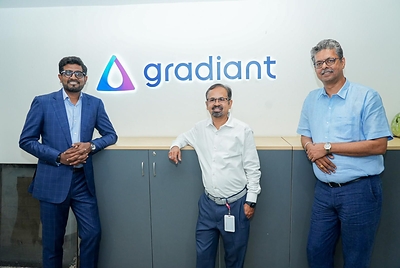
The expansion will increase the GEC’s engineering workforce from approximately 100 to more than 200 professionals. The expanded center will bring together multidisciplinary capabilities spanning process, detailed design, and project engineering, enabling the team to take greater ownership of engineering and design for Gradiant’s global projects.
“Coimbatore combines strong engineering talent with a deep industrial heritage, making it an important location for Gradiant as we scale our global engineering capabilities. This expansion strengthens our multidisciplinary organization and enables greater ownership of complex projects for customers across markets,” said Govind Alagappan, COO, Gradiant.
The investment will create opportunities across engineering disciplines, with professionals gaining exposure to international projects, advanced water and wastewater technologies, global engineering standards and multidisciplinary project execution. Experienced engineers will also help develop the next generation of talent, creating pathways into technical leadership, project management and global project-facing roles.
Coimbatore’s strong engineering talent pool and established industrial and manufacturing ecosystem make it a strategic location for Gradiant’s continued investment. The center will support Gradiant’s growing global project portfolio as demand for advanced water and wastewater solutions rises across semiconductors, advanced manufacturing, renewable energy and pharmaceuticals.
As global investment in AI infrastructure, semiconductor manufacturing and data centers accelerates, reliable water treatment and wastewater recycling are becoming increasingly critical to supporting these water-intensive industries.
“India is becoming increasingly important to Gradiant’s global growth strategy. Our investment in Coimbatore allows us to combine India’s engineering talent with our global project pipeline, strengthening our ability to support customers in India and around the world,” said Hari Prasad, Managing Director of India, Gradiant.
Gradiant has a growing track record in India, delivering advanced water reuse and wastewater treatment solutions for industries including renewable energy and advanced manufacturing. Its India portfolio includes a 10,000 m³/day wastewater recycling project for a solar PV manufacturing facility in Tamil Nadu, demonstrating its ability to support large-scale, water-intensive industrial operations. The company has also delivered a fully integrated ultrapure water (UPW), wastewater treatment & recycling, and zero liquid discharge (ZLD) facility for a leading U.S. semiconductor manufacturer at its Gujarat site, further demonstrating its capabilities in India’s rapidly expanding semiconductor and advanced manufacturing ecosystem.
Over the next three years, Gradiant plans to further build out its engineering capabilities in India, with its Chennai and Coimbatore operations forming a strategic global engineering hub supporting international projects.
The Coimbatore expansion reinforces Gradiant’s long-term commitment to India as both a growing market and a strategic engineering base for its global operations, while creating opportunities for Indian engineering professionals to contribute to complex projects and advanced water infrastructure worldwide.
About Gradiant
Gradiant is the Water Layer of the AI Economy. Founded at MIT and headquartered in Boston, Gradiant builds the water and wastewater infrastructure behind AI’s build-out, from chips and data centers to the energy and industries that depend on them. As AI demand accelerates, water is becoming the resource that determines what can be built. Gradiant’s technologies reduce what industry withdraws, reclaim what it would waste, and renew clean water to nature, with more than 3,000 treatment plants built across 92 countries. Learn more at gradiant.com.
 View original content to download multimedia:https://www.prnewswire.com/in/news-releases/gradiant-expands-global-engineering-center-in-coimbatore-to-strengthen-international-project-execution-302860515.html

26, Aug 2026
Walovi Accelerates Global Push with WALOVI Singapore HQ Launch and Trio of Southeast Asia Deals
SINGAPORE, Aug. 26, 2026 /PRNewswire/ — WALOVI officially launched its WALOVI Singapore International Headquarters, unveiled its new “X-Hero natural energy electrolyte drink” for the first time outside China, and signed three strategic partnerships, marking a major milestone in global expansion.
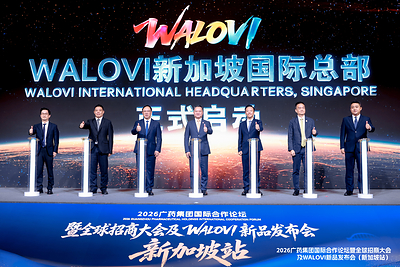
The Singapore HQ will serve as WALOVI’s global operations hub, overseeing brand promotion, channel management, cross-border investment, and talent acquisition. It will also explore local filling and co-manufacturing models to sharpen regional responsiveness. The choice of Singapore leverages its status as Asia-Pacific’s capital gateway and home to one-third of Fortune 500 regional HQs, while Southeast Asia has become Walovi’s fastest-growing overseas market—with Vietnam, Cambodia, and Malaysia all posting 100% year-on-year export growth in H1 2026.
“WALOVI’s globalization strategy is to carve out a clear niche in the global beverage market—to become the world’s leading natural plant-based beverage brand. WALOVI’s arrival in Singapore and the establishment of its international headquarters is not about ‘going out’—it’s about ‘growing up,’ connecting consumers worldwide through a natural, healthy lifestyle and natural plant‑based beverages,” said Fang Dafeng, Chairman of WALOVI Great Health.
The newly launched X-Hero natural energy electrolyte drink—formulated with ginseng and coffee bean extracts, free from synthetic taurine and artificial caffeine—taps into the shift from “post-exhaustion fixes” to “sustained daily vitality.” With Southeast Asia’s tropical climate and a US$21.8 billion functional drink market (Euromonitor 2025), the product is positioned for strong regional uptake.
Three agreements were inked: with Nanyang Technological University for brand and consumer research, with Baosteel Packaging for supply chain co-manufacturing in Vietnam, Malaysia and Cambodia, and with Sheng Sheng Food for Singapore retail distribution – operationalizing Walovi’s PCBCI global model of Product, Channel, Brand, Culture, and Investment.
Backed by global endorsers including footballer Erling Haaland and actor Zhang Linghe, Walovi has sustained over 25% CAGR in international sales. As consumer preference shifts toward natural, functional, clean-label beverages—now embraced by 96% of buyers (Ipsos 2025)—WALOVI is well-positioned for further growth.
With Singapore as its strategic pivot and the world as its horizon, every step WALOVI takes in Southeast Asia follows a steadfast localization strategy. Riding the global wave of health-conscious consumption, WALOVI has already taken its place on the international stage and is steadily advancing toward becoming the world’s leading natural plant-based beverage enterprise.
 View original content to download multimedia:https://www.prnewswire.co.uk/news-releases/walovi-accelerates-global-push-with-walovi-singapore-hq-launch-and-trio-of-southeast-asia-deals-302860359.html

26, Aug 2026
Bhavan’s College MSEED and Reliance Animation Academy Enter into a Strategic Agreement to Launch Graphics & Animation Programs
MUMBAI, India, Aug. 26, 2026 /PRNewswire/ — Bhavan’s College MSEED (Management School of Events & Experience Design) has entered into an official agreement with Reliance Animation Studios Private Limited, through its education brand Reliance Animation Academy (RAA), to introduce a new suite of academic programs in Animation, VFX, Gaming & Filmmaking at the Bhavan’s MSEED campus in Mumbai.
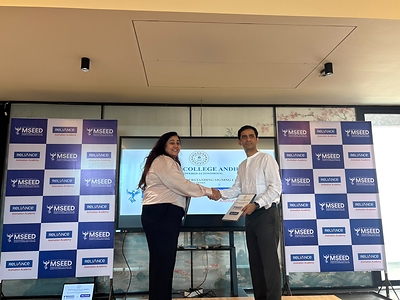
The agreement brings together MSEED’s academic ecosystem and institutional association with Bhavan’s College and the University of Mumbai with Reliance Animation Academy’s expertise in animation, visual effects, filmmaking and related creative disciplines. The association aims to provide students with industry-oriented education and practical exposure in the rapidly evolving media and entertainment landscape.
The agreement was formalised in the presence of Jimmy Choudhary, Director, MSEED Private Limited; Joshua Newman, VP – Marketing & Partnerships, MSEED; Tejonidhi Bhandare, CEO, Reliance Animation Studios Private Limited; and Sandeep Shetty, Business Head, Reliance Animation Academy. Their presence marked the formal commencement of the academic association between the two organisations.
Academic Programs:
Under the agreement, the programs will be offered under the nomenclature ‘Bhavan’s MSEED – Animation, VFX & Filmmaking – Powered by Reliance Animation Academy’.
The academic portfolio will include:
B.Sc. in Graphics & Animation (Proposed) – 3-year undergraduate program
Diploma in Graphics, Animation & VFX – 24-month program
Certificate Program in Graphics, Animation & VFX – 12-month program
Certificate Program in Graphics & Editing – 6-month program
The program will combine structured academic learning with practical training across animation, graphics, visual effects, filmmaking and other emerging creative disciplines.
Reliance Animation Academy will contribute its curriculum, academic content, qualified faculty and training expertise, while MSEED will oversee institutional coordination, academic approvals, admissions, academic frameworks and program delivery in association with Bhavan’s College.
Industry-Ready Learning Infrastructure:
A key feature of the initiative will be the creation of specialised learning infrastructure at the MSEED campus.
The learning environment will further be supported by industry-standard creative software and equipment for animation, VFX, graphic design and filmmaking education.
Industry Exposure and Student Outreach:
The association will place strong emphasis on student outreach, practical learning and industry orientation. From October 2026 onwards, MSEED and Reliance Animation Academy will undertake joint outreach initiatives, including workshops and visits to coaching classes and educational institutions, to introduce prospective students to career opportunities across the media and entertainment sector.
On the occasion, Jimmy Choudhary, Director, MSEED Private Limited, said, “The future of education lies at the intersection of academic learning, technology and industry practice. Our association with Reliance Animation Academy allows us to bring a specialised Graphics & Animation education ecosystem to Bhavan’s MSEED. We want students to learn not only the fundamentals of the creative industries but also develop the technical skills, practical exposure and creative confidence required to build meaningful careers in a rapidly evolving media landscape.”
Adding to the same, Tejonidhi Bhandare, CEO, Reliance Animation Studios Private Limited, said, “Animation, visual effects, graphics and filmmaking are transforming the way stories and experiences are created and consumed. Through this association with Bhavan’s College MSEED, we aim to provide students with access to relevant academic content, specialised infrastructure and industry-oriented training that prepares them for the opportunities emerging across the global media and entertainment ecosystem.”
The agreement establishes a long-term academic association between the two organisations, with the programs designed to create a stronger bridge between higher education and the professional requirements of the media and entertainment industry.
About Bhavan’s College MSEED
Bhavan’s College MSEED (Management School of Events & Experience Design) is an academic institution associated with Bhavan’s College, Mumbai, and focuses on industry-oriented education in emerging creative and experiential disciplines. MSEED is affiliated with the University of Mumbai through its association with Bhavan’s College and continues to expand its academic offerings in response to evolving industry requirements.
About Reliance Animation Academy
Reliance Animation Academy, a division of Reliance Animation Studios and a part of Reliance Entertainment has travelled an amazing path since its inception in 2009, prospering on its goal of building a training center network all across India and fulfilling its promise of giving industry-specific education to today’s youth.
Reliance Animation Academy is a leading institute in India offering career-focused programs in Animation, VFX, Gaming, Graphics, and Film Making. With a strong network of training centers, the academy is committed to developing industry-ready creative professionals through hands-on learning and expert mentorship.
Reliance Animation Studios is an award-winning studio in partnership with noted filmmaker ROHIT SHETTY, best known for delivering IP-driven animation content like Little Singham, Golmaal Jr., Little Krishna, and Smashing Simmba.
Media contact: Tasneem Limbdiwala, tasneem@mseededucation.com, +91 9967547967
 View original content to download multimedia:https://www.prnewswire.com/in/news-releases/bhavans-college-mseed-and-reliance-animation-academy-enter-into-a-strategic-agreement-to-launch-graphics–animation-programs-302860377.html



