


23, Aug 2026
BRICS Nations Unanimously Adopt Chennai Declaration on Science and Innovation
New Delhi: BRICS countries have unanimously adopted the Chennai Declaration, reaffirming their commitment to building a resilient, inclusive and future-ready framework for cooperation in science, technology and innovation. Union Minister Dr Jitendra Singh announced the adoption at the concluding session of the 14th BRICS Science Ministerial Meeting, held under India’s BRICS Chairship.
The Chennai Consensus places a people-centred and humanity-first approach at the core of BRICS cooperation, with emphasis on sustainable development, inclusive growth and the use of emerging technologies to improve people’s welfare and quality of life. The framework also reflects the expanding scope of collaboration among BRICS nations through thematic working groups, young scientist initiatives, innovation programmes and joint research efforts.
Dr Jitendra Singh said the discussions reaffirmed the central role of science, technology and innovation in creating a more resilient and sustainable future. The declaration is expected to strengthen collaborative research, innovation and knowledge-sharing among BRICS countries while supporting technological solutions to shared development challenges.
- 0
- By Neel Achary

23, Aug 2026
UIDAI Extends Free Aadhaar Biometric Updates for Children Till September 30
New Delhi: The Unique Identification Authority of India (UIDAI) has announced that mandatory biometric updates for children aged 5 to 17 years will remain free of cost until September 30, 2026. The facility covers updates to fingerprints, iris scans and photographs and is aimed at ensuring that children’s Aadhaar records remain accurate as they grow.
Under the current fee structure, mandatory biometric updates carried out once between the ages of 5 and 7 years, and once between 15 and 17 years, are free. For children aged 7 to 15 years, the biometric update is also being provided free of charge until September 30, 2026. UIDAI has advised parents and guardians to complete the update within the specified period to avoid applicable charges later.
The biometric update must be completed at an Aadhaar enrolment or update centre, as the process involves capturing the child’s photograph, fingerprints and iris details. UIDAI has highlighted the importance of keeping children’s biometric information updated to support smooth Aadhaar authentication and access to various services. Parents can locate their nearest Aadhaar centre through the official UIDAI website.
23, Aug 2026
Manipur CM Calls for Community Dialogue to Restore Peace and Boost Development
Imphal: Manipur Chief Minister Yumnam Khemchand Singh has stressed that lasting peace is essential for the state’s development and can be achieved only through constructive dialogue and greater understanding among different communities. Speaking at the inauguration of a mechanised parking facility in Imphal on August 22, the Chief Minister said communication between communities was crucial to overcoming divisions and restoring normalcy.
Singh underlined the close link between peace and economic and social progress, saying development would remain difficult unless stability and normalcy were restored across the state. He called for a positive approach and sustained engagement among communities to rebuild trust and create conditions for inclusive development.
The Chief Minister’s remarks come as efforts to promote reconciliation and normalcy continue in Manipur. In a separate event in Imphal, Singh felicitated sportspersons who represented the state at the 2026 Glasgow Commonwealth Games, including weightlifter Saikhom Mirabai Chanu. The government has increasingly highlighted dialogue, community outreach and reconciliation as important elements of its efforts to restore peace and strengthen the state’s development trajectory.
23, Aug 2026
National Space Day: PM Modi Hails India’s Space Rise, Highlights Gen Z Innovation
New Delhi: Prime Minister Narendra Modi on Sunday highlighted India’s rapid progress in the space sector on National Space Day, underlining the growing role of young Indians in developing new technologies. He said the country’s space journey is increasingly being driven by innovation, entrepreneurship and the confidence of its younger generation, with youth making their mark across science, technology, manufacturing, space and other emerging fields.
National Space Day is observed on August 23 to commemorate the successful landing of Chandrayaan-3 on the Moon in 2023, which made India the first country to land near the lunar south pole. India’s space ecosystem has expanded significantly in recent years following reforms that opened the sector to private companies and startups. According to the government, the number of registered space startups has grown to around 440 in 2026, while the country’s space economy has reached an estimated $9 billion.
The Prime Minister has also stressed that India’s young innovators can play a decisive role in taking the country towards global space leadership. Recent interactions with space entrepreneurs have focused on expanding the practical applications of space technology in agriculture, environmental management, livestock, disaster management and other areas affecting everyday life. The emphasis on Gen Z-led innovation reflects India’s broader ambition to move beyond being a consumer of advanced technologies and emerge as a major hub for their development.
23, Aug 2026
Amit Shah Reviews Security Preparedness Along Siliguri Corridor
Union Home Minister Amit Shah has reviewed the security preparedness of the strategically important Siliguri Corridor, with senior officials from the Centre and West Bengal participating in discussions on strengthening security, infrastructure and border management in the region.
The high-level meeting brought together representatives from the Ministry of Home Affairs, Ministry of Road Transport and Highways, Army, Border Security Force, Sashastra Seema Bal and Railway Protection Force, along with the Chief Secretary and Director General of Police of West Bengal. West Bengal Chief Minister Mamata Banerjee also attended the meeting.
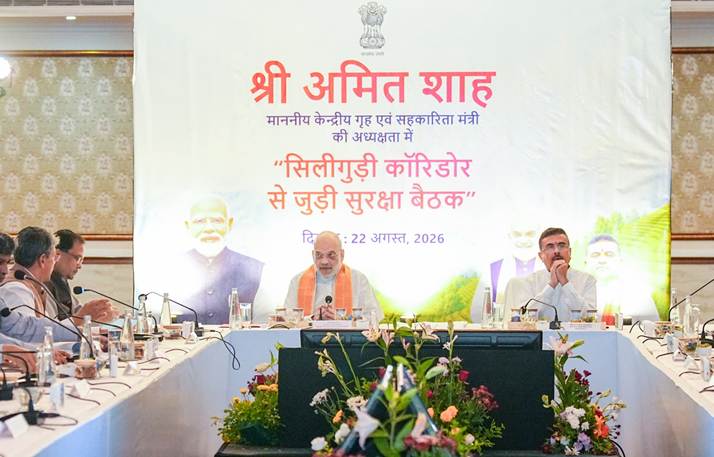
A key presentation was made by the Multi Agency Centre’s Standing Focus Group on Siliguri Corridor, outlining the progress achieved so far and recommending additional measures to reinforce the security architecture around the corridor.
Shah also examined the status of major infrastructure projects being implemented in the region, particularly those considered important from a national security perspective. He called for pending works to be completed within defined timelines, stressing that infrastructure development and security preparedness must progress together.
The meeting also considered issues concerning foreign-linked activities, demographic shifts, illegal immigration and border management. Shah reiterated the Centre’s commitment to strengthening the Siliguri Corridor and ensuring that its security remains robust.
Emphasising a comprehensive approach to border management, the Home Minister called for the effective implementation of the government’s “quadrangular approach” to border security. He asked all agencies involved to work in close coordination and expand their operational presence across the corridor.
Shah directed agencies to establish more institutions and facilities in the region to increase their footprint. He also reviewed the protection of vital installations located along the corridor and instructed authorities to implement all necessary measures to safeguard critical assets.
The Home Minister further called for stronger action against encroachments and illegal immigration in the Siliguri Corridor. The directions underline the government’s focus on combining physical security, infrastructure development, institutional presence and effective border management.
During the meeting, Shah also suggested that the West Bengal government explore the possibility of establishing additional Sainik Schools in North Bengal. He also called for an increase in the number of senior-level NCC cadets in the region as part of efforts to strengthen youth engagement and national preparedness.
Shah urged the state government to further develop the Civil Defence and Home Guards network in the Siliguri Corridor. The measures discussed at the meeting reflect a broader effort to reinforce security coordination and institutional capacity in a region of critical strategic importance to India.
22, Aug 2026
57th IFFI Preparations Reviewed at First Steering Committee Meeting in New Delhi
New Delhi, August 22, 2026: Preparations for the 57th International Film Festival of India (IFFI) were reviewed at the first meeting of the festival’s Steering Committee, held on August 21 at Kartavya Bhawan-2, New Delhi. The meeting was chaired by Dr. L. Murugan, Minister of State for Information & Broadcasting, and focused on strengthening the festival’s international profile and ensuring a high-quality experience for filmmakers, delegates and cinema enthusiasts.
The 57th edition of IFFI is scheduled to take place in Goa from November 20 to 28, 2026. During the meeting, Dr. Murugan outlined the Government’s vision of making the festival a stronger platform for young students, emerging filmmakers and lesser-known creative professionals. He stressed the need to provide new talent with opportunities to showcase their work, interact with established personalities and build connections with the international film community.
The Minister also highlighted the role of the creative sector in India’s economic growth, noting that the Ministry of Information & Broadcasting, under the leadership of Shri Ashwini Vaishnaw, is pursuing initiatives aimed at expanding the country’s Orange Economy. He called for greater emphasis on masterclasses, mentorship programmes and structured interactions with experienced filmmakers, alongside efforts to showcase the breadth and diversity of Indian cinema.
International engagement emerged as another key focus of the meeting. The Steering Committee discussed efforts to bring acclaimed films, filmmakers, artists and creative professionals from different parts of the world to IFFI. The festival is being positioned not only as a celebration of cinema but also as a platform for professional networking, creative collaboration and cultural exchange between Indian and international film communities.
Dr. Murugan also acknowledged the contribution of the Government of Goa to IFFI’s continued development and recalled the role of former Goa Chief Minister late Shri Manohar Parrikar in establishing the state as an important destination for international cinema. He appreciated Chief Minister Shri Pramod Sawant for his continued support in strengthening the festival and its arrangements.
Secretary, Ministry of Information & Broadcasting, Shri Chanchal Kumar, said IFFI should serve as a flagship platform for India’s expanding creative economy and promote stronger collaboration between domestic and international creative communities. He also stressed the importance of providing a seamless and professionally managed experience for filmmakers, delegates, guests and cinephiles attending the festival.
During the meeting, NFDC Managing Director Shri Prakash Magdum presented an overview of preparations and initiatives planned for the 57th edition. Festival Director and filmmaker Shri Ashutosh Gowariker welcomed the committee’s recommendations, particularly those relating to masterclasses, opportunities for young filmmakers, selection of outstanding films and participation by leading creative personalities from India and abroad.
The Secretary, Information and Public Relations Department, Government of Goa, briefed the committee on preparations being undertaken by the state and assured that necessary arrangements would be completed in time. Members of the Steering Committee also stressed the need for sustained coordination between the Ministry of Information & Broadcasting, NFDC, the Government of Goa and other stakeholders to ensure the successful conduct of the festival.
The meeting was attended by senior officials, filmmakers and members of the Steering Committee, including Shri Chanchal Kumar, Shri Ashutosh Gowariker, Shri Prakash Magdum, and representatives and noted personalities such as Bhavna Kher, Ram Sampath, Aparna Purohit, Prerna Singh, Namitha, Suhasini Maniratnam, Abhishek Jain, Santosh Sivan, Gaurav Banerjee, Aditya Bhat, Prashant Chothani and Dharam Gulati. The committee expressed confidence that the 57th IFFI would further strengthen its position as an international platform for cinema, creativity, cultural exchange and global collaboration.
22, Aug 2026
Chandigarh University Hosts Global Architectural Voices to Deliberate on Technology, Heritage and Future of Architecture
Leading Architects Deliberate Artificial Intelligence, Emerging Technologies & the Future of Architecture
CHANDIGARH, India, Aug. 22, 2026 /PRNewswire/ — Aimed at transforming industry–academia engagement from dialogue into tangible collaboration, the 4th International Conference on Trends in Architecture and Construction (ICTAC 2026) was inaugurated today at Chandigarh University, bringing leading architects, academicians, researchers, industry professionals and scholars onto a single platform to deliberate on the future of architecture and construction.
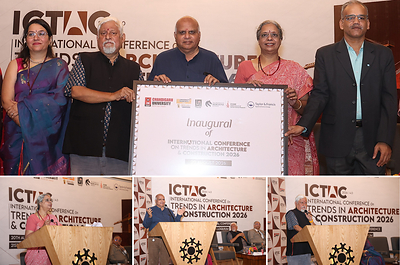
The conference set the stage for new industry partnerships, architecture and research consultancy, professional knowledge exchange and stronger industry exposure for future architects. Organised by the University Institute of Architecture (UIA), Chandigarh University, the two-day hybrid conference is being held on August 20 and 21, 2026 at Chandigarh University.
The inaugural day brought together eminent voices from the field of architectural education, research and professional practice, including Prof. Jayshree Deshpande, Director of the Council of Architecture – Training & Research Centre (COA-TRC) as Chief Guest, Yatin Pandya, Founder & Principal Architect, Footprints EARTH, Ahmedabad, Manmohan Khanna, Founder & Principal Architect, KMA Architecture and Chairman-IIA, Chandigarh Chapter as Guest of Honours, Prof. (Dr.) Vikas Rai Bhatnagar, Group Vice Chancellor, Prof. Dr R Jagdeesh Kannan, Pro Vice Chancellor-Academic Affairs, Chandigarh University among other dignitaries.
Speaking on the occasion, Prof. Jayashree Deshpande, Director of the Council of Architecture – Training & Research Centre (COA-TRC) said, “AI and other emerging technologies are a blessing because they can help us to think and design better. Architecture today deals with projects which are immense in scale, and it is not possible for an architect to do everything single-handedly. We must therefore learn to collaborate with engineers, planners, policymakers, consultants and specialists and technology can enable us to work together more effectively.”
Deshpande added, “We are entering an extraordinary phase of technological change, with artificial intelligence, digital twins, generative design, robotics and data-driven planning transforming the way we conceive, design and construct our buildings and cities. But technology should remain a means and not become the mission. Technology must be used to improve the quality of human life, to create spaces, cities and communities that are stronger, more resilient, inclusive and connected. Technology is smart, but the human should be wiser. If we learn to use technology properly, we can create wise cities that are technologically advanced but emotionally connected. This is particularly important as we work towards the vision of Viksit Bharat. Our young professionals should engage with the various initiatives of the Government of India and utilize the opportunities available to contribute to the development of the country. Ultimately, our responsibility as architects is not simply to create iconic buildings, but to create places where people feel safe, included, inspired and at home. If technology can help us achieve that, then it has truly served society and contributed to the larger vision of a Viksit Bharat.”
Yatin Pandya, Founder & Principal Architect, Footprints EARTH, Ahmedabad said, “Architecture is not merely about buildings or forms; it is about the experience, emotion and impact we create. Trends may come and go, but what is truly appropriate and meaningful can remain timeless. As architects, we must observe, understand and foresee the implications of even the smallest design decisions, because our responsibility extends beyond an individual client to the larger community and the future of our planet.”
Manmohan Khanna, Founder & Principal Architect, KMA Architecture said, “Chandigarh University has the potential to become one of the leading institutions in the country and the world and the students here are fortunate to be part of that journey. Students are our future and together we must work towards building the finest professionals for the country.”
A key thrust of ICTAC 2026 is its emphasis on creating concrete mechanisms for sustained industry–academia engagement. The inaugural day also featured the opening of the Heritage Exhibition – ‘Pehchan 2.0’, placing India’s architectural heritage within the wider discourse on identity, conservation and contemporary architectural practice.
The programme further witnessed the unveiling of the ICTAC Inaugural Board and the release of the Abstract Book, followed by paper presentations. The research presentations provided scholars and participants with a platform to share emerging ideas, studies and perspectives in architecture and construction.
The second day of the conference will feature the Industry Colloquium, comprising plenary sessions and high-level panel discussions with distinguished experts from academia, government and industry. A major highlight will be the signing of an MoU between UIA and Walia Creative Architects, creating a formal avenue for closer engagement between academic and professional practice.
About Chandigarh University
Chandigarh University is a NAAC A+ Grade University and QS World Ranked University. This autonomous educational institution is approved by UGC and is located near Chandigarh in the state of Punjab. It is the youngest university in India and the only private university in Punjab to be honoured with A+ Grade by NAAC (National Assessment and Accreditation Council). CU offers more than 109 UG and PG programs in the field of engineering, management, pharmacy, law, architecture, journalism, animation, hotel management, commerce, and others. It has been awarded as The University with Best Placements by WCRC.
Website address: https://www.cuchd.in/
 View original content to download multimedia:https://www.prnewswire.com/in/news-releases/chandigarh-university-hosts-global-architectural-voices-to-deliberate-on-technology-heritage-and-future-of-architecture-302857684.html

22, Aug 2026
Bhubaneswar to Get 2.3-km Six-Lane Road Linking Guru Kelucharan Park to Patia Railway Station
Bhubaneswar, Aug. 22 (UDN): Bhubaneswar is set to get a new 2.387-km six-lane road corridor connecting Guru Kelucharan Park with Patia Railway Station, a project aimed at easing traffic congestion on the busy Jaydev Vihar–Nandankanan stretch and improving connectivity in the city’s rapidly growing northern suburbs.
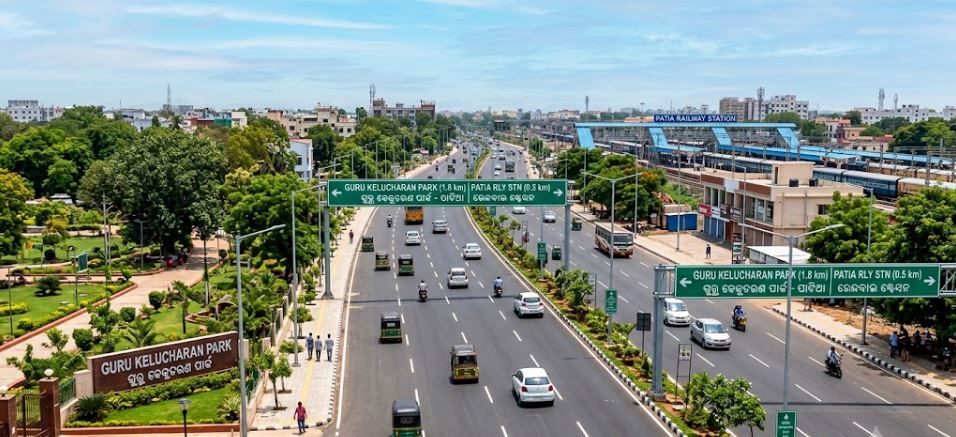
Representational Image
Odisha Housing and Urban Development Minister and Bhubaneswar Development Authority (BDA) Chairman Krushna Chandra Mahapatra laid the foundation stone for the Rs 55.85-crore project on Friday.
The road is being developed under the Comprehensive Development Plan (CDP) as part of the Right Side Road Network (RSRN) to strengthen the city’s transport infrastructure.
Modern Urban Corridor
The 45-metre-wide corridor will pass through Patia, Chandrasekharpur and Gadakana mouzas before terminating at Patia Railway Station.
Designed as a modern urban road, the project will feature six traffic lanes, street lighting, pedestrian footpaths, stormwater drainage and a dedicated utility corridor for essential services. Officials expect the construction to be completed within 18 months.
Alternative Route to Ease Congestion
The new road is expected to provide commuters with an alternative to the congested Jaydev Vihar–Nandankanan corridor, reducing travel time during peak hours and improving access to Patia Railway Station.
Officials said the project would also enhance pedestrian safety and urban mobility through improved footpaths and drainage infrastructure.
Affordable Housing Project Reviewed
After the foundation ceremony, Mahapatra inspected the Affordable Housing Project (AHP) at Gadakana, where the BDA is constructing 680 housing units under the Engineering, Procurement and Construction (EPC) model.
The housing project is intended to expand affordable residential options for eligible beneficiaries while complementing Bhubaneswar’s broader urban infrastructure and development initiatives.
22, Aug 2026
Dynamics of the Icelandic Ice Sheet Altered the Chemistry of North Atlantic Seawater
Aug 22: Environmental physicists reveal fluctuations over the past 230,000 years based on the isotopic composition of deep-sea sediment samples Over the past 230,000 years, the growth and retreat of the Icelandic ice sheet have led to major changes in the seawater chemistry of the North Atlantic, caused by the interaction between volcanism and ice in Iceland. Scientists at the Institute of Environmental Physics at Heidelberg University have demonstrated this using sediment cores from the northeastern Atlantic – the Rockall Plateau.
The researchers analyzed the isotopic composition of the rare-earth element neodymium in these drill cores. According to their findings, the isotopic signal fluctuated significantly over the course of glacial and interglacial periods, following the “rhythm” of the ice ages, as shown by the studies led by Prof. Dr. Norbert Frank.
The isotopic composition of neodymium in seawater is one of the most commonly used tools for reconstructing how ocean circulation has changed in the recent geological past. The method is based on the central assumption that the chemical “fingerprints” characteristic of the composition of large water masses have remained largely constant over time. Research by the Heidelberg scientists now suggests that this fixed isotopic composition no longer applies to the North Atlantic during glacial periods. Their analyses of deep-sea sediments from the Rockall Plateau show that the chemistry of North Atlantic seawater has changed repeatedly and significantly. The researchers attribute these changes to volcanic material from Iceland.
Their investigations are based on the fact that different types of continental rock exhibit different isotopic signatures. The ratio of the specific isotopes 143Nd and 144Nd of neodymium dissolved in seawater reflects the rocks from which the rare-earth element was extracted. As the ice sheet in Iceland advanced during a glacial and carved its way through the Icelandic basaltic bedrock, it produced large quantities of fine, highly reactive rock dust. This material was released into the surrounding North Atlantic Ocean, where it dissolved and released neodymium with a distinct radiogenic signature – enriched in 143Nd.
Analysis of neodymium isotopes from the ODP Site 982 sediment core on the Rockall Plateau shows that the upper water masses of the North Atlantic were consistently much more radiogenic during glacial maxima than during the warm interglacial periods, and that these fluctuations correlated closely with the volume of the Icelandic ice sheet.
The Heidelberg scientists developed a so-called box model that allowed them to reproduce their analyses of the deep-sea sediment samples. According to the model, the changes in seawater chemistry resulting from volcanic input were not strongly linear but rather responses to the dynamics of the ice in Iceland – they peaked during periods of rapid glaciation.
“The isotopic signal followed the rhythm of the ice ages almost step by step,” says Dr. Antao Xu. “This suggests that the Icelandic ice sheets themselves were the driving forces behind the repeated reshaping of the North Atlantic’s seawater chemistry over the past 230,000 years.” The research findings also show that the ice sheet regulated the influx of micronutrients such as iron. This likely had an impact on marine life and the carbon cycle during the ice ages, according to Dr. Xu, who is a member of the “Physics of Environmental Archives” research group led by Prof. Frank.
“The results of our research underscore that ice sheet systems at high latitudes play a crucial role in regulating ocean chemistry,” emphasizes Prof. Frank. According to the scientist, the findings have far-reaching implications. “They urge caution regarding the assumption that there are fixed isotopic fingerprints that can be used to reconstruct past ocean circulation. Furthermore, they reveal a previously underestimated connection between the cryosphere, continental weathering, and ocean chemistry.”
The latest research was part of a project funded by the German Research Foundation that investigated how ocean circulation and geochemical cycles evolved during major climate change phases in the past. It is based on sediment cores from an expedition conducted by the Ocean Drilling Program / International Ocean Discovery Program, which were provided by the IODP Bremen Core Repository at MARUM – Center for Marine Environmental Sciences at the University of Bremen. The results of the Heidelberg study were published in “Science Advances”.
22, Aug 2026
Centre Moves to Stabilise Sugar Prices, Rules Out Ethanol Link
New Delhi, Aug 22: The Centre has stepped up efforts to keep sugar prices stable and ensure adequate supplies for consumers, while clarifying that the recent rise in prices should not be attributed to ethanol production.

The government said sugar prices increased from Rs 48.18 per kg on July 20 to Rs 55.70 per kg on August 20. It attributed the rise to lower-than-expected sugar production, weather-related crop damage, higher demand ahead of the festive season, tightening global supplies and concerns over hoarding and speculation.
Sugar production during the current season is expected to be around 306 lakh tonnes, compared with the initial estimate of about 343 lakh tonnes. Despite the lower production, the government said stocks remain sufficient to meet domestic demand until the next crushing season.
The Centre has taken several steps to improve availability and prevent excessive price increases. These include stockholding limits and measures to discourage hoarding, along with steps to increase supplies in the domestic market.
The government has also clarified that the quantity of sugar diverted for ethanol production has declined in recent years. The share fell from around 12 per cent in 2022-23 to about 9 per cent in 2025-26, while nearly three-fourths of ethanol production now comes from grains, particularly maize.
The Centre is closely monitoring sugar prices and availability and will take further measures if necessary. The focus remains on maintaining sufficient supplies, protecting consumers from sharp price movements and ensuring stability across the sugar sector.


