


18, Aug 2026
New Scientific Approach Offers Fresh Insight Into Great Barrier Reef Health
Aug 18: Australian researchers have developed a new framework to help measure the health of the Great Barrier Reef and understand how climate-related events are affecting coral ecosystems.

Pic Credit: Pexel
The researchers used more than 30 years of reef data, focusing on coral cover and algae levels. The new system classifies reefs as healthy, coping or struggling based on changes in coral cover compared with each reef’s historical condition.
The study found that reefs generally entered a “coping” state when coral cover dropped below about 65 per cent of its historical maximum. A decline below 35 per cent was linked to a “struggling” state, with increased algae and major losses of reef-building corals.
The researchers also found that complex coral structures were more vulnerable to disturbances such as coral bleaching, cyclones and floods. Their loss can reduce shelter for marine life and make reefs more exposed to storm damage.
Researchers said the framework could help scientists identify vulnerable reefs earlier and support more targeted conservation and recovery efforts.
- 0
- By Neel Achary

18, Aug 2026
Textile Minister Vrunda Desai Champions ‘Freedom from Unused Garments’ as ReFiber calls for Nationwide Garment Collection Drive
ReFiber, powered by OterRi, brings together Tisser Artisan Trust, CMAI, UNIDO and Lions International for an Independence Day textile circularity initiative
MUMBAI, India, Aug. 18, 2026 /PRNewswire/ — As India marks 80 years of Independence, ReFiber, powered by OterRi, launched its nationwide ‘Freedom from Unused Garments’ post-consumer textile collection drive at an online stakeholder meet, with Ms. Vrunda Desai, Textile Commissioner, Ministry of Textiles, Government of India, as the Chief Guest. The initiative calls for greater awareness around conscious consumption, textile waste and circularity.
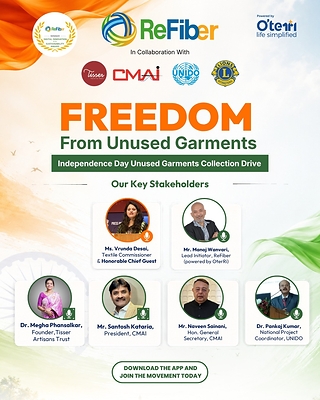
The initiative brings together ReFiber, powered by OterRi, Tisser Artisan Trust, CMAI, UNIDO and Lions International to create accessible pathways for the collection, recovery, reuse and upcycling of unused garments.
Ms. Vrunda Desai, Textile Commissioner, Ministry of Textiles, Government of India, highlighted a different dimension of freedom, saying, “Freedom from wasteful consumption, resource inefficiency and unsustainable habits.” Highlighting India’s textile sector, she added, “India’s textile sector is one of the largest in the world and reflects the Prime Minister’s vision of 5F – farm to fibre, fibre to factory, factory to fashion and fashion to foreign markets.”
Highlighting the scale of textile waste, Desai said, “India generates around 70 lakh tons of textile waste annually with nearly 58% arising after consumer use.” She added, “Every discarded garment represents valuable resources like the fiber, water, energy, chemicals, the transportation and the human effort in it.”
Desai also highlighted the role of public figures in encouraging reuse, referring to Alia Bhatt’s wedding saree, which she re-fashioned and wore again for the National Film Awards in 2024. She said, “These are the type of role models we look forward to, who recycle and upcycle their wardrobes and give a new life to the clothes they wear.”
Appreciating ReFiber’s approach, Desai said, “I really appreciate the initiative of ReFiber, which provides citizens a simple digital platform to schedule doorstep collection of unused garments. You don’t have to go anywhere. You just need to press a button and schedule the pickup of your unused garments.”
As part of its wider circularity vision, ReFiber has appealed to the Ministry of Textiles to help connect it with upcyclers across India. The ReFiber Upcycler Marketplace, an exclusive marketplace for recycled and upcycled products, aims to provide upcyclers a platform to showcase their work and create new value from recovered textiles.
Dr. Megha Phansalkar, Founder, Tisser Artisan Trust, emphasised the need to change perceptions around discarded textiles. She said, “Let’s think how we can bring our garments, which are to be discarded, not as discarded material but as raw material for the further journey.”
Mr. Santosh Katariya, President, CMAI, said, “Today we are looking at freedom from waste, freedom from unnecessary landfills.” He added, “Instead of garments ending up in landfills we can recover them through collection recycling and upcycling.” Highlighting the social impact, he said, “On one hand we are protecting the environment, and on the other hand we are empowering women.”
Dr. Pankaj Kumar, National Project Coordinator, UNIDO, stressed the importance of viable economic models, saying, “Whenever we talk of development, we need to think about sustainability and the financial model.” Calling for wider adoption, he added, “Mumbai is one of the case studies, while also considering national adoption.”
Mr. Naveen Sainani, Hon. General Secretary, CMAI & Chairman – ESG, said, “Today is not merely the launch of a waste collection drive. It is the beginning of a moment to change the way we look at textile waste.” He added, “Collection is just the first step and the real success will come when the consumer understands that garments lying unused in their cupboard can have another purpose.”
Manoj Wanvari, COO, OterRi & ReFiber, said, “ReFiber is not just about collection of clothes. Collection is the first step. We are creating a circular ecosystem where these unused clothes can find a new purpose.”
Calling for stronger infrastructure for circularity, Wanvari said, “We would request you to study the ReTuna model in Sweden. ReTuna is the world’s first recycling mall where everything sold is recycled or reused or has been organically or sustainably produced.” He added that similar infrastructure, with government support, could help strengthen India’s circular economy.
Wanvari also shared that the initiative had already received approximately 42 requests for the collection of post-consumer textile waste through the ReFiber app, with the response coming organically.
As India celebrates its freedom, ReFiber seeks to add a new dimension to Independence Day, freedom from wasteful consumption and the opportunity to give unused garments a second life.
About ReFiber
ReFiber, powered by OterRi, is a technology-enabled circular economy platform designed to transform how India collects, tracks and recovers post-consumer textile waste. Rather than functioning as a standalone collection drive, ReFiber integrates digital citizen engagement, doorstep collection through OterRi’s established laundry and delivery network, source segregation, material traceability and impact reporting into a single ecosystem. Through partnerships with organisations such as Tisser, CMAI, UNIDO and World Trade Center Mumbai, ReFiber aims to build a scalable, replicable Digital Public Infrastructure for textile circularity—from a single city demonstration towards a state-wide and eventually national model.
About OterRi
OterRi is the doorstep laundry-service aggregator and micro-logistics network that powers ReFiber’s collection infrastructure. Its established base of laundry service partners and delivery personnel gives ReFiber a ready-made, hygienic first-mile collection channel capable of recovering textiles directly from households, addressing one of the most persistent barriers in textile recycling, access to clean, source-segregated material.
 View original content to download multimedia:https://www.prnewswire.com/in/news-releases/textile-minister-vrunda-desai-champions-freedom-from-unused-garments-as-refiber-calls-for-nationwide-garment-collection-drive-302853918.html

18, Aug 2026
Fractal Wins US$17M+ Multi-Year AI Deal with a Fortune 500® U.S. Healthcare Organization
MUMBAI, India, Aug. 18, 2026 /PRNewswire/ — Fractal Analytics Ltd. (BSE: 544700) (NSE: FRACTAL), a globally recognized enterprise AI company serving Fortune 500® organizations, announced that it has secured a US$17M+ multi-year agreement with a leading U.S. healthcare enterprise to modernize its Data and AI foundation on Databricks platform and support its journey toward becoming an AI-ready organization.
The engagement also encompasses 24 x 7 managed data operations, including the consolidation of support from multiple vendors under Fractal as the single strategic partner, improving operational efficiency by integrating Agentic Ops and creating a scalable, governed, and resilient platform designed to accelerate AI adoption, reduce technical debt, optimize total cost of ownership and support continuous innovation.
AI Foundations (AIF) is Fractal’s technology pillar, focused on building AI-ready enterprises through modern data foundations, enterprise knowledge layers, AI governance, and managed operations that enable scalable and responsible AI adoption.
Fractal’s Healthcare & Life Sciences (HLS) practice partners with healthcare payers, providers, pharmaceutical, and medical technology organizations to drive AI-led transformation. The practice delivers solutions across clinical and care management, population health, value-based care, underwriting and risk management, claims and payment integrity, marketing content generation, dynamic targeting, forecasting, patient service programs, field operations, medical affairs, clinical trial acceleration and other areas. This engagement is part of Fractal’s normal course of business with an existing client.
“Healthcare is entering a new era where AI can help organizations make faster, smarter and more informed decisions across every stage of the care journey. At Fractal, our focus is on delivering practical healthcare AI that drives measurable impact, from operational performance to patient and member experiences. We are excited to support our client in building the capabilities needed to realize this vision at scale,” said Matt Gennone, Chief Commercial Officer, Fractal and CEO, Cogentiq.
“As enterprises accelerate AI adoption, moving from isolated pilots to enterprise-scale AI deployment requires strong AI foundations. We are seeing leading organizations make long-term commitments to modernize data, governance and operational foundations, validating AI Foundations as a critical enterprise transformation category. Fractal is uniquely positioned to help clients on this journey through deep domain expertise, proprietary IP and outcome-based delivery. We are excited to expand the partnership with our client in building a resilient, AI-ready foundation that delivers measurable business results,” said Srikanth Velamakanni, Co-founder, Group Chief Executive and Vice-Chairman, Fractal.
The engagement underscores Fractal’s growing role in helping enterprises build the foundations needed to scale AI responsibly and sustainably.
About Fractal
Fractal Analytics Ltd (BSE: 544700) (NSE: FRACTAL) is a globally recognized pure-play enterprise AI company trusted by Fortune 500®-sized enterprises to power decision-making through AI services, solutions, and products. Fractal’s strategy is focused on three pillars: AI-led Transformation (AIT), which reimagines business workflows and decision-making through AI; AI Foundations (AIF), which enables scalable, trusted, and governed enterprise AI through robust data and technology foundations; and AI Work & Workforce (AIW), which helps organizations redesign work, develop AI-ready talent, and build the capabilities needed for the AI-native enterprise. All three pillars are powered by Cogentiq, Fractal’s flagship agentic AI platform.
With over 6,000 professionals across North America, EMEA, and Asia-Pacific, Fractal partners with business leaders to drive competitive differentiation for their organizations by embedding AI into critical decisions across business functions and industry verticals.
Fractal invests more than 6% of its revenue in AI R&D, supporting foundational AI research, product development, and IP creation that address both immediate client needs and long-term technological advancement. Fractal’s track record includes developing proprietary models and products such as Vaidya.ai and PiEvolve, as well as incubating and spinning out Qure.ai, a global healthcare AI leader focused on the rapid identification and management of tuberculosis, lung cancer, and stroke (or critical health conditions). Fractal’s suite of businesses consists of Asper.ai (a Revenue Growth Management product for CPG companies) and Analytics Vidhya (an Ed-tech platform).
Disclaimer:
This communication has been prepared by Fractal Analytics Limited (“the Company”) for general informational purposes only. This document does not constitute or form part of, and should not be construed as, an offer, invitation, or solicitation of an offer to purchase, subscribe for, sell, or otherwise deal in any securities of the Company, nor shall it or any part of it form the basis of, or be relied upon in connection with, any investment decision.
This communication contains certain statements that are, or may be deemed to be, forward-looking statements. These forward-looking statements involve known and unknown risks, uncertainties, and other factors which may cause the Company’s actual results, performance, or achievements to differ materially from any future results, performance, or achievements expressed or implied by such forward-looking statements. The Company does not undertake any obligation to update or revise any forward-looking statement, whether as a result of new information, future events, or otherwise, except to the extent required by applicable law or regulation.
The information contained in this communication has not been independently verified. No representation, warranty, or undertaking, express or implied, is made as to the accuracy, completeness, or fairness of the information or opinions contained in this communication.
Past performance of the Company is not indicative of future results. Investors and other stakeholders are advised to exercise independent judgment and consult their own legal, financial, and tax advisors before making any decision based on the information contained herein.
Logo: https://mma.prnewswire.com/media/2931510/5858548/Fractal_Logo.jpg
 View original content:https://www.prnewswire.com/in/news-releases/fractal-wins-us17m-multi-year-ai-deal-with-a-fortune-500-us-healthcare-organization-302853930.html

18, Aug 2026
AISTS INDIA and Young India Physical Education & Sports University Announce Strategic Academic Partnership to Advance Sports Education in Telangana
MUMBAI, India, Aug. 18, 2026 /PRNewswire/ — AISTS INDIA and Young India Physical Education & Sports University (YIPESU) have entered a strategic academic partnership aimed at strengthening sports education, developing globally benchmarked academic programmes, and building Telangana’s position as a leading destination for international sports education.
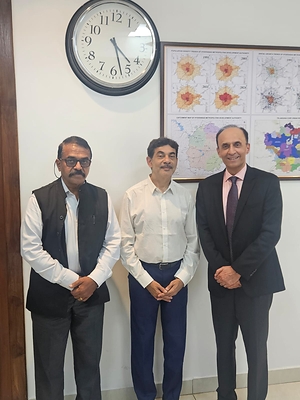
The partnership will establish a long-term framework for collaboration between the two institutions, with a focus on jointly offering the Post Graduate Certificate Programme (PGCP) of AISTS INDIA, to create stronger pathways for students through student exchange opportunities, internships, industry exposure and placements, connecting learners with the broader Indian and international sports ecosystem while also exploring the development of internationally benchmarked programmes across sports management and related disciplines.
Through this collaboration, AISTS INDIA and YIPESU will work together on academic programme development, executive and professional education, curriculum enhancement and faculty development, bringing together international expertise and local institutional capabilities to create high-quality learning opportunities for students and professionals in the sports sector.
Expressing happiness at this development, Shri Jayesh Ranjan, Special Chief Secretary, Hyderabad Metropolitan Area & Department of Sports, Govt of Telangana, committed full support to this partnership to ensure that it could benefit a wide cross section of the youth in Telangana.
Speaking on the partnership, Ravneet Gill, Founder, AISTS INDIA, said, “Telangana is a magnet for India’s youth given its vibrant industrial & cultural environment and spirit of enterprise. Not surprising, therefore, that the state Govt is very focused on building a strong sports ecosystem. The founding of the Young India Physical Education & Sports University (YIPESU) is the perfect manifestation of that intent. AISTS INDIA is proud to collaborate with YIPESU to not only strengthen the state’s sports culture but also position it as a hub for world class sports education.”
Dr. Kishore Gopinathan, Vice Chancellor, YIPESU, said, “Through this partnership with AISTS INDIA, we take a decisive step toward a dream we have long held — placing the Indian sports academic system firmly on the global stage. Together, we will build a cycle of excellence that meets the highest international standards, so that our institutions, our coaches, and our athletes are never found wanting when measured against the best in the world. This collaboration enables the university to move decisively toward its goals, with immediate academic pursuits that can begin without delay and are designed to benefit the students of Telangana directly. Through AISTS INDIA’s expertise, our students will gain access to a quality of learning that strengthens the wider sporting ecosystem of the state in a lasting, sustainable way — building the foundation we need as India looks ahead to major sporting milestones in the years to come, including its Commonwealth Games and Olympic ambitions toward 2036.”
With sports in India undergoing rapid professionalisation across leagues, federations, technology, infrastructure, media, sponsorship and governance and India’s bid for the Olympic Games, the partnership seeks to develop talent equipped to lead and manage the next phase of India’s sports growth.
The collaboration between AISTS INDIA and Young India Physical Education & Sports University marks a significant step towards building a globally connected sports education ecosystem in Telangana and further strengthening the state’s ambition to emerge as a leading hub for sports, education and innovation.
 View original content to download multimedia:https://www.prnewswire.com/in/news-releases/aists-india-and-young-india-physical-education–sports-university-announce-strategic-academic-partnership-to-advance-sports-education-in-telangana-302853828.html

18, Aug 2026
Prodigy Technovations Unveils Industry’s First UFS 5.0 Protocol Exerciser and Analyzer to Power the AI-Driven Storage Era
BENGALURU, India, Aug. 18, 2026 /PRNewswire/ — Prodigy Technovations Pvt. Ltd, a leader in protocol analysis solutions, proudly announces the successful testing and launch of the PGY-UFS5-EX-PA. This groundbreaking tool is the industry’s first UFS 5.0 protocol exerciser and analyzer designed to accelerate the development of next-generation flash memory interfaces required for the burgeoning AI-driven ecosystem.
Supporting MIPI M-PHY® v6.0, MIPI UniPro® v3.0, and the JEDEC UFS 5.0 specification, the PGY-UFS5-EX-PA enables data transfer rates of 46.64Gbps per lane. This massive leap in throughput is critical for the seamless execution of artificial intelligence (AI) workloads, high-speed mobile computing, automotive ADAS, and immersive AR/VR applications.
As AI moves from the cloud to the ‘edge,’ mobile devices and automotive SoCs require unprecedented storage performance to handle complex large language models (LLMs) and real-time data processing. The PGY-UFS5-EX-PA provides design and test engineers with the essential tools to validate UniPro v3.0 and UFS 5.0 designs, ensuring they meet the rigorous reliability and performance standards of the AI era.
“The shift toward on-device AI demands a fundamental change in how data is accessed and moved,” said Godfree Coelho, Founder and CEO of Prodigy Technovations. “Our innovative probing solution and protocol analysis capabilities in the PGY-UFS5-EX-PA address the unique signal acquisition challenges of PAM4 at 46.64Gbps. By overcoming these hurdles, we are empowering SoC and UFS 5.0 vendors to build the high-performance, low-latency storage foundations that AI-driven applications require.”
Prodigy Technovations has been a steadfast Contributor member of the MIPI Alliance, actively participating in the M-PHY and UniPro working groups.
“MIPI Alliance welcomes continued development activity around tools such as the PGY-UFS5-EX-PA that support implementation and validation of M-PHY v6.0 and UniPro v3.0,” said Peter Lefkin, executive director, MIPI Alliance. “These efforts contribute to a healthy ecosystem by helping companies evaluate and adopt these specifications for a range of applications.”
Key features of the PGY-UFS5.0-EX-PA include:
- Support for 46.64Gbps per lane to handle data-intensive AI workloads
- Flexibility to capture very large data using continuous streaming of protocol data
- Real-time protocol decode with error analysis
- Trigger based on M-PHYv6.0, UniProv3.0 and UFS 5.0 layer packet content
- M-PHYv6.0, UniProv3.0 and UFS 5.0 layer protocol decode and analysis
Pricing and Availability
The PGY-UFS5.0-EX-PA is available for order immediately. For evaluation requests or pricing information, please contact contact@prodigytechno.com.
About Prodigy Technovations
Prodigy Technovations provides protocol analysis, decode, and PHY layer testing solutions for technologies including PCIe 5.0, eMMC, SD, SDIO, UHS-II, MIPI I3C, MIPI RFFE, and MIPI SPMI, helping engineers validate complex hardware designs.
Contact:
Godfree Coelho
Godfree.coelho@prodigytechno.com
+91 8042126100

 View original content to download multimedia:https://www.prnewswire.co.uk/news-releases/prodigy-technovations-unveils-industrys-first-ufs-5-0-protocol-exerciser-and-analyzer-to-power-the-ai-driven-storage-era-302853854.html

18, Aug 2026
Aitech Announces New U-C6850 SOSA-Aligned Rugged High-Speed Ethernet Switch/Router for Defense and Aerospace Systems
CHATSWORTH, Calif., Aug. 18, 2026 /PRNewswire/ — Aitech, a global leader in AI-powered rugged embedded computing and connectivity systems for defense and space applications, today announced the new U-C6850 10/40GbE Fully Managed Ethernet Switch/Router, a SOSA®-aligned, high-speed, flexible and secure Ethernet connectivity solution for military and aerospace systems.

As its first SOSA-aligned Ethernet Switch/Router, Aitech is expanding its portfolio of high-speed connectivity solutions for military and aerospace platforms to support a more modular, interoperable and future-ready approach to defense system design.
“The new SOSA-aligned U-C6850 Ethernet Switch provides the high-speed networking backbone needed to connect compute resources, sensors and communications systems while supporting the Modular Open Systems Approach (MOSA) architectures defense customers need,” said Alex Trigoub, product manager, Aitech. “By enabling seamless integration into open architectures, the U-C6850 helps customers modernize legacy platforms with advanced networking technology, accelerate technology insertion and reduce lifecycle risks associated with proprietary systems.”
The U-C6850 is based on an advanced and flexible Layer2/Layer3 (L2/L3) Ethernet switch and packet processor and offers up to 320 Gbps of total switching capacity, through configurations supporting up to 8x 40GbE or 32x 10GbE Ethernet interfaces, for data-intensive defense applications. By enabling high-speed data exchange across compute, sensors and communications networks, the new U-C6850 enables high-speed, low-latency video and data processing capabilities across modern sensor fusion architectures.
In addition to its networking performance, the U-C6850 supports SWaP-C optimization by delivering high bandwidth and port density with relatively low power consumption, helping defense contractors and system integrators maximize performance while minimizing size, weight, power and lifecycle costs.
The U-C6850 complements the M622 10/40GbE Ethernet Switch/Router on an XMC form factor, giving Aitech customers two available SWaP-C optimized high-speed connectivity form factors depending on the number of required Ethernet ports and the target system architecture: a fully managed Switch/Router on an XMC or a fully managed 3U SOSA-aligned board.
The new rugged Ethernet Switch/Router is designed for military and aerospace platforms that rely on fast, reliable movement of data across distributed mission systems and high-performance computing environments where bandwidth and low latency are crucial. Its SOSA-aligned architecture makes it particularly well suited for technology refresh and modernization initiatives where system integrators need to upgrade networking, sensor processing and mission computing capabilities within existing aircraft, ground vehicles, naval platforms while minimizing redesign efforts.
Key features include:
- Up to 320Gbps total switching capacity
- Configurations supporting 8x 40GbE or 32x10GbE Ethernet interfaces
- Advanced networking capabilities, supporting a full range of Layer2 (Switching) and Layer3 (Routing) standards and protocols
- Fast boot with all features enabled
- Integrated security features
- 3U VPX form factor, aligned with SOSA Technical Standard
- Low power consumption supporting SWaP-C optimization
- Rugged design optimized for military and aerospace systems
- IEEE 1558v2 Precision Time Protocol (PTP) support for accurate network time synchronization
Availability and Technical Details
The U-C6850 is now available for mission development. For more information, visit Aitech’s website.
About Aitech
Aitech Rugged Group, Inc. (“Aitech”) is the world’s first independent, open-systems COTS/MOTS innovator, offering rugged boards and subsystems that serve as the building blocks for integrated computing and networking solutions. With a portfolio of SOSA-aligned SBCs, high-performance AI-enabled GPGPUs and Ethernet switches, Aitech enables defense customers to build comprehensive, high-performance mission computing architectures from a single trusted supplier.
With more than 40 years of experience in aerospace, defense, and space, Aitech delivers mission-proven, customizable solutions across sea, land, air, and space domains. Customers include Airbus, BAE Systems, Boeing, Hindustan Aeronautics Limited (HAL), Israel Aerospace Industries (IAI), Larsen & Toubro Limited (L&T), Leonardo, Lockheed Martin, NASA, Northrop Grumman, Rafael, and Virgin Galactic.
Aitech is committed to building a better tomorrow with reliable, cost-effective embedded systems engineered for the most demanding missions. For more information, visit www.aitechsystems.com.
 View original content to download multimedia:https://www.prnewswire.co.uk/news-releases/aitech-announces-new-u-c6850-sosa-aligned-rugged-high-speed-ethernet-switchrouter-for-defense-and-aerospace-systems-302853102.html

18, Aug 2026
Chandigarh University Student builds AI-Powered Startup ‘Fovea Infotech’; Crosses Rs 50 Lakh Turnover in Less Than a Year of Operations
Startup offering integrated software, AI automation, branding, & digital growth solutions to businesses
CHANDIGARH, India, Aug. 18, 2026 /PRNewswire/ — Turning his Startup idea conceived on Chandigarh University (CU) campus, CU alumnus Abubakar Akhlaq has founded an AI-powered tech company ‘Fovea Infotech’ which is helping businesses improve their efficiency and accelerate growth by offering integrated software, AI automation, branding, and digital growth solutions.
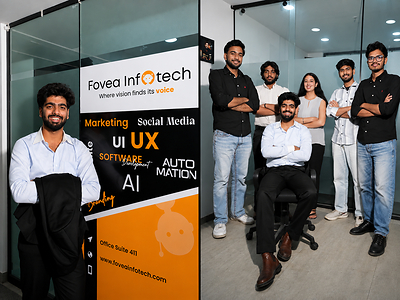
As a student of Computer Science Engineering (CSE) at Chandigarh University, Abubakar Akhlaq envisioned ‘Fovea Infotech’ in 2022 which has rapidly evolved into a full-service technology and digital transformation company serving businesses across multiple sectors, Fovea Infotech’s turnover has crossed Rs 50 lakh in sales in less than one year of its operations.
“The concept of Fovea Infotech was conceived by me during my engineering journey at Chandigarh University. While interacting with startups and local businesses, I realized that many companies struggled with outdated processes, disconnected systems and ineffective digital strategies. I saw an opportunity to bridge the gap between technology and business by offering integrated software, AI automation, branding, and digital growth solutions under one roof with Fovea Infotech,” Abubakar Akhlaq said.
“As a CSE student, I was always passionate about solving business challenges through technology and create real-world impact. I wanted to build solutions that help businesses automate operations, improve customer experiences, and grow faster. Instead of following a traditional career path, I chose entrepreneurship because I believed technology should simplify businesses rather than complicate them,” he added.
On his company’s Unique Selling Proposition (USP), Akhlaq said, “Fovea Infotech addresses the challenge of fragmented digital transformation. Many businesses work with multiple vendors for software, websites, apps, tech systems, marketing, automation, and branding, leading to inefficiencies and increased costs. Our goal is to provide an integrated ecosystem where businesses can access all their technology and digital growth solutions from one trusted partner. Fovea Infotech offers comprehensive technology and digital transformation services including Custom Software Development, Mobile Application Development, AI Automation & RAG-based AI Solutions, CRM & ERP Development, SaaS Product Development, Website Design and Development, Brand Strategy and Digital Branding, Performance Marketing, Social Media Management, Search Engine Optimization (SEO), Cloud & DevOps Solutions, Corporate Identity Design and Digital Transformation Consulting. We primarily serve startups, SMEs, hospitality businesses, healthcare, education, real estate, retail, and manufacturing industries.”
On his future goals, Fovea Infotech CEO and founder said, “Our vision is to become one of India’s leading AI-powered digital transformation companies by building scalable software products and intelligent automation solutions for businesses worldwide. We aim to expand internationally, launch our own SaaS products, strengthen AI capabilities, and help thousands of organizations embrace digital transformation. I founded Fovea Infotech in July 2025 and it’s client portfolio and service offerings have seen consistent growth ever since. We work with clients across various sectors including Real Estate, Hospitality, Healthcare Education, Manufacturing, Retail, Professional Services, Startups, SMEs and B2B tech Vendors. Our solutions are designed to meet the unique operational and digital transformation needs of each industry. In future, , Fovea Infotech will launch proprietary SaaS platforms and expand AI and automation products. Besides serving international clients across the Middle East, Europe, and North America, Fovea Infotech will build strategic technology partnerships, create employment opportunities for young technology professionals and invest in research and innovation in Artificial Intelligence.”
On Chandigarh University’s role in shaping his idea into a startup, Abubakar Akhlaq said, “During my academic journey, Chandigarh University provided valuable support through its innovation-driven environment, industry-oriented curriculum, experienced faculty, practical project opportunities, technical workshops, and entrepreneurial culture. The University’s focus on innovation and skill development gave me the confidence to transform ideas into practical business solutions and prepared me for building a technology company. Chandigarh University helped in developing my technical knowledge and entrepreneurial mindset with hand-on learning environment, interactions with industry leaders and encouragement to think beyond academics to pursue entrepreneurship and innovation.”
Advising aspiring student entrepreneurs at Chandigarh University, Abubakar Akhlaq said, “If you have an idea, don’t wait for the perfect opportunity to come, rather start with the resources you have today. For making impact, focus on solving real-world problems instead of following trends. Learn continuously, embrace failures as lessons, and build something that creates genuine value for people. Entrepreneurship is a journey of persistence, adaptability, and lifelong learning. Believe in your vision, stay consistent, and never stop innovating.”
Congratulating Abubakar Akhlaq on his entrepreneurial journey and extending best wishes for the success of his startup, Deepinder Singh Sandhu, Senior Managing Director, Chandigarh University said, “Chandigarh University’s promotes the culture of creating the jobs by nurturing entrepreneurship skills among students. The industry-collaborated and futuristic program of Chandigarh University are meticulously designed to equip students with the latest industry insights, practical skills, and hands-on experiences, ensuring they are well-prepared to tackle the challenges of the modern business landscape.”
“Chandigarh University encourages its students for innovating new technologies, CU students have created over 250 Start-Ups ever since its inception in 2012. As a Research-Intensive University, Chandigarh University remains focused on research and innovation by fostering an entrepreneurial ecosystem which encourages its students for innovating new technologies and unlock boundless opportunities for growth. Chandigarh University’s Technology Business Incubator (CU-TBI) is mobilising Rs 5 crore to catalyze growth in the startup ecosystem at CU. This initiative brings together key stakeholders from Chandigarh University and venture capital partners to empower innovative startups and foster entrepreneurship,” he added.
About Chandigarh University
Chandigarh University is a NAAC A+ Grade University and QS World Ranked University. This autonomous educational institution is approved by UGC and is located near Chandigarh in the state of Punjab. It is the youngest university in India and the only private university in Punjab to be honoured with A+ Grade by NAAC (National Assessment and Accreditation Council). CU offers more than 109 UG and PG programs in the field of engineering, management, pharmacy, law, architecture, journalism, animation, hotel management, commerce, and others. It has been awarded as The University with Best Placements by WCRC.
Website address: https://www.cuchd.in/
 View original content to download multimedia:https://www.prnewswire.com/in/news-releases/chandigarh-university-student-builds-ai-powered-startup-fovea-infotech-crosses-rs-50-lakh-turnover-in-less-than-a-year-of-operations-302853821.html

18, Aug 2026
National Sports Awards 2025 Announced; 17 Sportspersons Named for Arjuna Awards
New Delhi, August 18: The Ministry of Youth Affairs and Sports on Tuesday announced the National Sports Awards 2025, recognising outstanding performances and contributions by sportspersons, coaches and organisations across various sporting disciplines.
The awards have been decided based on the recommendations of a selection committee headed by former Supreme Court judge Justice (Retd.) Arun Kumar Mishra. The committee included eminent sportspersons, sports journalists and sports administrators.
The National Sports Awards are presented annually to honour excellence in sports and encourage continued contribution to the development of Indian sport.
17 Sportspersons to Receive Arjuna Awards
A total of 17 sportspersons have been selected for the Arjuna Award for Outstanding Performance in Sports and Games 2025. The award recognises consistent performances over the previous four years, along with qualities of leadership, sportsmanship and discipline.
The awardees are:
- Tejaswin Shankar – Athletics
- Muhammed Ajmal V – Athletics
- Priyanka Goswami – Athletics
- Treesa Jolly – Badminton
- Pullela Gayatri Gopichand – Badminton
- Narender – Boxing
- Vidit Santosh Gujarathi – Chess
- Divya Jitendra Deshmukh – Chess
- Dhanush Srikanth – Deaf Shooting
- Lalremsiami – Hockey
- Rajkumar Pal – Hockey
- Surjeet – Kabaddi
- Pooja – Kabaddi
- Rudransh Khandelwal – Para-Shooting
- Ekta Bhyan – Para Athletics
- Arvind Singh – Rowing
- Akhil Sheoran – Shooting
Arjuna Award (Lifetime)
The Arjuna Award (Lifetime) has been announced for I Arumainayagam in recognition of his contribution to football.
The lifetime category is intended to honour sportspersons who have made significant contributions through their performances and continued to promote sports even after retiring from active competition.
Five Coaches Selected for Dronacharya Award
Five coaches have been selected for the Dronacharya Award for Outstanding Coaches in Sports and Games 2025.
In the regular category, the awardees are:
- Parveer Singh – Athletics
- Chhote Lal Yadav – Boxing
- Neha Nandkumar Chavan – Shooting
The lifetime category recognises:
- Dharmendra Singh Yadav – Boxing
- Virender Kumar – Wrestling
The Dronacharya Award recognises coaches for sustained and meritorious work that helps athletes achieve excellence at international competitions.
Army Paralympic Node Gets Rashtriya Khel Protsahan Puraskar
The Army Paralympic Node, Pune has been selected for the Rashtriya Khel Protsahan Puraskar 2025.
The award is presented to corporate entities, both public and private, as well as non-governmental organisations that have played a significant role in promoting and developing sports.
Large Number of Applications Received
The Ministry said applications for the National Sports Awards were invited through an online portal, allowing sportspersons, coaches and eligible entities to apply themselves.
A large number of applications were received this year. These were examined by the selection committee headed by Justice (Retd.) Arun Kumar Mishra, along with members drawn from the sporting fraternity, sports journalism and sports administration.
The awards are aimed at recognising sporting excellence while encouraging athletes, coaches and organisations to make continued contributions towards strengthening India’s sporting ecosystem.
18, Aug 2026
Blockchain.com Admitted to Nigeria SEC’s Accelerated Regulatory Incubation Programme
Admission advances Blockchain.com’s engagement with Nigerian regulators and reinforces the Company’s broader commitment to operating within clear regulatory frameworks globally
LAGOS, Nigeria, Aug. 18, 2026 /PRNewswire/ — Blockchain.com has been admitted into the Nigerian Securities and Exchange Commission’s (SEC) Accelerated Regulatory Incubation Programme (ARIP), marking an important step in the Company’s long-term commitment to Nigeria and its broader expansion across Africa.

Nigeria is a key market for digital assets in Africa, with growing adoption increasingly playing a practical role in how people access, hold, and move value. Blockchain.com’s admission into ARIP means the Company has satisfied the SEC’s initial requirements to participate in the programme and is authorized to operate within its defined sandbox scope, subject to the Commission’s ongoing compliance obligations, testing parameters, and regulatory conditions.
Through ARIP, Blockchain.com will work directly with the SEC as the Commission evaluates digital asset business models, tests appropriate safeguards, and develops its long-term regulatory framework for the market.
“Nigeria is one of Africa’s most important digital asset markets and participating in the SEC’s ARIP is an important step forward in our long-term commitment to the country,” said Owen Odia, General Manager for Africa at Blockchain.com. “The programme gives us the opportunity to work directly with the SEC in a controlled environment, bring our global experience to the Nigerian market, and help support a framework that protects consumers while enabling responsible innovation. We appreciate the SEC’s proactive approach and look forward to contributing to a safe, transparent, and well-regulated digital asset ecosystem.”
Blockchain.com’s participation in ARIP forms part of a broader global strategy to engage constructively with regulators and operate within established regulatory frameworks. Over the past year, Blockchain.com has secured several major regulatory approvals, including registration with the UK Financial Conduct Authority (FCA), authorization under the European Union’s Markets in Crypto-Assets (MiCA) framework, and a Virtual Asset Service Provider (VASP) licence from the Cayman Islands Monetary Authority (CIMA).
Participation in ARIP provides Blockchain.com with a structured pathway to responsibly expand its presence in Nigeria, a priority market within the Company’s broader Africa strategy.
Established by Nigeria’s SEC, ARIP is a regulatory incubation framework for Virtual Asset Service Providers (VASPs) and fintech innovators, designed to help the Commission assess emerging digital asset models, operational risks, and appropriate investor protection and anti-money laundering standards.
Blockchain.com looks forward to participating in ARIP and working alongside Nigerian regulators to support Nigeria as it continues to develop its digital asset regulatory framework.
About Blockchain.com
Blockchain.com is connecting the world to the future of finance. The most trusted and fastest-growing global crypto company helps millions safely access cryptocurrency. Since its inception in 2011, Blockchain.com has supported over 94 million wallets, 44 million confirmed accounts, and more than $1.1 trillion in crypto transactions. Operating in more than 70 jurisdictions, Blockchain.com offers secure self-custody, institutional services, and a growing product suite aligned with global regulation and privacy standards.
Media Contact:
Press@blockchain.com
 View original content to download multimedia:https://www.prnewswire.co.uk/news-releases/blockchaincom-admitted-to-nigeria-secs-accelerated-regulatory-incubation-programme-302853369.html

18, Aug 2026
Vantage Expands Pre-IPO CFD Offering with Unitree Robotics as Interest in Frontier AI Grows
PORT VILA, Vanuatu, Aug. 18, 2026 /PRNewswire/ — Vantage Markets expanded its Pre-IPO CFD offering with the launch of its Unitree Pre-IPO CFD for eligible clients, available from 10 August 2026 under the symbol UNITREEUSD. The launch provides eligible clients with exposure to movements in the applicable reference price of Unitree Robotics, a company operating in the fields of embodied artificial intelligence (AI) and robotics.
The Unitree Pre-IPO CFD is a leveraged derivative product that provides eligible clients with exposure to movements in its applicable reference price, as determined in accordance with Vantage’s applicable pricing methodology and trading terms. It does not provide ownership of Unitree shares, participation in or entitlement to the Unitree IPO or any IPO allocation, voting rights, dividends or other shareholder benefits. Availability is subject to jurisdictional restrictions, client eligibility and applicable trading conditions.
The launch extends Vantage’s existing range of Pre-IPO CFDs linked to OpenAI and Anthropic, reflecting increasing interest in companies operating at the forefront of artificial intelligence and emerging technology.
“As innovation increasingly happens before companies reach public exchanges, investors are paying closer attention to opportunities that sit outside traditional listed markets,” said Marc Despallieres, Chief Executive Officer of Vantage Markets. “The growing interest surrounding companies such as Unitree demonstrates how investor demand is evolving beyond established technology names towards frontier AI and robotics.”
The situation reflects a broader shift across global capital markets. As high-growth technology companies remain private for longer and increasingly choose domestic listing venues, market participants are paying greater attention to businesses shaping the future of artificial intelligence before they become publicly listed.
Some trading platforms have introduced derivative products linked to selected private companies, allowing eligible clients to trade CFDs based on movements in applicable reference prices. Such products do not provide ownership of the underlying companies or participation in their IPOs.
Against this backdrop, Unitree’s IPO represents more than a milestone for a single robotics company. It also illustrates how significant technology innovations can emerge before they become readily accessible through conventional investment channels.
Unitree began book-building on 5 August, with online and offline subscriptions opening on 10 August ahead of settlement on 12 August. The company priced its IPO at RMB150.80 per share, implying a valuation of approximately RMB61 billion at the offering price.
For mainland investors, participation proved highly competitive. At the final offer price of RMB150.80 per share, a standard 500-share subscription lot represented a nominal value of RMB75,400. The offering was more than 8,000 times oversubscribed by retail investors, resulting in a final retail allocation rate of approximately 0.018%.
For investors outside mainland China, direct participation is subject to China’s regulatory framework and applicable investor eligibility requirements. Because Unitree’s IPO is taking place on Shanghai’s STAR Market, offshore retail investors generally cannot subscribe to a mainland STAR Market IPO directly through a conventional overseas brokerage account. For much of the international retail investing community, this makes direct participation in one of the year’s most closely watched AI listings difficult to access.
By expanding its pre-IPO CFD offering to include Unitree alongside OpenAI and Anthropic, Vantage continues to broaden its range of CFD products linked to companies operating in emerging technology sectors. As AI and robotics continue to develop, these companies are attracting increasing attention across global markets.
For further information about Vantage’s Unitree Pre-IPO CFD and applicable trading conditions, visit Vantage Markets.
About Vantage
Vantage Markets is a multi-asset CFD broker offering access to Gold, Forex, Commodities, Indices, Shares, ETFs, and Bonds. With over 17 years of experience, Vantage provides a reliable trading platform, an award-winning mobile app, and a user-friendly trading experience.
Risk Warning: CFDs are complex instruments and carry a high risk of losing money rapidly due to leverage. Trading CFDs may not be suitable for all investors. You should consider whether you understand how CFDs work and whether you can afford to take the high risk of losing your money.
Disclaimer: This content is for informational purposes only and does not constitute financial or investment advice. The Unitree Pre-IPO CFD does not provide ownership of Unitree shares, participation in or entitlement to the Unitree IPO or any IPO allocation. Vantage is not affiliated with, sponsored by, endorsed by, or otherwise associated with Unitree Robotics, OpenAI or Anthropic. The names and trademarks of these companies are used for identification purposes only. Availability of products and services described in this release is subject to jurisdictional restrictions and may not be available to residents of certain countries or regions.
 View original content:https://www.prnewswire.co.uk/news-releases/vantage-expands-pre-ipo-cfd-offering-with-unitree-robotics-as-interest-in-frontier-ai-grows-302853714.html