


17, Aug 2026
Rain, Rides & a Little Magic: Imagicaa’s Baarish Mein Magic Makes a Perfect Case for Monsoon Adventures
Mumbai, Aug 17: Imagicaa, one of India’s largest theme parks, is inviting travellers to look beyond the usual monsoon road trips to scenic hill stations and discover a different kind of rainy-day escape through its latest campaign, ‘Baarish Mein Magic.’ To bring the campaign to life, the brand has launched a new digital film across its social channels, encouraging families, friends and thrill-seekers to step out, embrace the rains and turn an ordinary day into an adventure.
More than a seasonal campaign, ‘Baarish Mein Magic‘ aims to bring theme parks into the monsoon travel conversation by celebrating everything that makes the season special. The idea behind the film is to offer an escape from the everyday chaos that the rains can bring to city life and transport audiences into the magical world of Imagicaa, where the rain becomes part of the experience rather than an inconvenience. The film captures how a regular day can quickly turn into an unexpected adventure through thrilling rides, shared laughter and the simple joy of getting a little drenched. At its heart is a simple idea, sometimes the best memories are the ones you don’t plan for.
Commenting on the campaign, Mr. Jai Malpani, Managing Director, Imagicaaworld Entertainment Limited, said
“Baarish Mein Magic’ comes from a simple observation, people love stepping out and travelling during the monsoon, but a theme park is rarely the first experience that comes to mind. We wanted to challenge that thinking and show people that the rains can make a day at Imagicaa even more exciting and memorable. The campaign is also about giving people a break from the everyday chaos of the city during the monsoon and transporting them into a world of fun, adventure and magic. There is something inherently joyful about experiencing the thrill of a ride, sharing a laugh with your family or friends and simply embracing the season together. Through this campaign, we want to make Imagicaa part of the monsoon travel conversation and encourage people to discover a more spontaneous, adventurous side of the season.”
While monsoon may traditionally be associated with road trips and hill stations, Imagicaa believes the rains can add a whole new dimension to a day of entertainment. Set against the foothills of Lonavala, the destination offers a mix of indoor AC shows, covered zones and a lively atmosphere, alongside appropriate weather-led measures, high standards of cleanliness and hygiene, and safety protocols across the park.
The campaign film brings this idea to life by turning the familiar monsoon experience on its head, replacing the idea of staying indoors with rides, rain, laughter and a day full of unexpected moments. It positions Imagicaa as a place where visitors can step away from the routine, leave the bustle of the city behind and immerse themselves in a world where the monsoon becomes part of the magic.
- 0
- By Neel Achary

17, Aug 2026
ATLANT 3D Launches NANOFABRICATOR® PRO: The World’s First and Only Physical Platform for AI-Driven Materials Discovery
COPENHAGEN, Denmark, Aug. 17, 2026 /PRNewswire/ — ATLANT 3D today announced the launch of NANOFABRICATOR® PRO, the world’s first and only physical platform for AI-driven materials discovery. The platform connects AI-driven materials discovery with programmable atomic-scale fabrication, experimental validation, and device prototyping, accelerating the transition from design to manufacturable materials and devices.

As AI transforms materials discovery, a key challenge remains validating AI-generated predictions. Traditional workflows separate materials design, fabrication, characterization, and manufacturing into disconnected processes, slowing innovation and limiting the transition from digital discoveries to real-world technologies.
Powered by ATLANT 3D’s proprietary Direct Atomic Layer Processing (DALP®) technology, NANOFABRICATOR® PRO is the foundation of the Physical AI Infrastructure for Matter and ATLANT 3D’s A-HUB Autonomous Materials Foundry, integrating AI-driven materials discovery, atomic-scale manufacturing, and rapid validation across semiconductors, advanced packaging, quantum technologies, and emerging applications.
Industrialized with Automated Industrial Robotics (AIR), NANOFABRICATOR® PRO is a SEMI-compliant platform for advanced semiconductor manufacturing. AIR manufactures the platform in the U.S., enabling scalable production, supporting ATLANT 3D’s U.S. expansion, and delivering a production-ready system.
“AI is fundamentally changing how new materials are discovered. The next frontier is turning those discoveries into real-world innovations. Together with AIR, we introduce NANOFABRICATOR® PRO, which enables creation of next-gen self-driven platforms with integrated metrology,” said Dr. Maksym Plakhotnyuk, CEO and Founder of ATLANT 3D. “By connecting AI-driven materials discovery, advanced manufacturing, and experimental validation, we enable rapid translation of computational predictions into functional materials while laying the foundation for the Physical AI Infrastructure for Matter.”
“Industrializing breakthrough technologies requires advanced expertise in reliable and scalable platforms,” said Bob Fung, President of Automated Industrial Robotics Silicon Valley. “Our partnership combines advanced engineering with U.S. manufacturing capabilities to deliver NANOFABRICATOR® PRO platform to enable next frontiers for future industries.”
ATLANT 3D’s next frontier is to bring self-driving platform capabilities based on NANOFABRICATOR® PRO with integrated metrology and other processing solutions. The company is seeking strategic partners across advanced technologies for growth and expansion to build the next generation of Physical AI.
About ATLANT 3D
ATLANT 3D enables AI-driven materials innovation and atomic-scale manufacturing. Through DALP® technology, the company provides programmable control of matter to transform digital materials design into physical reality, pioneering the Physical AI Infrastructure for Matter.
To learn more about NANOFABRICATOR® PRO, visit www.atlant3d.com/nanofabricator_pro, and ATLANT 3D, visit www.atlant3d.com.
 View original content to download multimedia:https://www.prnewswire.co.uk/news-releases/atlant-3d-launches-nanofabricator-pro-the-worlds-first-and-only-physical-platform-for-ai-driven-materials-discovery-302851743.html

17, Aug 2026
Colorado River Crisis Deepens as Key Reservoirs Hit Historic Lows
Washington, August 17: The Colorado River water crisis has entered a critical phase, with the river’s two largest reservoirs, Lake Mead and Lake Powell, falling to historic lows and growing uncertainty over how the water supply will be shared among the seven US states that depend on the river.
Lake Mead, which supplies water to millions across the US Southwest, recently fell to about 1,040.4 feet above sea level, below its previous record low set in 2022. Lake Powell has also reached a record-low elevation, intensifying concerns over water supplies and hydropower generation.
The Colorado River is a critical source of water for more than 40 million people and supports millions of acres of farmland across Arizona, California, Colorado, Nevada, New Mexico, Utah and Wyoming, as well as parts of Mexico. The river’s declining flows are being driven by prolonged drought, extremely low snowpack, rising temperatures and decades of demand exceeding available supplies.
The situation has also raised concerns about electricity generation. Lake Powell’s declining water level is approaching the minimum elevation required for Glen Canyon Dam to generate hydropower. A further decline could threaten a major source of electricity for communities and utilities across the region.
States remain divided over water cuts
The crisis has been compounded by a political deadlock among the seven Colorado River Basin states over a new framework for managing the river after existing operating guidelines expire at the end of 2026.
The states have been unable to reach a consensus on how the burden of water-use reductions should be distributed. The Upper Basin states — Colorado, Wyoming, Utah and New Mexico — and the Lower Basin states — Arizona, California and Nevada — have sharply different positions on future cuts.
In July, the US government proposed a new 10-year framework that could require substantial reductions in water use, particularly in Arizona, California and Nevada. The proposal could reduce Lower Basin water supplies by as much as 3 million acre-feet annually under certain conditions.
The US Bureau of Reclamation has meanwhile moved ahead with plans for post-2026 river operations. Its final environmental impact statement released in July proposes an adaptive framework for managing Lake Powell and Lake Mead through 2036, allowing operating rules to respond to changing water conditions.
Agriculture and cities face mounting pressure
Agriculture accounts for a substantial share of Colorado River water use, making farmers and irrigation districts central to the debate over future reductions. Urban areas, meanwhile, are investing in conservation, water recycling, groundwater management and other measures to prepare for reduced supplies.
Arizona has already taken steps to use stored water to help utilities manage potential reductions in Colorado River supplies, illustrating the growing importance of water banking and conservation strategies.
The crisis has transformed the Colorado River from a long-term environmental concern into an immediate economic and infrastructure challenge. Decisions taken during the coming months will determine how the river’s limited water is allocated among cities, farms, industries and ecosystems.
With reservoir levels continuing to fall and the existing management framework approaching expiration, the Colorado River Basin faces a defining test: finding a sustainable balance between water demand and a river whose supply is increasingly constrained by a hotter and drier climate.
17, Aug 2026
India’s Manufacturing Future Will Be Built by Engineers Who Understand How the World’s Best Products Are Made
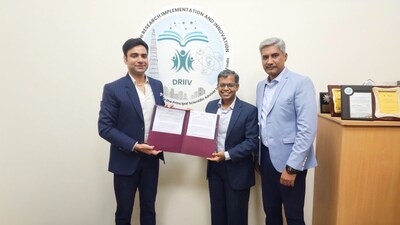
Caresoft Global and Delhi Research Implementation and Innovation (DRIIV) signed a MoU to collaborate for talent development in India by bridging the skill gap.
NEW DELHI, Aug. 17, 2026 /PRNewswire/ — Caresoft Global and DRIIV (Delhi Research Implementation and Innovation) have signed a Memorandum of Understanding to collaborate for talent development in India. The partnership brings global manufacturing and technology intelligence into the Indian engineering, manufacturing, and education sector through a structured industry engagement model. DRIIV operates under the Office of the Principal Scientific Adviser to the Government of India, and was established on the recommendation of the Prime Minister’s Science, Technology and Innovation Advisory Council (PM-STIAC). Adroit Technologies Innovative Solutions Pvt. Ltd. joins as Implementation Partner.
India is among the world’s fastest-growing manufacturing economies, moving toward higher-value products and globally integrated supply chains. The industry is shifting quickly toward Electric Vehicles, Software Defined Vehicles, and electronics-intensive product architectures. That shift raises a persistent challenge for long-term competitiveness: developing engineers with real exposure to global manufacturing practices and technology knowhow. Indian institutions produce graduates with strong theoretical foundations, but few students have studied how world-class products are designed, benchmarked, engineered, and improved across their lifecycle.
Prof. Ambuj D. Sagar, Acting CEO, DRIIV, noted that the collaboration addresses a national priority. “India’s manufacturing ambitions will increasingly be shaped by the strength of its engineering capabilities. This initiative creates a collaborative framework through which academia and industry can complement engineering education with exposure to contemporary industrial practice.”
“The Caresoft Global Institute gives engineering institutions a structured model for engaging with industry while preserving the strength of their academic programs,” said Krishna Kumar Gaur, Head, Institutional Relations, DRIIV. “Working with universities, faculty and industry, we aim to build institutional capability that prepares students for the changing expectations of manufacturing and engineering employers.”
At the center of the initiative is Iceberg, Caresoft Global’s engineering benchmarking and technology intelligence platform, which shows how leading OEMs and suppliers make decisions on design, performance, manufacturability, quality, and cost. The collaboration will drive talent upskilling in India by deploying Centers of Excellence across the country and by running focused, multidisciplinary development programs in emerging technology sectors. These include Software Defined Vehicles, Electric Vehicles and new energy mobility, high-voltage battery systems, hybrid systems, automotive electronics, semiconductors, Artificial Intelligence and Big Data analytics. Adroit Technologies will manage operations of the Centers of Excellence, including faculty enablement, onboarding and delivery across mechanical, automotive, electrical and electronics, manufacturing, industrial engineering, computer science/IT, and AI disciplines.
For Caresoft Global, the goal is accessibility. “Every product tells an engineering story,” said Prideep Subramaniam, VP, APAC, Caresoft Global. “Through Iceberg, the engineering and manufacturing ecosystem in India will study how products are engineered, benchmarked and improved using real manufacturing intelligence. That includes Electric Vehicles, Software Defined Vehicle architectures, and the Electronics and systems behind them. The result is a deeper understanding of the decisions that shape product quality, manufacturability, performance and competitiveness.”
About Caresoft Global
Caresoft Global is a world leader in automotive benchmarking and cost reduction products and programs. Operating worldwide with over eight technology centers, the company benchmarks vehicles and systems and provides competitive insights to the global auto industry. To date, Caresoft Global has identified more than $3.5 billion worth of cost reduction opportunities for the global automotive industry. With this collaboration, the company is bringing that same engineering intelligence to the academic sector.
Marketing and Communications:
marcom@caresoftglobal.com
Photo: https://mma.prnewswire.com/media/3008795/Caresoft_Global_DRIIV_MoU.jpg
 View original content to download multimedia:https://www.prnewswire.com/in/news-releases/indias-manufacturing-future-will-be-built-by-engineers-who-understand-how-the-worlds-best-products-are-made-302852659.html

17, Aug 2026
Pracheen Kala Kendra to Present Three-Day Malhaar Utsav in Chandigarh
Chandigarh, August 17: Pracheen Kala Kendra, supported by the Ministry of Culture, Government of India, will organise the three-day Malhaar Utsav 2026 at Rani Laxmi Bai Hall, Sector 38, Chandigarh, from August 20 to 22.
The festival, themed around “The Magic of Monsoon” and “Timeless Raagas,” will bring together leading Hindustani and Carnatic vocalists for three evenings of classical music. The programmes will begin at 6:30 pm each day.
Dr Sukhminder Kaur Brar, Chairperson of the Chandigarh Sangeet Natak Akademi, will be the chief guest and inaugurate the festival. The organisers have invited music enthusiasts to attend the programme, with entry on a first-come, first-served basis.
The opening evening on August 20 will feature vocal recitals by Vidushi Shubhra Talegaonkar and Vidushi Ronkini Gupta. They will be accompanied by artistes on tabla, harmonium and sarangi.
The August 21 programme will showcase Carnatic vocal recitalist Vidushi Sudha Raghuraman and vocalist Vidushi Dhanashree Pandit Rai. The performances will feature accompaniment on mridangam, flute, tabla and harmonium.
The festival will conclude on August 22 with vocal recitals by Vidushi Ruchira Kedar and Pt Sankumay Debnath, accompanied by tabla and harmonium artistes.
The three-day event is expected to offer Chandigarh’s classical music enthusiasts an opportunity to experience diverse vocal traditions while celebrating the cultural and musical associations of the monsoon season.
The organisers have advised visitors to take their seats before 6:30 pm, with admission being subject to availability on a first-come, first-served basis.
17, Aug 2026
Hockey World Cup: India Women Hold Olympic Silver Medallists China to 2-2 Draw in Opener
Amstelveen, August 17: The Indian women’s hockey team began its FIH Hockey World Cup 2026 campaign with an impressive 2-2 draw against Olympic silver medallists China at the Wagener Hockey Stadium in Amstelveen, Netherlands.
India made a strong start, with Navneet Kaur putting the team ahead in the eighth minute. China responded through Zhang Ying in the 15th minute to level the score.
India regained the lead in the second quarter when Deepika found the net in the 25th minute, giving her side a 2-1 advantage. China, however, fought back and Ma Ning scored in the 39th minute to restore parity.
Neither side could find a decisive goal in the final quarter, as India held on for a valuable point against the Olympic silver medallists. The result marked a determined performance by the Indian side against one of the strongest teams in women’s hockey.
India will next face South Africa in Pool D as it looks to build on the encouraging opening result and strengthen its position in the tournament.
17, Aug 2026
Dr Jitendra Singh to Confer National Anubhav Awards 2026 at Vigyan Bhawan
New Delhi, August 17: The Department of Pension and Pensioners’ Welfare (DoPPW), under the Ministry of Personnel, Public Grievances and Pensions, will organise the 9th National Anubhav Awards Ceremony and the 60th Pre-Retirement Counselling (PRC) Workshop at Vigyan Bhawan, New Delhi, on August 17, 2026.
The programmes will be held under the auspices of Dr Jitendra Singh, Minister of State for Personnel, Public Grievances and Pensions, who will confer the National Anubhav Awards 2026 on 15 selected awardees.
The Anubhav platform provides a forum for retiring and retired employees of the Central Government, 12 Public Sector Banks and Central Public Sector Enterprises to document and share their experiences, insights and contributions from their years of public service.
The 15 awardees selected under the National Anubhav Awards Scheme 2026 have made significant contributions to nation-building and have been associated with a range of important government initiatives. Their work includes contributions to Passport Seva Kendras, updating and reformulating rules to meet contemporary requirements, technological adoption in administration and accounting, and energy conservation, among other areas.
The 60th Pre-Retirement Counselling Workshop will focus on employees of the Government of India who are nearing retirement, particularly those posted in the National Capital Region. The workshop will provide information on retirement-related procedures and the steps required to ensure the timely settlement and payment of pension and other retirement benefits.
The programme will also witness the release of the Handbook on Pension Mitra and the Guidelines for the nationwide Digital Life Certificate (DLC) Campaign 5, aimed at facilitating pension-related services for beneficiaries.
As part of the event, a Bank Exhibition will also be organised, with 17 pension-disbursing banks showcasing products and services relevant to retiring government employees.
The events underscore the government’s focus on supporting employees through the transition to retirement while recognising the institutional knowledge and public-service contributions of retiring and retired personnel.
16, Aug 2026
XPPen Marks Its 21st Anniversary with “DOODLE THE WORLD”, Bringing Creativity Beyond Boundaries
LOS ANGELES, Aug. 16, 2026 /PRNewswire/ — XPPen, a leading global digital art innovation brand, proudly celebrates its 21st anniversary. Marking 21 years of empowering creators worldwide, XPPen introduces this year’s theme, “DOODLE THE WORLD,” with a series of creative experiences, including the Global Art Toy Design Contest co-hosted by XPPen and TOP TOY, a globally renowned art toy brand, the upcoming Artist Ultra 14 drawing display, artist conversations, the Doodle & Spin Game on official website, and exclusive anniversary offers. Through these initiatives, XPPen encourages creators worldwide to explore diverse forms of artistic expression and create without limits.

“At XPPen, we believe creativity should have no boundaries, not limited by mediums or imagination,” said Brian Huang, Marketing Director at XPPen. “For 21 years, we have empowered creators with innovative solutions to bring their ideas to life. ‘DOODLE THE WORLD’ embodies our belief that inspiration can flow freely across paper, screens, and beyond. Through this anniversary celebration and collaboration with TOP TOY, we unite around a shared belief in creativity without boundaries and the power of imagination, while embracing a more youthful and trend-inspired creative culture through the fusion of digital art and designer toy culture.”
XPPen × TOP TOY Global Art Toy Design Contest
As one of the highlights of XPPen’s 21st anniversary celebration, XPPen has partnered with TOP TOY, a leading global art toy brand, to launch the Global Art Toy Design Contest, inviting creators worldwide to explore the possibilities of Zero, TOP TOY’s original IP character. Through this collaboration, creators can transform their ideas into collectible designs.
Running from August 16 to October 16, 2026, the contest encourages participants to reinterpret Zero through designs including the Null Shell Design, Fenix Shell Design, and Zero Figure Design. Participants can draw inspiration from seasons and clothing styles or develop their own original themes. Winners will receive XPPen creative devices, cash prizes, blind boxes, and X-Coins from the XPPen Community, which can be used for community giveaways and exclusive rewards. Selected winning works will also have the opportunity to be developed into physical art toys and stocked in TOP TOY stores worldwide. Join the contest at https://community.xp-pen.com/events/global-art-toy-design-contest?lang=en

A panel of artists and creative professionals will judge the entries, including Katun, an influential Southeast Asian graffiti artist; Josephine Rais, a German illustrator and strategic designer; Jun Oson, a Japanese illustrator and contemporary artist; together with TOP TOY’s senior art toy designer jury. “I hope creators can create boldly, not only through colors, but also by exploring more possibilities in subtle elements such as materials and emotions,” said Tong Liu, Senior Designer at TOP TOY, as one of the jury.
New Addition to the Artist Ultra Series
Continuing the celebration of XPPen’s 21st anniversary, the Artist Ultra 14 will launch on August 17. As the newest member of the Artist Ultra Series, Artist Ultra 14 delivers Ultra Clear True Color with exceptional accuracy and clarity in a slim, portable design, providing creators with a flexible and immersive experience. The new product will also be available as one of the prizes in the Global Art Toy Design Contest and the anniversary game on XPPen’s official website.

Celebrating Creativity Across Mediums and Beyond
To further explore this year’s theme, XPPen has invited artists from different creative fields, including Chromakane, Tattoo Artist, and Marina Esmeraldo, Multidisciplinary Artist, to share their creative journeys and interpretations of “DOODLE THE WORLD.” Through these conversations, XPPen showcases how drawing can take place across different mediums and creative environments, inspiring everyone to embrace the freedom to create anytime, anywhere.
Beyond artistic conversations, everyone is invited to join the anniversary game on XPPen’s official website. Participants can join the 21-Day Doodle Journey and spin the wheel to win prizes. XPPen’s official online stores will also roll out global anniversary offers, featuring discounts of up to 50% on selected products.
Building on 21 years of innovation, XPPen will continue empowering creators and advancing digital art. XPPen will also showcase its latest innovations and upcoming products at IFA 2026, including new releases ahead of official launch. More details will be revealed at IFA 2026.
For more information, please visit https://www.xp-pen.com/21st-anniversary-celebration.html
 View original content to download multimedia:https://www.prnewswire.co.uk/news-releases/xppen-marks-its-21st-anniversary-with-doodle-the-world-bringing-creativity-beyond-boundaries-302849164.html

16, Aug 2026
Water Bill Relief Extended: Delhi Waives Late Payment Surcharge Till March 2027
New Delhi, August 16: The Delhi government has extended its 100 per cent Late Payment Surcharge (LPSC) waiver scheme on outstanding water bills until March 31, 2027, giving consumers additional time to clear their pending dues without paying the accumulated penalty.
Delhi Water Minister Parvesh Sahib Singh Verma announced the extension on Sunday, saying the initiative would provide relief to families and other consumers struggling with old water bill arrears. Under the extended arrangement, eligible consumers who pay the principal amount of their outstanding water bill can get the entire applicable LPSC waived.
The deadline was earlier set for August 15, 2026, but has now been extended by more than seven months. The move is aimed at encouraging consumers with long-pending bills to settle their accounts and at the same time helping the Delhi Jal Board (DJB) recover its outstanding principal dues.
Announcing the decision, Verma said old water bills had remained a source of financial stress for many families in Delhi and that the extension would provide consumers an opportunity to close their outstanding accounts without the additional burden of late-payment charges.
The minister urged consumers with pending water bills not to allow the outstanding amount to increase further and to use the extended window to settle their principal dues.
The LPSC waiver is particularly significant for consumers whose bills have accumulated over several years, as late-payment charges can substantially increase the total amount payable.
The extension also comes against the backdrop of the Delhi government’s efforts to improve revenue collection by the Delhi Jal Board and address the city’s long-standing water billing issues.
The government has previously stated that a substantial amount of money remains locked in outstanding water bills, with LPSC accounting for a significant portion of the accumulated liability. By waiving the surcharge while retaining the principal demand, the government is seeking to make settlement more attractive to consumers while improving actual collections.
According to figures cited by the Delhi government, more than 4.5 lakh domestic consumers and around 11,400 commercial consumers had already benefited from the LPSC waiver scheme.
The scheme was initially introduced in October 2025 primarily for domestic consumers. It was subsequently expanded to include commercial consumers, widening the potential beneficiary base.
The government had earlier extended the deadline from January 31, 2026, to August 15 after receiving requests from residents, public representatives and resident welfare associations. At that stage, the government reported that more than 3.3 lakh consumers had already taken advantage of the scheme, with approximately Rs 430 crore in principal dues collected and nearly Rs 1,494 crore in LPSC waived by January 29.
The latest extension is therefore being positioned as another opportunity for consumers who could not settle their bills within the earlier deadlines.
Delhi’s water billing system has faced persistent complaints over delayed billing, incorrect meter readings, estimated consumption and accumulated arrears. A Delhi Assembly review in 2024 noted that out of around 27 lakh water connections, approximately 10.6 lakh customers had pending arrears. The document also referred to concerns over inflated bills and the accumulation of late-payment charges.
The Delhi Jal Board has introduced various waiver and settlement schemes over the years to address accumulated arrears. Official DJB records show that earlier schemes included 100 per cent LPSC waivers for specified categories of consumers. A DJB budget document said more than 4 lakh consumers had benefited from an earlier waiver initiative, with rebates amounting to hundreds of crores of rupees.
For eligible consumers, the latest decision effectively provides a longer window to settle the principal water bill without the additional LPSC burden. However, consumers should verify their outstanding amount, eligibility and applicable conditions with the Delhi Jal Board before making payment.
The government is also expected to use the extended period to push consumers towards clearing long-standing dues and improve the overall efficiency of water-bill collection.
With the new deadline now fixed at March 31, 2027, the government has given Delhi’s water consumers substantially more time to resolve old liabilities while seeking to strengthen the financial position of the Delhi Jal Board.
Delhi Water Minister Parvesh Sahib Singh announced the extension on August 16, 2026; contemporary reports confirm the revised deadline and the 100 per cent LPSC waiver.
16, Aug 2026
Union Minister Dr. Mansukh Mandaviya Interacts with MY Bharat-NSS Volunteers During Independence Day Celebrations
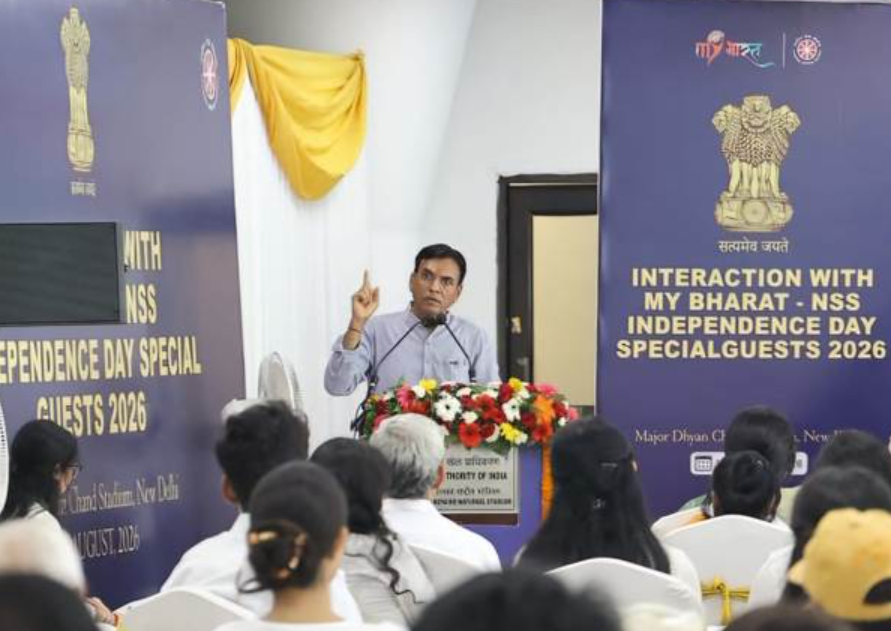
New Delhi: Union Minister for Youth Affairs and Sports Dr. Mansukh Mandaviya interacted with MY Bharat-NSS volunteers during the Independence Day celebrations at Major Dhyan Chand National Stadium in New Delhi, appreciating their participation and contribution to the national event.
The MY Bharat-NSS volunteers attended the Independence Day programme as special guests, giving them an opportunity to witness the celebrations and interact directly with the Union Minister.
During the interaction, Dr. Mandaviya appreciated the volunteers for their involvement in social service and urged them to continue contributing to nation-building and civic engagement. He said the energy, commitment and innovative ideas of young people would be crucial to achieving the vision of a Viksit Bharat and a developed, self-reliant India.
The interaction also allowed the volunteers to share their experiences, ideas and aspirations with the Minister. The engagement highlighted the importance of creating meaningful platforms for young people to participate in public life and take up leadership roles in community and nation-building initiatives.
Earlier in the day, MY Bharat-NSS volunteers and students from eight schools and educational institutions across Delhi participated in a large-scale human formation depicting ‘Vande Mataram’.
Around 500 students took part in the formation, presenting a display of patriotism, national unity and collective participation as part of the Independence Day celebrations.
The programme underlined the role of youth volunteers in national events while providing them with opportunities to engage in civic activities and contribute to the broader vision of youth-led nation building.


