


11, Aug 2026
KuCoin Strengthens Operational Resilience with ISO 22301:2019 Certification
Internationally recognized business continuity certification reinforces KuCoin’s trust framework, advancing resilient infrastructure for trusted digital asset services.
PROVIDENCIALES, Turks and Caicos Islands, Aug. 11, 2026 /PRNewswire/ — As digital assets become increasingly integrated into the global financial system, operational resilience has become an essential foundation of trust. In a market that operates 24/7, users expect platforms not only to safeguard their assets, but also to remain available, reliable and responsive when facing unexpected disruptions.
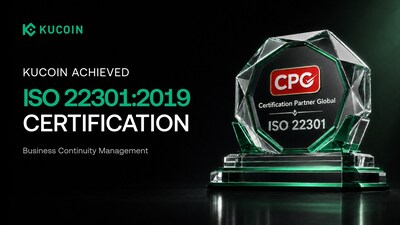
Against this backdrop, KuCoin, a leading global cryptocurrency exchange, today announced that it has successfully achieved ISO 22301:2019 Business Continuity Management Systems (BCMS) certification, an internationally recognized standard for business continuity management. The certification marks another important milestone in KuCoin’s ongoing commitment to strengthening operational resilience, ensuring service continuity, and delivering trusted digital asset services to users worldwide.
ISO 22301 provides organizations with a structured framework to identify operational risks, establish effective business continuity plans, and strengthen their ability to recover critical services quickly during unexpected disruptions. Rather than focusing solely on preventing incidents, the standard emphasizes preparedness, resilience and continuous improvement, enabling organizations to maintain business-critical operations in the face of cyber incidents, infrastructure failures, third-party service disruptions and other unforeseen events.
For the digital asset industry, business continuity is particularly critical. Unlike traditional financial markets with defined trading hours, cryptocurrency markets never close, requiring platforms to support uninterrupted trading, payments and asset services across global time zones. At the same time, operational risks have become increasingly complex, extending beyond cybersecurity to include cloud service interruptions, node failures, third-party dependencies, payment infrastructure availability and cross-regional operational challenges.
Around the world, operational resilience is also becoming an increasingly important regulatory priority. Frameworks such as the European Union’s Markets in Crypto-Assets Regulation (MiCA) and Digital Operational Resilience Act (DORA), together with guidance from financial authorities including the Monetary Authority of Singapore (MAS) and the Hong Kong Monetary Authority (HKMA), continue to place greater emphasis on business continuity as a core capability for trusted financial services. Achieving ISO 22301 certification reflects KuCoin’s commitment to aligning with internationally recognized best practices while continuously strengthening the resilience of its global operations.
“Trust is built not only through security, but also through consistency and reliability,” said BC Wong, CEO of KuCoin. “As the digital asset industry continues to mature, operational resilience is becoming just as important as security. Achieving ISO 22301 certification marks another milestone in strengthening our ability to prepare for unexpected events, recover efficiently and continue delivering reliable digital asset services to users around the world. Guided by our philosophy of ‘Trust First. Trade Next.’, we will continue investing in the infrastructure that supports long-term trust.”
The certification further strengthens KuCoin’s comprehensive Trust Framework, reinforcing three critical pillars that underpin trusted digital asset services:
- ISO/IEC 27001:2022 — Information Security Management
- SOC 2 Type II — Operational Reliability
- ISO 22301:2019 — Business Continuity Management
Together, these internationally recognized standards reinforce KuCoin’s ability to protect information, strengthen service reliability and enhance operational resilience across its global platform. By continuously advancing its governance framework, KuCoin is building an always-on digital asset infrastructure designed to deliver reliable and resilient digital asset services for users worldwide.
About KuCoin
Founded in 2017, KuCoin is a leading global crypto platform built on trust and security, serving over 45 million users across 200+ countries and regions. Known for its reliability and user-first approach, the platform combines advanced technology, deep liquidity, and strong security safeguards to deliver a seamless trading experience. KuCoin provides access to 1,500+ digital assets through a broad product suite and remains committed to building transparent, compliant, and user-centric digital asset infrastructure for the future of finance, backed by SOC 2 Type II, ISO/IEC 27001:2022, and ISO/IEC 27701:2019 Certifications. In recent years, we have built a strong global compliance foundation, marked by key milestones including AUSTRAC registration in Australia, a MiCA license in Europe, and regulatory progress in other markets.
Learn more at www.kucoin.com.

Photo – https://mma.prnewswire.com/media/3008684/image1.jpg
Logo – https://mma.prnewswire.com/media/2785613/KuCoin_new_Logo.jpg
 View original content:https://www.prnewswire.co.uk/news-releases/kucoin-strengthens-operational-resilience-with-iso-223012019-certification-302844832.html

- 0
- By Sai Krishna

11, Aug 2026
The Ellinikon Sports Park Opens to All as Europe’s Largest Urban Regeneration Project Accelerates Toward Completion
ATHENS, Greece, Aug. 11, 2026 /PRNewswire/ — The Ellinikon, Europe’s largest urban regeneration project and spearheaded by LAMDA Development, has reached a major milestone with the opening of The Ellinikon Sports Park, the project’s first large-scale public sports and wellness destination. The debut marks a significant step in transforming the former Athens International Airport into a next-generation coastal city, while construction continues at pace across residential neighborhoods, landmark retail destinations, and the iconic Riviera Tower.
Spanning 287,000 square meters, The Ellinikon Sports Park has been designed as an open, accessible destination designed for high-performance and recreational athletes alike, as well as families, tourists, and all Athenians, reinforcing sport, wellness, and public space as defining elements of the project’s vision for a 15-minute city. The park features a completed track and field complex, football pitches, and throwing field, alongside free-play courts for tennis and basketball, athletes’ dorms, flexible recreation areas, and 115,000 square meters of expansive landscaped and open green space.
The Sports Park already demonstrated its ability to host world-class events earlier this year when it welcomed thousands of spectators for the EKO Super Special Stage of the 2026 FIA World Rally Championship Acropolis Rally, offering an early glimpse of the international competitions, community programming, and public events the venue will accommodate.
Odisseas Athanasiou, CEO of LAMDA Development, stated: “The delivery of the first phase of the Sports Park to the public marks an important and highly symbolic milestone for The Ellinikon. This is the moment when The Ellinikon truly opens its doors to the public, giving citizens the opportunity to experience first-hand the first tangible elements of the new way of life taking shape within Europe’s largest urban regeneration project. For all of us, this is a major step in a journey that began years ago, driven by vision, perseverance, and a deep belief in our goal.”
As the Sports Park opens its doors, construction continues to accelerate across every district of The Ellinikon, with residential neighborhoods expanding, landmark retail destinations advancing toward completion, and Riviera Tower reaching its final height.
Residential Neighborhoods Continue to Expand
The Ellinikon’s residential portfolio continues to grow with the recent launch of The Courtyards, the newest offering within the Little Athens neighborhood. Designed by acclaimed Greek practice AUDO Architects, the development comprises 324 contemporary residences across 11 buildings, featuring one- to four-bedroom homes inspired by modern Mediterranean living. Select penthouses include expansive rooftop terraces, while 35 ground-floor residences offer private gardens with either a swimming pool or jacuzzi. All homes include underground parking and dedicated storage.
Construction is advancing across The Ellinikon’s residential projects, with the first properties expected to be delivered in early 2027, followed by the phased delivery of additional residences throughout 2027. Marking another important milestone, the first fully completed showcase residence at Promenade Heights in Little Athens has now been unveiled, offering the inaugural finished home experience within The Ellinikon and providing a first glimpse of the quality, design, and craftsmanship that will define the community.
Landmark Retail Destinations Advance
Construction also continues on Riviera Galleria, a premium retail and dining destination designed by renowned Japanese architect Kengo Kuma. Spanning 23,000 square meters, it aspires to bring together a curated mix of international and Greek fashion, lifestyle, and dining concepts, from daytime to evening. Its undulating architectural canopy is inspired by the movement of water. Scheduled for construction completion in early 2027, Riviera Galleria has already signed Heads of Terms representing 76 percent of its gross leasable area.
Elsewhere within The Ellinikon, construction is now underway on The Ellinikon Mall, designed by internationally acclaimed architectural office Aedas. Set to become Greece’s largest and most advanced retail destination and one of Southern Europe’s premier shopping, entertainment, and leisure destinations, the project recently marked the start of construction following community engagement sessions that outlined implementation timelines, environmental monitoring measures, and traffic management plans. Spanning 100,000 square meters of gross leasable area, the mall will combine indoor and outdoor environments through a sustainable, hybrid design that seamlessly integrates retail, dining, entertainment, and green public space. Signed Heads of Terms have already reached 70 percent of the mall’s total gross leasable area, reflecting strong retailer demand ahead of its anticipated completion in 2029.
The opening of The Ellinikon Sports Park, alongside the structural completion of Riviera Tower, construction completion of Riviera Galleria, the commencement of construction on The Ellinikon Mall, the continued advancement of residential neighborhoods, and the launch of LAMDA Labs, demonstrates the accelerating realization of one of the world’s most ambitious mixed-use developments.
For more information about The Ellinikon, please visit https://theellinikon.com.gr/
For more information about LAMDA Development, please visit https://www.lamdadev.com
 View original content to download multimedia:https://www.prnewswire.co.uk/news-releases/the-ellinikon-sports-park-opens-to-all-as-europes-largest-urban-regeneration-project-accelerates-toward-completion-302847906.html

11, Aug 2026
Xinhua Silk Road: Culture ignites vitality, high-quality development in E. China’s Quanzhou
BEIJING, Aug. 11, 2026 /PRNewswire/ — In Quanzhou, a city famed as the maritime emporium during the Song and Yuan dynasties, cultural diversity and fruitful preservation and inheritance have paved the way for vibrant and high-quality urban development.
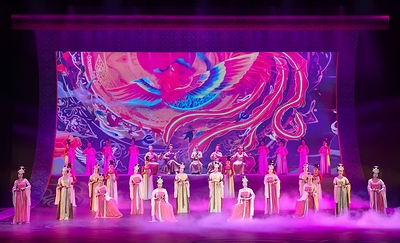
For years, the city home to multiple world- and national-level intangible cultural heritages (ICH) has been engaged in holistic protection, systemic inheritance and innovative revitalization of local historical and cultural heritages.
With concrete efforts, Quanzhou managed to preserve the original appearance of historical and cultural relics.
For instance, the renovated Dacheng Hall of Confucius Temple there reserves the original style and the recovered historical and cultural streets well balance the needs of daily life and landscape protection.
Such pragmatic preservation practices together with the establishment of protection centers of various levels help the city craft a “living ancient city” and a basket of model zones for stellar cultural relics protection.
In the ancient-style alleys and streets there, cultural heritage is brought into everyday lives of locals, who are free to immerse themselves in the slow-paced but elegant melody of Quanzhou Nanyin, dramas of lifelike puppets, or the engaging beauty of floral wreaths from Xunpu Village.
When a well-planned public culture regime functions smoothly, exquisite cultural works flourish in Quanzhou where cultural and art teams and talents gather for cultural communication activities and diverse performances.
Currently, rich cultural heritages-driven cultural industry has grown as a competitive engine propelling high-quality development of the city.
In Anxi County, Tieguanyin represents not only a popular tea, but also a burgeoning sector encompassing tea manors, cultural study tours and homestays.
In Yongchun County, potential of traditional incense-making culture was unlocked through incense product R&D, incense therapy-based wellness, creative incense cultural products production, and related sales at home and abroad.
In Dehua County, white porcelains have walked into modern home furnishings market, artistic collections, and creative fashion products sector and became a sensation amid the trending China-chic.
Last year, output value of Anxi’s tea industry, Yongchun’s incense industrial chains and Dehua’s ceramic industrial clusters reached 46.05 billion yuan, 13.5 billion yuan and 76 billion yuan respectively.
In Quanzhou, other ICHs such as stone carvings from Hui’an County are also being explored to contribute to the clustering of local cultural industries with distinctive characteristics.
Original link: https://en.imsilkroad.com/p/351667.html
 View original content to download multimedia:https://www.prnewswire.co.uk/news-releases/xinhua-silk-road-culture-ignites-vitality-high-quality-development-in-e-chinas-quanzhou-302848162.html

11, Aug 2026
Canara HSBC Life Insurance Launches ‘The Viral Parivar’, a Digital-First Micro-Drama Series Bringing Financial Preparedness into Everyday Conversations
The humorous digital micro-drama series highlights why financial preparedness is essential in a rapidly changing world
NEW DELHI, Aug. 11, 2026 /PRNewswire/ — Canara HSBC Life Insurance Company Limited (“Canara HSBC Life Insurance”) has launched The Viral Parivar, a digital micro-drama series that captures the everyday realities of India’s middle-class families as they navigate the opportunities and uncertainties of an increasingly digital-first world. Through relatable humour, family-centric storytelling and socially relevant themes, the campaign explores concerns around social media influence, digital scams, impact of AI on jobs and evolving financial priorities of modern Indian families.

As part of its broader marketing approach, Canara HSBC Life Insurance is leveraging content formats and platforms that resonate with today’s consumers. Recognising the popularity of short-form video content, the brand is using storytelling-led digital content to encourage conversations around financial wellness and preparedness in a way that feels relevant and accessible. Short-form formats such as Reels enable the brand to engage audiences through everyday stories and cultural moments that naturally lend themselves to sharing and discussion.
The Viral Parivar is anchored on platforms such as Instagram and YouTube shorts, which have become important spaces for self-expression, community engagement and cultural conversations. For younger, digitally native audiences, content often resonates most when it reflects their everyday experiences, aspirations and challenges. Through relatable characters, familiar situations and bite-sized narratives, the series seeks to make conversations around financial protection and long-term planning more relevant and relatable.
Through this initiative, Canara HSBC Life Insurance continues to strengthen its commitment to helping customers safeguard their financial future and fulfil the promises they make to their loved ones. The campaign reflects the company’s philosophy of being a ‘Promises Ka Partner‘, empowering families with the confidence that comes from long-term financial protection in an ever-changing world.
The campaign is now live across Canara HSBC Life Insurance’s Instagram, Facebook and YouTube channels.
- Instagram: https://www.instagram.com/reel/DbvSqIVvWE-/?igsh=MWZleHNrMGkwcTlldA%3D%3D
- Facebook: https://www.facebook.com/share/v/19KjvHNBN8/
- YouTube: AI vs Human | The Viral Parivar Episode 1 | Canara HSBC Life Insurance
 View original content to download multimedia:https://www.prnewswire.com/in/news-releases/canara-hsbc-life-insurance-launches-the-viral-parivar-a-digital-first-micro-drama-series-bringing-financial-preparedness-into-everyday-conversations-302848056.html

11, Aug 2026
Madden NYC Launches in India
Steve Madden’s accessible fashion brand launches on 11th August 2026, introducing trend-driven women’s footwear inspired by the energy of New York City.
MUMBAI, India, Aug. 11, 2026 /PRNewswire/ — Madden NYC, the accessible fashion brand from Steve Madden, will make its India debut on 11th August 2026, launching with a women’s footwear collection available online and at select retailers across the country. Inspired by the energy of New York City, the brand offers fashion-forward footwear for shoppers who embrace personal style on their own terms.
Designed for consumers who express their personal style with confidence, Madden NYC celebrates individuality through fashion-forward, easy-to-wear styles for every mood, moment and occasion.
The debut collection includes everything from everyday sneakers and effortless slides to statement heels and elevated essentials. Featuring metallic finishes, woven textures, denim details, animal prints and playful pops of color, Madden NYC delivers fashion-forward style at an accessible price point of ₹5,000-₹7,000.
“The Indian fashion consumer is increasingly looking for brands that combine global relevance with accessible style. Madden NYC fills an exciting whitespace in the market with its fashion-forward aesthetic, strong value proposition and broad appeal. We are confident the brand will resonate with a new generation of consumers and establish a strong presence across both digital and physical retail in India,” Sumeet Yadav, Head – Reliance Brands Limited.
“India has become one of the most exciting fashion markets in the world, and we’re thrilled to introduce Madden NYC to consumers looking for accessible, trend-driven style,” says Ian Funk, President of International at Steve Madden. “We’re excited to partner with Reliance to bring a brand inspired by the energy of New York City to a new generation of consumers. This launch marks an important milestone in our continued international growth, and we look forward to building the brand together.”
Madden NYC launches digital-first via https://stevemadden.in/sections/madden-nyc, with the collection also available at select retail destinations across Bengaluru, Hyderabad, Mumbai, New Delhi, Ahmedabad, Pune, Kolkata and other cities. The launch builds on Steve Madden’s growing retail footprint in India with 35 current exclusive stores across 16 cities, bringing the brand’s trend-driven aesthetic to more consumers than ever.
This debut marks the first phase of Madden NYC in India, with new product drops, additional categories and consumer activations to follow later this year.
About Reliance Brands Limited (RBL)
Reliance Brands Limited (RBL), a subsidiary of Reliance Retail Ventures Ltd. (RRVL), was established in 2007 with a mandate to launch, scale, and nurture global fashion and lifestyle brands in India across the luxury to premium spectrum. Its portfolio today includes some of the world’s most iconic names such as Armani Exchange, Balenciaga, Bally, Bottega Veneta, Brooks Brothers, Burberry, Canali, Coach, Diesel, EA7, Elan Cafe, Emporio Armani, Ferragamo, Gas, Giorgio Armani, Hamleys, Hugo Boss, Hunkemoller, Iconix, Jimmy Choo, Kate Spade, La Martina, Lenscrafters, Maje, Max&Co., Michael Kors, Mothercare, Muji, Paul & Shark, Paul Smith, Pottery Barn, Pottery Barn Kids, Pret A Manger, Sandro, Stella McCartney, Steve Madden, Superdry, Tiffany & Co., Tod’s, Tory Burch, Tumi, Valentino, Versace, Villeroy & Boch, West Elm, Zegna, and more.
RBL currently operates over 1,855 doors across India, including standalone stores and shop-in-shops. In addition to building international brand partnerships, the company has invested in leading Indian designer labels and made key global acquisitions, including Hamleys, the world’s oldest toy retailer, now operating across 12 countries with over 175 stores globally.
About Steve Madden
Steve Madden designs, sources and markets fashion-forward footwear, accessories and apparel. In addition to marketing products under its own brands including Steve Madden®, Kurt Geiger London®, Dolce Vita®, Betsey Johnson®, Carvela®, Blondo® and ATM®, Steve Madden licenses footwear, handbags and other accessory categories for the Anne Klein® brand. Steve Madden also designs and sources products under private label brand names for various retailers. Steve Madden’s wholesale distribution includes department stores, mass merchants, off-price retailers, shoe chains, online retailers, national chains, specialty retailers and independent stores. Steve Madden also directly operates brick-and-mortar retail stores and e-commerce websites. In addition, Steve Madden licenses certain of its brands to third parties for the marketing and sale of certain products in the apparel, accessory and home categories.
 View original content to download multimedia:https://www.prnewswire.com/in/news-releases/madden-nyc-launches-in-india-302848039.html

11, Aug 2026
Piramal Realty Delivers The Royal Polo Pavilion, a 30,000 sq. ft. Polo-Inspired Clubhouse at Piramal Mahalaxmi
MUMBAI, India, Aug. 11, 2026 /PRNewswire/ — Piramal Realty, the real estate development arm of the Piramal Group, has delivered The Royal Polo Pavilion, a 30,000 sq. ft. resident’s clubhouse at Piramal Mahalaxmi. Designed by globally renowned British design studio Conran and Partners, the three-level clubhouse overlooks the iconic Mahalaxmi Racecourse and Arabian Sea. The delivery of the Royal Polo Pavilion further reinforces Piramal Realty’s design-led, delivery-focused philosophy, reflected in over 5,800 delivered homes across 24 towers spanning over ~9.3 Mn sq. ft., of Area.
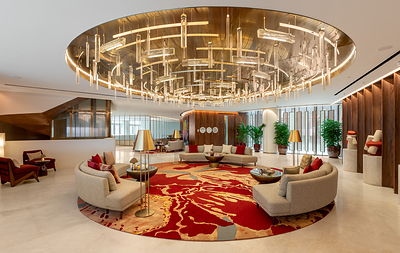
More than a resident’s clubhouse, the Royal Polo Pavilion was envisioned as a place that belongs to Mahalaxmi – a space inspired by the character, history and enduring spirit of one of Mumbai’s most iconic neighborhoods.
The Royal Polo Pavilion draws inspiration from the enduring legacy of polo, a sport deeply rooted in the history of the Mahalaxmi Racecourse. Over the decades, the sport has become synonymous with the Racecourse’s identity, reflecting a timeless tradition built on grace, discipline, teamwork, precision and sportsmanship. This legacy is the foundation for the clubhouse’s design vision.
Commenting on the delivery, Abhijeet Maheshwari, CEO, Piramal Realty, said:
“For us, design is not just about architecture or interiors; it is about storytelling. For the Royal Polo Pavilion, our inspiration came not from global trends but from the neighbourhood itself. The Racecourse, the heritage of polo, the Gulmohar trees motif representing the tree lined South Mumbai, carefully commissioned artworks with Piramal Art Foundation and thoughtfully crafted interiors all became part of a larger narrative. Every detail was intentionally designed to celebrate the character of Mahalaxmi, creating a clubhouse that feels deeply connected to its setting while offering a contemporary lifestyle for our residents.”
As residents explore the clubhouse, every space tells part of this story. Echoing the spirit of polo, The Chukker, (Gym), takes its name from the sports periods of play in a polo match, while the Colt & Filly club (Kids play area) reflects the curiosity and energy of the young residents. Every space has been thoughtfully named to celebrate the traditions and timeless legacy of polo.
The clubhouse also features a private theatre, resident’s lounge, banquet hall, spa, yoga studio, indoor games room, squash court and multipurpose court, bringing together a range of experiences that enrich everyday living.
The interior design draws from the elegance and heritage of polo, translating its spirit through a carefully curated palette of materials and finishes. Warm timber, natural stone, handcrafted textiles and subtle equestrian references come together to create interiors that feel both timeless and deeply connected to their surroundings. Thoughtfully curated artworks, developed in collaboration with the Piramal Art Foundation, complete the overall design narrative. Together, these elements create interiors inspired by the rich traditions of polo.
With the delivery of the Royal Polo Pavilion, Piramal Realty continues to bring its design-led, delivery-focused philosophy to life, creating thoughtfully designed destinations where architecture, community and curated experiences come together to enrich everyday living.
About Piramal Realty
Founded in 2012, Piramal Realty, the real estate development arm of Piramal Group is one of India’s leading developers with ~12 Mn sq. ft. of residential real estate under development in and around Mumbai. Piramal Realty aims to set a gold standard in design, quality, safety, and customer centricity in both residential and commercial real estate. Piramal Realty’s innovative developments not only capture a cutting-edge and contemporary ethos but also aim to adopt a more intuitive interpretation of luxury. This distinctive approach celebrates the harmonious integration of nature, greenery, spaciousness, natural light, ventilation and the inherent connection with biophilia encapsulating the essence of community living.
Official Website: https://www.piramalrealty.com/
 View original content to download multimedia:https://www.prnewswire.com/in/news-releases/piramal-realty-delivers-the-royal-polo-pavilion-a-30-000-sq-ft-polo-inspired-clubhouse-at-piramal-mahalaxmi-302848067.html

11, Aug 2026
Euro Pratik Reported Highest Ever Quarterly Revenue in Q1FY27 growing by 61% y-o-y, and Q1FY27 PAT growth stood at 116% y-o-y
MUMBAI, India, Aug. 11, 2026 /PRNewswire/ — Euro Pratik Sales Ltd, a leading Surface Decorative Product company, announced its unaudited financial results for the quarter ended 30th June 2026.

Key Highlights:
- Q1FY27 Revenue from Operations rose to ₹103.3 crore, delivering an exceptional 60% y-o-y growth from ₹64.5 crore in Q1FY26, reflecting strong business momentum and market traction.
- Q1FY27 EBITDA rose to ₹29.2 crore, marking a healthy 25% y-o-y increase over ₹23.4 crore in Q1FY26, while maintaining a robust EBITDA margin of 27.5%.
- Q1FY27 Profit After Tax (PAT) more than doubled to ₹20.0 crore, recording an outstanding 116% y-o-y growth from ₹9.3 crore in Q1FY26, with a strong PAT margin of 18.9%, highlighting significant profitability expansion.
Commenting on the Results
Mr. Pratik Singhvi – Chairman & Managing Director said, “We delivered a highest-ever quarterly revenue in Q1 FY27, growing 60% YoY to ₹103 crore, EBITDA increasing 25% YoY to ₹29 crore and PAT rising 116% YoY to ₹20 crore. The quarter was driven by healthy demand across residential and commercial segments, supported by our growing portfolio of differentiated decorative surface solutions and deeper engagement with architects, designers and channel partners.
While elevated raw material costs, and geopolitical uncertainties continued to impact global supply chains, our focus on value-added products, improved product mix and operating efficiencies enabled us to deliver healthy profitability. We remain focused on sustaining margins through premiumisation, scale benefits and disciplined execution.
The integration of URO Veneer World and Chawla Brothers is progressing well and has significantly strengthened our market reach across South and North India. Supported by a debt-free balance sheet and healthy internal accruals, we remain well positioned to capitalize on growth opportunities, unlock integration synergies, deepen market penetration and deliver sustainable long-term.”
About Euro Pratik Sales Ltd:
Euro Pratik is one of India’s leading and largest organized brands in the Decorative Wall Panel and Laminates industry, holding a market share of over 16% in the organized wall panel segment. Known for its design-driven approach, the company has launched over 113+ product catalogues, offering 30+ product categories and 3,000+ designs that are sustainable, antibacterial, antifungal, and water-resistant. Operating through fixed asset-light business model with 36 contract manufacturers across India and abroad, Euro Pratik has built a strong distribution network spanning 138+ cities, around 198 distributors, and around 2,25,000 sq. ft. of warehouse space across India, ensuring wide market reach and operational efficiency. Driven by innovation and strategic growth, Euro Pratik has expanded its global presence through subsidiaries in the U.S., the UAE, and Europe, supported by strong financial fundamentals. With a proven track record, comprehensive product portfolio, collaborations with architects, interior designers, and furniture manufacturers,and a focus on sustainable design, Euro Pratik continues to strengthen its position as a pioneer in decorative wall solutions across domestic and international markets.
 View original content to download multimedia:https://www.prnewswire.com/in/news-releases/euro-pratik-reported-highest-ever-quarterly-revenue-in-q1fy27-growing-by-61-y-o-y-and-q1fy27-pat-growth-stood-at-116-y-o-y-302848081.html

11, Aug 2026
KuCoin Strengthens Its RWA Ecosystem with Ondo Tokenized Stocks on KuCoin Alpha
PROVIDENCIALES, Turks and Caicos Islands, Aug. 11, 2026 /PRNewswire/ — KuCoin, a leading global crypto platform built on trust, today announced the integration of Ondo tokenized assets, marketed as “Ondo tokenized stocks,” into KuCoin Alpha. The integration provides eligible users across the KuCoin ecosystem with a streamlined way to access tokenized stocks and exchange-traded funds (ETFs) through the familiar KuCoin interface.

Through KuCoin Alpha, users can access supported Ondo tokenized stocks using funds held in their KuCoin accounts and trade them without navigating separate wallets or external onchain applications. By simplifying the user journey, the integration creates a more intuitive entry point to TradFi-linked onchain products while retaining the efficiency and flexibility enabled by blockchain-based infrastructure. The initial selection spans broad-market ETFs and leading companies across technology, semiconductors and digital finance, including widely followed products such as SPYon, NVDAon, MUon, SNDKon, and CRCLon.
The launch builds on the earlier integration of Ondo tokenized stocks into KuCoin Web3 Wallet. Together, the two integrations provide complementary pathways across the KuCoin ecosystem: an exchange-app experience through KuCoin Alpha and a self-custodial experience through KuCoin Web3 Wallet. This gives users greater flexibility in how they discover, access, and manage TradFi-linked onchain assets.
The expansion reflects the next stage in the development of onchain finance. Following the global adoption of stablecoins, tokenized real-world assets are emerging as another important asset category supported by blockchain infrastructure. Scaling this market will require more than asset issuance alone. It will also depend on trusted access infrastructure that connects products, liquidity and users through intuitive and widely accessible interfaces.
As traditional financial products increasingly move onchain, crypto platforms are evolving beyond venues for individual asset listings to become an important infrastructure for global onchain markets. By extending Ondo stocks across both its exchange-app and self-custodial environments, KuCoin is building a unified access layer for crypto-native assets, tokenized real-world assets and other TradFi-linked onchain products.
The integration marks another step in KuCoin’s strategy to build trusted infrastructure that connects traditional finance with the expanding onchain economy while making emerging financial products accessible through experiences users already understand.
About KuCoin
Founded in 2017, KuCoin is a leading global crypto platform built on trust and security, serving over 45 million users across 200+ countries and regions. Known for its reliability and user-first approach, the platform combines advanced technology, deep liquidity, and strong security safeguards to deliver a seamless trading experience. KuCoin provides access to 1,500+ digital assets through a broad product suite and remains committed to building transparent, compliant, and user-centric digital asset infrastructure for the future of finance, backed by SOC 2 Type II, ISO/IEC 27001:2022, and ISO/IEC 27701:2019 Certifications. In recent years, we have built a strong global compliance foundation, marked by key milestones including AUSTRAC registration in Australia, a MiCA license in Europe, and regulatory progress in other markets.
Learn more at www.kucoin.com.
Disclaimer
The information is for corporate PR purposes only and does not constitute endorsement or investment advice.

Photo – https://mma.prnewswire.com/media/3008721/image1.jpg
Logo – https://mma.prnewswire.com/media/2785613/6031086/KuCoin_new_Logo.jpg
 View original content:https://www.prnewswire.co.uk/news-releases/kucoin-strengthens-its-rwa-ecosystem-with-ondo-tokenized-stocks-on-kucoin-alpha-302847972.html

11, Aug 2026
LX Pantos Strengthens Global ESG Leadership Through Its 2026 Sustainability Report
- Completes calculation and third-party verification of Scope 1 and 2 GHG emissions across Korea and key overseas operations
- Expands ESG disclosures to cover human rights, safety, working conditions, and training for global employees
SEOUL, South Korea, Aug. 11, 2026 /PRNewswire/ — LX Pantos (President & CEO: Lee Yong-ho) has released its 2026 Sustainability Report, highlighting progress in advancing ESG management across its domestic and global operations.
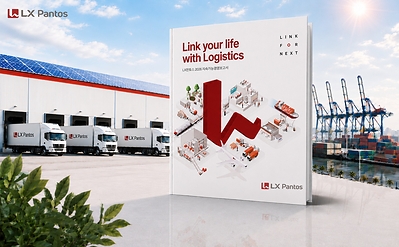
The report covers nine material ESG issues identified through a double materiality assessment, including climate change adaptation and mitigation, energy, eco-friendly logistics services, customer value management, human resources management, information security, risk management, business conduct, and new growth engines and business diversification.
A key highlight of this year’s report is the expanded reporting scope, which now includes global worksites. The expansion reflects LX Pantos’s strong international footprint and the growing scale of its overseas operations.
On the environmental front, the company calculated Scope 1 direct greenhouse gas emissions and Scope 2 indirect greenhouse gas emissions from its domestic operations and key overseas sites. Third-party verification further strengthened the reliability of its environmental disclosures.
In the social area, LX Pantos collected and analyzed employee data from nine subsidiaries in Europe, covering human rights and labor, occupational health and safety, working conditions, education, and career development.
In governance, the report highlights progress in Jeong-do Management, the company’s ethics- and compliance-based management philosophy. LX Pantos recorded zero significant legal violations related to anti-corruption and fair trade rules and achieved a 100% completion rate for Jeong-do Management training in 2025.
The report was prepared in accordance with the GRI Standards 2021 and references global ESG frameworks including SASB, the UN SDGs, the UNGC, and the TCFD. An independent third-party assurance agency verified the report for accuracy and reliability.
In 2025, LX Pantos also earned a Bronze rating from EcoVadis, a B rating from the Carbon Disclosure Project (CDP), LEED Gold certification for the MegaWise Cheongna Center, and an A+ rating under the Regional Social Contribution Recognition System administered by the Korean Ministry of Health and Welfare.
Commenting on the release of this report, Lee Yong-ho, President & CEO of LX Pantos said, “LX Pantos is further advancing its sustainability management by expanding the scope of ESG management beyond Korea to our overseas operations. Under our ESG vision, ‘Value Deliverer for People and the Planet,’ we will continue to communicate with stakeholders in a transparent manner.”
■ About LX Pantos
Established in 1977, LX Pantos is a leading global logistics provider headquartered in Korea. It delivers comprehensive logistics solutions across sea, air, rail, and contract logistics through a worldwide network spanning more than 40 countries.
Learn more about LX Pantos online and follow it on LinkedIn.
 View original content to download multimedia:https://www.prnewswire.co.uk/news-releases/lx-pantos-strengthens-global-esg-leadership-through-its-2026-sustainability-report-302846866.html

11, Aug 2026
Reap Goes Live on Hyperliquid with USDC funding capabilities
Clients can now move USDC more efficiently and manage balances on the Hyperliquid network.
HONG KONG, Aug. 11, 2026 /PRNewswire/ — Reap, a global financial technology company that enables financial connectivity and access for businesses worldwide through stablecoin-enabled infrastructure, today announced support for USDC funding via Hyperliquid. Clients can now generate a Hyperliquid wallet address within Reap and send USDC on the Hyperliquid network to fund their cards and payments balances.
In May 2026, Hyperliquid phased out its native stablecoin, with Circle expanding its infrastructure role across the network. USDC is now the dominant collateral asset on Hyperliquid, and stablecoin supply on the platform has nearly doubled year-over-year, reaching a record $7.04 billion in early June 2026, up almost 20% in a single month.
As USDC cements itself as the anchor stablecoin of one of the largest on-chain trading venues, a growing number of businesses already hold or transact in USDC on Hyperliquid as part of their treasury activity. Until now, moving that USDC into a Reap balance meant routing it through an intermediary exchange or wallet. A direct funding rail removes that extra step, letting clients put Hyperliquid-based USDC to work in their cards and payment balances. This launch also expands Reap’s own network coverage for stablecoin funding, with Hyperliquid joining Ethereum, Tron, and Polygon as supported networks for on-chain USDC deposits.
For businesses that already keep working capital on Hyperliquid, this adds a direct path to convert on-chain USDC into operating balances, without routing funds through an intermediary exchange or wallet. That can reduce settlement time and operational overhead, improve liquidity management between trading and treasury activity and day-to-day spend, and support smoother reconciliation by keeping funding flows on a single, supported rail. The addition of Hyperliquid gives clients another stablecoin funding rail, reducing friction for businesses that already hold or transact in USDC on Hyperliquid, and makes it easier for clients to fund their cards and payments balances directly.
“With Hyperliquid now supported in Reap, clients now have a more direct bridge between where they already hold USDC on-chain and where they need to deploy it in day-to-day operations. We are excited to build a simpler, faster path for treasury teams to move value from on-chain liquidity into the balances they use to run their businesses.” said Harris Leow, Head of Product, Reap.
Reap is also exploring additional ways to expand the utility of Hyperliquid across a broader suite of products and solutions over time, from making it easier for clients to fund and deploy USDC held on Hyperliquid, to unlocking more seamless ways to move value between on-chain liquidity and real-world spend. By deepening this integration, Reap aims to create more flexibility for clients while supporting greater real-world utility for stablecoins on Hyperliquid.
About Reap
Reap is a global financial technology company that enables financial connectivity and access for businesses worldwide through stablecoin-native infrastructure. We transform the financial landscape through more efficient money movement by merging traditional finance with digital assets, bridging disparate economies and connecting key financial markets.
Reap was an early leader in Asia to incorporate stablecoins into our solutions. In 2025, Reap processed billions in stablecoin-funded transaction flows. From stablecoin-enabled corporate cards to cross-border payments, we streamline financial operations and empower companies to scale with our integrated business accounts and embedded finance solutions.
Founded and headquartered in Hong Kong, Reap employs 300 people worldwide.
More information about Reap can be found at reap.global.
 View original content to download multimedia:https://www.prnewswire.co.uk/news-releases/reap-goes-live-on-hyperliquid-with-usdc-funding-capabilities-302847908.html



