


7, Aug 2026
Thrupp & Maberly: Historic British Coachbuilder Enters a New Era of Bespoke Motor Cars
COVENTRY, England, Aug. 7, 2026 /PRNewswire/ — One of Britain’s most historic names in coachbuilding enters a new chapter.

Thrupp & Maberly, whose origins trace back to the eighteenth century, returns as a contemporary British coachbuilding atelier dedicated to creating highly bespoke motor cars for a discerning international clientele. Based in Coventry, the company combines traditional craftsmanship with modern engineering, contemporary design, and uncompromising attention to detail.
The atelier will specialise in ultra-low-volume coachbuilt automobiles, handcrafted interiors, and private commissions, produced by a dedicated team of approximately sixty craftsmen and specialists. Every commission will be individually developed using the finest materials and the enduring principles of British coachbuilding.
Established through a partnership between Brendan O’Toole and Lars Carlstrom, Thrupp & Maberly brings together decades of specialist automotive craftsmanship with international industrial experience, creating a company focused on craftsmanship, exclusivity, and timeless design.
The company will not produce heritage replicas. Instead, it will create original contemporary motor cars that honour the traditions of British coachbuilding while embracing modern engineering, materials, and technology.
Thrupp & Maberly is currently developing its inaugural commission under the internal project name Project Mayfair. The programme represents a contemporary interpretation of the British grand touring motor car, combining refined proportions, handcrafted coachwork, curated materials, and highly limited production. Further details will be announced later this autumn.
From its home in Coventry, Thrupp & Maberly is positioned to serve the growing international demand for ultra-bespoke luxury motor cars, offering private clients a level of craftsmanship, discretion, and individuality that defines the highest tradition of British coachbuilding.
Thrupp & Maberly Ltd. www.thruppmaberly.com
 View original content to download multimedia:https://www.prnewswire.com/news-releases/thrupp–maberly-historic-british-coachbuilder-enters-a-new-era-of-bespoke-motor-cars-302845957.html

- 0
- By Sai Krishna

7, Aug 2026
Coolita launches Indonesia’s first FAST Media Alliance with leading broadcasters
JAKARTA, Indonesia, Aug. 7, 2026 /PRNewswire/ — Indonesia’s first industry alliance dedicated to FAST (Free Ad-supported Streaming TV) has been launched in Jakarta, bringing together broadcasters, technology companies and media organisations to support the digital transformation of television.
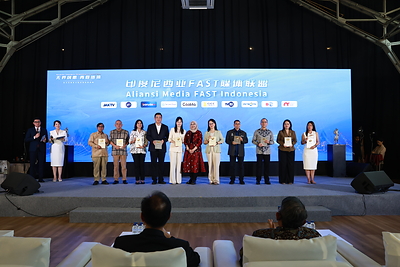
The Indonesia FAST Media Alliance was jointly initiated by Coolita and the China Intercontinental Communication Center (CICC). Its founding members include Indonesia’s leading public and private broadcasters — TVRI, Metro TV, GARUDA TV, BTV, Jawa Pos Multimedia and JAKTV — with Tencent Cloud serving as the technology partner.
FAST combines the familiar experience of linear television with internet delivery and advertising-supported streaming. Around the world, broadcasters are increasingly using FAST to extend the reach of their channels, bring local content to connected TV audiences and develop new digital distribution models.
The new alliance aims to help Indonesian broadcasters explore that transition. Members will work together on FAST channel development, digital content distribution and technology collaboration, while preserving the strengths of free-to-air television. The alliance is also expected to support broader cooperation between Indonesia’s media industry and international partners.
As a co-initiator, Coolita operates a smart TV platform across more than 100 countries and regions, serving over 40 million users worldwide, including more than five million in Indonesia. Its FAST service, Coolita Channel, offers more than 1,000 free channels across news, sports, movies and other genres, providing broadcasters with an established CTV distribution platform.
The alliance was announced during the China–Indonesia Youth Cultural Exchange Series in Jakarta, where industry representatives discussed the future of television, digital media and FAST. Participants agreed that as viewing continues to shift toward CTV, closer collaboration between broadcasters, technology providers and content partners will play an important role in supporting the next stage of Indonesia’s television industry.
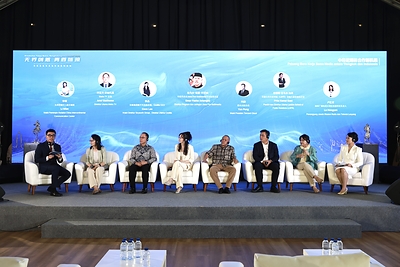
The Indonesia FAST Media Alliance is intended as an open industry platform and is expected to expand as more broadcasters, content owners and ecosystem partners participate in the development of Indonesia’s FAST market.

 View original content to download multimedia:https://www.prnewswire.co.uk/news-releases/coolita-launches-indonesias-first-fast-media-alliance-with-leading-broadcasters-302845961.html

7, Aug 2026
FAMILIARITÉ: A Poetic Convergence of Cinema and Literature
DJI and Cannes-honored Icon Isabelle Reunite Two Women’s Voices Across Centuries — Shot Entirely on the Osmo Pocket 4P
SHENZHEN, China, Aug. 7, 2026 /PRNewswire/ — DJI, the global leader in civilian drones and creative camera technology, unveiled FAMILIARITÉ, an original short video starring and creatively directed by Isabelle Huppert, and shot in its entirety on the DJI Osmo Pocket 4P. More than a technology showcase, the video is a meditation on literature, memory, and the quiet familiarity that connects women across time and culture — and a demonstration of how a camera that fits in the palm of a hand can now carry the full weight of cinematic storytelling.

When Two Uncompromising Visions Meet
It all began with Isabelle Huppert and DJI’s shared vision together: an uncompromising devotion to the image — to what can be seen, felt, and left unsaid on screen.
Across a career spanning more than 120 films, multiple Best Actress honors at Cannes and Venice, a Golden Globe, and an Academy Award nomination, Isabelle Huppert has become synonymous with what she conveys without words — the wordless gaze, the restrained micro-expression, emotion delivered through the subtlest of means. DJI has spent its history pursuing a parallel goal from the engineering side: to capture the finest nuance of light and motion in ever more capable, ever more unobtrusive tools.
In FAMILIARITÉ, those two pursuits came together. Stepping behind the camera, Isabelle Huppert shaped not only her performance but the video’s visual language — and chose the Osmo Pocket 4P as the instrument to realize it. Discreet and lightweight, the camera all but disappeared on set, letting her work in her most relaxed, unguarded state and giving the production a creative freedom that heavier, more imposing rigs rarely allow.
For Isabelle Huppert, encountering the camera for the first time was a discovery in itself. “It’s the first time I’ve discovered such a tiny camera — truly quite extraordinary,” she recalls. “It’s almost invisible, and yet it reproduces an image of extraordinary sharpness and precision. Above all, it conveys so well the emotion of a face, and what was happening between us, between my partner and me.” Far from feeling like an intimidating machine, she notes, it never altered her craft — it remained, simply, a camera. In FAMILIARITÉ, technology does not command the performance; it liberates it.
Two Voices, One Familiar Echo
FAMILIARITÉ takes its form not from plot, but from poetry. It is a conversation across time between two women who never met, yet each turned a life into the written word.
George Sand (1804–1876) claimed her voice in 19th-century France by writing under a man’s name — a defiance that Isabelle Huppert honors in the video by wearing a man’s tailored suit. Centuries earlier and a world away, the Song-dynasty poet Li Qingzhao (1084–c.1155) resisted the upheavals of her age through the enduring force of her verse. Both women transformed the pain of a life into language that outlived them.
FAMILIARITÉ draws these two souls together in light and shadow. George Sand’s “À Aurore” runs through the video like a thread, and the encounter culminates in a single, wordless exchange between Isabelle and a young Chinese girl — an echo of familiarity that crosses both time and culture. Shot amid the shifting sunlight, tree shadows, and water surfaces of a traditional Chinese garden, the video preserves a poetic, almost extraordinary atmosphere in perfect connection with George Sand’s verse. This is not merely a “meeting.” It is a visual narrative about women, expression, and freedom.
A Cinematic Language, Built Entirely in the Palm of a Hand
The video’s artistic ambition is realized through a deliberate cinematographic language made possible by the Osmo Pocket 4P — its dual lenses becoming the video’s own way of seeing. Again and again, the production found that scenes conceived on the page could be captured precisely because the camera was small enough to go where a full-size cinema rig could not.
A conversation on the water. One of the video’s most intimate exchanges unfolds between Isabelle and her co-star aboard a small rowboat drifting across the garden’s pond. Fitting a traditional cinema camera and its crew into so confined and unsteady a space would have been impossible without breaking the moment. The Osmo Pocket 4P, by contrast, sat naturally within the boat, keeping the two performers close and the frame alive with the gentle motion of the water.
Fluidity, carried by hand. Much of the video lives in continuous, moving shots — drifting past figures, tree shadows, bookshelves and door frames, so that every transition becomes a quiet, deliberate gesture. A large share of these were captured handheld by the DP. Thanks to the camera’s pocketable size and 3-axis mechanical stabilization, the operator could move freely and reset between setups in seconds, keeping takes smooth and lifting the pace of the shoot considerably.
Wide latitude for high-contrast light. The garden setting is full of extreme contrast — bright highlights beside deep, layered shadows, on both the scenery and the human face. With D-Log2 and 17 stops of dynamic range, the Osmo Pocket 4P preserved the full gradation of that light, giving the colorist ample latitude in post and making even the most demanding lighting worry-free.
A portrait lens for the face. To draw the eye toward Isabelle Huppert’s most delicate expressions, the production turned to the 60mm telephoto — a natural portrait focal length that renders skin cleanly and true, without the distortion of a wide lens, compressing space so that the faintest shift of expression reads with clarity. Wider perspectives (15mm / 20mm) place each character within her space, so that every movement becomes a shift in time and dimension.
Bound together by that stabilization and range of focal lengths, these perspectives flow as one unbroken motion — and in its remarkably discreet, pocketable form, the Osmo Pocket 4P let the production work closely and intimately with its lead, capturing performance-driven storytelling once reserved for large crews and heavy equipment.
It reaffirms DJI’s mission: to place uncompromising imaging power in the hands of every storyteller — and to prove that the size of a camera need never limit the scale of a story.
Bringing the Video to a Global Audience
FAMILIARITÉ has been released across DJI’s official channels accompanied by behind-the-scenes material and creator-focused content exploring both Isabelle Huppert’s artistry and the creative potential of the Osmo Pocket 4P. You can find the video here.
About DJI
Since 2006, DJI has led the world with civilian drone innovations that have empowered individuals to take flight for the first time, visionaries to turn their imagination into reality, and professionals to transform their work entirely. Today, DJI serves to build a better world by continuously promoting human advancement. With a solution-oriented mindset and genuine curiosity, DJI has expanded its ambitions into areas such as renewable energy, agriculture, public safety, surveying and mapping, and infrastructure inspection. In every application, DJI products deliver experiences that add value to lives around the world in more profound ways than ever before.
For more information, visit our:
Website: www.dji.com
Online Store: store.dji.com
Facebook: www.facebook.com/DJI
Instagram: www.instagram.com/DJIGlobal
X: www.x.com/DJIGlobal
LinkedIn: www.linkedin.com/company/dji
Subscribe to our YouTube Channel: www.youtube.com/DJI
 View original content to download multimedia:https://www.prnewswire.co.uk/news-releases/familiarite-a-poetic-convergence-of-cinema-and-literature-302845669.html

7, Aug 2026
HarperCollins Publishers to publish Dr Sylvia Karpagam’s new book about the politics of food
The Meat of the Matter by Dr Sylvia Karpagam
NEW DELHI, Aug. 7, 2026 /PRNewswire/ — HarperCollins India is delighted to be publish Dr Sylvia Karpagam’s well-researched and path-breaking book which dives deep into the discourse around our food choices and the politics of nutrition which affects our well-being as a community. Available now to preorder, the book will release on 18th August 2026.

Talking about the book, Dr Sylvia Karpagam says, “This book offers the basics of nutrition to help plan a meal in a scientific way without all the confusing jargon. It also explains the politics, economics, caste and communalism behind current nutrition policies, programs and interventions which are adversely affecting the nutritional and health indicators of the country, particularly for the marginalised and vulnerable who face barriers to accessing their own traditional foods. This is evident in the poor quality of the mid-day meal scheme in government schools and pre-schools (anganwadis) as also the Public Distribution System [PDS]. The global push for plant based /vegan foods by multi-nationals is creating a caste and corporate nexus that we need to challenge. This book offers a means to do that.”
Adding to this, Ridhima Kumar, Senior Commissioning Editor at HarperCollins India, says, “Every day, we’re bombarded with conflicting advice about what’s healthy, ethical, and pure to eat. The Meat of the Matter cuts through the noise with science, common sense, and hard-hitting facts, empowering you to make informed choices about the food on your plate. Whether you’re vegetarian, non-vegetarian, or simply curious, this book will challenge what you think you know about food and help you make healthier, evidence-based decisions. An essential read for anyone who wants to take charge of their health and nutrition.”
About the book:
Food. Politics. Prejudice.
It’s time to put nutrition first.
Do eggs really raise cholesterol? Is red meat bad for your health? Is soya truly a healthier substitute for meat? Are dairy products ‘pure veg’? Can a vegetarian diet meet all your nutritional needs? Are our food choices truly personal or carefully controlled?
In The Meat of the Matter, Dr Sylvia Karpagam, a public health doctor and researcher known for her work on nutrition and food security, dismantles these and other myths about ‘healthy,’ ‘ethical’ and ‘pure’ food in India.
Drawing on scientific research, public health data and lived realities, Dr Sylvia reveals how access to nutrient-dense food for most people is restricted not by scarcity, but by human interference—and is largely shaped by politics, ideology, caste and religion-based prejudice.
In the process, she also poses urgent questions: Is India really a vegetarian country? Are vegetarian foods inherently more nutritious? Why are meat, eggs and animal-based foods demonized despite their nutritional value? How have caste and religion come to dictate what is considered acceptable food in India?
Bold, provocative and deeply necessary, this groundbreaking book will change the way you think about—and eat—food.
Endorsements:
“It is rare to find a discussion on nutrition that directly confronts its cultural, political, social and economic dimensions, but Dr Sylvia does so powerfully in this book.” —Fr. Jerald D’souza, National Secretary, Jesuit Commission for Ecology and Justice
“This well-researched book destroys the myth that vegetarianism is superior.” —Nina Teicholz, PhD, bestselling author of The Big Fat Surprise
“Dr Sylvia Karpagam documents a policy of enforced malnutrition through the imposition of vegetarianism on growing children and the demonization of meat in human diets. Karpagam pulls no punches in this stunning exposé.” —Sally Fallon Morell, author of Nourishing Traditions.
“Fact-based, accessible, and deeply engaging, this book is essential reading for anyone who sees food as a source of both nourishment and pleasure.” —Dr Amar Jesani, Editor, Indian Journal of Medical Ethics
About the Author:
Dr Sylvia Karpagam is a public health doctor, researcher and one of India’s most influential voices on food and nutrition policy. For over two decades, she has worked at the intersection of health, food systems and social justice, investigating how government policies shape what people eat, who benefits and who gets left behind.
A member of the expert committee of ALEPH2020, Dr Karpagam holds an MD in Community Medicine from St. John’s Medical College, Bengaluru. In The Meat of the Matter, she takes readers on a compelling journey through the politics of food in India, revealing how decisions made far from our plates affect the health, livelihoods and everyday choices of millions of people.
ABOUT HARPERCOLLINS PUBLISHERS INDIA
At HarperCollins Publishers India, we believe in telling the best stories and ensuring they reach the widest readership. We publish around 250 new books every year across 10 imprints, adding to a diverse catalogue of more than 3,000 titles in print and digital formats, with an array of genres and voices that ensure there is a book for every reader. Our authors have won some of the most prestigious literary awards, and we are proud to publish many acclaimed writers, alongside new and emerging voices shaping contemporary literature. We are also the publishers of The White Tiger by Aravind Adiga, winner of the Booker Prize 2008, and Girl in White Cotton by Avni Doshi, shortlisted for the Booker Prize in 2020, and HarperCollins India itself has been awarded “Publisher of the Year” several times. In addition, we represent some of the finest global publishers such as Harvard University Press, Lonely Planet, Oneworld, Nosy Crow, Usborne, and National Geographic Children, bringing Indian readers access to world-class books and ideas. We are also proud to be certified as a Great Place to Work for two consecutive years, a recognition of our culture, people, and values that make HarperCollins India a truly inspiring workplace.
For more information, please write to: shabnam.srivastava@harpercollins.co.in

 View original content to download multimedia:https://www.prnewswire.com/in/news-releases/harpercollins-publishers-to-publish-dr-sylvia-karpagams-new-book-about-the-politics-of-food-302845928.html

7, Aug 2026
STARCARES Revamps Basketball Court at the University of Lagos for Future Healthcare Professionals
The revitalised basketball court gives approximately 2,000 future healthcare professionals a dedicated space to recharge, connect, and build community activities beyond their academic training
LAGOS, Nigeria, Aug. 7, 2026 /PRNewswire/ — STARCARES, the community impact initiative of STARTRADER, has completed the redevelopment of the basketball court at the College of Medicine, University of Lagos, giving approximately 2,000 students a dedicated space for recreation, teamwork, and campus connection beyond their medical training.
Located in Idi-Araba, Surulere, the College has 1,850 staff across 32 departments. Since welcoming its first 28 medical students in 1962, it has grown into a highly competitive institution for training doctors, dentists, and allied health professionals.
The redevelopment introduced a renewed playing surface, basketball infrastructure, benches, jerseys, and equipment designed to support regular student use. More than a sports upgrade, the court provides a practical outlet from the demands of medical education, giving students a place to move, reset, compete, and connect as a community.
“When an institution prepares people to safeguard a nation’s health, their environment should sustain them. This court reflects our belief that ambition grows stronger when people have space to breathe, belong, and return to their goals renewed.”
– Peter Karsten, Chief Executive Officer, STARTRADER
The transformation was marked by groundbreaking and turnover ceremonies, with students stepping onto the completed court and bringing the new space into immediate use.
Developed under the theme “Where Tomorrow STARs Begin,” the initiative reflects STARCARES’ commitment to creating infrastructure intended to support communities beyond the ceremony. By transforming existing spaces into places of participation and possibility, STARCARES is investing not only in facilities, but in the everyday experiences that help communities thrive.
About STARTRADER
STARTRADER is a global multi-asset broker empowering retail and institutional partners to access global markets through a range of platforms, including MetaTrader, STARTRADER APP, and STAR Copy.
STARTRADER operates through entities licensed and regulated by authorities including CMA, ASIC, FSCA, FSA and FSC, combining strong governance with a client-first approach, serving both retail clients and partners with a commitment to transparency, reliability, and long-term growth.



 View original content to download multimedia:https://www.prnewswire.co.uk/news-releases/starcares-revamps-basketball-court-at-the-university-of-lagos-for-future-healthcare-professionals-302845956.html

7, Aug 2026
Thrupp & Maberly: Historic British Coachbuilder Enters a New Era of Bespoke Motor Cars
COVENTRY, England, Aug. 7, 2026 /PRNewswire/ — One of Britain’s most historic names in coachbuilding enters a new chapter.
Thrupp & Maberly, whose origins trace back to the eighteenth century, returns as a contemporary British coachbuilding atelier dedicated to creating highly bespoke motor cars for a discerning international clientele. Based in Coventry, the company combines traditional craftsmanship with modern engineering, contemporary design, and uncompromising attention to detail.
The atelier will specialise in ultra-low-volume coachbuilt automobiles, handcrafted interiors, and private commissions, produced by a dedicated team of approximately sixty craftsmen and specialists. Every commission will be individually developed using the finest materials and the enduring principles of British coachbuilding.
Established through a partnership between Brendan O’Toole and Lars Carlstrom, Thrupp & Maberly brings together decades of specialist automotive craftsmanship with international industrial experience, creating a company focused on craftsmanship, exclusivity, and timeless design.
The company will not produce heritage replicas. Instead, it will create original contemporary motor cars that honour the traditions of British coachbuilding while embracing modern engineering, materials, and technology.
Thrupp & Maberly is currently developing its inaugural commission under the internal project name Project Mayfair. The programme represents a contemporary interpretation of the British grand touring motor car, combining refined proportions, handcrafted coachwork, curated materials, and highly limited production. Further details will be announced later this autumn.
From its home in Coventry, Thrupp & Maberly is positioned to serve the growing international demand for ultra-bespoke luxury motor cars, offering private clients a level of craftsmanship, discretion, and individuality that defines the highest tradition of British coachbuilding.
Thrupp & Maberly Ltd. www.thruppmaberly.com
View original content to download multimedia:https://www.prnewswire.com/news-releases/thrupp–maberly-historic-british-coachbuilder-enters-a-new-era-of-bespoke-motor-cars-302845957.html
7, Aug 2026
Coolita launches Indonesia’s first FAST Media Alliance with leading broadcasters
JAKARTA, Indonesia, Aug. 7, 2026 /PRNewswire/ — Indonesia’s first industry alliance dedicated to FAST (Free Ad-supported Streaming TV) has been launched in Jakarta, bringing together broadcasters, technology companies and media organisations to support the digital transformation of television.
The Indonesia FAST Media Alliance was jointly initiated by Coolita and the China Intercontinental Communication Center (CICC). Its founding members include Indonesia’s leading public and private broadcasters — TVRI, Metro TV, GARUDA TV, BTV, Jawa Pos Multimedia and JAKTV — with Tencent Cloud serving as the technology partner.
FAST combines the familiar experience of linear television with internet delivery and advertising-supported streaming. Around the world, broadcasters are increasingly using FAST to extend the reach of their channels, bring local content to connected TV audiences and develop new digital distribution models.
The new alliance aims to help Indonesian broadcasters explore that transition. Members will work together on FAST channel development, digital content distribution and technology collaboration, while preserving the strengths of free-to-air television. The alliance is also expected to support broader cooperation between Indonesia’s media industry and international partners.
As a co-initiator, Coolita operates a smart TV platform across more than 100 countries and regions, serving over 40 million users worldwide, including more than five million in Indonesia. Its FAST service, Coolita Channel, offers more than 1,000 free channels across news, sports, movies and other genres, providing broadcasters with an established CTV distribution platform.
The alliance was announced during the China–Indonesia Youth Cultural Exchange Series in Jakarta, where industry representatives discussed the future of television, digital media and FAST. Participants agreed that as viewing continues to shift toward CTV, closer collaboration between broadcasters, technology providers and content partners will play an important role in supporting the next stage of Indonesia’s television industry.
The Indonesia FAST Media Alliance is intended as an open industry platform and is expected to expand as more broadcasters, content owners and ecosystem partners participate in the development of Indonesia’s FAST market.
View original content to download multimedia:https://www.prnewswire.co.uk/news-releases/coolita-launches-indonesias-first-fast-media-alliance-with-leading-broadcasters-302845961.html
7, Aug 2026
Saare Jahan Se Accha – Vande Mataram: Bharat Ki Virasat, Bharat Ka Garv
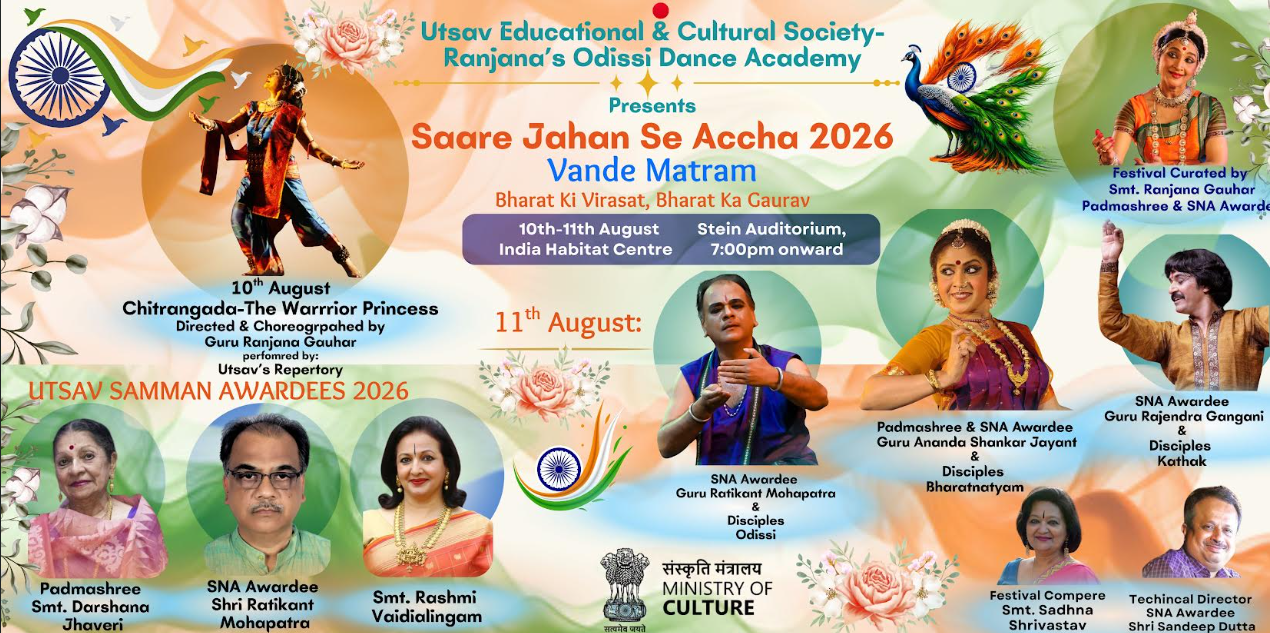
India is a civilization woven together by countless traditions, languages, philosophies, and artistic expressions that have flourished through the ages. At the heart of this rich heritage lies an abiding spirit of unity, resilience, and devotion to the motherland. The 21st edition of Saare Jahan Se Accha celebrates this enduring spirit through its theme, “Vande Mataram: Bharat Ki Virasat, Bharat Ka Garv.”
More than a patriotic expression, Vande Mataram embodies reverence for the land that nurtures us, inspires us, and binds us together as one people. The theme, “Vande Mataram:Bharat Ki Virasat, Bharat Ka Garv,” celebrates the nation’s magnificent cultural inheritance and the immense pride it inspires in every Indian. Through the timeless mediums of Indian classical dance and music, the festival seeks to honour India’s glorious past, celebrate its vibrant present, and inspire confidence in its future.

Saare Jahan Se Accha which was conceived in 2005 by Padmashree and Sangeet Natak Akademi Awardee Guru Ranjana Gauhar as a heartfelt artistic tribute to India’s Independence, it has emerged from her vision to celebrate the soul of the nation through the transformative power of culture. Over the past two decades, the festival has evolved into a prestigious and internationally admired cultural platform, bringing together legendary maestros, distinguished performers, emerging talent, and lovers of the arts from across the country and abroad.
A distinctive feature of the festival has been its tradition of honouring eminent artists and cultural luminaries whose lifelong dedication has enriched India’s artistic heritage and strengthened its cultural fabric.
Over the years, Saare Jahan Se Accha has paid tribute to some of the nation’s most celebrated maestros, including Padma Vibhushan and former Rajya Sabha Member Dr. Sonal Mansingh, Padma Vibhushan and Sangeet Natak Akademi Fellow Smt. Saroja Vaidyanathan, Padma Shri and Sangeet Natak Akademi Awardee Smt. Shovana Narayan, Padma Shri and Sangeet Natak Akademi Awardee Smt. Madhavi Mudgal, Padma Shri and Sangeet Natak Akademi Awardee Smt. Geeta Chandran, Padma Shri and Sangeet Natak Akademi Awardee Smt. Geeta Mahalik, and Padma Shri Ustad Wasifuddin Dagar, among many other distinguished personalities. Through these honours, the festival acknowledges their invaluable contributions to Indian art and culture while inspiring future generations to uphold and carry forward the nation’s rich artistic legacy.
As one of India’s foremost exponents of Odissi dance and a tireless cultural ambassador, Guru Ranjana Gauhar has dedicated her life to preserving, nurturing, and promoting India’s artistic traditions on both national and international stages. Under her inspiring guidance, the festival continues to uphold artistic excellence while fostering innovation, mentorship, and meaningful dialogue within the classical arts community.
The festival will present artistic interpretations that highlight the values and ideals that define the Indian ethos—unity in diversity, courage, compassion, sacrifice, spiritual wisdom, and cultural continuity. Each performance will serve as an artistic offering to the nation, reflecting the beauty, strength, and richness of India’s civilizational legacy.
As India continues to emerge as a beacon of cultural and spiritual leadership on the global stage, Saare Jahan Se Accha reaffirms the vital role of the arts in preserving national identity and fostering collective pride. Through this landmark 21st edition, the festival invites audiences to celebrate the spirit of India and experience the transformative power of its classical traditions.
Rooted in the vision of Guru Ranjana Gauhar, the festival stands as a tribute to the nation’s artistic heritage and a reminder that culture remains one of the strongest threads uniting the people of India. Through “Vande Mataram: Bharat Ki Virasat, Bharat Ka Garv,” the festival offers a heartfelt salutation to Bharat—its people, its traditions, its artists, and its timeless soul.
7, Aug 2026
Seaspan Becomes First International Ship Owner and Operator to Access China’s Panda Bond Market
SINGAPORE, Aug. 6, 2026 /PRNewswire/ — Seaspan Corporation Pte. Ltd. (“Seaspan”), a leading independent maritime asset owner and operator, is pleased to announce the successful issuance of a RMB 1.5 billion Panda Bond in China’s domestic bond market.

The three-year private placement note was issued on July 15, 2026, with a coupon rate of 2.50% per annum. The offering was oversubscribed by Chinese onshore and international investors with a book coverage ratio of 2.3 times.
The transaction is a significant milestone for Seaspan as the first international ship owner and operator to successfully access the Panda Bond market.
Beyond establishing a new funding channel, the transaction supports Seaspan’s strategy to diversify its sources of capital and broaden its access to unsecured debt, strengthening the company’s ability to invest in its fleet, pursue growth opportunities, and create long-term value for customers and stakeholders.
“The issuance demonstrates the confidence that investors have in Seaspan’s credit quality, business model, strong financial profile, and sustainable growth strategy,” said Andreas Brauch, Chief Financial Officer. “Expanding our access to China’s domestic capital markets further diversifies our funding sources and improves our access to cost-efficient capital, enhancing our long-term growth objectives to support our customers with one of the world’s largest and most modern fleets.”
The Panda Bond issuance marks an important highpoint in Seaspan’s participation in Chinese capital markets, where the company has strategic partnerships across the maritime ecosystem, including chartering, shipbuilding, financing, and maritime services.
About Seaspan Corporation Pte. Ltd.
Seaspan is the world’s leading maritime asset-owner and operator focused on long-term, fixed-rate leases to the world’s most prominent shipping lines. As of June 30, 2026, Seaspan’s operating fleet consisted of 247 vessels, pro forma for undelivered newbuilds (including four Pure Car, Truck Carriers, five Very Large Ethane Carriers and four Open Hatch Gantry Crane vessels), with a total fleet capacity of approximately 2.5 million TEU on a fully delivered basis.
Media Contact: Cailey Murphy, Head of Corporate Communications, Seaspan Corporation Pte. Ltd., communications@seaspancorp.com
 View original content to download multimedia:https://www.prnewswire.co.uk/news-releases/seaspan-becomes-first-international-ship-owner-and-operator-to-access-chinas-panda-bond-market-302845399.html

7, Aug 2026
Seaspan Becomes First International Ship Owner and Operator to Access China’s Panda Bond Market
SINGAPORE, Aug. 6, 2026 /PRNewswire/ — Seaspan Corporation Pte. Ltd. (“Seaspan”), a leading independent maritime asset owner and operator, is pleased to announce the successful issuance of a RMB 1.5 billion Panda Bond in China’s domestic bond market.
The three-year private placement note was issued on July 15, 2026, with a coupon rate of 2.50% per annum. The offering was oversubscribed by Chinese onshore and international investors with a book coverage ratio of 2.3 times.
The transaction is a significant milestone for Seaspan as the first international ship owner and operator to successfully access the Panda Bond market.
Beyond establishing a new funding channel, the transaction supports Seaspan’s strategy to diversify its sources of capital and broaden its access to unsecured debt, strengthening the company’s ability to invest in its fleet, pursue growth opportunities, and create long-term value for customers and stakeholders.
“The issuance demonstrates the confidence that investors have in Seaspan’s credit quality, business model, strong financial profile, and sustainable growth strategy,” said Andreas Brauch, Chief Financial Officer. “Expanding our access to China’s domestic capital markets further diversifies our funding sources and improves our access to cost-efficient capital, enhancing our long-term growth objectives to support our customers with one of the world’s largest and most modern fleets.”
The Panda Bond issuance marks an important highpoint in Seaspan’s participation in Chinese capital markets, where the company has strategic partnerships across the maritime ecosystem, including chartering, shipbuilding, financing, and maritime services.
About Seaspan Corporation Pte. Ltd.
Seaspan is the world’s leading maritime asset-owner and operator focused on long-term, fixed-rate leases to the world’s most prominent shipping lines. As of June 30, 2026, Seaspan’s operating fleet consisted of 247 vessels, pro forma for undelivered newbuilds (including four Pure Car, Truck Carriers, five Very Large Ethane Carriers and four Open Hatch Gantry Crane vessels), with a total fleet capacity of approximately 2.5 million TEU on a fully delivered basis.
Media Contact: Cailey Murphy, Head of Corporate Communications, Seaspan Corporation Pte. Ltd., communications@seaspancorp.com
View original content to download multimedia:https://www.prnewswire.co.uk/news-releases/seaspan-becomes-first-international-ship-owner-and-operator-to-access-chinas-panda-bond-market-302845399.html


