


6, Aug 2026
Envision Commissions Galaxy Campus in Ulanqab, Establishing a New Model for Gigawatt-Scale AI Infrastructure
Featuring the world’s largest single AI data center building, Galaxy Campus integrates renewable energy, intelligent power management and high-density computing at unprecedented scale.
ULANQAB, China, Aug. 6, 2026 /PRNewswire/ — Envision, a global leader in green technology, today announced the commissioning of the Envision Galaxy Campus in Ulanqab, Inner Mongolia, a next-generation AI infrastructure campus designed to accelerate the deployment of large-scale artificial intelligence. Powered directly by renewable energy and designed to scale to over 2GW of capacity, the campus in Ulanqab introduces a new approach to meeting the growing energy and infrastructure demands of AI.
At the heart of the campus is a 120,000-square-meter AI supercomputing facility, equivalent to 20 standard football pitches. Once fully operational, it is designed to deliver industry-leading token-generation capacity within a single structure, supported by directly connected renewable electricity and Envision’s proprietary AI Power System.
At full build-out, the facility is designed to deliver one million PFLOPS of AI computing and support up to one million AI accelerators, setting a new benchmark for compute density in AI infrastructure.
“Supporting a million accelerators requires a purpose-built AI Power System that integrates renewable generation, dedicated transmission infrastructure, and large-scale energy storage to deliver stable, low-cost green power,” said Ricky Zheng, General Manager of Envision’s AIDC (AI Data Center). “This enables the facility to deliver up to ten times more compute output per square meter than conventional data centers.”
Beyond power, Envision Galaxy Campus addresses another critical requirement for large-scale, low-latency connectivity. Ulanqab’s position as a major digital infrastructure hub provides the network performance required for AI clusters containing hundreds of thousands of accelerators.
The region’s abundant wind and solar resources provide a complementary advantage. By combining dedicated renewable energy assets, transmission infrastructure and AI-optimized power management, Envision has created a new model for gigawatt-scale AI infrastructure powered directly by green electricity.
“The next frontier of AI is infrastructure,” added Zheng. “As AI models become larger and more compute-intensive, the limiting factors are increasingly power availability, network performance and energy efficiency. Envision Galaxy Campus combines energy, networking and physical infrastructure at unprecedented scale, enabling hyperscalers, technology companies and AI innovators to deploy and scale the next generation of AI workloads.”
The Galaxy Campus serves as the first flagship project under Envision’s global Mission Gobi initiative, which was unveiled at VivaTech in Paris in June 2026. The initiative aims to build 5GW of green AI computing capacity in desert and arid regions worldwide by 2030.
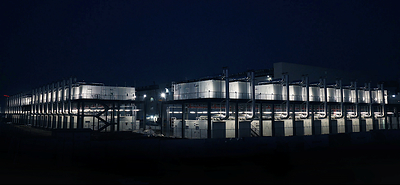
 View original content to download multimedia:https://www.prnewswire.co.uk/news-releases/envision-commissions-galaxy-campus-in-ulanqab-establishing-a-new-model-for-gigawatt-scale-ai-infrastructure-302844855.html

- 0
- By Sai Krishna

6, Aug 2026
KuCoin Pay Expands Stablecoin Utility With an Enterprise Gift Card Solution
PROVIDENCIALES, Turks and Caicos Islands, Aug. 6, 2026 /PRNewswire/ — KuCoin Pay, the cryptocurrency payment solution enabled by KuCoin, today announced the launch of KuCoin Gift Card, a scalable digital asset distribution solution that enables businesses to distribute USDT and USDC globally through digital gift cards, with support for bulk issuance and API integration. Designed for customer rewards, promotional campaigns, employee incentives and community engagement, the solution simplifies how businesses deliver digital value across users, markets and use cases while making stablecoin distribution more accessible and operationally efficient.

Businesses can use KuCoin Gift Card to send crypto directly to customers, partners, employees and community members without adding operational complexity. Recipients can redeem the gift cards and receive the corresponding assets through KuCoin, creating an experience that is as intuitive as traditional digital gifting while lowering barriers to crypto adoption.
Beyond redemption, recipients can continue to hold, transfer or use the assets across supported scenarios within the KuCoin ecosystem. By connecting, sending, receiving and continued use, KuCoin Gift Card creates a more complete digital asset experience rather than limiting the value to a single transaction. Bulk issuance and API integration also allow businesses to embed crypto transfers into customer acquisition, loyalty programs, promotional campaigns, community engagement and employee recognition.
“The next phase of crypto adoption will be driven not only by how people trade digital assets, but by how easily they can exchange and use them in everyday economic activity,” said Alicia Kao, Managing Director of KuCoin. “KuCoin Gift Card transforms crypto distribution into a simple, scalable experience for businesses while connecting every transfer to broader utility across the KuCoin ecosystem. By combining KuCoin Pay’s merchant infrastructure with KuCoin’s broader ecosystem, we are building a more complete value loop across sending, receiving and using digital assets—making crypto more practical for businesses and more accessible to users.”
The launch advances KuCoin Pay’s evolution into an infrastructure layer that enables digital value to move more easily between businesses and users. As stablecoins continue to expand their role in global commerce, KuCoin Pay is focused on building trusted payment and distribution infrastructure that helps businesses unlock practical, real-world utility for digital assets.
About KuCoin Pay
KuCoin Pay is a pioneering merchant solution that drives business growth by integrating cryptocurrency payments into retail. It offers a contactless and borderless payment system using a variety of cryptocurrencies and stablecoins. KuCoin Pay supports more than 50 cryptocurrencies, including KCS, USDT, USDC, BTC, which users can use to seamlessly pay for global products and services for both online and in-store purchases. Learn more about KuCoin Pay.
Learn more: www.kucoin.com/pay

Photo – https://mma.prnewswire.com/media/3008661/image1.jpg
Logo – https://mma.prnewswire.com/media/2785613/KuCoin_new_Logo.jpg
 View original content:https://www.prnewswire.co.uk/news-releases/kucoin-pay-expands-stablecoin-utility-with-an-enterprise-gift-card-solution-302842239.html

6, Aug 2026
Afcons receives LoA for ₹1,918-cr desalinated water tunnel project in Mumbai
Manori-to-Mahavir Nagar tunnel critical to boost Mumbai’s water supply
MUMBAI, India, Aug. 6, 2026 /PRNewswire/ — Afcons Infrastructure Ltd has announced that it has received the Letter of Acceptance (LoA) from the Brihanmumbai Municipal Corporation (BMC) for the Design and Construction of a Desalinated Water Conveyance Tunnel from the proposed Water Pumping Station at Manori to Charkop, extending further to Mahavir Nagar (Kandivali), Mumbai. The project is valued at ₹1,918 crores, including GST and O&M.
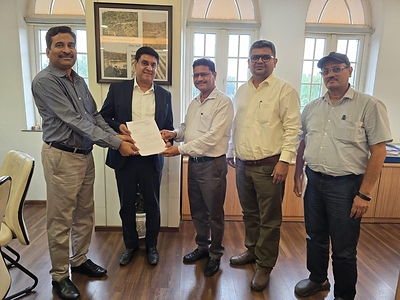
Mr. Krishnamurthy Subramanian, Executive Chairman, Afcons Infrastructure Ltd, said, “The desalinated water conveyance tunnel is a critical step towards ensuring sustainable water supply for Mumbai and stands as a testament to our engineering excellence and execution capabilities.”
Mr. S Paramasivan, Managing Director, Afcons Infrastructure Ltd, said, “We are honoured to partner with BMC once again. Alongside the Kasheli–Mulund water conveyance tunnel, this complex desalinated water tunnel project will be executed on time while maintaining the highest standards.”
In India, Afcons has successfully delivered and is currently executing several hydro, water supply, and water tunnel projects. Some of these projects include BMC’s 7.13 km underground water conveyance tunnel from Kasheli to Mulund, CIDCO’s 8.7 km treated water tunnel in Navi Mumbai, Rural Water Supply Scheme in Uttar Pradesh, and Water Supply Project in Rajasthan. Afcons has also constructed Annaram Barrage in Telangana, part of the world’s largest multi-stage irrigation project.
Internationally, Afcons has delivered multiple water supply projects across Africa, including in Tanzania, Ivory Coast, Benin, and Rwanda, further strengthening its global footprint in sustainable infrastructure development.
About Afcons Infrastructure Ltd.
Afcons Infrastructure Ltd is the flagship infrastructure engineering and construction company of the Shapoorji Pallonji Group. It has a legacy of over six decades, with a strong track record of executing numerous technologically complex EPC projects both within India and internationally. The company has a footprint in 31 countries across South Asia, Africa, Middle East, and CIS. As per the latest ENR survey, Afcons is ranked in the Top 140 international Contractors globally; 12th in Bridges and 8th in Marine & Ports.
 View original content to download multimedia:https://www.prnewswire.com/in/news-releases/afcons-receives-loa-for-1-918-cr-desalinated-water-tunnel-project-in-mumbai-302844871.html

6, Aug 2026
Digital Savings Gets a Boost as PhonePe Launches FD Booking Facility
New Delhi, Aug 6: Digital payments platform PhonePe has expanded its financial services portfolio by launching fixed deposit (FD) distribution on its app, allowing users to compare and book deposits from partner banks and non-banking financial companies (NBFCs) through a fully digital process.
The new feature enables customers to explore multiple fixed deposit options, compare interest rates and investment periods, and complete the booking process without paperwork. The move aims to make traditional savings products more accessible and convenient for digital users.
Along with fixed deposits, PhonePe has introduced a Daily Recurring Deposit (RD) facility in partnership with Shivalik Small Finance Bank, allowing users to build savings through daily investments starting from ₹100.
The Daily RD product is designed to encourage small and regular savings by allowing users to automate daily contributions through UPI Autopay. Customers can invest between ₹100 and ₹1,000 per day based on their financial goals.
PhonePe said users will have flexibility with the Daily RD option, including the ability to withdraw funds after seven days and manage their UPI mandate according to their requirements. A grace period for missed investments has also been introduced to provide additional convenience.
Under the FD facility, customers can manage deposits from multiple partner institutions through a single platform. Deposits placed with eligible partner banks will receive insurance coverage of up to ₹5 lakh under the Deposit Insurance and Credit Guarantee Corporation (DICGC) framework, subject to applicable guidelines.
Users can access the FD and Daily RD services through the “Mutual Funds & Deposit” section on the PhonePe application. The process includes selecting a financial institution, choosing the deposit amount and tenure, completing digital verification and making payments through online payment options.
The launch reflects the growing shift towards digital financial services in India, where consumers are increasingly adopting online platforms for savings, investments and personal finance management.
With the introduction of digital fixed deposits and small-ticket savings solutions, PhonePe aims to strengthen its role in expanding access to financial products and encouraging a culture of convenient digital savings.
6, Aug 2026
Experts at Apollo Hospital, Bilaspur, Remove Esophagus Cancer, Create A New Food Passage Using Stomach
BILASPUR, India, Aug. 6, 2026 /PRNewswire/ — In a significant milestone for cancer care in Chhattisgarh, Apollo Hospital, Bilaspur has successfully performed a highly complex and challenging *Esophagectomy* on a patient diagnosed with cancer of the esophagus (food pipe).
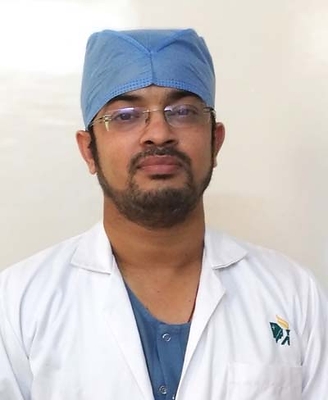
The intricate surgery was led by Dr. Amol Padegaonkar, Surgical Oncologist, and his expert surgical team.
Esophagectomy is regarded as one of the most technically demanding procedures in onco-surgery. The patient was diagnosed with a 5cm long cancerous pipe with two positive Lymph nodes. Initially, the size was reduced with chemo-radiation and then operated. During the operation, the cancerous portion of the esophagus was removed, and a new food passage was created using the stomach. The procedure requires exceptional surgical expertise, a highly experienced anaesthesia team, advanced ICU infrastructure, and seamless coordination across multiple specialities. The total time taken was 1 month from the date of diagnosis.
Impact for Central India
The successful outcome of this surgery at Apollo Hospital, Bilaspur, marks a major advancement for healthcare in the region. Patients from Chhattisgarh and neighbouring areas can now avail advanced cancer care with world-class treatment in the State.
Emphasising on early diagnosis
Dr. Amol Padegaonkar said, “Early detection of esophagal cancer is critical for successful treatment outcomes. Symptoms such as persistent difficulty in swallowing, unexplained weight loss, a sensation of food getting stuck while eating, or frequent vomiting should not be ignored. Patients must consult a specialist immediately. When identified early, the prognosis is significantly better.”
Esophagectomy is a complex surgical procedure performed to remove all or part of the esophagus, most commonly for cancer of the food pipe. The affected part is removed, and the stomach is reshaped into a tube and brought up to restore continuity of the digestive tract. Modern esophagectomy is often performed using high-definition 3D imaging, advanced energy devices, and stapling technology, which help improve surgical precision, reduce blood loss, and support faster recovery.
This successful surgery not only underscores the clinical excellence of Apollo Hospital, Bilaspur, but also demonstrates that highly advanced and complex cancer surgeries can now be performed in Central India at par with global standards.
ABOUT APOLLO HOSPITALS
Apollo revolutionised healthcare when Dr. Prathap Reddy opened the first hospital in Chennai in 1983. Today, Apollo is the world’s largest integrated healthcare platform with over 10,400 beds across 76 hospitals, 7,113+ pharmacies, 308 clinics, 2,457 diagnostic centres, and 800+ telemedicine centres. It is one of the world’s leading cardiac centres, having performed over 3,00,000 angioplasties and 2,00,000 surgeries. Apollo continues to invest in research and innovation to bring the most cutting-edge technologies, equipment, and treatment protocols to ensure patients have access to the best care in the world. Apollo’s 1,20,000 family members are dedicated to delivering exceptional care and leaving the world better than we found it.

 View original content to download multimedia:https://www.prnewswire.com/in/news-releases/experts-at-apollo-hospital-bilaspur-remove-esophagus-cancer-create-a-new-food-passage-using-stomach-302844810.html

6, Aug 2026
SANY Expands Global Presence with Major Equipment Deliveries in South America and Thailand
SHANGHAI, Aug. 6, 2026 /PRNewswire/ — SANY Group recently achieved two major milestones in overseas markets, completing major equipment deliveries and securing new orders in South America and Southeast Asia. SANY Marine signed a procurement agreement with Hanseatic Global Terminals (HGT) to supply 26 units of port equipment for a South American container terminal, including six quay cranes and 20 rubber-tired gantry cranes (RTGs). Following the success of SANY Marine, SANY Heavy Industry delivered 40 units of SW970E electric wheel loaders (EWLs) to the world’s largest rice mill in Thailand.
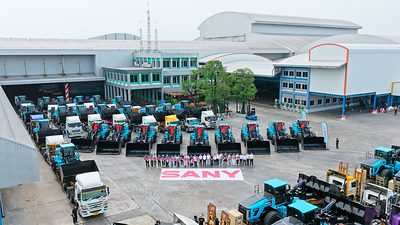
From South American ports to Southeast Asian rice facilities, these deliveries reflect SANY’s continued investment in its global service network and its strategy of delivering efficient, reliable equipment tailored to the operational needs of customers in different markets.
Major Port Equipment Order Strengthens South American Port Operations
The equipment combines high efficiency, safety and sustainability to help HGT meet growing cargo volumes and evolving customer requirements. Dheeraj Bhatia, CEO of HGT, said, “The signing of this agreement marks a major milestone in our efforts to build a world-class port. SANY’s equipment will provide a solid foundation for safe and efficient port operations, helping us better serve our customers and contribute to regional economic growth.”
Zhou Guoyuan, Chairman of SANY Marine, stated that the agreement represents another milestone in SANY’s global expansion strategy. He added that SANY will continue leveraging its expertise in port and logistics equipment to help customers improve operational efficiency.
Dual Electric Loader Lineup Supports Thailand’s Rice Industry
Thailand produces more than 20 million tons of milled rice annually, with exports consistently ranking among the world’s top three. Rice mills face demanding conditions, including high dust levels, continuous operations and busy work environments, requiring equipment with strong environmental performance, low noise and reliable all-day performance. The SW970E EWL was designed for rice mill operations, featuring extended runtime, zero emissions, low noise and enhanced protection.
The customer subsequently placed an additional order for 50 SW956E electric wheel loaders. Together, the SW956E and SW970E will handle material movement throughout the rice production process—from primary processing through final packaging—while accelerating the adoption of electric equipment across Thailand’s rice industry.
Looking ahead, SANY will continue expanding into global markets with efficient, environmentally responsible products that help drive the transition to more sustainable industrial operations.

 View original content to download multimedia:https://www.prnewswire.co.uk/news-releases/sany-expands-global-presence-with-major-equipment-deliveries-in-south-america-and-thailand-302844814.html

6, Aug 2026
Clarivate Scales Agentic AI Across Cortellis to Advance Drug Development
Expanded capabilities across Cortellis portfolio help life sciences organizations turn trusted intelligence into action and accelerate decision making across the research and development lifecycle
LONDON, Aug. 6, 2026 /PRNewswire/ — Clarivate Plc (NYSE:CLVT), a leading global provider of transformative intelligence, today announced the expansion of agentic AI capabilities across the Cortellis portfolio, helping life sciences R&D teams accelerate discovery, strengthen safety assessment and make faster, more informed portfolio decisions. By embedding AI directly within existing workflows, the new capabilities enable researchers to reduce manual effort, navigate complexity and focus on higher-value scientific and strategic decisions.

The Cortellis suite of solutions combines trusted life sciences data, expert curation and AI to help R&D, portfolio strategy, business development and regulatory professionals act on intelligence across the drug development lifecycle. The latest AI capabilities help life sciences teams accelerate work across discovery, safety and portfolio strategy:
- Accelerating discovery decisions: New capabilities within Cortellis Drug Discovery Intelligence enable researchers to engage with complex drug intelligence through natural language, rapidly evaluate therapeutic landscapes, compare compounds and targets and prioritize promising opportunities. By reducing time spent gathering and synthesizing information, teams can focus more of their expertise on advancing the most compelling paths forward.
- Advancing proactive safety assessment: Enhanced capabilities within OFF-X introduce multi-agent intelligence that helps safety teams surface potential liabilities earlier, synthesize evidence more efficiently and support more proactive risk evaluation across development and post-market activities. These capabilities strengthen safety assessment while improving consistency and productivity.
- Strengthening competitive and portfolio strategy: New agentic workflows within Cortellis Competitive Intelligence help strategy and business development teams monitor evolving markets, assess competitive dynamics and evaluate external growth opportunities by transforming weeks of manual analysis into actionable intelligence delivered in hours.
Anne Lecocq, Senior Vice President and General Manager, R&D, Life Sciences & Healthcare, Clarivate, said: “In modern R&D, success depends on how quickly teams can translate complex data into decisive action. Cortellis is advancing this shift with agentic AI, evolving from insight delivery to workflow execution across the product lifecycle. Together, these innovations reflect the evolution of Cortellis from a trusted information source into a connected ecosystem of agentic capabilities that augment human expertise across the R&D lifecycle. Built on trusted data, it empowers teams to reduce friction, align decisions and act with precision in high-stakes environments.”
Powered by proprietary data, expert curation and embedded AI, Cortellis helps life sciences teams connect evidence, streamline complex workflows and move from insight to action with greater speed and confidence.
Learn how Cortellis combines trusted intelligence and agentic AI to accelerate decision-making across the R&D lifecycle, here.
About Clarivate
Clarivate is a leading global provider of transformative intelligence. We offer enriched data, insights & analytics, workflow solutions and expert services in the areas of Academia & Government, Intellectual Property and Life Sciences & Healthcare. For more information, please visit clarivate.com.
Media Contact
Catherine Daniel
Director, External Communications, Life Sciences & Healthcare, Clarivate
newsroom@clarivate.com
 View original content to download multimedia:https://www.prnewswire.co.uk/news-releases/clarivate-scales-agentic-ai-across-cortellis-to-advance-drug-development-302844493.html

6, Aug 2026
Hexaware Joins the Microsoft Intelligent Security Association (MISA)
MUMBAI, India, Aug. 6, 2026 /PRNewswire/ — Hexaware Technologies (NSE: HEXT), a global provider of IT solutions and services, today announced it has become a member of the Microsoft Intelligent Security Association (MISA), an ecosystem of leading software development companies and security services partners that integrate with Microsoft Security to help organizations stay ahead of evolving threats.

Hexaware’s end-to-end security solution for Microsoft Azure & Microsoft 365, listed on the Microsoft Marketplace, helps clients accelerate their Zero Trust journeys with unified Extended Detection and Response (XDR), Security Information and Event Management (SIEM), identity, and other cloud security capabilities. Built on Microsoft Security technology and powered by Hexaware’s Tensai® Security Ops frameworks, it delivers comprehensive security assessment, attack validation, and compliance-focused security analysis while leveraging industry best practices and frameworks. Hexaware’s solution was also validated by Microsoft experts, an important step in the MISA membership process.
Girish Ravindran, Executive Vice President – Digital IT Ops, Hexaware said, “Our inclusion in MISA reflects the cybersecurity capabilities we have built with Microsoft to help enterprises strengthen their security posture. This recognition highlights our continued focus on delivering security services that help customers address evolving cyber risks with greater confidence.”
“The Microsoft Intelligent Security Association has grown into a vibrant ecosystem comprising the most reliable and trusted security vendors across the globe,” said Maria Thomson, Director, Microsoft Intelligent Security Association. “Our members, like Hexaware, share Microsoft’s commitment to collaboration within the cybersecurity community to improve our customers’ ability to predict, detect, and respond to security threats faster.”
Established in 2018, MISA brings together Microsoft and trusted security partners to strengthen cyber resilience through partner innovation and Microsoft’s AI-powered security platform. Learn more at Microsoft Intelligent Security Association.
About Hexaware
Hexaware is a global technology and business process services company. Every day, Hexawarians wake up with a singular purpose: to create smiles through great people and technology. With offices across the world, we empower enterprises worldwide to realize digital transformation at scale and speed by partnering with them to build, transform, run, and optimize their technology and business processes. Learn more at hexaware.com.
Product or service names mentioned herein may be the trademarks of their respective owners.
 View original content to download multimedia:https://www.prnewswire.com/in/news-releases/hexaware-joins-the-microsoft-intelligent-security-association-misa-302844712.html

6, Aug 2026
Novotel Bhubaneswar Janpath Appoints Neelabh Sahay as General Manager
Aug 6: A seasoned hospitality leader with over two decades of experience across luxury hotels and internationally renowned brands, Neelabh brings a proven track record in hotel operations, commercial strategy, pre-opening excellence, and people leadership. An alumnus of The Oberoi Centre of Learning & Development, he began his career with The Oberoi Hotels, where he developed a strong foundation in luxury hospitality and culinary excellence. Throughout his career, he has held leadership positions with The Oberoi Grand Kolkata, Trident Nariman Point, Novotel Kolkata Hotel & Residences, and most recently served as Director of Operations at Novotel Mumbai Juhu Beach.

Neelabh’s career is distinguished by a remarkable progression from culinary leadership to executive hotel management. Recognised as one of the youngest Executive Chefs at Novotel Kolkata Hotel & Residences, he has consistently demonstrated an ability to build high-performing teams, drive operational excellence, elevate guest satisfaction, and deliver strong commercial results. His achievements include leading award-winning culinary initiatives, successfully managing large-scale hospitality operations, and receiving the BW Hotelier Executive Chef of the Year – Eastern Region for his outstanding contribution to the industry.
As General Manager, Neelabh will oversee the pre-opening strategy and overall operations of Novotel Bhubaneswar Janpath. His mandate includes establishing robust operational systems, cultivating a culture of excellence, driving commercial performance, and delivering the contemporary, guest-centric experiences synonymous with the Novotel brand.
Commenting on his appointment, Neelabh Sahay, General Manager, Novotel Bhubaneswar Janpath, said:
“It is an honour to lead Novotel Bhubaneswar Janpath as we prepare to introduce the hotel to the city. My vision is to establish the property as Bhubaneswar’s preferred destination for business, MICE and leisure travellers by delivering thoughtful hospitality, exceptional service, and meaningful guest experiences. Equally important is creating an environment where our teams feel inspired, empowered, and equipped to excel, because outstanding hospitality begins with engaged people. I look forward to working closely with our teams, partners, hotel ownership, and Accor to create lasting value while contributing to the continued growth of Bhubaneswar’s evolving hospitality landscape.”
Drawing on the service philosophies of globally respected hospitality brands including The Oberoi, Trident and Accor, Neelabh’s leadership style is defined by operational rigour, strategic thinking, innovation, and a people-first approach. He is passionate about nurturing talent, fostering a culture of excellence, and delivering sustainable business growth. Outside of work, he enjoys reading, cooking, and exploring emerging technologies shaping the future of hospitality.
Under Neelabh’s leadership, Novotel Bhubaneswar Janpath is poised to make a strong market debut, bringing the brand’s signature blend of contemporary comfort, intuitive service, and world-class hospitality to Bhubaneswar while setting new benchmarks for business, MICE, and leisure travel in the region.
6, Aug 2026
THE ADECCO GROUP HALF YEAR REPORT 2026
ZURICH, Switzerland, Aug. 6, 2026 /PRNewswire/ — The Adecco Group Half Year Report 2026 is now available in the Ad Hoc section of the Group’s website, which is directly accessible by clicking here.
For further information, please contact:
|
Investor Relations investor.relations@adeccogroup.com +41 (0)44 878 88 88 |
Press Office +41 (0) 79 876 09 21 |
 View original content to download multimedia:https://www.prnewswire.co.uk/news-releases/the-adecco-group-half-year-report-2026-302844089.html



