


5, Aug 2026
Haier Partners with AO 1 Point Slam to Bring Grassroots Tennis to the Grand Slam Stage
Partnership creates a new pathway for community players to experience the Australian Open
QINGDAO, China, Aug. 5, 2026 /PRNewswire/ — Haier, the world’s No.1 major appliances brand, today announced its partnership with AO 1 Point Slam, an innovative tennis initiative launched by the Australian Open that provides grassroots players with the opportunity to experience the excitement of Grand Slam competition.
The partnership connects local tennis communities with the world’s premier tennis stage, giving players of all ages and skill levels the chance to compete in local qualifying events and earn the opportunity to compete on Rod Laver Arena during Australian Open Opening Week.
To encourage broader community participation, Tennis Australia and Haier are calling on tennis clubs, associations, schools, and coaches across the country to host qualifying events. Each main-draw player at AO Opening Week will represent a local community, with the club associated with the eventual champion receiving a tennis development grant to support grassroots growth.
“Our long-standing partnership with the Australian Open has allowed Haier to connect with tennis fans and communities around the world. By expanding our collaboration to include AO 1 Point Slam, we are creating new opportunities to engage with a broader community of players and fans, bringing the excitement of the Australian Open closer to tennis communities worldwide,” said Wang Meiyan, Vice President and Chief Brand Officer of Haier Group.
“We are delighted to extend our partnership with Haier to the AO 1 Point Slam,” Tennis Australia Chief Commercial Officer Cedric Cornelis said. “Haier’s dedication to innovation and quality aligns perfectly with the values of our sport. This collaboration will not only elevate one of the newest tennis events but also supports grassroots tennis communities around the country.”
Building on more than two decades of sports marketing experience since its first collaboration with the Melbourne Tigers in 2004, Haier has expanded its presence across world-class sporting properties, partnering with leading football clubs such as Paris Saint-Germain and Liverpool FC, as well as major global events including the Australian Open and Roland-Garros.
Through these partnerships, Haier engages with diverse audiences around the world while gaining deeper insights into local cultures and consumer lifestyles. These experiences continue to inform Haier’s approach to developing products and solutions that meet the evolving needs of households across different markets.
With a global R&D network and localized innovation capabilities, Haier develops smart home solutions designed around different household environments and lifestyles. From energy-efficient washing machines tailored to European households to large-capacity appliances developed for North American consumers, Haier continues to adapt its innovations to meet diverse consumer needs.
Recognized as the world’s No.1 major appliances brand by retail volume for 17 consecutive years and as a leading global smart home enterprise, Haier strengthens its market leadership through innovation, consumer-focused solutions and local engagement. By bringing together sports, communities and technology, the company seeks to create lasting value for consumers worldwide.
For more information on community event hosting, registration, and participation details, visit tennis.com.au/one-point-slam.
About Haier Group
Founded in 1984, Haier Group is a leading global provider of solutions for better living and digital transformation, with the purpose of “More Creation, More Possibilities”. The company has established 10 R&D centers, 35 industrial parks, and 173 manufacturing centers worldwide, generating global revenue of USD 59.8 billion in 2025. Haier is the world’s only IoT Ecosystem Brand that has been ranked among the Kantar BrandZ Top 100 Most Valuable Global Brands for 8 consecutive years. Additionally, Haier has ranked No.1 in brand share of global major home appliance sales by Euromonitor International for 17 consecutive years.
 View original content:https://www.prnewswire.co.uk/news-releases/haier-partners-with-ao-1-point-slam-to-bring-grassroots-tennis-to-the-grand-slam-stage-302843586.html

- 0
- By Sai Krishna

5, Aug 2026
Para Light Launches ThermaFlat™ SiC MOSFETs to Break the Thermal Barrier in High-Power Applications
Breakthrough ultra-low RDS(on) drift technology delivers higher efficiency, greater power density, and enhanced reliability for next-generation power systems.
NEW DELHI, Aug. 5, 2026 /PRNewswire/ — Para Light Electronics today announced the official launch of its ThermaFlat™ SiC MOSFET family (ThermaFlat™ I and ThermaFlat™ II), targeting a fundamental thermal challenge in next-generation high-power design. Powered by Para Light’s Ultra-Low RDS(on) Drift Technology, the new semiconductor portfolio breaks through one of the industry’s most persistent technical bottlenecks—delivering exceptional thermal stability, reduced conduction losses, and unmatched reliability across rapidly expanding electrification markets.
Solving Power Electronics’ Most Persistent Bottleneck
The global transition toward electrification—driven by artificial intelligence (AI), high-performance computing (HPC), renewable energy, electric vehicles (EVs), and energy storage—is forcing power systems to deliver higher output within smaller, cooler, and more efficient footprints.
Yet conventional silicon and SiC MOSFETs face a built-in constraint: temperature-dependent RDS(on) drift. As junction temperatures rise in standard devices, escalating on-resistance can trigger a costly cycle of higher conduction losses, excessive heat generation, and expanded cooling requirements, ultimately degrading system efficiency and long-term reliability, while potentially increasing thermal management costs.
~8% Resistance Drift: Redefining Thermal Stability
Para Light’s ThermaFlat™ technology directly redefines this thermal dynamic. Unlike standard SiC MOSFETs, ThermaFlat™ devices maintain virtually flat on-resistance across wide operating temperatures while sustaining exceptionally low switching losses.
In benchmark testing of Para Light’s 650 V, 21mΩ TO-247 device, RDS(on) changes by only approximately 8% as junction temperature swings from -25°C all the way to +125°C. By drastically outperforming conventional SiC temperature coefficients, this ultra-stable performance allows designers to preserve high efficiency under heavy load, simplify thermal management, boost power density, and reduce overall system costs without sacrificing reliability. The 1200 V ThermaFlat™ family applies a similar ultra-low temperature coefficient to mission-critical, high-power conversion architectures.
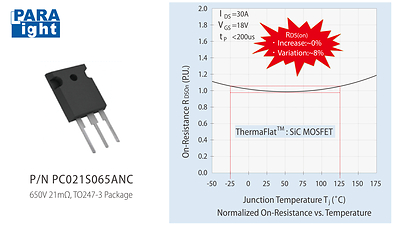
ThermaFlat™ I & II: Architecture-Ready Versatility
To support diverse design topologies, Para Light has structured the portfolio into two specialized series:
- ThermaFlat™ I Series: Offers 650 V and 1200 V options in industry-standard packages, compatible with mainstream converter topologies to accelerate development cycles and simplify integration.
- ThermaFlat™ II Series: Integrates Ultra-Low RDS(on) Drift with a High VGS(th) architecture for enhanced noise immunity and false turn-on prevention. Operating without the need for a negative gate-off voltage supply, ThermaFlat™ II enables engineers to streamline gate-driver circuitry, cut component count, lower BOM costs, and enhance system robustness.
For the full product portfolio specifications, please visit our official website at https://www.para.com.tw/en/news/%e5%85%89%e9%bc%8e%e9%9b%bb%e5%ad%90%e6%8e%a8%e5%87%ba-thermaflat-sic-mosfet-%e7%b3%bb%e5%88%97/
Accelerating High-Growth Power Applications
The ThermaFlat™ lineup empowers power systems R&D engineers to not only streamline system design but also lower overall costs across medium- to high-power applications, including AI data center and server power supplies, BBU and UPS systems, EV charging stations, grid-connected energy storage systems (ESS), photovoltaic (PV) inverters, variable frequency drives (VFD), and industrial automation. Para Light is continuously expanding the portfolio with additional voltage classes, current ratings, and package configurations.
Integrated Manufacturing & Global Supply Resiliency
Para Light’s expansion into advanced power semiconductors is anchored by three strategic strengths:
- Superior Manufacturing Quality: High wafer yields, dedicated in-house packaging, and stringent process controls ensure exceptional product consistency and proven long-term field reliability.
- Lower Total Cost of Ownership: Vertical integration across device design, packaging, and supply chain management delivers premium power performance at optimized overall system costs.
- Uninterrupted Global Supply: Strategic production planning, safety inventory frameworks, and responsive logistics minimize supply-chain risk for international customers.
Building on Decades of Operational Excellence
Leveraging extensive expertise in device design, wafer collaboration, advanced packaging, and supply chain management, Para Light has established a comprehensive range of IGBT and SiC MOSFET solutions. Expanding on decades of manufacturing leadership in the LED industry, the company operates a robust global footprint across Taiwan, China, the United States, India, and Myanmar.
As demand for intelligent power conversion escalates, Para Light remains committed to advancing semiconductor innovation—partnering with global OEMs to power the next generation of AI infrastructure, clean energy, and high-efficiency power systems.
# Media & Sales Contact:
- India – Abhinav Jha: (+1) 5196710998 | abhinav.jha@para-india.com
Sunil Kumar: (+91) 892-047-8061 | bd1@para-india.com
 View original content to download multimedia:https://www.prnewswire.com/in/news-releases/para-light-launches-thermaflat-sic-mosfets-to-break-the-thermal-barrier-in-high-power-applications-302843565.html

5, Aug 2026
Belrise Industries Acquires Hyva India’s Tipper Body Business
- Acquisition strengthens Belrise’s transition to a Tier-0.5 supplier
- Transaction valued at approximately USD 5.65 million, representing an Enterprise Value (EV) to Earnings Before Interest, Taxes, Depreciation and Amortisation (EBITDA) multiple of approximately 3.60x
PUNE, India, Aug. 5, 2026 /PRNewswire/ — Belrise Industries Limited, one of India’s leading integrated automotive and aerospace component manufacturers with a diverse portfolio of safety-critical systems and engineering solutions announced the acquisition of the Tipper Body Business of Hyva India Private Limited, a subsidiary of JOST Werke SE. This transaction marks a strategic step in strengthening Belrise’s position as a Tier-0.5 supplier within the commercial vehicle ecosystem.
This acquisition aligns with Belrise’s long-term strategy of expanding its capabilities in the commercial vehicle segment and deepening its presence in high growth sectors such as construction, mining, defense and infrastructure. The transaction is based on an EV/EBITDA multiple of approximately 3.60x EV/EBITDA, with a total purchase consideration of approximately USD 5.65 million.
Hyva India’s Tipper Body Business is a well-established platform specializing in the manufacture of tipping solutions, catering to diverse end use applications across construction, mining, and infrastructure sectors. The business has strong engineering and design capabilities and serves all of the top five commercial vehicle OEMs in India.
The business delivered an EBITDA of approximately USD 1.57 million for CY2025, with a return on average capital employed (ROACE) of around 20%, reflecting its operational efficiency and profitability.
The acquisition will further enhance Belrise’s customer portfolio by adding a key European commercial vehicle OEM, while also strengthening its domestic footprint through three manufacturing facilities located in Pune, Jamshedpur, and Bangalore.
Speaking on the occasion, Mr. Swastid Badve, General Manager, Belrise Industries Limited, said:
“We are pleased to welcome Hyva India’s Tipper Body Business into the Belrise family. This acquisition is a strong strategic fit and complements our manufacturing and engineering strengths. It enhances our position in the commercial vehicle value chain and supports our vision of becoming a diversified, global mobility solutions provider. Belrise remains committed to ensuring a seamless transition for customers, employees, suppliers, and business partners, while investing in the future growth and development of the business.”
About Belrise Industries Limited
Belrise Industries Limited (“Belrise”) is a leading integrated precision engineering company headquartered in Pune, India. The Company specializes in the manufacturing of safety-critical systems and advanced engineering solutions for two-wheelers, three-wheelers, and four-wheelers, including passenger vehicles, commercial vehicles, and agricultural vehicles. Through its recent strategic acquisitions in Europe, Belrise has further expanded its capabilities into the production of structural and engine components for the aerospace and defense sectors.
Belrise has a turnover of INR 95,091 million and a market share of approximately 24% in precision sheet metal pressing and fabrication, based on revenue. With 22 manufacturing facilities in India and 2 in Europe, the Company serves 38 OEMs across vehicle segments, including the largest global aerospace and defense OEMs.
About Hyva India Tipper Body Business
Established in 1997, Hyva India introduced telescopic cylinder technology and tipping solutions to the Indian market and has since become a respected player in the heavy-duty commercial vehicle segment. The India Tipper Body Business is the only Hyva business globally dedicated to the design, manufacture, and sale of complete tipper bodies.
Following the transaction, Hyva will continue to own, operate, and invest in its Tipping Kits and Hydraulic Systems business. It will also continue to serve OEMs, body builders, dealers, and customers in India through its comprehensive portfolio of hydraulic and tipping technology solutions.
Safe Harbor Statement:
Statements in this document relating to future status, events, or circumstances, including but not limited to statements about plans and objectives, the progress and results of research and development, potential project characteristics, project potential and target dates for project related issues are forward-looking statements based on estimates and the anticipated effects of future events on current and developing circumstances. Such statements are subject to numerous risks and uncertainties and are not necessarily predictive of future results. Actual results may differ materially from those anticipated in the forward-looking statements. The company assumes no obligation to update forward-looking statements to reflect actual results, changed assumptions or other factors.
 View original content:https://www.prnewswire.com/in/news-releases/belrise-industries-acquires-hyva-indias-tipper-body-business-302843569.html

5, Aug 2026
APR Bharat Launches ‘Bottle Ki Recycle Yatra’ to Take the Message of PET Recycling to Millions of Indians
Muzaffarnagar, Aug 5: The Association of PET Recyclers Bharat has launched ‘Bottle Ki Recycle Yatra’, a unique on-ground awareness and collection initiative aimed at educating people about the value of recycling PET bottles and demonstrating how a discarded bottle can become a valuable resource for the economy.
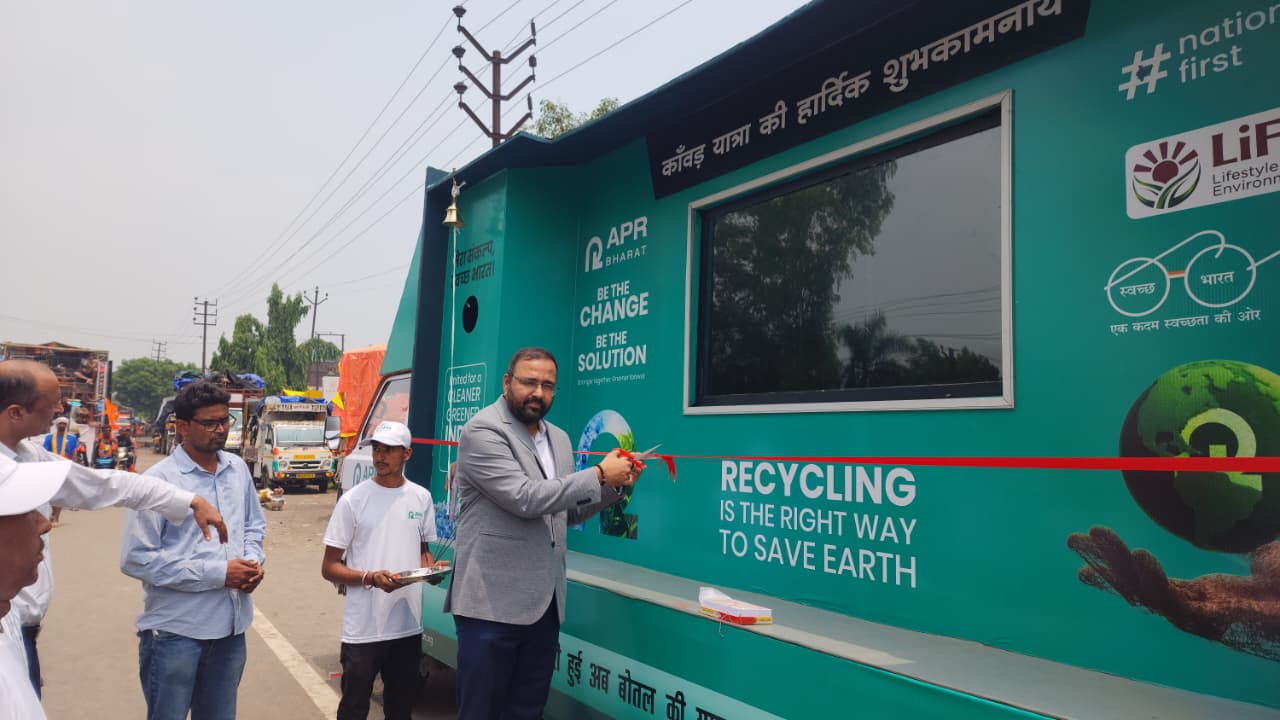
As part of the 15-day pilot campaign, a specially designed Van will travel across four high-footfall locations in Muzaffarnagar and Meerut, along the Kanwar Yatra route. The campaign will engage pilgrims and the wider public on the importance of responsible disposal, while collecting used PET bottles generated during the pilgrimage and channelising them into the formal recycling ecosystem.
The initiative comes at a time when the government has been emphasising on the need to promote austerity in imports to protect its foreign currency reserves and push for indigenisation of over 200 import-dependent petrochemical items. Global geopolitical disruptions and supply-chain volatility have demonstrated the vulnerability of industries dependent on uninterrupted supplies of virgin polymers. Transition to r-PET is crucial to ensure national resource security, reduce import dependence, and ensure a more resilient domestic packaging supply chain.
The ‘Bottle Ki Recycle Yatra’ campaign seeks to turn one of India’s largest mass public gatherings into a platform for communicating a simple but important message: plastic is not waste when it is responsibly collected and recycled.
Commenting on the launch, Goutham Jain, Director General, APR Bharat, said,
“Our main objective of launching ‘Bottle Ki Recycle Yatra’ is to make recycling tangible and relatable. A discarded PET bottle should not be viewed as the end of its journey. With the right collection and recycling systems, it can become the starting point for another bottle. The Kanwar Yatra provides us with a unique opportunity to take the message of recycling directly to people at an extraordinary scale. Rather than simply talking about plastic waste, our campaign demonstrates what happens when PET bottles are collected and channelled into recycling. Through this pilot, we want to create awareness that responsible consumption must also be accompanied by responsible disposal.”
Mr. Jain underscored that, although the Government has mandated the use of 40% recycled inputs in plastic packaging by 2026–27, implementation at the ground level remains limited and falls short of the intended transition towards a closed loop manufacturing ecosystem. He stressed that reliance on virgin PET derived from crude oil depletes national resources. In contrast, the large-scale adoption of recycled PET can help conserve critical resources while accelerating the transition towards a more sustainable, circular, and environmentally responsible plastic value chain.
The awareness van will serve as a mobile information and collection centre, engaging pilgrims and visitors on the importance of segregating and disposing of PET bottles responsibly. The collected PET bottles will subsequently enter the recycling chain, showcasing the circular economy in action.
APR Bharat plans to take the campaign to other parts of the country, including Western, Eastern and Southern India, to build large-scale public awareness around PET recycling and responsible plastic waste management.
“At a time when global polymer supply chains are experiencing volatility and India is simultaneously building significant domestic recycling capacity, recycling has a much larger role to play than simply managing waste. It can help create a more circular, resource-efficient and resilient manufacturing ecosystem for India. Every bottle that is responsibly disposed of and recycled represents a resource that can be recovered and reused,” Jain added.
5, Aug 2026
Schreiber Foods and Ascendion Announce Strategic Partnership to Transform Global Operations and Software Development Using Agentic AI
Multi-year strategic partnership will advance global operations for one of the world’s largest food and beverage companies to accelerate growth and enhance customer service.
GREEN BAY, WI, and BASKING RIDGE, NJ, Aug. 5, 2026 /PRNewswire/ — Schreiber Foods and Ascendion today announced a multi-year strategic partnership to transform Schreiber’s global operations and software development using agentic AI, advancing the company’s vision to do good through food. Through this partnership, Ascendion will equip Schreiber’s capability centers with AI-native technology to fuel sustainable growth and accelerate innovation across more than 40 locations on five continents.

As a trusted food and beverage supplier to the world’s leading retailers, restaurants, distributors, and food manufacturers, Schreiber’s products feed families in more than 95 countries and its global IT capability centers serve more than 10,000 employee-partners worldwide.
“To fuel Schreiber’s next era of rapid growth, we are taking a bold, transformational leap forward in how we operate and serve our customers,” said Trevor Farrell, President of Schreiber Foods. “By leaning into next-generation, agentic AI with Ascendion, we are reinforcing the very foundation of what our customers rely on us for: world-class quality, safety, and service. This technology will empower our employee-partners, accelerate our innovation, and allow us to deliver even greater impact at scale.”
Through the partnership, AI agents will help Schreiber and Ascendion teams get quality and food safety signals to decision-makers faster, modernize the ERP environment, and give regional teams a more unified way to collaborate. Over time, repetitive, high-volume technology work will increasingly be performed by AI agents, freeing Schreiber’s engineers and analysts to focus on work that requires human judgment and creativity. Ascendion’s proprietary Engineering to the Power of AI method and tools will balance work across people and AI to ensure security, privacy, compliance, and ethical alignment.
For Ascendion, the engagement reflects what Chief Executive Officer Karthik Krishnamurthy described as a special kind of responsibility. “Schreiber Foods’ mission is one of the most consequential out there. We are honored to deploy technology that helps Schreiber bring food to people all over the world,” Krishnamurthy said. “Schreiber leaders recognize the impact that can be unlocked by AI-native operations across their global network. It’s a bold vision built on a powerful foundation of success, and we’re thrilled to bring the full power of AI to this partnership.”
Technology is at the core of the partnership. Schreiber has deployed multiple AI tools, and the Ascendion partnership builds on that foundation. Ascendion will leverage AAVA, its proprietary agentic AI platform, to accelerate AI across capability center workflows, drive accelerated decisions on the plant floor, provide stronger traceability across geographies, and lower the technology cost base while increasing operational resilience for the next phase of growth.
“AI is a significant driver of transformation, but its real strength lies in how it empowers our people,” said Sri Kantamneni, Executive Vice President, Chief Information & Digital Officer at Schreiber Foods. “Through this strategic collaboration with Ascendion, we’re equipping our capability centers with AI-native tools that elevate our internal service and operational standards. By giving our employee-partners better, smarter tools to work with, we enable them to focus less on manual processes and more on driving customer success and accelerating our growth.”
“We’re accountable for outcomes, not effort,” added Dharam Gurbani, Chief Growth Officer at Ascendion. “What changes for Schreiber Foods’ plants, customers, and consumers is the only scorecard that matters. Our partnership will re-set expectations for velocity, efficiency, and operational excellence across capability centers in the United States, Mexico, India, Spain, and Poland. We are grateful for the trust Schreiber is putting in Ascendion, and we’re excited to accelerate toward the future.”
To know more about the Schreiber collaboration, click here.
About Schreiber Foods
Schreiber Foods strives to do good through food every day. Based in North America, Schreiber is an employee-owned, customer-brand leader in cream cheese, natural cheese, process cheese, beverages and yogurt. Its more than 10,000 employees and presence on five continents enable Schreiber to be an essential ingredient in its customers’ success. With annual sales of more than $7 billion, Schreiber partners with the best retailers, restaurants, distributors and food manufacturers around the globe. Schreiber also recognizes its responsibility to do good in the world and is driven to make a difference in everything it does.
About Ascendion
Ascendion is an AI-native software engineering company that partners with global enterprises to drive agentic transformation across how they build, modernize, and operate software. AAVA™, Ascendion’s proprietary agentic AI platform, brings expert engineers and AI agents together as one operating model, closing the last mile between ambition and outcome and turning velocity into measurable business results. The result: faster time-to-market and value that compounds over time. Find out more at www.ascendion.com.
Engineering to the Power of AI and AAVA are trademarks or service marks of Ascendion®. AAVA™ is pending registration. Unauthorized use is strictly prohibited.

 View original content to download multimedia:https://www.prnewswire.co.uk/news-releases/schreiber-foods-and-ascendion-announce-strategic-partnership-to-transform-global-operations-and-software-development-using-agentic-ai-302843539.html

5, Aug 2026
Furrl’s AI styling engine and commerce app acquired by Reliance Retail
Acquisition to advance Reliance Retail’s AI-first strategy for personalised shopping and discovery
BENGALURU, India, Aug. 5, 2026 /PRNewswire/ — Furrl, a Bengaluru-based AI-powered styling, cataloguing and fashion discovery platform founded by Esha Tiwary, today confirmed that its technology – including its AI Styling Engine and commerce app – has been acquired by Reliance Retail Ventures Limited (RRVL). The acquisition forms part of Reliance Retail’s broader strategy to embed artificial intelligence across its consumer businesses and deliver more personalised, intuitive shopping experiences.

Furrl’s technology transforms fashion catalogues into fully styled outfit recommendations based on individual consumer preferences, helping shoppers discover products in a more contextual and intuitive way. Following the acquisition, the technology is expected to strengthen Reliance Retail’s AI-driven discovery and personalisation capabilities across its digital and omni-channel platforms.
Founded in 2022, Furrl set out to solve fashion discovery given rapidly changing consumer preferences – starting with a catalogue focused on D2C fashion brands, and subsequently developing an AI Styling Engine to help shoppers go from browsing endless catalogues to seeing complete outfits styled specifically for them. Over the past four years, the company scaled its platform across more than 50,000 products from 200+ fashion and lifestyle brands, building deep technical capability in catalogue intelligence, personalisation and outfit-level recommendation.
Commenting on the development, Esha Tiwary, Founder of Furrl, said, “We built Furrl with one conviction: that fashion discovery is broken and AI can fundamentally change that. This acquisition enables our technology to reach millions of customers with Reliance Retail’s scale, and is a powerful validation of what our team built.”
About Furrl:
Furrl (operated by Kleosa Retail Private Limited) is a Bengaluru-based AI-powered styling, cataloguing and fashion discovery platform founded by Esha Tiwary in 2022. The company built an AI Styling Engine that converted product catalogues into personalised, styled outfit recommendations, alongside a consumer-facing commerce app for D2C fashion brands, scaling to over 50,000 products across 200+ brands. In 2026, Furrl’s technology and IP were acquired by Reliance Retail Ventures Limited.
Logo: https://mma.prnewswire.com/media/3008673/6030983/Furrl_Logo.jpg
 View original content to download multimedia:https://www.prnewswire.com/in/news-releases/furrls-ai-styling-engine-and-commerce-app-acquired-by-reliance-retail-302843478.html

5, Aug 2026
Sinopec Commissions 50,000-Ton Specialty PVA Facility, Creating World’s Largest Single-Site High-End PVA Production Base
CHONGQING, China, Aug. 5, 2026 /PRNewswire/ — China Petroleum & Chemical Corporation (HKG: 0386, “Sinopec”) has commissioned a specialty polyvinyl alcohol (PVA) resin facility with an annual production capacity of 50,000 metric tons at its subsidiary, Chongqing SVW Chemical Co., Ltd. The facility achieved stable operation during its initial startup and produced products that met quality specifications, with the first shipment already sent to Europe.

The new facility increases the site’s total PVA production capacity to 210,000 metric tons per year, making it the world’s largest single-site production base for high-end PVA. The additional capacity will strengthen the supply of specialty materials used in photovoltaics, electronics, optical films, pharmaceuticals and other high-value applications.
PVA is a water-soluble polymer with biodegradable properties and a broad range of industrial and consumer uses. Specialty grades with high purity and transparency are used in optical films, polarizers, pharmaceutical products and safety glass for automobiles and high-speed trains. PVA is also used in textiles, construction materials and water-soluble packaging.
SVW Chemical offers more than 100 PVA grades designed for different performance requirements and market applications. The new facility uses advanced alcoholysis and precision purification technologies to support the large-scale production of specialty PVA products.
During construction, the project team addressed technical challenges involving precise temperature control and consistent product quality. A new polymerization process increased production capacity by 40% compared with earlier-generation equipment. The facility also incorporates four exhaust gas and wastewater recovery units, along with an automated packaging system, to improve resource efficiency and operational efficiency.
The project was completed in 17 months and recorded 1.98 million safe working hours. During commissioning, the team optimized equipment performance and process parameters to achieve stable production and consistent product quality.
SVW Chemical has more than 40 years of experience in PVA research and manufacturing. Its portfolio has grown from one PVA grade at the beginning of operations to more than 100 today. More than 70 products are exported to over 40 countries, providing the company with an established foundation in international markets, including Europe and the United States.
Moving forward, SVW Chemical will use its expanded capacity and research capabilities to develop additional high-value specialty materials, broaden its PVA portfolio and provide customers worldwide with a more reliable supply.
 View original content to download multimedia:https://www.prnewswire.co.uk/news-releases/sinopec-commissions-50-000-ton-specialty-pva-facility-creating-worlds-largest-single-site-high-end-pva-production-base-302843486.html

5, Aug 2026
SVKM’s NMIMS Horizon Expands AI-Embedded Learning to Undergraduate Education
~ Curriculum-Embedded AI learning to be introduced across undergraduate programmes at NMIMS campuses ~
MUMBAI, India, Aug. 5, 2026 /PRNewswire/ — Building on the successful implementation of NMIMS Horizon in management education, SVKM’s Narsee Monjee Institute of Management Studies (NMIMS) Deemed-to-be University officially extended the initiative to undergraduate programmes on 3 August, 2026. The next phase brings AI-focused learning to the Schools of Engineering, Science, Pharmacy, and Commerce as part of the University’s vision to integrate emerging technologies into higher education.
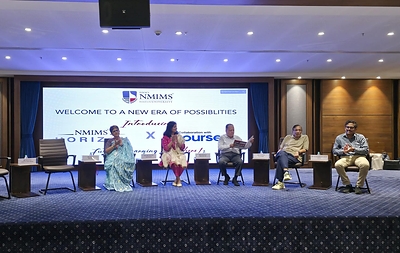
The initiative will be rolled out across NMIMS campuses, providing approximately 40,000 student users access to global learning resources through Coursera at no additional cost. Through NMIMS Horizon, AI-focused learning has been embedded into the undergraduate curriculum, enabling students to build future-ready capabilities alongside their core academic disciplines.
Unlike standalone online learning programmes, the initiative follows a structured, faculty-led academic model that combines mentoring, assignments, projects and assessments. Student outcomes will form part of the University’s academic assessment framework, ensuring that AI learning is embedded within the academic experience rather than delivered as a standalone certification.
To support the rollout, NMIMS faculty members are undergoing specialised training and completing relevant courses before facilitating student learning. This approach combines global learning resources with classroom teaching, enabling students to apply AI across disciplines while strengthening practical understanding across multiple domains.
Speaking about the vision behind NMIMS Horizon, Dr. Sharad Mhaiskar, Provost (Administration), SVKM’s NMIMS Deemed-to-be University, said, “Artificial Intelligence is redefining the way industries operate and the skills they expect from graduates. As a university, our responsibility is not only to respond to this change but to prepare students to lead it. Through NMIMS Horizon, we are embedding AI-focused learning into the academic experience so that students across disciplines graduate with strong domain knowledge, technological fluency and the ability to adapt to an evolving global landscape. This initiative reflects our commitment to continually reimagining education in line with the future of work.”
Dr. Koteswararao Anne, Dean, SVKM’s NMIMS Mukesh Patel School of Technology Management and Engineering (MPSTME), Mumbai, said, “The real value of AI lies in its ability to solve practical problems across disciplines. Through NMIMS Horizon, students will apply AI concepts within their own domains through structured learning, faculty mentorship, projects and academic assessments. By integrating these courses into the curriculum, we are enabling students to develop practical competencies that complement their academic learning and prepare them to address real-world industry challenges.”
Through NMIMS Horizon, SVKM’s NMIMS continues to strengthen its vision of building a future-ready education ecosystem that combines academic excellence with emerging technologies, equipping students with the knowledge and skills needed to thrive in an AI-driven world.
 View original content to download multimedia:https://www.prnewswire.com/in/news-releases/svkms-nmims-horizon-expands-ai-embedded-learning-to-undergraduate-education-302843460.html

5, Aug 2026
Chandigarh University Launches Heritage Tree Conservation Project to Digitally Map and Preserve Centuries-Old Heritage Trees in Mohali
Department of Biosciences at Chandigarh University receives a grant of ₹11-Lakh from Punjab Biodiversity Board; 100 Heritage Trees in Kharar already Mapped
CHANDIGARH, India, Aug. 5, 2026 /PRNewswire/ — As rapid urbanization and infrastructure expansion continue to threaten centuries-old trees of ecological, cultural and religious significance, the need for a systematic scientific approach for their identification and conservation has become essential. Taking a significant step towards the scientific conservation of heritage trees, Chandigarh University has launched an initiative to identify, document and conserve ecologically, religiously and culturally significant tree species across SAS Nagar (Mohali) district.

The project will establish the district’s first comprehensive GIS-based database of heritage trees, providing a scientific foundation for evidence-based management and long-term conservation planning while protecting invaluable natural assets for future generations.
The ₹11-lakh project, funded and sanctioned by the Punjab Biodiversity Board (PBB) under the National Biodiversity Authority is being implemented by the Department of Biosciences at the University Institute of Biotechnology (UIBT), Chandigarh University.
Led by Prof (Dr) LK Attri, Head of the Department of Biosciences, along with Dr Shailika Sharma, Assistant Professor, the initiative combines field surveys with advanced Remote Sensing and Geographic Information System (GIS) technologies to scientifically map and assess heritage trees across the district.
Sharing details about the project, Prof (Dr) LK Attri, Head of the Department of Biosciences, Chandigarh University said, “The project is primarily aimed at documenting the present status of heritage trees, including their ecological, cultural and religious significance, through GIS-based digital tagging, geospatial mapping and assessment of key characteristics such as height, trunk diameter, health, biomass and carbon sequestration potential. By integrating field observations with geospatial technologies, the initiative will generate reliable scientific data to support long-term conservation and environmental planning. The project idea was conceived and executed in collaboration and support of Dr Gurharminder Singh, Principal Scientific Officer, Punjab Biodiversity Board.”
Prof Attri further added, “Beyond the documentation part, this project is aimed at establishing a heritage trees list for Mohali highlighting mature trees of exceptional ecological, historical, religious and cultural importance. The database will help government agencies and local authorities prioritize conservation measures including protecting root zones from excavation and soil compaction, monitor tree health and implement preventive interventions such as lightning protection for vulnerable heritage trees.”
Notably, the project has already documented more than 100 heritage trees across Kharar Tehsil, the largest tehsil in SAS Nagar (43.5 per cent) of the district’s geographical area. Using advanced Remote Sensing and GIS technologies, the identified trees are being scientifically classified, geotagged and assessed for their height, trunk diameter, biomass and carbon sequestration potential to build a reliable geo-spatial database for long-term conservation. A dedicated team of research fellows is carrying out extensive field surveys, documentation, geotagging, GIS mapping and spatial analysis of heritage trees.
Highlighting the significance of the initiative, Dr Attri, who is the Principal Investigator, said, “Heritage trees are living symbols of our environmental, cultural and spiritual legacy. Many of these trees have survived for decades and in some cases centuries providing ecological services while remaining deeply connected with local traditions and communities. Through scientific mapping and documentation, we aim to create a strong knowledge base that will support evidence-based conservation and encourage society to recognize and protect these invaluable natural assets.”
The project is expected to deliver multiple public benefits extending well beyond biodiversity conservation. The geo-spatial database can be instrumental in assisting government agencies in environmental resource management, sustainable urban and rural development planning and climate resilience initiatives. By estimating the biomass and carbon sequestration potential of heritage trees, the study will also provide valuable insights into the role of mature trees in mitigating climate change and maintaining healthy ecological balance.
Moreover, the initiative further highlights the importance of preserving trees that hold religious and cultural significance for local communities, ensuring that conservation efforts protect not only biodiversity but also Punjab’s rich social and cultural heritage.
Emphasizing the role of technology in conservation, Dr. Shailika Sharma, Co-Principal Investigator, said, “Modern geospatial technologies allow us to understand our natural resources with far greater accuracy and efficiency. By combining field-based scientific surveys with GIS mapping, we are creating a digital resource that can support informed policy decisions, conservation planning and community awareness. We hope this initiative inspires greater public participation in protecting heritage trees and the ecosystems they sustain.”
By combining scientific research with advanced geospatial technologies, Chandigarh University’s heritage tree mapping initiative is creating an important foundation for biodiversity conservation, climate action and sustainable development. The project demonstrates how technology-driven environmental research can help protect Punjab’s natural heritage while supporting evidence-based planning and encouraging greater public awareness about the need to protect the state’s irreplaceable ecological treasures.
“Many of the documented heritage trees, including Peepal, Banyan and Neem are valued not only for their ecological services such as improving air quality, supporting biodiversity and storing carbon, but also for their deep cultural, religious and medicinal significance. For generations, these trees have served as community gathering spaces while continuing to play an important role in traditional healthcare, local livelihoods and environmental sustainability. We also intend to prepare a comprehensive Heritage Tree List for Mohali, a coffee table book highlighting the ecological, cultural and religious significance of these trees, and a web-based GIS platform to make this valuable information accessible to researchers, policymakers and the public,” added Dr. Shailika.
About Chandigarh University
Chandigarh University is a NAAC A+ Grade University and QS World Ranked University. This autonomous educational institution is approved by UGC and is located near Chandigarh in the state of Punjab. It is the youngest university in India and the only private university in Punjab to be honoured with A+ Grade by NAAC (National Assessment and Accreditation Council). CU offers more than 109 UG and PG programs in the field of engineering, management, pharmacy, law, architecture, journalism, animation, hotel management, commerce, and others. It has been awarded as The University with Best Placements by WCRC.
Website address: https://www.cuchd.in/
 View original content to download multimedia:https://www.prnewswire.com/in/news-releases/chandigarh-university-launches-heritage-tree-conservation-project-to-digitally-map-and-preserve-centuries-old-heritage-trees-in-mohali-302843432.html

5, Aug 2026
Commissionerate Police Issue Cyber Alert Over Fake Income Tax Notices on WhatsApp
Bhubaneswar, Aug. 5 (UDN): The Commissionerate Police on Tuesday issued a public advisory cautioning taxpayers against a surge in fake Income Tax notices being circulated through WhatsApp, warning that cybercriminals are exploiting the ongoing belated Income Tax Return (ITR) filing season to defraud unsuspecting citizens.
Pic Credit: x.com/cpbbsrctc
WhatsApp ରେ ଆସୁଥିବା ନକଲି Income Tax Notice, Link କିମ୍ବା Attachment ଠକେଇର ମାଧ୍ୟମ ହୋଇପାରେ।
❌ ଅଜଣା .zip କିମ୍ବା .exe ଫାଇଲ୍ Download କରନ୍ତୁ ନାହିଁ।
🔐 ନିଜର Banking Details, Password ଓ ବ୍ୟକ୍ତିଗତ ତଥ୍ୟ ସୁରକ୍ଷିତ ରଖନ୍ତୁ।👉 କୌଣସି Tax Notice ଉପରେ ବିଶ୍ୱାସ କରିବା ପୂର୍ବରୁ ଏହାର ସତ୍ୟତା ଯାଞ୍ଚ… pic.twitter.com/8TBYhc0EHd

— COMMISSIONERATE POLICE (@cpbbsrctc) August 4, 2026
According to the advisory, fraudsters are posing as officials of the Income Tax Department and sending deceptive messages containing fake tax notices, malicious links and suspicious file attachments. The objective is to trick users into downloading malware or sharing sensitive personal and financial information.
Police have urged taxpayers not to open or download files, particularly those with .zip or .exe extensions, received from unknown or unverified sources. Such files may contain malicious software capable of compromising mobile phones and computers, allowing cybercriminals to steal banking credentials, passwords and other confidential data.
The advisory also warns against messages promising tax refunds or demanding immediate action to avoid penalties or resolve tax-related issues. Citizens have been advised to verify the authenticity of any Income Tax communication only through official government platforms before responding or clicking on any links.
Emphasising the importance of cyber hygiene, the Commissionerate Police reminded the public never to share banking details, passwords, one-time passwords (OTPs) or other confidential information through messaging apps, emails or unverified websites.
The warning is part of the Commissionerate Police’s ongoing cyber awareness initiative to educate citizens about emerging online frauds and promote safe digital practices. Officials noted that scammers often become more active during the tax filing period, targeting taxpayers with convincing but fraudulent messages.
Appealing to the public to remain vigilant, the police urged citizens to ignore suspicious communications and report any attempted cyber fraud to the appropriate authorities.
“Awareness remains the strongest defence against cybercrime. Stay alert and verify before you trust,” the advisory said.


