


11, Jun 2025
AUTO PULSE 2025: Connecting the Future of Auto Components and Technology
Bengaluru, June 11, 2025: Vikas Trade Links (P) Ltd., a name synonymous with trust and excellence in the automotive aftermarket since 1988, proudly unveils AUTO PULSE 2025—a landmark event designed to bring together the automotive community in a celebration of innovation, connection, and future-readiness.
Taking place from June 13th to 15th, 2025, at the company’s Bangalore premises, AUTO PULSE 2025 is the first-of-its-kind event from Vikas Trade Links, promising an immersive experience for industry professionals, OES (Original Equipment Supplier) representatives, distributors, and enthusiasts alike.
Innovation, Trust, and Growth in Motion
AUTO PULSE 2025 is more than a product showcase—it is a strategic platform aimed at strengthening industry relationships, demonstrating operational excellence, and introducing cutting-edge advancements that define the future of automotive distribution.
“Our vision for AUTO PULSE 2025 is rooted in the very values that define us—Partnership, Performance, and Progress,” said Aman Sancheti, Managing Director of Vikas Trade Links (P) Ltd. “This event is about strengthening the relationships we’ve built over the years while giving our customers and partners a clear view of the future we’re driving toward—together.”
Event Highlights
● Comprehensive Product Displays: Featuring an extensive range of spare parts and components from renowned OES brands, all part of Vikas Trade Links’ trusted distribution portfolio.
● VTL World Launch Preview: A sneak peek into the company’s upcoming e-commerce platform—VTL World—marking its entry into the digital aftermarket solution space.
● End-to-End Showcase: The wide range of brands and products on display stands as a powerful testament to Vikas’s robust warehousing, efficient inventory management, and reliable logistics infrastructure—enabling us to seamlessly support and supply a diverse automotive ecosystem.
● Networking Opportunities: An exclusive chance to meet and connect with workshop owners, distributors, OES representatives, and industry professionals from across the country.
A Call to Collaborate
AUTO PULSE 2025 is strategically designed to attract a wide spectrum of stakeholders from the automotive aftermarket. From business owners and service professionals to distribution partners and manufacturing representatives, the event aims to foster meaningful engagement and long-term collaboration.
“As we expand our brand offerings and step confidently into the digital era, AUTO PULSE 2025 marks the beginning of an exciting new chapter,” said Rajnish Sancheti, Regional President of Vikas Trade Links (P) Ltd.
“We invite all automotive professionals, enthusiasts, and partners to join us in shaping what comes next,” said Rohit Sancheti, Regional Vice President of Vikas Trade Links (P) Ltd.
- 0
- By Neel Achary

11, Jun 2025
WeSchool Honors Inaugural PG Temple Management Batch at Prestigious Felicitation Ceremony
11th June 2025, Mumbai – Prin. L. N. Welingkar Institute of Management Development & Research, PGDM (WeSchool), Mumbai has once again set the bar for academic excellence and innovation with the grand felicitation ceremony of its inaugural batch of students from the Post Graduate Program in Temple Management (PGPTM). This program, the first of its kind in India, marks WeSchool’s commitment to shaping the future of temple management education and creating a pool of highly skilled professionals for an emerging sector.

The event was graced by eminent dignitaries and thought leaders from diverse fields, who underscored the growing importance of professionalizing temple management and the potential societal impact of such initiatives.
Shri Suresh Haware, Nuclear Scientist, Political Leader, Author, and Managing Director of Haware Engineers & Builders Pvt. Ltd., remarked, “WeSchool’s Temple Management program is a timely initiative. It recognizes the need for structured, transparent, and devotee-centric management in temples. With professional administration, temples can become powerful instruments of social and economic transformation while preserving our spiritual and cultural heritage.”
Adv. Shri S.K. Jain, Chairman, Managing Council of S.P. Mandali, added, “This program is not just about administration—it’s about service, transparency, and spiritual development. I commend WeSchool for this forward-thinking initiative and encourage continued focus on the societal impact of spiritual practices, such as chanting and sacred recitations, which promote inner healing and well-being.”
Prof. Dr. Uday Salunkhe, Group Director, WeSchool, addressed the gathering, stating,“We are proud to celebrate the successful completion of the inaugural PGPTM batch. This course integrates management principles with spiritual institution governance, providing learners with practical training in areas like crowd and disaster management, operations, and community engagement. The outcomes have been inspiring—students applied their learning effectively during internships and temple festivals. This initiative supports Viksit Bharat 2047 by empowering a new generation of cultural custodians and social leaders.”
The inaugural batch of PGPTM reflected true diversity—ranging from fresh graduates to retired professionals, with no age barrier for participation. Many students were already affiliated with temples in various capacities and joined the course to deepen their knowledge and enhance their impact. Hailing from different regions across India, these students brought with them a wealth of experience, dedication, and varied perspectives. During the ceremony, several graduates shared their personal journeys—highlighting how they overcame academic and personal challenges throughout the course. With renewed confidence, they expressed their readiness to take on real-world responsibilities in temple management with professionalism and purpose.
Designed in collaboration with (Temple Connect) practitioners and academic experts, WeSchool’s PGPTM program bridges a vital gap in the professional management of religious institutions. Blending classroom learning with hands-on training and insights from industry leaders, the course equips students to modernize temple operations while preserving spiritual values. It stands as a pioneering step toward strengthening cultural stewardship and nation-building.
11, Jun 2025
Ekathon 2025: Forging the Future of Digital Health with India’s Brightest Minds
Bangalore, 11 June 2025: In a powerful testament to India’s growing leadership in health technology, Eka Care, in collaboration with AWS, successfully hosted Ekathon 2025 on 5–6 June at the AWS office in Bangalore. The two-day healthtech hackathon brought together developers, innovators, clinicians, product thinkers, and policymakers to co-create scalable digital solutions that could shape the future of India’s healthcare system. From voice-first patient care assistants to claim settlement tools powered by artificial intelligence (AI), Ekathon showcased ideas that not only solve real-world problems but do so at scale, inclusively, and with impact.

Shri Kiran Gopal Vaska, Joint Secretary, National Health Authority, delivered an insightful keynote address at the event. Addressing a packed room of technologists and health innovators, he emphasised the critical role of public-private collaboration in building an interoperable, data-driven healthcare ecosystem. His call to action set the tone for the innovation and purpose-driven energy that followed over the two days.
During his keynote session, Shri Kiran Gopal Vaska said, “Partnership with the private sector and private sector innovation is a very very important factor and that is something we hold very dear and ensure and we always value the partnership with the private sector and that is where Vikalp and other digital health partners come in and the innovation that you are doing the new ideas that you are bringing in are the ones that are driving the digital health ecosystem forward.”
The participants were inspired by sessions featuring industry leaders who have innovated in the healthtech space. Vikalp Sahni, Founder and CEO, Eka Care, shared his journey of building India’s health backbone and what it takes to create digital infrastructure for 140 crore Indians. Samarth Masson, National Sales Leader – Healthcare and Nonprofit, AWS India, spoke about the role of cloud, AI, and developer ecosystems in solving healthcare challenges at scale.
The final judging panel brought deep expertise in healthcare, policy, investment, and technology. Raman Upreti, Technical Product Lead-PMU, National Health Authority, Dr Ajay Nair, CEO, Swasth Alliance, and Anubhav Jain, BDM, Venture Capital, and Startup Ecosystem, AWS, evaluated the finalists’ solutions. Their thoughtful feedback helped the finalists refine their solutions while sparking new partnerships for future scale-up and deployment.
Vikalp Sahni said, “The idea that Eka Care wants to take forward is that we are the health stack that can be leveraged to build innovations on top of it. And we would love to see these innovations coming out from the ecosystem, from people like you, innovators like you, obviously in partnership with many of our partners such as AWS.”
From over 100 applications across India, 15 teams were shortlisted to present their ideas at the live event. After 36 hours of building and mentoring, three ideas stood out. The winning team, HealthHaven, presented a solution titled “Revamping Healthcare Data Storage Using Graph Databases”. Addressing the problem of inefficient healthcare data storage, they built a real-time transcription tool that captures and codes patient voice interactions using SNOMED CT and stores them in graph-based databases, ensuring standardisation in electronic health records (EHRs). The solution promises better storage, enhanced research usability, and smarter EHRs across hospitals.
The first runner-up, Team EaseMyMed, tackled the issue of medical claim rejections with their solution, “Zero Rejection Medical Claims”. Their GenAI-based tool converts handwritten and digital documents into structured electronic medical records (EMRs) and pre-coded claims, significantly reducing errors and increasing compliance. Their approach is expected to reduce claim denials by 80%, enabling faster reimbursements and saving approximately ₹1 crore annually across public hospitals.
The second runner-up, Team HealthSpeak AI, developed a multilingual voice-first assistant to capture patient history. Their solution addresses consultation inefficiencies and language barriers by using regional language voice input to record structured histories, triage symptoms, and retrieve ABHA-linked data. This tool can reduce consultation times by 30–40%, expand rural access, and support ABHA adoption.
What made Ekathon special was not just the technology, but also the intent behind it. Developers collaborated closely with clinicians, startups, and mentors from leading platforms and public institutions. With real APIs from the Eka Developer Suite and guidance from domain experts, participants didn’t just pitch, they built.
Eka Care and AWS were joined by partners like PeerCapital, HighTable, and other ecosystem enablers who made Ekathon possible. The AWS team provided the space, support, and partnership to make this event a grand success.
Ekathon 2025 may have concluded, but it has sparked something bigger. The winning ideas are being considered for further pilots and development support. Many of the teams are already in conversations with ecosystem enablers, hospitals, and investors. Because in the end, this wasn’t just a hackathon. It was a movement to reimagine healthcare together.
10, Jun 2025
United Way Bengaluru and State Street Support the ‘Divyangjan community’ with Mobility and Assistive Devices

Bengaluru, Karnataka: June 10, 2025: In a meaningful step toward fostering accessibility and inclusion, United Way Bengaluru, with support from State Street, supported the ‘Divyangjan*’ (differently abled) community through the distribution of mobility aids, and assistive technologies, including 4 e-autos, 10 NeoMotion, 40 SHG Glasses, 3 Kibo and 200 Alexa.
Organized by State Street and United Way Bengaluru, the initiative reinforces two firms’ shared commitment to advancing inclusion, dignity, and opportunity for a brighter, more accessible future. This marks a major milestone in the ongoing efforts to support empowerment of persons with disabilities, especially in areas where access to livelihood opportunities can be limited. Supported by Parihar, an initiative of the Bengaluru Police Commissioner’s office, the e-auto programme is dedicated to creating sustainable livelihood opportunities for those from vulnerable communities. By providing technology-enabled assistive devices that enhance mobility, communication, and learning, the initiative aims to equip individuals with the technology they need to thrive. These devices support mobility and learning and empower users to interact with their environments more fully and independently.
“Inclusion is not just a value, it’s a responsibility. State Street is proud to support the Aikyam initiative as part of our broader commitment to accessible innovation. By contributing resources, technology and expertise, we aim to provide persons with disabilities opportunities to education and employment that lead to their economic mobility,” said Arindam Banerrji, Executive Vice President and Country Head for State Street India.
“At United Way Bengaluru, we believe that empowerment begins with access. Aikyam is close to our hearts; it is a flagship campaign that celebrates diversity and inclusion. We are enabling participation and upholding the dignity of our people. We are not just changing lives, but are also opening doors towards accessibility, by empowering our community,” said Rajesh Krishnan, CEO, United Way Bengaluru.
10, Jun 2025
Deepika Padukone celebrates a milestone On Prakash Padukone’s 70th Birthday as Padukone School of Badminton Expands to 75 Centres Within a Year Of Its Launch
Bengaluru, India — 10 June: The Padukone School of Badminton (PSB), founded and funded by Deepika Padukone and mentored by former World No. 1 and All England Champion Prakash Padukone, has achieved a significant milestone by establishing over 75 grassroots coaching centres across 18 Indian cities – including Bengaluru, NCR, Mumbai, Chennai, Jaipur, Pune, Nashik, Mysuru, Panipat, Dehradun, Udaipur, Coimbatore, Sangli, and Surat – within its first year of operations.
With its mission of “Badminton for All,” PSB now aims to scale to 100 centres by the end of this year and 250 within the next three years.
Deepika Padukone, Founder of PSB, said: “As someone who grew up playing badminton, I’ve experienced firsthand how much this sport can shape one’s life – physically, mentally, and emotionally. Through PSB, I hope we can bring the joy and discipline of badminton to people from all walks of life, and build a generation that is healthier, more focused, and inspired by sport.”
Prakash Padukone, PSB’s Mentor and Advisor, said: “Sport is an integral part of growing up – it instills discipline, resilience, and a winning mindset that extends well beyond the court. With PSB, our goal is to make quality coaching accessible and affordable, nurture talent from the grassroots, and set a strong foundation for the future of Indian badminton.”
PSB’s vision is to democratize access to quality and affordable badminton coaching, providing opportunities for people of all ages and skill levels. Through its standardized, scalable coaching methodology, developed under the guidance of Prakash Padukone, the organization seeks to introduce a nationwide community of school children and working professionals to the sport. It also aims to empower aspiring coaches with certified training and sustainable career paths.
PSB partners with schools, institutions, and existing venues to set up grassroots academies that feed into its flagship Training Program at the 3 High-Performance Centres of Excellence in Bengaluru. With over 100 coaches trained under a structured certification program and access to cutting-edge facilities, PSB’s coaching system ensures consistency, quality, and the ability to identify and nurture future champions.
10, Jun 2025
Archie Sarna Chopra: The Vision Behind Gaia by Archie

Archie Sarna Chopra, Founder of Gaia by Archie, has been redefining the fashion landscape in Faridabad with her multi-designer store. A graduate of NIFT Bangalore (2018), she began her career at Orient Craft Export in Gurgaon in 2018 and worked there for three years, gaining a deep understanding of the practical aspects of running a business and later worked with William E. Connor, gaining valuable industry insights before launching her venture.
In her free time, Archie explores her creativity through painting and sketching while staying actively engaged with the latest fashion trends and emerging designers.
Archie’s vision for Gaia by Archie stemmed from a desire to bring premium fashion to tier-2cities, bridging the gap between local shoppers and high-end designer wear. She saw an unmet demand and wanted to offer customers access to exclusive, curated pieces without the need to travel to metros like Mumbai or Delhi.
Gaia by Archie collaborates with emerging designers who bring fresh perspectives and unique storytelling to their collections. Archie focuses on bringing together distinctive, edgy brands that are not overly mainstream but cater to fashion-forward customers seeking exclusivity.
Archie believes digital transformation and e-commerce growth will continue shaping Indian fashion while preserving its rich heritage, and with an increasing appetite for global trends and a growing base of talented designers, India is poised to become a major player in the global fashion scene while staying true to its rich cultural heritage.
Gaia by Archie prioritises personalised customer service, ensuring every shopper finds pieces that align with their unique style. Archie’s passion for discovering new designers and fostering talent remains at the heart of her brand’s philosophy.
She envisions expanding Gaia by Archie to more tier-2 cities, making curated fashion more accessible. Excitingly, the store will soon introduce menswear and kidswear, further diversifying its offerings.
With an unwavering commitment to excellence, Gaia by Archie continues to bring the best of contemporary fashion to its customers, redefining boutique shopping in India.
10, Jun 2025
Thinking of Studying in Grenada? Here Are the Five Must-Know Facts for Indian Students
India, June 10, 2025: As more students from India explore opportunities to study in Grenada, West Indies, many have questions about life on the island. As the southernmost island of the Windward Islands, Grenada consists of Grenada, and its sister islands of Carriacou and Petite Martinique. The island is roughly 100 miles north of Venezuela, with an approximate population of 126,000.
From safety and accommodations to local culture and activities, this latest guide by St. George’s University (SGU), School of Medicine in Grenada, West Indies provides five key information to help prospective students make informed decisions.

How safe is campus life in Grenada?
Grenada is considered a safe destination for students, with a level-one rating from the US Department of State, which simply advises students to exercise normal precautions, as they would anywhere. In addition, SGU’s security officers patrol the university grounds 24 hours a day, 7 days per week, 365 days per year.
SGU has implemented several safety measures on campus, including surveillance cameras, smoke detectors, and sprinklers in all buildings. The campus also has a command center, established in 2016, serving as the emergency response hub. Students can also access the ‘SGU Safe’ app, providing location-based emergency assistance.
What are accommodations like in Grenada?
Medical students must live on campus during their first term. SGU’s residence halls provide central air conditioning, internet access, laundry facilities, and regular cleaning services. Rooms are furnished with twin-sized beds, desks, chairs, closet space, and bookshelves. Kitchen facilities include a refrigerator, cooktop stove, and microwave.
After the first term, students may choose to live off campus. Many off-campus accommodations include air conditioning, and some even have pools. Most housing options are within a five-mile radius of the university and conveniently located along the bus route.
What should students know about shopping?
Grocery shopping in Grenada is convenient, with several supermarkets accessible by bus or private vehicle. Students can also visit local markets, such as St. George’s Market Square on Saturday mornings, for fresh produce, gifts and specialty items.
Many essentials can be purchased locally. It’s also common for students leaving Grenada to sell their belongings at affordable prices for freshmen.
What are the most popular holidays in Grenada?
Major holidays celebrated in the US, such as Christmas, Easter, and New Year’s Day, are widely observed in Grenada. Additionally, the island has its own unique festivities, the most famous being Spicemas—Grenada’s Carnival—held annually on the second Monday and Tuesday of August. The event features vibrant music, dancing, and elaborate costumes.
What are some fun things to do in Grenada?
With over 80 student clubs, SGU’s campus life is just as vibrant as its academics, offering students plenty of opportunities to connect, unwind, and explore their passions. Among the most active cultural groups is the Indian Cultural Student Association (ICSA), which plays a key role in celebrating Indian traditions and cultivating cultural exchange. ICSA organizes signature events each semester, including the vibrant ICSA Show – a colorful celebration of Indian music, dance, and traditions that draws participation from across the student body. The group also hosts festive gatherings such as Diwali celebrations, Holi Day, and themed cultural nights, offering Indian students a sense of home and introducing the broader SGU community to Indian culture.
Beyond campus, students can explore Grenada’s natural beauty through hiking trails in lush rainforests or water activities like snorkeling, sailing, and kayaking. Many students earn their PADI dive certification and explore Grenada’s famous underwater sculpture park. The island also offers rich cultural experiences with local chocolate factories, spice plantations, and marine excursions, allowing students to immerse themselves in Grenadian culture and lifestyle.
10, Jun 2025
IIM Raipur Teaches Good Governance at Chintan Shivir 2.0
Mumbai, 10 June 2025: Indian Institute of Management (IIM) Raipur, a leading institution recognized for #BuildingBusinessOwners, successfully hosted Chintan Shivir 2.0 in collaboration with the Government of Chhattisgarh. In the 2-day residential program, the cabinet ministers, including the Hon’ble Chief Minister of Chhattisgarh, engaged on this dynamic platform for introspection, strategic dialogue, and policy innovation, aimed at accelerating the state’s inclusive and sustainable development.
Distinguished academicians and experts from premier institutions, including Dr. Ravindra H. Dholakia, Professor Emeritus at IIM Ahmedabad; Dr. Himanshu Rai, Director of IIM Indore; Uday Mahurkar, former Central Information Commissioner and senior journalist; and Dr. Vinay Sahasrabuddhe, former Rajya Sabha MP and President of ICCR, graced insightful discussions. Dr. Rajendra Pratap Gupta, a leading health policy expert and advisor to the government, and Sanjeev Sanyal, Member of the PM’s Economic Advisory Council, also contributed their subject matter perspectives.

The event was graced by the Hon’ble Chief Minister Shri Vishnu Deo Sai, along with Cabinet Ministers, senior bureaucrats, and eminent scholars. Together, they engaged in an intensive and collaborative dialogue on critical governance challenges, reform priorities, and strategic development roadmaps.
In his valedictory address, Hon’ble Chief Minister Vishnu Deo Sai stated, “Chintan Shivir 2.0, conducted through the collaboration of IIM Raipur and the Chhattisgarh Department of Good Governance, was a successful initiative where cabinet members were introduced to relevant topics that will help in running the government more efficiently. The topics chosen and the speakers were remarkable, and their teachings will greatly support us in achieving the vision of Viksit Bharat@2047.”
Prof. Ram Kumar Kakani, Director, IIM Raipur, said, “We are honored to facilitate this exchange of ideas among policymakers and thought leaders. Chintan Shivir 2.0 is a reflection of our belief that academic institutions must go beyond classrooms and actively engage in real-world governance and leadership challenges. This platform not only fosters collaborative thinking between policymakers and scholars but also aligns with our larger mission of creating evidence-based, inclusive, and future-ready public systems. We are proud to support the Government of Chhattisgarh in its journey towards sustainable, citizen-centric governance and the broader national vision of Viksit Bharat 2047.”
During the IIM Raipur retreat, Chhattisgarh State Ministers stressed the need for a culture-sensitive development model combining local traditions to ensure sustainable prosperity in post-Naxal Chhattisgarh. Fiscal discipline to cut compulsory expenditure, raise capital outlays, and aim for 12% annual growth is needed to realize the vision of a developed state and India by 2047. Ministers stressed that leaders must prioritize long-term societal outcomes over short-term gains, demonstrating transformational leadership through personal accountability and ethical governance rooted in cultural values. In the state, fostering cultural unity was highlighted as essential for national integration and building social capital.
The program included sessions on “Seva, Sankalp, aur Seekh” (Service, Resolve, and Learning), and concluded with the inauguration of the “Sushasan Vatika” (Good Governance Garden) via a symbolic tree-planting ceremony.
10, Jun 2025
Shiv Nadar University Delhi NCR’s Young Thinkers Forum Summer School Draws Record Participation
Greater Noida, 10th June 2025: With artificial intelligence, robotics, and environmental action on the agenda, this year’s Young Thinkers Forum (YTF) Summer School at Shiv Nadar University, Delhi-NCR, saw record participation from high school students across India. Over 110 students from 50 schools across 15 states attended the week-long residential program, which concluded this week on the university’s Greater Noida campus. Designed to introduce young minds to university-style learning, the program offered students from Grades 9 to 12 to explore multidisciplinary subjects through hands-on workshops, field visits, and project-based learning.
The 2025 edition featured more than 30 sessions across diverse subjects including mathematics, science, astronomy, entrepreneurship, robotics, botany, and design. A key highlight this year was the newly launched Robotics Tech Tinkers Program, which saw enthusiastic participation from students in grades 7 to 12. They gained practical experience by building robots and rovers, and also had the opportunity to interact with Alpha Mini Robots and humanoids.
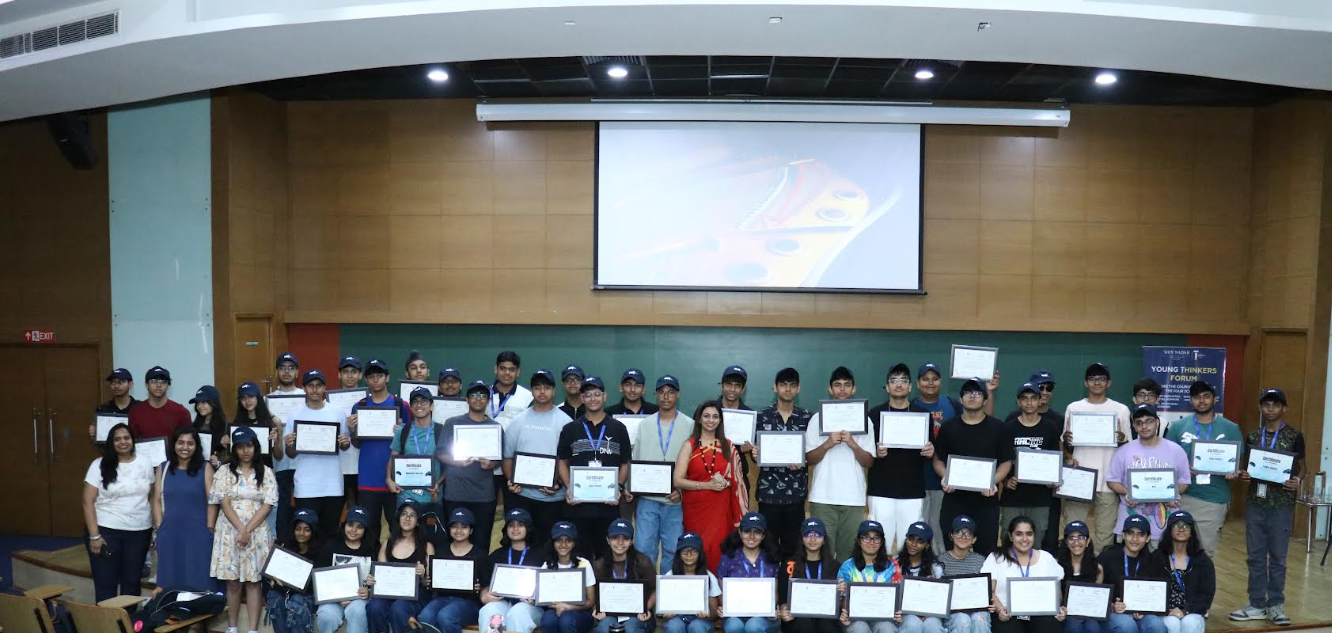
Complementing the university’s own faculty-led academic workshops, the program brought in industry experts to deliver hands-on sessions. External workshops were led by organisations such as Sony India, WWF India, Milagrow Humantech, HCL Guvi, and Jitin Chawla’s Centre for Learning, offering students an insider’s view into emerging trends and real-world applications.
Vinnie Mathur, Chair of the Young Thinkers Forum, Shiv Nadar University, Delhi-NCR, remarked, “The YTF Summer Program continues to inspire students across the nation with its sole aim to expand the boundaries of human knowledge through education. This year, we have once again successfully delivered a university experience to high schoolers by subjecting them to well-rounded and multidisciplinary hands-on skill building. We continue to work towards our vision and will return with even greater opportunities to unlock the immense potential of our country’s students.”
The internationally award-winning summer school program offered a rich mix of indoor and outdoor activities, hands-on engagements, and case studies. Students not only attended academic lectures but also focused on personality development and received career guidance. This year’s excursion to the Amarpur Harit Upvan, a reforested green space developed by SayTrees in collaboration with the HCL Foundation, allowed students to witness community-led environmental action firsthand.
Students left the program with new friendships, fresh perspectives, and meaningful experiences. This year, the program welcomed international participants as well. Launched as an early academic exposure platform, the Young Thinkers Forum Summer School has grown steadily over the years, attracting students from across India and beyond. With its unique blend of experiential learning, industry engagement, and academic mentorship, the program aims to inspire the next generation of thinkers, innovators, and changemakers.
10, Jun 2025
The Westin Mumbai Garden City Achieves LEED Platinum Certification, Setting a New Sustainability Benchmark
Mumbai, 6th June 2025: The Westin Mumbai Garden City proudly announces it has been awarded the prestigious LEED Platinum Certification — one of the highest global recognition from the U.S. Green Building Council (USGBC) for energy and environmental design leadership. This milestone places the hotel among the world’s most elite sustainable properties, reflecting its unwavering commitment to environmentally responsible hospitality.

Sustainability is deeply woven into the hotel’s DNA from eco-friendly infrastructure to daily operations. Recent initiatives include an upgraded sewage treatment plant (STP), ensuring that all treated water is reused for flushing, HVAC systems, and gardening. Guest rooms and public areas feature controlled showers and sensor-operated faucets to reduce water use, and a proactive maintenance system ensures optimal water efficiency. In the laundry, environmentally friendly green chemicals help save both water and steam.
On the energy front, the hotel employs efficient LED lighting, a centralized HVAC plant operating on variable frequency drives, and carefully optimized boilers and laundry systems to reduce consumption. Additionally, the property champions the use of renewable energy sources, the elimination of single-use plastics, and sustainable sourcing in both culinary and operational areas — from serving cage-free eggs and sustainably certified seafood to procuring ethical linens and toiletries.
“We are honoured to achieve LEED Platinum certification, which reflects the hard work and passion of our team in making every aspect of our hotel greener and more responsible,” said Sumeet Suri, General Manager, The Westin Mumbai Garden City. “Our guests can enjoy world-class luxury with the confidence that their stay contributes to a healthier planet.”
Set amid Mumbai’s vibrant cityscape, The Westin Mumbai Garden City continues to redefine modern hospitality by blending contemporary elegance, wellness, and sustainability, showing that luxury and environmental responsibility can indeed go hand in hand.