


14, Oct 2026
Oracle NetSuite Announces Launch of AI-first QuickStart: NYSE Content Update
NYSE issues a pre-market daily advisory direct from the trading floor.
NEW YORK, Oct. 14, 2026 /PRNewswire/ — The New York Stock Exchange (NYSE) provides a daily pre-market update directly from the NYSE Trading Floor. Access today’s NYSE Pre-market update for market insights before trading begins.
Kristen Scholer delivers the pre-market update on October 14th
- Oracle NetSuite announces the availability of AI-first financial platform NetSuite QuickStart.
- NetSuite QuickStart is designed for early-stage technology startups.
- Business founders can engage with trusted data in QuickStart via the AI tools they already use, including Claude and ChatGPT.
- Oracle NetSuite Co-founder + EVP Evan Goldberg will join NYSE Live to discuss how QuickStart can help founders elevate their businesses.
- Reflect Orbital announces the purchase of two Skyroot Aerospace launches for future spacecraft.
- By redirecting sunlight from orbit, Reflect aims to extend electricity generation at solar farms and provide light to help search-and-rescue teams find people at night and construction crews work more safely after dark.
- Tune into NYSE Live to hear Co-Founder and CEO Ben Nowack share how it plans to fulfill its mission of delivering sunlight to precise locations on earth.
- BSR Real Estate Investment Trust officially begins trading on the New York Stock Exchange today.
- The company’s portfolio is valued at approximately $1.4 billion, with roughly 90% of net operating income generated from the Texas Triangle markets of Austin, Houston, and Dallas.
- To celebrate its NYSE listing, BSR REIT’s officers and Board of Trustees will ring the Opening Bell at the New York Stock Exchange. It will trade under the ticker BSRT.
- The AUSA Annual Meeting & Exposition concludes today in Washington, D.C.
- More than 40,000 attendees from over 100 countries have come together as they look to shape the future of national security.
- Participating companies include RTX, Boeing, General Dynamics, and Northrop Grumman.
Opening Bell
BSR REIT (NYSE: BSRT) celebrates its first day of trading on the NYSE
Closing Bell
Warburg Pincus celebrates its 60th anniversary
For market insights, IPO activity, and today’s opening bell, download the NYSE TV App and check out the NYSE YouTube: TV.NYSE.com and YouTube.com/@NYSEofficial


 View original content to download multimedia:https://www.prnewswire.co.uk/news-releases/oracle-netsuite-announces-launch-of-ai-first-quickstart-nyse-content-update-302908551.html

- 0
- By Sai Krishna

14, Oct 2026
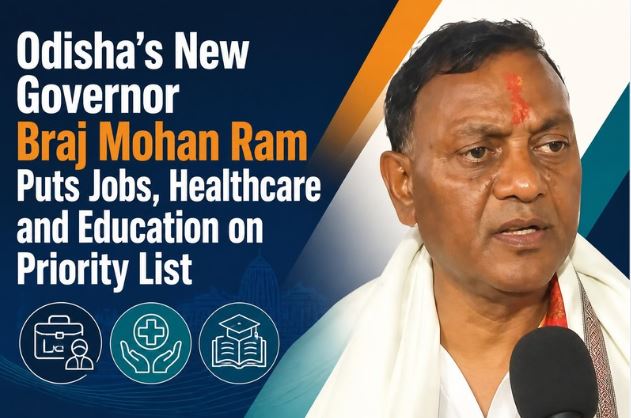
Odisha’s New Governor Braj Mohan Ram Puts Jobs, Healthcare and Education on Priority List
Bhubaneswar, Oct 14 (UDN): Newly appointed Odisha Governor Braj Mohan Ram has identified employment, healthcare, education and farmers’ welfare as key areas of focus, saying he will work in coordination with the state government to address public concerns and support Odisha’s development.
Representational Image
Ram is expected to arrive in Odisha shortly to assume office. Speaking to the media following his appointment, he said he would assess the state’s needs through discussions with Chief Minister Mohan Charan Majhi and members of the public before deciding on appropriate steps.
“The duty is to serve the people,” Ram said, emphasising the importance of cooperation and engagement in addressing the state’s challenges.
Jobs, Healthcare and Education in Focus
The incoming Governor highlighted unemployment, access to healthcare and education as major concerns requiring attention. He also stressed the need to listen to farmers and ensure that their issues receive due consideration.
Ram indicated that his approach would involve understanding ground realities and coordinating with the state government to identify ways to address these challenges.
Mineral Wealth Seen as an Opportunity
Referring to Odisha’s abundant mineral resources, Ram said the state’s natural wealth could play an important role in tackling unemployment.
His remarks underscored the potential to use the state’s resources to support economic activity and create employment opportunities, although he did not announce any specific initiative or timeline.
Pledges Cooperation for State’s Development
Ram expressed gratitude to the central leadership and Prime Minister Narendra Modi for entrusting him with the responsibility of Governor.
He said he would engage with the Chief Minister and citizens as required, assess the situation and work towards the state’s progress.
His priorities signal an emphasis on public welfare and cooperation with the elected government as he prepares to take charge as Odisha’s constitutional head.
14, Oct 2026
Lioness Shreya Gives Birth to Cub at Nandankanan; Newborn Under Special Care
Bhubaneswar, Oct 14 (UDN): Asiatic lioness Shreya has given birth to a cub at Nandankanan Zoological Park near Bhubaneswar, but the newborn is currently being raised under specialised care after the first-time mother reportedly failed to accept it.

Representational Image
Shreya, housed in enclosure number 18, delivered a single cub on Tuesday evening, according to reports. As she did not provide maternal care to the newborn, zoo authorities separated the cub from her and shifted it to the infant animal care centre within the veterinary hospital premises.
Experienced animal keepers are now bottle-feeding the cub with diluted milk formula. The newborn is being kept under controlled lighting and monitored as part of its early care.
First-Time Mother Does Not Accept Cub
The birth marked Shreya’s first pregnancy. Reports said the lioness did not show the expected maternal response towards the newborn, prompting zoo officials to intervene to ensure its care and survival.
The cub was born after Shreya mated with Asiatic lion Harsh. Both lions were born on August 29, 2024, to lion Samrat and lioness Bijli, along with another cub, Dhruv. As Shreya and Harsh are siblings, the newborn is the result of inbreeding.
Concerns Over Cub Survival
The latest birth comes amid concerns over the survival of lion cubs born through closely related pairings at the zoo.
Last month, lioness Maya gave birth to two cubs following mating with Shivam, who is also her litter-mate. One cub was stillborn, while the other, a male, died four days after birth while receiving veterinary care, according to the report.
The recent cases highlight the challenges involved in raising newborn lion cubs at Nandankanan, particularly when maternal care is absent or the cubs face additional risks.
Newborn Receives Intensive Care
With Shreya not caring for her cub, the immediate focus remains on providing appropriate feeding and a controlled environment for the newborn. Its long-term survival will depend on its condition and response to the care being provided.
Zoo authorities are continuing to care for the cub at the infant animal care centre. No further details about its current health condition or long-term prospects were available in the report.
14, Oct 2026
Odisha Relaxes Mandatory EV Hiring Rule, Allows Fuel Vehicles After Failed Tenders
Bhubaneswar, Oct 14 (UDN): The Odisha Government has relaxed its mandatory electric vehicle (EV) hiring policy, permitting departments to hire petrol- and diesel-powered vehicles if open tenders for electric vehicles fail to attract eligible bids.

Representational Image
The Finance Department announced the relaxation through an Office Memorandum, citing operational difficulties faced by government offices, including a lack of responsive bids for EVs.
The earlier directive, issued on June 4, 2026, had made EV hiring mandatory from June 1 as part of the state government’s efforts to reduce fuel expenditure amid the West Asia crisis.
Fuel Vehicles Allowed Under Specific Conditions
Under the revised guidelines, departments can opt for internal combustion engine (ICE) vehicles only after inviting open tenders for EVs and receiving no responsive bids.
The concerned offices must submit documentary evidence of the unsuccessful tender to their administrative departments before proceeding with the alternative arrangement.
Where a hired vehicle is intended to replace a condemned or scrapped government vehicle, the administrative department can approve the relaxation. However, hiring a vehicle for a new office or post, or without scrapping an existing vehicle, will require prior concurrence from the Finance Department, supported by proper justification.
Departments to Conduct Their Own Hiring Process
The new guidelines also change the procedure for hiring vehicles. Individual government offices will now invite their own open tenders after obtaining approval from the competent authority, instead of routing the process through the Odisha Renewable Energy Development Agency (OREDA).
Vehicles already deployed by OREDA will continue to serve the concerned departments and organisations until their existing contracts expire. After that, OREDA will withdraw completely from vehicle hiring and provisioning for other government departments and organisations.
Revised Order Takes Immediate Effect
The revised order has come into effect immediately and provides departments with an alternative when EV hiring proves unworkable through the tendering process.
While the state’s policy continues to prioritise electric vehicles, the relaxation is intended to address practical difficulties in procurement and ensure that government offices can meet their transportation requirements when suitable EV bids are unavailable.
14, Oct 2026
Dharmendra Pradhan Urges Gadkari to Address Safety Concerns on NH-49 in Debagarh
Bhubaneswar, Oct 14 (UDN): Former Union Minister Dharmendra Pradhan has urged Union Road Transport and Highways Minister Nitin Gadkari to take urgent measures to improve road safety and resolve traffic congestion along National Highway-49 in Odisha’s Debagarh district.

Representational Image
In a letter to Gadkari, Pradhan highlighted the risks posed by heavy inter-state freight and passenger traffic on the highway, calling for structural interventions at accident-prone junctions and densely populated stretches.
He proposed three key measures aimed at improving traffic flow, protecting pedestrians and making daily travel safer for residents.
Flyover Proposed at Ambedkar Square
Pradhan stressed the need for an elevated flyover, a dedicated service road and an adequate highway lighting system at the Y-junction near Ambedkar Square, located at the beginning of the Debagarh bypass.
The junction experiences frequent traffic movement because major public institutions, including the Collectorate, New Bus Stand and Women’s College, are situated nearby. The mixing of fast-moving highway traffic with local vehicles and pedestrians has raised concerns over road safety.
Pradhan said suitable infrastructure at the junction was urgently needed to reduce traffic conflicts and improve movement through the area.
Underpass, Slip Road Sought at Birsamunda Square
The former Union Minister also called for the construction of an underpass and a slip road at Birsamunda Square to improve connectivity and minimise disruptions caused by highway traffic.
In addition, he sought the development of service roads, drainage systems and pedestrian-safety infrastructure in populated areas, including Kala, Kandhal and Tileibani.
These measures, he said, would help separate local traffic from through traffic and make road use safer for residents.
Appeal for Permanent Solutions
Sharing details of the letter on X, Pradhan said he had requested Gadkari’s intervention for better road infrastructure, enhanced safety measures and a lasting solution to traffic-related problems along NH-49 in Debagarh.
The proposed interventions are intended to address the challenges arising from heavy traffic movement while improving access to public institutions and essential services.
Pradhan’s appeal places the focus on long-term infrastructure improvements along the highway, particularly at busy junctions and inhabited stretches where highway traffic and local movement frequently intersect.
14, Oct 2026
IMD Issues Yellow Alert for Thunderstorms, Lightning in Odisha Till October 19
Bhubaneswar, Oct 14 (UDN): The India Meteorological Department (IMD) has issued a yellow warning for thunderstorms, lightning and gusty surface winds across several districts of Odisha over the next five days, till October 19.

Representational Image
According to the IMD’s mid-day bulletin issued on Wednesday, isolated locations in the alerted districts may experience thunderstorms accompanied by lightning and gusty winds reaching speeds of 30–40 kmph. The districts covered by the warning will vary from day to day.
District-Wise Weather Forecast
October 15: Thunderstorms, lightning and gusty winds are likely at isolated places in Rayagada, Koraput, Malkangiri, Gajapati, Ganjam, Puri, Khordha and Nayagarh districts.
October 16: The warning will cover Balasore, Bhadrak, Jajpur, Kendrapara, Jagatsinghpur, Cuttack, Angul, Dhenkanal, Kendujhar, Mayurbhanj, Rayagada, Koraput, Malkangiri, Gajapati, Ganjam, Puri, Khordha and Nayagarh.
October 17 and 18: Similar weather conditions, including lightning and gusty winds of 30–40 kmph, are forecast at isolated places in Rayagada, Koraput, Malkangiri, Gajapati, Ganjam, Puri, Khordha and Nayagarh.
October 19: The yellow warning will remain in force for Rayagada, Koraput, Malkangiri, Gajapati and Ganjam districts, where thunderstorms accompanied by lightning and gusty winds may occur at isolated locations.
Residents Advised to Remain Cautious
With thunderstorms and lightning expected in different parts of the state, residents in the affected districts have been advised to remain alert and take precautions during adverse weather.
People should seek shelter inside a safe building during thunderstorms, avoid standing in open areas or under isolated trees, and stay away from exposed locations while lightning is occurring.
The IMD’s latest forecast indicates that thunderstorm activity may continue across parts of Odisha through October 19, with the areas under warning changing over the five-day period.
14, Oct 2026
MIT Bengaluru Inaugurates Quantum-Hub@MAHE to Advance India’s Quantum Technology Ecosystem
New facility at the MAHE Bengaluru campus to strengthen quantum engineering, research, innovation and workforce development
BENGALURU, India, Oct. 14, 2026 /PRNewswire/ — Manipal Institute of Technology, Bengaluru (MIT Bengaluru) on Tuesday launched Manipal House of Quantum, Quantum-Hub@MAHE. Established by Manipal Academy of Higher Education (MAHE), an Institution of Eminence Deemed to be University, the initiative will advance quantum hardware experimentation, engineering education and indigenous technology development in alignment with India’s National Quantum Mission.
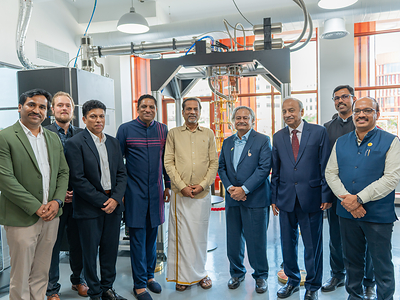
The facility was inaugurated by Chief Guest Dr. Sridhar Vembu, Chief Scientist & Co-Founder, Zoho Corp, and Guest of Honour Dr. Marcus Rommel, CTO, ConScience, in the presence of Dr. Sharath K. Rao, Vice Chancellor, MAHE; Lieutenant General (Dr.) M. D. Venkatesh, VSM (Retd.), 7th Vice Chancellor, MAHE and Advisor to MEMG; Prof. (Dr.) Madhu Veeraraghavan, Pro Vice Chancellor, MAHE Bengaluru; Dr. Karunakar A. Kotegar, Pro Vice Chancellor, Technology & Science, MAHE; Dr. Raghavendra Prabhu, Additional Registrar, MAHE Bengaluru; Prof. Iven Jose, Director, MIT Bengaluru; and Mr. Vishal Chatrath, Co-Founder & CEO, QuantrolOX.
Located at the MAHE Bengaluru campus, the quantum facility at MIT Bengaluru provides students, researchers and industry collaborators with hands-on access to advanced quantum computing infrastructure, including quantum hardware, cryogenic systems and quantum control technologies. Through an integrated academic framework, the facility will support experimentation, application development, deep-tech start-up incubation, component innovation, testing and translational research, positioning MIT Bengaluru as an emerging centre for quantum engineering and indigenous hardware development.
The facility commences operations with a 25-qubit open-architecture dilution refrigeration system designed for advanced training and experimentation. This marks the first phase of a structured roadmap progressing from sub-50-qubit training systems to 150-qubit proof-of-concept platforms and, ultimately, to industrial-grade quantum product systems with more than 1,000 qubits.
Speaking at the inauguration, Dr. Sridhar Vembu, Chief Scientist & Co-Founder, Zoho Corp, said, “Q-HUB is a place for students to dream, think deeply and turn their ideas into conviction and action. Just as personal computers and the internet transformed possibilities for my generation, quantum computing can empower this generation to build new machines, create breakthrough applications and take India to greater heights.”
Highlighting MAHE’s commitment to emerging technologies, Dr. Sharath K. Rao, Vice Chancellor, MAHE, said, “The MAHE House of Quantum at MIT Bengaluru reflects MAHE’s commitment to building advanced scientific capabilities and nurturing talent in emerging technologies. By creating access to modern quantum infrastructure, we aim to contribute meaningfully to India’s growing quantum ecosystem.”
Prof. (Dr.) Madhu Veeraraghavan, Pro Vice Chancellor, MAHE Bengaluru, said, “The Hub brings together education, research and innovation on a common platform. It will create opportunities for interdisciplinary collaboration and help translate academic research into real-world technological impact.”
Prof. Iven Jose, Director, MIT Bengaluru, said, “The quantum facility at MIT Bengaluru will provide students and researchers with valuable exposure to real quantum systems and engineering environments. It marks an important step towards developing the next generation of quantum scientists, engineers and innovators.”
Ahead of the launch, faculty members and students from the Bengaluru and Manipal campuses completed specialised training at the MIT Bengaluru campus and the QuantrolOx laboratory at QuTech, TU Delft, in the Netherlands. The programme developed practical capabilities in dilution refrigerator assembly, cryogenic systems, quantum control technologies, QPU measurements and superconducting quantum hardware, preparing the team to support the operations of the quantum facility at MIT Bengaluru.
The facility will support learning and research in areas such as healthcare, pharmaceuticals, oncology, aerospace and advanced computing. It will also strengthen MIT Bengaluru’s collaboration with industry and research organisations while developing a future-ready talent pipeline in quantum technologies.
The initiative has been formalised through Memorandums of Agreement with QuantrolOx of Finland, in association with Bluefors of Finland, Qblox of the Netherlands and ConScience of Sweden. These collaborations establish a first-year roadmap focused on workforce development, hardware experimentation, intellectual property co-development and national testing infrastructure.
As part of its workforce development efforts, the quantum facility at MIT Bengaluru aims to train 100 quantum engineers by December 2026. It will also conduct quantum awareness programmes, summer and winter camps for Class 10 and Class 12 students across rural India, short hands-on exposure programmes and capacity-building initiatives for technical professionals.
The facility will provide researchers, start-ups and industry partners with access to advanced quantum testing and measurement infrastructure, strengthening interdisciplinary collaboration, innovation and India’s growing quantum technology ecosystem.
About Manipal Academy of Higher Education
Manipal Academy of Higher Education (MAHE) is an Institution of Eminence Deemed to be University. MAHE offers over 400 specialisations across Health Sciences (HS), Management, Law, Humanities & Social Sciences (MLHS), and Technology & Science (T&S) streams through its constituent units at campuses in Manipal, Mangalore, Bengaluru, Jamshedpur, and Dubai. With a remarkable track record in academics, state-of-the-art infrastructure, and significant contributions to research, MAHE has earned recognition and acclaim both nationally and internationally. In 2020, the Ministry of Education, Government of India, awarded MAHE the prestigious Institution of Eminence status. Currently ranked 3rd in the National Institutional Ranking Framework (NIRF) 2025 rankings, MAHE is the preferred choice for students seeking transformative learning experience and enriching campus life, as well as for national and multinational corporations seeking top talent.

 View original content to download multimedia:https://www.prnewswire.com/in/news-releases/mit-bengaluru-inaugurates-quantum-hubmahe-to-advance-indias-quantum-technology-ecosystem-302908420.html

14, Oct 2026
RuleMudra Launches a Fully Digital Platform for Short-Term Personal Loans in India
A platform driven by technology, which seeks to make short-term loans easier and more open via consensual verification, responsible assessment, and disbursement through RBI licensed lending partner(s)
NEW DELHI, Oct. 14, 2026 /PRNewswire/ — RuleMudra, a digital Lending Platform operated by TwoMinutes Fintech Private Limited, has launched a technology-led platform for facilitating short-term personal loans through RBI-regulated lending partners.

The platform has been launched for Indian borrowers who have a genuine need for funds, due to unforeseen circumstances like an unexpected medical expense, delayed payment, urgent travel, education expenses, rent or other family expenses.
The eligible customers can make use of their smartphones to apply for the loan, undergo the process of verification and understand the terms of the loan that suits them. After completion of the above process, the funds are directly transferred to the borrower’s bank account.
RuleMudra allows customers to get loan offers between ₹5,000 and ₹1 lakh depending upon eligibility, income, repayment capacity, and the credit policy of the lending partners.
Designed Around Real Financial Scenarios
There may not always be forewarning of a need for financial bridging. This situation could arise between two paychecks or during any other urgent situation where a payment cannot be delayed.
Besides figuring out how to arrange for the money, many consumers have questions about who to trust, the costs involved in the borrowing or whether some vital information is hidden in the fine print.
RuleMudra strives to simplify this process by combining verification, offer evaluation and e-contracting in one process. This process is paperless but includes all relevant KYC, income, credit and repayment capability tests.
The company says the platform has been created to support informed borrowing rather than encourage people to take credit unnecessarily.
A Conversation with RuleMudra’s Managing Director
Speaking about the idea behind the platform, Mr. Lavit Dighe, Managing Director, RuleMudra, said that digital lending needs to solve more than the problem of speed.
What prompted the launch of RuleMudra?
“We observed that someone who needs money in the short term always faces two questions simultaneously. One is about getting their problem solved, but the other is whether the platform is credible and if they have understood the process of repaying their debt.”
“That is the gap RuleMudra has been designed to address. We wanted to create an experience that feels simple to the customer without removing the checks and disclosures that responsible lending requires.”
How does RuleMudra balance convenience with responsible lending?
“Convenience cannot override proper assessment. Although a digital journey could mean less paperwork and less wait time, each applicant has to go through the process of verification. The final decision on loan approval rests on the regulated lending partner’s assessment of the client’s eligibility and their repayment capacity.”
“Our function is to help in the process and make it easier for the user to comprehend the information. We do not believe that responsible credit should be positioned as money available without questions or checks.”
Depending on the lending partner and the applicant’s profile, verification may include PAN, Aadhaar or other permitted identity checks, bureau information, income assessment, bank-account verification, Video KYC or liveness verification.
Account Aggregator-supported verification may also be used with the customer’s express consent, where applicable. This may enable the platform to digitally analyse the financial eligibility and lessen dependency on manual submission of bank statements.
What makes transparency so crucial to the platform?
“When a person is dealing with an urgent expense, it is easy to focus only on the amount being offered. But the interest rate, APR, processing fee, tenure, repayment schedule and total amount payable matter just as much.”
“Borrowers should have the opportunity to review these details before accepting an offer. We want customers to understand what they are agreeing to—not discover the cost later.”
Eligible applicants can look at the relevant Key Fact Statement and the terms of the loan before digitally accepting the offer. These could be the approved amount, Annual Percentage Rate, fees applicable, taxes, and repayment plan among others.
RuleMudra has a provision for an online RuleMudra Loan Calculator that will enable their customers to calculate the potential finance involved before going ahead and applying for the loan. The calculator displays an approximate EMI, amount of interest to be paid, repayment total and charges applicable if any, by providing the loan amount needed and tenure required. This is not the exact amount but the amount to be calculated is dependent on the customer’s eligibility and loan offer made. By making these details easier to review in advance, RuleMudra aims to promote transparency and help customers make better-informed borrowing decisions.
Does automation guarantee that all applications are instantly approved?
“No, and that distinction is important. Automation can make verification and assessment faster, but it cannot guarantee approval. Each application is evaluated according to the regulated lender’s credit policy.”
“Terms such as ‘quick’ or ‘instant’ should describe the potential efficiency of the digital process. They should never be interpreted as guaranteed approval or lending without verification.”
RuleMudra also clarifies that “zero paperwork” refers to the paperless nature of the journey. It does not mean that an applicant can receive a loan without submitting the required information or completing KYC and eligibility checks.
What should customers consider before borrowing?
“The first question should always be whether the expense is genuine and necessary. The second is whether the repayment will fit comfortably within the monthly budget.”
“A short-term loan can help manage a temporary gap, but it should not create a longer financial problem. We encourage customers to review the complete cost, consider their existing obligations and borrow only an amount they can reasonably repay.”
Building Trust Alongside Technology
RuleMudra’s platform combines digital verification, automated decision support and paperless documentation with customer consent and clear loan disclosures.
Once everything is approved, all checks have been completed, the funds are then transferred to the borrower’s verified bank account. The process might be expedited for those who qualify and have already been verified.
The company thinks that the future of online credit is going to depend not only on speed, but also clarity with which the platform communicates with its borrowers.
“Technology can shorten a journey, but trust is what makes that journey meaningful,” Mr. Lavit added. “We want to make short-term lending less confusing and more responsible at the same time.”
The Road Ahead
After this successful launch, RuleMudra intends to build its technology platform, expand its pool of licensed lending partners, and make transparent short-term loans accessible throughout India and if things go well maybe beyond the borders.
The company’s roadmap also includes enhancing automation-led decision support, developing more personalised customer journeys and strengthening financial education around credit, repayment and responsible borrowing.
Customer consent, data security, regulatory compliance and transparent communication will continue to remain central to the platform’s development.
About RuleMudra
RuleMudra is a technology-driven Lending Platform operated by TwoMinutes Fintech Private Limited offering a safe, seamless and entirely digitized experience for obtaining short-term personal loans through RBI-regulated lenders – DECIMUS FINANCIAL LIMITED & BASEL INVESTMENTS LIMITED.
Eligible borrowers may apply online, undertake the verification process, view the loan offer which is relevant to them and digitally accept the same. The loan sanction, loan pricing and disbursal is done by the concerned regulated lender.
RuleMudra: Making Finance Truly Yours
Website: www.rulemudra.com
Media contact: support@rulemudra.com
Phone: +91 8447360240
Important Information
Loans are provided under certain eligibility, KYC, credit rating, repayment capability, and policies of the financing organisation. Timing of disbursement is not assured. Terms such as “instant,” “quick” and “zero paperwork” refer to the potential speed and paperless nature of the digital process; they do not mean guaranteed approval or verification-free lending. Applicants should carefully review the Key Fact Statement, APR, applicable charges, repayment schedule and total repayment obligation before borrowing.
 View original content to download multimedia:https://www.prnewswire.com/in/news-releases/rulemudra-launches-a-fully-digital-platform-for-short-term-personal-loans-in-india-302908428.html

14, Oct 2026
Bank of America Reports Third Quarter 2026 Financial Results
CHARLOTTE, N.C., Oct. 14, 2026 /PRNewswire/ — Bank of America reported its third quarter 2026 financial results today. The news release, supplemental filing and investor presentation can be accessed at Bank of America’s Investor Relations website at https://investor.bankofamerica.com/quarterly-earnings.
A Form 8-K containing Bank of America’s financial results is also available at the U.S. Securities and Exchange Commission’s website at https://www.sec.gov.
Investor Conference Call information
Chair and CEO Brian Moynihan and Executive Vice President and CFO Alastair Borthwick will discuss the financial results in an investor conference call at 8:30 a.m. ET today. For a listen-only connection to the conference call, dial 1.877.200.4456 (U.S.) or 1.785.424.1732 (international), and the conference ID is 79795. Please dial in 10 minutes prior to the start of the call.
Investors can listen to live audio of the conference call and view the presentation slides by visiting the “Events and Presentations” section of the company’s Investor Relations website.
Replay information for Investor Conference Call
Investors can access replays of the investor conference call by visiting the Investor Relations website or by calling 1.800.934.4850 (U.S.) or 1.402.220.1178 (international) from noon on October 14 through 11:59 p.m. ET on October 23.
Bank of America
Bank of America is one of the world’s leading financial institutions, serving individual consumers, small and middle-market businesses and large corporations with a full range of banking, investing, asset management and other financial and risk management products and services. The company provides unmatched convenience in the United States, serving more than 69 million clients with approximately 3,500 retail financial centers, approximately 15,000 ATMs (automated teller machines) and award-winning digital banking with approximately 60 million verified digital users. Bank of America is a global leader in wealth management, corporate and investment banking and trading across a broad range of asset classes, serving corporations, governments, institutions and individuals around the world. As the #1 small business lender in the United States (FDIC), Bank of America offers industry-leading support to approximately 4 million small business households through a suite of innovative, easy-to-use online products and services. The company serves clients through operations across the United States, its territories and more than 35 countries and/or jurisdictions. Bank of America Corporation stock (NYSE: BAC) is listed on the New York Stock Exchange.
Investors may contact
Lee McEntire, Bank of America
Phone: 1.980.388.6780
lee.mcentire@bofa.com
Jonathan G. Blum, Bank of America (Fixed Income)
Phone: 1.212.449.3112
jonathan.blum@bofa.com
Reporters may contact
Jocelyn Seidenfeld, Bank of America
Phone: 1.646.743.3356
jocelyn.seidenfeld@bofa.com
 View original content to download multimedia:https://www.prnewswire.co.uk/news-releases/bank-of-america-reports-third-quarter-2026-financial-results-302908432.html

14, Oct 2026
Hundreds of Kites Descend on Puri’s Bada Danda, Draw Crowds Near Mausima Temple
Puri, Oct 14 (UDN): An unusual gathering of hundreds of kites on Puri’s Bada Danda near Mausima Temple caught the attention of residents and commuters on Wednesday morning, turning a busy stretch of the road into a striking spectacle.

Representational Image
The birds were seen congregating on the road and moving about in search of food. According to reports, food scattered along the stretch appeared to have attracted the kites, prompting them to gather in large numbers.
The birds repeatedly moved from one side of the road to the other as they tried to pick up food. However, the steady flow of traffic interrupted their feeding, forcing them to retreat whenever vehicles approached.
At times, the kites managed to seize food from the road, while at other moments they had to move away to avoid passing vehicles.
Unusual Scene Draws Public Attention
The large gathering soon became a point of curiosity for people in the area and commuters passing through the busy Grand Road. The sight of so many birds assembled in one place stood out against the usual bustle of the city’s main thoroughfare.
While the gathering offered an unusual spectacle for onlookers, the birds’ attempts to feed amid moving traffic also highlighted the challenges of sharing a busy urban space with wildlife.
The kites remained a visible presence on the stretch for some time, drawing attention from passersby before the usual movement of traffic continued around them.


