


15, Aug 2026
India, Japan Work on New Roadmap to Expand Skilled Workforce Mobility
New Delhi, August 15, 2026: India and Japan are working on a more structured pathway to help skilled Indian workers access employment opportunities in Japan, as both countries seek to deepen cooperation in skill development and human-resource mobility.
The Ministry of Skill Development and Entrepreneurship (MSDE) recently brought together officials, training institutions, industry representatives, recruitment agencies and other stakeholders for an India-Japan consultation in New Delhi. The discussions focused on making the movement of skilled workers between the two countries smoother and more effective.
A key area of discussion was the need to combine job-specific training with Japanese language and cultural preparation. Participants also examined assessment systems, employer requirements and better coordination among government agencies, training organisations and industry.
The proposed roadmap is expected to set out short-, medium- and long-term actions, with measurable targets and clearly defined responsibilities. The aim is to create a stronger link between Japanese employers looking for talent and Indian workers preparing for overseas careers.
The initiative comes against the backdrop of Japan’s growing demand for skilled manpower and India’s large young workforce. The two countries’ 2025 human-resource action plan envisages the exchange of 500,000 people over five years, including 50,000 skilled personnel and potential talent from India to Japan.
For Indian youth, the expanding partnership could open more international career opportunities while giving Japanese businesses access to a larger pool of trained professionals.
- 0
- By Neel Achary

15, Aug 2026
Surfshark helps create new official EU security standards for the whole VPN Industry
-
Run strict no-logs deployments on RAM-only servers.
-
Ensuring personal data stays on the device, make telemetry optional, and block permanent storage of user data on servers.
-
Strip passwords from diagnostic logs and warn users before exporting settings that contain credentials.
-
Enforce safe memory handling and secure encryption to block common attacks and protect stored data, even on a lost device.
-
Undergo automated and manual testing for known exploits before updates reach users.
-
Install critical security patches the first time the VPN is switched on.
-
Ensuring VPN clearly labels the level of security and privacy offered to different use cases (from journalists to households).
-
Extend protection to modern, decentralized infrastructure like mesh networks.
15, Aug 2026
Pristine Unreleased Version of Super Mario Bros. / Duck Hunt Leads Goldin’s 2026 Summer Pop Culture Auction
Auction house offers more than 1,000 collectibles tied to Nintendo, Pokémon, Superman, Metallica, among others
August 15, 2026 – Goldin, an internationally recognized auction house known for rare and record-breaking collectible sales, today opened its Summer Pop Culture Elite Auction offering over 400 trading cards, 280 video games, 270 comics and magazines–including 25 original artworks–alongside more than 250 pop culture toys, and 50 vinyl records and VHS tapes. Spanning franchises from Nintendo and Pokémon to beloved characters of Superman and Harry Potter to cultural figures like Metallica and Bob Ross, Goldin’s Summer Pop Culture Elite Auction encompasses memorabilia for all pop culture collectors.
Following the recent detection of a box containing unreleased versions of Super Mario Bros. / Duck Hunt, the auction brings the first of this astounding Nintendo Wire find to public auction. This 1988 NES Nintendo Super Mario Bros./Duck Hunt (USA) Cartridge and Manual received a perfect 10 grading, a first in PSA history for any cartridge. The discovery is so rare that PSA leadership shared their shock with reporters covering the unearthing and pristine condition.
Additional videogame highlights include a 1999 GB Nintendo Game Boy Pokemon Yellow Version: Special Pikachu Edition (USA) Sealed Video Game with a PSA 9.8/A+ as well as a 1997 PS1 Sony PlayStation Final Fantasy VII (USA) Sealed Video Game at CGC 9.9/A++.
The 1996 Pokémon Japanese CoroCoro Unpeeled Promo Sheets Collection stands at the front of the Pop Culture Elite trading card lineup. Featuring the undeniably iconic Pikachu and Jigglypuff promo cards, these glossy cards are widely regarded as the very first Pokémon TCG cards in history as published in Japan on October 15, 1996–predating the official Japanese Base Set retail launch by five days. Enthusiasts can further find several highly-graded Pokémon pieces such as 2014 Pokémon World Championships No. 2 Trainer with CGC GEM MINT 10, a 2014 Pokémon World Championships No. 3 Trainer at CGC PRISTINE 10, and a 1999 Pokémon Japanese Vending Masaki Promo Holo complete set (5), featuring Gengar, Golem, Alakazam achieving PSA MINT 9.
TV and film-adjacent trading cards feature a 2004 ArtBox Harry Potter Prisoner of Azkaban Card autographed by Daniel Radcliffe, Emma Watson, and Rupert Grint at PSA NM-MT 8, and a Millenial-favorite cartoon in a 2025 Topps Chrome SpongeBob SquarePants Red Refractor #25 with PSA GEM MT 10.
Graded magazine offerings span a Jul./Aug. 1988 Nintendo Power #1 (Newsstand) receiving a Pop 5 grading, with two higher copies in existence, alongside an instantly-recognizable Dec. 1953 Playboy First Issue featuring Marilyn Monroe’s first-ever cover (Newsstand) at CGC 7.5. Printed pages further include comics from both DC and the Marvel Universe with a 1939 Superman #1 – Origin of Superman at CGC Restored 5.0, a 1962 Amazing Fantasy #15, signed and inscribed by Stan Lee at CGC Signature Series 3.0, and a 1963 Tales of Suspense #39 featuring the first appearance of Iron Man with CGC 7.5.
Original artwork includes a 1984 He-Man Masters of the Universe Original William George Oil Painting, measuring 44.25″ x 34.75” as well as an original Bob Ross MTV Oil Painting on Canvas at 24” x 18”.
Heavy metal music lovers and members of Metallica Nation will be thrilled by multiple in-sleeve vinyl records in the Summer Pop Culture Elite Auction. A 1983 “Kill ‘Em All” from Megaforce Records is signed by James Hetfield, Lars Ulrich, Kirk Hammett, and Cliff Burton, having received a VMG EX 8.0 with JSA LOA at Pop 1. Additionally, a 1986 “Master of Puppets” Elektra specialty pressing is signed by James Hetfield, Lars Ulrich, Kirk Hammett, and Cliff Burton and includes a printed inner sleeve, graded VMG NM 9.0 with JSA LOA Pop 1.
The Pop Culture auction would not be complete without classic toys, and this summer’s rendition features a 2026 Stern Pinball x Pokemon LE (#646/750) Boxed, Sealed Pinball Machine and several 1970s-era Kenner Star Wars action figures such as Luke Skywalker with Telescoping Saber and a complete action figure set in a custom display case.
Goldin’s Summer Pop Culture Elite Auction is open for regular bidding through Wednesday, September 9. Extended bidding begins at 10 PM ET.
Concurrently, the company’s 2026 Sports Monthly Sports Elite Auction #7 continues through Saturday, August 15. Additionally, Goldin is set to open the Summer Goldin 100 Auction on Monday, August 17, the Monthly Sports Elite Auction #8 on Friday, August 21, and the 2026 Summer Movie Prop & Memorabilia Auction is scheduled to open Wednesday, August 26. Consignment inquiries can be sent to sell@goldin.com.
14, Aug 2026
Rackspace Technology Appoints Chetan Gupta, Ph.D., as Chief AI Officer to Advance Enterprise and Sovereign AI
San Antonio, TX — Aug 14 — Rackspace Technology® (NASDAQ: RXT), a global enterprise AI infrastructure and solutions provider, today announced the appointment of Chetan Gupta, Ph.D., as Chief AI Officer. Gupta will lead the Office of AI, with responsibility for Rackspace’s AI strategy, research, innovation, governance, and adoption across the company and its customers. His appointment strengthens Rackspace’s ability to help institutions deploy AI safely, economically, and at scale in environments where the stakes are highest: regulated industries, sovereign jurisdictions, and mission-critical operations.
Gupta joins Rackspace after nearly a decade leading global AI research at Hitachi, where he served as General Manager of the Advanced AI Center in Japan, Vice President of the Industrial AI Lab in North America, and head of Hitachi’s Global AI Center of Excellence. His work was instrumental in Hitachi’s evolution toward Physical AI, building systems for railways, energy grids, factories, and buildings, environments where AI must operate under institutional accountability, jurisdictional requirements, and zero tolerance for failure. Earlier in his career, he spent seven years at HP Labs translating advanced AI research into deployed solutions across logistics, manufacturing, energy, and mobility. He has authored nearly 300 papers and patents and mentored a generation of AI researchers and engineers.
“Chetan has spent his career building AI for the institutions the world depends on. At Hitachi, that meant trains, grids, and factories, where AI is not a demo, but an operating commitment measured in uptime, safety, and trust,” said Gajen Kandiah, CEO of Rackspace Technology. “That is precisely the discipline our customers need as they move AI into production inside regulated and sovereign environments. Chetan understands that success depends on more than model capability. It requires strategy, governance, and an operator who carries accountability from silicon to outcomes.”
Gupta’s appointment reflects Rackspace’s continued investment in enabling institutions to turn AI ambition into governed, measurable business outcomes and reinforces the company’s position as the place where enterprise AI goes to production.
“AI has reached an inflection point. The hard problem is no longer capability. It is trust: taking promising research and turning it into systems that hold up in the real world, under real regulatory and operational constraints,” said Gupta. “Rackspace occupies a distinct position in the market, operating the full stack for institutions that cannot afford to get AI wrong. I look forward to leading our AI strategy and advancing enterprise and sovereign AI for our customers and across the business.”
Gupta holds a Ph.D. in mathematics and master’s degrees in mathematical computer science and chemical engineering from the University of Illinois Chicago.
14, Aug 2026
BIX 2026 to Spotlight the Future of Stem Cell and Global Biopharma M&A
In her keynote, “Human Stem Cells: Transforming the Fight Against Nervous System Disease”, she will explore how human stem cell technologies are transforming the way nervous system diseases are studied and treated. The session will cover applications ranging from disease modeling and drug discovery to cell therapy, highlighting the translation of stem cell research into therapeutic development.
13, Aug 2026
AAEON Release PICO-ADN2, a Robust 2.5” Single-Board for Space-Constrained Rugged Deployments
Targeting transportation, automation, and outdoor kiosk deployment, the PICO-ADN2 is designed for stable operation in unpredictable environments.

Taipei, Taiwan – Aug 13: AAEON, an industry-leading provider of embedded solutions, has released the PICO-ADN2, the latest addition to its line of Pico-ITX boards. The board is available with a choice of the 15W Intel Core i3-N305 or 12W Intel Processor N97, the board is designed to balance performance, thermal efficiency, and energy consumption in unpredictable environments. In line with this, AAEON has positioned the PICO-ADN2 as a platform well-suited for deployment in transportation, digital signage, industrial automation, and smart kiosk applications.
Of particular note is the PICO-ADN2 offers the option of a 2-pin header for an external supercapacitor that can be sized to provide at least 48 hours of RTC runtime, which may make it an attractive option for integrators that require an alternative to conventional battery-based backup, especially in environments that encounter power interruptions.
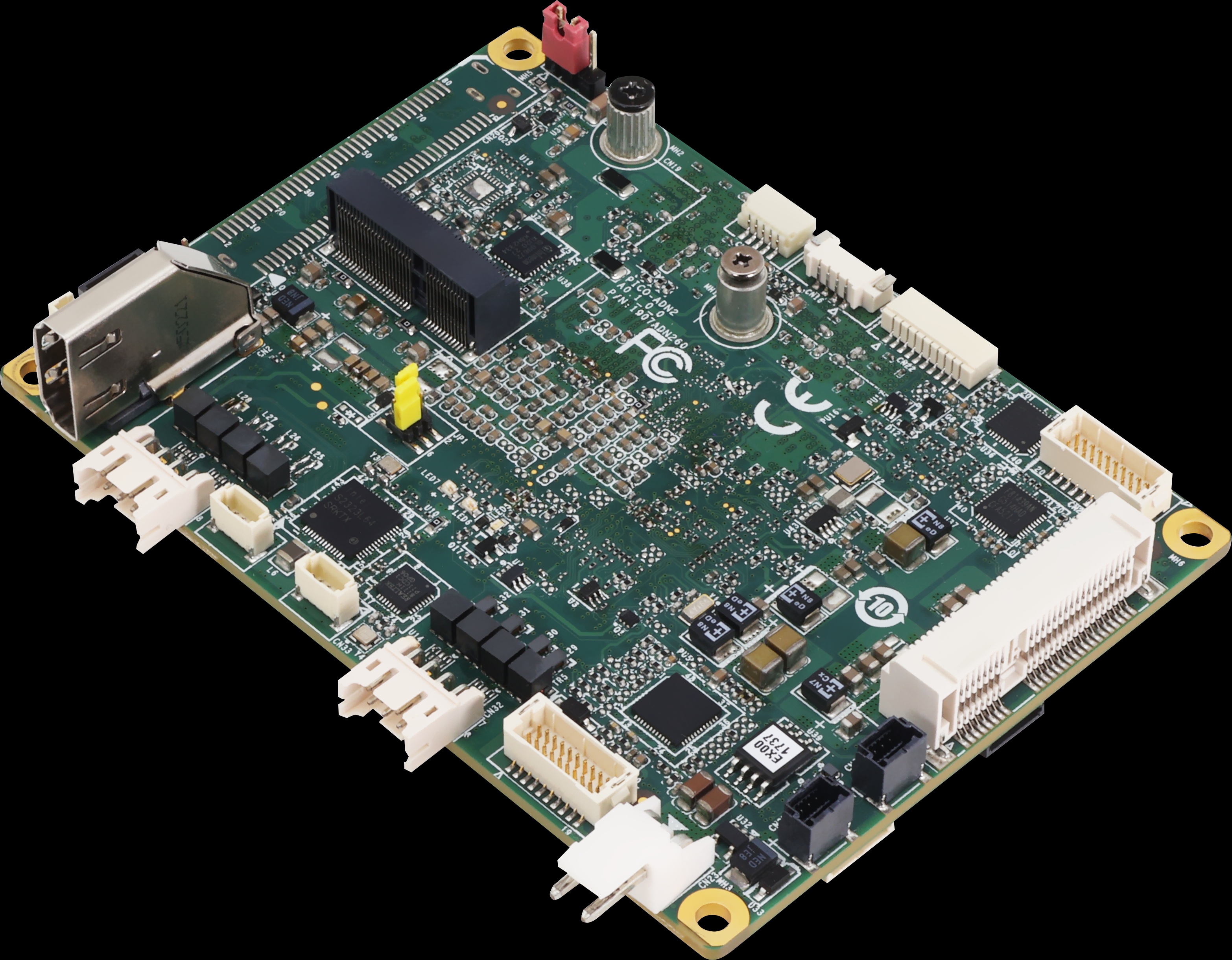
While the PICO-ADN2’s I/O is primarily connector-based, aside from a single HDMI 1.4 port, AAEON notes that it features lockable pin headers. This is to provide greater stability when the board is installed in high-vibration environments, a design philosophy that extends to the board’s system memory, which is 16GB of soldered LPDDR5.
The PICO-ADN2’s I/O provides an 8-pin header that exposes two LAN interfaces (one Intel Ethernet Controller I226-IT, one Realtek RTL8111H-CG), four USB headers (two for USB 3.2 Gen 1, two for USB 2.0 signals), and two serial port headers for RS-232/422/485. In addition to these, the PICO-ADN2 hosts a GPIO 4-bit and SMBus header (co-lay I2C).
As noted, the primary display option for the board is an HDMI port. However, an LVDS connector, co-laid with eDP, is also available, offering 1920 x 1200 at 60 Hz and 3840 x 2160 at 60 Hz, respectively.
Where expansion is concerned, the PICO-ADN2 supports the installation of Wi-Fi add-on cards via an M.2 2230 E-Key, as well as storage modules via a full-size mSATA slot, which can also accommodate an mPCIe module, configurable through the system’s BIOS settings.
12, Aug 2026
DigiLocker Crosses 72.43 Crore Users, UMANG Surpasses 11.66 Crore
New Delhi, Aug 12: India’s digital governance ecosystem is continuing to expand, with DigiLocker crossing 72.43 crore registered users and the UMANG platform reaching more than 11.66 crore users, reflecting the growing adoption of online government services across the country.
The increasing use of these platforms shows how digital tools are gradually changing the way citizens access government documents and services. For many people, tasks that once required paperwork and visits to government offices can now be completed through a mobile phone or computer.
DigiLocker has emerged as an important platform for accessing and sharing digital documents. Citizens can use the service to obtain documents issued by government departments and authorised institutions, making it easier to keep important records available when required.
The platform is particularly useful for documents that people frequently need for education, employment, travel, financial services and other official purposes.
UMANG has similarly brought a wide range of government services together on one digital platform. Its growing user base reflects increasing demand for convenient access to public services without the need to visit multiple offices or websites.
The expansion of digital services is also helping improve access for people outside major cities. Citizens in smaller towns and rural areas can increasingly use online platforms for routine government-related requirements, potentially saving time and reducing travel.
At the same time, digital access remains uneven for sections of the population. To address this, assisted digital-service centres continue to provide support to people who may not have smartphones, computers or reliable internet access.
The growth of DigiLocker and UMANG is part of a wider shift towards paperless and technology-enabled governance in India. As more departments bring services online, citizens are gaining access to an increasing number of government facilities through a single digital ecosystem.
For ordinary users, the biggest benefit is convenience. Documents can be accessed when needed, while several public services can be reached without navigating multiple physical offices.
The rising number of registered users also indicates that digital public services are becoming a regular part of everyday interactions between citizens and government.
With continued expansion of services and greater emphasis on accessibility, platforms such as DigiLocker and UMANG are expected to remain important components of India’s digital governance journey.
12, Aug 2026
Asset Managers Are Concerned About the Risks That AI Introduces, Clearwater Analytics Research Reveals
Firms are racing to adopt AI, but few have built the data foundation that can reduce the risks that come with it
BOISE, Idaho, NEW YORK, CHICAGO, LONDON and HONG KONG, Aug 12 – Artificial intelligence is becoming more deeply embedded in asset management operations, but new research from Clearwater Analytics finds that firms are deeply concerned about the risks it introduces, from data governance to regulatory compliance.
Clearwater’s “GenAI and the Data Divide” study, which polled insurance asset managers, hedge funds, private markets specialists, and general asset managers, finds that while AI offers clear efficiency and alpha-generation opportunities, it also introduces new vulnerabilities that firms must actively manage.
Culture and Capability
The most striking finding concerns the gap between adoption and readiness. Nearly two-thirds (62%) of asset managers are concerned they lack the skills and experience to use AI effectively, with 43% describing themselves as very concerned.
More than half (52%) are separately concerned that internal culture and resistance to change will slow adoption and readiness. These findings suggest that for many firms, the biggest barrier to realizing AI’s potential isn’t the technology itself. It could be the organization culture surrounding it.
Technology Risk
At the heart of firms’ AI concerns lies a fundamental question of trust. Can they rely on what the technology produces? Two thirds (67%) of asset managers are concerned about data governance, reliability, and integrity risks, while 64% are concerned about operational risks.
Given the increasing number of asset managers using AI to support investment decision making, 64% of those participating in the research say they are worried about model/algorithm transparency, explainability, and bias. In addition, 62% are concerned about hallucinations where AI generates plausible sounding but false information and presents it as true.
Compliance Burden
More than half (55%) of global asset managers say they are concerned about the regulatory risks of AI, with 30% saying they are very concerned. A similar amount (58%) of asset managers are worried about the financial risk from AI, including management of credit, market, and fraud risks. Finally, 64% say they are worried about the implementation costs of AI.
The research also reveals that while many asset managers say they are prepared to manage AI-enabled risks, a notable proportion still have work to do. In particular, 16% of asset managers surveyed say they are not prepared for AI-enabled operational risks, and 15% say they are not ready for risks arising from the lack of AI skill and experience across their organizations.
To help mitigate AI-enabled risks, nearly all (93%) of asset managers surveyed agree that the best approach is to balance human expertise with technology, using AI to augment or empower risk teams rather than replace them.
Souvik Das, CTO at Clearwater Analytics, said: “What struck me most in this research is how often the same root cause appears, no matter which risk we asked about. Underneath the concerns about skills, culture, governance, and compliance sits one common thread. Firms don’t yet fully trust the data feeding their AI. That’s a natural stage for any technology this new to move through. The firms navigating it well are the ones treating their data with the same care they bring to the technology itself. That’s what turns AI from something people double-check into something they can rely on to tell them the truth about the risk in front of them.”
11, Aug 2026
OSF HealthCare and RapidAI Expand Enterprise AI Partnership Across OSF Hospitals
Expansion strengthens OSF’s leadership in advancing patient care through technology, bringing the same standard of care to every hospital in its network
PEORIA, Ill., Aug. 11 — OSF HealthCare, a not-for-profit health system serving communities across Illinois and Michigan, and RapidAI, a global leader in enterprise clinical AI, today announced the expansion of the Rapid Enterprise™ Platform to all 18 hospitals in the OSF Ministry. Building on an initial deployment at select sites, the expansion will give each OSF hospital access to an advanced platform built to analyze medical images, connect care teams, and support patient management across the patient journey.
RapidAI’s deep clinical AI goes beyond alerting teams to a potential finding. It provides automated measurements, disease characterization, and advanced visualization, giving radiologists and clinicians a clearer, more complete picture of each patient’s condition. By automating parts of image analysis and delivering actionable clinical context, the platform helps OSF teams apply their expertise where it matters most, to make informed decisions and coordinate next steps. Keeping that information connected as patients move through the system helps reduce fragmentation and maintain continuity across the network.
OSF expanded the partnership after seeing measurable improvements in treatment times and more consistent identification of people who might have suffered a stroke and required intervention. The expansion builds on those results and a strategic partnership focused on deeper integration, enterprise governance, analytics, and ongoing optimization across its hospitals.
“Every community we serve should benefit from the same advanced technology, whether a patient enters one of our largest medical centers or a rural, critical access hospital,” said Arun Talkad, MD, a neurologist who directs stroke care at OSF HealthCare. “After seeing how RapidAI supported clinical decisions and patient care at select sites, we saw the opportunity to add more AI solutions to the platform and extend that value across all hospitals, strengthening access to specialty expertise and helping us deliver high-quality, consistent care at every level of our health system.”
The Rapid Enterprise Platform is designed to support health systems beyond a single disease state or moment in care. RapidAI’s clinical coverage spans neuro, cardiac and vascular care, trauma, and oncology. It combines deep clinical AI with advanced 3D visualization across the body, care coordination, enterprise analytics and longitudinal patient management. RapidAI-developed and curated third-party applications allow health systems to scale AI across specialties and follow disease over time through one platform.
OSF is committed to ensuring reliable care at all times. The platform’s infrastructure, Rapid Edge Cloud, is designed to keep critical decision support and care coordination tools available even during a network or cloud outage, helping minimize disruption and keep care consistently available.
“Our goal is to help hospitals deliver the best possible care for the communities they serve, and validated AI that improves clinical decision-making can be a powerful part of that,” said Karim Karti, CEO of RapidAI. “OSF is leading by example, implementing AI across its enterprise to help teams work at their best, reduce variation and make informed decisions. We are proud to support that vision as its strategic enterprise AI partner.”
The expansion builds on recognized leadership at OSF HealthCare in using technology to strengthen patient care. In 2025, Fortune named OSF one of America’s Most Innovative Companies for the second time, making it the only Illinois health system on the list. OSF also earned CHIME Digital Health Most Wired recognition for the 14th consecutive year, achieving Level 9 certification across acute, ambulatory and long-term acute care settings. These honors reinforce OSF is a leader in applying technology at scale to improve care.
11, Aug 2026
Rohde & Schwarz installs millimeter wave security scanners at Airports of Thailand (AOT) Airports
Aug 11: Rohde & Schwarz QPS201 security scanners with advanced imaging technology (AIT) will be installed at the checkpoints at Airports of Thailand (AOT) Airports, including Bangkok Suvarnabhumi Airport, a major hub in Asia with 60 million passengers a year.
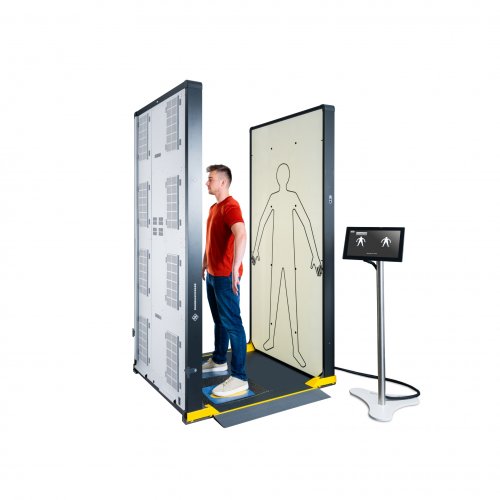
Caption: Faster security clearance and better passenger experience with the QPS201 scanners at Thailand’s airports.
Rohde & Schwarz, a world leader in AI-based millimeter wave screening technology, won an award to supply ECAC and TSA certified QPS201 AIT security scanners to passenger security screening checkpoints across 5 Airports of Thailand (AOT) managed Airports, including Thailand’s Suvarnabhumi airport – a single huge terminal serving both domestic and international passengers.
The QPS201 scanner model brings together advanced detection capabilities with efficient, intuitive procedures designed to benefit both passengers and staff. Using innovative millimeter wave technology and AI-based algorithms, the scanners meet regulatory requirements for identifying prohibited items while keeping false alarm rates low. The technology helps ensure that security measures remain both effective and user-friendly, improving the overall passenger experience. Passengers spend only a short time with a hands-down scan pose inside the security scanner, while any potential threats on their body are shown on a standardized digital avatar without revealing personal attributes. The system requires only milliseconds per scan and its open design and pose makes security screening easy and accessible for travellers.
The QPS201 achieved TSA qualification, approving it for use in US passenger security screening checkpoints and has achieved certification to TSA and European Civil Aviation Conference (ECAC) highest standards. There are more than 2,000 systems deployed in airports world-wide.
Airports of Thailand (AOT) appreciated the performance and accuracy of the QPS201 which provided faster security clearance and better passenger experience whilst enhancing security screening.