



25, Jul 2025
5 Must-Have Gadgets for the Ultimate Home Entertainment Setup
July 25, 2025: Tired of travelling for hours to catch the latest flicks at faraway theatres? This hassle needs to be the case anymore, as setting up a home entertainment setup to replicate the experience of silver screens is just as accessible!
Setting up a home entertainment setup is easy, but finalizing the devices can often be difficult. A home entertainment setup consists of a number of very distinct devices, and understanding which ones provide the best value-for-money outlook often becomes the trick. Let’s take a look at some of the best options to create the ultimate home entertainment setup below, based on attractive specifications, competitive pricing and much more!
1. OTEK Smart FHD Projectors
One of the most innovative new-age consumer electronics brands in India, OTEK is rapidly expanding its market share in several categories in the country. The Pune-based company offers several best-in-class products that are transforming the respective markets.
One of India’s most innovative firms in the consumer electronics space, OTEK has a number of Smart FHD Projectors that can become ideal additions to your home entertainment setups. It has three different Smart FHD Projectors — Epic, Play and Galaxy, and each of them offers value-for-money specifications and features to go with them.
For instance, the Epic Smart FHD Projector comes equipped with a native resolution of 1080P with an aspect ratio of 16:9. It has an LCD projection of 4”, which is further supplemented by 50,000 hours of LED bulb life, highlighting the durability aspects. The Smart FHD Projector has a brightness of 6000 lumens, with a maximum projection size of 210-inches. For connectivity purposes, it comes equipped with 2 HDMI slots, 1 USB 2.0 slot, 1 MicroSD card, 3.5 mm Earphone plug, AV IN and Bluetooth 5.3. While the Epic projector has a manual image correction, it can be adjusted Vertically +/- 15 degrees and 0 degrees horizontal — a segment best feature. It has a 5W built in speaker, and consumes a meagre 72W power which highlights the energy efficiency. Despite its feature-rich outlook, it weighs only 1.2 KG, supplementing its portability at will.
The second offering of the lineup, the OTEK Play Smart FHD Projector comes equipped with a native resolution of 1080p, along with an aspect ratio of 16:9. This device has a projection type of 4.45” LTPS LCD, and an LED bulb life of 50,000 hours, reducing the maintenance costs to a minimum. With 7,500 lumens of brightness, it also has a maximum projection size of 250 inches, and heightened connectivity via 2 HDMI ports, 2 USB ports, a 3.5 mm earphone port, AV IN and LAN port. Powered with an Amlogic 950s processor, this projector is equipped with Android 13, and has 2 GB of RAM and 32 GB of ROM. It uses WiFi Version 6 (2.4 GHz / 5 GHz), along with Bluetooth 5.0, showcasing its technological superiority. Its feature-rich outlook is further enhanced with an Auto Keystone & Auto Focus image correction, a best-in-class 5W built-in speaker, and a power efficient consumption of 120W. This device weighs only 2 KGs, and is available in two distinct colour variants — Black and White.
At the final showdown, the OTEK Galaxy Smart FHD Projector highlights the best of the lineup. Continuing its predecessors, the Galaxy projector is also equipped with a native resolution of 1080p, along with an aspect ratio of 16:9. Its 5.7” LTPS LCD projection type is further enhanced with highly durable LED bulbs that have an operational life of over 50,000 hours. With a segment-best brightness of 10,000 lumens, with a maximum projection size of 250 inches — offering the segment best viewing experience. The OTEK Galaxy Smart FHD projector comes equipped with 2 HDMI ports, 2 USB ports, a 3.5 mm earphone port, AV IN and Lan Port. Powered with an Amlogic 950S processor and running on Android 13, it also has 2 GB RAM and 32 GB ROM, with WiFi Version 6 (2.4 GHz / 5GHz) and Bluetooth 5.0 enhancing its futuristic outlook. This product also consists of Auto Keystone and Auto Focus for image corrections, and has a 5W built in speaker that enhances the overall viewing experience. Despite its feature rich outlook, the Galaxy projector consumes only 150W power, and has a weight of 2.5 KG, adding to its portability.
2. Fort Q120 Soundbar
With a projector pinned in, the next step is to finalize a sound system for the home entertainment system. The Mivi Fort Q120 Soundbar has 2 built-in subwoofers, 120W Surround Sound with Bluetooth v5.1. It is a perfect addition with a home projector that will make you feel you are in a theater. You can access this with a remote while it has Multiple EQ and Input Modes.
3. CrossBeats Blaze B50 Soundbar
CrossBeats Blaze B50 Soundbar can also be an option that you may check. It has Gaming RGB light, party light, Karaoke light with FM Radio AUX, SD Card, and USB connections. It has 10 hrs battery life with 4000 mAh battery life that gives you full entertainment without break. It is more convenient to use within the mic for accessing phone calls while you are enjoying music at your home. Whether you want to enjoy a movie or a game, this sound bar can fit for all, no matter what it is used for.
4. AVSOL 110 inch Projector Screen
Let’s move on with the Projector screen that gives you a big screen experience at your convenient place. SAVSOL 110 inch Projector Screen has a 4K quality screen with a 16:9 Portable Eyelet feature. It is a premium Video Foldable Projector screen for HD Home Theater Cinema. It is suitable for long term uses as it has no odor, no wrinkles, and no deformation.
5. Inlight® Universal Manual Wall Autolock Projector Screen
This Inlight® Universal Manual Wall Autolock Projector is a height of 6 ft and supports full HD 1080P, 80 Degree Viewing Angle, and UHD-3D-4K technology. However, it has a 4.3 ratio of picture format that offers high resolution picture quality. It can be a good addition for residential and commercial use with other home entertainment products.
- 0
- By Neel Achary

25, Jul 2025
Oracle Helps Customers Boost Supply Chain Efficiency with New Advanced Inventory Management Solution
Austin, Texas—Jul 25, 2025, Oracle has added a new solution within Oracle Fusion Cloud Supply Chain and Manufacturing (SCM), part of Oracle Fusion Cloud Applications Suite, to help organizations streamline warehouse operations and enhance supply chain efficiency. Oracle Fusion Cloud Advanced Inventory Management leverages embedded AI to simplify processes, improve decision-making, and optimize fulfillment.
“Organizations that rely on outdated and manual inventory processes struggle to keep pace with evolving supply chain demands, contributing to errors, higher inventory costs, and delayed fulfilment,” said Srini Rajagopal, vice president, logistics product strategy, Oracle. “Oracle Advanced Inventory Management is designed for healthcare, manufacturing, and distribution organizations that need more than simple inventory transaction execution, but do not require the complexity of a full-scale warehouse management system. It enables these organizations to automate and streamline operations and drive greater efficiency.”
Part of Oracle Fusion Cloud Inventory Management, Oracle Advanced Inventory Management enables organizations to easily manage and execute tasks, streamline transactions, accelerate fulfillment, improve logistics coordination, and drive greater efficiency in their warehouse operations. Capabilities include:
- Streamlined task assignment and execution: Reduces duplication and helps ensure faster, more accurate task completion by assigning pick slips, PAR counts, cycle counts, physical counts, and deliveries to designated team members.
- Simplified inventory transactions: Increase accuracy and efficiency by using license plate numbers to streamline receiving, shipping, transfers, and counting with real-time inventory updates—all directly within Oracle Inventory Management.
- Real-time cross-docking alerts: Optimize fulfillment and reduce handling time by notifying team members of opportunities to fulfill open demand and bypass storage.
- Load-based shipment grouping: Improves logistics and reduces transportation costs by assigning load numbers to consolidate shipments for transport in a single container or truck.
- Suggested put-away locations: Accelerate storage decisions and improve space utilization by recommending optimal locations for incoming goods.
- AI-driven inventory automation: Improves operational efficiency by using embedded AI capabilities within Oracle Inventory Management to optimize stock levels, trigger replenishment actions, and automate routine inventory tasks.
With Oracle Inventory Management, Oracle Advanced Inventory Management, and Oracle Warehouse Management, Oracle Cloud SCM delivers a complete and comprehensive set of capabilities to meet all levels of an organization’s inventory management needs—from stock room fulfillment and manufacturing plants to offsite warehouses and large-scale distribution centers with complex operational needs.
Oracle Cloud SCM enables customers to seamlessly connect supply chain processes and quickly respond to changing demand, supply, and market conditions. In addition, embedded AI acts as an advisor that analyzes supply chain data, generates content, and augments or automates processes to help improve business operations and create a resilient supply network.
25, Jul 2025
Pegasystems Partners with SmartBridge to Boost AI Talent in APAC and Middle East
Pegasystems Partners with SmartBridge to Power AI and Automation Talent in India, APAC and Middle East
Hyderabad, 25th July 2025: Pegasystems Inc. , the Enterprise Transformation Company™, today announced a strategic talent development partnership with SmartBridge Educational Services Pvt. Ltd., a Hyderabad-based talent accelerator, equipping students with in-demand tech skills. The partnership is aimed at delivering Pega’s industry ready University Academic Program (UAP) that empowers students by unlocking their potential through hands-on access to cutting-edge technology. The partnership offerings will be implemented across India and emerging tech markets in Asia-Pacific and Middle East.
Under this collaboration, SmartBridge will offer Pega’s industry-aligned credit courses and global certification tracks in low-code, AI, and digital automation to top-tier universities and engineering colleges in the regions. This will help Pega develop a robust pipeline of employees with desirable digital skills trained on real-world platforms for globally renowned companies with minimal onboarding time needed.
The initiative will offer 90-hours of Credit Courses (capstone and hands-on) along with 120-hours of Global Certification Course. With qualifications like Pega Certified System Architect & Senior System Architect, and Business Architect (PCSA, PCSSA, PCBA). The courses will facilitate a blended learning format with mentor-led sessions, mock interviews, and App Studio-based exercises.
The bespoke curated programs will be delivered under a self-funded model, ensuring accessibility while Pega offers discounted certification vouchers and world-class training material. Together, the partners are targeting institutions in East, West, and North India, with APAC and Middle East expansion on the horizon.
The program enhances academic innovation by aligning university curriculum with in-demand enterprise skills, thereby strengthening institutional branding and promoting greater curriculum relevance. This collaboration creates a high-impact skilling model that benefits students, educators, and employers across the digital ecosystem.
“This partnership is about moving from intent to impact at scale,” said Deepak Visweswaraiah, senior vice president and managing director, Pegasystems India. “Together with SmartBridge, we are building a distributed model to rapidly train and certify tech talent that industry can deploy from day one. This collaboration addresses the needs of a market where speed, scale, and skill are non-negotiable, and where there is a need to accelerate the workforce readiness and solving the digital talent crunch head-on”.
“We are excited to collaborate with Pegasystems to build a robust talent factory for the India market,” said Amarendar Katkam, chief executive officer, SmartBridge. “This partnership will enable thousands of students to graduate with globally recognized credentials and industry-ready skills.”
24, Jul 2025
MIT xPRO and Emeritus Launch Post Graduate Program in Data Science and AI
MIT xPRO, Emeritus Launch ‘Post Graduate Program in Data Science and AI’ to Address India’s Rising Demand for AI Talent
Mumbai, July 24, 2025: India’s demand for data science and AI/ML talent is set to surge, expected to grow to 1,115K-1,135K professionals by 2026. By 2030, AI, ML, and intelligent automation will no longer be niche capabilities but baseline skills across roles and industries as per the State of Data Science and AI Skills in India 2023 report by Nasscom. From tech startups and banks to hospitals and government bodies, every organization today relies on skilled data professionals to stay competitive. It is significant to understand how AI is redefining the role of analytics from a backward-looking, descriptive function to a forward-looking, strategic capability.
To equip professionals for today’s fast-evolving landscape, MIT xPRO, the professional development arm of the Massachusetts Institute of Technology (MIT), has collaborated with Emeritus to launch the Post Graduate Program in Data Science and AI. MIT is ranked #1 in the world for engineering and technology (QS World University Rankings by Subject 2025). Delivered by MIT’s distinguished faculty, the program is offered in a flexible online format and provides access to 25+ industry-relevant tools and libraries, making it ideal for working professionals.
This program is ideal for professionals aiming to transition into or grow within the dynamic field of data science and advanced analytics. It is particularly suited for data analysts and business analysts seeking to enhance their analytical capabilities or pivot into more specialised data science roles. Additionally, tech professionals looking to apply data science techniques to solve real-world challenges and build future-ready, AI-powered solutions will find this program highly relevant and impactful.
Speaking on the program, Avnish Singhal, Executive Vice President, Head India & APAC, Emeritus, added, “As industries evolve faster than ever, the gap between ambition and capability is widening. This program is designed to close that gap giving professionals the mindset, tools, and confidence to lead the AI revolution. This program stands out because of its real-world focus, it’s not about learning AI in isolation, but about using it to solve business problems that matter.”
The Post Graduate Program in Data Science and AI by MIT xPRO offers a comprehensive, industry-aligned learning experience designed for working professionals. Delivered through a blend of self-paced video lectures by MIT faculty and weekly live sessions with leading data science and AI experts, the program ensures a balance of academic rigor and practical application. Through this program, participants will gain hands-on experience with industry-standard tools and libraries, build end-to-end AI/ML solutions. It also offers a 2-week capstone project to solve real-world challenges. From foundational techniques to advanced applications in deep learning, NLP, and generative AI, the curriculum enables learners to solve real-world problems with confidence and expertise. The modules of this program include introduction to data science, integer, nonlinear, and discrete optimization models and leading digital transformations among others.
Through this program, participants will be able to:
· Make strategic decisions by using data as a key driver of business growth and efficiency
· Build and deploy models using Python and Google Colab, gaining hands-on experience with key tools used by data science professionals.
· Translate technical results into business insights, bridging the gap between complex data outputs and executive-level decision-making
· Create a portfolio of real-world AI projects showcasing their ability to apply machine learning techniques to solve practical business problems
· Master next-gen AI tools and techniques, including ML and GenAI, to stay future-ready in an evolving data and AI landscape.
Program Details
Start Date: September 29, 2025
Duration: 9 Months
Format: Online + Live Online
Eligibility: Bachelor’s degree or higher. Basic knowledge of math, excel, dataset usage and exposure to programming concepts is required. The program is also open to learners with no prior programming experience (but additional efforts may be required).
Fee: INR 2,60,000 + GST
Certification: Upon successful completion of the program with a minimum grading of 75%, learners will earn a certificate of completion from MIT xPRO.
24, Jul 2025
NSBT and Findability Sciences Launch Integrated AI Lab in Chhatrapati Sambhaji Nagar
India – July 24, 2025: Nath School of Business & Technology (NSBT), a social initiative of Shri N. Kagliwal and part of MGM University, has joined hands with global AI leader Findability Sciences to establish a cutting-edge AI Lab in Chhatrapati Sambhaji Nagar, extending their existing partnership. Findability Sciences also has a similar long standing partnership existing with Worcester institute, USA and NSBT finds itself fortunate to treat this path here.
This initiative does not treat industry and academia as separate silos — rather, it dissolves the boundaries. At NSBT, we believe that education and enterprise must not merely collaborate but interweave. This AI Lab will be a shared space where students, faculty, and professionals build, think, and solve together.
Students enrolled in the BCA (Artificial Intelligence & Data Science) program will gain hands-on exposure to generative AI, machine learning, and natural language processing (NLP). Through direct engagement with enterprise-grade platforms (such as Findability’s Agentic AI), global mentorship, and real-world projects, students will develop both technical competence and industry fluency.
Anand Mahurkar, Founder & CEO, Findability Sciences, “At Findability Sciences, our journey in Shambajinagar has always been anchored in talent, not location. Collaborating with NSBT, we’re bringing world-class AI infrastructure and mentorship right here—to create an ecosystem where students solve real problems, contribute to global innovation, and uplift their own communities.”
A hallmark of the initiative is the Graduate Qualifying Project (GQP) — a capstone experience where every final-year student tackles a real-world challenge co-mentored by NSBT faculty and Findability engineers. These aren’t academic case studies, but working AI solutions — giving graduates an immediate edge in careers and entrepreneurship.
“Quality tech education, jobs, and innovation can emerge from small towns, not just big tech hubs,” said Harsh Vardhan Jajoo, Director of NSBT.
This initiative positions Sambhaji Nagar as an emerging AI innovation hub, empowers local talent with global tools, and pioneers a future where learning and innovation thrive in the same ecosystem.
23, Jul 2025
Panasonic Launches MINAS E7 Servo Motors to Boost Industrial Automation in India
New Delhi, 23rd July 2025: Panasonic Industry division, a business unit of Panasonic Life Solutions India (PLSIND) a leading diversified technology company, has announced the launch of its new-generation servo system — the MINAS E7 series. Built upon Panasonic’s acclaimed A7 core algorithm platform, the MINAS E7 series delivers fast, intelligent, and compact automation performance tailored to the evolving needs of Indian original equipment manufacturers (OEMs).
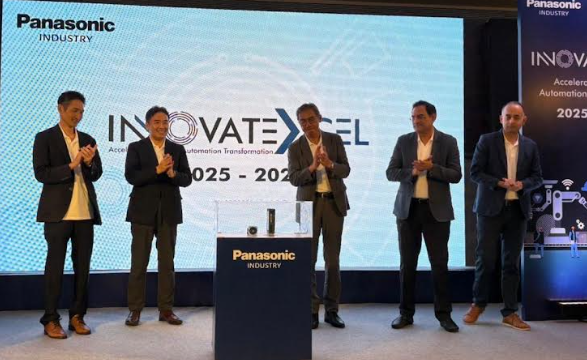
Narayan Kumar, Divisional Director, Panasonic Industry, PLSIND, said, “At Panasonic, we continuously strive to make automation smarter, faster, and more user-friendly for Indian OEMs. With the MINAS E7, we’ve built a servo system that significantly reduces installation space, ensures ultra-fast auto-tuning, and improves motion accuracy — all while being more intuitive and accessible. This aligns with our commitment to supporting Indian industries in their pursuit of digital manufacturing transformation.”
MINAS E7 Servo Motor Series Features
The MINAS E7 servo system is engineered for high responsiveness, compactness, and ease of use. Inheriting Panasonic’s upgraded A7 core control algorithm, it enables automatic parameter optimization in just one minute, allowing for rapid and stable operation across diverse industrial applications. With a high-speed response frequency of 3.0 kHz, a maximum rotation speed of 6000 revolutions per minute, and a 20-bit encoder resolution, the E7 delivers precise and efficient motion control. Its compact design is up to 27% smaller than previous models in the same class (specifically the 400W driver), making it ideal for installations in space-constrained environments. Additionally, the system is supported by Panaterm 7, a powerful software that facilitates multi-axis debugging and real-time monitoring of up to 32 axes, further enhancing operational flexibility and efficiency. With its TUNINGLESS one-minute auto-debugging function, the driver quickly understands device characteristics and adapts control parameters, accordingly, significantly reducing time spent on manual tuning and enhancing equipment stability.
Versatile Applications and Use Cases
The MINAS E7 servo system is well-suited for a wide range of industrial automation applications, making it a versatile solution for modern manufacturing environments. It is ideal for use in packaging machines, material handling systems, printing equipment, semiconductor manufacturing equipment, as well as testing and inspection machinery. Its strong adaptability, coupled with support for multiple communication protocols, ensures seamless integration with production line equipment and enterprise-level systems such as MES, SCADA, and ERP. This flexibility makes the MINAS E7 an optimal choice for manufacturers seeking to enhance efficiency and connectivity across diverse automation architectures.
Panasonic Industry division is driving innovation through consulting, designing, and supplying a wide range of technologies and systems to various industries, including automotive, e-mobility, telecom, factory automation, infrastructure, manufacturing & logistics, and HVAC. Panasonic Industry division supports 3000+ businesses in India from five locations situated in Gurgaon, Bangalore, Pune, Mumbai, and Chennai.
23, Jul 2025
Armstrong Asia Boosts Efficiency in Asia with Zebra Technologies’ Warehousing Solutions
New Delhi, India – July 23, 2025 – Zebra Technologies Corporation (NASDAQ: ZBRA), a global leader in digitizing and automating frontline workflows, today announced that Armstrong Industrial Corporation (Armstrong Asia) has integrated Zebra solutions to enhance warehouse and shopfloor operations in Malaysia and Thailand.
Armstrong is Asia’s leading manufacturer of flexible material solutions with 16 factories across seven countries. Founded and headquartered in Singapore since 1974, Armstrong combines superior engineering solutioning with a proprietary database of over 6000 materials and 13 precision engineering process technologies. Its strong commitment to quality and innovation has made it a leader in Noise, Vibration, Heat & Safety Management Solutions. With its strategic presence, a global network, and one-stop integrated capabilities, Armstrong delivers innovation and quality across diverse industries like automotive, consumer electronics, medical, hard disk drive and industrial manufacturing.
To enhance its ERP system and replace manual processes related to labor tracking and inventory management, Armstrong Asia is using Zebra’s ET40 enterprise tablets, MC33 mobile computers, ZT411 industrial printers, and Zebra OneCare support.
“Zebra Technologies has better equipped our team members to optimize production tracking and warehouse operations,” said Eugene Ong, Executive Director, Armstrong Asia. “These solutions enable real-time data collection, improve asset visibility, and enhance connected frontline productivity.”
The project was executed with RGtech Simat Co., Ltd, a Zebra Reseller in Thailand, and Premier Solution Partner Grand-Flo Spritvest Sdn Bhd and ISV partner Phitomas Sdn Bhd in Malaysia, ensuring a seamless transition.
“Our work with Armstrong Asia underscores our commitment to providing solutions to enhance efficiency and accuracy in industrial environments,” said Christanto Suryadarma, Sales Vice President, Southeast Asia (SEA), South Korea, and Channel APJeC, Zebra Technologies. “We are excited to support the team’s delivery of operational excellence and explore further innovations like machine vision for future development.”
KEY TAKEAWAYS
Armstrong Asia selected Zebra to enhance its warehouse and shopfloor productivity.
Zebra’s solutions boost data accuracy and operational efficiency.
Local partnerships ensure smooth integration and improved production management.
22, Jul 2025
NueGo Equip its Coach Captains with Skills and Technology to Drive India’s Green Mobility Movement
New Delhi, July 22, 2025: As the world shifts toward electric vehicles (EVs), the success of this transition hinges not just on technology—but on the people behind the wheel. NueGo, the intercity electric bus brand by GreenCell Mobility, is tackling this challenge head-on with its EV-Centric Driver Training Program, designed to equip its coach-captains with the expertise needed to navigate the unique demands of electric mobility. As India’s largest premium intercity electric bus service, NueGo places a strong emphasis on sustainability, safety, and customer experience.

NueGo has rolled out a robust, future-ready training program that prioritizes safety, guests’ comfort, and professional development. Tailored to the nuances of electric buses, the program is fast emerging as a benchmark in the mobility sector. To date, over 3,000 Coach Captains and 400 Coach Hosts have successfully completed the intensive training—underscoring NueGo’s commitment to upskilling talent and enhancing travel experiences. At the heart of this initiative is a comprehensive one-week onboarding curriculum for all new Coach Captains (drivers) and Coach Hosts (onboard staff). The program includes classroom instruction, simulator-based learning, and real-route driving practice—ensuring recruits are road-ready and customer-focused from day one.
The Training Curriculum of NueGo comprises of 11 specialized modules, including 8 Defensive Driving Techniques (DDT) and 3 Customer Experience and Vehicle Familiarization modules. From mastering regenerative braking and battery-efficient driving techniques to understanding charging infrastructure protocols, the training ensures coach captains are fluent in the language of sustainable transport. Beyond technical know-how, the program emphasizes safety standards for high-voltage systems and customer engagement, transforming coach captains into ambassadors of the EV movement.
Training is conducted by in-house experts stationed at every NueGo depots located in Delhi, Indore, Hyderabad, Bengaluru, and Chennai. Importantly, this isn’t a one-time exercise—refresher training is mandatory every three months, including hands-on assessments in blind spot awareness, L-shape reversing, and parallel parking. This training program offers a new blueprint for workforce readiness in green transport—proving that the shift to electric mobility must be matched by human-centric upskilling, operational safety, and eco-conscious strategy.
21, Jul 2025
Cohesity Gaia Integrates with Microsoft 365 Copilot to Simplify and Expand Access to Valuable Enterprise Data
INDIA – July 21, 2025 – Cohesity, the leader in AI-powered data security, today announced the availability of its Cohesity Gaia integration with Microsoft 365 Copilot. The integration allows knowledge workers across an organisation to tap into Cohesity backup data directly from the Microsoft 365 Copilot interface to gain insights and inform better business decisions.
“Massive business insights lie dormant in organisations’ backup data. Before Cohesity Gaia, it was virtually impossible to extract that data and use it to draw any actionable conclusions. Now that customers can mine this resource with ease, we believe these deeper insights will be transformational,” said Gregory Statton, vice president of AI solutions, Cohesity. “By unifying Cohesity Gaia with a widely adopted tool like Microsoft 365 Copilot, we’re helping customers make the most of their stored data, empowering use cases enterprise wide.”
A first-to-market innovation for unlocking the potential of backup data, Cohesity Gaia combines generative AI, large language models, and retrieval augmented generation techniques. As part of the integration with Microsoft 365 Copilot, users can simply enter conversational questions via their Microsoft 365 Copilot interface. Cohesity Gaia searches across vast amounts of backup data effortlessly, pinpoints critical information quickly, and surfaces actionable information for any department or job function. Granular, role-based access controls limit responses to align with user permissions, protecting sensitive data.
“Generative AI has created a tipping point for enterprise AI deployments. The next phase of this journey will involve more AI-to-AI communications and expectations for transformative business outcomes,” said Chantrelle Nielsen, group product manager, Microsoft 365 Copilot, Microsoft. “Microsoft 365 Copilot integration with Cohesity reflects this progression, giving enterprises more ways to take advantage of AI from the convenience of a single interface with a consistent user experience.”
“Cohesity and Microsoft continue to build on their partnership, working together to safeguard data and strengthen organisations’ cyber resilience. This integration extends the value proposition even further to bring new benefits by instantly putting high-quality backup data at the fingertips of users across the enterprise,” said Jared Crowley, senior director of Security & Software Partners, SHI International Corp. “The end result is faster, better decision making and fresh opportunities for maximising customers’ investments in Cohesity and Microsoft.”
“In fast-growing markets like India and SAARC, enterprises are looking to maximise the value of every data asset while advancing their AI strategies,” said Mayank Mishra, regional sales director for India & SAARC, Cohesity. “The integration of Cohesity Gaia with Microsoft 365 Copilot offers a powerful advantage—enabling users to surface critical insights from backup data through a familiar interface. This is a transformative leap for business agility, resilience, and AI-led innovation in our region.”
Cohesity Gaia is a subscription-based service. Access to Cohesity Gaia capabilities within the Microsoft 365 Copilot is currently available at no additional cost for subscribers of both Cohesity Gaia and Microsoft 365 Copilot. For more on the integration and key benefits, visit the Cohesity blog and tune into the Cohesity Tech Insights podcast episode “Unlocking AI powered insights with Agents and Frontier Models.”
19, Jul 2025
Galaxy Z Fold7, Flip7 Pre-Orders Rival S25 Series in India
GURUGRAM – July 19, 2025 – Samsung, India’s largest consumer electronics brand, today announced that it’s recently-launched – Galaxy Z Fold7, Galaxy ZFlip7 and Galaxy Z Flip7 FE smartphones – have received record pre-orders, signaling huge consumer demand and excitement for the brand’s seventh generation of foldable smartphones. Galaxy Z Fold7, Galaxy ZFlip7 and Galaxy Z Flip7 FE secured 210,000 pre-orders in the first 48 hours, breaking previous records, and nearly equaling the pre-orders received for Galaxy S25 series earlier this year.

“The record pre-orders for our ‘made in India’ foldable smartphones reinforce our belief that young Indian consumers are quick to adopt latest technology. Galaxy Z Fold7 delivers our most advanced smartphone experience yet – powerful, immersive, intelligent, and portable all in one. Galaxy Z Flip7 adapts, anticipates and empowers users, unlocking a smarter, more intuitive way to engage with the world. Powered by the new One UI 8 and Android 16 right out of the box, the new devices deliver true multimodal AI experiences. The success of the new devices are a stepping stone for our larger goal – the mainstreaming of foldable smartphones in India,” said JB Park, President and CEO, Samsung Southwest Asia.
Galaxy Z Fold7 seamlessly blends precision engineering and powerful intelligence to elevate everyday interactions – all in its thinnest and lightest design to date. At just 215 grams, Galaxy Z Fold7 is even lighter than Galaxy S25 Ultra. It is just 8.9 mm thick when folded and 4.2 mm thick when unfolded. It delivers the premium performance and experience of an ultra smartphone, while unlocking new levels of efficiency and productivity with a larger, more immersive display when unfolded.
Galaxy Z Flip7, a compact AI phone with multimodal capabilities, is powered by a new FlexWindow. Small enough to slip into a pocket, yet powerful enough to deliver the handiest assistance, it melds Galaxy AI with a new edge-to-edge FlexWindow, a flagship level camera and an ultra-compact and iconic design. From intuitive voice AI to the best selfie capabilities, Galaxy Z Flip7 is an intelligent pocket-sized companion built for seamless interaction and everyday reliability. Weighing just 188 grams and measuring only 13.7mm when folded, Galaxy Z Flip7 is the slimmest Galaxy Z Flip yet.
While Galaxy Z Fold7 is available in stunning colours such as Blue Shadow, Silver Shadow and Jet Black; the Galaxy Z Flip7 comes in Blue Shadow, Jet Black and Coral Red. Galaxy Z Flip 7FE comes in Black and White colours. Apart from this, consumers buying the Galaxy Z Fold7 and Galaxy Z Flip7 through Samsung.com will have an additional colour to choose from – Mint.
Both devices bring multimodal AI capabilities, delivering experiences that maximize the benefits of the expansive foldable display of the Galaxy Z Fold7 to boost productivity. Designed as a true multimodal agent, One UI 8 seamlessly combines large-screen multitasking with intelligent tools that understand what users’ type, say and even see. Thanks to Google’s Gemini Live, users can share their screen in real time while speaking with the AI assistant — enabling contextual requests based on what’s visible. In addition, One UI 8 brings enhanced privacy to personalized AI experiences with the new Knox Enhanced Encrypted Protection (KEEP). KEEP creates encrypted, app-specific storage environments within the device’s secures storage area, ensuring each app can access only its own sensitive information and nothing more.
The main display on Galaxy Z Fold7 is 11% larger than the previous generation. The 8-inch Dynamic AMOLED 2X main display offers ultra-rich contrast, true blacks and vibrant detail that makes everything pop. It also gets Vision Booster and up to 2,600 nits of peak brightness.
The Armor FlexHinge on Galaxy Z Fold7 is thinner and lighter, thanks to an enhanced water droplet design and newly implemented multi-rail structure that reduces visible creasing. The cover display is made with Corning® Gorilla® Glass Ceramic 2, a new glass ceramic that has crystals intricately embedded within its glass matrix. Advanced Armor Aluminum in the frame and hinge housing increases strength and hardness by 10%. The main display is restructured to be thinner and lighter — yet stronger. This was achieved by implementing the Titanium plate layer. Additionally, Ultra-Thin Glass (UTG) was increased to be 50% thicker, making the display tougher.
Powered by the Snapdragon 8 Elite for Galaxy, Galaxy Fold7 delivers stupendous performance boosts of 41% in NPU, 38% in CPU, and 26% in GPU compared to the previous generation. This power fuels Galaxy Z Fold7’s ability to process more AI experiences on-device without compromise. In addition, with the first 200MP wide-angle camera in the Galaxy Z series, it captures 4x more detail, producing images that are 44% brighter. In addition, Samsung’s next-generation ProVisual Engine processes images faster.
Galaxy Z Flip7 comes with a stunning FlexWindow display, which brings essentials front and center and makes it easy to type out quick messages. The 4.1-inch Super AMOLED FlexWindow is the largest ever on a Galaxy Z Flip7, with edge-to-edge usability that enables users to see and do more on the cover screen. With 2,600 nits of peak brightness, the FlexWindow gets an upgrade with Vision Booster, enhancing outdoor visibility so users can stay connected wherever they are. The main display is a 6.9-inch Dynamic AMOLED 2X, built for an ultra-smooth, immersive experience.
The cover and back of Galaxy Z Flip7 are protected by Corning® Gorilla® Glass Victus® 2. The Armor FlexHinge is thinner than the hinge on the previous generation and features a restructured design and high-strength materials for smoother folds and long-lasting durability. A robust Armor Aluminum Frame provides a tough exterior for resilience. The 4,300mAh battery is the largest ever on a Galaxy Z Flip, delivering up to 31 hours of video play time on a single charge.
Galaxy Z Flip7 FE features a 6.7-inch Main Display for an immersive viewing experience. The 50MP FlexCam enables high-quality selfies and video in Flex Mode, letting users capture content hands-free, without even opening the device.


