


25, Jun 2026
India-US Partnership Gains Momentum in Advanced Technology Sectors
New Delhi, June 25: India and the United States have reaffirmed their commitment to strengthening strategic and economic ties, with discussions focused on expanding cooperation in key sectors including semiconductors, artificial intelligence (AI), and critical minerals.
The talks underscore the growing importance of technology-driven collaboration between the two nations as they seek to build resilient supply chains, accelerate innovation, and enhance economic competitiveness in an increasingly interconnected global landscape.
During the discussions, both sides emphasized the need for closer engagement in semiconductor manufacturing and research, recognizing the sector’s critical role in powering next-generation technologies. Efforts to promote investments, foster talent development, and encourage industry partnerships were highlighted as areas of mutual interest.
Artificial intelligence also featured prominently in the dialogue, with India and the US exploring opportunities to advance responsible AI development, strengthen digital infrastructure, and support innovation-led growth. The discussions reflected a shared vision of leveraging emerging technologies to drive economic progress while ensuring ethical and secure deployment.
In addition, both countries reviewed avenues for cooperation in securing critical mineral supply chains, a key component in the production of advanced electronics, clean energy technologies, and strategic industrial applications. Enhancing supply chain resilience and reducing vulnerabilities remain central priorities for both governments.
The renewed focus on these strategic sectors highlights the evolving nature of the India-US partnership, which continues to expand beyond traditional areas of cooperation into advanced technology, innovation, and sustainable economic development.
Industry observers view the discussions as a positive step toward deepening bilateral collaboration and creating new opportunities for investment, research, and technological advancement in the years ahead.
- 0
- By Neel Achary

25, Jun 2026
Roadmap for a Viksit Uttar Pradesh through AI, Investment and Innovation
Bengaluru/New Delhi, June 25: In a step towards connecting the vision of a Viksit Uttar Pradesh with the global technology and investment ecosystem, Chief Minister Yogi Adityanath held an important meeting with Google Cloud Chief Technology Officer (CTO) Tarun Pant and his team during his Bengaluru visit.
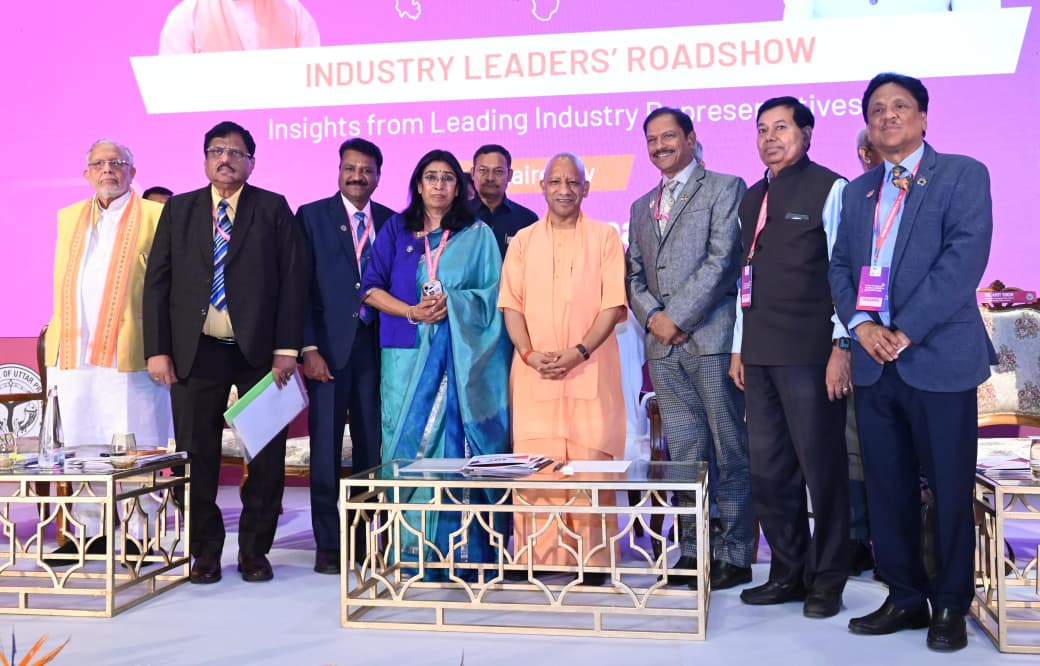
In this interaction, held before the roundtable meetings and roadshow, the Chief Minister shared in detail the state government’s vision for improving the lives of common citizens, increasing farmers’ income, creating new opportunities for youth, strengthening the startup culture and connecting Micro, Small and Medium Enterprises (MSMEs) with new technologies.
During the meeting, extensive discussions were held with CTO Tarun Pant and the Google team on making development programmes more effective through Artificial Intelligence (AI), cloud technology, digital governance and data-driven solutions.
The Chief Minister also deliberated with Google’s team on how the reach and effectiveness of government services could be enhanced through technology. Discussions were also held on innovation-based solutions aimed at bringing positive changes in the lives of farmers, youth, startups, the MSME sector and common citizens.
Representatives of the Google team described the meeting as highly positive and meaningful and observed that Chief Minister Yogi Adityanath shared a clear and farsighted roadmap for the development of Uttar Pradesh. He provided information about the goals and priorities set for farmers, MSMEs, startups and youth, and also discussed how these goals could be achieved more rapidly through AI and modern technology.
Google India noted that the company is fully committed to India’s development and is excited about the opportunity to work with the Uttar Pradesh government in advancing these goals.
Along with this, Chief Minister Yogi Adityanath also held special interactions in Bengaluru with top executives of leading investment and technology companies from India and across the world. These included WestBridge Capital Managing Partner Sandeep Singhal, Accel Partners’ Prashant Prakash, InMobi founder Piyush Shah, Yulu founder Amit Gupta, NVIDIA South Asia Managing Director Vishal Dhupar, representatives of SarvamAI and senior officials of Blackstone.
Detailed discussions were held on the possibilities of investment, technology, innovation, Artificial Intelligence, the startup ecosystem and employment generation in Uttar Pradesh. Representatives of the industry appreciated the rapidly developing infrastructure, improved law and order and investor-friendly environment in Uttar Pradesh, and described the state as a major centre of future growth.
Under the leadership of Chief Minister Yogi Adityanath, Uttar Pradesh is steadily emerging as a new centre of investment, innovation and technology-driven development. Expressways, airports, industrial corridors, digital services and investor-friendly policies have placed the state among the country’s most attractive investment destinations.
The interactions held in Bengaluru with Google and global investors indicated that Uttar Pradesh is now moving rapidly towards becoming a national hub for technology, AI, startups, investment and employment generation.
25, Jun 2026
HCLTech and ServiceNow join forces to scale enterprise AI with Google Cloud
Gemini Enterprise-based AI agent solutions integrated with ServiceNow to drive real-world adoption of agentic AI
NOIDA, India and Sydney, Australia, June 25—HCLTech, a leading global technology company, has expanded its collaboration with Google Cloud and ServiceNow to deliver AI agents for enterprise adoption on the Gemini Enterprise platform. The launch coincides with HCLTech’s sponsorship of the Sydney Google Cloud Summit 2026.
Building on HCLTech’s recently launched Gemini Enterprise business unit, the latest collaboration brings together advanced ServiceNow AI capabilities, enterprise workflow orchestration and industry expertise to enable organizations to deploy and scale AI in real business environments.
HCLTech will introduce enterprise AI solutions on Gemini Enterprise that combine Gemini’s advanced AI capabilities with ServiceNow’s workflow platform – anchored in ServiceNow’s Blueprint for Agentic Business, a framework for structured, outcome-driven AI adoption. This includes a next-generation Factory Shop Floor Assistant, which delivers real-time operational intelligence to manufacturing environments, enabling faster decision-making and improved efficiency.
Initial solutions span two high-impact domains: Field Services, where Gemini Live, integrated with ServiceNow Field Service Management, delivers real-time audio and visual intelligence to field technicians for faster issues resolution; and Customer Experience, to ensure customer intent is preserved across channels. HCLTech is also leveraging ServiceNow’s AI Control Tower to enhance visibility and governance of AI agents within Gemini Enterprise, while an ITOps ServiceNow Agent—available on Google Cloud Marketplace for Gemini Enterprise—supports incident management and remediation in enterprise IT environments.
“Bringing agentic AI to the enterprise requires deep integration into the systems that businesses rely on every day,” said Satish Thomas, Vice President of Applied AI and Platform Ecosystem at Google Cloud. “Our partnership with HCLTech and ServiceNow combines the foundational power of Gemini Enterprise with industry-leading workflow and operational expertise, giving customers the tools they need to safely scale AI and accelerate innovation across their entire organization.”
“The future of enterprise AI lies in orchestrating intelligent agents across the business as a connected system of action,” said Michael Park, Senior Vice President, Global Partnerships and Channels at ServiceNow. “By bringing together ServiceNow’s AI-native platform, HCLTech’s implementation expertise, and Google Cloud’s Gemini Enterprise capabilities, we are helping organizations build the foundation for an agentic enterprise. This collaboration enables customers to orchestrate AI agents across workflows, systems and teams, accelerating productivity, strengthening governance and delivering business outcomes at scale.”
“Enterprises are moving quickly from exploring AI to embedding it at the core of their operations, and that shift requires stronger levels of integration and orchestration,” said Vijay Guntur, Chief Technology Officer and Head of Ecosystems at HCLTech. “Our collaboration with Google Cloud and ServiceNow reflects this evolution—integrating advanced AI, enterprise workflows and ecosystem scale to help clients move beyond pilots to sustained, enterprise-wide impact. By aligning AI with operational systems and industry context, we are enabling a more practical and accountable adoption of agentic AI, and our ServiceNow Agentic Blueprint gives enterprises the structured path to get there.”
“Agentic AI will only deliver enterprise value when it is built on a resilient, secure and scalable digital foundation,” said Jagadeshwar Gattu, President, Digital Foundation Services at HCLTech. “By combining HCLTech’s deep infrastructure, cloud and operations expertise with Google Cloud’s Gemini Enterprise platform and ServiceNow’s workflow and AI capabilities, we are helping clients move from experimentation to production-ready adoption. This collaboration enables enterprises to embed intelligence into mission-critical environments with the governance, visibility and operational rigor needed to drive measurable outcomes at scale.”
This expanded collaboration underscores HCLTech’s focus on enabling enterprises to transition from experimentation to scaled deployment of agentic AI, with solutions that are designed to deliver measurable impact across industries. HCLTech will showcase this focus at the Sydney Google Cloud Summit 2026, and at the Sydney ServiceNow World Forum where enterprise leaders will explore how cloud, AI and ecosystem collaboration can accelerate business transformation.
24, Jun 2026
India Strengthens Position in Global AI Landscape Amid Rapid Technology Adoption
New Delhi, June 24: India is steadily positioning itself as a significant player in the global artificial intelligence (AI) ecosystem, driven by rapid digital adoption, expanding talent pools and increasing investments in emerging technologies, according to a recent report.
The report highlights that India’s growing AI capabilities are being supported by strong technological infrastructure, a large base of skilled professionals and rising demand for AI-driven solutions across industries such as healthcare, finance, manufacturing and services.
Experts noted that government initiatives promoting digital transformation, along with private sector innovation, are accelerating the development and deployment of AI applications across the country.
The study further states that India’s startup ecosystem is playing a crucial role in advancing AI innovation, with companies focusing on areas such as machine learning, automation, data analytics and generative AI solutions.
Analysts believe that India’s demographic advantage, combined with its expanding digital economy, positions it strongly to contribute meaningfully to the global AI value chain in the coming years.
The report also emphasised the importance of continued investment in research, skilling and infrastructure to ensure sustainable growth in the AI sector and strengthen India’s global competitiveness.
With increasing global collaboration and domestic innovation, India is expected to deepen its role in shaping the future of artificial intelligence worldwide.
24, Jun 2026
Advancing Green Hydrogen Integration for the Decarbonisation of Energy-Intensive European Industries
The EU has set an ambitious goal for Europe to become the first climate-neutral continent by 2050. The transition towards a green and sustainable society is underway.
Energy-intensive industries such as the ceramics and glass sector account for a significant share of Europe’s industrial energy consumption and CO₂ emissions. Decarbonising these sectors is therefore essential to achieving the European Union’s climate and industrial competitiveness objectives. While electrification will play a key role, additional solutions are needed to address high-temperature industrial processes where direct electrification remains challenging.
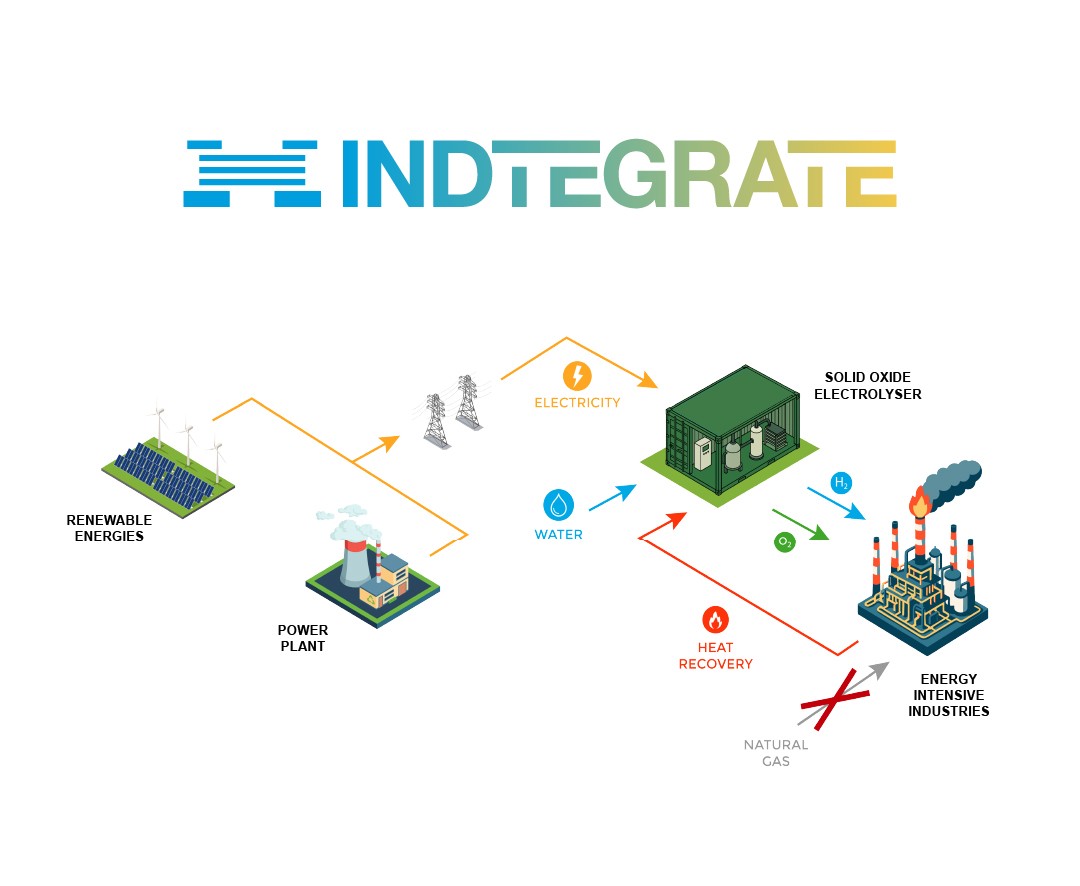
INDTEGRATE, a Horizon Europe Innovation Action that addresses this challenge, was officially launched. The project brings together a multidisciplinary consortium of industrial companies, technology developers, research organisations, universities, and innovation experts from across Europe to accelerate the integration of Solid Oxide Electrolyser Cell (SOEC) technology into energy-intensive industries. By combining renewable electricity, industrial waste heat recovery, advanced digital technologies, and green hydrogen production, INDTEGRATE aims to demonstrate a practical and scalable pathway towards industrial decarbonisation. The project will develop a suite of advanced digital tools, including reduced-order models, Process and Electrolyser Digital Twins, to support the design, optimisation and operation of hydrogen production systems in the glass and ceramics sectors.
Building on these digital capabilities, INDTEGRATE will engineer and validate a modular 220 kW SOEC system combining renewable electricity and industrial waste heat recovery to produce green hydrogen more efficiently. Through pilot demonstrations in operational industrial facilities, INDTEGRATE will assess the technical performance, operational flexibility and economic viability, while supporting the wider adoption of hydrogen technologies through stakeholder engagement, skills development, training activities and a roadmap for large-scale replication across Europe.
Kick-off meeting overview and outcomes
Hosted by the project coordinator, KERIONICS S.L. (Spain), the kick-off meeting marked the official start of INDTEGRATE and brought together representatives from all partner organisations to establish a common vision and implementation strategy for the next three years.
During the meeting, consortium partners presented their respective roles and responsibilities and discussed the project’s technical, managerial, and communication activities. Particular attention was given to the development of the SOEC system, digital twin technologies, energy management solutions, and the preparation of the industrial pilot demonstrations in Spain and Slovenia. Partners also exchanged views on expected impacts, collaboration mechanisms, risk management procedures, and opportunities for creating synergies with other European initiatives supporting industrial decarbonisation and hydrogen technologies.
The discussions confirmed a shared commitment to delivering innovative, industry-driven solutions capable of accelerating the adoption of green hydrogen in energy-intensive sectors while supporting Europe’s broader sustainability ambitions.
Next steps
Over the coming months, the INDTEGRATE consortium will focus on the detailed design and development of the project’s technological building blocks, including digital modelling tools, energy management systems, and SOEC integration strategies. Preparatory activities for the pilot demonstrations will also begin, alongside stakeholder engagement, dissemination, and collaboration activities designed to maximise the project’s impact.
The first technical results and project developments are expected to be shared through the project’s communication channels and stakeholder engagement activities, contributing to the advancement of sustainable hydrogen solutions and the decarbonisation of European industry.
Project consortium
KERIONICS S.L.
Torrecid SA
Spanish National Research Council (CSIC)
FUKS GROUP
Bitwise Oy
Steklarna Hrastnik LLC
Precision Resource Slovenia
Universitat Politècnica de València
Center for Applied Energy Research e.V. (CAE)
Ena Development Consultants
YIVA Engineering SRL
INCOTEC efficient Innovation
24, Jun 2026
PPDS and BrightSign® form strategic partnership; new AI-ready and UltraSlim Philips Signage ranges unveiled at InfoComm 2026
.jpg)
Delivering an alternative to PPDS’ Android OS, the new Philips Signage 6060 with BrightSign Built-
In unlocks a wealth of new opportunities for businesses, while the Philips Signage 7000 Series
UltraSlim — up to 60 per cent slimmer than comparable models — becomes PPDS’ thinnest and
June 24: At InfoComm 2026 in Las Vegas, PPDS, the exclusive global provider of Philips Professional Displays, announced a series of new products and strategic partnerships designed to expand the possibilities of digital display deployments. The announcements introduce advanced AI capabilities, greater installation flexibility, and new opportunities for businesses across a wide range of industries.
PPDS Partners with BrightSign for AI-Ready Signage
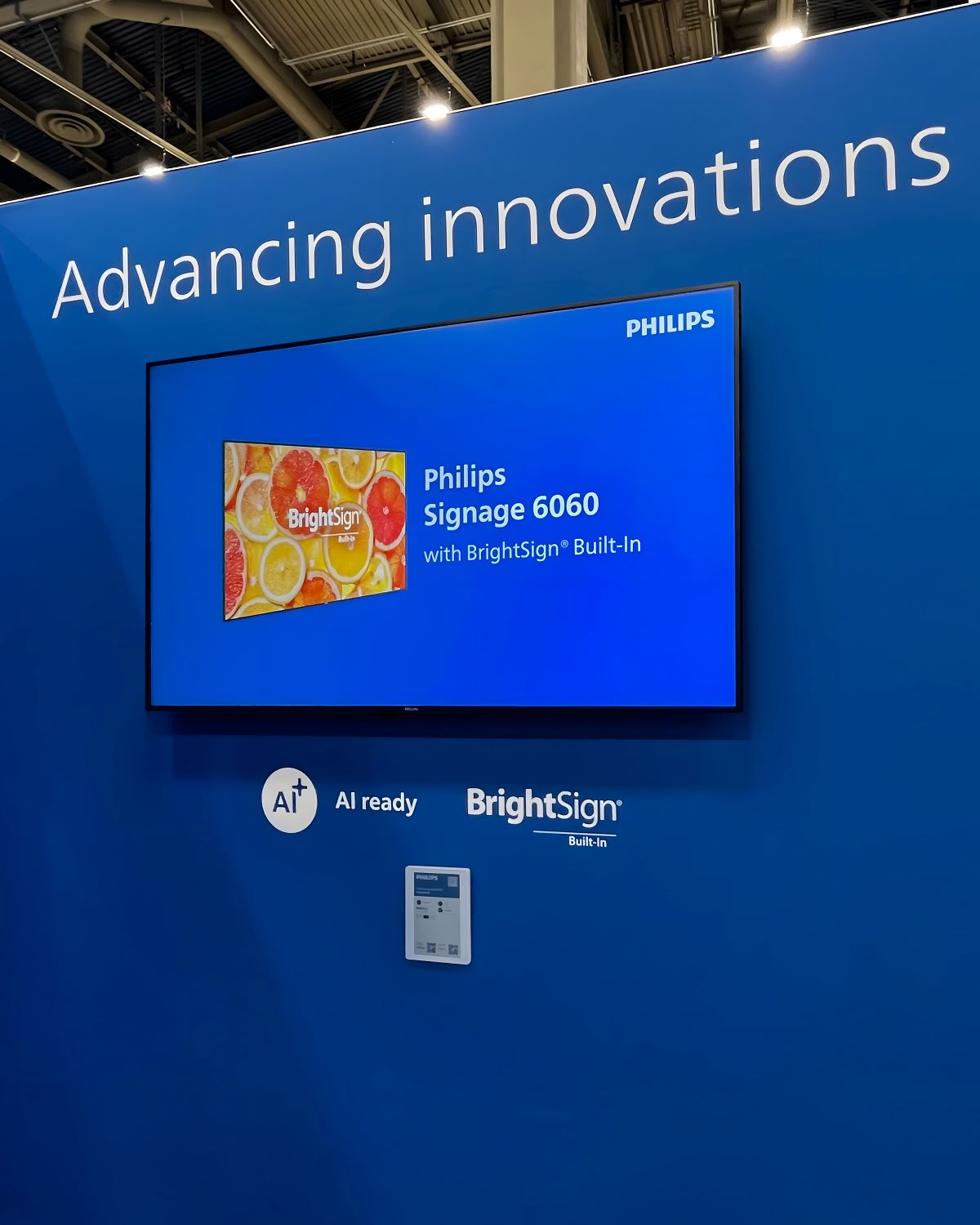
A key announcement at the event was PPDS’s strategic collaboration with BrightSign, a global leader in digital signage media players and operating systems. Together, the companies introduced the new Philips Signage 6060 with BrightSign Built-In, offering customers an alternative operating system option that combines high performance, enhanced security, and improved sustainability.
Available in 43-inch, 55-inch, and 65-inch models, the Philips Signage 6060 is designed for diverse environments, including retail, corporate offices, public venues, transportation hubs, and hospitality settings. Each display features a 500-nit UHD 4K panel, ensuring sharp, vibrant, and highly detailed content presentation.
The new series also introduces a slimline design measuring less than 40mm in depth, enabling sleek, close-to-wall installations where aesthetics and space optimization are critical.
BrightSign Integration Enhances Performance and Security
The Philips Signage 6060 represents a major evolution in PPDS’ digital signage portfolio by integrating BrightSign’s flagship all-in-one XS156 player system-on-chip (SoC). Powered by the trusted BrightSignOS™, the displays provide superior control, enhanced security, and improved energy efficiency for both single-site and global deployments.
Customers and channel partners gain access to BrightSign’s complete software ecosystem, including supported content management systems and the free remote device monitoring and management platform, BrightSign Control. These tools allow AV and IT teams to create and deploy content, monitor device health, and remotely manage software and security updates, helping to maximize uptime and extend product lifecycles.
AI Processing Built Directly Into the Display
Equipped with BrightSign Built-In technology, the Philips Signage 6060 leverages the integrated Neural Processing Unit (NPU) within the XS156 platform to run AI applications directly on the display. This architecture enables faster, smoother AI processing without affecting CPU or GPU performance, ensuring seamless user experiences.
Commenting on the launch, Bruce Wyrwitzke, Senior Director for North America at PPDS, said:
“The new Philips Signage 6060 is a further demonstration of our commitment to support our partners and customers at every turn and for every need, no matter how complex or unique they might be. We’re delighted to have partnered with BrightSign to deliver this incredible new addition to our Philips Signage range.”
Introducing the Philips Signage 7000 Series UltraSlim
PPDS also unveiled the Philips Signage 7000 Series UltraSlim, the company’s thinnest and lightest 4K UHD digital signage range to date. Developed for demanding 24/7 environments, the new series combines premium visual performance with an innovative ultra-slim design.
The displays are available in 43-inch, 50-inch, 55-inch, and 65-inch sizes and support both landscape and portrait orientation. Target applications include retail, corporate environments, hospitality venues, public spaces, and food and beverage establishments.
Featuring a breakthrough chassis design, the 65-inch model measures just 30mm in depth, while the remaining sizes are only 28.5mm deep—up to 60 percent thinner than comparable Philips signage models. Weight reductions are equally significant, with the 43-inch, 50-inch, and 55-inch variants weighing 10 percent less than their 4050Q counterparts, and the 65-inch model weighing 20 percent less.
All models deliver 500 nits of brightness and feature an elegant 11.5mm uniform bezel, creating a refined appearance suitable for premium commercial environments.
AI-Ready, Secure, and Built for Continuous Operation
Powered by a professional Android 16 SoC and equipped with a TOPS 3.0 Neural Processing Unit, the Philips Signage 7000 Series is fully prepared for AI-driven applications while delivering reliable connectivity and enterprise-grade security.
The series also incorporates PPDS’ FailOver technology, which automatically switches to backup content in the event of a primary media player failure, ensuring uninterrupted display operation when continuous communication is essential.
Andrea Barbuti, Global Product Management Lead EMEA at PPDS, commented:
“The new Philips Signage 7000 Series marks a new chapter in our signage display design, delivering visually spectacular performance and presentation across an unparalleled range of use cases. With the all-new slimline design, together with reduced weight, the installation opportunities are limitless.”
Concluding the announcement, Bart Wouters, International Product Manager at PPDS, stated:
“The Philips Signage 7000 Series delivers brilliance and beauty for almost any environment, enhancing and opening new opportunities for an even wider audience. Essentially, it brings all the features you expect from our premium Philips Professional Displays, together with an all-new, ultra-slim design.”
24, Jun 2026
India Set to Emerge as Key Hub for Human Skills Economy Amid AI Expansion
June 24: A new report has highlighted that India is well positioned to emerge as a global leader in the “human skills economy” even as artificial intelligence (AI) adoption accelerates across industries.
The report suggests that while AI is transforming workplaces and automating routine tasks, demand for human-centric skills such as critical thinking, creativity, problem-solving, communication and emotional intelligence is expected to rise significantly.
India’s large, young workforce and expanding talent ecosystem are seen as key advantages in meeting this evolving demand. Experts believe the country’s demographic strength, combined with growing investments in education and digital upskilling, can help it play a central role in the global skills-driven economy.
The findings also indicate that organisations are increasingly focusing on hybrid skill sets that combine technical knowledge with strong human capabilities, particularly in sectors such as technology, healthcare, finance and services.
The report emphasises the importance of continuous learning and reskilling initiatives to ensure the workforce remains competitive in an AI-driven environment.
It further notes that countries which effectively balance AI adoption with human skill development are likely to lead the next phase of global economic growth, with India emerging as a strong contender in this space.
24, Jun 2026
AI, Sustainability Can Drive India’s Future Growth
June 24: Industry leaders have said that artificial intelligence (AI) and sustainable development together can play a transformative role in shaping India’s long-term economic and social progress.
Speaking on emerging technology trends, experts noted that AI is increasingly being integrated across sectors such as manufacturing, healthcare, agriculture and financial services, helping improve efficiency, productivity and decision-making.
They added that when combined with sustainability-focused practices, AI can support cleaner production methods, better resource management and reduced environmental impact, aligning with global climate goals.
Leaders highlighted that India’s rapid digital adoption and strong innovation ecosystem provide a strong foundation for scaling AI-driven solutions that are both economically viable and environmentally responsible.
They also pointed out that sustainable development goals can be accelerated through smart technologies that optimise energy use, reduce waste and improve supply chain efficiency across industries.
According to industry voices, the convergence of AI and sustainability will be critical in building resilient infrastructure, creating new job opportunities and ensuring inclusive growth in the coming decades.
Experts believe that strategic investments in technology, skills development and green innovation will be key to unlocking India’s full potential in this space.
24, Jun 2026
Iridium’s Next‑Generation Hybrid IoT Module and Development Kit are Now Commercially Available
The Iridium 9604 Module and Development Kit streamline global IoT development with integrated satellite, cellular, and GNSS connectivity
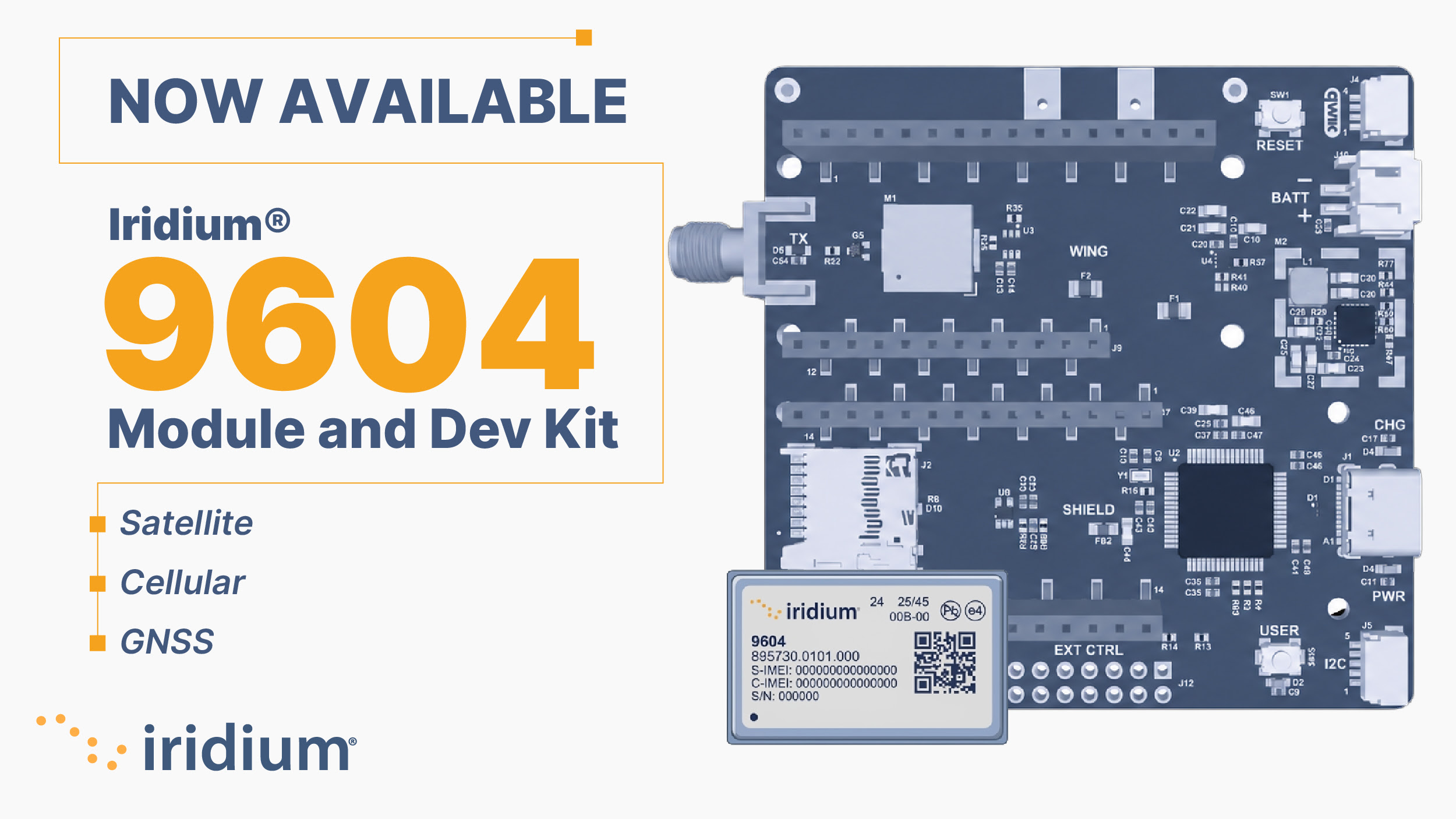
MCLEAN, Va., June 24: Iridium Communications Inc. (Nasdaq: IRDM), a leading provider of global voice, data, and positioning, navigation, and timing (PNT) satellite services, today announced commercial availability of the Iridium® 9604 module and Development Kit, giving developers, OEMs, and solution providers a faster path to build and scale connected IoT solutions worldwide.
Combining Iridium Short Burst Data® (SBD®) satellite connectivity, LTE-M cellular, and GNSS positioning, the Iridium 9604 module delivers a compact, integrated solution for global IoT deployments. Alongside the Iridium 9604 Development Kit, developers can rapidly prototype, test, and validate hybrid satellite, cellular, and GNSS applications with resources that simplify integration and streamline deployment workflows.
Built on the u-blox SARA-R5 platform, the Iridium 9604 is designed to reduce hardware complexity, lower integration costs, and accelerate time to market for connected solutions operating across industrial, infrastructure, transportation, mobility, utilities, maritime, and remote monitoring applications. The integrated design helps reduce board space requirements by 60 percent or more while simplifying RF routing, power architecture, and firmware development.
“The Iridium 9604 module and Development Kit represent a major milestone in making truly global IoT connectivity more accessible and easier to deploy,” said Tim Last, executive vice president, Iridium. “By replacing three separate components with one integrated solution, developers can simplify device design, reduce costs, and create smarter, location-aware products capable of staying connected far beyond terrestrial coverage.”
Early developers and beta participants reported significant operational and economic benefits from the platform’s integrated architecture.
“The Iridium 9604 has enabled us to develop a truly global asset tracking solution without relying on terrestrial network infrastructure. Its reliable coverage, compact form factor, and straightforward integration have significantly accelerated our development process and allowed us to focus on optimizing the end-user experience,” said Askar Gabit, CEO, GPSOne. “For applications in remote and challenging environments, the Iridium network provides the confidence that critical data can be delivered when it matters most.”
The Iridium 9604 gives developers independent control over satellite, LTE-M, and GNSS subsystems, enabling flexible implementation of failover logic, location-aware connectivity decisions, and application-specific routing strategies. A unified AT command set and comprehensive SDK resources further simplify development and integration.
Built for scalable and power-sensitive IoT applications, the Iridium 9604 features a compact 16 mm x 26 mm x 2.4 mm form factor optimized for deployments where size, resiliency, and efficiency are critical. The platform supports GPS, GLONASS, Galileo, and BeiDou GNSS services alongside LTE-M (Cat-M1) and Iridium’s 100% global L-band satellite network.
The Iridium 9604 represents the next evolution of Iridium’s broader IoT strategy, expanding beyond traditional satellite-only hardware to support unified, multi-mode connectivity architectures. The Iridium network now supports multiple IoT pathways, including dedicated Iridium SBD modules, Iridium NTN DirectSM standards-based direct-to-device capabilities, and larger payload connectivity through the Iridium Certus® 9704 module.
Operating on the world’s only truly global mobile satellite network, the Iridium 9604 delivers reliable connectivity across remote land areas, oceans, airways, and polar regions where other networks are unavailable or unreliable.
24, Jun 2026
Tripura Opens First Public EV Charging Station, Expands Clean Mobility Push
Agartala, June 24: Tripura has launched its first public electric vehicle (EV) charging station, marking a key step in the state’s efforts to strengthen clean mobility infrastructure and support the growing adoption of electric vehicles.
The newly inaugurated facility is expected to provide convenient charging access for EV users and encourage wider use of electric transport across the state. It also signals the beginning of a broader infrastructure rollout aimed at building a more sustainable transport ecosystem.
As part of its long-term plan, the state has proposed setting up 94 additional EV charging stations at strategic locations. The expansion is aimed at improving accessibility, reducing range anxiety among EV users and supporting the transition towards greener transportation.
Officials said the initiative aligns with broader national objectives to promote electric mobility, reduce carbon emissions and increase the share of clean energy in the transport sector.
With the rollout of additional charging infrastructure, Tripura is expected to gradually build a supportive ecosystem for EV adoption, particularly in urban centres and key transit routes.
The move is seen as an important milestone in the state’s clean energy transition journey.


