



18, Jun 2025
Google launches Google Safety Engineering Centre, India at Hyderabad
Hyderabad, June 18, 2025: Google today inaugurated its Google Safety Engineering Centre, India (GSEC India) in Hyderabad, the first such facility in the Asia-Pacific region and fourth globally. Telangana Chief Minister Shri Anumula Revanth Reddy inaugurated the facility along with the IT Minister Shri D. Sridhar Babu. It marks a pivotal milestone in the company’s commitment to securing India’s digital future. The inauguration follows the unveiling of Google’s Safety Charter for India’s AI-led Transformation in Delhi on 17th June.
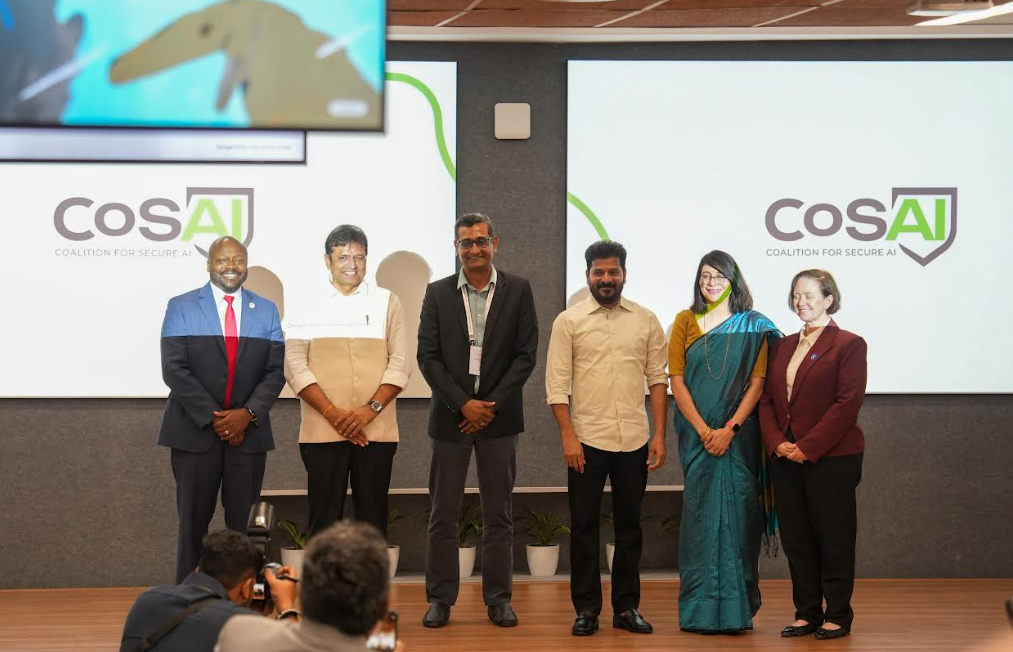
GSEC in India will serve as the operational heart where strategic commitments transform into tangible solutions; and represents a unique convergence of Google’s global safety expertise, bringing together teams focused on privacy and security engineering, and advanced cybersecurity capabilities under one strategic umbrella to address India’s distinct digital landscape.
GSEC India will operationalise the three foundational pillars of Google’s Safety Charter—keeping end users safe from online fraud and scams, strengthening cybersecurity for government and enterprise infrastructure, and building AI responsibly—while serving as a regional hub for developing solutions across the broader APAC region.
Preeti Lobana, Country Manager and Vice President, Google India, said, ” For India’s digital engine to keep growing and powering its ambitious future, we must keep building trust in how users and enterprises access the digital landscape. With the inauguration of GSEC India today, we are bringing our global experience and expertise—from cutting-edge AI to foundational cybersecurity and user protection—to realize this commitment. Safety is a shared responsibility and this launch is a call for the entire ecosystem to come together and collaborate to make the entire chain stronger and smarter.”
Heather Adkins, Vice President of Engineering, Google Security, highlighted, “At Google, safety is built into everything we do, grounded in our ‘secure by design, secure by default’ philosophy. AI represents an inflection point for digital security – a force multiplier that narrows the gap between defenders and attackers, even eliminating it entirely in some cases . With GSEC India, we’re situating these capabilities in India to serve its unique landscape and also be a lighthouse for our global security efforts.”
Shri Anumula Revanth Reddy, Hon’ble Chief Minister of Telangana, emphasised, “The establishment of GSEC represents a pivotal moment in Telangana’s journey toward becoming a global hub for cybersecurity innovation. This first-of-its-kind facility in the Asia-Pacific region affirms Hyderabad’s crucial role in developing privacy, safety, and cyber-defence solutions for the next billion users, placing our state at the forefront of global digital safety efforts. With Telangana’s GSDP projected to reach ₹16.5 lakh crore and IT/ITeS exports rising to ₹2.7 lakh crore, supporting over 9.5 lakh high-skill jobs, GSEC’s presence will attract top-tier safety engineers and foster collaboration with academic institutions to tackle India’s unique cybersecurity challenges while creating thousands of direct and indirect employment opportunities.”
Shri D. Sridhar Babu, IT Minister, Telangana, stated, “The inauguration of GSEC India demonstrates the power of public-private partnerships in building a secure digital infrastructure for our nation. This center will serve as a catalyst for innovation in cybersecurity, responsible AI development, and digital safety—areas critical to India’s vision of becoming a global technology leader. We welcome Google’s significant investment in Telangana’s ecosystem and look forward to the transformative impact this facility will have on strengthening our state’s position as a premier destination for cutting-edge technology research and development.”
Operationalising India’s Digital Safety Blueprint
GSEC India addresses India’s rapidly evolving threat landscape—where APAC accounts for half of all global APT activity and India faces projected cybercrime losses of up to ₹20,000 crore by 2025—through a comprehensive, proactive approach combining AI-powered threat detection, ecosystem collaboration, and forward-looking policy measures. The facility will operationalise advanced AI and large language models (LLMs) to power real-time scam alerts on Android via Gemini Nano, strengthen Google Play Protect, and enhance fraud detection across Google Pay, Search, and Gmail. It will also tackle AI-driven deception through adversarial testing, AI-assisted red teaming, and tools like SynthID to watermark AI-generated content. GSEC India emphasises ecosystem collaboration and intelligence sharing via platforms like the Global Signals Exchange (GSE), supports education and user awareness initiatives tailored to India’s scale and linguistic diversity, and advances research in areas like Post-Quantum Cryptography through partnerships such as its work with IIT-Madras.
Building on a Strong Foundation in Telangana
Google’s nearly two-decade partnership with Telangana began with its first Indian office in Hyderabad in 2004—one of Google’s largest base outside the U.S. This longstanding collaboration has driven impactful initiatives, including the AnthroKrishi project using AI for sustainable agriculture, traffic optimization systems with Hyderabad Police, and the launch of a Google Startup Hub to accelerate AI adoption. The partnership also extends to skill development through the Telangana Academy for Skill and Knowledge (TASK), enabling access to Google’s IT Support Certificates to prepare citizens for the digital economy, underscoring the state’s commitment to leveraging technology for inclusive growth.
Global Hub for Safety Innovation
GSEC India lies at the core of Google’s mission to advance ethical and responsible AI development through rigorous model testing for safety and fairness, robust content policies, and user-focused transparency tools. As a regional innovation hub, the centre will lead the development of scalable safety solutions tailored to India’s unique needs, while also supporting Google’s global vision for a safer internet. Its strategic role includes close engagement with policymakers, partners, and customers across APAC, reinforcing India’s position as a key driver in the region’s digital transformation.
The inauguration of GSEC India represents a transformative moment for digital safety in the Asia-Pacific region, combining Google’s cutting-edge technology capabilities with India’s fresher talent ecosystem to build a safer, more resilient digital future for billions of users worldwide.
- 0
- By Neel Achary

18, Jun 2025
QMentisAI by QualiZeal Slashes Software Testing Timelines by 60 Percent with Innovative Generative AI
India, June 2025—QualiZeal, a U.S.-based quality engineering (QE) firm with Global Capability Centers (GCCs) in Hyderabad, has recently launched QMentisAI, a Generative AI-powered QE platform that has garnered significant interest across the software testing community. Frost & Sullivan recently recognized QMentisAI with the 2025 Indian GenAI Quality Excellence Platform—Best Practices Award for Industry Excellence.

The award-winning, enterprise-grade platform is designed to reduce software testing timelines by up to 60% across key functions—requirement refinement, test design, and test automation—while achieving nearly 95% accuracy, transforming how testing is conducted at scale.
Equipped with 18 advanced capabilities—including user story refinement, test design, test automation scripting, and defect report enhancement—QMentisAI integrates GenAI throughout the testing lifecycle, significantly improving tester productivity.
It addresses common QE challenges such as poorly written user stories, manual test script generation, inefficient defect documentation, collaboration gaps among distributed teams, and time constraints in Agile environments. The platform leverages advanced Natural Language Processing (NLP) and large language models (LLMs) within an agentic architecture, combined with QualiZeal’s deep domain expertise, to overcome complex QE roadblocks.
“QMentisAI embodies our vision of combining cutting-edge technology with human expertise to deliver superior results,” said Madhu Murty, Co-Founder & Head of India Operations, at QualiZeal. “By harnessing GenAI and a human-in-the-loop approach, we’re enabling teams to reduce manual effort, accelerate delivery, and achieve unprecedented efficiency.”
While GenAI powers core QE processes, its human-in-the-loop model ensures expert validation to refine outputs and uphold quality. QMentisAI is industry-agnostic, built for flexibility and scale, and includes future-ready features such as synthetic data creation, risk assessment, a prompt library, and performance and security testing.
“As software engineering evolves, QMentisAI is our answer to bridging the gap between technology and human ingenuity,” said Pradeep Govindasamy, Co-Founder, President & CEO, of QualiZeal. “Its ability to reduce manual effort, accelerate timelines, and foster seamless collaboration makes it a game-changer for teams striving for excellence.”
The platform cuts up to 80% of manual effort in test case design and defect documentation, significantly shortens project timelines, and enhances communication among globally distributed teams.
Heena Juneja, Industry Principal at Frost & Sullivan, commented on QMentisAI’s transformative impact, “Frost & Sullivan recognizes QualiZeal for redefining the QE landscape through its groundbreaking platforms, QMentisAI and QualiCentral. The company enables faster, more efficient, and highly reliable software deployments by integrating GenAI into QE workflows—delivering value across industries beyond just automation.”
QualiZeal is continually enhancing QMentisAI with features like root cause analysis, security testing, accessibility support, and agentic AI capabilities—reaffirming its commitment to inclusive, future-proof QE solutions.
18, Jun 2025
Mphasis Recognized as a Contender in Application Modernization and Multicloud Managed Services Evaluation Report
Mumbai, June 18, 2025 Mphasis, an Information Technology provider specializing in cloud and cognitive services, today announced that it has been included as a ‘Contender’ in The Forrester Wave™: Application Modernization And Multicloud Managed Services, Q1 2025 by Forrester Research, Inc.

According to the report, Mphasis serves an important role in its specialized industries, bringing extensive experience in transaction-intensive industry modernization and legacy technologies. The evaluation recognizes Mphasis’ skills in high-performance IBM legacy environments, making it well-suited for modernization efforts involving legacy platforms in the banking, finance, and airline industries.
“We believe this recognition by Forrester highlights our dedication to driving transformation through specialized modernization solutions,” said Srikumar Ramanathan, Chief Solutions Officer, Mphasis. ” Clients value our deep domain expertise in modernizing legacy systems and integrating multi-cloud capabilities. This acknowledgement reinforces our commitment to helping enterprises optimize operations, scale efficiently, and achieve sustainable growth in a rapidly evolving digital landscape.”
In an extensive evaluation, Forrester researched, analyzed, and scored fifteen top providers in the application modernization and multi-cloud managed services sector based on strategy and current offering. The report serves as a valuable resource for organizations seeking partners to navigate complex modernization and cloud transformation initiatives.
Forrester does not endorse any company, product, brand, or service included in its research publications and does not advise any person to select the products or services of any company or brand based on the ratings included in such publications. Information is based on the best available resources. Opinions reflect judgment at the time and are subject to change. For more information, read about Forrester’s objectivity here .
18, Jun 2025
AI Overhyped Yet Underused as 86 Percent Miss Full Potential Says GoTo Study
AI Underdelivers at Work: 62% of Employees Say AI is Significantly Overhyped, But 86% Admit They Aren’t Using AI to Its Full Potential According to New Research from GoTo
June 18, 2025, India – GoTo, the leader in cloud communications and IT, today announced the release of a new research report: The Pulse of Work in 2025: Trends, Truths, and the Practicality of AI. The report summarizes the findings of a survey of 2,500 global employees and IT leaders on AI use and sentiment, conducted in partnership with research firm Workplace Intelligence. Among the study’s key findings: despite widespread anticipation about AI’s positive impact on workforce productivity, most employees feel they were overpromised on its potential. In fact, 62% believe AI has been significantly overhyped.

However, this is likely because employees aren’t making the most of what these tools have to offer. The majority (86%) admit they’re not using AI tools to their full potential, and 82% say they aren’t very familiar with how AI can be used practically in their day-to-day work.
All told, employees estimate that they’re spending 2.6 hours a day — or 13 hours per week — on tasks that could be handled by AI. This means that in the U.S. alone, businesses could be missing out on more than $2.9 trillion annually in greater efficiency.*
“Employees are already using AI and are seeing clear productivity gains, yet despite these benefits, our latest research shows people still view AI as overhyped. While many recognize its value, they don’t yet see it as the revolutionary change they were promised. This gap likely exists because many workers admit they aren’t realizing AI’s full potential or don’t know how to apply it in practical ways,” said Rich Veldran, CEO of GoTo. “The solution is clear: companies must go beyond just providing access to AI by ensuring employees have both the right tools and the right education. By equipping teams with effective training and clear guidelines, organizations can empower their workforce to unlock the true, transformational impact of AI.”
Other key findings include:
- AI is handling some tasks for employees — just not the ones their bosses think: Instead of using AI to save themselves time in their day-to-day work, 54% of employees admit they’ve used it for sensitive tasks or high-stakes decision-making such as tasks requiring emotional intelligence (29%), tasks impacting safety (25%), and ethical or sensitive personnel actions (16%) — despite knowing they shouldn’t. An alarming 77% of these workers also say they don’t regret using AI for these tasks.
- Another potential reason for AI’s underuse — employees don’t trust the tools: 86% of employees aren’t very confident in the accuracy and reliability of AI tools, and 76% say they often provide outputs that need to be refined or revised by users.
- Smaller companies are falling behind: At the smallest companies — those with 50 employees or less — just 59% of workers use AI and 46% say they don’t know how to use AI to save time or improve their work. At larger organizations, however, closer to 80% are using AI.
“Contrary to what you might think, it’s not just older workers who are struggling to realize the benefits of AI tools,” said Dan Schawbel, Managing Partner, Workplace Intelligence. “Younger workers also admit they’re not using these tools to their full potential. In fact, 74% of Gen Z employees say they aren’t very familiar with how to use AI practically in their day-to-day work. This highlights the importance of equipping all generations with the tools and education to use AI safely and effectively.”
The research also describes solutions to help close the AI adoption gap:
- Give employees the tools they want: Employees say an AI virtual assistant (88%), AI tools that automate certain work tasks (86%), AI communication tools (83%), generative AI tools (81%), and an AI chat/messaging assistant to communicate with customers (73%), would be most valuable for them, but roughly only 4 out of 10 say their company offers these.
- Improve policies and training to prevent AI misuse: Just 45% of IT leaders say their company has an AI policy in place. Both employees (81%) and IT leaders (71%) believe AI tools need better instructions and guardrails for proper usage. 87% of employees also feel most workers are not being trained properly to use AI tools.
- Be purposeful about AI implementation and ROI measurement: At companies using AI, 21% of IT leaders admit their company is adopting AI or buying AI tools just because they think they should — not after careful consideration or with a clear plan in mind. What’s more, nearly half (49%) of IT leaders say their company isn’t measuring the ROI of AI tools very well.
- Recognize that a small investment can have a major impact: 77% of IT leaders say their company would only need to spend an extra $20/month or less per employee on AI tools to save each employee an additional one hour a day in greater efficiency.
- Help IT leaders understand the employee perspective: The survey revealed that IT leaders and employees aren’t always seeing eye-to-eye when it comes to AI use, practicality, reliability, and more. Companies that take steps to address these disconnects will be well-positioned to maximize the benefits of AI for their organization.
17, Jun 2025
IndiaMART bags best place at AWS Hackathon on Agentic AI held in Delhi
17, Jun 2025
Ambrane Launches PowerMini 10, Ultra-Compact Powerbank with 10,000mAh Capacity
New Delhi, June 17th, 2025: Ambrane, a leading name in mobile accessories and consumer electronics, launches its Made-in-India PowerMini 10 Power Bank. This ultra-compact powerbank offers a glimpse into the brand’s upcoming product lineup. No taller than a lipstick, the PowerMini 10 boasts a powerful 10,000mAh capacity in a pocket-friendly form, designed to seamlessly fit into today’s fast-paced, on-the-go lifestyle. Priced at ₹1399 and backed by an 6-month warranty, the PowerMini 10 is available in four vibrant colours, on the Ambrane website along e-commerce platforms like Amazon.

In line with current trends, PowerMini 10 is an easy choice for busy Millennials & fun-loving Gen Z who show a preference for vibrant & stylish designs. Blending style with convenience, the powerbank features an inbuilt cable which doubles as a carrying hook for effortless portability. With compact size, it easily slips into any pocket and is hangable from any backpack.
The powerbank offers versatile charging options, including a built-in Type-C cable, a Type-C port, and a USB-A port to power your everyday tech essentials. Further, it integrates the brand’s proprietary BoostedSpeed™ charging technology, ensuring faster and more efficient charging. It’s built to withstand everyday commutes and outdoor adventures alike, making it a reliable power supply.
Speaking on the launch, Ashok Rajpal, Managing Director of Ambrane, said, “We didn’t want to just make another powerbank, we wanted to create a powerbank you’d actually want to carry. It’s stylish, smart, and matches your modern lifestyle. The PowerMini 10 is our answer to bulky bricks and tangled cables.”
Ambrane commands nearly one-third of India’s powerbank market share, with all its products, including the PowerMini 10, proudly designed and manufactured at its state-of-the-art facility in Sonipat, near Delhi.
17, Jun 2025
Operant AI Launches MCP Gateway: enterprise-grade runtime defense for MCP-Connected AI Applications
Bengaluru, June 17 , 2025 : Operant AI, the world’s only Runtime AI Defense Platform, has launched MCP Gateway, an expansion of its flagship product, AI Gatekeeper™ platform that secures AI systems built on the increasingly adopted Model Context Protocol (MCP). As more companies use open-source MCP servers and AI agents, MCP Gateway stands out as the only enterprise-grade solution that protects these critical workflows in real time, with the industry’s first active-blocking capabilities for API security.
With over 1,000 MCP servers deployed globally, MCP has become a key protocol enabling large language models (LLMs) to connect securely with external tools, APIs, and data systems. According to Gartner, by 2026, 75% of API gateway vendors and 50% of Integration Platform as a Service (iPaaS) vendors will adopt MCP features—highlighting its role in AI-driven workflows. In India, where the AI market is projected to reach $17 billion by 2027 as per NASSCOM, MCP is gaining traction among enterprises in sectors like IT services, fintech, and healthcare.
However, this explosive growth has also introduced critical vulnerabilities. From prompt injection attacks to shadow AI deployments, organizations are grappling with a new wave of threat vectors—compounded by the rise of modular, multi-agent systems. As autonomous agents multiply, so do the risks, with limited visibility or control over how these agents behave, what data they access, and how they interact. This includes emerging attack paths such as inter-agent spoofing, where one compromised agent can manipulate or mislead others in the network.
MCP Gateway addresses these gaps by actively blocking threats and delivering real-time protection across every layer of the MCP stack—from local tools like GitHub Copilot and Claude Desktop to enterprise AI agents running on AWS Bedrock, Azure, and Google Vertex AI.
“While MCP is a powerful AI integration framework, the growing adoption of open-source MCP servers also brings new challenges around security and governance,” said Vrajesh Bhavsar, CEO and co-founder of Operant AI. “Many organizations are deploying these tools without full visibility into their behavior, data access, or usage. MCP Gateway helps close this gap by providing enhanced security, observability, and control across the MCP ecosystem.”
Comprehensive Security for the AI Agent Era
Unlike traditional guardrails and static cyber-security tools, MCP Gateway is purpose-built for the inter-connected AI agent era, empowering organizations to safely and effectively leverage AI agents and MCPs through three core capabilities:
- MCP Discovery: Complete Visibility Into AI Agent Ecosystems
- Automatic real-time MCP tool catalogs and AI agent discovery across all environments
- Live traffic graphs and telemetry showing active access patterns between AI agent clients and MCP servers
- End-to-end visibility from development tools to cloud deployments, eliminating shadow MCP server blind spots
- Comprehensive discovery spanning coding agents to remote AI agents in multi-cloud environments
- MCP Detections: Advanced Threat Detection for AI-Specific Risks
- Real-time detection of sensitive data leakage to and from AI agents and MCP tools
- Identification of emerging agentic AI threat vectors, including tool poisoning, jailbreaks, and unauthorized access
- Supply chain security monitoring for vulnerabilities in local MCP servers and misconfigurations in remote servers
- Trust and risk scoring for all MCP servers in the environment
- MCP Defense: Proactive Protection and Governance
- Enforcement of MCP trust zones with live blocking of untrusted servers and tools
- Prevention of sensitive data and IP leakage through real-time flow blocking and auto-redaction
- Least privilege execution controls and granular access permissions for the MCP tool usage
- Centralized governance framework for enterprise-wide AI agent and tool management
- Rate limiting and encryption standard enforcement for all MCP communications
Ecosystem Partnership Strategy
Operant AI is launching the MCP Gateway with a comprehensive ecosystem partnership program designed to secure the entire MCP vendor landscape. Operant AI is working closely with MCP vendors and AI tool providers to deliver pre-integrated security tooling, helping partners secure their customers by embedding AI Gatekeeper’s runtime defenses directly into their MCP offerings.
“We’re not just securing MCP applications – we’re enabling the entire ecosystem,” said Ashley Roof, Co-Founder and CMO at Operant AI. “Our partnership approach mirrors our successful sales enablement programs with model providers, creating a security foundation that allows MCP vendors to serve enterprise customers confidently.”
MCP Gateway is currently available as part of the AI Gatekeeper platform, with comprehensive integration support for existing MCP servers and AI agent deployments. The solution supports all major cloud platforms and development environments where MCP applications are deployed.
17, Jun 2025
Keysight and NTT Set 280 Gbps 6G Data Record with Sub-THz Tech
June 17, 2025: Keysight Technologies, Inc. in collaboration with NTT Corporation (NTT) and NTT Innovative Devices Corporation (NTT Innovative Devices), today announced a groundbreaking world record in data rate achieved using sub-THz frequencies. 1 This milestone was reached with Keysight’s Vector Component Analyzer (VCA) in conjunction with NTT’s and NTT Innovative Devices’ high-output, wide-bandwidth J-band Indium Phosphide (InP)-based power amplifier (PA). In addition, advanced digital predistortion techniques were employed to mitigate amplifier non-linearities, ensuring robust, high-fidelity signal generation.

The rapid advancement of 6G, AI, and autonomous driving technologies is driving a significant demand for wide bandwidth capabilities offered by sub-THz frequencies for high-speed wireless communication and precision radar sensing. Validating these systems with high-quality modulated signals is essential for development and deployment. However, achieving high-quality signals in the sub-THz range has been challenging due to the complexities of amplifying signals and managing distortion at higher power levels.
The collaboration between Keysight, NTT, and NTT Innovative Devices successfully demonstrated the power amplifier’s effectiveness in the 300-GHz frequency band. Testing confirmed its saturated power level at +9.1 dBm and achieved a 280 Gbps data rate (35 GBaud 256QAM) at 0 dBm power output — the highest data rate reported to date in the 300 GHz band. This significant achievement is largely attributed to Keysight’s Vector Component Analyzer, built on the latest N524XB series PNA-X Microwave Network Analyzers equipped with digital predistortion techniques, which optimized signal integrity and minimized distortion to enable this unprecedented data transmission speed.
Hirokazu Takenouchi, Vice President, Head of NTT Device Technology Laboratories, said: “At NTT, we are consistently advancing the limits of carrier frequency and integration within radio systems. These developments are pushing the boundaries of what can be achieved in wireless communication systems. The test and measurement industry is crucial in meeting the complex characterization needs of our devices. We have collaborated closely with Keysight throughout our design and verification stages. Keysight consistently provides innovative solutions in both its software and hardware platforms.”
Akimasa Kaneko, Executive Vice President of NTT Innovative Devices, Photonic Components Business Group, said: “By utilizing our InP technology and collaborating with several partners, we have achieved a remarkable maximum throughput of 280 Gbps. This accomplishment marks a significant milestone in developing the broadest frequency bandwidth amplifier, enhancing energy efficiency and linearity, and addressing industry challenges.”
Joe Rickert, Vice President and Head of Keysight’s High Frequency Center of Excellence, said: “This 280 Gbps world record underscores Keysight’s commitment to providing the advanced test and measurement solutions critical for unlocking the potential of sub-THz frequencies for 6G. Our Vector Component Analyzer, coupled with our expertise in high-fidelity signal generation and distortion mitigation, is empowering industry leaders like NTT and NTT Innovative Devices to push the boundaries of wireless communication and realize the high-speed, high-reliability connectivity that will define the next generation of networks.”
This achievement will be presented at the International Microwave Symposium (IMS) 2025 on June 19th, 2025, at 10:10 am in room 211 in the Moscone Center, San Francisco, CA, USA.
1 Documentation of the record-breaking data rate was published in IEEE Xplore® May 6, 2025.
Resources
Technical Overview: 6G Vector Component Analysis
16, Jun 2025
Covestro India’s Greater Noida Site Achieves ISCC PLUS

Covestro’s sustainability journey in India has reached a significant milestone with its Greater Noida polycarbonate compounding facility receiving the prestigious ISCC (International Sustainability and Carbon Certification) PLUS certification on May 5, 2025. This certification enables the facility to produce the RE series of renewable attributed polycarbonate products, under the CQ (Circular Intelligence) product portfolio offered by Covestro. The RE series is used across electrical and electronics, automotive, and healthcare industries, and further enables these sectors to advance their climate goals.
Greater Noida hosts Covestro’s flagship polycarbonate compounding facility in North India—the largest and one of the few of its kind to achieve ISCC PLUS certification. With this certification, it joins the group of ISCC PLUS certified global manufacturing network from Covestro helping to serve both local and global customers with the RE series at all key regions.
Commenting on this achievement, Anand Srinivasan, Managing Director and Head of Engineering Plastics ISC said – “Achieving ISCC PLUS certification underscores our strong commitment to sustainability by ensuring responsible sourcing and traceability of materials throughout our value chain. At the same time, this certification enhances our global business by providing a competitive edge, meeting increasing customer demands for more sustainable products, and opening doors to new, environmentally conscious markets.”
The ISCC PLUS-certified polycarbonates will be produced using a mass-balance approach within existing production infrastructure, reducing the carbon footprint of the final products. Covestro plans to begin supplying select ISCC PLUS certified products from its Greater Noida facility from this year onwards.
Sharing thoughts on this achievement, Arun ram, Site Manager – Greater Noida said – “The ISCC PLUS accreditation allows us to offer tremendous value to our customers and key industries. Our polycarbonate production chain is now more sustainable – right from sourcing and production in APAC, EMEA, and NAFTA regions to compounding in Greater Noida. Makrolon® RE, part of the RE series, provides customers with an excellent option to advance their climate goals.”
ISCC is an internationally recognised sustainability certification standard for biomass and bioenergy that applies to all value chain stages and is acknowledged worldwide. This certification represents a significant step in Covestro’s broader commitment to fully embrace the circular economy and achieve climate neutrality by 2050.
The certification not only strengthens Covestro’s position as a sustainability leader in India’s polymer industry but also responds to growing market demand for environmentally responsible materials. By offering ISCC PLUS-certified products from the Greater Noida facility, Covestro (India) enables customers across multiple industries to integrate more sustainable materials into their supply chains without compromising on performance or quality. As India continues its focus on sustainable development, Covestro remains dedicated to expanding its CQ (Circular Intelligence) portfolio of circular solutions while supporting the country’s transition toward a more resource-efficient future.
7, Jun 2025
Technology Leaders Face High Stakes in the AI Race, finds new KPMG International Report
7 June 2025: KPMG International has released its latest flagship study, “The Intelligent Tech Enterprise: A Blueprint for Creating Value Through AI-Driven Transformation,” revealing that while 88% of tech leaders believe AI adoption is key to competitive advantage, only 47% are currently seeing significant ROI from their investments.
The report, based on insights from 1,390 global executives which included 183 respondents from the technology sector. These leaders shared their experiences and perspectives on overcoming barriers to AI adoption, from dismantling legacy systems to addressing organizational inertia. We also tapped into our own experiences from helping KPMG clients on more than 500 AI engagements that outlined a clear, three-phase blueprint for technology companies to realize meaningful value from AI in three phases: Enable, Embed, and Evolve.
Sharing his views, Purushothaman KG, Partner and Head Technology Transformation, KPMG in India said “India’s tech ecosystem is uniquely positioned to leapfrog into the intelligent enterprise era, with 81% of technology firms planning to systematically integrate AI into their products and services within the next 12 months. The strategic integration of AI can redefine our global competitiveness, as 63% of enterprises are set to increase AI spending by more than 10% in the coming year. However, realizing AI’s full value requires a concerted effort—underscoring the importance of robust governance frameworks, talent development, and embedding AI into core business operations. Organizations that proactively embrace these imperatives will not only drive innovation but also set new benchmarks in delivering value and efficiency.”
Here are the key highlights
- Technology companies face the biggest opportunities and threats from AI, with many playing a pivotal dual role, as users of AI and providers of AI to all other sectors. They now hold the pole position in the race towards an intelligent enterprise and set the pace for others to follow, but risk obsolescence at every turn.
- AI also threatens their current business models as software development costs plummet, AI-native startups emerge and agents make it possible to deliver “service- as-software” (new SaaS)
- Technology executives need to solve at least three AI challenges in parallel. First, they must master the use of available AI tools to boost productivity in their own organisation. Next, they need to embed AI into their products and services faster and better than their competitors. Finally, executives must prepare to adapt their business model to a world where all their customers and suppliers have adopted AI, while considering the role that agents will play in the near future
- 88% believe that technology companies that embrace AI will develop a competitive edge over those who do not
- 85% will increase the percentage of global budget spent on AI
- 68% expect a moderate to very high ROI from AI investments of 10% or more
- 63% are aiming to increase AI investments by more than 10% in the coming year
- 60% are seeking to improve efficiency
- 51% of technology companies are systematically incorporating AI into products and services enabling continuous innovation, tailored solutions and market differentiation, with 81% planning to do so in the next 12 months, signaling a strong commitment to embedded AI as a core driver of business value. This is the opposite of most other sectors where the focus is largely on improving efficiency
- Top 5 GenAI opportunities for technology firms:
- Performance optimization
- Customer relationship management
- Operations execution
- Code generation
- Supply chain resource allocation
- Data governance
- Intelligent analytics
- Supply chain optimization
- Quality assurance
- Digital assistants & automation
The report suggests five key actions for AI success:
- Architect a coherent, AI-centric vision and strategy
- Build trust and ethical AI frameworks
- Supercharge AI product intelligence
- Scale AI operations with next-gen infrastructure and data
- Evangelize AI internally to power workstream transformation


