


30, Sep 2026
Urban Square Mall’s ‘Urban Weekender’ Brings Food, Family & Fun to Udaipur
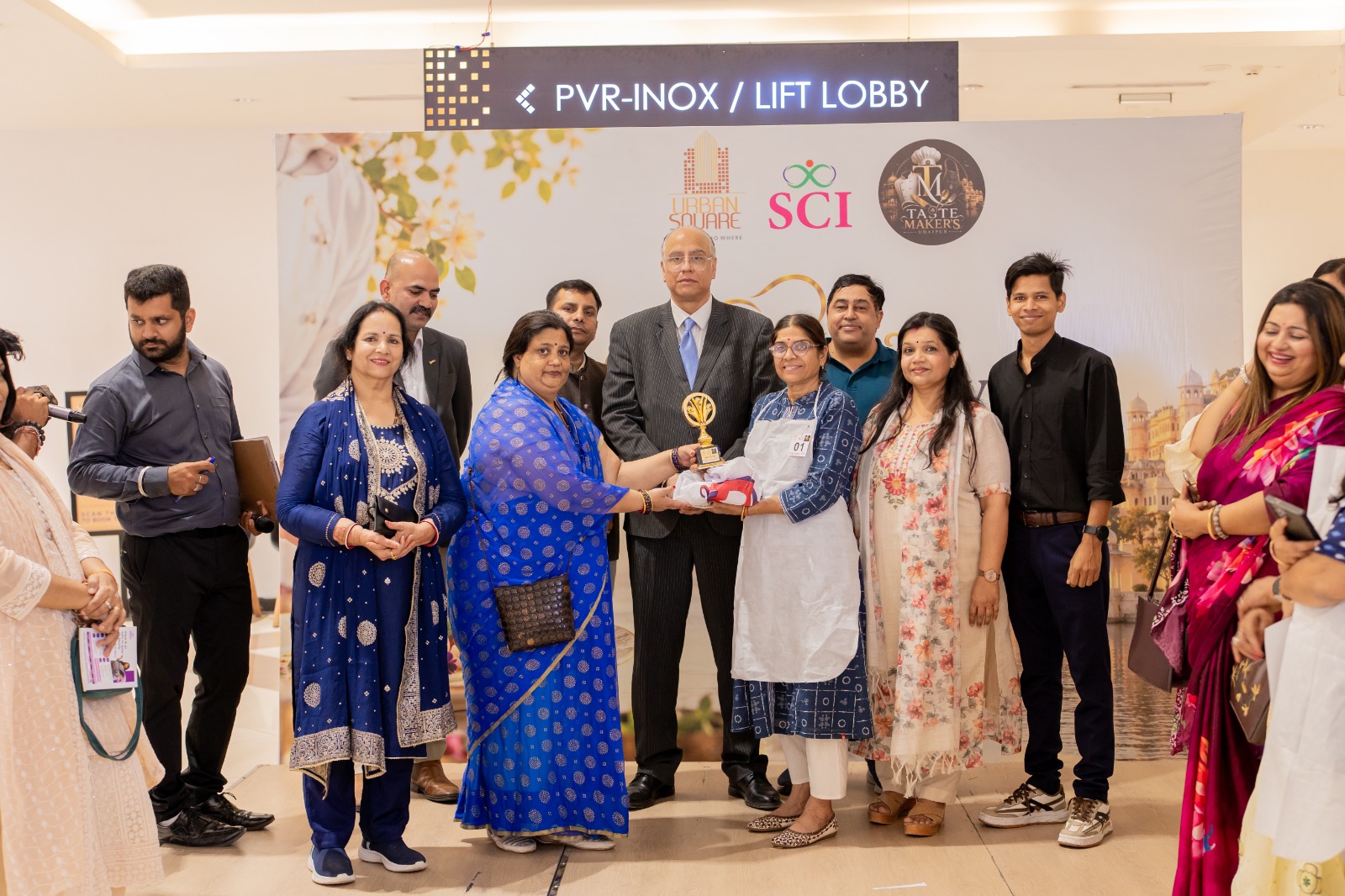
Udaipur, Sep 30: Urban Square Mall, Udaipur, hosted its latest ‘Urban Weekender’ experience, bringing together food, family, entertainment and community engagement under one roof. The weekend IP is designed to offer visitors engaging experiences beyond shopping and create opportunities for families to spend quality time together.
Speaking on the initiative, Nandini Taneja as CEO, Bhumika Enterprises, said, “With Urban Weekender, our aim is to create experiences that bring people together and give families more reasons to spend their weekends with us. The encouraging response to our culinary event reflects the growing interest in experiential engagements. We look forward to introducing more unique and interactive formats that make Urban Square Mall a destination for shopping, entertainment and memorable experiences.”
As part of the initiative, the mall hosted ‘Sweet & Savoury Festive Bites’, a family chef competition organised by Tarika Bhanupratap, Owner, She Circle India, and Nirmala Soni and Karan Madhwani of Tastemakers India. The event witnessed participation from over 100 contestants, who showcased their culinary creativity through a variety of homemade dishes.
The event was graced by Manveer Kapoor, General Manager, Wyndham Garden, as Chief Guest, along with Vinit Chobisa, General Manager, Radisson, and Vikram Madhwani, Ashoka Group, who joined as special guests and shared their industry expertise.
With ‘Urban Weekender’, Urban Square Mall continues to curate diverse experiences including food events, family games, movie screenings, Tambola evenings and other community-led activities, reinforcing its positioning as an experiential destination for Udaipur.
- 0
- By Neel Achary

30, Sep 2026
Greta Garbo is back – starring in SKF’s initiative to overcome friction
GOTHENBURG, Sweden, Sept. 30, 2026 /PRNewswire/ — Greta Garbo returns to SKF. More than a century after her first campaign promoting SKF, one of the most iconic figures of our time is once again the face of the company. Using AI technology, Garbo has been recreated. This time, she’s drawing attention to groundbreaking magnetic bearings with the potential to entirely eliminate friction. At the same time, SKF is reintroducing a payment model pioneered by the company in 1919.

Before she became a global icon, Greta Garbo appeared in one of Swedish industry’s campaign films for an international audience, with SKF among the companies featured. But for SKF, Garbo represents more than just a historical connection to the company’s early years. Her journey reflects the values that have always driven SKF: the determination to keep thinking differently and the courage to challenge established conventions as the world changes. Today, around 20 percent of global energy is used to overcome friction in machinery and industrial processes, making friction one of the world’s greatest sustainability challenges. To address this challenge, SKF has developed frictionless technology.
“Industry is facing growing demands to reduce energy consumption, strengthen competitiveness and meet the needs of increasingly energy-intensive operations. Our innovative levitating magnetic bearings eliminate friction entirely. But just as we did a century ago, we need to find new ways to lower the barriers to adoption and make the technology more accessible,” says Rickard Gustafson, President and CEO.
The challenge isn’t new. As early as in 1919, SKF faced a similar situation. Its solution became an offering that enabled customers to finance their investments through the energy savings generated by the technology over time. SKF is now reintroducing that same principle to make the next generation of energy-efficient technology more accessible and accelerate the adoption of solutions that reduce both energy consumption and climate impact.
“There are few companies in the world better at fighting friction than SKF. But having the most innovative technology or the most customer-focused payment model is not enough. The way we communicate must be equally innovative and inspiring. By bringing Greta back, we hope to open more eyes to frictionless and energy-efficient technology. Sometimes, we need to look back to find the best way forward,” says Per Nilsson, Global Head of Communication and Brand.
SKF’s magnetic bearings are used in data centres, cooling systems, semiconductor applications and other energy-intensive applications. By suspending the rotating shaft in a magnetic field without physical contact, the technology can reduce energy consumption, wear and maintenance while increasing availability.
Combined with AI-driven condition monitoring, it also provides operational insights for smarter asset management. By bringing together energy-efficient technology, digital intelligence and new business models, SKF aims to lower investment barriers and accelerate the adoption of more competitive and sustainable solutions.
The initiative has been developed in collaboration with Greta Garbo’s family and Harriet Brown & Company Inc., whose support has ensured that Greta Garbo’s legacy is handled responsibly.
Read more about the initiative here: http://www.skf.com/fighting-friction.
Aktiebolaget SKF
(publ)
Since 1907, SKF has been making some of the world’s most innovative bearings, seals, lubrication systems, condition monitoring solutions, and services to reduce friction. Less friction means more energy saved and by reducing it, we make industry smarter, more competitive, and more energy efficient, building a more sustainable future where we can all do more with less. SKF is represented in approximately 130 countries and has around 17,000 distributor locations worldwide. Annual sales in 2025 were SEK 91,583 million and the number of employees was 37,271. www.skf.com
® SKF is a registered trademark of the SKF Group.

 View original content to download multimedia:https://www.prnewswire.co.uk/news-releases/greta-garbo-is-back–starring-in-skfs-initiative-to-overcome-friction-302893152.html

30, Sep 2026
Getnet and Nayax Announce Global Strategic Partnership to Accelerate Integrated Payments and Commerce Solutions Across Latin America and Iberia
The agreement will enable operators of vending machines, electric-vehicle chargers, self-service kiosks and other automated self-service businesses to benefit from Nayax’s payment technologies and Getnet’s local acquiring network. Nayax will roll out across Getnet’s acquiring network in Chile first, followed by Spain, Portugal, Brazil, Mexico, and Argentina.
Madrid (Spain) and Herzliya (Israel), Sept 30. Getnet, the global merchant payments platform and the leading payment solutions provider in Latin America and Iberia, and Nayax Ltd (NASDAQ: NYAX, TASE: NYAX), a global commerce enablement, payments, and loyalty platform helping merchants scale their business, announced its partnership aimed at accelerating integrated payment acceptance and commerce services across key markets in Europe and Latin America.
The agreement will enable operators of vending machines, electric-vehicle chargers, self-service kiosks and other automated self-service commerce businesses to access an integrated payment solution combining Nayax technology with the Getnet acquiring platform in Latin America and Iberia. Operators will gain a single, reliable way to accept cashless payments across their unattended machines, and their customers will gain a smoother, more familiar checkout process wherever they pay.
The partnership will open key new Latin American markets for Nayax and strengthen its regional presence. Getnet, in turn, will broaden its product portfolio into the unattended space and increase processing volumes. The rollout will begin in Chile within the coming weeks and expand progressively across Spain, Portugal, Brazil, Mexico and Argentina, offering Nayax a scalable route into the region and a foundation for sustained growth.
“This partnership is an important milestone for Nayax, opening new markets across Latin America while strengthening our offering in the countries where we already operate,” said Oren Tepper, Nayax’s Chief Commercial Officer. “Together with Getnet, we can provide merchants a stronger, more integrated way to accept payments.”
“This agreement represents another important step in our strategy to become the preferred payments partner for technology companies, ISVs and commerce platforms around the world,” said Fabrice Mendez, Global Head of Partnerships at Getnet. “Nayax is a recognized global leader in unattended commerce, and together we will help merchants benefit from integrated payment experiences that combine global innovation with local acquiring expertise.”
30, Sep 2026
India’s Senior Tech Workforce Turns to IIT Kharagpur for AI Upskilling
IIT Kharagpur’s first-ever online executive AI portfolio has recorded 3x enrolment growth quarter-on-quarter, prompting an expansion from four to seven specialised programmes.
KHARAGPUR, India, Sept. 30, 2026 /PRNewswire/ — India’s AI upskilling wave is increasingly being driven by experienced professionals rather than early-career talent. Reflecting this shift, IIT Kharagpur and upGrad have expanded their executive AI portfolio from four to seven programmes after recording 3x QoQ enrolment growth across the portfolio.

Announced in April 2026, the collaboration has attracted learners from 133 cities across India and seven countries—the UAE, US, UK, Germany, Canada, Australia and Kuwait. The portfolio has drawn a distinctly senior audience, with a median work experience of 12 years, while nearly 63% of learners have over a decade of professional experience.
Participants include professionals from leading organisations such as TCS, JPMorgan Chase, Bank of America, HSBC, Infosys, Accenture, Deloitte, Capgemini, IBM, Oracle, Cognizant, Salesforce, Wipro, Citi and Qualcomm, spanning roles including Vice Presidents, Principal Engineers, Engineering Managers, Tech Leads, Staff Software Engineers, Senior Consultants and Data Scientists.
The strong response has also shaped the evolution of the portfolio. Originally launched with four executive programmes covering Generative AI, AI-Native Software Engineering, Applied AI & Machine Learning, and Technology & AI Leadership, it has now expanded with three specialised offerings in Building AI Products, Systems & Services, Applied Data Science & Agentic AI, and FinTech & AI, enabling professionals to pursue role-specific AI capabilities.
Demand has been strongest for hands-on AI programmes. The Executive Post Graduate Certificate in Generative AI & Agentic AI and the Executive Post Graduate Certificate in Applied AI & Machine Learning have each recorded 2x quarter-on-quarter enrolment growth, emerging as the fastest-growing programmes in the portfolio. The remaining growth has been driven by increasing demand across specialised offerings in AI product development, data science, software engineering, technology leadership and fintech, reflecting the broadening adoption of AI skills across functions and industries.
The demand spans India’s technology corridors. Bengaluru has emerged as the largest learner hub, followed by Hyderabad and Pune, while professionals from Mumbai, Delhi NCR, Kolkata, Chennai and numerous emerging cities are also enrolling in large numbers. Sector-wise, technology services, consulting and financial services are leading AI adoption, accounting for nearly half of the learner base.
Commenting on the milestone, Prof. Suman Chakraborty, Director, IIT Kharagpur, said: “As IIT Kharagpur marks 75 years of academic excellence and nation-building, we remain conscious that the true measure of an institution lies not only in its legacy, but also in its ability to respond to the needs of the future. Artificial intelligence is transforming industries, institutions and society, making lifelong learning an increasingly important academic responsibility. Our partnership with upGrad reflects this commitment by bringing IIT Kharagpur’s academic depth to professionals at scale. Initiatives such as the Outreach Course Network (OCN) further this vision by creating a trusted framework for learning. We are encouraged by the growth of this collaboration and look forward to expanding it into new areas of national and global relevance.”
Anuj Vishwakarma, CEO – Higher Education Programmes, upGrad, said:“The response to this portfolio has reaffirmed a shift we’ve been observing across the industry—AI upskilling is no longer driven primarily by early-career professionals. Today’s learners are experienced technology leaders who recognise that staying relevant requires continuous reinvention. What has been particularly encouraging is the strong demand for specialised, role-aligned learning, which has led us to expand the portfolio from four to seven programmes within months of launch. Together with IIT Kharagpur, we’re building pathways that enable professionals to translate AI from a strategic priority into practical capability at work.”
Early learner engagement has also remained strong, with over 95% of enrolled learners activating their accounts and beginning their learning journey, reflecting high programme relevance among working professionals balancing full-time careers. Completion and certification metrics will become available as the earliest cohorts progress through the programmes.
The milestone comes as IIT Kharagpur marks its 75th year on 18 August 2026. As the institute’s first-ever online executive education portfolio, the collaboration signals a growing appetite among experienced professionals for structured, advanced AI education and highlights the increasing role of executive learning in preparing India’s technology workforce for the AI era.
About IIT Kharagpur
Indian Institute of Technology Kharagpur is one of India’s leading institutions for higher education, research, and innovation, recognised globally for nurturing industry-ready professionals and advancing impactful technological solutions. Established in 1951 and designated an Institute of National Importance, IIT Kharagpur has played a pioneering role in shaping India’s technical education ecosystem. The Institute was granted the status of “Institute of Eminence” by the Government of India in 2019 and consistently ranks among the country’s foremost institutions for academic excellence, interdisciplinary research, and innovation-driven development. With a diverse academic ecosystem comprising multiple departments, schools, centres of excellence, and specialised academies, IIT Kharagpur offers programs across engineering, science, architecture, management, law, humanities, and emerging interdisciplinary domains. The Institute supports a vibrant residential campus community and is actively engaged in numerous national and international research initiatives. Through its commitment to excellence in education, research, and societal impact, IIT Kharagpur continues to contribute to affordable technology innovations and solutions addressing national priorities and global challenges. More details at (https://www.iitkgp.ac.in/)
About upGrad
Started in 2015, upGrad — Asia’s leading integrated skilling and workforce development company, powering the complete learning cycle of individuals. It offers a range of online and hybrid skilling programs and certifications under its B2C portfolio and facilitates top Indian and global universities to offer their Diploma, Master’s, and Executive Doctorates, with all degrees awarded solely by the respective universities, supporting every career stage of individuals – from first job to boardroom. Additionally, selected programs are tailored for Enterprise clients under the corporate skilling division, along with other recruitment and staffing services. More details at (https://www.upgrad.com)
 View original content to download multimedia:https://www.prnewswire.com/in/news-releases/indias-senior-tech-workforce-turns-to-iit-kharagpur-for-ai-upskilling-302892965.html

30, Sep 2026
Mach Travel Solutions Limited Featured Among ‘Leading SMEs of India’ in Dun & Bradstreet’s Business Enterprises of Tomorrow 2026
NEW DELHI, Sept. 30, 2026 /PRNewswire/ — Mach Travel Solutions Limited (BSE: MACHLTD), a publicly listed technology-enabled travel solutions company in India, has been featured as one of the ‘Leading SMEs of India’ in Dun & Bradstreet India’s report titled ‘Business Enterprises of Tomorrow 2026’.

The recognition was announced with the release of the report on September 29, 2026, and marks an important milestone in the Company’s journey as it continues to strengthen its position in India’s travel and tourism industry.
Commenting on the recognition, Mr. Amit Bhatia, Chairman & Managing Director, Mach Travel Solutions Limited, said:
“We are pleased to be featured among the ‘Leading SMEs of India’ in Dun & Bradstreet’s Business Enterprises of Tomorrow 2026. This recognition is encouraging for us as we continue to build and strengthen the organisation for its next phase of growth.
I would like to thank our clients, partners and entire team for their continued trust and contribution to our journey. Our focus remains on strengthening our capabilities and creating long-term value for all our stakeholders.”
The recognition reflects the progress made by the Company over the years and provides further encouragement as it continues to pursue its long-term strategic objectives across the travel solutions sector.
About Mach Travel Solutions Limited
Mach Travel Solutions Limited (formerly Mach Conferences and Events Limited) is a publicly listed technology enabled travel solutions company listed on the Bombay Stock Exchange (BSE: MACHLTD). Incorporated in 2004, the Company provides technology-enabled end-to-end travel solutions across Corporate Travel, MICE, B2B, Leisure and Government & Institutional Projects.
The Company has a strong pan-India presence with offices in Noida, New Delhi, Kolkata, Mumbai, Bengaluru, Bhubaneswar and Ahmedabad, and is accredited by and associated with leading national and international travel associations, including IATA, GBTA, PATA, IATO, ADTOI, OTOAI, SKÅL International, JATA, ICPB, EGAC and NIMA. For more information, please visit https://www.machtravelsolutions.com.
The Company is also developing its B2C Online Travel Agency platform, Machtravel.com, as part of its strategy to build a comprehensive travel ecosystem. Machtravel.com is currently in public beta and brings together Flights, Hotels, Holidays, MICE, Cruises and Visa services on a single digital platform.
Contact Details
Mach Travel Solutions Limited
Mrs. Swati Aggarwal
Company Secretary & Compliance Officer
Email: compliance@machtravel.com
Website: https://www.machtravelsolutions.com
Safe Harbour
This release contains statements that contain “forward looking statements” including, but without limitation, statements relating to the implementation of strategic initiatives, and other statements relating to Mach Travel’s future business developments and economic performance. While these forward-looking statements indicate our assessment and future expectations concerning the development of our business, several risks, uncertainties and other unknown factors could cause actual developments and results to differ materially from our expectations. These factors include, but are not limited to, general market, macro-economic, governmental and regulatory trends, movements in currency exchange and interest rates, competitive pressures, technological developments, changes in the financial conditions of third parties dealing with us, legislative developments, and other key factors that could affect our business and financial performance.
Mach Travel Solutions undertakes no obligation to publicly revise any forward-looking statements to reflect future/likely events or circumstances.
 View original content to download multimedia:https://www.prnewswire.com/in/news-releases/mach-travel-solutions-limited-featured-among-leading-smes-of-india-in-dun–bradstreets-business-enterprises-of-tomorrow-2026-302893069.html

30, Sep 2026
National Seminar Sets Out Road Safety Priorities for Indian Cities: Context-Based Speeds, Safer Design and Stronger Enforcement
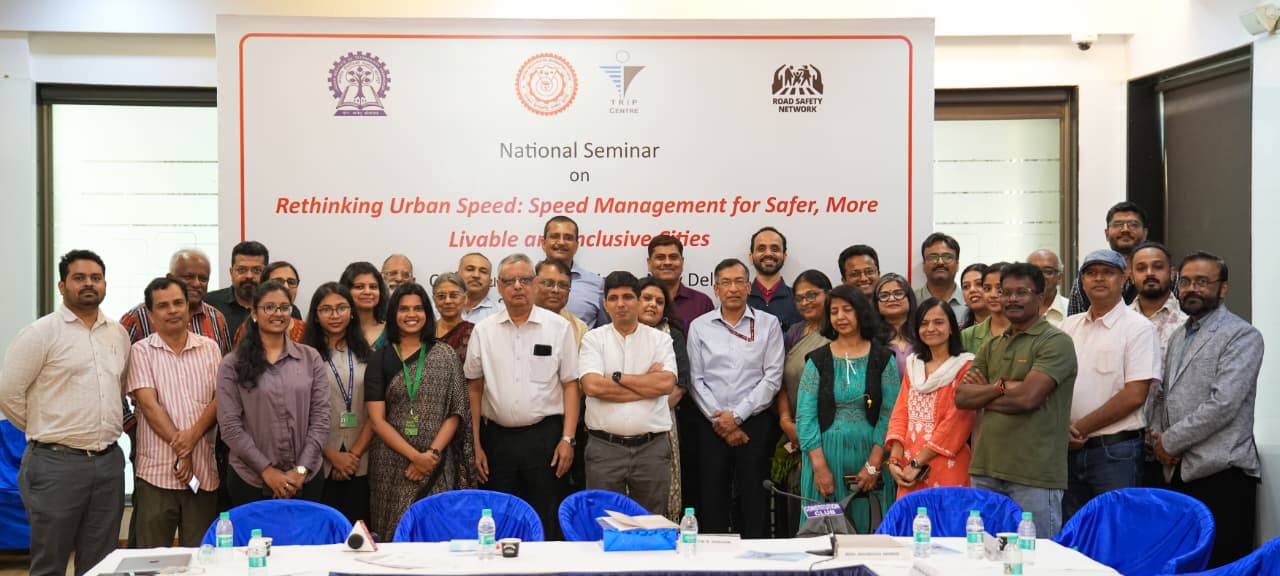
New Delhi, September 29: Speed management in Indian cities needs to move beyond the setting of speed limits and focus on the interaction between road design, enforcement, local conditions and the behaviour of road users, experts said at the National Seminar on “Rethinking Urban Speed: Speed Management for Safer, More Livable and Inclusive Cities”, held today at the Constitution Club of India, New Delhi.
Organised by the Road Safety Network (RSN) in collaboration with IIT Delhi’s Transportation Research and Injury Prevention Centre (TRIP Centre) and IIT Kharagpur, the seminar brought together policymakers, researchers, public health experts and road safety practitioners to examine how speed management can contribute to safer and more inclusive urban mobility.
The seminar featured participation from several leading experts and institutions, including Dr Nitin R. Gokarn, Chairman, National Road Safety Board; Mahmood Ahmed, Additional Secretary, Ministry of Road Transport and Highways; Prof. Geetam Tiwari, Emeritus Professor, Transportation Research and Injury Prevention Centre (TRIPC), IIT Delhi; Prof. Bhargab Maitra, Professor, Department of Civil Engineering, IIT Kharagpur and Member, Road Safety Network; Dr. Gautham M. Sukumar, Professor, Department of Epidemiology and Head, WHO Collaborating Centre for Injury Prevention and Safety Promotion, NIMHANS, Bengaluru; Dr. Mohammed Asheel B, National Professional Officer, Injury & Disability Prevention, WHO India; Ranjit Gadgil – Program Director, Parisar; Dr. Reenu Aneja, transport Specialist, World Bank; Ashim Sanyal, Managing Trustee, Consumer Voice and other road safety and urban mobility experts.
The discussions highlighted the need to ensure consistency among design speed, posted speed, and actual operating speed, while taking into account the function of a road, surrounding land use, and the presence of vulnerable road users. Experts also emphasised that speed management needs to be supported by appropriate engineering and enforcement rather than relying solely on awareness or speed-limit signage.
Mahmood Ahmed, Additional Secretary, Ministry of Road Transport and Highways, noted that speed management needs to be communicated alongside broader development priorities and supported through effective enforcement and locally relevant interventions. “One of the biggest challenges in speed management is convincing people that higher speeds do not necessarily reduce travel time, but can increase the risk and severity of fatalities. There is also considerable pressure to increase speeds on highways and expressways in the interest of economic growth and competitiveness. In urban areas, however, the multiplicity of authorities makes implementation more complex, and interventions have to be local and suited to the road environment. Stronger enforcement, including electronic enforcement, and greater certainty of punishment will be critical to making these measures effective.”
Dr Nitin R. Gokarn, Chairman, National Road Safety Board (NRSB), highlighted the need to address the gap between vehicle capabilities and the environments in which they operate. “Road safety requires us to look at the entire road environment and not vehicles in isolation. Vulnerable road users, particularly pedestrians and two-wheeler users, remain highly exposed to the consequences of unsafe speeds. We need better data on two-wheeler crashes, stronger attention to pedestrian infrastructure and effective implementation of safety measures. The National Road Safety Board looks forward to working with stakeholders such as the Road Safety Network to take these recommendations forward.”
The seminar also discussed the Safe System Approach, which recognises that road users can make mistakes and that road environments must be designed to prevent such mistakes from resulting in death or serious injury. Participants highlighted safe speeds, safe streets, safe vehicles, safe behaviour and effective post-crash response as key pillars of this approach.
The vulnerability of pedestrians and two-wheeler users emerged as a key concern. Experts noted that mixed-traffic environments and large differences in vehicle speeds can increase risks for two-wheeler users. The discussions called for greater attention to pedestrian infrastructure, accessible footpaths, safe crossings, traffic-calming measures and complete streets.
Prof. Bhargab Maitra, IIT Kharagpur and Member, Road Safety Network, emphasised that speed management provides an immediate opportunity to improve road safety. “Speed management is doable, implementable and workable in the short term. It is not merely about reducing speed limits; it requires the right combination of engineering, enforcement and context-based speed regulation. Aligning road design, speed limits and operating speeds, while prioritising pedestrians, cyclists and two-wheeler users, can help make our urban roads safer and more inclusive.”
The seminar also examined safer school zones, the need for better crash and speed data, and the importance of integrating road safety with urban planning and public transport. Experts stressed that infrastructure designed primarily around vehicle movement can marginalise pedestrians and cyclists, and called for greater adoption of people-centred and context-sensitive road design.
The seminar concluded with a call for data-driven, locally relevant and people-centred speed management, with engineering, enforcement and policy working together to create safer urban environments. Participants emphasised that managing speed is not only a road safety intervention but also an important component of building cities that are safer, more accessible and more inclusive for all road users.
30, Sep 2026
“Boring” B2B Videos Beat Almost Every B2C Ad With 28.7% Hook Rate
Marketers assumed B2B products were too dry for social video. Billo’s analysis of 88,000+ Meta ads shows the category outperformed nearly every consumer group.
September 30, 2026. A new analysis by social media marketing company Billo shows that B2B ads are often more watched than B2C ones. In an analysis of more than 88K Meta video ads, B2B posted a 28.7% hook rate (the share of viewers who kept watching past an ad’s opening seconds). The only category that showed better results was Toys & Games (28.8% hook rate).
Furthermore, in March, the B2B category hit 33%, the highest monthly hook rate any category recorded.
“B2B being too dry for social video is one of the most expensive assumptions in marketing, and the data just doesn’t back it up. B2B ads held attention better than almost every consumer category we tracked this year. It just takes a longer time for B2B videos to convert. B2B clients watch ads and come back weeks later once the budget clears, or a team signs off. And brands that misread this as a failure are missing their opportunities to earn,” said Donatas Smailys, co-founder and CEO of Billo.
Most visual categories fell behind
The product types traditionally seen as most suited to video were not the ones that held attention best. Apparel & Accessories and Electronics, two of the most visual categories in the dataset, stayed below the cross-industry average (25.44%) in all six months, at 22.9% and 22.2%.
Categories with little to put on screen moved the other way. B2B stayed above the cross-industry average every month, and in March it reached 33%, the highest any category reached in any month.
“Being easy to film isn’t the same as being worth watching. When every ad in a category opens on the same product shot, viewers scroll past all of them. B2B brands can’t lean on the product, so they have to open on the problem or the person, and this year that paid off,” said Smailys.
What B2B businesses can do
Treat video as a format that can earn attention, not one to skip. A few practical starting points:
- Show a real person, not only the product. B2B video requires less unboxing and demonstrating than consumer video, so the presenter often leads.
- A good hook still needs a good hold. The hook rate shows who stops scrolling, whereas the hold rate shows who continues watching after the video starts, a better indicator of whether the message is actually getting through.
- Skip the internal jargon. If the hook is built on an inside term or acronym, anyone outside the category loses interest within three seconds.
- Speak to more than one buyer. A B2B purchase usually needs sign-off from several people, so the video has to hold up even when it’s forwarded to someone who never saw the original pitch.
- Keep the message consistent from hook to landing page. Having a strong opening gets attention, but if the offer or message changes once someone clicks through, the trust built in those first seconds is quickly destroyed.
Methodology
The findings are drawn from 88,329 sales-objective Meta video ads that ran between January and June 2026, each with more than 1,000 impressions. The dataset spans $122 million in ad spend and $212 million in purchase value across 14 categories defined by advertiser product type. More: https://billo.app/blog/h1-
30, Sep 2026
NTT DOCOMO BUSINESS Migrates Critical Database Platform to Oracle Autonomous AI Database
Japan’s leading ICT provider migrates tens of terabytes of data to the cloud and reduces database license costs by 43 percent
TOKYO, Sept. 30, 2026 /PRNewswire/ — NTT DOCOMO BUSINESS, Inc. (formerly NTT Communications Corporation), Japan’s leading global ICT solutions provider, has modernized its shared internal Oracle-based database platform by migrating it to Oracle Autonomous AI Database on Oracle Cloud Infrastructure (OCI). By moving tens of terabytes of data from its on-premises environment, NTT DOCOMO BUSINESS has been able to reduce database license costs by 43 percent, streamline database management through automation, and strengthen business continuity and resilience.

NTT DOCOMO BUSINESS built its shared database platform to host critical internal systems such as network management, security, and service operations. Currently supporting 12 critical internal systems connected to approximately 400 servers, NTT DOCOMO BUSINESS recognized that maintaining this on-premises environment was becoming increasingly complex and resource intensive. NTT DOCOMO BUSINESS migrated its shared database platform to Oracle Autonomous AI Database on OCI to help maintain the performance and security these critical systems require while reducing costs and simplifying day-to-day database operations through automation.
“Oracle Autonomous AI Database has enabled us to reduce our database license costs by 43 percent compared with our on-premises environment by taking advantage of its flexible consumption model,” said Akihiro Ito, senior vice president, Integrated Service Operations Division, NTT DOCOMO BUSINESS, Inc. “Automation of patching, backups, and routine maintenance has also significantly reduced day-to-day administrative work. The ability to keep the database current and secure gives us greater confidence and allows our operations team to focus on higher-value initiatives such as data utilization and business improvement. Looking ahead, we expect to use Oracle Autonomous AI Database to securely derive greater value from our data and leverage emerging technologies, including AI, to further improve operational efficiency and quality and create new value.”
To further strengthen business continuity, NTT DOCOMO BUSINESS has implemented a disaster recovery architecture across two Oracle Cloud regions in Japan. This helps it maintain stable operations and recover more quickly from disruptions. By taking advantage of automated backups, patching, and maintenance, NTT DOCOMO BUSINESS has also significantly reduced the time and effort required to address security vulnerabilities, while enabling faster responses to the growing risks of AI-enabled cyberattacks and emerging vulnerabilities.
About NTT DOCOMO BUSINESS
NTT DOCOMO BUSINESS, Inc. is Japan’s leading comprehensive global ICT solutions provider. It is an Industrial and Regional DX Platformer driving digital transformation across industries and communities, enabling the development of a decentralized, autonomous, and collaborative society where businesses and communities can thrive sustainably. Its mission is to unlock new values and help create prosperity for all. For more information, please visit https://www.ntt.com/en/.
About Oracle
Oracle offers integrated suites of applications plus secure, autonomous infrastructure in the Oracle Cloud. For more information about Oracle (NYSE: ORCL), please visit us at www.oracle.com.
Trademarks
Oracle, Java, MySQL and NetSuite are registered trademarks of Oracle Corporation. NetSuite was the first cloud company—ushering in the new era of cloud computing.

29, Sep 2026
Ontario Contributes $1.7 Million Investment to Advance Life Sciences Innovation at Piramal Pharma’s Aurora Facility
- Piramal Pharma Solutions is investing over $5.3 million in its Aurora drug substance facility to upgrade site infrastructure.
- With its investment through the Life Sciences Scale-Up Fund, the Ontario government is supporting healthcare innovation and reinforcing its province’s leadership position in the life sciences.
- This project will create 12 new jobs and protect 183 existing positions, unlocking new market opportunities and strengthening the sector’s competitiveness.
MUMBAI, India, Sept. 29, 2026 /PRNewswire/ — Piramal Pharma Solutions (“PPS”), a leading global Contract Development and Manufacturing Organization (CDMO) and part of Piramal Pharma Ltd. (“PPL”) (NSE: PPLPHARMA) (BSE: 543635), today announced that its Aurora, Canada drug substance site has received a $1,753,620 investment from the Ontario government through the Life Sciences Scale-Up Fund (LSSUF), enabling PPS to upgrade site infrastructure and commercialize Ontario-made health technologies for new markets.

With support from the government of Ontario, Piramal Pharma is investing $5,314,000 to upgrade site infrastructure at their Aurora facility, strengthening Ontario’s pharmaceutical manufacturing and bolstering domestic production of APIs. This project will enhance R&D and clinical API production, ensure the commercial availability of critical drug substances, and support a resilient and globally competitive life sciences industry in Ontario. The investment will create 12 new jobs and protect 183 existing positions.
“We are grateful to the Government of Ontario and MPP Dawn Gallagher Murphy for their support of this important investment in our Aurora facility,” said Peter DeYoung, CEO, Piramal Global Pharma. “This funding will help enable Piramal Pharma Solutions to upgrade our site infrastructure, strengthen our manufacturing capabilities, and enhance our ability to serve patients and customers around the world. In addition to supporting business growth, this investment will help advance projects focused on sustainability, operational efficiency, and the modernization of our site, reinforcing our commitment to responsible manufacturing and environmental stewardship.”

“Through the Life Sciences Scale-Up Fund, our government is ensuring that Ontario businesses are positioned to develop, commercialize and deploy new technologies across the health-care system,” said Dawn Gallagher Murphy, Member of Provincial Parliament for Newmarket—Aurora. “With this investment, Piramal will be positioned to turn their latest ideas into market-ready solutions, all while creating good-paying jobs and reinforcing Ontario’s position as a global biomanufacturing and life sciences hub.”

First launched in 2024, the $24 million LSSUF works in tandem with the government’s Health Innovation Pathway to advance the objectives of Phase 2 of Ontario’s Life Sciences Strategy and strengthen Ontario’s position as a global leader in health innovation. Building on the fund’s initial success, the 2026 Ontario Budget invested an additional $24 million to support Ontario companies whose work will accelerate the adoption of innovative technologies in the health-care system and support the province’s broader vision of providing connected, convenient care closer to home.
“Ontario’s life sciences sector plays a critical role in supporting the discovery and development of innovative medicines and technologies, which is why our government is proud to support local companies as they take their Ontario-made products to the next level,” said Vic Fedeli, Minister of Economic Development, Job Creation and Trade. “By investing in Piramal through the Life Sciences Scale-Up Fund, we are scaling up our province’s domestic capacity while further positioning Ontario as a leading jurisdiction for life sciences investment for generations to come.”

By investing in the Aurora site, the Ontario government is strengthening Ontario’s leadership in the life sciences and helping PPS advance next-generation technologies to patients worldwide.
About Piramal Pharma Solutions
Piramal Pharma Solutions (PPS) is a Contract Development and Manufacturing Organization (CDMO) offering end-to-end development and manufacturing solutions across the drug life cycle. We serve our customers through a globally integrated network of facilities in North America, Europe, and Asia. This enables us to offer a comprehensive range of services including drug discovery solutions, process and pharmaceutical development services, clinical trial supplies, commercial supply of APIs, and finished dosage forms. We also offer specialized services such as the development and manufacture of highly potent APIs, antibody-drug conjugations, sterile fill/finish, peptide products and services, and potent solid oral drug products. PPS also offers development and manufacturing services for biologics including vaccines and gene therapies, made possible through Piramal Pharma Limited’s subsidiary, Yapan Bio Private Limited.
For more information visit: Piramal Pharma Solutions | LinkedIn| Facebook | X
About Piramal Pharma Limited
Piramal Pharma Limited (PPL, NSE: PPLPHARMA I BSE: 543635), offers a portfolio of differentiated products and services through its 17 global development and manufacturing facilities and a global distribution network in over 100 countries. PPL includes Piramal Pharma Solutions (PPS), an integrated contract development and manufacturing organization; Piramal Critical Care (PCC), a complex hospital generics business; and the Piramal Consumer Healthcare business, selling over-the-counter consumer and wellness products. In addition, one of PPL’s associate companies, Abbvie Therapeutics India Private Limited, a joint venture between Abbvie and PPL, has emerged as one of the market leaders in the ophthalmology therapy area in the Indian pharma market.
For more information, visit: Piramal Pharma | LinkedIn
 View original content to download multimedia:https://www.prnewswire.co.uk/news-releases/ontario-contributes-1-7-million-investment-to-advance-life-sciences-innovation-at-piramal-pharmas-aurora-facility-302893371.html

29, Sep 2026
Frost & Sullivan Welcomes Back Sarwant Singh to Accelerate Digital Innovation and Global Growth
Industry veteran and futurist returns to advance digital platforms, strengthen advisory capabilities and drive new business opportunities
LONDON, Sept. 29, 2026 /PRNewswire/ — Frost & Sullivan is pleased to announce the return of Sarwant Singh, an experienced growth strategist, futurist and mobility industry expert, who will play a key role in advancing the company’s digital and AI platform strategy, strengthening its industry Practice Areas and accelerating global business growth.
With over 30 years of experience leading major advisory and transformation engagements, Sarwant brings extensive strategic consulting expertise, particularly in the mobility, industrial, tech and energy sectors. A recognised futurist specialising in foresight and megatrends, he is also the author of two books, New Mega Trends, sold in over 30 countries, and Innovating to Zero.
Sarwant also serves on several corporate and advisory boards, including as a board member of Vasuki, a Rothschild-established fund investing in automotive start-ups globally, and as a non-executive director of Ascenso Tyres.
Based in London, Sarwant’s priorities will include accelerating the development of integrated digital solutions, notably the Frost Transformation Engine and MetaBrain, strengthening the company’s industry capabilities and driving new business development and sales transformation initiatives.
Commenting on his return, Sarwant Singh said:
“I’m delighted to return to Frost & Sullivan at such an exciting time for the business. As AI and digital platforms reshape the research and advisory industry, we have a tremendous opportunity to build on the company’s deep industry expertise and global relationships.
“My focus will be on accelerating our digital platform strategy, strengthening collaboration across our Practice Areas and creating new growth opportunities. I’m particularly looking forward to reconnecting with colleagues and helping deliver innovative, scalable solutions that enable our clients to navigate disruption and achieve sustainable growth.”
Sarwant’s return reinforces Frost & Sullivan’s commitment to combining its established research and advisory expertise with technology-enabled solutions to deliver greater client value and accelerate growth worldwide.
About Frost & Sullivan
Frost & Sullivan, the Growth Pipeline Company, enables clients to accelerate growth and achieve best-in-class positions in growth, innovation and leadership. Through Growth Pipeline as a Service, the company provides transformational strategies and best-practice models to identify, prioritise and realise growth opportunities.
Schedule Your Growth Pipeline Dialog™ with Frost & Sullivan.
Media Contact
Kristina Menzefricke
Marketing & Communications
Global Customer Experience
Frost & Sullivan
kristina.menzefricke@frost.com
 View original content:https://www.prnewswire.co.uk/news-releases/frost–sullivan-welcomes-back-sarwant-singh-to-accelerate-digital-innovation-and-global-growth-302893289.html



