


23, Sep 2026
Odisha Teacher Turns Moss-Covered School Walls Into Lifelike Portraits
Balasore, Sept. 23 (UDN): What appears to be ordinary moss growing on the walls of a government primary school in Odisha’s Balasore district has become an unconventional medium for art, thanks to the creativity of a teacher.

Ajay Kumar Ghosh, a primary school teacher at Sri Krishnapur Primary School in Remuna block, has been using naturally grown moss on the school walls to create lifelike portraits of freedom fighters and other eminent personalities—without paint, brushes or chemical colours.
Moss Becomes An Unusual Art Medium
Instead of removing the moss, Ghosh uses it to shape portraits on the walls. The green layer provides the basic outline, while carefully scraping portions of the moss exposes the white surface underneath, helping him bring out facial features, hair and other details.
The approach has given the school walls a distinctive appearance while turning them into an informal learning aid for students.
Ghosh said the initiative also reflects a lesson he wants children to understand—that even seemingly insignificant things can have value when used creatively.
The idea gained momentum after a lack of funds made it difficult to construct a boundary wall around the school. Rather than allowing the existing walls to remain plain, the teacher used them as a canvas to create portraits of personalities familiar to students from their textbooks.
From Textbooks To The School Walls
The artwork has transformed the school surroundings into a more visually engaging space for children. Figures such as Gopabandhu Das, Subhas Chandra Bose and Jawaharlal Nehru, whom students read about in their lessons, have been represented through Ghosh’s wall art.
For the children, the portraits offer a different way of connecting classroom lessons with their everyday surroundings.
A student, Dinesh Kumar, said Ghosh had also introduced them to several forms of art, including techniques involving sand and clay, apart from drawing portraits using moss.
Encouraging Children To Explore Art
Ghosh’s efforts extend beyond decorating the school walls. He regularly encourages students to practise drawing and develops their interest in different forms of creative expression.
The teacher also uses art-based activities to make classroom learning more engaging, helping students become familiar with notable personalities while developing their own artistic abilities.
What began as an innovative response to limited resources has consequently given Sri Krishnapur Primary School a distinctive visual identity. The moss-covered walls, instead of being treated simply as part of the school structure, have become an unconventional canvas showcasing both art and lessons from history.
- 0
- By Neel Achary

23, Sep 2026
Khordha-Balangir Railway Project: Freight Locomotive Trial Run Reaches Charichhak
Bhubaneswar, Sept. 23 (UDN): The Khordha-Balangir railway project has moved closer to its next operational milestone with a successful trial run of a freight locomotive up to Charichhak, marking progress on the Purunakatak-Charichhak section.
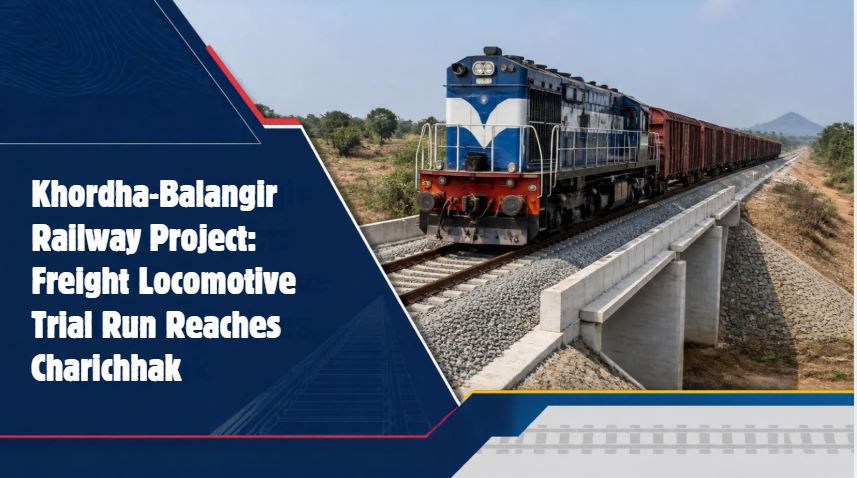
Representational Image
The latest test run followed the completion of major track and infrastructure work in the area, with railway authorities now preparing for the next stage of inspection and clearance.
Locomotive Crosses Tunnel, Two Viaducts
A freight locomotive was operated on the newly completed stretch towards Charichhak at a speed of around 60 kmph during the trial.
The locomotive crossed two viaduct bridges and Tunnel No. 7 during the exercise, allowing railway officials to assess the condition and readiness of the track and associated infrastructure.
A subsequent trial was also conducted with a freight locomotive hauling several wagons. The tests were aimed at checking the operational readiness of the newly laid section before it proceeds to the formal safety assessment.
Charichhak Station Work In Final Phase
Following the completion of railway connectivity up to Boudh and Purunakatak, work is now progressing towards extending the operational section to Charichhak.
Construction work at Charichhak railway station and the connecting track is reportedly nearing completion. The remaining works are being taken up ahead of the required inspection and clearance procedures.
The latest trial run is being seen as another step towards completing the next segment of the long-awaited railway project.
Safety Inspection To Determine Next Step
The Purunakatak-Charichhak section is expected to undergo a safety inspection in the coming weeks.
The inspection will be an important stage before regular train operations can begin on the newly completed stretch. The commencement of passenger or other regular services will depend on the outcome of the inspection as well as completion of the mandatory formalities.
With track testing already underway and station construction nearing completion, railway authorities are working towards taking the Charichhak section to the next stage of commissioning.
23, Sep 2026
Auto Sales May Moderate After Festive Boost as Inflation Risks Rise
Festive Season Keeps Auto Demand Strong, but Growth May Cool After the Rush

India’s automobile market is heading into the festive season with healthy demand, but the industry may see sales growth settle at a more normal pace once the festive rush passes, as manufacturers face a high base of comparison and changing market conditions, according to a sector report by JM Financial Institutional Securities.
The report expects inventory build-up ahead of the festive season to provide near-term support to wholesale vehicle volumes. However, this boost may not continue at the same pace after the festive period, when growth is expected to normalise against stronger volumes recorded earlier.
SUVs continue to drive passenger vehicle demand
Passenger vehicle demand has remained particularly strong. Domestic passenger vehicle volumes increased 37 per cent year-on-year in August 2026, while volumes during the first five months of FY27 were up 30 per cent.
Utility vehicles, especially SUVs, have emerged as the strongest growth driver. Their August volumes increased 46 per cent year-on-year, taking their share of overall passenger vehicle sales to around 69 per cent, compared with about 65 per cent a year earlier.
The shift highlights the growing preference for larger and feature-rich vehicles and is providing an advantage to manufacturers with a wider SUV portfolio.
Two-wheelers maintain steady momentum
The two-wheeler market has also remained resilient, although growth moderated in August. Domestic internal-combustion-engine two-wheeler sales rose 5 per cent year-on-year during the month, taking FY27 year-to-date growth to 14 per cent.
Premium motorcycles are showing stronger momentum. Sales in the 150-250cc segment increased 28 per cent in FY27 so far, while motorcycles above 250cc recorded 34 per cent growth. In comparison, the sub-125cc category grew by around 6 per cent.
The trend points to continuing demand for higher-value models alongside overall volume growth.
Festive inventory could lift near-term sales
The festive season remains a crucial period for automobile manufacturers and dealers. Building inventory ahead of major festivals allows dealerships to offer a wider choice of vehicles and respond quickly when customer demand increases.
However, the industry is also entering the season with a relatively high base. As a result, strong festive volumes may not necessarily translate into equally high growth rates in the months that follow.
West Asia tensions add an inflation risk
Alongside demand, rising costs remain an important concern for the automobile industry. JM Financial has identified sustained inflationary pressure linked to the ongoing West Asia conflict as a key factor to monitor.
Higher energy, commodity and transportation costs can increase expenses across the automobile supply chain, from manufacturers and component suppliers to logistics providers and dealers. If such pressures persist, companies could face challenges in protecting margins while maintaining competitive pricing.
The risk is particularly relevant for the auto-component industry, where higher input costs can take time to pass through to customers.
Industry enters the festive season with mixed signals
The latest data shows that India’s auto sector continues to benefit from healthy consumer demand, particularly in SUVs and premium motorcycles. At the same time, manufacturers will need to carefully manage inventory and costs as the market moves beyond the festive period.
For the industry, the next phase will be less about simply increasing volumes and more about sustaining demand while managing inventory, input costs and changing consumer preferences.
23, Sep 2026
Cathay Cargo moves its Mumbai freighter operations to Navi Mumbai International Airport
Sep 23: Cathay Cargo, the cargo division of the Cathay Group, announced the relocation of its Mumbai freighter operations to Navi Mumbai International Airport, effective 21 September 2026.
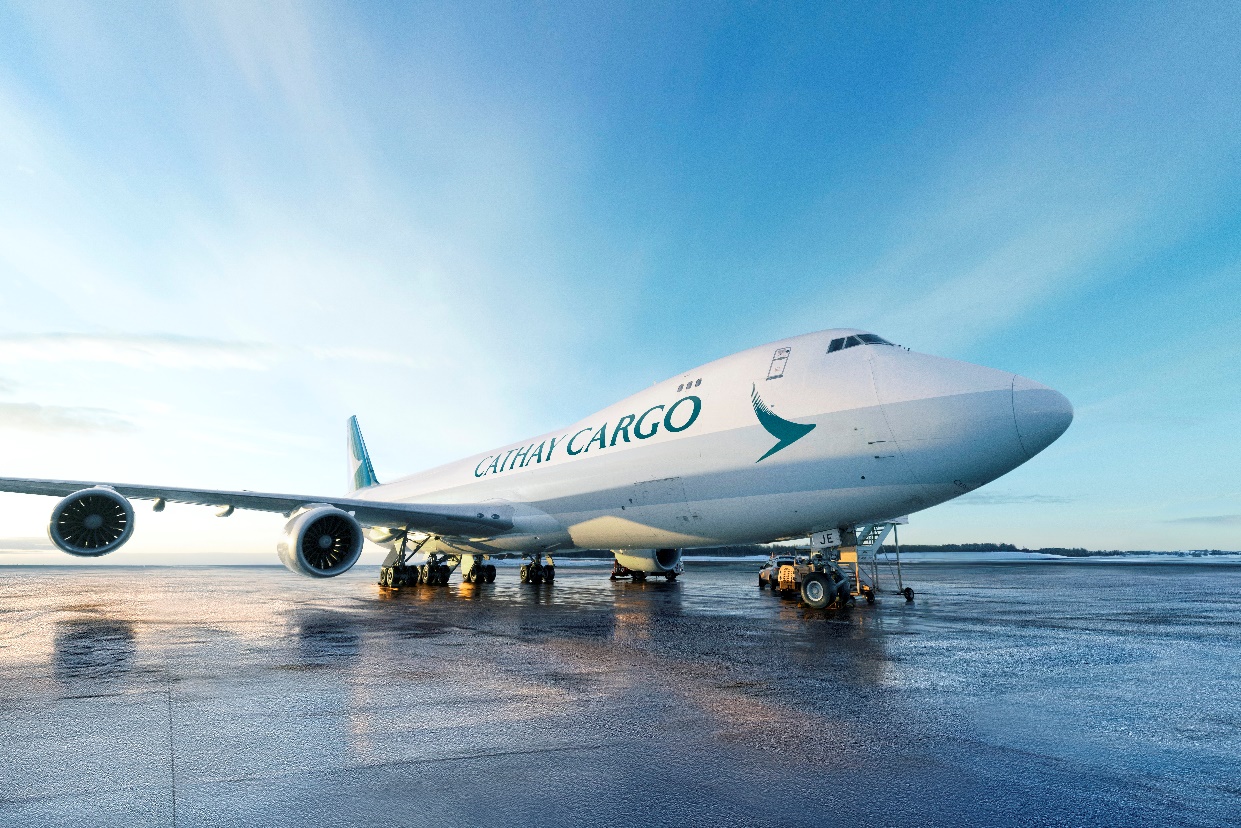
Through its dedicated freighter network serving major Indian cities and its well-connected Hong Kong hub, Cathay Cargo connects Indian customers and businesses to key markets across the Chinese Mainland, Southeast Asia, North America and beyond. From its home hub, Hong Kong, Cathay Cargo offers seamless connectivity between India and major global markets, with half of the world’s population reachable within five hours’ flying time. Beyond providing capacity, Cathay Cargo serves as a strategic partner in India’s manufacturing and export growth story by helping Indian goods reach global markets faster, more safely and more competitively.
Cathay Cargo operates three dedicated freighter flights per week from Navi Mumbai International Airport using its Boeing 747-400ERF and Boeing 747-8F freighters, offering robust and consistent main-deck capacity, and nose-door loading capabilities to seamlessly transport odd-size, heavy cargo to and from its Hong Kong hub and beyond.
Cathay Regional Head of Cargo for South Asia, the Middle East, and Africa Rajesh Menon said:
“The move of our Mumbai freighter operations to Navi Mumbai International Airport reinforces our steadfast commitment to the Indian market and its growth trajectory. By combining Navi Mumbai International Airport’s modern infrastructure with our dedicated freighter presence and our ‘We Know How’ expertise, we are providing reliable connectivity and specialist handling for local enterprises, exporters and SMEs. This will also further strengthen connectivity between Western India’s exporters and key global markets through our Hong Kong hub.”
In addition to its Navi Mumbai International Airport freighter service, Cathay Cargo continues to operate its dedicated freighter network across India, operating five weekly freighter flights from Delhi and Chennai respectively.
Cathay Cargo’s operational excellence is anchored in its “We Know How” ethos, with a suite of specialist solutions tailored for each special shipment, including:
-
Cathay Expert: Dedicated handling for odd-sized, heavy and project cargo utilising nose-door freighter loading.
-
Cathay Pharma: Strict temperature-controlled logistics for life-saving pharmaceuticals and vaccines.
-
Cathay Fresh: High-speed cold-chain transport ensuring fresh produce, perishables and seafood arrive in optimal condition.
-
Cathay Priority: Guaranteed space and expedited processing for time-sensitive commercial shipments.
-
Cathay Live: Specialised care and safe transport for live animals.
Furthermore, Cathay Cargo’s specialist solutions and Cathay Cargo Terminal operations at Hong Kong International Airport are backed by a complete set of IATA CEIV certifications – including CEIV Pharma, CEIV Fresh, CEIV Live Animals, and CEIV Lithium Batteries. These internationally recognised accreditations ensure the highest global standards of safety, quality control, and regulatory compliance across all specialised cargo streams.
Complementing its freighter network, Cathay Cargo utilises additional belly-hold capacity on Cathay Pacific’s passenger aircraft across all five of its Indian gateways: Mumbai, Delhi, Chennai, Bengaluru and Hyderabad. Operating 45 passenger flights per week across these five cities, the passenger airline offers time-bound, high-frequency connectivity into Hong Kong and beyond.
23, Sep 2026
Rockwell Automation Receives Eight Brandon Hall Group HCM Excellence Awards
India-based Gurukul leadership development program wins four Gold and four Silver honors in the 2026 Brandon Hall Group HCM Excellence Awards
NEW DELHI, Sept. 23, 2026 /PRNewswire/ — Rockwell Automation, Inc. (NYSE: ROK), the world’s largest company dedicated to industrial automation and digital transformation, announced that its India-based Gurukul leadership development program has received eight awards at the 2026 Brandon Hall Group HCM Excellence Awards®. The program earned four Gold and four Silver awards, receiving recognition for all eight submissions entered across four disciplines.
In Learning & Development, the Gurukul program received three Gold awards for Best Competencies & Skill Development, Best Use of a Blended Learning Program and Best Learning Team. In Talent Management, the program earned two Silver awards for Best High Potential Development and Best Succession & Career Management. In Leadership Development, it received Gold for Best Unique or Innovative Leadership Development Program and Silver for Best Leadership Development Program. The program also earned Silver for Best Program for Upskilling Employees in the Future of Work discipline.
The Brandon Hall Group HCM Excellence Awards recognize organizations that successfully develop and deploy programs, strategies, technologies and solutions that deliver measurable business results and advance excellence in human capital management. Each submission is evaluated by an independent panel of Brandon Hall Group analysts, industry experts and experienced practitioners against criteria including business need, program design, innovation, adoption and organizational impact.
The Gurukul program was designed to prepare high-potential team leads for broader enterprise roles as Rockwell Automation India evolves into a strategic Global Capability Center. Developed with Chrysalis HRD Pvt Ltd., the nine-month program combined leadership assessments, experiential workshops, simulations, action learning projects, global mentoring and coaching to strengthen strategic thinking, commercial awareness and stakeholder influence. All 15 participants completed the leadership journey, with a participant satisfaction score of 4.9 out of 5. During the program, eight participants were promoted and three others transitioned into expanded or different roles, while manager feedback identified improvements in enterprise perspective, collaboration and leadership ownership.
“This recognition from Brandon Hall Group is a testament to Rockwell Automation India’s commitment to developing talent and creating a future-ready workforce. Through Gurukul, we have built a learning ecosystem that empowers employees to continuously grow, embrace new opportunities, and develop the leadership capabilities needed for tomorrow’s challenges. Winning eight awards across learning, talent management, leadership development, and future of work categories is an honor that reflects the impact of our people-first approach and the remarkable contributions of our teams,” said Abhishek Misra, Head Human Resources – India, Rockwell Automation.
“Every year, the HCM Excellence Awards remind us that innovation is ultimately about impact. The organizations recognized this year have demonstrated that great HR and learning strategies don’t just improve programs, they strengthen organizations, empower people and deliver measurable business results. We are honored to celebrate their achievements,” said Rachel Cooke, COO of Brandon Hall Group™ and HCM Excellence Awards® Program Leader.
For more information about the awards, visit the official Brandon Hall Group announcement.
About Rockwell Automation: Rockwell Automation, Inc. (NYSE: ROK), is a global leader in industrial automation and digital transformation. We connect the imaginations of people with the potential of technology to expand what is humanly possible, making the world more productive and more sustainable. Headquartered in Milwaukee, Wisconsin, Rockwell Automation employs approximately 26,000 problem solvers dedicated to our customers in more than 100 countries as of fiscal year end 2025. To learn more about how we are bringing the Connected Enterprise® to life across industrial enterprises, visit www.rockwellautomation.com.

 View original content to download multimedia:https://www.prnewswire.com/in/news-releases/rockwell-automation-receives-eight-brandon-hall-group-hcm-excellence-awards-302887280.html

23, Sep 2026
Sceye Supports SoftBank Corp. in World-First Demonstration of Laser Ranging by Tracking a HAPS from the Ground
SoftBank Corp.’s ground team tracked Sceye’s stratospheric platform in real time and continuously received reflected laser signals, advancing future free–space optical (FSO) communications between ground, stratosphere, and space
MORIARTY, N.M., Sept. 23, 2026 /PRNewswire/ — Sceye, a U.S. aerospace and material science company building High Altitude Platform Systems (HAPS) for stratospheric infrastructure, today announced the world-first stratospheric laser tracking demonstration. The demonstration was part of Sceye’s historic month-long ST1 flight and was conducted by SoftBank Corp. (TOKYO:9434, “SoftBank”) in collaboration with Hitotsubashi University and the National Institute of Polar Research (NIPR), with Sceye supporting the demonstration through the use of its HAPS platform. It aimed to examine how optical wireless communication equipment should be installed on a Sceye HAPS, as well as to collect data toward realizing future optical wireless communications between satellites, HAPS and the ground.
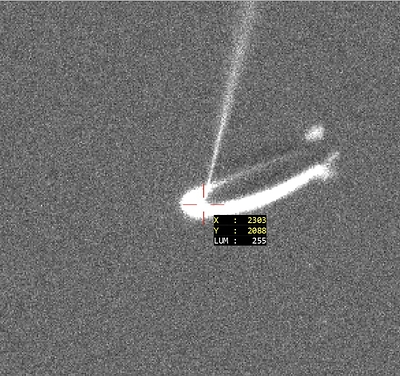
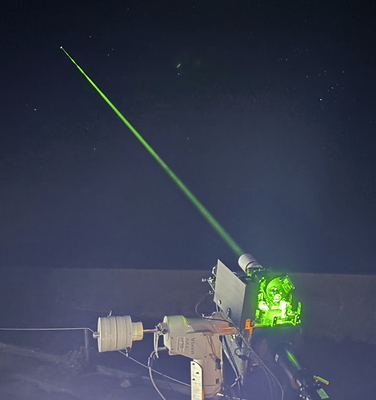
NIPR designed a corner cube reflector (CCR) for installation on a HAPS, and SoftBank developed a reflector assembly incorporating the CCR. Sceye installed and carried the CCR on the first-ever HAPS flight over Japan. For the ground-based equipment, the team built a compact, portable laser ranging system capable of tracking a HAPS, based on “Omni-SLR,” a compact satellite laser ranging system designed by Hitotsubashi University.
Using the corner cube reflector installed on Sceye’s HAPS and the compact, portable laser ranging system deployed on the ground, the team directed laser pulses toward the platform as it operated in the stratosphere. The system successfully conducted real-time tracking of Sceye’s HAPS and continuously received laser signals reflected back to the ground.
“This demonstration shows what becomes possible when we establish a reliable layer of infrastructure in the stratosphere,” said Mikkel Vestergaard Frandsen, Founder and CEO of Sceye. “During a single mission, our first Service Test flight supported direct-to-device connectivity, edge computing, communications with drones, and now a world-first laser-ranging demonstration. The ability to connect ground, stratosphere, and space through optical links could fundamentally change how information moves securely around the world, and Sceye is proud to provide the platform helping make that future possible.”
The ability to acquire and track a moving HAPS with a highly directional laser beam is an important step toward future optical wireless communications. The data acquired, including the attenuation of light as it traveled through the atmosphere between the ground and the stratosphere, will help define operational requirements for optical communications technology to be installed and operated on Sceye’s HAPS.
Optical wireless communications are emerging as a next-generation technology for high-speed, high-capacity non-terrestrial networks connecting satellites, HAPS, and terrestrial infrastructure. Applications include the rapid transmission of Earth observation data, connectivity in underserved areas, restoration of communications following disasters, and low-latency intercontinental network links.
“Tracking a HAPS from the ground with a highly directional laser is like trying to keep a laser pointer centered on a moving coin ten miles away, through an atmosphere that is constantly shifting the beam,” said Johnny Truong, Chief Technology Officer at Sceye. “The system had to locate the platform, precisely direct each laser pulse toward it, and continuously receive the reflected signals at the same location on the ground as the HAPS moved through the stratosphere. Successfully doing that demonstrates the precision required to build future optical links between ground, stratosphere, and space.”
The demonstration was completed as part of Sceye’s recent ST1 flight, which launched from New Mexico on August 9 and traveled nearly 30,000 km on a round-trip journey in the stratosphere to Japan and back. The mission lasted 30 days and included operating over Japan for over seven days. While over Japan, Sceye and SoftBank proved direct-to-device connectivity to unmodified devices through SoftBank’s core network, including text messaging, voice calls, internet access, and video streaming. Testing also included emergency communications, HAPS-based communications with drones, and edge computing performed directly aboard the platform.
About Sceye
Founded in 2014, Sceye (pronounced “sky”) is an aerospace company dedicated to advancing stratospheric infrastructure to connect people and protect the planet. Sceye leads the High Altitude Platform Systems (HAPS) industry, focusing on universal connectivity, climate monitoring, natural resource management, and disaster prevention.
 View original content to download multimedia:https://www.prnewswire.co.uk/news-releases/sceye-supports-softbank-corp-in-world-first-demonstration-of-laser-ranging-by-tracking-a-haps-from-the-ground-302886833.html

23, Sep 2026
Bharat Taxi Launched In Uttar Pradesh With Zero-Commission Model, Rs 5 Lakh Security Cover
Lucknow, Sept. 23: Uttar Pradesh Chief Minister Yogi Adityanath on Wednesday launched Bharat Taxi in the state, announcing a zero-commission model for taxi, two-wheeler and three-wheeler drivers along with social security measures of up to Rs 5 lakh.
Representational image
The service was launched in Lucknow, Gorakhpur, Varanasi and Prayagraj. The Chief Minister also launched the Mukhyamantri Krishak Samriddhi Yojana, under which the interest rate on loans provided through the Uttar Pradesh Cooperative Rural Development Bank has been reduced from 11% to 6%.
Drivers To Operate Without Commission
Under the Bharat Taxi model, drivers, referred to as Saarthis, can register with the cooperative-led platform without paying a commission on rides. The model is designed to allow drivers to retain their fare earnings, in line with Bharat Taxi’s nationwide zero-commission structure.
The platform also provides access to social security benefits. The Ministry of Cooperation has said Bharat Taxi Saarthis can be linked to e-Shram and access health and insurance-related benefits, including medical treatment and accident cover.
Speaking at the launch, Yogi said taxi, two-wheeler and three-wheeler drivers had traditionally received limited attention and said the new model would provide them with greater social security.
Memoranda of understanding were also signed with institutions including Lucknow Airport, Lucknow Metro and Lucknow Police to facilitate Bharat Taxi’s operations.
Push For Rural Transport Network
Yogi asked Uttar Pradesh Transport Minister Dayashankar Singh to explore extending the Bharat Taxi model to rural bus services.
He said such services could expand transportation options in rural areas while creating employment opportunities for young people.
Referring to the Prayagraj Mahakumbh 2025, the Chief Minister said motorcycle-based transport services had helped ferry devotees between the Sangam, railway station and airport during the event.
Farmer Loan Rate Cut To 6%
The Chief Minister also launched the Mukhyamantri Krishak Samriddhi Yojana, highlighting the reduction in the interest rate on loans issued through the Uttar Pradesh Cooperative Rural Development Bank.
The rate has been brought down from 11% to 6%, according to the state government’s announcement.
Yogi also said the interest-free cash credit limit available to Primary Agricultural Cooperative Societies (PACS) had been raised from Rs 10 lakh to Rs 15 lakh.
He further said 54 lakh new members had joined the cooperative sector and that efforts were underway to strengthen cooperative banking and digital services for farmers.
New Digital Platforms Unveiled
During the programme, the Mukhyamantri Krishak Samriddhi Portal app, UPCDC and mobile applications related to fertiliser services and cooperative data management were launched.
The platforms are intended to improve access to cooperative services and strengthen digital systems for the delivery of agricultural inputs and other services.
Yogi also handed over Bharat Taxi share certificates to five Saarthis and loan sanction letters to five beneficiaries of the farmer scheme.
The launch was formally marked by a flag-off ceremony attended by Yogi Adityanath, Union Minister of State for Cooperation and Civil Aviation Murlidhar Mohol and other officials.
23, Sep 2026
Odisha Seafood Exports Fall 14.57 pc Amid Middle East Conflict, Rs 23.40 Crore Loss in 2025-26
Bhubaneswar, Sept. 23 (UDN): Odisha’s seafood trade with the Middle East took a hit amid the ongoing regional conflict, with the value of marine product exports to the war-affected market declining by 14.57% in 2025-26, resulting in an estimated Rs 23.40 crore reduction in export earnings, the state government informed the Assembly on Wednesday.

Representational Image
Fisheries and Animal Resources Development Minister Gokula Nanda Mallik disclosed the figures in a written reply to a question raised by Aali MLA Pratap Keshari Deb.
MPEDA Data Shows Regional Decline
According to data received from the Marine Products Export Development Authority (MPEDA), Odisha recorded a 14.57% fall in the value of seafood exports to the Middle East during 2025-26 compared with the previous financial year.
The decline translated into an estimated loss of around Rs 23.40 crore in export earnings when compared with 2024-25.
The figures cover exports of fish, shrimp and other marine products shipped to the region.
Overall Seafood Exports Continue To Grow
Despite the setback in the Middle Eastern market, Odisha’s overall seafood export earnings increased during 2025-26.
The state recorded a 16.36% rise in the total value of seafood exports compared with the previous financial year. The overall increase amounted to Rs 763.94 crore, according to the minister’s reply.
The contrasting figures indicate that the decline in exports to the Middle East was limited to the affected market and did not result in a reduction in Odisha’s total seafood export earnings.
Conflict Disrupts Trade With Key Market
The Middle East remains an important overseas destination for seafood products, including shrimp and other marine commodities. Disruptions linked to regional conflict can affect shipping activity, market demand and trade flows.
For Odisha’s seafood sector, the fall in exports to the region represents a loss in one overseas market even as demand from other destinations helped sustain overall export growth during the year.
The government’s response did not indicate any decline in Odisha’s total seafood export value. Instead, the state registered a substantial increase in overall earnings despite the contraction recorded in the Middle Eastern market.
23, Sep 2026
India’s Ethanol Market Gears Up for a New Growth Phase as Demand May Touch 17.9 Billion Litres
New Delhi, Sep 23: India’s ethanol industry is heading towards a crucial growth phase, with demand projected to reach 17.9 billion litres by FY31 if ethanol blending rises to 25 per cent. The expected increase could push utilisation of the country’s existing distillation capacity close to full levels, creating a stronger focus on efficiency, feedstock availability and future investment.
India currently has around 18.25 billion litres of installed distillation capacity. Under an E25 blending scenario, demand could absorb nearly 98 per cent of this capacity by FY31. If blending remains at E20, demand is estimated at around 14.3 billion litres, translating into utilisation of approximately 78 per cent.
The industry could, however, face a significantly different investment requirement if blending moves towards E30. Under that scenario, ethanol demand could rise to around 21.5 billion litres by FY31, roughly 18 per cent above current installed capacity. Such a trajectory could shift the sector from maximising existing plants to building fresh distillation capacity.
The changing demand outlook is also reshaping the industry’s raw-material mix. Grain-based ethanol accounted for 72 per cent of allocations in ESY26 Cycle 1, compared with 28 per cent for sugar-based routes. Maize alone accounted for 45.7 per cent of allocations, highlighting its growing role in the country’s ethanol supply chain.
For producers, however, higher demand also brings the challenge of managing production costs. EBITDA margins of grain-based distilleries declined from 9.2 per cent in FY21 to 6.7 per cent in FY25, indicating continued pressure from feedstock costs. This makes efficient sourcing and better utilisation of existing plants increasingly important for the industry’s next phase.
The ethanol programme has already transformed India’s biofuel landscape. Government data shows that ethanol blending in petrol increased from below 1.5 per cent in 2013-14 to 20 per cent in 2025-26, while production capacity expanded from 421 crore litres in 2014 to about 2,000 crore litres in 2026. The expansion has also helped reduce dependence on imported crude oil and support domestic renewable fuel production.
With the E20 milestone largely achieved, the industry’s focus is now moving towards higher capacity utilisation, feedstock optimisation and better returns from existing assets. Emerging applications such as sustainable aviation fuel could also create additional avenues for the sector.
The projected rise in ethanol demand could therefore have implications well beyond fuel blending. It could support investment across distilleries, feedstock supply chains, agriculture-linked businesses and biofuel technologies. At the same time, the pace of future blending and the availability and cost of feedstock will remain important factors in determining how quickly the industry expands.
For India, the next phase of ethanol growth is increasingly about making existing capacity work harder today while preparing for the additional infrastructure that could be required tomorrow.
23, Sep 2026
Odisha Records 2,915 Registered Startups, Over 3,000 Applications Received
Bhubaneswar, Sept. 23 (UDN): Odisha has recognised 2,915 startups so far, while another 3,091 applications have been received from entrepreneurs seeking startup registration in the state, MSME Minister Gokulananda Mallik informed the Assembly on Wednesday.
The minister provided the figures in a written reply to a question raised by MLA Pabitra Saunta.
13 Nodal Agencies, 42 Incubators Supporting Startups
According to Mallik, the state government is working with 13 nodal agencies involved in the evaluation and other processes related to startups.
The government is also coordinating with 42 incubators that provide entrepreneurs with incubation, mentorship and other forms of institutional support.
Registered startups can access assistance under several schemes, including the Monthly Allowance Grant (MAG), Product Development and Marketing Assistance (PDMA), Need Based Assistance (NBA) and subsidised incubation facilities.
714 Startups Receive Incentives
The MSME Minister said 714 startups have received incentives under various government schemes so far.
To further strengthen business support, the state has 45 mentors available to guide entrepreneurs and provide consultancy on business-related matters.
The support framework is aimed at helping startups with areas such as product development, marketing, incubation and business guidance.
33 MSMEs Established In Koraput
The minister also informed the Assembly that 33 micro, small and medium enterprises (MSMEs) have been established in Koraput district.
The figures were shared during the ongoing Assembly session while responding to questions on startup registrations, institutional support and the growth of MSMEs in Odisha.


