


7, Aug 2026
National Handloom Day: PM Modi Encourages Citizens to Embrace Traditional Indian Fabrics
New Delhi, Aug 7: Prime Minister Narendra Modi has urged citizens, especially the youth, to mark National Handloom Day by supporting India’s traditional weaving community and promoting locally made handloom products.
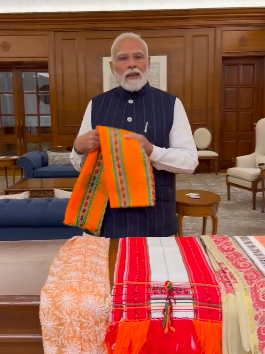
Hon’ble PM Shri @narendramodi Ji’s message on the eve of #NationalHandloomDay is a stirring tribute to the enduring spirit of Swadeshi and the exceptional craftsmanship of our master weavers.
From the iconic Sambalpuri, Bomkai, and Kotpad weaves of Odisha to the rich handloom… pic.twitter.com/sa6MiRul7H
— Mohan Charan Majhi (@MohanMOdisha) August 6, 2026
In a message shared on social media, the Prime Minister highlighted the historical importance of August 7, 1905, the day the Swadeshi Movement began during the freedom struggle against British rule. He said the occasion reflects the spirit of self-reliance and encourages people to support Indian artisans.
PM Modi appealed to young people to purchase handloom products and share their experiences through social media, including “Get Ready With Me” videos showcasing traditional handloom clothing.
He said celebrating National Handloom Day is a way of recognising the efforts of weavers and supporting families involved in preserving India’s rich textile heritage.
The Prime Minister also emphasised that handloom products represent the skill, dedication and cultural identity of artisans across the country. He said choosing handloom items supports the “Vocal for Local” initiative and contributes to the vision of an Aatmanirbhar Bharat.
National Handloom Day is observed every year on August 7 to commemorate the launch of the Swadeshi Movement and highlight the contribution of India’s handloom sector.
- 0
- By Neel Achary

7, Aug 2026
Lumina Datamatics Completes Acquisition of TNQTech, Creating a Global Leader in Scholarly Publishing Solutions
MUMBAI, India, Aug. 7, 2026 /PRNewswire/ — Lumina Datamatics, a global leader in content, retail support, and technology solutions, today announced the completion of its acquisition of TNQTech, a leading Chennai-based publishing technology company. This transaction marks a significant milestone in Lumina Datamatics’ organic and inorganic growth strategy and positions the combined organization among the world’s largest providers of scholarly publishing solutions.

The announcement follows the signing of a definitive agreement in December 2024 to acquire an 80% controlling stake in TNQTech. With the acquisition of the remaining 20%, the transaction has now been completed, making TNQTech a 100% wholly owned subsidiary of Lumina Datamatics.
The combined entity brings together Lumina Datamatics’ global scale, customer relationships, technology expertise, and service excellence with TNQTech’s proven leadership in scholarly publishing technology and AI-enabled solutions. In addition, this acquisition will accelerate innovation, enhance operational efficiency, and deliver greater speed, quality, and value to publishers worldwide.
Sameer Kanodia, Vice Chairman and CEO, Lumina Datamatics & TNQTech, said:
“The successful acquisition of TNQTech marks a defining milestone in our journey. Together, we have created a leading global partner for scholarly publishing solutions, combining deep domain expertise with next-generation AI technologies to help publishers transform their businesses.”
He further added, “Our focus is on driving the next wave of growth through innovation, AI-led transformation, and strategic investments in technology. Integrating exceptional talent, complementary capabilities, and a shared vision for the future, we are uniquely positioned to accelerate product innovation, expand our global footprint, and deliver greater value to customers worldwide. We believe this combination creates tremendous opportunities to redefine how scholarly content is created, managed, enriched, and delivered in the years ahead.”
Mariam Ram, Founder and Director, TNQTech, said:
“Becoming a part of Lumina Datamatics is the right step for TNQTech. Our technology and domain expertise align perfectly with their scale and reach in scholarly publishing. I am confident TNQTech’s people, products and customers are now in the hands of a reliable, trusted organization that will carry our vision forward while driving the next phase of innovation and growth.”
The combined organization is uniquely positioned to support publishers across the entire content lifecycle—from manuscript submission, peer review, and editorial workflows to production, digital publishing, accessibility, analytics, and AI-powered content enrichment. Customers will benefit from an expanded portfolio of intelligent publishing platforms, domain expertise, automation capabilities, and global scale.
As the publishing industry continues to evolve, Lumina Datamatics remains committed to driving innovation and delivering technology-enabled solutions that help publishers improve efficiency, accelerate growth, and unlock new opportunities in an increasingly digital and AI-driven landscape.
About Lumina Datamatics
Lumina Datamatics is a trusted partner providing digital content services, retail support services, and technology solutions to companies in the publishing and retail industries worldwide. With 7,500+ employees across the US, UK, Germany, the Philippines, and India, the company serves 8 of the top 10 academic publishers, and 3 of the top 5 retailers and marketplaces, delivering AI-powered, technology-driven solutions that help customers accelerate innovation, improve efficiency, and drive business growth.
 View original content to download multimedia:https://www.prnewswire.com/in/news-releases/lumina-datamatics-completes-acquisition-of-tnqtech-creating-a-global-leader-in-scholarly-publishing-solutions-302845892.html

7, Aug 2026
Researchers Create the Most Complete DNA Profile of the Brown Rat to Date
Researchers have created the most complete genetic profile of the brown rat to date, according to a UTHealth Houston-led team, paving the way for scientists to more accurately research the genetic links to conditions like heart disease, kidney disease, high blood pressure, and stroke.
The research was published today in Cell Genomics and led by corresponding author Peter Doris, PhD, director of the Center for Human Genetics at The Brown Foundation Institute of Molecular Medicine within McGovern Medical School at UTHealth Houston.
The assembly of the brown rat’s genome provides a complete genetic fingerprint and reveals that the brown rat’s DNA is more complex than scientists previously understood. In addition to uncovering more than 60 new genes, many of which were previously difficult to sequence and are thought to play a role in immunity and other biological processes, the team discovered that brown rat sex chromosomes differ in a significant way from those in humans.
In humans, the X and Y chromosomes contain a region known as the pseudoautosomal region, or PAR, which plays a unique role in allowing the two dissimilar chromosomes to pair up and replicate. In most mammals, this region contains about 20 genes shared by both the X and Y chromosomes. This shared sequence is what allows these dissimilar chromosomes to match up and replicate.
Doris and his team found that these PAR genes have been lost from the X and Y chromosomes in the brown rat, indicating rats use a different mechanism to reproduce. The team found that the PAR genes have moved to the regular chromosomes and uncovered new sequences that cause the X and Y chromosomes to pair head to tail, rather than head to head as in most other mammals.
“Sexual reproduction in the rat can take place, but it’s not taking place in exactly the same way that it is in humans,” said Doris, who is the Mary Elizabeth Holdsworth Distinguished University Chair in Metabolic and Inflammatory Disease Research. “We wouldn’t have been able to discern that if we hadn’t had this complete, high-quality, and accurate sequencing of the genome.”
The findings have important implications for healthcare research, as scientists will now have a more accurate starting point during preclinical studies that use the brown rat.
“We know that there are genetic causes of diseases, but when we try to find out where in the genome they’re coming from, we kind of get lost,” Doris said. “Until now, it has been extremely difficult to recognize genetic differences because the assemblies that we were working with had missing pieces.”
Many of these pieces were regions in which genes have duplicated. The nearly identical copies could not be seen independently of each other prior to Doris’ work. Gene duplication is a key mechanism by which individual genomes, and the functions they encode, can differ.
The rat genome, or genetic fingerprint, is made up of 22 pairs of chromosomes, at each end of which is a sequence called a telomere. Doris’ research represents the first telomere-to-telomere assembly of the brown rat’s genome, providing complete, unbroken descriptions of each chromosome’s sequence.
Prior to this research, scientists were essentially trying to put together a complicated jigsaw puzzle without the photo you find on the puzzle box, Doris said.
“If the puzzle doesn’t come with a picture on the box, and if there are a lot of pieces in there that just look like pieces of blue sky, it’s very hard to know where to put those pieces,” he said.
Using the long-read assembly method, Doris and his team were able to create eight different reference-quality genome assemblies, allowing scientists to better understand genetic variations among different brown rats and to track down the genetic variation contributing to disease. Like in humans, individual rat genomes are unique. That means that one rat’s genome, or jigsaw puzzle, will have pieces that another rat’s “puzzle” does not have.
The eight reference strains allowed the team to create what’s known as a pangenome, which allows scientists to compare the genomes of multiple rats simultaneously. This pangenome adds 7% more sequence to the genome of the rat species.
“You can go into any particular place around any particular gene that you’re interested in, say, the protease gene that’s involved in digesting your steak dinner. Is that gene going to be the same in all of these animals, or could it be different?” Doris said. “Turns out, in some rats, the gene is specialized to do one job in digestion and another one in the immune system. Each function resides in the original and a recently duplicated copy of the gene. The pangenome gives you one place to go where you can capture all of the major differences that you’re likely to encounter. That’s a very, very valuable tool to have.”
Yaming Zhu, a research assistant in the Center for Human Genetics at The Brown Foundation Institute of Molecular Medicine with McGovern Medical School, also served as an author on the study.
Additional authors include: Theodore Samuel Kalbfleisch, PhD; Julia L. Ciosek, MS; and Kai Li of the University of Kentucky; Sergey Koren, PhD; Adam Phillippy, PhD; Brandon Pickett, PhD; Gerard Bouffard, PhD; and Shelise Y. Brooks of the National Institutes of Health; Melissa Smith, PhD; and William A. Lauer of the University of Louisville; and Beth Dumont, PhD, of The Jackson Laboratory.
7, Aug 2026
Dubai stays on course for record year in property rentals
In real estate sales, Dubai South ranked as the best-performing area for the fifth successive month

Dubai, UAE, Aug 07: The Dubai real estate market remains on course in 2026 to set a new all-time high for rental contracts recorded in one year.
A market analysis from fäm Properties today shows that 38,197 rental contracts were registered in July, 18,431 of these new agreements, with 19,766 renewals.
This takes the total number of rental contracts recorded for the first seven months in 2026 to 214,445, a 1.9% increase on the same period last year which ended with a record number of 377,660 registered contracts.
To date in 2026, reflecting a consistent preference for apartments in the market, 88,327 (41%) of tenancy contracts registered were for one-bedroom units.
Meanwhile, the market delivered 13,872 sales transactions valued at AED34.5 billion last month. Once again off plan sales dominated with 9,585 transactions worth AED 20.5 billion compared with 4,287 valued at AED14.0 billion in the resale market.
Data from DXBinteract shows Dubai South as the emirate’s best-performing area in sales volume for the fifth consecutive month, recording 2,351 transactions worth AED2.6 billion. Of these, 2,231 were off plan deals amounting to AED2.3 billion.
“The level of rental activity overall is a good sign of market resilience,” said Firas Al Msaddi, CEO of fäm Properties. “The volume of renewals alone shows that, regardless of regional uncertainty over the last few months, people still see Dubai as one of the best places in the world to live and work.”
July recorded 11,759 apartment sales worth AED 17.8 billion, alongside 1,322 villa sales worth AED 7.8 billion, 268 plot sales valued at AED 6.9 billion, and 515 commercial transactions, including offices and shops, worth AED 1.9 billion.
The most expensive apartment sold in July went for AED166 million at Aman Residences Tower 2 at Jumeirah Second, while the most expensive villa fetched AED73 million at The Oasis – Lavita.
With properties worth more than AED5 million accounting for 7% of sales, 8.2% were between AED3-5 million, 11.4% between AED2-3 million, 30.3% between AED1-2 million and 43.4% were below AED1 million.
BREAKDOWN OF RENTAL AGREEMENTS BY BEDROOMS TO DATE IN 2026
1 bed 88,327 41%
2 beds 49,894 23%
Studio 48,186 22%
3 beds 21,038 10%
4 beds 6,962 3%
TOP TEN AREAS BY RENTAL CONTRACTS REGISTERED TO DATE IN 2026
Al Warsan First 20,830
Jebel Ali First 18,478
Al Barsha South Fourth 16,489
Business Bay 13,728
Nadd Hessa
Marsa Dubai
Al Thanyah Fifth 8,976
Wadi Al Safa 5 7,269
Al Barsha South 3 7,186
Dubai Investment Park First 7,006
TOP FIVE PERFORMING AREAS IN SALES VOLUME JULY 2026
Dubai South
Al Barsha South Fourth 952 AED1.3B 535 AED603.5M
Jebel Ali
Wadi Al Safa 4 696 AED2.9B 677 AED2.0B
Jebel Ali First 640 AED1.4B 473 AED1.0B
7, Aug 2026
66% of India’s AI workers brace for headcount cuts, while engineers feel safer
Aug 07: Many tech workers believe AI will take their jobs, so they think the safe move is to work in AI. But the data says the opposite. In a survey of 1,552 India-based professionals by Blind, the anonymous community app for professionals, AI/ML roles report one of the highest perceived layoff fears of any function, with 66% expecting a layoff or significant headcount cut in their team within the next 3 to 6 months.
That puts AI/ML right next to the jobs everyone already assumes are most at risk. Sales/Marketing leads at 68%, with AI/ML (66%) and Product/Design (65%) close behind. Moving into AI/ML does not make you safer. These workers feel just as at risk as the ones they thought AI would replace.
Engineering is another job people expected AI to take first, but it turned out to be one of the safest. Only 24% of engineers say a cut is “very likely,” the lowest of any function, and overall at-risk sentiment (58%) is below the survey average. Data/Analytics’ at-risk sentiment falls to 51%, and 4 in 10 of its workers call a cut unlikely, the highest of any team. The two functions AI was believed to replace feel safer than the team building it.
The split is just as sharp by company. Salesforce (81%) and Oracle (80%) sit at the top, followed by Uber (77%) and PayPal (75%). Two of India’s own SaaS firms sit at the other end, with Zoho at 9% and Freshworks at 44%. The companies where workers feel most at risk are the enterprise software and payments firms.
The fear does not come from direct layoffs. It comes from the quiet signs before them. Among workers who expect a headcount cut, hiring freezes (27%) and budget or headcount-target cuts (24%) are the strongest signals they point to. Formal layoff announcements account for just 9%.
In a Blind post on engineers’ job prospects in India, one Coinbase professional put it bluntly: “ML is honestly dead too… The best you can do is augment your current skills for backend AI pipelines. And ride it out as long as you can.” An Avalara professional went further: “the only safe ML guys are the ones with phd at deep mind.”
Methodology Blind surveyed 1,552 India-based professionals in July 2026 on perceived job security across teams and functions. Companies with fewer than 10 responses were excluded from company-level analysis. Response breakdowns are as follows:
Q1. Which team or function do you currently work in?
-
Engineering (39%)
-
AI / ML (25%)
-
Product / Design (9%)
-
Data / Analytics (6%)
-
Sales / Marketing (7%)
-
Operations / Support / G&A (7%)
-
Other (7%)
Q2. In the next 3-6 months, how likely is a layoff or significant headcount cut in your team?(“At-risk” = “Very likely” + “Somewhat likely”)
-
Very likely (29%)
-
Somewhat likely (30%)
-
Unlikely (17%)
-
Very unlikely (12%)
-
Don’t know (12%)
Q3. Which signal is the strongest driver of your read on your team’s risk? (full sample; figures cited in the release are among at-risk respondents only)
-
Hiring freeze (26%)
-
Budget or headcount targets cut (21%)
-
Projects cancelled or deprioritized (12%)
-
Rising PIP / bench policy (11%)
-
Formal layoffs already announced (7%)
-
No warning signals right now (24%)
Disclaimer: This article is published for informational purposes based on data and statements attributed to Blind and does not independently verify the survey findings or claims. The views, statistics and opinions presented are those of the cited source and respondents, and should not be construed as the publisher’s views.
7, Aug 2026
Goa Tourism Explores Stronger Cultural & Spiritual Tourism Ties with Gujarat at TTF Ahmedabad 2026
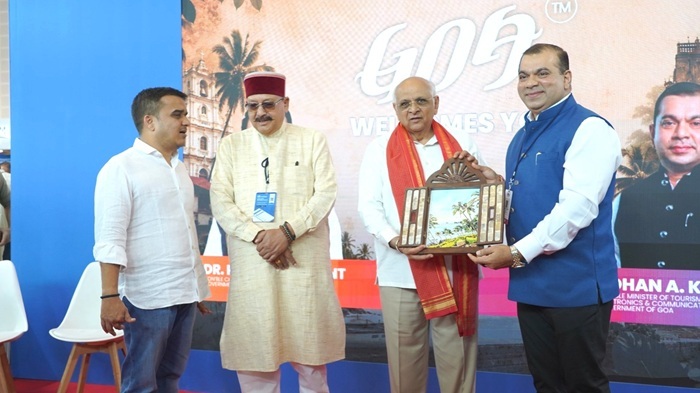
Gandhinagar, Aug 06: Reinforcing its commitment to expanding tourism partnerships across Western India, the Department of Tourism, Government of Goa, marked a successful opening at TTF Ahmedabad 2026 with the inauguration of the Goa Pavilion by the Hon’ble Chief Minister of Gujarat Shri Bhupendra Patel, alongside Hon’ble Minister for Tourism, Government of Goa, Shri Rohan A. Khaunte, in the presence of Hon’ble Deputy Chief Minister of Gujarat Shri Harsh Sanghavi, Hon’ble Tourism Minister of Uttarakhand Shri Satpal Maharaj, senior government officials and tourism stakeholders.
The inaugural ceremony reflected the growing collaboration between the states in promoting domestic tourism and creating integrated travel experiences. During the interactions, Goa and Gujarat also explored deeper collaboration, including the possibility of an MoU to promote cultural and spiritual tourism exchanges, aimed at strengthening tourism ties and encouraging greater visitor movement between the two states.
Led by Hon’ble Tourism Minister Shri Rohan A. Khaunte, Goa’s delegation comprised senior officials from the Department of Tourism, Goa Tourism Development Corporation (GTDC), leading hotels and resorts, destination management companies, travel agencies and hospitality stakeholders, collectively showcasing the state’s evolving tourism ecosystem and engaging with travel trade professionals from across the country.
The Goa Pavilion emerged as one of the key attractions on the opening day, drawing strong interest from tour operators, travel companies, destination wedding planners, MICE organisers, hospitality stakeholders and visitors. The pavilion highlighted Goa’s diverse tourism offerings, including destination weddings, MICE, spiritual tourism, wellness, culinary experiences, adventure tourism, hinterland circuits and regenerative tourism initiatives, reinforcing the state’s positioning as a year-round destination.
Speaking on the occasion, Hon’ble Minister for Tourism, Government of Goa, Shri Rohan A. Khaunte, said: “We are grateful to the people of Gujarat for their continued love and trust in Goa as one of their preferred travel destinations. Gujarat remains a key source market for us, and TTF Ahmedabad provides an important platform to strengthen partnerships with the travel trade while exploring new avenues of collaboration, including cultural and spiritual tourism. Alongside our globally recognised beaches, Goa today offers avenues for world-class destination weddings, immersive spiritual circuits such as the Ekadasha Teertha Yatra, vibrant hinterland experiences and community-led tourism initiatives that encourage visitors to discover a deeper side of the state. Going forward, enhanced air connectivity between Gujarat and Goa will play a pivotal role in unlocking greater tourism potential and creating wider economic opportunities for both regions.”
A major highlight at this year’s exhibition was Goa’s emphasis on destination weddings and MICE tourism, supported by premium hospitality infrastructure, luxury resorts, heritage venues, modern convention facilities and seamless connectivity through both Manohar International Airport and Goa International Airport. The Department also showcased the recently launched Ekadasha Teertha Yatra, a curated spiritual circuit connecting eleven ancient temples across Goa, alongside the state’s growing wellness, culinary and adventure tourism offerings that encourage visitors to explore Goa beyond its beaches.
Throughout the exhibition, Goa Tourism and its industry partners held a series of productive business meetings, buyer-seller interactions and networking sessions focused on strengthening trade partnerships, expanding market outreach and promoting Goa’s diverse tourism experiences to domestic and international travellers. The Department’s participation at TTF Ahmedabad forms part of its long-term strategy to diversify tourism offerings, encourage longer visitor stays, strengthen interstate collaborations and advance sustainable and regenerative tourism that creates lasting value for local communities and the tourism ecosystem.
7, Aug 2026
Live Times Honoured with “Fastest Emerging Hindi News Channel” Award at 12th BCS Ratna Award – 2026
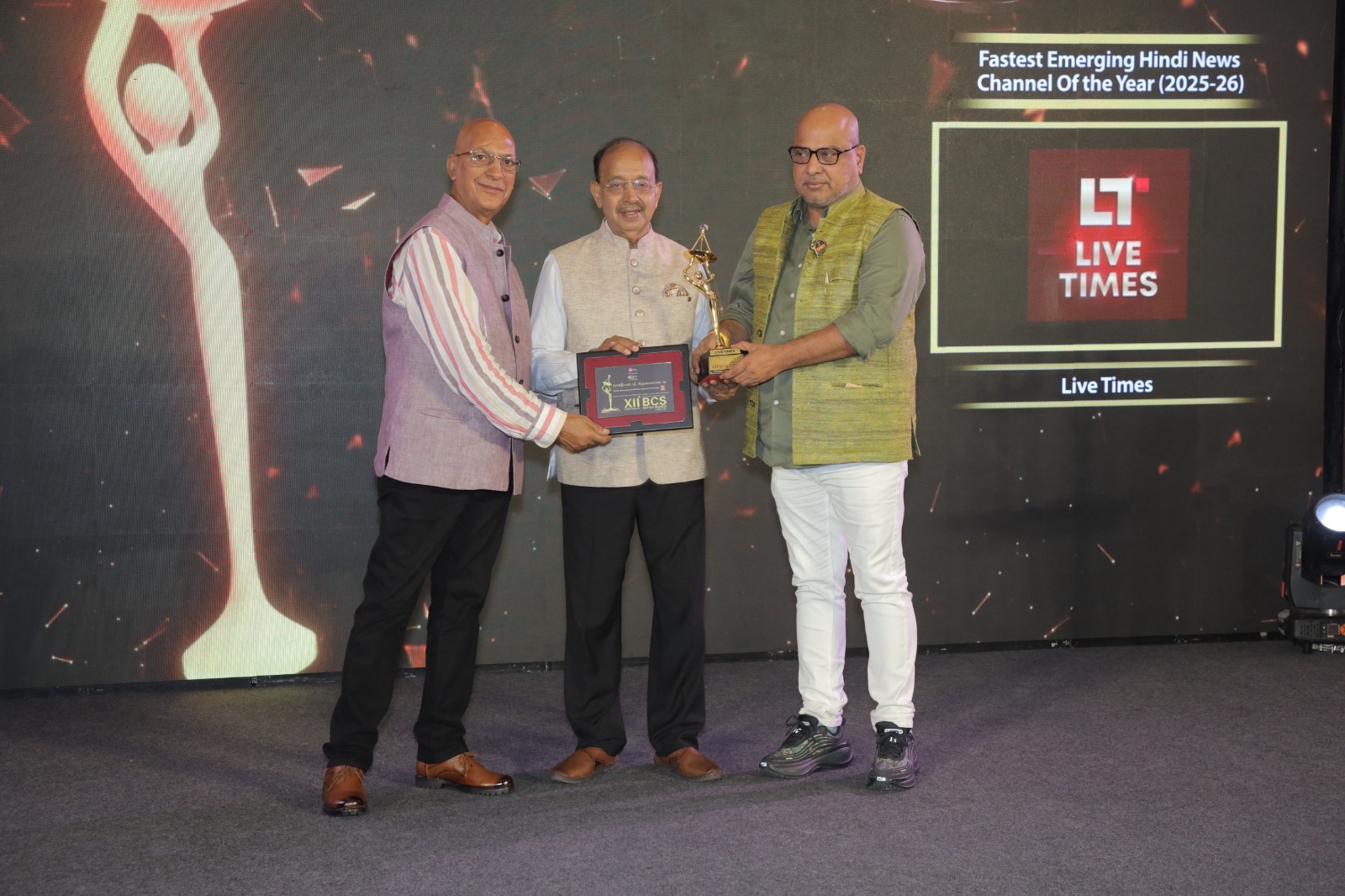
New Delhi, Aug 07: India’s First Global Multicast News Hub – Live Times, has been conferred with the coveted “Fastest Emerging Hindi News Channel” title at the 12th BCS Ratna Award – 2026, held at Hotel The Lalit, New Delhi. The award was received by Dilip Singh, Founder & CEO of Live Times, in recognition of the channel‘s rapid growth, credible journalism, and expanding viewership across India and international markets since its launch.
The BCS Ratna Award is regarded as one of the industry’s most respected honours, celebrating excellence, innovation, and impact across the broadcasting and media landscape. This year’s edition brought together prominent voices from television, digital media, and journalism to recognise organisations driving meaningful change in how news is delivered to audiences.
Speaking on the recognition, Dilip Singh, Founder & CEO, Live Times, said, “This recognition belongs to Team Live Times and our viewers and users across television and digital. The growth and the trust reflects the relentless efforts by the team Live Times to deliver truth to each of our users and viewers. In a very short span of time, emergence of Live Times as a fastest growing Hindi News Channel in India also negates that the fake and deep -fake cannot be defeated.
The award validates our commitment to delivery of complete truth whatever it takes. We remain committed to expanding our reach while staying true to our founding values.”
Since its launch, Live Times has positioned itself as a digital-first, 24×7 satellite news channel, guided by the value of “Satyam Shivam Sundaram” and a mission to deliver truth-based news amid rising concerns around misinformation and deepfake content. The channel‘s swift expansion across satellite, IPTV, OTT, and digital platforms has been central to its recognition as one of the fastest-growing Hindi news channels in the country.
The “Fastest Emerging Hindi News Channel” title adds to Live Times‘ growing list of milestones as it continues to strengthen its presence across linear television, connected TV, and social media platforms, reaching audiences in India and abroad.
Viewers can watch Live Times on:
Satellite (Linear) TV – Tata Play (Ch. 539), Dish TV (Ch. 665), Airtel Digital TV (Ch. 385), DD Free Dish (Ch. 100), Jio TV (Ch. 539), Sikka Cable (Ch. 319)
International – USA & Canada on UVOtv
IP TV – Airtel Digital TV
OTT Platforms – Tata Play, Airtel Xtreme, DD Waves, OTT Play, Neo TV+, Jio TV, VI Movies & TV, Amazon Fire TV
7, Aug 2026
Infosys to Accelerate IT System Transformation for Crocs, Inc., Optimizing Global Operational Capabilities to Scale for Future Growth
Tom Britt, Chief Information Officer, Crocs, Inc. said, “As our organization reimagines its IT landscape, we sought a collaborator who could combine deep domain expertise with a commitment to innovation and operational excellence. By leveraging Infosys’ proven delivery frameworks and advanced automation capabilities, we will optimize operations, reduce costs and scale responsibly—while driving continuous improvement and building a foundation for sustainable growth and digital resilience that positions Crocs, Inc. for the future.”Karmesh Vaswani, EVP & Global Head, Consumer, Retail & Logistics, Infosys said, “The retail industry is at an unprecedented inflection point, where new AI augmented, digital imaginations can be industrialized rapidly. Crocs, Inc. is making a bold commitment to digital transformation. We are proud to collaborate with a global footwear business that’s willing to reimagine its operations from the ground up. Our AI-first approach will drive purposeful performance improvements unlocking AI value across Crocs, Inc.’s global operations, scale unique innovations and accelerate profitable growth in this fast-changing global retail landscape.”
6, Aug 2026
Seaspan Becomes First International Ship Owner and Operator to Access China’s Panda Bond Market
SINGAPORE, Aug. 6, 2026 /PRNewswire/ — Seaspan Corporation Pte. Ltd. (“Seaspan”), a leading independent maritime asset owner and operator, is pleased to announce the successful issuance of a RMB 1.5 billion Panda Bond in China’s domestic bond market.

The three-year private placement note was issued on July 15, 2026, with a coupon rate of 2.50% per annum. The offering was oversubscribed by Chinese onshore and international investors with a book coverage ratio of 2.3 times.
The transaction is a significant milestone for Seaspan as the first international ship owner and operator to successfully access the Panda Bond market.
Beyond establishing a new funding channel, the transaction supports Seaspan’s strategy to diversify its sources of capital and broaden its access to unsecured debt, strengthening the company’s ability to invest in its fleet, pursue growth opportunities, and create long-term value for customers and stakeholders.
“The issuance demonstrates the confidence that investors have in Seaspan’s credit quality, business model, strong financial profile, and sustainable growth strategy,” said Andreas Brauch, Chief Financial Officer. “Expanding our access to China’s domestic capital markets further diversifies our funding sources and improves our access to cost-efficient capital, enhancing our long-term growth objectives to support our customers with one of the world’s largest and most modern fleets.”
The Panda Bond issuance marks an important highpoint in Seaspan’s participation in Chinese capital markets, where the company has strategic partnerships across the maritime ecosystem, including chartering, shipbuilding, financing, and maritime services.
About Seaspan Corporation Pte. Ltd.
Seaspan is the world’s leading maritime asset-owner and operator focused on long-term, fixed-rate leases to the world’s most prominent shipping lines. As of June 30, 2026, Seaspan’s operating fleet consisted of 247 vessels, pro forma for undelivered newbuilds (including four Pure Car, Truck Carriers, five Very Large Ethane Carriers and four Open Hatch Gantry Crane vessels), with a total fleet capacity of approximately 2.5 million TEU on a fully delivered basis.
Media Contact: Cailey Murphy, Head of Corporate Communications, Seaspan Corporation Pte. Ltd., communications@seaspancorp.com
 View original content to download multimedia:https://www.prnewswire.co.uk/news-releases/seaspan-becomes-first-international-ship-owner-and-operator-to-access-chinas-panda-bond-market-302845399.html

6, Aug 2026
Solidion Technology Achieves Dramatic Balance Sheet Improvement, Increased Revenues
Private Placement Eliminates Balance Sheet Overhang and Alleviates Previously Disclosed Going Concern Doubt
DALLAS, Aug. 6, 2026 /PRNewswire/ — Solidion Technology Inc. (“Solidion” or the “Company”) (Nasdaq: STI), an advanced battery technology solutions provider, today has released Second Quarter 2026 Financial and Operating Results. The condensed consolidated financial statements of Solidion and additional information can be found in Solidion’s Form 10-Q, filed with the Securities and Exchange Commission, August 6, 2026 (the “Form 10-Q”). This earnings release should be read together with the information contained in the Form 10-Q.

Previously Announced Recent Business Highlights
Business Development
- Successful demonstration of a high-power 9.5Ah pouch cell designed for industrial and military drone applications. The prototype delivered exceptional power stability, retaining approximately 95% of its capacity at a 10C discharge rate, a significant improvement over typical market pouch cells, which average 78% retention at 5C. Solidion expects to make the pouch cell commercially available in Q2 2026. Solidion is working toward commercial availability of the pouch cell and will provide updates as development progresses.
- The Company unveiled its new PEAK Series, an advanced UPS battery system engineered specifically for AI data centers, leveraging the Company’s high-performance 5500 silicon-carbon anode cell. The system delivers up to 30% space savings, significantly lower total cost of ownership, and up to three times longer life than conventional backup solutions. Commercial availability is expected in 2026, with Solidion currently working with select data center partners on early integration and testing.
Technological Advancements, Business Development and Corporate Updates:
- $35 Million Private Placement (June 7, 2026): Solidion announced a securities purchase agreement with a new institutional investor for 750,000 shares of common stock and pre-funded warrants to purchase 1,583,000 shares in a private placement priced above market under Nasdaq rules, generating $35 million in gross proceeds and closing on June 9, 2026. Net proceeds are earmarked to accelerate commercialization of the Company’s patented Extreme-Climate Battery technology, fulfill customer demand, expand inventory, advance prototype development, and support general working capital needs, with Titan Partners, a division of American Capital Partners, serving as sole placement agent.
- Gen-ECB / Space Battery Technology (June 4, 2026): Solidion unveiled its patented Generation Extreme-Climate Battery (Gen-ECB) platform, engineered to power satellites, LEO-based AI data centers, crewed spacecraft, and future lunar infrastructure as commercial space activity accelerates. The technology leverages graphene’s thermal conductivity and radiation resistance to actively manage cell temperature, enabling reliable operation from −80°C to +60°C and demonstrating over 500 charge cycles at −40°C — a key durability benchmark for missions like NASA’s Artemis program. Paired with the Company’s silicon-rich solid-state, anode-less lithium metal, and lithium-sulfur chemistries (targeting 380+ Wh/kg), the platform positions Solidion — backed by its 385+ patent portfolio — to supply high-reliability, domestically sourced power storage for satellites, Starship operations, and lunar surface systems, diversifying its revenue opportunity alongside its existing EV and AI data center UPS markets.
- The Company previously announced that it has entered into a non-binding Memorandum of Understanding with an entity that manufactures and distributes energy storage systems.
- The Company has been awarded a grant to advance research and development of Electrochemical Manufacturing of High-Performance Graphite Based on Biomass-Derived Carbon. This award is one of the projects funded by ARPA-E, the Advanced Research Projects Agency, from their highly competitive OPEN program.
- The Company has been awarded a grant to scale up the synthesis of a carbon-nanosphere material that will be used as an anti-corrosive additive in molten-salts-based heat transfer fluids for advanced molten salt nuclear reactors from the U.S. Department of Energy (DOE).
- The Company has been awarded a grant to develop an advanced fiber-based electronic battery system built on a coaxial carbon nanotube (CNT) yarn architecture from the U.S. Department of War/Army STTR Program.
- Solidion Technology completed a major restructuring of its August 2024 equity financing, eliminating all Series C and D Pre-Funded Warrants, along with the corresponding derivative liability, significantly strengthening the balance sheet and reducing future dilution risk. Long-term investors Madison Bond LLC and Bayside Project LLC converted their entire warrant allocation into common stock, and agreed to lock-up restrictions on those shares, subject to certain exceptions, which supports shareholder alignment and Solidion’s long-term growth strategy.
CEO Statement:
“Solidion’s much improved balance sheet reflects the commitment of long term shareholders and reaffirms the strategy of building an organization that can compete revenue wise,” said Jaymes Winters, Chief Executive Officer of Solidion Technology.
Q2 2026 Financial Highlights
- $27.7 million in cash and cash equivalents at June 30, 2026, compared to $0.2 million at December 31, 2025. Following the completion of the private placement, the substantial doubt about the Company’s ability to continue as a going concern previously disclosed has been alleviated.
- $124,914 in revenue from government grants and delivery of Solidion’s proprietary silicon anode products.
- $1.4 million loss from continuing operations, reflecting decreased spending on professional services and other public company expenses.
- Net Loss of $2.9 million, or $0.35 per basic share, including a non-cash loss of $0.9 million related to change in fair value of derivatives.
See below for additional information on Solidion’s operational results:
Summary of Statements of Operations for the Three Months Ended June 30, 2026 and 2025
|
For the Three Months |
||||||||
|
2026 |
2025 |
|||||||
|
Net sales |
$ |
124,914 |
$ |
4,000 |
||||
|
Cost of goods sold |
– |
2,327 |
||||||
|
Operating expenses |
1,492,251 |
1,788,797 |
||||||
|
Total other expense |
(1,519,419) |
(326,735) |
||||||
|
Net loss |
$ |
(2,886,756) |
$ |
(2,113,859) |
||||
Net Sales
Net sales increased by $120,914 for the three months ended June 30, 2026, to $124,914, compared to $4,000 for the three months ended June 30, 2025. The increase was primarily attributable to government grant revenue recognized during the period.
Operating Expenses
Operating expenses decreased by $296,546 for the three months ended June 30, 2026. This decrease was primarily driven by lower general and administrative costs, including reduced personnel and professional services expenses. Additionally, there were decreased research and development costs, including personnel expenses associated with the commercialization of our battery cell products and third-party validation testing of our proprietary silicon anode.
Other Income (Expense)
Other expense increased by $1,192,684 for the three months ended June 30, 2026. This increase was largely driven by a loss of $917,780 due to a change in the fair value of derivative liabilities related to the Forward Purchase Agreement and warrants related to the March private placement financing, compared to a loss of $216,150 in the three months ended June 30, 2025. Other expense for the quarter also included a $549,915 non-cash write-off of deferred offering costs associated with a registration statement the Company withdrew in June 2026, and interest expense of $153,597 primarily related to the Company’s short-term notes.
About Solidion Technology, Inc.
Headquartered in Dallas, Texas with pilot production facilities in Dayton, Ohio, Solidion’s (NASDAQ: STI) core business includes manufacturing of battery materials and components, as well as development and production of next-generation batteries for energy storage systems, including UPS systems serving the artificial intelligence (AI) data center market and electric vehicles for ground, aerospace, and sea transportation. Solidion holds a portfolio of over 385 patents, covering innovations such as high-capacity, silane gas free and graphene-enabled silicon anodes, biomass-based graphite, advanced lithium-sulfur and lithium-metal technologies.
For more information, please visit www.solidiontech.com or contact Investor Relations.
Forward-Looking Statements
This press release contains forward-looking statements within the meaning of the Private Securities Litigation Reform Act of 1995. Solidion Technology Inc., (NASDAQ: STI) (the “Company,” “Solidion,” “we,” “our” or “us”) desires to take advantage of the safe harbor provisions of the Private Securities Litigation Reform Act of 1995 and is including this cautionary statement in connection with this safe harbor legislation. The words “forecasts” “believe,” “may,” “estimate,” “continue,” “anticipate,” “intend,” “should,” “plan,” “could,” “target,” “potential,” “is likely,” “expect” and similar expressions, as they relate to us, are intended to identify forward-looking statements. We undertake no obligation to publicly update any forward-looking statements, whether as a result of new information, future developments or otherwise, except as may be required by law.
 View original content to download multimedia:https://www.prnewswire.co.uk/news-releases/solidion-technology-achieves-dramatic-balance-sheet-improvement-increased-revenues-302845452.html



