


6, Aug 2026
Tenable Launches Industry’s First Open-Source AI Agent Exchange to Advance Collective Cyber Innovation and Defense
The CyberAgents Exchange, powered by Tenable, introduces a vendor-agnostic community for security practitioners to discover, share and build trusted AI components
Dubai, UAE | Aug 06: — Tenable® Holdings, Inc. (NASDAQ: TENB), the exposure management company, today launched the CyberAgents Exchange, a new open-source AI exchange created to foster industry collaboration and improve collective cyber defense. The CyberAgents Exchange, powered by Tenable, is the only purpose-built, cybersecurity-native registry for AI agents, skills, MCP servers and multi-agent playbooks in the current market.
Security teams are increasingly turning to AI to scale security operations and manage risk overload, but end up building AI agents in isolation, repeatedly reinventing the wheel. Existing AI exchanges are either general-purpose or vendor-gated, forcing security teams to wade through irrelevant use cases, waste time on duplicate design and build efforts, or accept restrictive vendor lock-in. To improve the cybersecurity industry’s collective defense and outpace AI-generated threats, defenders need a unified, cyber-specific hub to accelerate development and share collective agentic tooling.
The CyberAgents Exchange eliminates these development silos and empowers industry collaboration with a truly open, free-to-use exchange. Built for trust and transparency, the Exchange provides code-level visibility into who built each AI component, when it was created and its peer-supported status. This transparency enables members to deploy AI components tailored to their specific organizational needs confidently. Additionally, the Exchange is a career asset for practitioners to build verifiable expertise in an emerging discipline and develop a catalog of peer-supported AI components.
“The CyberAgents Exchange fills a major and pressing industry need, especially as cybersecurity remains a growing issue and AI-enabled attacks rise,” said Seth Fogie, Director of Security for Baptist Memorial Health Care. “Its core philosophy of working together is what made the threat intelligence community so invaluable. My team has benefited greatly from the Exchange, and we look forward to contributing and collaborating with the wider community.”
Underscoring the industry’s commitment to collaborative, open-source AI defense, industry leaders SentinelOne and Recorded Future have joined the initiative as founding members of the CyberAgents Exchange. By contributing their deep expertise in autonomous security operations and threat intelligence, these industry pioneers will help anchor the Exchange as a truly unified, vendor-agnostic ecosystem. As founding members, both organizations will actively contribute secure AI agents, integration frameworks and playbooks to accelerate the community’s defense capabilities against rapidly evolving AI-driven threats.
More than 50 AI components, released under open-source licenses, are available, including:
● Navi (Agent): A command-line tool that leverages the Tenable One Vulnerability Management APIs to automate common vulnerability management and cyber exposure workflows.
● SentinelOne Purple AI (MCP Server): Allows users to access SentinelOne services with any MCP client.
● Recorded Future MITRE APT Attack Path Analysis (Skill): Pulls an organization’s Recorded Future threat map, maps an APT group’s MITRE ATT&CK techniques and cross-references against live Tenable findings to identify which attack path nodes are actively exploitable.
● SOC-Hunter (Skill): Leveraged daily by Tenable’s internal security operations team, SOC-Hunter provides proactive, hypothesis-driven threat hunting using the LOCK pattern across SIEM, EDR, VM, CSPM, CASB and code search.
● The Hounds Pack (Playbook): A skill-packaged playbook for The Hounds — 18 exposure-management specialists that hunt, tag and calibrate risk.

“Security is a team sport. We’ve addressed a gaping hole in the ecosystem of AI Agents, built for defenders, by defenders. With the CyberAgents Exchange, we’re creating a collaborative ‘town square’ where cybersecurity practitioners can build, test, improve and share the best in agentic defense,” said Vlad Korsunsky, Chief Technology Officer, Tenable. “With our deep roots in the open source community and our global ecosystem of customers and partners, Tenable is uniquely positioned to steward this collaborative effort to help scale security teams’ capabilities and outpace evolving threats.”
“To truly scale defenses against autonomous, AI-driven threats, the security community must move past isolated development and vendor-locked silos,” said Braden Preston, vice president of product management, SentinelOne. “As a founding member of the CyberAgents Exchange, SentinelOne is proud to champion a transparent, open-source foundation for agentic security. By sharing trusted, autonomous components and collaborative playbooks, we are empowering security teams globally to innovate faster, defend smarter and outpace modern adversaries together.”
“Joining the CyberAgents Exchange as a founding member lets us bring world-class threat intelligence directly into the open-source frameworks security teams are building today,” said Jamie Zajac, Chief Product Officer at Recorded Future. “But the promise of AI agents in security depends entirely on whether they can be trusted. Intelligence doesn’t just make agents smarter. It makes them traceable, auditable and repeatable. That’s the foundation the community needs to build autonomous defense that’s not only fast, but reliable.”
The Tenable CyberAgents Exchange is a free, open-source community with no fees for listing or using agents.
- 0
- By Neel Achary

6, Aug 2026
HGS’ Broadband Vertical Wins ‘Best Future Ready Network of the Year 2025–26’ at the 12th BCS Ratna Awards
Mumbai, Aug 06: ONEOTT iNTERTAINMENT Ltd. (OIL), one of India’s leading Internet Service Providers and the broadband vertical of Hinduja Global Solutions (HGS) has been conferred with the prestigious “Best Future Ready Network of the Year 2025–26” at the 12th BCS Ratna Awards. The award cites OIL’s consistent innovation in technology and leveraging its vast partner-driven network to build a model for the future. Since 2010, the BCS Ratna Awards has been India’s definitive recognition of excellence in broadcasting, cable, satellite and digital media.
In line with HGS’ strategic proposition anchored around AI-led Intelligent Experience, OIL has been focusing on harnessing the 3A’s, Artificial Intelligence, Analytics and Automation to build out an integrated connectivity mesh across the country. The mesh extends across terrestrial platforms layered with SDWAN capabilities to broadband-over-satellite.
CelerityX, the enterprise business of OIL, has been consistently adding prestigious logos to its network across the last year while adding over 5,000 dedicated enterprise links to its network.
OIL is also the enabler and knowledge partner for the unique and transformative digital initiative – Project GANGA, launched by the Government of Uttar Pradesh on June’26. The state-wide digital inclusion initiative is tasked with identifying, training and developing 8,000 – 10,000 youth, especially women, into Digital Service Providers – who are projected to connect over 20 lakh households with high-speed broadband over the next couple of years.
HGS’ digital media business – NXTDIGITAL Media Group, connects over five million homes, operates across 4,500+ pin codes covering 1,500 cities and towns and has a partner base exceeding 15,000.
6, Aug 2026
Envision Commissions Galaxy Campus in Ulanqab, Establishing a New Model for Gigawatt-Scale AI Infrastructure
Featuring the world’s largest single AI data center building, Galaxy Campus integrates renewable energy, intelligent power management and high-density computing at unprecedented scale.
ULANQAB, China, Aug. 6, 2026 /PRNewswire/ — Envision, a global leader in green technology, today announced the commissioning of the Envision Galaxy Campus in Ulanqab, Inner Mongolia, a next-generation AI infrastructure campus designed to accelerate the deployment of large-scale artificial intelligence. Powered directly by renewable energy and designed to scale to over 2GW of capacity, the campus in Ulanqab introduces a new approach to meeting the growing energy and infrastructure demands of AI.
At the heart of the campus is a 120,000-square-meter AI supercomputing facility, equivalent to 20 standard football pitches. Once fully operational, it is designed to deliver industry-leading token-generation capacity within a single structure, supported by directly connected renewable electricity and Envision’s proprietary AI Power System.
At full build-out, the facility is designed to deliver one million PFLOPS of AI computing and support up to one million AI accelerators, setting a new benchmark for compute density in AI infrastructure.
“Supporting a million accelerators requires a purpose-built AI Power System that integrates renewable generation, dedicated transmission infrastructure, and large-scale energy storage to deliver stable, low-cost green power,” said Ricky Zheng, General Manager of Envision’s AIDC (AI Data Center). “This enables the facility to deliver up to ten times more compute output per square meter than conventional data centers.”
Beyond power, Envision Galaxy Campus addresses another critical requirement for large-scale, low-latency connectivity. Ulanqab’s position as a major digital infrastructure hub provides the network performance required for AI clusters containing hundreds of thousands of accelerators.
The region’s abundant wind and solar resources provide a complementary advantage. By combining dedicated renewable energy assets, transmission infrastructure and AI-optimized power management, Envision has created a new model for gigawatt-scale AI infrastructure powered directly by green electricity.
“The next frontier of AI is infrastructure,” added Zheng. “As AI models become larger and more compute-intensive, the limiting factors are increasingly power availability, network performance and energy efficiency. Envision Galaxy Campus combines energy, networking and physical infrastructure at unprecedented scale, enabling hyperscalers, technology companies and AI innovators to deploy and scale the next generation of AI workloads.”
The Galaxy Campus serves as the first flagship project under Envision’s global Mission Gobi initiative, which was unveiled at VivaTech in Paris in June 2026. The initiative aims to build 5GW of green AI computing capacity in desert and arid regions worldwide by 2030.

 View original content to download multimedia:https://www.prnewswire.co.uk/news-releases/envision-commissions-galaxy-campus-in-ulanqab-establishing-a-new-model-for-gigawatt-scale-ai-infrastructure-302844855.html

6, Aug 2026
KuCoin Pay Expands Stablecoin Utility With an Enterprise Gift Card Solution
PROVIDENCIALES, Turks and Caicos Islands, Aug. 6, 2026 /PRNewswire/ — KuCoin Pay, the cryptocurrency payment solution enabled by KuCoin, today announced the launch of KuCoin Gift Card, a scalable digital asset distribution solution that enables businesses to distribute USDT and USDC globally through digital gift cards, with support for bulk issuance and API integration. Designed for customer rewards, promotional campaigns, employee incentives and community engagement, the solution simplifies how businesses deliver digital value across users, markets and use cases while making stablecoin distribution more accessible and operationally efficient.

Businesses can use KuCoin Gift Card to send crypto directly to customers, partners, employees and community members without adding operational complexity. Recipients can redeem the gift cards and receive the corresponding assets through KuCoin, creating an experience that is as intuitive as traditional digital gifting while lowering barriers to crypto adoption.
Beyond redemption, recipients can continue to hold, transfer or use the assets across supported scenarios within the KuCoin ecosystem. By connecting, sending, receiving and continued use, KuCoin Gift Card creates a more complete digital asset experience rather than limiting the value to a single transaction. Bulk issuance and API integration also allow businesses to embed crypto transfers into customer acquisition, loyalty programs, promotional campaigns, community engagement and employee recognition.
“The next phase of crypto adoption will be driven not only by how people trade digital assets, but by how easily they can exchange and use them in everyday economic activity,” said Alicia Kao, Managing Director of KuCoin. “KuCoin Gift Card transforms crypto distribution into a simple, scalable experience for businesses while connecting every transfer to broader utility across the KuCoin ecosystem. By combining KuCoin Pay’s merchant infrastructure with KuCoin’s broader ecosystem, we are building a more complete value loop across sending, receiving and using digital assets—making crypto more practical for businesses and more accessible to users.”
The launch advances KuCoin Pay’s evolution into an infrastructure layer that enables digital value to move more easily between businesses and users. As stablecoins continue to expand their role in global commerce, KuCoin Pay is focused on building trusted payment and distribution infrastructure that helps businesses unlock practical, real-world utility for digital assets.
About KuCoin Pay
KuCoin Pay is a pioneering merchant solution that drives business growth by integrating cryptocurrency payments into retail. It offers a contactless and borderless payment system using a variety of cryptocurrencies and stablecoins. KuCoin Pay supports more than 50 cryptocurrencies, including KCS, USDT, USDC, BTC, which users can use to seamlessly pay for global products and services for both online and in-store purchases. Learn more about KuCoin Pay.
Learn more: www.kucoin.com/pay

Photo – https://mma.prnewswire.com/media/3008661/image1.jpg
Logo – https://mma.prnewswire.com/media/2785613/KuCoin_new_Logo.jpg
 View original content:https://www.prnewswire.co.uk/news-releases/kucoin-pay-expands-stablecoin-utility-with-an-enterprise-gift-card-solution-302842239.html

6, Aug 2026
Afcons receives LoA for ₹1,918-cr desalinated water tunnel project in Mumbai
Manori-to-Mahavir Nagar tunnel critical to boost Mumbai’s water supply
MUMBAI, India, Aug. 6, 2026 /PRNewswire/ — Afcons Infrastructure Ltd has announced that it has received the Letter of Acceptance (LoA) from the Brihanmumbai Municipal Corporation (BMC) for the Design and Construction of a Desalinated Water Conveyance Tunnel from the proposed Water Pumping Station at Manori to Charkop, extending further to Mahavir Nagar (Kandivali), Mumbai. The project is valued at ₹1,918 crores, including GST and O&M.
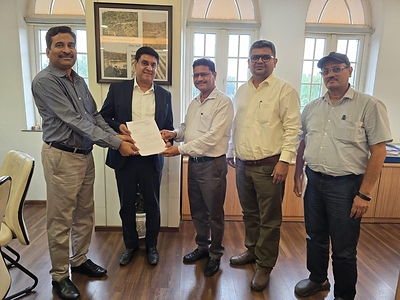
Mr. Krishnamurthy Subramanian, Executive Chairman, Afcons Infrastructure Ltd, said, “The desalinated water conveyance tunnel is a critical step towards ensuring sustainable water supply for Mumbai and stands as a testament to our engineering excellence and execution capabilities.”
Mr. S Paramasivan, Managing Director, Afcons Infrastructure Ltd, said, “We are honoured to partner with BMC once again. Alongside the Kasheli–Mulund water conveyance tunnel, this complex desalinated water tunnel project will be executed on time while maintaining the highest standards.”
In India, Afcons has successfully delivered and is currently executing several hydro, water supply, and water tunnel projects. Some of these projects include BMC’s 7.13 km underground water conveyance tunnel from Kasheli to Mulund, CIDCO’s 8.7 km treated water tunnel in Navi Mumbai, Rural Water Supply Scheme in Uttar Pradesh, and Water Supply Project in Rajasthan. Afcons has also constructed Annaram Barrage in Telangana, part of the world’s largest multi-stage irrigation project.
Internationally, Afcons has delivered multiple water supply projects across Africa, including in Tanzania, Ivory Coast, Benin, and Rwanda, further strengthening its global footprint in sustainable infrastructure development.
About Afcons Infrastructure Ltd.
Afcons Infrastructure Ltd is the flagship infrastructure engineering and construction company of the Shapoorji Pallonji Group. It has a legacy of over six decades, with a strong track record of executing numerous technologically complex EPC projects both within India and internationally. The company has a footprint in 31 countries across South Asia, Africa, Middle East, and CIS. As per the latest ENR survey, Afcons is ranked in the Top 140 international Contractors globally; 12th in Bridges and 8th in Marine & Ports.
 View original content to download multimedia:https://www.prnewswire.com/in/news-releases/afcons-receives-loa-for-1-918-cr-desalinated-water-tunnel-project-in-mumbai-302844871.html

6, Aug 2026
FireCompass AI Agent Reaches 3 on HackerOne, Signalling a New Era of AI-Driven Cybersecurity for Enterprises
Aug 06: FireCompass, an agentic AI platform for autonomous penetration testing and red teaming, today announced that its AI-powered penetration testing agent secured Top 3 positions across multiple HackerOne global leaderboards during a three-month live bug bounty experiment conducted against authorised live production systems. The achievement demonstrates how AI is making advanced offensive cybersecurity capabilities significantly more accessible, marking a pivotal shift in how organisations approach cyber defence. Operating against real-world production targets not controlled lab environments, the company autonomous AI agents independently discovered, validated and responsibly reported vulnerabilities while operating at a cost comparable to a single manual application penetration test. The findings carry significant implications for India’s rapidly expanding digital economy, where enterprises are accelerating AI adoption while facing an increasingly sophisticated cyber threat landscape. As advanced penetration testing becomes dramatically more affordable through AI, the same economics that enable organisations to continuously identify vulnerabilities can also empower malicious actors with capabilities that were once limited to highly skilled security researchers. For Indian enterprises, this underscores the need to transition from periodic penetration testing to continuous AI-powered security validation. The timing is particularly significant as India’s technology industry is projected to generate US$315 billion in FY26, while headcount is expected to grow by only 2.3%, reflecting a broader shift from labour-led growth towards AI–driven productivity and innovation.
Bikash Barai, Founder and CEO of FireCompass, said: “Our agents had already reached 100% on the benchmarks we tested. This experiment was about what it costs to get into the Top 3 spots in a global bug bounty leaderboard. We reached there with just $5K per month. What it means is that threat actors with a very small investment can be as powerful as the world’s tophackers. This is an opportunity for defenders, but the same economics reach attackers at the same time. The next challenge is not just building more powerful AI. It is engineering the controls, safety, and accountability around it.”
Jay Bavisi, Founder and CEO of EC-Council, said, “We invested in FireCompass because we believed AI would empower cybersecurity professionals, not replace them. FireCompass reached the Top 3 on HackerOne, demonstrating the strength of its technology and engineering. The future of offensive security testing is not AI replacing cybersecurity professionals. It is AI-powered professionals. The experiment also demonstrates that while AI is rapidly transforming offensive security testing, responsible deployment is equally critical. FireCompass incorporated multiple safety mechanisms throughout the exercise, including strict enforcement of authorised programme scope, non-destructive validation of vulnerabilities, and limits on request rates, concurrency and operational blast radius. These controls ensured that all testing remained within authorised programme boundaries while maintaining human oversight and accountability”. Bruce Schneier, security technologist, author, Harvard lecturer and FireCompass advisor, said, “The history of security is a history of falling costs. When a capability gets cheap, everyone gets it at once, defenders and attackers alike. This experiment shows offensive AI has crossed that line. The question is no longer whether AI can find real vulnerabilities cheaply; it plainly can. The question now is whether defenders adopt the same capability fast enough, and deploy it with safety and discipline.”
FireCompass’ harness engineering had multiple frontier models coupled with its purpose-built small language models created by FireCompass. The safety controls included:
• Hard enforcement of each program’s authorized scope
• Non-destructive validation of vulnerabilities
• Limits on request rates, concurrency, and blast radius
These controls kept the agents within authorised program boundaries. As autonomous ethical hacking becomes more widely adopted, scope enforcement, controlled validation, auditability and human accountability will be as important as model capability. As autonomous ethical hacking becomes more widely adopted, the company believes that model capability alone will not define the future of offensive cybersecurity. Strong governance through scope enforcement, controlled validation, auditability and human accountability will be equally essential to ensuring AI-powered security testing remains safe, trusted and effective for enterprises.
Methodology note
The experiment was conducted over a three-month period against authorised public bug bounty programmes hosted on HackerOne. FireCompass deployed an automated pipeline of autonomous AI agents to discover, validate and responsibly report vulnerabilities on live production systems within authorised programme scopes. The reported operating cost included AI model usage, cloud infrastructure and human oversight, making it comparable to the cost of a single manual application penetration test.
6, Aug 2026
Why STEM Education Needs to Reach Students Long Before They Think About Careers
-Mary Ellen Randall, CEO of IEEE
If you spend enough time with young people, you start to notice something. They are excited to learn about the world. But the way they learn is different. My grandchildren are very comfortable with using technology, however, as a grandparent, I have seen it firsthand. They are accustomed to learning in shorter bursts, through games, videos and social media, formats that center interaction and exploration rather than passive instruction.
Their interest is shaped not just by what they learn, but how they experience it. That matters more now than it did just a decade ago.
Emerging technologies are moving from theory to application at a rate that is much faster than in previous generations. Today’s kindergarteners will never know a world in which artificial intelligence wasn’t broadly available to everyone. Even once esoteric ideas like quantum computing aren’t abstract concepts with far-off implications for this cohort. If we wait until college or even high school to introduce students to these ideas, we are already behind.
The challenge is not a lack of interest. Research shows that fascination with STEM peaks between the ages of 11 and 15. And yet, there is a notable absence of engineering-related content for this age group.
At the same time, the vast majority of jobs, nearly 80% will require STEM skills in the next decade.
Closing that gap requires follow-through. Young people are highly adaptable, but we need to rethink how we teach if we want to reach them effectively.
This is where organizations like IEEE have a responsibility and an opportunity.
We are in a unique position as a global community of technologists, engineers, and educators. We have the expertise, but more importantly, we have the ability to connect that expertise across disciplines and across generations.
The IEEE Future Tech Explorers Challenge launched earlier this year with the goal to find new ways to teach these concepts. This challenge was designed to tap the collective ingenuity of the entire IEEE community and the rules were carefully designed so that participants were not locked into a single way of learning or a single solution to the problem.
There is no one-size-fits-all approach. One of the big lessons of my time working in disaster response through IEEE MOVE is that every disaster is different, and the local needs of every place impacted by a storm is different.
I think that lesson applies to the future of education too. What works for one student or in one classroom may not work for another. The power of IEEE’s community isn’t that it can produce a single right answer, but that it can produce many approaches, suitable for different learning styles, cultures, and contexts.
If we want the next generation to be ready for what comes next, we need to meet them where they are — earlier, more creatively, and with a willingness to rethink how we teach. The interest is already there. Our job is to make sure the opportunity is there as well.
|
6, Aug 2026
Digital Savings Gets a Boost as PhonePe Launches FD Booking Facility
New Delhi, Aug 6: Digital payments platform PhonePe has expanded its financial services portfolio by launching fixed deposit (FD) distribution on its app, allowing users to compare and book deposits from partner banks and non-banking financial companies (NBFCs) through a fully digital process.
The new feature enables customers to explore multiple fixed deposit options, compare interest rates and investment periods, and complete the booking process without paperwork. The move aims to make traditional savings products more accessible and convenient for digital users.
Along with fixed deposits, PhonePe has introduced a Daily Recurring Deposit (RD) facility in partnership with Shivalik Small Finance Bank, allowing users to build savings through daily investments starting from ₹100.
The Daily RD product is designed to encourage small and regular savings by allowing users to automate daily contributions through UPI Autopay. Customers can invest between ₹100 and ₹1,000 per day based on their financial goals.
PhonePe said users will have flexibility with the Daily RD option, including the ability to withdraw funds after seven days and manage their UPI mandate according to their requirements. A grace period for missed investments has also been introduced to provide additional convenience.
Under the FD facility, customers can manage deposits from multiple partner institutions through a single platform. Deposits placed with eligible partner banks will receive insurance coverage of up to ₹5 lakh under the Deposit Insurance and Credit Guarantee Corporation (DICGC) framework, subject to applicable guidelines.
Users can access the FD and Daily RD services through the “Mutual Funds & Deposit” section on the PhonePe application. The process includes selecting a financial institution, choosing the deposit amount and tenure, completing digital verification and making payments through online payment options.
The launch reflects the growing shift towards digital financial services in India, where consumers are increasingly adopting online platforms for savings, investments and personal finance management.
With the introduction of digital fixed deposits and small-ticket savings solutions, PhonePe aims to strengthen its role in expanding access to financial products and encouraging a culture of convenient digital savings.
6, Aug 2026
Skorecard Marketing Unveils Strategic Communications and Growth Advisory Services in Hyderabad
Hyderabad, Aug 6: As Hyderabad strengthens its position as one of India’s business destinations, Skorecard Marketing has officially launched with a mission to help organisations navigate growth through strategic communications, brand positioning, stakeholder engagement and market intelligence through an integrated approach that brings together diverse strategic capabilities to address evolving business needs.
The city’s transformation has been fuelled by the rapid expansion of Global Capability Centres , alongside sustained growth in real estate, life sciences and allied industries. Together, these sectors have attracted global investments, generated employment and strengthened Hyderabad’s reputation as a centre for innovation and enterprise.
As businesses scale, they face challenges that extend beyond operations. Building credibility, communicating innovation, strengthening stakeholder relationships and establishing a distinct market position have become essential for long-term growth. Skorecard Marketing has been established to address these evolving needs by providing integrated communications and strategic advisory services to organisations operating in high-growth sectors.
Skorecard Marketing offers expertise in strategic communications, corporate reputation management, thought leadership, market positioning and growth advisory, helping businesses engage the audiences that matter most, including customers, investors, policymakers, partners and employees.
“Hyderabad’s economic growth is being shaped by a diverse set of industries that are transforming the city into a global business hub. As organisations grow, they need more than operational excellence – they need a clear market position, a strong reputation and meaningful stakeholder engagement. Our role is to help businesses communicate their vision with clarity and build lasting influence in their respective sectors,” said Anurag Kumar, Managing Partner, Skorecard Marketing.
Speaking on the launch, Murli Muktapuram, Managing Partner, Skorecard Marketing, said,
“Today’s businesses require far more than visibility; they need trust, credibility and a compelling narrative that resonates with stakeholders. At Skorecard Marketing, we combine market intelligence with strategic communications to help organisations strengthen their reputation, establish thought leadership and create long-term business value. Our focus is to become a trusted growth partner for companies contributing to Hyderabad’s evolving economy.”
Ms. Mukta Kumar, Managing Partner, Skorecard Marketing, added
“Today’s business leaders recognise that reputation is built through consistent, strategic communication. Hyderabad’s dynamic business landscape demands partners who understand both industry nuances and the evolving expectations of stakeholders. Skorecard brings together deep communications expertise with market insight to help organisations build influence, navigate change, and create lasting brand value”.
With Hyderabad continuing to attract investment across technology, life sciences, real estate and other emerging industries, Skorecard Marketing partners with organisations seeking to strengthen their market presence, build stakeholder confidence and support sustainable business growth.
6, Aug 2026
Experts at Apollo Hospital, Bilaspur, Remove Esophagus Cancer, Create A New Food Passage Using Stomach
BILASPUR, India, Aug. 6, 2026 /PRNewswire/ — In a significant milestone for cancer care in Chhattisgarh, Apollo Hospital, Bilaspur has successfully performed a highly complex and challenging *Esophagectomy* on a patient diagnosed with cancer of the esophagus (food pipe).
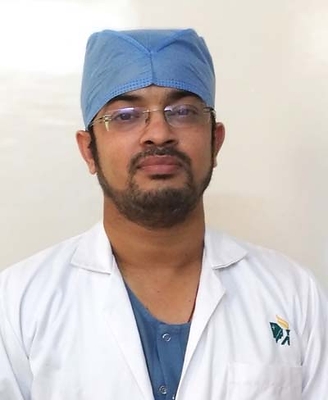
The intricate surgery was led by Dr. Amol Padegaonkar, Surgical Oncologist, and his expert surgical team.
Esophagectomy is regarded as one of the most technically demanding procedures in onco-surgery. The patient was diagnosed with a 5cm long cancerous pipe with two positive Lymph nodes. Initially, the size was reduced with chemo-radiation and then operated. During the operation, the cancerous portion of the esophagus was removed, and a new food passage was created using the stomach. The procedure requires exceptional surgical expertise, a highly experienced anaesthesia team, advanced ICU infrastructure, and seamless coordination across multiple specialities. The total time taken was 1 month from the date of diagnosis.
Impact for Central India
The successful outcome of this surgery at Apollo Hospital, Bilaspur, marks a major advancement for healthcare in the region. Patients from Chhattisgarh and neighbouring areas can now avail advanced cancer care with world-class treatment in the State.
Emphasising on early diagnosis
Dr. Amol Padegaonkar said, “Early detection of esophagal cancer is critical for successful treatment outcomes. Symptoms such as persistent difficulty in swallowing, unexplained weight loss, a sensation of food getting stuck while eating, or frequent vomiting should not be ignored. Patients must consult a specialist immediately. When identified early, the prognosis is significantly better.”
Esophagectomy is a complex surgical procedure performed to remove all or part of the esophagus, most commonly for cancer of the food pipe. The affected part is removed, and the stomach is reshaped into a tube and brought up to restore continuity of the digestive tract. Modern esophagectomy is often performed using high-definition 3D imaging, advanced energy devices, and stapling technology, which help improve surgical precision, reduce blood loss, and support faster recovery.
This successful surgery not only underscores the clinical excellence of Apollo Hospital, Bilaspur, but also demonstrates that highly advanced and complex cancer surgeries can now be performed in Central India at par with global standards.
ABOUT APOLLO HOSPITALS
Apollo revolutionised healthcare when Dr. Prathap Reddy opened the first hospital in Chennai in 1983. Today, Apollo is the world’s largest integrated healthcare platform with over 10,400 beds across 76 hospitals, 7,113+ pharmacies, 308 clinics, 2,457 diagnostic centres, and 800+ telemedicine centres. It is one of the world’s leading cardiac centres, having performed over 3,00,000 angioplasties and 2,00,000 surgeries. Apollo continues to invest in research and innovation to bring the most cutting-edge technologies, equipment, and treatment protocols to ensure patients have access to the best care in the world. Apollo’s 1,20,000 family members are dedicated to delivering exceptional care and leaving the world better than we found it.

 View original content to download multimedia:https://www.prnewswire.com/in/news-releases/experts-at-apollo-hospital-bilaspur-remove-esophagus-cancer-create-a-new-food-passage-using-stomach-302844810.html