


6, Aug 2026
Asia Hospitality Sector Poised for Accelerated Investment, Says Questex’s International Hospitality Investment Forum Asia
Regional market strengthens as investors and operators embrace resilient growth strategies
HONG KONG, Aug. 6, 2026 /PRNewswire/ — Asia’s hospitality sector is entering a new phase of investment activity as domestic consumption recovers and regional travel continues to strengthen, says Questex’s International Hospitality Investment Forum (IHIF) Asia.

Investor Survey Points to Rising APAC Confidence
According to new research by Questex’s Hospitality Investor, the editorial intelligence platform focused exclusively on the hospitality capital markets, investor confidence in Asia Pacific hospitality is strengthening. The survey found that 80% of respondents expect hospitality investment activity across the region to increase significantly over the next 12 months, providing a clear indicator of renewed capital momentum.
That positive outlook is reflected in where investors are focusing their attention. Japan and Southeast Asia ranked joint first as the most attractive hospitality investment destinations in Asia Pacific, followed by Thailand; IHIF Asia’s dedicated Nippon Track will convene senior decision-makers to explore Japan’s hospitality market and outbound investment opportunities.
The research also points to a more disciplined approach to value creation. Lifestyle and experiential hospitality took the majority of the vote, followed by operational efficiency and acquiring undervalued or distressed assets, underlining investor focus on differentiated concepts, performance improvement and value-led opportunities.
Demand-side fundamentals remain central to that outlook, with regional, intra-Asia travellers identified as the strongest driver of hospitality demand growth across Asia Pacific.
“The recovery of domestic hospitality demand and the continued resurgence of regional travel are creating a compelling environment for investment across Asia,” said IB Saravanan, Vice President, Questex Asia. “While geopolitical and market complexities remain important considerations, the sector’s ability to adapt through asset repositioning, operational innovation and capital diversification is opening up significant opportunities for growth.”
The Industry Gathers in Hong Kong to Explore What’s Next for Asia Hospitality
IHIF Asia will take place 16-18 September 2026 at Regent, Hong Kong, bringing together more than 500 investors, owners, operators, developers and hospitality brands to explore the region’s next phase of growth.
Register to attend IHIF Asia here.
For media registration, contact Meryl Franzman at mfranzman@questex.com.
About Questex
Questex fuels exceptional business connections—where every buyer and seller interaction matters. Through live events enriched with data insights and active year-round digital communities, we deliver measurable results. It happens here.
Media Contact
Meryl Franzman
IHIF Asia
mfranzman@questex.com

 View original content to download multimedia:https://www.prnewswire.com/in/news-releases/asia-hospitality-sector-poised-for-accelerated-investment-says-questexs-international-hospitality-investment-forum-asia-302843968.html

- 0
- By Sai Krishna

5, Aug 2026
Diego Mesa Puyo selected as next GEF CEO and Chairperson
WASHINGTON, Aug. 5, 2026 /PRNewswire/ — The Global Environment Facility (GEF) Council today announced the selection of Diego Mesa Puyo as the family of funds’ next CEO and Chairperson. Mesa Puyo, an international leader in energy policy, economic development, and sustainability, and former Minister of Energy and Mines from Colombia, will serve an initial term of four years, aligned with the GEF-9 funding period and the last sprint towards critical 2030 environmental goals.

Before his selection as the GEF’s next CEO and Chairperson, Mesa Puyo served as Deputy Chief of the Climate Policy Division of the International Monetary Fund. As Colombia’s Minister of Energy and Mines in the 2018-2022 administration, he led one of Latin America’s most ambitious energy transition agendas, launching market reforms that mobilized more than $3 billion in private investment and accelerated the deployment of variable renewable energy from near-zero levels to one of the fastest-growing clean energy markets in the region. He also played a central role in advancing energy transition and climate action legislation, embedding sustainability objectives in economic and development policy.
“I am deeply honored to serve as the next CEO and Chairperson of the Global Environment Facility at this pivotal moment for the international community,” Mesa Puyo said. “Countries need trusted partners that can help turn ambition into action. Building on the GEF’s remarkable legacy, I look forward to working with the Secretariat, member countries, and partners around the world to achieve environmental and development goals together by integrating solutions, catalyzing investment, and delivering measurable results for people and planet.”
The GEF is the world’s largest public funder for the environment and serves international conventions on biodiversity, climate change, and pollution. Donor countries have pledged an initial $3.9 billion for an ambitious ninth replenishment of the GEF Trust Fund, reflecting a strong commitment to protect and restore nature through multilateral cooperation.
The Global Environment Facility is the world’s family of funds for the environment. As the financial mechanism for six multilateral conventions, it supports countries’ efforts to tackle the root causes of environmental degradation — advancing global goals for nature, climate, and pollution. Over the past three decades, the GEF has been the largest public funder for the environment and provided more than $27 billion in financing, primarily as grants, and mobilized another $155 billion for country-driven priority projects.
Read the full press release here in English, Spanish, and French.

 View original content to download multimedia:https://www.prnewswire.co.uk/news-releases/diego-mesa-puyo-selected-as-next-gef-ceo-and-chairperson-302843999.html

5, Aug 2026
DXC Appoints Lisa Beaudoin as Chief Product Officer to Accelerate Product-Led Growth
- Lisa Beaudoin appointed Chief Product Officer, leading a newly unified product development organization across DXC
- Beaudoin most recently led the development and launch of DXC OASIS, the company’s AI-powered orchestration platform for managed services, now in production with 57 customers
- Appointment follows the recent naming of Paul Taylor as President, Dan Gray as President, Global Infrastructure Services and Holly Grant as President, AI Innovation and Strategy & LabX, further strengthening DXC’s leadership team and operating model
ASHBURN, Va., Aug. 5, 2026 /PRNewswire/ — DXC Technology (NYSE: DXC), a leading enterprise technology and innovation partner, today announced the appointment of Lisa Beaudoin as Chief Product Officer. In this role, Beaudoin will lead a newly unified product development organization spanning DXC’s portfolio, with responsibility for product strategy, engineering, lifecycle management, and market execution. Her appointment reflects DXC’s focus on scaling AI-centric leadership and product-led innovation across the company and accelerating the delivery of differentiated offerings for customers. DXC also recently appointed Paul Taylor as President, Dan Gray as President, Global Infrastructure Services (GIS), and Holly Grant as President, AI Innovation and Strategy & LabX. She will report to Paul Taylor, President, effective immediately.

Beaudoin previously served as Vice President, Platform Innovation and Automation, where she led the product strategy and engineering of AI-driven enterprise platforms. Working across product, engineering, operations, and customer teams, she has overseen the full product lifecycle, from strategic positioning and development through market execution, with a focus on improving user experience, operational performance, and measurable business value for customers.
Most recently, Beaudoin co-led the development and launch of DXC OASIS alongside Dan Gray, President of GIS, helping bring together product strategy, technical innovation, and customer insight to take the company’s AI platform from concept to production in just over a year. The platform is now in production with 57 customers and serves as the foundation for a growing set of scalable, AI-enabled solutions that deliver measurable business value while transforming managed services for mission-critical enterprises at scale.
“This is a natural next step in the evolution of DXC,” said Raul Fernandez, Chief Executive Officer, DXC Technology. “We are simplifying how we operate, consolidating product development under one proven leader, and creating greater consistency across the way we build and bring products to market. Lisa has demonstrated her ability to turn customer needs into scalable platforms that deliver measurable value, and she will help accelerate how we innovate, execute, and deliver outcomes for our customers.”
In her expanded role, Beaudoin will apply the disciplined product development approach behind DXC OASIS, rooted in deep customer and user insight, across DXC’s broader portfolio. She will bring product teams together under a unified organization, strengthen the connection between customer needs and product development, and accelerate the delivery of scalable offerings that support DXC’s Core and Fast Track strategies. She will also work closely with DXC’s technology and business leaders to ensure product and engineering teams are aligned from the outset and that DXC’s offerings complement one another and fully leverage the company’s strategic partnerships. By bringing product development under a single organization, DXC aims to accelerate innovation, reduce complexity, and bring new capabilities to customers more quickly.
“Lisa brings the product discipline we need to strengthen execution across DXC,” said Paul Taylor, President, DXC Technology. “Putting our customers at the center of every product decision will help us focus on the opportunities that matter most, connect product, technology and engineering more effectively, and move with greater speed and clarity. By bringing product development together under one leader, we’ll build better solutions, execute with greater consistency, and ensure innovation is always driven by the needs of our customers.”
“DXC has deep industry expertise, strong engineering capabilities, and an unmatched understanding of the complex technology and business environments in which our customers operate,” said Beaudoin. “My focus will be on bringing those strengths together through a more unified product organization that starts with a clear understanding of customer and operator needs, focuses on the highest-value opportunities, and moves with speed. By connecting disciplined product strategy with our strong technology leadership, we can build products that are technically feasible, operationally scalable, work together across our portfolio, and directly tied to the outcomes our customers and partners need.”
Before joining DXC, Beaudoin co-founded Brightspot, an enterprise software company, and held senior product, design, and creative leadership roles at WebMD, AOL, and The Wall Street Journal/Dow Jones. Across these roles, she led the development of digital platforms, publishing tools, and consumer applications for global organizations. She is a graduate of Parsons School of Design.
About DXC Technology
DXC Technology (NYSE: DXC) is a leading enterprise technology and innovation partner delivering software, services, and solutions to global enterprises and public sector organizations — helping them harness AI to drive outcomes at a time of exponential change with speed. With deep expertise in Managed Infrastructure Services, Application Modernization, and Industry-Specific Software Solutions, DXC modernizes, secures, and operates some of the world’s most complex technology estates. Learn more on dxc.com.
Media Contact: Ashley Houk-Temple, DXC Technology, ashley.houktemple@dxc.com
 View original content to download multimedia:https://www.prnewswire.co.uk/news-releases/dxc-appoints-lisa-beaudoin-as-chief-product-officer-to-accelerate-product-led-growth-302843931.html

5, Aug 2026
Anti-Drug Awareness Drive Reaches MCM DAV College, Hundreds Take the Drug-Free Pledge
Chandigarh | August 5, 2026
Arya Yuva Samaj National President Yogi Suri called on young people to play an active role in building a drug-free India, urging them to “become the sword of Swami Dayanand Saraswati and destroy the demon of addiction.” He delivered the message as the Chief Guest at the ‘No Nasha Nation’ awareness programme organised during Induction Week 2026 by the Internal Quality Assurance Cell (IQAC) and the Victory Against Drug Abuse (VADA) Club at Mehr Chand Mahajan DAV College for Women (MCM), Chandigarh.

The programme aimed to make newly admitted students aware of the growing risks of substance abuse and digital addiction while encouraging them to lead disciplined, responsible and value-based lives. Mr Amanjeet Singh, IRS, Zonal Director, Narcotics Control Bureau (NCB), Chandigarh, attended as the Guest of Honour. Also present were Dr Anoop Kumar Vats, National Coordinator (Colleges), DAV College Managing Committee; Ms Mona Narang, Principal of MCM DAV College; and Mr Navdeep Singh, Deputy Director, Higher Education Department.
Welcoming the students, Yogi Suri said, “True freedom lies in learning to make the right and responsible choices.” He said drug abuse and digital addiction have become major challenges for young people, affecting their health, time, goals and future.
He said ‘No Nasha Nation’ is not just an anti-drug campaign but a national movement that encourages young people to choose discipline over addiction, purpose over distraction and values over temptation. He added that a drug-free India can only be achieved through the combined efforts of students, parents, teachers and society.
Using a simple analogy, Yogi Suri said that just as people stay away from a poisonous snake to avoid its venom, the safest way to avoid addiction is to stay away from drugs altogether. He said social evils must be addressed at an early stage before they become larger challenges. Calling drug abuse a national concern, he urged young people to face it with courage, determination and self-confidence. He added that values, self-discipline and the teachings of the Vedas provide protection against addiction.
Appealing to the students, Yogi Suri said, “Become the sword of Swami Dayanand Saraswati that destroys the demon of addiction.” He also said women have an important role in bringing positive change to families, society and the nation, and can contribute significantly to the goal of a drug-free India.
At the end of his address, Yogi Suri administered the ‘No Nasha Nation’ pledge to hundreds of students. They pledged to lead a drug-free life, encourage others to do the same and spread the campaign’s message in society. Arya Yuva Samaj also screened a short film highlighting the importance of a disciplined and value-based life.

Guest of Honour Mr Amanjeet Singh, IRS, spoke about the growing problem of drug abuse and addressed common misconceptions. He cautioned students that even a single instance of drug use can have long-term consequences. He said timely treatment and counselling can help people recover from addiction and encouraged those in need to seek support through the Tele-MANAS mental health helpline.
Dr Anoop Kumar Vats said ‘No Nasha Nation’ has become a nationwide movement and urged students to take its message to their families, friends and communities and become ambassadors of the campaign.
During the programme, the college presented IQAC scholarships to students who performed well at Panjab University. Students also staged a street play on the impact of drug abuse. Acting Principal Ms Neena Sharma said such programmes help develop social responsibility, moral values and positive thinking among students. She expressed confidence that initiatives like ‘No Nasha Nation’ would continue to encourage young people to become responsible citizens and contribute to nation-building.
5, Aug 2026
Bybit to Launch HYPE-Margined Options, Expanding Derivatives Product Suite
DUBAI, UAE, Aug. 5, 2026 /PRNewswire/ — Bybit, the world’s second-largest cryptocurrency exchange by trading volume, has announced the launch of HYPEUSDT Options, extending its derivatives offering to the native token of the Hyperliquid blockchain.
Listing Schedule:
- August 4, 2026 (8:00 AM UTC): HYPEUSDT Options contracts expiring on August 5 and August 7, 2026 listed
- August 6, 2026 (at 8:00 AM UTC): Contracts expiring on August 8, August 9, August 14, August 21, and August 28, and September 25, 2026 to be listed
From August 7 onward, new HYPEUSDT Options contracts will be generated on a regular, ongoing basis.
HYPE is the native token of Hyperliquid, a layer‑1 blockchain for on‑chain perpetual futures and spot trading, used for staking, governance, gas fees, and trading fee discounts. HYPE’s market cap is currently past the $14 billion mark, ranking No.9 among cryptocurrencies by market cap as of August 5, 2026.
The addition of HYPE Options builds on Bybit’s broader push to expand derivatives coverage of high-growth, high-potential digital assets, giving traders a wider set of instruments to manage exposure and express views across market cycles.

Trading carries risks. Terms and conditions apply. For further details on contract specifications, margin requirements and trading rules, users may visit: Bybit – Introducing HYPE Options
#Bybit / #NewFinancialPlatform
About Bybit
Bybit is The New Financial Platform.
We believe every person should have access to every financial opportunity on earth. That’s why we’re building the first intelligent platform that connects anyone, anywhere to the world’s finance.
Trusted by more than 80 million users worldwide, Bybit brings together investing, trading, payments, and wealth-building in a single secure and intelligent ecosystem. Through the combination of AI-powered technology, deep global liquidity, robust security, and transparent operations, Bybit makes global finance more accessible, efficient, and empowering for everyone.
Built for everyone. Powered by intelligence. Open to the world.
Learn more at Bybit.com
For more details about Bybit, please visit Bybit Press
For media inquiries, please contact: media@bybit.com
For updates, please follow: Bybit’s Communities and Social Media
Discord | Facebook | Instagram | LinkedIn | Reddit | Telegram | TikTok | X | Youtube

Photo – https://mma.prnewswire.com/media/3008678/image1.jpg
Logo – https://mma.prnewswire.com/media/2932256/6030995/Bybit_TNFP_Logo.jpg
 View original content:https://www.prnewswire.co.uk/news-releases/bybit-to-launch-hype-margined-options-expanding-derivatives-product-suite-302843812.html

5, Aug 2026
Bank of America Now Accepting Proposals for 2027 Art Conservation Project
Key points
- Applications for the 2027 Bank of America Art Conservation Project® will be accepted from Aug. 1 through Sept. 30, 2026.
- The program supports the conservation of historically or culturally significant artworks and artifacts around the world.
- Eligible nonprofit cultural institutions may submit proposals through the Art Conservation Project website.
- The Art Conservation Project has provided support for more than 15,000 objects in 40 countries since launching in 2010.
CHARLOTTE, N.C., Aug. 5, 2026 /PRNewswire/ — Bank of America is now accepting proposals for its 2027 Art Conservation Project through Sept. 30, 2026. The program provides grant funding to nonprofit museums, cultural institutions and conservation organizations undertaking projects to preserve historically or culturally significant artworks and artifacts.

Organizations interested in applying can find program details, eligibility requirements and application materials on the Bank of America Art Conservation Project® website.
“Art has a unique ability to connect people across cultures, generations and geographies,” said Brian Siegel, Global Arts, Culture & Heritage executive at Bank of America. “By supporting the conservation of important works of art, we help preserve our shared cultural heritage and ensure these stories continue to inspire and inform communities around the world.”
Since launching in 2010, Bank of America’s Art Conservation Project has supported the conservation of more than 15,000 objects in 40 countries across a broad range of cultures, time periods and artistic disciplines.
Frequently asked questions
Question: Where can organizations learn about program eligibility?
Answer: Information about the 2027 application process can be found on the Art Conservation Project Frequently Asked Questions page.
Question: Why does Bank of America invest in art conservation?
Answer: Art and objects of cultural heritage are highly vulnerable to the effects of time. Conserving these works helps ensure that society can continue to be inspired by the richness of the human experience for generations to come.
Question: Where can I find information about previous projects?
Answer: Selections of previous projects can be found on the Art Conservation Project website.
Bank of America
Bank of America is one of the world’s leading financial institutions, serving individual consumers, small and middle-market businesses and large corporations with a full range of banking, investing, asset management and other financial and risk management products and services. The company provides unmatched convenience in the United States, serving more than 69 million clients with approximately 3,500 retail financial centers, approximately 15,000 ATMs (automated teller machines) and award-winning digital banking with approximately 60 million verified digital users. Bank of America is a global leader in wealth management, corporate and investment banking and trading across a broad range of asset classes, serving corporations, governments, institutions and individuals around the world. As the #1 small business lender in the United States (FDIC), Bank of America offers industry-leading support to approximately 4 million small business households through a suite of innovative, easy-to-use online products and services. The company serves clients through operations across the United States, its territories and more than 35 countries and/or jurisdictions. Bank of America Corporation stock (NYSE: BAC) is listed on the New York Stock Exchange.
At Bank of America, we believe that investing in the arts has a positive impact on our lives. We support a wide range of nonprofit organizations with funding and programming to help make the arts more accessible to communities around the world and to preserve works of art and heritage sites for generations to come. For more information about how we support the arts, please visit our Bank of America arts website.
For more Bank of America news, including dividend announcements and other important information, visit the Bank of America newsroom and register for news email alerts.
Reporters may contact
AnnMarie McDonald, Bank of America
Phone: 1.332.234.8635
annmarie.mcdonald@bofa.com
 View original content to download multimedia:https://www.prnewswire.co.uk/news-releases/bank-of-america-now-accepting-proposals-for-2027-art-conservation-project-302843507.html

5, Aug 2026
NYSE Content Update: Expedition Therapeutics Secures $115 Million Series B
NYSE issues a pre-market daily advisory direct from the trading floor.
NEW YORK, Aug. 5, 2026 /PRNewswire/ — The New York Stock Exchange (NYSE) provides a daily pre-market update directly from the NYSE Trading Floor. Access today’s NYSE Pre-market update for market insights before trading begins.
Ashley Mastronardi delivers the pre-market update on August 5th
- The Dow Jones Industrial Average and S&P 500 will look to build off fresh records on hopes of a deal in the Middle East.
- The Dow surpassed 54,000 for the first time ever.
- The S&P 500 clinched its first-ever close above 7,700.
- Expedition Therapeutics Founder & CEO Yi Larson will join NYSE Live following her firm’s latest funding round.
- The company says the first patients have been dosed in its Phase 2 clinical trial for EXPD-101, a next-gen treatment for COPD.
- Zeta Global (NYSE: ZETA) CEO David Steinberg will join NYSE Live to deliver the biggest takeaways from the company’s Q2 earnings report.
- The firm says it posted its 20th straight ‘beat-and-raise’ quarter and achieved the ‘Rule of 64.’
Opening Bell
AB InBev (NYSE: BUD) rings the NYSE Opening Bell
Closing Bell
Blend (NYSE: BLND) celebrates its 5th anniversary of listing
For market insights, IPO activity, and today’s opening bell, download the NYSE TV App: TV.NYSE.com


 View original content to download multimedia:https://www.prnewswire.co.uk/news-releases/nyse-content-update-expedition-therapeutics-secures-115-million-series-b-302843767.html

5, Aug 2026
KPM Analytics Announces In-Line NIR Sensors Specifically Designed for Food Processing
Sensors measure moisture, fat/oil, color, and temperature in-line for improved process control.
WESTBOROUGH, Mass., Aug. 5, 2026 /PRNewswire/ — Increasingly, food processors are striving for “zero-defects” by measuring as many quality parameters as possible in various stages of production. To assist processors in meeting this goal, KPM Analytics announced the new MCT700 Series NIR (near infrared) sensors that provide continuous in-line measurement of moisture, fat/oil, color, and product temperature.

Installed over conveyors, augers, and chutes, the non-contact sensors are suitable for monitoring baked and fried snacks, doughs, crackers, breakfast cereals, food ingredients, and more.
MCT790 NIR Sensor, Now with Product Color Measurement
The MCT790 NIR sensor provides precise measurements of moisture, fat/oil, product temperature, and now product color. In addition to ensuring that products consistently meet quality standards, the MCT790 sensor provides real-time data for manual or automatic adjustment of production equipment like ovens and sprayers. This reduces costly waste and improves productivity.
The MCT790 sensor is suitable for challenging production line locations including hot, greasy, and wet environments. Its stainless-steel IP69K-rated housing can be washed down using harsh cleaning solutions typical of the food industry. An internal fan provides thermal management inside the sensor.
The rugged display, which is typically mounted beside the line, has an IP67 rating.
MCT700 and MCT750 NIR Sensors
For applications where color measurement is not needed, KPM Analytics also announces the MCT700 and MCT750 in-line NIR sensors. They measure the same parameters as the MCT790 except for color. The MCT700 is IP67 rated with a standard Kel-F sensor window, and the MCT750 is IP69K rated with advanced cooling features and a rugged sapphire sensor window.
Supporting the Trend Toward In-Line Monitoring
The new sensors support an emerging trend in food processing that uses in-line, real-time measurements and automatic process corrections. This approach replaces a worker taking samples periodically and measuring them with other at-line solutions.
Additionally, for conveyor applications, each MCT700 Series sensor can be integrated with a traversing frame to scan an entire belt width. This capability allows users to analyze individual product lanes using a move-and-park feature, which is especially beneficial for food applications with industrial ovens that have multiple heating zones.
“Continuous measurement enables rapid response to production issues, which supports the business objectives of increasing productivity and decreasing waste.” said Chris Pike, Senior Director of Product Management with KPM Analytics.
Sensor Features
All the new models offer features designed to simplify integration and reduce the cost of operation.
- High-speed measurement up to 100 readings per second. Higher measurement speeds allow for analyzing segmented products like cookies and crackers.
- Like prior MCT Series models, they are simple to operate, integrate, and standardize across multiple lines to amplify productivity and process control.
- A proprietary temperature-controlled detector ensures measurement stability.
- Fully modular, with all components easily replaceable in the field.
- Easy troubleshooting with advanced on-board diagnostics.
Ordering and Availability
The MCT790, MCT750, and MCT700 NIR sensors are available for order now. For pricing and an evaluation of how the sensors will perform in specific applications, contact KPM Analytics at https://kpmanalytics.com.
About KPM Analytics
KPM Analytics is a global leader in scientific instrumentation, providing analytical and vision inspection solutions to laboratories and industrial operators in the food, feed, agriculture, industrial and environmental sectors. KPM products have a long history of helping companies secure product quality, optimize production processes, and make confident, data-driven decisions through reliable solutions, supported by dedicated application expertise and local service. Visit https://www.kpmanalytics.com to learn more.
Media contacts:
Andy Dambeck
Product Marketing Manager
+1 774-399-0477
 View original content to download multimedia:https://www.prnewswire.co.uk/news-releases/kpm-analytics-announces-in-line-nir-sensors-specifically-designed-for-food-processing-302841709.html

5, Aug 2026
Plume Names Rebecca Stone Chief Customer and Marketing Officer, Creating a Dedicated C-Suite Voice for Global ISP Customer Success
Expanded role reflects Plume’s commitment to 450+ ISP customers with dedicated executive champion across entire customer lifecycle, from brand awareness and onboarding through adoption, retention and expansion
PALO ALTO, Calif., Aug. 5, 2026 /PRNewswire/ — Plume Design, Inc. (“Plume“), the award-winning global subscriber experience platform serving more than 450 Internet Service Providers (ISPs) across 58 countries, today announced that Rebecca Stone will fill the newly created role of Chief Customer and Marketing Officer (CCMO). Ms. Stone, who joined Plume as Chief Marketing Officer in January 2026, will now be responsible for direct ownership of Customer Success in addition to her marketing responsibilities, unifying the customer-facing journey under a single executive leader.

“Our ISP partners succeed by keeping subscribers happy at a cost they can sustain, and that gets harder every year as AI raises the bar for what those subscribers expect,” said Dan Herscovici, president and CEO, Plume. “No two of our customers face the same challenge, so serving them well means simultaneously meeting very different needs across the world. That’s why we created this role. Rebecca has a rare gift for connecting brand, customer engagement and commercial results, and now she leads how we show up for customers at every stage, from the first time an operator hears about Plume to the experience their subscribers rely on years later. Few companies are built to deliver customer success at this level, and our ISP partners will feel the difference.”
Stone brings more than 20 years of experience leading global enterprise and service provider marketing organizations across brand, product marketing, growth and revenue strategy. Before Plume, she served as Senior Vice President of Revenue Marketing and Customer Solutions Marketing at Cisco, where she oversaw strategy and operations for a $50 billion networking portfolio. Prior to that, as Chief Marketing Officer at Meraki, she doubled the global marketing team to 150 employees, led a comprehensive rebrand and messaging transformation and grew marketing-sourced pipeline contribution to 35%.
“Customer centricity requires genuine depth of understanding of what your customer is asking for, what they need and how your product and team can meet those expectations,” said Ms. Stone. “When I joined Plume, I was immediately struck by how deeply this company listens to its ISP customers, and that starts at the top. Dan has built a culture where the customer’s voice shapes every decision, from the product roadmap to how we show up at every interaction. That customer-first mindset is what drew me to Plume, and it’s what makes this expanded role possible. There’s nothing more valuable than hearing from your customers, learning from them and turning those insights into action that helps them win. I’ve spent my career doing this, and I’m thrilled this role lets me support our customers at every stage.”
As AI reshapes how ISPs deliver and differentiate their services, the relationship between a technology provider and its ISP customers has never been more consequential. In her expanded role, Ms. Stone will oversee the complete customer lifecycle at Plume, from brand positioning through retention and expansion, with the mandate to ensure Plume’s go-to-market strategy and post-sale execution move at the speed the market now requires.
Ms. Stone’s expanded role is part of a broader leadership investment at Plume. The company recently named Peter Wulfraat as Chief Revenue Officer, bringing more than 25 years of enterprise AI and go-to-market leadership to drive Plume’s next phase of commercial expansion across its global ISP footprint. These latest investments extends a leadership team that is already delivering on Plume’s strategic vision of building deeper, more valuable partnerships with ISPs worldwide.
The leadership moves follow a series of milestones for Plume including: winning three Gold Stevie® Awards in the 2026 Stevie Awards for Technology Excellence, recognizing CEO Dan Herscovici as Executive of the Year in Communication Technology, and the Plume Platform as both New Product of the Year in Communication Technology and Domain Specific (Telecom) AI Platform of the Year. Combined with Plume’s No. 58 ranking on the Top 100 Global Most Loved Workplaces® list published in The Economist in June, the recognitions underscore a company investing simultaneously in its people, its products and its customers.
“Parks Associates research shows that gigabit speeds now surpass 25% penetration in the United States; competition is fierce for broadband providers,” said Elizabeth Parks, President and CMO, Parks Associates. “Customer experience is the incredible impactful differentiator for ISPs, along with enabling bundles and managed control and reliability of the network. This new role reflects a shift to full support for service providers across the customer lifecycle and with a focus on retention and value.”
Ms. Stone’s announcement follows the release of a joint white paper by Parks Associates and Plume – Owning the Broadband Subscriber Experience in the AI Era – which examines how ISPs can strengthen customer retention, reduce churn and create differentiated subscriber experiences through data-driven, lifecycle-focused engagement strategies. The company has also released a new white paper – How Plume + Wi-Fi 7 Can Achieve Wi-Fi 8 Outcomes Today.
About Plume
Plume created the first managed WiFi platform for Internet Service Providers (ISPs) in 2016, enabling the company to scale across the globe and expand into managing the entire subscriber experience, including approximately 600 million connected devices, in 50 million homes, on behalf of more than 450 ISPs, across 58 countries. By integrating managed WiFi, cybersecurity and customer care, Plume created the first open, hardware-agnostic SaaS Subscriber Experience Platform for ISPs. Powered by an unmatched global dataset and AI optimization, the Plume Platform builds subscriber confidence through improved WiFi experiences, seamless new service implementation and proactive customer care. Plume’s open-source framework OpenSync® is pre-integrated and supported on the leading silicon, CPE and platform SDKs, and supports leading industry standards like RDK-B and prplWave. Discover more at www.plume.com.
 View original content to download multimedia:https://www.prnewswire.co.uk/news-releases/plume-names-rebecca-stone-chief-customer-and-marketing-officer-creating-a-dedicated-c-suite-voice-for-global-isp-customer-success-302843188.html

5, Aug 2026
MITTI LABS RAISES $9.5 MILLION TO BUILD WATER RESILIENCE IN ASIA’S RICE FIELDS
With the world’s staple crop under mounting climate & water stress, funding accelerates the deployment of its rice GeoAI platform to millions of smallholder fields
BENGALURU, India and NEW YORK, Aug. 5, 2026 /PRNewswire/ — Deep-tech company Mitti Labs today announced a $9.5 million Series A round from investors including Aramco Ventures as lead investor, alongside Lightspeed India, Godrej Industries Group, Cisco Foundation, Francis Family Fund, and Volta Circle.
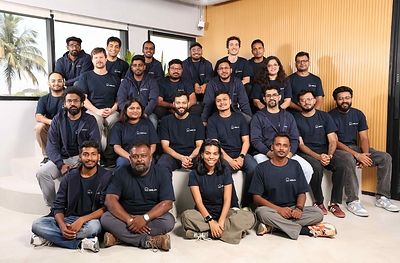
With this new funding, the company will expand its geographical footprint in India and launch greenfield projects in the Philippines and Indonesia. In parallel, Mitti Labs will scale its GeoAI platform, a satellite technology that fuses high-resolution synthetic aperture radar (SAR) data with field-collected ground truth and physical models to generate digital twins of Asia’s rice fields at the resolution of individual plots.
Rice feeds half the world daily, but growing it takes an outsized toll on the planet. As the world’s most water-intensive crop, rice consumes more than 30% of all irrigation water. Traditional farming practices where fields are continuously flooded also generate the emission of methane, a powerful greenhouse gas (GHG) responsible for one third of climate warming to date.
Science-backed, low-cost transitions to alternate irrigation techniques cut water usage by close to 40%, and methane emissions by more than 50%, while maintaining yields when practiced safely and rigorously.
“Growing more rice with less water is one of the world’s major challenges. Demand for rice continues to grow, but record heat and changing rainfall patterns are threatening water systems and endangering food security. With our technology and scalable operational model, we can transform how rice is grown, lower emissions and cut water consumption while building resilient livelihoods for 150 million smallholder farmers,” said Mitti Labs’ co-founder Xavier Laguarta.
The majority of the world’s rice is grown on fragmented plots of less than two hectares where reliable data on practices, yields, water use, and emissions does not exist. Mitti Labs’ GeoAI platform, developed with support from NASA, was built to address this gap. It leverages AI to transform raw SAR satellite data into field-level insights on crop health, soil moisture, and flooding. These insights are used to optimize irrigation practices that help conserve water and cut emissions across diverse rice varieties and agro-ecological zones.
Zayed AlAmri, Executive Managing Director at Aramco Ventures, said, “Rice covers a fifth of Asia’s cultivated land, and it is both a major source of methane and one of the most water-intensive crops grown. Changing farming practices is not easy, but the harder part has been knowing what is actually happening in the fields across millions of small farms. That is what Mitti Labs’ AI and satellite technology aims to solve.”
“Solving the world’s water crisis requires bringing together smallholder farmers, industry stakeholders, governments, and nonprofits to transform how rice is grown. With its unique technology and vast network of farmer-partners, Mitti Labs can unlock new revenue opportunities tied to this transition and help build the future of rice,” said Hemant Mohapatra, Partner at Lightspeed India.
“As an investor deeply rooted in India, we know firsthand how critical water resilience is for farming communities. Mitti Labs has built a remarkable model that leverages technology towards securing the livelihoods of smallholder farmers. This model has the potential to reshape rice farming all over Asia,” said Burjis Godrej, Godrej Industries Group.
On the operational side, Mitti Labs has established a farmer-centered model that leverages this technology to implement the practice shift to Alternate Wetting and Drying (AWD) on a large scale. Since launching in 2023, Mitti Labs has scaled to deliver the largest AWD rice program globally.
About Mitti Labs
Mitti Labs combines satellite technology, AI and field operations to create a water and climate resilient future for rice farming. To date, its programs have saved 500 billion liters of water — the equivalent of Bengaluru’s annual supply. Customers include global technology, service, food and agriculture businesses such as Cool Effect, Ebro Foods, and Syngenta. Since launching in 2023, Mitti Labs has grown to 150 employees and secured $12.5 million from investors such as Lightspeed India, Aramco Ventures, Voyager Ventures, Godrej Industries Group, Cisco Foundation, Francis Family Fund, and Volta Circle. Visit mittilabs.earth to learn more.

 View original content to download multimedia:https://www.prnewswire.com/in/news-releases/mitti-labs-raises-9-5-million-to-build-water-resilience-in-asias-rice-fields-302843639.html