


5, Aug 2026
Commissionerate Police Issue Cyber Alert Over Fake Income Tax Notices on WhatsApp
Bhubaneswar, Aug. 5 (UDN): The Commissionerate Police on Tuesday issued a public advisory cautioning taxpayers against a surge in fake Income Tax notices being circulated through WhatsApp, warning that cybercriminals are exploiting the ongoing belated Income Tax Return (ITR) filing season to defraud unsuspecting citizens.
Pic Credit: x.com/cpbbsrctc
WhatsApp ରେ ଆସୁଥିବା ନକଲି Income Tax Notice, Link କିମ୍ବା Attachment ଠକେଇର ମାଧ୍ୟମ ହୋଇପାରେ।
❌ ଅଜଣା .zip କିମ୍ବା .exe ଫାଇଲ୍ Download କରନ୍ତୁ ନାହିଁ।
🔐 ନିଜର Banking Details, Password ଓ ବ୍ୟକ୍ତିଗତ ତଥ୍ୟ ସୁରକ୍ଷିତ ରଖନ୍ତୁ।👉 କୌଣସି Tax Notice ଉପରେ ବିଶ୍ୱାସ କରିବା ପୂର୍ବରୁ ଏହାର ସତ୍ୟତା ଯାଞ୍ଚ… pic.twitter.com/8TBYhc0EHd

— COMMISSIONERATE POLICE (@cpbbsrctc) August 4, 2026
According to the advisory, fraudsters are posing as officials of the Income Tax Department and sending deceptive messages containing fake tax notices, malicious links and suspicious file attachments. The objective is to trick users into downloading malware or sharing sensitive personal and financial information.
Police have urged taxpayers not to open or download files, particularly those with .zip or .exe extensions, received from unknown or unverified sources. Such files may contain malicious software capable of compromising mobile phones and computers, allowing cybercriminals to steal banking credentials, passwords and other confidential data.
The advisory also warns against messages promising tax refunds or demanding immediate action to avoid penalties or resolve tax-related issues. Citizens have been advised to verify the authenticity of any Income Tax communication only through official government platforms before responding or clicking on any links.
Emphasising the importance of cyber hygiene, the Commissionerate Police reminded the public never to share banking details, passwords, one-time passwords (OTPs) or other confidential information through messaging apps, emails or unverified websites.
The warning is part of the Commissionerate Police’s ongoing cyber awareness initiative to educate citizens about emerging online frauds and promote safe digital practices. Officials noted that scammers often become more active during the tax filing period, targeting taxpayers with convincing but fraudulent messages.
Appealing to the public to remain vigilant, the police urged citizens to ignore suspicious communications and report any attempted cyber fraud to the appropriate authorities.
“Awareness remains the strongest defence against cybercrime. Stay alert and verify before you trust,” the advisory said.
- 0
- By Neel Achary

5, Aug 2026
VAHDAM India Appoints Akhil Arora as Chief Business Officer for UK & Europe
New Delhi, Aug 5: VAHDAM India, the homegrown global wellness brand bringing India’s finest herbs and botanicals to consumers worldwide, today announced the elevation of Akhil Arora as Chief Business Officer – UK & Europe.

In his expanded mandate, Akhil will lead VAHDAM’s UK and Europe business end to end, with complete ownership of the region’s strategy, growth, profitability, and P&L. He will oversee all channels across the region, including direct-to-consumer platforms, online marketplaces, offline retail, and distribution, while building the organisation and partnerships required to establish VAHDAM as a leading wellness brand across these markets.
Akhil has been an integral part of VAHDAM’s growth story for over eight years, having joined the company in 2018 as Senior Business Analyst to the CEO. An alumnus of the Indian Institute of Technology Jodhpur, he has held multiple leadership roles at VAHDAM and played an instrumental role in building and scaling the company’s global online business.
In his new role, Akhil will define the strategic direction of the UK and Europe business, including revenue and profitability growth, brand building, category expansion, consumer acquisition, marketplace leadership, D2C growth, retail and distribution expansion, pricing strategy, supply-chain alignment, working-capital efficiency, and the development of high-performing regional teams.
He will continue to report to Bala Sarda, Founder and CEO of VAHDAM India, and will work closely with the company’s leadership and functional teams to build the UK and Europe region into a significant global business for VAHDAM.
Commenting on the elevation, Bala Sarda, Founder and CEO, VAHDAM India, said:
“Akhil has played an instrumental role in shaping VAHDAM®’s growth over the last eight years, particularly in building and scaling our global online business. As we move towards a geography-led organisation and work to establish the UK and Europe as one of our largest global markets, his leadership will be critical in building a consumer-first, locally relevant, and profitable business across the region.”
On his elevation, Akhil Arora, Chief Business Officer – UK & Europe, VAHDAM® India, said:
“VAHDAM® has always been more than a workplace for me. It has given me a front-row seat to the building of a truly global Indian brand. I’m incredibly grateful to Bala and the leadership team for this opportunity and for the trust they have placed in me over the years. Wellness, conscious consumption, and digital-first commerce are coming together in a way the world has never seen before, and India is uniquely positioned to lead this shift. I’m excited to work with our incredibly talented teams to deepen our business in the UK and Europe”
5, Aug 2026
NuSummit Joins CREST AI Charter Founding Signatories to Advance Trusted AI in Cybersecurity
PLANO, Texas, Aug. 5, 2026 /PRNewswire/ — Artificial intelligence is changing how organizations approach cybersecurity, from threat detection to security operations. As adoption accelerates, trust, transparency, and accountability are becoming the deciding factors in its success.
NuSummit Cybersecurity today announced it has become a Founding Signatory of the CREST AI Charter, joining a group of leading cybersecurity organizations committed to promoting the responsible use of AI across the industry.
Through this commitment, NuSummit Cybersecurity supports CREST’s Nine Principles for AI-Enabled Activities, ensuring its AI-enabled services are built and delivered with strong governance, security, human oversight and accountability.
“Clients don’t just want AI, they want AI that is accountable. That is why, as we embed AI deeper into our cybersecurity offerings, we treat governance and human oversight as non-negotiable. Becoming a Founding Signatory of the CREST AI Charter reflects the standard we set for ourselves, so that every AI-enabled solution we deliver is one that our clients can trust and depend on,” said Anantharaman Sreenivasan (Ganesh), Managing Director and Group CEO, NuSummit.
NuSummit Cybersecurity remains focused on applying AI responsibly, strengthening human expertise, and upholding the highest standards of customer trust.
“AI is changing cybersecurity, but trust will determine how successfully organizations adopt it. We believe responsible AI must combine innovation with transparency, governance and human expertise. Becoming a Founding Signatory of the CREST AI Charter reflects our commitment to helping shape a trusted future for AI-enabled cybersecurity,” said Sameer Shelke, President Americas and Cybersecurity Services Head, NuSummit, and CEO, NuSummit Cybersecurity.
The CREST AI Charter gives organizations an important framework for working through the opportunities and challenges that come with AI. By joining as a founding signatory, NuSummit Cybersecurity is contributing to a shared effort to make sure AI strengthens cybersecurity while keeping confidence and professional standards intact.
About NuSummit
NuSummit is a global technology leader in AI-led digital transformation, spanning applications, data, analytics, cloud and cybersecurity. With over two decades of experience, we serve 300+ clients worldwide, including 22 Fortune 500 companies, with core expertise in banking, insurance and capital markets.
NuSummit Cybersecurity brings deep expertise in Identity and Access Management, Risk Advisory, Security Verification, Managed Detection and Response, and Security Engineering, helping businesses strengthen their security posture and respond to threats with confidence.
For more information, visit us at nusummit.com or write to connect@nusummit.com. To know more about our cybersecurity services, visit cybersecurity.nusummit.com or write to cybersales@nusummit.com.
About CREST
CREST is an international not-for-profit organisation that supports the global cybersecurity community through accreditation, certification and industry standards. Working with governments, regulators and organisations worldwide, CREST helps set trusted benchmarks for cybersecurity capability, professionalism and quality.
As AI reshapes cybersecurity, CREST is helping the industry work through new opportunities and risks through initiatives such as the CREST AI Charter, which promotes responsible, transparent and accountable AI-enabled activities.
 View original content to download multimedia:https://www.prnewswire.co.uk/news-releases/nusummit-joins-crest-ai-charter-founding-signatories-to-advance-trusted-ai-in-cybersecurity-302842561.html

5, Aug 2026
Goa Tourism Set to Showcase a Range of New-Age Experiences at TTF Ahmedabad 2026
Focus on Weddings, MICE, Spiritual, Wellness, Culinary and Adventure Tourism to Strengthen Western India Market
Panaji, Goa, Aug 05: The Department of Tourism, Government of Goa, will participate in the Travel & Tourism Fair (TTF) Ahmedabad 2026, one of western India’s leading travel trade exhibitions, being held from August 6 – 8, 2026 at the Mahatma Mandir Convention & Exhibition Centre in Gandhinagar, with a renewed focus on positioning Goa as India’s most diverse year-round tourism destination. Led by the Hon’ble Tourism Minister, Government of Goa, Shri Rohan A. Khaunte, the state’s participation will highlight Goa’s expanding portfolio of high-value tourism experiences that extend far beyond its beaches.
Recognising Gujarat as one of Goa’s most important domestic source markets, Goa Tourism will engage with travel trade partners, wedding planners, MICE organisers, tour operators, airlines, hospitality stakeholders and media to strengthen collaborations and promote specialised tourism segments that appeal to today’s evolving traveller.
Speaking ahead of the event, Hon’ble Minister for Tourism, Government of Goa, Shri Rohan A. Khaunte, said: “Goa’s tourism story is evolving. While our beaches remain an enduring attraction, today’s traveller is looking for meaningful, immersive and personalised experiences. Through our participation at TTF Ahmedabad, we want to showcase Goa as a destination that offers world-class weddings, business events, wellness retreats, spiritual journeys, culinary discoveries and adventure experiences throughout the year. Our focus is on creating greater value for visitors while ensuring tourism growth benefits local communities and businesses across the state.”
Director of Tourism, Shri Kedar Naik, said: “TTF Ahmedabad serves as an important platform for Goa Tourism to engage directly with travel trade stakeholders and strengthen partnerships in one of our key domestic markets. Through our participation, we are showcasing a wide spectrum of tourism experiences that cater to diverse traveller interests, while creating new opportunities for collaborations with tour operators, wedding planners, MICE organisers and the hospitality sector.”
At TTF Ahmedabad, Goa Tourism will showcase six strategic tourism pillars that are driving the state’s transformation into a year-round experiential destination.
– Weddings – Goa has emerged as one of India’s preferred destinations for destination weddings, offering an unmatched combination of luxury resorts, heritage venues, beachfront celebrations and a mature hospitality ecosystem capable of hosting intimate ceremonies as well as large multi-day celebrations.
– MICE – The state is also strengthening its position as a leading MICE destination, with premium hotels, modern convention facilities, excellent air connectivity and a unique blend of business and leisure experiences that make Goa an ideal choice for conferences, corporate meetings, incentive travel and executive retreats.
– Spiritual Tourism – A key highlight will be the recently launched Ekadasha Teertha Yatra, a curated spiritual circuit connecting 11 ancient temples across Goa. The initiative offers visitors an opportunity to experience Goa’s sacred heritage, local traditions, village life and cultural legacy while supporting tourism in the state’s hinterland.
– Wellness – Goa Tourism will also spotlight the state’s growing wellness tourism offerings, including Ayurveda, yoga, holistic healing, nature retreats and luxury wellness resorts that cater to travellers seeking rejuvenation and mindful travel experiences.
– Food and Culinary Trails – The state’s vibrant culinary tourism landscape will be another major focus, celebrating Goa’s diverse gastronomic traditions through authentic local cuisine, seafood, temple food, farm-to-table experiences, feni heritage, local markets and culinary trails that reflect the state’s rich cultural heritage.
– Adventure and Water sports – For adventure enthusiasts, Goa continues to expand its portfolio of adventure tourism experiences across land, sea and forest landscapes, including kayaking, trekking, cycling, wildlife experiences and eco-adventures in the Western Ghats, reinforcing its appeal as an all-season destination.
Goa Tourism’s participation at TTF Ahmedabad aligns with the state’s long-term strategy of promoting high-value, sustainable and regenerative tourism while encouraging visitors to explore the state’s culture, heritage, nature and communities throughout the year. Visitors to the Goa Pavilion will have the opportunity to interact with tourism officials, hospitality and travel stakeholders, discover new itineraries and explore collaborative opportunities across leisure, weddings, MICE, wellness, spiritual, culinary and adventure tourism.
As Goa continues to diversify its tourism offerings and strengthen partnerships with key domestic markets, TTF Ahmedabad provides an important platform to build new business relationships and inspire travellers to experience a side of Goa that is richer, deeper and more immersive than ever before.
5, Aug 2026
Hettich’s Quadro V6 Concealed Drawer Runner Offers Premium Furniture Performance
MUMBAI, India, Aug. 5, 2026 /PRNewswire/ — As demand for premium modular furniture evolves across residential, commercial, and hospitality projects, manufacturers are placing greater emphasis on concealed hardware that combines design flexibility, production efficiency, and long-term reliability. Interior design continues to favour cleaner, minimalist aesthetics. And many consumers are opting for concealed hardware that delivers smooth operation and quiet closing without compromising performance.
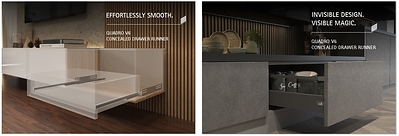
Designed to support modern furniture manufacturing, the Quadro V6 offers simplified installation and reliable performance, while adhering to the requirement for minimalist aesthetics. The Quadro V6 replaces conventional visible runners with a concealed full-extension solution that enhances both furniture aesthetics and user experience.
Installed beneath the drawer, the Quadro V6 eliminates visible runners and supports clean cabinet lines. Its concealed design supports clean, contemporary furniture designs, while full-extension access with integrated Silent System and Push to Open Mechanism contributes to everyday functionality.
Key Product Features
- Concealed design for wooden drawers and wire baskets.
- Robust steel ball runners with full-extension movement.
- Integrated Silent System and Push to Open Mechanism for smooth, quiet closing.
- High-precision runners ensure balanced and stable operation.
- Maintenance-free steel ball bearings for long-lasting user convenience.
- Special Quadro profile geometry provides excellent tracking and stability.
- 30 kg load capacity, certified to EN 15338 standards.
- Proven Hettich reliability, tested for consistent long-term performance.
“The furniture industry is evolving rapidly as manufacturers balance higher design expectations with the need for efficient production and consistent quality,” said Andre Eckholt, Managing Director, Hettich India, SAARC, Middle East & Africa. “Quadro V6 is a concealed drawer runner designed to help manufacturers move beyond conventional telescopic runner technology to a premium concealed motion solution. It reflects Hettich’s commitment to delivering advanced product solutions that support evolving demands in modern living and working spaces.”
The Quadro V6 is suitable for premium residential kitchens, wardrobes, office furniture, and hospitality interiors. Backed by Hettich’s German engineering and consistent manufacturing standards, it also helps OEMs and furniture manufacturers standardise hardware across projects while simplifying inventory management. With this standout system, dealers and distributors can offer customers a premium concealed runner solution, while architects, interior designers, and carpenters gain greater design flexibility for modern furniture usage.
About Hettich
Hettich is a 138-year-old family-owned German lifestyle brand, being one of the world’s largest manufacturers of Furniture Fittings.
Hettich’s product portfolio comprises a repertoire of Furniture Fittings, Architectural Hardware, Blaupunkt Built-in Appliances and Furniture Lights, providing magical interior solutions for all residential and commercial spaces.
It is the recipient of ET Edge ‘Best Brands’ (2022 – 2025), ‘Most Preferred Brand’ 2025 and ‘Most Trusted Brands of India’ (2023 – 2027) by Marksmen Daily, recognitions for its unwavering customer trust and strong brand equity. Hettich India has also been recognised among the Top 50 India’s Best Workplaces™ in Manufacturing (Large Category).
LinkedIn – https://www.linkedin.com/company/hettich-india
Facebook – https://www.facebook.com/HettichIndiaPrivateLimited
Instagram – https://www.instagram.com/hettichindia
Hettich India Website – https://hettichindiaonline.com
 View original content to download multimedia:https://www.prnewswire.com/in/news-releases/hettichs-quadro-v6-concealed-drawer-runner-offers-premium-furniture-performance-302842428.html

5, Aug 2026
SK Telecom Announces Q2 2026 Results
SEOUL, Korea, Aug 5 — SK Telecom (NYSE: SKM, hereinafter “SKT”) today announced its consolidated earnings for the second quarter of 2026, based on Korean International Financial Reporting Standards (K-IFRS): revenue of KRW 4.3591 trillion, operating income of KRW 566.0 billion, and net income of KRW 466.0 billion.
Compared with the same period last year, revenue increased by 0.5%, driven by growth in the data center business. Through efficient, profitability‑focused management, operating income rose 5.3% quarter over quarter (QoQ). Year over year (YoY), it surged 67.3%, supported in part by a favorable base effect from one‑off expenses in the prior year.
The telecommunications business, which has remained focused on restoring customer trust, showed a clear turnaround driven by efforts to enhance customer value and improve profitability. The AI business also recorded robust growth as execution accelerated under the company’s strategy of focus and prioritization.
On a non-consolidated basis, the company reported revenue of KRW 3.1170 trillion, operating income of KRW 427.7 billion, and net income of KRW 310.6 billion. The second-quarter dividend is KRW 830 per share,unchanged from the first quarter.
AI data center business gains momentum, fueling growth through rapid execution
The AI data center (AIDC) business is the fastest-growing segment among SKT’s business areas. In the second quarter, AIDC revenue reached KRW 136.2 billion, up 92.5% year over year, driven by expanded operations.
As generative AI adoption spreads across industries and demand for high-performance computing infrastructure surges, timely delivery of AI infrastructure for customers such as global Big Tech companies has never been more critical.
Last month, SKT established SK Hyper to spearhead AIDC business development, strengthening the company’s execution engine. SK Hyper will proactively secure key resources, including land and power capacity, and attract global customers to accelerate execution and seize market leadership.
Led by SK Hyper, SKT has set an initial goal of bringing AIDCs online in phases starting in 2029, targeting a combined capacity of 5 GW.
The telecommunications business continues to deliver qualitative growth centered on customer lifetime value (CLV). Through efficient marketing activities such as identifying new customer segments and running differentiated campaigns, it achieved net additions in mobile subscribers amid a stable market environment.
Customer Lifetime Value represents the total value a customer generates over the entire period of using a particular service, serving as a critical metric that reflects the depth of the relationship between the company and its customers.
In particular, SKT launched integrated 5G and LTE plans in July to reorganize its overall pricing structure while continuously enhancing customer value by improving customer experience and service accessibility.
“In the first half of the year, we focused on strengthening our fundamentals based on stable telecommunications business profitability while laying the foundation for the rapid expansion of our AI data center business,” said Park Jong-seok, CFO of SK Telecom. “Going forward, we will make every effort to play a leading role in enabling Korea to emerge as an AI infrastructure hub in Asia.”
※The conference call regarding SKT’s Q2 2026 earnings will be available on SKT’s website on Wednesday, August 5, at 16:00 KST.
https://irsvc.teletogether.com/skt/skt2026Q2eng.php
1. Summary of Consolidated Income Statement (Unit: KRW billion)
|
Type |
26.2Q |
25.2Q |
YoY |
26.1Q |
QoQ |
|
4,359.1 |
4,338.8 |
0.5% |
4,392.3 |
△0.8% |
|
|
Operating Income |
566.0 |
338.3 |
67.3% |
537.6 |
5.3% |
|
Net Income |
466.0 |
83.2 |
459.8% |
316.4 |
47.3% |
2. Summary of Non-Consolidated Income Statement (Unit: KRW billion)
|
Type |
26.2Q |
25.2Q |
YoY |
26.1Q |
QoQ |
|
Revenue |
3,117.0 |
3,135.1 |
△0.6% |
3,105.8 |
0.4% |
|
Operating Income |
427.7 |
250.9 |
70.5% |
409.5 |
4.4% |
|
Net Income |
310.6 |
36.9 |
742.2% |
332.7 |
△6.6% |
4, Aug 2026
Hard Rock Cafe and Coca-Cola® Launch Hard Rock Rising Music Competition for Emerging Artists
HOLLYWOOD, Fla., Aug. 4, 2026 /PRNewswire/ — Hard Rock Cafe and Coca‑Cola today launched Hard Rock Rising. The music competition spans 34 countries and 64 Hard Rock Cafes, giving emerging artists a career‑launching stage.

For more than five decades, breakthrough artists and legends have taken the stage at Hard Rock Cafes. Coca‑Cola has built a global platform for musicians through Coke Studio L.A. Live. Now, the two brands are joining forces to help singer‑songwriters, bands and DJs launch their careers.
Hard Rock Rising unfolds as a series of performances at participating Cafes. Local fan votes advance artists round by round. The Coke Studio team then selects one grand prize winner who earns a recording session, $10,000, a performance at Hard Rock Orlando and more.
Artist submissions are open now through August 18, with live competition rounds running September 2, 9, 16 and 23. The global winner will be announced October 5.
“Hard Rock Cafes have always connected people through the power of music with local artist residencies, open mic events, Battle of the Bands competitions, and pop culture memorabilia,” said Eric Martino, President of Hard Rock Cafe and Retail at Hard Rock International. “Now, Hard Rock Rising is a natural extension of that mission to empower emerging artists to perform their original music. Together with Coca-Cola, we’re proud to provide a platform where musicians can be seen, heard and celebrated in their communities, and for the winner, around the world.”
Multi‑platinum, GRAMMY‑ and Juno‑nominated executive producer Rob Rettberg leads the Coke Studio team.
“This partnership taps into Hard Rock’s unparalleled reach and iconic stages while leveraging Coke Studio’s production expertise to transform talented musicians into the next generation of recording artists,” said Rettberg.
The competition is amplified by a full Hard Rock Rising lineup, from a limited-time menu with cocktails made with Coca-Cola products to merchandise available at Rock Shops® and shop.hardrock.com.
Extending the competition’s celebration of music and self-expression beyond the stage, Hard Rock is partnering with Cult of Individuality, the streetwear brand renowned for its roots in music culture. Together, the brands will launch a Hard Rock Rising tee and a co-branded apparel collection.
Artists ready to take the stage can apply through August 18. Each application must include two original songs. For submissions, rules, competition details and participating Cafe locations, visit cafe.hardrock.com/hard‑rock‑rising.

 View original content to download multimedia:https://www.prnewswire.co.uk/news-releases/hard-rock-cafe-and-coca-cola-launch-hard-rock-rising-music-competition-for-emerging-artists-302842830.html

4, Aug 2026
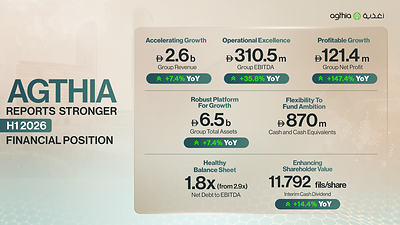
Agthia Reports Stronger H1 2026 Financial Position and Raises Interim Dividend 14.4%
ABU DHABI, UAE, Aug. 4, 2026 /PRNewswire/ — Agthia Group PJSC (AGTHIA: UH), one of the region’s leading food and beverage companies, today reported its first-half and second-quarter of 2026 results, reflecting the growing impact of its multi-year transformation, with stronger cash generation, a materially healthier balance sheet, and a 14.4% increase in the interim dividend.
The Group’s transformation gathered pace in H1 2026, as Agthia advanced its portfolio reset while navigating external challenges and cost pressures. For the first half, Group Revenue increased 7.4% year-on-year to AED 2.6 billion, underpinned by one-off sales under the UAE food security program. EBITDA climbed 35.8% to AED 310.5 million, with EBITDA Margin expanding 250 basis points to 11.9%, while Net Profit reached AED 121.4 million, up 147.4% year-over-year. For the second quarter, Group revenue increased 11.9% year-on-year to AED 1.3 billion. EBITDA increased 172.5% to AED 117.2 million, with margin expanding 542 basis points to 9.2%, while Net Profit reached AED 24.5 million.
Free cash flow turned strongly positive at AED 521.4 million, from an outflow a year earlier, and the Group cut its net debt-to-EBITDA to 1.8x from 2.9x in December 2025. Agthia closed the first half of 2026 with AED 869.6 million in cash. Group Total Assets continue to grow, reaching AED 6.5 billion as of 30 June 2026.
Across the Group, strong growth in core businesses was complemented by continued progress in selected transformation initiatives. Water and Food led the way, with revenue up 38.9% in the second quarter, as Al Ain, Agthia’s first billion-dirham brand, extended its lead in bottled water and gained 2.0 percentage points of value market share versus the same period last year. Protein and Frozen advanced 22.0% in the second quarter, led by Nabil at 32.5% and supported by gradual improvement in Atyab, up 8.1% year-on-year, and the ramp-up of the Group’s Saudi protein facility. Agri-Business rose 11.0% on strong feed demand, with Agrivita feed sales up 23.3%. During the quarter, Snacking remained focused on transforming the Al Foah and BMB businesses, laying the foundation for long-term value, while Abu Auf maintained its strong growth trajectory, with revenue rising 23.7% year-over-year in Q2 2026.
Agthia’s Board of Directors has recommended an interim cash dividend of 11.792 fils per share for the six months ended 30 June 2026, a 14.4% increase year-on-year and a second consecutive period of higher returns following the 10.0% rise recommended for the second half of 2025.
Khalifa Sultan Al Suwaidi, Chairman of Agthia’s Board, commented: “Raising the interim dividend for a second consecutive period speaks to the discipline with which Agthia is being run and to the Board’s belief in its long-term value. Even in a demanding environment, the Group is generating the cash to reward shareholders and fund its own growth.”
Salmeen Alameri, Managing Director and CEO of Agthia Group, added: “The transformation we set in motion a year ago is delivering tangible results, with stronger earnings, expanding margins, and improved cash generation strengthening our balance sheet. We maintained uninterrupted supply, supported our customers, and advanced the UAE’s food security agenda when it mattered most. We also accelerated our sustainability agenda, reducing our emissions ratio by 26.7% year-on-year.”
Jeroen Nijs, Chief Financial Officer of Agthia Group, commented: “Agthia’s financial profile strengthened considerably during the first half of 2026. Alongside higher earnings, we generated AED 521 million of free cash flow, while reducing Net Debt-to-EBITDA from 2.9x to 1.8x. With AED 870 million of cash & cash equivalents, Agthia is well positioned to navigate the current regional disruption, execute our strategic transformation programs and enhance shareholder returns.”
 View original content to download multimedia:https://www.prnewswire.co.uk/news-releases/agthia-reports-stronger-h1-2026-financial-position-and-raises-interim-dividend-14-4-302842808.html

4, Aug 2026
Guggenheim Abu Dhabi Appoints Inaugural Museum Director
ABU DHABI, UAE, Aug. 4, 2026 /PRNewswire/ — The Department of Culture and Tourism – Abu Dhabi today announced the appointment of Dr. Valerie Hillings as the inaugural Director of Guggenheim Abu Dhabi.

Guggenheim Abu Dhabi is a cornerstone of Saadiyat Cultural District, one of the world’s greatest concentrations of cultural institutions. Alongside Louvre Abu Dhabi, Zayed National Museum, Natural History Museum Abu Dhabi and teamLab Phenomena Abu Dhabi, it affirms Abu Dhabi’s cultural vision.
As Director, Dr. Hillings will bring this vision to life leading the museum’s strategic direction, overseeing its inaugural exhibitions and programmes, and establishing an institution that is rooted in Abu Dhabi and connected to the world, one that connects cultures, inspires people and celebrates art from the 1960s to the present.
Dr. Hillings brings deep familiarity with Guggenheim Abu Dhabi to the role. From 2009 to 2018, she served as the Solomon R. Guggenheim Foundation’s Curator and Associate Director of Curatorial Affairs, Guggenheim Abu Dhabi Project, working closely with the Department of Culture and Tourism – Abu Dhabi on the collection strategy and acquisitions, pre-opening programming and the Frank Gehry-designed building. Earlier, she spent five years on the Guggenheim’s curatorial staff in New York.
Since 2018, Dr. Hillings has served as Director of the North Carolina Museum of Art, where she led the reimagination of its permanent collection galleries, added some 400 works to the collection and oversaw a doubling of annual attendance to 1.2 million visitors. She holds a PhD and MA in Art History and Archaeology from the Institute of Fine Arts, New York University, and an AB in Art History from Duke University, with a specialisation in modern and contemporary art.
Dr. Valerie Hillings said: “I am honoured to return to Abu Dhabi to complete the once-in-a-lifetime journey of founding and opening Guggenheim Abu Dhabi, a museum developed in the United Arab Emirates by colleagues from both the region and around the world. I look forward to welcoming local and global audiences to the magnificent Frank Gehry-designed building and inviting them to explore points of interconnection and unique stories through the lens of art from the 1960s to our time.”
Through Guggenheim Abu Dhabi’s collection, exhibitions, commissions, research and public programmes, the museum will foster dialogue across cultures and generations while reinforcing Abu Dhabi’s role as a global centre for artistic innovation, creative production and cultural exchange. Housing 30 galleries across 11,600 square metres of interior exhibition space, alongside 23,000 square metres of outdoor exhibition areas, Guggenheim Abu Dhabi will provide one of the world’s most significant platforms for modern and contemporary art upon its opening.
NOTE TO EDITORS
GUGGENHEIM ABU DHABI IS NOW LIVE on Instagram, YouTube, TikTok, X, Facebook and LinkedIn.
REGISTER YOUR DETAILS TO RECEIVE FUTURE ANNOUNCEMENTS
For more information about the Department of Culture and Tourism – Abu Dhabi and the destination, please visit: dctabudhabi.ae and visitabudhabi.ae and abudhabiculture.ae
 View original content to download multimedia:https://www.prnewswire.co.uk/news-releases/guggenheim-abu-dhabi-appoints-inaugural-museum-director-302842622.html

4, Aug 2026
Major Multi-Hospital System Selects 3CLogic to Modernize IT Service Operations with Voice AI for ServiceNow
The deployment embeds real-time transcription, live-agent automation, and unified analytics directly within ServiceNow, helping a major healthcare provider resolve IT issues faster and lower the cost of support.
ROCKVILLE, Md., Aug. 4, 2026 /PRNewswire/ — 3CLogic, the leading AI-powered voice platform purpose-built for ServiceNow, today announced that a northeastern health network has selected its Voice AI and contact center solution to modernize its IT service desk and unify voice with its existing ServiceNow® platform. The selection comes as the healthcare provider moves to consolidate vendors, retire aging telephony, and bring AI-driven automation to the team that keeps its clinical and administrative workforce running.

Modernizing Support for a Large, Time-Sensitive Workforce
The organization’s IT Service Desk is the front line for tens of thousands of clinicians, staff, and suppliers across its network of hospitals and regional clinics. A comparatively small, specialized team is responsible for sourcing, triaging, and resolving consistently high call volumes from password resets and access issues to requests that can directly affect patient care.
Because the legacy telephony operated separately from ServiceNow, agents had to verify callers manually, move between disconnected systems, and log details by hand, while leaders assembled performance data from multiple tools. For the lean IT team serving a much larger and time-sensitive audience, that inefficiency carried a measurable operational and financial cost that compounded with every added minute of handle time, every request that could have been automated, and every manually created report. Modernizing those workflows, the health system recognized, was as much a cost-reduction initiative as a service-quality one.
AI and Automation, Native to ServiceNow
After evaluating competing platforms, the health system selected 3CLogic for its native ServiceNow integration and its ability to bring AI directly into the flow of every interaction. The deployment will deliver:
- ServiceNow-Integrated Contact Center with Intelligent Voice Workflows: Modern, self-service voice flows for high-frequency requests such as password resets, plus automated outage deflection that detects an active major incident, links callers to the master ticket, creates a child incident, and returns an incident ID without live-agent involvement.
- Real-Time Transcription with Live-Agent Automation: Every call is transcribed and summarized as it happens, surfacing in-the-moment context and next-best-action guidance for agents and auto-generating notes and resolution details, so time is spent resolving issues rather than documenting them.
- AI-Powered Sentiment Analysis: Providing supervisors visibility into caller experiences and coaching opportunities at scale.
- Unified Analytics Integrated with ServiceNow Platform Analytics: Contact center data flows directly into Platform Analytics to create a single, real-time source of truth across voice and digital channels, replacing labor-intensive manual reporting.
- Priority Routing for Critical Care: Requests tied to time-sensitive patient care are identified and escalated quickly using data already in ServiceNow.
Proven Results in Healthcare
The health system joins a growing roster of healthcare organizations modernizing service operations with 3CLogic. At Cleveland Clinic, which deployed 3CLogic’s platform natively within ServiceNow, first-call resolution rose from under 60% to more than 86%, more than 20% of incoming calls were resolved through voice self-service, and monthly reporting that once required a full week was reduced to 45 minutes, the kind of efficiency and cost gains the health system aims to achieve.
“Healthcare providers are under enormous pressure to do more with lean, specialized teams, and the IT service desk is no exception,” explains Bob Doherty, Vice President of Global Sales at 3CLogic. “By embedding real-time transcription, live-agent automation, and unified analytics directly into ServiceNow, we’re helping this health system turn every call into actionable intelligence, resolving issues faster, reducing manual work, and lowering the operational cost of delivering support at scale.”
3CLogic is a ServiceNow certified Elite Build Partner with offerings available for ServiceNow IT Service Management, CRM and Industry Workflows, and HR Service Delivery . The organization will attend ServiceNow’s upcoming World Forums in New York City, Chicago, London, and Amsterdam where it will showcase its latest voice platform an AI innovations.
For more information, visit 3CLogic.com.
About 3CLogic
3CLogic transforms customer and employee experiences with its patented and award-winning AI-powered cloud contact center solutions purpose-built to enhance today’s leading CRM and Customer Service Management platforms. Globally available and leveraged by the world’s leading brands, its offerings empower enterprise organizations with innovative capabilities, such as intelligent self-service, Voice AI, agent automation & coaching, real-time transcription, and AI-powered sentiment analytics—all designed to lower operational costs, maximize ROI, and deliver better, faster, and more personalized interactions for IT, employee, and customer service. For more information, please visit www.3clogic.com.
ServiceNow, the ServiceNow logo, and other ServiceNow marks are trademarks and/or registered trademarks of ServiceNow, Inc. in the United States and/or other countries.
 View original content to download multimedia:https://www.prnewswire.co.uk/news-releases/major-multi-hospital-system-selects-3clogic-to-modernize-it-service-operations-with-voice-ai-for-servicenow-302841636.html