


15, Oct 2026
Odisha Taps AMD Expertise to Accelerate Critical Mineral Exploration, OMC Signs MoU
Bhubaneswar, Oct 15 (UDN): In a major push to strengthen Odisha’s critical mineral resources, the Odisha Mining Corporation Ltd (OMC) has signed a Memorandum of Understanding (MoU) with the Atomic Minerals Directorate for Exploration and Research (AMD), Hyderabad, to advance scientific research and mineral exploration across the State.
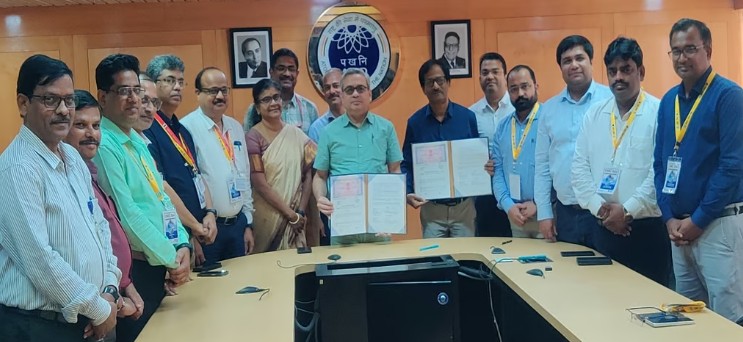
The agreement, signed on Wednesday, brings together OMC, a wholly owned corporation of the Odisha government, and AMD, functioning under the Union government’s Department of Atomic Energy. The collaboration aims to identify and explore critical and strategic mineral resources through scientific investigations, technical cooperation and the sharing of expertise.
According to an official statement, the partnership will cover research, the exchange of scientific and technical information, knowledge sharing and exploration activities within OMC’s mining lease areas and other locations across Odisha. The initiative is also expected to encourage joint research, capacity building and the adoption of modern exploration technologies to improve the identification and assessment of mineral deposits.
The collaboration aligns with the Centre’s National Critical Mineral Mission, launched in January 2025 to secure a sustainable domestic supply of minerals essential for clean energy, technological advancement and strategic industries.
Critical minerals have assumed growing importance as India seeks to reduce dependence on imports, strengthen domestic supply chains and support emerging sectors such as renewable energy, advanced electronics and modern manufacturing. Enhanced exploration and the development of indigenous mineral resources are key to meeting these requirements and improving the country’s long-term resource security.
The Odisha government said the agreement marks an important step towards strengthening the State’s position as a major centre for critical mineral development and high-technology industries. By combining OMC’s mining expertise with AMD’s scientific and technical capabilities, the partnership seeks to expand exploration efforts and support the discovery of resources with strategic and industrial significance.
The initiative also reflects OMC’s focus on technology-led exploration, responsible mining practices and the development of mineral resources to meet future industrial requirements. Greater scientific understanding of Odisha’s mineral potential could help create opportunities for downstream industries while supporting the State’s broader industrial development objectives.
OMC is among India’s major mining companies, with operations involving minerals such as chromite, iron ore, bauxite, manganese and limestone. These resources supply key mineral-based industries, including steel, aluminium, sponge iron, pig iron, ferro-manganese and ferro-chrome manufacturing.
With the new agreement, Odisha aims to strengthen the scientific foundation of its mineral exploration programme and contribute to India’s wider efforts to build a secure, resilient and self-reliant critical mineral supply chain.
- 0
- By Neel Achary

15, Oct 2026
SMU Executive MBA enters global Top 50 in Financial Times ranking
Programme rises nine places to 46th worldwide and ranks 9th globally for International Course Experience
SINGAPORE, Oct. 15, 2026 /PRNewswire/ — Singapore Management University’s (SMU) Executive Master of Business Administration (EMBA) has entered the global Top 50 in the Financial Times (FT) Executive MBA Ranking 2026, rising nine places from its last ranked position in 2024 to 46th worldwide.
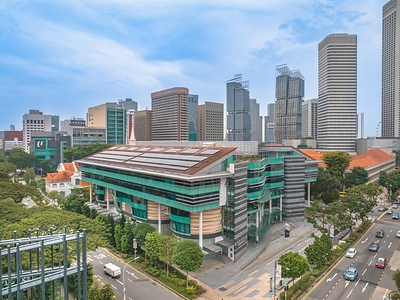
The programme’s strongest gains came in International Course Experience[1] and Career Progress[2]. SMU climbed 18 places to 9th globally for International Course Experience, its best result to date, and rose 27 places to 42nd globally for Career Progress, also a record for the programme.
Global exposure and career advancement
The results underscore key strengths of the SMU EMBA: giving senior executives opportunities to deepen their understanding of different markets and business environments, while supporting their continued development as leaders.
SMU’s Top 10 global position for International Course Experience reflects the programme’s emphasis on learning across borders and gaining first-hand exposure to business beyond Singapore, in the biggest economies in the world – the United States, China and Europe. Its improvement in Career Progress also points to the advancement of alumni into more senior positions, within or outside their organisations following their EMBA.
The programme also saw alumni rating the network more highly for career opportunities, recruitment, entrepreneurship and access to events. This reflects the growing strength of the EMBA network that encompasses a good ecosystem to support thriving leaders across various industries and organisations.
Dr Ang Ser Keng, EMBA Academic Director at SMU’s Lee Kong Chian School of Business, said: “We are deeply encouraged by our gains in Career Progress and International Course Experience, as they reflect two things that matter greatly to experienced executives: continuing to grow as leaders and developing the perspectives to operate effectively across markets.”
“Today’s senior leaders need to understand how business is conducted across different markets, cultures and economic environments. Our EMBA is designed to give participants that breadth of perspective. Through learning experiences in Asia, Europe and the United States, they engage with different business ecosystems, exchange perspectives with leaders and organisations across markets, and bring those insights back to their own leadership contexts. This international exposure, combined with the experience of their peers in the classroom, is an important part of how we prepare executives to lead in an increasingly interconnected world.”
The FT Executive MBA Ranking draws on information provided by business schools and their alumni and assesses the programme across measures including career outcomes, diversity, international experience, research and ESG. In the 2026 ranking, alumni-based criteria account for 52 per cent of the overall assessment, with school-provided data accounting for 48 per cent.
The SMU EMBA is offered by SMU’s Lee Kong Chian School of Business (LKCSB). It is a high–impact, leadership–focused programme designed to develop senior executives into globally minded, purpose–driven leaders equipped to navigate complex and rapidly evolving business environments. It is delivered in a modular format, designed specifically for senior executives. Teaching is conducted in intensive blocks, blending in-person sessions, global immersion components, and experiential projects to maximise flexibility and learning impact. The programme targets mid–to–senior level executives with significant professional experience (averaging 20 years), typically in leadership or strategic roles.
About Singapore Management University (SMU)
Established in 2000, Singapore Management University (SMU) is recognised for its high-impact, multi-disciplinary research that addresses Asian issues of global relevance, and for its interactive, collaborative and project-based approach to learning. Home to over 13,000 students across six schools and two colleges, SMU offers bachelors, masters and PhD programmes across Accountancy, Business, Economics, Information Systems, Integrative Studies, Law and Social Sciences, as well as executive development and continuing education programmes. SMU graduates are consistently ranked among the most employable in Singapore, and command one of the highest mean starting salaries. Through its city campus, SMU enjoys strategic linkages with business, government and the wider community in Singapore and beyond. www.smu.edu.sg
|
[1] International course experience ranking is based on the percentage of classroom teaching hours for the recent completing class, that were required to be conducted outside the location in which the business school is situated. In-person, virtual and hybrid experiences are included. [2] Career progress is calculated according to changes in the level of seniority and the size of company or organisation the alumni work in now, versus before their EMBA. |
 View original content to download multimedia:https://www.prnewswire.com/in/news-releases/smu-executive-mba-enters-global-top-50-in-financial-times-ranking-302905022.html

15, Oct 2026
Vedanta Aluminium Deepens Global Partnerships, Showcases Sustainable Solutions at ALUMINIUM 2026 in Düsseldorf
Bhubaneswar, Oct 15 (UDN): Vedanta Aluminium, India’s largest aluminium producer, strengthened its engagement with international customers, industry stakeholders and technology partners at ALUMINIUM 2026, a leading global trade fair for the aluminium industry held in Düsseldorf, Germany.
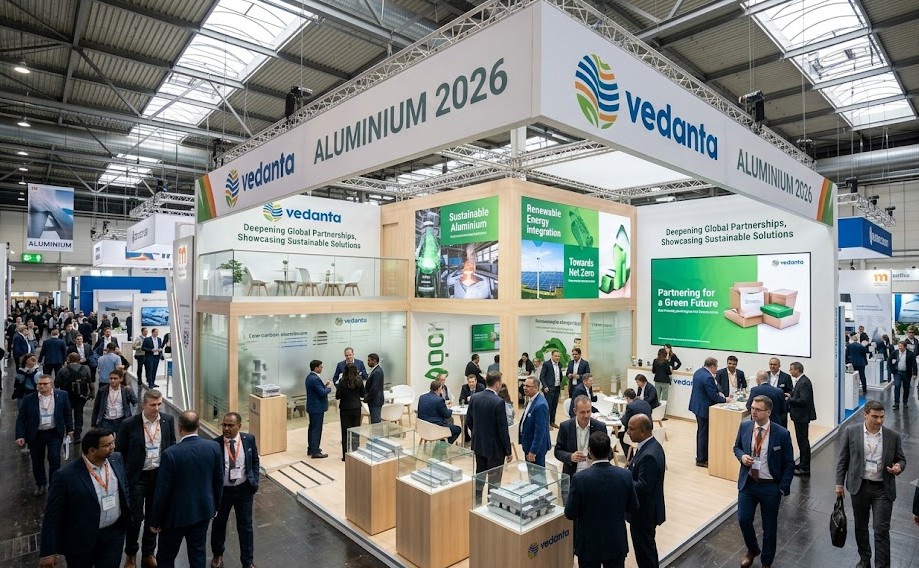
Representational Image
The participation provided a platform for the company to exchange insights on emerging industry trends, explore new business opportunities and strengthen partnerships across international markets. With sustainability, supply chain resilience and advanced manufacturing gaining prominence, Vedanta Aluminium highlighted its commitment to delivering high-quality, value-added aluminium products and customer-focused solutions to meet the evolving requirements of global industries.
Discussions at the exhibition centred on key developments shaping the aluminium sector, including low-carbon materials, product innovation, reliable supply networks and customised solutions for diverse industrial applications. The conversations also underscored the growing importance of technological advancement and closer collaboration between producers and customers in an increasingly competitive global marketplace.
Rajesh Kumar, CEO, Vedanta Aluminium, said, “The global aluminium industry is witnessing a significant shift, with customers placing greater emphasis on sustainability, supply chain resilience and advanced manufacturing applications. This presents an opportunity to build stronger partnerships, drive product innovation and deliver greater value through differentiated solutions. At Vedanta Aluminium, we remain committed to deepening customer relationships, expanding our value-added portfolio and supporting the evolving needs of industries across global markets.”
With a customer presence spanning more than 60 countries, Vedanta Aluminium caters to a broad spectrum of industrial sectors through its portfolio of primary and value-added aluminium products. Its offerings include billets, wire rods, primary foundry alloys and specialised products serving automotive, electrical, infrastructure, renewable energy and advanced manufacturing applications.
The company continues to focus on improving product quality, accelerating technical qualification processes and developing application-specific solutions to address customer requirements across international markets. Engagements at global industry platforms such as ALUMINIUM 2026 also enable the company to gain a deeper understanding of changing market expectations and identify opportunities for long-term collaboration.
Sustainability was another key theme throughout the exhibition, with industry discussions highlighting renewable energy integration, circularity, recycled aluminium content and emissions reduction. As manufacturers and end-users increasingly prioritise responsible sourcing and greater supply chain transparency, collaboration across the aluminium value chain is becoming increasingly important to advancing decarbonisation efforts.
The exhibition also offered insights into growth opportunities linked to automotive electrification, power transmission, renewable energy infrastructure and other emerging applications. These sectors are creating demand for aluminium solutions that combine performance, reliability and resource efficiency, reinforcing the importance of continuous innovation and technical partnerships.
With an installed production capacity of more than 2.4 million tonnes per annum, Vedanta Aluminium remains focused on strengthening its position in international markets through customer engagement, product development and operational excellence. Its participation at ALUMINIUM 2026 reflects the company’s continued efforts to align its offerings with global industry priorities while building lasting partnerships and supporting the expanding role of aluminium in a more sustainable industrial future.
15, Oct 2026
Leonardo DRS STAG-5 EO/IR Gimbal with Laser Target Designator Supports Precision Fires Demonstration During Iron Sting Event
Precision fires validation highlights how DRS’ STAG-5 gimbal can help operators improve targeting accuracy, extend standoff and enable precision fires in contested environments

ARLINGTON, Va.– Oct. 15, 2026 – Leonardo DRS, Inc. (Nasdaq: DRS) announced today that its STAG-5 EO/IR Gimbal with Laser Target Designator (LTD) supported a recent precision fires demonstration in conjunction with Performance Drone Works (PDW) during the Iron Sting Precision Mortar Validation Event, highlighting the role of advanced target design capabilities in enabling extended-range, accurate strike operations. The event was hosted by the Capability Development & Innovation (CD&I) office, formerly the Irregular Warfare Technical Support Directorate (IWTSD), within the Secretariat for Special Operations (SSO) in support of the U.S. Army Special Operations Command (USASOC).
Conducted at the White Sage Mortar Range in Dugway, Utah, the event evaluated the safety, accuracy, and extended-range performance of next-generation precision mortar munitions while also providing operators with hands-on experience using emerging technologies in realistic scenarios.
During the event, a PDW C100 drone equipped with the DRS STAG-5 EO/IR Gimbal with Laser Target Designator supported target designation during mortar engagements at ranges exceeding the standard maximum range of a 120 mm non-rifled mortar. The successful execution of repeated engagements demonstrated the consistency and reliability required for operational employment and reinforced the value of advanced laser designation capabilities in modern fires workflows.
“The STAG-5 is designed to provide operators with precise, reliable ISR and targeting capabilities that can enhance mission effectiveness across a wide range of operational environments,” said Jerry Hathaway, senior vice president and general manager of Electro-Optical Infrared Systems (EOIS) at Leonardo DRS. “Events such as Iron Sting underscore the importance of delivering technologies that improve accuracy, extend operator standoff, and support evolving battlefield requirements.”
The STAG-5 is designed to support mission success by enabling operators to designate targets with precision and confidence as part of integrated fires operations. When paired with advanced electro-optical and infrared sensing capabilities on deployed platforms, the system can improve target acquisition and designation, strike confirmation, and mission observation from safer standoff positions.
DRS continues to work closely with customers, operators, and industry partners to advance precision engagement solutions that address the needs of today’s warfighter. Through participation in events such as Iron Sting, the company is demonstrating how scalable, mission-ready technologies can help operators Own the Edge™ through improved precision, survivability and operational flexibility in contested environments. For more information regarding the DRS STAG-5 EO/IR Gimbal, visit www.leonardodrs.com/stag5.
15, Oct 2026
Jeanologia brings a new perspective on the product to Kingpins Amsterdam:
Jeanologia brings a new perspective on the product to Kingpins Amsterdam: understanding its impact and expanding creative possibilities
-
The company presents the new generation of EIM to the international denim community.
-
Jeanologia’s presence at Kingpins also includes COMMON GROUND, a collaboration with Sue Barrett exploring the relationship between nature, camouflage, craft and technology.
Valencia (Oct 15, 2026). What lies behind a garment? From the processes and resources used to make it to the creative decisions that shape its final look. Jeanologia brings this question to Kingpins Amsterdam, one of the leading meeting points for the international denim community, where on October 14–15 it will present two different perspectives on the product: understanding and measuring its impact and exploring new ways to create it.
For two days, yarn and fabric manufacturers, garment makers, finishers, brands and designers come together in Amsterdam. This makes Kingpins a key setting for Jeanologia to introduce the new generation of EIM, which expands environmental measurement across the different stages involved in making a garment, and to present COMMON GROUND, its collaboration with Sue Barrett, where nature and camouflage become the starting point for creative exploration.
From yarn to garment: EIM comes to Kingpins
After more than 15 years measuring the environmental impact of garment finishing, EIM is expanding its scope to connect information from yarn, fabric and garment finishing under one common methodology. This evolution addresses one of the textile industry’s key challenges: a garment passes through multiple processes and players before reaching the consumer, and understanding its impact requires reliable, comparable information from each of these stages.
At Kingpins, Jeanologia will demonstrate how this new architecture works through live demonstrations of the different EIM modules and sessions with brands and manufacturers, showing how environmental information can be generated, connected and used throughout the production chain.
The new EIM includes independent Yarn, Fabric and Garment Finishing modules, allowing each stage to be measured separately, while EIM+ brings the results together to provide a complete view of the product. Using primary production data, EIM measures water and energy consumption and chemical use, as well as worker impact at the garment-finishing stage, and classifies environmental performance as low, medium or high impact.
The information remains traceable and is structured for use in tools such as the Digital Product Passport (DPP) and Life Cycle Assessment (LCA). While EIM has its roots in denim and the measurement of garment-finishing impact, this new generation expands its application to any textile product, from yarn to finished garment.
“Kingpins gives us the opportunity to introduce the new EIM to a community that brings together many of the players involved in creating a garment. The challenge is no longer to measure processes in isolation, but to connect that information, understand the product as a whole and turn data into a tool to compare, decide and improve,” says Begoña García, EIM Director.
COMMON GROUND: observe, transform, belong
Jeanologia’s second proposal in Amsterdam moves into the creative space. Developed in collaboration with Sue Barrett, COMMON GROUND is a collection that explores our relationship with nature through pattern, camouflage and transformation.
Inspired by shapes, textures, shadows and patterns found in the natural environment, the collection reinterprets camouflage through craft, creativity and technology. Camouflage becomes the visual thread connecting the pieces and a way to explore ideas of adaptation, identity and belonging.
Jeanologia’s laser and G2 Ozone technologies are part of this creative process. Laser brings pattern, contrast and depth directly onto the garment, while ozone works with colour and ageing to shape the final look. Technology becomes a tool to translate the creative idea into the product and expand its possibilities.
The concept is captured in the COMMON GROUND manifesto:
Observe.
Transform.
Belong.
Nature creates the pattern.
The maker transforms it.
The wearer gives it meaning.
“There are a handful of projects we remember as ‘the ones’, built on true collaboration and creativity. COMMON GROUND is one of those. It has been a chance to bring together my passion for camouflage and utility clothing with nature, craft and technology, and reinterpret these references in a new way,” says Sue Barrett.
“For some of us, the creative process is as meaningful as the final collection. COMMON GROUND made us think about the balance between becoming part of our surroundings while still preserving our own identity, what makes us unique while sharing a common ground,” says Carme Santacruz, Creative Director at Jeanologia.
15, Oct 2026
EASYMLS BRINGS AN INDEPENDENT MLS TO U.S. YACHT BROKERS FROM NEW MIAMI HEADQUARTERS
Enhanced by AI tools, the Multiple Listing Service platform expands across the U.S., reaching brokers on both the East and West coasts
MIAMI, Fla.(October 15, 2026) – EasyMLS, the all-in-one platform built for yacht brokers, dealers, shipyards, charter operators and private owners, founded by Lionel Nicolai and now headquartered in Miami, is expanding its reach across both the East and West coasts of the United States, powered by a growing suite of artificial intelligence tools.
Founded on the idea that the yacht or boat itself should be the center of a broker’s business, EasyMLS gives yachting professionals a single platform to list, distribute, share and close deals, with artificial intelligence increasingly at the core of how the platform helps brokers work.
In yachting, the software a broker uses usually belongs to the site they advertise. Unlike software tied to a single advertising portal, EasyMLS is independent. Brokers can publish once, distribute their listings across the channels they choose, and maintain ownership of their leads and data.
At the center of that intelligence is the AI Estimator, which produces an indicative market estimate in seconds, based on real market comparables, giving brokers instant, data-driven pricing instead of relying on guesswork or outdated comps. The AI Import Engine automatically imports boat catalogs from PDFs, Excel files or third-party portal URLs, eliminating hours of manual data entry each week.
EasyMLS is the work of founder Lionel Nicolai, a Frenchman who grew up around the yachting industry; in his family, selling boats is a business passed down from father to son. While living and working in the United States, notably in real estate, Nicolai discovered the power of the Multiple Listing Service (MLS)
and realized yachting had never had a universal, independent MLS equivalent. That dual perspective, deep knowledge of boats paired with firsthand insight into the American market, became the foundation for EasyMLS.
“In real estate, no broker would work without an MLS. Yachting never had a universal, independent MLS. That is what we are building, and it belongs to the brokers who use it, not to a portal renting them space,” said Nicolai.
EasyMLS is used by brokers across the United States, alongside an established base in Europe.
Looking ahead, EasyMLS plans to extend its reach beyond the U.S., with future expansion planned into Canada, the Caribbean and South America, further connecting yacht professionals across the Americas to its network.
15, Oct 2026
Wiliot and Thinaer Partner to Bring Secure Physical AI to the Department of Defense Customer Base
SAN DIEGO, CA – October 15, 2026 – Wiliot, a global leader in Physical AI for supply chains, and Thinaer, an industry leading provider of Physical AI infrastructure and software, today announced a partnership to bring secure, real-time asset visibility to the defense industrial base. The collaboration begins with a Thinaer deployment at a major U.S. aerospace and defense manufacturer serving the Department of Defense (DoD), tracking critical materials and parts throughout its internal supply chain.
Thinaer will begin deploying 1.7 million Wiliot IoT Pixels in Q1 2027 at the first customer’s operations, establishing a foundation for broader adoption across the defense industrial base.
The partnership also marks Wiliot’s entry into defense following scaled deployments across retail, post and parcel, logistics, and food and beverage. It extends Physical AI to complex defense manufacturing operations, where continuous asset visibility can help keep critical production programs on schedule.
Within these operations, materials and parts can undergo ten or more transformations as they move between locations, including temporary external facilities. Losing visibility between production stages can leave teams searching for critical components and put production schedules at risk. Tracking those movements continuously helps manufacturers understand where materials have stalled and intervene before delays spread across the operation.
“True Physical AI closes the gap between raw material and intelligent action. When every object on the factory floor is ambiently connected, the floor becomes a dynamic, self-navigating ecosystem where materials communicate their own state, location, and operational readiness to the systems and humans moving them,” said Bryan Merckling, CEO of Thinaer. “Wiliot IoT Pixels’ combination of size, cost, and battery-free operation lets us connect far more of those materials to the ‘Connect Everything’ layer of our Physical AI platform.”
Wiliot IoT Pixels are stamp-sized, battery-free Bluetooth sensors that attach to materials, parts, or containers to aggregate real-time location data. Wiliot’s Physical AI platform processes this data into asset-level insights that Thinaer integrates with information from its broader sensor infrastructure.
Together, these inputs give defense teams a shared view of operations across facilities to track asset movements, identify bottlenecks, and address delays. They also provide AI systems with the physical-world context needed to anticipate disruptions and keep production on schedule.
Protecting that operational data is central to the joint solution. Wiliot IoT Pixels transmit encrypted data that remains protected during collection and relay until it reaches the processing environment behind secure firewalls. Thinaer’s platform operates in government secure cloud environments, including Impact Level 5 environments, bringing established security infrastructure to the partnership’s defense applications.
“Defense manufacturers need continuous insight into their operations and control over the sensitive information those operations generate,” said Alex Sliwinski, Wiliot Vice President of Sales. “Encrypted data at the asset level is fundamental to serving this market. With Thinaer, we can put that data to work securely across the materials and parts on which defense production depends.”
With a roadmap to millions of tracked assets, the first deployment establishes a foundation for broader adoption of Physical AI across defense manufacturing. Thinaer has already identified additional customers for the joint solution, while its work in healthcare and other industrial markets provides opportunities to extend the partnership beyond defense.
14, Oct 2026
BingX EU Secures MiCAR License, Advancing Regulated Crypto Services Across Europe
VIENNA, Oct. 14, 2026 /PRNewswire/ — BingX EU (MEGE zweite GmbH) has secured its Markets in Crypto-Assets Regulation (MiCA or MiCAR) license from Austria’s Financial Market Authority (FMA), that will enable the platform to offer regulated crypto services across 29 countries of the European Economic Area (EEA), subject to ongoing passporting arrangements. The authorization marks a significant milestone in BingX’s European expansion, providing EEA users with access to digital asset services under a unified regulatory framework built on transparency, security, and investor protection.
The authorization reflects BingX EU’s long-term commitment to responsible growth in Europe. As digital assets become increasingly integrated into the financial system, regulatory clarity plays an essential role in strengthening user confidence, supporting institutional participation, and enabling sustainable industry development. Through its regulated European entity, BingX EU will provide compliant crypto services designed to meet the evolving needs of both retail and institutional users across the EEA.
“Our priority is to provide European users with trusted and locally regulated trading experience,” said Daniel Lai, Chief Executive Officer of BingX EU. “Operating under MiCAR will allow us to deliver our services under a clear regulatory framework that gives users confidence while supporting the long-term development of Europe’s digital ecosystem. It also enables us to combine innovation with the high standards of security, transparency and accountability that European users and institutions expect. We believe this foundation can help create a more accessible and sustainable environment for the continued adoption of digital assets across the region.”
Looking forward, BingX EU will continue working closely with Austria’s FMA and other European regulators as it prepares for the launch of its regulated services across the European Economic Area. BingX EU remains committed to operating within Europe’s regulatory framework while providing users with secure, transparent and compliant access to digital asset services.
About BingX EU
MEGE zweite GmbH (“BingX EU“) is a MiCAR-regulated crypto-asset platform, headquartered in Vienna, licensed as a Crypto-Asset Service Provider (CASP) under the Markets in Crypto-Assets Regulation (MiCAR). Dedicated to serving clients across 29 countries in the European Economic Area, BingX EU delivers fully regulated services in alignment with European standards for investor protection and market integrity. Under its MiCAR authorization, BingX EU provides a platform that offers regulated broker services, such as crypto custody, exchange, and other crypto services.
About BingX
Founded in 2018, BingX is one of the world’s leading multi-asset trading platform, serving more than 40 million users worldwide. The company has been the Principal Partner of Chelsea FC since 2024 and became the Official Team Partner of Scuderia Ferrari HP in 2026.
Disclaimers: The content qualifies as a marketing communication under the Markets in Crypto-Assets Regulation (MiCAR) and is issued by MEGE zweite GmbH (BingX EU). It does not constitute investment advice.

 View original content to download multimedia:https://www.prnewswire.co.uk/news-releases/bingx-eu-secures-micar-license-advancing-regulated-crypto-services-across-europe-302908808.html

14, Oct 2026
ROYAL CARIBBEAN UNVEILS MORE WAYS TO EXPLORE EUROPE IN 2028-29 WITH NEW YEAR-ROUND SEASON
Travellers can discover Europe year-round with new winter adventures to the Canary Islands, Madeira and Morocco, summer adventures across Scandinavia and the Greek Isles, and visits to Royal Beach Club Santorini
MIAMI, Oct. 14, 2026 /PRNewswire/ — Royal Caribbean is expanding its 2028-29 Europe lineup with the brand’s boldest year-round season, offering more ways to explore the Mediterranean, Northern Europe and the Canary Islands across seven ships. For the first time, holidaymakers can explore Europe any time of year on Rhapsody of the Seas, from summer adventures with overnight stays in Egypt to winter getaways to the Canary Islands. Across the season, travellers can discover sought-after destinations throughout Greece, Turkey, Portugal, Spain and Northern Europe – including Royal Caribbean’s return to Copenhagen and Stockholm – on 7-to 12-night holidays with experiences for all ages on board. Bookings for the European 2028-29 season are now open for Crown & Anchor Society loyalty members on Royal Caribbean’s website ahead of the official opening on Thursday, Oct. 15.

Holidaymakers exploring the Greek Isles can experience the Ultimate Santorini Day, a full-day excursion combining visits to Oia and Fira with access to Royal Beach Club Santorini, featuring a stunning beach, authentic local cuisine and more. At the beach club, guests can explore an open-air market showcasing a rotating selection from local businesses, including produce from Nomikos Estate; ouzo, tsikoudia and aged tsikoudia from Santorini distillery Canava Lyngos; and wine from Santo Wines. Select getaways with later evening stays give guests even more time to take in the island’s scenery and experiences.
Europe 2028-29 Highlights
- Rhapsody of the Seas – From Athens (Piraeus); Barcelona; and Lisbon, Portugal
Rhapsody will kick off Royal Caribbean’s year-round Europe season with 7- to 12-night holidays from Athens (Piraeus), Barcelona and Lisbon. From May to October 2028, holidaymakers can explore the history and culture of Turkey and Egypt on 7-night getaways with overnight stays in Alexandria, Egypt and Istanbul or take in the sun-soaked destinations of Greece, including the Ultimate Santorini Day to spots around the island and Royal Beach Club Santorini. Starting November 2028, Rhapsody will deliver 9- to 12-night getaways visiting destinations across the Canary Islands, Portugal, Morocco, Cyprus, Malta and Greece. Holidaymakers can discover Tenerife’s natural saltwater pools and Gran Canaria’s Maspalomas Dunes, explore the vibrant cities of Casablanca and Tangier, Morocco, or experience overnight stays in Alexandria. The season also marks Royal Caribbean’s return to Heraklion, Greece, and Cagliari, Sardinia, Italy for the first time in more than a decade. Between adventures, guests can relax by the outdoor pool or fully climatized Solarium, enjoy live entertainment, and dive into global cuisines from sushi at Izumi to premium steaks at Chops Grille.
- Explorer of the Seas – From Ravenna (Venice)
From May to October 2028, Explorer will deliver 7-night Mediterranean holidays to the Greek Isles and Croatia, with every holiday including later stays in Santorini for more time to soak up the island’s iconic caldera views, whitewashed villages and spectacular sunsets, along with Royal Beach Club Santorini. Select getaways also feature visits to Kotor, Montenegro, where holidaymakers can enjoy a hike and a picnic in Lovcen National Park or walk through Kotor’s Old Town. On deck, Royal Caribbean’s signature experiences include the FlowRider surf simulator, The Perfect Storm waterslides, and the adults-only Solarium.
- Freedom of the Seas – From Southampton, England
Adventurers on Freedom can choose from a range of 3- to 9-night holidays across Northern and Southern Europe from May to October 2028. Across the Norwegian fjords, the cityscapes of Copenhagen, Denmark, and Bruges (Zeebrugge), Belgium, and the coastlines of Bilbao, Spain, Paris (Le Havre), and Lisbon, holidaymakers can discover a variety of European experiences departing from Southampton. Freedom pairs European exploration with Royal Caribbean favourites, including The Perfect Storm waterslides, FlowRider surf simulator and glow-in-the-dark laser tag.
- Jewel of the Seas – From Copenhagen and Stockholm
Returning to Copenhagen, Stockholm and the Baltic, Jewel will sail from May to August 2028 on 7- to 11-night adventures visiting incredible destinations across Helsinki; Visby, Sweden; Gdansk (Gdynia), Poland, and Klaipeda, Lithuania, with itineraries highlighting Scandinavia’s striking coastlines and centuries of Nordic history and culture. On Jewel, holidaymakers can enjoy a range of fan-favourite experiences, including the rock-climbing wall, adults-only Solarium and award-winning Broadway-style entertainment.
- Liberty of the Seas – From Barcelona, Athens (Piraeus), and Rome (Civitavecchia)
From May to October 2028, Liberty will take holidaymakers on 7- and 8-night getaways to the Greek Isles, plus adventures to the Mediterranean visiting Provence (Marseille), France, Sicily (Palermo), Italy, and Cagliari, Sardinia. Holidaymakers visiting Greece will enjoy later evening stays in Santorini, alongside the option to experience Royal Beach Club Santorini or choose from a variety of new excursions showcasing the prehistoric settlement of Akrotiri, visiting Fira or taking in the black sand beach of Perivolos. On the newly amplified Liberty, adventurers can kick back at the pool deck with the Lime & Coconut tropical tiki bar, take on the Royal Escape Room or enjoy hibachi at Izumi Teppanyaki.
- Mariner of the Seas – From Barcelona, Lisbon, Athens (Piraeus), and Ravenna (Venice)
Returning to the Mediterranean, Mariner will deliver 7-night holidays exploring some of the region’s most sought-after destinations including Palma de Mallorca, Spain; Porto (Leixoes), Portugal, and Dubrovnik, Croatia. Between adventures ashore, holidaymakers sailing on Mariner can enjoy the ship’s lineup of unrivalled attractions, from the FlowRider surf simulator and The Perfect Storm waterslides to popular dining venues including Jamie’s Italian and Izumi.
- Odyssey of the Seas – From Rome (Civitavecchia)
From April to October 2028, Odyssey will return to Rome (Civitavecchia) for 7-night adventures through the Greek Isles, including visits to destinations like Ephesus, Turkey, and Mykonos, Greece. Holidaymakers can explore the islands with extended evenings in Santorini, with the option to spend the day at the Royal Beach Club Santorini, as part of their Ultimate Santorini Day. On Odyssey, travellers can make the most of sea days with the RipCord by iFLY skydiving simulator, the North Star observation capsule and SeaPlex, the largest indoor activity space at sea.
Holidaymakers can learn more about new and upcoming European adventures by visiting Royal Caribbean’s website.
About Royal Caribbean
Royal Caribbean, part of Royal Caribbean Group (NYSE: RCL), has delivered memorable vacations for more than 50 years. The cruise line’s game-changing ships and exclusive destinations revolutionize vacations with industry-leading innovations and an all-encompassing combination of experiences, from thrills and ways to chill, to dining and entertainment, for every type of family and vacationer. Voted “Best Cruise Line Overall” for 23 consecutive years in the Travel Weekly Readers Choice Awards, Royal Caribbean makes memories with adventurers across more than 300 destinations in 80 countries on all seven continents, including Perfect Day CocoCay in The Bahamas and Royal Beach Clubs in Paradise Island and Santorini, plus Royal Beach Club Lelepa coming soon.
Media can stay up to date by following @RoyalCaribPR on X and visit www.RoyalCaribbeanPressCenter.com. For additional information or to book, vacationers can visit www.RoyalCaribbean.com, call (800) ROYAL-CARIBBEAN or contact their travel advisor.

 View original content to download multimedia:https://www.prnewswire.co.uk/news-releases/royal-caribbean-unveils-more-ways-to-explore-europe-in-202829-with-new-year-round-season-302908674.html

14, Oct 2026
Bybit Revamps App to Reflect New Financial Platform Positioning, Unifying Crypto, Stocks, Macro Assets, Earn, and Alpha
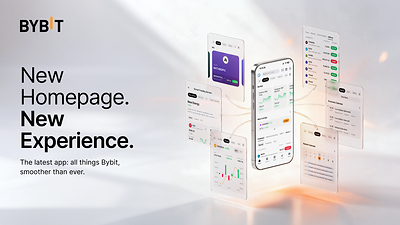
DUBAI, UAE, Oct. 14, 2026 /PRNewswire/ — Bybit, the New Financial Platform trusted by more than 80 million users worldwide, has refreshed the Bybit experience after its global brand campaign. The revamped app homepage, in a nod to Bybit’s New Financial Platform positioning, is now available to the public, bringing multiple asset classes, market data, enhanced retail user experience, and institutional-style tools into a connected app experience. The upgrade presents all opportunities in one interface for millions of Bybit users.
The launch follows Bybit’s recent rebrand under the global “Make Your Move” campaign. Announced in September 2026, which marks the company’s evolution from a crypto-first exchange into a full-stack financial platform spanning markets, payments, spending,wealth, and intelligent financial services. The new homepage is among the first product expressions of that positioning.
One App, All Features:
- Multi-Tab Homepage: Dedicated Crypto, Stocks, Macro, Earn and Alpha tabs let users view the markets most relevant to them. The homepage retains each user’s preferences.
- Pro-Grade Data on Screen: Trending sector carousels, ETF fund flows, an economic calendar and an FX rate matrix present market information in a single view.
- Smart Money Tracker: The feature offers real-time tracking of position changes by top funds, giving visibility into institutional activity.
- Stocks and Macro in One Place: Tools such as IPO Express and Hot Concepts connect market insights directly to order placement within one workflow.
The new homepage fit for the New Financial Platform reflects Bybit’s pivot from a crypto trading-only interface to a connected financial platform integrating data, intelligence, and execution. By consolidating information and functionalities that spread across vertically, Bybit aims to reduce the friction between market insight and action through a frictionless user experience.
Availability of certain features and products may vary by region and is subject to local regulations.
For details, users may visit: Bybit App Homepage Revamp – Introducing the New Financial Platform
About Bybit
Bybit is The New Financial Platform.
We believe every person should have access to every financial opportunity on earth. That’s why we’re building the first intelligent platform that connects anyone, anywhere to the world’s finance.
Trusted by more than 80 million users worldwide, Bybit brings together investing, trading, payments, and wealth-building in a single secure and intelligent ecosystem. Through the combination of AI-powered technology, deep global liquidity, robust security, and transparent operations, Bybit makes global finance more accessible, efficient, and empowering for everyone.
Built for everyone. Powered by intelligence. Open to the world.
Learn more at Bybit.com.
For more details about Bybit, please visit Bybit Press
For media inquiries, please contact: media@bybit.com
For updates, please follow: Bybit’s Communities and Social Media
Facebook | Instagram | LinkedIn | Reddit | Telegram | TikTok | X | Youtube
 View original content to download multimedia:https://www.prnewswire.co.uk/news-releases/bybit-revamps-app-to-reflect-new-financial-platform-positioning-unifying-crypto-stocks-macro-assets-earn-and-alpha-302908679.html



