


5, Nov 2026
Kotia on High Alert as Odisha Moves to Stop Andhra Pradesh Polls in Disputed Villages
Bhubaneswar, Nov 5 (UDN): Tension has escalated in the disputed Kotia region of Odisha’s Koraput district as Andhra Pradesh prepares to conduct local body elections in the area on Thursday, triggering a fresh face-off between the two neighbouring states over territorial jurisdiction.

Representational Image
The Odisha government has stepped up security arrangements across Kotia, comprising 28 villages with a population of nearly 5,000, amid concerns over Andhra Pradesh’s proposed Mandal Parishad Territorial Constituencies (MPTC) and Zilla Parishad Territorial Constituencies (ZPTC) elections.
The long-standing territorial dispute between Odisha and Andhra Pradesh dates back several decades. Since the 1960s, both states have asserted administrative claims over 21 of the 28 villages in the Kotia region.
Odisha Strengthens Security Arrangements
Odisha Revenue Minister Suresh Pujari said the state government has prepared a strategy to prevent Andhra Pradesh officials from entering the disputed territory to conduct elections.
According to the Koraput district administration, around 15 platoons of security personnel, comprising approximately 400–500 police personnel, have been deployed in the region. Barricades have also been erected at several strategic locations to restrict the entry of officials from Andhra Pradesh.
Special security arrangements have been made in border villages, including Neridibalsa, Phagun Sineri and Phatu Sineri. Additionally, prohibitory orders have been imposed in 21 disputed villages to prevent any untoward incidents.
The Odisha administration has also deployed 16 magistrates to monitor the situation, while senior officials, including Koraput Sub-Collector Fabi Rashid, have been stationed in the region.
Officials Face Off Over Entry into Kotia
The latest escalation follows a heated confrontation between police personnel and administrative officials from both states on Wednesday.
According to Odisha officials, an Andhra Pradesh campaign vehicle allegedly attempted to enter the disputed area, followed by a police vehicle that reportedly tried to remove barricades erected by the Odisha administration.
Koraput Sub-Collector Fabi Rashid alleged that Andhra Pradesh officials attempted to enter the region despite objections from Odisha authorities, who maintained that Kotia falls under the administrative jurisdiction of Koraput district.
She further stated that the Andhra Pradesh administration could not establish polling stations in Kotia for the proposed MPTC and ZPTC elections.

VIDEO | Bhubaneswar: On the Odisha-Andhra Pradesh border dispute over Kotia villages, Odisha Minister Suresh Pujari says, “This dispute is not a recent one. It dates back nearly 100 years and existed even before India gained independence in 1947. Odisha was formed as a state in 1936, becoming the first state in India to be formed on a linguistic basis. However, this issue has remained unresolved ever since. In 1968, the then Odisha government approached the Supreme Court against Andhra Pradesh, and the case remained pending for nearly 37 years. In 2006, the Supreme Court dismissed the suit filed by the Odisha government in 1968. Following this, the then Odisha government filed a review petition, which was also dismissed. Subsequently, the government again approached the Supreme Court, but that petition was rejected as well. The Kotia issue and the Andhra Pradesh government’s attempt to conduct elections in the area are creating a constitutional crisis. This is because, while dismissing Original Suit No. 10 of 1968 in 2006, the Supreme Court had issued an order directing both the Odisha and Andhra Pradesh governments to maintain the status quo.” (Full video available on PTI Videos – https://t.co/bIyFWTfmBd)
— Press Trust of India (@PTI_News) November 4, 2026
Odisha Cites Supreme Court Status Quo Order
The Odisha government has strongly objected to Andhra Pradesh’s proposed election exercise, arguing that it violates a 2006 Supreme Court order directing both states to maintain the status quo in the disputed region.
Last week, Odisha approached the Supreme Court seeking contempt proceedings against Andhra Pradesh over its notification to conduct local body elections in Kotia.
Revenue Minister Suresh Pujari said the government would take all necessary steps to protect Odisha’s territorial integrity and prevent any unilateral action by Andhra Pradesh.
Political Parties Unite Over Kotia Issue
The sensitive territorial issue has also triggered political reactions across Odisha. Leaders of the BJP, BJD and Congress have expressed concern over the developments and stressed the need to safeguard the state’s territorial interests.
Leader of Opposition and BJD president Naveen Patnaik has urged Chief Minister Mohan Charan Majhi to take up the matter with the Union Government and the Andhra Pradesh Government at the highest level to prevent further escalation.
In a letter to the Chief Minister, Patnaik said protecting Odisha’s territorial integrity was a moral responsibility of the state government. He also reminded the BJP leadership of its commitment to safeguard Odisha’s territorial interests in its 2024 Assembly election manifesto.
With heightened security, administrative restrictions and political pressure, Kotia remains at the centre of a renewed interstate dispute. The immediate challenge for the Odisha government is to maintain law and order while ensuring that the long-standing territorial issue does not escalate into a larger confrontation between the two states.
- 0
- By Neel Achary

5, Nov 2026
SensAI Veritas Launches SensAI Gateway™ and SensAI Helm™: Bringing Risk Intelligence to the Moment of Trust
Beyond Identity. Before Trust.
New integrated platform reveals potential concealed information and ill intent at security checkpoints, enabling real-time risk assessment, coordinated screening, and more informed trust decisions.
MIAMI, Nov. 5, 2026 /PRNewswire/ — SensAI Veritas today announced the launch of SensAI Gateway™ and SensAI Helm™ , expanding its Integrity Intelligence platform into an integrated solution for real-time deception detection, integrity assessment, and risk intelligence at security checkpoints. Together with SensAI Interview™, SensAI’s proven deception detection and integrity assessment solution for investigative interviews, the platform connects initial risk screening, in-depth integrity assessment, and centralized command and control.
“For decades, security systems have focused on who a person is and what is already known about them. SensAI addresses a different question: what additional risk indicators we can identify right now before granting trust. For the first time, we can bring this intelligence into an integrated screening workflow, while keeping consequential decisions in human hands,” said Rafi Kaminer, CEO of SensAI Veritas.
Applications include immigration and border control, prison visitation, airport personnel access and airline crew screening, as well as critical infrastructure, secure facilities and workforce integrity.
By prioritizing cases requiring further assessment, the platform helps security organizations focus trained personnel where they are needed most, while maintaining human oversight.
Autonomous Triage. Human Decision.
SensAI Gateway™ uses an AI-powered conversational avatar or text interface with adaptive questioning. Its proprietary SensAI Core™ engine analyzes autonomic nervous system (ANS) responses using one standard camera, without contact or wearable sensors.
Gateway identifies indicators of potential deception, concealed information and ill intent, generating actionable risk intelligence to support immediate screening and referral decisions.
These indicators are not proof of deception or wrongdoing, nor do they predict future behavior.
Under customer-defined rules, Gateway routes cases for routine clearance or further assessment. Officers may use SensAI Interview™ for secondary screening, retain final authority and log overrides.
By analyzing each individual’s own ANS-related response patterns rather than facial expressions or voice patterns, SensAI is designed to reduce reliance on subjective behavioral cues and mitigate demographic and cultural bias.
SensAI Helm™ – Connecting Intelligence Across Security Operations
SensAI Helm™ unifies Gateway and Interview into an Integrity Intelligence platform, providing centralized command and control, real-time visibility across operations, risk indicators, reporting and audits. Security teams manage checkpoints, devices and sites centrally. Built on years of experience in high-stakes security environment, its technology supports integrity assessments across multiple institutions.
Availability
Gateway and Helm are available through SensAI and integration partners.
Daniel J. Molina will present SensAI Gateway and SensAI Helm at a livestreamed virtual press conference on November 5, 2026, at 05:00 Miami time (10:00 UTC).
Information, demonstrations and partnership inquiries : www.sensai-tech.com/gateway
About SensAI Veritas
SensAI Veritas delivers Integrity Intelligence for security decisions. Its platform includes Gateway™ for initial screening, Interview™ for in-depth assessment and Helm™ for centralized oversight. SensAI Academy provides training and certification.
Media Contact:
Ohad Kaminer
Head of Business Development
ohadk@sensai-tech.com
+972-54-910-9252
 View original content:https://www.prnewswire.co.uk/news-releases/sensai-veritas-launches-sensai-gateway-and-sensai-helm-bringing-risk-intelligence-to-the-moment-of-trust-302929460.html

5, Nov 2026
Odisha Government Signs Three-Year MoU with J-PAL South Asia to Strengthen Evidence-Based Policymaking
Bhubaneswar, Nov 5 (UDN): The Government of Odisha has signed a three-year Memorandum of Understanding (MoU) with J-PAL South Asia to strengthen evidence-based policymaking and promote research-driven governance across various state departments.

Pic Credit: x.com/SecyChief
Anchored in the Planning & Convergence Department, the partnership aims to foster collaboration in rigorous policy research, technical and policy support, and institutional capacity-building to address the state’s key development priorities. The collaboration will enable government departments to leverage robust evidence, generate actionable insights and design effective interventions for improved development outcomes.
Aligned with the state’s long-term vision of #OdishaVision2036 and #OdishaVision2047, the partnership will focus on promoting data-driven decision-making, testing innovative solutions and translating research findings into practical policy interventions. It will also facilitate stronger engagement between policymakers and researchers to identify development challenges, evaluate the effectiveness of existing programmes and explore scalable solutions.
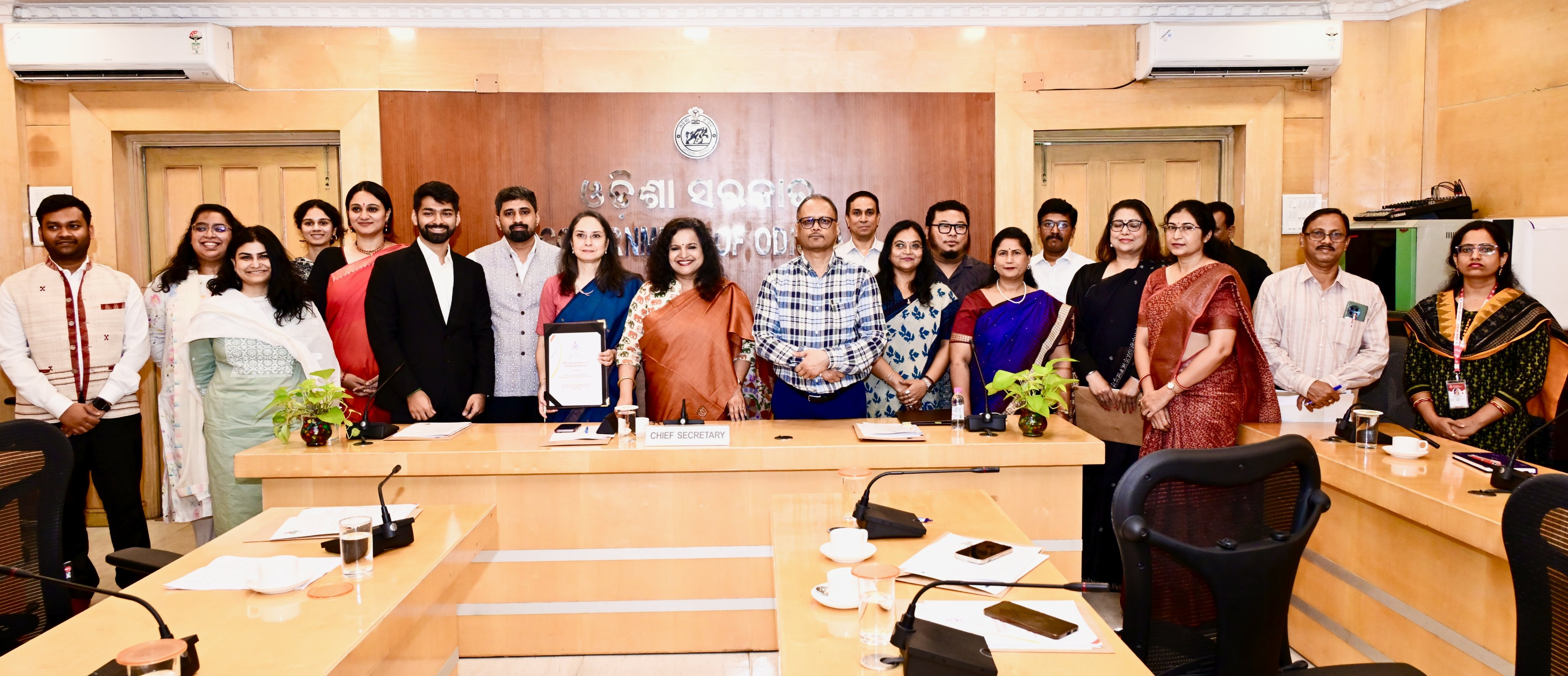
Through this strategic collaboration, the Government of Odisha seeks to institutionalise the use of evidence in governance, strengthen policy implementation and enhance the effectiveness of public programmes. The initiative is expected to contribute to more responsive, inclusive and sustainable development, ensuring that policy decisions are informed by credible research and deliver meaningful outcomes for the people of Odisha.
The partnership marks an important step towards building a robust evidence ecosystem within the state administration and advancing Odisha’s vision of sustainable, inclusive and people-centric development.
5, Nov 2026
VeriSilicon Launches GCNanoOptimaV, a Next-Generation 2.5D GPU IP for Wearables
Architectural Innovations and Advanced Hardware Acceleration Deliver Enhanced Graphics Performance and Power Efficiency for Emerging Wearable Applications
SHANGHAI, Nov. 5, 2026 /PRNewswire/ — VeriSilicon (688521.SH) announced its next-generation GCNanoOptimaV 2.5D Graphics Processing Unit (GPU) IP, designed to meet the growing demand for advanced graphics capabilities in wearable devices. Featuring dedicated hardware acceleration engines and an optimized memory architecture, GCNanoOptimaV significantly enhances graphics rendering performance and memory efficiency, enabling richer and more responsive graphical user interfaces (GUIs) while addressing the stringent resource constraints of wearable applications. The new GPU IP has already been adopted by multiple leading customers.
GCNanoOptimaV incorporates dedicated hardware stroke and ellipse engines to address performance bottlenecks in vector graphics rendering. Its hardware stroke engine significantly improves the rendering performance of complex lines and curves, particularly in applications such as health monitoring, fitness tracking, and navigation. In addition, its innovative mesh rendering architecture reduces on-chip SRAM requirements, enabling more memory-efficient GPU integration in resource-constrained SoC designs.
GCNanoOptimaV also integrates VeriSilicon’s latest DECNano 3.0 compression engine, delivering improved image quality while maintaining a fixed 2:1 compression ratio. The GPU maintains compatibility with VeriSilicon’s VGLite graphics API and supports widely adopted graphics frameworks and formats, including LVGL, SVG, and PNG. This software compatibility facilitates the migration of existing applications with minimal modifications, simplifying system integration and accelerating product development.
“Wearable devices are evolving rapidly, with increasingly sophisticated applications driving demand for greater functionality and higher graphics performance, while power consumption and memory footprint remain critical constraints,” said Weijin Dai, Chief Strategy Officer, Executive Vice President and General Manager of the IP Division at VeriSilicon. “Through architectural innovations and advanced hardware acceleration, our next-generation 2.5D GPU IP delivers measurable performance improvements and power savings in applications such as mapping and navigation. We are excited to bring these advancements to the wearable market, enabling richer visual experiences within the stringent power and memory budgets.”
About VeriSilicon
VeriSilicon Microelectronics (Shanghai) Co., Ltd. (VeriSilicon, 688521.SH) is a leading publicly listed provider of custom silicon solutions, with a comprehensive and proprietary portfolio of semiconductor IPs, and a long-standing focus on AI ASIC custom silicon. For more information, please visit: www.verisilicon.com
Media Contact: press@verisilicon.com
 View original content:https://www.prnewswire.co.uk/news-releases/verisilicon-launches-gcnanooptimav-a-next-generation-2-5d-gpu-ip-for-wearables-302929395.html

4, Nov 2026
Gastops and Anschütz to Collaborate on Canadian Patrol Submarine Project Sustainment
PARIS , Nov. 4, 2026 /PRNewswire/ — Gastops, a leader in intelligent condition monitoring, predictive maintenance and advanced in-service support solutions, and Anschütz, a leading provider of submarine mission systems, automation, control and navigation solutions for naval platforms, have signed a Memorandum of Understanding (MoU) to collaborate on integration, testing, diagnostics, and sustainment activities for the Canadian Patrol Submarine Project (CPSP).
Announced today at EURONAVAL 2026, the agreement establishes a framework for cooperation focused on the long-term support of Anschütz submarine systems in Canada. Planned areas of collaboration include integration, testing, diagnostics, training, simulator and stimulation environments, advanced troubleshooting, in-field sustainment, and the establishment of Canadian-based infrastructure aligned to the full lifecycle of the program.
“Keeping Canada’s future submarine fleet operational over decades of service will require strong in-country sustainment, testing, and engineering expertise,” said Brennan West, Vice President, Energy, Marine & Land at Gastops. “We look forward to working with Anschütz to explore how Gastops testing, diagnostics, and lifecycle support can contribute to the long-term viability of the program.”
“Following an extensive market assessment, Gastops emerged as the ideal partner to support the long-term sustainment of future submarine capabilities in Canada,” said Oliver Welzel, Industrial Cooperation Manager at Anschütz. “Their strong expertise in automation and control systems provides an excellent foundation for transferring system knowledge, supporting Canada’s Industrial and Technological Benefits objectives, and helping establish sovereign in-country capabilities for the lifecycle support of the future fleet.”
The agreement builds on Gastops’ growing involvement in the Canadian Patrol Submarine Project, following the company’s previously announced teaming agreement with TKMS earlier this year. Together, these initiatives reinforce Gastops’ vision of building a Canadian-led submarine sustainment and serviceability enterprise that strengthens readiness and sovereign industrial capacity. Anschütz supports the development of sovereign Canadian capabilities through the transfer of submarine expertise and technical know-how, helping establish the foundation for long-term in-country sustainment and support.
“The Canadian Patrol Submarine Project will require a sustainment approach that evolves alongside the fleet throughout its service life,” said Shaun Horning, President & CEO of Gastops. “Through partnerships like this, we have an opportunity to establish Canadian-based infrastructure, technical expertise, and support capabilities that strengthen readiness while building lasting capability for the future.”
“Modern submarine programs require more than advanced technology. They depend on long-term partnerships, deep platform understanding and sustainable in-country support capabilities,” said Gerald Baden, Head of Submarine Business at Anschütz. “By combining Anschütz’ expertise for submarine automation, control and mission systems with Canadian industrial capabilities, we aim to support a resilient submarine ecosystem that strengthens fleet readiness, develops high-value technical expertise and delivers lasting value for the Canadian Patrol Submarine Project.”
About Gastops
Gastops is the world’s leading provider of intelligent condition monitoring solutions used in Aerospace, Defence, Energy, and Industrial applications to optimize the availability, performance, and safety of critical assets. We offer peace of mind to our customers with innovative online monitoring sensors, at-line analysis, complex modeling and simulation, world-class laboratory testing, engineering, design, and MRO services that predict performance to enable proactive operating decisions. We have been providing powerful insights into the condition of critical equipment since 1979. Gastops is the intelligence inside what moves you.
About Anschütz
Anschütz is a trusted provider of submarine and naval technologies, combining decades of operational experience with advanced mission automation, mission control and mission data solutions. The company’s portfolio includes submarine automation systems for tube control, weapon handling, mast control and battery monitoring, as well as steering and autopilot systems, navigation, sensor integration and mission data management solutions.
Anschütz supports submarine programs throughout their entire life cycle, from new construction and modernization to long-term sustainment, training and service. Building on more than 100 years of maritime expertise, the company helps naval operators enhance operational effectiveness, platform availability and sovereign capability.
 View original content:https://www.prnewswire.co.uk/news-releases/gastops-and-anschutz-to-collaborate-on-canadian-patrol-submarine-project-sustainment-302929392.html

4, Nov 2026
Laza Medical Raises Up to $160 Million in Series B Financing Led by GE HealthCare to Advance Intelligent Imaging for Transforming the Cath Lab
Company’s first-of-a-kind intelligent imaging system aims to expand patient access, streamline
high-quality cardiac care, and establish the foundation for future robotic interventions
LOS GATOS, Calif., Nov. 4, 2026 /PRNewswire/ — Laza Medical, Inc., a Shifamed portfolio company pioneering AI-powered robotic imaging solutions for cardiac interventions, today announced it has raised up to $160 million in Series B structured financing. GE HealthCare led the round, with participation from returning investors Unorthodox Ventures, PA MedTech, and AMED. The financing will support the company’s mission to transform the cardiac catheterization laboratory through intelligent imaging technology designed to simplify procedures, increase autonomy, alleviate resource constraints, and unlock the possibilities for future robotic-enabled interventions.
“The future of cardiac intervention must be one where access, consistency, and quality of care are no longer barriers to better outcomes,” stated Jyoti Gera, CEO of Cardiovascular and Interventional Solutions, Advanced Imaging Solutions at GE HealthCare. “Integrating imaging modalities so they work seamlessly together has the potential to redefine the cath lab, enabling more efficient workflows today and paving the way for smarter, robotic procedures tomorrow. We’re excited to expand our collaboration with Laza and work together toward this shared vision.”
As cardiovascular procedures become increasingly complex, care teams need more intuitive and consistent image guidance amid growing demands for specialized imaging expertise. By combining AI and robotics, Laza has the potential to simplify procedural imaging, extend the reach of specialized imaging expertise, and help care teams navigate and guide complex cardiac interventions with greater confidence.
“High-quality imaging is foundational to all successful cases,” said Dr. Firas Zahr, Head of Interventional Cardiology at Oregon Health Sciences University Hospital, who had experience with the software during the first-in-human clinical study last year. “Consistent anatomic and spatial context simplifies procedures and helps clinicians navigate the anatomy with confidence and precision.”
“The cath lab is poised for a fundamental evolution, and intelligent imaging powered by AI will play a defining role in what comes next,” said Amr Salahieh, Founder and Board Chairman at Laza Medical. “As we reimagine the role of imaging in interventional care, we are grateful for the strong support from our investors, which validates our approach and reinforces our conviction that this solution will streamline processes, reduce variability, and ultimately improve the quality and reach of cardiac procedures.”
The Laza Medical System is under development and is not approved for commercial sale in any geography.
About Laza Medical, Inc.
Laza Medical is a privately held portfolio company of Shifamed, LLC. The company focuses on developing a high-quality, AI-powered robotic imaging solution for cardiovascular interventions. For more information, visit www.lazamedical.com.
About Shifamed, LLC
Founded by serial entrepreneur Amr Salahieh, Shifamed is a highly specialized medical innovation hub focused on developing solutions that accelerate time to market, reduce risk, increase impact, and forge a path toward a world where patients are able to lead longer, healthier lives.
Shifamed’s goal is to lead the way in next generation of cardiac cath lab innovation, bringing together breakthroughs in advanced imaging, artificial intelligence (AI), and robotics to transform how interventional cardiovascular procedures are performed.
Media Contact
Charlene Herndon
SPRIG Consulting
charlene@sprigconsulting.com
 View original content to download multimedia:https://www.prnewswire.co.uk/news-releases/laza-medical-raises-up-to-160-million-in-series-b-financing-led-by-ge-healthcare-to-advance-intelligent-imaging-for-transforming-the-cath-lab-302929828.html

4, Nov 2026
Amid rising air pollution, Greenwater Scientific introduces a ₹63k alternative to air purifiers
GURUGRAM, India, Nov. 4, 2026 /PRNewswire/ — Greenwater Scientific is bringing photosynthesis into Indian homes with the greenwaterHOME Air Synthesizer. The device uses living microalgae to absorb carbon dioxide and release oxygen, alongside Pre, HEPA and activated carbon filters for dust, smoke and pollutants. It is available across India at ₹63,720.

The device holds a living microalgae culture that draws carbon dioxide out of indoor air and returns oxygen to the room, alongside HEPA and carbon filters for dust and fumes. It comes out of more than three years of research and development. In the company’s sealed-room tests, CO₂ fell by an average of 32% every hour, and an NABL-accredited laboratory measured a 95.1% drop in PM2.5.
Indian cities have taught everyone to worry about the air outside: dust from building sites, smoke from burning stubble, exhaust from traffic. Far less attention goes to the air we create at home. Each breath adds a little carbon dioxide to the room, and with the doors and windows closed, it builds up within a few hours. Filters do nothing about it, and that is the gap the Air Synthesizer was designed to fill.
Why Not Just Get a Plant?
Roughly 3/4th of the oxygen on Earth is produced by phytoplankton and microalgae drifting in the ocean. Forests and other land plants make most of what’s left. A flat in Gurugram or Mumbai uses oxygen all day and produces almost none.
Houseplants help less than most people expect. Ordinary indoor lighting is too weak, and the wrong spectrum, for proper photosynthesis. Plants by a window gather dust on their leaves, which cuts the light they can use. Even a well kept plant, with good light, clean leaves and regular watering, makes about 0.4 litres of oxygen a day, based on leaf-science data published by Ugaoo.
The Air Synthesizer makes 46 litres of oxygen a day, as measured by an NABL-accredited laboratory. Matching that would take around 80 houseplants.
Why algae
A plant puts much of its energy into roots, stems and leaves, and only part of its body does photosynthesis. A microalga is a single cell packed with chlorophyll. It photosynthesises over its whole surface and keeps dividing. For their size, algae are far better than plants at turning carbon dioxide into oxygen, and they need very little space to do it.
Algae grow best in a photobioreactor, a vessel that manages light, carbon dioxide, temperature and nutrients while keeping contamination out. Greenwater Scientific grows every culture it ships in its own photobioreactor lab at its Gurugram headquarters. The Air Synthesizer is a compact version of the same equipment, built for a living room.
Inside the unit, a fan pulls room air through water that holds the algae. The CO₂ in that air dissolves, the algae take it up, and oxygen rises back out into the room.
What a closed room does to you
People now track their sleep, heart rate variability, blood oxygen, recovery and strain in close detail, and most of the work to improve those numbers goes into the body itself. The room matters as well. Shut the door and the air starts to change, with CO₂ creeping up for as long as anyone stays inside.
Opening a window is the obvious fix, though in most large Indian cities the heat, the noise or the pollution outside usually rules it out. Photosynthesis is the other way to bring CO₂ down. Greenwater Scientific tested the Air Synthesizer in a sealed, insulated 8 × 8 × 8 ft room filled with more than 3,000 ppm of CO₂, measuring levels every 15 minutes, every day from 14 November to 12 December 2025. With the device running, CO₂ fell by an average of 32% an hour (±3%) and dropped below 1,000 ppm in about three hours. Without it, levels stayed above 3,000 ppm.
Furniture first
Most air purifiers are tolerated rather than liked, and plenty end up in a corner once the smog season passes. “They look like sitting reminders that the world is coming to an end,” said Dhruv Mehta, co-founder of Greenwater Scientific. “We wanted something that fits into your interior design and does a job at the same time.”
The Air Synthesizer doubles as a side table, with a flat top for a coffee mug, a photo frame or a few books. Through its clear panel you can watch the culture shift from pale to deep green as it grows over the weeks. The darker it gets, the more CO₂ the algae are taking in.
Filters for the air from outside
Alongside the algae, the unit carries an H13-grade HEPA filter made of microfibre glass and an activated carbon fibre filter with a honeycomb mesh. The HEPA layer traps fine dust and smoke particles, much of which comes in from outdoors. The carbon layer absorbs VOCs such as benzene, which are given off by paint, cleaning products and furniture.
An NABL-accredited laboratory measured reductions of 95.1% in PM2.5, 95.7% in PM10 and 77.9% in benzene under test conditions.
From a documentary to a living room
Dhruv Mehta got the idea while watching a Netflix documentary that explained how much more efficient algae and phytoplankton are at photosynthesis than trees. One question stayed with him: “Then why have we always been taught to grow more plants to fight air pollution, if nature already has a more effective resource?”
Proving the concept could work in a home took time. From then on, the team’s guiding principle was to recreate the conditions of the ocean as closely as they could.
Microalgae and their cousins, cyanobacteria, helped give Earth a breathable atmosphere. They were making oxygen long before trees, long before dinosaurs, and long before any creature with lungs came along to breathe it. Nobody has thanked them for it yet.
The Air Synthesizer takes that 3-billion-year-old process out of the ocean and puts it next to your sofa.
About Greenwater Scientific
Greenwater Scientific is an Indian biotechnology company developing micro-algae technology for indoor air care. Co-founded by Dhruv Mehta and Sumir Mehta, the company combines research originating at the University of California San Diego with engineering and manufacturing in Manesar, Haryana.
Its flagship product, the greenwaterHOME Air Synthesizer, uses living micro-algae to absorb carbon dioxide and release oxygen through photosynthesis, alongside three-stage filtration to remove airborne pollutants.
Greenwater Scientific has participated in the Blackstone LaunchPad Accelerator, received U.S. Congressional recognition, and won the Grand Prize at UC San Diego’s Triton Innovation Challenge.
For more information, visit greenwaterscientific.com.
Notes to editors: The full NABL test report and high-resolution product images are available on request.
Media contact: Dhruv Mehta, dm@greenwaterscientific.com, greenwaterscientific.com

 View original content to download multimedia:https://www.prnewswire.com/in/news-releases/amid-rising-air-pollution-greenwater-scientific-introduces-a-63k-alternative-to-air-purifiers-302929351.html

4, Nov 2026
Menarini Group and Ryvu Therapeutics Announce First Clinical Data from the Phase II JASPIS-01 Study of dapolsertib (MEN1703, SEL24) in Heavily Pretreated Relapsed/Refractory Aggressive B-cell non-Hodgkin Lymphoma at the 2026 ASH Annual Meeting
- First clinical data for dapolsertib monotherapy: initial results from the Phase II JASPIS-01 study of dapolsertib (MEN1703), a first-in-class oral dual PIM/FLT3 kinase inhibitor, in patients with relapsed/refractory (r/r) aggressive B-cell non-Hodgkin lymphoma (B-NHL) who have exhausted available standard treatment options.
- Clinical activity observed in a heavily pretreated population: clinical activity was observed in a population with a median of four prior lines of therapy; 53% of patients had previously received CAR-T cell therapy and 60% CD3×CD20 bispecific antibodies.
- New treatment options needed: patients whose disease progresses after CAR-T cell therapy and/or CD3×CD20 bispecific antibodies have limited therapeutic options and poor outcomes.
- Poster presentation at ASH 2026: the data will be presented on December 13, 2026, at the 68th American Society of Hematology (ASH) Annual Meeting and Exposition in New Orleans, U.S.
FLORENCE, Italy and KRAKOW, Poland, Nov. 4, 2026 /PRNewswire/ — The Menarini Group (“Menarini”), a leading international pharmaceutical and diagnostics company, and Stemline Therapeutics, Inc. (“Stemline”), a wholly-owned subsidiary of the Menarini Group focused on bringing transformational oncology treatments to cancer patients, along with Ryvu Therapeutics (WSE: RVU), today announced that the first clinical data from the ongoing Phase II JASPIS-01 study (NCT06534437) of dapolsertib (MEN1703, SEL24) in patients with r/r aggressive B-NHL will be presented in a poster session at the 68th American Society of Hematology (ASH) Annual Meeting and Exposition, held December 12-15, 2026, in New Orleans, Louisiana, and virtually.

Dapolsertib is a first-in-class oral dual PIM/FLT3 kinase inhibitor that has demonstrated preclinical antitumor activity and synergy with anti-CD20-directed therapies. The abstract reports the first clinical results from Group 2 of the JASPIS-01 study, which evaluates dapolsertib monotherapy (125 mg orally once daily on days 1-14 of 21-day cycles) in adults with r/r aggressive B-NHL who have exhausted available standard treatment options following at least two prior systemic therapies. Clinical activity was observed in heavily pretreated patients. The safety profile was manageable and allowed dosing of dapolsertib at the intended dose level.
“Patients with aggressive B-cell lymphoma whose disease progresses after CAR-T cell therapy and bispecific antibodies have limited treatment options and face very poor outcomes,” said Elcin Barker Ergun, CEO of the Menarini Group. “The encouraging initial findings in heavily pretreated patients support the continued clinical development of dapolsertib, a first-in-class oral dual PIM/FLT3 inhibitor, as a potential option for this grim disease, and we look forward to further results from the ongoing study.”
“We are very pleased that the first clinical data from JASPIS-01 will be presented at ASH, a leading hematology meeting. The activity seen in the JASPIS-01 study are particularly encouraging, given the highly aggressive biology of the disease in this population,” said Hendrik Nogai, M.D., Chief Medical Officer of Ryvu Therapeutics. “As dapolsertib inventors and Menarini’s operational partner for the study, we remain committed to advancing dapolsertib for patients with aggressive B-cell lymphoma, who urgently need new treatment options.”
Details on the poster presentation are as follows:
Poster Title: Preliminary clinical activity and safety of dapolsertib (MEN1703), a first-in-class dual PIM/FLT3 inhibitor, in heavily pretreated relapsed/refractory aggressive B-cell non-Hodgkin lymphoma: Initial results from the Phase II JASPIS-01 trial
Publication Number: 3662
Session: 627. Aggressive Lymphomas: Targeted and Pharmacologic Therapies: Poster II
Session date and time: Sunday, December 13, 2026, 6:00-8:00 PM CST (1:00-3:00 AM CET on December 14)
Location: Ernest N. Morial Convention Center, Hall F, New Orleans, Louisiana
The abstract is available on the ASH website: https://www.hematology.org/meetings/annual-meeting
About JASPIS-01
JASPIS-01 (NCT06534437) is an ongoing multicenter, open-label Phase II study evaluating dapolsertib as monotherapy and in combination with glofitamab in adults with r/r aggressive B-NHL, including diffuse large B-cell lymphoma (DLBCL), after at least two prior systemic therapies. Group 1 evaluates dapolsertib in combination with glofitamab in patients naïve to CD3×CD20 bispecific antibodies. Group 2 evaluates dapolsertib as monotherapy in patients who have exhausted available standard treatment options. The primary endpoint is overall response rate (ORR) per the Lugano Classification; secondary endpoints include duration of response (DoR), progression-free survival (PFS), overall survival (OS) and safety.
About dapolsertib
Dapolsertib (MEN1703, SEL24) is a first-in-class, oral, selective small-molecule dual inhibitor of PIM and FLT3 kinases, discovered by Ryvu. Global development and commercial rights to dapolsertib are licensed to the Menarini Group. Since September 2023, Ryvu has been Menarini’s operational partner for Phase II study execution, with Menarini funding all research and development costs. Dapolsertib is an investigational agent and has not been approved by any regulatory authority.
About The Menarini Group
The Menarini Group is a leading international pharmaceutical and diagnostics company, with a turnover of $5.5 billion and over 17,000 employees. Menarini is focused on therapeutic areas with high unmet needs with products for cardiology, oncology, pneumology, gastroenterology, infectious diseases, diabetology, inflammation, and analgesia. With 18 production sites and 9 Research and Development centers, Menarini’s products are available in 140 countries worldwide. For further information, please visit www.menarini.com.
About Stemline Therapeutics Inc.
Stemline Therapeutics, Inc. (“Stemline”), a wholly-owned subsidiary of the Menarini Group, is a commercial-stage biopharmaceutical company focused on bringing transformational oncology treatments to patients. Stemline commercializes elacestrant, an oral endocrine therapy indicated for the treatment of postmenopausal women or adult men with estrogen receptor (ER)-positive, human epidermal growth factor receptor 2 (HER2)-negative, ESR1-mutated advanced or metastatic breast cancer with disease progression following at least one line of endocrine therapy, in the U.S., Europe, and other global regions. Stemline also commercializes tagraxofusp-erzs, a novel targeted therapy directed to CD123, for patients with blastic plasmacytoid dendritic cell neoplasm (BPDCN), an aggressive hematologic cancer, in the United States, Europe, and other global regions. In addition, Stemline commercializes selinexor, an XPO1 inhibitor for multiple myeloma, in Europe. The company is also conducting multiple label-expansion studies with elacestrant and tagraxofusp in breast and hematologic cancer indications, respectively, and has an extensive clinical pipeline of additional drug candidates in various stages of development for a host of solid and hematologic cancers.
About Ryvu Therapeutics
Ryvu Therapeutics is a clinical-stage drug discovery and development company focused on novel therapies that address emerging targets in oncology. Internally discovered pipeline candidates at Ryvu use diverse therapeutic mechanisms driven by emerging knowledge of cancer biology, including small molecules and antibody-drug conjugates directed at kinases, synthetic lethality, and immune-oncology targets.
Ryvu’s most advanced program is romaciclib (RVU120, SEL120), a selective CDK8/CDK19 kinase inhibitor with the potential to treat hematological malignancies and solid tumors. Romaciclib is currently in Phase II development in combination with venetoclax for the treatment of patients with r/r AML – the RIVER-81 study – and is also being evaluated in an investigator-initiated Phase I study in pediatric medulloblastoma – the MEDWAY study. Dapolsertib (MEN1703, SEL24) is a dual PIM/FLT3 kinase inhibitor licensed to the Menarini Group, currently being investigated in a Phase II study in diffuse large B-cell lymphoma (DLBCL) – the JASPIS-01 study – with a further Phase II study in myelofibrosis (SPHENE-01) planned to start in Q1 2027. RVU305, a potentially best-in-class, brain-permeable PRMT5 inhibitor aiming to treat multiple solid tumors, has completed IND/CTA-enabling studies. Ryvu Therapeutics is also engaged in oncology collaborations with BioNTech and Exelixis, and offers dedicated early clinical development services to biotech and pharma partners through its Keelira business.
Ryvu was founded in 2007 and is headquartered in Kraków, Poland. It is listed on the Warsaw Stock Exchange and is a component of the sWIG80 index.
For more information, please visit www.ryvu.com
 View original content to download multimedia:https://www.prnewswire.co.uk/news-releases/menarini-group-and-ryvu-therapeutics-announce-first-clinical-data-from-the-phase-ii-jaspis-01-study-of-dapolsertib-men1703-sel24-in-heavily-pretreated-relapsedrefractory-aggressive-b-cell-non-hodgkin-lymphoma-at-the-2026-ash-a-302929612.html

4, Nov 2026
Agthia Reports Revenue Growth Amid Challenging Cost Environment
ABU DHABI, UAE, Nov. 4, 2026 /PRNewswire/ — Agthia Group PJSC (AGTHIA:UH), one of the region’s leading food and beverage companies, today reported its results for the third quarter and first nine months of 2026.
Group Financial Performance
Agthia’s growth accelerated in the third quarter, with reported earnings rising well ahead of the top line, supported by a sound balance sheet, even as operating conditions are becoming more demanding.
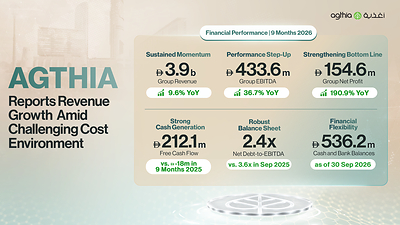
In Q3 2026, Group revenue increased 14.4% year on year to AED 1.3 billion, including AED 104.7 million of one-off sales. On an underlying basis, growth was 5.2%. Strengthened execution drove an improvement in profitability. EBITDA rose 39.0% to AED 123.1 million, and net profit reached AED 33.2 million, up from AED 4.1 million in the prior-year quarter that included impairment charges in Snacking.
Over the first nine months, revenue increased by 9.6% to AED 3.9 billion and EBITDA climbed 36.7% to AED 433.6 million. Net profit almost tripled to AED 154.6 million.
Agthia’s financial position remains robust. Free cash flow for the nine months period totaled AED 212.1 million, reversing an outflow in the same period last year. Net debt-to-EBITDA improved to 2.4x from 2.9x at December 2025, and cash stood at AED 536.2 million.
Segment Performance
Water & Food grew revenue 36.7%, including one-off food security sales in Q3 2026. The core business also performed well, with UAE Water revenue up 8.0% excluding these one-off sales, led by a 12.9% increase in Home and Office Services, while Turkey and Kuwait supported international growth. Higher PET, freight and distribution costs weighed on segment margins.
Agri-Business delivered 10.5% revenue growth, driven by an 18.3% rise in feed sales. Segment EBITDA declined 39.3% to AED 31.4 million, while EBITDA margin contracted by 807 basis points, primarily reflecting input cost pressures, further compounded by higher distribution costs.
Snacking continued to lift profitability as its reset progressed, with gross margin up 613 basis points and gains across every business in the third quarter. Abu Auf grew revenue 21.7%, added a net 69 stores this year and gained 1.0 percentage point of value share in ground coffee. Segment EBITDA reached AED 23.8 million, compared with a loss a year earlier that included impairment charges. The Al Foah reset remains on track and BMB’s transformation continues to advance, although regional logistics disruptions impacted export sales during the quarter.
Protein & Frozen grew revenue 25.1% in Q3 2026, with growth across every business, led by Nabil at 25.3%. Agthia’s expanded Saudi facility nearly quadrupled KSA protein sales.
Khalifa Sultan Al Suwaidi, Chairman of Agthia’s Board, said: “The past months have put supply chains across the region under strain and underlined the value of resilient food companies. Agthia has risen to that challenge, standing by the markets it serves. The Board is encouraged by the progress management has made in transforming the business and remains focused on ensuring Agthia creates long-term value for its shareholders and communities.”
Salmeen Alameri, Managing Director and CEO of Agthia Group, added: “Our transformation continues to move forward. Over the past year, we have strengthened our portfolio and built greater operating discipline, and this is beginning to be reflected in our results. We are taking decisive action to protect the business as input and logistics pressures intensify, while recognizing the impact of these headwinds on our performance. We are also building innovation, data and digital capabilities that will define how we compete. With the right foundations in place, Agthia is well equipped to navigate the volatile environment.”
 View original content to download multimedia:https://www.prnewswire.co.uk/news-releases/agthia-reports-revenue-growth-amid-challenging-cost-environment-302929484.html

4, Nov 2026
Gastops and Anschütz to Collaborate on Canadian Patrol Submarine Project Sustainment
PARIS , Nov. 4, 2026 /PRNewswire/ — Gastops, a leader in intelligent condition monitoring, predictive maintenance and advanced in-service support solutions, and Anschütz, a leading provider of submarine mission systems, automation, control and navigation solutions for naval platforms, have signed a Memorandum of Understanding (MoU) to collaborate on integration, testing, diagnostics, and sustainment activities for the Canadian Patrol Submarine Project (CPSP).
Announced today at EURONAVAL 2026, the agreement establishes a framework for cooperation focused on the long-term support of Anschütz submarine systems in Canada. Planned areas of collaboration include integration, testing, diagnostics, training, simulator and stimulation environments, advanced troubleshooting, in-field sustainment, and the establishment of Canadian-based infrastructure aligned to the full lifecycle of the program.
“Keeping Canada’s future submarine fleet operational over decades of service will require strong in-country sustainment, testing, and engineering expertise,” said Brennan West, Vice President, Energy, Marine & Land at Gastops. “We look forward to working with Anschütz to explore how Gastops testing, diagnostics, and lifecycle support can contribute to the long-term viability of the program.”
“Following an extensive market assessment, Gastops emerged as the ideal partner to support the long-term sustainment of future submarine capabilities in Canada,” said Oliver Welzel, Industrial Cooperation Manager at Anschütz. “Their strong expertise in automation and control systems provides an excellent foundation for transferring system knowledge, supporting Canada’s Industrial and Technological Benefits objectives, and helping establish sovereign in-country capabilities for the lifecycle support of the future fleet.”
The agreement builds on Gastops’ growing involvement in the Canadian Patrol Submarine Project, following the company’s previously announced teaming agreement with TKMS earlier this year. Together, these initiatives reinforce Gastops’ vision of building a Canadian-led submarine sustainment and serviceability enterprise that strengthens readiness and sovereign industrial capacity. Anschütz supports the development of sovereign Canadian capabilities through the transfer of submarine expertise and technical know-how, helping establish the foundation for long-term in-country sustainment and support.
“The Canadian Patrol Submarine Project will require a sustainment approach that evolves alongside the fleet throughout its service life,” said Shaun Horning, President & CEO of Gastops. “Through partnerships like this, we have an opportunity to establish Canadian-based infrastructure, technical expertise, and support capabilities that strengthen readiness while building lasting capability for the future.”
“Modern submarine programs require more than advanced technology. They depend on long-term partnerships, deep platform understanding and sustainable in-country support capabilities,” said Gerald Baden, Head of Submarine Business at Anschütz. “By combining Anschütz’ expertise for submarine automation, control and mission systems with Canadian industrial capabilities, we aim to support a resilient submarine ecosystem that strengthens fleet readiness, develops high-value technical expertise and delivers lasting value for the Canadian Patrol Submarine Project.”
About Gastops
Gastops is the world’s leading provider of intelligent condition monitoring solutions used in Aerospace, Defence, Energy, and Industrial applications to optimize the availability, performance, and safety of critical assets. We offer peace of mind to our customers with innovative online monitoring sensors, at-line analysis, complex modeling and simulation, world-class laboratory testing, engineering, design, and MRO services that predict performance to enable proactive operating decisions. We have been providing powerful insights into the condition of critical equipment since 1979. Gastops is the intelligence inside what moves you.
About Anschütz
Anschütz is a trusted provider of submarine and naval technologies, combining decades of operational experience with advanced mission automation, mission control and mission data solutions. The company’s portfolio includes submarine automation systems for tube control, weapon handling, mast control and battery monitoring, as well as steering and autopilot systems, navigation, sensor integration and mission data management solutions.
Anschütz supports submarine programs throughout their entire life cycle, from new construction and modernization to long-term sustainment, training and service. Building on more than 100 years of maritime expertise, the company helps naval operators enhance operational effectiveness, platform availability and sovereign capability.
View original content:https://www.prnewswire.co.uk/news-releases/gastops-and-anschutz-to-collaborate-on-canadian-patrol-submarine-project-sustainment-302929392.html


