


4, Nov 2026
Redis Expands Redis Iris to Give AI Agents the Memory, Context, and Messaging They Need to get to Production
SAN FRANCISCO, Nov. 4, 2026 /PRNewswire/ — Redis today announced the next chapter of Redis Iris, its real-time context engine for AI agents. Redis Iris now offers six customizable capabilities designed to be used together or independently, that give agents the memory, context, and messaging they need to work reliably in the real world: Redis Intent Router, Redis Agent Playbooks, Redis Agent Memory, Redis Context Gateway, Redis Lens, and Redis Agent Mesh.
AI models and infrastructure are now good enough for the enterprise, yet few teams are seeing repeatable, production-level success with agents. Agents often lack the right context, at the right time, remembered the right way. Those that do deliver value often do so inefficiently, with over-stuffed prompts, redundant LLM calls, and brittle custom integrations that cost more in tokens and time than the value they return.
“Agents need the same foundations as apps and microservices: live app data, runtime state and service communication” said Rowan Trollope, CEO of Redis. “They also need new capabilities like memory, context management and routing. Redis already sits in the hot path as the leading runtime database for apps. Developers shouldn’t need five infrastructure products to make agents work. Iris brings those primitives together in one place so developers can build agents that work in production.”
Six capabilities, one runtime
Iris delivers production-ready context, memory, and messaging from day one, while letting teams customize each capability to their agents. The release includes:
- Intent Router (GA) matches the meaning of a request rather than its wording and sends it to the right destination, whether a remembered FAQ, an agent skill, a human, or an LLM. It also supports agent and model routing, guardrails, and “fuzzy” if-statements, so decisions are not limited to true or false.
- Agent Playbooks (GA) lets teams define which answers are stable and should be reused, and which require current data and a fresh run of a known procedure. Playbooks become more thorough and accurate the more they run, reducing resolution times and token spend.
- Agent Memory (GA) builds memories from user actions as well as documents and other semi-structured data through MemoryETL, organizes them in hierarchies for finer-grained control, and provides inspection, audit, and provenance. It can also forget what it should not keep, such as personally identifiable information.
- Context Gateway (GA) gives agents a single, governed point of entry to connected context sources. Teams can bring their own MCP servers, cache which tools solve a given problem to reduce token use, and build reusable results for consistency across sessions.
- Lens (beta) makes agent behavior traceable. Every outcome can be traced back to the skill, route, or FAQ that served it, the memory it learned from, and the source session, providing auditable evidence alongside visibility into task success, tokens per task, and latency.
- Agent Mesh (beta) lets agents communicate over ephemeral streams and automatically buffers and reconnects when a connection drops. Durable SSE Streams keep responses flowing through interruptions, and A2A Comms give agents a reliable channel for delegation and handoffs.
Together, the capabilities help ensure agents remember the right things, answer the right way, and are transparent in every action, while delivering more outcomes per token. Because Iris runs on the Redis technology teams already know, organizations can reduce the custom integration work that typically connects retrieval, memory, routing, and messaging.
Built for the messy real world
Production agents must handle unpredictable human inputs, multiple channels, and handoffs between agents; any of which can become a point of failure. Iris is built around four principles: context should be navigable rather than siloed, memory should be adaptive and selective, context should be efficient to keep costs in check, and context should compound as agents learn from past interactions.
Since Redis Iris first launched in May 2026, customers have been putting it to work in production.
“Everything you see in Paradigm is stored in Redis. It is the memory and orchestration layer that lets our agents work in real time, at a scale that wasn’t possible before,” said June Lee, CTO, Paradigm.
Availability and resources
Redis Iris is available today. Intent Router, Agent Playbooks, Agent Memory, and Context Gateway are generally available; Lens and Agent Mesh are in beta. To learn more, visit redis.io/iris.
Redis will host a live first look at the release with the engineering team behind it on Nov. 12 (Americas) and Nov. 17 (EMEA). Registration is available at redis.io/resources/videos/redis-iris-full-spectrum.
About Redis
Redis is the world’s fastest data platform. From its open source origins in 2011 to becoming the #1 cited brand for caching solutions, Redis has helped more than 10,000 customers build, scale, and deploy the apps our world runs on. With cloud and on-prem databases for caching, GenAI, and more, Redis helps digital businesses set a new standard for app speed.
Located in San Francisco, Austin, London, Tel Aviv and Singapore, Redis is internationally recognized as the leader in building fast apps fast. Learn more at redis.io.
 View original content:https://www.prnewswire.co.uk/news-releases/redis-expands-redis-iris-to-give-ai-agents-the-memory-context-and-messaging-they-need-to-get-to-production-302925456.html

- 0
- By PRNewswire

4, Nov 2026
Puri-Bhubaneswar Highway Set for Six-Laning; Soil Testing Begins, 45-Minute Journey in Focus
Bhubaneswar, Nov 4 (UDN): The proposed expansion of the Puri-Bhubaneswar National Highway into a six-lane corridor has taken its first step, with soil testing underway at key locations along the route. The ambitious infrastructure project aims to ease chronic traffic congestion and reduce travel time between the two cities to approximately 45 minutes.

Representational Image
Geo Design & Research (P) Ltd. has begun preliminary soil investigations at Pattanikiya, Satsankha and Chandanpur to assess ground conditions ahead of the proposed highway development.
The project is expected to bring major relief to thousands of commuters, pilgrims and tourists travelling between Bhubaneswar and Puri, particularly during peak tourist seasons, weekends and major religious festivals. Traffic congestion on the route often leads to prolonged delays, especially during Rath Yatra and Suna Besha, when lakhs of devotees visit the holy town.
Key congestion points, including Pipili Toll Gate, Satsankha market and Malatipatpur, have frequently witnessed traffic bottlenecks, sometimes leaving motorists stranded for hours.
According to the Puri District Collector, the proposed road expansion may extend beyond six lanes to eight lanes at selected stretches, depending on traffic requirements and local conditions. The project is also expected to incorporate a range of public amenities to improve the travel experience.
Plans include roadside facilities, public toilets and other essential conveniences for pilgrims and tourists. Two elevators have also been proposed at certain locations as part of the infrastructure development.
Local Culture to Get a Boost
Beyond improving road connectivity, the project is expected to provide opportunities to promote Odisha’s traditional arts and crafts. Proposed wayside facilities will include spaces to showcase and market local products, particularly Pipili’s renowned Chandua (appliqué work).
Such facilities could give tourists greater exposure to the region’s cultural heritage while creating additional opportunities for local artisans and businesses.
Focus on Safety and Regional Development
The highway expansion is also expected to improve road safety by providing wider carriageways and better traffic management infrastructure, helping address accident-prone stretches along the existing route.
The proposed development assumes particular importance following the massive crowds witnessed during recent Rath Yatra celebrations, which once again highlighted the limitations of the existing road infrastructure.
Beyond strengthening the Bhubaneswar-Puri connection, the project is expected to support the broader vision of the proposed Bhubaneswar-Cuttack-Puri-Paradip Metropolitan Region. Improved connectivity could also contribute to tourism, trade and economic activities linked to Puri’s emerging blue economy.
With preliminary soil investigations now underway, the project has entered an important preparatory phase. If implemented as envisaged, the upgraded highway could significantly transform travel between Odisha’s capital city and its most prominent pilgrimage and tourism destination, making the journey faster, safer and more convenient.
4, Nov 2026
Olive Ridley Turtles Face Fishing Threat as Mass Nesting Season Nears at Gahirmatha
Bhubaneswar, Nov 4 (UDN): With lakhs of Olive Ridley sea turtles expected to arrive along Odisha’s Gahirmatha coast for their annual mass nesting, concerns are mounting over the continued threat posed by illegal fishing in the protected marine zone.

Representational Image
Gahirmatha, located in Kendrapara district, is Odisha’s only marine sanctuary and one of the world’s most important nesting grounds for Olive Ridley turtles. The endangered marine species travels thousands of kilometres to reach the coast, where female turtles gather on sandy beaches to lay eggs before returning to the sea.
However, environmentalists have warned that fishing trawlers operating inside restricted waters continue to endanger the turtles. Thousands are reportedly killed after becoming entangled in fishing nets, raising questions over the enforcement of seasonal fishing restrictions.
Illegal trawling raises conservation concerns
Mechanised fishing is prohibited from November 1 to May 31 within 20 km of the coastline between Dhamra and the Devi river mouth to protect Olive Ridley turtles during their breeding and nesting period.
Despite the restrictions, hundreds of trawlers allegedly enter the prohibited zone to take advantage of the availability of fish in the waters during these months.
Turtles caught in fishing nets often drown before they can reach the surface to breathe. Environmentalists say continued violations could undermine years of conservation efforts and have called for stronger surveillance and strict action against offenders.
Environmentalist Satyabadi Jena urged the Forest Department to intensify protection measures and ensure that illegal fishing is stopped.
He said those operating trawlers in restricted waters should face strict punishment, stressing that authorities must ensure the turtles can reach nesting beaches, lay their eggs and return safely to the sea.
Previous nesting concerns deepen alarm
The conservation concerns have also been heightened by claims that Olive Ridley turtles failed to undertake mass nesting at Gahirmatha last year.
Lawyer Devdutt Sethy said the turtles had returned without carrying out the expected mass nesting, warning that continued threats to their safety could further affect their population.
He urged the Odisha Forest Department to treat turtle protection as a priority, particularly during the crucial nesting period.
Olive Ridley turtles are an important part of the marine ecosystem, and their protection is considered essential for maintaining ecological balance along the Odisha coast.
Questions over patrol infrastructure
The Supreme Court, in 2004, assigned responsibilities for protecting Olive Ridley turtles to the Forest Department, Coast Guard, Marine Police and Fisheries Department.
As part of the protection arrangements, the Forest Department was provided with three high-speed boats to patrol the Gahirmatha coastline. However, reports that all three vessels had become non-operational have raised concerns about the department’s ability to monitor the protected waters effectively.
The department has also faced criticism over its alleged failure to prevent trawlers from entering restricted areas in previous years.
Forest Department says preparations are in place
Rajnagar Divisional Forest Officer Varadaraj Gaonkar said the department had made arrangements for the protection period beginning November 1 and continuing until May 31.
He said steps had been taken to ensure that the speedboats remained operational and that the department had put its protection infrastructure in place.
According to Gaonkar, 14 protection camps and two offshore protection camps have been prepared to strengthen surveillance along the coast and in adjoining waters.
The coming weeks will be crucial as the turtles begin arriving at Gahirmatha. Environmentalists say effective coordination among the Forest Department, Coast Guard, Marine Police and Fisheries Department will be essential to prevent illegal fishing and ensure a safe nesting season.
4, Nov 2026
Cabinet Clears Rs 14,500-Crore Scheme to Develop 92 GWh Energy Storage Capacity Across India
New Delhi, Nov 4: India is set to accelerate its transition towards renewable energy with the Union Cabinet approving a Rs 14,500-crore Viability Gap Funding (VGF) scheme to develop 92 GWh of additional grid-scale energy storage capacity by 2031.

Representational Image
The scheme, approved on Wednesday at a Cabinet meeting chaired by Prime Minister Narendra Modi, will be implemented over five years, from FY 2026-27 to 2030-31.
The initiative aims to strengthen the country’s electricity infrastructure, improve the integration of renewable energy into the national grid and ensure a more reliable supply of affordable electricity.
The proposed 92 GWh capacity will significantly expand India’s existing grid-scale energy storage infrastructure, supporting the country’s projected requirement of 411 GWh by 2031-32.
Pumped storage and battery projects to get a major boost
Under the scheme, the government plans to support the development of energy storage projects across three technology categories:
60 GWh: Hydro Pumped Storage Plants (PSP).
30 GWh: Battery Energy Storage Systems (BESS).
2 GWh: Alternative energy storage technologies.
The projects are expected to attract an estimated total investment of Rs 97,600 crore.
The VGF mechanism will help bridge the financial viability gap in these capital-intensive projects, making them more attractive to investors and accelerating their implementation.
Financial support through competitive bidding
Energy storage capacity under the scheme will be allocated through a tariff-based competitive bidding process.
Public and private sector electricity distribution companies will be eligible for VGF assistance for battery storage and pumped storage projects.
Projects based on alternative energy storage technologies can be undertaken by both public and private sector entities.
The funding support is intended to reduce the initial financial burden on developers and encourage greater participation from investors in India’s emerging energy storage sector.
Domestic manufacturing gets a push
A major focus of the initiative is to strengthen India’s domestic battery manufacturing ecosystem and reduce dependence on imported components.
To promote indigenous production, Battery Energy Storage System projects will be required to meet a minimum Domestic Content Requirement (DCR) of 40%.
This provision is expected to create fresh opportunities for Indian manufacturers, encourage investment in domestic supply chains and complement existing government incentives for battery manufacturing.
The move is also aimed at building technological capabilities and improving India’s competitiveness in the global energy storage market.
Why large-scale energy storage matters
As India increases its reliance on solar and wind power, managing fluctuations in renewable electricity generation has become an important challenge for the power sector.
Solar power generation is concentrated during daylight hours, while electricity demand often remains high during evening and night-time periods. Wind generation can also vary depending on weather conditions.
Grid-scale energy storage systems can address these challenges by storing surplus electricity when generation is high and supplying it when demand rises or renewable generation falls.
The proposed infrastructure is expected to improve grid stability, reduce renewable energy wastage and support a more dependable round-the-clock electricity supply.
Strengthening India’s energy security
The Cabinet-approved scheme represents a significant investment in India’s future power infrastructure.
By supporting pumped hydro, battery storage and alternative technologies, the government aims to develop a flexible electricity system capable of accommodating a growing share of renewable energy.
The initiative is also expected to stimulate private investment, strengthen domestic manufacturing and generate opportunities across the energy and infrastructure sectors.
With a targeted addition of 92 GWh of storage capacity by 2031, the scheme marks an important step towards India’s long-term clean energy ambitions and the broader goals of Atmanirbhar Bharat and Viksit Bharat.
4, Nov 2026
Centre Clears Rs 2,814-Crore Scheme to Boost Domestic Processing of Critical Minerals
New Delhi, Nov 4: In a major push towards self-reliance in strategic mineral resources, the Union Cabinet on Wednesday approved a Rs 2,814-crore capital support scheme to strengthen India’s domestic critical mineral processing industry and reduce dependence on imports.

Representational Image
The scheme, titled ‘Capex Support Scheme to Promote Critical Mineral Processing’, was approved at a Cabinet meeting chaired by Prime Minister Narendra Modi. It will be implemented over five years, from FY 2026-27 to 2030-31.
The initiative aims to establish a strong domestic processing ecosystem for critical minerals such as lithium and nickel, which are essential for electric vehicle batteries, renewable energy storage, electronics, defence equipment and other strategic industries.
Four processing plants to be established
Under the scheme, the government plans to support the establishment of four critical mineral processing facilities across the country.
These will include:
Two lithium processing plants, each with a minimum capacity of 30,000 tonnes.
Two nickel processing plants, each with a minimum capacity of 50,000 tonnes.
The facilities will process lithium and nickel ores or intermediate products into high-purity compounds. Cobalt is also expected to be recovered as a by-product of nickel processing.
The government will provide capital subsidies covering 30 per cent of eligible investments to encourage companies to establish these facilities.
Financial assistance for selected companies
The Rs 2,814-crore financial allocation will support eligible investments through a structured incentive mechanism.
The maximum capital assistance will be capped at Rs 500 crore for each selected lithium processing beneficiary and Rs 900 crore for each nickel processing beneficiary.
Beneficiaries will be selected through a two-stage competitive process. Applicants will first undergo technical evaluation, with only those meeting the prescribed eligibility requirements qualifying for financial bidding.
For each mineral category, two companies will be selected based on the least-cost principle, giving preference to bidders seeking the lowest capital expenditure support from the government.
The approved incentives will be released in three instalments linked to the achievement of specified project milestones.
Reducing dependence on imported minerals
India currently relies heavily on imports for refined critical mineral products and high-purity materials, as domestic processing infrastructure remains at an early stage.
The concentration of critical mineral processing facilities in a limited number of countries has exposed global supply chains to geopolitical tensions, price fluctuations and possible export restrictions.
Establishing domestic processing capabilities is therefore considered important for strengthening India’s economic security and ensuring a stable supply of materials for strategic industries.
The government has identified high capital requirements, limited access to advanced processing technologies and difficulties in securing raw materials as major obstacles to the development of commercial-scale domestic facilities.
The new scheme seeks to address these challenges by providing targeted financial assistance and encouraging private sector investment.
Boost for EV batteries, defence and clean energy
Critical minerals play an increasingly important role in India’s industrial and energy transition.
Lithium and nickel are key inputs in several battery technologies, while cobalt is used in certain battery chemistries and other advanced industrial applications.
The proposed processing facilities are expected to support industries involved in electric mobility, Battery Energy Storage Systems (BESS), electronics, defence manufacturing and speciality steel.
By developing domestic processing capacity, India aims to retain a larger share of value addition within the country, strengthen industrial supply chains and reduce exposure to international market disruptions.
Push towards Atmanirbhar Bharat
The Cabinet-approved scheme is part of the government’s broader strategy to build a resilient domestic critical mineral ecosystem.
Beyond reducing import dependence, the initiative is expected to encourage technology development, attract private investment and create a stronger foundation for downstream manufacturing.
With implementation scheduled between 2026-27 and 2030-31, the scheme marks an important step towards strengthening India’s position in the global critical mineral value chain and advancing the objectives of Atmanirbhar Bharat.
4, Nov 2026
Amid rising air pollution, Greenwater Scientific introduces a ₹63k alternative to air purifiers
GURUGRAM, India, Nov. 4, 2026 /PRNewswire/ — Greenwater Scientific is bringing photosynthesis into Indian homes with the greenwaterHOME Air Synthesizer. The device uses living microalgae to absorb carbon dioxide and release oxygen, alongside Pre, HEPA and activated carbon filters for dust, smoke and pollutants. It is available across India at ₹63,720.

The device holds a living microalgae culture that draws carbon dioxide out of indoor air and returns oxygen to the room, alongside HEPA and carbon filters for dust and fumes. It comes out of more than three years of research and development. In the company’s sealed-room tests, CO₂ fell by an average of 32% every hour, and an NABL-accredited laboratory measured a 95.1% drop in PM2.5.
Indian cities have taught everyone to worry about the air outside: dust from building sites, smoke from burning stubble, exhaust from traffic. Far less attention goes to the air we create at home. Each breath adds a little carbon dioxide to the room, and with the doors and windows closed, it builds up within a few hours. Filters do nothing about it, and that is the gap the Air Synthesizer was designed to fill.
Why Not Just Get a Plant?
Roughly 3/4th of the oxygen on Earth is produced by phytoplankton and microalgae drifting in the ocean. Forests and other land plants make most of what’s left. A flat in Gurugram or Mumbai uses oxygen all day and produces almost none.
Houseplants help less than most people expect. Ordinary indoor lighting is too weak, and the wrong spectrum, for proper photosynthesis. Plants by a window gather dust on their leaves, which cuts the light they can use. Even a well kept plant, with good light, clean leaves and regular watering, makes about 0.4 litres of oxygen a day, based on leaf-science data published by Ugaoo.
The Air Synthesizer makes 46 litres of oxygen a day, as measured by an NABL-accredited laboratory. Matching that would take around 80 houseplants.
Why algae
A plant puts much of its energy into roots, stems and leaves, and only part of its body does photosynthesis. A microalga is a single cell packed with chlorophyll. It photosynthesises over its whole surface and keeps dividing. For their size, algae are far better than plants at turning carbon dioxide into oxygen, and they need very little space to do it.
Algae grow best in a photobioreactor, a vessel that manages light, carbon dioxide, temperature and nutrients while keeping contamination out. Greenwater Scientific grows every culture it ships in its own photobioreactor lab at its Gurugram headquarters. The Air Synthesizer is a compact version of the same equipment, built for a living room.
Inside the unit, a fan pulls room air through water that holds the algae. The CO₂ in that air dissolves, the algae take it up, and oxygen rises back out into the room.
What a closed room does to you
People now track their sleep, heart rate variability, blood oxygen, recovery and strain in close detail, and most of the work to improve those numbers goes into the body itself. The room matters as well. Shut the door and the air starts to change, with CO₂ creeping up for as long as anyone stays inside.
Opening a window is the obvious fix, though in most large Indian cities the heat, the noise or the pollution outside usually rules it out. Photosynthesis is the other way to bring CO₂ down. Greenwater Scientific tested the Air Synthesizer in a sealed, insulated 8 × 8 × 8 ft room filled with more than 3,000 ppm of CO₂, measuring levels every 15 minutes, every day from 14 November to 12 December 2025. With the device running, CO₂ fell by an average of 32% an hour (±3%) and dropped below 1,000 ppm in about three hours. Without it, levels stayed above 3,000 ppm.
Furniture first
Most air purifiers are tolerated rather than liked, and plenty end up in a corner once the smog season passes. “They look like sitting reminders that the world is coming to an end,” said Dhruv Mehta, co-founder of Greenwater Scientific. “We wanted something that fits into your interior design and does a job at the same time.”
The Air Synthesizer doubles as a side table, with a flat top for a coffee mug, a photo frame or a few books. Through its clear panel you can watch the culture shift from pale to deep green as it grows over the weeks. The darker it gets, the more CO₂ the algae are taking in.
Filters for the air from outside
Alongside the algae, the unit carries an H13-grade HEPA filter made of microfibre glass and an activated carbon fibre filter with a honeycomb mesh. The HEPA layer traps fine dust and smoke particles, much of which comes in from outdoors. The carbon layer absorbs VOCs such as benzene, which are given off by paint, cleaning products and furniture.
An NABL-accredited laboratory measured reductions of 95.1% in PM2.5, 95.7% in PM10 and 77.9% in benzene under test conditions.
From a documentary to a living room
Dhruv Mehta got the idea while watching a Netflix documentary that explained how much more efficient algae and phytoplankton are at photosynthesis than trees. One question stayed with him: “Then why have we always been taught to grow more plants to fight air pollution, if nature already has a more effective resource?”
Proving the concept could work in a home took time. From then on, the team’s guiding principle was to recreate the conditions of the ocean as closely as they could.
Microalgae and their cousins, cyanobacteria, helped give Earth a breathable atmosphere. They were making oxygen long before trees, long before dinosaurs, and long before any creature with lungs came along to breathe it. Nobody has thanked them for it yet.
The Air Synthesizer takes that 3-billion-year-old process out of the ocean and puts it next to your sofa.
About Greenwater Scientific
Greenwater Scientific is an Indian biotechnology company developing micro-algae technology for indoor air care. Co-founded by Dhruv Mehta and Sumir Mehta, the company combines research originating at the University of California San Diego with engineering and manufacturing in Manesar, Haryana.
Its flagship product, the greenwaterHOME Air Synthesizer, uses living micro-algae to absorb carbon dioxide and release oxygen through photosynthesis, alongside three-stage filtration to remove airborne pollutants.
Greenwater Scientific has participated in the Blackstone LaunchPad Accelerator, received U.S. Congressional recognition, and won the Grand Prize at UC San Diego’s Triton Innovation Challenge.
For more information, visit greenwaterscientific.com.
Notes to editors: The full NABL test report and high-resolution product images are available on request.
Media contact: Dhruv Mehta, dm@greenwaterscientific.com, greenwaterscientific.com

 View original content to download multimedia:https://www.prnewswire.com/in/news-releases/amid-rising-air-pollution-greenwater-scientific-introduces-a-63k-alternative-to-air-purifiers-302929351.html

4, Nov 2026
Israel is Launching First-Ever Investment Fund Dedicated to Children Health Innovation by Clalit Health Services & Schneider Children Medical Center
Investing in the Adults of Tomorrow: The Clalit-Schneider Children’s Medical Center has launched SCVC, Israel’s first and the world’s third investment fund dedicated exclusively to pediatric healthcare innovation. Combining world-leading clinical expertise, extensive medical data and advanced AI capabilities, the fund aims to identify and accelerate the next breakthroughs in children’s health. With $50 million targeted for fundraising, SCVC has already raised NIS 20 million
Wednesday, Nov 4th – The Clalit-Schneider Children’s Medical Center, part of Clalit Health Services, Israel’s largest healthcare organization, is expanding its research and innovation activities with the launch of SCVC (Schneider Children’s Venture Capital), an investment fund dedicated to innovation in pediatric healthcare.
The fund brings together investors from the business sector, offering them not only a business opportunity but also the chance to help shape the future of healthcare in Israel and around the world.
Just eight months after its establishment, SCVC has already evaluated more than 170 ventures, completed its first three investments in pioneering companies, and is advancing additional investment opportunities. The fund is now seeking to expand its circle of investors and strategic partners, strengthening its ability to identify, evaluate and accelerate breakthrough technologies in pediatric medicine. The first of its kind in Israel and the third in the world, SCVC is raising $50 million.
The fund was established around a fundamental principle: better health in adulthood begins in childhood. Beyond treating the children of today, Schneider aims to identify and accelerate medical innovations that can transform their health in the years ahead and make a difference throughout their lives.
SCVC is not simply another hospital-backed investment fund. It is built on the unique advantages of Schneider and Clalit Health Services: a combination of leading clinical expertise, extensive medical databases, an exceptional longitudinal record of patient care, and advanced artificial intelligence capabilities.
Together, these assets make it possible to analyze information from multiple sources, identify complex patterns, develop predictive models and explore medical questions that were virtually impossible to answer just a few years ago. This opens new possibilities for early disease detection, personalized medicine and the development of innovative solutions specifically designed for children’s health.
A different investment model, built around clinical innovation
SCVC’s distinctive advantage lies not only in its direct connection to Schneider’s clinical environment and medical experts, or its access to Clalit’s extensive medical data, but also in its investment de-risking model, which operates both before and after an investment.
This approach enables the fund to invest in early-stage companies whose potential value creation may materialize within a relatively short timeframe of just five years. By testing teams and products in real-world clinical settings before investing, SCVC can reduce investment risk and subsequently accelerate companies’ development, refine their business models and support their path to market.
The model is designed to generate both medical value and financial returns for investors, while also creating value for Israel’s healthcare system.
The fund’s first investments and partnerships already reflect the areas of innovation it intends to prioritize: artificial intelligence capable of predicting medical treatment outcomes and generating insights from real-time medical data; adapting longevity technologies for use in pediatric medicine; and advanced, non-invasive tools for early diagnosis.
For SCVC, the goal goes beyond investing in companies. It is about connecting entrepreneurs with Schneider’s clinical expertise, researchers and patients, accelerating the journey from a medical idea to real-world clinical application.
From preventive medicine to proactive healthcare
The launch of SCVC is part of a broader vision at the Clalit-Schneider Children’s Medical Center: to help today’s children become tomorrow’s healthy adults.
Children account for approximately 30% of Israel’s population, yet many of the technologies and medications currently used in pediatric medicine were originally developed for adults. Schneider and Clalit aim to change this paradigm by promoting Pediatric Tech, medical innovation designed specifically for children rather than adapted from solutions developed for adults.
The motivation goes beyond providing children with more personalized treatment. Schneider aims to gradually move from preventive medicine towards proactive healthcare, capable of identifying disease before symptoms appear and, in some cases, preventing the need for future medical intervention altogether.
This approach considers the entire developmental journey from childhood through adolescence and into young adulthood, recognizing that the roots of many physical and mental health conditions that emerge later in life can be traced back to childhood.
Alongside developing more precise and advanced treatments, the objective is to identify risk factors at an early stage, develop new prevention strategies and shift from a healthcare model focused on treating disease to one that protects health before illness develops.
Building on more than three decades of pediatric medical innovation
SCVC builds on more than three decades of medical care, research and technological innovation at the forefront of pediatric medicine at Schneider, as well as the advantages of being part of Clalit Health Services, Israel’s largest healthcare organization, which holds one of the world’s most extensive medical databases.
The center benefits from access to extensive, longitudinal patient records and a unique knowledge base that includes clinical information reflecting patients’ development from childhood into young adulthood.
Schneider is also home to Israel’s only innovation and research center dedicated entirely to children’s health, bringing together physicians, researchers, entrepreneurs and companies to develop solutions specifically designed for children.
Over the years, Schneider’s innovation activities have contributed to a series of breakthroughs in pediatric medicine in Israel and internationally. This clinical and research infrastructure provides the foundation on which SCVC aims to build the next generation of pediatric innovation, including cellular and genetic therapies for diabetes, cancer and other complex diseases.
In June of this year, for example, a Schneider medical team, working in collaboration with the Hebrew University of Jerusalem and partners from the biotechnology industry, administered the world’s first gene therapy treatment to a child suffering from a rare and life-threatening syndrome.
While this treatment was not an investment by SCVC, it illustrates the clinical and innovation ecosystem from which the fund draws its unique advantage.
Investing in children’s health means investing in lifelong health
Prof. Efrat Baron Harlev, Director of the Clalit-Schneider Children’s Medical Center, said:
“At Schneider, we work every day to provide children with the best possible medical care available today. But our responsibility also extends to thinking about the medicine they will need in the future. The establishment of SCVC allows us to transform the clinical knowledge, experience and innovation generated here into a driving force for the medicine of tomorrow.
“For us, innovation is not just a way to provide better care for the child in front of us today. It is also a way to influence the person that child will become in the future. One hundred percent of adults were once children. From our perspective, investing in children’s health means investing in health throughout life.”
Ronen Gadot, Managing Partner at SCVC, said:
“SCVC’s advantage lies in the direct connection between the investment world and the medical world. We operate within the clinical system, encounter medical needs and challenges firsthand, and can identify promising technologies at an early stage, evaluate them and reduce risk before capital is invested. Following an investment, we can continue accelerating the development of these companies.
“Our first few months have demonstrated that this model provides access to opportunities that are difficult to identify through traditional investment approaches.
“But the uniqueness of our model goes beyond identifying and advancing medical innovation. It is a double-impact model that connects medical value with financial returns. Alongside investing for profit in technologies that could transform the future of healthcare, a portion of the fund’s profits will be returned to Schneider. This means that the more successful the fund becomes, the greater the resources that can be reinvested in research, innovation and pediatric medicine. “We now want to expand the circle of partners who will join us on this journey.”
Dr. Shirley Saar, Director of Clalit-Schneider’s Innovation Center, said:
“Our focus on children, and particularly on the healthy child, reflects a strategic shift led by Schneider: protecting health rather than fighting only the complications of disease. These include conditions that go undiagnosed, those identified too late, and those that have already become a reality on the ground, leaving lasting scars, limiting patients’ lives and imposing significant economic costs on the healthcare system.
“The establishment of this fund is fundamentally changing the economic landscape of pediatric healthcare. For the first time, stakeholders from across Israel’s economy are joining forces behind this vision, recognizing that helping a healthy child become a healthy adult represents an opportunity to create an impact that can extend across 120 years and fundamentally improve public health.”
4, Nov 2026
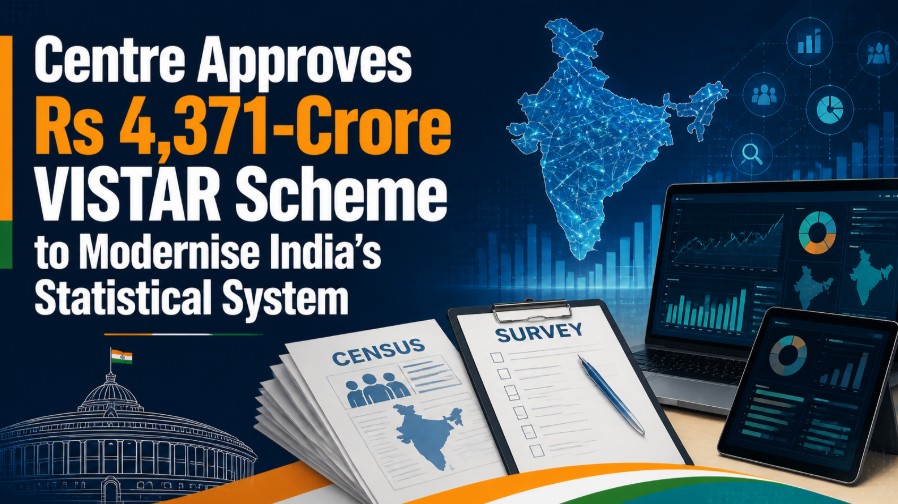
Centre Approves Rs 4,371-Crore VISTAR Scheme to Modernise India’s Statistical System
New Delhi, Nov 4: In a major push to modernise India’s official data infrastructure, the Union Cabinet on Wednesday approved the Rs 4,371.10-crore Viksit Bharat Initiative for Statistical Transformation, Analytics & Research (VISTAR) Scheme for the five-year period from 2026-27 to 2030-31.
Representational Image
The scheme, approved at a Cabinet meeting chaired by Prime Minister Narendra Modi, aims to transform the country’s statistical ecosystem by making official data collection more technology-driven, timely, transparent and accessible.
Aligned with the vision of Viksit Bharat 2047, the initiative seeks to establish a modern statistical framework supported by real-time data, artificial intelligence (AI), machine learning (ML) and improved data integration.
The scheme will cover the statistical and data management activities of the Ministry of Statistics and Programme Implementation (MoSPI), with a focus on strengthening evidence-based policymaking at both national and state levels.
Three key pillars of the VISTAR scheme
The initiative will operate through three major components:
Comprehensive Statistical Operations and Strengthening of Ecosystem.
Support for Statistical Strengthening (SSS).
Economic Census (EC).
Together, these components are intended to improve the quality of official statistics, strengthen institutional capacity and address critical data gaps across different sectors of the economy.
59 surveys planned to improve data coverage
Under the Comprehensive Statistical Operations component, MoSPI plans to conduct 59 surveys during the 16th Finance Commission cycle, compared with 43 major surveys undertaken previously.
The expanded survey programme is expected to generate more detailed information across sectors, helping policymakers identify emerging economic and social trends and design more targeted interventions.
The ministry will also accelerate the digital transformation of statistical operations, covering the entire process from data collection to processing, validation, analysis and dissemination.
Artificial intelligence and machine learning will be integrated into regular statistical workflows to improve accuracy, efficiency and the speed of data processing.
The government also plans to introduce new statistical indicators, including the Headline Index of Services Production and the Index of Unincorporated Sector Enterprises.
AI-ready data and alternative sources to strengthen policymaking
A key feature of VISTAR is the development of a harmonised and interoperable national data ecosystem.
MoSPI will focus on standardised data cataloguing, machine-readable formats, secure data-sharing protocols and privacy-focused systems to reduce information silos across government departments.
The initiative will also explore alternative data sources, including mobile phone records, scanner data and e-commerce information, to complement conventional surveys.
These sources are expected to help fill information gaps, reduce the burden on survey respondents and improve the availability of economic data.
The scheme will further support capacity building by creating opportunities for students, young researchers and academic institutions through internship programmes and research initiatives.
States and UTs to receive support for statistical capacity
The Support for Statistical Strengthening component, known as SSS 2.0, will provide financial and technical assistance to State and Union Territory governments through a redesigned, deliverable-linked framework.
The objective is to improve the ability of states to generate reliable and detailed statistics at district and other local levels.
MoSPI will extend technical support for developing district-level and million-plus city estimates through major national surveys, including the Periodic Labour Force Survey (PLFS), Household Consumption Expenditure Survey (HCES) and Annual Survey of Unincorporated Sector Enterprises (ASUSE).
The initiative will also strengthen the compilation of State and District Domestic Product estimates and the State-level Index of Industrial Production (IIP).
This is expected to help state governments identify local development gaps and make policy decisions based on more accurate regional data.
Eighth Economic Census to map India’s unorganised sector
Another major component of the scheme is the proposed Eighth Economic Census, which will be conducted by MoSPI in collaboration with State and Union Territory governments.
The census will collect detailed information on non-farm establishments and the workers engaged by them, with data coverage extending down to the Gram Panchayat and municipal ward levels.
The exercise will provide a comprehensive picture of the country’s unorganised economic sector and support the development of a National Statistical Business Register.
The proposed register will serve as a foundation for targeted enterprise surveys, economic planning and policy interventions.
The data is also expected to improve assessments of the contribution made by unorganised businesses to India’s Gross Domestic Product (GDP).
Focus on a stronger data-driven economy
With an allocation of Rs 4,371.10 crore over five years, the VISTAR scheme represents a significant investment in strengthening India’s statistical infrastructure.
By combining expanded surveys, digital technologies, state-level capacity building and a comprehensive Economic Census, the government aims to make official statistics more reliable, detailed and responsive to changing policy requirements.
The initiative is expected to strengthen the foundation for data-driven governance and support more informed economic and developmental planning as India moves towards its Viksit Bharat 2047 vision.
4, Nov 2026
Diwali 2026: Firecracker Prices Surge 23–35 pc in Odisha Amid Supply Crunch and Rising Costs
Jatni, Nov 4 (UDN): Diwali celebrations are set to become more expensive for people in Odisha this year, with firecracker prices witnessing a sharp increase of 23 to 35 per cent compared to last year. The festive market is also facing a shortage of supplies, adding to the challenges for traders and consumers ahead of the festival.

Representational Image
The price surge has been attributed to rising raw material costs, with the ongoing US-Iran conflict reportedly adding pressure to the firecracker manufacturing and supply chain. Dealers say the combined impact of higher production costs and reduced supplies has affected the availability and pricing of several varieties of crackers.
Sivakasi manufacturers revise prices, dealers cut orders
A large share of Odisha’s licensed firecracker dealers source their products from Sivakasi in Tamil Nadu, one of India’s largest firecracker manufacturing centres.
Traditionally, wholesalers place advance orders and make payments in December and January to secure supplies for the following Diwali season. However, when dealers approached manufacturers to collect their consignments in June, they reportedly faced demands for additional payments following an increase in raw material costs.
According to Trilochan Patnaik, president of the All Odisha Fireworks Dealers Association, manufacturers offered dealers two options: pay the revised prices to receive the full quantity ordered or accept reduced supplies against their advance payments.
Faced with the situation, several dealers chose to receive smaller consignments rather than bear the additional financial burden.
Patnaik acknowledged that the increase in procurement costs would ultimately affect retail prices and put pressure on consumers during the festive season.
Green crackers remain the permitted option
Amid growing concerns over air and noise pollution, regulatory restrictions on conventional firecrackers have also shaped this year’s market.
Only permitted PESO-approved green crackers can be sold, in accordance with applicable regulations and court directions. These products are designed to reduce harmful emissions and environmental impact.
Wholesalers say QR codes printed on green cracker packaging allow consumers to check product-related information and verify authenticity. However, allegations of counterfeit QR codes have raised concerns about the reliability of verification.
Dealers have called for stronger monitoring and verification by the concerned authorities to prevent the circulation of fake products and ensure compliance with safety standards.
Jatni records firecracker business worth over Rs 10 crore
Despite higher prices and reduced supplies, Jatni continues to remain one of Odisha’s major wholesale destinations for firecrackers.
Around six to seven wholesale dealers in the town have reportedly brought stocks worth more than Rs 10 crore for the Diwali season. Retail traders from Jatni and four to five neighbouring districts depend on these wholesalers to procure their festive supplies.
The market is expected to witness considerable business activity in the run-up to Diwali, although the reduced availability of certain varieties may affect overall sales.
117 firecracker shops approved at Sharata Paikray Stadium
Safety arrangements have also been tightened in Jatni to prevent fire accidents and manage crowds in busy commercial areas.
Since 2016, the local police administration has restricted firecracker shops to designated open spaces away from residential neighbourhoods.
This year, permission has been granted to 117 shops within the Sharata Paikray Stadium premises. Around 40 applications have also reportedly been received for setting up shops along Talakheta Chhak road.
Jatni Fire Officer Sushant Kumar Sahu said shopkeepers had been instructed to maintain adequate distance between stalls, ensure proper access roads and keep essential firefighting materials readily available.
These include sand, water and gunny bags. Fire officials are conducting regular inspections, and violations of safety instructions may invite action.
Traffic congestion raises concerns ahead of Diwali
While designated vending areas are intended to improve public safety, the stretch between Talakheta Chhak and Gobindpur remains a major concern for residents.
The presence of roadside firecracker shops could lead to traffic congestion and create difficulties for emergency vehicles. Last year, commuters reportedly remained stranded for several hours along the route due to heavy traffic.
Residents have urged the police and local administration to introduce effective traffic management measures, regulate roadside vending and ensure adequate emergency access to prevent a repeat of last year’s situation.
With prices climbing, supplies tightening and safety arrangements under scrutiny, Odisha’s firecracker trade faces a challenging festive season. For consumers, this Diwali is likely to bring higher expenses, while traders will be hoping for smooth sales and accident-free celebrations.
4, Nov 2026
Odisha’s State Film Archive Project Faces Uncertainty Ahead of First MoU Anniversary
Bhubaneswar, Nov 4 (UDN): Odisha’s ambitious plan to establish a State Film Archive to preserve its rich cinematic heritage is facing an uncertain future, with little visible progress nearly a year after a Memorandum of Understanding (MoU) was signed for the project.

Representational Image
As the agreement approaches its first anniversary on November 19, questions are mounting over administrative coordination, project implementation and the government’s commitment to safeguarding the state’s valuable film legacy.
The MoU was signed on November 19, 2025, between the Odisha Film Development Corporation (OFDC) and Mumbai-based Film Heritage Foundation (FHF) at Kala Bhoomi, the Crafts Museum in Bhubaneswar. The agreement was signed under the administrative framework of the Handlooms, Textiles and Handicrafts Department.
Under the proposed partnership, the state government was to provide the necessary infrastructure, while FHF, with support from Tata Trusts, would take responsibility for film preservation, restoration and related technical work.
However, the initiative appears to have encountered administrative hurdles before moving into its implementation phase.
Departmental confusion delays implementation
The project has reportedly been caught in a jurisdictional dispute over which department should oversee cinema-related activities.
The Handlooms, Textiles and Handicrafts Department is understood to have maintained that matters concerning cinema should fall under OFDC and the Industries Department. At the same time, uncertainty over OFDC’s administrative positioning, particularly whether it should function under the Industries or Culture Department, has reportedly complicated the process.
The lack of clarity over departmental responsibilities appears to have affected coordination and delayed the next steps.
Although FHF organised a screening of the classic Odia film Maya Miriga as part of the initiative, there has been no clear indication of substantial progress towards making the proposed archive operational.
Trained professionals await an opportunity
The delay has also raised concerns among individuals who underwent specialised training in film preservation through FHF.
These trainees were expected to contribute their newly acquired skills to the proposed archive. However, with the project yet to take shape, their training has not translated into the intended professional opportunities.
The situation highlights a broader concern: without a functional institutional framework, Odisha risks losing valuable expertise as well as opportunities to preserve and restore its cinematic treasures.
Questions over MoU and administrative authority
Apart from the delay in implementation, questions have emerged over the administrative procedures followed while signing the agreement.
OFDC is a state public sector undertaking associated with the Industries Department. However, the MoU reportedly identifies the Commissioner-cum-Secretary of the Handlooms, Textiles and Handicrafts Department as the authorised signatory on behalf of the corporation.
This has prompted questions about the administrative approval or government order that authorised the official to sign the agreement on OFDC’s behalf.
It remains unclear whether the arrangement was supported by a formal delegation of powers, approval from OFDC’s Board of Directors or a specific government directive.
Clarity on these procedural aspects is essential to determine the institutional responsibility for taking the project forward.
Odisha’s cinematic heritage awaits preservation
The prolonged uncertainty has renewed concerns over the state’s efforts to systematically preserve its film heritage. From classic Odia cinema to rare film reels, photographs, posters and other archival materials, Odisha possesses a cultural legacy that requires specialised conservation and long-term institutional support.
Reports of progress in establishing film archives in smaller states, including Manipur, have further drawn attention to Odisha’s slow movement on the initiative.
With November 19 marking one year since the MoU was signed, the government faces questions over whether the project has a definite implementation roadmap, a designated administrative authority and a clear timeline for becoming operational.
For Odisha’s film fraternity and cultural heritage enthusiasts, the proposed State Film Archive represents more than an infrastructure project. It is an opportunity to protect the history of Odia cinema for future generations. Its continued uncertainty raises concerns that a significant cultural preservation initiative could remain confined to an agreement on paper.


