


10, Jul 2026
Sensex Surges Over 700 Points; Nifty Crosses 24,160 as IT Stocks Lead Market Rally
Mumbai, July 10: Indian equity markets posted strong gains on Friday, with the BSE Sensex rising more than 700 points and the NSE Nifty surpassing the 24,160 mark. The rally was primarily driven by robust buying in information technology (IT) stocks, reflecting renewed investor confidence and positive market sentiment.

The sharp upswing was supported by broad-based buying across frontline stocks, with the IT sector emerging as the key contributor to the market’s momentum. Investors responded positively to improving earnings expectations and favorable global market trends, boosting demand for large-cap technology shares.
Market sentiment was further strengthened by sustained foreign investment inflows and optimism surrounding the ongoing corporate earnings season. The rally also extended to several other sectors, indicating a healthy participation across the broader market.
Analysts expect market participants to remain focused on upcoming corporate earnings, macroeconomic indicators, and global developments, which are likely to influence trading activity in the sessions ahead.
The strong performance underscores continued resilience in India’s equity markets and reflects growing investor confidence in the country’s economic outlook.
- 0
- By Neel Achary

10, Jul 2026
Rackspace Technology Launches Operating Framework with Palantir for Regulated Enterprises to Accelerate Enterprise AI in Production
SAN ANTONIO and MIAMI, July 10 — Rackspace Technology®, a global enterprise AI infrastructure and solutions provider, and Palantir Technologies Inc.announced an operating model framework to help regulated and sovereign enterprises own and operate AI in production. The framework, delivered through Rackspace, combines Palantir Foundry and AIP with Rackspace’s governed private cloud, sovereign cloud, on-prem infrastructure, certified FDEs, and managed operations for customers that require control over data, security, governance, deployment location, and operational outcomes.
The framework is built for markets such as healthcare systems protecting patient records, financial institutions running on regulated data, energy operators with air-gapped infrastructure, and sovereign organizations that cannot move data across borders. For these customers, AI deployment is guided by a few fundamental, non-negotiable questions: Who owns the data? Where should the data live? And can their models be used to build someone else’s business? For these customers, where governance, compliance, and security are non-negotiable, AI in production calls for both a platform and a governed operator. Palantir provides the AI operating layer; Rackspace provides the infrastructure, certified engineers, and managed operations to run that layer where the customer’s mission, data, and obligations live.
“While most regulated enterprises have an AI strategy, they often lack the operating model to put AI into production safely and at scale. This effort by Rackspace closes that gap,” said Gajen Kandiah, Chief Executive Officer of Rackspace Technology. “Rackspace brings the governed infrastructure, the Palantir-certified engineers, the managed operations, and the accountability for outcomes in the environments where our customers actually live. This is deploy and operate, not deploy and leave. This is how organizations with the most demanding requirements move AI into production at scale.”
“Sovereign AI requires more than access to a model. It requires an operating layer that lets enterprises govern data, enforce permissions, route models, audit actions, and deploy capability where the mission lives,” said Alex Karp, Co-Founder and Chief Executive Officer of Palantir Technologies. “This framework brings Palantir Foundry and AIP together with Rackspace’s infrastructure and delivery capabilities for mission-critical environments.”
Since the companies’ initial February 2026 announcement, the partnership has built measurable momentum. Rackspace has scaled to approximately 400 Palantir certifications across sales, engineering, delivery, and operations, including a large global cohort of Palantir-certified forward deployed engineers (FDEs) to serve demand across healthcare, financial services, energy, and mid-market. The first joint deployment closed in <2 months with Rackspace FDEs deploying AI-enabled workflows on Palantir Foundry inside a U.S.-based solar tracking manufacturer to deliver a 94% reduction in their quote cycle time.
Rackspace is also committing to deploy Foundry and AIP across more than 70% of its own back-office operations under the Rackspace OneOS program. In doing so, Rackspace runs its own business on the same governed stack it operates for customers, retaining full control of its data and models rather than ceding them to a third party.
Under the framework, Rackspace serves as a preferred operator for on-premise, private cloud, and sovereign Palantir deployments across critical infrastructure in both the public and private sectors, and for enterprises that demand the same control governments require – with Palantir Foundry and AIP as the data + AI platform layer of the governed enterprise AI stack that Rackspace has been assembling throughout 2026. The two companies will work together to acquire and serve customers in healthcare, financial services, energy, private equity, and the mid-market. The collaboration also aims to stand up large-scale private cloud and sovereign deployments, where Rackspace and Palantir FDEs work side by side inside customer environments. Across these motions, Rackspace will provide the governed infrastructure, certified forward-deployed engineers, and managed operations that take Palantir Foundry and AIP into production. The result is a new category of partnership and operating model delivered by Rackspace designed for regulated enterprises to deploy AI in production.
10, Jul 2026
Nidec Advances Global Transformation with Enhanced Operating Model and Leadership Appointments
St. Louis, Mo. – July 10 – Nidec, a global leader in electric motors, drives, and controls, announced the next phase of its global transformation with the introduction of an enhanced operating model and leadership structure designed to accelerate decision-making, increase organizational agility, and better serve customers worldwide.
Nidec’s business units, group companies, and affiliates will be brought into closer alignment through an integrated enterprise framework. By connecting Corporate Headquarters, Regional Headquarters, and business operations through a common operating approach, Nidec is strengthening coordination across the enterprise while enabling business units to remain focused on customers, innovation, and growth.
Building on Nidec’s global scale and technical expertise, the new operating model demonstrates Nidec’s continued commitment to strengthening its operating foundation through enhanced governance, clear accountability, and disciplined execution. These enhancements position Nidec to respond more quickly to customer needs, capitalize on emerging market opportunities, and advance its long-term strategy.
“As Nidec continues its transformation, we are evolving the way we operate to better support our customers and create long-term value for stakeholders,” said Mitsuya Kishida, Representative Director, President and Chief Executive Officer of Nidec. “The actions we have taken to strengthen governance are an important foundation for our future. This new model builds on that progress and underlines our commitment to building a company defined by integrity, accountability, and operational excellence.”
Carla Otto Appointed to Lead Regional Strategy
As part of the new operating model, Nidec announced the appointment of Carla Otto as President of Nidec Americas Holding Corporation (NAHC) and Chair of Nidec Europe BV (NEUN).
Carla will lead Nidec’s Regional Headquarters strategy across the Americas and Europe. She will work closely with business unit leaders and corporate functions to strengthen regional collaboration, establish common ways of working, and provide enterprise support that enables business units to execute their strategies effectively.
“Carla is a highly respected leader with deep experience driving performance, leading complex organizations, and building strong teams,” said Michael Briggs, Chairman, Motion & Energy and Chief Executive Officer, Appliance Automotive Division. “Her leadership will be instrumental in strengthening regional governance, expanding enterprise capabilities, and accelerating execution across our organization.”
“Nidec has an extraordinary opportunity to leverage its technical expertise and talented teams to deliver even greater value for customers and stakeholders,” said Carla Otto. “I’m excited to help bring our businesses and regions closer together, strengthen collaboration, and provide the support that enables our business units to focus on what they do best: serving customers, driving innovation, and delivering results.”
As global demand continues to increase across markets driven by electrification, automation, digitalization, and energy efficiency, Nidec remains focused on investing in its people, capabilities, and operating model to deliver innovative solutions and exceptional customer support worldwide. These enhancements further strengthen Nidec’s ability to leverage its global capabilities and technical expertise to deliver long-term value for customers, employees, and shareholders.
10, Jul 2026
Shri Nitin Gadkari Inaugurates Prawaas 5.0, Reinforcing India’s Vision for Safe, Smart & Sustainable Passenger Mobility
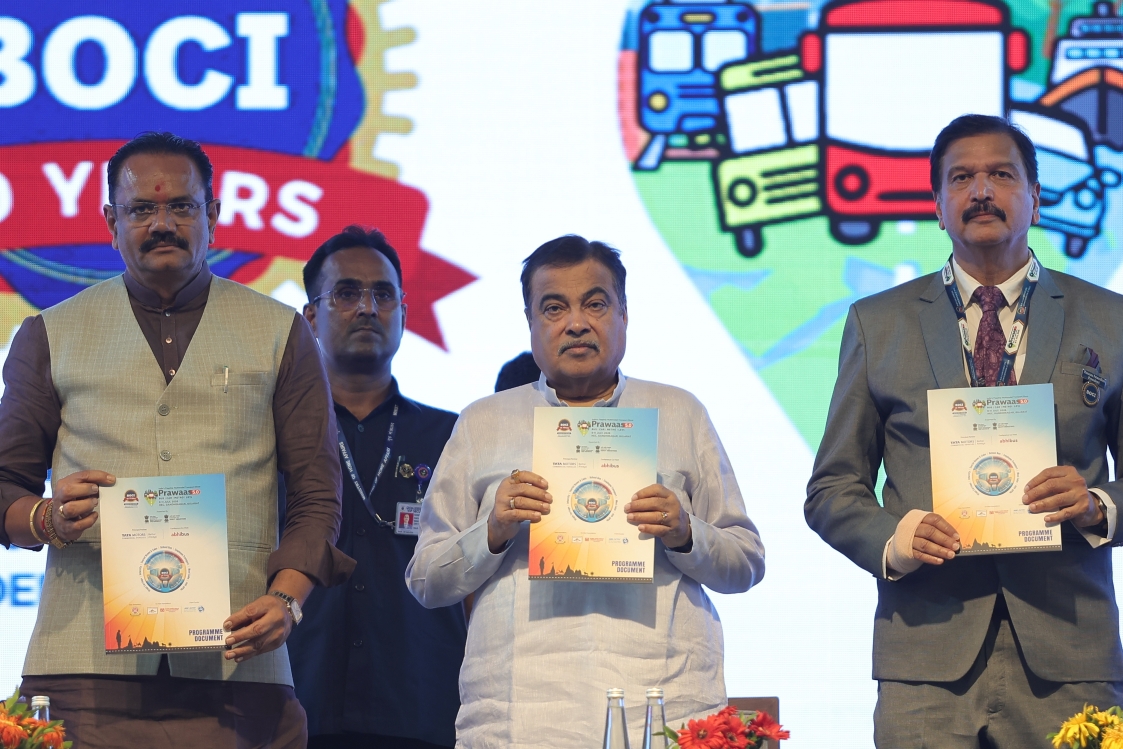
Mumbai / Gandhinagar, July 10: Prawaas 5.0, India’s Biggest Show on Public Transport, was officially inaugurated today by Shri Nitin Gadkari, Hon’ble Minister of Road Transport & Highways, Government of India, at the Helipad Exhibition Centre, Gandhinagar. Organised under the theme “Towards Safe, Smart & Sustainable Passenger Mobility,” the event is aligned with the larger vision of “Steering the Nation Towards Viksit Bharat” by bringing together policymakers, industry leaders and transport stakeholders to accelerate the transformation of India’s passenger transport sector.
The inaugural ceremony was graced by Shri Arjun Singh, Hon’ble Minister for Transport & Labour, Government of West Bengal, Dr. Shankar Ghosh, Hon’ble Minister for Tourism & Parliamentary Affairs, Government of West Bengal, Shri Pradeep Batra, Hon’ble Transport Minister, Government of Uttarakhand, Shri Kantilal Amrutiya, Hon’ble Minister of State, Labour, Skill Development & Employment, Government of Gujarat; Smt. Darshnaben Vaghela, Hon’ble Minister of State for Urban Development and Urban Housing, Government of Gujarat.
The occasion also witnessed the presence of Shri Anand S, Vice President & Business Head – CV Passenger, Tata Motors Ltd., Shri SS Gill, Chief Commercial Officer, VE Commercial Vehicles Ltd. (VECV), Shri Manoj Agarwala, Chief Business Officer, redBus, Shri Aloke Bajpai, Group CEO, ixigo, Shri Jagdeo Singh Khalsa, Chairman, BOCI, Shri Prasanna Patwardhan, President, BOCI, Shri Meghajibhai Khetani, Chairman, Akhil Gujarat Pravasi Vaahan Sanchalak Trust, Shri Lalitkumar Sukhwani, President, Akhil Gujarat Pravasi Vaahan Sanchalak Trust, Ms. Jalpa Jain, Spokesperson, Akhil Gujarat Pravasi Vaahan Sanchalak Trust, Shri Prakashbhai Patel, President, Gujarat Tourist Vehicle Operators Association, Shri Amit Shah, President, Gujarat Luxury Cab Owner’s Association (GLCOA), Shri Siddiq Gandhi, Jt. Treasurer, BOCI, Shri Allah Baksh Afzal, National VP, BOCI, Shri Dharmaraj D R, Gen. Secretary, BOCI, Shri Harsh Kotak, Treasurer, BOCI, Shri Jagdish Patankar, Event Curator, Prawaas 5.0, Executive Chairman, MM Activ, along with senior government officials, industry leaders, and more than 10,000 transport operators from across the country.
Organized by BOCI, hosted by the Akhil Gujarat Pravasi Vahan Sanchalak Mahamandal, co-hosted by the Gujarat Luxury Cab Owners Association and the Gujarat Tourist Vehicles Operators Association, and curated by MM Activ Sci-Tech Communications Pvt. Ltd., Prawaas 5.0 has evolved into India’s premier business and knowledge platform dedicated to the passenger transport industry. The event creates a unique convergence of government, transport operators, manufacturers, technology providers, entrepreneurs, investors and mobility innovators to discuss, demonstrate and drive the future of public transport.
A key highlight of Prawaas 5.0 is India’s Largest Expo Showcasing the Future of Public Transport, Technologies & Services, featuring the latest innovations from OEMs, Components, Aggregators, Systems & Accessories, EVs, Energy Storage & Charging, Smart Mobility & Fleet Management, Tech & Digital Solutions, Alternative Fuels & Lubricants, and Start-ups & Innovation. The exhibition provides a comprehensive platform for businesses to showcase cutting-edge products, emerging technologies and integrated mobility solutions that are redefining passenger transport.
Prawaas 5.0 is also recognised as one of the country’s most preferred platforms for new product launches and technology unveilings, with leading automotive manufacturers and mobility companies choosing the event to introduce next-generation buses, intelligent transport solutions, digital platforms, electric mobility innovations and advanced fleet technologies. The event provides a strategic opportunity for companies to engage directly with transport operators, policymakers and business decision-makers from across India.
Beyond the exhibition, Prawaas 5.0 will host an extensive programme of conferences, leadership addresses, policy dialogues, technical sessions, panel discussions and business networking initiatives, bringing together experts from government, industry and academia to deliberate on the future of passenger mobility. The event will also celebrate excellence across the sector through the Bharat Prawaas Awards, recognising outstanding contributions and innovation within the passenger transport industry.
As India moves towards a future of safer, smarter and more sustainable mobility, Prawaas 5.0 stands as a catalyst for collaboration, innovation and policy dialogue. By bringing together the complete passenger transport ecosystem under one roof, the event continues to strengthen partnerships, encourage knowledge exchange and create new opportunities that will help shape the next chapter of India’s public transport journey.
10, Jul 2026
Vice President C.P. Radhakrishnan Confers Degrees on 263 Graduates at NISER’s 15th Convocation
Bhubaneswar, July 10 (UDN): Vice President of India C.P. Radhakrishnan on Thursday conferred degrees on 263 students at the 15th Convocation of the National Institute of Science Education and Research (NISER), Jatni, celebrating the academic achievements of one of the country’s premier science institutions.

Graduates from four academic programmes received their degrees in the presence of their parents, faculty members and distinguished guests. The ceremony was marked by a sense of pride and celebration as students and their families commemorated the successful completion of their academic journey.
Addressing the gathering, the Vice President encouraged the graduating students to pursue excellence in scientific research and innovation, urging them to apply their knowledge to address national challenges and contribute to India’s progress. He highlighted the pivotal role of young scientists in shaping the country’s future and strengthening its global standing in science and technology.

Highlights from the 15th Graduation Ceremony of the National Institute of Science Education and Research (NISER), graced by the Vice President Shri C. P. Radhakrishnan in Bhubaneswar today. pic.twitter.com/GKOHCB7QvG
— Vice-President of India (@VPIndia) July 9, 2026
The convocation was attended by Odisha Governor Hari Babu Kambhampati, Chief Minister Mohan Charan Majhi, Union Ministers and other eminent dignitaries, who congratulated the graduates and wished them success in their future endeavours.
NISER Registrar Pranay Swain said the convocation was a proud moment for the institute, with 263 students graduating across four academic programmes. “Our graduates are the future scientists of the nation. We hope they will make meaningful contributions to scientific research and the country’s development,” he said.
Expressing her excitement, graduate Priyanka Sarangi said the Vice President’s address inspired students to pursue impactful scientific research. Another graduate, Soumya Ranjan Padhy, said the interaction with the Vice President strengthened their resolve to use science and innovation for the advancement of Odisha and the nation.
The convocation concluded with the presentation of academic honours and congratulatory messages from the dignitaries, who encouraged the graduating batch to uphold the spirit of curiosity, innovation and service as they embark on their professional careers.
10, Jul 2026
Westerlay Orchids Expands Farm-Direct Access Through Box of Orchids Online Ordering
Premium Phalaenopsis orchids arrive fresh from the farm, making it easy for florists, event planners, venues, interior designers, and other wholesale buyers to order online
Carpinteria, Calif. – (July 10th 2026): Westerlay Orchids, a third-generation, family-owned company based in Carpinteria, California, is expanding farm-direct access to premium Phalaenopsis orchids through its Box of Orchids online ordering program. Designed for florists, event planners, venues, interior designers, and other wholesale buyers, the program offers a convenient way to order premium orchids shipped fresh from the farm directly to a home, business, or event location.
“The Box of Orchids program was created to make ordering premium orchids simple, reliable, and convenient for our customers,” said Toine Overgaag, Owner and President of Westerlay Orchids. “By shipping our orchids in bud form, we’re able to help ensure the quality, longevity, and presentation our customers have come to expect from Westerlay.”
Most orders arrive within two to three days. Customers simply unpack the orchids, remove the protective sleeves, and allow the buds to naturally open. For the best presentation, Westerlay recommends scheduling delivery 10 to 14 days before an event to allow the orchids to reach peak bloom.
By overseeing every stage of the growing process, from propagation through the finished plant, Westerlay maintains exceptional consistency and quality. This hands-on approach enables Westerlay to consistently provide premium orchids while maintaining the high standards that have defined the company for generations.
Westerlay delivers to customers throughout California, Arizona, Nevada, Utah (Salt Lake City), New Mexico, Idaho, Oregon, Colorado and Texas. Each year, the company distributes more than four million orchids directly to customers, as well as to local and national supermarket chains, florists, and designers.
A pioneer in environmental stewardship and sustainable growing practices, Westerlay Orchids is also deeply committed to giving back through ongoing support of local schools, nonprofit organizations, and community initiatives.
10, Jul 2026
STARLUX Airlines and Pantone Announce New Standard for Metallic Aircraft Liveries with AIRSORAYAMA Silver and Gold
Custom finishes bring Hajime Sorayama’s liquid-metal aesthetic to STARLUX’s A350-1000, redefining the aesthetics of aviation
Jul 10, 2026 — Two new colors have emerged from the STARLUX AIRSORAYAMA project, with Pantone translating acclaimed Japanese artist Hajime Sorayama’s signature metallic aesthetic into bespoke aviation colors. Developed in a collaboration between STARLUX Airlines and global color authority Pantone, these colors serve as the defining element of the STARLUX AIRSORAYAMA aircraft, a three-year initiative that required solving technical problems never before confronted at this scale.
On the AIRSORAYAMA aircrafts, Sorayama’s iconic metallic “silver” and “gold” aesthetic are translated to precision-engineered shades designed for consistent reproduction. The result, visible at scale on STARLUX’s Airbus A350-1000, is a fluid, liquid-metal effect that shifts in depth and tone depending on viewing angle and lighting conditions, transforming the aircraft fuselage into a striking visual statement.
“This time we aren’t just tuning color, we are tuning light.” said Laurie Pressman, Vice President of Pantone Color Institute™. “Through specialized formulation, all visible shimmer particles were removed to achieve an almost liquid smoothness. They embody future luxury—not the ostentation of traditional gold and silver, but a quiet confidence: precise, elegant, and technologically refined. ”
The project united STARLUX, Airbus, and German premium coating specialist Mankiewicz around a fundamental challenge: Sorayama’s signature mirror-like metallic finishes could not be used on the Airbus A350-1000 due to aviation safety, structural, and lightning-protection requirements. A new technical solution needed to be developed.
The solution was a family of high-concentration mica-based pigments capable of producing reflective metallic luster while meeting the rigorous standards of commercial aviation. After extensive testing and validation, the formulation underwent more than 10 iterative adjustments before receiving final approval from Sorayama himself. This process yielded the signature finishes of the AIRSORAYAMA Silver and Gold aircrafts.
With the formula approved, engineers implemented a precision multi-layer coating process to apply the colors at aircraft scale, balancing visual performance with engineering requirements. It took a team of 16 specialists over 20 days to complete the livery.
The STARLUX AIRSORAYAMA livery marks a new milestone in commercial aviation—establishing that color science, artistic collaboration, and aerospace engineering can be integrated at the highest level of craft.
“STARLUX AIRSORAYAMA | PANTONE – Colors That Capture Light” documentary is available here: https://youtu.be/X9vWlWHSF90
9, Jul 2026
JobElephant CEO Named 2026 Top Tech Nominee
San Diego Program Honors Michael Ang Among Region’s Most Innovative IT Leaders
SAN DIEGO, Calif. (July 9, 2026) – Michael Ang, founder and CEO of leading recruitment advertising and technology company JobElephant, has been named a qualified nominee for the 2026 San Diego Top Tech Awards. The annual program recognizes the most outstanding information technology leaders in the San Diego region and will hold its 19th annual awards ceremony on Sept. 17, 2026, at Snapdragon Stadium.
The San Diego Top Tech Awards, presented by Cox Business, celebrates the region’s most innovative technology leaders who shape industries through forward-thinking solutions. Michael Ang’s selection as a Qualified Nominee recognizes his 25-year career transforming how organizations find talent, growing JobElephant from a garage startup into a nationally recognized recruitment advertising technology company that processes more than 93,000 job advertisements monthly for higher education institutions, nonprofits, healthcare organizations, and more across the United States and internationally.
“San Diego has always been home base for us, so being recognized here means a great deal,” said Michael Ang, CEO and Founder, JobElephant. “We built Horton® and JobStats because HR professionals were spending too much time guessing where to post jobs and too little time understanding whether those ads were actually working. Our goal has always been to answer that question with real data.”
Under Michael Ang’s leadership, JobElephant grew from processing 1,500 job ad placements monthly in 2006 to more than 93,000 today, a 6,100% increase in volume. That growth follows a consistent pattern of technology innovation, including the 2018 launch of Horton® with machine learning capabilities, the 2024 integration of API technology connecting JobElephant’s tools directly with applicant tracking systems and job boards, and the 2025 introduction of JobStats, powered by Microsoft Power BI.
“Twenty-five years in, and the problems HR professionals face are still evolving, which means we have to evolve with them,” said Michael Ang, CEO and Founder, JobElephant. “The jump from 1,500 job placements a month to more than 93,000 did not happen because we stood still. It happened because we kept asking what comes next and then built the tools to answer that question.”
The honorees will be announced at the 2026 Top Tech Awards ceremony taking place from 4:30 p.m. to 7:30 p.m. at Snapdragon Stadium in San Diego.
The 2026 Top Tech Awards nomination adds to a growing list of recognitions for JobElephant this year. In March 2026, the company earned finalist status in two categories of the international Digital Job Advertising Excellence Awards, including Excellence in Client Success and Support and Innovation in Job Advertising. JobElephant also earned nominations in four categories of the 2026 MarTech Breakthrough Awards, including Overall AdTech Company of the Year, AdTech Innovation Award, AI-Powered Ad Targeting Solution of the Year, and Predictive Analytics Solution of the Year.
9, Jul 2026
From Cricket to Cyber: Ariel University Delegation Advances India-Israel Academic and Innovation Ties
A delegation from Ariel University attended the recent Jewish & Indian Alliance leadership gathering in Tel Aviv, joining entrepreneurs, diplomats, academics, innovators, faith leaders and community representatives from Israel, India and the wider Jewish and Indian diasporas to discuss practical ways to strengthen India-Israel cooperation.
The gathering, hosted at Fiverr, was convened by the Jewish & Indian Alliance, part of Voice of the People, an initiative led by Israel’s President Isaac Herzog to connect Jewish communities and leaders around the world.
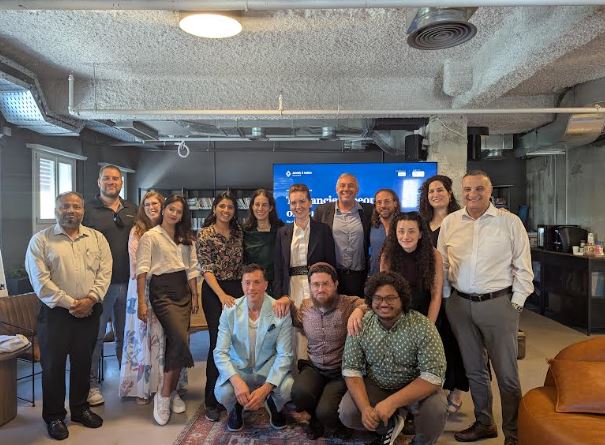
During the gathering, Ariel University representatives discussed the university’s expanding India-facing activity across student life, cultural engagement, research, innovation and entrepreneurship, as well as opportunities to deepen future collaboration with Indian academic, community and innovation partners.
For Ariel University, the India-Israel relationship is not only a diplomatic or economic story. It is already part of campus life. Indian students currently form the largest single-country group among Ariel University’s international Master’s and PhD students, contributing significantly to the university’s academic, research and international community.
“India and Israel share a deep commitment to knowledge, innovation, entrepreneurship and the advancement of society,” said Professor Ehud Grossman, President of Ariel University. “At Ariel University, we see this partnership reflected every day through our Indian students, our academic collaborations and our shared pursuit of research that addresses real-world challenges. Strengthening these connections is an important part of our international vision and our responsibility as a research university.”
Ariel University’s India-facing activity spans student life, culture, sport, research and innovation. On campus, the university has supported celebrations of major Indian festivals and cultural traditions, including Diwali, Holi and Onam, creating opportunities for Indian students to share their heritage with the wider university community.
The university is also proud of the Ariel Warriors, Ariel University’s cricket team, which has become a visible symbol of student leadership, international engagement and the growing presence of Indian culture on campus.
Ariel University’s engagement with India also extends into applied research and entrepreneurship. In January 2026, the university participated in the Israel–India Global Innovators Hackathon in Coimbatore, organized with SNR Academic Institutions and hosted at Sri Ramakrishna Engineering College. The initiative brought together Indian student innovators and Israeli academic mentors around cyber resilience, sustainability engineering and applied innovation.
The hackathon also formed part of a wider India–Israel innovation pathway that included the announcement of TechGuard Labs Foundation (TG Labs) in Coimbatore, a cybersecurity innovation initiative connected to Ariel University’s expanding India-facing activity.
“From Indian graduate students and campus celebrations to cricket, cybersecurity and applied research, the India–Israel relationship is already part of Ariel University’s international DNA,” added Professor Grossman. “We look forward to building on this momentum and creating new opportunities that connect students, researchers and communities across both countries.”
9, Jul 2026
Middle East Tensions Raise Fears of Global Oil and Gas Supply Disruptions
July 9: Escalating tensions in the Middle East have heightened concerns over potential disruptions to global energy supplies after Iran reportedly launched attacks targeting U.S. military bases in the region, prompting fears of a wider geopolitical confrontation.
The latest developments have intensified uncertainty in international energy markets, with analysts warning that any further escalation could disrupt the production and transportation of crude oil and liquefied natural gas (LNG), particularly through key shipping routes such as the Strait of Hormuz, a vital corridor for global energy trade.
Market observers cautioned that prolonged instability in the region could trigger volatility in crude oil and natural gas prices, increase transportation and insurance costs, and place additional pressure on energy-importing countries. Nations heavily dependent on imported fuel may face rising import bills if the conflict escalates further.
Governments and international agencies are closely monitoring the situation amid concerns that any disruption to supply chains could have broader implications for global inflation, industrial production and economic growth.
While there has been no confirmed large-scale interruption to oil and gas exports so far, investors and policymakers remain on high alert as diplomatic efforts continue to prevent the conflict from widening.
The evolving situation is being closely watched by global markets, with energy security emerging as a key concern in the wake of the latest developments.


