


26, Jun 2026
2026 Pair’d Festival Program Announced Australia’s leading wine festival returns to Margaret River this November
Friday, 26th June 2026
Pair’d Margaret River Region has today unveiled its 2026 program – a masterful, multi-sensory celebration of wine, food, music and culture, that will utilise the region’s incredible natural assets as the backdrop for the four-day festival this November (19-22).
Hot off major global recognition at the prestigious Eventex Awards (the only Australian festival to receive this accolade), today’s program announcement will see Pair’d bring together a once-in-a-lifetime combination of Michelin stars, global music icons, rare museum wines and beachside feasts at Australia’s leading wine-first festival.

Pair’d Festival Director Hannah Pike said the team were thrilled to present a program that pushes far beyond the traditional food and wine festival format. “The 2026 program is about the art of the blend, from museum pours and fire feasts, to musicians in caves and sunset sessions by the ocean, we’ve curated a collection of experiences that simply couldn’t happen anywhere else in the world.” Ms Pike said. “In between festivals, we spend the year scouring the world to find talent who genuinely love and have a real connection to wine – be it musicians, chefs or artists – to deliver a multi-sensory celebration of place, creativity and connection. The program is wine-led, designed to be inclusive and welcoming to guests of all tastes, interests and price-points. I strongly encourage anyone interested in attending to start exploring the program now, ahead of tickets going on sale next week.” Ms Pike finished. The Grand Tasting returns to Howard Park Wines as the only event of the year where Margaret River’s most prestigious and iconic producers gather on a single lawn. Guests can indulge in a festival menu curated by Matt Moran and Aaron Carr, explore legendary vintages through Museum Masterclasses with Erin Larkin and Nick Ryan in the Howard Park Wine Chapel, and enjoy live music from jazz artist Mark Turner
and a headline performance by Isabella Manfredi (The Preatures).
Western Australian-born chef Dave Pynt (Burnt Ends, Singapore) will return home for the hugely anticipated Burnt Ends & Friends at Wills Domain. Selling out within minutes last year, the next instalment will see Pynt collaborate with American BBQ Pitmaster and Netflix royalty Rodney Scott, Hong Kong chef Matt Abergel, Larissa Goncalves (Si Paradiso) and Ben Cross (Mason Bali) for one of the festival’s signature dining events.
Scott will also host An Evening with Pitmaster: Rodney Scott alongside good friend Morgan Mcglone (The Goodies Group), an intimate live-fire feast on the festival’s opening night. Festival favourite Pair’d Beach Club will return to Meelup Beach, bringing together two ex-Noma alumni – Gus Stieffenhofer-Brandson, chef-owner of Michelin-starred Published on Main and No. 17 in North America’s 50 Best, and Ben Ing, Noma’s former head chef now behind Alberta’s in Busselton.
Guests will arrive to oysters, sparkling and coastal spritzes before choosing their experience: the Beach Club Restaurant, where a three-course menu is matched with Margaret River wines curated by sommelier Cyndal Petty or the Beach Bar, a more relaxed setting of casual beach bites, wine, music and dancing on the sand. WA seafood chef Scott Bridger of Pearla & Co. will offer a live raw bar throughout the event.
The Pair’d Beach Club is also your ticket to experience this year’s music headliners, legendary Austrian electronic duo Kruder & Dorfmeister for their only Australian performance in more than a decade. Pioneers of the “Vienna Sound” and passionately involved in the wine industry themselves, they are a natural fit for Pair’d – artists who have shaped both sound and wine culture, performing at sunset overlooking the Indian Ocean.
Led by proud Wadandi-Pibulman man Zac Webb, Nature’s Table will return under the canopy of Tanah Marah Forest, with Paul Iskov (Fervor) and Bundjalung woman Mindy Wood (World’s 50 Best Restaurants ‘Champions of Change Award) teaming up to present an exclusive four-course lunch that weaves the essence of the blooming Peppermint Tree. Paired with a prestigious wine list curated by Erin Larkin and the soulful melodies of Noongar artist Bumpy, this is a dining experience in complete harmony with the forest around.
With so many of the events in the program utilising the incredible natural assets of the Margaret River Region, Ngilgi Reverie will transform the ancient chambers of Ngilgi Cave into one of the world’s most unique stages with didgeridoo and soulful acoustic performances, followed by a Cullen Wines-led and bushfood-inspired tasting experience. Meanwhile, Xanadu Wines Under the Stars will celebrate WA’s glittering night sky for a unique evening of food, wine, astronomy and cultural storytelling.
If it’s Michelin stars you’re chasing, Vasse Felix x Bonheur presented by Lexus is an exclusive event bringing together the artistry of Vasse Felix Estate chef Cam Jones and winemaker Virginia Willcock, with the world-class refinement of Gordon Ramsay protege, Matt Abé, Chef Patron of Bonheur (London), who gained 2 Michelin stars in his new restaurant within months of opening. The event celebrates heritage, innovation and the deep connection between premier wine-making and world-class gastronomy.
Wayfinder x St. John presented by Lexus will see Wayfinder’s Brendan Pratt join forces with London’s legendary St. John to present a menu that honours the regenerative cycles of the land. Set against the backdrop of the estate, this forward-thinking dining experience is a raw dialogue between the winemaker and the chef, merging St. John’s pioneering nose-to tail philosophy with Wayfinder’s soil-first viticulture.
In 2026, New Wave Gathering is taking over crowd favourite Chow’s Table for a night of wine, delicious Chinese food, and live music headlined by Australian indie-electronic favourites Boo Seeka. Guests can expect fresh pours from the region’s next-gen labels with big tunes to match.
Oenophiles are in for a treat at The History Makers hosted by Nick Ryan, with a menu masterfully delivered by Dave Pynt and Leeuwin Estate’s Dan Gedge. Space is strictly limited to 24 seats, with Leeuwin Estate opening its gallery for the ultra-exclusive dinner featuring pinnacle bottles and revered museum releases never before tasted by the public. Ryan said: “I’ve drunk a lot of great Margaret River wines in my time, but never have I seen a collection quite like what’s on offer at this dinner. It really is the best of the best and we’ll be talking about this night for years to come.”
Western Australian Tourism Minister the Hon. Reece Whitby MLA said the WA Government is excited to invite local, national and international guests to experience an event celebrating world-class wine, food, culture, and creativity in a truly unique destination.
“Now in its third year, Pair’d Margaret River Region is a proudly West Australian homegrown event that has already built a strong presence on the global stage, Minister Whitby said. “The 2026 program showcases internationally recognised chefs, musicians and storytellers through unique experiences that highlight the region’s natural beauty and exceptional wine and culinary offerings.”
“This event plays a key role in driving visitation to the Margaret River Region, supporting local businesses and delivering strong economic outcomes for the community, while further cementing Western Australia’s reputation as a world-class destination.”
Key Notes:
- Access the full Media Toolkit HERE
- Festival dates: Thursday 19 November – Sunday 22 November 2026.
- The full program can be viewed now at pairdmargaretriver.com with tickets on sale at 10am AWST (Perth), Wednesday 1 July.
- The 2026 program includes more than 40 wine-led events set across beaches, forests, caves and vineyards in the Margaret River Region.
- Crowd favourite Burnt Ends & Friends will see Dave Pynt (Burnt Ends, Singapore) return and join forces with American Pitmaster, Netflix royalty Rodney Scott and Hong Kong’s “King of Chicken,” Matt Abergel (Yardbird, Hong Kong), for a smoke fuelled masterclass in global flavour. Scott will also host An Evening with Pitmaster: Rodney Scott with Morgan Mcglone, an intimate live-fire feast on the festival’s opening night.
- Legendary Austrian DJ duo and now winemakers, Kruder & Dorfmeister (K&D) will return to Australia for the first time in a decade for their only Aus gig at two exclusive sunset sets at Pair’d Beach Club on Meelup Beach.
- Ben Ing (Alberta’s, Busselton) will team up with Gus Stieffenhoffer-Brandson (Published on Main, Vancouver) celebrate the best of Western Australian seafood across a variety of dining options at Pair’d Beach Club, with wines curated by Cyndal Petty.
- Wayfinder x St John presented by Lexus will see the esteemed London restaurant that is credited with pioneering nose-to-tail dining collaborate with chef Brendan Pratt on a menu that honours the regenerative cycles of the land.
- Vasse Felix x Bonheur presented by Lexus brings together Vasse Felix chef Cam Jones and winemaker Virginia Willcock with Gordon Ramsay protege Matt Abé, Chef Patron of Bonheur (London), who gained 2 Michelin stars within months of opening.
- Returning favourites include Nature’s Table, Ngilgi Reverie, The Grand Tasting, New Wave Gathering, and Pair’d Beach Club.
- Many events sold out within 20 minutes of going on sale last year, so early movement is strongly encouraged for those wanting to attend the event.
- Early Access sign-ups and travel packages are available now via Pair’d Margaret River Region.
- For interstate guests, direct flights available from Sydney and Melbourne straight into Busselton Margaret River Airport.
Event Owner
Tourism Western Australia Tourism Western Australia (WA) is the WA Government agency responsible for promoting Western Australia as an incredible holiday and events destination. Their role is to inspire more people to visit WA from Australia and around the world. Tourism WA does this by marketing the state to the world through innovative campaigns; developing, attracting and promoting major sporting, arts, cultural and business events; working with government and the tourism industry to improve access, accommodation and tourism experiences for our visitors; and by informing and empowering the WA tourism industry through sharing key insights and global trends, building stakeholder relationships and providing leadership to the sector.
Event Organisers
Mellen Events With over 30 years of experience, Mellen Events is Western Australia’s leading concert promoter and event management company. As the exclusive concert operator at Kings Park for more than two decades, they have staged over 140 outdoor concerts for more than one million fans, hosting global artists such as Sting, Tom Jones, Bryan Adams, Lorde, and Groove Armada. Their portfolio also spans major festivals and bespoke experiences, including Kaleidoscope Festival of Light and Dark Sky Festival. In partnership with Live Nation Entertainment, Mellen combines global talent access with a deep understanding of the WA market to deliver premium events that unite communities and showcase the region on the national and international stage.
We Are Gather
2025 winners of ‘Best Small Event Agency in Australia’ at the Australian Event Awards, and 2026 Winners of Event Ex Rising Star Agency and Boutique Agency. We Are Gather is a bold, collaborative curator of premium experiences, designing and delivering large-scale festivals, destination-led events, and brand activations with clarity, creativity, and commercial acumen. Built on deep roots in food, wine, tourism, and culture, we create immersive experiences that not only elevate brands and bring people together but also drive real results for regions, communities, and collaborators. We believe in creating gatherings that ‘leave a legacy’.
AHOY Management
AHOY Management specialises in festivals that sell out, build loyal followings, and are beloved in real life. Their standout events include Cabin Fever in Margaret River, Taste Great Southern, and Subi Spritz in Subiaco. With years of local and international experience, AHOY brings bold ideas to life, turning seeds of concepts into thriving celebrations. They work closely with communities, brands, and agencies, delivering big agency expertise with a boutique, boundary-pushing approach.
- 0
- By Neel Achary

26, Jun 2026
India’s Forex Position Strengthens as Reserves Climb to Dollar 672.5 Billion
New Delhi, June 26: India’s foreign exchange reserves rose by nearly $1 billion, reaching $672.5 billion, according to the latest data, reflecting continued stability in the country’s external financial position.
The increase in reserves is seen as a positive signal of economic resilience, supported by steady capital inflows, healthy export performance, and prudent macroeconomic management.
Economists said the strong reserve position provides a buffer against global financial volatility, currency fluctuations, and external shocks, while also supporting confidence in the Indian rupee.
Foreign exchange reserves play a crucial role in maintaining financial stability, ensuring adequate import cover, and supporting overall economic growth. India’s current reserve levels remain among the highest globally.
Officials noted that the steady accumulation of reserves reflects strong underlying fundamentals and sustained investor confidence in the Indian economy.
The rise is expected to further strengthen India’s ability to manage external risks and support long-term economic stability.
26, Jun 2026
India’s Green Economy Surges to Dollar 110 Billion, Grows at 20% CAGR: Report
New Delhi, June 2026: India’s green economy has reached an estimated $110 billion, expanding at a strong 20% compound annual growth rate (CAGR), according to a recent report. The data highlights the rapid acceleration of India’s transition toward a more sustainable, low-carbon economic model driven by clean energy expansion, policy support, and increasing private sector participation.
The report notes that the green economy is becoming a major structural component of India’s overall growth story. Key contributing sectors include renewable energy, electric mobility, sustainable infrastructure, energy efficiency solutions, waste management, and climate-focused innovation. Together, these industries are reshaping traditional business models while creating new investment opportunities and employment pathways.
A significant driver of this growth has been India’s continued push toward clean energy adoption, supported by large-scale deployment of solar and wind power, increasing electrification of transport, and broader adoption of energy-efficient technologies across industries. Government initiatives promoting sustainability and emissions reduction have further strengthened momentum across the sector.
Industry observers also point to rising investor interest in environmentally sustainable businesses as a key factor behind the expansion. Companies are increasingly integrating environmental considerations into their long-term strategies, aligning with global sustainability expectations and evolving market demand.
The report emphasizes that India’s green economy is moving beyond early-stage development and is now emerging as a mainstream contributor to economic growth. It is playing an increasingly important role in shaping industrial competitiveness, improving energy security, and supporting long-term economic resilience.
Experts suggest that continued policy focus, technological innovation, and sustained capital inflows will be critical in maintaining this growth trajectory. The sector is expected to remain a key pillar of India’s economic transformation in the coming years, reinforcing the country’s position as a fast-growing hub for sustainable development.
Overall, the findings reflect a broader shift in India’s economic landscape, where sustainability is becoming central to growth strategies rather than a parallel initiative.
26, Jun 2026
ASPIRE Scheme Boosts Rural Entrepreneurship with 109 Business Incubators Across India
New Delhi, June 26: The Centre’s ASPIRE (A Scheme for Promotion of Innovation, Rural Industries and Entrepreneurship) initiative is strengthening rural entrepreneurship by supporting innovation and self-employment through a nationwide network of 109 business incubators.
The scheme, implemented by the Ministry of Micro, Small and Medium Enterprises (MSME), aims to promote entrepreneurship in rural and semi-urban areas by providing aspiring entrepreneurs with access to incubation facilities, skill development, mentoring, and business support.
Officials said the incubators are helping startups and first-generation entrepreneurs transform innovative ideas into viable business ventures, while creating employment opportunities and encouraging local economic development.
The ASPIRE scheme focuses on fostering innovation in the agriculture and rural sectors by supporting enterprises that generate sustainable livelihoods and strengthen the MSME ecosystem.
The government said the initiative is playing a key role in promoting inclusive economic growth by nurturing entrepreneurship at the grassroots level and empowering rural youth to become job creators instead of job seekers.
The scheme continues to expand India’s rural innovation ecosystem, supporting the government’s vision of strengthening the MSME sector and accelerating rural economic development.
26, Jun 2026
Odisha Signs MoUs Worth Rs 24,823 Crore; Nearly 29,500 Jobs to Be Created
Bhubaneswar, June 26 (UDN): In a major boost to Odisha’s industrial landscape, the state on Friday witnessed the signing of Memorandums of Understanding (MoUs) for seven mega projects involving investments worth Rs 24,823 crore, with the proposed ventures expected to generate employment opportunities for nearly 29,500 people.
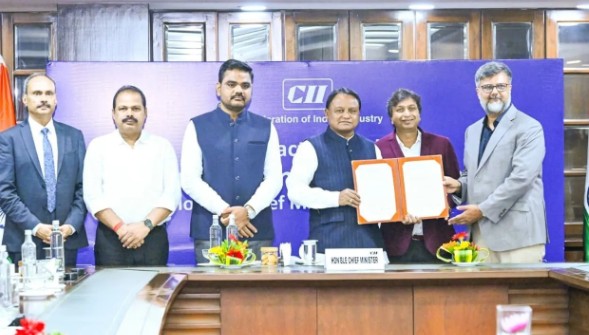
The agreements were signed in the presence of Chief Minister Mohan Charan Majhi during the third Eastern Regional Council Meeting of the Confederation of Indian Industry (CII) held in Bhubaneswar.
The proposed projects span key sectors and are expected to significantly strengthen Odisha’s industrial ecosystem, attract fresh investments and accelerate the state’s economic growth trajectory.
Addressing industry leaders and investors, Chief Minister Majhi said the new investment commitments reflect growing confidence in Odisha’s industrial potential and reaffirm the state’s vision of emerging as a leading growth engine in eastern India.
“The next chapter of India’s growth story is being written in Eastern India. Odisha is poised to play a pivotal role in this transformation in line with Prime Minister Narendra Modi’s vision of ‘Purvodaya’,” the Chief Minister said.
He highlighted that Odisha’s investor-friendly policies, robust infrastructure, abundant natural resources and skilled workforce have made the state a preferred destination for industries and entrepreneurs.
Majhi further stated that the newly signed projects would not only strengthen the state’s manufacturing and industrial base but also create large-scale employment opportunities, thereby contributing to inclusive socio-economic development.
Industry representatives participating in the meeting expressed optimism over Odisha’s growth prospects and appreciated the state’s proactive approach towards industrial development and ease of doing business.
The signing of the seven MoUs is being viewed as a significant milestone in Odisha’s efforts to attract large investments and position itself as a key industrial hub in eastern India.
26, Jun 2026
Building the Bengal of Tomorrow: Industry, Innovation and Women’s Leadership
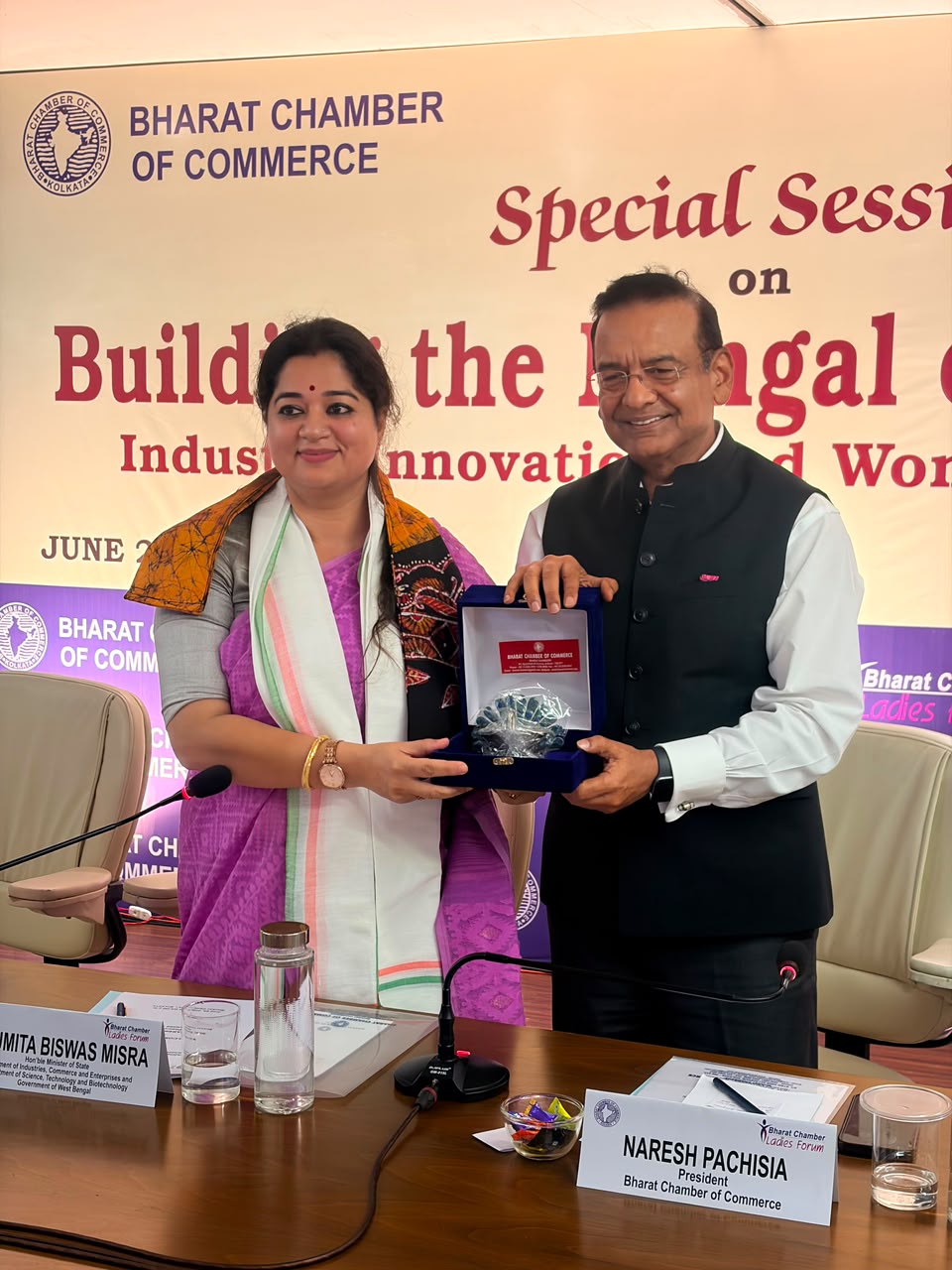
June 26: Bharat Chamber of Commerce, in partnership with the Bharat Chamber Ladies Forum, organised a Special Session on ‘Building the Bengal of Tomorrow: Industry, Innovation and Women’s Leadership’. The Session was graced by Smt. Moumita Biswas Misra, Hon’ble Minister of State for Industries, Commerce and Enterprises and Science, Technology and Biotechnology, Government of West Bengal; and Smt. Shashi Agnihotri, General Secretary, Bharatiya Janata Party, West Bengal, as Guests of Honour.
In her Address, Smt. Shashi Agnihotri observed that concerted efforts are being made to create a conducive environment in West Bengal for industry, investment and entrepreneurship, while simultaneously working towards improving the standard of living of the people. She expressed confidence that through sustained development initiatives and collective efforts, the State would be able to regain its position as a leader in the country’s economic and social progress, reiterating the belief that “What Bengal thinks today, India thinks tomorrow.”
Speaking about women and their participation, Smt. Shashi Agnihotri observed that women do not need any special treatment and are absolutely equal to their male counterparts. She stressed that women possess the capability and determination to excel in every field and expressed confidence that their growing participation would contribute significantly to the progress and development of West Bengal. She also added that the 33 per cent Women’s Reservation Bill will be a transformative step towards ensuring greater representation of women in legislative bodies.
Smt. Agnihotri also emphasised the importance of greater youth participation in politics, stating that educated and committed young people are essential for carrying forward the nation’s ideals and shaping its future. She observed that significant aspects of India’s ancient history and civilisational heritage were not being adequately reflected in the curriculum. Reinstating this knowledge, she noted, would help inspire young minds, strengthen their connection with the nation’s roots, and encourage them to contribute meaningfully to the country’s development.
In her Address, Smt. Moumita Biswas Misra observed that the Government is committed to transforming Pashchim Banga into Sonar Pashchim Banga and intends to implement the commitments outlined in the BJP’s Sankalpa Patra. She noted that one of the first decisions taken by the new Government within fifteen days of assuming office was the allotment of land to the Border Security Force for border fencing, describing it as an important step towards strengthening security and curbing illegal infiltration and related activities.
Speaking about the recently presented Budget, the Hon’ble Minister stated that, for the first time since Independence, an effort has been made to address all sectors comprehensively and create a more conducive environment for businesses to establish new units while ensuring that existing enterprises continue to operate efficiently. Inviting investors to consider West Bengal as a preferred investment destination, she highlighted the Government’s emphasis on a single-window clearance mechanism, ease of doing business and women’s safety. Expressing confidence in the State’s future, she remarked that a new West Bengal based on the vision of ‘Bhoy Out, Bhorsha In’ would pave the way for a ‘Sonar Bangla’.
Earlier in his Welcome Address, Shri Naresh Pachisia, President emphasised that the Bengal of tomorrow will be built when industrial growth, technological advancement and women’s leadership become mutually reinforcing pillars of development. Highlighting that West Bengal has the country’s highest share of women-owned MSMEs and a strong base of enterprises across diverse sectors, he underscored the need to transform women from participants in the economy into leaders of economic transformation through greater support for women-led enterprises, start-ups and technology ventures. He further that if industry provides the engine and innovation the fuel, women’s leadership can provide the direction for creating a prosperous, inclusive and globally competitive Bengal.
Smt. Shivani Binjrajka, Co-Chairperson, BHARAT CHAMBER Ladies Forum, observed that the advent of a new Government has ushered in fresh possibilities for West Bengal’s growth and transformation, and emphasised that women must be placed at the forefront of this journey through greater participation, leadership and equal access to opportunities across sectors. She remarked that empowering women is integral to building a resilient, equitable and future-ready ‘Viksit Bangla’, and noted that the insightful perspectives shared by the Guests of Honour reaffirmed the importance of creating an enabling ecosystem where businesses can thrive and women can lead and excel with confidence and determination.
26, Jun 2026
Brand Confidence Builds as FIFA World Cup 2026 Momentum Accelerates on ‘Z’
Mumbai, June 26: As the greatest show on earth steps into the highly anticipated Round of 32, leading content and technology powerhouse, Zee Entertainment Enterprises Ltd. (‘Z‘) continues to witness strong advertiser momentum, reflecting growing brand confidence in the tournament’s ability to deliver meaningful consumer engagement at scale.
Building on the strong opening weeks of the tournament, several leading brands including Lenovo, Ceat, Jaguar Land Rover, Adidas, Zydus and JBL have partnered with ‘Z‘, further strengthening its advertiser portfolio across categories. These brands join an impressive sponsorship roster led by Mahindra as the Co-Presenting Sponsor, Diageo as the Co-Powered by Sponsor, alongside several other marquee brands including Apple and Pernod Ricard, which have associated with the tournament across platforms. The Company cherishes its partnership with all the brands and acknowledges the support received in uplifting football as a sport across India.
The continued influx of brands underscores the increasing excitement around the tournament as audiences gear up for the high-intensity knockout stages.
The sustained advertiser interest reflects the robust engagement being witnessed across the Company’s integrated ecosystem. Through Unite8 Sports channels and Zee 5, brands are leveraging multiple consumer touchpoints including LIVE matches, studio programming, highlights, analysis and digital activations – to build impactful and contextual connections with audiences. The Company’s ability to offer bespoke advertising solutions across television and digital has enabled brands to align their investments with specific business objectives while maximizing campaign effectiveness.
Following 300+ million omni-platform unique reach, FIFA World Cup 2026™ on ‘Z‘ continues to deliver encouraging performance for advertisers. Zee 5 is seamlessly hosting millions of concurrent viewers, with a notable increase in platform engagement as they consume the LIVE action, highlights and multi-language studio programming. The sporting action, coupled with key programming initiatives has enabled Unite8 Sports 2 to achieve the leadership position amongst all English sports channels in India. Adding to the viewing experience, renowned football experts, former players and celebrated commentators have been engaging fans through comprehensive pre-match, half-time and post-match analysis.
While several marquee brands came on board ahead of the tournament, the excitement generated through the group stages has prompted a fresh wave of advertiser interest as the competition moves into its most anticipated phase. The Company is also witnessing healthy demand from additional brands evaluating partnerships for the Round of 32 (28th June – 3rd July), Round of 16 (4th – 7th July) and the latter stages of the tournament.
Speaking about the continued advertiser momentum, Sandeep Mehrotra, Chief Operating Officer – Advertisement Revenue, Zee Entertainment Enterprises Ltd., said: “The FIFA World Cup has consistently demonstrated its ability to bring together highly engaged audiences at scale, and the momentum we have witnessed over the past few weeks has further strengthened advertiser confidence. Our focus has been on delivering bespoke, outcome-led solutions that enable brands across categories and investment levels to participate meaningfully in the tournament. The response has been encouraging, with several new brands coming on board and continued interest from advertisers looking to leverage the excitement around the knockout stages. We remain committed to creating impactful opportunities that deliver measurable value for our partners.” As the FIFA
World Cup 2026™ moves into its decisive knockout rounds, ‘Z‘ remains well-positioned to further strengthen audience engagement and advertiser participation through innovative, integrated solutions that help brands capitalize on one of the world‘s biggest sporting spectacles.
26, Jun 2026
Centre Charts Roadmap for Green Urea Production, Plans 7.24 Lakh MT Green Ammonia Procurement
New Delhi, June 26: The Centre has initiated a roadmap for the production of Green Urea as part of its efforts to promote sustainable fertiliser manufacturing and accelerate India’s transition to clean energy.
As part of the initiative under the National Green Hydrogen Mission, the government plans to procure 7.24 lakh metric tonnes (MT) of Green Ammonia annually to support the production of environment-friendly fertilisers.
The Department of Fertilisers has invited Expressions of Interest (EOI) for setting up Green Urea plants and has begun consultations with public and private sector stakeholders to prepare an implementation strategy.
Officials said the proposed framework aims to encourage the use of Green Ammonia in place of conventional Grey Ammonia without increasing the cost burden on fertiliser manufacturers. The initiative is expected to create a viable ecosystem for green fertiliser production while promoting investments in renewable energy and green hydrogen.
The move is part of the government’s broader strategy to reduce dependence on fossil fuel-based inputs, strengthen fertiliser security, and lower carbon emissions from the agriculture sector.
The Green Urea programme is expected to play a significant role in advancing India’s clean energy goals while supporting sustainable agricultural and industrial development.
26, Jun 2026
Centre Launches India’s First ‘Easy Connect’ Flight Service from Varanasi
New Delhi, June 26: The Centre has launched India’s first ‘Easy Connect’ flight service from Varanasi to make international travel easier and more convenient for passengers.
The new service allows travellers to complete baggage check-in and other required formalities at their departure airport before connecting to international flights through a major hub, reducing waiting time and making the journey smoother.
The inaugural service was launched from Varanasi and will initially provide seamless connectivity to several international destinations via Delhi.
Officials said the initiative is aimed at improving international air connectivity from non-metro cities and offering passengers a hassle-free travel experience.
The government plans to expand the ‘Easy Connect’ service to more cities in the coming phases as part of efforts to strengthen India’s aviation network.
26, Jun 2026
Tripura Claims Achievement of Doubling Farmers’ Income, Says CM Saha
Agartala, June 2026: The Tripura government has announced that it has achieved its target of doubling farmers’ income in the state, Chief Minister Dr. Manik Saha said while highlighting key developments in the agriculture sector.
According to the Chief Minister, the progress has been driven by a combination of measures aimed at strengthening rural livelihoods, improving agricultural productivity, and expanding access to modern farming inputs and practices. He noted that consistent policy support and welfare initiatives have played a key role in enhancing the income levels of farming communities.
The state government pointed to increased focus on irrigation infrastructure, distribution of quality seeds and inputs, and improved extension services to farmers as important contributors to this outcome. Efforts to promote allied sectors such as horticulture, fisheries, and animal husbandry have also helped diversify income sources in rural households.
CM Saha stated that the achievement reflects the government’s commitment to farmer welfare and sustainable agricultural development. He added that continued efforts will be made to further strengthen rural economies and ensure long-term income stability for farmers across the state.
Officials said the initiative aligns with broader goals of boosting agricultural growth, improving productivity, and ensuring better market access for farmers.


