


13, Oct 2026
Queue-Based Darshan System to Be Introduced Soon at Puri Jagannath Temple: Odisha Law Minister
A pilot model for the proposed queue-based darshan system at Puri Srimandir has been prepared. The arrangement will be implemented on a trial basis after consultations with servitor groups and approval from the temple management committee.

Representational Image
Puri, October 13: The queue-based darshan system at Puri Srimandir is expected to be introduced soon, Odisha Law Minister Prithiviraj Harichandan has said.
According to the minister, a pilot model has been prepared to streamline darshan and improve crowd management at the temple. However, the system will be introduced only after consultations with various servitor groups and the temple management committee.
Pratihari Nijog to Inspect Queue System Model
A ramp has been constructed in accordance with the proposed design for the queue-based darshan system. The Pratihari Nijog will inspect the arrangement first, following which the model will be presented to other Nijogs for their feedback and approval.
Once a consensus is reached among the servitor groups, the proposal will be placed before the temple management committee. The system will subsequently be introduced on a trial basis.
The Pratihari Nijog has also suggested using rope barricades or other physical barricades as an alternative to the proposed queue arrangement. The group has indicated its willingness to offer suggestions on managing the flow of devotees following discussions with the government and the Law Minister.
Law Minister Flags Challenges with Rope Barricades
Harichandan said rope barricades could create difficulties during periods of heavy footfall, underlining the need for a more structured queue management system.
“We had developed and reviewed a model for arranging queues using ropes. However, this could create problems when there is a heavy crowd. From that perspective, the first pilot model for the queue system has already been prepared,” the Law Minister said.
He added that members of the Pratihari Nijog had been requested to inspect the model at the earliest. Other servitor groups, including the Chhatisa Nijog, will also be consulted before the system is implemented.
“Once all the groups approve the arrangement and the Chhatisa Nijog gives its approval, we will begin the implementation process. I believe the queue system will be introduced very soon,” Harichandan said.
The proposed system is aimed at ensuring a more orderly darshan experience for devotees while improving crowd management at the temple. Its rollout will depend on consultations with the servitor groups and the approval of the temple management committee.
- 0
- By Neel Achary

13, Oct 2026
Doomspeak Vs. Realty – Developers Not Stressed About Festive Season 2026

by Akash Pharande, Managing Director – Pharande Spaces
The news is suddenly filled with ‘worry’ pieces – the RBI has raised rates, the West Asia conflict continues to unsettle the economy, and one firm says that housing sales reduced. As developers, we read all of such news – but rest assured, we are still planning for a busy festive season. Why? Because our experience and also the evidence all tell us that such headlines do not sign cheques.
Why the Doomspeak?
It’s obvious why ‘doom and gloom’ stories about the residential property market get so much press. After all, housing touches close to every Indian household, so a story that implies scarcity of any kind – be it on the supply side, the demand side, or both, always have a ready audience. It literally tugs at the Indian heartstrings.
The fact is in real estate, fear-based articles work directly on basic human psychology. A ‘real estate downturn’ angle will always find readers regardless of whether the evidence supports it or not.
The recent rate hike also makes for a tight narrative with a date, a number, a ‘perpetrator’ and a ‘victim’. Nobody ever writes about a quiet strength or recovery in buyer intent, because it lacks sensationalism. You will never find ‘gradual recovery’ in any real estate-related headline.
That’s all fine – reporters have to write such articles to sell papers. The RBI decision does have implications. But when we make an immediate mental leap from rising costs to dwindling demand, developers tend to tune out not because they don’t like the evidence, but because there is no such evidence.

What the Numbers Say
Industry data for July–September 2026 puts housing sales across India’s major cities at roughly 1.02 lakh units. Depending on the tracker and the cities covered, that is anywhere from a 6% fall to a 3% rise over this period in 2025. It broadly averages out at about 1.5% lower. After a year of falling sales, a flat market is not falling but stabilising and as one firm correctly points out, the earlier moderation is cyclical, not structural.
Consider this – according to the data, new launches rose 18% in Q3 2026 and ask yourself – would builders add so much inventory if they expect the market to be declining? A recent survey found that 50% of prospective buyers plan to purchase homes within the next two years. Another 54% believe that macro-economic volatility will at best have a low impact on the Indian housing sector.
Last Year’s Evidence
The best test of the ‘doom’ theory is as recent as last year. Reports said that housing sales in the top cities fell by around 14% in 2025 and attributed it to ‘high prices, IT layoffs and geopolitical tension’. In other words, if there ever was a ‘doom’ year, it would have to be 2025.
However, during the Dussehra–Diwali festive season, most developers saw year-on-year sales shoot up by anywhere between 10–25% in the larger metros – after a sales drop of about 20% across the first nine months of 2025.
Consultancy reports disagreed widely when it came to the last quarter of 2025 – one found sales rising, and another showed a year-on-year drop of 15%. As developers, we do read the news and follow the data, but we also know that such figures are not necessarily the equivalent of the chemistry periodic table. We also follow our instincts, our own sales graphs, and what we know about our customers.
Years When Festivals Did Not Lift Sales
There are notable exceptions, of course. In 2016, demonetisation was announced on 8 November – bang in the middle of the festive quarter – and the market did grind to a halt. In fact, the major cities saw sales drop by anywhere between 35-45% in the October–December quarter (again, the data swings wildly depending on its source). It’s fair to say that housing sales fell by at least 42%, reaching their lowest level since 2010.
Another muted year was 2018., when the October–December quarter saw sales rise by a paltry 4% over the previous quarter thanks to the NBFC crisis. Media stories wrote about a ‘failed festive season’, even though sales still increased – albeit far below the usual festive boost..
In both instances, the market shocks were to money and credit – in 2016, a sudden cash withdrawal and in 2018, a lending squeeze on non-banking financial companies. Buyers found it difficult to pay, and lenders found it harder to lend.
These were not the only standout years for market slowdown, and there are no credible festive-by-festive records related to housing sales. However, even in the pandemic year of 2020, sales rose by well above 70% in the October–December quarter over the previous quarter, from a rather low base.
The point is that such reports completely discount or ignore the human factor, especially the hard-wired Indian drive to homeownership and the festive season spirit that drives housing sales in India. In the above instances, sales fell when homebuyers did not have access to cash or credit. We know that political instability or uncertainty can have a similar effect, though it tends to be more localised rather than nationwide.
Indian homebuyers do not cancel their purchase plans because they read doom-and-gloom reports in the papers.
Real Headwinds
Yes, we are dealing with actual, undeniable headwinds right now. With the RBI increasing the repo rate by 25 bps to 5.50% on 7 October – the first hike since February 2023 – many banks are already lifting their lending rates. On a Rs. 50 lakh loan over a 10-year tenure, this adds about Rs. 66 a month to the EMI, and this can have a real impact on household budgets among budget housing buyers.
The rate hike will cause some stress among affordable and mid-segment buyers, but not on those who are scouting the premium and luxury markets. The RBI’s move is a measured step, but it is not a credit squeeze – lenders continue to lend, banks are open for business, and there is no cash freeze. Most housing loans tend to have tenures of 15-20 years, and rates are bound to fluctuate over such a period. Few buyers set lending rates as perennial red flags. The current headwinds also eventually blow off.
Why Developers Are Calm
Winds, including headwinds, change – but India’s tradition-driven sentiment is not an unpredictable gust of hot or cold air. It is very real. Last year, we saw a ‘gloomy’ 2025 yield a healthy festive uplift. We don’t necessarily expect a bumper Diwali. Homebuyers make purchase decisions based on their current and anticipated employment status, property prices and location, on whether a project incites the necessary spark of decisiveness, and on whether the time is right for the family to take the plunge.
The Indian festive period continues to have a massive cultural relevance and we, as developers, are all geared up to welcome our customers at our sites and confirm bookings during this auspicious period.
About the Author:
Akash Pharande is Managing Dir
13, Oct 2026
GAIL Gas Pipeline Fire Guts Roadside Eatery in Cuttack’s CDA Sector 10, Two Injured
Cuttack, Oct 13 (UDN): A fire broke out in a GAIL gas pipeline in CDA Sector 10 of Cuttack on Tuesday morning, gutting a roadside eatery and leaving two people with minor injuries.
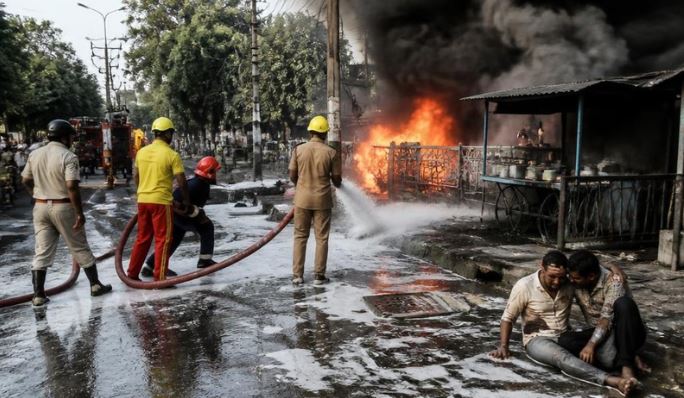
Representational Image
The incident occurred while the newly laid pipeline, intended to supply gas to households in the area, was reportedly undergoing testing. According to preliminary reports, the pipeline had been laid on Monday night, and the fire erupted during the testing process.
Two fire tenders were rushed to the spot to contain the blaze. Fire service personnel launched firefighting operations, while the affected area was barricaded to keep people away from the damaged pipeline and prevent further risks.
Roadside Eatery Reduced to Ashes
The fire spread to a nearby roadside eatery, completely destroying the establishment. Two people who were reportedly eating there at the time sustained minor injuries.
The incident triggered concern among local residents, as flames from a gas pipeline can pose a serious safety risk. Authorities restricted public movement around the site as emergency personnel worked to bring the situation under control.
Earlier Pipeline Incident Raises Safety Concerns
The latest fire has renewed concerns over gas pipeline safety in Cuttack’s CDA area. An earlier incident involving a GAIL pipeline reportedly caused gas to shoot high into the air, triggering panic among residents. No fire was reported in that incident.
The cause of Tuesday’s fire and the circumstances surrounding the pipeline testing were not immediately clear. Further details regarding the injured persons and any official response from GAIL were awaited.
The incident has underscored the need for stringent safety measures during pipeline installation and testing, particularly in areas close to roadside businesses and public movement.
13, Oct 2026
Government Targets Training of 6.35 Lakh Rural Youth Through RSETIs in 2026–27
New Delhi, October 13, 2026: The Ministry of Rural Development (MoRD) has partnered with the National Academy of RUDSETI (NAR) to strengthen rural skill development, promote entrepreneurship and improve livelihood opportunities, setting a training target of 6.35 lakh rural youth for the current year through Rural Self Employment Training Institutes (RSETIs).
The Ministry exchanged a Memorandum of Understanding (MoU) with NAR on October 12, 2026, to establish uniform training standards, improve administrative practices and facilitate systematic capacity building across RSETIs nationwide.
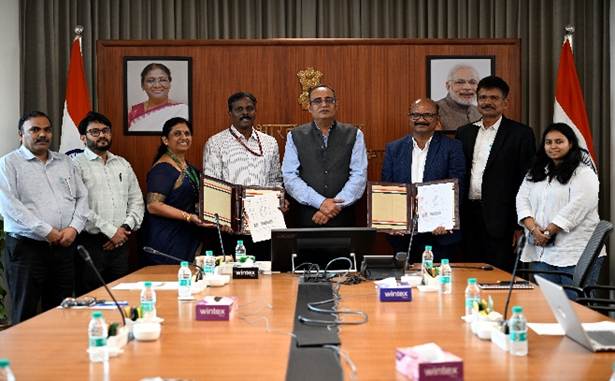
The MoU exchange took place in the presence of Rohit Kansal, Secretary, Department of Rural Development, Ministry of Rural Development. S. Sasikumar, Joint Secretary (Rural Skills), exchanged the agreement on behalf of the Department of Rural Development, while Raju N. Kori, Director General of NAR, represented the academy.
A key objective of the partnership is to enhance the quality, relevance and delivery of training programmes offered through the RSETI network. The initiative will focus on improving candidate registration through Kaushal Panjee and strengthening attendance monitoring through Aadhaar-based face authentication under the Aadhaar Enabled Biometric Attendance System (AEBAS).
The collaboration will also promote the introduction of new-age courses aligned with the National Skills Qualifications Framework (NSQF), alongside the adoption of industry-benchmarked training equipment and learning materials. RSETIs will implement core Entrepreneurship Development Programme (EDP) courses as notified by the Ministry to equip trainees with the skills needed to establish and manage their own enterprises.
The agreement further provides for strengthening the Training of Trainers (ToT) framework, improving the assessment and certification of trainers and candidates through the Unified Portal at kaushal.rural.gov.in, and ensuring compliance with the Common Norms prescribed by the Ministry.
For the current year, RSETIs have been assigned a target of training 6.35 lakh rural youth, exceeding the target set for the previous financial year, 2025–26. The programme will cover women, members of Scheduled Castes and Scheduled Tribes, persons with disabilities and other vulnerable sections of rural society.
The partnership is expected to improve institutional capacity, strengthen digital governance and establish more effective monitoring mechanisms across the RSETI ecosystem. By standardising training practices and aligning skill development with market and industry requirements, the initiative aims to help rural youth acquire practical skills and build sustainable self-employment opportunities.
The agreement reinforces the Ministry of Rural Development’s focus on connecting skill development with entrepreneurship and livelihood generation. It also supports the broader vision of Viksit Bharat by encouraging rural enterprise creation, expanding economic opportunities and promoting inclusive growth across rural India.
13, Oct 2026
BHASHINI Enables Real-Time English-Spanish Translation at International Governance Programme in Mussoorie
Mussoorie, October 13, 2026: The Digital India BHASHINI Division (DIBD), under Digital India Corporation (DIC), Ministry of Electronics and Information Technology (MeitY), has facilitated real-time multilingual communication at an international capacity-building programme for civil servants at the National Centre for Good Governance (NCGG) in Mussoorie.
The Capacity Building Programme on Urban Service Delivery for Civil Servants of Multiple Countries is being conducted from October 12 to 23, 2026. Sponsored by the Ministry of External Affairs (MEA), the programme is organised by NCGG under the Department of Administrative Reforms and Public Grievances (DARPG) as part of India’s international cooperation and capacity-building initiatives through the Indian Technical and Economic Cooperation (ITEC) Programme.
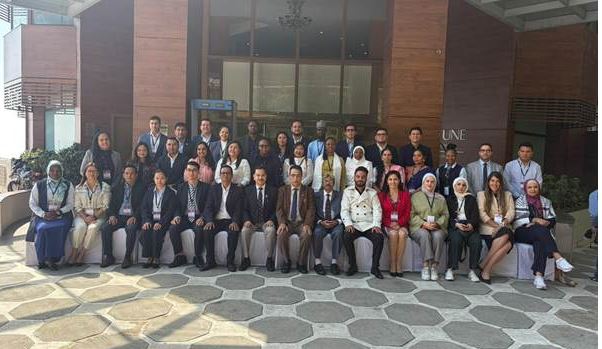
The programme brings together civil servants and public-sector representatives from Peru, Cambodia, Nigeria, Kenya, Palestine, Lebanon, The Gambia, Ecuador and Spain. It provides a platform for participants to exchange experiences, share governance practices and explore approaches to improving urban service delivery.
As part of the initiative, BHASHINI deployed its Shrutlekh platform during the programme’s ice-breaking session to enable real-time translation between English and Spanish. The two-way translation facility allowed participants speaking either language to communicate more effectively, reducing language barriers and encouraging greater interaction among international delegates.
The deployment highlights BHASHINI’s Voice-First Multilingual AI approach, which aims to make digital communication and public services more accessible through speech-based language technologies. The initiative demonstrates how artificial intelligence can facilitate cross-cultural engagement and support inclusive participation in international governance and administrative training programmes.
The BHASHINI team also assisted participants in using Shrutlekh and introduced them to the broader BHASHINI ecosystem, including its multilingual AI capabilities and potential applications in healthcare, finance, agriculture and public service delivery. Delegates were encouraged to explore the BHASHINI mobile application and its features for overcoming language barriers in everyday communication and digital interactions.
Shrutlekh is expected to remain available throughout the programme until October 23, subject to operational requirements, enabling participants to continue using the translation facility during the training sessions.
The initiative underscores the growing role of AI-powered language technologies in international cooperation, knowledge-sharing and public-sector capacity building. By enabling communication across languages, BHASHINI is showcasing India’s capabilities in developing multilingual digital solutions that can make technology more accessible to diverse communities.
The engagement also reflects the potential of voice-first AI tools to support more inclusive governance, strengthen international partnerships and facilitate the exchange of administrative expertise across linguistic and cultural boundaries.
13, Oct 2026
Jyotiraditya Scindia Interacts with Students at Mizoram University, Highlights Northeast’s Development Potential
Aizawl: Union Minister for Communications and Development of North Eastern Region Jyotiraditya M. Scindia interacted with students at Mizoram University on Monday during his two-day visit to Mizoram. The interaction also included students from Goa and Chandigarh who are visiting the Northeast under the Ministry of Development of North Eastern Region’s (DoNER) Ashtalakshmi Darshan Programme.
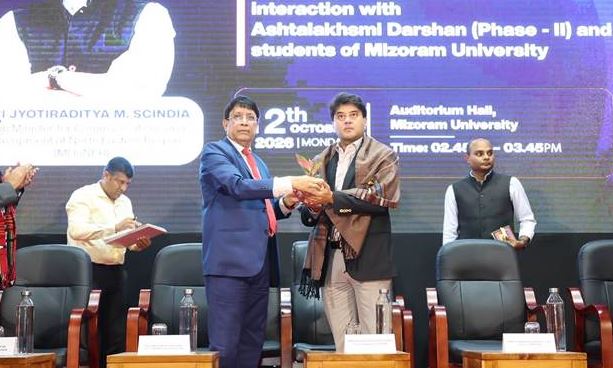
During the interaction, Scindia highlighted the Northeast’s rich cultural heritage, diverse traditions and vast development potential. He emphasised the importance of educational and cultural exchanges in helping young people gain a deeper understanding of the region, while promoting mutual respect, national unity and stronger cultural ties.
Inspired by Prime Minister Narendra Modi’s vision of positioning the eight northeastern states as the nation’s Ashtalakshmi, the programme aims to familiarise students from different parts of India with the region’s cultural diversity, social traditions and emerging development opportunities.
More than 590 students have participated in the Ashtalakshmi Darshan Programme over the past year, contributing to stronger people-to-people connections between the Northeast and other parts of the country.
Scindia underlined the programme’s relevance to the vision of Viksit Bharat 2047, noting the importance of engaging young people in nation-building, celebrating India’s diversity and strengthening the Northeast’s contribution to the country’s overall progress.
The interaction underscored the Ministry of DoNER’s continued efforts to encourage youth participation, facilitate cross-cultural learning and build stronger connections among states. The initiative seeks to inspire young people to appreciate the Northeast’s potential and play an active role in shaping a more inclusive, integrated and developed India.
13, Oct 2026
KEZAD-based Arabian Gulf Steel Industries Achieves Lowest Verified Carbon Footprint for Rebar
CARES UK verified Environmental Product Declaration confirms 139 kg CO₂e per tonne for rebar produced at AGSI’s KEZAD Abu Dhabi facility
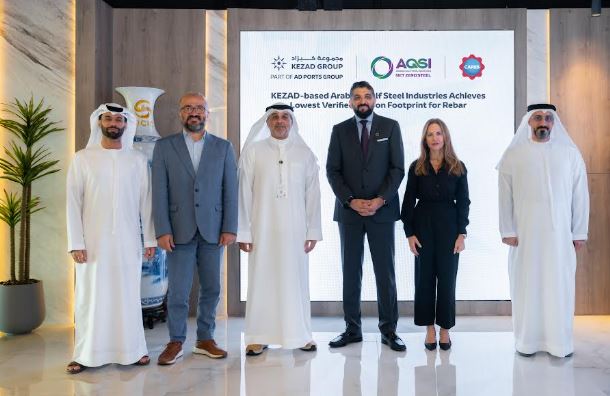
Abu Dhabi, UAE – 13 October 2026: Arabian Gulf Steel Industries, AGSI, the UAE’s largest private steelmaker and recycler, has achieved the lowest verified carbon footprint for rebar, marking a major step for low-carbon construction materials produced in the UAE.
AGSI’s reinforcing bar produced in Abu Dhabi has a verified cradle-to-gate carbon footprint of 139 kg of carbon dioxide equivalent per tonne, well below the typical 600 to 700 kg per tonne for scrap-based rebar. Its Sharjah operations record 218 kg CO₂e per tonne. Both figures are also below the nearest comparable publicly available EPD figure of 300 kg CO₂e per tonne.
The achievement was announced at Khalifa Economic Zones Abu Dhabi, KEZAD Group headquarters, in the presence of Mohamed Al Khadar Al Ahmed, CEO, Khalifa Economic Zones Abu Dhabi – KEZAD Group, Asam Hussain, Founder and CEO of Arabian Gulf Steel Industries, and Ayhan Tugrul, Chief Operating Officer of CARES.
The announcement brings together AGSI’s manufacturing capability, the independent verification provided under the CARES EPD programme and KEZAD’s industrial infrastructure. It also supports the growing use of verified product-level carbon data across the construction sector, where developers, contractors, consultants and regulators increasingly need clear information on embodied carbon.
Asam Hussain, Founder and CEO of Arabian Gulf Steel Industries, said: “This is a defining achievement for AGSI and for the UAE steel industry. Low-carbon steel production is no longer a future ambition. It is measurable, verified and being delivered today. Our 2024 carbon-neutral plant milestone established the direction of our journey, and this EPD takes that progress further, setting a new benchmark for what can be achieved in low-carbon steel production. We set out to push the boundaries for steel decarbonisation, and we will continue to challenge what is possible.”
Abdullah Al Hameli, Chief Executive Officer, Economic Cities and Free Zones, AD Ports Group, added: “AGSI’s achievement is a significant milestone for Abu Dhabi’s industrial sector, establishing the company as a world leader in steel decarbonisation and adding to Abu Dhabi’s standing as a global hub for advanced industry. It’s a strong example of the level of performance that manufacturers operating within KEZAD can achieve. KEZAD provides the infrastructure, utilities, logistics access and long-term operating base that manufacturers need to grow and invest. AGSI’s success highlights the strength of Abu Dhabi’s industrial base in enabling companies to advance efficient and lower-carbon production and compete at the highest levels internationally.”
Ayhan Tugrul, Chief Operating Officer of CARES, said: “AGSI’s reinforcing steel is already certified to the CARES scheme for quality and traceability, and this independently verified EPD now sets out its product carbon footprint on the same rigorous basis. Verified, product-specific data of this kind is what allows designers, contractors and asset owners to make sound decisions on embodied carbon rather than relying on generic industry averages. It also strengthens Abu Dhabi’s position as a growing centre for advanced industrial production and lower-carbon construction materials.”
Both AGSI results cover production from raw materials to the factory gate and have been independently verified against recognised international standards. The full Environmental Product Declarations, EPDs, are available on the CARES website. For a fair comparison, EPDs must use the same rules, measurement method and production boundaries. The figures quoted here have been compared on that basis.
Embodied carbon is the carbon linked to a material across its life cycle. It is becoming an important requirement in major construction and infrastructure projects. EPDs give buyers and project teams a verified and consistent way to assess and compare the environmental impact of products.
AGSI’s latest result builds on its 2024 carbon-neutral plant milestone under PAS 2060. It now extends that performance to the product level. AGSI uses 100% locally recycled scrap and a fully electrified production process.
AGSI’s verified low-carbon rebar gives the market a local material option that supports quality, supply reliability and carbon reporting needs. It also strengthens Abu Dhabi’s position as a growing centre for advanced industrial production and lower-carbon construction materials.
13, Oct 2026
LIXIL Expands Housing Technology Business in India with New Manufacturing Facility in Hyderabad
Driven by the newly formed “LHT Global” organization, this strategic expansion accelerates international growth to meet surging demand.
GURUGRAM, India, Oct. 13, 2026 /PRNewswire/ — LIXIL Corporation (“LIXIL”), maker of pioneering water and housing products, today announced a major expansion of its manufacturing footprint with a new window manufacturing facility in Hyderabad, India. Spanning 500,000 square feet and slated to commence operations in 2028, the new plant will substantially boost LIXIL’s local production capabilities in the country—aligning with the Indian government’s “Make in India” initiative while establishing a highly responsive, localized supply chain under its LIXIL Housing Technology (LHT) India business.
The new facility will be complemented by LHT’s existing window manufacturing plant in IMT Manesar, Haryana, to meet rising domestic demand for pre-engineered aluminum window systems and sliding door profiles marketed under the TOSTEM brand and affirming India as a key strategic growth hub for the region.
The expansion is projected to increase the TOSTEM brand’s local production ratio in the country from 30% to over 60%, significantly increasing local production capability, responsiveness, and service to customers across Northern and Southern India.
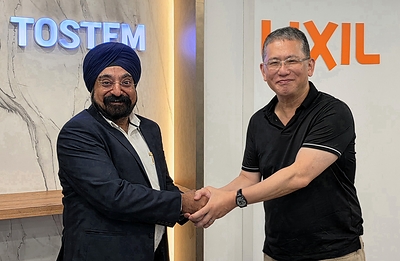
A significant challenge for Indian builders and homeowners is to secure consistent, high-quality aluminum window frames for their property projects – from large projects to individual homes. LHT’s expanding production and operating footprint aims to meet this demand with its proprietary TOSTEM “Windows in the Box” solution. This solution ships precision-engineered, ready-to-assemble window kits directly to site with consistent global quality and manufacturing, where 80% of quality-critical processes are managed in-house. This innovation eliminates the quality headache for builders and homeowners who source and coordinate multiple local fabricators. This will be supported by a concurrent retail expansion spanning about 160 partner companies, over 150 showroom locations across 130 cities.
Commenting on the investment, Hardeep Singh, Managing Director, TOSTEM India, said: “India’s rapid development and urbanization must be matched with high quality buildings and homes. We are confident that our new Hyderabad facility will deliver TOSTEM global quality that is proudly “Made In India” for premium, pre-engineered aluminum windows and doors. Together with our Haryana facility, we look forward to serving our Indian distributors, business partners, and homeowners, with “Windows in the Box” and other quality solutions and services.”
Ichiro Murakoshi, Asia Pacific Head of TOSTEM, added: “Our latest investment establishes India as a strategic growth hub for the LIXIL Housing Technology business under the newly formed “LHT Global” organization. We are combining advanced global technology and products with localized operational strength, to more completely serve our customers in the country and in the Asia-Pacific region. Together with industry partners, we look forward to fulfilling the LIXIL purpose to make better homes a reality for everyone, everywhere.”
About LIXIL
LIXIL (TSE Code 5938) makes pioneering water and housing products that solve everyday, real-life challenges, making better homes a reality for everyone, everywhere. Drawing on our Japanese heritage, we create world-leading technology and innovate to make high-quality products that transform homes. But the LIXIL difference is how we do this; through meaningful design, an entrepreneurial spirit, a dedication to improving accessibility for all, and responsible business growth. Our approach comes to life through industry-leading brands, including INAX, GROHE, American Standard, and TOSTEM. Approximately 55,000 colleagues operating in more than 150 countries are proud to make products that touch the lives of more than a billion people every day. Learn more at www.lixil.com.
About TOSTEM
TOSTEM is a globally trusted Japanese brand renowned for high-quality aluminium windows and doors. Backed by a legacy of over 100 years, we combine thoughtful design with functional excellence, setting global benchmarks across the building materials industry. Awarded prestigious honors including the Red Dot, iF, Best100, and German Design Awards, our products remain a favorite choice nationwide. Quality is our top priority: every door and window meets rigorous international testing standards and features our patented TEXGUARD coating, delivering superior scratch resistance and protection for up to 40 years. TOSTEM emphasizes precision, durability, and a seamless user experience. Through our innovative “window-in-a-box” concept, each pre-engineered unit ensures a perfect fit, error-free delivery, and effortless installation. With integrated features such as EPDM coatings and rubber gaskets for superior sealing, TOSTEM delivers solutions that harmonize strength and style to enhance the comfort and aesthetics of every living space. (Global website: https://www.tostem.com/; India website: https://www.tostemindia.com/)
 View original content to download multimedia:https://www.prnewswire.com/in/news-releases/lixil-expands-housing-technology-business-in-india-with-new-manufacturing-facility-in-hyderabad-302905714.html

13, Oct 2026
Mesa School of Business raises ₹110 crore to expand its portfolio of programmes for the AI era
Series A co-led by Dharana Capital and Elevation Capital in India’s first startup focused business school
BENGALURU, India, Oct. 13, 2026 /PRNewswire/ — Mesa School of Business has raised ₹110 crore, comprising ~₹85 crore in Series A equity funding co-led by Dharana Capital and existing investor Elevation Capital, and ₹25 crore in venture debt from InnoVen Capital and Alteria Capital. New capital will be used to invest in AI-first curriculum for existing programs, launch & grow new programs and build strategic partnerships with the startup ecosystem.
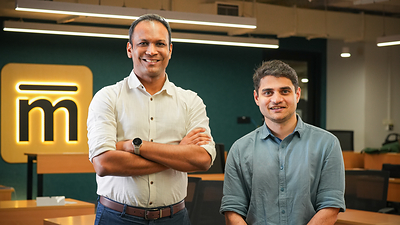
Founded in 2023 by Ankit Agarwal and Varun Limaye, Mesa runs residential programmes built around learning by doing real things. Every student builds and runs a small business, and learns to use AI to build and launch a tech product. More than 100 founders have taught on campus, and students have worked on over 200 projects with startups. Mesa is also backed by founders including Kunal Shah (CRED), Vidit Aatrey (Meesho), Abhiraj Bhal (Urban Company) and Vijay Shekhar Sharma (Paytm).
Mesa has grown from a single postgraduate cohort to over 550 students across three programmes in the last 3 years: a one-year Post Graduate Programme in Startup Leadership, a four-year undergraduate programme on business & entrepreneurship, and Forge, a one-year programme for fresh graduates.
Mesa School alumni either opt for full time jobs in startups or choose to build their own companies. First two PG cohorts got an average CTC of ₹26 lakh, with the top 25% averaging ₹36.5 lakh. All placed students joined top startups, including Zomato, Zepto, Urban Company, Scapia and Comet, 58% of them in founder-facing roles.
Nearly 20% of graduates became entrepreneurs themselves. 50+ student startups are currently incubated at Mesa Startup Lab, the school’s in-house residency. Put together, they have raised ₹25+ crore in funding and grants and have an annual revenue run-rate of ₹50+ crore. Their backers include Nikhil Kamath, Ronnie Screwvala, Campus Fund, BeyondSeed, Foundery, i-Venture@ISB and IdeaBaaz. Among them is Mumbai Pav Co. which has raised ₹9 crore. Two student founders have already appeared on Shark Tank India.
Mesa will use the funds in three areas. It will strengthen its leadership team and build its capabilities in AI-led programme design and delivery, setting the school up to scale both its existing and new programmes. It will deepen strategic partnerships with leading startups, which will help shape its programmes and offer students industry-led projects, mentorship and job opportunities. And it will invest in launching and scaling new programmes.
“The rapid evolution of modern tech has exposed a glaring disconnect in higher education: students feel unprepared for new-age roles, and companies can’t find job-ready talent. Mesa is bridging that gap by rethinking business education for an AI-first world, ensuring students develop proven, high-impact operational capabilities.” said Vamsi Duvvuri, Founder and Managing Partner, Dharana Capital.
“Higher education in India needs to be rebuilt for the AI era, not patched. We believe founder-led, mission-driven schools like Mesa will be the new-age builders of Indian education, and we’re excited to double down,” said Mukul Arora, Co-Managing Partner, Elevation Capital.
“In an AI-led world, what will set ambitious young people apart is judgement, a bias for action and an understanding of how the world actually works – and those come only from experience. That’s why at Mesa, every student builds a real business with real revenue, uses AI on live problems, and gets feedback from founders who are always in the room. That is why startups hire our students, and why so many of them go on to build their own startups,” said Ankit Agarwal, co-founder, Mesa School of Business.
“AI will take over much of back-office work. Young people shouldn’t spend their early careers in roles that are disappearing, but building, selling and launching things. That’s what Mesa trains them to do,” said Varun Limaye, co-founder, Mesa School of Business.
About Mesa School of Business
Mesa School of Business is a Bengaluru-based institution that prepares young people to build, lead and create value in an AI-first world. It was founded in 2023 by Ankit Agarwal (Harvard Business School, IIT Bombay; formerly BCG and Urban Company) and Varun Limaye (Kellogg School of Management; formerly Amazon). Mesa offers residential programmes for undergraduates, fresh graduates and early-career professionals, and its mission is to build India’s Stanford. www.mesaschool.co
About Dharana Capital
Dharana Capital is an India-focused growth-stage technology and consumer investment firm. Dharana Capital’s current investments include Urban Company, LAT Aerospace, MyGate, Vyapar, Temple, Itilite, Petpooja, Vayudh and Beyond Appliances amongst others. Dharana is backed by top US University endowments and other non-profit institutions.
About Elevation Capital
Founded in 2002, Elevation Capital is one of India’s leading early-stage venture capital firms, partnering with founders from seed through scale. Elevation has invested more than $2.5 billion across 200+ companies, backing category-defining businesses across consumer-tech, fin-tech, enterprise AI, healthcare and deep-tech, including MakeMyTrip, Paytm, Firstcry, Swiggy, Urban Company and Meesho. The firm remains committed to backing audacious founders building enduring companies from India for the world.
 View original content to download multimedia:https://www.prnewswire.com/in/news-releases/mesa-school-of-business-raises-110-crore-to-expand-its-portfolio-of-programmes-for-the-ai-era-302905735.html

13, Oct 2026
GAC Connects with Europe Through Engineering and Football at 2026 Paris Motor Show
PARIS, Oct. 13, 2026 /PRNewswire/ — Engineering for a better life. On October 12, the 91st Paris Motor Show opened at Paris Expo Porte de Versailles. GAC showcased new energy vehicles across its three brands, with the AION UT Cross making its global debut. GAC. THE ENGINEERS, its brand proposition for Europe, was officially launched, while GAC CARE+ made its European debut, marking a new stage of full-chain localization in Europe.

As the birthplace of the modern automotive industry, Europe is both a key market for GAC and a strategic hub for its global expansion. GAC remains committed to long-term growth, applying an engineer’s mindset to products and technology while deepening local services and ecosystems to become a trusted brand for European users.
In Europe, GAC aims to bring more than high-quality products and services—it also seeks to become part of consumers’ everyday lives. As one of Europe’s most influential sports, football offers a powerful connection between brands and users.
At the 2026 Paris Motor Show, GAC and Chelsea Football Club held a global partnership signing ceremony at the GAC booth. Following the signing of a strategic cooperation agreement, GAC officially became the Official Automotive Partner of Chelsea FC. Chelsea legend Claude Makélélé joined the event, interacting with GAC owners, showing off his football skills and signing an autograph for a robotic “young fan”.
GAC and Chelsea first joined forces during the club’s 2026 pre-season tour, laying the foundation for deeper cooperation. Chelsea is the second European football club to enter into a strategic partnership with GAC, following Villarreal CF.
Looking ahead, GAC will use football as a bridge to work with Chelsea and Villarreal CF, engaging fans and creating locally relevant brand experiences that bring GAC closer to European users.
For further information about GAC, please visit https://www.gacgroup.com/en or follow us on social media.
 View original content to download multimedia:https://www.prnewswire.co.uk/news-releases/gac-connects-with-europe-through-engineering-and-football-at-2026-paris-motor-show-302906466.html



