


2, Nov 2026
TD Brings its Global Asset Management Businesses Under One Name
TD Global Investment Solutions will become TD Asset Management, simplifying how clients engage with the firm globally
TORONTO, Nov. 2, 2026 /PRNewswire/ — TD Global Investment Solutions will now operate under the TD Asset Management (TDAM) name, creating one consistent global brand across the firm’s institutional and retail asset management businesses. Additionally, Epoch Investment Partners, Inc. (TD Epoch) has changed its name to TD Asset Management (US) Inc. (TDAM US). Both TD Asset Management Inc. and TDAM US will offer their products and services under the TDAM name. The change applies across all markets and jurisdictions, bringing TDAM’s asset management capabilities together under one global brand.
“Our unified brand creates a clearer market presence and a more consistent experience for our clients around the world,” says David Sykes, Chief Executive Officer, TDAM and Executive Vice President, TD Bank Group. “By bringing our capabilities under one name, we can make it easier for clients to understand and access the breadth of investment expertise we offer.”
Key Takeaways:
- TD Global Investment Solutions will operate under the TDAM name.
- TD Epoch has changed its name to TDAM US.
- Under one brand, TDAM will continue to leverage its global capabilities to deliver disciplined investment management.
- Our unified brand creates a clearer market presence and more consistent experience for clients globally.
A simpler, more connected experience for clients
These changes do not affect TDAM’s investment approach. Investment teams, portfolio managers, investment philosophies, and service teams remain unchanged.
“Our focus at TDAM has always been to put our clients at the centre of everything we do. That commitment is reflected in how we innovate, pursue investment excellence and build strong relationships to tailor solutions that aim to deliver better outcomes and help clients achieve their investment goals,” says Sykes.
Building on a legacy of trusted investment expertise
With over 35 years of investment experience, TDAM offers fundamental equity strategies, including free cash flow strategies, quantitative and passive equities, fixed income across credit qualities, global multi-asset and derivatives solutions, commodities, and, in certain jurisdictions, private markets, including real estate, infrastructure, private debt and mortgages.
Under the unified brand, TDAM will continue to deliver disciplined investment management and draw on its global capabilities to support a broad range of investment objectives.
FAQ:
What is changing across TD Asset Management?
We will now operate under a unified global brand, effective October 30, 2026. There will be no changes to TDAM’s investment approach, investment teams, portfolio managers, investment philosophies, and service teams.
Why is this change happening?
A unified brand creates a clearer market presence for our clients around the world.
Will the change impact any investment offerings?
These changes do not affect the management of assets or the firm’s investment approach. Investment teams, portfolio managers, investment philosophies, and service teams remain unchanged.
About TD Asset Management
TD Asset Management (TDAM) is a global asset manager committed to helping clients achieve their investment objectives1. We are proud to serve institutional, intermediary and individual investors with solutions designed to address their evolving needs. Our specialized expertise and diverse perspectives enable us to navigate changing markets while pursuing long-term outcomes. TDAM offers a broad range of investment capabilities across public and private markets: fundamental equity strategies such as free cash flow-driven approaches, quantitative and passive equities; fixed income mandates across the credit quality spectrum; and alternative offerings such as commodities.
1 TD Asset Management represents TD Asset Management Inc. which operates in Canada and TD Asset Management (US), Inc. which operates in the U.S. Both entities are affiliates and wholly-owned subsidiaries of The Toronto-Dominion Bank. TD Asset Management products are also available through a network of affiliated and unaffiliated distributors. Please contact our distribution partners to find out more.
The information contained herein is for information purposes only. The information has been drawn from sources believed to be reliable. The information does not provide financial, legal, tax, accounting or investment advice. Particular investment, tax or trading strategies should be evaluated relative to each individual’s objectives and risk tolerance. This material is not an offer to any person in any jurisdiction where unlawful or unauthorized. These materials have not been reviewed by and are not registered with any securities or other regulatory authority in jurisdictions where we operate. Any general discussion or opinions contained within these materials regarding securities, real assets or market conditions represent our view or the view of the source cited. Unless otherwise indicated, such view is as of the date noted and is subject to change. Information about the portfolio holdings, asset allocation or diversification is historical and is subject to change.
® The TD logo and other TD trademarks are the property of The Toronto-Dominion Bank or its subsidiaries.
For further information: Jillian Tanouye, TD Bank Group, Jillian.Tanouye@td.com
 View original content:https://www.prnewswire.co.uk/news-releases/td-brings-its-global-asset-management-businesses-under-one-name-302925321.html

- 0
- By PRNewswire

2, Nov 2026
Infineum Expands India Footprint with New Mumbai Office as Demand for High-Performance Lubricants Grows
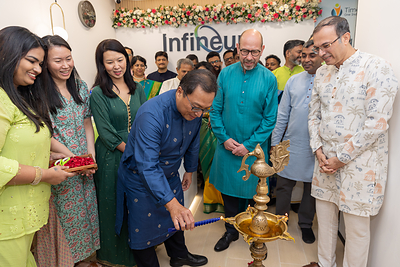
MUMBAI, India, Nov. 2, 2026 /PRNewswire/ — Infineum, a global leader in specialty additives, today officially opened the new premises for its India office in Andheri East, Mumbai, reinforcing its long-term commitment to one of the world’s fastest-growing mobility and energy markets.
Located within one of Mumbai’s key commercial hubs, the new office positions Infineum to collaborate closely with customers, partners and industry stakeholders, while supporting the company’s continued growth in India. The opening marks another significant milestone in Infineum’s expanding presence in the country, following the inauguration of the new blending facility operated exclusively for Infineum in Patalganga earlier this year.
India represents a major growth opportunity for the global lubricants industry. As the world’s third-largest automotive and lubricants market, the country is expected to deliver lubricant demand growth of more than 3% annually over the next decade. This is underpinned by strong economic fundamentals, expanding mobility needs and a growing focus on higher-performance, more sustainable lubricant technologies.
Harshad Jambaulikar, General Manager, Infineum India, said: “The opening of our new Mumbai office reflects Infineum’s long-term commitment to India. As India advances its vision of Atmanirbhar Bharat, we are proud to continue strengthening our local presence. We will do so by building deeper customer relationships, and investing in capabilities that support the country’s growing mobility and industrial sectors. Together with our dedicated blending capability in Patalganga, this office further enhances our ability to serve customers with greater agility.”
Infineum has been actively supporting India’s automotive and lubricant industries for more than a decade. Over the years, the company has contributed to key industry advancements, including the transition to the American Petroleum Institute (API) FA-4 and European Automobile Manufacturers’ Association (ACEA) E8 quality standards, while establishing a leading position in the Bharat Stage VI (BS-VI) commercial vehicles and passenger car markets.
The company works closely with original equipment manufacturers (OEMs), lubricant marketers and industry stakeholders to develop technologies that improve engine performance, enhance fuel economy, extend equipment life and help reduce environmental impact.
John Hong, Asia Pacific Sales Director, Infineum, said: “India is one of Infineum’s most important growth markets in Asia Pacific and a cornerstone of our long-term regional strategy. The country continues to offer significant opportunities, with strong demand for advanced lubricant technologies expected to continue as the mobility landscape evolves. Our continued investments in India demonstrate our commitment to being a long-term partner to customers and supporting the next chapter of the country’s mobility and industrial development.”
About Infineum
Infineum is a specialty chemicals company that exists to create a sustainable future through innovative chemistry. We focus on complex formulation challenges, working hand in hand with our customers, to deliver mutually successful solutions.
Our heritage is rooted in leadership within transportation additives, where we have played a vital role in the energy transition by reducing the carbon impact of internal combustion engines, supporting the shift to electrification, and developing innovative solutions for alternative fuels.
By taking a forward-looking approach to innovation across multiple sectors, we also maximise the value of Infineum’s unique technology in carbon resilient sectors.
More than 2,000 global employees with unique perspectives and expertise help to contribute to customer success, as we formulate tomorrow together.
For more information, visit www.infineum.com
CONTACT:
Chen Minming
minming.chen@infineum.com

 View original content to download multimedia:https://www.prnewswire.com/in/news-releases/infineum-expands-india-footprint-with-new-mumbai-office-as-demand-for-high-performance-lubricants-grows-302926363.html

2, Nov 2026
THE PEACEFUL SIDE OF SAKLESHPUR

Where Misty Hills, Coffee Plantations and Quiet Moments Come Together
There are places that invite you to explore, and then there are places that encourage you to pause. Sakleshpur, a picturesque hill destination in Karnataka’s Hassan district, belongs to the latter. Surrounded by the lush landscapes of the Western Ghats, this charming region offers an experience that goes beyond sightseeing. It is a place where mornings begin with mist, afternoons unfold beneath the shade of coffee trees, and evenings settle into the gentle silence of the countryside.
Away from the hurried rhythm of urban life, Sakleshpur reveals a quieter world. Here, the sound of birds replaces traffic, winding roads lead through green plantations, and the simplest experiences often become the most memorable. For travellers seeking a peaceful retreat, the destination offers an opportunity to reconnect with nature and rediscover the beauty of doing nothing.
A Landscape That Invites You to Slow Down
Sakleshpur’s natural beauty lies in its understated charm. Rolling hills, forested slopes, winding streams and expansive coffee plantations create a landscape that feels both refreshing and timeless.
The region is part of Karnataka’s Malnad belt, known for its rich greenery and plantation-based agricultural traditions. Coffee, pepper, cardamom and other crops thrive in the region’s fertile landscape, often growing beneath the shade of tall trees.
Unlike destinations where every moment is planned around an attraction, Sakleshpur encourages visitors to enjoy the journey itself. A quiet drive through the countryside, a walk along a plantation trail or a few moments spent watching clouds drift across the hills can be just as rewarding as visiting a popular landmark.
The landscape changes with the seasons. During the monsoon, the hills become intensely green, streams swell and mist moves through the valleys. In the post-monsoon months, the countryside retains its lush appearance, while the clearer skies reveal distant ridges and expansive views.
For those who appreciate nature in its most unhurried form, Sakleshpur offers a setting where time seems to move differently.
The Quiet Charm of Coffee Plantations
One of the most distinctive experiences in Sakleshpur is spending time within its coffee estates.
The plantations are more than agricultural landscapes. They are living ecosystems where coffee bushes, shade trees, pepper vines and other vegetation create a rich natural environment.
Walking through a coffee estate in the early morning can be a deeply calming experience. The air feels cool, the ground carries the fragrance of damp earth, and sunlight filters through the tree canopy in delicate patterns.
There is no need to rush. The beauty lies in observing the details: the green coffee leaves, the occasional bird perched on a branch, the distant sound of water and the quiet movement of plantation life.
Some estates and homestays offer guided plantation walks, allowing visitors to understand how coffee and spices are cultivated. Such experiences provide an opportunity to appreciate the agricultural traditions that shape the region.
For coffee enthusiasts, the experience is especially meaningful. A cup of freshly prepared coffee enjoyed amid the plantations becomes more than a beverage. It becomes a connection to the landscape, the people and the work behind every harvest.
Mornings Wrapped in Mist
The early hours are perhaps the most peaceful time to experience Sakleshpur.
As daylight gradually spreads across the hills, a soft blanket of mist often lingers over the plantations and valleys. The surroundings appear almost dreamlike, with distant trees and hilltops emerging slowly through the haze.
A morning spent sitting on a veranda, watching the mist move across the landscape, can be an experience in itself.
There is something refreshing about beginning the day without a crowded itinerary. A warm cup of coffee, the sound of birds and the cool mountain air create an atmosphere that encourages relaxation.
For travellers accustomed to busy schedules, these quiet mornings offer a rare opportunity to step away from constant notifications, deadlines and the demands of everyday life.
In Sakleshpur, the morning does not need to be productive to be meaningful.
The Beauty of Slow Travel
The peaceful side of Sakleshpur is best experienced through slow travel.
Rather than attempting to cover every attraction in a single day, visitors can choose to spend more time exploring a smaller number of places.
A leisurely plantation walk, a scenic drive, a relaxed meal and an afternoon spent enjoying the natural surroundings can create a more rewarding experience than a hurried sightseeing schedule.
This approach also allows travellers to appreciate the destination beyond its most photographed locations.
The winding roads around Sakleshpur reveal changing views of the countryside. Small villages, cultivated fields and quiet stretches of greenery offer glimpses of everyday life in the Malnad region.
The journey becomes an opportunity to observe, rather than simply pass through.
For couples, families and solo travellers, this slower pace can make a short getaway feel surprisingly restorative.
Discovering the Hills Beyond the Town
Although peaceful relaxation is the central attraction of Sakleshpur, the surrounding landscape also offers opportunities for gentle exploration.
Manjarabad Fort is one of the region’s most recognised landmarks. Built in 1792 during the reign of Tipu Sultan, the distinctive star-shaped fort offers a combination of historical interest and scenic surroundings.
Visitors can explore its distinctive structure and enjoy views of the surrounding hills when weather and access conditions permit.
For those seeking a quieter experience, the surrounding countryside offers opportunities for nature walks and scenic drives.
Bisle Ghat Viewpoint is another notable destination, known for its expansive views of the Western Ghats. On clear days, the landscape opens into a dramatic panorama of forested ridges and distant hills.
However, the peaceful appeal of Sakleshpur does not depend on visiting every viewpoint or completing every trek.
Sometimes, the most rewarding experience is simply finding a quiet place to sit and appreciate the scenery.
The Comfort of a Plantation Homestay
Accommodation plays an important role in shaping the experience of Sakleshpur.
For travellers seeking tranquillity, a coffee plantation homestay can offer a particularly memorable stay. Many such properties are situated amid greenery, away from the busier parts of town.
The experience is often centred on simple pleasures: waking up to birdsong, enjoying home-cooked meals, walking through the estate and spending the evening outdoors.
Some plantation stays offer traditional Malnad cuisine, introducing visitors to the flavours of Karnataka’s Western Ghats region.
The relaxed atmosphere allows guests to spend time together without the distractions of a crowded tourist environment.
For families, it can be an opportunity to introduce children to nature and plantation life. For couples, the setting offers privacy and scenic surroundings. For solo travellers, it can provide a welcome break from the constant pace of modern living.
The most memorable part of a stay may not be a luxury amenity or an organised activity, but the quiet moments in between.
A Taste of Malnad Hospitality
The peaceful atmosphere of Sakleshpur extends to its food.
Traditional Malnad cuisine reflects the agricultural and cultural landscape of the region. Meals often feature rice, locally grown vegetables, spices and familiar regional preparations.
Depending on the homestay or restaurant, visitors may encounter dishes such as akki rotti, kadubu, vegetable curries and other Karnataka specialities.
The experience of enjoying a freshly prepared meal after a morning walk through the plantations adds another dimension to the journey.
Food becomes a way to understand the region’s traditions and the connection between local life and the surrounding landscape.
For many visitors, the warmth of local hospitality is just as memorable as the natural scenery.
Sakleshpur Through the Seasons
The character of Sakleshpur changes throughout the year, offering different experiences to visitors.
Monsoon: June to September
The monsoon transforms the region into a landscape of deep greens, flowing streams and mist-covered hills. It is a beautiful time for nature lovers, although heavy rainfall can affect outdoor activities and road conditions.
Post-monsoon: October to November
The countryside remains lush after the rains, while conditions often become more comfortable for plantation walks and scenic exploration.
Winter: December to February
The cooler months are generally favourable for outdoor activities, relaxed plantation stays and enjoying the surrounding hills.
For travellers seeking a balance between greenery and comfortable sightseeing conditions, the post-monsoon and winter periods are often appealing.
Regardless of the season, checking local weather conditions before planning outdoor activities is advisable.
A Destination for Mindful Moments
In a world where travel is increasingly associated with packed itineraries and constant movement, Sakleshpur offers a different perspective.
It reminds visitors that a holiday does not always need to be filled with activities. Sometimes, the greatest luxury is the freedom to slow down.
A walk through the plantations can become an opportunity to observe nature. A quiet afternoon can provide time for reflection. A simple conversation over coffee can become a cherished memory.
The destination’s appeal lies in its ability to create space for these moments.
Its natural surroundings encourage visitors to disconnect from the noise of everyday life and reconnect with the experiences that often go unnoticed.
For those who appreciate the tranquillity of the countryside, Sakleshpur is not merely a destination to visit. It is a place to experience at one’s own pace.
Travelling Responsibly in Sakleshpur
The natural beauty of Sakleshpur depends on the preservation of its forests, plantations, streams and rural communities.
Visitors can contribute to responsible tourism by respecting private plantation boundaries, avoiding littering, using designated trails and following local guidance.
During the monsoon, particular care should be taken around waterfalls, streams and slippery paths.
Travellers should also avoid entering restricted forest areas or walking along active railway tracks. The region’s scenic railway landscape is best appreciated from authorised viewpoints and permitted locations.
Responsible travel helps protect the environment while ensuring that the destination remains welcoming for future visitors.
Conclusion: Finding Peace in the Green Heart of Karnataka
The peaceful side of Sakleshpur is defined not by grand attractions, but by the quiet beauty of its surroundings.
It is found in the mist drifting over coffee plantations, the cool breeze moving through the trees, the fragrance of freshly brewed coffee and the gentle rhythm of life in the hills.
For travellers looking to escape the demands of everyday life, Sakleshpur offers a refreshing alternative to conventional holidays.
It invites visitors to spend time in nature, appreciate local traditions and embrace a slower way of travelling.
Whether it is a weekend retreat, a family holiday or a quiet escape into the countryside, Sakleshpur offers something that is increasingly valuable in modern life: the opportunity to pause.
And sometimes, the most beautiful journeys are not the ones that take us the farthest, but the ones that help us feel closer to ourselves.
2, Nov 2026
Hygienic Wall Cladding for Healthcare: Creating Safer, Cleaner and More Efficient Medical Environments
Introduction
Maintaining high standards of hygiene is one of the most important responsibilities of healthcare facilities. Hospitals, clinics, diagnostic laboratories, surgical centres and other medical establishments must operate in environments where cleanliness, infection prevention and patient safety remain top priorities.
While healthcare professionals focus on patient care and clinical procedures, the physical infrastructure of a medical facility also plays a critical role in maintaining hygienic conditions. Walls, floors, ceilings and other interior surfaces must be designed to withstand frequent cleaning, resist moisture and support effective infection prevention practices.
Traditional painted walls and conventional interior finishes may deteriorate under the demanding conditions of healthcare environments. Cracked paint, damaged plaster, porous surfaces and poorly sealed joints can make cleaning more difficult and create areas where dirt and contaminants may accumulate.
This is where hygienic wall cladding becomes an important solution.
Hygienic wall cladding provides a durable, smooth and easy-to-clean surface that helps healthcare facilities maintain consistent hygiene standards. By combining functional performance with modern interior design, these systems offer an effective approach to creating cleaner, more resilient and professionally designed medical spaces.
What Is Hygienic Wall Cladding?
Hygienic wall cladding is a protective wall finishing system designed for environments that require high levels of cleanliness and frequent surface disinfection.
Unlike conventional wall finishes, hygienic cladding systems are manufactured using materials that are generally non-porous, moisture-resistant and easy to maintain. They are installed over suitable wall substrates to create a smooth and durable surface that can withstand routine cleaning procedures.
Depending on the application, hygienic wall cladding may be manufactured from:
-
PVC and rigid vinyl sheets
-
High-pressure laminate (HPL)
-
Glass-reinforced plastic (GRP)
-
Stainless steel
-
Specialised composite materials
These materials offer different levels of impact resistance, chemical compatibility, durability and design flexibility.
A properly designed hygienic wall cladding system typically incorporates sealed joints, hygienic trims, compatible adhesives and carefully detailed corners. The objective is to create a continuous surface with minimal gaps and difficult-to-clean areas.
For healthcare facilities, the performance of the complete installation is just as important as the material itself.
Why Hygienic Wall Cladding Is Important in Healthcare
Healthcare facilities experience a constant flow of patients, medical professionals, visitors and support personnel. Their walls are exposed to frequent contact, cleaning chemicals, moisture, equipment movement and occasional physical impact.
Hygienic wall cladding addresses several important operational challenges.
1. Supporting Infection Prevention
Healthcare-associated infections remain a major concern for medical institutions worldwide. Environmental cleaning and disinfection are important components of infection prevention and control programmes.
Wall surfaces can be exposed to contamination through direct contact, splashes and the movement of equipment. Smooth, non-porous and properly sealed wall finishes can make routine cleaning more practical and consistent.
Hygienic cladding helps reduce the number of surface imperfections where dirt and organic material may accumulate. When installed correctly, it can also minimise gaps and joints that are difficult to clean.
However, wall cladding should not be considered a standalone infection-control measure. Its effectiveness depends on appropriate cleaning procedures, suitable disinfectants, installation quality and the broader infection prevention programme of the healthcare facility.
2. Easy Cleaning and Maintenance
Conventional painted walls may require frequent repainting and can become stained or damaged after repeated cleaning.
Hygienic wall cladding is designed to withstand regular maintenance, subject to the manufacturer’s specifications.
Its smooth surface can generally be cleaned using compatible detergents and disinfectants without the same level of surface deterioration associated with some traditional finishes.
This makes it particularly useful in hospitals and clinics where cleaning schedules are intensive and maintaining a consistent appearance is important.
3. Moisture and Chemical Resistance
Healthcare environments include areas exposed to water, cleaning solutions and disinfectants.
Bathrooms, washrooms, treatment rooms and laboratory environments may experience frequent moisture exposure. In such locations, wall finishes must resist water penetration and remain stable under routine cleaning conditions.
Suitable hygienic cladding materials can provide effective moisture protection when installed with appropriate joints, seals and edge details.
Chemical resistance is another important consideration. The selected material must be compatible with the disinfectants used by the healthcare facility to prevent discolouration, surface degradation or premature failure.
4. Durability in High-Traffic Areas
Hospital corridors, emergency departments and patient wards experience continuous movement of beds, wheelchairs, medical carts and other equipment.
Walls in these areas are vulnerable to scratches, impact damage and abrasion.
Hygienic wall cladding can provide an additional protective layer that helps preserve the underlying wall surface. Certain systems also incorporate impact-resistant panels and protective trims.
This can reduce the need for repeated repairs and help maintain the appearance of the facility over time.
Types of Hygienic Wall Cladding Used in Healthcare Facilities
Choosing the right wall cladding material depends on the room’s function, hygiene requirements, environmental conditions and maintenance procedures.
PVC Hygienic Wall Cladding
PVC wall cladding is widely used in healthcare interiors because of its smooth surface, moisture resistance and ease of installation.
PVC panels are available in different thicknesses, colours and finishes. They can be used in patient rooms, corridors, treatment areas and other spaces where easy cleaning is required.
Key advantages include:
-
Smooth and easy-to-clean surfaces
-
Resistance to moisture
-
Lightweight construction
-
Availability in multiple finishes
-
Relatively straightforward installation
The specific performance of PVC cladding depends on its formulation, thickness, surface finish and installation system.
Healthcare buyers should verify that the selected product is suitable for the intended application and compatible with the cleaning chemicals used on-site.
High-Pressure Laminate (HPL) Wall Cladding
High-pressure laminate panels are manufactured by combining layers of material under high pressure and temperature.
HPL wall cladding is valued for its durability, design flexibility and resistance to everyday wear.
It is particularly useful in healthcare environments where aesthetics and long-term surface performance are important.
Applications may include:
-
Hospital reception areas
-
Patient rooms
-
Consultation rooms
-
Medical offices
-
Healthcare corridors
Specialised HPL products may offer enhanced moisture and impact resistance. However, the suitability of the system depends on its construction, edge protection and installation details.
Glass-Reinforced Plastic (GRP) Wall Cladding
GRP wall cladding combines glass fibres with a polymer resin to create a durable composite material.
It is often selected for demanding environments where moisture resistance and impact performance are important.
GRP panels can be suitable for healthcare washrooms, utility rooms, laboratories and certain clinical support areas.
Their performance characteristics may include:
-
High durability
-
Moisture resistance
-
Easy-to-clean surfaces
-
Resistance to selected chemicals
-
Reduced maintenance requirements
The compatibility of GRP panels with specific disinfectants should be confirmed before installation.
Stainless Steel Wall Cladding
Stainless steel cladding is commonly used in specialist healthcare and laboratory environments where a highly durable and cleanable surface is required.
It is suitable for selected applications involving intensive cleaning, equipment movement or specialised operational requirements.
Stainless steel offers a robust surface, but the grade, finish, fabrication details and cleaning products must be carefully selected.
It may be used in areas such as:
-
Sterile processing support spaces
-
Specialist laboratories
-
Clinical utility areas
-
Selected treatment environments
Stainless steel is not automatically appropriate for every healthcare application. Material selection should be based on the specific operational and hygiene requirements of the space.
Applications of Hygienic Wall Cladding in Healthcare
Hygienic wall cladding can be used across a wide range of medical and healthcare environments.
Hospitals and Patient Wards
Patient wards require wall surfaces that can withstand regular cleaning and maintain a comfortable, professional appearance.
Cladding can protect walls from stains, scratches and everyday impact while supporting routine environmental cleaning.
Different colours and finishes can also help create a welcoming atmosphere for patients and visitors.
Operating Theatres and Surgical Areas
Operating theatres have demanding environmental requirements. Wall systems in these spaces must be selected in coordination with the healthcare facility’s infection prevention, engineering and clinical teams.
Smooth, sealed and cleanable surfaces can support environmental cleaning protocols.
However, the suitability of any cladding system for an operating theatre must be assessed against the room’s specific design requirements, including ventilation, cleaning procedures and applicable healthcare standards.
Intensive Care Units (ICUs)
ICUs require careful environmental management because patients may be particularly vulnerable to infection.
Wall cladding can help provide durable, easy-to-clean surfaces in areas where routine disinfection is essential.
Particular attention should be given to joints, service penetrations, wall-mounted equipment and areas surrounding patient beds.
Diagnostic Laboratories
Laboratories may be exposed to chemical splashes, moisture and specialised cleaning requirements.
Wall cladding can protect wall substrates and simplify routine maintenance.
Material selection should consider the chemicals used in the laboratory, including their concentration, exposure duration and potential impact on the cladding surface.
Emergency Departments
Emergency departments experience high patient turnover and intensive operational activity.
Wall cladding can help protect surfaces from frequent contact, equipment movement and repeated cleaning.
Impact-resistant systems may be especially useful in corridors, treatment bays and areas where medical carts or stretchers move frequently.
Hospital Washrooms and Changing Areas
Washrooms and changing areas are exposed to moisture and frequent cleaning.
Water-resistant wall cladding can help protect the underlying wall structure when the complete system is appropriately sealed.
Particular care should be taken around plumbing fixtures, corners, joints and transitions between wall and floor surfaces.
Key Features to Consider When Selecting Hygienic Wall Cladding
Selecting an appropriate wall cladding system requires more than comparing prices or choosing a particular material.
Healthcare facilities should evaluate several performance factors.
Non-Porous Surface
A smooth, non-porous surface is generally easier to clean than a rough or absorbent finish.
It can help reduce the accumulation of dirt and make routine cleaning more consistent.
Seamless or Minimised-Joint Construction
Joints and gaps can become difficult-to-clean locations if they are poorly designed or maintained.
Healthcare wall cladding systems should incorporate suitable jointing methods, sealed edges and hygienic trims.
Where seamless construction is required, the manufacturer should provide details of the complete system and its installation method.
Chemical Resistance
The wall cladding must be compatible with the disinfectants and cleaning agents used by the healthcare facility.
A product that performs well under ordinary conditions may deteriorate when exposed to stronger chemicals or prolonged contact.
Chemical compatibility documentation should therefore be reviewed before installation.
Impact Resistance
Wall surfaces in healthcare facilities are often exposed to accidental impact.
The selected cladding should offer adequate resistance to the expected level of physical activity in the area.
Additional protection may be required around corridors, bed spaces and equipment movement zones.
Fire Performance
Fire safety is a critical consideration in healthcare buildings.
Wall cladding products should meet the applicable fire performance requirements for the building and the specific location of installation.
Healthcare projects should obtain relevant test documentation and confirm compliance with applicable building regulations and project specifications.
Low-Maintenance Performance
A durable wall cladding system can reduce the frequency of repairs and surface refurbishment.
The expected service life depends on material quality, installation standards, cleaning practices and the level of use.
Facilities should review the manufacturer’s maintenance recommendations and warranty conditions before making a selection.
Hygienic Wall Cladding Installation: Best Practices
The quality of installation has a direct impact on the performance of a hygienic wall cladding system.
Even a high-quality panel can fail to deliver the expected benefits if joints are poorly sealed or the underlying substrate is unsuitable.
A professional installation process generally includes the following steps.
Step 1: Assess the Existing Wall Surface
The installer should inspect the existing wall for damage, moisture, unevenness and structural issues.
Any underlying defects should be addressed before cladding installation begins.
Step 2: Prepare the Substrate
The wall surface must be clean, dry and suitable for the selected adhesive or fixing system.
Loose paint, dust, grease and other contaminants should be removed.
Step 3: Select Appropriate Adhesives and Fixings
Adhesives and mechanical fixings should be compatible with the panel material and the wall substrate.
The installation system should account for environmental conditions, expected loads and manufacturer recommendations.
Step 4: Install Panels and Hygienic Trims
Panels should be installed according to the manufacturer’s guidelines.
Internal corners, external corners, edges and transitions should be finished using suitable trims and jointing components.
Step 5: Seal Joints and Penetrations
All joints, service penetrations and relevant edges should be properly sealed using compatible materials.
This is especially important in moisture-prone areas and spaces requiring intensive cleaning.
Step 6: Inspect and Commission the Installation
The completed installation should be inspected for gaps, damaged panels, loose fixings and incomplete seals.
The facility’s maintenance team should receive cleaning instructions and relevant product documentation.
Cleaning and Maintenance of Hygienic Wall Cladding
Although hygienic wall cladding is designed to simplify maintenance, regular cleaning remains essential.
Healthcare facilities should establish a documented cleaning programme based on the area’s risk classification, level of activity and infection prevention requirements.
Important maintenance practices include:
-
Cleaning surfaces according to the facility’s approved schedule.
-
Using disinfectants compatible with the cladding material.
-
Following the manufacturer’s recommended dilution and contact times.
-
Avoiding abrasive cleaning tools unless specifically approved.
-
Inspecting joints, seals and corners for deterioration.
-
Repairing damaged panels or compromised seals promptly.
-
Maintaining records of inspections and maintenance activities.
Cleaning procedures should be reviewed whenever the facility introduces new disinfectants or changes its environmental cleaning protocols.
The objective is to preserve both the hygiene performance and the structural integrity of the installed system.
Hygienic Wall Cladding and Long-Term Cost Efficiency
The initial installation cost is only one component of the overall cost of a healthcare wall system.
Traditional wall finishes may require periodic repainting, patch repairs and refurbishment. These activities can create maintenance expenses and disrupt the normal operation of a healthcare facility.
Hygienic wall cladding may offer long-term financial benefits through:
Reduced repair requirements: Durable panels can help protect walls from everyday damage.
Lower refurbishment frequency: Suitable cladding systems may retain their appearance longer than conventional painted finishes.
Improved maintenance efficiency: Smooth surfaces can simplify routine cleaning procedures.
Protection of wall substrates: Properly installed systems can help protect underlying surfaces from moisture and physical damage.
Reduced operational disruption: Durable finishes may reduce the need for repeated maintenance work in busy clinical environments.
However, cost savings should be assessed on a whole-life basis. Material cost, installation expenses, maintenance requirements, replacement intervals and operational disruption should all be considered.
A lower-cost product may not necessarily provide the best long-term value if it requires frequent repairs or is unsuitable for the intended environment.
Sustainability and Modern Healthcare Infrastructure
Sustainability is becoming an increasingly important consideration in healthcare construction and refurbishment.
Healthcare facilities are looking for materials that offer durability, efficient maintenance and responsible resource use.
Long-lasting wall cladding can contribute to sustainability by reducing the need for repeated replacement and refurbishment.
Material selection should also consider:
-
Product service life
-
Recycled content, where applicable
-
Indoor air quality and emissions
-
Repairability and replacement options
-
Waste generated during installation
-
End-of-life recycling or disposal options
Environmental claims should be supported by appropriate product documentation.
Healthcare projects should also consider the environmental impact of adhesives, sealants and other installation components, rather than evaluating the wall panels alone.
The Future of Hygienic Wall Cladding in Healthcare
Healthcare infrastructure is evolving in response to changing patient expectations, technological advancements and increasingly demanding operational requirements.
Modern hospitals are placing greater emphasis on infection prevention, patient comfort, efficient maintenance and durable interior design.
Hygienic wall cladding is expected to remain an important part of this transformation.
Future developments may include improved surface durability, more specialised chemical-resistant materials, advanced jointing systems and wall panels designed for easier repair or replacement.
The growing use of modular construction and prefabricated healthcare interiors may also increase demand for wall systems that can be installed efficiently while meeting strict performance requirements.
Nevertheless, material innovation must be supported by reliable testing, appropriate installation and established cleaning protocols.
Conclusion
Hygienic wall cladding is an important component of modern healthcare infrastructure. By providing durable, smooth and easy-to-clean surfaces, it can help hospitals, clinics and laboratories maintain cleaner and more efficient environments.
Its benefits extend beyond appearance. Properly selected and installed cladding can support environmental cleaning, protect wall substrates, improve maintenance efficiency and contribute to the long-term performance of healthcare facilities.
The most effective solution is one that combines the right material with appropriate installation practices, chemical compatibility, fire safety and a well-defined maintenance programme.
As healthcare facilities continue to prioritise patient safety, operational efficiency and sustainable infrastructure, hygienic wall cladding will remain a valuable consideration in the design and refurbishment of medical environments.
2, Nov 2026
Cyclone Murasu Nears Andhra Pradesh Coast, Landfall Expected Around Midnight: IMD
Bhubaneswar, Nov 2 (UDN): Severe Cyclonic Storm ‘Murasu’ is moving closer to the Andhra Pradesh coastline, with the India Meteorological Department (IMD) predicting landfall around midnight on Monday.

Representational Image
According to the IMD’s latest bulletin, issued at 2.30 pm on November 2, the cyclone was centred over the westcentral Bay of Bengal, approximately 100 km east of Nellore in Andhra Pradesh.
The weather system has been moving northwestwards at a speed of around 10 kmph over the past six hours. Its position was estimated near latitude 14.3°N and longitude 80.9°E.
At the time of the bulletin, the cyclone was also located around 120 km southeast of Kavali, 160 km southeast of Ongole, 160 km north-northeast of Chennai in Tamil Nadu and 210 km south of Machilipatnam in Andhra Pradesh.
Landfall Likely Between Nellore And Narsapur
The IMD has forecast that the severe cyclonic storm will continue its northwestward movement before crossing the south Andhra Pradesh coast between Nellore and Narsapur, to the south of Ongole.
The landfall is expected between 11.30 pm on Monday, November 2, and 4 am on Tuesday, November 3.
During the landfall process, the cyclone is likely to pack sustained wind speeds of 100-110 kmph, with gusts reaching up to 120 kmph.
The anticipated wind intensity could pose a serious challenge to coastal areas along the storm’s projected path.
Doppler Radars Keep Close Watch On Cyclone
The IMD is maintaining continuous surveillance of Cyclone Murasu through Doppler Weather Radars located at Chennai, Machilipatnam and Visakhapatnam.
These radar installations are tracking the cyclone’s movement and intensity as it advances towards the Andhra Pradesh coast.
The weather agency is closely monitoring the system ahead of its expected landfall, which is likely to occur during the late-night hours or early Tuesday morning.
2, Nov 2026
Adani Group Investing In Large-Scale Infrastructure To Support Viksit Bharat By 2047: Dr Priti Adani
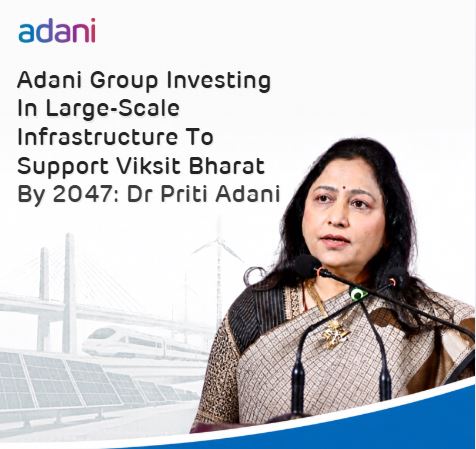
Varanasi, Nov 2: Adani Group is undertaking large-scale infrastructure projects aimed at addressing India’s key developmental challenges and supporting the country’s ambition of becoming a developed nation by 2047, Adani Foundation Chairperson Dr Priti Adani said on Monday.
Speaking at the World Symposium on ‘Ancient Wisdom for Modern Challenges’ in Varanasi, Dr Adani emphasised that the private sector has an important responsibility in India’s development journey.
She pointed out that despite significant progress, the country continues to face challenges such as poverty, malnutrition, illiteracy and inadequate last-mile access to essential services, including electricity.
According to her, businesses must look beyond commercial objectives and contribute meaningfully towards addressing these issues.
“At the Adani Group, we have implemented large-scale infrastructure projects to address India’s challenges and contribute towards the vision of a developed nation by 2047,” she said.
Ancient Indian Wisdom Offers Lessons For Modern Businesses
Highlighting the relevance of India’s traditional knowledge systems, Dr Priti Adani called upon businesses to incorporate sustainability, social responsibility and a sense of duty into their operations.
Drawing an analogy with yoga, she said India’s ancient practices offer valuable lessons for addressing contemporary challenges.
She observed that yoga, once rooted in Indian tradition, has gained global recognition for promoting a balance between the mind and body.
Similarly, millets, which were traditionally an important part of Indian diets, are now receiving renewed attention for their nutritional benefits, climate resilience and contribution to food security.
Dr Adani stressed that these examples demonstrate how traditional knowledge can provide practical solutions to modern-day problems.
Adani Group Commits Over $100 Billion To Energy Transition
Outlining the group’s sustainability agenda, Dr Priti Adani highlighted its commitment of more than $100 billion towards energy-transition infrastructure.
She pointed to the renewable energy development at Khavda in Gujarat, which is being developed as the world’s largest renewable energy park, with a planned capacity of 30 GW through solar and wind power generation.
The project, she said, reflects the scale of infrastructure development required to support India’s transition towards cleaner energy sources.
Emphasising the need to translate sustainability commitments into measurable action, she said environmental responsibility should not remain confined to corporate reports but must become an integral part of business operations.
“We believe sustainability cannot simply remain a chapter in the annual report. Sustainability must be put into practice,” she said.
Businesses Have A Bigger Role In India’s Development Journey
Dr Priti Adani’s address highlighted the growing importance of private-sector participation in India’s efforts to achieve its development goals.
From expanding infrastructure and improving energy access to strengthening food security and promoting sustainable practices, she said businesses have an opportunity to contribute to long-term national progress.
Her remarks at the Varanasi symposium placed particular emphasis on combining India’s traditional wisdom with modern innovation to address emerging economic, social and environmental challenges.
As India moves towards its 2047 development target, large-scale infrastructure investment, sustainable business practices and stronger corporate participation are expected to remain important elements of the country’s growth strategy.
2, Nov 2026
SPJIMR ranks No. 42 in The Case Centre Impact Index 2026
Strengthens its global presence in case-based management education
MUMBAI, India, Nov. 2, 2026 /PRNewswire/ — Bharatiya Vidya Bhavan’s S.P. Jain Institute of Management & Research (SPJIMR) has been ranked No. 42 globally in The Case Centre Impact Index 2026, moving up six places from its 2025 ranking. The recognition reflects the growing international reach and classroom adoption of SPJIMR-authored cases, reinforcing the institute’s contribution to case-based management education worldwide.

SPJIMR is among four Indian business schools featured in this year’s ranking and is placed alongside leading global institutions including Harvard Business School, INSEAD, MIT Sloan School of Management, Stanford Graduate School of Business and Kellogg School of Management. This international presence underscores the reach of SPJIMR’s faculty scholarship and its contribution to management learning beyond India, placing its case portfolio within a global landscape of institutions influencing how future managers learn to analyse business challenges and make decisions.
Commenting on the recognition, Prof. Varun Nagaraj, Dean, SPJIMR, said: “Teaching cases play an important role in management education because they shape how future leaders frame problems, challenge assumptions and exercise judgement. Their impact lies not simply in what students learn, but in how they learn to think and decide. This recognition in The Case Centre Impact Index reinforces our commitment to scholarship that matters. We hope to continue to advance the wider conversation on research impact, including how teaching cases can move insight into action and influence the way managers lead and make decisions.”
The 2026 Impact Index records measurable growth in the adoption of SPJIMR’s cases. Between 1 September 2025 and 31 August 2026, 32 SPJIMR cases were used by 22 organisations across 12 countries, reaching 3,621 students. During this period, The Case Centre received 14 new cases from SPJIMR authors for distribution. The institute’s collection available through The Case Centre now comprises over 170 cases, including a prize-winning case.
Now in its fourth year, The Case Centre Impact Index recognises the global reach and influence of case writing in business and management education. Its methodology draws on usage data from the previous academic year, measuring how many cases published by an institution have been adopted, the number of organisations and countries using them, and the number of students taught through these cases. All organisations that published at least one case with The Case Centre during the previous academic year are eligible for inclusion.
SPJIMR’s presence in the global ranking reflects its distinctive approach to management education, which combines academic rigour with industry relevance and social sensitivity. Through case writing, SPJIMR faculty translate research and industry engagement into learning resources that bring contemporary management dilemmas into the classroom. The growing international adoption of these cases demonstrates how the institute’s scholarship is contributing to management conversations across geographies, helping learners develop the analytical ability, judgement and responsibility needed to lead in an increasingly interconnected world.
About SPJIMR
Bharatiya Vidya Bhavan’s S.P. Jain Institute of Management & Research (SPJIMR) is one of India’s leading postgraduate management institutes. It is recognised in the Financial Times Masters in Management 2026 ranking as the #26 business school globally and #2 in India and in the Financial Times Global MBA 2026 ranking as the #74 business school globally for its PGPM programme. SPJIMR is also consistently ranked among India’s top business schools by leading publications, including Business Today, Fortune India, India Today, and MBAUniverse. It has also been recognised by the Positive Impact Rating as one of the world’s top five business schools for societal impact. Known for its innovative and socially conscious approach to management education, research, and community engagement, SPJIMR seeks to influence managerial practice and enable value-based growth for students, alumni, organisations, and society. The institute holds the international Triple Crown of accreditations from EQUIS, AACSB, and AMBA, placing it among a select group of business schools worldwide to hold all three accreditations.
Visit SPJIMR.org for more information.
 View original content to download multimedia:https://www.prnewswire.com/in/news-releases/spjimr-ranks-no-42-in-the-case-centre-impact-index-2026-302926271.html

2, Nov 2026
FREELANDER Deepens Its Middle East Roll-out and Makes Morocco Its First Step into Africa
Full-scale entry into the Middle East is set for the first half of 2027, with Africa to follow in mid-2027
WUHU, China, Nov. 2, 2026 /PRNewswire/ — FREELANDER is moving ahead with its roll-out in the Middle East and Africa. The brand plans to cover 11 Middle East markets, with a full-scale entry into the region set for the first half of 2027. It will enter Africa through Morocco, with Morocco and Tunisia among its first African markets.
From Brand Presentation to Sales and Service
The 11 markets are the UAE, Kuwait, Qatar, Saudi Arabia, Israel, Iraq, Jordan, Lebanon, Bahrain, Oman and Egypt. As the starting point of FREELANDER’s international business, the region is now moving from brand presentations and partnership talks to preparing sales and service networks.
In the UAE, Al Tayer Motors and Premier Motors are FREELANDER’s official dealer partners. At FREELANDER Nightfall, held during the 2026 Chery International User Summit in Wuhu in October, the brand signed new partnership agreements for Bahrain and Oman. FREELANDER 8 is expected to launch in the UAE in the first quarter of 2027.
“For me, bringing FREELANDER to the world means more than entering new markets. It means earning the trust of our customers, every day. That takes a great product, strong local partners and service people can rely on,” said Ms Lucia Mao, CEO of FREELANDER International, at FREELANDER Nightfall.
Morocco Opens the Way into Africa
In Africa, Morocco will be FREELANDER’s first step and, together with Tunisia, will form the brand’s first group of African markets. Preparations are actively under way, with entry expected in mid-2027. FREELANDER will work with prospective local partners on sales, after-sales and product introduction plans suited to each market.
Entry timing, specifications, pricing and sales arrangements for each market will be announced through official channels.
About FREELANDER
FREELANDER is a British Premium Intelligent All-Terrain Brand, jointly developed by JLR and Chery. JLR owns the FREELANDER brand and has established a dedicated FREELANDER Design Hub to lead its design. Chery provides advanced intelligent technology and a top-tier global supply chain.
 View original content:https://www.prnewswire.co.uk/news-releases/freelander-deepens-its-middle-east-roll-out-and-makes-morocco-its-first-step-into-africa-302926297.html

2, Nov 2026
Odisha Government Reclaims 28.8 Acres Of Land From Vedanta In Jharsuguda Over Delay In Industrial Development
Jharsuguda, Nov 2 (UDN): In a significant move to recover unused industrial land, the Odisha government has cancelled Vedanta Ltd’s lease of 28.8 acres in Jharsuguda district, citing prolonged non-utilisation and violation of allotment conditions. The decision comes amid the state’s wider push to reclaim government land lying idle with industrial units.

Representational Image
The Odisha government has cancelled the allotment of 28.8 acres of government land leased to Vedanta Ltd at Panchapada village in Jharsuguda district after finding that the company had failed to utilise the property for the intended industrial purpose.
The land, which was originally allotted to Vedanta Aluminium Ltd through the Odisha Industrial Infrastructure Development Corporation (IDCO) in 2013, reportedly remained largely vacant for years. Inspections found that only a boundary wall had been constructed, with no significant industrial infrastructure or permanent structures on the premises.
The action follows multiple inspections and an audit observation that highlighted the prolonged non-utilisation of the allotted land.
According to reports, the Accountant General (Audit-I), Odisha, flagged the issue during an inspection on April 16, 2025. Subsequent verification by the Jharsuguda land administration and IDCO officials also confirmed the absence of substantial construction or industrial activity.
Following these findings, the Jharsuguda Collector requested IDCO to initiate steps to take back the land.
IDCO Issues Notice Before Cancelling Allotment
Before taking the final decision, IDCO issued a show-cause notice to Vedanta on April 9, seeking an explanation for the failure to develop the land.
In its response, the company reportedly stated that the property had been earmarked for future expansion, ancillary facilities, industrial support infrastructure, employee welfare facilities and healthcare-related projects.
However, authorities maintained that the company had not fulfilled the conditions stipulated in the original allotment and lease documents.
Under Clause 19 of the allotment letter and Clause 43 of the lease deed, construction was required to commence within the prescribed timeframe. Failure to comply with these conditions made the allotment liable for cancellation, with the land reverting to IDCO free from encumbrances.
Following the cancellation, Vedanta has been directed to immediately hand over peaceful and vacant possession of the property to the competent authority.
The company has also been prohibited from creating third-party interests in the land or undertaking any further construction or activities on the premises.
IDCO’s land officer and other divisional officials have been instructed to complete the physical resumption process, update relevant land records and formally restore possession to the corporation.
Vedanta Claims Loan Repayment, Expresses Interest In Healthcare Project
Responding to the development, Vedanta stated that the loans secured by mortgaging the leased property had already been repaid.
A spokesperson for Vedanta Aluminium Metal Ltd reportedly said the company had also expressed interest in developing community-oriented public infrastructure on the land, including a comprehensive healthcare facility.
The company had earlier mortgaged the leased property to secure a credit facility. However, the state government’s position was that repayment of the loan or proposed future development did not override the obligation to comply with the original land-allotment conditions.
The government has maintained that industrial land is a valuable public resource and cannot remain unutilised indefinitely.
Under the applicable government policy, industrial land remaining unused for three years is liable to be reclaimed, subject to the conditions of allotment.
Odisha Cancels 267 Industrial Land Allotments Since 2016
The cancellation of Vedanta’s land lease is part of a broader government initiative to recover industrial plots that have remained unused despite being allotted for investment and industrial development.
Since 2016, the Odisha government has reportedly cancelled 267 land allotments involving industrial units that failed to utilise their allotted properties. Show-cause notices had also been issued to another 398 units by March 2026.
The scale of the problem was highlighted in a Comptroller and Auditor General (CAG) performance audit on industrial land management.
The audit found that 12,393.651 acres of land allotted between 1981 and 2021 for industrial and allied activities remained unutilised.
The state has previously taken similar action against several major industrial projects. In 2017, the government cancelled land allotted to South Korean steel giant Posco after its proposed 12-million-tonne steel project failed to materialise.
IDCO had also cancelled the land lease of Lanco Solar in 2014 after the company failed to establish its proposed solar manufacturing facility within the stipulated period.
Allotments involving other industrial entities, including Uttam Galva, Sahara India and Visa Power, have also faced cancellation over prolonged non-utilisation.
Land Cancellation Comes Amid Vedanta’s Major Investment Plans
Interestingly, the latest government action comes at a time when Vedanta is exploring substantial fresh investments in Odisha.
Group Chairman Anil Agarwal recently held discussions with Chief Minister Mohan Charan Majhi regarding a proposed investment programme worth approximately Rs 1 lakh crore in the state.
The proposed investment plans reportedly include setting up a new aluminium smelter in Dhenkanal, establishing an alumina refinery in Rayagada and expanding the company’s existing industrial operations in Jharsuguda.
The cancellation of the 28.8-acre land lease therefore highlights an important aspect of Odisha’s industrial policy: while the state continues to pursue large-scale investments, companies are also expected to adhere strictly to land-use commitments and development timelines.
The government’s latest move sends a clear message that industrial land allotted for investment must be put to productive use within the stipulated period or risk being reclaimed.
2, Nov 2026
TokenInsight Q3 Report: MEXC Ranks No. 2 in Commodity Perpetuals with 17.43% Market Share
MUTSAMUDU, Comoros, Nov. 2, 2026 /PRNewswire/ — MEXC, a pioneer in 0-fee digital asset trading, ranked second in commodity perpetuals trading volume in Q3 2026, capturing a 17.43% market share, according to TokenInsight’s Crypto Exchange Report. TradFi perpetuals accounted for 17.38% of MEXC’s derivatives trading volume, the third-highest proportion among the nine exchanges tracked.

The report examined 20 exchanges, including 11 selected for in-depth analysis based on market share, trading volume, and open interest.
In Q3, MEXC recorded $1.069 trillion in total trading volume, ranking fourth among the exchanges covered in the report. Its market share reached 8.91%, up 0.38 percentage points from the previous quarter, marking the third-largest increase among major exchanges. Derivatives trading volume reached $963 billion, representing a 9.67% market share and ranking fourth among exchanges. Together, MEXC, Binance, OKX, and Bybit accounted for approximately 70% of the derivatives market.
MEXC Ranks No. 2 in Commodity Perpetuals
MEXC recorded $86 billion in commodity perpetuals trading volume in Q3, accounting for 17.43% of the market and ranking second among exchanges. Its trading volume was roughly twice that of the third-ranked exchange, while MEXC and Binance together accounted for approximately three-quarters of the commodity perpetuals market.
Across the commodity perpetuals market, gold (XAU) accounted for 51% of trading volume, while gold, silver (XAG), and WTI crude oil together represented 91%. MEXC ranked second in both gold and silver perpetuals.
Among the eight commodities examined, MEXC placed in the top three in six. It ranked second in gold (XAU), silver (XAG), Brent crude (BZ), copper, and platinum (XPT), and third in palladium (XPD).
TradFi Perpetuals Account for 17.38% of MEXC’s Derivatives Volume
TokenInsight reported that TradFi perpetuals represented 17.38% of MEXC’s derivatives trading volume in Q3, the third-highest proportion among the nine exchanges tracked, behind Binance (26.25%) and Bitget (22.06%). MEXC was one of five exchanges where TradFi perpetuals accounted for more than 10% of derivatives trading volume, alongside Binance, Bitget, OKX (15.76%), and Gate (12.32%).
Across the nine exchanges, TradFi perpetuals reached $2.1 trillion in Q3 trading volume, with equity perpetuals accounting for 77%, or $1.61 trillion. Monthly TradFi perpetuals volume peaked at $793 billion in August, while commodity perpetuals volume increased throughout the quarter, reaching $188 billion in September.
MEXC Holds 7.28% of Equity Perpetuals Market, Ranks No. 2 in NVDA
MEXC recorded $117 billion in equity perpetuals trading volume in Q3, representing a 7.28% market share and ranking fourth among the nine exchanges tracked. Its trading volume was just $5 billion behind the third-ranked exchange.
Equity perpetuals trading was concentrated in the top 20 contracts, which accounted for 88% of total volume, with the top five alone representing 64%. Memory-chip stocks and ETFs were particularly active, accounting for seven of the top 20 contracts. MEXC ranked second in NVDA and SAMSUNG perpetuals, and third in SKHYNIX, SOXL, MU, and TSLA. Overall, MEXC placed among the top three exchanges in six of the 20 equity perpetuals contracts.
Full report: TokenInsight Crypto Exchange Report, Q3 2026
About MEXC
Founded in 2018, MEXC is a leading global multi-asset trading platform built as your 0-fee gateway to infinite opportunities. Serving users across 170+ markets, MEXC provides simple and efficient access to crypto, stocks, tokenized assets, derivatives, and a growing range of TradFi-linked opportunities through one account and one gateway.
With 0 trading fees, deep liquidity, broad asset coverage, and a high-performance trading experience, MEXC is designed for retail users who want to discover earlier, act faster, and trade with fewer barriers. As crypto and traditional finance continue to converge, MEXC is committed to making global opportunities more accessible, helping users trade freely and MEXCmize every opportunity.
MEXC Official Website| X | Telegram |How to Sign Up on MEXC
Risk Disclaimer:
This content does not constitute investment advice. Given the volatility of financial markets, including digital assets, tokenized assets, and traditional financial products, investors should carefully assess market conditions, underlying asset fundamentals, and potential financial risks before making any investment or trading decisions.

 View original content to download multimedia:https://www.prnewswire.co.uk/news-releases/tokeninsight-q3-report-mexc-ranks-no-2-in-commodity-perpetuals-with-17-43-market-share-302926214.html



