


11, Jun 2026
KR Group Deploys Netradyne’s AI to Build a Culture of Safer Driving Across Hazardous Goods and Passenger Fleets

India, June 11: Netradyne, a global leader in AI-powered fleet safety and performance solutions, announced the driver safety outcomes of its technology across KR Group companies, a leading fleet operator in the space of LPG fuel distribution, ammonia gas haulage, and intercity passenger transit in India. The results analysed after six months of deployment show significant improvement across identified key performance indicators, including speed violations, driver distractions, following distance, driver- drowsiness, collision warning, hard braking and acceleration, GreenZone® Score, and Driver Stars.
Data shows that real-time, in-cab coaching can significantly improve driver safety outcomes, with the fleets reporting a 64% reduction in driver distraction events and a 65% decline in drowsiness alerts, a 100% speeding correction rate, and a more than 90% reduction in mobile phone usage within six months.
KR Trans Fuels, KR Gases, and KRT Carriers manage some of India’s most safety-critical transport environments, where the consequences of a single incident can extend far beyond the vehicle. Safety has long been a core focus of the KR group, supported by structured protocols such as GPS tracking, strict no-phone policies, and regulated driver rest cycles. However, leadership recognised the need to go a step further with real-time visibility into on-road behaviour to validate compliance, identify emerging risks, and strengthen a truly preventive safety approach.
The rollout was built on Netradyne’s Driver•i® platform, which combines real-time, in-cab audio coaching on risks such as speeding, distraction, unsafe following distance, and drowsiness with GreenZone® Score, a data-driven performance framework that gives fleet managers an objective, ongoing view of driver behaviour for coaching, recognition, and accountability.
“We have always prioritised safety, but we needed greater visibility at the driver level, where decisions are made in real time. Drowsiness on a night haul, a moment of distraction, or a hand reaching for a phone, these are risks no policy can prevent. What Netradyne gave us was real-time visibility and the ability to act on it instantly, helping us build a more preventive approach to safety,” said Suresh Kumar, MD & Owner, KR Trans Fuels, KR Gases & KRT Carriers. “The numbers reflect that, but more importantly, we’re seeing a clear shift in how our drivers approach safety every day,” he added.
The results were visible across all three entities. KR Gases, which operates some of the group’s highest-risk vehicles, recorded a 100% speeding correction rate, while fleets also recorded corrective action in 96% of unsafe following-distance alerts. KR Trans Fuels, which operates the largest fleet in the group, reduced driver distraction by 64% in three months and cut phone-use incidents by more than 90%, from 20–30 per day to one or two. KRT Carriers, operating on urban and semi-urban passenger routes, recorded a 65% reduction in drowsiness alerts compared with peak levels.
At KR Group, GreenZone® Scores are reviewed monthly and directly linked to driver recognition and financial incentives, contributing to a double-digit improvement in driver performance while embedding safety into everyday operations.
“What KR Group has achieved is a blueprint for India’s fleet sector, deploy Physical AI at the driver level, build recognition into the system, and safety becomes a competitive advantage, not just a compliance requirement,” said Durgadutt Nedungadi, Senior Vice President, Netradyne. “What we’re seeing is a clear shift toward real-time, video-telematics systems that can influence driver behaviour in the moment. This deployment shows how that approach can deliver consistent safety and performance outcomes at scale, and we expect this model to accelerate across India and the broader APAC region.”
- 0
- By Neel Achary

11, Jun 2026
AI-Powered Railway Control System for Efficient Urban Train Operation
Researchers develop a new reinforcement learning framework for precise, real-time, and sustainable automatic railway control
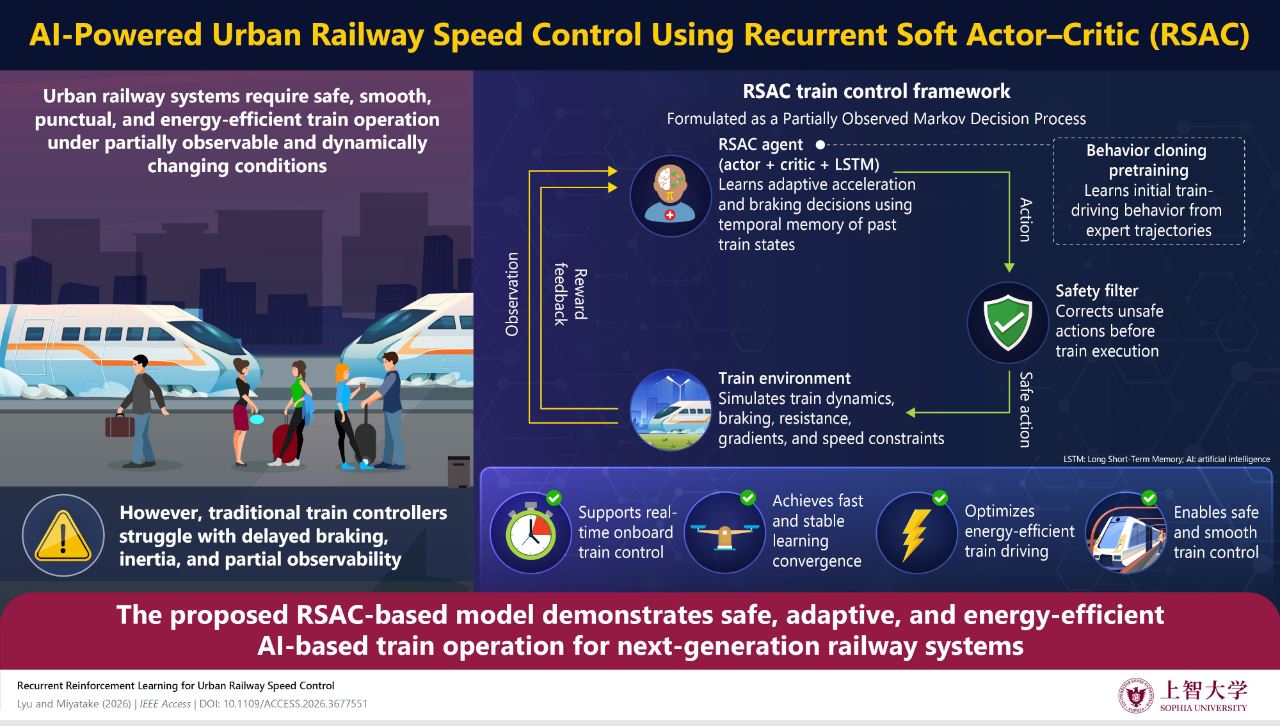
Urban railways play a key role in sustainable transportation systems. However, achieving precise and energy-efficient train control under diverse operating conditions of urban railways remains a challenge. Researchers from Japan have now developed a recurrent reinforcement learning framework for urban railway speed control that combines expert-guided learning and safety filtering. The proposed method demonstrated stable, real-time operation and energy-saving performance, highlighting its potential for next-generation automatic train operation systems.
As cities continue to expand,railways are expected to become an important component of urban mobility systems. Compared to automobiles and air transport, railways are highly energy efficient and produce relatively low environmental impacts and therefore form an important component of sustainable transportation systems. Thus, researchers have been exploring advanced train control technologies for further improvement of operational efficiency, passenger comfort, and punctuality while reducing energy consumption.
In this context, Professor Masafumi Miyatake from the Department of Engineering and Applied Sciences in collaboration with doctoral studentMingyu Lyu from Graduate School of Science and Technology, Sophia University,investigated a new AI-based framework for urban railway speed control. The findings were published in Volume 14 of IEEE Access on March 25, 2026.
Reinforcement learning is a branch of artificial intelligence (AI) which has attracted attention as a promising approach for automatic train operations as it enables an AI agent to learn optimal control strategies by interacting repeatedly with an environment and improving its behavior through trial and error. However, implementing this in railway operation presents several practical challenges including incomplete information about operating conditions, train inertia, braking delays, and strict safety requirements.
To overcome this, researchers developed a recurrent reinforcement learning framework based on Recurrent Soft Actor–Critic (RSAC) algorithm. RSAC is an AI method that enables train control systems to learn from past driving patterns and adapt to changing railway conditions over time.
“Our reinforcement learning-based algorithm was capable of adapting train driving control to a wide range of track and rolling stock conditions,” explains Prof. Miyatake.
Unlike conventional reinforcement learning methods,the proposed approach used arecurrent neural network that can retain information from previous train states. This allowed the system to capture time-based relationships associated with train operation, such as traction response delays, braking history, and inertial effects, thereby improving decision-making under partially observable conditions.The team also used a training approach that allowed the AI system to first learn from examples of expert driving behavior before learning on its own. By studying these optimized driving patterns early in training, the AI was able to learn faster, make better decisions, and develop more stable and efficient train control behavior.
Apart from this, the team also integrated a safety filter into the framework. The safety filter would override potentially unsafe control commands generated by the AI policy and ensure compliance with the operational constraints such as speed limits and braking feasibility. This mechanism also helped ensure safe operation when the learned policy encountered unfamiliar situations.
The proposed framework was evaluated through various simulations of urban railway operations over approximately two-kilometer sections between stations. The simulation environment was designed to closely resemble real-world railway conditions, including uphill and downhill tracks, changing speed limits, and required train arrival times.
Additionally, the proposed AI framework was also compared with several other widely used reinforcement learning algorithms. These included Deep Deterministic Policy Gradient (DDPG), Proximal Policy Optimization (PPO), Twin Delayed Deep Deterministic Policy Gradient (TD3), and Soft Actor–Critic (SAC), which are commonly used to train autonomous decision-making systems.
“Among all the methods tested, our developed frameworklearned faster and performed better than all tested methods,” explains Prof. Miyatake.
The research also demonstrated strong energy efficiency. While dynamic programming achieved the theoretical minimum energy consumption under ideal conditions, the developed system attained comparable performance while remaining suitable for real-time operation. Meanwhile, conventional reinforcement learning approaches exhibited less stable behavior and higher energy consumption.
The findings suggest that this framework could help introduce a cleaner and more convenient public transportation by facilitating accurate and energy-efficient train operation at relatively low cost. The study refines the advantages of railways as an energy-efficient and environmentally friendly transportation system contributing towards a sustainable future. Looking ahead, the study may contribute to enhancing the role of railways as a sustainable transportation system—supporting climate change mitigation and sustainable urban development.
The findings also highlight the potential of AI-driven railway systems to support safer, greener, and more reliable urban transportation in future smart cities.
11, Jun 2026
RMetS Weather Photographer of the Year 2026 Opens for Entries
The world’s favourite weather photography competition returns today as the Royal Meteorological Society (RMetS) officially opens entries for the Weather Photographer of the
Year 2026. Now entering its second decade, the competition invites photographers from around the globe to submit striking images that capture the power, beauty and impact of
weather. It celebrates outstanding photography that showcases both dramatic weather events and the growing influence of climate change.
The dedicated Climate Award also returns for 2026, recognising images that connect weather with wider environmental change. As a visual medium, photography offers a
powerful way to communicate complex scientific ideas and engage global audiences.
Prof Liz Bentley FRMetS, Chief Executive of the Royal Meteorological Society, said:
“The Weather Photographer of the Year competition continues to showcase the remarkable ways in which weather shapes our world, from moments of natural beauty to events of significant impact. As our climate changes, these images play an increasingly important role in helping people understand and engage with the science behind weather and climate.”
The competition is free to enter and open to photographers of all levels, from seasoned professionals to enthusiastic amateurs.
The 2026 categories include:
• Weather Photographer of the Year – awarded to the most striking image of weather in action (£1,500 prize).
• Mobile Weather Photographer of the Year – celebrating the best images captured on a smartphone or tablet (£500 prize).
• Climate Award – recognising photography that tells a compelling story about our changing climate (£500 prize).
• Public Favourite – decided by a global public vote.
Key Dates
• Entries open: 11 June – 20 August 2026
• Shortlist announcement and public vote: 22 October 2026
• Winners announced: 17 November 2026
11, Jun 2026
Xiaomi TV FX Mini LED Series Now on Sale, Bringing Mini LED Technology and Fire TV Together

Bengaluru, India June 11: Xiaomi India today announced the availability of the Xiaomi TV FX Mini LED Series, with Fire TV built-in a new smart television lineup created for consumers who expect more from their home entertainment experience. Available in 43-inch, 55-inch, 65-inch, and 75-inch screen sizes, the FX Mini LED series with Fire TV built-in combines advanced display technology, immersive sound, intelligent features, and seamless content access to deliver a more engaging viewing experience.
“Consumers now see their TV as more than just an entertainment screen. They prefer an elevated experience where the screen becomes their entertainment hub, smart home controller, and personal assistant, all in one. With Fire TV built-in and the power of Alexa, customers enjoy a personalised, smart, and seamless viewing experience that’s also voice powered. Xiaomi has been an invaluable partner in bringing Fire TV with Alexa to lakhs of consumers in India, and these new launches across price points will help us reach many more,” shared Sayantani Choudhuri, Head of Fire TV, Amazon India.
11, Jun 2026
SKF India Appoints Madhu Dhandhania Jalan as Director – GCC & Finance Operations Centre, ISEAM
Pune, June 11 : SKF India , India’s technology and solutions provider for industrial applications, has announced the appointment of Madhu Dhandhania Jalan as Director – & Finance Operations Centre for India, Southeast Asia, and the Middle East , SKF India .
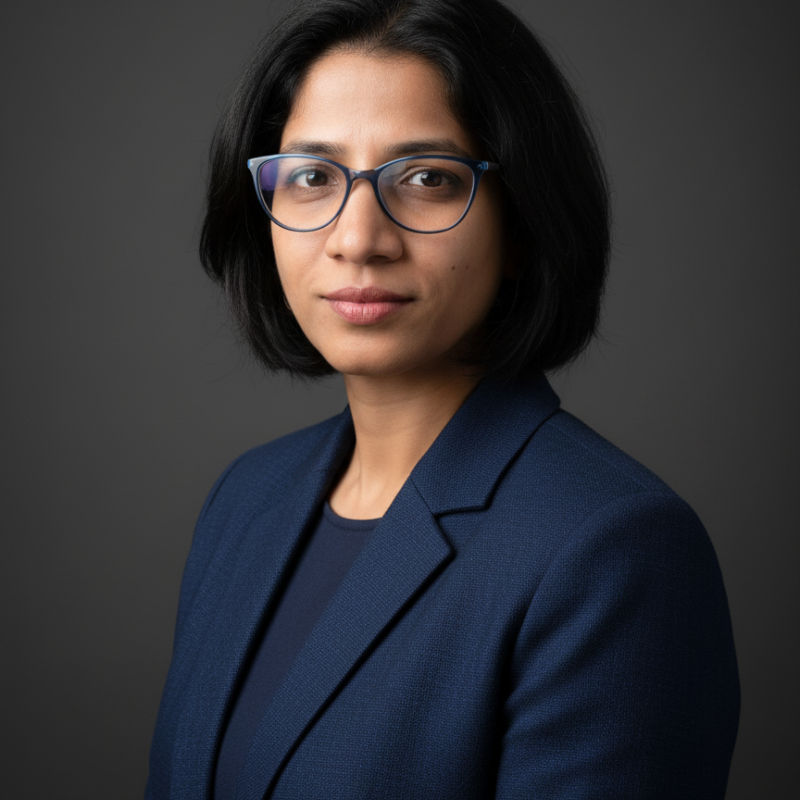
In her new role, Madhu will lead the development and scaling of SKF’s GCC organisation, strengthening regional capabilities, driving finance operations, strengthen governance and accelerating transformation and building a robust global delivery backbone to support the company’s growth ambitions.
“I am honoured to join SKF at an important point in its growth and transformation journey across the region,” said Madhu Jalan, Director – GCC & FOC, ISEAM, SKF India. “I see a significant opportunity to build future-ready capabilities, strengthen operational excellence, and create a scalable platform that supports business performance and long-term value creation.”
Madhu brings significant leadership experience across global finance operations, shared services, and transformation, with a strong track record of building high-performing teams, simplifying complex operating environments, and delivering operational efficiency at scale. Her appointment will support SKF’s ambition to advance agility, standardisation, and scalable capability creation across the region.
Madhu brings more than two and half decades of cross-sector leadership experience spanning finance, audit and consulting, banking, telecommunications, logistics, and e-commerce. Prior to joining SKF, she worked at Amazon, Maersk Global Service Centres, Tata Teleservices, Tata Communications, Avaya, ICICI Bank, and Bharti Airtel.
Madhu is a Chartered Accountant from the Institute of Chartered Accountants of India and holds an Executive MBA from the Indian Institute of Management Calcutta.
11, Jun 2026
Proposed NOAA Cuts Would Leave Kansans Unprepared for Billion-Dollar Weather Disasters
WASHINGTON, June 11 – Today, Ocean Conservancy released a new report detailing the role that the National Oceanic and Atmospheric Administration (NOAA) plays in supporting public safety and economic productivity in Kansas, from tornado warning systems to drought monitoring to aviation forecasting. As Congress weighs whether to pass $1.6 billion in federal budget cuts to NOAA, the report provides clarity on how cuts would impact Kansas and what leaders can do to protect NOAA services Kansans rely on.
“NOAA touches nearly every aspect of Americans’ lives, even in landlocked Kansas,” said Katherine Tsantiris, Ocean Conservancy’s director of government relations. “The ocean does not stop mattering at the shoreline, and Kansas weather doesn’t start at its border. Weather across the Great Plains is shaped by conditions in the Pacific Ocean and Gulf of Mexico, and changes thousands of miles away can have profound impacts across the state. NOAA gives Kansans the advance warning they need by spotting life-or-death threats long before they arrive.”
Kansas has unusually high exposure to weather risk. According to NOAA estimates, Kansas has experienced 102 weather and climate disaster events with at least $1 billion in damages from 1980-2024. This year, Kansas City saw record-breaking severe weather, recording 244 severe thunderstorms and tornado warnings.
Through an evaluation of NOAA data and government reporting, the report provides a snapshot of how the agency impacts everyday life in Kansas and supports key sectors of the Kansas economy. This includes its aerospace industry, which contributes $7 billion annually to Kansas’ gross domestic product, and its wind-powered electric generation, which supplied more than half of Kansas’ net generation in 2024.
Drought is among the costliest hazards to the economy, with Kansas’ 2011 losses exceeded $1.7 billion. Across Kansas and the Great Plains, ranchers use weekly U.S. Drought Monitor maps, which draws on NOAA data, to make critical decisions — and the USDA uses the U.S. Drought Monitor to determine eligibility for specific aid programs. Without this monitoring, farmers lose access to vital information and face a harder time getting aid — exactly when speed and clarity matter most.
Key services provided by NOAA to Kansas include weather forecasting and tornado warning systems, agricultural data and drought monitoring, and aerospace and wind-power generation forecasting. The report predicts that proposed federal cuts to NOAA would likely lead to:
- Less accurate weather forecasting.
- Slower modernization of tornado, flood and flash-drought services.
- Erosion of NOAA’s U.S. Drought Monitor to accurately predict drought in Kansas.
- More expensive and uncertain infrastructure and water management operations, such as bridges and roads that rely on NOAA data to ensure they are built to withstand future climate and weather extremes.
“American farming and ranching families work incredibly hard, but their livelihoods are often at the mercy of weather patterns shaped hundreds or even thousands of miles away,” said Jeff Watters, Ocean Conservancy’s Vice President of External Affairs. “Their success depends on having reliable, up to date information to make crucial decisions on what to plant and when, and to prepare when severe weather threatens crops, livestock and equipment. NOAA provides the forecasts, data and certainty farmers need to make these decisions with confidence.”
According to the report, even making targeted cuts to NOAA funding and services could have wide-ranging consequences. For example, the report explores how cuts to NOAA’s U.S. Drought Monitor, which draws on data from distant ocean conditions, would have direct impacts on Kansas ranchers, farmers and agencies. Data from the monitor feeds into NOAA’s Southern Plains Drought Early Warning System, which Kansas communities rely on for confidence and clarity when decisions are most costly and time-sensitive. It similarly explores how cuts to NOAA’s National Severe Storms Laboratory would undermine the future readiness and safety of Kansas communities in reacting to tornados and extreme weather.
“NOAA operates as an interconnected whole that extends well beyond the forecast people see on their phone,” said Tsantiris. “Cutting one program or service will undermine NOAA’s ability to provide timely guidance and warnings for Kansas communities. It’s like stripping key nutrients out of the soil and expecting it to produce the same harvest. It may not be obvious right away, but the entire ecosystem suffers.”
Ahead of the September 30, 2026, deadline for Congress to decide on $1.6 billion in NOAA funding cuts proposed by the Trump administration, the report provides the following recommendations for Kansas leaders:
- Fully fund NOAA as an integrated system, not a set of disconnected programs.
- Protect NOAA observation systems and satellite continuity that feed weather forecasting and severe-storm monitoring.
- Support efforts to transform innovative research into operational solutions to reduce risk and improve severe-weather warnings.
- Maintain NOAA drought monitoring and reporting systems.
- Support NOAA data infrastructure and applied climate services.
- Treat NOAA operations and maintenance as public safety spending, not overhead.
“NOAA is not a distant federal agency, it’s an integral part of our public safety net, our economy and our daily lives,” said Tsantiris. “Congress should once again stand united in rejecting proposed cuts to this critical agency. Weakening NOAA would have irreparable consequences for the safety and economic well-being of Kansas and communities across America.”
11, Jun 2026
Synack and Wolfpack Information Risk Bring Sara AI Pentesting to Organizations Across South Africa
Established partnership helps companies move from point-in-time testing to continuous security validation with AI + human expertise
REDWOOD CITY, Calif. June 11: —Synack, the AI + human penetration testing platform is expanding its partnership with Wolfpack Information Risk, a South Africa-based specialist cybersecurity firm, to bring Sara AI Pentesting to organizations across South Africa.
Sara AI Pentesting, powered by the Synack Autonomous Red Agent, combines agentic AI with the Synack Red Team (SRT), a globally vetted community of elite ethical hackers. Together, Sara AI Pentesting and the SRT help organizations expand coverage across their attack surface, accelerate testing, and validate real-world exploitability with greater speed and confidence.
Wolfpack Information Risk, established in 2011 and a B-BBEE Level 1-certified company, brings deep expertise in governance, risk and compliance, penetration testing, cybersecurity consulting, and security operations to organizations across the region. Through its partnership with Synack, Wolfpack enables clients to adopt a modern model of continuous security validation, moving beyond periodic testing toward always-on assurance.
The longstanding partnership has already delivered measurable value for customers. Leading organisations across the financial services, mining, and telecommunications sectors have engaged Synack through Wolfpack to address critical challenges in their controls assurance programme, including extended lead times, expansive technology footprints, and the need for continuous testing across rapidly changing codebases. The result has been faster pre-deployment testing, significantly reduced repeat findings, and improved mean time to remediation (MTTR).
As attack surfaces expand and the time between vulnerability discovery and exploitation continues to shrink, organizations need security testing that keeps pace with modern adversaries. Sara AI Pentesting helps accelerate reconnaissance, attack surface mapping, and initial exploit validation at scale, while the SRT validates what is real, exploitable, and relevant to the business.
Synack and Wolfpack will further explore these themes during a joint webinar, “AI + Human: Keeping Pace with the Modern Adversary,” on June 23, 2026. The session will discuss how companies can use continuous security validation to improve attack surface risk management, accelerate remediation, and strengthen resilience against evolving threats.
“Giving organisations access to continuous security validation—not periodic testing—is what drives the way we build our channel,” said Angela Heindl-Schober, Chief Marketing Officer at Synack. “Wolfpack brings deep security expertise and strong relationships, and together we’re ensuring our customers have what they need to stay ahead of threats.”
“Partnering with Synack gives our clients access to a level of continuous security validation that simply was not available to them before,” said Craig Rosewarne, Managing Director of Wolfpack Information Risk. “By combining Sara AI Pentesting, the Synack Red Team, and Wolfpack’s local expertise, organizations across our markets can move toward ongoing assurance and know that findings are real, validated, and actionable.”
11, Jun 2026
DOMS Marks National Ballpoint Pen Day with an Immersive KidZania Experience and a Brand Film Celebrating the Journey of Writing
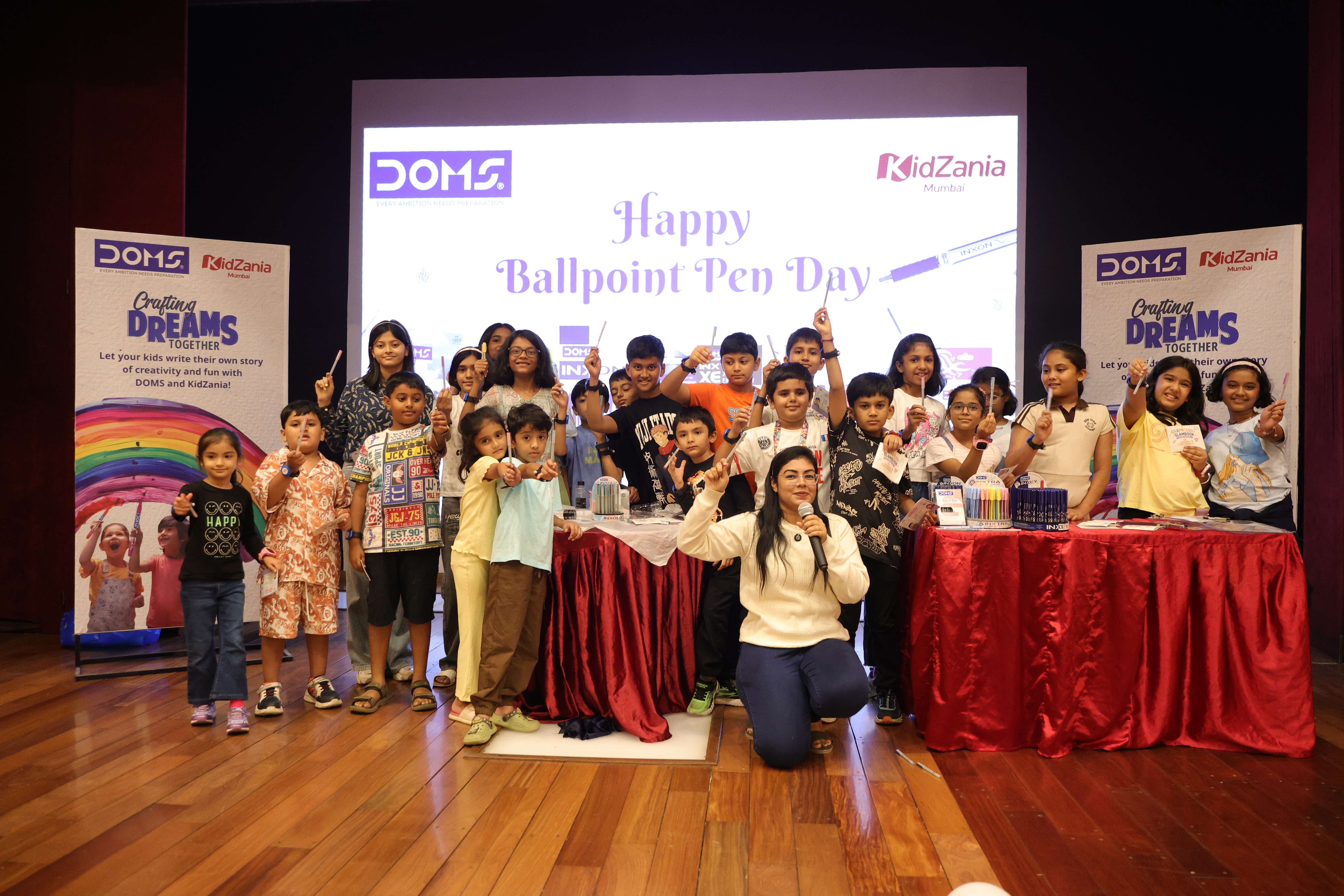
Mumbai, June 11: Reinforcing its commitment to nurturing creativity and the joy of writing, DOMS celebrated National Ballpoint Pen Day through a thoughtfully curated campaign that combined experiential engagement, product innovation and emotional storytelling. The initiative featured an interactive graphology experience for children at KidZania alongside the launch of a brand film that pays tribute to the timeless role of the pen in people’s lives.
At KidZania, children participated in a special graphology-led activity hosted by handwriting expert Nishtha Savar. Using DOMS pens, participants wrote their names and short sentences, following which their handwriting was analysed to reveal simple personality insights. Each child received a personalised Handwriting Personality Card, transforming a writing exercise into an engaging and memorable experience.
The activity encouraged children to view handwriting beyond a classroom skill and appreciate it as a reflection of their individuality, creativity and confidence. Through this experience, DOMS sought to spark conversations around the importance of writing as a powerful medium of learning, communication and personal expression.
As part of the celebration, DOMS also showcased its latest innovation, the DOMS INXGLO Pen, offering children a unique glow-in-the-dark writing experience and introducing a fun new dimension to everyday writing.
Adding an emotional layer to the campaign, DOMS unveiled a specially created brand film that traces the remarkable journey of a pen through different stages of life. Told through a poetic narrative, the film follows a pen from a neighbourhood kirana store into the hands of students, aspiring professionals, parents and grandparents, quietly witnessing moments that shape lives and memories.
The film highlights how a pen becomes a silent companion through life’s defining milestones—from writing first words and school examinations to capturing ambitions, ideas, calculations, letters and cherished memories. As generations evolve and stories unfold, the pen remains a constant presence, connecting people through the simple yet meaningful act of writing.
Through its evocative storytelling, the film serves as a tribute to the legacy of the ballpoint pen, reminding audiences that even in an increasingly digital world, putting pen to paper continues to hold deep personal and emotional significance.
Speaking about the initiative, Mr. Saumitra Prasad, Chief Marketing Officer, DOMS Industries Ltd., said, “A pen is much more than a writing instrument. It is a silent companion to our thoughts, dreams, milestones, and memories. Through our National Ball Point Pen Day celebration, we wanted to remind people of the profound role a pen plays in every stage of life, while inspiring young minds to embrace the joy of writing.”
With a blend of immersive experiences, innovation and storytelling, DOMS continues to champion the power of handwriting and creativity, inspiring new generations to discover the joy and value of writing.
11, Jun 2026
AAEON Secures IEC 62443-4-1 Certification, Strengthening Commitment to Industrial Cybersecurity
Certification reinforces confidence in AAEON’s Product Security Development Lifecycle Process in the evolving global cybersecurity landscape.
Taipei, Taiwan – June 11, Leading provider of advanced industrial and embedded AI computing platforms AAEON announced that it has successfully obtained IEC 62443-4-1 certification. This certification validates that AAEON’s Product Security Development Lifecycle Process meets globally recognized standards in cybersecurity practices across every stage of product development.
AAEON initiated its certification effort in June 2025, working alongside independent consulting firms to proactively review its existing practices, ahead of the full implementation of the EU Cyber Resilience Act (CRA) requirements in December 2027. In addition to performing both independent and internal reviews, AAEON implemented detailed standardized procedures, such as security management documentation and supporting forms, while also undertaking comprehensive internal security awareness training programs.
The certification, issued by LCIE (Laboratoire Central des Industries Électriques), France, covers eight key domain requirements, all successfully passed with an assessed Maturity Level 2. Of particular note are the key controls evaluated, such as the presence of a formalized secure development lifecycle, threat modeling and mitigation testing, and a commitment to the periodic review of security defect management practices.
With cybersecurity threats evolving and standardized regulatory frameworks being introduced to meet them, IEC 62443-4-1 certification positions AAEON as a trusted partner for organizations seeking edge AI and industrial platforms that are both compliant and able to reduce operational risk across different industries.
“We strive to be always ahead, and to do this we must continuously improve in all areas, including how we handle emerging cybersecurity threats.” said Howard Lin, CEO of AAEON. “To have formal recognition of how seriously we take such matters sends a clear signal to our customers that we not only adhere to stringent security practices, but that they are a cornerstone of our product development lifecycle.”
11, Jun 2026
KEZAD Group Announces the Development of AED 112 Million SME Hub in Abu Dhabi
The 25,260 square metre hub will serve as a launchpad for SMEs to establish and expand operations in the Emirate
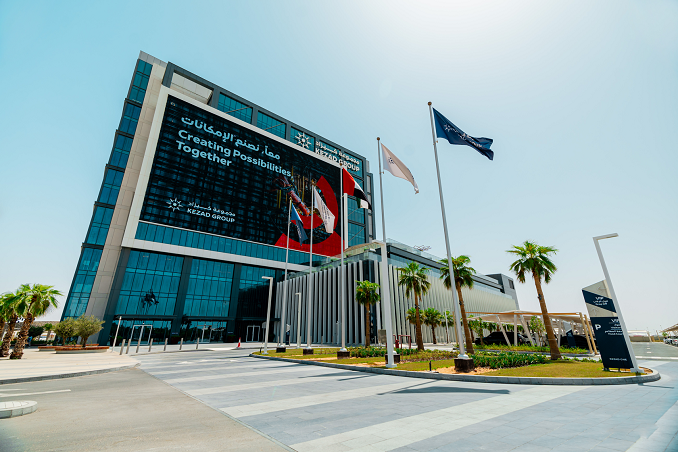
Abu Dhabi, UAE – 11 June 2026: Khalifa Economic Zones Abu Dhabi – KEZAD Group, one of the largest operators of integrated and purpose-built economic zones in the region, has announced the development of the KEZAD SME Hub, a purpose-built business platform for small and medium enterprises (SMEs). The SME Hub marks the Group’s first-of-its-kind development designed to support SMEs in establishing and scaling their operations in the emirate.
Scheduled for handover before the end of this year, and located in KEZAD A (KEZAD Al Ma’mourah), the 25,260 square metre KEZAD SME Hub is designed as a practical bridge between early-stage SME incubators and full-fledged industrial market facilities. The aim of the SME Hub is to ease the transition from startup to scaled production and distribution within an integrated economic zone.
The hub benefits from direct connectivity to Khalifa Port and Etihad Rail networks, and offers businesses access to more than 75 percent of the UAE’s urban areas within a 90-minute drive.
As a pioneering development, the AED 112 million hub combines Micro Industrial Units and office suites in a single model, enabling SMEs to streamline day-to-day activity, logistics and costs. Co-located within a like-minded SME community and complementary industrial activities, businesses can unlock partnership opportunities through shared services and supplier networks.
The hub comprises 175 flexible business-ready Micro Industrial Units starting from 100 square metres, supported by a dedicated business centre and access to KEZAD’s on-site infrastructure and business support services.
SMEs represent 94 percent of all businesses in the UAE, and contribute to 64 percent of the nation’s non-oil GDP. In Abu Dhabi, SMEs constitute around 98 percent of the emirate’s businesses, employ 46 percent of the workforce, and contribute to around 43 percent to its non-oil GDP. With the SME sector expected to grow to one million enterprises by 2030, SME development remains central to the diversification of Abu Dhabi’s economy.
Abdullah Al Hameli, CEO, Economic Cities & Free Zones, AD Ports Group said: “SME sector growth is a top priority for Abu Dhabi. In alignment with the leadership’s vision, we aim to establish KEZAD as a thriving ecosystem for small and medium enterprise development in the region. The KEZAD SME Hub will serve as a launchpad for SMEs, nurturing and developing the industry with vital resources and support required to grow in a competitive market.
Joining the hub will also enable SME investors to leverage the advantages and business support provided by KEZAD’s integrated business ecosystems.”
Mohamed Al Khadar Al Ahmed, CEO, Khalifa Economic Zones Abu Dhabi – KEZAD Group said: “With the SME Hub initiative, we are strengthening KEZAD’s vibrant entrepreneurial ecosystem dedicated to small and medium industries. The Hub will play a crucial role by providing early-stage support for SME startups while also enabling established SMEs to scale their operations at competitive costs within an integrated industrial environment, bridging the gap between SME incubators and the industrial market facilities needed to compete and grow.”
Small and medium enterprises play a vital role in Abu Dhabi’s economy, fuelling industrial advancement and job creation. Backed by the leadership’s vision, KEZAD continues to empower SMEs to set up, thrive, and grow into globally competitive businesses, reinforcing the emirate’s position as a leading destination for industry and commerce
In this connection, KEZAD Group has signed an MoU with Emirates Growth Fund to support the development of UAE-based SMEs, combining KEZAD’s integrated industrial and logistics ecosystem with EGF’s growth capital and strategic support. The collaboration aims to help high-potential SMEs access the resources, infrastructure and guidance needed to scale their operations and compete in wider regional and global markets.