


2, Jun 2026
Odisha Among Four States Chosen for Critical Mineral Processing Plants Under National Mission
Bhubaneswar, June 2 (BNP): In a major boost to India’s push for self-reliance in strategic resources, the Centre has selected Odisha among four states for the establishment of critical mineral value processing plants under the National Critical Mineral Mission (NCMM).

Representational image
The proposed facilities, also planned in Gujarat, Telangana and Maharashtra, are aimed at strengthening India’s domestic capabilities in processing and refining critical minerals that are essential for sectors such as electric vehicles, renewable energy, semiconductors, defence and advanced manufacturing.
Union Coal and Mines Minister G. Kishan Reddy said the initiative forms part of the Centre’s long-term strategy to reduce import dependence and build a robust domestic supply chain for minerals considered strategically important for economic growth and technological advancement.
Under the National Critical Mineral Mission, the government has already undertaken large-scale auctions of critical mineral blocks and, for the first time since Independence, created separate mining blocks dedicated to strategic minerals. Officials said several mineral blocks have already been successfully auctioned, marking significant progress in securing domestic access to key resources.
As part of the next phase of the mission, the Centre is moving ahead with the establishment of value processing plants in the four selected states. Land for the proposed facilities has reportedly been allotted by respective state governments, while local administrations are preparing action plans to support project implementation.
The government has also signed multiple memorandums of understanding with several countries to strengthen international cooperation and secure global supply chains for critical minerals.
The upcoming plants are expected to significantly enhance India’s mineral processing and refining capacity — an area where the country has traditionally relied heavily on imports and overseas facilities. Odisha’s inclusion is seen as particularly significant given the state’s vast mineral reserves and strong industrial ecosystem, with the project expected to boost investment, industrial growth and employment opportunities.
- 0
- By Neel Achary

2, Jun 2026
MoEngage, the Only Vendor to be Named as a Customers’ Choice in the 2026 Gartner Peer Insights Voice of the Customer for Email Marketing
Bengaluru, June 02: MoEngage, an agentic customer engagement platform, today announced that it is the only vendor to be recognized as a “Customers‘ Choice” in the 2026 Gartner Peer Insights “Voice of the Customer” for Email Marketing. This recognition is based on verified reviews submitted by buyers of technology and services.
Vendors placed in the upper-right “Customers’ Choice” quadrant of the “Voice of the Customer” have scores that meet or exceed the market average for both axes (User Interest and Adoption, and Overall Experience).
MoEngage received ratings across key evaluation criteria, including a 4.7/5.0 for product capabilities, a 4.8/5.0 for support experience, and a 4.6/5.0 for deployment experience. Ninety-seven percent of users said they would recommend the platform to others.
“I believe this recognition reflects the commitment our global community of marketers and product owners has shown in sharing their honest experiences,” said Raviteja Dodda, Co-founder and CEO of MoEngage. “We believe every review is a signal that the platform is solving the problems it was meant to solve, and every piece of feedback is a constraint that will shape what we build next.”
MoEngage‘s approach centers on eliminating data fragmentation through a unified, customer-centric architecture that allows enterprise brands to deliver personalized, real-time messaging across email, push notifications, websites, and offline touchpoints.
This recognition from our customers comes at a time of significant momentum for MoEngage. The company recently closed a total Series F raise of $280 million, with the latest tranche led by new investors ChrysCapital and Dragon Funds, alongside Schroders Capital, with continued participation from TR Capital and B Capital. The capital is being deployed to accelerate innovation in its Merlin AI suite, expand go-to-market and customer-facing teams in North America and EMEA, and pursue strategic acquisitions to deepen its insights-led engagement platform.
The “Customers‘ Choice” distinction is part of a broader recognition streak for MoEngage, which was also named as a “Customers‘ Choice” vendor in the 2026 Gartner Peer Insights Voice of the Customer for Multichannel Marketing Hubs. MoEngage is also recognized as a Visionary in the 2026 Gartner® Magic Quadrant™ for Personalization Engines.
Gartner, Magic Quadrant for Personalization Engines, 3 February 2026.
Gartner, Gartner Peer Insights™ ‘Voice of the Customer’: Email Marketing, 11 May 2026.
Gartner, Gartner Peer Insights™ ‘Voice of the Customer’: Multichannel Marketing Hubs, 27 February 2026.
Gartner® and Peer Insights™ are trademarks of Gartner, Inc. and/or its affiliates. All rights reserved. Gartner Peer Insights content consists of the opinions of individual end users based on their own experiences, and should not be construed as statements of fact, nor do they represent the views of Gartner or its affiliates. Gartner does not endorse any vendor, product or service depicted in this content nor makes any warranties, expressed or implied, with respect to this content, about its accuracy or completeness, including any warranties of merchantability or fitness for a particular purpose.
2, Jun 2026
CBSE Opens Class 12 Answer Sheet Verification and Re-Evaluation Portal After Technical Delay
New Delhi, June 2 (BNP): The Central Board of Secondary Education (CBSE) has officially launched the online portal for Class 12 students to apply for answer sheet verification and re-evaluation, following delays linked to technical upgrades and system improvements.
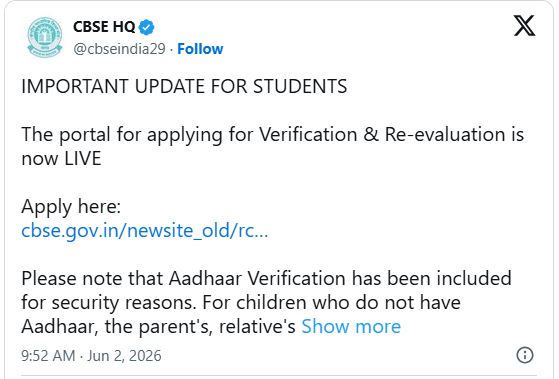
The portal became operational on June 2, 2026, allowing eligible students who have already accessed scanned copies of their evaluated answer sheets to report discrepancies, seek clarification on marking issues, or request re-evaluation of specific answers. The application process will remain open until midnight on June 6, 2026.
The move comes after concerns were raised over the rollout of CBSE’s new On-Screen Marking system, which reportedly faced technical glitches and delayed the reopening of post-result activities. CBSE is understood to have worked with technical experts to strengthen the system and address operational issues before reopening the portal.
According to board guidelines, students can apply for verification of answer book-related concerns, including issues such as blurred or incomplete scanned pages, by paying a fee of ₹100 per answer book. Re-evaluation of individual questions can be requested at ₹25 per question.
To access the facility, students must log in through the CBSE portal using their Roll Number, School Number, and Admit Card ID. Aadhaar-based verification has been made mandatory for authentication. In cases where a student does not possess an Aadhaar number, details of a parent or guardian may be used, subject to identity matching requirements.
CBSE has clarified that only students who have already downloaded and reviewed their scanned answer sheets are eligible to apply. No offline applications or requests submitted after the deadline will be entertained.
Education experts have advised students to carefully review answer sheets and act within the limited application window to avoid missing the opportunity for corrections or reassessment.
2, Jun 2026
MutualFundWala Appoints Team Pumpkin to Drive Their Digital Growth & Investor Engagement
New Delhi, June 2: Team Pumpkin, a leading full-service digital agency, has been awarded the performance marketing mandate forMutualFundWala, India’s trusted mutual fund investment platform. The agency will driveMutualFundWala’s digital growth through strategic performance campaigns, leveraging data-driven insights to optimize customer acquisition and investor engagement.
As part of the mandate, Team Pumpkin will manage MutualFundWala’s end-to-end performance marketing efforts, including paid media strategy, campaign execution, and conversion rate optimization across digital platforms. The agency will focus on scaling the brand’s online presence and driving investor registrations and SIP conversions through targeted digital interventions.
Founded in 2005, MutualFundWala is renowned for simplifying mutual fund investments for everyday Indians. The platform offers a seamless way to invest across equity, debt, Gold Funds, Silver Funds, and China-focused international funds making wealth creation accessible for first-time investors and seasoned market participants alike. At a time when gold prices are at historic highs, silver is emerging as a high-growth alternative asset, and China’s market rebound is attracting global attention, MutualFundWala is uniquely positioned as a one-stop destination for smart, future-ready investing.
Speaking about the collaboration, Mr Shashi Kant Bahl, CEO & Founder, MutualFundWala, said,
“We are looking forward to partnering with Team Pumpkin to strengthen our digital footprint. Their expertise in performance marketing and data-led strategies aligns well with our vision of making mutual fund investments from Gold and Silver Funds to international opportunities accessible to every Indian. We look forward to leveraging their capabilities to scale our platform and reach more investors across the country.”
Swati Nathani, Co-founder, Team Pumpkin, added,
“MutualFundWala is a trusted name in the investment space, and we are thrilled to be their performance marketing partner. Our focus will be on delivering high-impact campaigns that drive investor registrations and SIP conversions, ensuringMutualFundWala continues to grow its market share in the digital-first world.”
Established in 2012, Team Pumpkin is a full-service digital agency offering a wide range of services, including performance marketing, social media management, influencer marketing, content strategy, and more. With a client portfolio spanning multiple industries, the agency specializes in delivering ROI-driven marketing solutions that help brands achieve sustainable growth in an increasingly competitive digital landscape.
The performance marketing mandate for MutualFundWala will be handled by Team Pumpkin’s office in Gurugram.
2, Jun 2026
No Facebook, Instagram for Under-16s: Malaysia Begins Social Media Crackdown
Kuala Lumpur, June 2 (BNP): Malaysia on Monday began enforcing new regulations prohibiting children under the age of 16 from creating or maintaining social media accounts, marking a major step in the country’s effort to strengthen online safety for minors.

Representational image
Under the new rules, major platforms with at least eight million users in Malaysia — including Facebook, Instagram, TikTok and YouTube — are required to implement age-verification systems and prevent underage users from opening accounts. Authorities said existing users identified as younger than 16 will be given a one-month period to download or transfer personal data, including photos and videos, before restrictions take effect.
The Malaysian Communications and Multimedia Commission (MCMC) said the age-verification mechanism for current users will be introduced in phases over the next six months. Companies that fail to comply with the regulations could face fines of up to 10 million ringgit (approximately $2.5 million).
The government said the move is aimed at shielding children from cyberbullying, harmful online content and addictive platform features that encourage excessive screen time. Officials clarified that the restrictions are not intended to cut children off from digital technology but to create safer online environments and hold platforms accountable for protecting younger users.
Malaysia joins a growing list of countries, including Australia, Brazil and Indonesia, that are imposing age-based restrictions on children’s social media access. Nations such as Britain, France, Spain, Denmark, Thailand and South Korea are also exploring similar regulatory measures.
However, the move has triggered mixed reactions among families and digital rights experts. Some parents welcomed the decision, arguing that children lack the emotional maturity to safely navigate social media and benefit more from offline activities and supervised screen time.
Others expressed concern that the restrictions may be too rigid and could push teenagers toward unregulated digital spaces. Critics also raised questions about privacy, warning that mandatory age verification may require sensitive personal information and increase risks related to data protection and surveillance.
Technology companies are yet to clarify how they will implement the regulations, while experts say the effectiveness of the law may depend on enforcement mechanisms and whether families can bypass restrictions through parental accounts or alternative access methods.
2, Jun 2026
ITR-2 Filing Begins for AY 2026–27; Taxpayers Urged to Meet July 31 Deadline
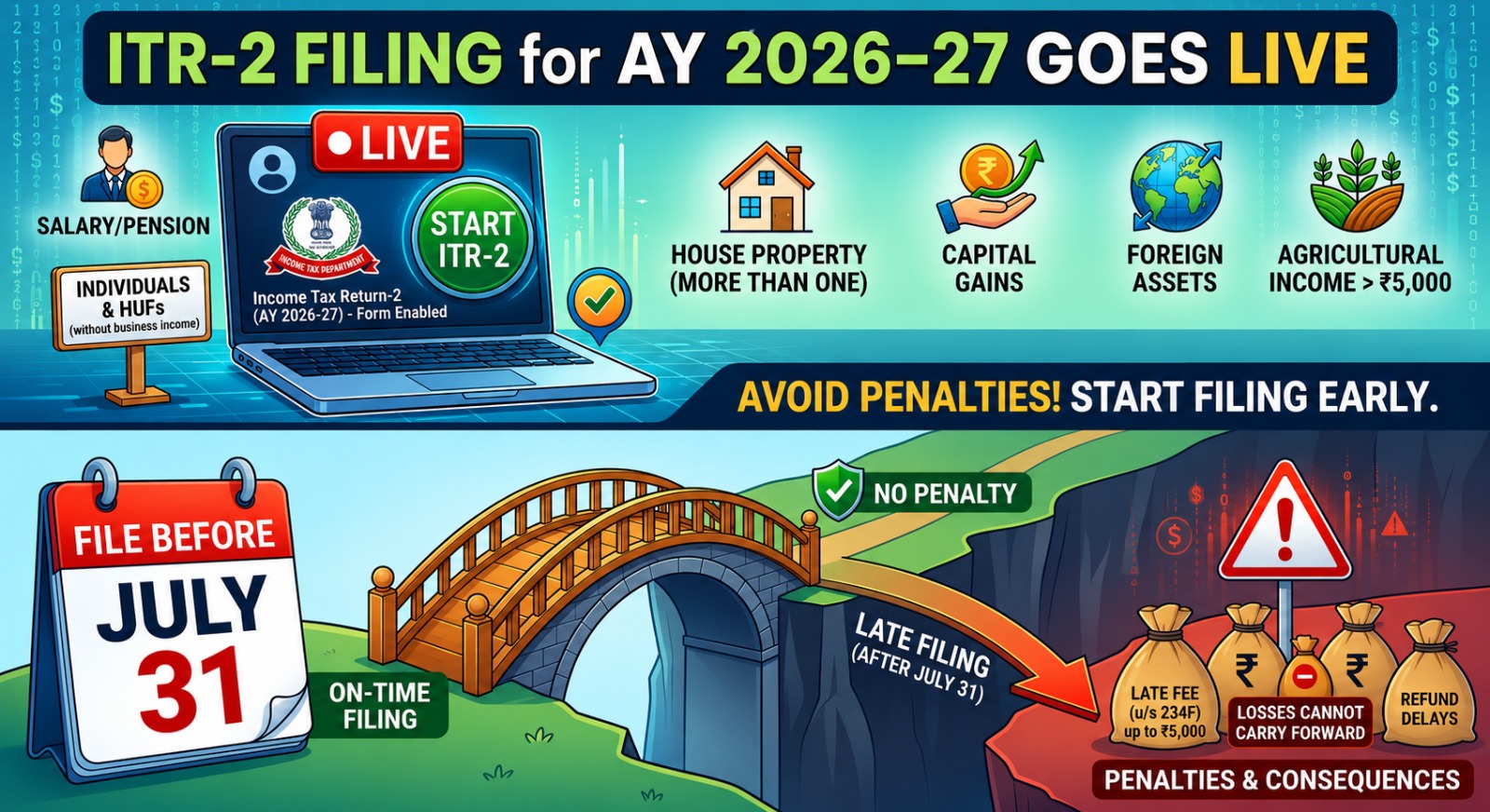
New Delhi, June 2 (BNP): The Income Tax Department has enabled online filing of ITR-2 for Assessment Year (AY) 2026–27 on the e-filing portal, allowing eligible taxpayers to begin submitting returns for income earned during Financial Year (FY) 2025–26. The deadline for filing ITR-2 for individual taxpayers remains July 31, 2026.
Representational image
ITR-2 is applicable to individuals and Hindu Undivided Families (HUFs) who do not earn income from business or profession but have more complex income sources, including capital gains from stocks or mutual funds, rental income from multiple properties, foreign assets or overseas income, and income exceeding prescribed eligibility for simpler tax forms. Tax experts say taxpayers with capital market transactions or additional properties should carefully verify whether ITR-2 applies to them instead of ITR-1.
Experts have cautioned taxpayers against common filing mistakes that frequently trigger notices or delays in processing. Mismatches between income disclosures and records available in the Annual Information Statement (AIS), Form 26AS, bank account details, tax deductions, and capital gains reporting are among the most common reasons for scrutiny. Reviewing pre-filled information before submission is considered essential for error-free filing.
Missing the July 31 deadline may result in late filing fees of up to ₹5,000 and could impact a taxpayer’s ability to carry forward eligible capital losses for future tax adjustments. Tax professionals are advising individuals to gather relevant financial documents, reconcile statements, and complete filing well ahead of the deadline to avoid last-minute complications.
2, Jun 2026
HSBC Mutual Fund launches RedHex Hybrid Long-Short Fund
June 2 : HSBC Mutual Fund has launched RedHex Hybrid Long-Short Fund, a Specialised Investment Fund strategy designed for investors seeking regular returns and capital appreciation. The strategy combines investments across asset classes – fixed income, equity arbitrage, REIT and INVIT units to pursue risk adjusted returns across market cycles. The New Fund Offer will be open from 2 June 2026 to 16 June 2026.
SIFs were introduced to bridge the gap between traditional mutual funds and higher-ticket products like Portfolio Management Services and Alternative Investment Funds RedHex Hybrid Long-Short Fund offers an intermediate investment that combines the regulatory transparency of mutual funds with portfolio flexibility.
The product is suited for ‘mid-ticket’ investors, with a minimum application of INR 10,00,000 .
Benchmark: NIFTY 50 Hybrid Composite Debt 50:50 Index
Kailash Kulkarni, CEO, HSBC Mutual Fund, said,
“Investors today are more aware and require unique solutions that are professionally managed, and built to navigate complex market conditions. RedHex Hybrid Long-Short Fund is designed as a practical middle ground – offering the clarity investors expect from mutual funds, with added flexibility of a product which is designed to be less volatile while giving superior, tax efficient risk adjusted returns.
Shriram Ramanathan, CIO Fixed Income, HSBC Mutual Fund, said,
“Our focus is on robust credit selection and risk controls, aiming to deliver high accrual potential with lower volatility across market cycles. In a measured way, the fund also aims to take exposure to REITs and INVITs, both of which are growing asset classes”
The fund strategy aims to deliver strong accrual potential with relatively low volatility through a diversified allocation across asset classes designed to generate regular income with limited sensitivity to market swings, while also enhancing tax efficiency and risk-adjusted returns. Structured as an interval investment fund, it allows subscriptions on any business day and offers weekly redemptions. Underpinning all this is robust risk management, combining active portfolio management with strict strategy-level risk controls to help reduce volatility.
HSBC Asset Management should be referred to either in full or as HSBC AM to avoid confusion with any other financial services firms.
HSBC Asset Management, the investment management business of the HSBC Group, invests on behalf of HSBC’s worldwide customer base of retail and private clients, intermediaries, corporates and institutions through both segregated accounts and pooled funds. HSBC Asset Management connects HSBC’s clients with investment opportunities around the world through an international network of offices in 20 countries and territories, delivering global capabilities with local market insight. As at 31 March 2026, HSBC Asset Management managed assets totalling US$863bn HSBC on behalf of its clients.
2, Jun 2026
FIA President Mohammed Ben Sulayem hails Monaco F1 GP as one of the ‘great jewels’ of world motorsport

Monte Carlo race provides a powerful reminder of what makes this sport so special – Ben Sulayem
Dubai, UAE, June 2: H.E. Mohammed Ben Sulayem, President of the FIA, says a unique combination of attributes make this weekend’s FIA Formula 1 Louis Vuitton Grand Prix de Monaco one of the most prestigious and iconic events on the global motorsport calendar.
Ben Sulayem will be in attendance as Monte Carlo’s spectacular street circuit delivers another demanding test of driver skill, technical precision, and operational excellence.
Sunday’s race will mark the first European round of the season, underlining Monaco’s enduring importance as the FIA Formula One World Championship enters a new regulatory era.
FIA President Ben Sulayem, said: “The Monaco Grand Prix is one of the great jewels of world motorsport. It represents heritage, excellence, precision and passion, and continues to capture the imagination of fans across the world.
“As the Championship enters an important new chapter in 2026, Monaco provides a powerful reminder of what makes this sport so special: world-class drivers, cutting-edge engineering, committed teams, and the extraordinary work of officials, volunteers and organisers who make racing possible.”
Sharing his appreciation for the many people involved in making such an iconic event possible, Ben Sulayem said: “Every race weekend depends on the dedication of FIA officials, local organisers, volunteers, marshals, teams and partners.
“Monaco is one of the most complex events in world motorsport to deliver, and I want to thank everyone whose professionalism and commitment ensures it remains a benchmark for excellence.”
As The FIA Formula One World Championship continues to grow globally, the FIA remains focused on strengthening its long-term, ensuring world-class competition, advancing safety and sustainability, and supporting the continued development of motorsport at every level.
2, Jun 2026
This Premium Sector in Noida Could Be NCR’s Biggest Real Estate Turnaround Story Yet.
Noida , June 2 : A premium real estate pocket once held back by regulatory uncertainty is now witnessing one of the strongest revival stories in NCR.

Sector 150 has long been positioned as one of Noida’s most aspirational luxury destinations. With improving regulatory clarity and accelerating infrastructure growth, the sector is now rapidly re-emerging as a high-confidence investment corridor.
The turning point came after the Noida Authority’s 222nd Board Meeting on April 6, 2026, which lifted the long-standing registry restrictions in the Sports City cluster. The move, aligned with Supreme Court directives, has significantly improved market confidence and reopened the path for registries in compliant projects.
The impact has been immediate.
Over the past five years, residential prices in the region have recorded massive appreciation, with demand continuing to rise in 2026. Industry experts believe the combination of infrastructure expansion, improved legal clarity, and limited premium inventory could push the market into a completely new growth cycle.Industry experts believe the return of registries, improving liquidity, and expected resumption of home loan disbursals could further accelerate demand in the coming months.
What continues to differentiate this location is its planning-led development. Spread across nearly 300 acres, with close to 70% dedicated to green and open spaces, the sector remains one of Noida’s lowest-density luxury corridors. Strategic connectivity through the Noida-Greater Noida Expressway, Yamuna Expressway, and proximity to the Noida International Airport at Jewar at a distance of approx 40 minutes have further strengthened its long-term investment appeal.
The region is also set to benefit from a significant infrastructure upgrade directly tied to Sector 150. The Noida Authority has announced plans to expand the Yamuna Pushta Road which runs from Sector 94 and connects directly to Sector 150 into a 10-lane corridor, specifically to handle rising traffic from the upcoming Noida International Airport. Krishna Karunesh, CEO of the Noida Authority, confirmed the road will be widened to 8–10 lanes to meet future demand, with at least six lanes in the initial phase. The Authority is also developing the Chilla elevated road and a link road from the Mahamaya Flyover to Pushta Road to further ease traffic pressure (Source: Hindustan Times, April 4, 2026)
Among the developers that have played a defining role in shaping the sector’s identity, ACE Group stands out for creating an integrated residential and commercial ecosystem in the region.
The Group’s flagship developments include ACE Golfshirethe sector’s first fully sold-out luxury residential project delivered in 2020, designed by renowned architect Hafeez Contractor with interiors by Gauri Khan. This was followed by ACE Parkway , an 11-acre premium residential development facing a 42-acre green park, further strengthening the Group’s presence in the area.
On the commercial front, ACE Medley Avenue became the sector’s first major commercial destination and witnessed a complete sell-out on launch day – a milestone that highlighted growing investor confidence in the location’s future potential.
Speaking on the market’s transformation, Ajay Chaudhary, Founder, Chairman & Managing Director, ACE Group, said:
“Sector 150 is uniquely positioned at the intersection of infrastructure growth and lifestyle-driven planning. With improving regulatory clarity and rapid development along the Yamuna Expressway corridor, we are witnessing a strong shift in both investor and end-user sentiment.”
Building on this momentum, ACE Group has also announced plans for new developments in the region, signalling long-term confidence in the market’s next growth cycle.
For investors, the story is becoming increasingly clear – a premium low-density location, improving legal clarity, major infrastructure upgrades, and rising institutional confidence are collectively reshaping the future of this once-overlooked market.
A dominant developer already embedded and expanding.
Sector 150 is not emerging. It has arrived. And ACE Group is leading from the front.
And for NCR real estate, this could just be the beginning of its biggest turnaround story yet.
2, Jun 2026
transcosmos launches an internal program that spreads sustainable values within the community in Vietnam
Tokyo, Japan, June 2: In Vietnam, transcosmos runs an internal program to spread sustainable values within the community. This year, the company is holding TCV E-Running Cup Season 3, under the message “Run for Young Future.” Continuing its journey, this season marks a meaningful transformation by focusing on educational support activities for underprivileged children in Vietnam.

■From a Green Journey to a Symbol of Internal Unity
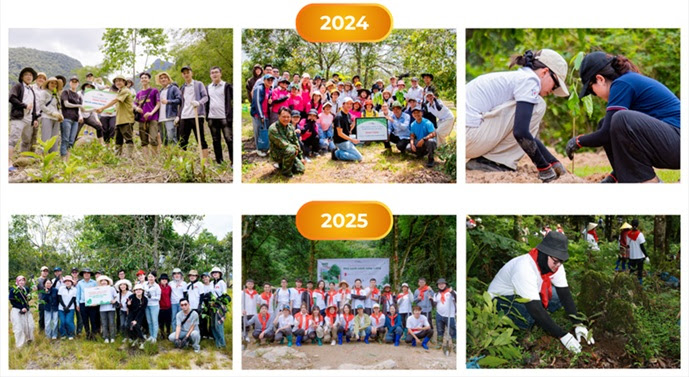
After two successful seasons, TCV E-Running Cup has become not only a highly anticipated annual internal sports event, but also a symbol of solidarity and social responsibility among transcosmos employees in Vietnam. Over the past two years, hundreds of transcosmos employees in Vietnam have contributed to positive environmental impacts through charity running activities for tree planting:
– More than 30,000 kilometers completed by employees across both Hanoi and Ho Chi Minh City.
– 3,000 trees planted nationwide through the conversion of running achievements into environmental contributions.
These achievements reflect not only the perseverance and dedication of employees but also serve as a strong foundation for transcosmos to further expand its corporate social responsibility initiatives toward more meaningful human-centered values.
■TCV E-Running Cup 2026: Every Kilometer Becomes a Gift of Knowledge
Entering its 3rd season, transcosmos has chosen education as the core focus of its 2026 community journey in Vietnam. With the message “Run for Young Future,” every kilometer completed during the event will be converted by the transcosmos Vietnam Labor Union into contributions to the “Book Fund for Underprivileged Children.”
The fund will support textbooks, notebooks, and educational books that help nurture knowledge and personal development for children before the new academic year begins. Through this initiative, the company aims to create greater educational opportunities for children while spreading the spirit of sharing and compassion throughout the community.
Program Information
Program Name: TCV E-Running Cup 2026
Message: “Run for Young Future”
Format: Online running/walking program for all transcosmos employees in Vietnam
Registration & Details: TCV E-Running Cup 2026 (https://app.irace.vn/chay-vi-tuong-lai-em?utm_source=chatgpt.com)
■Launching a Meaningful Journey with Strong Support from TCVers
On May 14, the online opening ceremony of TCV E-Running Cup 2026 was successfully held with enthusiastic participation from transcosmos employees in Vietnam. Immediately after the online registration portal opened, many employees quickly joined the race and began recording their first achievements through the program’s application platform. Beyond promoting physical wellness, this year’s running event also carries the meaningful mission of connecting the community through every individual step.
With unity and perseverance, transcosmos hopes to transform every running route into a bridge of knowledge, contributing to better learning opportunities for underprivileged children.
●Employees participating in past tree-planting activities
* transcosmos is a trademark or registered trademark of transcosmos inc. in Japan and other countries.
* Other company names and product or service names used here are trademarks or registered trademarks of respective companies.
|
|


