


29, May 2026
Bodycraft Academy of Clinical Excellence Debuts in Bangalore with Clinic-First Training Model
India, May 29: Bodycraft Clinic has officially launched the Bodycraft Academy of Clinical Excellence in Bangalore, a new institution focused on bridging the growing gap between certification and real-world clinical competency in India’s rapidly expanding aesthetic medicine industry.
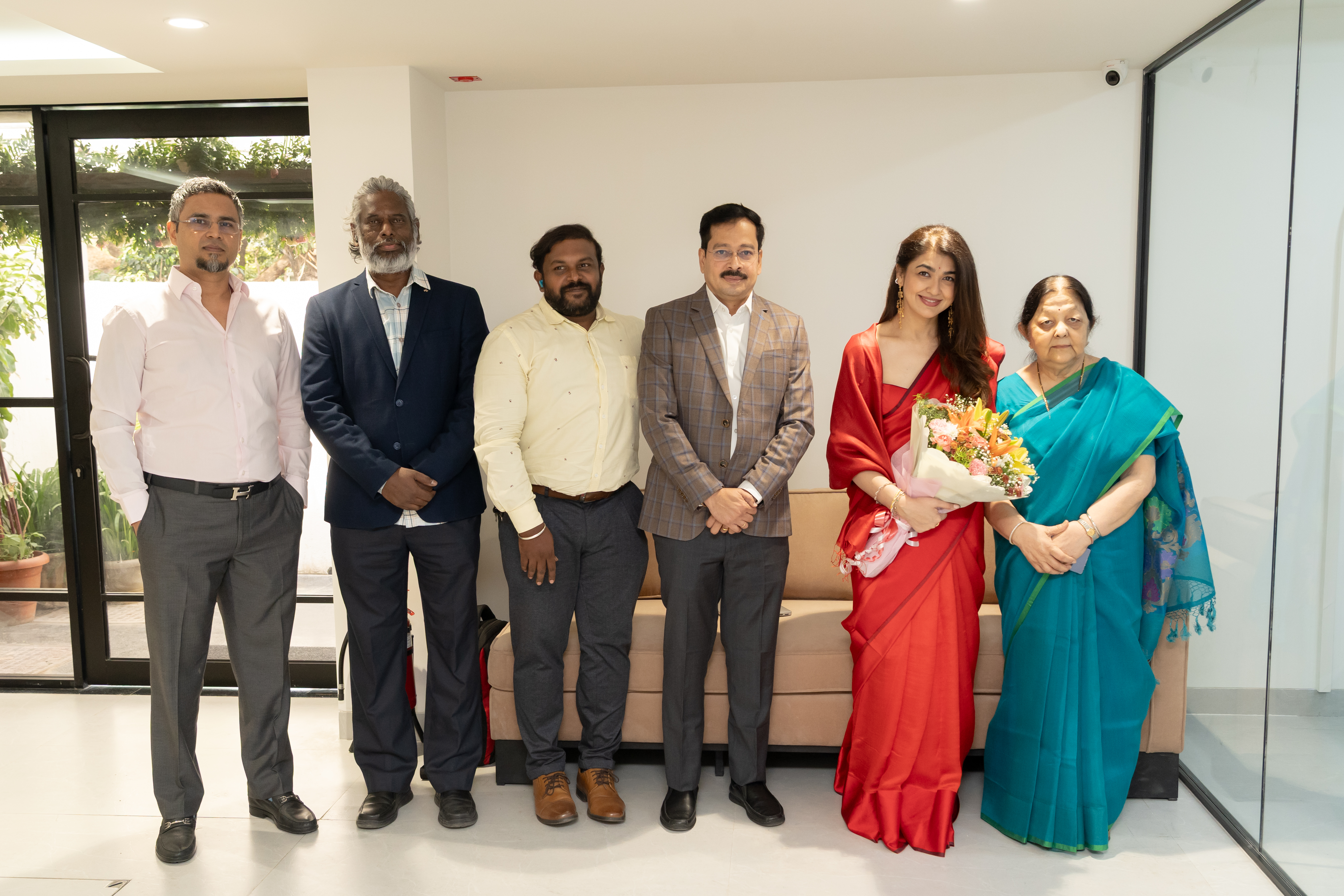
Built on over a decade of clinical experience across 34+ clinics, the academy has been designed to train practitioners not only in technical procedures, but in clinical judgement, patient safety, and outcome accountability. The launch marks Bodycraft’s entry into structured clinical education, with a curriculum shaped directly by live patient outcomes, real treatment environments, and operational learnings gathered across thousands of cases.
The academy was founded on a recognition that while aesthetic medicine in India has grown significantly, the training infrastructure supporting it has not evolved at the same pace. According to the academy’s leadership, many practitioners enter the industry technically certified but insufficiently prepared for the complexities of real clinical practice.
“The founding idea came from repeatedly seeing the gap between being certified and being genuinely ready,” said Dr Mikki Singh, Founder and Medical Director of Bodycraft Clinics. “Every module we teach has been tested in our own treatment rooms. Refined across thousands of real patient outcomes. Designed around one question: what does this doctor need to know to never let a patient down?”
Unlike conventional cosmetology training, which largely focuses on baseline procedural knowledge, the academy’s curriculum addresses advanced injectables, energy-based device (EBD) protocols, clinical case diversity, patient management, and real-world complication handling. The programme also incorporates training for non-clinical teams, reinforcing the idea that clinical excellence extends beyond doctors alone.
At the core of the academy is its proprietary five-stage POC framework, structured around Selection, Training, Assessment, Re-training, and Deployment. Candidates are evaluated before entry, trained through hands-on clinical exposure and live patient demonstrations, assessed on applied competency rather than theoretical retention alone, and only deployed after successfully meeting defined standards of performance.
The academy emphasises multi-competency assessment, where practitioners are evaluated not only on technical execution, but also on judgement, adaptability, and clinical decision-making under real conditions.
“Aesthetics isn’t about a single procedure. It’s about combining the right treatments, the right way, for results that last. That’s what a clinical approach actually means,” added Dr Mikki Singh.
According to the organisation, the academy’s clinic-first model is what differentiates it from standalone training institutes. Every protocol taught within the academy has been developed and refined through Bodycraft’s own clinical infrastructure and patient populations.
Sahil Gupta, CEO of Bodycraft Clinics said,
“We built this Academy because the standard of care in this industry needed raising, and we had a decade of knowing exactly how. Aesthetic medicine has evolved far beyond what standard dermatology training covers, including injectables, energy-based devices, advanced skin and hair protocols, and practitioners are entering the field underprepared for that reality.”
He further added,
“This Academy is here to bridge that gap. Because ultimately, this is about what a patient experiences when they walk in, the confidence that the person treating them has been trained to think, not just to execute.”
The academy has been in development conceptually for several years, with active execution and infrastructure building taking place over the final year leading up to launch. The institution now aims to evolve into one of India’s most trusted clinical training brands in aesthetic medicine, with future plans including fellowship programmes, international collaborations, and expansion of practitioner training standards nationally.
By focusing on competency validation rather than certification alone, the academy intends to create a stronger benchmark for clinical readiness in India’s aesthetic medicine ecosystem and contribute toward improving patient outcomes across the industry.
- 0
- By Neel Achary

29, May 2026
GREMI City Campus at Million Minds Tech City Unveils Vision for India’s first dedicated Real Estate University
New Delhi, May 29: Ganesh Real Estate Management Institute (GREMI), Gujarat’s first AICTE-approved institution exclusively focused on the real estate sector, today inaugurated its City Campus at Million Minds Tech City, Ahmedabad. Backed by an initial investment of INR ₹500 crore, GREMI will admit its Founding Cohort of 70 students from August 2026, marking the formal beginning of structured, degree-linked real estate education in India.
The launch of the campus marks a significant step in GREMI‘s journey to establish a formal, industry-aligned academic home for real estate education in India, supported by a Ganesh Housing Limited and grounded in the recognition that balanced urban development is only possible when town planning is supported by structured education and modern thinking.
The inauguration, held alongside the Phase 1 launch of Million Minds Tech City, reflects the intentional integration of education, employment and innovation within the Ahmedabad–Gandhinagar growth corridor. GREMI‘s City Campus will serve as a live learning environment — connecting students directly with the built-environment industry — while its long-term vision of a 100-acre dedicated university campus, for which a Deemed University application has already been submitted to the UGC, positions India’s real estate sector on the path to having its own world-class academic home. An application for GREMI to transform into a Deemed University under distinct category has already been submitted to the UGC.
The launch brought together a convergence that is rare in Indian education — a sector-specific institution, co-located within a live employment district, backed by committed long-term capital, and supported at the highest levels of government. Addressing the industry and education leaders Union Home Minister and Minister of Cooperation Shri Amit Shah, Chief Minister of Gujarat Shri Bhupendra Patel, reiterated the commitment of Central and State Governments towards quality housing, urban development, quality infrastructure and holistic approach to real estate development and management. The public unveiling of GREMI‘s long-term vision: a 100-acre integrated teaching, research and residential university campus in Ahmedabad, with initial investment of Rs 500 Crores marks the beginning of a world-class centre of excellence exclusively for the built-environment sector.
Speaking at the launch event, Hon’ble Union Home Minister and Minister of Cooperation, Shri Amit Shah, said, “Gujarat has already established itself as one of India’s strongest industrial growth engines, and now the state is moving decisively towards becoming a global hub for technology, innovation and high-skilled services. Projects like Million Minds Tech City will not only create world-class infrastructure and employment opportunities but will also position Ahmedabad alongside the country’s leading technology destinations. Equally important is the launch of GREMI City Campus, which reflects the need to build strong industry-linked talent and knowledge ecosystems that can support Gujarat’s next phase of growth in technology, real estate, infrastructure, and innovation-led sectors.”
Commenting on the development, Mr. Shekhar Patel, MD & CEO, Ganesh Housing Limited and Chairman, Governing Council, GREMI said, “India is urbanising at a scale and speed that has few parallels in history, and the expectations from that urban development are far more nuanced and future-focused than ever before. That scale demands a different kind of professional — one who understands not just how to construct, but how to plan, finance, govern and sustain the urban environments we are creating. GREMI exists to produce that professional. Our commitment to the Ganesh Foundation is a reflection of how seriously we take that responsibility — because the institutions we build today will determine the quality of the cities we live in tomorrow.”
Adding perspective on the institute’s vision, Dr. Anil Kashyap, Director General and CEO, GREMI, said, “ Our goal is not just to produce industry-ready talent, but to contribute to research, policy dialogue and innovation in the built environment discipline.”
The main campus, once completed, is set to accommodate over 2,000 students in a fully integrated academic ecosystem offering postgraduate education and advanced professional learning across real estate development and finance, construction technology and project management, urban planning and infrastructure, housing and policy studies, sustainability and green development, smart cities and future urban systems, real estate law and governance, and technology integration in the built environment.
GREMI‘s flagship Postgraduate Certificate in Management (PGCM) in Real Estate Development and Management will continue to anchor its academic offerings, with the Founding Cohort of 2026 comprising approximately 70 students already admitted for the August 2026 start. GREMI’s ambition is to position real estate education as a credible and aspirational career choice for India’s next generation of professionals, while creating a rigorous foundation for research, innovation and policy engagement in the built environment.
GREMI is associated with Mahamati Skill and Education Foundation (MSEF), a not-for-profit organisation established under Section 8 of the Companies Act, 2013, envisioned by Mr. Shekhar Patel, Director of Ganesh Housing Limited and National President of CREDAI. MSEF operates independently and undertakes its initiatives through funding support received from associated entities and family trusts.
29, May 2026
Ashiana Anmol Organizes Interactive Robotics Workshop for Young Innovators at The Learning Hub
Gurugram, May, 29: Ashiana Anmol, the premium kid-centric homes in Gurugram by Ashiana Housing, successfully conducted an engaging and interactive Robotics Workshop at its signature Learning Hub, bringing together over 40 enthusiastic children for a day filled with innovation, creativity, and experiential learning. Designed to encourage curiosity and future-ready skills among young residents, the workshop created a highly enriching environment where children explored robotics, drones, and coding through hands-on participation and live demonstrations.
The workshop was conducted under the guidance of Dharm Raj Panwar, a NASA STEAM Gateway Educator and ISRO-registered Space Tutor, whose extensive experience in STEAM education, robotics, AI, and interdisciplinary learning added significant depth to the session. With a strong focus on practical engagement, the workshop introduced children to foundational concepts in robotics and drone-building in a simplified and enjoyable format that encouraged participation across age groups.
The Learning Hub is one of the defining features of Ashiana Kid Centric Homes a structured, after-school enrichment environment built into the residential community itself. Staffed by a full-time Learning Coordinator and a team of trained coaches, the Hub runs year-round activities. The Robotics Workshop is part of a broader calendar of experiential learning initiatives at Ashiana Anmol’s Learning Hub, which continues to deepen its programming in line with the community’s commitment to raising children who are curious, capable, and confident.
To ensure a comfortable and effective learning environment, children were divided into groups according to their age. Each team selected its own leader, helping nurture qualities such as leadership, accountability, collaboration, and communication. Participants actively worked together to build robots and drones while also gaining exposure to basic coding concepts through interactive activities designed to stimulate critical thinking and problem-solving abilities.
One of the most exciting moments of the workshop came during a creative exercise where every team named their robots and drones, adding imagination and storytelling to the technical learning process. The activity encouraged children to think creatively while building confidence and strengthening teamwork.
The workshop was hosted at Ashiana Anmol’s Learning Hub, a thoughtfully designed in-community enrichment space that serves as a bridge between home and school. As one of the defining pillars of Ashiana’s Kid-Centric Homes philosophy, the Learning Hub offers children access to structured after-school programs, STEM activities, reading zones, creative exploration spaces, and life-skill workshops under the guidance of dedicated coordinators and professional instructors.
Parents also responded enthusiastically to the initiative and appreciated the opportunity for their children to engage with emerging technologies in a safe, collaborative, and inspiring environment. Several parents expressed interest in participating in similar workshops and future learning programs at the community.
Commenting on the initiative, Varun Gupta, Director, Ashiana Housing, said,
“At Ashiana, we believe children learn best when curiosity meets experience. Workshops like these go beyond classroom learning and create opportunities for children to explore, collaborate, and build confidence through practical exposure. The Learning Hub at Ashiana Anmol has been designed to nurture creativity, innovation, and holistic development, and it is encouraging to see such enthusiastic participation from both children and parents.”
The Robotics Workshop at Ashiana Anmol concluded on a highly positive note, successfully combining technology, creativity, and experiential learning into a memorable experience for families within the community.
29, May 2026
Depression May Not Only Be a Consequence, But Also a Cause of Rheumatoid Arthritis
According to researchers at Semmelweis University, not only inflammation, but also sleep disorders, depression, obesity, and smoking may sustain persistent rheumatic symptoms. In their publications in the journals Nature Reviews Rheumatology and The Lancet Rheumatology, they also proposed a model that can help identify and treat the true causes of symptoms in time.
Researchers at Semmelweis University analyzed how depression, smoking, obesity, sleep disorders, and other health problems are linked to difficult-to-treat rheumatoid arthritis.
Rheumatoid arthritis is a chronic autoimmune disease in which the immune system attacks the joints, causing pain, swelling, and stiffness. It affects tens of thousands of people in Hungary only. Most patients respond well to treatment, but 6–28 percent belong to the so-called “difficult-to-treat” group because they do not achieve lasting remission despite therapy.
According to the publications in Nature Reviews Rheumatology and The Lancet Rheumatology, these factors may not only coexist with the disease but may also help maintain it.
For example, pain and depression may reduce physical activity, increase body weight, worsen sleep and mood – all of which can feed back into pain and everyday functioning, creating a difficult-to-break “vicious cycle.”

The researchers not only identified these patterns but also developed a new model that could improve the treatment of such difficult-to-treat patients. Under the currently used “treat-to-target” therapeutic approach, patients’ conditions are regularly monitored using measurable indicators, and if treatment does not sufficiently reduce inflammation, therapy is adjusted – for example by increasing the medication dose or switching to another drug. However, according to the researchers, this approach can function not only as a therapy but also as a kind of “early warning system”: it can quickly indicate when symptoms may not be caused solely – or at all – by inflammation.
“When target values improve but the patient still suffers from pain and fatigue, it is worth taking a step back. In such cases, instead of automatically prescribing more medication, doctors should look for what is maintaining the symptoms – whether it is chronic pain syndrome, depression, sleep disorders, or obesity,” said Dr. György Nagy, head of the Department of Rheumatology and Immunology at Semmelweis University. The researchers themselves have observed that this approach can improve outcomes for difficult-to-treat patients, and in many cases it can also positively affect the doctor–patient relationship.

The researchers’ model has achieved major international recognition: the publications introducing the concept of “difficult-to-treat” disease and the related treatment strategy have already been cited more than a thousand times by other researchers. Moreover, the definition is now used worldwide not only in the context of rheumatoid arthritis but also in connection with other diseases.
Meanwhile, the team is already working on the next steps: alongside their own research, they are planning to join projects that would use artificial intelligence to develop even more effective therapies for people with rheumatoid arthritis.
“With AI-based pattern recognition, we could identify subgroups among patients, and with the help of these data we could create more effective, almost personalized treatment strategies for them,” explained Dr. Lilla Gunkl-Tóth, PhD student at Semmelweis University and first author of the publications.
29, May 2026
New action plan for Aboriginal tourism in WA launched
Western Australia’s Aboriginal tourism sector is entering a new phase, with the official launch of the Cook Labor Government’s next Jina Plan to strengthen Aboriginal-led visitor offerings across the State.
The Jina: Western Australian Aboriginal Tourism Action Plan 2026-2030 outlines the Cook Labor Government’s framework to grow Aboriginal tourism businesses, support jobs and strengthen Aboriginal culture as the heart of the State’s visitor economy.
The Plan outlines 40 initiatives that will be delivered by Tourism WA in partnership with the Western Australian Indigenous Tourism Operators Council (WAITOC) and seven Cook Government agencies and is backed by a $20 million investment.

WA Tourism Minister Reece Whitby joined WAITOC chair Darren Capewell and CEO Robert Taylor in Carnarvon at the 2026 Perth Airport WA Tourism Conference to celebrate the launch of the plan and meet with Aboriginal operators.
The 2026-2030 Jina Plan comes after the inaugural Jina Plan 2021-2025 delivered strong results, growing the number of Aboriginal tourism businesses to around 150, up from 110 in 2019. It supported initiatives including marketing campaigns, cultural activations, the development of Aboriginal-owned and managed campgrounds, training programs and public art projects.
Visitor interest in Aboriginal tourism continues to grow in Western Australia, with more than four in five visitors expressing interest in experiencing Aboriginal tourism in WA in 2024-25.
In 2023-24, Aboriginal tourism businesses in Western Australia contributed $55.1 million to the State’s economy, an increase of more than 25 per cent from 2021-22.
The Jina Plan 2026-2030 will continue to support Aboriginal communities to stay connected to Country, strengthen cultural pride, and deliver high-quality tourism experiences that showcase Western Australia’s unique cultural heritage.
The plan is a key part of the Cook Labor Government’s strategy to develop and maintain regional destinations and support Aboriginal tourism as a vital sector in building a resilient, diversified economy.
Find out more at Our strategies – Tourism Western Australia
Comments attributed to Tourism Minister Reece Whitby:
“Aboriginal tourism is a cornerstone of Western Australia’s tourism industry, and the new Jina Plan 2026-2030 will build on the success of the first plan to create even more opportunities for communities and businesses across the State.
“The results of the previous Jina Plan speak for themselves – more Aboriginal tourism businesses, more visitors experiencing Aboriginal culture, and stronger connections to Country. This next plan will take that work further and make Aboriginal tourism an even bigger part of Western Australia’s story.
“Through strong collaboration with Aboriginal people, communities, businesses and government agencies, the Jina Plan 2026-2030 will ensure Aboriginal voices and stories remain central to our tourism industry, while supporting jobs and economic growth in regional WA.”
Comments attributed to Aboriginal Affairs Minister Don Punch:
“This plan is about empowering Aboriginal communities to lead, create and grow their own tourism businesses, sharing culture in a way that is guided by community and grounded in Country.
“We are supporting Aboriginal people to shape their own economic future, build strong businesses, create local jobs, and ensure communities directly benefit from tourism across Western Australia.
“At its heart, this plan is about showcasing the strength of culture, connections to Country and knowledge sharing by Aboriginal tourism throughout WA.”
29, May 2026
Kärcher Showcases Advanced Cleaning Solutions for Growing Automotive Sector in Jaipur
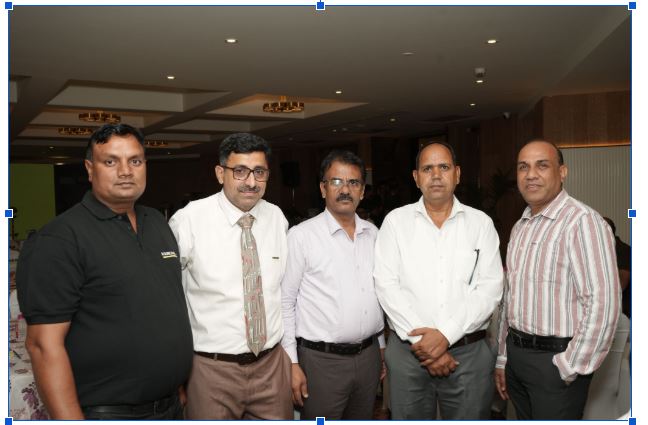
New Delhi, May 29: Kärcher India participated in an exclusive automotive seminar in Jaipur themed “No Matter What Your Challenge Is. There’s Kärcher for That.” The session focused on helping automotive workshops and dealerships improve operational efficiency, maintenance standards, and customer experience through advanced cleaning technologies.
With Rajasthan, particularly Jaipur, emerging as a growing hub for automotive retail and service businesses, the seminar brought together industry professionals, dealership representatives, and business partners to discuss evolving operational requirements and the increasing need for smarter, more efficient workshop management solutions.
The event featured interactive discussions and live demonstrations showcasing how modern cleaning systems can help automotive businesses reduce downtime, improve turnaround efficiency, maintain hygiene standards, and create a better customer-facing environment across workshops and showrooms.
As part of the showcase, Kärcher demonstrated a range of professional cleaning solutions designed for automotive applications:
●High-pressure cleaner – HD 7/16 – Used for efficient vehicle exterior cleaning and heavy-duty automotive washing applications.
●High-pressure cleaner – HD 6/15 – Designed for effective cleaning of vehicles, workshop areas, and automotive equipment.
●Wet and dry vacuum cleaner – NT 30/1 – Suitable for workshop maintenance and vehicle interior cleaning applications.
●Scrubber dryer – BD 43/40 – Used for cleaning and maintaining showroom and workshop floors with improved efficiency.
●Manual sweeper – KM 70/20 – Ideal for indoor and outdoor sweeping applications across automotive facilities.
●Single-disc machine – BDS 43/150 – Designed for deep floor cleaning, scrubbing, and polishing applications.
●Steam vacuum cleaner – SG 4/4 – Used for deep cleaning and sanitization of automotive interiors, surfaces, and hard-to-reach workshop areas.
Speaking at the seminar, Mr Puneet Sharma, MD, Kärcher India, said, “Jaipur and the larger Rajasthan market are witnessing steady growth across the automotive sector, with businesses increasingly focusing on operational excellence and customer-centric service experiences. As workshops, showrooms and dealerships continue to modernize, the demand for efficient and reliable maintenance solutions is also growing. Through initiatives like these, we aim to engage closely with industry stakeholders and showcase technologies that can help improve productivity, optimize operations, and maintain high standards across facilities.”
The live demonstrations enabled attendees to experience Kärcher’s solutions first-hand and understand their role in enhancing operational efficiency and long-term maintenance management within automotive facilities.
29, May 2026
Trident Limited bags Gold Trophy at TEXPROCIL export awards
May, 29: Trident Limited has been honoured with the Gold Trophy for Global Exports at the TEXPROCIL Export Awards 2023–24, held on May 25, 2026, in Mumbai. The award was presented at a ceremony graced by the Union Finance Minister, Smt. Nirmala Sitharaman, recognising excellence in India’s textile export sector.
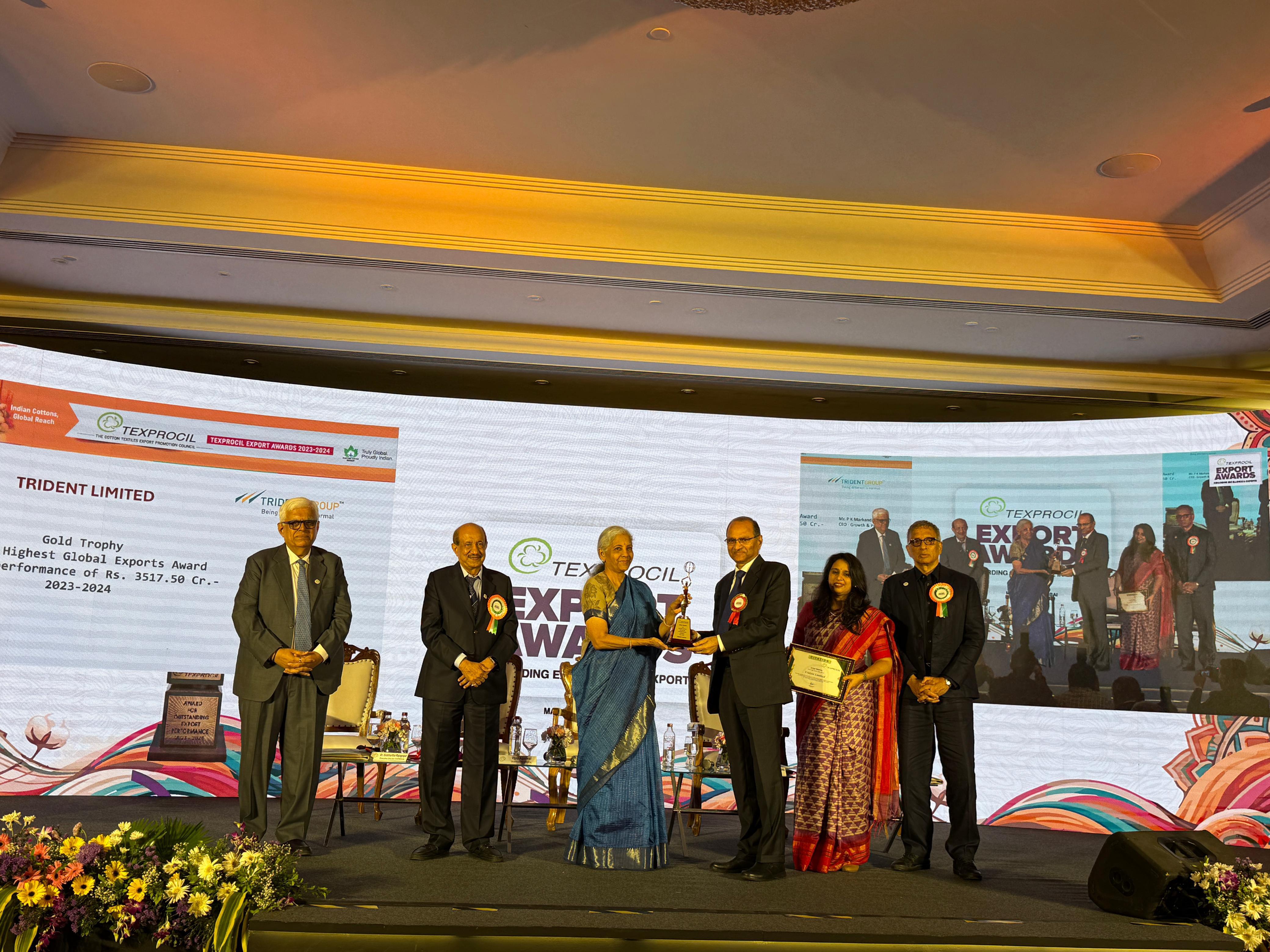
Commenting on the achievement, Padma Shri Rajinder Gupta, Chairman Emeritus, stated:
“We are elated to receive the Gold Trophy for Global Cotton Textile Exports at the TEXPROCIL Export Awards for the year 2023–24. It reflects our contribution to India’s growing global textile presence. This recognition is a testament to our continued commitment to quality, innovation, and sustainability as India’s textile industry strengthens its global leadership and contributes to the vision of Viksit Bharat.”
Trident has been on a winning streak for its performance in exports, having bagged more than 30 awards across categories since 2005. Trident has been honoured by TEXPROCIL for the 19th consecutive year, underscoring the group’s robust export performance.
Established by Government of India in 1954, The Cotton Textile Export Promotion Council is one of the autonomous nonprofit export promotion councils, supporting cotton textile exports through trade facilitation, global market access, policy advocacy, and industry development initiatives.
Trident Limited continues to advance India’s export vision, strengthening the country’s global textile leadership through its consistent export performance and integrated capabilities.
29, May 2026
European Dairy from Ireland Responds to Growing Demand for Functional Nutrition
Increasing interest in science-backed ingredients positions Singapore as a key gateway for European dairy innovation in Southeast Asia
SINGAPORE, May 29 - The European Union is strengthening its engagement with Singapore as a regional hub for advanced food manufacturing and nutrition innovation. This comes as demand for functional dairy ingredients accelerates across Southeast Asia.
Led by Bord Bia – The Irish Food Board, the initiative is part of the “European Dairy: Ireland, Where Nature Meets Science” campaign, a €3.2 million investment co-funded by the European Union to strengthen Asia’s nutrition pipeline and foster long-term trade partnerships. The campaign showcases sustainable farming and scientific research behind European dairy production.
Singapore is a Strategic Gateway for Functional Nutrition in Asia
Singapore is globally recognised as a hub for innovation, positioned at the heart of Southeast Asia’s food ecosystem, and has an important role in regional product development and distribution. Manufacturers across ASEAN are increasingly seeking high-quality science-backed ingredients, as demand for targeted life-stage nutrition, preventative health products and functional foods is increasing. This is largely driven by the fact that Southeast Asia’s population is growing and aging rapidly, particularly in Singapore, leading to increased demand for functional foods to support healthy aging and overall wellbeing. Given limited domestic dairy production in Singapore, F&B innovators and manufacturers are driven to rely on imports and seek trusted international partners.
Ms. Lorna Allen, South East Market Manager of Bord Bia, mentioned, “Singapore is a key gateway for European dairy engagement in Southeast Asia, particularly as demand for functional and science-backed nutrition continues to grow. Ireland has exported €276 million value of dairy products to Southeast Asia in 2025, a y-o-y increase of 16.4%. Through the EU-funded campaign, Bord Bia is supporting closer collaboration between European dairy producers from Ireland and regional food and nutrition innovators.”
Dr Kalpana Bhaskaran, Deputy Director, industry partnerships and Head, Glycemic Index Research Unit at Temasek Polytechnic, commented, “Dairy ingredients play a vital role across the life course. With protein‑fortified and functional dairy products gaining strong momentum, the opportunity to improve population health through evidence‑based dairy innovation has never been greater.”
A Science-Led Advantage Supporting Industry Needs
European dairy from Ireland combines a natural grass-fed, pasture-based system with the support of advanced scientific research. This combination of natural production methods and scientific validation allows European dairy to meet the performance and quality requirements of manufacturers across Asia.
Dr. André Brodkorb, Senior Researcher, Teagasc Food Research Centre Moorepark, said, “Irish grass‑fed milk is scientifically proven to deliver superior nutritional benefits, with Teagasc research showing dairy cows who operate on an Irish grass-fed system, produced milk with higher percentages of omega-3 and conjugated linoleic (CLA) fatty acids compared to cows fed medium and low proportions of grass.”
European Dairy Powders at FHA Singapore 2026
Bord Bia brought leading European dairy suppliers from Ireland to Food & Hospitality Asia (FHA) in Singapore last April. Industry professionals attending FHA Singapore were invited to explore partnership opportunities and discover how European dairy from Ireland is supporting the next generation of nutrition solutions in Asia. Bord Bia focused on:
-
Functional dairy ingredients designed for sports nutrition, healthy ageing, life-stage nutrition, and foodservice.
-
Solutions that support product innovation for Asian consumers.
-
Opportunities to connect directly with suppliers for sourcing and collaboration.
Strengthening Collaboration Across the Region
As part of the European Union’s engagement in Singapore, Bord Bia is also facilitating a closed-door industry session bringing together stakeholders from research, development, and manufacturing. This reflects ongoing collaboration between European dairy stakeholders and regional partners, including organisations such as Temasek and Teagasc, to support innovation and knowledge exchange in functional nutrition.
29, May 2026
Ashok Leyland appoints K. M. Balaji as Whole-Time Director
Chennai, May 29: Ashok Leyland Limited, the Indian flagship of the Hinduja Group, has announced a stellar performance for Q4 and for full year FY2026, delivering the highest-ever quarterly and annual Revenues, EBITDA, and PAT.
The company reported an EBITDA of Rs. 2,066 Cr for Q4 FY26, up 15% from Rs. 1,791 Cr for the same period last year. The operating PBT for the quarter was at Rs. 1,909 Cr, up 14% vis-a-vis Rs. 1,671 Cr for the same period last year. PAT was at Rs. 1,405 Cr, up 13% vis-a-vis Rs. 1,246 Cr in Q4 last year. Cash generated during the quarter was Rs. 3,280 Cr.
The Company declared record numbers for the year ending March 31, 2026:
|
FY26 |
FY25 |
Change |
|
|
Revenues (Rs. Cr) |
44,007 |
38,753 |
14% |
|
Operating PBT (Rs. Cr) |
5,163 |
4,245 |
22% |
|
Profit After Tax (Rs. Cr) |
3,566 |
3,303 |
8% |
After a one-time charge of Rs. 308 Cr owing to the new Labor Code
FY26 EBITDA was at Rs. 5,732 Cr (13.0%) vis-a-vis Rs. 4,931 Cr (12.7%) last year. The Company ended the financial year with Net cash of Rs. 5,899 Cr, vis-a-vis Rs. 4,242 Cr at the end of the previous year.
Overall CV volumes scaled a new all-time high of 220,437 units, surpassing the previous peak of 197,366 units achieved in FY19. The CV Volumes in FY26 were up 13% from last year. LCV volumes set a new benchmark, reaching 74,322 units, well above the earlier high of 66,633 units in FY24.
Export volumes also reached a historic high of 18,082 units, delivering a robust growth of 18.5% over the previous year’s 15,255 units. The Power Solutions and Aftermarket businesses continued their strong momentum, posting impressive growth during the year.
Our major subsidiaries further accelerated their growth journeys during FY26. Switch Mobility delivered a standout performance, with a surge in e-Bus volumes to 1,530 units, growing by 238% over the previous year. The e-LCV volumes rose to 1,606 units, with a robust 56% growth. The revenue more than doubled to ₹1,807 Cr, with PAT of ₹ 104 Cr in FY26 against a loss of ₹ 62 Cr in the previous year.
Hinduja Leyland Finance Limited (HLF – standalone) posted a stellar 24% growth in FY26 to achieve AUM of Rs. 59,531 Cr. HLF PAT is up by 20% to Rs. 491 Cr. Hinduja Housing Finance (HHF – standalone) has grown its AUM by 15% to Rs. 15,937 Cr, with PAT growing by 4% to Rs. 387 Cr.
Mr. Dheeraj Hinduja, Chairman, Ashok Leyland Limited said,
“Achieving these record-breaking milestones and delivering a strong financial performance across our businesses is a matter of immense pride for us. Our CV and export volumes were at an all-time high, reflecting the deep trust our customers place in us. The Company delivered significant growth in Power Solutions, Aftermarket and Electric Mobility businesses. Our Defence order pipeline is at its all-time high, signifying ability to deliver superior growth in the coming years. Our entry into Indonesia gives further boost to our ambition in global markets. The record financial performance is backed by relentless innovation, unwavering focus on customer satisfaction, and ability to accelerate our ambition in global markets. We are well-positioned to sustain profitable growth and create long-term value.”
Mr. Shenu Agarwal, Managing Director & CEO, Ashok Leyland Limited said,
“FY26 has been a defining year for us, marked by record-breaking achievements across revenue, EBITDA, profitability and cash generation. Our strong margin expansion reflects the success of our premiumization strategy, the resilience of our operations, and the growing strength of our diversified business portfolio. A record cash surplus of nearly Rs. 6,000 Cr provides us with significant firepower for enhanced investments in products, technology and future-ready solutions, while continuing to elevate customer experience. With consecutive three years of record performance, we are more confident than ever in our ability to strengthen our technology leadership, gain market share and further enhance price realization through superior value delivery.”
The Board of Directors declared a second interim dividend of ₹ 2.50 per share (Face value of ₹ 1/- per share). Together with the interim dividend declared and paid during Q3, the overall dividend for the year works out to ₹ 3.50 per share. (350%).
29, May 2026
“Mogu Mogu” Launches Global Campaign “Wanna Skip?… You Gotta Chew” to Engage Gen Z Worldwide
Turning Unskippable Moments into Playable Ones with a Chewy Snack Drink Experience
BANGKOK, May 29: Sappe Public Company Limited (SAPPE), a leading innovator in beverages from Thailand and the creator of the global “Snack Drink” category, continues to energize the international market with the launch of its latest global campaign for “Mogu Mogu” under the concept “Wanna Skip? You Gotta Chew.” The campaign invites Generation Z worldwide to keep going through life’s unskippable moments simply by drinking and chewing “Mogu Mogu,” transforming everyday challenges into enjoyable and manageable experiences while reinforcing the brand’s position as a global snackable drink that brings fun into every moment.

As a fruit juice with nata de coco beverage that has pioneered a unique category and achieved market leadership in several countries, including the Philippines, South Korea, and the United Kingdom (based on NIQ data), “Mogu Mogu” continues to differentiate itself through its signature “Tangible Fun” experience, combining refreshing fruit flavors with its iconic chewy coconut jelly. Beyond enjoyment, the act of chewing is also associated with a sense of relaxation, making it a natural companion for moments that feel beyond control. The campaign builds on a key insight into Generation Z, who have grown up in a digital world where they can easily skip unwanted content, yet cannot skip real-life situations. “Mogu Mogu” steps in as a simple yet meaningful solution, helping them navigate those moments in their own way through a playful and sensory drinking experience.
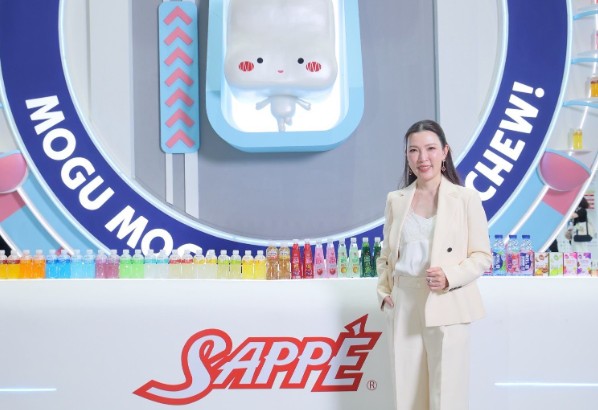
Ms. Piyajit Ruckariyapong, Chief Executive Officer of Sappe Public Company Limited, said, “Generation Z is a powerful force shaping global trends. They value experiences, fun, and authenticity. The ‘Wanna Skip? You Gotta Chew’ campaign reflects our deep understanding of their behavior. ‘Mogu Mogu’ is not just a beverage; it is an experience that helps consumers navigate everyday moments in a fun and natural way. This aligns with our ambition to grow a Thai brand into a truly global brand that resonates with consumers across diverse markets.”

The campaign adopts a 360-degree strategy across both online and offline channels. Digitally, it leverages full-scale social media engagement and influencer collaborations in each market to drive awareness and participation. On-ground, the brand activates sampling and immersive brand experiences across key markets, including the Philippines, South Korea and the United Kingdom, bringing consumers closer to the brand and reinforcing emotional connections. This global rollout reflects SAPPE’s vision to elevate “Mogu Mogu” beyond refreshment into a “moment of tangible fun” that fits seamlessly into everyday life.

“Mogu Mogu” is one of SAPPE’s flagship brands and a pioneer of the “Snack Drink” category, being the world’s first fruit juice beverage with nata de coco. Today, the brand is available in over 100 countries worldwide, known for its wide variety of flavors and distinctive chewy texture that sets it apart. With its strong global presence and continuous innovation, “Mogu Mogu” continues to win the hearts of consumers and strengthen its position as a fast-growing global brand. For more information and updates, follow “Mogu Mogu” on TikTok and Instagram, or visit www.mogumogu.com.


