


25, May 2026
Sundaram Finance logs disbursements of Rs. 32,321 crores for FY26
Audited standalone & consolidated financial results for the quarter and year ended March 31, 2026
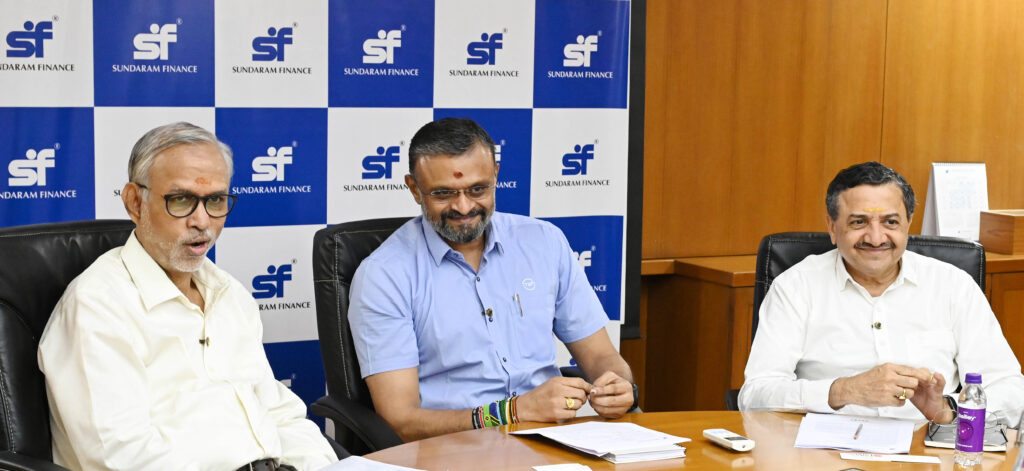
L to R -Mr. M. Ramaswamy, Chief Financial Officer, Mr. Rajiv C. Lochan, Managing Director, and Mr. A. N. Raju, Joint Managing Director of Sundaram Finance Limited addressing the media
May 25: The Board of Directors of Sundaram Finance Ltd. (SFL) approved the audited standalone and consolidated financial results for the quarter and year ended March 31, 2026, at its meeting held on May 25, 2026, in Chennai.
“Q4FY26 witnessed continued improvement in the economic environment following the GST 2.0 reforms effected in September 2025. While H1FY26 witnessed trade tariff related complications resulting in somewhat muted demand and macroeconomic activity, H2FY26 gathered steam spurred by the transmission of monetary policy and stimulus provided by fiscal policy measures.Under these circumstances, Team Sundaram has delivered 16.4% growth in AUM to Rs. 59,908 crores, asset quality with net stage 3 assets at 0.69% vs 0.75% last year and profits after tax growth of 19% year-on-year. Our Group companies in asset management, general insurance and home finance have continued to record strong results. We continue to rely on our time-tested approach of steady and sustainable growth with best-in-class asset quality and consistent profitability,” said Harsha Viji, Executive Vice Chairman.
AUM for FY26 grew 16% to Rs. 59,908 crores. Disbursements for FY26 recorded a growth of 14% over FY25 and for Q4FY26, disbursements have grown 17% Y-o-Y. Gross stage 3 assets as on March 31, 2026, stood at 1.44% with provision cover of 53% as against 1.44% as on March 31, 2025, with provision cover of 49%. Profits from operations performed strongly, growing by 18% in FY26 and 14% in Q4FY26. Profit after tax registered a 19% rise in FY26, with net profit at Rs. 1,834 crores.
During the year, the Company has considered Rs. 75 crores under “Exceptional Items” for the incremental impact of the new Labour Codes. Consequently, for Q4, the net profit grew by 11% to Rs. 608 crores. Return on assets closed at 3.03% in FY26 as against 2.85% for FY25 and capital adequacy at 19.1% remained quite comfortable.
Rajiv Lochan, Managing Director, stated, “Our overall performance for the year has been well balanced across growth, asset quality and profitability. Our profitability and profit growth has been strong, asset quality has improved substantially in Q4FY26 to close the year well and growth in disbursements and assets under management has been reasonable. Looking ahead, we remain optimistic that India’s macroeconomic fundamentals remain strong supported by resilient domestic consumption, sustained public capital expenditure and a gradual revival in private investment. While uncertainties due to geopolitical challenges are a key monitorable, we remain confident of our plan to gain market share, maintain best in class asset quality and operating expenses and deliver sustainable profit growth.”
STANDALONE PERFORMANCE HIGHLIGHTS FOR FY26
·Disbursements for FY26 grew by 14% to Rs. 32,321 crores as compared to Rs. 28,405 crores registered in FY25. Disbursements for Q4FY26 grew by 17% to Rs. 8,051 crores as compared to Rs. 6,873 crores registered in Q4FY25.
·The assets under management grew by 16% to Rs. 59,908 crores as on 31stMarch 2026 as against Rs. 51,476 crores as on 31stMarch 2025.
·Net interest income (NII) grew by 21% to Rs. 3,376 crores in FY26 from Rs. 2,793 crores in FY25. Q4FY26 growth in NII was 20% to Rs. 901 crores.
·Gross stage 3 assets as on 31stMarch 2026 stood at 1.44% with 53% provision cover as against 1.44% with provision cover of 49% as on 31stMarch 2025. Net stage 3 assets as on 31stMarch 2026 closed at 0.69% as against 0.75% as on 31stMarch 2025. During the year, the Company reviewed and refined its methodology for computing Expected Credit Loss (ECL), including the use of more recent historical data and machine learning-based model enhancements, where appropriate.
·The Gross and Net NPA, as per RBI’s asset classification norms for NBFCs, are 2.14% and 1.27% respectivelyas against 2.17% and 1.38% as of 31stMarch 2025.
·Costto income ratio improved to 28.71% in FY26 as against 30.80% in FY25.
·Profits from operations grew 18% to Rs. 2,151 crores in FY26 as against Rs. 1,825 crores in FY25. For the quarter, profits from operations grew 14% to Rs. 622 crores.
·The Company has considered Rs. 75 crores under “Exceptional Items” for the incremental impact of the new Labour Codes.
·Higher dividend income resulted in profit after tax registering 19% rise in FY26, with net profit at Rs. 1,834 crores as against Rs. 1,543 crores in FY25. For Q4FY26, PAT grew 11% Y-o-Y to Rs. 608 crores.
·Return on assets (ROA) for FY26 closed at 3.03% as against 2.85% for FY25. Return on equity (ROE) was at 17.49% for FY26 as against 16.30% for FY25. Including the impact of new Labour Codes, the ROA and ROE for FY26 were 2.94% and 17.00% respectively.
·Capital Adequacy Ratio stood at 19.1% (Tier I –17.2%) as of 31stMarch 2026 compared to 20.4% (Tier I – 17.4%) as of 31stMarch 2025.
·The Company has declared a final dividend of Rs. 24/- per share (240%).
CONSOLIDATED PERFORMANCE HIGHLIGHTS FOR FY26
The consolidated results of SFL include the results of its standalone subsidiaries Sundaram Home Finance, Sundaram Asset Management and joint venture company Royal Sundaram General Insurance.
·The assets under management (AUM) in our lending and general insurance businesses stood at Rs. 89,541 crores as on 31stMarch 2026 as against Rs. 78,145 crores as on 31stMarch 2025, a growth of 15%. The assets under management of our asset management business stood at Rs. 77,457 crores as on 31stMarch 2026 as against Rs. 71,826 crores as on 31stMarch 2025.
·Profit after tax for FY26 grew by 10% to Rs. 2,059 crores as compared to Rs. 1,879 crores in FY25, after considering Rs. 76 crores under “Exceptional Items” for the incremental impact of the new Labour Codes.
GROUP COMPANY PERFORMANCE HIGHLIGHTS
Our group companies continued to perform well.
·The asset management business closed the year ended 31stMarch 2026with assets under management of Rs. 77,457 crores (around 80% in equity) and consolidated profits from the asset management businesses were at Rs. 174 croresas against Rs. 154 crores in FY25.
·Royal Sundaram reported a Gross Written Premium (GWP) of Rs. 4,638crores as compared to Rs. 4,065 crores in the previous year, representing a growth of 14%. The company reported a profit after tax of Rs. 107 crores for FY26 as against a profit of Rs. 133 crores in FY25.
·Sundaram Home Finance disbursements grew by 4% to Rs. 6,805 crores in FY26. The profit for FY26 was Rs. 282 crores, as against Rs. 245 crores in FY25.Gross stage 3 assets as on 31stMarch 2026 stood at 1.11% as against 1.02% as on 31stMarch 2025. Net stage 3 assets as on 31stMarch 2026 closed at 0.51% as against 0.53% as on 31stMarch 2025.The Gross and Net NPA, as per RBI’s asset classification norms, are 1.21% and 0.59% respectivelyas against 1.33% and 0.77% as of 31stMarch 2025.
- 0
- By Neel Achary

25, May 2026
Shriram General Insurance and Piramal Finance Join Hands for Strategic Partnership
May 25 : Shriram General Insurance today announced a strategic corporate agency partnership with Piramal Finance, a retail-focused upper-layer NBFC in India, to improve access to insurance solutions, particularly across semi-urban and rural markets.
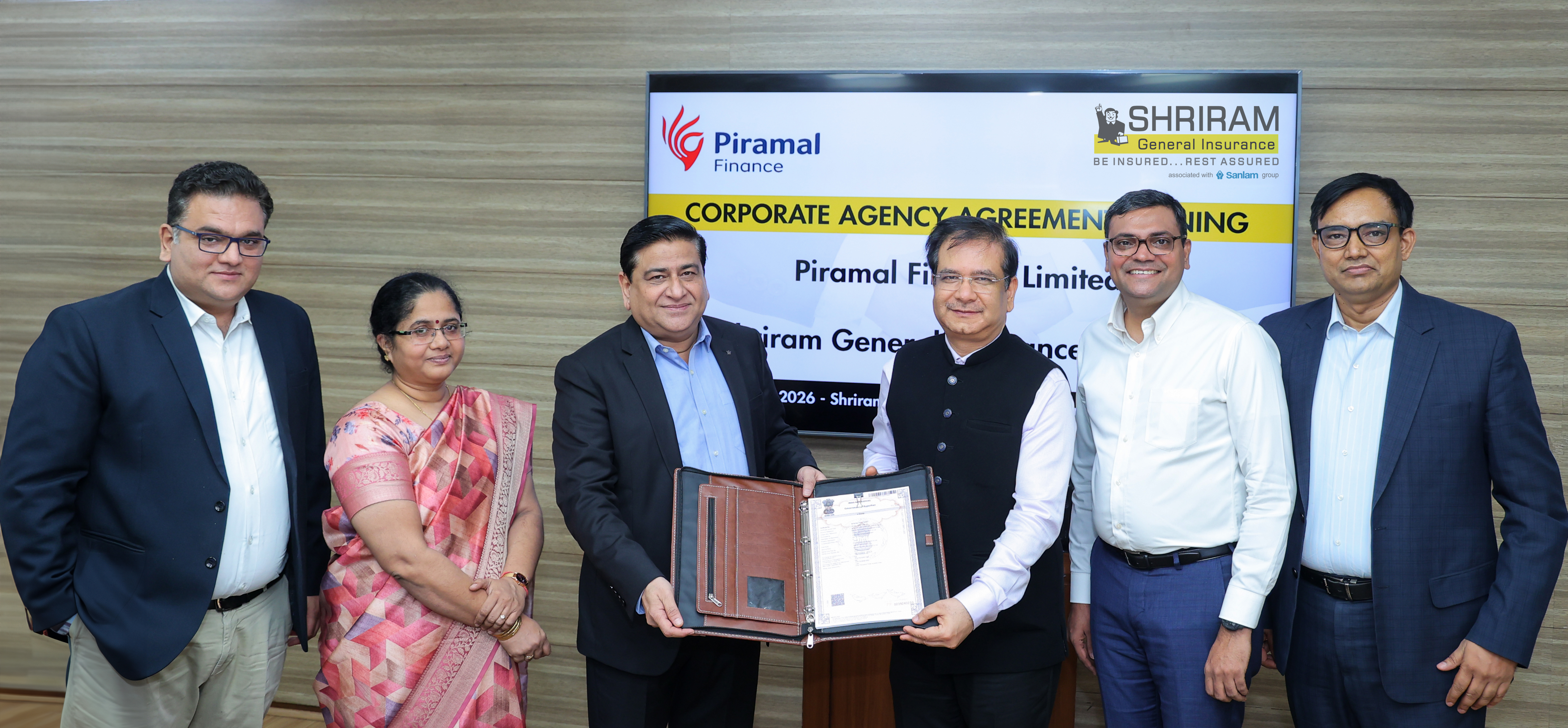
Under the partnership, SGI will leverage Piramal Finance’s extensive branch network and customer outreach to offer its wide range of insurance products across 701 branches of Piramal Finance spanning 26 states and over 13,000 pin codes.
The partnership reflects the shared commitment of both organisations to make insurance solutions more accessible and meaningful for customers, helping them safeguard their assets, livelihoods and long-term financial well-being. By combining Shriram General Insurance’s long-standing industry experience, customer-centric approach, and the trust it has built over the years with Piramal Finance’s innovative ‘High Tech + High Touch’ approach, the partnership aims to create seamless and convenient access to protection solutions across diverse geographies.
Speaking on the partnership, Mr. Jairam Sridharan, MD & CEO, Piramal Finance Limited, said:
“We are pleased to partner with Shriram General Insurance to expand the reach of insurance solutions across our customer base, particularly in semi-urban and rural markets. Insurance penetration remains low across many parts of India, especially in smaller towns and there is a need for simpler and more inclusive protection solutions. For many of our customers, a single unexpected event can set a family back significantly. Insurance is therefore not just a product, but a way to protect what they worked hard to build.
Through this partnership, we hope to bring insurance products closer to customers through our extensive branch network and on-ground presence, in a way that is simple, trusted and accessible. As a company, we see this as an extension of our responsibility to stand by our customers, helping them not just grow but stay protected.”
Mr. Aftab Alvi, Executive Director and CMO, Shriram General Insurance Company, said:
“We are delighted to partner with Piramal Finance to further strengthen our distribution capabilities and expand access to comprehensive insurance solutions across a broader customer base. This collaboration brings together our customer-centric offerings and Piramal Finance’s extensive reach and customer ecosystem, enabling us to enhance insurance accessibility, particularly across underserved and emerging markets where insurance penetration remains low. We believe this partnership will play a meaningful role in deepening financial protection, driving greater awareness, and delivering enhanced value to customers. It also reinforces our continued commitment towards building strong strategic alliances that support sustainable growth and wider insurance inclusion.”
25, May 2026
PepsiCo India, the energy drinks market leader, expands the category with a bold new flavour – Sting Classic Kick
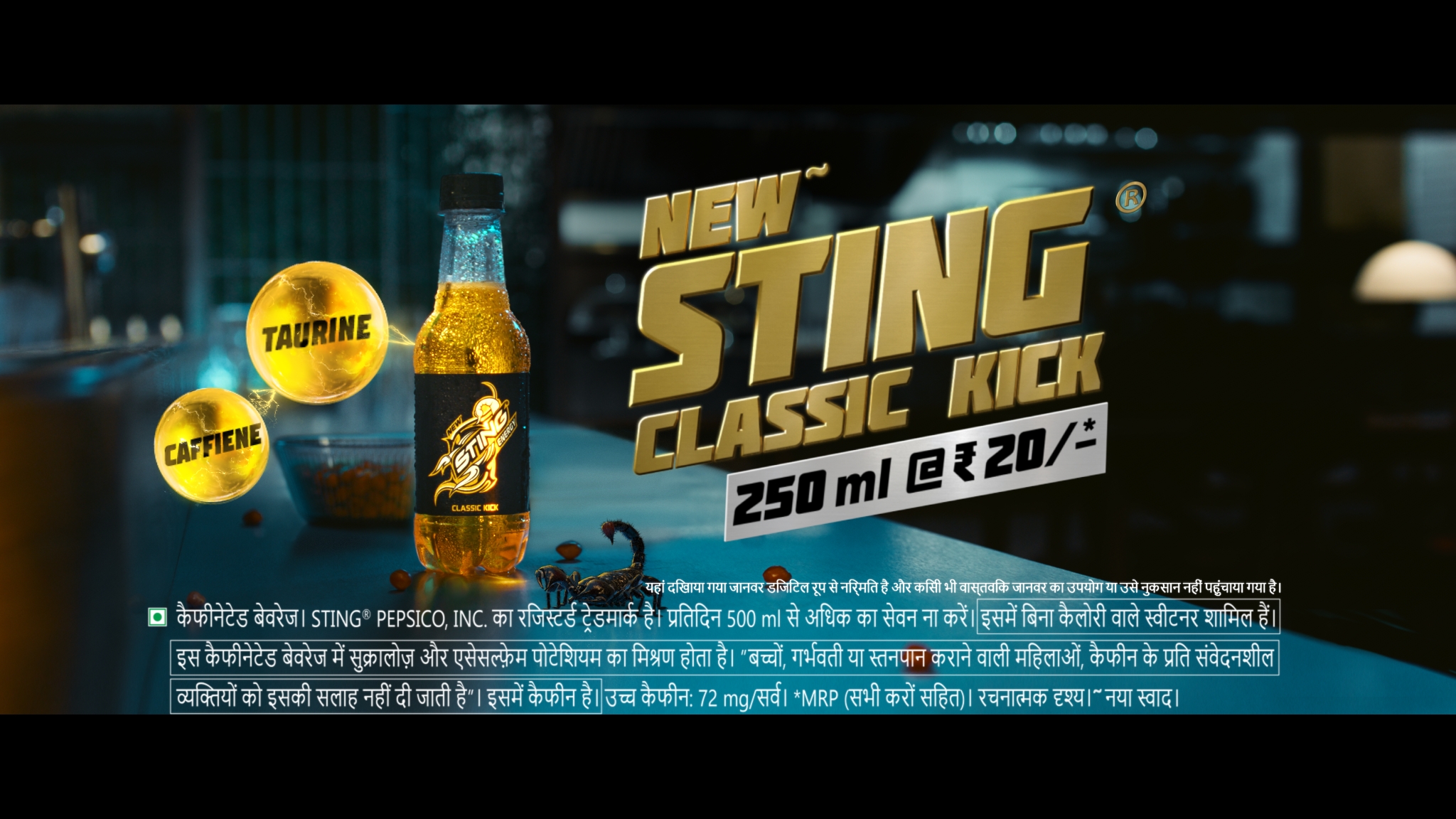
Hyderabad, May 25: PepsiCo India’s iconic energy drink brand, Sting® Energy is turning up the intensity with the launch of Sting® Classic Kick – a bold new flavour designed for today’s generation that thrives on individuality, high energy and is always looking for choices. Expanding the Sting portfolio, the new flavour introduces a bold identity rooted in intense energy, retaining the brand’s signature fun and cheeky personality.
The launch is accompanied by a high-octane campaign film for ‘Sting Classic Kick’, showcasing actor Lakshya in a stylish restaurant setting. He effortlessly takes control of a tense situation with wit, confidence, and unmistakable Sting® energy, perfectly reflecting the flavour’s bold and commanding personality.
The film opens inside a restaurant where two intimidating men are seen roughing up an innocent waiter. Sitting nearby, Lakshya casually intervenes, asking them to take it easy. Dismissing him mockingly, the men tell him to focus on the peanuts on his table. Calm and unfazed, Lakshya takes a swig of Sting® Classic Kick and slams the bottle onto the table. In a dramatic slow-motion sequence, peanuts leap into the air and are flicked like carrom strikers toward the men, sending them flying backwards in a stylishly exaggerated display of power. The film closes with the actor’s effortless smile and the bold sign-off.
Commenting on the launch, Diksha Bajaj, Category Head – Energy Portfolio, PepsiCo India, said: “As the leading brand in India’s energy drink category, Sting Energy continues to expand and evolve the category through innovation that offers consumers greater choice and differentiated flavour experiences. With the launch of Sting® Classic Kick, we are introducing an enhanced bold new flavour that responds to evolving consumer preferences while staying true to the high-energy experience Sting Energy is known for. The launch reinforces our commitment to continuously growing the category and bringing exciting new offerings to consumers.”
Adding to this, actor Lakshya said: “While shooting the campaign, I really enjoyed the intense energy and cinematic treatment that the film brings alive. The action, humour and confident storytelling come together in a very entertaining way, making the campaign feel stylish and impactful. What makes the campaign stand out is how effortlessly it captures the bold and distinctive appeal of the all-new Sting Classic Kick flavour, and I’m excited for audiences to experience it.”
The campaign builds on Sting®’s youthful and disruptive brand voice, introducing a more, bold and self-assured tonality for Classic Kick.” With cinematic visuals, high-energy storytelling, and stylized action, the campaign aims to resonate with consumers seeking a flavour that feels powerful and differentiated.
The new Sting® Classic Kick campaign will be amplified through a 360-degree rollout across television, digital, social media, influencer collaborations, and outdoor platforms.
25, May 2026
Malaysia Airlines Marks 200th Boeing Aircraft Delivery Milestone with Latest 737-8 Arrival
KLIA, May 25: Malaysia Airlines today marked the arrival of its Boeing 737-8 aircraft, the fourth of the type delivered to the airline this year, and a milestone that also represents the 200th Boeing aircraft delivered to Malaysia Airlines in its history. 
Captain Nasaruddin A. Bakar, President and Group Chief Executive Officer of MAG, said,
“This delivery holds special significance as it marks the 200th Boeing aircraft to join the Malaysia Airlines fleet since 1972. More than just an addition to our fleet, this milestone reflects a long-standing operational history that has supported our capacity growth and fleet evolution over the decades as we continue our deep-seated mission to connecting Malaysia to the world. The introduction of these nextgeneration aircraft will further strengthen our ability to support future growth opportunities and evolving market needs, while continuing to deliver a more modern and comfortable travel experience for our customers.”
The airline’s fleet history reflects periods of significant scale and ambition, including widebody operations such as the Boeing 747 and Boeing 777, which underscored the airline’s long-haul capabilities and global connectivity during key phases of growth. Together with the evolution of the Boeing 737 family, these aircraft reflect how the airline that has continuously adapted, modernised, and expanded its reach over the decades.
Today’s aircraft, bearing registration number 9M-MVR, departed from Boeing’s Seattle Delivery Centre on 21 May 2026 at 2:00pm local time and made refuelling stops in Honolulu and Guam before continuing its journey home to Malaysia. Operated as flight MH5045, the aircraft was flown by Captain Arian Syazwara B. Adenan, Captain Mohd Aidilputra bin Abd Razak and First Officer Ahmad Asnawi bin Ahmad Rahman, and landed at KL International Airport on 24 May 2026 at 1:30pm after a a total flight time of 19 hours 44 minutes.
he latest addition reflects Malaysia Aviation Group’s continued focus on fleet modernisation as it strengthens network connectivity, improves efficiency and enhances the travel experience across its network. The Boeing 737-8 plays an important role in supporting the Group’s narrowbody operations with greater fuel efficiency, improved reliability and enhanced passenger comfort.
To date, MAG has taken delivery of 18 Boeing 737-8 aircraft from its total order of 55 Boeing narrowbody aircraft, comprising 43 Boeing 737-8s and 12 Boeing 737-10s, with deliveries scheduled through to 2030.
25, May 2026
Hungama OTT’s ‘Kaun Con Hai?’ Showcases Stories of Deception, Consequences, and Human Struggles Across India
May 25 : Hungama OTT premieres Kaun Con Hai?, a compelling multi-narrative drama directed by Ashrit Wadhwa, streaming from 27th May 2026. Featuring a powerful ensemble cast including Seema Biswas, Gopal Datt, Manish Wadhwa, Shruti Ulfat, Rajendra Chawla, Robit Das, and Zachary Coffin, the film explores four emotionally charged stories unfolding across different parts of India.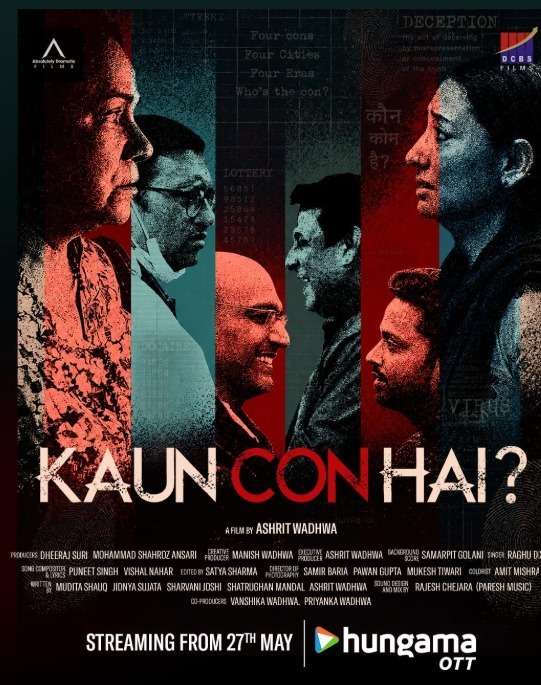
Kaun Con Hai? follows four interconnected stories across Goa, Kashmir, Delhi, and Bombay, each uncovering a different face of deception, desperation, and survival. Told through multiple perspectives, the film highlights how ordinary people become trapped in scams and circumstances beyond their control, revealing how fraud does not just steal money, but changes lives forever.
The Goa chapter starring Seema Biswas, Shinnova, and Zachary Coffin follows a grandmother desperately trying to save her drug-addicted granddaughter, leading her into a dangerous moral dilemma. The Kashmir story featuring Manish Wadhwa, Manuj Walia and Jidnya Sujata revolves around vulnerable people being offered false promises of safety and stability in exchange for money. Set in a middle-class Delhi household, the Delhi chapter stars Rajendra Chawla, Yotsana Atree, Ruchi Tripathi and Ahan Nirban, as a family preparing for their daughter’s wedding becomes victim to a devastating lottery scam. Meanwhile, the Bombay story starring Shruti Panwar, Gopal Datt, Jayant Rawal and Robit Das captures the struggles of a lower-class Muslim family trying to survive emotional and financial hardships during the pandemic.
Speaking about the film, director Ashrit Wadhwa said,
“Kaun Con Hai? is ultimately about people, their vulnerabilities, emotions, and survival instincts. Through these stories, we wanted to show how desperation and hope can sometimes make people easy targets for deception.”
Seema Biswas shared,
“What moved me most about the film was its emotional honesty. Beneath the crime and deception lies a deeply human story about families, survival, and the heartbreaking choices people are forced to make when life pushes them to the edge.”
Blending emotion, suspense, and realism, Kaun Con Hai? promises to deliver a thought-provoking and gripping viewing experience. ‘4 Kahaniyan. 4 Shehar. Aur sabse bada sawaal… Kaun Con Hai?’ The film will premiere on Hungama OTT.
jendra Chawla, Robit Das, and Zachary Coffin, the film explores four emotionally charged stories unfolding across different parts of India.
Kaun Con Hai? follows four interconnected stories across Goa, Kashmir, Delhi, and Bombay, each uncovering a different face of deception, desperation, and survival. Told through multiple perspectives, the film highlights how ordinary people become trapped in scams and circumstances beyond their control, revealing how fraud does not just steal money, but changes lives forever.
The Goa chapter starring Seema Biswas, Shinnova, and Zachary Coffin follows a grandmother desperately trying to save her drug-addicted granddaughter, leading her into a dangerous moral dilemma. The Kashmir story featuring Manish Wadhwa, Manuj Walia and Jidnya Sujata revolves around vulnerable people being offered false promises of safety and stability in exchange for money. Set in a middle-class Delhi household, the Delhi chapter stars Rajendra Chawla, Yotsana Atree, Ruchi Tripathi and Ahan Nirban, as a family preparing for their daughter’s wedding becomes victim to a devastating lottery scam. Meanwhile, the Bombay story starring Shruti Panwar, Gopal Datt, Jayant Rawal and Robit Das captures the struggles of a lower-class Muslim family trying to survive emotional and financial hardships during the pandemic.
Speaking about the film, director Ashrit Wadhwa said,
“Kaun Con Hai? is ultimately about people, their vulnerabilities, emotions, and survival instincts. Through these stories, we wanted to show how desperation and hope can sometimes make people easy targets for deception.”
Seema Biswas shared,
“What moved me most about the film was its emotional honesty. Beneath the crime and deception lies a deeply human story about families, survival, and the heartbreaking choices people are forced to make when life pushes them to the edge.”
Blending emotion, suspense, and realism, Kaun Con Hai? promises to deliver a thought-provoking and gripping viewing experience. ‘4 Kahaniyan. 4 Shehar. Aur sabse bada sawaal… Kaun Con Hai?’ The film will premiere on Hungama OTT.
25, May 2026
NTT, NTT DATA and INDYCAR Extend Entitlement Partnership with Multi-Year Agreement
Tokyo / Indianapolis, May 25: NTT, Inc., together with NTT DATA Group Corporation, today announced the renewal of its sponsorship of the NTT INDYCAR SERIES. Under the renewed agreement, NTT has expanded its role beyond race analytics and fan engagement to provide advanced AI and data capabilities for Penske Entertainment and INDYCAR. This includes AI-driven operations, real‑time decision intelligence and emissions visibility across INDYCAR, the historic Indianapolis Motor Speedway (IMS) and marquee events within the Penske Entertainment portfolio.
110th Running of the Indianapolis 500
NTT, along with its subsidiary NTT DATA, a global leader in AI, digital business and technology services, will continue as the Official Technology Partner for INDYCAR, the NTT INDYCAR SERIES, IMS, the Indianapolis 500 and the NASCAR Brickyard weekend.
“Our partnership has evolved from series‑level analytics into an enterprise‑wide AI and data intelligence collaboration,” said Akira Shimada, President and CEO, NTT. “In addition to powering race‑day analytics and enabling AI‑driven intelligence that supports safety, sustainability and decision‑making, NTT is applying data and AI at scale with our clients and partners to create a more connected, resilient and responsible future.”
Evolving the Fan Experience Through AI-Driven Intelligence
During a typical race weekend, including the Indianapolis 500, the NTT INDYCAR SERIES generates billions of real‑time data points from cars, teams and track operations. NTT DATA provides actionable insights to inform race control, operations teams, broadcast partners and event planners to support faster, more precise decisions.
Penske Entertainment and NTT DATA are deploying AI to transform how fans experience INDYCAR—starting with “Up To Speed,” a new AI‑powered feature delivering smarter, more dynamic race insights to fans, alongside expanded real‑time data, content and digital experiences coming online throughout this season. The new “Up To Speed” feature is available now on the INDYCAR App powered by NTT DATA.
700,000+ new users have downloaded the reimagined INDYCAR App powered by NTT DATA since its 2023 re-launch, driving an overall usage increase of more than 30% with fans in more than 100 countries reflecting expanded international interest in motorsports.
NTT DATA Provides Developments in Sustainability and Safety
- Emissions tracking and sustainability accountability were strengthened through carbon accounting and automated data collection, supporting Penske Entertainment’s “Racing toward Zero” initiative across 100+ organizations and partners.
- A state‑of‑the‑art tracking platform streamlines data collection, reduces reporting gaps and provides improved visibility for emissions measurement.
- AI‑driven Venue Solutions at IMS support real‑time decision‑making across the 1,000‑acre venue, using predictive modeling, advanced connectivity and analytics to enhance crowd management, traffic planning and operational safety.
With attendance rising annually to over 350,000 fans on site, including a sold‑out race in 2025 and 2026, NTT DATA delivers critical data to provide a safe, seamless, high‑quality experience at scale.
“Leading into another iconic edition of The Greatest Spectacle in Racing, we are thrilled to continue our world-class partnership with NTT,” said Roger Penske, Founder and Chairman, Penske Corporation. “Their significant expertise as a global leader in AI, digital business and technology services is integral to how we build engagement across INDYCAR’s fanbase and provide a top-notch customer experience at the Racing Capital of the World. This is a partnership based on trust and a shared commitment to innovation and excellence, providing all the foundational attributes necessary for a long-term and highly successful relationship.”
The announcement comes on heels of significant momentum driven during NTT’s ongoing immersive partnership with Penske Entertainment.
25, May 2026
KIIT International Chess Festival 2026 Opens in Bhubaneswar With Global Participation
Bhubaneswar, May 25 (BNP): The 17th edition of the KIIT International Chess Festival commenced at the KIIT campus in Bhubaneswar, bringing together thousands of players, officials and chess enthusiasts from across the globe for one of India’s largest international chess tournaments.
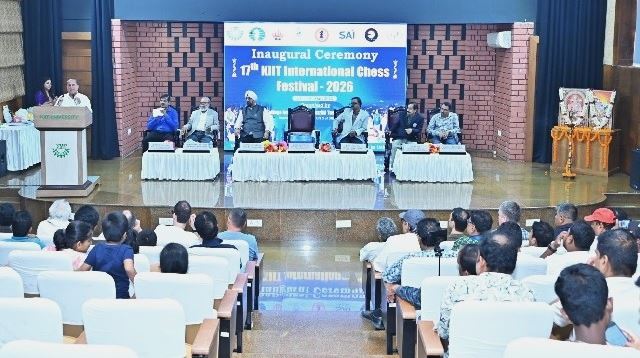
Organised by KIIT Deemed to be University in association with International Chess Federation, All India Chess Federation and the Odisha Chess Association, the tournament is being held from May 23 to 30 and features a record prize pool of ₹1.31 crore — the highest offered by any university-hosted chess event in India.
The festival has drawn participation from over 40 countries, with around 4,000 players, officials and accompanying delegates attending the event. The tournament features a strong international field, including 25 Grandmasters, 50 International Masters and more than 85 title holders, reflecting its growing stature in the global chess calendar.
Speaking at the inaugural ceremony, Achyuta Samanta said KIIT has consistently promoted sports alongside academics and reaffirmed the institution’s commitment to supporting chess and nurturing young talent. He also acknowledged the support of FIDE, AICF and the Odisha Chess Association in helping the festival evolve into a globally recognised competition.
Tournament Director Sekhar Ranjan Sahoo said nearly 2,800 players are competing in this edition and described the event as one of the richest chess festivals globally. He expressed optimism that participation would continue to grow in future editions.
Organising committee president Ranjan Kumar Mohanty noted that the tournament, which started in 2011 with a prize pool of ₹16 lakh, has grown significantly over the years to become an internationally recognised event.
Vice Chancellor of KIIT-DU Saranjit Singh highlighted the importance of sports infrastructure in producing world-class athletes and said institutions must create a supportive ecosystem for talent development.
The week-long championship is expected to further strengthen Odisha’s position as an emerging destination for international sporting and intellectual events while providing young players with valuable global exposure.
25, May 2026
West Bengal Gramin Bank, Canara HSBC Life Join Hands to Expand Rural Insurance
New Delhi, May 25: Canara HSBC Life Insurance Company Limited has entered a strategic bancassurance partnership with West Bengal Gramin Bank one of India’s largest Regional Rural Banks, marking another important milestone in the company’s journey to deepen financial inclusion across rural India.
As a part of this partnership, Canara HSBC Life Insurance will offer its range of life insurance solutions through WBGB’s extensive network of 960 branches spread across West Bengal. The collaboration is aimed at making protection and long-term financial planning solutions more accessible to individuals and families across rural and semi-urban regions of the state.
With a longstanding legacy of serving rural communities, West Bengal Gramin Bank has played a significant role in advancing inclusive banking outreach across the state. The collaboration is rooted in a strong alignment of vision. Canara HSBC Life Insurance’s vision of “being the most trusted partner in securing lives with simple insurance solutions for everyone, everywhere”, and its larger mission of building financial security for every household closely complements WBGB’s focus on empowering rural communities through inclusive financial services.
The partnership was formalized in the presence of Shri Alok K Goel, Chairman, West Bengal Gramin Bank; Shri Rajesh Kumar Mishra, General Manager, WBGB; Soly Thomas, Deputy CEO & Chief Distribution Officer Bancassurance, Canara HSBC Life Insurance; and Amit Joshi, National Business Head, Canara HSBC Life Insurance, underscoring the strategic significance of this collaboration.
Speaking on the partnership, Mr. Soly Thomas, Deputy CEO & Chief Distribution Officer – Bancassurance, Canara HSBC Life Insurance said,
“We are delighted to partner with West Bengal Gramin Bank, a respected institution with a deep understanding of rural India and a strong commitment to inclusive growth. This collaboration strengthens our bancassurance distribution network and enables us to extend meaningful insurance solutions to customers across underserved regions. By combining our protection expertise with WBGB’s deep community reach, we aim to support families in building greater financial security and long-term resilience.”
Shri. Alok K Goel, Chairman from West Bengal Gramin Bank added
“At West Bengal Grameen Bank, our focus has always been on empowering communities through inclusive financial services. Our partnership with Canara HSBC Life Insurance allows us to enhance the value we offer to our customers by providing access to comprehensive life insurance solutions. We believe this collaboration will play a key role in supporting financial well-being and long-term security for our customers.”
The association will entail access to a wide range of life insurance products designed to support protection, savings, long-term wealth creation, and family financial security for WBGB customers. The initiative is expected to further strengthen insurance penetration in the region while enabling customers to make informed financial decisions for the future.
25, May 2026
CBSE Overhauls Payment System; PSU Banks, IIT Experts to Fix Re-Evaluation Glitches
New Delhi, May 25 (BNP): In response to widespread technical glitches and payment-related issues faced by students during the CBSE post-result and re-evaluation process, the Centre has initiated a major overhaul of the payment and digital infrastructure of the Central Board of Secondary Education (CBSE).
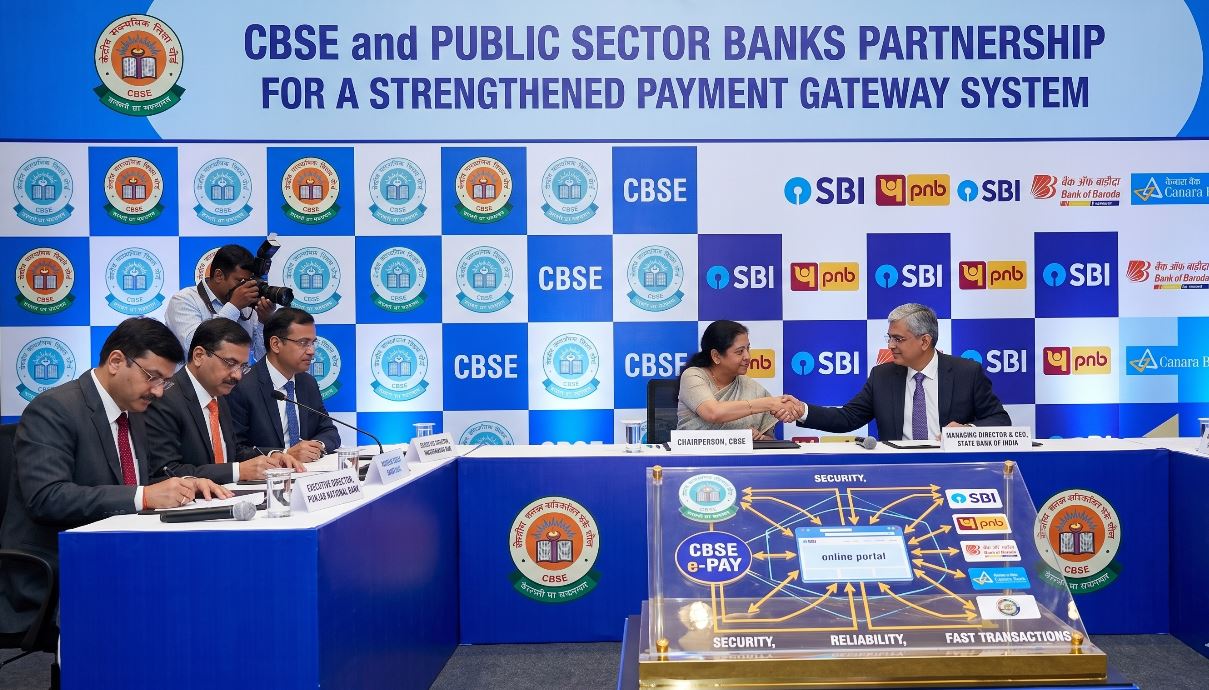
Representational image
Following discussions between Union Education Minister Dharmendra Pradhan and Union Finance Minister Nirmala Sitharaman, it has been decided that four public sector banks — State Bank of India, Bank of Baroda, Canara Bank and Indian Bank — will assist CBSE in strengthening its payment gateway system and integrating secure payment mechanisms with its post-examination services portal.
The move comes after students and parents raised concerns over failed transactions, portal instability and delays in accessing re-evaluation services following board examination results. Officials said the upgraded payment framework will introduce stronger digital payment protocols, help resolve transaction glitches and facilitate automatic refunds in cases of excess or failed payments.
In a parallel intervention, the Education Ministry has also directed CBSE to undertake a complete review of its digital systems to ensure a seamless and student-friendly experience. Expert teams comprising professors and technical specialists from Indian Institute of Technology Madras and Indian Institute of Technology Kanpur will be deployed to assist the board in improving portal stability, server performance, IT infrastructure and authentication systems.
The expert teams are expected to assess the overall robustness of CBSE’s online platform and recommend corrective measures to ensure a glitch-free re-evaluation process, smoother user access and improved payment efficiency.
Reiterating that student welfare remains the top priority, Pradhan directed CBSE to implement corrective measures on an urgent basis to ensure transparency, reliability and a hassle-free experience for students availing post-result services.
25, May 2026
Slow travel and shorter journeys emerge as defining summer travel trend for 2026
In 2026, luxury travel is becoming more intentional, with travellers increasingly choosing shorter, slower, and more meaningful escapes over long, exhaustive holidays. The focus is shifting from covering multiple destinations to experiencing a place more deeply, whether through wellness, nature, culture, or simple moments of pause. From restorative retreats nestled in the mountains to heritage stays steeped in local storytelling, these short-haul getaways offer the luxury of ease, accessibility, and emotional connection. As travellers prioritise balance, flexibility, and mindful living, the rise of closer-to-home escapes is redefining what modern summer travel looks like.

Culture-Led Escape – Close to Home
voco Amritsar
Set in the heart of one of India’s most culturally rich cities, voco Amritsar offers travellers a short haul escape that blends heritage, comfort, and immersive local experiences. Located close to the Golden Temple and the city’s historic old lanes, voco Amritsar features 139 contemporary rooms designed for a relaxed and comfortable stay. Guests can also unwind over leisurely meals at Saffron – all day dining, sundowners and rooftop evenings at Plum Lounge, or rejuvenating wellness experiences at Tattva Spa. Through thoughtfully curated experiences including heritage walks, local dining, and cultural discovery, voco Amritsar reflects the growing shift towards slower, experience-led getaways, that feel both restorative and deeply connected to place.
Heritage & Wellness Escapes – Slow Living in Regal Surroundings
Six Senses Fort Barwara
Set within a restored 14th-century fort in Rajasthan, Six Senses Fort Barwara offers a slower, more intentional style of escape shaped by heritage, wellness, and a strong sense of place. Within easy reach of major North Indian cities, the retreat brings together royal history, holistic wellness experiences, locally inspired cuisine, and the quiet serenity of the fort’s surroundings. From unhurried mornings overlooking the Aravallis to restorative spa rituals and immersive cultural experiences, the property reflects the growing shift toward travel that feels restorative, personal, and deeply connected to its destination.
Wellness Retreats – Reset, Rebalance, Restore
Six Senses Vana
As wellness continues to define modern travel, short-haul retreats are increasingly becoming spaces for genuine reset. Nestled within Dehradun’s sal forests, Six Senses Vana offers personalised wellness journeys rooted in holistic healing, mindfulness, and ancient therapies. With its deeply immersive approach to wellbeing, the retreat reflects a growing preference for purpose-driven escapes where rest, balance, and inner wellbeing take precedence over packed itineraries.
Nature-Led Escapes – Into the Wild, Without the Distance
Jim Corbett Marriott Resort & Spa
Set between the Malani Hills and the tranquil Kosi River, Jim Corbett Marriott Resort & Spa offers a slower, more restorative escape from the pace of city life. Just a few hours from Delhi NCR, the resort brings together wild landscapes, sunrise safaris, riverside trails, Ayurvedic therapies at Quan Spa, Kumaoni flavours at The Corbett Kitchen, and nature-inspired cocktails at Sal Bar. Whether travelling solo, with friends, or family, it’s an ideal setting for a mindful summer getaway immersed in nature.
Familiar Favourites – Comfort in the Known
Holiday Inn Resort Goa
In an era of uncertainty and fast-paced lives, travellers are returning to destinations that feel familiar yet indulgent. Goa continues to lead this sentiment, with trusted stays offering comfort, accessibility, and ease. Holiday Inn Resort Goa embodies this shift, where repeat visits are less about novelty and more about effortless relaxation and rediscovering joy in the familiar.


