


10, May 2026
IndusInd General Insurance’s Mother’s Day campaign, “+1 in Your Motherhood Journey”
MOTHERHOOD JOURNEY’, SUPPORTING EVERY MOMENT FROM HOPE TO HOLDING
Mother’s Day film highlights the unseen beginnings of motherhood and reinforces the brand’s role as a partner from intent to infancy.
Chandigarh, May 10, 2026: IndusInd General Insurance Company Ltd (formerly known as Reliance General Insurance Company Ltd) has launched its Mother’s Day campaign, “+1 in Your Motherhood Journey,” bringing to light a powerful yet often overlooked truth that motherhood begins not at childbirth, but at the moment a woman decides she wants to become a mother.
At a time when fertility journeys are becoming an integral part of modern family-building, the campaign places a sensitive spotlight on the emotional, mental, and physical realities that precede pregnancy. By focusing on this often-unseen phase, IndusInd General Insurance aims to redefine cultural perceptions of motherhood and position itself as a partner through every step of this journey.
At the heart of the campaign is a thoughtfully crafted film set in a fertility clinic. Through quiet, observational storytelling, it follows a woman as she waits, watching life unfold around her as other couples move through different stages of parenthood. Without overt dialogue, the film delicately portrays the emotional complexity of hope, patience, and resilience that defines assisted reproductive journeys, moments that are deeply personal yet rarely spoken about.
Watch the film here:https://www.youtube.com/watch?v=MaCpNYwbFzg
The campaign was conceptualised and executed by Socheers, the brand’s creative agency partner, whose storytelling approach brings sensitivity and authenticity to the emotional nuances of modern motherhood journeys.
At a time when an estimated 14.6 million couples in India are navigating fertility challenges, the campaign brings much-needed visibility to assisted reproductive journeys such as IVF. These experiences often remain private due to social stigma, emotional strain, and the significant financial commitment involved.
By bringing these stories into the mainstream with authenticity and empathy, IndusInd General Insurance seeks to normalise conversations around fertility and acknowledge the courage it takes to pursue parenthood through alternative paths.
The campaign will be rolled out across digital platforms, including YouTube, Instagram, Facebook, and LinkedIn. Recognising that the journey to motherhood is not only emotional but also financially and medically demanding, IndusInd General Insurance offers solutions designed to support customers across this continuum.
The company’s health insurance plans include coverage for infertility treatments such as IVF, IUI, and embryo transfer, along with maternity-related expenses, pre- and post-natal care, and comprehensive medical and vaccination coverage for newborns from day one ensuring support from the first step through to early childhood.
Commenting on the campaign, Tarun Khanna, President & Head – Digital Business, Marketing & Strategy, at IndusInd General Insurance, said that Motherhood is not defined by a single moment, it begins with a choice and evolves through every step that follows. With +1 in Your Motherhood Journey, we aim to recognise and celebrate this entire experience, including the milestones that often go unseen. At IndusInd General Insurance, our endeavour is to support customers with solutions that truly keep pace with their needs, offering not just protection but also the confidence and reassurance to move forward on their path to parenthood. As we move ahead, we remain committed to empowering every parent with care, coverage, and confidence at every step of their journey.
By recognising the emotional, medical, and financial dimensions of modern motherhood, the campaign reinforces IndusInd General Insurance’s commitment to creating solutions that are both relevant and empathetic to evolving customer needs, supporting families not just at milestones, but through the journeys that lead to them.

- 0
- By Neel Achary

10, May 2026
Women’s Health Claims Rise Sharply as Maternity Costs Increase, Finds Care Health Insurance
May 10, 2026: India’s maternity healthcare landscape is undergoing a significant shift, with more women accessing formal, institutional care than ever before. As per data from the Ministry of Health and Family Welfare, with over 88–90% of births now occurring in institutional settings, the share of institutional deliveries has reached 97.3% in 2023–24, signalling a sustained shift towards formal, hospital-based maternal care. Government data presented in 2025 further showed that C-section deliveries accounted for over 27% of all reported births in India during 2024–25, reinforcing the growing shift towards medically intensive maternity care.
Against this backdrop, Care Health Insurance highlights a clear expansion in women’s health claims, both in scale and intensity. Women’s health insurance claims rose 37% from FY25 to FY26, with the 20–40 age group continuing to drive this growth, increasing from 25% over the same period.
At the same time, maternity-related claims are becoming more cost-intensive with Tier 2 and Tier 3 cities continue to account for a larger share of overall claims contributing to 60% of all maternity claims reported to the company.
A shift in maternal age profile is also visible. In FY26, women aged above 35 years accounted for 12% of total maternity claim volumes which was higher as compared to previous years and increasing. The cost of this age group was 18% of the overall claim amount, indicating higher cost intensity associated with later-age pregnancies.
Overall maternity claim outgo has risen by 25% over the last two years, even as claim volumes have fluctuated, indicating a shift towards higher spend per case.
While deliveries are becoming increasingly institutionalized and becoming more efficient, the proportion of women discharged within five days for maternal care has increased from 75% in FY24 to 82% in FY26. This duration of discharge is not resulting in cost reduction, instead the company has seen an upward trend in cost intensity for maternal treatment.
Taken together, these trends reflect a structural shift in maternal healthcare, with rising cost intensity and evolving care patterns driving higher financial exposure. The findings are further reinforced by broader public health data, which indicates that a majority of women in India are accessing formal antenatal care services, while three out of four continue to have inadequate dietary iron intake, highlighting persistent nutritional gaps and long-term health vulnerabilities beyond maternity.
Commenting on the findings, Manish Dodeja, Executive Director & Chief Business Officer, Care Health Insurance, said, “Women’s health insurance claims are no longer following a linear growth pattern; they are expanding in both scale and intensity. We are seeing a clear shift in the maternity landscape, with costs rising steadily. While care pathways are becoming more efficient, the financial exposure associated with maternal healthcare is increasing. This is not just a utilisation trend; it reflects a broader shift in how women are accessing and experiencing healthcare today. It is therefore important for individuals to periodically reassess their coverage to ensure it remains aligned with evolving needs.”
As maternal healthcare continues to formalise and utilisation rises, ensuring adequate and timely health insurance coverage remains critical to managing financial exposure and ensuring continuity of care.
9, May 2026
Arvind Kejriwal Slams ED Raid on Sanjeev Arora, Says Punjabis Being Harassed !
Delhi. May 9 (BNP): Arvind Kejriwal on Saturday strongly criticised the Enforcement Directorate (ED) following its raid on the premises linked to Rajya Sabha MP Sanjeev Arora, alleging that Punjabis were being “harassed in every possible way.”
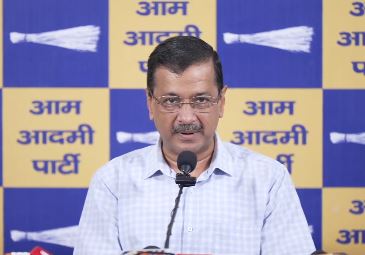
Reacting to the ED action, Kejriwal accused the BJP-led Central government of misusing investigative agencies to target opposition leaders and suppress political voices from Punjab. He said the repeated raids and investigations against AAP leaders reflected a larger pattern of political vendetta.
“Punjabis have been harassed in every possible way,” Kejriwal said while addressing reporters, adding that the people of Punjab would not be intimidated by such actions. He claimed the raids were politically motivated and aimed at weakening the Aam Aadmi Party ahead of upcoming political developments.
The Enforcement Directorate conducted searches at locations linked to Sanjeev Arora as part of an ongoing investigation. However, officials have not yet released detailed information regarding the nature of the case or the findings of the raid.
The development has triggered a fresh political confrontation between the AAP and the BJP, with party leaders rallying behind Arora and questioning the timing of the enforcement action.
9, May 2026
Two Homes, One Bond: Vedaanta Senior Living Celebrates the Evolving Journey of Mothers and Daughters
Bengaluru, May 9th: Vedaanta Senior Living, a leading provider of thoughtfully designed senior living communities, has unveiled its Mother’s Day campaign film that beautifully captures the evolving dynamic between mothers and their children, anchored in reassurance, love and everyday joy.
Conceptualised and executed in-house, the campaign adopts a warm, slice-of-life storytelling format that unfolds over the course of a single day. Reflecting everyday life today, the story take place across a series of video calls between a mother residing at Vedaanta and her daughter living abroad. The film presents a gentle yet distinct contrast between two lives.
On one side is the mother’s day at Vedaanta – structured, personalised and engaging. Her routine includes the much awaited morning tea served at her home, catch-up walks with friends, guided fitness sessions, interesting meals without the burden of cooking, and laid-back moments in the in-house movie theatre. On the other side is the daughter’s life, fast-paced and demanding, as she balances work, household responsibilities, and parenting.
As the day progresses, these parallel narratives unfold through candid, affectionate calls . What begins as routine check-ins gradually reveals a deeper emotional shift. The daughter, who once worried about her mother’s well-being, comes to realise that her mother is not only cared for but truly thriving. The film culminates in a tender Mother’s Day exchange, reinforcing Vedaanta’s positioning as not just a residence, but an ecosystem of everyday care, independence, and peace of mind.
The campaign features professional models and is designed to feel authentic and relatable, drawing from real-life experiences of modern families navigating distance, responsibilities, and care. Link to the campaign: https://youtu.be/FpKiDP8bvTo
Commenting on the campaign, Shreya Anand,Director and Head of Marketing, Vedaanta Senior Living said, “This campaign is deeply personal and reflective of a reality many families live in today. We wanted to move away from portraying ageing as a phase of dependence and instead celebrate it as it is today in our communities – active and independent. Through this film, we are reassuring families that choosing Vedaanta is not about stepping away from loved ones, but about ensuring they are truly cared for, even in your absence. It is a message of emotional security, told through simple, everyday moments.”
The narrative is further elevated by glimpses of the vibrant Vedaanta community, where residents engage in community activities, fitness sessions, and lots of friendly chatter that foster a strong sense of belonging.
With this campaign, Vedaanta Senior Living continues to strengthen its brand ethos of redefining senior living in India, positioning it as an aspirational lifestyle choice rooted in independence, care, and emotional well-being
9, May 2026
Narendra Modi Touches Feet of 98-Year-Old BJP Veteran Makhanlal Sarkar in Bengal!
West Bengal, May 9 (BNP): Prime Minister Narendra Modi on Saturday paid tribute to veteran BJP worker Makhanlal Sarkar during a public event in West Bengal, touching the 98-year-old’s feet as a mark of respect for his decades-long contribution to nationalist politics.
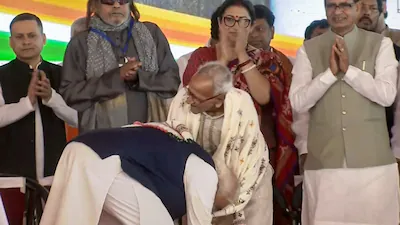
The gesture drew widespread attention at the event, with Modi acknowledging Sarkar’s lifelong dedication to the nationalist movement and the BJP’s ideological roots. Sarkar is regarded as one of the party’s oldest grassroots workers in West Bengal and has remained associated with nationalist causes since the early years after Independence.
According to party leaders, Makhanlal Sarkar was among those who accompanied Bharatiya Jana Sangh founder Syama Prasad Mukherjee during the 1952 Kashmir movement. He was reportedly arrested during the campaign launched to hoist the Indian tricolour in the region, which later became a defining chapter in the Jana Sangh’s political history.
The Prime Minister’s interaction with the veteran worker came amid BJP celebrations in West Bengal following the party’s electoral success in the state. Senior leaders present at the event described Sarkar as a symbol of commitment and ideological perseverance within the organisation.
9, May 2026
India’s Capital Markets to Drive Inclusive Wealth Creation and Viksit Bharat Vision by 2047: Shri Sudhanshu Trivedi at PHDCCI’s 8th Annual Convention
The PHD Chamber of Commerce and Industry (PHDCCI) successfully organized the 8th Annual Convention on Capital Market & Commodity Market on the theme “Democratising Wealth Creation: Inclusive Capital Markets for a Prosperous India” on Friday, 8th May 2026 at PHD House, New Delhi. The convention brought together policymakers, regulators, financial market experts, industry leaders, and market participants to deliberate on the growing role of inclusive capital markets in India’s economic transformation.
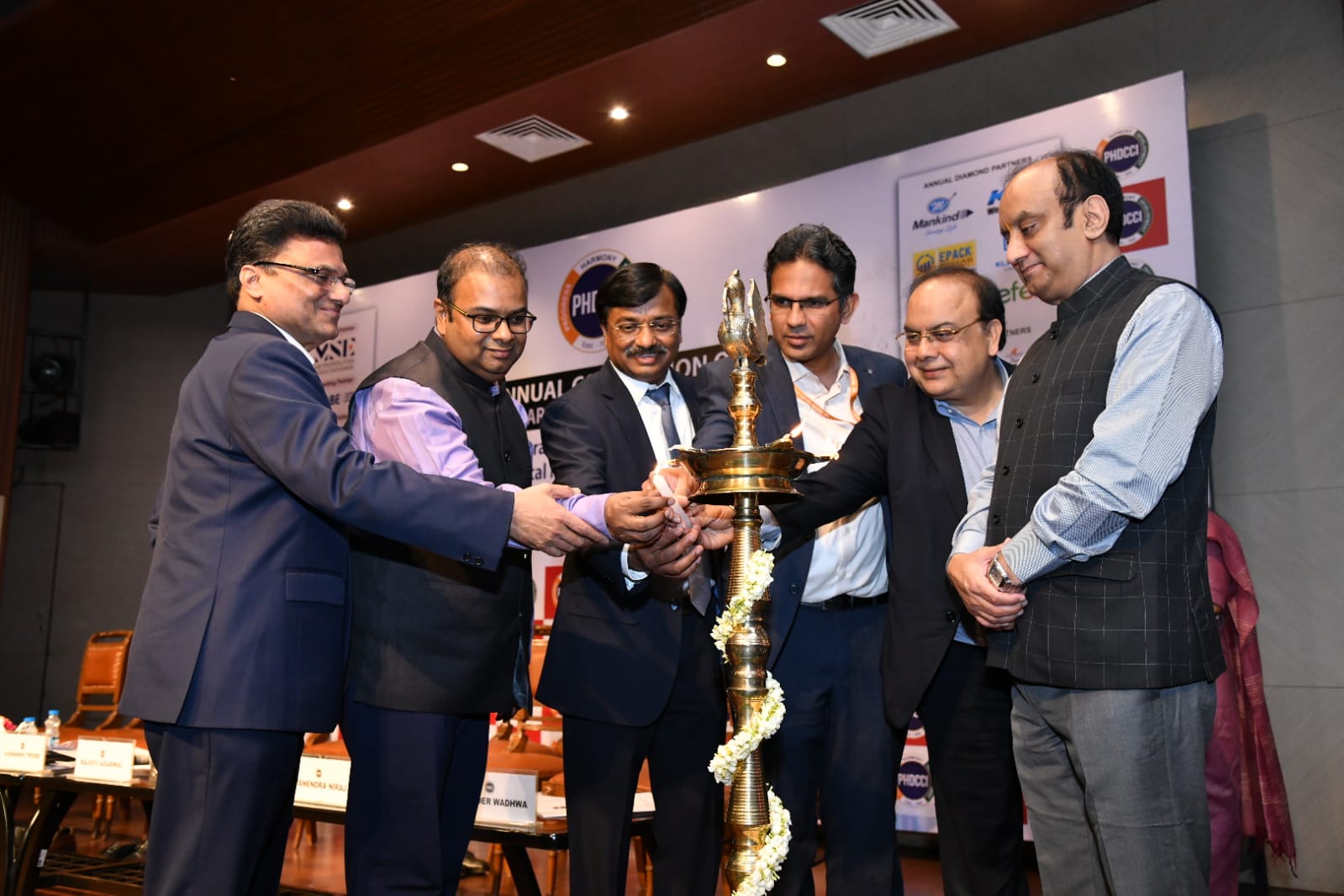
The Welcome Address was delivered by Mr. Mohit Luthra, Assistant Secretary General, PHDCCI, who welcomed the distinguished dignitaries, industry leaders, and participants and highlighted the importance of strengthening financial inclusion and investor participation for building a resilient and prosperous economy
The Chief Guest Shri Sudhanshu Trivedi, Member of Parliament, Rajya Sabha and National Spokesperson, BJP, “while addressing the gathering, highlighted India’s remarkable economic transformation under the leadership of Prime Minister Shri Narendra Modi, stating that India has emerged as the world’s 4th largest economy, 4th largest stock market, 3rd largest automobile manufacturer, and the global leader in digital transactions, contributing nearly 49% of all digital transactions worldwide through UPI. Emphasising the success of Jan Dhan Yojana, DBT and digital inclusion, he noted that over 56 crore Jan Dhan accounts have been opened, enabling direct transfer of benefits and significantly reducing leakages in welfare delivery. He underlined the exponential rise in Demat accounts from 2.2 crore in 2014 to over 21 crore today, reflecting deepening financial inclusion across districts and smaller towns. Shri Trivedi also highlighted India’s growing global stature in manufacturing, defence production, exports, semiconductors, electronics, startups and infrastructure development, citing investments by global companies such as Foxconn, Samsung and Google. Referring to India’s increasing role in global growth and geopolitical trust, he stated that the world now sees India not merely as a superpower, but as a “world friend and world guru” capable of motivating and guiding the global community. He further cautioned against divisive narratives based on region, language and identity, stressing the need for national unity to sustain India’s economic rise and achieve the vision of Viksit Bharat by 2047.”
Mr. Deepak Ranjan, Director (Financial Markets), Department of Economic Affairs, Ministry of Finance, “in his address highlighted that the Government of India’s ongoing efforts to strengthen transparency, accountability, and efficiency in India’s financial regulatory framework through the proposed Securities Market Code. He noted that the reform aims to consolidate the existing SEBI Act, Securities Contracts Regulation Act, and Depositories Act into a single, comprehensive legislation, thereby streamlining the regulatory architecture of India’s capital markets. Emphasizing the importance of consultative policymaking, he stated that the new framework seeks to institutionalize greater stakeholder participation, periodic regulatory reviews, and a more transparent rule-making process to ensure that India’s securities market ecosystem remains robust, responsive, and globally competitive.”
While addressing the gathering Ms. Shashi Kajle, Director (Financial Markets), Department of Economic Affairs, Ministry of Finance, “talked about India’s rapid transformation into a globally significant financial and economic powerhouse, driven by inclusive capital markets, digital public infrastructure, and expanding retail participation. She noted that India’s market capitalization has grown to nearly USD 5 trillion, supported by over 21 crore demat accounts, rising mutual fund participation, and strong fintech adoption, reflecting a major shift towards formal and long-term wealth creation. She further emphasized the role of digital initiatives such as Jan Dhan, Aadhaar, mobile connectivity, and UPI in deepening financial inclusion across the country. Stressing the importance of investor trust, transparency, and wider participation, particularly among women, MSMEs, and young investors, she underlined that India’s capital markets are increasingly emerging as instruments of entrepreneurship, innovation, and national development. She also highlighted the growing significance of GIFT City in strengthening India’s integration with global financial markets and supporting the country’s long-term vision of inclusive and sustainable economic growth.”
Dr. D K Aggarwal, Former President, PHDCCI, “highlighted India’s emergence as a rapidly growing economic powerhouse, stating that the country is on track to become a USD 20 trillion economy by 2047, with capital markets expected to play a transformative role in wealth creation. Emphasizing the theme of democratizing wealth creation, he noted that advancements in digitalization, financial innovation, and regulatory reforms have made investments increasingly accessible to common households through products such as mutual funds, SIPs, ETFs, bonds, and fractional ownership platforms. He further underlined the strong investor protection framework established by regulators, which has significantly enhanced trust and safety in Indian markets. Highlighting the remarkable long-term growth potential of Indian equities, he expressed confidence that India’s capital markets would continue to expand rapidly, creating unprecedented opportunities for inclusive and sustainable wealth creation.”
While addressing the masses Mr. Pradeep Ramakrishnan, Executive Director, IFSCA, talked about “the extraordinary evolution of GIFT City into a globally emerging international financial hub, reflecting India’s growing prominence in the international financial ecosystem. Emphasizing the vision behind the development of GIFT-IFSC, he noted that the centre was established to create a world-class financial and business environment comparable to leading global financial destinations. He further shared that GIFT-IFSC today hosts over 1,500 registered entities across international banking, capital markets, insurance, fintech, investment funds, and foreign universities, while steadily strengthening its position as a strategic gateway for global capital flows, innovation, and next-generation financial services.”
Mr. Narinder Wadhwa, Co-Chair, Capital Market & Commodity Market Committee, PHDCCI, “in his closing remarks said that despite global political uncertainties and tensions in West Asia, India’s growth story remains strong and resilient. He emphasized that financial inclusion is the need of the hour and highlighted the importance of converting savers into investors and citizens into stakeholders in India’s economic growth journey. He also shared that the convention would further deliberate on emerging opportunities across various market segments and asset classes.”
The session was moderated by Mr. B. K. Sabharwal, Chair, Capital Market & Commodity Market Committee, PHDCCI, who facilitated engaging discussions on strengthening investor participation, expanding financial literacy, and leveraging capital markets as a catalyst for inclusive economic development.
The convention concluded with a strong call for enhancing financial literacy, encouraging wider retail participation, and building globally competitive capital markets that support India’s vision of becoming a developed economy by 2047. The deliberations reflected a shared commitment towards creating a transparent, resilient, and inclusive financial ecosystem for sustainable wealth creation.
During the convention, PHDCCI also launched the Knowledge Report titled “Profit Pool Analysis for Selecting Emerging Industries and Stocks in India”, providing key insights into emerging sectors, investment trends, and future growth opportunities in the Indian economy.
The inaugural session was followed by panel discussions on Investment During Uncertain Times: Opportunities and Challenges for Wealth Creation and Investment, Empowerment and Financial Inclusion through various Asset Classes. Distinguished speakers included Mr. Gurmeet Chadha, CIO & MD, Complete Circle; Mr. Ashu Madan, MD, JM Financial Services; Mr. Kunal Saraogi, SEBI Registered Research Analyst; Dr. Sharad Kohli, Tax Guru, Founder & Chairman, KCC Group; Dr. Neha Singh, Editor, DRS Insights; Mr. Ankur Jalan, CEO, Golden Growth Fund; Mr. Jayendra Malhotra, Senior Economist; Mr. Puneet Agarwal, Element One Alternatives; Dr. Ravi Singh, Chief Research Officer, Master Trust Ltd. & Mr. Sanjeev Gupta, MD, NEXGEN Financial Solutions.
The event witnessed enthusiastic participation from representatives of government bodies, regulatory authorities, stock and commodity exchanges, market intermediaries, law firms, financial institutions, academia, and industry associations. Interactive technical sessions and panel discussions enabled meaningful exchange of ideas and recommendations for strengthening India’s financial architecture.
The Convention was supported by Globe Capital as the Presenting Partner; MSEI as an Exchange Partner; NSDL as Depository Partner; Wealth Discovery as the Associate Partner; Choice Broking, Dhan, Jainam Securities, SMC Capital, Steel City Securities, Starfinvest & SMIFS Ltd. as Co- Partners; Findoc, Agroy, Nexgen & Golden Globe Fund as Supporting Partners, Anand Rathi as the Logo Partner & The CPAI as the Association Partner.
The convention was attended by more than 250 delegates and reaffirmed the critical role of robust, transparent, and inclusive capital and commodity markets in shaping India’s growth story. The enriching discussions on investor participation, regulatory reforms, technological advancements, financial literacy, market resilience, and the expanding role of India in global financial markets provided meaningful direction for the future.
9, May 2026
PMJJBY Supports India’s Vision of “Insurance for All by 2047”: LIC CEO
May 9 (BNP): The Pradhan Mantri Jeevan Jyoti Bima Yojana (PMJJBY) is playing a key role in advancing the Government of India’s goal of achieving “Insurance for All by 2047,” according to LIC CEO and MD R. Doraiswamy.
He said the scheme has significantly expanded life insurance coverage among low-income and underserved sections of society by offering affordable protection and easy enrolment through the banking system.
Launched in 2015, PMJJBY provides a simple one-year life insurance cover linked to bank accounts, helping bridge the gap for millions who previously had little or no access to formal insurance products. Officials noted that the scheme is part of a broader financial inclusion push aimed at building a stronger social security framework in the country.
The LIC chief highlighted that India’s insurance penetration was relatively low at the time of the scheme’s introduction, and initiatives like PMJJBY have helped make insurance more accessible and affordable for the masses.
He added that the government’s long-term vision of universal insurance coverage is being supported by such flagship schemes, which aim to ensure financial protection for families across both rural and urban areas.
Officials believe that continued expansion of PMJJBY and related schemes will be crucial in increasing awareness, deepening insurance penetration, and achieving the national goal of “Insurance for All by 2047.”
9, May 2026
PMJJBY Key to Government’s Goal of Universal Insurance Coverage by 2047: LIC CEO
May 9 (BNP): The Pradhan Mantri Jeevan Jyoti Bima Yojana (PMJJBY) is playing a key role in advancing the Government of India’s goal of achieving “Insurance for All by 2047,” according to LIC CEO and MD R. Doraiswamy.
He said the scheme has significantly expanded life insurance coverage among low-income and underserved sections of society by offering affordable protection and easy enrolment through the banking system.
Launched in 2015, PMJJBY provides a simple one-year life insurance cover linked to bank accounts, helping bridge the gap for millions who previously had little or no access to formal insurance products. Officials noted that the scheme is part of a broader financial inclusion push aimed at building a stronger social security framework in the country.
The LIC chief highlighted that India’s insurance penetration was relatively low at the time of the scheme’s introduction, and initiatives like PMJJBY have helped make insurance more accessible and affordable for the masses.
He added that the government’s long-term vision of universal insurance coverage is being supported by such flagship schemes, which aim to ensure financial protection for families across both rural and urban areas.
Officials believe that continued expansion of PMJJBY and related schemes will be crucial in increasing awareness, deepening insurance penetration, and achieving the national goal of “Insurance for All by 2047.”
9, May 2026
Govt Appoints New CDS and Naval Chief in Key Defence Leadership Changes
May 9 (BNP): The Government of India on Saturday announced important leadership appointments in the armed forces, naming Lieutenant General N.S. Raja Subramani (Retd.) as the next Chief of Defence Staff (CDS) and Vice Admiral Krishna Swaminathan as the next Chief of the Naval Staff.
Lt Gen N.S. Raja Subramani (Retd.), PVSM, AVSM, SM, VSM, will assume office as the Chief of Defence Staff and will also function as Secretary to the Government of India in the Department of Military Affairs from the date he takes charge, until further orders. His appointment is aimed at further strengthening jointness among the three services and improving higher defence coordination and strategic planning.
In a parallel decision, Vice Admiral Krishna Swaminathan has been appointed as the next Chief of the Naval Staff. He will take charge on the 31st of this month and will serve in the position until December 31, 2028.
Currently serving as the Commander-in-Chief of the Western Naval Command in Mumbai, Vice Admiral Swaminathan brings extensive operational and leadership experience to the role. His appointment is expected to further enhance the Navy’s operational readiness, maritime security capabilities, and ongoing modernisation efforts.
Officials stated that these appointments reflect the government’s continued focus on strengthening India’s defence leadership framework, ensuring seamless command transitions, and reinforcing national security preparedness across all three services.
9, May 2026
Sindhudurg Village Leads Maharashtra by Completing First Self-Enumeration for Census 2027
May 9 (BNP): Muth village in Sindhudurg district has become the first village in Maharashtra to complete the self-enumeration process ahead of Census 2027, marking an early milestone in the state’s census preparations.

The achievement was made possible through active participation of residents and coordinated efforts by revenue officials. The village, located in Vengurla taluka, has 36 households and a population of 144.
The exercise was conducted under the guidance of Sindhudurg District Collector Tripti Dhodmise, officials said.
Chief Principal Census Officer Nirupama J. Dange welcomed the development and encouraged other villages across Maharashtra to complete self-enumeration within the stipulated timeline. She noted that such initiatives would strengthen the accuracy, efficiency, and smooth execution of the upcoming census process.
Officials said the achievement highlights growing awareness and participation at the grassroots level in digital and citizen-driven governance initiatives.


