


9, May 2026
Sindhudurg Village Leads Maharashtra by Completing First Self-Enumeration for Census 2027
May 9 (BNP): Muth village in Sindhudurg district has become the first village in Maharashtra to complete the self-enumeration process ahead of Census 2027, marking an early milestone in the state’s census preparations.

The achievement was made possible through active participation of residents and coordinated efforts by revenue officials. The village, located in Vengurla taluka, has 36 households and a population of 144.
The exercise was conducted under the guidance of Sindhudurg District Collector Tripti Dhodmise, officials said.
Chief Principal Census Officer Nirupama J. Dange welcomed the development and encouraged other villages across Maharashtra to complete self-enumeration within the stipulated timeline. She noted that such initiatives would strengthen the accuracy, efficiency, and smooth execution of the upcoming census process.
Officials said the achievement highlights growing awareness and participation at the grassroots level in digital and citizen-driven governance initiatives.

- 0
- By Neel Achary

9, May 2026
India–EU Partnership Enters Stronger Phase of Engagement: Sitharaman at Europe Day 2026
New Delhi, May 9 (BNP): Finance Minister Nirmala Sitharaman said that the India–European Union partnership has gained fresh momentum, reflecting deeper cooperation across economic, trade, and strategic areas.
Speaking at the Europe Day 2026 event, she noted that the relationship between India and the EU has steadily strengthened, supported by shared priorities such as economic stability, sustainable growth, and a fair global trading system.
She highlighted that both sides are actively working to expand collaboration in key areas including trade, investment, technology, clean energy transition, and strengthening supply chains. According to her, these efforts are helping convert long-standing strategic understanding into concrete outcomes for businesses and economies on both sides.
Sitharaman also underlined that India and the EU, as major global economic partners, have significant scope to deepen cooperation in emerging sectors while jointly addressing global economic challenges. She expressed optimism that continued dialogue and engagement will further enhance the partnership in the coming years.
The statement reflects the growing importance of India–EU relations in supporting global economic stability and advancing shared development goals.
9, May 2026
Suvendu Adhikari Set to Take Oath as West Bengal’s First BJP Chief Minister
Kolkata, May 9 (BNP): Suvendu Adhikari has been formally elected as the BJP legislature party leader in West Bengal and is set to take oath as the new Chief Minister, marking the party’s first-ever government in the state following a decisive electoral victory.
The BJP secured 207 seats in the 294-member Assembly, bringing an end to 15 years of Trinamool Congress rule led by Mamata Banerjee. Adhikari’s elevation came after a unanimous decision during the BJP legislature party meeting chaired by Union Home Minister Amit Shah, who stated that all MLAs supported a single name for the Chief Minister’s post.
Soon after being elected leader, Adhikari met the Governor and formally staked claim to form the new government. The swearing-in ceremony is scheduled to be held at Brigade Parade Ground in Kolkata, where Prime Minister Narendra Modi and several senior NDA leaders are expected to attend.
Adhikari’s political rise has been marked by a series of high-profile electoral victories against Mamata Banerjee in Nandigram and Bhabanipur, including a symbolic win in her traditional stronghold. Once regarded as a key strategist within the Trinamool Congress, Adhikari joined the BJP in 2020 and rapidly emerged as the party’s most influential face in West Bengal.
Known for his strong organisational network, deep understanding of Bengal politics, and aggressive campaign strategy, Adhikari played a central role in the BJP’s successful electoral push across the state. His appointment as Chief Minister is being viewed as a major political milestone for the BJP in eastern India and signals a new chapter in West Bengal’s political landscape.
9, May 2026
Markets Have Already Adjusted to Slower Growth and Higher Inflation, Says SEBI Analyst
May 9 (BNP): A SEBI analyst has said that financial markets have already taken into account expectations of weaker GDP growth and rising inflation following recent shocks in global oil prices.
According to the analyst, investors have been gradually pricing in the impact of higher crude oil costs, which are likely to put upward pressure on inflation and weigh on economic growth. As a result, much of the expected downside has already been reflected in current market levels.
Despite concerns over global uncertainty and energy price volatility, markets have shown a degree of stability, suggesting that participants are not being caught off guard by these macroeconomic risks.
Overall, the commentary indicates that while inflationary pressures and slower growth remain key concerns, they are largely anticipated by investors rather than emerging as fresh surprises.
9, May 2026
India Pushes for Quick Resolution of Issues in EFTA Trade Pact to Boost Benefits
May 9 (BNP): India has called for the early resolution of implementation-related issues in its trade agreement with the European Free Trade Association (EFTA) to ensure that businesses on both sides can fully benefit from the pact, according to an official statement.
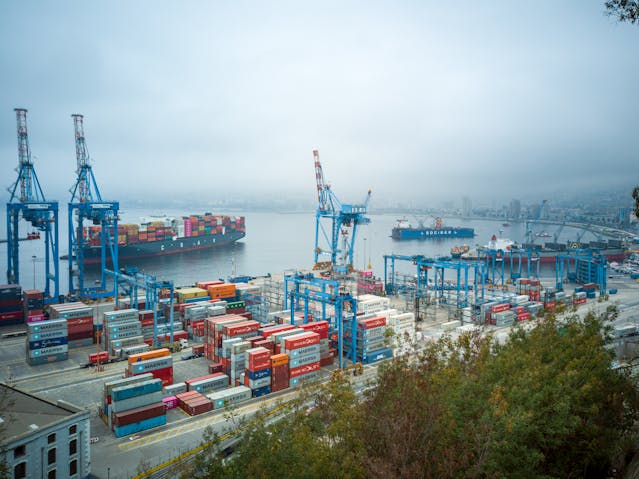
The India–EFTA Trade and Economic Partnership Agreement (TEPA), which came into effect in October 2025, was a key focus during Commerce Secretary Rajesh Agarwal’s recent visit to Switzerland on May 6–7. The visit aimed at strengthening trade and investment cooperation and improving the on-ground implementation of the agreement.
During discussions, India emphasised the need to address operational and regulatory challenges at an early stage so that the market access opportunities under TEPA can be effectively utilised by exporters, investors, and industry stakeholders from both regions.
Officials noted that the agreement is already showing encouraging early results. Within 200 days of its implementation, new Indian product categories have entered the Swiss market, services trade has expanded, and investor interest between India and EFTA countries has strengthened.
India reiterated that smoother implementation and timely resolution of outstanding issues will be crucial in maximising the benefits of TEPA and deepening long-term economic engagement with the EFTA bloc, which includes Switzerland, Norway, Iceland, and Liechtenstein.
9, May 2026
IIM Sambalpur–MCL MoU to Train 500 Officers in AI for Coal Sector Transformation
May 9 (BNP): The Indian Institute of Management (IIM) Sambalpur has signed a Memorandum of Understanding (MoU) with Mahanadi Coalfields Limited (MCL) to train 500 officers in Artificial Intelligence (AI), aiming to modernise coal operations and strengthen data-driven decision-making across the organisation.
The agreement was formalised by Keshav Rao, Director (HR), MCL, and Prof. Mahadeo Jaiswal, Director, IIM Sambalpur, in the presence of senior officials including MCL Chairman-cum-Managing Director Uday Anant Kaole and IIM Sambalpur faculty representatives.
Under the collaboration, officers from various departments will be trained in AI applications to improve core areas such as coal production, business development, operational efficiency, and process management. The initiative is expected to help MCL integrate advanced technologies into its day-to-day functioning and long-term planning.
Speaking on the partnership, Prof. Mahadeo Jaiswal said IIM Sambalpur is focused on preparing leaders for a technology-driven future. He added that the collaboration reflects a shared vision of using AI and machine learning to transform traditional industries through innovation, skill development, and strategic capability building.
MCL leadership also highlighted that the initiative is part of a broader effort to make the organisation more future-ready by adopting digital tools and modern management practices.
Notably, IIM Sambalpur is among the pioneering institutions globally to introduce AI education across its entire student cohort, integrating it into all areas of management learning.
The partnership marks a significant step toward strengthening industry–academia collaboration and accelerating digital transformation in India’s coal sector, particularly within Coal India Limited subsidiaries like MCL.
9, May 2026
General Manager Ashish Tiwari Strengthens Team Leadership & Training Initiatives at Andaaz Restaurant, New Jersey
Andaaz Restaurant continues to strengthen its hospitality standards through enhanced team leadership and employee training initiatives under the guidance of Ashish Tiwari, General Manager of the restaurant.

Recognizing that exceptional hospitality begins with empowered teams, Ashish Tiwari has introduced a focused leadership and training program aimed at improving operational efficiency, service excellence, staff development, and guest engagement across all departments.
The initiative includes structured training sessions in guest relations, communication skills, fine dining service standards, food knowledge, operational coordination, and workplace professionalism. The program is designed to help employees build confidence, improve performance, and deliver a more refined dining experience to guests.
Speaking about the initiative, Ashish Tiwari said,
“In the hospitality industry, a motivated and well-trained team is the foundation of guest satisfaction. At Andaaz Restaurant, we believe leadership is not only about managing operations but also about mentoring people, encouraging growth, and building a positive work culture where every team member feels valued.”
The restaurant management has also placed strong emphasis on continuous learning and teamwork by encouraging staff participation in skill enhancement workshops, operational briefings, and service improvement strategies. The goal is to create a collaborative workplace environment that supports both personal and professional growth.
Under Ashish Tiwari’s leadership, the restaurant has continued to focus on maintaining premium hospitality standards while fostering a culture of discipline, creativity, and accountability. The training initiatives are expected to further elevate service quality and strengthen the restaurant’s reputation for delivering memorable guest experiences.
Known for its contemporary Indian cuisine and modern dining atmosphere, Andaaz Restaurant remains committed to innovation, employee development, and customer-centric hospitality practices in the evolving restaurant industry.
9, May 2026
India Successfully Tests Indigenous TARA Glide Weapon System
May 9 (BNP): India has successfully carried out the maiden flight trial of the Tactical Advanced Range Augmentation (TARA) weapon system off the coast of Odisha on May 07, 2026, marking a significant milestone in the country’s indigenous defence capability development.
Developed as a modular range extension kit, TARA is India’s first indigenous Glide Weapon System (GWS) designed to convert conventional unguided warheads into precision-guided munitions. The system enhances the range, accuracy, and operational effectiveness of existing weapon platforms, enabling greater mission flexibility for the armed forces.
The successful trial demonstrated the system’s capability to perform as intended under operational conditions, validating its aerodynamic performance, guidance mechanisms, and overall system integration. Defence officials stated that the achievement reflects India’s growing expertise in advanced defence technologies and its continued focus on self-reliance in critical military systems.
TARA is expected to significantly enhance stand-off strike capability by allowing existing munitions to be upgraded into precision-guided weapons without requiring complete system replacement. This makes it a cost-effective and scalable solution for modern battlefield requirements.
The successful test is seen as an important step toward strengthening India’s indigenous defence manufacturing ecosystem and reducing dependence on imported weapon systems. It also reinforces ongoing efforts under the Aatmanirbhar Bharat initiative to develop cutting-edge technologies within the country.
Further development and user trials of the system are expected to follow, with the aim of integrating it into operational service after necessary evaluations and certifications.
9, May 2026
New Income Tax Act 2025 Aims to Simplify Filing, Expand India’s Taxpayer Base
New Delhi, May 9 (BNP): India’s newly introduced Income Tax Act 2025 is being positioned as one of the country’s most significant tax simplification reforms in recent years, with the government focusing on making tax filing easier, clearer, and more accessible for ordinary citizens.

Speaking at a taxpayer awareness programme in Mumbai, Chief Commissioner of Income Tax (IT & TP) Nirupama Kotru said the new law, along with the upcoming Income Tax Rules 2026, has been designed to reduce complexity in the tax system and encourage greater voluntary compliance.
According to Kotru, the reforms aim to help individuals understand and file their taxes independently without relying heavily on chartered accountants or tax professionals for basic returns. She noted that many citizens still perceive tax filing as overly technical and difficult, often discouraging them from entering the formal tax system altogether.
To address these challenges, the government has introduced several taxpayer-friendly measures under the new framework. These include simplified language in the legislation, fewer sections and technical provisions, multilingual informational brochures, and digital support tools such as the “Aaykar Sathi” chatbot. Dedicated guidance resources have also been made available through the Income Tax Department’s online platforms to assist taxpayers in resolving queries more easily from home.
Kotru clarified that while the structure and presentation of the law have been simplified, there has been no major shift in India’s overall tax policy. She stated that India continues to maintain one of the more taxpayer-friendly tax regimes globally, supported by relatively low tax rates and progressive reforms introduced over the years.
The new Income Tax Act is particularly important because it seeks to remove long-standing barriers that have prevented many individuals from participating in the formal tax ecosystem. Complex terminology, difficult procedures, and confusion around different sources of income have historically made tax compliance intimidating for first-time or small taxpayers. In many cases, even honest taxpayers struggled with filing errors due to lack of clarity.
Officials believe the simplified format of the new law will improve public understanding of tax obligations, reduce unintentional mistakes, and build greater confidence among taxpayers. By making compliance easier, the government hopes to gradually widen India’s relatively narrow taxpayer base and strengthen overall revenue participation.
The reform also reflects the government’s broader push toward digital governance and citizen-centric public services. Tools such as AI-enabled chat support and simplified online guidance are expected to make the filing process more transparent, efficient, and accessible, especially for salaried individuals, small business owners, and first-time filers.
With the upcoming filing season expected to be governed by the new framework, tax authorities will closely monitor how effectively the simplified system improves compliance and encourages more citizens to file returns independently.
9, May 2026
Commerce Secretary Visits Switzerland to Strengthen India–EFTA Trade Partnership
New Delhi, May 9 (BNP): Commerce Secretary Rajesh Agarwal concluded an official visit to Switzerland aimed at strengthening bilateral trade and investment ties and accelerating the implementation of the India–EFTA Trade and Economic Partnership Agreement (TEPA). The visit underscored India’s commitment to deepening economic engagement with Switzerland and the wider European Free Trade Association (EFTA) region.
TEPA represents a major milestone in India’s international trade strategy, marking the country’s first trade agreement with the EFTA bloc and its first operational trade partnership with a European economic grouping. The agreement is expected to unlock new opportunities for businesses, exporters, investors, startups, MSMEs, and professionals across both regions.
During the visit, the Commerce Secretary held bilateral discussions with Helene Budliger Artieda, State Secretary at the Swiss State Secretariat for Economic Affairs (SECO). The meeting focused on reviewing progress made since the agreement became operational and identifying measures to further enhance trade, investment, regulatory cooperation, and business-to-business engagement.
Both sides discussed the importance of addressing implementation-related challenges at an early stage to ensure industries and enterprises can fully utilise the benefits offered under TEPA. Discussions also covered improving market access, reducing non-tariff barriers, and strengthening institutional cooperation to support long-term economic partnerships.
As part of the visit, Rajesh Agarwal also participated in the 55th St. Gallen Symposium, where India’s growing global economic role and trade ambitions were highlighted. In a keynote video address delivered at the symposium, Commerce and Industry Minister Piyush Goyal stated that India has signed nine Free Trade Agreements with 38 developed countries under the leadership of Prime Minister Narendra Modi, creating expanded opportunities across sectors including manufacturing, services, agriculture, fisheries, startups, and MSMEs.
The Minister emphasised that India’s trade agreements are designed to improve competitiveness, strengthen supply chains, encourage investment flows, and provide Indian businesses with greater access to high-value global markets. He noted that these agreements are helping Indian enterprises integrate more effectively into international value chains while supporting sustainable export growth.
Highlighting the early success of TEPA, the Minister observed that within just 200 days of implementation, several new Indian product categories have entered the Swiss market, services trade has gained momentum, and investment interest between the two countries has strengthened considerably.
He further noted that India’s large consumer base, robust digital public infrastructure, skilled workforce, expanding industrial capabilities, and ongoing economic reforms position the country as a reliable long-term economic partner for Switzerland and the broader EFTA region.
TEPA is expected to facilitate deeper integration of “Make in India” products into European value chains, with Switzerland serving as an important gateway for Indian exports into Europe. The agreement is also anticipated to create wider opportunities for farmers, fishermen, forest-based communities, women entrepreneurs, youth, startups, MSMEs, and skilled professionals.
Under TEPA, EFTA countries have provided improved market access on 92.2 per cent of tariff lines, covering nearly 99.6 per cent of India’s exports, along with tariff concessions on processed agricultural products.
India–Switzerland economic relations continue to grow steadily. India’s exports to Switzerland exceeded $1.2 billion during FY 2025–26, while services exports to Switzerland reached approximately $6.88 billion in 2024, generating a strong services trade surplus for India.
The visit concluded with both sides reaffirming their commitment to sustained government-level dialogue, stronger industry collaboration, and deeper economic integration under the India–EFTA partnership framework.


