


7, May 2026
Indian Markets Rise on US-Iran Peace Hopes; Sensex Gains 380 Points in Early Trade
Mumbai, May 7 (BNP): Indian benchmark indices traded in positive territory on Thursday morning as investor sentiment improved amid expectations of a possible diplomatic breakthrough between the United States and Iran.

The BSE Sensex rose nearly 380 points, or 0.48 per cent, touching an intraday high of 78,339.24. The NSE Nifty also advanced by around 92 points, or 0.37 per cent, to trade near 24,423 in early deals.
Despite the broader gains, several heavyweight stocks witnessed selling pressure. Among the notable laggards on the Nifty were Tata Consumer Products, Power Grid Corporation, Hindustan Unilever, TCS, HDFC Bank, Titan, NTPC, and Sun Pharma.
Sector-wise, indices linked to real estate, FMCG, consumer durables, and private banks slipped up to 0.7 per cent. On the other hand, auto and metal stocks outperformed, with both sectors posting gains of nearly 0.8 per cent.
Analysts attributed the positive market mood to reports suggesting Iran is reviewing a peace proposal backed by the US. According to international reports, the proposed framework could help ease ongoing tensions in West Asia, although major concerns surrounding Iran’s nuclear programme and the Strait of Hormuz remain unresolved.
An Iranian foreign ministry spokesperson indicated that Tehran would soon share its response to the proposal, while US President Donald Trump expressed confidence that Iran is willing to negotiate.
Market experts, however, cautioned that volatility may continue due to geopolitical uncertainty and fluctuating crude oil prices. They noted that investor sentiment is currently swinging between optimism over diplomatic progress and fears linked to the broader regional conflict.
Analysts also flagged concerns over rising valuations in the artificial intelligence segment globally, warning that any sharp correction in AI-related stocks could impact foreign portfolio investment flows into emerging markets, including India.
On the earnings front, market participants said investors are rewarding companies that delivered strong March quarter results, while firms missing expectations are facing sharp reactions.
In the commodities market, Brent crude traded around $102.50 per barrel, up 1.2 per cent, while US West Texas Intermediate (WTI) crude gained nearly 1.5 per cent to trade close to $96.50 per barrel.
Asian markets mirrored the positive momentum, with indices such as the Nikkei, Hang Seng, and KOSPI trading firmly higher. Overnight, Wall Street also ended on a strong note, with the S&P 500 gaining 1.46 per cent and the Nasdaq rising 2 per cent.

- 0
- By Neel Achary

7, May 2026
SK Telecom Announces Q1 2026 Results
Seoul, Korea, May 07–SK Telecom (NYSE:SKM, hereinafter referred to as “SKT”) today announced its consolidated earnings for the first quarter of 2026, based on Korean International Financial Reporting Standards (K-IFRS): revenue of KRW 4.3923 trillion, operating income of KRW 537.6 billion, and net income of KRW 316.4 billion.
Revenue increased 1.5% quarter over quarter (QoQ), driven by a recovery in the wireless business and growth in the AI Data Center (AIDC) business. Through company-wide productivity improvement efforts, operating income exceeded KRW 500 billion on a quarterly basis for the first time since the first quarter of last year.
Following a period of subdued performance last year, SKT posted a clear turnaround in the first quarter of 2026, driven by efforts to innovate customer value and restore trust. The company’s AI business, built on a strategy of focus and selectivity, also improved its profitability and delivered tangible results.
On a non-consolidated basis, the company reported revenue of KRW 3.1058 trillion, operating income of KRW 409.5 billion, and net income of KRW 332.7 billion. SKT also reinstated its quarterly dividend, with a dividend of KRW 830 per share for the first quarter.
■ Handset subscribers up 210,000 as trust restoration efforts bring customers back
SKT achieved net additions of approximately 210,000 handset subscribers in the first quarter of 2026. Mobile service revenue increased 1.7% QoQ. These results are attributable to the company’s commitment to placing customers at the core of its business and implementing a range of measures to strengthen fundamental competitiveness.
SKT recently revamped its membership program to expand customer benefits and improve ease of use. The company is also advancing a restructuring of its rate plans to further enhance customer choice.
SK Broadband, the company’s fixed-line subsidiary, recorded revenue of KRW 1.1498 trillion and operating income of KRW 116.6 billion, up 3.2% and 21.4% year over year (YoY), respectively, driven by growth in high-speed internet subscribers.
■ AI Data Center business accelerates, fuelling full-scale push into AI B2B market
SKT’s AI business is delivering tangible results through its strategy of focus and selectivity.
The AIDC business, a key growth engine, recorded revenue of KRW 131.4 billion in the first quarter, surging 89.3% YoY. Performance was driven by higher utilization rates at data centers including the Gasan (Seoul) data center, as well as increased revenue from GPUaaS (GPU-as-a-Service), adding further momentum to the business.
A service that provides GPU resources in a cloud-based model according to customer demand
As AI infrastructure demand from global Big Tech companies accelerates rapidly, SKT plans to reinforce its competitiveness across the full AIDC value chain and continuously expand its infrastructure footprint.
The company will also broaden its push into the AI Business-to-Business (B2B) market. As the only domestic provider with full-stack capabilities spanning AI infrastructure, models, and services, and drawing on its accumulated experience in the enterprise business, SKT plans to make a full-scale entry into the AI B2B market going forward. To this end, the company has recently established an integrated organization to drive enterprise business, reporting directly to the CEO.
In the AI Business-to-Consumer (B2C) space, SKT plans to enhance its fundamental competitiveness by creating synergies between the AI agent business and the telecommunications industry. In particular, its flagship AI service ‘A.’ (pronounced “A-dot”) is set to enhance its performance by leveraging a sovereign AI foundation model on par with leading global models, thereby strengthening its standalone competitiveness.
“The first quarter of 2026 was a meaningful period in which we delivered tangible results in line with this year’s goals — strengthening fundamental competitiveness centered on customer value and restoring profitability through a focused AI business,” said Park Jong-seok, CFO of SK Telecom. “Going forward, we will make every effort to restore our earnings by generating sustained results.”
※ The conference call in regard to SKT’s 1Q 2026 earnings results can be heard via SKT’s webpage on Thursday, May 7, from 16:00 Seoul Time.
※ Attachment 1. Summary of Consolidated Income Statement (Unit: KRW billion)
|
Type |
26.1Q |
25.1Q |
YoY |
25.4Q |
QoQ |
|
4,392.3 |
4,453.7 |
△1.4% |
4,328.7 |
1.5% |
|
|
Operating Income |
537.6 |
567.4 |
△5.3% |
119.1 |
351.3% |
|
Net Income |
316.4 |
361.6 |
△12.5% |
97.0 |
226.2% |
※ Attachment 2. Summary of Non-Consolidated Income Statement (Unit: KRW billion)
|
Type |
26.1Q |
25.1Q |
YoY |
25.4Q |
QoQ |
|
Revenue |
3,105.8 |
3,167.5 |
△1.9% |
3,083.7 |
0.7% |
|
Operating Income |
409.5 |
482.4 |
△15.1% |
130.8 |
213.2% |
|
Net Income |
332.7 |
474.6 |
△29.9% |
106.0 |
214.0% |
7, May 2026
Epson celebrates innovation and sustainable design at Australian Fashion Week 2026
SYDNEY, May 07– As the official digital print and projector partner of the Australian Fashion Council (AFC), Epson Australia has announced its participation in Australian Fashion Week 2026, taking place from 11–15 May 2026 at the Museum of Contemporary Art (MCA) and venues across Sydney.
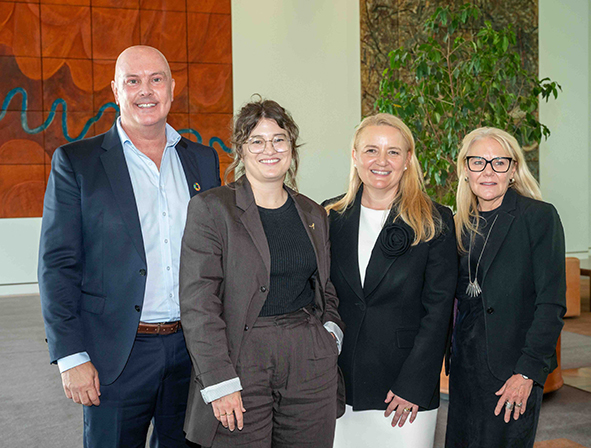
(l-r) Epson Australia Managing Director Craig Heckenberg, Samantha Delgos, General Manager, Australian Fashion Council, Marianne Perkovic, Executive Chair, Australian Fashion Council and Epson Australia Corporate Marketing Manager, Priscilla Dickason
This year’s event will bring together the nation’s most creative and forward‑thinking designers and innovators in a celebration of Australian culture, design and sustainable fashion manufacturing.
For Epson, participation in Australian Fashion Week builds on its continuing partnership with the Australian Fashion Council, strengthening a shared commitment to fostering a more sustainable, innovative and locally empowered fashion industry.
Epson A/NZ MD Craig Heckenberg said, “As a key strategic partner of the AFC, we are fully committed to our support of Australian Fashion Week 2026. Together with the AFC, Epson is championing the future of Australian fashion manufacturing by creating meaningful opportunities between designers, brands and local makers. We’re showcasing how digital textile printing technology supports more sustainable, on‑demand production, helping designers bring their creativity to life locally and responsibly.”
A highlight of Epson’s program at Australian Fashion Week 2026 will be ‘Meet the Makers’, a curated matchmaking experience co‑hosted with the AFC and part of the AFC Talks, presented by Afterpay during AFW. The event brings Australian fashion brands and local manufacturers together under one roof, allowing designers to discover the craftsmanship, skill and production capacity available within Australia’s own borders.
Epson will take a leading role in the manufacturer showcase, demonstrating how digital textile printing technologies, such as the Epson Monna Lisa direct‑to‑fabric printer, integrate seamlessly into modern local production.
Featuring water‑based pigment inks and precision print technology, the Monna Lisa enables sustainable on‑demand manufacturing, reducing waste and making local production far more cost‑effective.
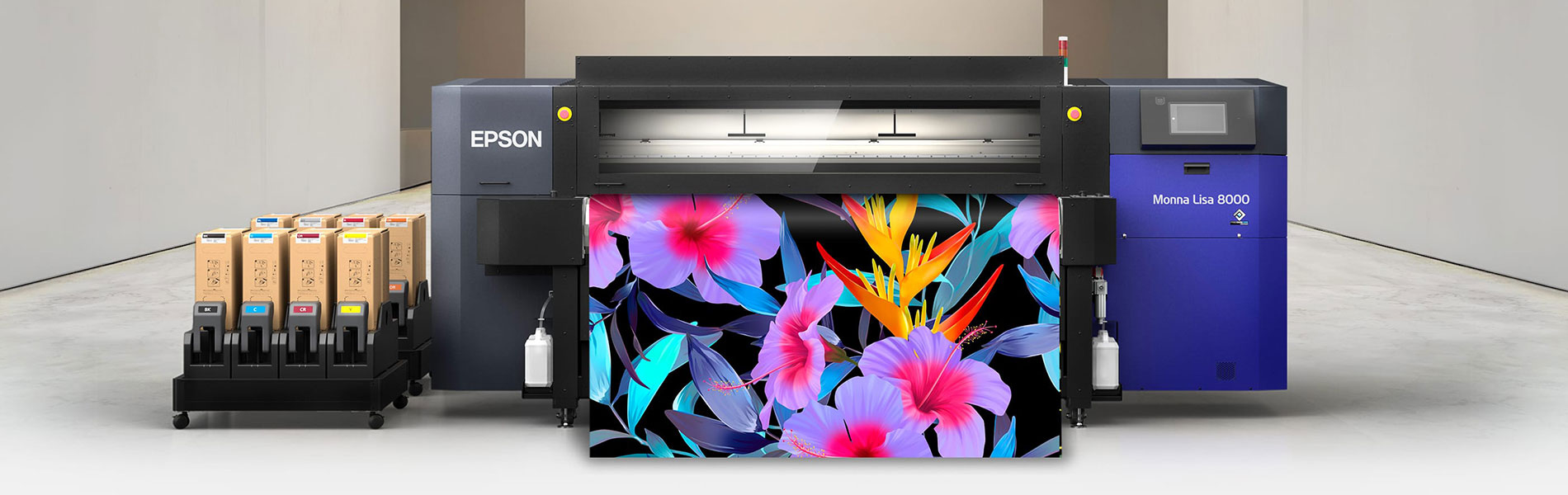
Epson Monna Lisa direct‑to‑fabric printer
By connecting brands with local manufacturing capability, Epson aims to help strengthen domestic supply chains, empower Australian fashion makers and reduce the environmental footprint of fashion creation.
Epson is also partnering with the AFC as the naming sponsor of the Epson Media Centre at AFW, providing a dedicated hub where local and international press can capture, file and share the stories shaping Australian fashion throughout the week. It’s also where the press and media can report on AFC Talks, presented by Afterpay.
“AFC Talks, presented by Afterpay, brings together the conversations that are most critical to our industry right now and shaping its future,” said Marianne Perkovic, Chair of the Australian Fashion Council. “These sessions go to the heart of the challenges we face and the opportunities ahead, from building global distribution to developing circular business models that deliver both commercial outcomes and cultural impact. They also recognise the broader economic importance of the fashion industry and the critical role it plays as a connected ecosystem. AFC Talks provides a platform to hear directly from industry leaders, share insights and bring the community together beyond the runway, creating space for everyone to engage, connect and help shape the future of Australian fashion.”
Epson’s involvement in Australian Fashion Week complements its ongoing collaboration with the AFC on long‑term initiatives that support onshore manufacturing, skills development and sustainability across the fashion and textile sector.
Since 2023, Epson and the AFC have worked together to:
• Deliver research on the current and future state of Australian fashion manufacturing
• Undertake a feasibility study for a smart manufacturing facility, integrating advanced machinery, software and digital production systems to support a local, on-demand model
• Explore circular economy pathways and sustainability programs to ensure the industry transitions responsibly by 2030
Epson also fully supported the AFC’s National Manufacturing Strategy launched in March 2026 at Parliament House to drive investment and innovation.
These collective efforts aim to build a future where Australian designers can produce collections sustainably and competitively on home soil supported by technologies that enhance efficiency and enable creative freedom.
Heckenberg added, “By showcasing what’s increasingly possible onshore, we will collectively strengthen local supply chains. The AFC’s National Manufacturing Strategy, which Epson proudly supports, represents an important step toward building a more resilient, sustainable and innovative future for Australian fashion.”
Epson’s global leadership in digital textile printing positions it as a technology partner of choice for designers and manufacturers seeking to produce responsibly and efficiently.
With solutions such as its Monna Lisa direct-to-fabric series printers Epson enables print‑on‑demand manufacturing that minimises waste, reduces energy use and shortens supply chains – all key goals for an industry striving to meet both environmental and creative challenges.
Epson’s participation in Australian Fashion Week 2026 underlines its role as a technology enabler for local innovation, connecting creativity with sustainability while supporting the AFC’s mission to future‑proof Australian fashion.
Australian Fashion Week 2026
Dates: 11–15 May 2026
Venues: Museum of Contemporary Art (MCA) and various locations around Sydney
Presented by: The Australian Fashion Council
7, May 2026
Maishaa Unveils Thread Art Collection, Bringing French Country Romance to Modern Bedrooms
New Delhi, May 07: Redefining bedroom aesthetics with a blend of artistry and comfort, Maishaa has introduced its exquisite Thread Art Collection—a premium bed linen range inspired by the serene charm of the French countryside. Designed to transform everyday living spaces into elegant sanctuaries, the collection celebrates craftsmanship, intricate detailing, and refined luxury.

Crafted from 100% combed cotton, the Thread Art Collection stands out for its delicate crewel thread work that accentuates floral motifs with subtle golden highlights. The intricate embroidery—featuring flowing, nature-inspired patterns—creates a visually rich texture, lending both depth and sophistication to bedspreads. The interplay of vibrant threadwork against contrasting bases delivers a striking yet graceful aesthetic.
Available in thoughtfully curated colour combinations such as Black–Fluorescent Green, Black–White, and Black–Red with distinctive red motif embroidery, the collection offers versatility for both contemporary and classic interiors. Each set includes finely designed bed sheets, pillowcases, and duvet covers, allowing homeowners to create a cohesive and luxurious bedroom experience.
Drawing inspiration from nature’s quiet beauty, the collection has been conceptualised by international designers who have translated the romance and tranquillity of countryside living into textile form. Every piece reflects meticulous attention to detail, reinforcing Maishaa’s commitment to quality and design excellence.
“At Maishaa, we believe that the bedroom is more than just a space—it is a personal retreat that should evoke comfort, beauty, and emotional warmth,” said Arun Garg, Founder, Maishaa.
“With the Thread Art Collection, we have brought together global design sensibilities and traditional craftsmanship to create something truly timeless. The intricate thread work is not just decorative—it tells a story of elegance, heritage, and thoughtful design.”
Beyond aesthetics, the collection also prioritises well-being. The fabrics are anti-bacterial, anti-fungal, and free from formaldehyde, ensuring a safe and healthy environment for users. This makes the Thread Art Collection not only a design statement but also a conscious lifestyle choice for modern homes.
“The Thread Art Collection embodies this philosophy—it is where comfort meets craftsmanship in its purest form. We pledge to create textiles with love and passion. The amazing look, texture and finesse is all possible only because of breakthrough processes and techniques that make ordinary things like home linen and furnishing fabrics, the ultimate in luxury and good living.” added Arun Garg.
With this launch, Maishaa continues to strengthen its position as a curator of global luxury textiles, offering holistic design solutions that extend from bedrooms to complete living environments. The Thread Art Collection stands as a testament to the brand’s vision of transforming homes into spaces of enduring elegance and meaningful comfort.
7, May 2026
Servotech Renewable Secures 1415 kW Solar Rooftop Project Order from South Central Railway, Vijayawada Division
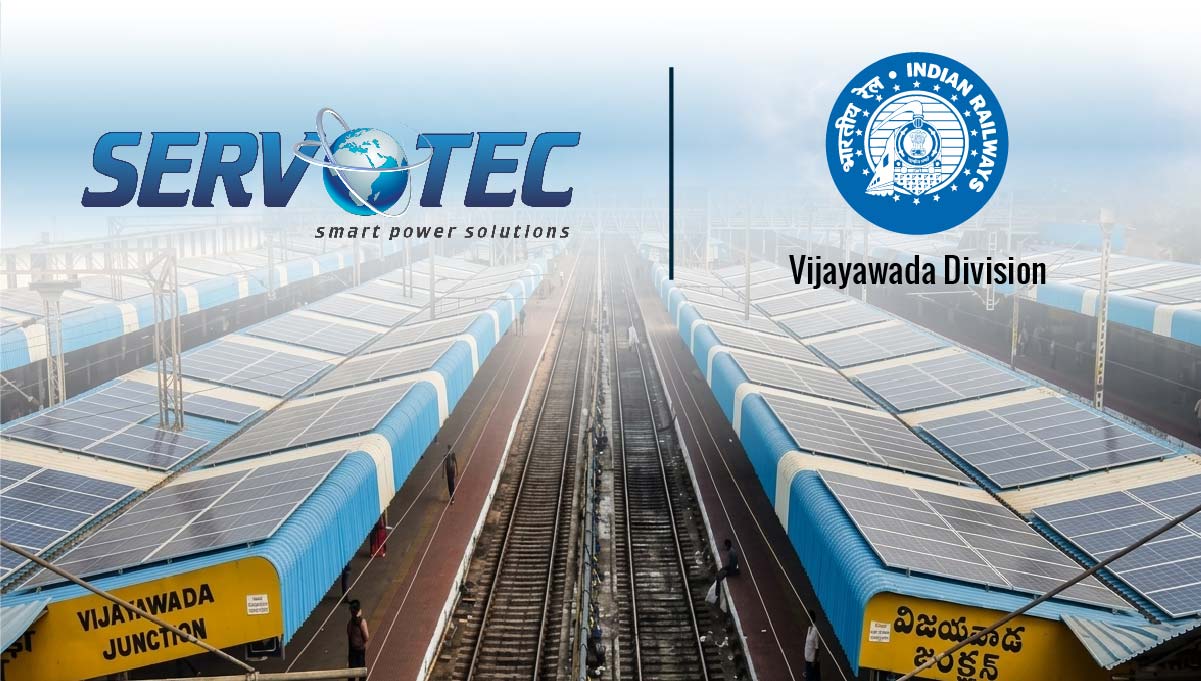
New Delhi, May 07, 2026: Servotech Renewable Power System Ltd. (NSE: SERVOTECH), an NSE-listed renewable energy and EV charging solutions company, has secured a 1415 kW solar rooftop project order from the Vijayawada Division (BZA) of the South Central Railway (SCR), strengthening its growing engagement with Indian Railways and public infrastructure renewable energy projects.
Under the scope of the project, Servotech Renewable will be responsible for the design, engineering, supply, installation, testing, and commissioning of grid-connected rooftop solar systems across multiple railway sites under the Vijayawada Division. The project aligns with Indian Railways’ ongoing focus on accelerating renewable energy adoption and reducing carbon emissions through sustainable infrastructure development. The order was secured through a competitive bidding process, further reflecting Servotech Renewable’s capabilities in executing institutional and government-led renewable energy projects.
Commenting on the order, Sarika Bhatia, Director, Servotech Renewable Power System Ltd., said, “We are pleased to strengthen our association with Indian Railways through this project with the Vijayawada Division. Such projects reflect the growing momentum towards clean energy integration across critical public infrastructure in India. We remain committed to delivering efficient, reliable, and high-performance solar solutions that support institutions in achieving their sustainability objectives while contributing to broader renewable energy adoption goals.”
The project further strengthens Servotech Renewable’s institutional order book and reflects the company’s continued participation in government-led renewable energy initiatives.
7, May 2026
Suvendu Adhikari’s Aide Shot Dead in Bengal, Another Critically Injured in Late-Night Attack!
KOLKATA, May 7 (BNP): In a shocking incident that has intensified political tensions in West Bengal following the Assembly election results, Chandranath Rath, personal assistant to senior BJP leader Suvendu Adhikari, was shot dead by motorcycle-borne assailants in Madhyamgram near Kolkata airport late Wednesday night.
According to police, the incident took place around 10:20 PM when Rath, accompanied by another aide, Buddhadeb Bera, was returning home in a Scorpio vehicle. Their car was allegedly intercepted in a narrow lane by another vehicle, after which armed attackers on a motorcycle opened fire at point-blank range through the front passenger-side window.
Rath, who had been associated with Adhikari’s close team for nearly five years, sustained critical injuries and was declared dead upon arrival at a nearby hospital. Buddhadeb Bera was also seriously injured and is currently undergoing treatment.
Investigators said multiple rounds were fired during the attack. Police have launched an intensive probe and are examining all possible angles, including political rivalry and personal enmity. No arrests had been reported till the filing of this report.
The incident comes just 48 hours after the BJP secured a massive victory in West Bengal, winning 207 seats in the 294-member Assembly. Suvendu Adhikari retained his Nandigram seat and also defeated outgoing Chief Minister Mamata Banerjee in Bhowanipore.
Adhikari reached the crime scene around midnight but had not issued any official statement immediately after the incident. Meanwhile, the killing triggered fresh concerns over post-poll violence in the state.
West Bengal BJP president Samik Bhattacharya condemned the attack and called for strict action against those responsible. Senior BJP leaders have reportedly directed party workers to maintain peace and avoid further escalation.
6, May 2026
Haiqu Launches Agentic Quantum Operating System for Enterprise Applications R&D
Full-stack platform combines agentic AI with proprietary middleware that helps build and solve complex problems faster with fewer computational resources on today’s quantum hardware
NEW YORK CITY – May 6, 2026 – Haiqu, a leading developer of quantum middleware, today announced the launch of its Agentic Quantum Operating System (OS), the first full-stack quantum intelligence platform for enterprise and scientific quantum R&D.
Currently, quantum development is impeded by the time and costs it takes to design the right application, execute the experiment, and iterate on the results.
Haiqu’s Agentic Quantum OS is designed to bring new performance standards to quantum R&D teams. It combines quantum research agents with Haiqu’s proprietary software stack to help teams identify the right problem, design executable quantum experiments, and run them efficiently on real quantum hardware.
Coupled with additional performance and execution layers, the platform is designed to help enterprise R&D teams get usable results faster, spend less money per experiment, train new researchers more easily, and turn early ideas into testable prototypes faster.
“The bottleneck for quantum R&D teams is often not access to a QPU. It is the time and expertise required to identify the right problem, structure the work and get credible application prototypes,” said Richard Givhan, CEO and Co-founder of Haiqu. “With our first Agentic Operating System, we are giving R&D teams effective tools to achieve commercial applications as systems become more powerful.”
Haiqu’s end-to-end platform equips quantum engineers to guide application development using natural language through business questions or exploratory research ideas to produce an execution-ready quantum application plan using three key pillars:
- Agentic Intelligence — built on Haiqu’s proprietary quantum algorithm research, domain-specific workflows, and a curated quantum theory knowledge base, that automates application design and guides users to optimal approaches.
- Haiqu SDK — developer tools built using agents with users in mind that can be easily deployed in agentic development workflows to maximize performance through data loading, algorithmic optimization and error mitigations, enabling users to extract more value from every quantum operation.
- Haiqu Runtime — an orchestration engine that streamlines how applications execute with an optimal infrastructure layer, reducing cost and time required to iterate on quantum applications.
In recent tests completed by the company on a quantum system, a molecular dynamics simulation that previously required $30,000 and more than nine hours to run was reproduced for about $25 in roughly 30 seconds by optimizing execution on the Haiqu platform. Similar results or better were found for optimization algorithms, quantum machine learning models, and probability distributions.
HaiquOS also demonstrated that agentic quantum workflows can translate advanced scientific problems into executable experiments. The system prepared simulations of the single-impurity Anderson model, a foundational model for strongly correlated electron systems, from scratch and built a Haiqu OS/SDK pipeline for simulating neutron-scattering experiments on one-dimensional quantum magnets. The pipeline reproduced experimentally observed signatures of magnetic materials, showing that today’s quantum computers, when paired with the right software stack, can already support meaningful scientific simulations. Learn more about these results here.
A number of enterprises already received early access to the OS, including Capgemini and Deloitte.
Dr. Kristin Milchanowski, Chief AI & Quantum Officer at BMO and Founding Director of the BMO Institute for Applied Artificial Intelligence & Quantum, said research into emerging quantum software platforms can help inform how the industry addresses foundational scalability challenges.
“As quantum hardware continues to evolve, foundational challenges such as data loading and efficient utilization of limited qubits remain critical hurdles,” said Milchanowski. “Observing research into tools like Haiqu’s middleware allows for a deeper understanding of how these bottlenecks might eventually be addressed. These early-stage, research-driven insights are vital for informing the long-term direction of the quantum landscape and understanding the future scalability of the technology.”
6, May 2026
Netwrix Builds Out Leadership Bench with CTO, VP of Engineering, and Head of Americas Channel
FRISCO, Texas – May 6, 2026 – Netwrix, a recognized leader in identity and data security solutions, today announced the appointment of Avesta Hojjati as Chief Technology Officer, Marcin Gierlak as Vice President of Engineering and Kraków Site Leader, and Natalie Tomlin as Head of Channel for North America.
“With AI fueling both external attackers and data leakage, our customers are confronted by security challenges that are more complex than ever — more identities, more data, more risk,” said Grady Summers, CEO at Netwrix. “We’re bringing in leaders across engineering and channel to accelerate innovation and help partners improve customers’ security posture and AI governance.”
Avesta Hojjati joins from SecurityScorecard, where he served as CTO and led cross-functional teams spanning AI, data science, threat intelligence, product engineering, and core platform operations taking a new platform from concept to production in under 12 months. He brings experience on both the offensive and defensive sides of security, alongside deep expertise in AI, machine learning, and distributed systems. Before SecurityScorecard, he spent eight years at DigiCert leading engineering across IoT security, automation, and digital trust. Earlier roles include Symantec and Yahoo. He holds a Ph.D. in Computer Science from the University of Illinois Urbana-Champaign and is named on more than 45 patents.
Marcin Gierlak most recently served as VP of Engineering at Napster, where he led teams focused on machine learning and AI research in production systems. He has held engineering leadership roles at HID Global and IBM and has led distributed engineering teams across multiple geographies. Based in Krakow, he will also serve as site leader for Netwrix’s innovation center and engineering hub there.
Natalie Tomlin brings extensive channel and partner leadership experience across leading cybersecurity companies, including McAfee and Trellix, with additional experience building partner programs at Palo Alto Networks. Recognized by CRN as a Woman of the Channel, she has built and scaled partner-driven growth across national and commercial markets, working with MSPs and cloud providers such as AWS and Azure. At Netwrix, she will expand the North American partner network and strengthen how the company goes to market through the channel.
6, May 2026
Prabhas–Sandeep Reddy Vanga’s Spirit to Hit Screens in March 2027!
Hyderabad, May 6 (BNP): The makers of Spirit, starring Prabhas, have confirmed that the film will release as scheduled in March 2027.

Putting an end to speculation around delays, the production team announced that the project is progressing as planned, with shooting and post-production timelines on track. The update has come as a relief to fans eagerly awaiting the much-anticipated film.
Directed by Sandeep Reddy Vanga, Spirit is one of the most talked-about upcoming projects in Indian cinema. While details about the storyline remain under wraps, the film is expected to feature Prabhas in a powerful and intense role.
The makers stated that further updates, including teasers and promotional material, will be released in due course as the film moves closer to completion.
6, May 2026
Real estate sentiment eases in Q1 amid global pressures
New Delhi, May 6 (BNP): India’s real estate sector witnessed a shift toward cautious sentiment in the first quarter of 2026, influenced by global economic uncertainty and rising cost pressures, according to a joint report by Knight Frank and NAREDCO.
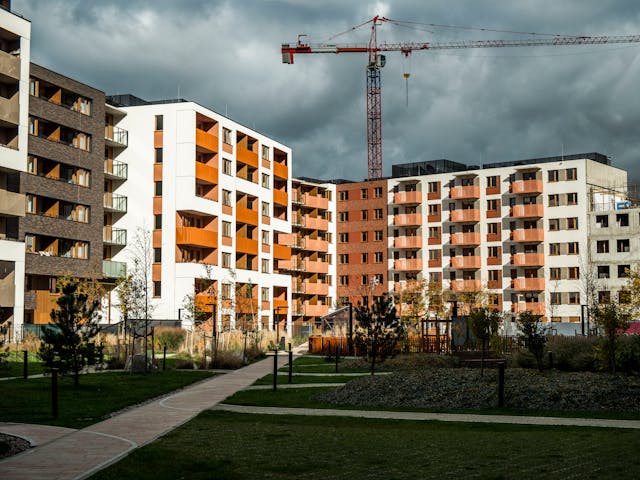
The report noted a decline in stakeholder confidence, with the Current Sentiment Score dropping to 49 from 60, while the Future Sentiment Score eased to a neutral level of 50 from 61. The index reflects the outlook of developers, investors, and financial institutions on economic conditions and funding availability.
The moderation in sentiment has been largely attributed to global macroeconomic volatility, including rising crude oil prices, which have increased construction, logistics, and financing costs—impacting overall project viability.
Despite stable domestic economic fundamentals, geopolitical factors are beginning to influence both demand and supply dynamics in the sector.
The residential segment showed signs of slowing after a sustained growth phase, with moderation in both housing sales and new project launches during the quarter. Around 52 per cent of stakeholders expect housing sales to decline in the near term. However, 73 per cent believe property prices will either remain stable or continue to rise, driven by higher input and borrowing costs.
This divergence between softening demand and firm pricing underscores the structural cost pressures shaping the housing market.
Meanwhile, nearly half of respondents anticipate a slowdown in new project launches. In contrast, the office segment remains relatively resilient, with 41 per cent of stakeholders expecting improved leasing demand.
Industry experts described the current phase as a short-term recalibration rather than a fundamental slowdown, noting that end-user demand and steady price trends continue to support the sector’s long-term outlook.


