


6, May 2026
Prabhas–Sandeep Reddy Vanga’s Spirit to Hit Screens in March 2027!
Hyderabad, May 6 (BNP): The makers of Spirit, starring Prabhas, have confirmed that the film will release as scheduled in March 2027.

Putting an end to speculation around delays, the production team announced that the project is progressing as planned, with shooting and post-production timelines on track. The update has come as a relief to fans eagerly awaiting the much-anticipated film.
Directed by Sandeep Reddy Vanga, Spirit is one of the most talked-about upcoming projects in Indian cinema. While details about the storyline remain under wraps, the film is expected to feature Prabhas in a powerful and intense role.
The makers stated that further updates, including teasers and promotional material, will be released in due course as the film moves closer to completion.
- 0
- By Neel Achary

6, May 2026
Real estate sentiment eases in Q1 amid global pressures
New Delhi, May 6 (BNP): India’s real estate sector witnessed a shift toward cautious sentiment in the first quarter of 2026, influenced by global economic uncertainty and rising cost pressures, according to a joint report by Knight Frank and NAREDCO.
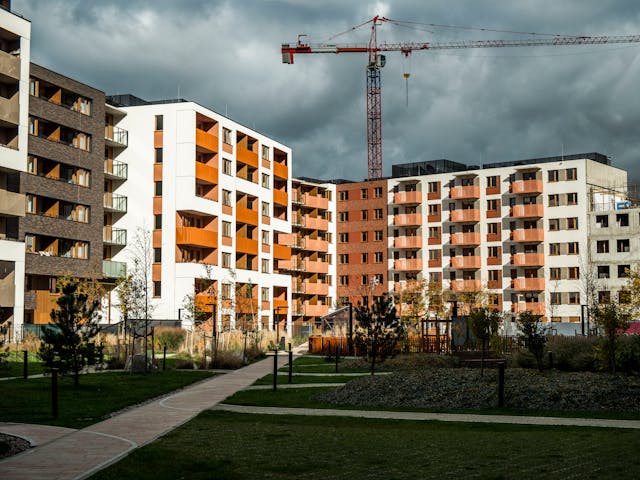
The report noted a decline in stakeholder confidence, with the Current Sentiment Score dropping to 49 from 60, while the Future Sentiment Score eased to a neutral level of 50 from 61. The index reflects the outlook of developers, investors, and financial institutions on economic conditions and funding availability.
The moderation in sentiment has been largely attributed to global macroeconomic volatility, including rising crude oil prices, which have increased construction, logistics, and financing costs—impacting overall project viability.
Despite stable domestic economic fundamentals, geopolitical factors are beginning to influence both demand and supply dynamics in the sector.
The residential segment showed signs of slowing after a sustained growth phase, with moderation in both housing sales and new project launches during the quarter. Around 52 per cent of stakeholders expect housing sales to decline in the near term. However, 73 per cent believe property prices will either remain stable or continue to rise, driven by higher input and borrowing costs.
This divergence between softening demand and firm pricing underscores the structural cost pressures shaping the housing market.
Meanwhile, nearly half of respondents anticipate a slowdown in new project launches. In contrast, the office segment remains relatively resilient, with 41 per cent of stakeholders expecting improved leasing demand.
Industry experts described the current phase as a short-term recalibration rather than a fundamental slowdown, noting that end-user demand and steady price trends continue to support the sector’s long-term outlook.

6, May 2026
India, South Korea set to review trade pact to boost economic ties
New Delhi, May 6 (BNP): India and South Korea are expected to hold talks on May 25 to review their existing trade agreement, with an aim to strengthen economic cooperation and address key trade concerns.
The discussions will focus on revisiting the Comprehensive Economic Partnership Agreement (CEPA), which has been in force since 2010. India is likely to push for updates to make the pact more relevant to current global trade dynamics and to tackle issues such as the trade imbalance.
Officials from both countries are set to participate in the negotiations, which are seen as an important step toward enhancing bilateral trade and creating more balanced and mutually beneficial opportunities.
The review could pave the way for a more modern and effective trade framework, helping deepen economic engagement between the two nations.
6, May 2026
Samik Bhattacharya Announces May 9 Oath Ceremony for New Bharatiya Janata Party Govt in West Bengal!
Kolkata, May 6 (BNP): Samik Bhattacharya, president of the Bharatiya Janata Party in West Bengal, on Wednesday announced that the oath-taking ceremony of the new state government will be held on May 9.
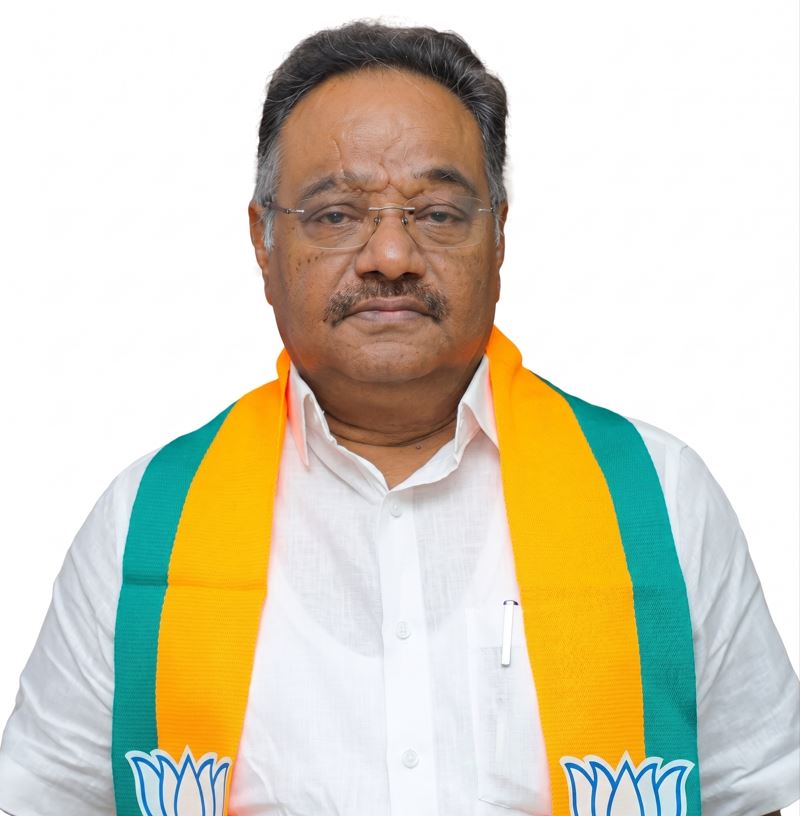
Addressing reporters, Bhattacharya said the swearing-in ceremony is scheduled to take place at the iconic Brigade Parade Ground in central Kolkata, beginning at 10 am.
The event is expected to be a high-profile affair, with the presence of senior party leaders, dignitaries, and a large number of supporters. Preparations are currently underway to ensure the smooth conduct of the ceremony.
The swearing-in will formally mark the beginning of the new BJP-led government in the state, with further details regarding the chief minister and council of ministers likely to be announced soon.
6, May 2026
Delhi rolls out 13 mobile heat relief units to combat heatwave
New Delhi, May 6 (BNP): Delhi Chief Minister Rekha Gupta on Tuesday flagged off 13 mobile heat relief units to provide immediate support to people affected by the ongoing heatwave in the national capital.
The initiative aims to offer on-the-spot assistance, including access to drinking water, basic medical aid, and relief services, especially for vulnerable groups such as daily wage workers, the elderly, and those exposed to extreme outdoor conditions.
The mobile units will be deployed across key locations in Delhi, focusing on high-footfall and heat-prone areas to ensure timely outreach and support.
The Chief Minister said the move is part of the government’s broader efforts to tackle the impact of rising temperatures and protect public health during the peak summer months.
The initiative is expected to strengthen the city’s heat action response by improving accessibility to essential relief services and reducing heat-related risks among residents.
6, May 2026
Chandigarh University chefs win big with 13 medals at national culinary meet
May 6 (BNP): Students from Chandigarh University delivered a standout performance at Culinary Art India 2026, bringing home a total of 13 medals and earning recognition on a national stage.
Competing against participants from leading institutes across the country, the student chefs impressed judges with their strong technical skills, creativity, and attention to detail. They took part in a variety of categories, ranging from live cooking challenges to display-based events, where presentation and innovation played a key role.
The team’s success reflects rigorous training, consistent practice, and exposure to real-world culinary standards. Faculty mentorship and hands-on learning also played an important role in helping students refine their techniques and perform under competitive conditions.
This achievement not only highlights the talent of the students but also strengthens the university’s position in culinary education, showcasing its focus on developing industry-ready professionals with both skill and creativity.
6, May 2026
Goafest Returns with Second Edition of Advertising Plays
Mumbai, May 06: Jointly organised by The Advertising Agencies Association of India (AAAI) and The Advertising Club (TAC), Goafest returns with the second edition of ‘Advertising Plays’. A dedicated sports and wellness IP, Advertising Plays will bring together professionals from advertising, media, and marketing in a fun, informal, and engaging environment.
This year’s line-up is designed to be high-energy, inclusive, and accessible, encouraging participation across skill levels and interests. The programme features structured inter-agency competitions such asTable Tennis and Pickleball, fostering teamwork and friendly rivalry among participants and Goafest is pleased to welcome Mediakart as the ‘Powered By’ sponsor for Advertising Plays, in association with Republic TV.
Energising morning sessions, including Yoga and Zumba will promote well-being, balance, and mindful networking for all delegates. Complementing these are a range of indoor and immersive experiences such as Foosball, Air Hockey, VR Cricket, and Panja (arm wrestling), all designed to drive engagement and participation. Together, these activities will blend physical sport, recreation, and interactive experiences, ensuring there is something for everyone.
The initiative also brings in a strong competitive spirit, with tournament winners receiving awards and on-ground recognition for their achievements. A live leaderboard integrated within the Goafest app will track points across all activities in real time, adding to the excitement and engagement. At the culmination of the festival, the agency with the highest cumulative score will be awarded the coveted ‘Sportiest Agency’ title, celebrating both performance and team participation.
“Advertising Plays is a reminder that while we compete fiercely in boardrooms and pitches, we are also part of one vibrant, closely-knit industry. Bringing it back for its second season, we wanted to create a space where that spirit of camaraderie can truly come alive, on the field, in moments of celebration, and through shared experiences that go beyond work. It’s not just about sport; it’s about agencies coming together, letting guards down, and rediscovering the joy of collaboration through healthy competition”, added Mohit Joshi, Co-Chair of the Goafest 2026 Organising Committee and Chief Executive Officer of Havas Media Network India.
On bringing Advertising Plays back for its second season, Jaideep Gandhi, Vice President, Advertising Agencies Association of India and Chairman of the Goafest 2026 Organising Committee, said, “Advertising Plays reflects what Goafest truly stands for- a balance of work and play. The response to its debut showed us how much the industry values coming together beyond business, to connect, celebrate and recharge. As we bring it back this year, we look forward to seeing the community come together once again to inspire, celebrate and play, and we’re delighted to have Mediakart on board as the ‘Powered By’ sponsor for Advertising Plays, in association with Republic TV.”
Open to all registered Goafest delegates, Advertising Plays has been designed with inclusivity at its core. The platform promotes gender-neutral participation and aims at creating opportunities for informal networking in relaxed settings, encouraging cross-agency interactions, and enabling stronger industry relationships through shared experiences.
Set to take place on May 20, 21 and 22, 2026, at Taj Cidade de Goa Horizon, the second edition of Advertising Plays will further strengthen Goafest’s commitment to delivering a more holistic and engaging festival experience.
6, May 2026
Piyush Goyal Meets Airbus India Chief, Discusses Aerospace and MRO Growth
May 6 (BNP): Union Minister for Commerce and Industry Piyush Goyal held discussions with the India head of Airbus, focusing on strengthening aerospace manufacturing and expanding Maintenance, Repair and Overhaul (MRO) capabilities in the country.
The meeting centered on enhancing India’s role in the global aviation supply chain, with emphasis on boosting domestic manufacturing capacity, skill development, and investment opportunities in the aerospace sector.
Both sides discussed ways to deepen collaboration in aircraft production ecosystems and improve India’s MRO infrastructure, which is seen as a key growth area for the aviation industry.
Officials said the engagement reflects India’s ongoing efforts to position itself as a major hub for aerospace manufacturing and services, supported by policy reforms and growing industrial capacity.
6, May 2026
Wibu-Systems and instellix Elevate Software Licensing into Revenue Infrastructure
Karlsruhe, Germany – Wibu-Systems, a global leader in software protection, licensing, and cybersecurity, announces its integration with instellix, a next-generation monetization platform designed for subscription, usage-based, hybrid, and marketplace-driven business models.
The joint solution transforms software licensing from a supporting function into an operational backbone, where entitlement management, usage tracking, and financial processes operate as one continuous system. By combining CodeMeter’s secure licensing and protection technologies with instellix’s advanced monetization capabilities, software vendors can automate the entire lifecycle from contract to revenue.
“Software monetization is undergoing a structural shift. Licensing is no longer a back-office function: it is becoming part of the operational infrastructure of digital business,” said Stefan Bamberg, Director Sales and Key Account Management at WIBU-SYSTEMS AG. “With instellix, we extend CodeMeter beyond protection and licensing into a fully integrated monetization environment.”
From Entitlement to Revenue: One Continuous Process
The integration is enabled through standardized APIs that connect instellix with CodeMeter, linking commercial transactions directly to technical enforcement.
When a customer purchases a license, instellix automatically triggers CodeMeter to generate the corresponding entitlement. The license is delivered instantly, enabling immediate use without manual intervention.
At the same time, CodeMeter captures detailed usage data directly at the application level. This data is transferred to instellix, where it is processed into billing events, enabling precise usage-based invoicing and transparent customer reporting.
The result is a closed-loop system where every transaction, entitlement, and usage event is consistently aligned across technical and financial domains.
“Growth stalls when licensing and billing operate in silos. At instellix, we’ve eliminated that gap and with Wibu-Systems as our partner, companies can now scale usage-based and hybrid models globally, with full confidence that every license event translates directly into revenue. Together, we give them something they’ve never had before: a single, automated path from license to revenue, across any business model, any market, any scale, stated Juergen Schmiezek, CGO & Managing Director, instellix.”
Built for Modern Monetization Models
The combined solution supports the increasing complexity of software-driven business models across industries such as automotive, e-mobility, software & technology, and manufacturing. It enables subscription, usage-based, hybrid, and marketplace-driven licensing strategies, combining automated license provisioning with real-time usage tracking and integrated billing.
Designed for global operations, the architecture scales across currencies, tax regimes, and compliance requirements. This allows software vendors to introduce new pricing models without reengineering their existing systems, while maintaining full control over security, licensing, and revenue flows.
Strategic Impact for Software Vendors
As software becomes the core of industrial value creation, monetization must evolve beyond static licensing models.
The integration of CodeMeter and instellix enables companies to align product usage, contractual logic, and revenue realization in real time. This reduces operational complexity, eliminates reconciliation gaps, and creates a foundation for scalable, data-driven business models.
Software vendors can respond faster to market demands, experiment with new offerings, and expand globally, while ensuring that every licensed feature, every usage event, and every invoice follows a consistent, secure, and automated process.
6, May 2026
Government Approves Viability Plan 2.0 to Strengthen Regional Rural Banks
New Delhi, May 6 (BNP): The Department of Financial Services (DFS) has approved a revised Viability Plan 2.0 for Regional Rural Banks (RRBs) for the period 2025–26 to 2027–28, aimed at strengthening financial sustainability, governance, and long-term competitiveness in the rural banking sector.
The new framework builds on the earlier viability plan implemented from FY22 to FY25, which helped improve financial performance and strengthen monitoring systems across RRBs.
Viability Plan 2.0 introduces a structured performance evaluation system based on 30 key parameters under four major pillars — operational excellence, asset quality, profitability, and growth. These indicators are designed to provide a comprehensive assessment of RRB performance.
Key metrics under the framework include capital adequacy ratio (CRAR), credit-deposit ratio, non-performing assets (NPAs), recovery performance, profitability, and digital adoption levels. The plan also incorporates performance in implementing Government of India schemes to align operational outcomes with national priorities.
The government said the revised framework will enhance oversight, improve efficiency, and promote financial discipline across the 28 Regional Rural Banks in the country.
The initiative is expected to further strengthen rural credit delivery, deepen financial inclusion, and support digital banking expansion in underserved areas.


