


27, Apr 2026
The Vodia PBX Now Integrates with Jitsi Meet

BOSTON: April 27, 2026 – Vodia Networks, Inc., a provider of unified cloud communications solutions to enterprises, contact centers, and service providers, is pleased to announce V70, the newest version of the industry-standard Vodia PBX, now integrates with Jitsi Meet.
Jitsi comprises open-source projects for users who want to build and deploy secure video conferencing solutions, including Jitsi Videobridge and Jitsi Meet. These components enable conferences over the internet, while additional community projects provide features such as audio, dial-in, recording, and simulcasting. Because Jitsi is open-source and based on WebRTC, it gives organizations more flexibility and control over their conferencing environment compared to fully hosted solutions.
Jitsi Videobridge passes participants’ video and audio streams directly to each participant instead of mixing them first, resulting in better quality and lower latency. For organizations running their own service, this also provides a more scalable and cost-efficient solution. Additional capabilities include:
● Compatible with WebRTC, the open standard for Web communication
● Advanced video routing support for simulcast, bandwidth estimations, and scalable video coding
● Simple installation with Ubuntu and Debian packages
The Vodia PBX integration with Jitsi Meet connects the Vodia phone system with a self-hosted Jitsi Meet server, enabling one-click video conferencing directly from the web portal. It allows businesses and service providers to manage both voice and video communication within a single system, without relying on external conferencing platforms:
● Conferences are secured with JWT authentication
● Moderators receive a signed token while guests join with a shared link
● Room names are generated automatically using the extension number
● A random hash prevents unauthorized access
Documentation
A detailed configuration guide for the Vodia PBX Jitsi Meet integration is available on the Vodia documentation website.

- 0
- By Neel Achary

27, Apr 2026
Drip Capital Crosses Dollar 9 Billion in Cross-Border Trade Finance for MSMEs in India

Mumbai, Apr 27: Drip Capital, a global financial technology company building infrastructure for trade finance and B2B commerce, has crossed $9 billion in cumulative MSME trade finance transactions since its founding in 2016. The milestone highlights the company’s expanding role in supporting small businesses as they navigate global trade complexities.
As per findings by the Small Industries Development Bank of India (SIDBI), India’s MSME sector faces a credit gap of nearly ₹30 lakh crore, limiting its ability to scale and participate effectively in global trade. At the same time, shifting global supply chains are adding to uncertainties around logistics, payments, and buyer reliability. Drip Capital is addressing these challenges by offering integrated trade support solutions that help MSMEs manage risks and access global markets with greater confidence.
The company has facilitated $2+ billion in trade transactions in FY25-26 alone and with MSMEs contributing a significant share of this volume, Drip Capital is now targeting $11+ billion in cumulative transactions by 2027.
Sharing views on the achievement, Pushkar Mukewar, Co-Founder and CEO, Drip Capital said “Global trade today demands more than just access to capital MSMEs need a reliable partner to navigate uncertainty, unlock the right opportunities, and manage risk effectively. At Drip Capital, we are focused on building solutions that simplify cross–border trade and enable businesses to grow sustainably despite external disruptions. Crossing the $9 billion milestone reflects the trust that MSMEs worldwide have placed in us. As India sharpens its focus on boosting exports, we remain committed to supporting their global ambitions.”
Technology has been central to Drip Capital‘s growth. Nearly a decade of cross–border trade data, built up across 100+ countries, now powers proprietary AI and machine learning models that underwrite risk, verify trade documents, and assess buyer and supplier reliability in real time. This has allowed the company to approve financing in as little as 24 to 48 hours, a process that typically takes weeks, and to scale transaction volume without a proportional increase in operational cost. The same data and AI infrastructure also powers buyer-supplier matching on its B2B commerce platform.
Beyond financing, Drip Capital also runs a B2B commerce platform that connects growing businesses with verified global buyers and suppliers. The platform helps businesses identify trade partners, manage cross–border transactions, and participate in international supply chains. Together with financing, this gives businesses a single entry point to both find and fund their trade, reflecting Drip Capital‘s broader role in building modern infrastructure for trade finance and B2B commerce.
27, Apr 2026
Escrow-Backed Commissions Signal Shift Toward a More Structured and Trust-Driven Real Estate Market
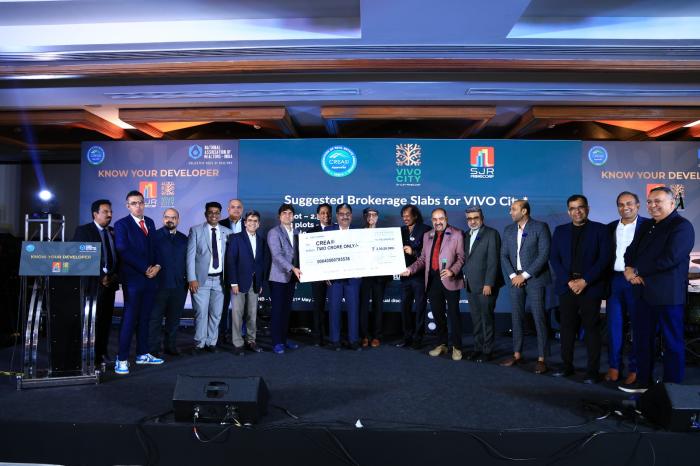
Bengaluru, April, 2026: In a move that could influence how brokerage transactions are structured in India’s real estate sector, Bengaluru-based developer SJR Primecorp has placed ₹2 crore in an escrow account to secure commission payouts for realtors associated with the Confederation of Real Estate Associates (India) (CREA (I)).The announcement was made on at an industry event held at Taj MG Road, Bengaluru, in the presence of senior leadership from CREA (I) and the National Association of Realtors India.
Under the arrangement, the escrow account will be jointly operated by SJR Primecorp and CREA (I). The funds are earmarked exclusively for brokerage payouts to CREA (I) members closing transactions on the developer’s projects. The amount will be replenished before depletion, ensuring continuity of payouts.
The development comes against the backdrop of a long-standing industry concern around delayed or uncertain broker commissions. By securing funds upfront, the model introduces a level of predictability and financial discipline that is not widely practiced in the sector.
Industry observers note that brokerage transactions in India have largely operated through informal arrangements, with limited safeguards. The use of escrow mechanisms—common in other financial transactions—could signal a shift toward more formal and auditable practices in real estate.
The initiative was formalised through an MoU signed between Samir Arora and Vijay Reddy, CMD of SJR Primecorp. The concept was initiated by Pradeep Joe, Chairman Emeritus, CREA (I).
More than 300 CREA (I) realtors were present at the event, along with senior NAR India leadership including Ravi Varma, Tarun Bhatia, Chandresh Vithalani, Ashish Mehta, Chetan Chopra, Ramkumar, Sivalingam, Rahul Koparwar and Ekta Jain.
“This initiative was conceived to address a long-standing gap in our industry. By securing commissions upfront, we are not just solving a payment issue — we are laying the foundation for a more disciplined, transparent, and future-ready real estate ecosystem,” said Mr. Pradeep Joe – Chairman Emeritus CREA (I).
Mr. Samir Arora, Chairman, CREA (I) and CEO, NAR India, said the move reflects evolving alignment between developers and organised realtor bodies. “When commissions are secured upfront under a jointly governed structure, it changes the nature of engagement. It moves from transactional to institutional.”
“This is a structural intervention, not a symbolic one,” said Mr. Sumanth Reddy, Chairman, NAR India. “For years, commission uncertainty has been a friction point. Locking funds in escrow brings accountability into the system and sets a benchmark others can evaluate.”
Mr. Chandresh Vithalani, President, NAR India, said the model could have wider implications if adopted more broadly. “The industry has been working toward greater transparency and professionalism. Mechanisms like escrow-backed commissions create a framework where trust is supported by process, not assumption.”
The Bengaluru market, which has seen increasing institutional participation in recent years, may provide a testing ground for such models. Whether this approach sees wider adoption across cities and developers remains to be seen.
For CREA (I), whose members are also part of NAR India, the development underscores growing institutional influence in shaping industry practices. For developers, it raises a strategic question: whether upfront financial commitments can improve channel partner confidence and sales velocity.
As the sector continues to evolve, the escrow-backed commission model may emerge as a reference point in discussions around standardising broker-developer relationships in India’s real estate market.
27, Apr 2026
ECoR Set for Staff Rationalisation Amid Nationwide Rail Reforms
Apr 27 (BNP): The East Coast Railway (ECoR) will rationalise 1,239 posts in the 2026–27 financial year as part of a nationwide workforce optimisation programme initiated by the Railway Board, according to an official directive issued on April 24.
The exercise is part of a broader restructuring plan across Indian Railways aimed at improving manpower efficiency and aligning staffing patterns with operational requirements. Across the system, about 29,608 posts have been identified for rationalisation out of a total sanctioned workforce of nearly 14.8 lakh employees.
For ECoR, the identified rationalisation accounts for around 2% of its sanctioned strength of 61,956 employees as of April 1, 2026. The process will include redistribution of surplus staff and surrender of select posts, based on operational needs.
The Railway Board has instructed all zones to carry out the exercise through the Human Resource Management System (HRMS) platform to ensure transparency, digital tracking, and standardised implementation.
An official communication from the Board has also designated manpower optimisation as a key performance indicator for zonal railways in the coming financial year.
ECoR, a key freight corridor handling coal, minerals, and port-linked cargo from Odisha and neighbouring regions, plays a critical role in supporting India’s logistics and industrial supply chain.
The rationalisation initiative comes alongside large-scale rail expansion and infrastructure upgrades, including projects worth over ₹10,000 crore, aimed at improving capacity, efficiency, and network performance across the region.
27, Apr 2026
Tapan Mohanty Shines at Nationals, Secures All-Around Crown
Bhubaneswar, Apr 27 (BNP): Gymnast Tapan Mohanty delivered a strong performance at the Junior & Senior Artistic Gymnastics National Championships 2026–27 held at Kalinga Stadium in Bhubaneswar.
He won the All-Around Champion title in the Senior Men’s Artistic Gymnastics (MAG) category with a total score of 73.433.
Odisha Chief Minister Mohan Charan Majhi congratulated Mohanty and praised his achievement, saying it was a proud moment for the state. He also wished success to the Odisha team, which has reached the final of the Senior MAG Team Championship.
27, Apr 2026
Wheat Production Remains Stable Despite Unseasonal Weather: Government
The Ministry of Agriculture has said that recent unseasonal weather events are unlikely to have a significant impact on India’s overall wheat production, with output expected to remain broadly stable this season.
Officials acknowledged that isolated instances of rain and storms during the harvesting period caused limited damage in some regions. However, they clarified that these localised incidents will not materially affect total national production.

Pic Credit: Pexel
Concerns were earlier raised by the Roller Flour Millers Federation of India, which estimated wheat output for 2025–26 at around 110.65 million tonnes—slightly above last year’s 109.63 million tonnes but lower than the government’s earlier projection of 120.21 million tonnes.
Responding to these estimates, Food Secretary Sanjeev Chopra said actual production is likely to fall within a range between industry and government projections, indicating a moderate outcome rather than a sharp deviation.
The ministry also noted that wheat was cultivated across approximately 33.4 million hectares this season, with no major reports of pest infestations or widespread crop diseases. Timely sowing and favourable early-season conditions supported overall crop growth.
While higher temperatures in February may have affected grain development in certain pockets, officials said the impact has been partly offset by an increase in sown area and the use of climate-resilient seed varieties.
Early procurement data from key producing states also suggests steady arrivals, supporting the government’s view that wheat output remains largely stable despite weather-related challenges.
27, Apr 2026
Crompton Launches Ameo Pro 5.5L Air Fryer with Even Heating Technology for Consistent Cooking
Hyderabad, Apr 27: The promise of healthier, oil-free cooking has made air fryers a kitchen essential, yet achieving evenly cooked, consistent results often continues to remain a challenge. Recognising this gap, Crompton Greaves Consumer Electricals Ltd., India’s trusted name in home innovation, introduces the Ameo Pro 5.5L Air Fryer, designed to deliver a more consistent and reliable cooking experience for modern kitchens.

Air fryers have steadily found their way into Indian kitchens as a smarter, healthier alternative to traditional cooking but the experience hasn’t always matched the expectation. Uneven cooking remains the most common frustration, with users having to repeatedly pause mid-cook to check and rearrange food just to get consistent results. Add to that the noise during operation and the effort of cleaning up afterwards, and the convenience air fryers promise doesn’t always come through in practice.
The Ameo Pro 5.5L is built to change that. At its heart is Crompton’s Pro Heating Bowl – a uniquely designed structure with louvre-based airflow that enables optimised 360-degree heat circulation, ensuring food cooks evenly from all sides without the need for manual intervention. This not only enhances consistency but also reduces cooking time by up to 30%, while features such as low-noise operation and easy-to-clean components further simplify everyday use.
Key Features of the Crompton Ameo Pro 5.5L Air Fryer
The Ameo Pro 5.5L comes equipped with thoughtfully designed features that support a more convenient and consistent cooking experience:
- Even Heating with Pro Heating Bowl (Up to 30% Faster Cooking): A uniquely designed bowl structure enables optimised airflow for uniform heat distribution, ensuring consistent cooking results without the need to rearrange food
- Nutriguard Technology: Designed to support better nutrient retention while enabling low-oil cooking for everyday meals
- SilentPro Technology: Enables quieter operation at under 52 dB, making it suitable for use at any time of the day
- Instapeek Window with Integrated Lamp: Allows users to monitor the cooking process in real time without opening the appliance, helping maintain consistent results
- Easy Cleaning: Dishwasher-safe basket and tray enable hassle-free maintenance
- 11 Pre-Set Menus with Interactive Display: Offers ease of use through intuitive controls and preset cooking options
Speaking about the new launch, Ketan Chaudhari, Head – Small Domestic Appliances, Crompton Greaves Consumer Electricals Ltd., said,
“Air fryers have seen tremendous adoption in Indian homes over the past few years, but the category has largely moved on volume rather than solving the core experience gaps. At Crompton, we felt it was time to go deeper. The Ameo Pro isn’t just another air fryer — it’s our answer to what consumers have actually been asking for: food that cooks right the first time, without the constant monitoring. The Pro Heating Bowl is the result of that thinking. Beyond performance, we’ve also been deliberate about the details that matter in daily use — the noise levels, the cleaning, the ease of operation. These may seem like smaller considerations, but they’re what determine whether a product actually stays on the kitchen counter or gets pushed to the back of a cabinet. We’re confident the Ameo Pro earns its place.”
The Crompton Ameo Pro 5.5L Air Fryer will be available at all major retail outlets (MOR/GT). Designed for busy families and working professionals aged 25–40 who prioritise health, convenience, and consistent results, the appliance brings together efficient performance, ease of use, and dependable cooking, making it a valuable addition to modern kitchens.
27, Apr 2026
Rajnath Singh Heads to SCO Defence Ministers’ Meeting
New Delhi, Apr 27 (BNP): Defence Minister Rajnath Singh will travel to Bishkek, Kyrgyzstan, to participate in the Shanghai Cooperation Organisation (SCO) Defence Ministers’ Meeting, a key multilateral forum focused on regional security and defence cooperation.
Ahead of the visit, Singh said he looks forward to representing India at the meeting and will underscore the country’s commitment to global peace amid ongoing security challenges worldwide. He also reiterated India’s consistent policy of zero tolerance towards terrorism and extremism.
The SCO Defence Ministers’ Meeting brings together member states to discuss critical issues such as counter-terrorism, regional stability, and enhanced military cooperation across the Eurasian region. This year’s discussions are expected to focus on emerging security threats and coordinated responses to extremism.
During his two-day visit on April 27–28, the Defence Minister is also expected to hold bilateral meetings with counterparts from participating countries to strengthen defence ties and expand strategic cooperation. He will also interact with members of the Indian community in Bishkek.
India has consistently used the SCO platform to advocate stronger global action against terrorism and radicalisation, while promoting trust-building and peaceful regional engagement. In previous meetings, India has emphasised the need for clearer and more robust language on terrorism-related concerns.
The visit reflects India’s ongoing effort to deepen defence diplomacy while reinforcing its position on global security issues through multilateral engagement
27, Apr 2026
PM Reviews Policy Role with NITI Aayog Member
New Delhi, Apr 27 (BNP): Prime Minister Narendra Modi on Monday met Prof. Gobardhan Das, a newly inducted member of NITI Aayog, in New Delhi, where discussions focused on his role in contributing to India’s evolving policy and development priorities.
During the meeting, the Prime Minister acknowledged Prof. Das’s background in public health and immunology, noting that his academic experience could help strengthen evidence-based policymaking in key sectors such as healthcare and scientific research.
Prof. Das recently joined NITI Aayog as part of efforts to bring domain expertise into national planning and has expressed his commitment to supporting India’s long-term development goals, including the vision of a developed nation by 2047.
He has highlighted the need to improve healthcare and education systems, particularly in underserved regions, and stressed that reducing regional disparities will be essential for balanced national growth.
He also pointed to the importance of boosting industrial and manufacturing capabilities to create employment opportunities and support economic resilience. Strengthening local economies, he noted, would help address migration pressures and improve living standards.
The meeting comes as the government continues to emphasise expert-driven policymaking and inclusive development, with a focus on innovation, sustainability, and equitable growth across states.
27, Apr 2026
Indian Flavours Win Global Praise in Latest World Food Rankings
Apr 27 (BNP): Indian cuisine has secured fresh international acclaim, with a wide range of dishes featuring in the World Food Guide Test Atlas list of the world’s top 100 foods released in April 2026.

Popular favourites such as butter garlic naan and rich preparations like malai kofta were among the Indian dishes highlighted, reflecting the global appreciation for the country’s diverse culinary traditions.
The recognition points to the growing influence of Indian food across international dining cultures, where its bold flavours, regional diversity, and distinctive spice combinations continue to attract food enthusiasts.
Experts note that Indian cuisine’s global popularity is being driven by both traditional home-style cooking and its modern adaptations in restaurants worldwide. Vegetarian delicacies, creamy curries, and tandoor-baked breads have all contributed to its expanding appeal.
The inclusion of multiple Indian dishes in the global ranking further reinforces the country’s position as a leading culinary force, with its food culture continuing to resonate strongly with audiences across the world.


