


27, Apr 2026
“Catch-Drop Virus” in Indian Premier League 2026 Intensifies as Costly Fielding Errors Shake Team Performances
Mumbai, Apr 27(BNP) The Indian Premier League 2026 season is witnessing a worrying trend dubbed the “catch-drop virus,” as a series of high-profile fielding lapses continue to influence match outcomes and team standings.

Recent matches have highlighted the severity of the issue. In the clash between Delhi Capitals and Punjab Kings on April 25, Delhi Capitals dropped as many as six catches, significantly altering the course of the game. Multiple reprieves allowed batters to capitalise, resulting in a record-breaking run chase.
In another high-scoring encounter, Rajasthan Royals faced Sunrisers Hyderabad, where an astonishing 15–17 catches were reportedly dropped across matches that day. Rajasthan Royals captain Riyan Parag acknowledged the impact, admitting that missed chances proved decisive as SRH chased down a massive total with ease.
Industry experts and former cricketers point to a broader decline in fielding standards. Catching efficiency, which stood at approximately 85% in 2020, has dropped to nearly 76% midway through 2025 and is projected to dip further in 2026, signalling a concerning trend in modern T20 cricket.
Several contributing factors have been identified. Extreme weather conditions, including intense heatwaves in cities like Delhi, have made tracking high balls challenging. Physical fatigue from a congested match schedule, coupled with extensive travel, has also impacted player concentration. Additionally, former India cricketer Mohammad Kaif highlighted a potential shift in training priorities, with increased focus on batting and bowling possibly reducing emphasis on fielding drills.
Questions around game awareness have also emerged, with players occasionally appearing less alert during critical moments. This has prompted franchises to reassess their preparation strategies, placing renewed emphasis on fielding discipline and mental conditioning.
From a regulatory standpoint, the Board of Control for Cricket in India has reiterated rules under Clause 33.3, clarifying that a catch is only deemed valid when a fielder has complete control over both the ball and their body before celebrating, reinforcing the importance of precision in fielding execution.
As the tournament heads into its decisive phase, teams that can address these lapses and improve their fielding standards are expected to gain a significant competitive edge. In a format defined by fine margins, the ability to convert chances into wickets could ultimately determine the road to the playoffs.

- 0
- By Neel Achary

27, Apr 2026
Bengaluru Launches Landmark Double Decker Flyover, Boosts Commuter Ease
New Delhi, Apr 17 (BNP): Commuters in Bengaluru received significant relief as the city’s first double-decker metro flyover at the Central Silk Board junction became fully operational with the opening of Flyovers D and E.
With this development, all five flyovers forming part of the structure are now open to traffic, marking a major milestone in easing congestion at one of the city’s busiest and most traffic-heavy corridors.

The project, built by Afcons Infrastructure Limited, is part of a larger elevated metro and road infrastructure initiative along the Outer Ring Road–Central Silk Board stretch. The structure is also notable for being South India’s first combined road-and-rail (metro) double-decker flyover system.
The newly operational flyovers are expected to significantly reduce travel time and ease daily traffic bottlenecks for thousands of commuters who regularly navigate the junction, which has long been considered one of Bengaluru’s most congested points.
Officials said the project aims to improve urban mobility by integrating metro rail infrastructure with road transport, offering a more seamless and efficient commuting experience.
Overall, the completion of the full flyover system marks a key step in Bengaluru’s ongoing efforts to modernise transport infrastructure and address chronic traffic congestion in the city.
27, Apr 2026
VST Tillers Tractors Showcases Innovative Farm Mechanisation Solutions at FKCCI Global AgriTech Summit 2026
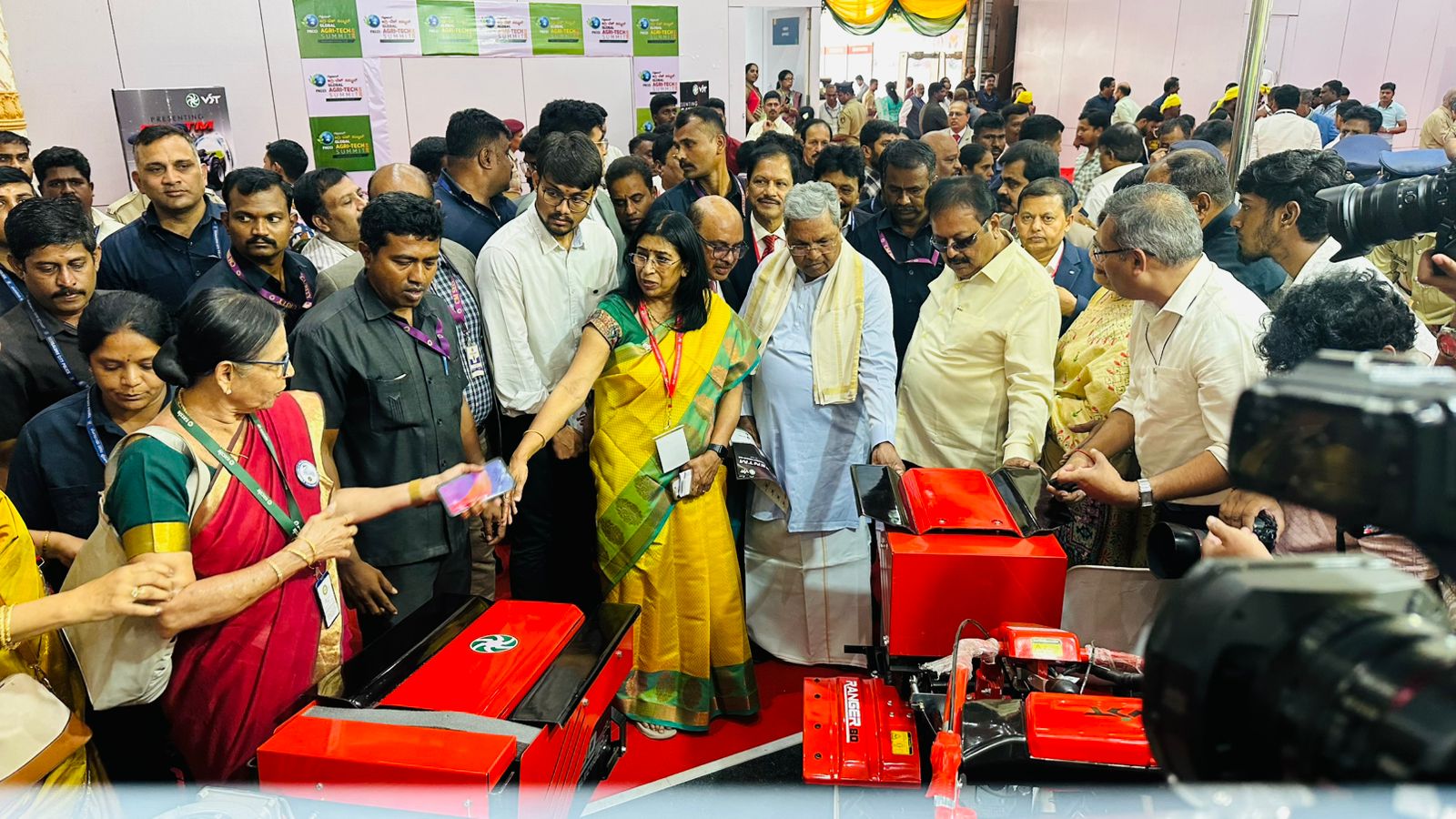
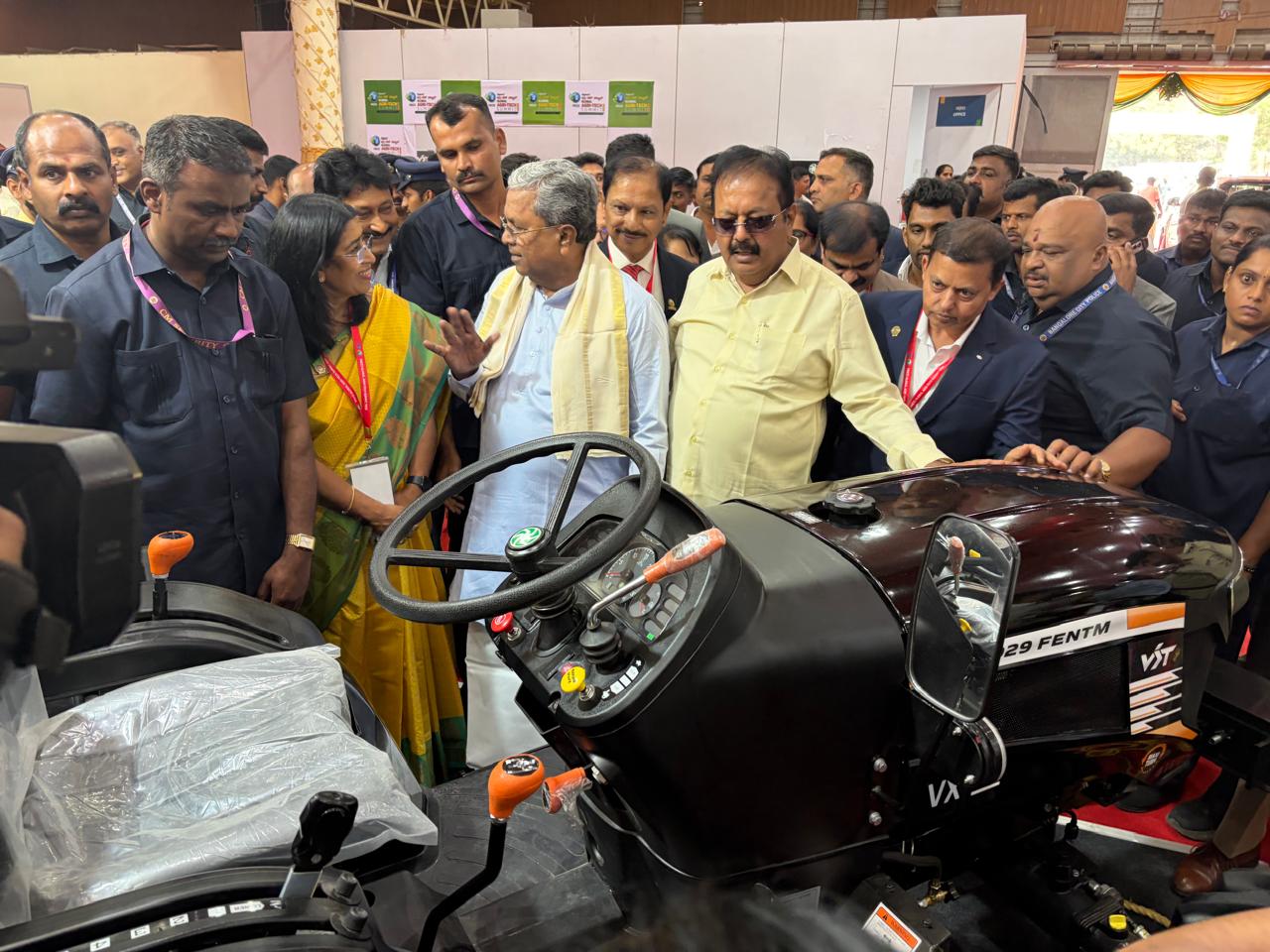
Bengaluru, Apr 27: VST Tillers Tractors Ltd., a pioneer in compact agricultural machinery in India, showcased its latest portfolio of advanced farm mechanisation solutions at the FKCCI Global AgriTech Summit 2026. The company’s new product range reflects a significant step forward in fuel efficiency, performance, and versatility, tailored to meet the evolving needs of modern small and mid-sized farming operations. Shri Siddaramaiah, Hon’ble Chief Minister of Karnataka, visited the VST stall at the exhibition and reviewed the innovative products on display, after the inaugural session of the Summit. Agriculture Minister, Shri N Chaluvaraya Swamy also accompanied the Chief Minister to the VST stall.
At the summit, VST unveiled a series of innovations, including the FENTM Series Tractors, Electric Power Tiller, and Electric Power Weeder, each underscoring the company’s commitment to sustainable, technology-driven agriculture.
The FENTM Series features five high-performance, fuel-efficient models, 180 FENTM, 224 FENTM, 225 FENTM, 929 FENTM EX , and 929 FENTM VX , spanning a horsepower range of 19 HP to 30 HP. Available in both 2WD and 4WD configurations, these tractors are engineered to deliver enhanced productivity, superior operator comfort, and long-term reliability. Designed as compact yet powerful solutions, the FENTM Series offers exceptional versatility across diverse terrains and agricultural applications, striking an optimal balance between power, manoeuvrability, and fuel efficiency.
Further strengthening its sustainability focus, VST showcased its Electric Power Tiller and Electric Power Weeder. These electric solutions are designed to deliver high performance with minimal environmental impact, aligning with India’s clean energy and decarbonisation goals. The electric range enables farmers to benefit from eco-friendly operations, reduced running costs, and ease of use—marking a significant shift towards green farming practices.
Building on its strong legacy of engineering excellence and indigenous innovation, VST is leveraging global EV advancements to strengthen India’s small-farm mechanisation ecosystem. With a focus on future-ready, locally developed solutions, the company continues to drive productivity, sustainability, and affordability for the next generation of farmers.
27, Apr 2026
Gig Economy Workers Seek Stronger Heatwave Safety Net from Government
New Delhi, Apr 27 (BNP): As heatwave conditions intensify across India, a major platform workers’ union has called for legally enforceable protections for gig workers exposed to extreme outdoor working conditions.
The Indian Federation of App-Based Transport Workers has written to the Ministry of Labour and Employment, urging the government to introduce binding safeguards under the Code on Social Security, 2020 to protect delivery personnel, ride-hailing drivers, and other platform-based workers.

The union has proposed a range of measures, including paid cooling breaks during severe heat alerts issued by the India Meteorological Department, along with protection from penalties, account blocks, or loss of incentives if workers pause duties due to extreme heat conditions.
It has also recommended basic welfare provisions such as access to drinking water, oral rehydration solutions, and designated cooling shelters for workers operating in high-temperature environments. Additionally, it has called for emergency in-app distress features and public compliance monitoring systems to ensure accountability from digital platforms.
Highlighting growing occupational risks, the federation noted that gig workers continue to operate in harsh summer conditions without adequate safety measures, increasing their vulnerability to heat-related illnesses.
The body also cited international examples, pointing to countries such as South Korea, Singapore, France, Japan, the United Arab Emirates, and the United States (California), where similar heat protection frameworks for outdoor and platform workers have already been introduced.
It emphasised that heat protection should be treated not as a discretionary benefit, but as a fundamental labour right and a public health necessity, given the increasing frequency and intensity of heatwaves.
27, Apr 2026
Microland Launches Strategic Blueprint to Help Enterprises Enable Autonomous, AI-First Operations
Bengaluru, India Apr 27: Microland, a leading AI–first, platform-led technology infrastructure services company, today announced the release of a strategic blueprint, “Architecting Autonomous Operations: Powered by AI and a Platform-Led Technology Fabric,” This report provides a blueprint for enterprises seeking to modernize their technology infrastructure for an AI–first world. It positions autonomous, platform-led operations as a strategic imperative -not a long-term aspiration.
Commissioned by Microland and authored by Everest Group, the report outlines a new paradigm for enterprise operations—Systems of Autonomous Action (SoAA). Unlike conventional AI tools that stop at insights and recommendations, Systems of Autonomous Action (SoAA) represent a cognitive substrate that senses, reasons and acts across all elements of an enterprise. They are designed to navigate complexity and execute with intent, closing the divide between analysis and action and moving enterprises from assisted decision-making to self-directed outcomes.
These are not rule-based automations or scripted workflows. They are adaptive, context-aware systems that continuously learn, apply reasoning, and take real-time action to drive measurable impact. In this model, platforms become the intelligent core of the run environment, embedding resilience, efficiency, and superior experiences by design. As a result, enterprises can scale AI with confidence, unlock significant cost savings, and reduce operational disruptions by up to 70%.
“Enterprises are no longer merely powered by technology; they are defined by it,” said Sam Mathew, Chief Executive Officer, Microland. “As AI moves from experimentation to enterprise scale, the true differentiator is whether technology foundations are built for autonomy. The future of operations belongs to systems that can sense, reason, and act in real time. This blueprint demonstrates that platform-led, AI–first operations are becoming the intelligent core driving speed, resilience, and transformation at scale.”
“AI is compelling enterprises to reimagine infrastructure and operations as intelligent, value-generating platforms rather than reactive support functions,” said Yugal Joshi, Partner at Everest Group. “Our research shows that while 79% of enterprises are still experimenting with Gen AI, only 21% have scaled it into production and operational maturity is the key differentiator. A platform-led, autonomous operations model can drive tangible business impact, including improved resilience, faster time-to-market, lower operating costs, and sustained productivity gains.”
Read the report, “Architecting Autonomous Operations: Powered by AI and a Platform-led Technology Fabric,”
27, Apr 2026
Sikkim Marks 50 Years of Statehood as PM Modi Launches Major Projects Today
New Delhi, Apr 27 (BNP): Prime Minister Narendra Modi is in Sikkim today as part of a two-day visit to mark the state’s 50th anniversary of statehood and inaugurate development projects worth approximately ₹4,000 crore.
Upon his arrival in Gangtok around 3 pm, the Prime Minister is scheduled to participate in a roadshow from the Libing helipad to Lok Bhawan, where public events have been organised as part of the celebrations.
The visit is centred on the golden jubilee of Sikkim’s statehood, highlighting its five-decade journey of political integration, development, and socio-economic progress within India.
Officials have put in place tight security arrangements across Gangtok and surrounding areas in view of the high-profile visit and large public gatherings expected during the programme.
During the visit, the Prime Minister will also unveil and lay the foundation stones for multiple infrastructure projects aimed at strengthening connectivity, improving public services, and accelerating economic development in the state.
Overall, the programme combines ceremonial significance with a strong development agenda, reflecting both the milestone of 50 years of statehood and renewed focus on infrastructure growth in the region.
27, Apr 2026
Rupee Falls to 94.27 on Dollar Demand, Oil Spike Weighs
New Delhi, Apr 27 (BNP): The Indian rupee continued to weaken on Monday, slipping 11 paise to 94.27 against the US dollar in early trade, as global headwinds kept pressure on the domestic currency.
The decline marks the fifth straight session of losses, driven by a combination of rising crude oil prices, sustained foreign fund outflows, and heightened geopolitical tensions. These factors have increased demand for the US dollar while dampening sentiment toward emerging market currencies.
A major concern remains the surge in Brent crude, which has crossed the $106-per-barrel mark. Higher oil prices raise India’s import costs, leading to greater dollar demand from oil companies and putting additional strain on the rupee.
Foreign institutional investors have also continued to pare their holdings in Indian equities, reflecting caution in global markets and a tilt toward safer assets. This trend has further weighed on the currency.
Despite the pressure on the rupee, domestic equity markets showed resilience. The BSE Sensex and NSE Nifty 50 both traded higher in early deals, supported by selective buying in heavyweight stocks.
The contrasting movement highlights a divergence between currency and equity markets. While equities are responding to domestic cues and sectoral strength, the rupee remains sensitive to external risks.
Going ahead, the currency’s movement will depend largely on global oil price trends, geopolitical developments, and the direction of foreign capital flows.
27, Apr 2026
India–New Zealand FTA to Accelerate Leather Sector Growth to Dollar 50 Billion by 2030
New Delhi, Apr 27 (BNP): India’s leather industry is poised for significant expansion, with projections to reach $50 billion by 2030, driven by the recently concluded free trade agreement with New Zealand and a strategic move toward value-added manufacturing.
The Ministry of Commerce and Industry said the agreement will provide a major boost to exports by eliminating tariffs on all Indian goods from the date of implementation. Notably, duties on leather and footwear—earlier pegged at around 5%—will be brought down to zero, enhancing India’s competitiveness in international markets.
Union Commerce and Industry Minister Piyush Goyal and New Zealand’s Trade Minister Todd McClay underscored the strong synergy between the two economies during an industry outreach event in Agra. The partnership is expected to combine New Zealand’s raw material strength with India’s manufacturing scale and expertise.
Agra remains central to this vision, accounting for nearly three-fourths of India’s leather footwear output and holding a Geographical Indication (GI) tag. Policymakers and industry leaders are positioning the city as a global sourcing hub, capable of driving exports and employment generation.
Beyond tariff cuts, the agreement spans a wide range of sectors, including agriculture, pharmaceuticals, medical devices, education, and traditional medicine. Industry participants have welcomed provisions aimed at faster regulatory approvals and reduced compliance burdens, particularly through recognition of global standards.
The pact also places emphasis on talent mobility and deeper people-to-people engagement, opening new opportunities for professionals and students in both countries.
Overall, the India–New Zealand FTA is being viewed as a comprehensive and forward-looking framework that not only strengthens bilateral trade but also supports India’s ambition to move up the global value chain in manufacturing.
27, Apr 2026
Energy Security to Power India’s Capex Cycle: 360 ONE
New Dehi, Apr 27 (BNP): India’s push for energy security is shaping up to be a long-term investment theme, likely to drive a broad-based capital expenditure cycle across the sector, according to 360 ONE Capital Markets.
The brokerage noted that evolving geopolitical risks, particularly in West Asia, are reinforcing the country’s focus on resilience, reliability, and reduced dependence on imports. This shift is expected to accelerate investments across key segments such as power generation, transmission infrastructure, energy storage, and fuel substitution.
Importantly, the policy narrative is undergoing a transition—from prioritising affordability and decarbonisation to ensuring supply security and self-reliance. This realignment is creating fresh opportunities across the entire energy value chain.
Although many energy stocks have already seen strong gains and are trading near their target levels, the brokerage believes the structural story remains intact. It recommends that long-term investors consider building positions selectively during market corrections.
Overall, energy security is increasingly being viewed not just as a policy necessity but as a defining driver of India’s infrastructure and investment growth in the years ahead.
27, Apr 2026
Indian Markets Open Higher Despite Crude Surge and Geopolitical Tensions
New Delhi, Apr 27 (BNP): Indian equity markets opened on a strong note Monday, recovering after three consecutive sessions of losses, even as rising crude prices and ongoing geopolitical tensions weighed on global sentiment.

The BSE Sensex surged by over 500 points in early trade, reaching around 77,200, while the NSE Nifty 50 moved past the psychologically important 24,000 mark, gaining nearly 170 points.
The rebound was largely supported by buying interest in heavyweight stocks, particularly Sun Pharmaceutical Industries, which saw its shares rise sharply. The rally followed the company’s announcement of a major acquisition deal involving US-based Organon & Co.. The transaction, valued at approximately $11.75 billion, is structured as an all-cash deal and is expected to strengthen Sun Pharma’s global presence.
Market sentiment also improved in line with positive cues from international equity markets, where investors showed resilience despite concerns over elevated crude oil prices and geopolitical uncertainties.
Overall, the early gains suggest a cautious return of investor confidence, although volatility may persist given the broader global risk environment.