


8, Oct 2026
TÜV SÜD on the New Management System Standard for Sustainability Goals
Munich. ISO/UNDP 53001 was published at the end of September. It provides organizations with a new international framework for integrating the UN Sustainable Development Goals into their management structures. Developed by the International Organization for Standardization (ISO) and the United Nations Development Program (UNDP), the ISO/UNDP 53001 standard is the world’s first management system standard of its kind. It provides a structured approach for integrating the UN Sustainable Development Goals (SDGs) into corporate governance, strategy, and operational processes. TÜV SÜD provides information on the newly published standard.
Sustainability has become an integral part of corporate strategy in many companies. However, consistently embedding environmental, social, and economic goals into existing management structures remains a challenge. ISO/UNDP 53001 addresses this need through a management system approach that helps companies define responsibilities, set goals, and monitor progress as part of a continuous improvement process. Since the standard follows the harmonized structure used in all ISO management system standards, it can be integrated into existing quality, environmental, or energy management systems.
“Sustainability can only be effective if it is integrated into a company’s daily decision-making and management processes,” says Sara Brandimarti, Global Head of Sustainability – Business Assurance Division at TÜV SÜD. “ISO 53001 provides a structured framework for this. It helps organizations systematically consider sustainability aspects and derive long-term changes from them that go beyond individual projects or reporting requirements.”
Response to Rising Stakeholder Expectations
The expectations of customers, investors, and regulatory authorities regarding sustainability continue to rise. Transparent and systematic management of sustainability issues is becoming increasingly important, particularly for companies operating in complex international supply chains. With ISO/UNDP 53001 as a certifiable standard, an independent certification body such as TÜV SÜD can now assess whether an organization’s SDG management system meets the standard’s requirements. Organizations that take this approach demonstrate that they manage their sustainability-related activities within a structured and transparent management framework.
- 0
- By Neel Achary

8, Oct 2026
Asset Managers Report Sharp Rise in Risk Across Investment, Operational Regulatory and Reputation, Clearwater Analytics Study Reveals
BOISE, Idaho, NEW YORK, CHICAGO, LONDON and HONG KONG, Oct 08 —A comprehensive global study, “The Crowded Trade”, commissioned by Clearwater Analytics, which surveyed 250 senior executives at fund managers across the U.S, Europe and the Asia-Pacific region, finds credit and liquidity risks across nearly every category firms track.
Market risk has increased for 80% of asset managers over the past year, the largest rise of any risk category in the study, with 34% describing the increase as dramatic.Around three-quarters (77%) of respondents say credit risk has increased, with 51% saying it has done so dramatically. Some 71% of asset managers have experienced increases in liquidity risk, and 36% say those increases have been dramatic.Meanwhile, 71% say concentration risk has increased with 29% saying it has been dramatic.
Chris Sturhahn, Head of Product, Asset Management at Clearwater Analytics, said: “Market, credit, liquidity, and concentration risk are all rising at nearly every firm that responded. That's a harder problem than any one risk moving by itself, and it's a big part of why we're seeing firms shift into alternatives, expand hedging, and rotate into new markets and regions. Asset managers need more than performance data and they need real-time visibility into risk exposures, liquidity conditions and portfolio concentrations. Firms that can aggregate, analyze, and act on investment data quickly will be far better positioned to manage uncertainty and respond to changing market conditions.”
Looking across their operations, nearly three-quarters (73%) of asset managers say technology and cyber risk has increased, with half saying it has done so dramatically.Business continuity risk has increased for 80% of firms, with 32% calling the increase dramatic. People and process failures, such as errors in trade execution or inadequate internal controls, have increased for 75% of firms, with 24% calling the increase dramatic.
Sturhahn said: “Operational risk has become a major focus for asset managers as portfolios grow more complex, reporting requirements intensify and market events unfold much more quickly. Many firms still rely on fragmented systems, manual reconciliations and delayed reporting processes that can create inefficiencies and increase the potential for errors during periods of market stress.”
Reputational risk, meaning damage to a firm's brand from negative media, legal disputes, or poor performance that drives investor outflows, has increased for 69% of firms over the past 12 months, with 44% calling the increase dramatic.
ESG risk, meaning potential losses from investments failing to meet environmental, social, or governance standards, has increased for 77% of firms, with 31% calling the increase dramatic.
Competition risk, meaning the risk of losing market share to competitors due to poor performance or high fees, has increased for 72% of firms, with 24% calling the increase dramatic.
When asked which risks pose the greatest concern to asset managers over the next 12 months, almost two-thirds (62%) of research participants say technology/cyber risk. The next highest risk was liquidity risk (47%) closely followed by credit risk (46%). More than a third
(37%) identified concentration risk as the biggest threat in the coming year, while 35% say people and process failures and 28% say market risk.
Sturhahn added: “Firms are already responding to this, moving into alternatives, expanding hedging, and rotating into new regions and asset classes. The next question is whether those moves hold up once markets are actually tested, which is exactly what we look at next in this research.”
8, Oct 2026
BORICA and OpenWay Win PAY360 Award for Bulgaria’s Euro Payments Transformation
The Best Partnership Initiative award recognizes BORICA and OpenWay for their contribution to Bulgaria’s payments transformation and successful euro transition.
LONDON, Oct. 8, 2026 /PRNewswire/ — BORICA AD and OpenWay have won the Best Partnership Initiative Award at the PAY360 Awards 2026 for their work together on Bulgaria’s payment infrastructure and the country’s successful transition to the euro.
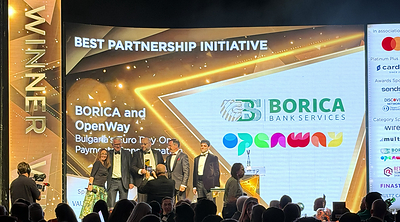
The award recognizes the impact of a long-term partnership focused on a challenge where there was no room for disruption: transforming critical national payment infrastructure while ensuring that everyday card payments and ATM services continued from the first minute of euro adoption.
Since 2018, BORICA and OpenWay have worked together to modernize Bulgaria’s card processing infrastructure, combining BORICA’s expertise in national payment services and ecosystem coordination with OpenWay’s Way4 real-time digital payment software platform and payment technology expertise.
What set the initiative apart was its scale, continuity and practical impact. The partnership was developed over years of modernization and then tested under exceptional live conditions when Bulgaria adopted the euro on 1 January 2026.
The euro programme brought together more than 35 banks, payment service providers, fintechs, government institutions and technology partners. BORICA and OpenWay worked closely to prepare and execute the card processing transformation, with extensive testing, rehearsals and operational coordination before the cutover.
The results came almost immediately after midnight. The first successful euro ATM withdrawal was completed just 20 seconds into the new currency environment. Within the first 48 hours, more than 930,000 card and ATM transactions worth nearly €42 million were processed with zero unplanned downtime.
Miroslav Vichev, CEO of BORICA AD, said:
“Our shared objective went beyond a successful technology transition. We wanted to ensure that a transformation of this scale could happen without disrupting the everyday payment experience. That required years of preparation, disciplined execution and trust between our teams and across the wider ecosystem.”
Pavel Gubin, CEO of OpenWay Group, said:
“What makes this achievement distinctive is not technology or scale alone, but what BORICA and OpenWay were able to accomplish together. We have spent years building a payment environment designed to evolve without compromising continuity. Euro adoption put that approach to the ultimate real world test, and the results speak for themselves.”

 View original content to download multimedia:https://www.prnewswire.co.uk/news-releases/borica-and-openway-win-pay360-award-for-bulgarias-euro-payments-transformation-302902170.html

8, Oct 2026
Korum Mall to Host Garba & Dandiya Workshop Ahead of Golden Dandiya Celebrations

Thane, October 08, 2026: Ahead of its Golden Dandiya celebrations, Korum Mall is bringing the festive spirit of Navratri to visitors with a special, free Garba & Dandiya Workshop on October 9 and 10, 2026, in association with Tantrum Dance Academy.
Here’s what visitors can look forward to:
1. Learn Garba & Dandiya
A fun, interactive workshop for beginners and enthusiasts to learn the traditional festive dance forms and brush up on their moves.
2. Get Ready for Golden Dandiya
The workshop will serve as a festive build-up to Korum Mall’s upcoming Golden Dandiya celebrations.
3. Fun for All
Designed for visitors across age groups, the workshop offers an opportunity for friends and families to learn and celebrate together.
4. Soak in the Navratri Spirit
With music, dance, and festive energy, the workshop will set the mood for Navratri celebrations at Korum Mall.
Visitors can participate in the workshop free of cost and get their festive moves ready for the Golden Dandiya celebrations.
Event Details:
When: October 9 & 10, 2026 – 4:00 PM to 6:00 PM
Where: Korum Mall, Thane
What: Special Dandiya and Garba Workshop
8, Oct 2026
TransNusa Introduces High-Frequency Jakarta-Singapore Schedule with Launch of Fourth Daily Flight
The Premium Service Carrier Ramps Up Flight Capacity to Meet Increased Business and Leisure Travel Demand |
|
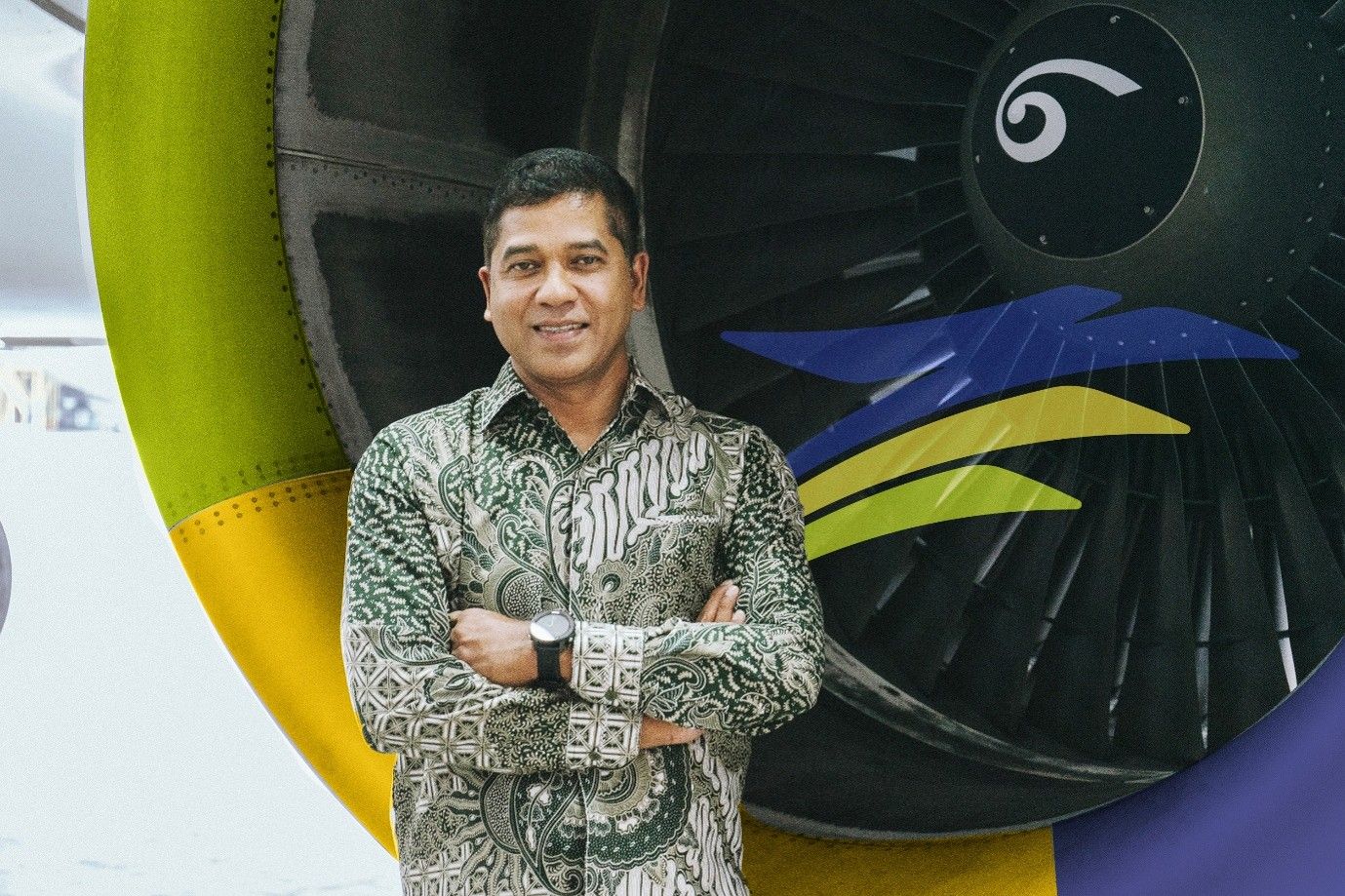
JAKARTA, Oct 08- TransNusa, Asia’s premium service carrier, has announced a schedule increase to four daily flights between Jakarta and Singapore, reinforcing its position on this key international corridor. The transition to a four-times-daily scheduled flight follows the recent expansion from two to three flights daily, reflecting steady passenger demand and the airlines’ operational capacity to support increased traffic on the route. With this enhanced frequency, TransNusa now offers seamless travel times tailored perfectly to the schedules of both business and leisure travelers. The fourth flight takes off from Jakarta today at 17.40 and arrives Singapore at 20:20. It departs Singapore at 21:20 and arrives Jakarta at 21:55. Leadership Driven Growth and Changi Recognition
Datuk Bernard Francis… Continuously leading TransNusa to greater heights Securing multiple frequency increases within a short timeframe of less than 6 months from a world-class hub like Singapore Changi Airport, which maintains strict operational benchmarks and partners with top-tier airlines, demonstrates the carrier’s growth trajectory and scalable capabilities. The frequency increase not only builds directly upon the airline’s transition from two to three flights daily but also upon the airline’s recognition at the Changi Airline Awards 2026, where Datuk Bernard led TransNusa to became the first Indonesian carrier to win the “Top Airlines by Absolute Passenger Growth (Southeast Asia)” award from the World-Renown Changi Airport Group, just 17 months after starting operations at the airport. Comprehensive Daily Flight Schedule Operating the route with its modern Airbus A320 fleet, TransNusa’s schedule provides morning, afternoon, and evening options. Flights depart from Soekarno-Hatta International Airport and land at Singapore Changi Airport Terminal 4.
Bookings for the new daily flight times are now available. Passengers can view schedules, select seats, and book fares directly through the official TransNusa website at transnusa.co.id. Redefining Regional Air Travel TransNusa distinguishes itself as a premium service carrier by providing a balanced alternative that bridges the gap between low-cost affordability and full-service legacy options. The airline offers travelers a competitive product that includes baggage allowances, seat options, and a comfortable seat layout on its aircraft. By matching these products with consistent on-time performance, TransNusa provides a reliable and practical choice for modern corporate and holiday travelers alike. This unique and new service model, developed and introduced by Datuk Bernard in 2023, remains central to the airline’s broader international network scaling. In addition to its unique offerings, TransNusa recently highlighted its premium evolution by introducing its customized “Premium Plus” cabin product as part of its Melbourne-Bali flight offerings. Launching on 19 October 2026, this option features tailored priority services and enhanced baggage limits, underscoring the airline’s commitment to delivering diverse travel options across its growing destination portfolio. |

8, Oct 2026
DP WORLD REAFFIRMS LONG-TERM PARTNERSHIP WITH INDIA AS EXECUTIVE CHAIRMAN H.E. ESSA KAZIM MAKES FIRST VISIT
Executive Chairman H.E. Essa Kazim, Group CEO Mr. Yuvraj Narayan and members of DP World’s Global Board of Directors engage with JNPA leadership to explore opportunities for deeper collaboration and future investment.
Inauguration of Phase 2 of Nhava Sheva Business Park adds one million square feet of warehousing capacity, backed by an investment of approximately ₹500 crore ($52 million), strengthening DP World‘s integrated logistics ecosystem in India.
MUMBAI, India, Oct. 8, 2026 /PRNewswire/ — DP World has reaffirmed its long-term commitment to India’s economic growth and global trade ambitions, as H.E. Essa Kazim, Executive Chairman, made his first visit to the country in his new role, accompanied by Mr. Yuvraj Narayan, Group Chief Executive Officer, and members of DP World’s Global Board of Directors.
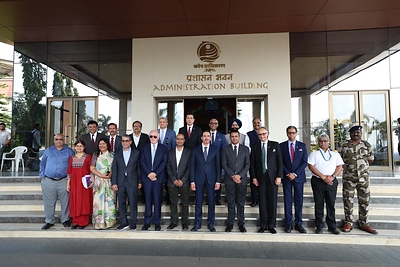
The visit reflects the strategic importance of India to DP World’s global growth agenda and its commitment to building world-class trade and logistics infrastructure in partnership with the country. As India strengthens its position as a global manufacturing, consumption and export hub, DP World continues to invest in capabilities that connect businesses to international markets, enhance supply chain resilience and support the country’s evolving trade requirements.
A key engagement during the visit was a meeting with Mr. Gaurav Dayal, IAS, Chairman of the Jawaharlal Nehru Port Authority (JNPA) and Mr. Ravish Kumar, IRTS, Deputy Chairman, reaffirming a partnership spanning nearly three decades. Beginning with the concession agreement for Nhava Sheva International Container Terminal (NSICT), the association has played a role in the development of India’s public-private partnership model in port infrastructure.
The discussions focused on strengthening this longstanding relationship and exploring opportunities for future collaboration, including the development of Vadhavan Port and further investment in the JNPA Special Economic Zone. The engagement underscored the importance of sustained collaboration between the public and private sectors in developing the infrastructure, connectivity and capacity needed to support India’s next phase of trade-led growth.
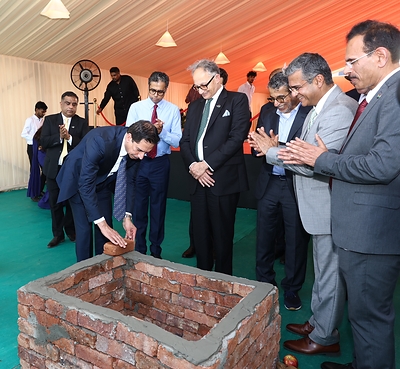
As part of the visit, H.E. Essa Kazim and Mr. Yuvraj Narayan inaugurated Phase 2 of the Nhava Sheva Business Park (NSBP) in the presence of members of DP World’s Global Board of Directors. The business park’s first phase spans 44 acres and provides one million square feet of warehousing space. The newly inaugurated second phase covers an additional 42 acres and will add a further one million square feet of warehousing capacity, representing an investment of approximately ₹500 crore ($52 million).
Together, the two phases strengthen DP World’s ability to support the growing and increasingly sophisticated requirements of customers across industries.
Commenting on the visit and the company’s commitment to India, H.E. Essa Kazim, Executive Chairman, DP World, said, “India is a strategic partner in DP World’s global growth journey, and we see significant opportunities to contribute to the country’s ambitions as a leading global trading nation. Our commitment goes beyond investing in infrastructure; it is about building enduring partnerships, strengthening connectivity and creating integrated supply chain solutions that enable Indian businesses to compete more effectively in global markets. The expansion of Nhava Sheva Business Park reflects our confidence in India’s long-term potential and our continued focus on meeting the evolving needs of our customers. We look forward to deepening our collaboration with government and industry partners to support India’s growth and unlock new opportunities for trade.”
The expansion is part of DP World’s broader vision to develop an integrated logistics ecosystem at Nhava Sheva, connecting port operations with container freight stations, rail, warehousing and Free Trade Warehousing Zone capabilities. By bringing these complementary services together, DP World enables customers to move cargo more efficiently, optimise logistics costs and access end-to-end supply chain solutions through a connected infrastructure network.
The investment reflects a customer-led approach to growth, anticipating changing business needs while providing the capacity, flexibility and connectivity required to serve both domestic and international trade. It also reinforces DP World’s focus on developing infrastructure that creates long-term value for customers and contributes to the wider competitiveness of India’s logistics sector.
Follow DP World on:
Twitter: https://twitter.com/DP_World
LinkedIn: https://www.linkedin.com/company/dp-world
About DP World
DP World is reshaping the future of global trade to improve lives everywhere. Operating across six continents with a team of over 125,000 employees, we combine global infrastructure and local expertise to deliver seamless supply chain solutions. From Ports and Terminals to Marine Services, Logistics and Technology, we leverage innovation to create better ways to trade, minimising disruptions from the factory floor to the customer’s door.
In India, DP World serves a quarter of India’s EXIM container market with 5 container terminals with a total installed capacity of 6 million TEUs per annum. It has 3 free trade warehousing zones, 5 million square feet of warehousing space, 5 container freight stations, express logistics network covering 15000 pin codes and advanced freight forwarding expertise. It is also one of the largest private rail freight operators in India with 16000+ owned containers and 8 inland rail terminals.
WE MAKE TRADE FLOW
 View original content to download multimedia:https://www.prnewswire.com/in/news-releases/dp-world-reaffirms-long-term-partnership-with-india-as-executive-chairman-he-essa-kazim-makes-first-visit-302902063.html

8, Oct 2026
Zydus Hospitals, Ahmedabad, Takes Post-Weight-Loss Transformation Beyond the Scale
AHMEDABAD, India, Oct. 8, 2026 /PRNewswire/ — India is in the middle of a significant obesity crisis, and global estimates place the country third in the world for the number of adults living with obesity. Despite regular exercise, there are thousands of patients who struggle to lose weight, which has taken a lasting toll on their metabolic health. For many patients, bariatric surgery has been an emerging option. It is a life-changing procedure, but it has its own limitations and challenges, such as excess and sagging skin. To address these concerns, Zydus Hospital, Ahmedabad’s Cosmetic and Plastic Surgery Department has been doing remarkable work.

As patients lose a significant amount of fat after bariatric surgery, excess skin is left behind. Though it may seem a purely cosmetic concern, for many patients it is a daily problem. Loose, overlapping skin can cause chronic rashes and recurring infections in the folds, and it can interfere with everyday movement and exercise, making it harder to stay active after weight loss. In such cases, cosmetic and reconstructive surgery (including post-bariatric body contouring) is an option that can protect a patient’s long-term health.
At Zydus Hospitals, Dr. Bijal Parikh, Plastic, Cosmetic and Reconstructive Surgeon, has over 30 years of distinguished experience in treating patients, helping them restore confidence and achieve natural-looking results. He practices as a cosmetic and plastic surgeon in Ahmedabad and is an experienced hand, known for astute surgical skills and deep understanding of facial and body aesthetics, contributing to the department for years. He recalls a case where a 43-year-old woman had undergone bariatric surgery four years ago and, more recently, a liposuction procedure. “She came to us with complaints of loose, excess skin on her abdomen and along her lateral chest and both arms. Though this is a known and common complication of major weight loss, it had begun to affect her self-esteem. On examination, we also noticed that her navel had stretched into what’s known as a ‘laughing umbilicus,’ a wide, horizontal slit that forms when skin around the belly button loses elasticity.”
Dr. Bijal performed a circumferential abdominoplasty, an extended tummy tuck in Ahmedabad that removes excess skin around the entire torso, combined with targeted contouring of her arms and chest. “It improves body contour, and the stitches are placed along the body’s natural creases where they’re easily concealed and considerably fade over the years, though they don’t disappear entirely,” he added.
“Most of the work in the OT goes into suturing,” said Dr. Parikh. “We use cosmetic, absorbable internal sutures, so there’s no need to remove them afterwards.” The patient recovered well and was advised to wear a pressure garment, a fitted compression shaper that supports healing tissue and reduces swelling, for six weeks after surgery. She was extremely happy with the results. With her confidence back, she can now dance to the tunes of garba and enjoy herself to the fullest, without much apprehension.
Feeling comfortable and confident in one’s own skin matters at every age. As one gets older, the skin gradually loses its firmness as the collagen and elastin (proteins that keep the skin firm) break down. This is most visible as sagging of the face and along the jawline. One 65-year-old patient consulted Dr. Parikh for a neck lift and lower facelift. A facelift tightens the skin and the layers beneath it, including the SMAS, which is the supporting layer of muscle and connective tissue under the skin, and the platysma (the thin muscle in the neck), all of which loosen with age. If done well, these procedures can restore definition along the jawline and neck without the overly tight, artificial look associated with traditional facelifts. The patient was content with the results as the surgery offered a firmer jawline and neck. Each surgery is supported by a team of anaesthesiologists, physiotherapists and OT staff, who work alongside the surgeon to ensure the best results during and post-surgery.
The benefits of cosmetic and plastic surgery extend beyond appearance. The psychological impact of excess skin, and of its removal, is also well documented. Studies report that body contouring after weight loss is associated with reduced anxiety and depressive symptoms and improved quality of life, particularly among patients satisfied with their results. Physiotherapists, anaesthesiologists and the entire OT staff help in making each surgery a success.
Zydus’ cosmetic and plastic team offers a full range of body contouring procedures, and Dr. Bijal’s area of expertise spans Radio Frequency Assisted Liposuction (RFAL) and Laser Liposuction, Body contouring procedures – tummy tuck, arm lift, double chin correction, thigh lifts and calf shaping, Facial cosmetic surgeries – face lift, neck lifts nose reshaping (rhinoplasty), blepharoplasty (eyelid surgery), ear deformity corrections, Breast surgeries – augmentation, reduction (gynecomastia in males) and reconstruction, post-pregnancy body restoration, Hair transplantation and laser treatments for scars, moles, and pigmentation. Each case is evaluated individually, with surgical planning around a patient’s specific anatomy, their weight-loss history, and what will genuinely protect their long-term health and well-being.
To know more, visit https://zydushospitals.com/
 View original content to download multimedia:https://www.prnewswire.com/in/news-releases/zydus-hospitals-ahmedabad-takes-post-weight-loss-transformation-beyond-the-scale-302901079.html

8, Oct 2026
Discover Deakin 2026 Begins in India – Deakin University’s flagship annual student engagement brings a sharper focus on confident future choices
NEW DELHI, Oct. 8, 2026 /PRNewswire/ — Deakin University’s flagship student engagement initiative, Discover Deakin, returns to India this October with a renewed focus on helping students and families make informed and confident decisions about their university journey, careers and future in Australia.
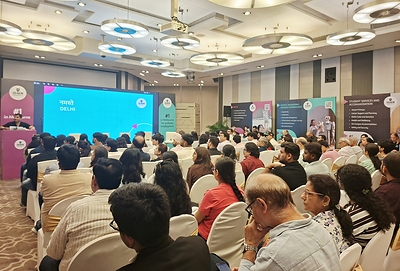
Held under the theme ‘Decide your uni with confidence at Discover Deakin,’ the 2026 edition brings together Deakin academics, current students, alumni and specialist support teams to give prospective students a comprehensive view of the Deakin experience, from choosing the right course and understanding career pathways to accommodation, employability, student support and life in Australia.
This year, Austrade has joined the program to give students and parents a broader perspective on Australia as a study destination and the opportunities available to international students. As Australia’s trade and investment promotion agency, Austrade supports Australia’s international education engagement. Study Melbourne, which supports international students with a lens on Melbourne as a study destination, will join the Bengaluru session, further enriching the conversation around studying and living in Australia.
Here is a look at the schedule for Discover Deakin 2026 sessions:
- 3 October (Sat) – Chandigarh | Hyatt Regency, Satluj
- 7 October (Wed) – New Delhi | Le Méridien, Inspire
- 10 October (Sat) – Bengaluru | Conrad, Junior Ballroom
- 10 October (Sat) – Kochi | Holiday Inn, Periyar
- 13 October (Tue) – Mumbai | Novotel Mumbai, Burgundy
- 15 October (Thu) – Hyderabad | Hyatt Palace, MP-1 & 2
- 17 October (Sat) – Chennai | Pullman, Vana
To register for a Discover Deakin Session in your city, please visit Discover Deakin 2026
Ravneet Pawha, Vice President (Global Engagement) and CEO (South Asia), Deakin University, said, “Choosing a university is an important decision for students and families. At Deakin, we want students to have the confidence that comes from asking the right questions, hearing directly from those who have experienced university life and understanding where their education can take them.”
“Discover Deakin 2026 brings that experience to life. With Austrade and Study Melbourne joining us this year, students and parents can gain a broader perspective on studying in Australia while connecting directly with our faculty, students, alumni and support teams. Our aim is simple. We want to help every student make an informed choice and take their next step with confidence.”
What can students and families expect
Discover Deakin is designed to bring the university closer to students, giving them and their families a clearer window into what lies ahead and the information they need to make informed decisions about international study. From understanding Australia as a study destination and experiencing life at Deakin to exploring courses, careers, employability and student support, students can hear directly from the people who can help them understand what their university journey could look like.
More than an opportunity to gather information, Discover Deakin is about helping students ask the right questions, explore what is possible and find the pathway that is right for them. Through conversations with current students, alumni, faculty and specialist teams, they can gain practical insights and personalised guidance on courses, careers, scholarships and life in Australia, leaving with greater clarity about their choices and confidence about taking their next step.
A key strength of Discover Deakin is the opportunity for prospective students and parents to hear directly from those who have experienced the Deakin journey.
Students at the Discover Deakin session in New Delhi yesterday looked forward to information and valuable conversations with the Deakin faculty to make better course choices. Samnik Ahlawat is currently pursuing humanities and aims to explore higher studies in either nursing or psychology. Present at the New Delhi session, he said, “I am at this session to learn more about my options and what will suit me best if I want to study abroad. A successful pathway to studying in Australia is what I am seeking.”
Samnik’s family attended the session along with him. They said, “Nowadays children decide what they want to do in future. We are just here to support them. I am here to find out details about safety, security, accommodation and opportunities. I look forward to speaking to a Deakin Student Services representative to clear my doubts.”
By bringing together academic expertise, first-hand student and alumni perspectives, personalised admissions guidance and a broader Australia-focused conversation, Discover Deakin 2026 aims to provide students and families with the information, connections and confidence to make informed choices about their future.
The initiative builds on Deakin University’s long-standing engagement with India and its commitment to supporting Indian students through every stage of their international education journey, from choosing the right course to building skills, networks and experiences for global careers.
About Deakin University
Established in 1974, Deakin University has grown to become one of Australia’s most progressive and globally connected institutions. Deakin is recognised for its balance of excellence in education and research with a clear focus on creating real-world outcomes that benefit communities locally and globally.
Deakin has maintained a strong relationship with India since 1994, with its engagement spanning students, alumni, academic partnerships, research, industry and broader Australia–India connections.
With four campuses across Australia, Deakin offers over 300 industry-relevant courses, designed to equip students with the skills and experiences they need for future success.
To know more, please visit www.deakin.edu.au.
 View original content to download multimedia:https://www.prnewswire.com/in/news-releases/discover-deakin-2026-begins-in-india–deakin-universitys-flagship-annual-student-engagement-brings-a-sharper-focus-on-confident-future-choices-302901987.html

8, Oct 2026
Sonata Software Achieves the 2026–2027 Microsoft AI Business Solutions Inner Circle Award

East Brunswick, Nj And Bengaluru, India, October 08: Sonata Software an AI-first Modernization Engineering company, has earned the 2026–2027 Microsoft AI Business Solutions Inner Circle award. This marks Sonata Software’s sixth Inner Circle recognition, placing the company among the top echelon of Microsoft’s AI Business Solutions global network of partners.
The recognition builds on Sonata Software’s more than three-decade relationship with Microsoft and continued investments in full-stack AI capabilities. Through Sonata Harmoni.AI, its Responsible-first AI tooling, Sonata brings together differentiated capabilities across AI-led modernization, AI-ready data, resilient AI operations and AI-led service delivery to help enterprises move from AI experimentation to business impact at scale.
“The ability to embrace AI to deliver value and enterprise velocity will differentiate organizations in an AI-led era,” said Anthony Lange, Chief Revenue Officer, Sonata Software. “Our sixth Inner Circle recognition reflects the engineering depth we bring to helping enterprises turn AI into measurable business value. Together with Microsoft, we’re helping them move from systems of record to systems capable of autonomous action.”
“Inner Circle partners represent our top selling partners worldwide. But it is more than a sales recognition; it’s a community of industry leaders who work closely with Microsoft to accelerate innovation, share experience and shape the future of AI-powered business transformation. The collaboration and commitment to customer success demonstrated by this community helps us advance the entire AI Business Solutions partner ecosystem around the world to deliver transformative business outcomes at scale.” said Niels Jensen, Microsoft AI Business Solutions ERP Lead in Enterprise Partner Solutions.
Sonata’s capabilities across Microsoft Dynamics 365, Microsoft Azure, Microsoft Fabric, Microsoft Power Platform and Microsoft Copilot help enterprises modernize technology and business processes for AI. Most recently, Sonata joined Microsoft’s Copilot Agents & Platform (CAP) Engineering Depth Partners program and became a Microsoft Frontier Partner, deepening its engagement with Microsoft Engineering and Product teams to advance and scale agentic AI.
8, Oct 2026
Carne Group recognised as Luxembourg’s largest third-party ManCo by Monterey Insight
Continued growth underscores Carne’s position as the leading third-party ManCo in Europe
London – Dublin – Luxembourg, Oct 08 – Carne Group, Europe’s largest third-party management company (ManCo), has maintained its leadership position as Luxembourg’s largest third-party management company, by total assets under management (AUM) in the latest Monterey Insight Luxembourg Intelligence report.
Carne has ranked first among third-party ManCos in Luxembourg, for the second consecutive year and seventh overall, across all management companies and AIFMs, with US$242.4bn in AUM in the Luxembourg market, reflecting 46.4% year-on-year growth, according to the Monterey Insight Luxembourg Report 2026.
John Parkhouse, President of Carne Group, commented:
“The scale of growth we have achieved over the past year reflects the strength of the Luxembourg market and the accelerating shift towards outsourcing. As asset managers navigate increased operational and governance complexity, they are placing greater value on partners that can help firms scale efficiently and meet rising investor expectations.
Our Supermodel II research highlights the growing demand for specialist operating models and third-party ManCo solutions, with 34% of asset managers likely to fully outsource support for new products or fund vehicles to a third-party ManCo over the next two years and a further 18% of managers with an internal ManCo planning to fully outsource those responsibilities.
This industry shift is particularly evident in Luxembourg, where a robust regulatory and governance framework, deep cross-border expertise and well-established fund ecosystem continue to reinforce the evolving role of third-party ManCos as strategic enablers.”
Carne’s leadership position has also been recognised by PwC’s 2026 Observatory for Management Companies Barometer, which ranked Carne as the largest third-party ManCo in Luxembourg, by assets under management (AUM) and sub-funds. The report also found that third-party ManCos now account for 19% of total Luxembourg ManCo assets under management, with over €1.1 trillion in assets under management, highlighting the continued growth of the third-party ManCo model in Luxembourg.
Together, these two reports confirm Carne’s position as the largest third-party ManCo in Europe, overseeing more than $1 trillion in AUM globally.
|


